Archive for January 2018

South Korean President: You Know Who Deserves “Big Credit” For Panmunjom Talks, Right?

January 10, 2018

South Korean President: You Know Who Deserves “Big Credit” For Panmunjom Talks, Right? Hot Air, Ed Morrissey, January 10, 2018

Wait — Moon Jae-in can’t mean the man who is going to get us all nuked, can he? Well, yes, that’s precisely what South Korea’s president means. After opening the first talks with North Korea in over two years, Moon told reporters that Donald Trump deserves “big credit” for forcing the Kim regime to the table with a fresh strategy of hardball from the US (via Jake Tapper):

South Korean President Moon Jae-in credited U.S. President Donald Trump on Wednesday for helping to spark the first inter-Korean talks in more than two years, and warned that Pyongyang would face stronger sanctions if provocations continued. …

Seoul and Pyongyang agreed at Tuesday’s talks, the first since December 2015, to resolve all problems between them through dialogue and also to revive military consultations so that accidental conflict could be averted.

“I think President Trump deserves big credit for bringing about the inter-Korean talks, I want to show my gratitude,” Moon told reporters at his New Year’s news conference. “It could be a resulting work of the U.S.-led sanctions and pressure.”

Granted, Moon softens this with a conditional in the end, but it doesn’t keep him from providing the credit up front. Previous administrations seemed more content to kick the can down the road, especially the Obama administration, which kept up sanctions but kept trying to downplay the crisis. Thanks to that approach, other players were able to shrug off the North Korean crisis, especially China.

Trump has taken a different tack; he is acting as though the crisis were present, which it is and has been for some time now. Trump has increased the pace and reach of sanctions to the point where North Korea now has very few avenues for trade on critical commodities such as fuel and food. Trump’s belligerence has forced China into action to try to bring its obstreperous client under some form of control. The disruption even forced Moon, who ran as an appeaser looking to dial down tensions, into deploying the THAAD systems he had opposed during his campaign.

Besides the fact that it reflects reality, Moon’s credit sets the table for an eventual US-North Korea negotiations, one expert tells Reuters:

Lee Woo-young, a professor at the University of North Korean Studies in Seoul, said it was wise of Moon to praise Trump, his sanctions and pressure campaign.

“By doing that, he can help the U.S. build logic for moving toward negotiations and turning around the state of affairs in the future, so when they were ready to talk to the North, they can say the North came out of isolation because the sanctions were effective.”

At this point, direct negotiations are the only path left to avoid another armed conflict. Trump has said he would consider that option if the conditions were right, although Kim Jong-un has so far balked at the idea until he achieves nuclear parity with the US. This week’s talks could provide a short-cut to a settlement, but don’t expect Trump to take his foot off the gas pedal until those talks become a reality. He’s getting pretty good mileage right now out of his foreign policy toward the Korean Peninsula, and Moon corroborates that.

This makes Andrew Malcolm’s latest column on Trump’s foreign policy and general productivity look prescient:

Trump’s tweets at North Korea’s “little Rocket Man” draw instant media attention, even igniting speculations on the president’s mental health. They reinforce a popular perception that this president is a loose cannon, a perception he sometimes seeks and feeds with unorthodox presidential behavior and statements.

What doesn’t get reported so eagerly nor attributed to Trump’s presidency are puzzling positive developments: Economic growth exceeding three percent by Trump’s seventh month, unemployment falling to longtime lows, 1.84 million new jobs since Trump’s inauguration, confident stock markets soaring to all-time highs, new homebuilding up, dozens of large companies granting bonuses and wage hikes. Even Trump’s job approval was climbing at year’s end.

How can so many things be going so well with an unbalanced usurper in the Oval Office? …

These and other actions demonstrating freshened resolve abroad suggest when it comes to foreign policy, friends and foes alike would do well to note that Trump follows words with action.

They’re beginning to notice that in Pyongyang.

Spokesman: Senior Hamas official shot in the head

January 10, 2018

By Adam Rasgon, The Jerusalem Post
January 9, 2018 13:11

Article Link

{I never realized examining your gun could be so dangerous. – LS}

Imad al-Alami is in critical condition.

Senior Hamas official Imad al-Alami on Tuesday was admitted to a hospital in Gaza City after being shot in the head “while examining his personal weapon in his home,” Hamas Spokesman Fawzi Barhoum said.

Alami is known as a hardliner and has supported Hamas’s ties with Iran.

In a Facebook post, Barhoum said that Alami is in “critical condition.”

On Tuesday afternoon, Senior Hamas officials including Hamas Politburo Chief Ismail Haniyeh and Hamas Chief in Gaza Yahya Sinwar visited Alami in the intensive care unit in Gaza City’s Shifa Hospital, Gaza-based media reported.

Alami has been a Hamas member since the late 1980s and was the first Hamas representative in Tehran.

In 2012, he returned to Gaza after spending a number of years outside of the Palestinian territories.

In 2014, one of his feet was injured in an Israeli air raid during Operation Protective Edge, according to Hamas’s official website.


Reported Israeli strikes in Syria coincide with US cogitation on Assad’s post-war future

January 9, 2018

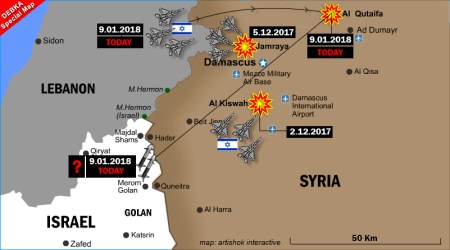
Reported Israeli strikes in Syria coincide with US cogitation on Assad’s post-war future, DEBKAfile, January 9, 2018

A broad, purposeful assessment of policy on Syrian president Bashar Assad’s political future has been scheduled for the rest of the week in Washington, DEBKAfile reports. This event accounts for the timing of Israel’s purported air strikes from Lebanese air space, which Syrian state media claimed targeted the Al Qutaiba base east of Damascus before dawn on Tuesday, Jan. 9.

DEBKAfile’s Washington sources reveal that the deliberations in the White House are to be led by high officials of US government branches involved in Syrian policy. Invited too are senior European diplomats from Britain, Germany, France and Italy, and representatives from Asia, led by Japan and India. The conference has been called to hammer out a unified US-European-Asian policy for determining the shape of the regime in post-war Syria and Assad’s future role. The Trump administration intends to come out of these deliberations with a broadly-based US-led coalition policy for Syria that will challenge Vladimir Putin’s plans for leading Syria from war to peace in conjunction with Iran and Turkey.

The American scheme’s central theme is the preservation of Syria’s territorial integrity along with partial autonomy for its minorities, especially the Kurds. Assad will remain in office for an interim period, whose length will be up for negotiation between the US and Russia. It will end with elections to the presidency and parliament, after which Assad will step down. It is surmised in Washington that the main bone of contention will be Russia’s insistence on drawing Assad’s rule out for as long as possible, while the Americans will seek to cut it short. However, US administration circles are confident about the chances of bridging this gap.

Israel was not invited to take part in this round-table, but made its position clear to Washington in direct communications between US and Israeli government and security officials. Prime Minister Binyamin Netanyahu laid out Israel’s stance in a phone call to Vladimir Putin on Jan. 1. They decided to meet soon.

Vice President Mike Pence’s forthcoming visit to Israel on Jan. 22 will also serve for the transmission of messages from Jerusalem to Washington on the Syrian question.

The reported Israeli air and ground strikes against Syria Monday night were meant as a reminder to both Washington and Moscow that Israel is closely following their moves on Syria and will make sure that its views and security needs are taken fully into account. They were also a warning to Tehran against trying to use the transition period for deepening its military presence in Syria.

Iran banning English in schools to stop “cultural invasion”

January 9, 2018

Iran banning English in schools to stop “cultural invasion”, Jihad Watch

Another way for Iran to oppress and suppress its people using full force propaganda, as it struggles with an unpredictable uprising:

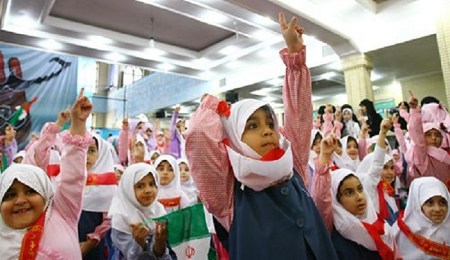
Islamic leaders in Iran have banned English teaching from the curriculum of all junior schools to insulate the country from what they see as the invasion of Western cultural ideas and principles.

The Internet and the explosion of the information age has been the worst nightmare for Islamic supremacist despots. It potentially rescues the young from shackles of ignorance and feeds the drive within Iranians to be free. The Ayatollah Khamenei says:

Western thinkers have time and again said that instead of colonialist expansionism the best and the least costly way would have been inculcation of thought and culture to the younger generation of countries.

What folly. Whenever Islamic supremacists are facing the horrors and humiliation of losing, they raise the specter of “colonialism,” long abandoned by Western nations.

It is Islamic supremacists that have an expansionary agenda, which has gone so far as to implement the Muslim Brotherhood Plan for North America and a similarly clever “Project” for expansion into the non-Muslim world. It is Islamic supremacists who are still holding black slaves and abusing humanity in the name of their religion. They are the ones who endeavor to move to the West via hijrah, to destroy Israel, and to conquer the House of War so that it becomes the House of Islam. Through clever strategy and the manipulation of Westerners, they play the victim card in their ongoing quest for credibility and establishment of the Sharia.

The rogue terrorist-funding country of Iran is in a bad place now, given domestic uprisings, its battle with Saudi Arabia for regional hegemony, and the growing impatience of America and Israel in tolerating the regime’s belligerence via its proxies, helped by Obama’s support in the nefarious Iranian deal that saw over 100 billion dollars flow into the coffers of Iran to fund those proxies: Hizbollah, Hamas, Palestinian Islamic Jihad and the like.

President Trump has warned that the world is watching with regard to how Iran responds to its protestors, thus tying its hands (somewhat) and leaving Iranian despots in a panicked state to regain control over its people and create the impression that the Islamic Republic of Iran is in control.

So far, the Islamic supremacist agenda has managed well to divide and fool blokish Western leaders, so the latest attempt by Iran to accuse the West of a “cultural invasion” may be its own version of a “hail Mary pass.” It may well work, given the foolhardiness of leftist leaders and their significant following.

“Bad Language: Iran Bans Teaching English in Schools to Fight ‘Western Cultural Invasion’”, by Simon Kent, Breitbart, January 8, 2018:

Islamic leaders in Iran have banned English teaching from the curriculum of all junior schools to insulate the country from what they see as the invasion of Western cultural ideas and principles.
“Teaching English in government and non-government primary schools in the official curriculum is against laws and regulations,” Mehdi Navid-Adham, head of the state-run high education council, announced on state television. “The assumption is that in primary education the groundwork for the Iranian culture of the students is laid.”

The announcement comes as Iran’s Revolutionary Guard said the last of the anti-government protests that have roiled the country for the past week have finally been “put down.”

Those riots have been variously attributed to a host of foreign factors, although Saudi Arabia and the U.S. have been pinpointed as the main architects of the unrest, as Breitbart Jerusalem reported.

The teaching of English usually starts in middle school in Iran, at the ages of 12 to 14, but some primary schools below that age also have English classes. Private language institutes are also popular with students after their school day, while children from privileged backgrounds attending non-government schools receive English tuition.

This is not the first time the matter of the English language has troubled Iran’s theocracy.

Supreme Leader Ayatollah Ali Khamenei voiced anger in 2016 over the “teaching of the English language spreading to nursery school,” the Financial Times reports.

Khamenei, who has the final say in all state matters, said in a speech to teachers at the time: “That does not mean opposition to learning a foreign language, but (this is the) promotion of a foreign culture in the country and among children, young adults and youths.

“Western thinkers have time and again said that instead of colonialist expansionism the best and the least costly way would have been inculcation of thought and culture to the younger generation of countries.”

A video of the announcement of the ban was widely circulated on social media on Sunday, with Iranians calling it “the filtering of English”, jokingly likening it to the blocking of the popular app Telegram by the government during the unrest…

The Palestinians’ Race to The Bottom

January 9, 2018

The Palestinians’ Race to The Bottom, FrontPage MagazineCaroline Glick, January 9, 2018

(Please see also, Egypt quietly urges Palestinians to accept Ramallah as capital. — DM)

Originally published by the Jerusalem Post

The PLO’s behavior with Abu Ali and India indicates three things. First, that the PLO/PA is no longer immune from criticism in quarters where it received five decades of unconditional support. Second, it indicates that the PLO/PA is incapable of changing its behavior, even when it is aware that it ought to. Finally, the PLO/PA is still operating under the impression that nations will continue to support them forever because the basis of that support is unchanged.

The problem for the PLO/PA is that the world has changed fundamentally while they were busy embracing terrorists and getting away with it.

The economic and strategic realities of Israel cannot be ignored. Modi and his counterparts worldwide are now recognizing that the Palestinians have nothing to offer them, not even gratitude. When a critical mass of Palestinians recognize that the PLO’s jig is up, they will make peace with Israel. Until then, they will continue to serve as an irritating irrelevancy and nothing more.

************************

The PLO and the Palestinian cause more generally are sinking into irrelevance and rather than reform their policies to rebuild their position, they have adopted a scorched earth policy that only intensifies their race to the bottom.

On the face of things, the situation isn’t bad. Last month the PLO got 128 nations to vote in favor of their anti-American resolution rejecting US President Donald Trump’s recognition of Jerusalem as Israel’s capital. One of the states that voted with them was India.

Israel was shocked by India’s move.

Prime Minister Benjamin Netanyahu rightly touts the growth of Israel’s bilateral ties with the largest democracy in the world. Indian Prime Minister Narendra Modi’s extraordinary visit to Israel last July highlighted the change. Netanyahu’s visit to New Delhi later this month will cement the new alliance.

Not only has Modi enthusiastically cultivated close ties with Israel, he has moved closer to Israel in its conflict with the PLO than any of his predecessors. In 2015, India abstained from an anti-Israel resolution at the UN Human Rights Council. Modi refused to visit the Palestinian Authority during his visit to Israel. And PLO chief and PA chairman Mahmoud Abbas’s visit to India earlier this year, Modi refused to say – as his predecessors have said – that the capital of a Palestinian state should be located in eastern Jerusalem.

And yet, last month at the UN, it felt like none of this had happened. India reverted to its previous posture of blind support for the PLO and joined the chorus in attacking America for recognizing that Jerusalem is Israel’s capital.

The Palestinians for their part were justifiably elated. Now, they thought, they were back in the driver’s seat. Trump is an aberration and the world – including India, continues to support them no matter what. They are today where they were in 1975 when the UN General Assembly passed Resolution 3371 defining the Jewish national liberation movement as a form of racism.

Then, less than a week after the UN vote, the PLO’s envoy to Pakistan, Walid Abu Ali, shared a stage in Rawalpindi with the mastermind of the 2008 terrorist attacks in Mumbai.

Lashkar e-Taibi leader Hafiz Muhammad Saeed is wanted by India not only for the massacre of more than 160 people in the Mumbai attacks. He is also wanted for his involvement in terrorist attacks in the city in 2006, which killed more than 200 people, and for a shooting at the Indian Parliament, an incident in which another 14 were killed in 2001.

Abu Ali didn’t think there would be any price to pay for his decision to embrace a mass-murdering terrorist. It’s what the PLO has always done. And so he posted photos of himself with Saeed online.

But it turns out that despite India’s vote, things have changed. A lot.

Indian social media exploded in rage against the Palestinians and the PLO. The most common sentiment was, “This is how they pay us back for abandoning the US and Israel to support them at the UN.”

Abu Ali’s embraces of Saeed were widely and angrily reported in the Indian media.

In response, Abbas announced that he was recalling Abu Ali. This would have been fine if it were true.

But this week it was reported that Abu Ali is back in business in Islamabad.

The PLO’s behavior with Abu Ali and India indicates three things. First, that the PLO/PA is no longer immune from criticism in quarters where it received five decades of unconditional support. Second, it indicates that the PLO/PA is incapable of changing its behavior, even when it is aware that it ought to. Finally, the PLO/PA is still operating under the impression that nations will continue to support them forever because the basis of that support is unchanged.

The problem for the PLO/PA is that the world has changed fundamentally while they were busy embracing terrorists and getting away with it.

This week, The Economist published its annual data on per capita GDP in countries throughout the world. For the first time, Israel’s GDP per capita has jumped above $40,000. According to the Economist’s data, per capita GDP in Israel jumped from $38,127 in 2016 to $44,019 in 2017. GDP grew 4.4% last year. Today Israel’s GDP per capita is higher than GDP per capita in Japan, Britain and France. The gap in Israel’s favor is expected to widen in the years to come as Israel’s GDP continues to grow and the GDPs of European states and Japan continue to stagnate due to negative fertility, continued migration of uneducated newcomers and lack of innovation.

In its own neighborhood, Israel’s neighbors remain economic and political basket cases. As Dr. Guy Bechor noted in his analysis of the data earlier this week, Egypt’s per capita GDP of $2,519 is one seventeenth of Israel’s. Jordan’s per capita income dropped last year from $4,648 to $4,135 and prospects for 2018 aren’t positive.

The situation is similarly bleak in the Gulf States, despite their oil and gas reserves. Iran, for instance, is poor and forecasts for the future are terrible. Last year, despite the $100 billion windfall the regime received from sanctions relief, per capita GDP in Iran dropped from $6,144 in 2016 to $5,879. Wars in Syria, Yemen, Iran, Lebanon and Gaza don’t come cheap.

Egypt, Saudi Arabia and other Arab states are drawn to Israel not only because of their joint security concerns about Iran. They are also eager to expand ties with Israel to benefit from its civilian technologies in everything from agriculture and water technologies to digital communications. And they are not about to allow the Palestinians to stop their cavalcade to Israel.

As The New York Times reported last week, Egyptian intelligence officer Capt. Ashrag al-Kholi called four different television hosts last and told them that Ramallah can serve as the capital of a Palestinian state just as well as Jerusalem. Kholi was also taped telling them that the Palestinians have to compromise for peace. In his words, “How is Jerusalem different from Ramallah, really? At the end of the day, later on, Jerusalem won’t be different from Ramallah. What matters is ending the suffering of the Palestinian people. Concessions are a must and if we reach a concession whereby… Ramallah will be the capital of Palestine, to end the war and so no one else dies, then we should go for it.”

Kholi explained that a new Palestinian campaign of terrorism against Israel will harm Egypt by strengthening Islamic State (ISIS), Hamas and the Muslim Brotherhood.

So while it is true that 128 countries – including India, Egypt and Saudi Arabia – voted with the PLO against Israel and the US at the UN last month, it is also true that their votes don’t signify as much as they used to. It is equally true that the Palestinians can’t try their patience by pushing anti-Israel resolutions every day as they have for the past 45 years. Because as the Palestinians keep playing their old tricks, Israel is becoming a more and more significant regional and global power and the nations of the world aren’t interested in weakening Israel when Israel is helping them survive and prosper.

As Abu Ali’s continued tenure in Pakistan shows, rather than recognize the shifting power balance and update their positions to align with it, the PLO has become even more brittle and reactionary and extreme. If Egypt doesn’t support their war against Israel, then they will take their roadshow to Tehran, or its Lebanese satrapy.

On December 31, Fatah Central Committee member Azzam al-Ahmad met with Hezbollah chief Hassan Nasrallah in Beirut. After meeting with al-Ahmad, Nasrallah told al Mayadeen TV that Fatah – led by Abbas – agreed to “activate a third intifada,” or terror war, against Israel. PA parliament members also visited Lebanon and met with Iranian-controlled Prime Minister Saad Hariri.

Sunday night, Israel Channel 2 reported that terrorist incitement is rising steeply in the official PA media and social media networks. One video, of a faked shooting of a Palestinian teenage girl by an actor dressed in an IDF uniform, has gone viral. Thousands of viewers have responded to the fake scene with pledges to kill Israelis to avenge the fake death.

When later this month Netanyahu meets Modi in Delhi, India’s UN vote and Abu Ali’s embrace of Saeed will be on the agenda. And there is good reason to believe that Modi will recognize the linkage and vote differently in the future. Like Netanyahu, he recognizes that the PLO’s basic case is wrong. Peace is achieved by defeating terrorists, not by empowering them.

Moreover, Israel beckons. The economic and strategic realities of Israel cannot be ignored. Modi and his counterparts worldwide are now recognizing that the Palestinians have nothing to offer them, not even gratitude. When a critical mass of Palestinians recognize that the PLO’s jig is up, they will make peace with Israel. Until then, they will continue to serve as an irritating irrelevancy and nothing more.

Arab League to Support Palestinian Bid for Full U.N. Membership

January 9, 2018

By – on

https://pamelageller.com/2018/01/arab-league-support-palestinian-bid-full-u-n-membership.html/

Palestinians seeking full membership with the United Nations have just received the support of the Arab League.

Reportedly, the Arab League is now backing Palestinians’ U.N. press, in large part because of President Donald Trump’s announced intent to move the U.S. Embassy to Israel from Tel Aviv to Jerusalem.

Here’s a quick video of that angle:

Jordanian Foreign Minister Ayman Safadi made the announcement on behalf of the Arab League just recently.

The Algemeiner has more:

The Palestinians will seek full membership in the United Nations with the backing of the Arab League in response to the recent US policy changes on Jerusalem, Jordanian Foreign Minister Ayman Safadi said on Saturday.

“We will confront the decision by seeking a [UN] resolution, an international one, to recognize a Palestinian state on 1967 borders with Jerusalem as its capital,” Safadi said.

Safadi’s comments came after a meeting of six Arab foreign ministers — from Egypt, Morocco, Saudi Arabia, the United Arab Emirates, Jordan and the Palestinian Authority (PA) — in the Jordanian capital of Amman.

PA President Mahmoud Abbas said last month that the Palestinians would seek full membership in the UN and ultimately apply to join all 522 official international organizations in response to President Donald Trump’s recognition of Jerusalem as Israel’s capital and announcement of plans to move the US embassy to that city.

The West’s shameful response to the Iran protests

January 9, 2018

The West’s shameful response to the Iran protests | Anne’s Opinions, January 8th 2018

Iran protests continue

In my earlier post about the Iran protests I mentioned the limp response from both Western governments and Western media. Melanie Phillips picks up on the weak institutional response from the West, saying:

… utterly risible the gloss initially put on these protests by the western media – those outlets, that is, that even bothered to report the demonstrations when they first erupted – that the issue which has brought Iranians onto the streets is merely economic privation.

They said this because the media reflects the European/Obama view that the Iranian regime is not an enemy but an ally. How then can they acknowledge that the Iranian people are rising up against oppression?

The Obama/EU axis and its media supporters have consistently dismissed or denied Iran’s role as the world’s principal sponsor of terrorism. They have ignored or downplayed its march to regional hegemony. They procured or applauded the shocking nuclear deal which enables this fanatical Islamist regime –– which has been at war with the west since 1979 and which openly declares its genocidal intent to wipe out out Israel – to become a nuclear armed power in ten or fifteen years’ time: a deal which, though sanctions relief, has also funnelled money to the regime to enable it to step up its terrorism and embed itself further in the region.

The result has not been merely that the free world has been placed in hugely increased danger. The European/Obama axis also abandoned and betrayed the Iranian people who have been suffering under the cruel tyranny of a regime which oppresses women, jails dissidents and hangs gay men from cranes.

If people are to rouse their courage to pit themselves against the might of a regime that can kill and crush them, the support of the rest of the world is absolutely crucial. So far, though, Trump is alone in offering such support. Apart from Britain’s Foreign Secretary Boris Johnson feebly and pointlessly tweeting his “concern”, Britain and the EU have been silent. They are not supporting the people of Iran against the regime. They are not trying to weaken it. How can they? They have helped empower it. As have their cheerleaders and Obama sycophants in the media.

Melanie Phillips continues on this theme in a further post on Europe’s shameful silence on the Iran protests, in which she also excoriates Barack Obama and his administration for empowering the Ayatollahs through the nuclear deal:

The people have been calling for “Death to Khamenei,” Iran’s supreme leader, “Death to Rouhani,” Iran’s supposedly moderate president, and to “End the clerical regime!” Revolutions against tyrannical oppressors require extraordinary levels of courage and determination. We know from Soviet Union dissidents how desperately such people need to know the world is with them and to hear their oppressors put on notice that their behavior is being watched.

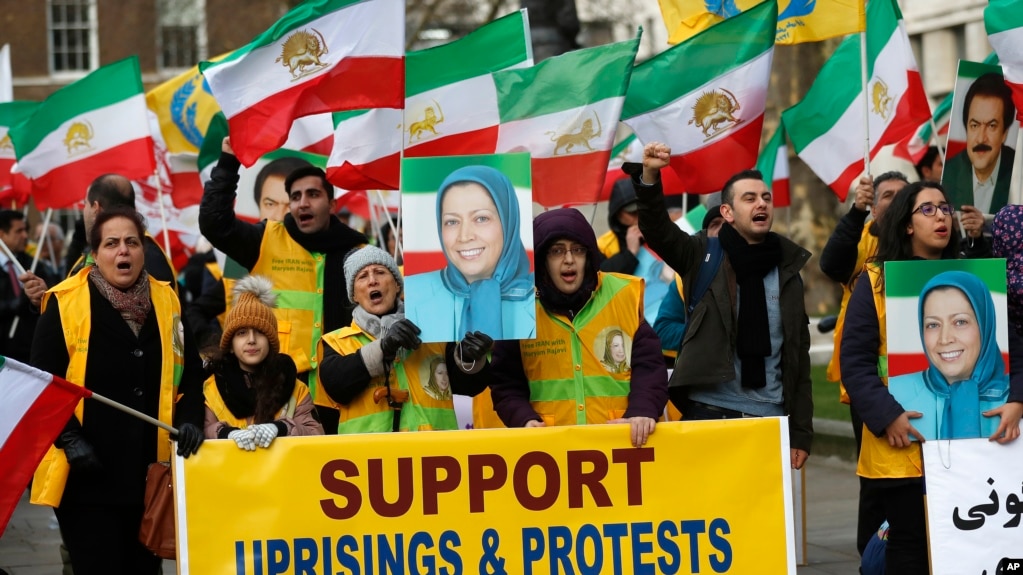
Support for the protestors from London


The very worst thing for those pitting their lives against tyranny is silence from the rest of the world. That’s what tyrants depend upon to stamp out the sparks of freedom.

President Trump stepped up to the plate by repeatedly tweeting support and encouragement to the protesters and issuing warnings designed to undermine and weaken the regime.

But from all those progressive folk in the West who never stop parading their anti-fascist credentials and signaling their support for the persecuted and for human rights there has been… silence.

The media tried to dismiss the uprising as merely an economic protest. Instead of condemning the regime for killing and jailing protesters, the media condemned Trump for supporting them.

The British and EU governments, with their vast and sordid financial ties to the regime, have given zero support to the revolt, offering merely bromides about the need to avoid loss of life. In the US, former Obama administration staffers have been desperately playing down the uprising.

Obama’s Middle East coordinator Philip Gordon called on Trump “to keep quiet and do nothing” in response to the protests.

The Iranians, he claimed, wouldn’t want Trump’s support. His threat to end the nuclear deal, his unconditional support for “Iran’s biggest adversaries, Saudi Arabia and Israel” and his recent recognition of Jerusalem as Israel’s capital would give the Iranians reasons to unite against him.

Gordon thus stupidly conflated the Iranian people with the Iranian regime.

It’s the regime that is against America on all these issues. The Iranian people, by contrast, have no intrinsic prejudice against Israel, have no reason to reject the recognition of Jerusalem and are unlikely to lose sleep over the ending of the nuclear deal, nor America’s alliance with the regime’s foes in Saudi Arabia.

For the protesters were also shouting: “No to Gaza, no to Lebanon! Our life only for Iran!” They don’t support the regime’s aim of regional and global domination. They want Iran to be run for the benefit of Iranians.

For this, they desperately need Trump’s support. They want to know that the US won’t support the regime. Obama did that, and it hurt the Iranian people.

Obama thus bent over backward to give Iran a free pass. According to Politico, his administration stymied an FBI-led operation to shut down Hezbollah’s drug-running, terrorism- financing racket.

In the 2016 prisoner swap deal with Iran, he released several men who his own law enforcement agencies believed posed a danger to national security.

And in the 2009 Green Revolution, Obama abandoned the Iranian people by refusing to give the protesters support.

All of this was to secure the nuclear deal – which has merely empowered Iran to use the money released by sanctions relief to strengthen its terrorist infrastructure and step up its malign and aggressive meddling in the rest of the region.

If the Iranian uprising is stamped out, it will be because of the absence of support from Britain and Europe. Their silence makes them complicit with a genocidal regime at war with the West and has caused them shamefully to betray a brave people fighting for its freedom.

Jewish Agency Chairman Natan Sharansky, himself a former Prisoner of Zion at the hands of the brutal Soviet regime, agrees with the Melanie Phillips’ position, writing in the Washington Post that the West should stop dithering and support the Iranian protestors:

As an opinion piece in the New York Times recently put it, the best way for the U.S. government to help the Iranian protesters is to “Keep quiet and do nothing.”

Fortunately, President Trump and Israeli Prime Minister Benjamin Netanyahu have already shown themselves unwilling to follow this advice. Even so, it is vital to understand why failing to support the protesters at this critical juncture would constitute a moral and strategic mistake — one of potentially historic proportions.

Consider what happened in 2009, when Iranians came out in large numbers to denounce their country’s rigged presidential election. The response they received from the American government was decidedly tepid. The priority of then-President Barack Obama was to reach an agreement with Tehran over its nuclear program, and he and his advisers feared that they would alienate the regime by vocally supporting its detractors.

Yet subsequent events have proved these views completely wrong. This policy of non-interference discouraged protesters and reinforced the regime at the very moment when the opposite could have led to genuine change.

My experiences as a political prisoner and my decades of involvement with democratic dissidents around the world have shown me that all democratic revolutions have some elements in common. It is the drive of ordinary citizens to free themselves from government control over their thought, speech and livelihoods — to shed the burden of having to conform in public despite their private misgivings and grievances against the regime — that has propelled dissidents and revolutionary movements around the world, from Communist Russia to the Arab Spring to today’s Islamic Republic of Iran.

Any regime that refuses to respect its citizens’ most basic rights, and especially the right to think and speak freely, can maintain its power only by intimidation and force.

Dissidents know the penalties of speaking out but are compelled more by the desire for freedom than by fear. They are willing to brave the consequences, including the loss of their livelihoods, physical freedom and even their lives, to gain the liberty to speak their minds. Revolutions take place when enough people simultaneously cross that fateful line between silent questioning and open dissent, between cowering in fear and standing up for freedom. Once they do so, the regime can no longer contain the upsurge of opposition and must either begin to liberalize or collapse.

This is why a policy of silence on the part of world leaders is so misguided. What matters to Iranians debating whether to cross this decisive threshold is how much they dislike their own government, as well as their knowledge that the free world — those who share the basic principles for which they are fighting — stands behind them in their moment of truth.

… Our leaders must not be misled by the argument that publicly siding with Iran’s dissidents will give the regime an excuse to blame the protests on foreign meddling or crack down even harder on dissidents. The government in Tehran will do these things no matter what, since a regime as threatened as Iran’s is right now will take any steps in its power to deflect and suppress opposition.

Yet, world powers should go even further than this. They should warn Tehran — and thereby reassure protesters — that it must respect its citizens’ rights if it wishes to continue receiving benefits from their countries. Articulating a clear policy of linkage would put pressure on the regime to make genuine changes and give hope to protesters that their sacrifices will not be in vain.

These sterling words from Natan Sharansky stand in stark contrast to the utterly pathetic reaction from Britain’s establishment, particularly the Labour Party whose leader has never met a terrorist he couldn’t like.

Here’s a tweet from a spoof Jeremy Corbyn account, but the link is no spoof:

And more:

Even the leftist Independent calls on Britain to support the protestors and condemns the equivocation of the Labour Party:

Anyone with a conscience, meanwhile, knows that the Iranian government hangs gay people, tramples on women’s rights, has a poor human rights record and sponsors terrorism. It is not difficult, in a contest between such a regime and the right to free expression, to know which side is wearing the whiter hat.

Ms Thornberry’s warning that Westerners should not “simply impose our views” on other countries is the most appalling moral cowardice. There is nothing “Western” about universal human rights, and all representatives of the British people should stand up for them.

But let’s not just concentrate on the Labour Party who, after all, are not in power. What about the British government itself?

Allister Heath in the Telegraph laments Britain’s non-response:

What’s wrong with us? Why isn’t there loud, universal support from all shades of political opinion, in Britain and across the West, for the anti-regime protesters in Iran? Why such reluctance to encourage these brave young men and women who are risking their lives by taking on the theocrats?

Have we forgotten the difference between right and wrong, good and evil, or is it that our elites are now so embarrassed by Western values that they can no longer relate to those in other countries who also yearn for freedom and democracy?

Scandalously, but unsurprisingly, Mr Corbyn has yet to speak out about the protests: he was quick to condemn Donald Trump’s commonsensical recognition of Jerusalem as Israel’s capital, but has nothing to say about the murder of dozens of Iranians.

So much for the hard-Left. Why are the Tories and the (clearly hopeless) Foreign Office almost as silent, in effect aligning themselves with the worst of European foreign policy, despite the liberating potential of Brexit?

Why has Boris Johnson been so uncharacteristically mealy-mouthed? Why is the British government still clinging to the absurd notion that the Iranian nuclear deal was a good idea, rather than a shameful exercise in appeasement which ended up propping up an illegitimate regime while lining the pockets of a few European companies?

I understand that Boris feels he must tread carefully after the disastrous Nazanin Zaghari-Ratcliffe affair, but it is deeply disappointing that Mr Trump’s foreign policy towards Iran is far more ethical than Britain’s. We need a Kennedy-esque oration, a “we are all Tehranis” moment from our Foreign Secretary to give the rebels the kind of moral support they desperately need.

The Americans get this: Mr Trump – yes, Trump, the president despised by so-called liberals the world over – has adopted exactly the right tone in recent days, and Nikki Haley, his ambassador to the UN, has been superb and now looks like a future Republican presidential contender.

The reality is that there is no moral ambiguity when it comes to the Iranian protests, no shades of grey, no trade-off to be had for reasons of realpolitik. There are the good guys – the young, brave counter-revolutionaries seeking to overthrow the brutes who have ruled their country for so long – and then there is the regime, a barbaric and corrupt mob that has brought a once great society to its knees.

The protests were precipitated by economic chaos, as is often the case, but quickly mutated into open attacks on the regime. … In social terms, there has been an explosion in drug abuse, mental illness, depression and atomisation.

Most encouragingly, the protesters are furious that the regime is spending so much on financing terrorism and on its wars in Syria, Iraq, Lebanon and Yemen, rather than on its own people. They have been saying so, clearly, in demonstrations around the country.

This remarkable message – a powerful counter-blast to the pernicious idea that the Middle East is somehow different, that none of its people want democracy, individual liberty or toleration – is far more radical than the demands made during the 2009 uprising. If any country is ready for a real dose of modernisation, it’s Iran.

True, the protesters are disorganised and they disagree about much, but they deserve our support, and that of all of the global bodies supposedly concerned with human rights which have been pretending not to notice what has been going on (they are only interested in the “right” kinds of rights violation, that is those by Western countries).

We cannot be sure that a new, successful counter-revolution would not lead to chaos, but Iran doesn’t need an authoritarian regime to prevent tribal warfare and the Islamists are totally discredited, so the omens are better than they were in Afghanistan or Libya.

What is certain is that we’ve failed the Middle East appallingly in recent decades. We mustn’t also betray Iran again. Its dissidents need a clear signal that the world would be delighted to work, when the time is right, with a new government in Tehran. Foreign Secretary, are you listening?

The only foreign representative who does seem to be listening and is not afraid to express an opinion is the US Ambassador to the UN who overtly threatened the Iranian regime:

Let’s just hope that the world does not restrict itself to just “watching”.

Judge Reinstates Hamas/AMP Lawsuit

January 8, 2018

Judge Reinstates Hamas/AMP Lawsuit, Investigative Project on Terrorism, Abha Shankar, January 8, 2018

At a conference last week hosted by the Muslim American Society (MAS) and the Islamic Circle of North America (ICNA), Abuirshaid tried to erase Jews’ historical claim to Israel. He claimed the “Zionist Project” is a “form of apartheid” that seeks to “Judaize” Palestine. “In creating false Zionist historical and religious narratives, it’s a deliberate attempt to deny the indigenous people of Palestine, us, from their rights and their own land. And Jerusalem is the bedrock to forge and falsify the history of Palestine and Judaizing it,” he said.

That’s the kind of message that would have fit right in with any of the Palestine Committee groups. When the suit was originally filed last May, the Boims’ attorneys issued a statement explaining that Abuirshaid and the other defendants “directed and controlled the organizations in 1996 … that are legally obliged to pay the judgment won by the Boims.

“These defendants cannot escape their legal liability and accountability for murder by merely changing the names of their organization.

*****************************************

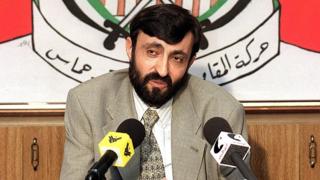
A Chicago federal judge on Thursday reinstated a lawsuit alleging that a virulently anti-Israel group and several of its activists are “alter egos and/or successors” of a defunct U.S. based Hamas-support network previously found liable for the murder of an American teen in a 1996 terror attack.

American Muslims for Palestine (AMP) routinely sponsors conferences that serve as a platform for Israel bashers, and openly approves “resistance” against the “Zionist state.” One AMP official acknowledged the goal is to “to challenge the legitimacy of the State of Israel.”

AMP is also one of the principal advocates of the Boycott, Divestment, and Sanctions (BDS) movement against the Jewish state. Its BDS campaigns include: Ramadan Date BoycottSodaStreamStop the JNFStolen Homes/Airbnb, and Stop G4S. Because they include groups dedicated to Israel’s elimination and single out Israel for criticism while they ignore other nations with severe human rights abuses, BDS campaigns are considered inherently anti-Semitic.

U.S. District Court Judge Sharon Johnson Coleman not only vacated her earlier dismissal of the case, she also authorized limited discovery in the case. “[T]his Court placed too much weight to defendants’ declarations without providing plaintiffs with the opportunity to conduct limited jurisdictional discovery on the existence of an alter ego relationship. Accordingly, this Court will vacate its previous order dismissing the case … and permit plaintiffs to conduct discovery solely to address jurisdiction.”

This is a major victory for the family of 17-year-old David Boim. He was shot dead in Israel in May 1996 by Hamas terrorists. In a historic judgment, Boim’s parents Stanley and Joyce Boim won $156 million in damages against the Islamic Association for Palestine (IAP) and other members of the U.S. Hamas support network called the “Palestine Committee.” The Committee was created by the Muslim Brotherhood to advance Hamas’ agenda politically and financially in the United States.

The IAP was the first to publish the genocidal, anti-Semitic Hamas charter in English. Its fundraisers benefited the Holy Land Foundation for Relief and Development (HLF), which – along with five former officials – was convicted in 2008 of illegally routing millions of dollars to Hamas. IAP fundraisers featured overt praise for Hamas, and skits in which Palestinians murdered Israelis.

A 1996 Dallas Morning News story captured the scene at one IAP rally:

Inside a Kansas City auditorium in 1989, a masked man stepped to a lectern and described in Arabic the “oceans of blood” spilled in Hamas’ armed attacks on Israeli soldiers and civilians.

He thanked two nonprofit organizations for being early allies: the Islamic Association for Palestine, sponsor of the conference, and the Occupied Land Fund [an early name for HLF].

An internal 1992 IAP document, “Islamic Action Plan for Palestine,” makes at least four specific references to Hamas, including its leadership role in the Palestinian intifada through “a lot of sacrifices from martyrs, detainees, wounded, injured, fugitives and deportees…”

IAP was among the first organizations the Muslim Brotherhood created in North America to specifically focus on the Palestinian cause, even preceding the Palestine Committee, the document said. Among the Palestine Committee’s tasks, “Asking the countries to increase the financial and the moral support for Hamas.”

At the time of the Boim judgment in 2004, IAP and other defendants claimed they were no longer in business and had no money to pay the damages. But that was a ruse, the Boims’ attorneys say, alleging that the defendants formed new organizations like the American Muslims for Palestine to escape their legal responsibility to pay damages. Successor groups, or alter egos, of organizations previously found liable for providing material support to Hamas need to pay the remaining judgment, the new litigation argues.
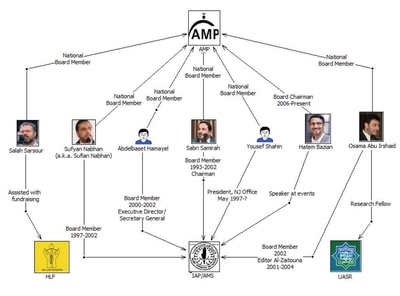
In 2015, the Investigative Project on Terrorism (IPT) first identified at least five AMP officials and speakers who worked in the Hamas-supporting “Palestine Committee.”

An April 2014 AMP-sponsored conference in Chicago, for example, featured former IAP Chairman Sabri Samirah.

“We are ready to sacrifice all we have for Palestine. Long Live Palestine,” Samirah said. “We have a mission here [in the U.S.] also to support the struggle of our people back there in order to achieve a free land in the Muslim world, without dictators and without corruption.”

The Boims’ attorneys say that AMP’s current leadership and donors are “significantly identical” to their Palestine Committee branches, including the Holy Land Foundation for Relief and Development (HLF), Islamic Association for Palestine (IAP), and the American Muslim Society (AMS) which served as another name for the IAP.

Rafeeq Jaber, a defendant in the new lawsuit, is a former IAP president and is now AMP’s registered agent in Chicago. AMP President Abdelbasset Hamayel was IAP’s secretary general. AMP’s conferences and other events are identical in their pro-Hamas message to conferences held earlier by IAP, including overlapping speakers’ lists.

AMP board member Osama Abuirshaid, a target of the current lawsuit, has close affiliations to both the IAP and the Northern Virginia think tank called the United Association for Studies and Research (UASR), a Palestine Committee branch that was headed by senior Hamas member Mousa Abu Marzook.

Abuirshaid served as editor of IAP’s Arabic periodical, Al-Zaytounah, a mouthpiece for pro-Hamas propaganda. The magazine also published advertisements by terrorist-tied charities, including HLF, the Global Relief Foundation (GRF), and the Benevolence International Foundation (BIF).

UASR published an academic journal that prosecutors in the HLF case say was “involved in passing Hamas communiques to the United States-based Muslim Brotherhood community and relaying messages from that community back to Hamas.”

Abuirshaid has openly expressed support for Hamas. He criticized Egyptian leader Abdel Fattah el-Sisi in a 2015 tweet for designating Hamas as a terrorist organization. Calling Egypt’s capital “Cairo Aviv,” Abuirshaid dismissed the move: “Look who’s talking!? A terrorist murder regime.”

In a 2014 article written in Arabic, he praised the “Palestinian resistance” against the “Zionist aggression” in Hamas-controlled Gaza: “The facts of the current Zionist aggression have clearly shown that the Palestinian resistance is no longer in the position of receiving slaps without the response of some of them, and even many of them responding. It also showed the creativity of the resisting Palestinian mind, consistent with the severity of its being unyielding with long-range rockets, high-explosive missiles and bombs, and unmanned aerial vehicles, most of which are domestically manufactured, being designed to attack the enemy at the doorstep of its military bases by sea, landing behind its lines through tunnels, etc. It is a slap that Israel receives from the Resistance every day, and it finds no response except through the cowardly weapon of targeting civilians with artillery, air and sea missiles to raise the human and economic costs of the Palestinians.”

Abuirshaid has also praised Hamas war tactics: “There is a difference between Hamas, whose youth renewed their adherence to their starting point determined on liberalization, and Fatah, which has grown old after deviating from the creed of liberation and resistance upon which it was established.”

“There is a difference between those who resist and those who compromise; between those who constitute an army for liberation, and those who ready battalions of lackeys; a difference between those who rise up for the blood of martyrs, and those who spill it in the wine glasses of Israel,” he added.

At a conference last week hosted by the Muslim American Society (MAS) and theIslamic Circle of North America (ICNA), Abuirshaid tried to erase Jews’ historical claim to Israel. He claimed the “Zionist Project” is a “form of apartheid” that seeks to “Judaize” Palestine. “In creating false Zionist historical and religious narratives, it’s a deliberate attempt to deny the indigenous people of Palestine, us, from their rights and their own land. And Jerusalem is the bedrock to forge and falsify the history of Palestine and Judaizing it,” he said.

That’s the kind of message that would have fit right in with any of the Palestine Committee groups. When the suit was originally filed last May, the Boims’ attorneys issued a statement explaining that Abuirshaid and the other defendants “directed and controlled the organizations in 1996 … that are legally obliged to pay the judgment won by the Boims.

“These defendants cannot escape their legal liability and accountability for murder by merely changing the names of their organizations,” they said.
Trump Ends Temporary Protected Status For 200,000 El Salvadorans

January 8, 2018

Trump Ends Temporary Protected Status For 200,000 El Salvadorans, BreitbartNeil Munro, January 8, 2017

Alex Wong/Getty Images

President Donald Trump’s deputies are ending the often-extended ‘TPS’ temporary refugee status for up to 200,000 El Salvadoran migrants, which was first granted when earthquakes hit their home country in 2001.

The TPS decision — reported by numerous media outlets — underlines Trump’s determination to enforce the nation’s immigration laws, and to push his “Buy American, Hire American”  inauguration-day promise, despite growing pressure from the GOP’s business-first wing, Democrats and their allies in the establishment media.

The decision also pressures Democrats to accept Trump’s immigration reforms —  or else run as the pro-amnesty political party in November 2018.

The secretary of the Department of Homeland Security is responsible for deciding whether or not to extend TPS status, based on whether the original disaster is still damaging the country. Secretary Kirstjen Nielsen is Trump’s DHS secretary.

Most of the 200,000 El Salvadoreans will return home by September 2019, likely boosting the small nation’s economy with savings and skills earned in the United States during the last 17 years.

The decision will free up jobs for American citizens and other legal immigrants.

Many of the El Salvador migrants were living illegally in the United States when the earthquake hit their home country in 2001. Since then, the “Temporary Protected Status” has been 11 times by Presidents George W. Bush and Barack Obama.

TPS. An official at the Comite Hispano de Virgina in Falls Church takes a photo of Salvadoran national Douglas Garcia Martinez 11 November, 2002, to attach to his paperwork to extend his Temporary Protected Status (TPS).

The Washington Post offered several examples of illegals who have used the TPS program to establish themselves in the United States:

Losing TPS “would be catastrophic for my family,” said Edwin Murillo, a 41-year-old father of two reached by phone at his home in Texas …

Murillo had studied business administration in El Salvador but left in 1999 because, he said, jobs were scarce. He entered the United States on a visa, which he overstayed, and in 2001, following the earthquakes back home, he and his wife jumped at the chance to apply for TPS.

A second  Washington Post article quoted two more illegals who used the TPS program:

[Oscar] Cortez, a father of two, said he came to the United States in 2000, after he dropped out of college in El Salvador because he couldn’t afford the tuition and was downsized out of a job at a textile factory. Undocumented at first, he worked low-wage, sporadic jobs laying carpet or cutting lawns …

His co-worker Jaime Contreras, a welder on the project that will extend Metrorail to Dulles International Airport, said his job has transformed his family’s lives, both in Maryland and in El Salvador. As a child in El Salvador, Contreras went to school in the mornings and to work in the afternoons, painting houses at age 7 and welding at 11.

At 20, he moved to the United States seeking higher wages.

Trump’s deputies have also ended TPS status for migrants from several other countries, including Haiti and Nicaragua. DHS deputy secretary Elaine Duke, however, gave a short extension to 57,000 Hondurans in late 2017.

Democrats and pro-migration advocates strongly criticized the decision to end temporary protected status for the El Salvador migrants:

The Trump administration’s decision to end TPS for El Salvador breaks with our country’s moral obligation to care for our neighbors who desperately need our help and safe refuge. https://twitter.com/washingtonpost/status/950379353967341569 

DHS has ended TPS for El Salvadorians – another step of Trump’s racist agenda to force people of color into the shadows.

Congress must act now to save TPS or they’ll be complicit in mass expulsion of people who have lived in the US for nearly 20 years.http://wapo.st/2FhaIMn 

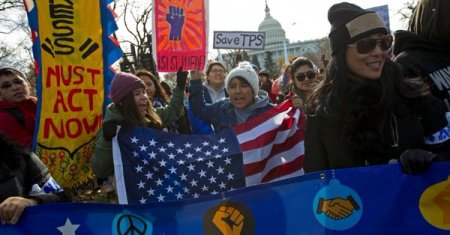
Demonstrators march Dec. 6 in Washington during a rally in support of the Deferred Action for the Childhood Arrivals and Temporary Protected Status programs. (Jose Luis Magana/AP)

OK some thoughts on today’s cruel decision to terminate  for 200K Salvadorans. This was completely unnecessary and leaves hundreds of thousands of people in limbo (not to mention their families.) https://www.washingtonpost.com/news/world/wp/2018/01/08/200000-salvadorans-will-be-forced-to-leave-the-u-s-or-face-deportation-as-trump-administration-ends-immigration-protection/?tid=ss_tw-bottom&utm_term=.c468c8f7dc46 

TPS for El Salvador was ended this morning, with an 18 month extension. This devastating news affects 200,000 individuals. This TPS group makes up about 60% of all TPS holders & have 193,000 US citizen children. This decision is going to break families apart.

DHS ends TPS for Salvadorans, continuing their assault on immigrants in America with deep ties and strong equities. Expelling Salvadorans and others with TPS, many of whom own homes and have US citizen children, is cruel and heartless. It’s now up to Congress to step up.

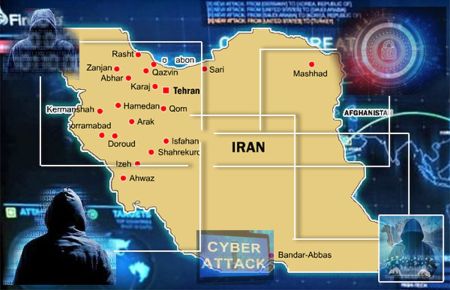
Iran’s cyber war over 48 million smartphone users was sparked by protest demos

January 8, 2018

Iran’s cyber war over 48 million smartphone users was sparked by protest demos. DEBKAfile, January 8, 2018

Tehran’s Internet shutdown, its doomsday weapon for breaking up the new year’s anti-government protests, was routed with astonishing speed.

The successful cyber campaign, waged against Iran by certain Western and Arab intelligence agencies led by the US, during the week-long protest rallies across Iran, is gradually breaking surface. Two new comments shed light on this contest and the future direction of Iran’s protest movement after it petered out last Thursday.

Central Intelligence Agency Director Mike Pompeo corrected Fox Sunday interviewer Chris Wallace on Jan. 7, who noted that the wave of demonstrations was over. Pompeo put in firmly: “They are not behind us” – meaning that, according to his information, more are on the way.

And in Tehran, new Iranian laws have cut English classes out of the primary school curriculum after supreme leader Ayatollah Ali Khamenei ruled that learning English at an early age paves the way for the West’s “cultural invasion.” The Shiite theocracy is clearly engaged in another desperate bid to segregate the population from external influences. Khamenei hopes to achieve this by depriving the next generation of the essential key for accessing the world web – the English language.

But when every second Iranian holds a smartphone complete with apps in his pocket, totally shutting down social media communications proved beyond the powers of the regime’s cyber experts last week. They tried and failed to block Iran’s most popular Telegram app, which has 40 million users, in order to disrupt communications among the protest rallies.

Before the eruption of this upheaval, Western intelligence agencies had ranked Iran as the sixth cyber power in the world after the US, Britain, China, Russia and Israel. But when Western and Arab agencies operating behind the anti-government movement acted to reverse the government shutdown and restore the networks, they were amazed to find how easy it was. The US State Department played its part by encouraging virtual private networks to help users gain access to blocked websites. In no time, the cyber weapon had slipped out the grasp of the ayatollahs’ regime.

DEBKAfile’s intelligence sources were not surprised to learn that Tehran was sending out feelers to Moscow and Beijing appealing for expert assistance to combat Western raids on its communications networks. This has put Vladimir Putin and Xi Jinping in an awkward position. Neither is inclined at this moment to run slam up against President Donald Trump on Iran, certainly not in the field of cyber warfare. For Russia, which is already entangled in siding with Iran’s military positions in Syria, the cyber issue is an ultra-sensitive subject for his overt and covert relations with Washington. The Chinese president is in the same boat as Putin.