Archive for March 14, 2017

Russian elite units land on Egypt-Libya border

March 14, 2017

Russian elite units land on Egypt-Libya border, DEBKAfile, March 14, 2017

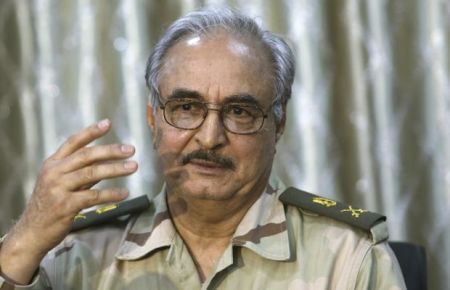
General Khalifa Haftar 

Russian elite units armed with attack drones were detected on Tuesday, March 14 landing at the big Egyptian air base of Sidi Barrani in the Western Desert near the Libyan border, US military sources reported The incoming Russian troops took up position 95 km from the Libyan border and 240km from the eastern Libyan oil and gas terminals at Tobruk port in eastern Libya. They arrived after their Libyan ally suffered a major defeat.

On March 3, Gen. Khalifa Hafter’s Libyan National Army (LNA) militia was attacked in the central region by the rival Benghazi Defense Brigades and driven out of five towns, including the country’s biggest oil terminals at Ras Sidi and Ras Lanuf.

Officials in Washington, Moscow and Cairo declined to comment on whether or not the Russians had acted in coordination the Trump administration.

According to DEBKAfile’s military sources, the Russians and Egyptians appear to be preparing to support a counter-offensive by Hafter’s militia to recover the oil facilities.

For some months now, Moscow, Cairo and Qatar have been working together to bolster Gen. Haftar, who strongly challenges the UN-backed government of Tripoli. His LNA has taken delivery of Russian fighter jets and tanks, while the Egyptian air force has bombed the mostly Islamist militias fighting him, some of them branches of the Islamic State or Al Qaeda.

Although Haftar’s troops are engaged in battle with rival militias across a broad swathe of territory, from Sirte in central Libya to Tobruk in the east, his main objective is to seize control of the oil and gas fields and refineries in the eastern ports.

For President Vladimir Putin, support for Gen, Hafter is a key step in Russia’s military and strategic reach for footholds across the Middle East. He has chosen Tobruk as the next Russian air and naval base in the Mediterranean as a counterpoint to Latakia in Syria. Hafter’s LNA will provide protection.

DEBKAfile first picked up on this development three months ago, when our military sources spotted the Russian aircraft carrier, Admiral Kuznetsov leaving Syrian waters and heading west. The carrier sailed into Tobruk port on Jan. 12. Gen. Hafter was invited on board for a tour of the ship’s facilities and connected to Defense Minister Sergei Shoigu in his Moscow office for a videotaped chat. This was an exceptional gesture on Moscow’s part in support of a controversial Middle East figure.

More recently, the Libyan general visited Cairo to discuss the details of cooperation between the Egyptian army and the LNA with President Abdel-Fatteh El-Sisi.

Cartoons and Video of the Day

March 14, 2017

Reason TV via YouTube


H/t Washinton Times


H/t Vermont Loon Watch


H/t Vermont Loon Watch


H/t Joop


H/t Tom Fernandez28’s Blog


President Trump’s Executive Order Could Mean Huge Gov Downsizing

March 14, 2017

President Trump’s Executive Order Could Mean Huge Gov Downsizing, Front Page Magazine (The Point), Daniel Greenfield, March 14, 2017

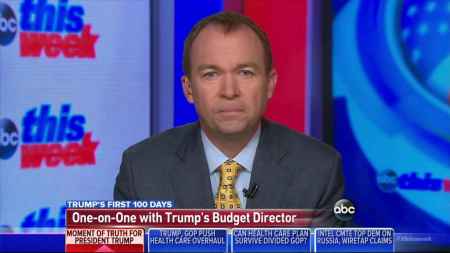
[T]his could be the opening for a plan to dramatically transform and downsize the government in a common sense way. Much of this will be in the hands of the OMB director. That would be Mick Mulvaney. Mulvaney was a conservative congressman with a business background and a reputation as a fiscal hawk. Now his report may very well remake the government.

************************************

The Executive Order on a Comprehensive Plan for Reorganizing the Executive Branch is bulky title. But its potential is even bigger. Here’s why.

Section 1.  Purpose.  This order is intended to improve the efficiency, effectiveness, and accountability of the executive branch by directing the Director of the Office of Management and Budget (Director) to propose a plan to reorganize governmental functions and eliminate unnecessary agencies (as defined in section 551(1) of title 5, United States Code), components of agencies, and agency programs.

Note the agencies part.

Sec. 2.  Proposed Plan to Improve the Efficiency, Effectiveness, and Accountability of Federal Agencies, Including, as Appropriate, to Eliminate or Reorganize Unnecessary or Redundant Federal Agencies.  (a)  Within 180 days of the date of this order, the head of each agency shall submit to the Director a proposed plan to reorganize the agency, if appropriate, in order to improve the efficiency, effectiveness, and accountability of that agency.

And…

(d)  In developing the proposed plan described in subsection (c) of this section, the Director shall consider, in addition to any other relevant factors:

(i)    whether some or all of the functions of an agency, a component, or a program are appropriate for the Federal Government or would be better left to State or local governments or to the private sector through free enterprise;

(ii)   whether some or all of the functions of an agency, a component, or a program are redundant, including with those of another agency, component, or program;

(iii)  whether certain administrative capabilities necessary for operating an agency, a component, or a program are redundant with those of another agency, component, or program;

(iv)   whether the costs of continuing to operate an agency, a component, or a program are justified by the public benefits it provides; and

(v)    the costs of shutting down or merging agencies, components, or programs, including the costs of addressing the equities of affected agency staff.

In short, this could be the opening for a plan to dramatically transform and downsize the government in a common sense way. Much of this will be in the hands of the OMB director. That would be Mick Mulvaney. Mulvaney was a conservative congressman with a business background and a reputation as a fiscal hawk. Now his report may very well remake the government.


Congress Demands Investigation Into Obama Admin Meddling in Foreign Elections

March 14, 2017

Congress Demands Investigation Into Obama Admin Meddling in Foreign Elections, Washington Free Beacon, March 14, 2017

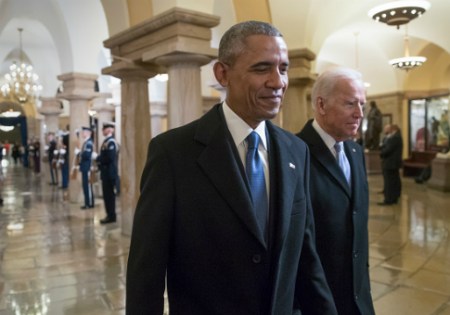
Former President Barack Obama / Getty Images

The latest disclosures of this activity mirror efforts by the Obama administration to send taxpayer funds to Israeli organizations that opposed Prime Minister Benjamin Netanyahu in the country’s last election.

****************************

A group of leading senators is calling on newly installed Secretary of State Rex Tillerson to immediately launch an investigation into efforts by the Obama administration to sway foreign elections by sending taxpayer funds to “extreme and sometimes violent political activists” that promote leftist causes, according to a copy of the letter.

The lawmakers disclosed multiple conversations with foreign diplomats who outlined active political meddling by the Obama administration’s State Department, including the use of taxpayer funds to support leftist causes in Macedonia, Albania, Latin America, and Africa.

A portion of this State Department funding appears to have gone to organizations supported by the controversial liberal billionaire George Soros, according to the letter, which was authored by Republican Sens. Mike Lee (Utah), Jim Inhofe (Okla.), Thom Tillis (N.C.), Ted Cruz (Texas), David Perdue (Ga.), and Bill Cassidy (La.).

The senators are asking Tillerson to launch a full-scale investigation into these funding efforts in order to determine how exactly the Obama administration sought to promote left-leaning causes and political parties across the globe.

The latest disclosures of this activity mirror efforts by the Obama administration to send taxpayer funds to Israeli organizations that opposed Prime Minister Benjamin Netanyahu in the country’s last election.

Political leaders from a range of nations spent months informing the lawmakers about these activities.

“Over the past few months, elected officials and political leaders of foreign nations have been coming to me with disappointing news and reports of U.S. activity in their respective countries,” Lee said in a statement. “This includes reports of diplomats playing political favorites, USAID funds supporting extreme and sometimes violent political activists, and the U.S. government working to marginalize the moderates and conservatives in leadership roles.”

“This sort of political favoritism from our missions around the world is unacceptable and endangers our bilateral relationships,” he said.

The senators are seeking an investigation that would review “all funds associated with promoting democracy and governance and review the programs, accounts, and multiplicity of U.S. entities involved in such activities.”

Such an investigation could shed light on the distribution of taxpayer funds to organizations and causes meant to instigate left-leaning political change abroad.

The letter insists that Tillerson should “review how all our tax dollars are being utilized in order to halt activities that are fomenting political unrest, disrespecting national sovereignty and civil society, and ultimately undermine our attempts to build beneficial international relationships.”

The lawmakers outline specific evidence of political meddling.

“We have received credible reports that, over the past few years, the U.S. Mission there has actively intervened in the party politics of Macedonia, as well as in the shaping of its media environment and civil society, often favoring left-leaning political groups over others,” they wrote.

This activity was pushed by USAID and groups associated with Soros’ Open Society Foundations, according to the lawmakers.

The organizations are said to have pushed a “progressive agenda” meant to “invigorate the political left” using taxpayer funds, according the letter.

“Respected leaders from Albania have made similar claims of U.S. diplomats and Soros-backed organizations pushing for certain political outcomes in their country,” the lawmakers wrote.

“Time and again, foreign leaders visiting Washington have expressed concerns to us about how American taxpayer funds are being used counterproductively in their respective countries,” the lawmakers disclosed, referring to efforts undertaken in Latin America and Africa.

This type of interference in foreign countries must stop immediately, the lawmakers said.

Kuwaiti Daily: Missile, Arms Factories Built By IRGC In Lebanon Have Recently Been Handed Over To Hizbullah

March 14, 2017

Kuwaiti Daily: Missile, Arms Factories Built By IRGC In Lebanon Have Recently Been Handed Over To Hizbullah, MEMRI, March 14, 2017

The Kuwaiti daily Al-Jarida reported on March 11, 2017, citing an aid to Mohammad Ali Jafari, commander of the Iranian Revolutionary Guards Corps (IRGC), that Iran established facilities for manufacturing missiles and other weapons in Lebanon and has recently handed them over to the management and oversight of Hizbullah. According to the daily’s source, the facilities are more than 50 meters underground and heavily shielded against aerial attacks. He also clarified that various parts of the missiles are manufactured in different factories and then assembled together.

The following is a translation of the report:[1]

The Al-Jarida report

With Iran facing growing pressures from the Donald Trump administration and the Israeli government under Binyamin Netanyahu, an aid to the IRGC commander told Al-Jarida that Iran has built factories [for manufacturing] missiles and [other] weapons in Lebanon and has recently turned them over to Hizbullah. In response to statements by Iranian Defense Minister Hossein Dehghan several days ago – who said that Hizbullah is capable of manufacturing missiles [that can] hit any part of Israel [but] gave no details or explanations – a knowledgeable source who wished to remain anonymous said that, after Israel destroyed an Iranian arms factory in Sudan several years ago that had supplied arms to Hizbullah, and after [Israel also] bombed an arms convoy that was intended to reach Hizbullah via Syria, the IRGC launched a project for establishing arms factories in Lebanon [itself]. [The source] also claimed that a special department has been established at the IRGC’s Imam Hossein University [in Tehran] to train Lebanese and other experts, and that hundreds of experts have already been trained.

“According to the source, the factories are more than 50 meters underground, and above them are several layers of shielding so that Israeli planes cannot hit them. Moreover, manufacture of the missiles does not take place in one factory; different parts are built in different factories and then assembled together. He added that the transfer of the factories to Hizbullah’s [management] was gradual but that they have been under full Hizbullah management and oversight for three months now.

“The source stressed that Hizbullah is able to manufacture several kinds of missiles, some with a range of over 500 km, including surface-to-surface and surface-to-sea missiles; torpedoes launched from light high-speed boats; spy drones and [attack] drones armed with weapons and rockets; anti-tank missiles, and fast armored boats. He clarified that weapons produced in these plants have been used in the Syria war and were proved to be effective. Anti-tank missiles managed to destroy car bombs that targeted Hizbullah fighters. He [also] noted that Hizbullah manufactures cannon, machine guns, anti-aircraft guns, mortars, and various [other] missiles and bullets, especially armor-piercing ones…”

_____________________________

[1] Al-Jarida (Kuwait), March 11, 2017.

Dire Jordanian straits

March 14, 2017

Dire Jordanian straits, Israel Hayom, Daniel Pipes, March 14, 2017

Palestinians, according to most estimates, constitute a substantial majority of the population and present the deepest division. It’s common to speak of “Jordanians” and “Palestinians” even though the latter are citizens and children and grandchildren of citizens. As this suggests, the sense of being separate from and superior to the mostly tribal peoples of the East Bank has not diminished over time, especially not when Palestinians have achieved economic success.

I asked nearly all of my 15 interlocutors (who represented a wide range of viewpoints) about a return of Jordanian sovereignty to the West Bank. I regret to report that every one of them strongly rejected this idea. “Why would we want that headache?” they all seemed to say. Accepting their verdict means Israel has no practical solution to its West Bank conundrum, so its reluctant and unwanted sovereignty over Palestinians will likely continue into the distant future.

***************************************

“We’re in dire straits,” Jordan’s King Abdullah said half a year ago. After recently completing a week of intensive travels and discussions throughout Jordan, I found no one disagreeing with that assessment. Jordan may no longer be hyper-vulnerable and under siege, as it was in the past, but it does face possibly unprecedented problems.

Created out of thin air by Winston Churchill in 1921 to accommodate British imperial interests, the Emirate of Transjordan, now the Hashemite Kingdom of Jordan, for almost a century has led a precarious existence. Particularly dangerous moments came in 1967, when pan-Arabist pressures led King Hussein to make war on Israel and lose the West Bank; in 1970, when a Palestinian revolt nearly toppled the king; and 1990-1991, when pro-Saddam Hussein sentiments pushed him to join a hopeless and evil cause.

Today’s dangers are manifold. Islamic State lurks in Syria and Iraq, just beyond the border, attractive to a small but real minority of Jordanians. The once-robust trade with those two countries has nearly collapsed — and with it, Jordan’s lucrative transit role. In a region bountiful in oil and gas, Jordan is one of the very few countries to have almost no petroleum resources. City dwellers receive water just one day a week and country dwellers often even less. Tourism has declined, thanks to the Middle East’s notorious volatility. King Abdullah’s recent assertion of authority grates on those demanding more democracy.

The core issue of identity remains unresolved. As a country of massive immigration for over a hundred years (even exceeding the numbers going to Israel), it has received waves of Palestinians (in 1948-1949, 1967, and 1990-1991), Iraqis (2003), and Syrians (since 2011). Palestinians, according to most estimates, constitute a substantial majority of the population and present the deepest division. It’s common to speak of “Jordanians” and “Palestinians” even though the latter are citizens and children and grandchildren of citizens. As this suggests, the sense of being separate from and superior to the mostly tribal peoples of the East Bank has not diminished over time, especially not when Palestinians have achieved economic success.

The country’s strengths are also formidable. Surrounded by crises, the population is realistic and wary of trouble. The king enjoys an undisputed position of authority. Intermarriages and the influx of Iraqis and Syrians are eroding the historic divisions between Palestinians and others. The population enjoys a high level of education. Jordan has a good reputation around the world.

Then there’s Israel. “Where are the fruits of peace?” is a common refrain about Jordan’s 1994 treaty with Israel. Politicians and the media may not say so, but the answer is blindingly obvious: Whether it is using Haifa as an alternative to the Syrian land route, the purchase of inexpensive water, or the provision of plentiful gas (which is already being delivered), Jordan benefits directly and substantially from its ties with Israel. Despite this, a perverse social pressure against normalization with Israel has grown over time, intimidating absolutely everyone and preventing relations with the Jewish state from reaching their potential.

One Jordanian asked me why Israelis accept being treated like a mistress. The answer is clear: Because Jordan’s welfare ranks as a paramount Israeli priority, successive governments accept, even if through gritted teeth, the calumnies and lies told about Israel in the press and on the streets. Though they are too polite to say so, they clearly wish the king would take hold of this issue and point to the benefits of peace.

On a personal note: Since 2005, I have been advocating for “Jordan to the West Bank, Egypt to Gaza: The Three-State Solution” as a way to solve the Palestinian problem.

Accordingly, I asked nearly all of my 15 interlocutors (who represented a wide range of viewpoints) about a return of Jordanian sovereignty to the West Bank. I regret to report that every one of them strongly rejected this idea. “Why would we want that headache?” they all seemed to say. Accepting their verdict means Israel has no practical solution to its West Bank conundrum, so its reluctant and unwanted sovereignty over Palestinians will likely continue into the distant future.

Summing up the visit: Jordan has muddled through many crises and may do so again, but the concatenation of current dangers pose an extraordinary challenge to Jordan and its many well-wishers. Will Abdullah cope with these “dire straits”?

Iraqi Kurds Unite Ahead of March 21 Confrontation with Iran

March 14, 2017

Iraqi Kurds Unite Ahead of March 21 Confrontation with Iran, Clarion ProjectRyan Mauro, March 14, 2017

(What, if anything, can/will the Trump administration do to help overthrow the Mad Mullahs? Iran seems ripe for regime change, please see, e.g., From Execution to Medieval Torture: “Iran’s Mandela” Ayatollah Boroujerdi, and In Iran, A Nationwide Teachers’ Demonstration.— DM)

Clarion Project’s National Security Analyst Prof. Ryan Mauro & Legal Analyst Jennifer Breedon in Iraq with Hossein Yazdanpanah, the leader of the Kurdistan Freedom Party (PAK)

Its leader, Mustafa Hijri, said in a speech in Europe in October 2016 that his group was not fighting just for Iranian Kurds, but for the replacement of the current theocratic Iranian regime with a secular democracy for all. He asked the “progressive and democratic forces of the world” to support the PDKI and other Iranians seeking to topple the government.

Kurds are an oppressed minority in Iran, representing about 10 percent of the population (between 8 and 10 million people). According to the U.N., almost half of the political prisoners in Iran are Kurdish and about one-fifth of the executed prisoners last year were Kurdish.

******************************

Mark March 21 on your calendar. Six armed Kurdish parties in Iraq have united ahead of expected protests in Iran on that date. Both the Iranian regime’s Revolutionary Guards Corps and an Iranian Kurdish militia have held military exercises in preparation for expected conflict.

The six groups are preparing for protests in the Kurdish areas of Iran to celebrate the Kurdish New Year, Newroz, on March 21. Holiday events become the scene of political protests, Iranian regime repression and even clashes.

But the Kurdish alliance says this time will be different because they are unified, preparing in advance and agreed to jointly collect and share intelligence in January for a common defense against the Iranian regime.

“There always have been activities in Kurdistan for celebrating Newroz and these activities always are opportunities for people to express their resistance against the fact that they have been denied of their basic rights.

“Using symbols, songs and gatherings, youth in Newroz have always shown their anger and resentment toward the lasting oppression of Kurds in Iran,” explained the U.S. representative of the Democratic Party of Iranian Kurdistan (PDKI).

The PDKI recently held a military exercise near the border with Iran in preparation for a “full guerilla fight,” in the words of one of its officials. The Iranian Revolutionary Guards Corps likewise held a military exercise in the Kurdish-majority province of Kermanshah, where protests and clashes are expected.

PDKI has about 2,000 fighters in the border area between the autonomous Iraqi Kurdistan region and Iran. It declared the end of a 20-year ceasefire with Iran last year and openly said it was sending its Peshmerga fighters into Iranian Kurdistan, but would not fire the first shot.

The Kurdish Rudaw newspaper describes PDKI as “historically considered the most formidable Kurdish military organization opposing the Islamic Republic in Tehran.”
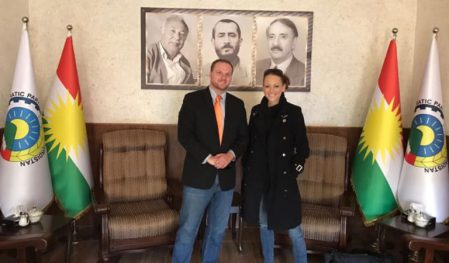
Clarion Project’s National Security Analyst Prof. Ryan Mauro & Legal Analyst Jennifer Breedon inside the headquarters of the Democratic Party of Iranian Kurdistan (PDKI) on a recent trip to Iraq.

Its leader, Mustafa Hijri, said in a speech in Europe in October 2016 that his group was not fighting just for Iranian Kurds, but for the replacement of the current theocratic Iranian regime with a secular democracy for all. He asked the “progressive and democratic forces of the world” to support the PDKI and other Iranians seeking to topple the government.

A Shiite political bloc within the Iraqi parliament called on the Iraqi government to kick out the Kurdish forces that fight the Iranian regime in January. The Kurdish parties attributed the move to Iranian influence, pointing out that it came after two bombings targeted the office of the PDKI in Koye, Iraq in December. Seven people died. The party blamed Iran for the attack.

Prior to the attack on the PDKI, Iranian Supreme Leader Ayatollah Khamenei accused Saudi Arabia of arming Kurdish opposition forces through its consulate in Iraqi Kurdistan. Khamenei demanded that the Kurdish Regional Government stop all opposition activity and close the Saudi consulate, neither of which happened.

The other Iraqi Kurdish parties in the alliance are the Kurdistan Democratic Party of Iran (KDPI), Khabat and three groups all bearing the name of Komala.

Another group that is likely to be active in the confrontation with Iran but is not part of the six-party alliance is the Kurdistan Freedom Party (PAK). I met their leader Hossein Yazdanpanah in January in Iraq at one of his camps near the battlefield with ISIS.

Kurds are an oppressed minority in Iran, representing about 10 percent of the population (between 8 and 10 million people). According to the U.N., almost half of the political prisoners in Iran are Kurdish and about one-fifth of the executed prisoners last year were Kurdish.

There was significant repression last year resulting in bloody clashes between the PDKI and other Kurdish militants on one side and the Iranian regime on the other. It received almost no attention from the West, a rather unsurprising development considering the U.S. turned away from Iran’s 2009 Green Revolution that could have positively changed the world.

If the Iranian Kurdish opposition in Iraq has its way, then the U.S. will have another opportunity to support the Iranian people. In my meetings with Iranian Kurds in Iraq, I was struck by how much hope they invested in the hope that, despite the U.S.’ mistakes and overlooking of their cause, the U.S. would eventually come around and support them—not only because it is in the U.S.” interest, but because America is a good country with good people.

America and the West more broadly should not repeat the mistakes of the past.

Let’s hope that when the Kurds rise up against the Iranian regime on March 21, they will be joined by a chorus of freedom-loving voices eager to see them triumph over Islamist tyranny.

Turkey’s long term plans are off to a good start in Holland

March 14, 2017

Turkey’s long term plans are off to a good start in Holland, Israel National News, Giulio Meotti, March 13, 2017

(Please see also, Europe’s ‘Turkish Awakening’. Will the native-Dutch or the Turks win? — DM)

The municipality of Amsterdam once had a fight with the Turkish Milli Görüs over the height of a minaret. The Turks wanted it 42 meters high, the Dutch were not willing to have it rise above 34. A compromise was found at 40. Milli Gorus was founded by former Turkish Prime Minister Necmettin Erbakan and it is one of the bastions of power of President Recep Tayyip Erdogan. It is one of Erdogan’s “long-reaching arms”, as defined in a report by the Center for Freedom in Stockholm. The Ankara authorities control half of the 500 mosques in the Netherlands.

In the last few days, the “war” between Turkey and the Netherlands has been fought over Turkish ministers who have been barred from holding campaign rallies in Holland. It is the culmination of a year of tensions. The vast majority of the Turkish community in the Netherlands is composed of Erdogan’s supporters and these are ready to resort to any method, including violence.

Erdogan tried to intimidate the freedom of expression of Dutch journalists. He ordered the arrest of Ebru Umar, A Turkish-Dutch journalist who has mocked him on Twitter. Then he tried to sue the De Telegraaf, which published a cartoon of Erdogan as a monkey crushing freedom of speech. And Erdogan’s lawyers have sought to prosecute the comedian Hans Teeuwen, a friend of the slain filmmaker Theo van Gogh, who on radio mocked “the Sultan”. Janny Groen of the Dutch newspaper De Volkskrant reports that Erdogan’s Turkish opponents in the Netherlands are intimidated: “Alevis, Kurds, Turks, seculars and followers of Fethullah Gülen.”

The Hizmet movement, accused by Erdogan of being behind the failed coup, has come under attack in the Netherlands. In Eindhoven, an educational center was stoned. Molotov cocktails were thrown at a Turkish foundation in Apeldoorn. The imam Necmi Kaya, who preached for thirty years in the Dutch city of Haarlem, was almost lynched during a visit at the Dutch Selimiye Mosque, under the control of the Turkish Ministry of Religious Affairs.

Journalists of the Zaman Vandaag group, adverse to Erdogan, are called “CIA agents” and threatened. Including the editor, Mehmet Cerit, who requested protection from the Dutch police. A well-known Turkish imam, Halil Celik, said to Cerit that he is ready to “die” for Islam, but also to “kill”.

And then the calls to boycott Turkish companies in the Netherlands owned by Erdogan’s critics. The police department of Rotterdam had to create an ad hoc unit to monitor such cases following the failed coup. Mustafa Ayranci, head of the union of Turkish workers in the Netherlands, said: “People are afraid, like in a tyranny. ‘Who will denounce me?’ they ask.”

There was the scandal caused by the Turkish consul in Rotterdam, Sadin Ayyildiz, who secretely asked the Dutch Turks to denounce Erdogan’s critics. Two days later, a Turkish owner of a company, Ali Ekrem Kaynak, was beaten in Amsterdam.

In December, it was discovered that the head of the Religious Affairs unit at the Turkish embassy in The Hague, Yusuf Acar, was spying on behalf of Erdogan. 145 Turkish mosques in the Netherlands are off-limits to many Turkish citizens. The Turkish officer had also drawn up lists of Dutch politicians: the Christian Democratic Party, for example, was accused of being a “Gulenist bastion.”

Today’s Turkish Sultan wants to subjugate, intimidate and ultimately Islamicize all of Western Europe. Holland is a good place to start.a

Europe’s ‘Turkish Awakening’

March 14, 2017

Europe’s ‘Turkish Awakening’, Gatestone InstituteBurak Bekdil, March 14, 2017

Europe looks united in not allowing Erdogan to export Turkey’s sometimes even violent political polarization into the Old Continent.

Erdogan clearly rejected Merkel’s mention of “Islamist terror” on grounds that “the expression saddens Muslims because Islam and terror cannot coexist”.

Turkey increasingly looks like Saddam Hussein’s Iraq. An Iraqi government guide refused to discuss politics: “In Iraq half the population are spies… spying on the other half.”

Officially, Erdogan’s Turkey has embarked on a journey toward Western democracy. Instead, its Islamist ethos is at war with Western democracy.

Turkey, officially, is a candidate for full membership in the European Union. It is also negotiating with Brussels a deal which would allow millions of Turks to travel to Europe without visa. But Turkey is not like any other European country that joined or will join the EU: The Turks’ choice of a leader, in office since 2002, too visibly makes this country the odd one out.

Turkish President Recep Tayyip Erdogan, who is now campaigning to broaden his constitutional powers, which would make him head of state, head of government and head of the ruling party — all at the same time — is inherently autocratic and anti-Western. He seems to view himself as a great Muslim leader fighting armies of infidel crusaders. This image, with which he portrays himself, finds powerful echoes among millions of conservative Turks and [Sunni] Islamists across the Middle East. That, among other excesses in the Turkish style, makes Turkey totally incompatible with Europe in political culture.

Yet, there is always the lighter side of things. Take, for example, Melih Gokcek, the mayor of Ankara and a bigwig in Erdogan’s Justice and Development Party (AKP). In February Gokcek claimed that earthquakes in a western Turkish province could have been organized by dark external powers (read: Western infidels) aiming to destroy Turkey’s economy with an “artificial earthquake” near Istanbul. According to this conspiracy theory, the mayor not only claims that the earthquake in western Turkey was the work of the U.S. and Israel, but also that the U.S. created the radical Islamic State (ISIS). In fact, according to him, the U.S. and Israel colluded to trigger an earthquake in Turkey so they could capture energy from the Turkish fault line.

Matters between Turkey and Europe are far more tense today than ridiculous statements from politicians who want to look pretty to Erdogan. The president, willingly ignoring his own strong anti-Semitic views, recently accused Germany of “fascist actions” reminiscent of Nazi times, in a growing row over the cancellation of political rallies aimed at drumming up support for him among 1.5 million Turkish citizens in Germany.

The Dutch, Erdogan apparently thinks, are no different. In a similar diplomatic row over Turkish political rallies in the Netherlands, Erdogan described the Dutch government as “Nazi remnants and fascists”. After barring Turkish Foreign Minister Mevlut Cavusoglu from entering the country by airplane, the Dutch authorities also escorted another Turkish minister out of the country. Quite a humiliation, no doubt. An angry Erdogan promised the Netherlands would pay a price for that.

Dutch police in Rotterdam use batons, dogs and water cannon to control a riot that broke out when pro-Erdogan crowds violently protested the Dutch government’s refusal of entry to Turkish government ministers, on March 11, 2017. The Turkish ministers had planned to address political rallies of Turks in the Netherlands. (Image source: RT video screenshot)

Europe, not just Germany and the Netherlands, looks united in not allowing Erdogan to export Turkey’s highly tense and sometimes even violent political polarization into the Old Continent. There are media reports that the owner of a venue in the Swedish capital, Stockholm, has now cancelled a pro-Erdogan rally, although Sweden’s foreign ministry said it was not involved in the decision.

Europe’s anti-Erdogan sentiment is going viral. Denmark’s prime minister, Lars Loekke Rasmussen, said that he asked his Turkish counterpart, Binali Yildirim, to postpone a planned visit because of tensions between Turkey and the Netherlands. Although Turkey thanked France for allowing Foreign Minister Cavusoglu to address a gathering of Turkish “expats” in the city of Metz, French Foreign Minister Jean-Marc Ayrault called on Turkish authorities to “avoid excesses and provocations”.

None of the incidents that forcefully point to Europe’s “Turkish awakening” happened out of the blue. At the beginning of February, German Chancellor Angela Merkel and Erdogan held a tense meeting in Ankara. Erdogan clearly rejected Merkel’s mention of “Islamist terror” on grounds that “the expression saddens Muslims because Islam and terror cannot coexist”. The row came at a time when a German investigation into Turkish imams in Germany spying on Erdogan’s foes made signs of reaching out to other parts of Europe. Peter Pilz, an Austrian lawmaker, said that he was in possession of documents from 30 countries that revealed a “global spying network” at Turkish diplomatic missions.

At the beginning of March, after Turkey said it would defy opposition from German and Dutch authorities and continue holding rallies in both countries, Austrian Chancellor Christian Kern called for an EU-wide ban on campaign appearances by Turkish politicians.

In response, further challenging Europe, Turkey arrested Deniz Yucel, a Turkish-German reporter for a prominent German newspaper, Die Welt, on charges of “propaganda in support of a terrorist organization and inciting the public to violence.” Yucel had been detained after he reported on emails that a leftist hacker collective had purportedly obtained from the private account of Berat Albayrak, Turkey’s energy minister and Erdogan’s son-in-law.

Erdogan’s propaganda war on “infidel” Europe has the potential to further poison both bilateral relations with individual countries and with Europe as a bloc. Not even the Turkish “expats” are happy. The leader of Germany’s Turkish community accused Erdogan of damaging ties between the two NATO allies. Gokay Sofuoglu, chairman of the Turkish Community in Germany, which is an umbrella for 270 member organizations, said: “Erdogan went a step too far. Germany should not sink to his level”.

The most recent wave of tensions between Erdogan’s Turkey and Europe, which it theoretically aspires to join, have once again unveiled the long-tolerated incompatibility between Turkey’s predominantly conservative, Islamist and often anti-Western political culture and Europe’s liberal values.

Turkey increasingly looks like Saddam Hussein’s Iraq. During my 1989 visit to Iraq a Turkish-speaking government guide refused to discuss Iraqi politics, justifying his reluctance as: “In Iraq half the population are spies… spying on the other half.” Erdogan’s Turkey has officially embarked on a journey toward Western democracy. Instead, its Islamist mindset is at war with Western democracy.

Revolutionary Guard commander: Hezbollah more prepared than ever to attack Israel

March 14, 2017

Source: Revolutionary Guard commander: Hezbollah more prepared than ever to attack Israel – Middle East – Jerusalem Post

ByYASSER OKBI/ MAARIV HASHAVUA, JPOST.COM STAFF
March 14, 2017 08:38

In an interview to a Kuwaiti newspaper, the Iranian official revealed that Hezbollah has recently inherited new missile factories from Iran and is training intensely to prepare for an attack.
Iraqi Shi'ite Muslim men from the Iranian-backed group Kataib Hezbollah wave the party's flags

As US President Donald Trump and Prime Minister Benjamin Netanyahu both continue to apply pressure on Iran regarding its controversial, often-discussed nuclear capabilities, an assistant to a commander in the Islamic Revolutionary Guard Corps revealed to Kuwaiti daily publication Al-Jarida that Hezbollah has raised its level of preparedness and is ready to launch a massive attack against Israel with lethal results.

The Iranian commander explained that Iran has opened factories in Lebanon for the purpose of manufacturing long-range missiles as well as other munitions and has recently passed ownership of the factories to Hezbollah.

Speaking exclusively to Al-Jarida, the Iranian official, who opted to remain anonymous, said that the decision to set up the factories in Lebanon was made due to “Israel’s [alleged destruction] of munition factories in Sudan, as well as the damage caused to munition sources from Syria.”

Addressing the Shi’ite terror organization’s repeated threat to launch rockets that could reach every part of the Jewish state, the official quoted Iranian Defense Minister Hoseein Dehghan who has recently heeded that Hezbollah was now capable of manufacturing rockets that could target every spot in Israel, from the very north to the southern border with Egypt.

The official also revealed that a special faculty was opened at Imam Hossein University, which is owned by the Revolutionary Guard, where hundreds of Lebanese as well as foreign students are trained to manufacture rockets.

Speaking about the new missile-manufacturing facilities, the Iranian source explained that the facilities were built some 50 meters deep and protected by several defense systems to fend off Israel’s fighter jets in case of attack.

The Iranian official added that the factories are able to manufacture rockets whose range reaches over 500 km. Among the new munitions already manufactured are surface-to-surface missiles, submarine-launched ballistic missiles and drones carrying anti-tank missiles. The source also said that Hezbollah has already tested the new missiles successfully in the on-going front the Shi’ite terror organization is leading alongside President Bashar Assad in Syria.

The Kuwaiti newspaper emphasized that by boasting its activity and development, Hezbollah is issuing yet again another threat against Israel, conveying the underlying message that even if Israel were to interfere with Iranian activity in Syria, Iran would still continue arming and aiding its Lebanese ally.

This is not the first time the Kuwaiti newspaper discussed the Iranian and Lebanese threat looming over Israel. As recently as March 7, the newspaper wrote on its front page the American-Israeli joint plan to deal with the Iranian presence in Syria.https://www.memri.org/player/clip/36050/1/1 Hezbollah leader threatens Israel’s ammonia and nuclear facilities (MEMRI)

And while Israeli officials do not seem to be deterred by the piling threats as well the news of the organization’s ameliorated military capabilities, Hezbollah’s leader Hassan Nassrallah remains steadfast in his declarations that Hezbollah is ready to launch an attack against Israel.

“I call on Israel not only to empty the ammonia tank in Haifa, but also to dismantle the nuclear reactor in Dimona. Our military capabilities will strike Israel and its settlements,” he threatened as recently as February 2017.