Archive for January 2017

Trump freezes Obama’s $221,000,000 parting gift to the “Palestinians”

January 25, 2017

Trump freezes Obama’s $221,000,000 parting gift to the “Palestinians”, Jihad Watch

A whole lot of rocket launcher orders just got put on hold.

trump2

“State Department freezes Obama’s $221m gift to Palestinians,” World Israel News, January 25, 2017:

The Trump administration has frozen Obama’s parting gift to the the Palestinians.

Former US President Barack Obama, in his waning hours, quietly released $221 million to the Palestinian Authority (PA), which Congress had been blocking.

The Trump administration announced it is freezing the move.

The State Department is reviewing the last-minute decision by former Secretary of State John Kerry to send $221 million dollars to the Palestinians.

Kerry formally notified Congress that State would release the money Friday morning, just hours before President Donald Trump took the oath of office….

When asked about the transfer by a reporter during Tuesday’s press briefing, White House Press Secretary Sean Spicer said that “[Trump] is very concerned about how taxpayer money is spent, whether it’s sent overseas and what we get for it in terms of the relationship or our support for a democracy or aid to another country for their defenses. But he’s going to be examining all aspects of the budget… He’s going to make sure that every deal, every dollar that is spent by the government is done in a way that respects the American taxpayer.”

Don’t Fall for China’s Global Baloney

January 25, 2017

Don’t Fall for China’s Global Baloney, Washington Free Beacon, January 25, 2017

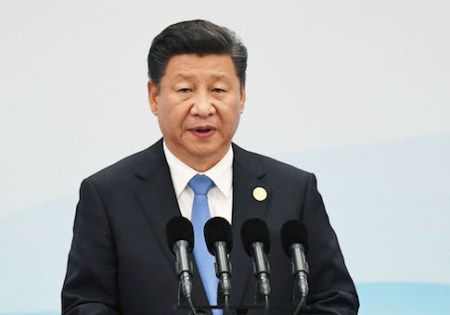
Chinese President Xi Jinping speaks before reporters after a two-day summit of the Group of 20 major economies in the Chinese city of Hangzhou on Sept. 5, 2016. (Kyodo) ==Kyodo

Chinese President Xi Jinping speaks before reporters after a two-day summit of the Group of 20 major economies in the Chinese city of Hangzhou on Sept. 5, 2016. (Kyodo)
==Kyodo

Reading the gushing coverage of this dictator’s turgid and clichéd speech, I can’t help thinking of the last time America’s liberal elite went gaga over China. “One-party autocracy certainly has its drawbacks,” Tom Friedman wrote in 2009. “But when it is led by a reasonably enlightened group of people, as China is today, it can also have great advantages.” Chief among those advantages, according to Friedman, is the Chinese Politburo’s ability to “just impose the politically difficult but critically important policies needed to move a society forward in the 21st century.” Spoken like a true apparatchik. Six months later, on Meet the Press, Friedman confessed his fantasy: “What if we could just be China for a day?”

They are therefore more sympathetic to the world Xi Jinping wants to preserve than the world Donald Trump wants to create. That democracy or self-rule plays a far larger part in Trump’s world than in Xi’s should not be forgotten, however. Least of all by people who think of themselves as liberal or progressive.

**************************

It’s rather sickening to watch self-described liberals embrace China as a responsible power. The headline on the cover of this week’s Economist, which I now read solely to find out what is not the case, is “China: the global grown-up.” The Washington Post purports to explain “Why China will be able to sell itself as the last liberal great power.” These articles, besides being wrong, have the distinction of following the line set by Beijing itself: “China may lead globalization movement,” says propaganda outlet CCTV.

How one can argue that a Communist oligarchy that practices mercantilism and industrial and diplomatic espionage, builds islands in contravention of international law, disappears lawyers and writers critical of the regime, feeds its people a steady diet of ethno-nationalist propaganda, threatens America’s allies, enables the North Korean psycho-state, recently sailed its aircraft carrier through the Taiwan Strait, massively censors the Internet, and has some of the worst air pollution in the world is “liberal” in any sense of the term is beyond me. Ironic, isn’t it, that the same press that examines every utterance of Donald Trump with Talmudic scrutiny is utterly credulous when Chinese leader Xi Jinping, who is quite self-consciously modeling himself after Mao Zedong, tells the elite assembled at Davos that he will defend free trade and—I had to laugh—immigration. How many Syrian refugees are there in China?

Credit to Xi, though, for putting one over on self-described globalists and others so eager to embrace foreign critics of Donald Trump that they are more than happy to check their belief in human rights at the door. It ought to be obvious that China’s commitment to liberalism does not exist; Xi’s rhetoric is a veneer overlaying the deeply illiberal principles that animate his regime. And that regime, it seems to me, is on the defensive for the first time in 20 years. Surprised like so many at Trump’s victory, Xi understands the danger a nationalist and protectionist America poses to Chinese stability. America’s trade deficit fuels the economic growth that (barely) contains Chinese dissent. So his appeal to the Davos crowd was defensive, an attempt to rally favor among the men and women who have benefited personally from the economic arrangements of the post-Cold War era. It worked.

Makes you wonder, though. If China is invested so heavily in the status quo, perhaps Donald Trump has something of a point when he says that that status quo hasn’t benefited the average American. I know this isn’t a zero-sum world. But Xi seems to think it is, and so does Trump, and so do the millions of U.S. voters who feel that international trade agreements privilege Chinese oligarchs over American workers. A world in which the Chinese autocracy is fat and happy is not exactly a world conducive to liberty, at least not to the traditional liberty of non-dominated peoples. The Economist might have another definition in mind.

Reading the gushing coverage of this dictator’s turgid and clichéd speech, I can’t help thinking of the last time America’s liberal elite went gaga over China. “One-party autocracy certainly has its drawbacks,” Tom Friedman wrote in 2009. “But when it is led by a reasonably enlightened group of people, as China is today, it can also have great advantages.” Chief among those advantages, according to Friedman, is the Chinese Politburo’s ability to “just impose the politically difficult but critically important policies needed to move a society forward in the 21st century.” Spoken like a true apparatchik. Six months later, on Meet the Press, Friedman confessed his fantasy: “What if we could just be China for a day?”

It’s a confusing world. Many are puzzled at the international aspect of the new nationalism, the collaboration and commonalities between nation-state populists across North America and Europe. I’m not puzzled, because the nation-state populists are reacting against elites who are internationalized as well. The Frenchman and American applauding Xi at Davos have more in common with each other than they do the mass of their countrymen, especially those who live outside the major metropolitan areas. I think they share a common understanding of liberalism as well. They take it to mean the system of privileges and prerogatives that enriches and empowers meritocratic knowledge-workers like themselves. They are therefore more sympathetic to the world Xi Jinping wants to preserve than the world Donald Trump wants to create. That democracy or self-rule plays a far larger part in Trump’s world than in Xi’s should not be forgotten, however. Least of all by people who think of themselves as liberal or progressive.

Get to Know Iran’s Terrorist ‘Ambassador’ to Iraq

January 25, 2017

Get to Know Iran’s Terrorist ‘Ambassador’ to Iraq, Clarion Project, Shahriar Kia, January 25, 2017

(Please see also The Islamic Revolutionary Guard Corps (IRGC) Has Become More Influential and Powerful. — DM)

iran-revolutionary-guards-atta-kenare-afp-getty-with-ira-masjed-640-320iIranian Revolutionary Guards. (Photo: © ATTA KENARE/AFP/Getty Images). Inset: Brigadier General Iraj Masjedi (Photo: Twitter)

In contrast to international political norms, Iran’s embassy in Iraq is not under foreign ministry authority. The IRGC enjoys complete hegemony over this diplomatic post.

Iran’s new ambassador appointment in Iraq provides a clear insight into the terrorist nature of the mullahs’ intentions, and Tehran’s specific objectives of continuing a policy of lethal meddling in Iraq — while using the country as a springboard for further intervention in Syria and beyond.

This is a challenge the new U.S. administration and Congress should meet with a firm policy calling to end Iran’s destructive role in the Middle East.

************************************

Iran’s new ambassador to Iraq is part of a terrorist network, an advisor of the notorious Revolutionary Guards (IRGC) Quds Force. Brigadier General Iraj Masjedi replaces Hassan Danaii Far, himself a senior IRGC member.

“The Iranian embassy in Baghdad is considered a strategic post outside the country and the ambassador is a highly important figure,” notes the state-run Asre Iran daily.

Masjedi is often quoted by Iran’s media as a senior advisor to the terrorist Quds Force commander Qassem Suleimani, also sanctioned by the West and under a travel ban.

According to the Saudi news site Al Arabiya, “The Revolutionary Guards considers the Iranian embassy in Baghdad of strategic importance within the states that are subject to Iranian influence.

“Since the fall of the former Iraqi regime in 2003, all the ambassadors of Iran to Iraq were members of the Revolutionary Guards.”

In contrast to international political norms, Iran’s embassy in Iraq is not under foreign ministry authority. The IRGC enjoys complete hegemony over this diplomatic post.

Far’s specific mission in Iraq was literally to purge all members of the Iranian opposition, the People’s Mojahedin Organization of Iran (PMOI/MEK), through attacks launched by the Quds Force and affiliated Iraqi proxy groups. The MEK was able to resettle all its members to Europe (which is a different discussion).

Masjedi has a dark record of playing a major role in suppressing the Iraqi people and specifically leading genocidal attacks targeting locals of Diyala Province, a melting pot bordering Iran where Sunnis, Shiites, Kurds and others used to live in peace prior to Iran’s covert occupation of Iraq from 2003 onward.

The highly-respected, Saudi-founded pan-Arab news outlet Asharq Al-Awsat writes, “…commanders of the Quds Force who supervise the Shi’ite militia leadership in Iraq are Brigadier Generals Mohammed Shahlaei, Mojtaba Abtahi, Iraj Masjedi and Ahmad Forouzandeh, who are all directly supervised by the Quds Forces Commander Qasem Soleimani.”

Masjedi is a loathed figure in Iraq for his efforts to completely restructure the province’s social fabric. He is known for his remarks justifying Iran’s military presence in Iraq.

“The enemy charged towards Iraqi cities and reached Samara and Karbala, and near Iran’s borders in Diyala. And you expect us to remain silent?” he said.

“We must strategically deepen our struggle,” Masjedi explained on January 31t, 2015, shedding light into the dangerous mentality of an individual now appointed as Iran’s top diplomat in Iraq.

This statement is significant when taken together with the fact that Iran remains designated as the leading state sponsor of terrorism and has taken advantage of the Obama administration’s failed policy of delivering Mesopotamia on a silver platter to Tehran’s mullahs.

The IRGC has stationed around 7,000 armed Quds Force-affiliated elements in various cities across Iraq.

Masjedi strongly agrees with senior Iranian officials who underscore the necessity for Iran to support Syrian dictator Bashar Assad and send troops and Shiite militias to the Levant.

“War in that region [i.e., Syria] is in ways providing security for [Iran],” he said.

The people of Aleppo and Diyala have no doubts about the active role that Iran, the IRGC and the Quds Force are playing in the region.

Masjedi is also known for his comments regarding the battle for the city of Fallujah, a former Islamic State stronghold west of Baghdad, emphasizing, “The involvement of the Iranian Revolutionary Guards in the battle of Fallujah was in order to preserve Iran’s status as a Shiite center in the world. We are defending Iran and its borders.”

“The next step of the Islamic Revolutionary Guard Corps was been the formation of the massive Basij [mobilization] force that is faithful and a friend of Islamic Iran, such as the Iraqi Hashd al Shabi [PMF], which has been established as a powerful army with our organizing and our experience in the Sacred Defense [Iran-Iraq War],” Masjedi said according to a Long War Journal report.

“Many of the militias that are part of the PMF remain hostile to the United States, and some have threatened to attack U.S. interests in the region. One of the more influential militias within the PMF, Hezbollah Brigades, is listed as a Foreign Terrorist Organization. Several influential PMF leaders, including the operational leader of the PMF, are listed by the U.S. as global terrorists,” the LWJ report adds.

Iran’s new ambassador appointment in Iraq provides a clear insight into the terrorist nature of the mullahs’ intentions, and Tehran’s specific objectives of continuing a policy of lethal meddling in Iraq — while using the country as a springboard for further intervention in Syria and beyond.

This is a challenge the new U.S. administration and Congress should meet with a firm policy calling to end Iran’s destructive role in the Middle East.

“The regime in Tehran is the source of the crisis in the region and killings in Syria; it has played the greatest role in the expansion and continuation of ISIS. Peace and tranquility in the region can only be achieved by evicting this regime from the region,”said Iranian opposition leader Maryam Rajavi, President of the National Council of Resistance of Iran (NCRI).

Fake News: Trump Caved to Arab Pressure on Jerusalem Embassy Move

January 25, 2017

Fake News: Trump Caved to Arab Pressure on Jerusalem Embassy Move, The Jewish PressLori Lowenthal Marcus, January 25, 2017

us-consulate-in-jerusalemUS Consulate in Jerusalem
Photo Credit: Magister via Wikimedia

Several Israeli-based media outlets are repeating a story from an Arab media outlet that the U.S. Embassy move from Tel Aviv to Jerusalem is “off the table” due to Arab pressure.

But let’s look at the evidence thus far produced and line it up against reality.

The reports claiming the Trump administration has backed down from its stated commitment to move the embassy assert the reason that is happening is because of pressure placed on the new administration by the Palestinian Arab leadership.

A story in the Times of Israel quoted a report in the Arabic media outlet Asharq Al-Awsat. That report mentioned that assurances were given to Palestinian Arab leader Mahmoud Abbas and the PA’s perennial negotiator Saeb Erekat in a meeting held on Tuesday with “David Blum,” of the US Consulate in Jerusalem.

But there is no David Blum in the US Consulate in Jerusalem.

The US Consul General in Jerusalem (serving “Jerusalem, Gaza and the ‘West Bank,’ that is, not Jewish Israelis) is Donald Blome. In other words, there must have been a mistranslation going from Arabic to either Hebrew or English.

A quick search of the actual American diplomat in Jerusalem, Donald Blome, reveals that he was appointed in July, 2015 by President Barack Obama, not by President Donald Trump. Given that Blome’s alleged message of reassurance to the Palestinian Arabs that the new administration was bowing to their pressure, it beggars the imagination that Blome was speaking on behalf of Trump.

There is still more evidence that this explosive “evidence” is, at best, an unofficial remark from a sympathetic holdover from the last – exceedingly hostile – administration. In an updated version of the report on the matter from the very source of the rumor, there have been significant substantive changes in the report.

The first difference is that the name of “David Blum” no longer appears in the report. There is no longer any name associated with any American government office as the source of the claim. This is what the report now says:

A senior Palestinian official told Asharq Al-Awsat newspaper that the Palestinian leadership has received reassurances that a plan to move the U.S. embassy from Tel Aviv to Jerusalem has been suspended.

The sources added that based on official information, the plan to move the U.S. embassy was no longer under consideration.

While the sources declined to disclose the party that conveyed the reassurance message to the Palestinian leadership, they stressed that authorities in Ramallah were now relieved from the pressure that was caused by such threat.

So Erekat and Abbas’s names are gone, Blum’s name is gone, and the meeting on Tuesday is no longer mentioned.

This latest rumor, especially one boasting that Arab pressure led the Trump administration to cave on a significant campaign promise should be treated as merely the latest ephemera intended to create divisions between the Trump administration and its Israeli and pro-Israel supporters. That, and the effort to make Arab threats of violence seem all-powerful, thereby becoming a self-fulfilling prophecy.

Any statements about whether and when the U.S. Embassy is moved to Jerusalem should only be given credence when made by a Trump administration official whose jurisdiction extends to this matter.

Cartoons and Video of the Day

January 25, 2017

Via Capitol Steps


H/t Vermont Loon Watch

mouths


loser1


H/t Freedom is Just Another Word

dignity


feministstuff


stages


asspress


Laugh While You Can

January 25, 2017

RIGHT ANGLE: Laugh While You Can, Bill Whittle Channel via YouTube, January 24, 2017

(This video was recorded and aired for members only shortly before Obama ceased to be President. It deals with the US Military and Iran under Obama and the differences to be expected under President Trump. — DM)

Upend the ‘Faux System’ of White House Journalism

January 25, 2017

Upend the ‘Faux System’ of White House Journalism, PJ MediaRoger L Simon, January 24, 2017

(Here’s a link to an article that focuses on the “SKYPE seats.” Four is a start, but more are needed. — DM)

Forget “faux news.”  We have a “faux system” that needs to be upended.  Without that, it’s “garbage in, garbage out,” as they say in computerland.  And not just for that obvious reason defined by what Barack Obama might have termed a lack of “fairness” — that Trump lost the popular vote by nearly three percent but he loses the vote inside the briefing room by, I would guess, nearly ninety percent. It also makes for restricted viewpoints and boring, repetitive questions with little originality and no substantive information beyond what we could learn from communiques.

*****************************

Excuse my ignorance, but I had no idea — until reading about the recent kerfuffle cum journalist Twitter brawl — that by tradition the Associated Press always gets to ask the first question at White House press briefings. (It was given on Monday to the New York Post, creating consternation.)

Which leads me to ask: Who anointed the AP and made them king?

In fact, why would anybody ever, by tradition or for any other reason, always get to ask the first or even the fifth question at a White House press briefing or conference?

Or, to drill down a little further, why does any media outlet get preference over any other when it comes to asking questions?  Or still further, who determines what reporters and organizations get into the briefing room in the first place to sit forever in rows one or two?

Well, um… professionalism.

Oh, I see. Is that a degree from Columbia Journalism School? Hemingway didn’t even go to college and could outwrite everyone in that briefing room by an exponential factor. Journalism isn’t brain surgery or even anesthesiology. It’s an occupation for ambitious hustlers with a gift for gab not so different from screenwriting, but not so high paying.

The truth is that those organizations are indeed there by tradition, a tradition of droit du seigneur and corporate thuggery that makes you yearn for the extension of anti-trust legislation.

You get the position, you keep the position. It’s a game of rich, entrenched bullies that happen to be monolithic media companies anxious to preserve their monopolies. We all know their names and logos, which have been drilled into us as the purveyors of all information from early childhood. As it was so succinctly put by A. J. Liebling back in 1960:  “Freedom of the press is guaranteed only to the man who owns one.”

Does this system profit the people?  Is it anything even approximating what the Founders envisioned for our press?  Or does it exist for the benefit of those privileged journalists and their corporate bosses?

Pretty obvious, isn’t it? So when Sean Spicer announced the other day there would be four Skype seats in the White House press room for journalists from presumably smaller, outside-the-Beltway outfits, I applauded. But I asked — four?  Why not forty?

Forget “faux news.”  We have a “faux system” that needs to be upended.  Without that, it’s “garbage in, garbage out,” as they say in computerland.  And not just for that obvious reason defined by what Barack Obama might have termed a lack of “fairness” — that Trump lost the popular vote by nearly three percent but he loses the vote inside the briefing room by, I would guess, nearly ninety percent. It also makes for restricted viewpoints and boring, repetitive questions with little originality and no substantive information beyond what we could learn from communiques.

Actually, the system itself is institutionally unfair.  It hasn’t changed in any significant sense in decades, as if the ghost of the UPI’s Helen “Sitting Buddha” Thomas were still plopped down in the front row as she was since the Kennedy administration.

The question is what to do about it.  First of all, move out of that tiny briefing room with its (deliberately?) small number of seats that encourages this continued monopolistic system.  Find a decent venue where a reasonable number can gather. Encourage new voices — not just journalists or even bloggers but maybe actual citizens to ask questions. The people, right and left, don’t need a filter.  They know what they want to know, probably better than those who ask questions for them.

Yes, there are many problems inherent in this that would need to be worked out, many snafus, real and imagined, along the way. But this is the time to do something about a moribund system.

Will Trump and his administration have the courage to do it, to really upend what is essentially a license for permanent elitism?

We shall see.  But instead of a perpetual battle between Trump and the press — a war that has barely started yet has already become tedious beyond words — it would be nice to find a new way of working that would actually inform the citizens of this democratic republic so they could make the necessary educated judgments. What we have now is close to the reverse.

The Islamic Revolutionary Guard Corps (IRGC) Has Become More Influential and Powerful

January 25, 2017

The Islamic Revolutionary Guard Corps (IRGC) Has Become More Influential and Powerful, Iran News Update, January 24, 2017

(Please see also, What Is Iran’s Policy-Making Mechanism? — DM)
10611

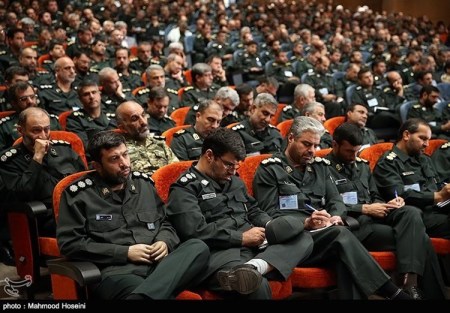
The IRGC has successfully suppressed domestic opposition. Examples  include supporters and leaders of the Green Movement, and religious and ethnic minorities such as Kurds, Sunnis and Arabs. As well, other political factions, such as the moderates, have come to the conclusion that they need the blessing of the IRGC in order to survive politically.

The reintegration of Tehran into the global financial system is deepening, and more countries are committing themselves to trade with Iran and investment in its markets.The IRGC and the office of the supreme leader are the main beneficiaries of the increased revenues, which have been diverted into upgrading the IRGC’s military capabilities.  Iran’s lawmakers voted to increase the military budget despite the high unemployment rate.

Regional stability was an obstacle for the IRGC’s objective of expanding its influence beyond Iran’s borders. Rafizadeh writes, “In fact, it was through domestic conflicts that the IRGC expanded its stranglehold by penetrating other countries such as Lebanon and Iraq, and gave birth to several critical Shia proxies. In the long term, these proxies increase Iran’s political and ideological influence.”  He adds, “The more tensions and conflicts there are, the more the militaristic role of the IRGC increases in the region in order to achieve its regional ambitions. This has led to a vicious series of heightened conflicts.”

Once the child that Iran’s Islamic revolution gave birth to, the IRGC is now becoming the father of the Islamic republic. This can only be reversed if global powers or a coalition of regional nations stand against the IRGC’s increasing influence in the region.

*************************************

Majid Rafizadeh, Iran¬ian-American political scientist, Harvard University scholar and president of the International American Council, writes in an article for The National on January 23, 2017 about the Islamic Revolutionary Guard Corps, who were given birth to during Iran’s 1979 revolution.

Ayatollah Ali Khamenei, after becoming the country’s second supreme leader in 1989, gave considerable power to the IRGC, while sidelining other powerful clerics.

Although the IRGC still had obstacles preventing it from expanding its influence, recent developments suggest that those barriers are being lifted, allowing Iran’s military to be the key decision-maker in Iran’s policy-making.

Many people, who once had considerable amount of political weight and influence, which counterbalanced the IRGC’s increasing power, do not play a crucial role any more. The late Ali Akbar Rafsanjani, who was one of the founding fathers of the Islamic republic was sidelined by Khamenei towards the end of his life, still enjoyed a considerable amount of political legitimacy in creating challenges for the IRGC and others. However, Rafsanjani died this month.

Rafsanjani had significant power as a member of the Assembly of Experts, which is given the power to supervise, elect or remove the supreme leader. After his death, the IRGC is now much stronger, suggesting that the next supreme leader will be under the IRGC’s influence. If the IRGC controls the next supreme leader, it rules Iran’s political establishment unequivocally.

While the nuclear agreement remains in place, the Iranian government’s global legitimacy expands, leading to less scrutiny from the international community on how the IRGC treats domestic opposition.

The IRGC has successfully suppressed domestic opposition. Examples  include supporters and leaders of the Green Movement, and religious and ethnic minorities such as Kurds, Sunnis and Arabs. As well, other political factions, such as the moderates, have come to the conclusion that they need the blessing of the IRGC in order to survive politically.

The reintegration of Tehran into the global financial system is deepening, and more countries are committing themselves to trade with Iran and investment in its markets.The IRGC and the office of the supreme leader are the main beneficiaries of the increased revenues, which have been diverted into upgrading the IRGC’s military capabilities.  Iran’s lawmakers voted to increase the military budget despite the high unemployment rate.

Reuters reported, “Iranian lawmakers approved plans to expand military spending to 5 per cent of the budget, including developing the country’s long-range missile programme which US president-elect Donald Trump has pledged to halt. The vote is a boost to Iran’s military establishment – the regular army, the elite IRGC and the defence ministry.”

Regional stability was an obstacle for the IRGC’s objective of expanding its influence beyond Iran’s borders. Rafizadeh writes, “In fact, it was through domestic conflicts that the IRGC expanded its stranglehold by penetrating other countries such as Lebanon and Iraq, and gave birth to several critical Shia proxies. In the long term, these proxies increase Iran’s political and ideological influence.”  He adds, “The more tensions and conflicts there are, the more the militaristic role of the IRGC increases in the region in order to achieve its regional ambitions. This has led to a vicious series of heightened conflicts.”

The IRGC, more than ever before, is capable of exploiting the rise of Sunni extremist groups such as the ISIL, not only to justify its military presence in the region, but also to increase its global legitimacy by arguing that it is fighting extremism. Without a specific agenda for fighting ISIL, western powers have allowed a certain amount of leeway to the IRGC.  Additionally, some global and regional powers have been reluctant to address counterbalancing the increasing role of the IRGC across the region for economic or geopolitical reasons.

Although founded as a theocracy, Iran is becoming more of a military state as the IRGC pursues its regional ambitions. According to Rafizadeh, “We are more likely to witness the increasing influence and domination of the IRGC domestically and regionally as several major obstacles against Iran’s military have been lifted.”

Once the child that Iran’s Islamic revolution gave birth to, the IRGC is now becoming the father of the Islamic republic. This can only be reversed if global powers or a coalition of regional nations stand against the IRGC’s increasing influence in the region.

The 3-way option

January 25, 2017

Source: Israel Hayom | The 3-way option

Daniel Pipes

Foreign Affairs magazine has published a major statement from former Defense Minister Moshe Ya’alon, a likely future candidate for prime minister, on his view of how to end the Israeli-Palestinian conflict, titled “How to build Middle East peace: Why bottom-up is better than top-down.”

Ya’alon offers an impressive analysis of why decades of diplomacy have failed and the conflict’s enduring stagnation. His ‎‎”bottom-up” solution contains four elements, three of which are somewhat antique bromides and one of which ‎is an exciting, untried idea — the three-way option. ‎

Stripped to its essentials, Ya’alon’s article calls for: ‎‎1.‎ Promoting Palestinian economic growth and infrastructure development; ‎2. Improving Palestinian governance, anti-corruption efforts, and institution-building in general; 3. Israeli-Palestinian security cooperation; and 4.‎ A regional initiative that would bring in Arab states interested in helping to manage and eventually ‎solve the Israeli-Palestinian conflict, whether or not those states have formal relations with Israel.

The first three have been tried repeatedly through the decades and have failed to bring any resolution closer. In 1993, then-Foreign Minister Shimon Peres published “The New Middle East,” his lovely vision of a prosperous Palestinian ‎population that would be a good neighbor for Israel. The trouble is that his hopes were shattered ‎by Palestinian rejectionism, incitement and death-cultism, which still continue today. Surely no one still seriously believes in 2017 ‎that enrichment will moderate the Palestinians. ‎

In 2002, then-President George W. Bush focused on improved governance, but 15 years later things are more ‎wretched than ever, with anarchy, corruption, and violent feuding. Worse, the historical record ‎strongly suggests that good governance would just lead to a more efficient Palestinian machine for ‎attacking Israel. ‎

Security cooperation is an area — virtually the only one — in which Israel and the Palestinian Authority work ‎together: Basically, the Israel Defense Forces protects the PA and the PA helps the IDF stave off attacks. ‎However mutually useful, this collaboration has shown zero potential to expand to resolve their larger ‎conflict. ‎

In contrast, the fourth proposal, bringing in the Arab states, is an important initiative that has yet seriously to be ‎attempted. Here, Ya’alon’s plan holds out real hope. ‎

That’s because a remarkable symmetry exists between what Palestinians want from Israel and what Israel wants ‎from the Arab states plus Turkey and Iran, namely recognition and legitimacy. Noting this parallel, I ‎proposed in The Wall Street Journal that both aspirations be addressed in tandem, linking concessions by the Arab states to Israel with Israeli concessions to the Palestinians. Everyone would gain from this: “The Arab states ‎achieve what they say is their main goal, justice for the Palestinians. Israel gets peace. Palestinians have their ‎state.” ‎

For example, if the Saudis end their economic boycott of Israel, Israel would increase Palestinian access to ‎international markets. If the Egyptians warm up relations, Palestinians would get more access to the Israeli labor ‎market. If the major Arab states sign peace treaties with the Jewish State of Israel, the Palestinians would get their ‎state. ‎

The Obama administration made a short but intense feint in this direction in 2009, but the Saudis turned it down ‎and it sputtered to a close. Egyptian President Abdel-Fattah el-Sissi raised the idea again in 2016, again without consequence. In ‎short, the three-way option between the Arab states, Israel, and the Palestinians has not yet been pursued in a ‎serious or sustained way. ‎

With el-Sissi and Ya’alon now on record favoring the three-way option, and with Arab states shaken awake by the ‎Obama administration’s bizarre cooperation with Iran, Middle Eastern leaders may be willing to work with ‎the Jewish state in ways they were not ready for in 1990 or 2009. It’s certainly worth a try by the incoming ‎Trump administration. ‎

Progress in Arab-Israeli diplomacy will not come from retreading the defunct ideas of Peres or Bush, nor can ‎security cooperation possibly lead to political breakthroughs. My first preference remains U.S. support for an ‎Israeli victory. But if that is too much for now, then involving the Arab states at least offers a way out of the ‎stale, isolated, and even counterproductive sequence of Israeli-Palestinian negotiations. ‎

Daniel Pipes (DanielPipes.org, @DanielPipes) is president of the Middle East Forum.

Israeli Team Clinches Finalist Spot in International Moon Race

January 25, 2017

The competition is slated to end in late 2017 when the team will launch Israel’s first-ever spacecraft to the Moon.

Source: Israeli Team Clinches Finalist Spot in International Moon Race | David Israel | Wednesday, January 25, 2017 | JewishPress.com

Way to go Israel !

SpaceIL display of the anticipated white and blue moon landing.
Photo Credit: Courtesy SpaceIL

A significant achievement for Israel: SpaceIL, the Israeli team in the race to land a spacecraft on the Moon, qualified for the final stage of the international competition. SpaceIL is one of only five teams to make it to the finals alongside India’s Team Indus, Team Hakuto from Japan, Moon Express from the United States and the multi-national team, Synergy Moon.

These are the only teams who successfully achieved a key competition marker: the signing of a launch contract, symbolizing a teams’ “ticket to the Moon.” This achievement positioned Israel one step closer to joining the prestigious circle of superpowers who have reached the Moon already; the country would join the United States, the former Soviet Union and China.

The Google Lunar XPRIZE competition which began in 2007 originally attracted 33 teams from around the world. This international Moon Race stimulates private groups to build, launch and land an unmanned spacecraft on the Moon. Within a few years, most of the competitors dropped out upon realizing the depth and complexity of the challenge, bringing the race down to 16 teams.

Google Lunar XPRIZE management subsequently announced that teams unable to produce launch contracts by the end of 2016 would be automatically eliminated. Now, after the end of 2016 and the start of the final year of the competition, the die is cast: only five teams have verified launch contracts – with Israel’s SpaceIL the first to have reached that milestone – and remain as competition finalists.

Dr. Eran Privman, CEO of SpaceIL, said on Tuesday: “We have waited for this moment for a long time. Being announced as finalists in the Google Lunar XPRIZE competition officially confirms what we always knew: Israel is at the forefront of global technology. SpaceIL emerging as a competition finalist enhances our team’s ability to ‘shoot for the Moon’. Our hard work over the past six years is bearing fruit and we’re looking forward to the historic day of SpaceIL’s launch and to see the first Israeli spacecraft landing on the Moon.”

Meanwhile, this week SpaceIL received a generous contribution from businessman Sami Sagol whose significant donation brings the spacecraft closer to a Moon landing. Sagol joins other philanthropists including Mr. Morris Kahn, the Adelson Family Foundation, the Charles & Lynn Schusterman Foundation, Bezeq, the Israel Space Agency and others.

In addition, the organization enjoys the support of Israel’s President Reuven Rivlin, Israel Aerospace Industries and leaders from academic institutions such as the Weizmann Institute of Science and Tel Aviv University.