Archive for January 23, 2017

Can Israel’s new missile shield help it avoid an EMP attack?

January 23, 2017

Can Israel’s new missile shield help it avoid an EMP attack? Center for Security PolicyJakub Gorski, January 23, 2017

Arrow-3 interceptors have exo-atmospheric strike capabilities allowing it to shoot down ICBMs from space. This would allow Arrow-3 to shoot down the Safir. So with Arrow-3 Israel should be able to safeguard itself from an ICBM based EMP attack.

********************

On January 18 Israel launched the Arrow-3 interceptor, which gives the Israeli Air Force the capability to shoot down missiles from space. Arrow-3 joins Arrow-2, David’s Sling, and Iron Dome as part of the country’s multi-layered anti-ballistic missile shield.

Israel’s new anti-ballistic missile shield is designed to protect the country from Hamas and Hezbollah’s mid-range missiles as well as Iran’s long-range missiles. This upgraded missile defense shield should also be able to protect Israel from an electromagnetic pulse (EMP) attack.

An EMP is a burst of electromagnetic energy that comes in three waves. The initial burst from an EMP wave is known as E1. It is faster than lighting and will damage control systems necessary for operations of things such as the electric grid. It essentially fries some components of small electric circuitry. The second wave (E2) is as fast and strong as lighting so it can be stopped with lighting protection, but many homes and businesses lack lightning protection. An E3 wave is the slowest, but also has the most energy and is capable of causing high-voltage transformers to melt. HV transformers are a necessary component of sub-stations and enable electricity to be carried across large areas.

An EMP strike can be achieved by detonating a nuclear weapon between 30 and 400 kilometers above the Earth’s surface, according to the Congressional Report on EMP attacks. This is high enough to avoid any physical or radiological damage to people and infrastructure, but low enough for an EMP burst that will shut down electronics in a radius of 600 to 2,000 km.

This is a realistic scenario based on intelligence community projections of Iran’s weapons capabilities. If Iran was to detonate a nuclear bomb in the atmosphere the resulting EMP would cover the whole of Israel. The resulting bursts would shut-down Israel’s vital infrastructure and render technology-dependent army largely inoperable leaving the country open to invasion.

There are thousands of Iranian fighters in Syria and Iraq, including members of Iran’s Revolutionary Guard, helping to prop-up their governments. A posture of provocative weakness for Israel under these conditions is definitely a driver of destabilization.

The U.S. cannot guarantee that Iran does not have a nuclear weapon. Right now Iran could place such a nuclear weapon on ballistic missiles, but those can be shot down using Israel’s Arrow-2. The system cannot intercept ICBMs, which leaves Israel to an EMP attack from an ICBM missile.

Iran has already demonstrated the ability to fire satellites into space with the Safir rocket. For the Safir to be used as an ICBM its second stage has to be heavily modified and have a reentry vehicle. If Safir were to be used for an EMP attack it would not require a reentry vehicle.

All that would be necessary is for the Safir to have its second stage modified and then fired towards US and Israel.

However, Arrow-3 interceptors have exo-atmospheric strike capabilities allowing it to shoot down ICBMs from space. This would allow Arrow-3 to shoot down the Safir. So with Arrow-3 Israel should be able to safeguard itself from an ICBM based EMP attack.

White House to End Defense Sequester, Boost Military’s Cyber Capabilities

January 23, 2017

White House to End Defense Sequester, Boost Military’s Cyber Capabilities, Washington Free Beacon, January 23, 2017

(Now that we have a President who will use the military to the nation’s benefit, it needs additional resources. There is no truth to any rumor that Hillary Clinton will be hired as a cyber security expert.– DM)

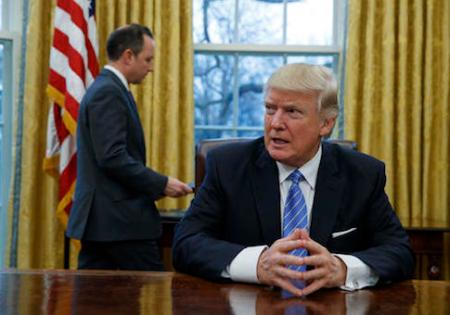
President Donald Trump sits at his desk as he waits for White House Chief of Staff Reince Priebus, left, to deliver three executive orders for his signature, Monday, Jan. 23, 2017, in the Oval Office of the White House in Washington. (AP Photo/Evan Vucci)

President Donald Trump sits at his desk as he waits for White House Chief of Staff Reince Priebus, left, to deliver three executive orders for his signature, Monday, Jan. 23, 2017, in the Oval Office of the White House in Washington. (AP Photo/Evan Vucci)

Donald Trump’s administration will end the defense sequester and direct U.S. military leaders to develop defensive and offensive cyber capabilities to bolster the armed forces.

The military budget, missile defense, and cyber defense are priorities for the new White House, according to a statement on its website laying out Trump’s plan to “make our military strong again.”

Military leaders have spotlighted how reductions in defense spending have compromised the future military readiness of the joint force. In congressional testimony last fall, service leaders disclosed that their forces would not be able to defend the United States against current and future threats if sequestration continued.

According to the White House, Trump plans to end the defense sequester and send a new budget to Congress outlining his plan to rebuild the military. It is unclear how much defense spending Trump will propose, but the White House said he will commit to providing military leaders “with the means to plan for our future defense needs.” The Pentagon operates on a roughly $600 billion annual budget.

The Budget Control Act of 2011 implemented a package of automatic spending cuts to defense and discretionary domestic spending. The cuts, designed to take place over a decade, are expected to erode defense spending by roughly $1 trillion.

Some Republican members of Congress have been vocal about the need to reverse cuts that have squeezed the defense budget, as well as force drawdowns authorized during the Obama administration. Sen. John McCain (R., Ariz.), who chairs the Senate Armed Services Committee, unveiled a plan last week that would boost national defense spending by $430 billion over five years, repeal the Budget Control Act, and increase the services’ force levels.

Defense Secretary James Mattis, who was confirmed by the Senate to lead the Pentagon on Friday, will be responsible for plans to bolster the military. Mattis underscored his commitment to ending the defense sequester during his confirmation hearing earlier this month, saying the military could not deter potential adversaries like Russia and China at present.

The Trump administration also plans to develop a “state-of-the-art missile defense system” to protect against missile threats from Iran and North Korea, given their development of ballistic missiles and nuclear weapons.

The United States last year deployed a missile defense system in Romania to protect NATO allies against missile threats from Iran and other rogue states. It plans to deploy the advanced THAAD anti-missile system to South Korea as soon as possible. Both Russia and China regard the U.S. missile defense shield as a threat, and have agreed to work on countermeasures against U.S. anti-missile technology.

Trump also intends to make cyber defense a priority of the U.S. military, according to the White House. Cyber attacks have become a source of serious concern among congressional lawmakers and the media as a result of the intelligence community’s conclusions about the Russian government’s hacking campaign aimed at the U.S. presidential election.

The intelligence community concluded in an unclassified report released this month that Russia used cyber attacks and disinformation to undermine the election and damage Democratic nominee Hillary Clinton.

“Cyberwarfare is an emerging battlefield, and we must take every measure to safeguard our national security secrets and systems,” the White House website states. “We will make it a priority to develop defensive and offensive cyber capabilities at our U.S. Cyber Command, and recruit the best and brightest Americans to serve in this crucial area.”

The Pentagon’s inspector general concluded at the end of last year that the department faces significant challenges in cyber security after it uncovered a “wide range of cyber security weaknesses” in Defense Department systems during fiscal year 2016.

Trump, who has sharply criticized the intelligence community’s conclusions about Russia, has already said he will appoint a team to develop a strategy to combat cyber attacks within 90 days of taking office.

EU Funding to NGOs Active in Anti-Israel BDS Campaigns

January 23, 2017

EU Funding to NGOs Active in Anti-Israel BDS Campaigns

January 23, 2017

Source: EU Funding to NGOs Active in Anti-Israel BDS Campaigns » NGO Monitor

Executive Summary

  • Twenty-nine out of 100 EU grants administered through EU regional funding programs designated for Israel, the West Bank, and Gaza funnel funds to organizations that actively promote BDS (boycott, divestment and sanctions) – totaling €16.7 million out of €67.1 million (roughly 25%).
  • Forty-two out of 180 EU grantees in total support BDS – through participation in activities and events, signing of petitions and initiatives, and/or membership in explicit BDS platforms.
  • A number of organizations were funded through more than one EU grant, sometimes as part of the same program (“Double Dipping”).
  • The EU expressly opposes BDS. When confronted by evidence of funding for NGOs with agendas or values that contradict EU policy, the EU’s recurring response is that it “funds projects submitted by NGOs, in line with [the] EU’s fundamental principles and values, but not NGOs themselves.”
  • A grant titled “Performing Arts: A Pathway Towards Self Expression and Democracy” amply demonstrates this flawed logic. In 2014, during their participation in the EU’s Cultural Programme, all twelve beneficiaries of this grant initiated a group statement calling for a cultural and academic boycott of Israel.
  • Nine BDS-supporting organizations were the recipients of the EU’s Partnership for Peace Program- a program designated for joint projects involving Israeli as well as Palestinian organizations, meant to “build trust and understanding between societies in the region.”

Introduction

The European Union (EU) is the single largest donor to non-governmental organizations (NGOs) active in the Arab-Israeli conflict, accounting for NIS 28.1 million in 2012-2014 to politicized Israeli NGOs alone.

Indeed, NGO funding is a central component of EU foreign policy, claiming to promote peace, cooperation, and human rights. In contrast to the stated objectives, the EU funds a number of highly biased and politicized NGOs that exploit the rhetoric of human rights to promote anti-Israel BDS (boycotts, divestment, and sanctions) and lawfare campaigns, inflammatory rhetoric, and activities that oppose a two-state framework.

Due to the highly complex and poorly coordinated nature of EU aid and to the lack of a consolidated database differentiating between NGOs and other types of organizations, it is impossible to determine the exact amount or proportions of EU funding to organizations that promote anti-Israel BDS.

However, NGO Monitor reviewed a number of EU regional funding programs designated for Israel, the West Bank, and Gaza, and found that 29 out of 100 EU grants administered through the frameworks reviewed funnel funds to BDS organizations (€16.7 million out of €67.1 million – roughly 25%). 42 out of 180 EU grantees in total support BDS – either through participation in activities and events, signing of petitions and initiatives, and/or membership in explicit BDS platforms. Several organizations were the recipients of more than one grant. See below for an explanation of the methodology, numeral analysis of the findings, and list of relevant grants along with BDS activities of respective beneficiaries.

Grants in € to BDS supporting organizations

(based on reviewed grants with an end date after November 2015 in Israel, West Bank and Gaza)

https://live.amcharts.com/zcwOD/embed/

Number of grants to BDS supporting organizations

(based on reviewed grants with an end date after November 2015 in Israel, West Bank and Gaza)

https://live.amcharts.com/DU1MT/embed/

When confronted by evidence of funding for NGOs with agendas or values that contradict EU policy, the EU’s recurring response is that it “funds projects submitted by NGOs, in line with [the] EU’s fundamental principles and values, but not NGOs themselves.” This distinction is irrelevant, as project funding inevitably is used for overall organization and activity expenses. Because money is fungible, EU funding ostensibly allocated to specific projects also supports the NGO’s infrastructure including funding for staff, equipment, office space, publicity for the organization and its campaigns, and the significant costs of writing more grant applications, as well as allowing officials of these NGOs to travel and promote their agendas around the world. In several cases, EU funding comprises 50%, 60%, or even 75% of an NGO recipient’s entire budget. Moreover, many recipients feature the EU symbol on their publications and websites, bolstering their legitimacy and linking the EU with the broader political activities and campaigns of the NGOs – such as boycotts and the rejection of normalization.

A grant titled “Performing Arts: A Pathway Towards Self Expression and Democracy” (# 16 in the list of grants below) amply demonstrates this flawed logic. In 2014, during their participation in the EU’s Cultural Programme, all twelve beneficiaries of this grant initiated a group statement calling for a cultural and academic boycott of Israel. The group officially registered as the Palestinian Performing Arts Network in the Palestinian Ministry of Interior in February 2015, also during the members’ participation in the EU program. According to their website, which features their BDS statement, the EU and the Swedish consulate in Jerusalem are their sole donors.

Methodology

The following is a list of 29 EU grants, whose beneficiaries include NGOs that participate in BDS campaigns against Israel. All grants have an end date after November 2015.

The grants were administered through a number of EU country-based programs: European Instrument for Democracy and Human Rights (EIDHR), European Partnership for Peace (PfP), Non-State Actors (NSA) program, East Jerusalem Programme, and Cultural Programme; for one additional grant (#7 in the list below), the funding program remains unclear (see Additional Information at the end of this document). The list does not include global thematic funding programs; humanitarian funding; country-specific funding to regions other than Israel, the West Bank and Gaza; or any form of indirect funding (for example, EU funds to a church or humanitarian aid group, that are then transferred to a political NGO). A full accounting of the proportion and extent of EU-funding to BDS-supporting beneficiaries is therefore not available.

Because many of the BDS-supporting organizations listed here are grant co-beneficiaries, and due to the absence of transparency, it is not possible to determine the exact amount of funding received by each organization. A number of organizations were funded through more than one EU grant, sometimes as part of the same program (see Double Dipping below).

Only beneficiaries whose support of BDS could be adequately demonstrated were included. Regardless of whether the NGOs openly declare or deny their support for BDS, all provide material support for BDS initiatives and efforts – either through participation in activities and events, signing of petitions and initiatives, and/or membership in explicit BDS platforms. NGOs whose materials are used to promote BDS but which do not explicitly endorse or participate in these activities are not included.

Analysis

To view the complete list of grants in table form, click here.

President Of The Pro-Kremlin Think Tank RIAC: ‘The Process Of ‘Perestroika’ Induced By The New Global Balance Of Power… Will Probably Stretch Far Beyond Trump’s Presidency’

January 23, 2017

President Of The Pro-Kremlin Think Tank RIAC: ‘The Process Of ‘Perestroika’ Induced By The New Global Balance Of Power… Will Probably Stretch Far Beyond Trump’s Presidency’, MEMRI, January 23, 2017

A common assessment made by the Russian media is that with the advent of a Donald Trump presidency, a new “perestroika” has begun. Igor Ivanov, president of the pro-Kremlin think tank Russian International Affairs Council (RIAC) and formerly Russia’s Minister of Foreign Affairs (1998–2004), believes that this “perestroika” (i.e. reconstruction) process was induced by the “new global balance of power” and finds its representative in Trump. This process like Gorbachev’s “perestroika” is now out of the bag, unlikely to be “quick and easy”, and “will probably stretch far beyond Trump’s presidency”. A Trump-lead “perestroika” in the West by Trump will compel Washington “to take a fresh look at the role the United States plays in global affairs, the parameters of the country’s leadership, and the idea of American exceptionalism as such”.

As for Russia-U.S. relations, Ivanov predicts that under no circumstances will today’s international relations return to the “bipolar model of the second half of the 20th century”. Nevertheless the establishment of ground rules is a must irrespective of whether bilateral relations are head for rivalry or more hopefully partnership. However, he believes that “even limited success in this area would undoubtedly have a great positive impact on the overall situation in the world.”

Below are excerpts of Ivanov’s article, titled “Trump and Russia”, published in RIAC’s website:[1]
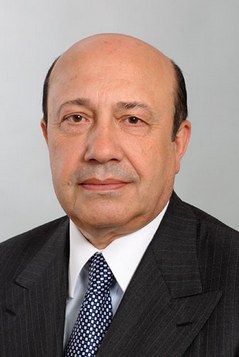
ivanIgor Ivanov (Source: Russiancouncil.ru)

‘Voting For Trump The American People Showed That They Were Tired Of Anti-Russian Propaganda’

“Donald Trump is the 45th president of the United States. How could this happen? Politicians, experts, journalists will long be debating this question. But no matter how analysts assess this event, they all agree that American society and the U.S. political system are experiencing serious, even fundamental shifts. The presidential election held in November, 2016 became the starting point of a new era in the American political and public life development.

“Such a major shift was bound to happen sooner or later. Stagnation cannot go on forever; Russia learned this lesson first hand. The old socio-political system that has existed virtually unchanged in the United States for decades is no longer compatible with the new reality that has developed both in the United States and in the world as a whole. The electoral campaign turned into a fierce battle between those who wanted to preserve the status quo no matter what, and those who made destroying the status quo their goal. The American people opted for change in domestic and foreign policies, sometimes without realizing the exact nature of those changes.

“What will be achieved during Trump’s presidency? Hardly anyone is ready to give a certain answer to this question. Judging by the President-elect’s statements, it appears that in the coming years, we will witness out-of-the-box decisions, some of which may be a success, while others may be quite the opposite. This applies both to domestic politics and economic development in the United States, as well as to the country’s foreign policy.

“Speaking of the long-term foreign policy implications of the Trump ‘revolution,’ it is likely that Washington will be forced to take a fresh look at the role the United States plays in global affairs, the parameters of the country’s leadership, and the idea of American exceptionalism as such. The process of ‘perestroika’ induced by the new global balance of power is unlikely to be quick and easy, and will probably stretch far beyond Trump’s presidency. But, as Mikhail Gorbachev’s favorite phrase goes, ‘the process has started,’ and it will not only affect the United States, but also the global situation as a whole.

“Russia, of course, is mostly interested in the way changes in the United States will affect relations between the two countries. Contrary to common sense, Russia all but became the primary focus of the presidential campaign. The Democrats followed the Cold War stereotypes and attempted to demonize Russia, while Donald Trump, on the other hand, spoke about his willingness to actively cooperate with Russia on a wide range of issues. Only time will tell whether he truly thought so, or whether he was just trying to distance himself and his party from the Democrats. In any case, the Washington hawks failed in their attempts to play the “Russian card.” Voting for Trump the American people showed that they were tired of anti-Russian propaganda and were less and less inclined to see Russia as a source of ‘evil’ threatening the interests of their country.

‘Under No Circumstances Will Today’s International Relations Return To The Bipolar Model Of The Second Half Of The 20th Century’

When we think about the future of Russia–United States relations, we would first need to explain the failure of the ‘reset’ policy announced by Barack Obama during his first presidential term. Both countries pinned significant hopes on this ‘reset’ policy. Eight years ago, many people believed that all the conditions for the ‘reset’ to succeed were there. Indeed, much has been done in terms of cooperation in various spheres, including security. Suffice it to mention the signing in April 2010 of the Measures for the Further Reduction and Limitation of Strategic Offensive Arms (the new START treaty) by presidents Dmitry Medvedev and Barack Obama. Nevertheless, the Obama administration leaves the White House with relations between Russia and the United States at their lowest point since the long since forgotten times of the Cold War.

“We can talk about certain mistakes and miscalculations made by both parties, unreasonably high expectations, and bureaucratic inertia here. All of that is true, but I believe that the ‘reset’ policy’s historical failure occurred due to deeper, systemic reasons. Since the latest détente in relations between Russia and the United States, both parties have focused on resolving important, yet quite specific issues, without paying proper attention to developing and articulating new basic bilateral relations principles that would reflect the strategic interests of both countries. As a result, stand-alone achievements failed to take US–Russia relations to a qualitatively new level and create the necessary margin of safety. This is why the ‘reset’ failed the test of the latest international crises – most notably the crisis in Ukraine.

“Hence the principal lesson for the future: when resolving important issues with the new U.S. administration, Russia should initiate a serious dialogue with regard to the strategic interests of the two countries, yet considering both the existing potential and the objective limits for bilateral cooperation. During my tenure as the Secretary of the Security Council of the Russian Federation, we tried to engage in such work with the George W. Bush administration, but as the United States was not ready for it, we did not achieve any viable results. However, this does not cross out the crucial importance of this task.

“What questions should be made a priority? The main question that both parties have to answer – both to each other and to themselves is: ‘Are Russia and the United States irreconcilable enemies in the world today? Or, given all their possible differences, could they still be partners?’ If the two countries are bound to be enemies, then our key task is to work out and agree on ‘rules of the game’ that would minimize the risks of a direct confrontation between Russia and the United States in the event of a conflict, for such a confrontation would threaten international security. We could turn to the experience of the Cold War, when Moscow and Washington knew very well where the ‘red line’ was located.

“If Russia and the United States are prepared to work together as partners, in the interests of advancing stability, security, and jointly respond to global challenges, then we need to construct effective forms of dialogue at all levels – from the very top down to specific agencies and civil society – so that the relations between the two countries can be open and predictable. Thus, should any differences arise, which is natural for U.S.–Russia relations, we are able to overcome them with mutual respect, without allowing the situation to escalate into a major crisis.

“Creating a multi-layered architecture of bilateral relations in this way would make these relations more stable and create opportunities for a constructive dialogue on key global issues today, which cannot be resolved without the active participation of both Russia and the United States. There is a significant pile of such issues: what the future world order should look like; how to restore manageability of international affairs; how to fight terrorism and the threat of weapons of mass destruction proliferation; what to do about the increasing number of regional conflicts; etc. Being permanent members of the UN Security Council, Russia and the United States bear special responsibility for these problems’ resolution, and they have a lot of potential to do just that.

“Clearly, even the most productive relations between Russia and the United States are not able to solve all the global issues. Under no circumstances will today’s international relations return to the bipolar model of the second half of the 20th century. Yet even limited success in this area would undoubtedly have a great positive impact on the overall situation in the world.”

[1] Russiancouncil.ru, January 20, 2017.
Iran Trains Children for War

January 23, 2017

Iran Trains Children for War, Gatestone Institute, Majid Rafizadeh, January 23, 2017

Iran is not only seducing children, but has actually repeatedly used children in wars, for example, assigning them tasks such as clearing minefields.

***************************

The children, as young as eight years old, are trained to hate the US and Israel and to attack their enemies in the West, as well as to oppose Western values.

Iran’s actions are a direct violation of international humanitarian law that is defined as a war crime by the International Criminal Court. According to the United Nations, “Human rights law declares 18 as the minimum legal age for recruitment and use of children in hostilities.

Finally, these institutions that recruit children for war, in violation of the international humanitarian law, are the main beneficiaries of the sanctions relief and billions of dollars being poured into the Islamic republic as a result of the nuclear deal.

Iran is using new methods of recruiting and training children through its paramilitary militia group, Basij, one of the five branches of Iran’s Islamic Revolutionary Guard Corps (IRGC). The children, as young as eight years old, are trained to hate the US and Israel and to attack their enemies in the West, as well as to oppose Western values.

One of Iran’s tactics has been to air promotional video clips on its state media outlets to seduce children. One of the most recent jihadist promotional clips is titled, “Martyrs who defend the sacred shrine.”

The translation of the video clip, according to the National Council of Resistance of Iran (NCRI), goes:

“Let us rise up to save the sacred shrine.
I have joined [Imam] Hossein’s army division.
… I have a warrant from the [Imam Ali] to defend the sacred shrine.
On my leader [Ali Khamenei’s] orders I am ready to give my life.
The goal is not just to free Iraq and Syria;
My path is through the sacred shrine [in Syria], but my goal is to reach Jerusalem.
… I do not regret parting from my country;
In this just path I am wearing my martyrdom shroud.
… From Mashhad [north-east Iran], I will walk on foot to Damascus.
I am like the bird who flocks to the sacred shrine.”

The training and teachings inspire hatred in these young children, through rampant anti-Americanism and anti-Semitism, and focus on damaging the national security of the Unites States (“the Great Satan”) and Israel (“the Little Satan”).

At Mashad’s theme park, “City of Games for Revolutionary Children,” children are trained to engage in wars against the US and Israel. They fire bullets through US and Israeli flags or at effigies such as that of the Israeli Prime Minister Benjamin Netanyahu.

According to Israel National News:

“After registering, children don military uniforms and split up into groups of 8-10. They are accompanied by a ‘commander’ whom they pledge to obey. They then go through 12 activity stations, which include simulations of the Iran-Iraq war, a ‘Revolution chamber,’ defending various holy shrines, and traversing a minefield with barbed wire. Along the way, they are told about the directives of the Imam (Ayatollah Ruhollah) Khomeini and Supreme Leader Khamenei.”

The “commander” teaches the children about Islamist values. The Middle East Research Media Research Institute (MEMRI) quotes Hamid Sadeghi, director of Iran’s Child and the Future Cultural Center (which runs the theme park):

“One of [our] cultural experts guides the children at the City of Games. First they are brought into the stations of the Ghadir [Shi’ite holiday honoring Imam ‘Ali’s succession to the Prophet Muhammad] and of the Lovers of Ahl Al-Bayt [the family of the Prophet Muhammad descended from ‘Ali], and [the guide] explains to them about the Mahdi [the Shi’ite messiah]. Then they reach the station of the Rule of the Jurisprudent [Velayat-e Faqih], and then the station of the Revolution, where the guide explains about the Islamic Revolution …An explanation is also provided about the directives of the Imam [Ayatollah Ruhollah] Khomeini and [Supreme] Leader Khamenei.”

2232At the “City of Games for Revolutionary Children” theme park in Mashad, Iran, children are trained to engage in wars against the US and Israel. (Image source: Courtesy Raja News Agency, via Al Arabiya)

The training includes teachings about religious holy wars. Sadeghi, pointed out:

“At the City of Games, we are trying to convey to the children messages about fighting, the Holy Defense and current global issues, through games, amusements, and group activities.”

Iran is not only seducing children, but has actually repeatedly used children in wars, for example, assigning them tasks such as clearing minefields.

Iran’s actions are a direct violation of international humanitarian law that is defined as a war crime by the International Criminal Court. According to the United Nations:

“Human rights law declares 18 as the minimum legal age for recruitment and use of children in hostilities. Recruiting and using children under the age of 15 as soldiers is prohibited under international humanitarian law – treaty and custom – and is defined as a war crime by the International Criminal Court. Parties to conflict that recruit and use children are listed by the Secretary-General in the annexes of his annual report on children and armed conflict.”

Several Iranian institutions play a crucial role in this matter: the Office of the Supreme Leader, Ayatollah Ali Khamenei, the Islamic Revolutionary Guard Corps, the Ministry of Intelligence (Etela’at), and the militia group Basij.

Finally, these institutions that recruit children for war, in violation of the international humanitarian law, are the main beneficiaries of the sanctions relief and billions of dollars being poured into the Islamic republic as a result of the nuclear deal.

Deputy PM says Turkey may hold referendum on executive presidency in April

January 23, 2017

Deputy PM says Turkey may hold referendum on executive presidency in April

Source: Deputy PM says Turkey may hold referendum on executive presidency in April – Turkish Minute

Deputy Prime Minister Numan Kurtulmuş has said if proposed constitutional amendments that will officially bring an executive presidential system to Turkey are approved by Parliament, Turkey may hold a referendum in April.

“After Parliament makes its decision [about the proposed amendments], the best thing to do is to go to a referendum in the shortest time possible. Most probably, a referendum will be held in early April,” Kurtulmuş said during an interview on the A Haber news channel on Monday.

The first round of voting on the amendment package was done on Sunday. The ruling Justice and Development Party (AKP) plans to hold the second round by Wednesday and will complete the entire process by Jan. 21.

The president has 15 days to sign the law or send it back to Parliament. If he approves it, the referendum must be held on the first Sunday 60 days after the law is published in the Official Gazette.


Read also this !

Major Muslim Leaders Declare That Within SEVEN YEARS The Muslim Caliphate Will Be Established And Erdogan Will Be Caliph Of The Muslim World

Major Muslim Leaders Declare That Within SEVEN YEARS The Muslim Caliphate Will Be Established And Erdogan Will Be Caliph Of The Muslim World

Cartoons and Video of the Day

January 23, 2017

Via Capitol Steps


Via Vermont Loon Watch

secret-cervix-projection-copy-1


queef-heard-round-the-world-1


H/t Vermont Loon Watch

still-losers


H/t Freedom is Just Another Word

of-all


yep1


real


privledge


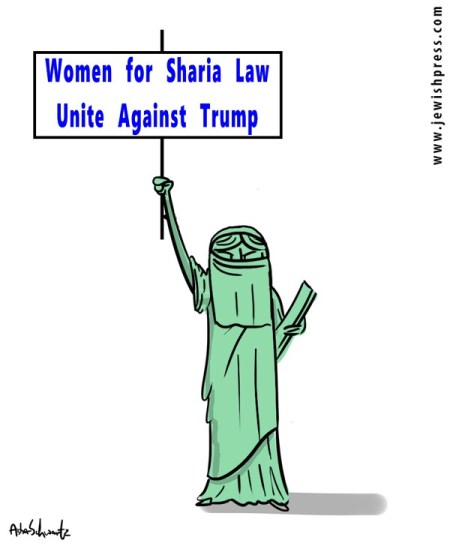
Via The Jewish Press

women-united-against-trump-2


Trump’s History-Changing Vow To Eradicate ‘Radical Islamic Terrorism’

January 23, 2017

Trump’s History-Changing Vow To Eradicate ‘Radical Islamic Terrorism’, PJ mediaRobert Spencer, January 23, 2017

trumpandisisPresident Donald Trump after he was sworn in by Justice John Roberts during the Presidential Inauguration ceremony for Donald Trump as the 45th President of the United States held at the U.S. Capitol in Washington, DC on January 20, 2017. (Photo by Anthony Behar) (Sipa via AP Images)

It is welcome to have that kind of moral clarity back in the White House. President Trump clearly hopes to emulate Reagan by destroying the Islamic State just as Reagan’s actions led to the collapse of the Soviet Union.

That collapse didn’t end Communism, which is alive and well in the Democratic Party and on U.S. university campuses, but it did deal it a significant blow. If Trump ends the Islamic State, it won’t end Islamic jihad, but it will deal it a significant blow. After so many years of ignoring, enabling, explaining away, and blaming itself for jihad, the United States is finally getting back on track.

And not a moment too soon.

********************************

President Trump first said it during his Inaugural Address:

We will … unite the civilized world against radical Islamic terrorism which we will eradicate completely from the face of the Earth.

The establishment media has been too involved with comparing crowd sizes to take any significant notice, but Trump’s words heralded a change that was momentous — and could make all the difference in our civilizational struggle against the global jihad.

One principal reason why the threat of Islamic jihad that confronts Trump is so large is because his predecessor ignored it, denied its motivating ideology, and allowed it to proliferate. A pivotal yet overlooked action of the Obama administration was its purge of all mention of Islam and jihad from law enforcement counter-terror training materials in 2011 to heed the demand of U.S. Muslim groups and their allies. Since then, the U.S. has failed to identify, confront, and oppose the ideology that has enabled jihadis to behave more boldly and aggressively then ever.

That ideology has spread unchecked in the U.S. in large part because Barack Obama didn’t want law enforcement officials learning about it: that would have been “Islamophobic.”

It is an adage as old as warfare itself: one cannot defeat an enemy that one does not understand. It could be added that one certainly has no chance whatsoever of defeating an enemy that one refuses to understand. Yet Obama’s “Countering Violent Extremism” program pointedly and ostentatiously avoided all mention of Islam and jihad in connection with terrorism. He did this in accord with the claim that investigating and speaking honestly about the beliefs and goals of jihadis would so mortally offend moderate Muslims that they would become “radicalized” and join the jihad themselves.

The whole construct was absurd. Those who advanced the claim, and they were many, never explained why these “moderates” who supposedly rejected violence in the name of Islam as “un-Islamic” would be so enraged by discussion of how others committed violence in the name of Islam that they would be moved to … violence in the name of Islam.

But now the Absurd Administration is gone. A new age of realism is dawning.

Trump has vowed to “eradicate” what he calls “radical Islamic terrorism” “completely from the face of the Earth.” He reiterated this the day after his inauguration, when speaking to the CIA:

We have to get rid of ISIS. We have no choice. Radical Islamic terrorism, and I said it yesterday, has to be eradicated, just off the face of the Earth. This is evil. This is evil … This is a level of evil that we haven’t seen. And you’re going to go do it and you’re going to do a phenomenal job, but we’re going to end it. It’s time. It’s time right now to end it.

Strictly speaking, it isn’t possible within four years, or eight, to eradicate “radical Islamic terrorism” — which is actually orthodox and mainstream in Islam — as long as there are people who believe the Qur’an is the perfect and eternal word of Allah.

There will always be some believers who get the idea that they can please Allah by killing and being killed for him (cf. Qur’an 9:111). However, Trump’s declaration, while hyperbolic, was a welcome indication of his apparent determination to speak honestly about the nature and magnitude of the jihad threat, and to combat it and roll it back.

And to call it “evil,” after eight years of the Obama administration’s moral equivocation and obfuscation, is as refreshing as Ronald Reagan calling the Soviet Union an “evil empire” in the midst of a similar period of equivocation and cowardice.

It is welcome to have that kind of moral clarity back in the White House. President Trump clearly hopes to emulate Reagan by destroying the Islamic State just as Reagan’s actions led to the collapse of the Soviet Union.

That collapse didn’t end Communism, which is alive and well in the Democratic Party and on U.S. university campuses, but it did deal it a significant blow. If Trump ends the Islamic State, it won’t end Islamic jihad, but it will deal it a significant blow. After so many years of ignoring, enabling, explaining away, and blaming itself for jihad, the United States is finally getting back on track.

And not a moment too soon.

An Instant thaw of U.S.-Israeli Relations

January 23, 2017

An Instant thaw of U.S.-Israeli Relations, Power LinePaul Mirengoff, January 22, 2017

The Democratic Party and its media pals notwithstanding, it looks like Trump has correctly identified which nations are our friends and which are not. Our friends are the ones whose leaders he’s talking to and setting up meetings with right out of the gate.

It was Barack Obama who struggled to identify our friends. Or maybe, Groucho Marx style, he couldn’t form a bond with any nation that had a high regard for ours.

*****************************

President Trump is fond of saying of almost any problem he identifies “this stops right now.” Unfortunately, many of the problems in question are not so tractable.

But there’s one problem Trump has stopped already — the bad blood between the U.S. and its great ally Israel.

The Washington Post reports that the president talked by phone today with Israel’s prime minister Benjamin Netanyahu. Trump described the conversation as “very nice.” Netanyahu’s office called it “very warm.”

According to the White House, Trump and Netanyahu agreed to consult closely on regional issues, “including the threats posed by Iran.” Trump emphasized the close relationship between the two countries, promised to work toward Israeli-Palestinian peace, and stressed that countering the Islamic State and other radical Islamic terrorist groups will be an administration priority.

Netanyahu expressed his desire to work closely with the Trump administration so that there is “no daylight between” the two countries.

In addition, Trump invited Netanyahu to visit him at the White House in early February. We can be confident that Netanyahu won’t have to cool his heels in a conference room while the president has dinner with his family, as he did when Barack Obama had him at the White House.

Netanyahu won’t be the first foreign leader to meet with Trump. That honor will go to Theresa May, the prime minister of Great Britain. This is as it should be. Like Israel, Britain is a special ally. Unlike Israel, it needs our immediate help on a trade deal as a result of Brexit.

Trump will also have early meetings with Canada’s Justin Trudeau and Mexico’s Enrique Peña Nieto. He spoke with both by phone on Saturday. These talks will pertain to renegotiating NAFTA and, particularly in the case of Mexico, immigration and border security.

This is a president who appears to have his foreign policy priorities straight.

What about Russia? According to the Post, Trump hasn’t yet made contact with Vladimir Putin. A meeting appears to be months away. Meanwhile, Kremlin spokesman Dmitry Peskov told the BBC that it would be “a big mistake” to think that U.S.-Russian relations under Trump would be free from controversy.

The Democratic Party and its media pals notwithstanding, it looks like Trump has correctly identified which nations are our friends and which are not. Our friends are the ones whose leaders he’s talking to and setting up meeting with right out of the gate.

It was Barack Obama who struggled to identify our friends. Or maybe, Groucho Marx style, he couldn’t form a bond with any nation that had a high regard for ours.

This stops right now.

An Islamofascist Assault on Free Speech

January 23, 2017

An Islamofascist Assault on Free Speech, Front Page MagazineJoseph Klein, January 23, 2017

clarproj

Jewish Voice for Peace (JVP) and the Dar Al-Hijrah Islamic Center are part of an alliance of haters who seek to intimidate anyone daring to question the Islamofascists’ supremacist ideology and their strategies to implement it. Their tactics of choice include race-baiting and a campaign of economic coercion akin to the anti-Israel Boycott, Divestment, Sanctions (BDS) movement.  For example, JVP and the Dar Al-Hijrah Islamic Center have ganged up with other like-minded so-called “inter-faith leaders and organizations” to harass a non-profit organization, the Clarion Project, they have falsely accused of being “an anti-Muslim hate group.” JVP boasted how it was successful in pressuring a real estate firm, Tishman Speyer, into throwing out the Clarion Project from offices they were renting in Tishman Speyer’s Washington D.C. building.

“The turning point in the campaign came when JVP DC-Metro partnered with leaders from the Dar Al-Hijrah Islamic Center in Falls Church Virginia,” JVP declared. “The Islamic and Jewish organizations collaborated to challenge a major Tishman Speyer development project that was before the Fairfax County Planning Commission.”

The Fairfax County Planning Commission was considering the development project this month at what should have been a routine meeting. Instead, JVP and Dar-Al-Hijrah attempted to turn it into a referendum on the Clarion Project.  Alison Glick, coordinator of JVP DC-Metro, said at the hearing, “If Tishman Speyer is going to keep doing business with Clarion, then Fairfax County should stop doing business with Tishman Speyer. Let Tishman Speyer know that hate groups are not welcome in Fairfax County.”

Colin Christopher, Deputy Director for Government Affairs at Dar-Al-Hijrah, complained to the Fairfax commissioners how the Clarion Project allegedly promoted hatred and bigotry. “We like most others see this development as a good thing,” said Colin Christopher.  “But we were deeply troubled when learning about the ongoing business relationship that Tishman Speyer have with one of the most well financed hate groups in the United States, the Clarion Project.”

The Clarion Project is, in reality, in the truth-telling business. It has put into practice what it states as its mission: “exposing the dangers of Islamist extremism while providing a platform for the voices of moderation and promoting grassroots activism.” It exposes the Islamofascists’ true agenda with their own words, while giving more moderate Muslims who are disaffected by Islamofascism the chance to express their feelings in their own words. That is not hate. It is education.

For example, Ryan Mauro, Clarion Project’s national security analyst, wrote a highly informative article based on his interview with a Pakistani Muslim activist named Anila Ali. Ms. Ali, now living in the United States, recounted what it was like trying to live the life of a moderate Muslim while being subjected to threats and hate messages from Islamist groups like the Taliban.  She condemned radical Islamic groups such as the Council on American-Islamic Relations (CAIR). She said, “I don’t subscribe to the views of any Muslim organizations or individuals who teach extremism or hate for my country, its institutions, and for the men and women in uniform that keep me and my family safe. I don’t subscribe to any Muslim organization that teaches that women and minorities don’t have equal rights in Islam. And I don’t subscribe to any organization that teaches hate against any other human being.”

In providing truly moderate Muslims in the United States a public platform to denounce the Islamists’ messages of hate and the opportunity to provide their alternative positive vision, the Clarion Project is setting an example for people, in its words, “to step up for justice, tolerance and moderation.”

JVP claims to be “inspired by Jewish tradition to work together for peace, social justice, and human rights.” In practice, they are nothing of the kind. For example, while all too eager to condemn “Israeli war-crimes,” they have little to say regarding Hamas’s use of human shields and its firing of rockets aimed at Israeli civilian population centers.

JVP has received funding from the Violet Jabara Charitable Trust (which also has supported Electronic Intifada). JVP and CAIR are joined together at the hip. For example, CAIR even presented one of its inaugural “Defender of Liberty” awards to JVP last December. As an Algemeiner article discussing the “love” relationship between JVP and CAIR put it, “The relationship between CAIR and JVP is a witches’ brew — a diabolical concoction of anti-Israel hatred and Islamic terrorist connections. Rather than ‘defenders of liberty,’ they are defenders of the Islamic agenda.”

Dar Al-Hijrah Islamic Center claims to “[P]romote better relations and understanding between Muslims and non-Muslims.” Just like their partner, JVP, they are nothing of the kind. According to the Department of Treasury’s Enforcement Communications System (TECS) records, as quoted by the Investigated Project on Terrorism, Dar Al-Hijrah Islamic Center is “a mosque operating as a front for Hamas operatives in U.S.,” and “is associated with Islamic extremists.”

The Clarion Project has written about the Islamic extremist organizations and individuals linked to the Dar Al-Hijrah Islamic Center. It has provided both direct quotes from affiliated extremists and references to U.S. government findings to back up its claims. Pointing out incontrovertible facts is not hate speech. Again, it is education in the truth.

The Clarion Project has also written about JVP’s involvement in pro-Islamist, anti-Israel causes. For example JVP supported the cause of a former member of the terrorist group, the Popular Front for the Liberation of Palestine, whom had reportedly moved to the United States under false pretenses. Rasmieh Yousef Odeh was indicted for omitting from her immigration papers the material fact that she had been arrested, convicted and imprisoned in Israel for her involvement in a terrorist attack that killed two Israeli students. JVP joined with the Chicago chapter of CAIR, American Muslims for Palestine and various pro-Palestinian “interfaith” groups in seeking an exoneration for this terrorist who falsified her background in order to reside in this country. The Clarion Project linked to JVP’s letter in which JVP said it “stands in solidarity with Rasmea Yousef Odeh” and opposes what it called “unwarranted and draconian enforcement of our immigration laws.”

Neither Jewish Voice for Peace nor the Dar Al-Hijrah Islamic Center have chosen to address the Clarion Project’s fact-based reports head on. Instead, they have dressed up the Left’s time-honored tactic of race baiting to accuse the Clarion Project of hate-filled Islamophobia.  Their “source” for this calumny is the Southern Poverty Law Center (SPLC). SPLC’s October 2016 publication, “A Journalist’s Manual: Field Guide to Anti-Muslim Extremists,” purported to profile 15 “anti-Muslim extremists.” The Southern Poverty Law Center took a swipe at the Clarion Project as part of its highly distorted “anti-Muslim extremist profile” of the Clarion Project’s national security analyst, Ryan Mauro.

The SPLC has been found to have inflated its numbers on so-called “hate groups” in general, and has a distinctly anti-conservative bias.  Any journalist who relies on SPLC’s shoddy work does so at his or her peril. It spliced together out-of-context quotes to portray its targets in the worst possible light. And it grossly distorted its targets’ full records of accomplishments. In Ryan Mauro’s case, for example, SPLC left out of its “profile” his extensive efforts to reach out to more moderate Muslims such as Anila Ali, whom he interviewed for the article mentioned above. SPLC included Maajid Nawaz on its list of supposed anti-Muslim extremists. Mr. Nawaz is a practicing Muslim, whom has spoken out against both anti-Muslim bigotry and Islamic extremism. SPLC included ex-Muslim critic of radical Islam Ayaan Hirsi Ali, whose life has been threatened for speaking out about her own first-hand experiences with Islamist hatemongers. And SPLC’s hit list included experts on jihad such as Robert Spencer, whose thoroughly researched books and articles are nuanced in defining the problems that radical Islam poses for Western societies. In all these cases, SPLC is conflating legitimate moral and intellectual criticism of Islamist doctrine with hate speech. As Mr. Nawaz said in his rebuttal to the accusations leveled at him, members of “the regressive-left” have set themselves up as “self-appointed inquisitors.” And as Mr. Spencer said, the point of SPLC’s hit list was “to demonize and silence everyone who dares say something about Islam that is not warmly positive.”

The leftwing SPLC has given the Jewish Voice for Peace and Dar Al-Hijrah Islamic Center the propaganda ammunition they need to try and intimidate the critics of Islamist organizations and individuals into submission.  They must not succeed. Bullying businesses into cutting their ties with patriotic American groups such as the Clarion Project, whom are unfairly smeared as hate groups, is an Islamofascist tactic that must be firmly resisted in defense of free speech.