Archive for September 2016

‘Donald Trump’s Special’

September 26, 2016

‘Donald Trump’s Special’, Wall Street Journal, James Taranto, September 26, 2016

It’s normal to play down one’s own candidate’s strengths and play up the opponent’s, but this is ridiculous. Mook is saying Mrs. Clinton—who we’ve been told endlessly is the most qualified man, woman or child ever to seek office anywhere in the universe—can’t handle a debate unless the moderator takes her side. What’s going on here?

******************************

Why Mrs. Clinton needs help from the moderator.


The prevailing view ahead of tonight’s presidential debate, with which this column agrees up to a point, is that Hillary Clinton faces a much more difficult task than Donald Trump. He has to convince viewers that he is sane, while she has to persuade them to trust her.

It is possible he will fail, but it is difficult to see how she can succeed. “The concept pre-loaded with associations most damaging to immediate assessments and future dealings is untrustworthiness, along with its concomitants, such as lying and cheating,” observes social psychologist Robert Cialdini in his new book, “Pre-Suasion: A Revolutionary Way to Influence and Persuade.” What could Mrs. Clinton possibly say that would reverse decades of distrust?

Her surrogates are playing the expectations game, as surrogates do, but in a very strange way. They are “pressuring Monday night’s moderator to take a more active role in the presidential debate,” the Washington Times reports:

“It’s unfair to ask for Hillary both to play traffic cop with Trump, make sure that his lies are corrected, and also to present her vision for what she wants to do for the American people,” Robby Mook said on ABC’s “This Week.”

When pressed by host George Stephanopoulos that that’s “what a debater is supposed to do,” Mr. Mook said this case is “special.”

“Well, I think Donald Trump’s special,” Mr. Mook said. “We haven’t seen anything like this. We normally go into a debate with two candidates who have a depth of experience, who have rolled out clear, concrete plans, and who don’t lie, frankly, as frequently as Donald Trump does.”

“So we’re saying this is a special circumstance, a special debate, and Hillary should be given some time to actually talk about what she wants to do to make a difference in people’s lives,” he continued. “She shouldn’t have to spend the whole debate correcting the record.”

It’s normal to play down one’s own candidate’s strengths and play up the opponent’s, but this is ridiculous. Mook is saying Mrs. Clinton—who we’ve been told endlessly is the most qualified man, woman or child ever to seek office anywhere in the universe—can’t handle a debate unless the moderator takes her side. What’s going on here?

For a possible answer, let’s turn again to Cialdini, who advised President Obama’s 2012 campaign and is rumored to be advising Mrs. Clinton’s campaign this year. In his new book, he observes:

In contests of persuasion, counterarguments are typically more powerful than arguments. This superiority emerges especially when a counterclaim does more than refute a rival’s claim by showing it to be mistaken or misdirected in the particular instance, but does so instead by showing the rival communicator to be an untrustworthy source of information, generally. Issuing a counterargument demonstrating that an opponent’s argument is not to be believed because its maker is misinformed on the topic will usually succeed on that singular issue. But a counterargument that undermines an opponent’s argument by showing him or her to be dishonest in the matter will normally win that battle plus future battles with the opponent.

That’s what the Clinton campaign hopes to do to Trump. But she can’t do it on her own, because her dishonesty is already established in most voters’ minds. Thus she needs the help of an outside authority, the moderator.

And not just the moderator. Jason Easly of PoliticusUSA (slogan: “real liberal politics”) reported Friday: “The Hillary Clinton campaign held a special press call to call on the debate moderator, media, and voters to fact check Donald Trump. In order to help the press, debate moderators, and voters fact check Trump, the Clinton campaign has released 19 pages of Trump lies.”

As if on cue, HotAir’s Larry O’Connor notes, at least four major outlets published “news” articles characterizing Trump as a liar: the New York Times (“A Week of Whoppers From Donald Trump”), Los Angeles Times (“Scope of Trump’s Falsehoods Unprecedented for a Modern Presidential Candidate”), Washington Post (“Trump’s Week Reveals Bleak View, Dubious Statements in ‘Alternative Universe’ ”) and Politico (“Donald Trump’s Week of Misrepresentations, Exaggerations and Half-Truths”).

Here’s an example of one of Politico’s “fact checks”:

52. “We’re presiding over something that the world has not seen. The level of evil is unbelievable.” (Sept. 19, Fort Myers, Florida, rally)

Judging one “level of evil” against another is subjective, but other groups in recent history have without any question engaged in as widespread killing of civilians as ISIS.

Whom does that discredit, Trump or Politico?

We stumbled across another hilarious example last night on Twitter. On CNN’s “Reliable Sources,” host Brian Stelter had this exchange with Janet Brown, executive director of the Commission on Presidential Debates:

Stelter: What about the issue of fact checking that has been talked about so much in the past few weeks? Does the commission want Lester Holt to fact check?

Brown: The commission asks independent, smart journalists to be the moderators and we let them decide how they’re going to do this. But I have to say, in our history, the moderators have found it appropriate to allow the candidates to be the ones that talk about the accuracy or the fairness of what the other candidate or candidates might have said.

I think, personally, if you are starting to get into the fact-check, I’m not sure what is the big fact, and what is a little fact? And if you and I information [sic in transcript], does your source about the unemployment rate agree with my source?

I don’t think it’s a good idea to get the moderator into essentially serving as the Encyclopedia Britannica. And I think it’s better for that person to facilitate and to depend on the candidates to basically correct each other as they see fit.

Jon Ralston, a respected Nevada political journalist, tweeted: “This, from the executive director of the Commission on Presidential Debates to @brianstelter, is insane.” Paul Krugman, the academic economist and New York Times columnist, was incredulous: “The unemployment rate? The UNEMPLOYMENT RATE?”

Because, you see, the unemployment rate is a simple matter of fact, about which there can be no dispute. Or is it?

In 2013, the New York Times published a blog post titled “There Is No ‘True’ Unemployment Rate.” It got a little technical in discussing the Bureau of Labor Statistics’ different ways of gauging unemployment:

The usual measure, U3, measures your desire to work by asking whether you have been actively searching in the recent past; it measures your ability to find work by your taking a job, any job.

Obviously this can deviate from the Platonic ideal in both directions: there could be people who could find work if they were willing to take the jobs on offer, and there could be people who want to work but aren’t actively searching because they know that at the moment there’s no point—or who are working, but only part-time because that’s all they can find.

U6 casts a wider net; it includes people who are working part-time but say they want full-time work, it includes people who aren’t actively searching but either were working recently or say that they aren’t looking for lack of opportunities. Again, this could clearly deviate from the Platonic ideal, but it’s a reasonable stab at the problem. . . .

That’s all there is to it. No deep issues, just practical choices in a world where measurement is never perfect.

The author of that post: Paul Krugman.

The problem for Mrs. Clinton in relying on the authority of journalists is that their authority rests on the assumption that they are honest brokers of information who at least aspire to an ideal of objectivity. (That is also true of scholars, so that it would apply to Krugman in this example, even though he has no obligation of objectivity in his role as an opinion columnist.)
Journalists undermine their own authority when they use it to further a political agenda. The widespread and open anti-Trump bias will further erode journalistic authority and public trust in the news media. It may hurt Trump, although we tend to doubt it will hurt him much. Reporters are not trained in propaganda, so that they are not especially good at it.

Lester Holt and the other debate moderators find themselves in an especially difficult position. They are under pressure to side with Mrs. Clinton, not just from her campaign but from their peers. If they resist the pressure and conduct the debates in an ordinary manner, they’ll get the Matt Lauer treatment.

What if they don’t? There’s no guarantee they would succeed in discrediting Trump, who is no doubt prepared to respond by arguing that the debate is rigged (unlike Mitt Romney, who was taken by surprise when Candy Crowley made a brief and probably naive foray into “fact checking” in 2012).

If Trump is seen as winning the debate, the moderator will get no credit for trying to make him lose. The least bad approach, then, is probably to stick with old-fashioned professionalism.
Trump Really Would Recognize Jerusalem as Israel’s Capital

September 26, 2016

Trump Really Would Recognize Jerusalem as Israel’s Capital, PJ Media, Roger L Simon, September 26, 2016

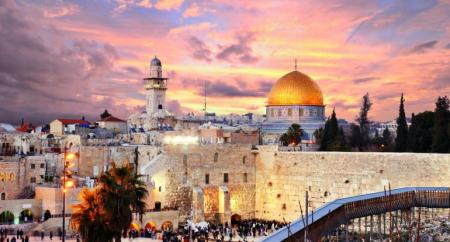
jerusalem-pic

Donald Trump and Hillary Clinton met with Benjamin Netanyahu Sunday.  Interestingly, Trump was with the Israeli prime for nearly ninety minutes, Clinton for less than an hour.

The Republican candidate obviously had more of substance to discuss with Netanyahu – the efficacy of security walls and their mutual distrust of the Iran nuclear deal being two obvious examples.  For Hillary, the encounter was more of a quick check on her bucket list, and probably an uncomfortable one.

After his meeting, Trump’s people made clear that Donald had pledged that, if elected president, he would formally recognize Jerusalem as the capital of the Jewish state.

This has been a bone of contention (to put it mildly) from, we could almost say, time immemorial, because the Jewish claim on the city dates from at least the construction of Solomon’s temple, estimated to be 832 BCE. (Actually, there’s lots of earlier evidence of Jewish presence in Jerusalem, including the extensive excavations of David’s City, but I’m keeping it simple here.) Islam, currently occupying Jerusalem’s Temple Mount, has its origins in the beginning of the 7th Century CE, over 1400 years after Solomon, and in Mecca and Medina (not Jerusalem).  No one sane disputes this.

Several American presidential candidates – when running for office – have made pledges similar to Trump’s, then, upon election, basically reneged, usually by ignoring the situation or telling the Israelis to wait until the Palestinian question is resolved.  That gave those presidents a fair amount of cover because it would take Solomon himself to tell us when that would be – and even in his case I’m not sure.

So it’s natural that Trump’s pledge would be met with some skepticism.  On Twitter Sunday night, several Republican stalwarts attacked a tweet I had written in support of Trump on this matter, implying (or even stating) that I was promoting a lie.  The candidate would never go forward with the recognition.

While I think these attacks were basically masked, last-ditch NeverTrumpism, this would be a significant decision on Trump’s part with great international ramifications and I owe my critics a bit longer response than I could give in 140-character tweets.

To begin with, Trump attended the meeting Sunday in the company of his son-in-law Jared Kushner.  Kushner – a real estate investor himself and publisher of The Observer who has emerged as one of Trump’s key advisers – is an Orthodox Jew and therefore takes the Jerusalem issue quite seriously, far more than almost any politician or political professional would.  This could only signal to Netanyahu – and should to all of us – that Trump was not taking the meeting, or anything he said in it, lightly.

Yes, he could have been using Kushner as an emblem of some sort, but I suspect Kushner himself would have been unhappy about that.  So I further suspect the reverse was true here.  This was a gesture meant to say to the Israelis – I’m with you in the deepest sense.  (Clinton was accompanied in her meeting by Jake Sullivan, who has been frequently besmirched by the email scandal.)

More importantly, Trump, not being a lifetime politician, would be the first president, basically ever, well-positioned to follow through on the pledge. He has never participated in the seemingly endless rounds of Middle East negotiations.  The ins-and-out of the increasingly dubious Oslo Accords were not his doing.  He can come to all of this fresh, with, let’s hope, common sense.

Recognizing  Jerusalem as the capital of Israel is just the kind of action I think Trump would enjoy taking because, after the initial brouhaha, everybody would realize that nothing really had changed.  The facts on the ground would be the same, Israel would still be allowing Muslim worship at Al Aqsa, and the absurdity of Jerusalem not being recognized as the capital of Israel when it really is would be unmasked.

Most of all, it would be a sign that Western Civilization is not prepared to give up its dominant role in the future of humanity – something, at this moment, that is sorely needed.

Dr. M. Zuhdi Jasser, Syrian American, and AIFD Express Deep Disappointment in White House Move to Obstruct Sanctions Efforts Against Assad Regime

September 26, 2016

Dr. M. Zuhdi Jasser, Syrian American, and AIFD Express Deep Disappointment in White House Move to Obstruct Sanctions Efforts Against Assad Regime, September 25, 2016

(Please see also, Obama’s Syria Policy Explained. — DM)

Phoenix, AZ, (September 25, 2016) – Dr. M. Zuhdi Jasser, the son of Syrian immigrants who fled Baathist tyranny, today condemned the disturbing move by the White House to block a bipartisan bill aimed at imposing sanctions against the genocidal Assad regime. The Caesar Syria Civilian Protection Act, a bill authored primarily by Democrat Rep. Eliot Engel (N.Y.), would impose new sanctions on the Assad regime and its supporters, initiate investigations into war crimes carried out by the regime, foster negotiation to end the crisis in Syria, and force the U.S. to take action against those who do business with or finance the Syrian government or its military, intelligence, airline, telecommunications and energy services.

Dr. Jasser and AIFD learned over the weekend that White House officials sadly had staffers call leaders in both parties, pushing for them to quietly shelve the bill, despite the fact that it its supporters are mostly Democrats.

In response to the news, Dr. Jasser said: “I am stunned that a president who claimed to hold a ‘red line’ standard in the use of chemical weapons would repeatedly hand civilians over to a murderous dictator – even when there is an option on the table – sanctions – which would at least make a small dent in the regime’s finances, which it uses to murder civilians, including with chemical weapons.

It is deplorable and criminal that we have not taken these measures already. How could we refrain from punishing those who finance the murder, torture and rape the bill’s namesake presented to us with undeniable evidence? It is beyond reason or comprehension. It seems our government – at its highest level – has completely forgotten our national commitment to ‘never again’ allow the genocide of a people. I encourage the bill’s bipartisan supporters to remain steadfast, and dissent with the Obama administration at once.”

Obama’s Syria Policy Explained

September 26, 2016

Obama’s Syria Policy Explained, Power Line, Paul Mirengoff, September 26, 2016

It seems likely that Obama welcomed Russia’s direct intervention since (1) it served Iran’s interests and (2) made it much easier for Obama to defend not taking military action. Indeed, Obama sees Russia as a partner in Syria.

*********************************

In writing about the pathetic efforts of John Kerry to arrange a cease fire in Syria, I’ve referred to the Secretary of State as the village idiot. But what about President Obama?

Though his intellect may be overrated, he’s anything but an idiot. Obama is, instead, a clever operator who often thinks several moves ahead of his domestic, though not his foreign, adversaries.

Why, then, has U.S. policy paved the way for Assad’s revival, Iranian and Russian success in Syria, and the massacre of up to half a million Syrians?

I’ve come to believe that the answer lies in the Iran nuclear deal. I base this view in part on the great reporting of Jay Solomon for the Wall Street Journal.

For example, Solomon revealed that in 2013, Iran told Obama that if he were to strike the regime of Bashar Assad following the latter’s chemical-weapons attack, the Iranians would end the talks over their nuclear program. Obama duly canceled the strike and later reassured Iran that the United States would not touch Assad.

In my view, Obama’s priority from Day One has been to negotiate a nuclear deal with the mullahs and use the deal as a springboard to a kind of alliance with the their regime under which Iran would “stabilize” the region and the U.S. would basically exit. This desire best explains why Obama’s Syria policy serves Iran’s interests.

My view finds powerful support in a piece in Tablet by Tony Badran of the Federation for Defense of Democracies. Having read Badrad’s piece, it seems to me that the pro-Iran tilt manifested in Obama’s Syria policy is even more pronounced than I had suspected.

Badran states his thesis this way:

America’s settled policy of standing by while half a million Syrians have been killed, millions have become refugees, and large swaths of their country have been reduced to rubble is not a simple “mistake,” as critics like Nicholas D. Kristof and Roger Cohen have lately claimed. Nor is it the product of any deeper-seated American impotence or of Vladimir Putin’s more recent aggressions.

Rather, it is a byproduct of America’s overriding desire to clinch a nuclear deal with Iran, which was meant to allow America to permanently remove itself from a war footing with that country and to shed its old allies and entanglements in the Middle East, which might also draw us into war. By allowing Iran and its allies to kill Syrians with impunity, America could demonstrate the corresponding firmness of its resolve to let Iran protect what President Barack Obama called its “equities” in Syria, which are every bit as important to Iran as pallets of cash.

Obama’s intentions should have been evident from the beginning. After all, as Badran points out, “if Obama purposefully took the Iranian regime’s side during the 2009 protests so as not to upset the prospect of rapprochement, he similarly wasn’t about to commit the United States against Iran’s longest-standing strategic ally, Assad.”

But Obama did a great job of masking his pro-Assad tilt and confusing none-too-bright media. Badran writes:

[B]y 2012, criticism of the administration’s policy had grown more vocal, and calls rose to give military support to the Syrian opposition, a proposition the president was always opposed to. As this was a fixed position for Obama, the task before the White House was, therefore, one of public relations—to quiet the calls for supporting the opposition, outside and also within the administration, without doing anything that would actually upset Assad and his patrons in Iran.

Messaging, as always, was of paramount importance to the White House. As the Wall Street Journal reported in early 2013, “White House national security meetings on Syria [in 2012] focused on what participants called ‘strategic messaging,’ how administration policy should be presented to the public.” To that end, the administration started putting out targeted talking points. The administration laid down its now-infamous mantra: There is no military solution in Syria.

Unfortunately, Assad, Iran, and Russia did not share this view — as Obama knew. Thanks to U.S. policy, Assad, Iran, and Russia appear to be right.

Not content with the “no military solution” mantra, Obama added argument that he wanted to avoid “further militarization” of the situation in Syria. Thus Jay Carney stated:

We do not believe that militarization, further militarization of the situation in Syria at this point is the right course of action. We believe that it would lead to greater chaos, greater carnage.

In light of subsequent developments, this statement is obscene, but it was always ridiculous. A no-fly zone would have prevented much of the carnage — and presumably virtually all of carnage rained down from the air — that has occurred since Carney spoke this rubbish several years ago.

But a no-fly zone would have thwarted Iran’s ambitions. Thus, argues Bedran, it was always a non-starter for Obama.

Russia’s presence in the air over Syria provided Obama with an excuse for rejecting a no-fly zone. But, as Bedran says, the administration had firmly rejected such action for years before the Russians were anywhere near Syria.

It seems likely that Obama welcomed Russia’s direct intervention since (1) it served Iran’s interests and (2) made it much easier for Obama to defend not taking military action. Indeed, Obama sees Russia as a partner in Syria. According to Bedran, “partnership with Russia is what the White House has sought after since late 2015 and throughout 2016 —with [Robert] Malley as the point man, negotiating directly with the Kremlin’s special envoy. Malley, by the way, is virulently anti-Israel.

The cynicism of Obama’s pronouncements on Syria — his “strip tease” as Bedran calls it — is encapsulated by what he and his team have said about Russian intervention in Syria. Initially, the administration’s line was that Russia had made a tragic mistake by becoming involved in a quagmire (never mind that, as we pointed out at the time, its military involvement was limited almost entirely to air strikes). Now, Team Obama argues that Russia holds all the cards in Syria and that our only option is to work with the Kremlim.

Russia and Iran hold all the cards because Obama allowed them to. Bedran makes a strong case that Obama allowed them to because because he wants Iran to prevail.

One might admire the elegance of Obama’s “strip tease,” if not for the demise of hundreds of thousands of Syrians and the triumph of our arch-enemy in Tehran.

FBI: 7,700 Terrorist Encounters in USA Last Year

September 26, 2016

FBI: 7,700 Terrorist Encounters in USA Last Year, Counter Jihad, September 26, 2016

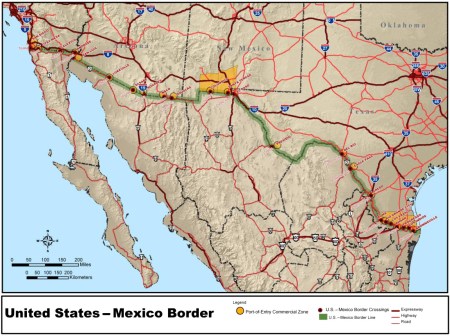
us-mexico-border

Breitbart news has received a collection of leaked documents from the Federal Bureau of Investigation that show a massive number of terrorist encounters, especially in border states.  The documents are not classified, though they are marked sensitive.  7,712 terrorist encounters occurred from July 20, 2015 and the same date a year later — last year, in short.

Some of the documents pertain to the entire U.S., while others focus specifically on the state of Arizona.  The states with the highest encounters are all border states. Texas, California, and Arizona–all states with a shared border with Mexico–rank high in encounters…. Most significantly, the map shows that many of the encounters occurred near the border outside of ports-of-entry, indicating that persons were attempting to sneak into the U.S.

Page Six shows a pie chart indicating that the majority of encounters in Arizona were with Islamic known or suspected terrorists, both Sunni and Shi’a.

That last is surprising, as one would expect drug cartels to make up the majority of such encounters.  The leak comes at a time when the FBI’s crime reporting shows an increase in violent crime across the country.

The Shiite terrorist organization Hezbollah has developed connections with the Latin American drug cartels because of its prominent role in heroin.  Iran’s Revolutionary Guards Corps (IRGC) controls the opium trade from the poppy fields in Afghanistan to the Levant, and they provide a great deal of opium to Hezbollah.  Hezbollah has a refining capacity in Lebanon that allows them to provide a substantial part of the world’s heroin.  They trade heroin to the Latin American drug cartels for other illegal money-making opportunities, forged documents, and access to the Americas.  Hezbollah’s operations produce between ten and twenty million dollars in revenue for its American operations, which are based out of a large Lebanese immigrant community in what is called the “Tri-border region,” an area between Paraguay, Brazil, and Argentina.

In addition to its money-making ventures, Hezbollah provides the cartels with military training.  As one of the world’s foremost guerrilla organizations, Hezbollah finds that its military trainers are sought after commodities.  They are able to parley those connections in order to perform operations in Mexico.  Their ability to infiltrate the United States, in order to conduct terrorist violence in service to Iran, is highlighted by these leaked FBI documents.

The role of Sunni groups is less fully understood, but it was a concern for the intelligence section of the United States military’s Southern Commandaccording to another set of leaks earlier this year.

Sunni extremists are infiltrating the United States with the help of alien smugglers in South America and are crossing U.S. borders with ease, according to a U.S. South Command intelligence report.  The Command’s J-2 intelligence directorate reported recently in internal channels that “special interest aliens” are working with a known alien smuggling network in Latin America to reach the United States….  Army Col. Lisa A. Garcia, a Southcom spokeswoman, did not address the intelligence report directly but said Sunni terrorist infiltration is a security concern.

“Networks that specialize in smuggling individuals from regions of terrorist concern, mainly from the Afghanistan-Pakistan region, the Middle East, and East Africa, are indeed a concern for Southcom and other interagency security partners who support our country’s national security,” Garcia told theWashington Free Beacon….  “In 2015, we saw a total of 331,000 migrants enter the southwestern border between the U.S. and Mexico, of that we estimate more than 30,000 of those were from countries of terrorist concern,” she said….

[T]he Southcom intelligence report revealed that the threat of Islamist terror infiltration is no longer theoretical. “This makes the case for Trump’s wall,” said one American security official of the Southcom report. “These guys are doing whatever they want to get in the country.”

Here at CounterJihad, we reported on Southern Command’s commander, Admiral Kurt Tidd, and his testimony before Congress on the threat.  Tidd reported that a number of terrorists were transiting the region who had gone to Syria and fought for the Islamic State (ISIS) and other radical groups.  Their ability to return to Latin America was smooth, given that they actually had legal travel documents.

Whether they can then pass into the United States is an open question.  The leaked FBI documents only talk about actual law enforcement encounters with people on terrorist lists.  How many are infiltrating without encountering law enforcement?

Liberals Demand Trump be Arrested for “Hate Speech” – Petitioning Attorney General for Indictment

September 26, 2016

Liberals Demand Trump be Arrested for “Hate Speech” – Petitioning Attorney General for Indictment, Mark Dice via YouTube, September 26, 2016

The blurb beneath the video states

Social Justice Warriors sign a petition to arrest Donald Trump for “hate speech” crimes, and throw him to jail for ten years. This shocking social experiment was conducted by media analyst Mark Dice to discover how far liberals would go in hopes of stopping Donald Trump from becoming President of the United States. Media analyst Mark Dice has the story. © 2016 by Mark Dice

Immigration Officers Union Gives First Ever Endorsement to Trump

September 26, 2016

Immigration Officers Union Gives First Ever Endorsement to Trump, Front Page Magazine, Daniel Greenfield, September 26, 2016

trumpte_2

Obama turned those who should enforce our borders and our laws into coyotes smuggling his illegal alien backers into this country. It hasn’t won him and his political ideology any friends. And has not done Hillary any favors.

The union representing the nation’s Immigration and Customs Enforcement officers and staff is throwing its support behind GOP nominee Donald Trump.

It’s the first time ever that the National Immigration and Customs Enforcement Council has endorsed a candidate for president, according to a statement posted on Trump’s campaign web site Monday.

“Donald Trump reached out to us for a meeting, sat down with me to discuss his goals for enforcement, and pledged to support ICE officers, our nation’s laws and our members. In his immigration policy, he has outlined core policies needed to restore immigration security — including support for increased interior enforcement and border security, an end to Sanctuary Cities, an end to catch-and-release, mandatory detainers, and the canceling of executive amnesty and non-enforcement directives,” its statement says.

In contrast, the union says Democratic nominee Hillary Clinton supports furthering “amnesty” and is pushing a “radical” immigration plan that will lead to the loss of thousands of lives.

 But Hillary does have the support of millions of illegal aliens. That’s why she’s again Voter ID and why the Democrats are fighting tooth and nail, successfully in many cases, against any anti-fraud measures.

Obama’s Conflict Tanked the Clinton E-mail Investigation

September 26, 2016

Obama’s Conflict Tanked the Clinton E-mail Investigation, National Review, Andrew C. McCarthy, September 26, 2016

Hillary couldn’t be proven guilty without proving the president guilty as well.

pic_giant_096416_obama-hillary(Photo: Reuters/Brian Snyder)

‘How is this not classified?”

So exclaimed Hillary Clinton’s close aide and confidante, Huma Abedin. The FBI had just shown her an old e-mail exchange, over Clinton’s private account, between the then-secretary of state and a second person, whose name Abedin did not recognize. The FBI then did what the FBI is never supposed to do: The agents informed their interviewee (Abedin) of the identity of the second person. It was the president of the United States, Barack Obama, using a pseudonym to conduct communications over a non-secure e-mail system — something anyone with a high-level security clearance, such as Huma Abedin, would instantly realize was a major breach.

Abedin was sufficiently stunned that, for just a moment, the bottomless capacity of Clinton insiders to keep cool in a scandal was overcome. “How is this not classified?”

She recovered quickly enough, though. The FBI records that the next thing Abedin did, after “express[ing] her amazement at the president’s use of a pseudonym,” was to “ask if she could have a copy of the email.”

Abedin knew an insurance policy when she saw one. If Obama himself  had been e-mailing over a non-government, non-secure system, then everyone else who had been doing it had a get-out-of-jail-free card.

Thanks to Friday’s FBI document dump — 189 more pages of reports from the Bureau’s year-long foray (“investigation” would not be the right word) into the Clinton e-mail scandal — we now know for certain what I predicted some eight months ago here at NRO: Any possibility of prosecuting Hillary Clinton was tanked by President Obama’s conflict of interest.

As I explained in February, when it emerged that the White House was refusing to disclose at least 22 communications Obama had exchanged with then-secretary Clinton over the latter’s private e-mail account, we knew that Obama had knowingly engaged in the same misconduct that was the focus of the Clinton probe: the reckless mishandling of classified information.

To be sure, he did so on a smaller scale. Clinton’s recklessness was systematic: She intentionally set up a non-secure, non-government communications framework, making it inevitable that classified information would be mishandled, and that federal record-keeping laws would be flouted. Obama’s recklessness, at least as far as we know, was confined to communications with Clinton — although the revelation that the man presiding over the “most transparent administration in history” set up a pseudonym to conceal his communications obviously suggests that his recklessness may have been more widespread.

Still, the difference in scale is not a difference in kind. In terms of the federal laws that criminalize mishandling of classified information, Obama not only engaged in the same type of misconduct Clinton did; he engaged in it with Clinton. It would not have been possible for the Justice Department to prosecute Clinton for her offense without its becoming painfully apparent that 1) Obama, too, had done everything necessary to commit a violation of federal law, and 2) the communications between Obama and Clinton were highly relevant evidence.

Indeed, imagine what would have happened had Clinton been indicted. The White House would have attempted to maintain the secrecy of the Obama-Clinton e-mails (under Obama’s invocation of a bogus “presidential communications” privilege), but Clinton’s defense lawyers would have demanded the disclosure of the e-mails in order to show that Obama had engaged in the same misconduct, yet only she, not he, was being prosecuted. And as most experienced criminal-law lawyers understand (especially if they’ve read a little Supreme Court case known as United States v. Nixon), it is an argument that Clinton’s lawyers would have won.

In fact, in any other case — i.e., in a case that involved any other unindicted co-conspirator — it would be the Justice Department itself introducing the Obama-Clinton e-mails into evidence.

As noted above, the FBI told Huma Abedin that the name she did not recognize in the e-mail with Clinton was an Obama alias. For the agents to do this ran afoul of investigative protocols. The point of an FBI interview is for the interviewee to provide information to the investigators, not the other way around. If agents give information to potential witnesses, the government gets accused of trumping up the case.

But of course, that’s only a problem if there is actually going to be a case.

In this instance, it was never going to happen. The president’s involvement guaranteed that . . . so why worry about letting Abedin in on the president’s involvement?

Abedin was startled by this revelation. No wonder: People in her lofty position know that direct presidential communications with high-ranking officials who have national-security and foreign-policy responsibilities are presumptively classified.

To convey this, and thus convey the legal significance of Obama’s involvement, I can’t much improve on what I told you back in February. When the Obama Justice Department prosecuted retired general David Petraeus, the former CIA director, for mishandling classified information, government attorneys emphasized that this top-secret intelligence included notes of Petraeus’s “discussions with the president of the United States of America.”

Petraeus pled guilty because he knew the case against him was a slam-dunk. He grasped that trying to defend himself by sputtering, Clinton-style, that “the notes were not marked classified” would not pass the laugh test. As I elaborated in the February column, when you’re a national-security official engaging in and making a written record of policy and strategy conversations with the president, the lack of classified markings on the documents you’ve created

[does] not alter the obvious fact that the information they contain [is] classified — a fact well known to any high government official who routinely handles national-defense secrets, let alone one who directly advises the president.

Moreover, as is the case with Clinton’s e-mails, much of the information in Petraeus’s journals was “born classified” under the terms of President Obama’s own executive order — EO 13526.As I’ve previously noted, in section 1.1(d) of that order, Obama issued this directive: “The unauthorized disclosure of foreign government information is presumed to cause damage to the national security.” In addition, the order goes on (in section 1.4) to describe other categories of information that officials should deem classified based on the damage to national security that disclosure could cause. Included among these categories: foreign relations, foreign activities of the United States, military plans, and intelligence activities.

Abedin knew, as the FBI agents who were interviewing her surely knew, that at least some of Obama’s pseudonymous exchanges with Clinton had to have crossed into these categories. They were born classified. As I said in February, this fact would profoundly embarrass Obama if the e-mails were publicly disclosed.

Hundreds of times, despite Clinton’s indignant insistence that she never sent or received classified information, the State Department has had to concede that her e-mails must be redacted or withheld from public disclosure because they contain information that is patently classified. But this is not a concession the administration is willing to make regarding Obama’se-mails.

That is why, as I argued in February, Obama is trying to get away with the vaporous claim that presidential communications must be kept confidential. He does not want to say “executive privilege” because that sounds too much like Nixon. More important, the only other alternative is to designate the e-mails as classified. That would be tantamount to an admission that Obama engaged in the same violation of law as Clinton.

Again, this is why the prosecution of Mrs. Clinton never had a chance of happening. It also explains why, in his public statements about the matter, Obama insisted that Clinton’s e-mailing of classified information did not harm national security. It is why Obama, in stark contrast to his aforementioned executive order, made public statements pooh-poohing the fact that federal law forbids the mishandling of any intelligence secret. (“There’s classified, and then there’s classified,” he said, so cavalierly.) He had to take this position because he had himself effectively endorsed the practice of high-level communications through non-secure channels.

This is also why the Justice Department and the FBI effectively rewrote the relevant criminal statute in order to avoid applying it to Clinton. In his public statements about Clinton, Obama has stressed that she is an exemplary public servant who would never intentionally harm the United States. In rationalizing their decision not to indict Clinton, Justice Department officials (in leaks to the Washington Post) and the FBI director (in his press conference and congressional testimony) similarly stressed the lack of proof that she intended to harm the United States.

As I’ve repeatedly pointed out, however, the operative criminal statute does not call for proof of intent to harm the United States. It merely requires proof of gross negligence. This is entirely lawful and appropriate, since we’re talking about a law that can apply only to government officials who have a special duty to preserve secrecy and who have been schooled in the proper handling of classified information. Yet the Justice Department frivolously suggested that applying the law exactly the way it is written — something the Justice Department routinely tells judges they must do — would, in Clinton’s case, potentially raise constitutional problems.

Alas, the Justice Department and the FBI have to take that indefensible position here. Otherwise, Clinton would not be the only one in legal jeopardy.

I will end with what I said eight months ago:

To summarize, we have a situation in which (a) Obama knowingly communicated with Clinton over a non-government, non-secure e-mail system; (b) Obama and Clinton almost certainly discussed matters that are automatically deemed classified under the president’s own guidelines; and (c) at least one high-ranking government official (Petraeus) has been prosecuted because he failed to maintain the security of highly sensitive intelligence that included policy-related conversations with Obama. From these facts and circumstances, we must deduce that it is possible, if not highly likely, that President Obama himself has been grossly negligent in handling classified information.

That is why the Clinton e-mail scandal never had a chance of leading to criminal charges.

Nahed Hattar: Killed for a Cartoon (David Wood)

September 26, 2016

Nahed Hattar: Killed for a Cartoon (David Wood)Acts17Apologetics via YouTube, September 26, 2016

https://www.youtube.com/watch?v=Pm5S4-hSxgw

The blurb beneath the video states,

Nahed Hattar (ناهض حتر‎‎) was raised as a Christian in Jordan—though he considered himself an atheist. He was recently shot and killed by a Muslim imam for sharing a cartoon mocking the Islamic view of paradise. The cartoon features a jihadi in bed with two of his houris (the virgins Muslim men get to spend eternity deflowering in Jannah).

In the cartoon, Allah says: “Good evening, Abu Saleh. Do you need anything?” The jihadi replies: “Yes Lord, get me a glass of wine and tell Gabriel to bring me some cashews. After that, send me an immortal servant to clean the floor, and take the empty plates with you. Don’t forget to put a door on the tent so that you knock before you enter next time, Your Glory.”

Hattar was arrested for insulting Islam, even though he apologized and said that he was only making fun of ISIS. Following his arrest, he requested security to protect him, but his request was denied. He was subsequently shot to death outside the courthouse.

Westernized Muslims are now insisting that the cartoon Hattar shared has nothing to do with Islam, and that the view of paradise the cartoon mocks is the view of ISIS, not of Muhammad.

In this video, David Wood goes through Islam’s most trusted sources, to see if Muhammad’s view of paradise is different from that of ISIS and al-Qaeda.

Pentagon’s top brass explores Islamic ideology’s ties to terror

September 26, 2016

Pentagon’s top brass explores Islamic ideology’s ties to terror, Washington TimesRowan Scarborough, September 25, 2016

obamadunfordPresident Barack Obama walks with Marine Gen. Joseph Dunford Jr., his nominee to be the next chairman of the Joint Chiefs of Staff, after speaking in the Rose Garden of the White House in Washington, Tuesday, May 5, 2015.

U.S. Special Operations Command has privately pressed the staff of the nation’s highest-ranking military officer to include in his upcoming National Military Strategy a discussion of the Sunni Muslim ideology underpinning the brutality of the Islamic State group and al Qaeda.

Thus, behind the scenes, the Pentagon’s top brass have entered a debate coursing through the presidential campaign: how to define an enemy the U.S. military has been fighting for 15 years.

The National Military Strategy, authored by the Joint Chiefs of Staff chairman, is one of the most important guidances issued to global combatant commanders. It prioritizes threats to the nation and how to blunt them.

The 2015 public version does not mention Islamic ideology. It lists terrorists under the ambiguous category of “violent extremist organizations” and singles out al Qaeda and the Islamic State group.

Marine Corps Gen. Joseph F. Dunford took the chairmanship of the Joint Chiefs of Staff two months later and is now preparing his first National Military Strategy.

It is during this process that Special Operations Command, which plays a major role in hunting down terrorists, has provided its input to the Joint Staff, Gen. Dunford’s team of intelligence and operations officers at the Pentagon.

Special Operations Command wants the National Military Strategy to specifically name Salafi jihadism as the doctrine that inspires violent Muslim extremists. Salafi jihadism is a branch within Sunni Islam. It is embraced by the Islamic State and used to justify its mass killings of nonbelievers, including Shiite Muslims, Sunnis and Kurds, as well as Christians.

People knowledgeable about the discussion told The Washington Times that SoCom has not been able to persuade Gen. Dunford’s staff to include Salafi jihadism in any strategy draft. It is unclear whether Gen. Dunford has been briefed on the proposals.

Spokesmen for the Joint Staff and U.S. Special Operations Command in Tampa, Florida, told The Times that they could not comment on a pending strategy. Gen. Dunford’s strategy will be classified in its entirety, meaning there will be no public version as was issued by his predecessor, Army Gen. Martin Dempsey, in 2015.

Special Operations Command is headed by Army Gen. Raymond A. Thomas III, a veteran terrorist hunter who led Joint Special Operations Command, the unit that killed Osama bin Laden and many other extremists.

There does not appear to be an effort to include the words “radical Islamic terrorism” in the strategy. But including a discussion of Salafi jihadism would tie acts of terrorism to Islamic ideology.

President Obama has fiercely rejected any connection between Islam the faith and al Qaeda, the Islamic State or any other Muslim terrorist organizations. He argues that they have corrupted the teachings of the Prophet Muhammad and the Koran. His administration refers to them as simply “extremists.”

The counterargument from many U.S. national security analysts and Muslim scholars is that mass killings are rooted in the Koran and other primary writings and preachings of credible Islamic scholars and imams. These teachings at some mosques and on social media encourage youths to become radical Islamists.

Abu Bakr al-Baghdadi, the ruthless Islamic State founder, is a cleric who studied at a seminary in Iraq. Al-Baghdadi has a Ph.D. in Koranic studies from Iraq’s Saddam University.

‘War of ideas’

If the cycle of global jihadism is to be broken, they say, U.S. officials must accurately assess the nature of the threat and its doctrines. If not, Gen. Dunford’s National Military Strategy is, in essence, directing commanders to ignore threat doctrine and relinquish the information battlefield to the enemy.

“If you look at threat doctrine from that perspective, it’s a much bigger problem because it’s not just the violent jihadists; it’s the nonviolent jihadists who support them,” said one person knowledgeable about the National Military Strategy. “Pretending there is no relationship between the violent jihadists and Islam isn’t going to win. We’re completely ignoring the war of ideas. We’re still in denial. We’re pretending the enemy doesn’t exist.”

A joint counterterrorism report by the American Enterprise Institute and the Institute for the Study of War concluded:

“Salafi-jihadi military organizations, particularly ISIS and al Qaeda, are the greatest threat to the security and values of American and European citizens.”

The Islamic State is also known as ISIS, ISIL and Daesh.

Albert M. Fernandez, who was the State Department’s chief of strategic communication, said that on some level, if not the U.S. directly, people need to talk about the form of Salafi jihadism that promotes violence.

“Using the word ‘extremism’ is extraordinarily vague language,” he said.

Some voices in the Muslim hierarchy differ with Mr. Obama and say the encouragement of violence is a problem that Islam must confront.

One such leader is Hassen Chalghoumi, imam of the Drancy Mosque in Paris. France has Europe’s largest Muslim population and has been wracked by a series of brutal terrorist attacks planned and inspired by the Islamic State.

Mr. Chalghoumi spoke last year at a conference in Washington sponsored by the Middle East Media Research Institute, which tracks jihadi social media and promotes moderate Islamic leaders.

Mr. Chalghoumi said mosques are one “battlefront” in the war on extremism.

“The third battlefront is the mosques, in many of which there is incitement to anti-Semitism, hate and ultimately violence,” he said. “This is the most critical battlefront regarding the future of Islam and its relationship with other religions. But even this one is not solely internal. The government should have a role in prohibiting money from terrorist organizations from reaching mosques and guiding their activities. It should prevent extremist leaders from preaching in pulpits from which they can abuse their power and spew hate and violence. It should make sure that the people who preach religion to others are qualified and endorse human values.”

Teaching terrorism

Advocates of publicly discussing the influence of Salafi jihadism point to Sahih al-Burkhari. It is a nine-volume collection of Sunni Muslim dictates from historical figures that is held as only second in importance to the Koran.

Volume 4, Book 56, justifies the killings of non-Muslims. “Whoever changed his Islamic religion, then kill him,” says one apostle of the Prophet Muhammad.

Volume 9, Book 88, contains this: “During the last days there will appear some young foolish people who will say the best words but their faith will not go beyond their throats (i.e., they will have no faith) and will go out from (leave) their religion as an arrow goes out of the game. So, where-ever you find them, kill them, for who-ever kills them shall have reward on the Day of Resurrection.”

Robert Spencer is an author who runs Jihad Watch, a nonprofit that reports on Islamic extremism.

He explains that Salafi Jihadism is a vehicle for taking the teachings of the Koran and applying them to jihad.

“The Islamic State scrupulously follows the Koran and Sunnah in its public actions, including its pursuit of jihad, and provides in Dabiq its Islamic justification for even its most controversial actions,” he said. “Thus the Islamic State is essentially the apotheosis [highest form] of Salafi Jihadism.”

The Sunnah contains the sayings of the Prophet Muhammad. Dabiq is a town in Syria where a final battle between Muslims and Christians supposedly will take place.

A 2008 strategy paper from Harvard University’s John M. Olin Institute said:
“Like all ideologies, Salafi-Jihadists present a program of action, namely jihad, which is understood in military terms. They assert that jihad will reverse the tide of history and redeem adherents and potential adherents of Salafi-Jihadist ideology from their misery. Martyrdom is extolled as the ultimate way in which jihad can be waged — hence the proliferation of suicide attacks among Salafi-Jihadist groups.”

Defining the enemy

How to define the Islamic State, which controls territory in Syria and Iraq and has franchises in over 20 countries, has been a hot topic in the U.S. presidential campaign.

Republican nominee Donald Trump criticizes Democratic nominee Hillary Clinton for refusing to define the threat as “radical Islamic terrorism.”

He has surrounded himself with advisers who do see the threat that way. Former CIA Director James Woolsey, who has authored papers on the extremist Islamic threat, has joined the campaign as a foreign policy adviser.

Another Trump spokesman is retired Army Lt. Gen. Michael T. Flynn, who led the Defense Intelligence Agency under Mr. Obama. He has said he was fired by the White House for promoting the idea that there is a radical Islamic movement that must be confronted.

One of Mr. Trump’s most ubiquitous surrogates is former New York Mayor Rudolph W. Giuliani, who was on Fox News on Saturday morning again criticizing Mrs. Clinton for not defining the threat.

Mrs. Clinton at one point said “radical jihadists” is the proper description. After the Pulse nightclub massacre in Orlando, Florida, by an Islamic State follower, she said “radical Islam” is permissible. She infrequently uses either term.

“Inflammatory anti-Muslim rhetoric and threatening to ban the families and friends of Muslim Americans as well as millions of Muslim businesspeople and tourists from entering our country hurts the vast majority of Muslims who love freedom and hate terror,” she said in June, taking a swipe at Mr. Trump. “So does saying that we have to start special surveillance on our fellow Americans because of their religion.”

The Defense Department on a few occasions has purged from its ranks those who advocate a discussion on how Islam the religion encourages violence.

In 2008, during the George W. Bush administration, the Pentagon ended a contract with Stephen Coughlin, an Army Reserve officer and lawyer. His consulting work centered on showing the links between Islamic law and violent extremism.

In 2012, in the Obama administration, Gen. Dempsey, then the Joint Chiefs chairman, publicly admonished Army Lt. Col. Matthew Dooley for linking the roots of Islamic teachings to the terrorism’s ideology today. Col. Dooley was removed as a teacher at Joint Forces College within the National Defense University and given a poor performance evaluation.

A student linked some of his training materials, and Muslims complained to the White House.

Gen. Dempsey called Col. Dooley’s training materials “academically irresponsible.”

The university’s teaching guidance says it permits outside-the-box instruction.

Muslim groups have petitioned the White House to end what they consider anti-Muslim training.

One set of complaints came in an October 2011 letter from 57 Islamic groups to Mr. Obama’s chief counterterrorism adviser, John O. Brennan, now the CIA director. Mr. Brennan refuses to use the words “Islamic extremists” or “radical Islamic terrorism.”

Some of the groups were unindicted co-conspirators in a federal terrorist financing prosecution in Texas. They also have ties to the global Muslim Brotherhood, whose goal is a world ruled by Islamic law.

Gen. Dempsey issued the Pentagon’s last National Military Strategy a little over a year ago.

It says the two leading terrorist organizations are al Qaeda and the Islamic State, which are defined as “violent extremist organizations.” That is the paper’s only use of the word “Islamic,” and there is no use of “Muslim” or “Salafi.”