Archive for August 2016

Israel targeted ‘key Hamas strategic assets’ in Sunday’s barrage

August 23, 2016

Israel targeted ‘key Hamas strategic assets’ in Sunday’s barrage IDF takes advantage of rocket fire from Gaza to take out terrorist infrastructure; Liberman: ‘We won’t allow them to rearm’

By Judah Ari Gross

August 23, 2016, 4:12 pm

Source: Israel targeted ‘key Hamas strategic assets’ in Sunday’s barrage | The Times of Israel

Palestinian militants of the Islamic Jihad movement arrive to inspect a crater on August 22, 2016 in Beit Lahia in the northern Gaza Strip, following an Israeli airstrike the day before that targeted Hamas positions in the Gaza Strip in response to a rocket fired from the Palestinian enclave hits the Israeli city of Sderot. AFP / Mahmud Hams

In Sunday night’s bombardment, the Israel Defense Forces struck “key Hamas strategic assets” in the northern Gaza Strip, military sources said Tuesday, shedding more light on the harsher-than-expected response to a rocket attack from the coastal enclave.

After a projectile from Gaza landed in the southern Israeli town of Sderot on Sunday, the IDF retaliated with what has become the routine response of a limited strike, hitting two Hamas installations in the northern Gaza Strip, the army said.

Hours later, the IDF conducted another, considerably larger barrage, carrying out approximately 50 strikes against Hamas infrastructure in the Gaza Strip, using both tanks and aircraft.

These targets were not directly related to the rocket launch, nor were they only an attempt at creating a deterrent effect. Rather, the IDF took advantage of the opportunity presented by the attack to take out Hamas strategic assets.

An Israeli police sapper carries part of a rocket fired by Palestinian militants in the Gaza Strip from the yard of a house in the city of Sderot, southern Israel, Sunday, August 21, 2016. AP /Tsafrir Abayov.

An Israeli police sapper carries part of a rocket fired by Palestinian militants in the Gaza Strip from the yard of a house in the city of Sderot, southern Israel, Sunday, August 21, 2016. AP /Tsafrir Abayov.

With few exceptions, the army’s policy toward Hamas in Gaza has been only to retaliate, not to initiate, an officer in the IDF’s Southern Command told The Times of Israel in November.

Though the IDF often has extensive intelligence on the terrorist group’s dealings in the Gaza Strip, “we don’t respond to everything, because we don’t want to escalate the situation,” the officer said.

When a rocket is fired into Israel, however, that dynamic changes and the IDF has a certain legitimacy in targeting terrorist infrastructure in the coastal enclave, as occurred on Sunday night.

A Palestinian man loads stones on a cart next to a crater in Beit Lahia in the northern Gaza Strip on August 22, 2016, following an Israeli airstrike the night before that targeted Hamas positions in response to a rocket fired from the Palestinian enclave that hit the Israeli city of Sderot. (Mahmud Hams/AFP)

A Palestinian man loads stones on a cart next to a crater in Beit Lahia in the northern Gaza Strip on August 22, 2016, following an Israeli airstrike the night before that targeted Hamas positions in response to a rocket fired from the Palestinian enclave that hit the Israeli city of Sderot. (Mahmud Hams/AFP)

It was immediately noted that Israel’s bombardment on Sunday was larger than most retaliatory strikes.

“There were approximately 50 airstrikes within two hours,” a senior military official told The Times of Israel. “But there is no intention to escalate the situation further.”

Hamas quickly claimed the response was an attempt by Israel to change the status quo in Gaza — and Israel agreed.

“You can’t expect the State of Israel to allow [Hamas] to rearm itself, to steal money from the residents of Gaza. They are levying taxes and not constructing buildings, but tunnels,” Defense Minister Avigdor Liberman said on Tuesday morning at an army base in the Galilee.

Palestinian security sources in Gaza said several targets in the northern Strip were struck by Israeli fire, and that a reservoir in Beit Hanoun was damaged. Israel also hit a base belonging to Hamas’s military wing, the Izz ad-Din al-Qassam Brigades, in nearby Beit Lahiya, witnesses said. Palestinian health and security sources said between two and five people were lightly wounded by Israel’s retaliatory fire.

Hamas officials have decried the Israeli bombardment, but have not indicated that they intend to respond immediately.

The Nine Lives of Donald J. Trump

August 23, 2016

The Nine Lives of Donald J. Trump, National Review, Victor Davis Hanson, August 23, 2016

Whatever his faults, a Trump victory is preferable for the Republic.

Seasoned Republican political handlers serially attack Donald Trump and his campaign as amateurish, incompetent, and incoherent. The media somehow outdid their propaganda work for Barack Obama and have signed on as unapologetic auxiliaries to the Hillary Clinton campaign — and openly brag that, in Trump’s case, the duty of a journalist is to be biased. We have devolved to the point that a Harvard Law professor teases about unethically releasing his old confidential notes of his lawyer/client relationship with Trump.

Conservative columnists and analysts are so turned off by Trump that they resort to sophisticated metaphors to express their distaste — like “abortion,” “ape,” “bastard,” “bitch,” “cancer,” “caudillo,” “dog crap,” “filth,” “idiot,” “ignoramus,” and “moron.” Some of them variously talk of putting a bullet through his head given that he resembles, or is worse than, Caesar, Hitler, Mussolini, or Stalin. Derangement Syndrome is a more apt clinical diagnosis for the Right’s hatred of Trump than it was for the Left’s loathing of Bush. Had such venom been directed at leftists or minorities, the commentators likely would have lost their venues.

Trump’s political obituary over the last 14 months has been rewritten about every three weeks. During the primaries, each time he won a state we were told that that victory was his last. Now, in the general-election campaign, his crude ego is supposedly driving the Republican ticket into oblivion. The media have discovered that what gets Trump’s goat is not denouncing his coarseness, but lampooning his lack of cash and poor polling: broke and being a loser is supposedly far worse for Trump’s ego than being obnoxious and cruel. So far, he is behind in most of the polls most of the time.

But not so fast!

Mysteriously, each time he hits rock bottom, Trump — even before his recent “pivot” — begins a two-week chrysalis cycle of inching back in the polls to within 2 or 3 points of Clinton. Apparently Trump represents something well beyond Trump per se. He appears to be a vessel of, rather than a catalyst for, popular furor at “elites” — not so much the rich, but the media/political/academic/celebrity global establishment that derides the ethos of the middle class as backward and regressive, mostly as a means for enjoying their own apartheid status and sense of exalted moral self, without guilt over their generational influence and privilege.

Given the surprise of Brexit and Trump’s unexpected dominance of the primaries, pollsters seem to fear that his populist support is underreported by 2 or 3 percentage points. Some voters who do not openly profess that they plan to vote for Trump might do just that in the privacy of the polling booth — even as they might later deny that fact to others.

His latest pivot may be too late, but it certainly hit the right notes by presenting his populist themes — unwise trade deals, defense cuts, inner-city violence, attacks against police, illegal immigration, the war on coal, big-government regulations, and boutique environmentalism — as symptomatic of elite neglect not just of the white working class but of minorities as well, upon whom liberal policy falls most heavily. By curbing his personal invective and focusing on Obama’s incompetence and Clinton’s corruption, Trump may succeed in allowing 4 or 5 percent of the missing Republicans and independents to return and vote for him without incurring social disdain.

The news cycle favors any outsider — certainly including Trump.

About every three weeks, terrorists butcher innocents in one or another Western country, usually screaming “Allahu Akbar” during their victims’ death throes. These terrorists have often been watched but otherwise left alone by intelligence agencies. Liberal pieties follow, along with warnings to the public about their prejudices, rather than admonitions to radical Islamists to stop their killing.

The ensuing public backlash does not mesh with the Obama–Clinton narrative that the killings were mere workplace violence, a generic form of “violent extremism,” or had “nothing to do with Islam.” Like Jimmy Carter, with his infamous inability to frame the Iranian hostage crisis, so too the latest manifestation of Hillary Clinton is simply unable to identify the origin, nature, and extent of the terrorist threat — much less offer a solution.

When the president upgrades the ISIS threat from a jayvee classification to something analogous to a fall in the bathroom, the public is not reassured that his former secretary of state understands radical Islamic terrorism.

In the same vein, with 11 million illegal aliens in the U.S., almost daily we hear a news report of yet another illegal-alien felony, or a new sanctuary city, or an effort by the “undocumented” to get the vote out — none of which enhances open-borders Hillary.

Many of us have been saying for a year now that the last six months of the Obama administration will likely be the most dangerous interlude since the Cuban missile crisis of 1962 or the Carter meltdown of 1980. Restive aggressors abroad have long concluded that Obama is conflicted about American morality, power, and responsibility. After his faux deadlines, redlines, and step-over lines, his apologies, his mythographical speeches, and his deer-in-the-headlights reactions to overseas challenges, he appears to foreign opportunists to be indifferent to the consequences of American laxity and lead-from-behind withdrawal.

Putin is now massing troops near Ukraine. Iran is absorbing Iraq and Syria. China has carved out a thalassocracy in the South China Sea. Tensions will only rise in these areas in the next 90 days, to the point of either outright war or more insidious and humiliating withdrawals from U.S. interests and allies. Either scenario favors Trump’s Jacksonian bluster.

When a black police officer in Milwaukee fatally shoots a fleeing armed suspect — who had a lengthy arrest record and had turned to fire with his stolen automatic pistol — and anti-police riots follow, then it is hard to conceive under what conditions of legitimate police self defense that riots would not ensue. While there is plenty of public sympathy for refocusing on the general conditions in the inner city that may foster a high crime rate, there is none for focusing on their riotous manifestations.

After “hands up, don’t shoot” in Ferguson, the police acquittals in Baltimore, and now Milwaukee, the inevitable next riot will further hurt Hillary Clinton, who has mortgaged her campaign soul to Obama’s electoral calculus of 2008/2012. Meanwhile the daily carnage in Obama’s hometown of Chicago continues, out of sight and out of mind to the Democratic party. Hillary

Clinton has lied about her e-mails, her personal server, and the supposed firewall between her and the Clinton Foundation. She has lied about almost every detail of her tenure as secretary of state, from the killings in Benghazi to her knowledge of sending and receiving classified material. We are back to the cattle-future lying of 1979, when  Hillary was said to have had a 31-trillion-to-one chance of telling the truth about her hundred-fold profit.

The problem with chronic lying is that finally the liar reaches a combustible state, one in which she cannot lie any more without contradicting a particular prior lie and yet cannot tell the truth without contradicting all prior lies. To keep them straight, one needs an amoral photographic memory. Hillary Clinton has the requisite shamelessness, but (unlike Bill) not the animal cunning to pull off such serial prevarication. In her latest fabrication that has begrudgingly come to light, Hillary had blamed Colin Powell (who never set up a private server as secretary of state) as the supposed felonious model that prompted her to break the law.

So expect more lies about hacked e-mail from the Clinton Foundation, Hillary’s deleted e-mail accounts, the DNC records, or some as yet unknown private communication about every 48 hours until November. If Trump’s fantasies are the bluster, narcissism, and adolescence of a real-estate and show-biz wheeler-dealer, Clinton’s lies are the steely-eyed and deliberate work of a long-time sociopathic prevaricator who destroys all those around her who weave the webs of her deceit.

Barack Obama is not necessarily a plus for Clinton. The president does well in the polls while he is off golfing with celebrities and sports stars, and is thus not heard or seen much in the world outside Martha’s Vineyard — the world in which coffins float about in flood-ravaged Louisiana, the Putin military build-up near Ukraine continues, or the Obamacare disaster grows. But whenever Obama reemerges to campaign for Hillary, he inevitably winds up in his characteristic condescending rambles and rants — the most recent his ridiculous lying about the Iranian ransom/“leverage” payment.

Clinton will win the election if she (and Trump’s own alter ego) can continue to convince the public that Trump is dangerous, repulsive, and unfit to a degree not seen before in politics — and thus every new day is devoted to Trump’s mouth and not Hillary’s high crimes and misdemeanors. But if Trump can pivot to focus on policy, about which he sometimes proves to be a skilled speaker and clever antagonist, then media attention will shift from Trump to the issues and the daily news. And all that fare is innately damaging to Hillary.

Trump has two enemies: money and Trump himself. In his peculiar way, Trump is able to work the teleprompter as effectively as Obama, and when disciplined is far better in unscripted repartee. All that explains why Trump has not yet quite killed Trump off, and why in any given ten-day recovery period he has the potential to creep within 2 or 3 points of Hillary, which this year may mean a dead-even race.

Yet Trump so far can get close to Clinton, but not 3 to 4 points ahead. To do that would require continued zeal, but also a complete end to his personal invective against irrelevant third parties — and an ability to raise a lot of money quickly and get his message out in a multimedia campaign.

Trump will also have to show reluctant conservative big-money donors that he is serious about the presidency, perhaps with the dramatic gesture of selling off a building or two to infuse his campaign with millions of dollars of good-faith money. That signal might be the sort of financial sacrifice that would encourage traditional donors to give to a common effort and cease talk that Trump was never seriously in the race before being surprised by his unexpected resonance. If he can pick up an additional 4 to 5 percent of Republicans, or win a quarter of the Latino vote, or 10 percent of the black vote, he likely will win the election — big ifs, of course.

For now, openly siding with Trump is still not “done” in the New York–Washington corridor. But if Trump were to pull even and stay that way for a week, and curb his bombast, he might be able to assemble a team of advisors and possible cabinet members whom he could reference in the matter of possible Supreme Court picks, lending further legitimacy to his candidacy.

There is a herd-like mentality in Washington and New York, where the gospel is not professed politics, but unspoken allegiance to a perceived winner. Momentum is the deity. If Trump were to creep out ahead, one should not be surprised about the resulting silence in the Never Trump camp, or about those who would suddenly “be willing” to join a Team Trump. Epithets like “ape” and “Hitler” would mysteriously disappear. For those worried about a satanic President Trump, they should at least concede that Republican elites sign letters of dissent against their own nominee, whom the media seek to destroy at every turn; in contrast, there will be no Democratic establishment cries of outrage over Hillary Clinton’s past and future crimes and sins — and the media will abet, not censure, her excesses.

What is forgotten in the Trump pessimism is that even with less than three months until Election Day, the Republican nominee — after the worst imaginable self-inflicted wounds, and with a complete absence of serious fundraising, an ad campaign, or a ground game — still is within striking distance of winning the election. If he were to do so, for the first time in a generation, the Republican party would likely control both houses of Congress, the presidency, and the future of the Supreme Court — with a public on record in support of radical change and without need to pacify its old establishment. Certainly, an attorney general like Rudy Giuliani would be preferable to Loretta Lynch, just as a John Bolton at State would not run the department in the fashion that Clinton herself did during Obama’s first term.

Such is the unrelenting popular furor at political correctness, the political and media aristocracy, the Obama record, and the immorality of Hillary Clinton that a candidate with no political experience, little campaign cash, and serious character problems may overturn a century of conventional wisdom. The choice of winning or losing the election is now mostly Trump’s own.

Our World: Soros’s campaign of global chaos

August 23, 2016

Our World: Soros’s campaign of global chaos, Jerusalem PostCaroline B. Glick, August 22, 2016

soros

The DCLeaks exposed the immensity of the Soros-funded Left’s campaign against the foundations of liberal democracies. The “direct democracy” movements that Soros support are nothing less than calls for mob rule.

********************

Major media outlets in the US have ignored the leak of thousands of emails from billionaire George Soros’s Open Society Foundation by the activist hacker group DCLeaks. The OSF is the vehicle through which Soros has funneled billions of dollars over the past two decades to non-profit organizations in the US and throughout the world.

According to the documents, Soros has given more than $30 million to groups working for Hillary Clinton’s election in November, making him her largest single donor. So it is likely the case that the media’s support for Clinton has played some role in the mainstream media’s bid to bury the story.

It is also likely however, that at least some news editors failed to understand why the leaked documents were worth covering. Most of the information was already public knowledge. Soros’s massive funding of far-left groups in the US and throughout the world has been documented for more than a decade.

But failing to see the significance of the wider story because many of the details were already known is a case of missing the forest for the trees. The DCLeaks document dump is a major story because it exposes the forest of Soros’s funding networks.

The first thing that we see is the megalomaniacal nature of Soros’s philanthropic project. No corner of the globe is unaffected by his efforts. No policy area is left untouched.

On the surface, the vast number of groups and people he supports seem unrelated. After all, what does climate change have to do with illegal African immigration to Israel? What does Occupy Wall Street have to do with Greek immigration policies? But the fact is that Soros-backed projects share basic common attributes.

They all work to weaken the ability of national and local authorities in Western democracies to uphold the laws and values of their nations and communities.

They all work to hinder free markets, whether those markets are financial, ideological, political or scientific. They do so in the name of democracy, human rights, economic, racial and sexual justice and other lofty terms.

In other words, their goal is to subvert Western democracies and make it impossible for governments to maintain order or for societies to retain their unique identities and values.

Black Lives Matter, which has received $650,000 from Soros-controlled groups over the past year, is a classic example of these efforts. Until recently, the police were universally admired in the US as the domestic equivalent of the military. BLM emerged as a social force bent on politicizing support for police.

Its central contention is that in the US, police are not a force for good, enabling society to function by maintaining law and order. Rather, police are a tool of white repression of blacks.

Law enforcement in predominantly African American communities is under assault as inherently racist.

BLM agitation, which has been accused of inspiring the murders of police in several US cities, has brought about two responses from rank and file police. First, they have been demoralized, as they find themselves criminalized for trying to keep their cities safe from criminals.

Second, their willingness to use force in situations that demand the use of force has diminished. Fear of criminal charges on the one hand, and public condemnation as “racists” on the other causes police to prefer inaction even when situations require that they act.

The demoralization and intimidation of police is very likely to cause a steep increase in violent crimes.

Then there are Soros’s actions on behalf of illegal immigration. From the US to Europe to Israel, Soros has implemented a worldwide push to use immigration to undermine the national identity and demographic composition of Western democracies. The leaked emails show that his groups have interfered in European elections to get politicians elected who support open border policies for immigrants from the Arab world and to financially and otherwise support journalists who report sympathetically on immigrants.

Soros’s groups are on the ground enabling illegal immigrants to enter the US and Europe. They have sought to influence US Supreme Court rulings on illegal immigration from Mexico. They have worked with Muslim and other groups to demonize Americans and Europeans who oppose open borders.

In Israel as well, Soros opposes government efforts to end the flow of illegal immigration from Africa through the border with Egypt.

The notion at the heart of the push for the legalization of unfettered immigration is that states should not be able to protect their national identities.

If it is racist for Greeks to protect their national identity by seeking to block the entrance of millions of Syrians to their territory, then it is racist for Greece – or France, Germany, Hungary, Sweden the US or Poland – to exist.

Parallel to these efforts are others geared toward rejecting the right of Western democracies to uphold long-held social norms. Soros-supported groups, for instance, stand behind the push not only for gay marriage but for unisex public bathrooms.

They support not only the right of women to serve in combat units, but efforts to force soldiers to live in unisex barracks. In other words, they support efforts aimed at denying citizens of Western democracies the right to maintain any distance between themselves and Soros’s rejection of their most intimate values – their sexual privacy and identity.

As far as Israel is concerned, Soros-backed groups work to delegitimize every aspect of Israeli society as racist and illegitimate. The Palestinians are focal point of his attacks. He uses them to claim that Israel is a racist state. Soros funds moderate leftist groups, radical leftist groups, Israeli Arab groups and Palestinian groups. In various, complementary ways, these groups tell their target audiences that Israel has no right to defend itself or enforce its laws toward its non-Jewish citizens.

In the US, Soros backed groups from BLM to J Street work to make it socially and politically acceptable to oppose Israel.

The thrust of Soros’s efforts from Ferguson to Berlin to Jerusalem is to induce mayhem and chaos as local authorities, paralyzed by his supported groups, are unable to secure their societies or even argue coherently that they deserve security.

In many ways, Donald Trump’s campaign is a direct response not to Clinton, but to Soros himself.

By calling for the erection of a border wall, supporting Britain’s exit from the EU, supporting Israel, supporting a temporary ban on Muslim immigration and supporting the police against BLM, Trump acts as a direct foil to Soros’s multi-billion dollar efforts.

The DCLeaks exposed the immensity of the Soros-funded Left’s campaign against the foundations of liberal democracies. The “direct democracy” movements that Soros support are nothing less than calls for mob rule.

The peoples of the West need to recognize the common foundations of all Soros’s actions. They need to realize as well that the only response to these premeditated campaigns of subversion is for the people of the West to stand up for their national rights and their individual right to security. They must stand with the national institutions that guarantee that security, in accordance with the rule of the law, and uphold and defend their national values and traditions.

Hamas, Palestinian Authority Target Journalists Ahead of Election

August 23, 2016

Hamas, Palestinian Authority Target Journalists Ahead of Election

by Khaled Abu Toameh

August 23, 2016 at 5:00 am

Source: Hamas, Palestinian Authority Target Journalists Ahead of Election

  • Both of the journalists who were arrested made the mistake of reporting on the suffering of Palestinians living under Hamas rule. These are not the kind of stories that Hamas wishes to see ahead of the local and municipal elections. Rather, Hamas wants to see printed lies of prosperity.
  • It is a puzzle why foreign journalists choose not to report about the campaign of intimidation facing their Palestinian colleagues.
  • One might wonder if the human rights groups neglect these abuses because of their continued obsession with destroying Israel.

Palestinian journalists are at the top of the Palestinian Authority (PA) and Hamas hit-list in the crackdown occurring alongside preparations for the Palestinian local and municipal elections, scheduled for October 8.

The crackdown is part of an ongoing campaign by the two rival parties to silence critics in the West Bank and Gaza Strip. Neither Hamas nor the PA tolerates a free and independent media — especially on the eve of a crucial election that could have far-reaching political implications in the Palestinian arena.

A Hamas victory in the upcoming elections would be catastrophic for President Mahmoud Abbas and his Palestinian Authority. Such an electoral outcome would be tantamount to a vote of no-confidence in their policies and performance.

Hamas, for its part, is investing a huge amount of resources in the election campaign, in hopes that the results would further boost its standing among Palestinians. Hamas fears that a defeat would undermine its power in the Gaza Strip and pave the way for its collapse.

As the election campaign heats up, it is clear that Hamas and the PA agree on one thing: intensifying their repressive measures against Palestinian journalists.

This media crackdown is essentially ignored by international human rights organizations. Why? One reason is that when Israel is not involved, assaults on freedom of the media and expression do not interest them.

Some Western journalists and human rights advocates also treat these cases as “internal Palestinian issues” that are of no relevance to international public opinion. A story about a Palestinian journalist who is arrested by Israel is news. A Palestinian journalist incarcerated or threatened by the Palestinian Authority or Hamas is not.

Take, for example, the case of Ahmed Said, a journalist from the Gaza Strip. Last week, he was arrested by Hamas security forces, who also confiscated his personal computer. Said has a radio show on the Sawt Al Sha’ab (Voice of the People) radio station, where Palestinians call in to voice their grievances and talk openly about the problems they are facing under Hamas rule in the Gaza Strip.

Before he was arrested, Said had phoned the spokesman of the Hamas police force, Ayman Al Batnihi, to discuss the recent rise in cases of homicide in the Gaza Strip. According to the journalist, the furious spokesman threatened him: “You are causing us a lot of problems and inciting people. I know how to deal with people. You need to be hanged.”

Said is no stranger to this sort of encounter. Last year, he was summoned for investigation for “incitement” against the Gaza City Municipality. The move came after Said used his talk show to talk about the case of street vendor Mohamed Abu Assi, who tried to commit suicide by ingesting poison after Gaza City Municipality inspectors banned him from selling corn at the beach.

Earlier, Hamas arrested another Palestinian journalist, this time for no clear reasons. Mahmoud Abu Awwad, who works for the Palestinian daily Al-Quds, was arrested from his home in the Shati refugee camp on July 25. He too had his personal computer and cellular phone seized.

Ahmed Said (left) and Mahmoud Abu Awwad (right) are two journalists living in the Gaza Strip who were recently arrested by Hamas security forces. Both journalists made the mistake of reporting on the suffering of Palestinians living under Hamas rule.
Abu Awwad’s family have since been banned from seeing him in prison. Their son, they were told by Hamas, is being held for “security reasons.” Abu Awwad, who has been working for Al-Quds for the past three years, had been reporting mostly about the hardships facing Palestinians in the Gaza Strip. In addition, he was also reporting for the Saudi London-based pan-Arab daily, Asharq Al Awsat.

“Hamas is trying to spread lies to distort the image of my son and justify his arrest,” Abu Awwad’s father told Al-Quds. “He was arrested because he was critical of the situation in the Gaza Strip and the Hamas government.”

Said and Abu Awwad have something in common. Both journalists made the mistake of reporting on the suffering of Palestinians living under Hamas rule. These are not the kind of stories that Hamas wishes to see ahead of the local and municipal elections. Rather, Hamas wants to see printed lies of prosperity.
In the context of its election campaign, Hamas has released a video featuring new houses and neighborhoods, as well as green and clean parks and smiling children. Entitled, “Thank You Hamas,” the video seeks to persuade Palestinian voters that life under Hamas is the best thing that could ever happen to them. And that is why they need to help Hamas extend its control from the Gaza Strip to the West Bank through the local and municipal elections. Journalists such as Said and Abu Awwad are spoiling the effect with their inconvenient truths.

Hamas, however, is the proverbial pot calling the kettle black. In the face of its own massive journalistic repression, Hamas dares to criticize the Palestinian Authority for taking similar measures in the West Bank.

Like Hamas, the PA leadership has always been intolerant towards Palestinian (and sometimes non-Palestinian) journalists who dare not toe the party line. Hardly a week passes without hearing about another Palestinian journalist who has been arrested or summoned for investigation by the Palestinian Authority.

In recent weeks, the crackdown on journalists in the West Bank seems to have increased in light of the upcoming elections. The PA too wants to remove from the scene any journalist who might harm its loyalists’ chances of winning the local and municipal vote. In this regard, journalists are easy prey.

One of the recent victims is Mohamed Abu Khabisah, who reports on economic issues for the Turkish news agency, Anadolu. Palestinian security officers who raided his home shortly after midnight in Al Bireh, near Ramallah, seized his personal computer and documents before taking him into custody. His wife, Hana, said she too was briefly questioned about her husband’s source of income and the nature of his work. Palestinian sources say he was apparently arrested for reporting about financial corruption in the Palestinian Authority’s official news agency, Wafa.

Abu Khabisah was the sixth journalist to be arrested by the PA since the decision to hold local and municipal elections was taken two months ago. The other four are Yehya Saleh, Raghid Tabisah Ibrahim Al Abed, Mohamed Abu Jheisheh and Ziad Abu Arrah. In another recent incident, Palestinian security officers raided the home of journalist Musab Kafisheh and seized his personal computer, but did not take him into custody.

It is anxiety that is driving Hamas and the Palestinian Authority in their crackdown on Palestinian journalists. The “security reasons” they tout as an excuse for their repression is a foil for their sense of instability: the less politically secure they feel, the more they strip Palestinian journalists of their ability to report how things really stand in the Gaza Strip and the West Bank.

So far, so good, from the point of view of Hamas and the PA. Palestinian reporters have been duly deterred. But they are far from the only ones affected.

Foreign journalists rely almost entirely on Palestinian “fixers” and producers for information about what is happening under the Palestinian Authority and Hamas. Now, local Palestinians will think ten times before they provide their foreign employers with information. Still, it is a puzzle as to why foreign journalists choose not to report about the campaign of intimidation facing their Palestinian colleagues.

One might wonder if the human rights groups neglect these abuses because of their continued obsession with destroying Israel.

Report: FBI investigating whether Roanoke County double stabbing was inspired by ISIS

August 23, 2016

Source: Report: FBI investigating whether Roanoke County double stabbing was inspired by ISIS

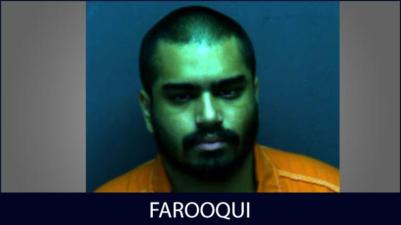
Wasil Farooqui
By Web Staff |

ROANOKE CO., Va. (WDBJ7) According to CBS News, the FBI is investigating whether a random double stabbing in Roanoke County on Saturday was inspired by ISIS.

Click here to read the story from CBS News.

20-year-old Wasil Farooqui of Roanoke County is charged with two counts of aggravated malicious wounding. Investigators say Farooqui stabbed two people Saturday evening at The Pines Apartments in the 4300 block of Banbury Lane, which is near the Oak Grove Shopping Center. Roanoke County Police say the attack was random.

A source told CBS News that Farooqui has been on the FBI’s radar for several months and is believed to be self-radicalized. The source also told CBS News that Farooqui tried to go to Syria earlier this year, but only got as far as Europe.

Witnesses told police that during the attack Farooqui was yelling “Allah Akbar.” In Arabic translates to “God is the greatest.” The law enforcement source told CBS the FBI is investigating whether the attack made with a sharpened EDC knife was possibly inspired by ISIS and whether the suspect may have been trying to behead the two victims.

The victims are recovering well, according to Roanoke County Police.

While officers were at the hospital Saturday, police say Farooqui came into the emergency room for treatment of his own injuries. He was arrested and charged with two counts of aggravated malicious wounding.

Farooqui is being held at the Western Virginia Regional Jail without bond.

Roanoke County Police confirmed Monday that the FBI is helping with the investigation.

Iran Expanding Terror Network in Latin America

August 23, 2016

Iran Expanding Terror Network in Latin America, Washington Free Beacon, August 23, 2016

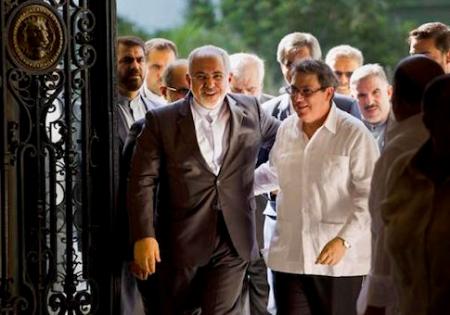
Iranian Foreign Minister Mohammad Javad Zarif, left, is welcomed by Cuban Foreign Minister Bruno Rodriguez, in Havana, Cuba, Monday, Aug. 22, 2016. Iran’s foreign minister begun a Latin American tour in Cuba, declaring Iran and Cuba united by their histories of resisting what he called U.S. atrocities. Zarif also plans to visit Nicaragua, Ecuador, Chile, Bolivia and Venezuela. (AP Photo/Ramon Espinosa)

Iranian Foreign Minister Mohammad Javad Zarif, left, is welcomed by Cuban Foreign Minister Bruno Rodriguez, in Havana, Cuba, Monday, Aug. 22, 2016.  (AP Photo/Ramon Espinosa)

Iran is solidifying its foothold in Latin America, sparking concerns among U.S. officials that the Islamic Republic will enlist these regional allies in its push to launch terror attacks on U.S. soil, according to conversations with congressional sources.

Iranian Foreign Minister Javad Zarif has been on a diplomatic tour through key Latin American countries known for hostility towards the United States, including Cuba, Venezuela, and a host of other countries believed to be providing shelter to Iranian terrorist proxies such as Hezbollah.

As Iranian-ally Russia boosts its spy operation in the region, sources have raised concerns about the rogue nations working together to foster anti-U.S. unrest.

Zarif’s trip through the region has raised red flags among some senior congressional sources familiar with the region. For example, Zarif took aim at the United States and touted the regime’s desire to align with anti-American countries during his stay in Cuba.

One senior congressional source who works on the issue said to the Washington Free Beacon that Iran is seeking to recruit “potential terrorists who want to cause the U.S. harm.”

Increased ties between Iran and these Latin American nations are setting the stage for terrorists to penetrate close to U.S. soil with little detection.

These individuals “can travel easily to Venezuela, and once there, they can get to Nicaragua or Cuba without passports or visas, which poses a national security risk for our nation,” the source explained.

Iran has also reopened its embassy in Chile, a move that has only added fuel to speculation among U.S. officials that the Islamic Republic is making moves to position its global terror network on America’s doorstep.

“The threat to U.S. national security interests and our allies should be setting off alarm bells,” Rep. Ileana Ros-Lehtinen (R., Fla.), chair of the House Subcommittee on the Middle East and North Africa, said in a statement about Zarif’s Latin American tour.

“The Obama administration has failed to prevent Russia and China from expanding in our Hemisphere, and now Iran is once again stepping up its efforts to gain a greater presence to carry out its nefarious activities,” Ros-Lehtinen said. “I urge the White House to stop downplaying the Iranian threat and take immediate action to prevent the world’s leading state sponsor of terrorism from establishing a regional safe haven in the Americas.”

Asked to comment on Zarif’s trip and the potential repercussions on Monday, a State Department official said to the Free Beacon that the administration had no comment.

Ros-Lehtinen said the high-profile trip by Zarif should serve as a warning.

“The timing of Zarif’s trip is significant as Iran could use many of these rogue regimes to circumvent remaining sanctions, undermine U.S. interests, and expand the drug trafficking network that helps finance its illicit activities,” she said. “Tehran’s classic playbook is to use cultural centers, new embassies or consulates, or cooperative agreements on various areas to act as façades aimed at expanding Iran’s radical extremist network.”

The renewed concerns about Iran’s footprint in Latin America comes nearly two years after the State Department said Tehran’s influence in the region was “waning.”

“The timing of Zarif’s trip speaks volumes,” said the senior congressional aide who would discuss the issue only on background. It “is worrisome that as we just celebrated the 22nd year of the horrific terrorist attack against the AMIA Jewish community center in Argentina, Iran can now have personnel nearby in a new embassy in Chile.”

“Just recently, a Hezbollah member was picked up in Brazil, an explosive device was found near the Israeli embassy in Uruguay, and Hezbollah members are reportedly traveling on Venezuelan passports,” the source added. “It was not too long ago that Venezuela offered flights to Iran and Syria, and as of last week, Hezbollah cells were found in the West Bank where Venezuela lifted its visa requirements for Palestinians.”

Zarif slammed the United States on Monday during a speech in Havana.

“Iran and Cuba could prove to the U.S. that it cannot proceed with its policies through exerting pressure on other countries,” Zarif said, according to Iran’s state-controlled media.

“Now the time is ripe for realizing our common goals together and implement the resistance economy in Iran and materialize [Cuban dictator Fidel] Castro’s goals of reconstruction of the Cuban economy,” Zarif added.

Zarif went on to note that Iran “has age-old and strong relations with the American continent and the Latin American countries.”

Zarif is reported to have brought along at least 60 Iranian officials and executives working in the country’s state-controlled economic sector.

Behnam Ben Taleblu, senior Iran analyst at the Foundation for Defense of Democracies, told the Free Beacon that Iran has boosted efforts to engage Latin America in the wake of last summer’s nuclear agreement.

“Iran’s Foreign Minister Mohammad-Javad Zarif is aggressively continuing Iran’s diplomatic outreach, a policy which began early in the Rouhani administration and was kicked into high gear in the aftermath of the JCPOA—last summer’s nuclear deal,” he said. “Zarif’s sojourn into the Western hemisphere follows on the heels of his May visit to the region. Zarif’s trip symbolically commences in Havana, Cuba, where the Iranian foreign minister harped on themes of steadfastness and resistance to American legal and economic pressure.”

The Iranian leader’s goal is to “build on this experience to help promote an anti-American and anti-capitalist world order,” he added. “What’s most clear however, is that in addition to seeking to solidify the anti-American political orientation of these states, Iran aims to capitalize on the increasingly detached stigma of doing business with it in the aftermath of the nuclear accord. Therefore, we can expect to see trade deals or memorandums of understanding inked. In short, Iran will be looking to deepen to its footprint in Latin America.”

Germany may reintroduce conscription if defense of NATO borders needed

August 23, 2016

Germany may reintroduce conscription if defense of NATO borders needed

reports Published time: 23 Aug, 2016 08:52

Source: Germany may reintroduce conscription if defense of NATO borders needed – reports — RT News

© Thomas Peter / Reuters

The German government may revive nationwide conscription in times of crisis, such as situations in which the country needs to “defend NATO’s external borders,” according to local media citing a controversial paper drafted by the Interior Ministry.

The so-called “Civil Defense Concept,” which is due to be discussed by the German cabinet on Wednesday, mainly focuses on fulfilling Germany’s obligations to defend NATO’s external border.

However, the controversial proposal to revive conscription does not lie on the surface and can only be found buried in a section entitled “Civil support for the armed forces,” according to DPA news agency.

Read more

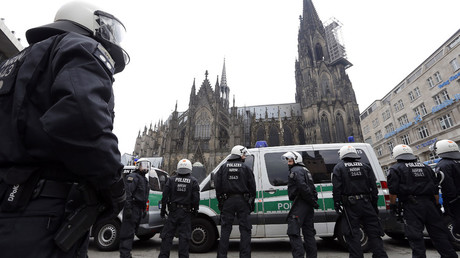
German riot police stand in front of the Cologne Cathedral in Cologne, Germany.© Vincent Kessler

“Quick and reliable delivery of mail especially important for the Bundeswehr (in particular, call-up papers and notices of performance in times of reintroduction of conscription) is ensured under Post- and Telecommunications Safety Act,” reads the draft cited by DPA.

Conscription was suspended in Germany in 2011 after long-standing debates in the government and society, with advocacy groups and experts arguing that it was no longer necessary for the country to maintain a large Cold War-era standing army to defend Europe from a perceived Soviet threat.

In June, German Defense Minister Ursula von der Leyen said conscription will not be reintroduced, notwithstanding renewed tensions with Russia and the terror threat posed by Islamic State (IS, previously ISIS/ISIL).

Conscription is specifically authorized in the German constitution and can be returned with a simple law approved by the parliament, according to Die Zeit.

Apart from conscription, the German Interior Ministry’s paper also mentions the obligations of civilians and civilian organizations to assist the Bundeswehr in other ways, particularly by helping “recruitment organizations and accommodation infrastructure.”

Some of the military’s support functions could also be outsourced to civilian companies, such as “a limited provision of catering for the troops during operations,” the paper reportedly says.

However, then the document goes far beyond modern-day military outsourcing tasks and discusses other proposals resembling war-time measures.

In times of crisis, the draft reads, the federal government can ensure “nutritional emergency preparedness” by imposing “tax obligations relating to cultivation, processing, distribution and sale of food products.”

Other excerpts from the paper previously leaked by German media included the idea of making citizens stockpile food and water reserves – enough to last at least ten days – in the event of a major disaster or a military invasion.

The “Civil Defense Concept” marks the first time since the Cold War that the German government has considered such measures, but the plan was devised as early as 2012, according to Frankfurter Allgemeine.

Israel strikes Syria

August 23, 2016

Israel strikes Syria After mortar fire landed in the Golan Heights, the Israeli Air Force struck back.

Source: Israel strikes Syria – Defense/Security – News –

Israel Air Force (Illustration)

Israel Air Force

The Israeli Air Force struck a military target in Syria in response to mortar fire which landed in the Golan Heights in the north.

IAF jets scrambled into the air when a mortar strayed over from Syria and exploded in the Golan Heights. The fighter jets targeted a Syrian army missile launcher in retaliation, near Quneitra, Syria.

According to Syrian media, an unmanned aircraft struck a Ba’ath party position at the outskirts of Quneitra.

No one was injured. The mortar landed in open terrain.

No Red Alert rocket sirens sounded when the mortar breached Israeli territory.

Israel maintains a policy that spillover fighting, even of rebels, is the responsibility of the country who allowed it into Israel.

WATCH: Dozens of illegal guns seized in West Bank crackdown

August 23, 2016

Dozens of illegal guns seized in West Bank crackdown IDF, police, Shin Bet conduct raids in Bethlehem, Hebron as part of ongoing campaign against illicit weapons

By Judah Ari Gross

August 23, 2016, 1:53 pm

Source: WATCH: Dozens of illegal guns seized in West Bank crackdown | The Times of Israel


In the largest operation of the year, Israeli security forces seized dozens of weapons, confiscated equipment and made arrests in Hebron and Bethlehem early Tuesday morning as part of an ongoing effort to crack down on illegal guns in the West Bank, an IDF official said.

In total, seven illegal gun workshops were raided and 22 pieces of gunsmithing machinery — drill presses and metal lathes — were seized, along with “approximately 50 weapons,” including handguns, shotguns, hunting rifles and Carlo-style submachine guns, a cheap and simple automatic weapon loosely based off the design of the Carl Gustav submachine gun, the official said.

 Security forces also recovered ammunition and dozens of gun pieces — grips, barrels, stocks, etc. — that would have been used to create more weapons, the official added.

Two of the alleged manufacturers were arrested in the raids. The suspects do not appear to be connected to any terrorist groups, but were more likely driven by financial motives, the army source said.

“It seems to be a combination of market demand and the ability to manufacture,” he said.

The IDF, along with the police and Shin Bet security service, seizes machinery believed to have been used to create illegal weapons in Bethlehem and Hebron on August 23, 2016, as part of a large crackdown effort on illicit guns in the West Bank. (IDF Spokesperson's Unit)

The IDF, along with the police and Shin Bet security service, seizes machinery believed to have been used to create illegal weapons in Bethlehem and Hebron on August 23, 2016, as part of a large crackdown effort on illicit guns in the West Bank. (IDF Spokesperson’s Unit)

Though the tools necessary to create Carlo-style submachine guns are “dual purpose” and can be found in almost any machine shop in the world, the factories raided early Tuesday morning appeared to be “specifically designed for the manufacturing of weapons,” the IDF official said.

More arrests are expected to come, as Shin Bet and Israel Police investigators will now begin interrogating the two suspects in order to locate the manufacturing and distribution network, the official said.

Dozens of illegal weapons seized by Israeli security forces in Bethlehem and Hebron on August 23, 2016, as part of a large crackdown effort on illicit guns in the West Bank. (IDF Spokesperson's Unit)

Dozens of illegal weapons seized by Israeli security forces in Bethlehem and Hebron on August 23, 2016, as part of a large crackdown effort on illicit guns in the West Bank. (IDF Spokesperson’s Unit)

The joint operation was conducted between 1 a.m. and 5:30 a.m. by five battalions from the Israel Defense Forces — the elite Duvdevan unit, the Nahal Brigade’s 50th Battalion, soldiers from an artillery battery and two reservist battalions — along with representatives from the Israel Police and Shin Bet security service, according to spokespeople for the organizations.

IDF soldiers break into a workshop  believed to have been used to create illegal weapons in Bethlehem and Hebron on August 23, 2016, as part of a large crackdown effort on illicit guns in the West Bank. (IDF Spokesperson's Unit)

IDF soldiers break into a workshop believed to have been used to create illegal weapons in Bethlehem and Hebron on August 23, 2016, as part of a large crackdown effort on illicit guns in the West Bank. (IDF Spokesperson’s Unit)

The raids in Bethlehem and Hebron were the culmination of months of gathering “signal intelligence, human intelligence and visual intelligence,” an IDF official said.

There was no immediate indication that any of the guns sold by the two alleged manufacturers were specifically sold for use in terror attacks. These types of guns can be used for any number of reasons, including terrorist attacks, self-defense and criminal activity, the IDF official said.

However, a weapon purchased for self-defense can still end up being used in a terror attack, the official added.

“Someone who has one of these weapons at home [for self-defense] might hide it in a closet. And when his son gets carried away by incitement, he goes and takes this weapon to carry out attacks,” the officer said.

IDF soldiers, along with the police and Shin Bet security service, seize dozens of illegal weapons in Bethlehem and Hebron on August 23, 2016, as part of a large crackdown effort on illicit guns in the West Bank. (IDF Spokesperson's Unit)

IDF soldiers, along with the police and Shin Bet security service, seize dozens of illegal weapons in Bethlehem and Hebron on August 23, 2016, as part of a large crackdown effort on illicit guns in the West Bank. (IDF Spokesperson’s Unit)

This year over 30 shooting attacks have been carried out with illegally produced weapons. In response, the IDF and other security agencies have been cracking down on illegally produced weapons in recent months, arresting more than 140 people suspected of being involved in the creation or distribution of illicit arms, police said.

Over 300 illegal guns and nearly 50 pieces of manufacturing equipment have also been confiscated in raids across the West Bank in recent months, according to police.

The ongoing crackdown has already had an effect on the market, driving up the price of guns Col. Roman Gofman told the Associated Press last month. For example, a crude Carlo-style submachine gun cost around $500 a few months ago, whereas now it can cost upward of $2,500, he said.

State Dept Warns: Iran Seeking to Capture U.S. Citizens

August 23, 2016

State Dept Warns: Iran Seeking to Capture U.S. Citizens, Washington Free Beacon, August 22, 2016

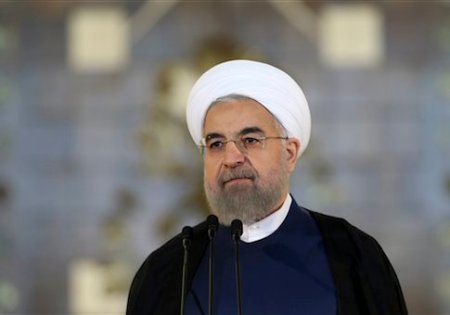
Iran's President Hassan Rouhani addresses the nation in a televised speech after a nuclear agreement was announced in Vienna, in Tehran, Iran, Tuesday, July 14, 2015. Rouhani said "a new chapter" has begun in his nation's relations with the world. He maintained that Iran had never sought to build a bomb, an assertion the U.S. and its partners have long disputed. (AP Photo/Ebrahim Noroozi)

Iran’s President Hassan Rouhani (AP Photo/Ebrahim Noroozi)

The State Department issued a warning on Monday urging U.S. citizens to avoid traveling to Iran, which has made the detention of Americans a priority.

The latest travel advisory, which emphasizes Iran’s desire to capture U.S. citizens, comes on the heels of a growing scandal over the Obama administration’s decision to pay Iran $400 million in cash on the same day that it freed several U.S. hostages.

The payment has been cast by lawmakers and others as a ransom payment and prompted concern among U.S. officials that Iran is making arresting Americans a priority.

The travel warning is meant to “highlight the risk of arrest and detention of U.S. citizens, particularly dual national Iranian-Americans,” according to a State Department announcement on Monday. “Foreigners, in particular dual nationals of Iran and Western countries including the United States, continue to be detained or prevented from leaving Iran.”

“U.S. citizens traveling to Iran should very carefully weigh the risks of travel and consider postponing their travel,” the warning adds. “U.S. citizens residing in Iran should closely follow media reports, monitor local conditions, and evaluate the risks of remaining in the country.”

Iran continues to imprison Americans, particularly those holding dual Iranian citizenship, according to the State Department.

“Iranian authorities have detained and harassed U.S. citizens, particularly those of Iranian origin,” the travel warning states. “Former Muslims who have converted to other religions, religious activists, and persons who encourage Muslims to convert are subject to arrest and prosecution.”

The Obama administration expressed particular concern about commercial airlines doing business with Iran. This warning comes as American companies such as Boeing continue to pursue million-dollar business deals with the Islamic Republic.

“The U.S. government is concerned about the risks to civil aircraft operating into, out of, within, or over Iran due to hazards from military activity associated with the conflicts in Iraq and Syria,” the warning states. “The FAA has advised U.S. civil aviation to exercise caution when flying into, out of, within, or over the airspace over Iran.”

The warning emphasizes that “the U.S. government’s ability to assist U.S. citizens in Iran in the event of an emergency is extremely limited.”