Archive for August 17, 2016

Liberman presents plan to defeat Arab terror

August 17, 2016

Liberman presents plan to defeat Arab terror New Defense Minister proposes carrot-and-stick approach to Arab terror – rewarding towns who combat terror, and punishing those who aid it.

Kobi Finkler, 17/08/16 19:31 | updated: 19:45 Share

Source: Liberman presents plan to defeat Arab terror – Defense/Security – News –

Avigdor Liberman

Yonatan Sindel/Flash 90

Prior to his appointment to the Defense Ministry, Yisrael Beytenu chairman Avigdor Liberman boasted that if made Defense Minister, he would ‘crush the terror wave’ and restore security to Israel.

On Wednesday evening Liberman presented the first detailed plan towards that goal since assuming office in June.

The outline follows a carrot-and-stick approach to terror emanating from the Palestinian Authority, and includes benefits for towns not harboring terrorists, as well as punitive measures towards known terror centers.

Specifically, the plan would offer special privileges to 15 Palestinian Authority communities which have not been home to terrorists and which have maintained peaceful relations with Israel.

On the other hand, the 15 ‘worst offenders’ – towns which have had large numbers of locals become involved in terrorist attacks – will be deprived of all work permits into Israel, be subjected to more vigorous security checks, and face more arrests of residents suspected of terror ties.

Liberman listed some of the possible rewards for towns that cooperate with Israel and remain terror-free, including resources towards the construction of medical centers, soccer fields, and industrial zones.

In addition, Liberman proposed the establishment of an Arabic news website managed by the Civil Administration, which would provide Arabs in Judea, Samaria, and Gaza with a news outlet not contaminated with the anti-Israel bias and often violent anti-Semitic incitement found in Palestinian Authority news outlets.

“It’s very simple”, the Defense Minister said. “We’ll give benefits to those who live normal lives and want to coexist [with Israel], and we’ll take harsh [measures] against those who wish to do us harm.”

Liberman also praised the IDF’s policy of demolishing the homes of terrorists, calling it an important deterrent.

“If up until now it took a year before the house was demolished [after a terror attack], today it takes about a month, and that’s definitely effective. Add to that the closures [of towns where terrorists operated from], the refusal [by Israel] to return the bodies of slain terrorists, and you have an answer as to why there has been relative quiet on the ground.”

Regarding the ongoing fight against terrorism, Liberman pointed out that since the beginning of the year Israeli security forces had arrested 1,733 terrorists, prevented 208 terror attacks, and broken up 22 underground weapons factories in Judea and Samaria.

The Real Weak Link in Europe

August 17, 2016

The Real Weak Link in Europe, American ThinkerAlex Alexiev, August 17, 2016

With some weeks now past since the event, the Brexit doom and gloom-mongers have taken a well deserved break from conjuring up the imminent demise of the U.K., the EU, and perhaps the world itself.  This may be an appropriate opportunity to consider whether or not there might be an even better candidate for such end-of-times prognostications: Germany.

On the face of it, this is surely preposterous.  Europe’s largest economy, its most stable government, and the main if not only pillar of the EU and the euro is hardly a destabilizing factor, most would agree.  Germany may indeed be all of that, but only in comparison to the rest of the EU, which has been stagnating economically for a decade and is beset by major political instability and terrorism.  Since 2007, German labor productivity growth has been close to zero, while GDP growth has averaged a miserable 0.8% per annum, even as Germany’s largest company, Volkswagen, is being prosecuted around the world for cheating, while its very symbol of stability, Deutsche Bank, has been called by the IMF “the biggest contributor to risk in global finance.”

Serious as these are, much more disturbing are unmistakable trends that Germany may be going in directions hardly congenial to European and Western policies vis-à-vis Russia.  A case in point is the new Nord Stream 2 pipeline project, designed to bring up to 80% of the Russian gas supply to Europe while bypassing Ukraine and Eastern Europe.  A blatantly political ploy by Mr. Putin and Gazprom, it will guarantee that Moscow can blackmail Eastern Europe at will.  Despite that, the project enjoys support not only among companies likely to profit from Nord Stream 2, but also by significant parts of the German establishment, including Chancellor Angela Merkel, who quite disingenuously claims that it is just a commercial project.

To understand why this is now possible in Germany, one must note the rapid growth of pro-Russian, anti-Western, and anti-American sentiments in all segments of German society of late.  These attitudes often run counter to the official policies of the Merkel government, which may actually make them even more significant.  Mrs. Merkel, for instance, is known as a key supporter and architect of the sanctions regime against Russia following its aggression against Ukraine, yet her government coalition partner, the social-democratic party (SPD), argues ever more forcefully that the sanctions should be lifted or, at the very least, made less onerous.  This not only undermines the authority of the Berlin government, but also makes the continuation of the sanctions when they expire at the end of the year unlikely.  This will please Germany’s export community, but only at the cost of outraging its partners in Eastern Europe.

Even more striking is the emerging anti-Western consensus among radical parties at both extremes of the political spectrum.  The former communist party of East Germany now repackaged as “Die Linke” and the right-wing, anti-immigrant Alternative for Germany (AfD) share essentially identical anti-Western and anti-American platforms that call for disbanding NATO and a new security alliance with Russia.  These parties may be extreme, but they are not without influence.  Die Linke is currently in power in one German state (Thuringia), while the AfD is supported by 12% of German voters according to the latest polls.

NATO is being undermined from yet another side, and that is the renewed EU discussions of the ostensible need for a European army independent of NATO.  Both European Commission president Jean-Claude Juncker and French president François Hollande have publicly supported the idea, and so have German officials, who cite the limited German-Dutch armed forces integration as a model.  The idea is, of course, complete nonsense if for no other reason than because no EU country is even contemplating, let alone seriously considering the massive amounts of money that would have to be spent to bring this about.  It is nonetheless a dangerous bit of nonsense, since nothing will deny NATO’s very raison d’être, and with it American commitment to the defense of Europe, faster than a standing European army outside the alliance command structures.

Finally, the most destabilizing German policy by far continues to be immigration policy.  Despite signs that it is an abject failure, Mrs. Merkel insists on continuing on the same course, leading to even greater conflict with Eastern Europe and others (Brexit) that reject it wholesale.  Poland has already announced that it will refuse to take any migrants, while Czech president Milos Zeman, a socialist, has called for a referendum on EU membership and even urged the Czechs to arm themselves for self-defense.

Merkel government officials have already proclaimed their migrant policies to be a success, but such claims should be taken with a large chunk of salt.  Here are the available statistics.  In 2015, 1.1 million migrants came to Germany after Merkel essentially invited them in on  Sept. 4, 2015.  Of those, 476,649 applied for political asylum.  The rest neither applied nor left the country, and their whereabouts are not known.  According to Eurostat, in the first quarter of 2016, 287,100 migrants, or nearly 100,000 more than in 2015 applied for asylum in the EU, which would mean that even if migrants to Germany have fallen off from the 2015 pace, the EU as a whole will get more than 1 million by the end of the year, and a similar number is expected in 2017.

More important than the sheer numbers is what this massive influx means for society.  Even though German authorities try to suppress such information, there is overwhelming evidence that rape and sexual assault by migrants has reached epidemic proportions in all 16 federal states, as documented in this report by the Gatestone Institute.  More troubling still is evidence that large numbers of terrorists and jihadists have used the migrant wave to organize “hit squads” in Germany.  According to Bavarian intelligence official Manfred Hauser, “irrefutable evidence exists that there is an IS [Islamic State] command structure in place.”

What all of this means for German and European security should not be difficult to foresee.  German officials openly acknowledge that the police cannot handle this massive threat and are now openly discussing setting in place a 400,000-strong “national guard” type of organization.  Before they do that, it might be useful to first consider changing Mrs. Merkel’s failed policies.


Dr. Jasser discusses Donald Trump’s call for “extreme vetting” as part of plan to stop ISIS

August 17, 2016

Dr. Jasser discusses Donald Trump’s call for “extreme vetting” as part of plan to stop ISIS, Fox News via YouTube, August 16, 2016

(Please see also, Donald Trump’s Outreach to Moderate Muslim Leaders Highlights Clinton Failure in Egypt. — DM)


Donald Trump’s Outreach to Moderate Muslim Leaders Highlights Clinton Failure in Egypt

August 17, 2016

Donald Trump’s Outreach to Moderate Muslim Leaders Highlights Clinton Failure in Egypt, BreitbartTera Dahl, August 17, 2016

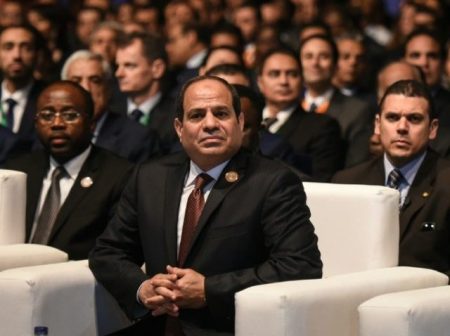
al sisi(1)AFP

In his foreign policy speech on Monday, Donald Trump stated that he would “amplify the voice” of moderate Muslim reformers in the Middle East, saying, “Our Administration will be a friend to all moderate Muslim reformers in the Middle East, and will amplify their voices.”

He also said that he would work with Egypt, Jordan and Israel in combating radical Islam, saying, “As President, I will call for an international conference focused on this goal. We will work side-by-side with our friends in the Middle East, including our greatest ally, Israel. We will partner with King Abdullah of Jordan, and President Sisi of Egypt, and all others who recognize this ideology of death that must be extinguished.”

He said that, as President, he would establish a “Commission on Radical Islam,” saying, “That is why one of my first acts as President will be to establish a Commission on Radical Islam – which will include reformist voices in the Muslim community who will hopefully work with us. We want to build bridges and erase divisions.”

His comments about cooperating with Egypt, Israel and Jordan were highlighted in the Arab world’s media, with headlines reading “Donald Trump Announces Plan to Cooperate with Egypt, Jordan, Israel to Combat Radical Islam” and “Trump vows to work with Egypt’s Sisi to ‘stop radical Islam’ if elected.”

Under the Obama Administration, US policy has not been friendly towards our Muslim allies such as Egypt. Hillary Clinton recently said in a primary debate with Bernie Sanders that, in Egypt, you basically have an “army dictatorship”.

Egypt is one of the most catastrophic foreign policy failures of the Obama Administration and Hillary Clinton’s State Department. President Obama started his outreach to the Egyptian Muslim Brotherhood when he delivered his 2009 Cairo speech. The US Embassy invited 10 members of the Muslim Brotherhood to attend the speech, undermining US ally Mubarak – who had rejected to previous U.S. efforts to reach out to the Brotherhood.

The Obama Administration, and Clinton’s State Department, again undermined President Mubarak in 2011 when they urged him to step down and pressured Egypt to hold elections “immediately” after the 2011 revolution. This policy favored the Muslim Brotherhood to win elections since they were the most organized at the time.

Then-Secretary of State Hillary Clinton met with Muslim Brotherhood President Mohammed Morsi in Cairo offering “strong support” for the Islamist President, saying, “I have come to Cairo to reaffirm the strong support of the United States for the Egyptian people and their democratic transition… We want to be a good partner and we want to support the democracy that has been achieved by the courage and sacrifice of the Egyptian people.”

The Obama Administration embraced the Muslim Brotherhood government in Egypt, but when millions of Egyptians took to the streets one year later, calling for early elections against the Muslim Brotherhood government, the Obama Administration did all they could to undermine their efforts.

Over 30 million Egyptians took to the streets on June 30, 2013 calling for the removal of the Muslim Brotherhood from power. After one year of being in power, the Brotherhood was taking Egypt towards an Iranian theocracy and the Egyptian people stood against political Islam. The 2011 Egyptian Constitution had no impeachment mechanism included, so the only democratic way to remove the Brotherhood was signing a petition and taking to the streets in the masses. Millions of Egyptians took to the streets again in July, supporting then Defense Minister General el-Sisi and the Egyptian military in their efforts to fight terrorism.

The Obama Administration condemned the Egyptian military and police after the removal of the Muslim Brotherhood and punished Egypt by freezing military and economic aid to Egypt. This was done while the Egyptian military had launched a major offensive to “crush terrorist activity” in the Sinai that had built up during the Muslim Brotherhood government. Egypt had to fight terrorism alone – not only without support from the US – but with pressure to succumb to the requests from the US Administration to release the Muslim Brotherhood members from prison and reconcile.

The pressure from the Obama Administration against the removal of the Morsi regime emboldened the Muslim Brotherhood and they waged an Islamist insurgency, not only in the Sinai but on the streets of Cairo. The Muslim Brotherhood specifically targeted theChristian community and burned down over 65 Christian Churches and hundreds of Christian shops.

The Obama Administration sent U.S. Deputy Secretary of State William Burns to Egypt for “U.S. mediation efforts” and met with Khairat el-Shater, the deputy leader of the Muslim Brotherhood, who was in jail at the time and sentenced for life in prison. Our State Department, under John Kerry, sent a representative to Egypt pressuring the Egyptian government to release terrorists from jail.

The Obama Administration also sent Senators McCain and Graham to Egypt to ask the Egyptian government and military to find an agreement with the Muslim Brotherhood. They asked the Egyptian government to “sit down and talk” to the Muslim Brotherhood, who had waged war on the Egyptian people.

Since being democratically elected in 2014, winning with 97% of the vote, Egyptian President al-Sisi has made history speaking out for equality between Muslims and Christians. He was the first President in Egyptian history to visit the Coptic Christian Christmas mass service in January 2015. During his speech at the Christmas mass, he emphasized the need to look at each other as “Egyptians” and not as Muslim or Christian. He said, “We will love each other for real, so that people may see.” President Sisi again visited the Coptic Christmas mass in January 2016 where he vowed to rebuild the Christian churches that were destroyed by Islamists in 2013 after the Muslim Brotherhood were removed from power.

President Sisi has called for “Islamic reform” within Islam numerous times. During a speech to Islamic scholars in 2015, marking the anniversary of Muhammad’s birth, President Sisi urged reform of Islamic discourse and called on Islamic scholars to send Christmas greetings to Christians. In the televised speech to Islamic scholars, President Sisi stated, “We talk a lot about the importance of religious discourse… In our schools, institutes and universities, do we teach and practice respect for the others? We neither teach or practice it.”

The Egyptian government has also addressed the ideology by banning thousands of radical clerics from preaching in the mosques that are not licensed.

Recently, the government of President al-Sisi introduced a textbook for Egyptian public schools that requires Egyptian pupils to memorize the provisions of the 1979 Egypt-Israel peace treaty and delineate the “advantages of peace for Egypt and the Arab states”. This is a major reform taken from the Egyptian government in normalizing and strengthening relations between Israel and Egypt.

President Sisi should be considered a key ally of America as he is leading Egypt towards democracy and also is leading the fight against global jihad, both militarily and politically, in countering radical Islamic ideology. Instead, he has yet to be invited to the United States from President Obama.

Hillary Clinton has been critical of Trump’s position towards Russia, but policies implemented under the Obama Administration have pushed Egypt towards Russia and have alienated our strongest Arab ally for over 40 years. Egypt and Russia signed a$2billion arms deal after the United States abandoned them during their fight against terrorism. Russia also is providing Egypt with $25 billion to build Egypt’s first nuclear power plant.

Donald Trump in his speech recognized the need to support our Muslim allies in the global war on terrorism. This is critical in defeating global jihad. We cannot afford another four years of a policy of alienating our allies and emboldening our enemies as we have seen under the Obama Administration.

Khamenei and IRGC’s Increasing Popularity

August 17, 2016

Khamenei and IRGC’s Increasing Popularity, Gatestone Institute, Majid Rafizadeh, August 17, 2016

♦ The same state-run media that shapes the Iranians’ views of the West also pushes them to favor hardline candidates.

♦ The new poll shows that Ayatollah Khamenei, his media outlets, and the Revolutionary Guards generals appear to be preparing the platform for a hardline President who will pull out of the nuclear agreement. The new poll also shows that so far their campaign has been successful.

The number of hardliners in Iran is on the rise, according to the latest poll. The Supreme Leader, Ayatollah Khamenei, appears to be preparing the social base so that a hardline president would replace President Hassan Rouhani after the sanctions are lifted by foreign powers. Khamenei seems to be achieving this by using Iranian media to slander the West and improve the image of hardline politicians. Iran’s former president, Mahmoud Ahmadinejad, appears to be getting ready to take Rouhani’s place, and is reportedly preparing his hardline platform to run in Iran’s 2017 presidential elections.

Rouhani’s popularity and standing are evidently not what they used to be. This seems to have come about largely because of changes in the economy. The overwhelming majority of Iranians believed in Rouhani’s economic promises when they elected him; after the nuclear deal was settled, 63% of Iranians believed that they would witness improvements in the economy and living standards within a year. However, a new report shows that 74% of Iranians said that there have been no economic improvements in the last year.

1545Iran’s Supreme Leader Ali Khamenei (left) appears to be preparing the social base so that a hardline president would replace President Hassan Rouhani (right).

A number of factors have slowed economic growth, including the high unemployment level, the state-owned and state-led economy, financial corruption at high levels, lack of an open market and business opportunities for the public, the increasing gap between the rich and poor, and the accumulation of wealth among the gilded circle in power and other major players — such as Supreme Leader Ayatollah Ali Khamenei, the Islamic Revolutionary Guard Corps (IRGC) and the connected elite business class — who hold control over major socio-political and economic sectors of Iran.

The Iranian government has also not done all that it could to help improve conditions. For example, after the flimsy and incomplete nuclear agreement, the Obama Administration immediately began transferring billions of dollars to Iran’s Central Bank. One of the payments included $1.7 billion transferred in January 2016. Of this sum, $1.4 billion came from American taxpayers. Iran immediately increased its military budget by $1.5 billion from $15.6 billion to $17.1 billion, rather than investing it for creating jobs.

Khamenei has already begun his campaign of blaming the West for Iranian economic problems. He fails to acknowledge the true reason that Iranians are not benefiting from the lifting of sanctions. Instead, as is his method of operation, he blames the West so that he himself is never blamed or held accountable in the eyes of the public. He stated recently “Weren’t the supposed sanctions lifted to change the life of the people? Is any tangible effect seen in people’s life after six months?” Although Iran’s oil exports have reached pre-sanctions levels, and although Iran is freely doing business on the state level, Mr. Khamenei claimed in a speech that, “the U.S. Treasury… acts in such a way that big corporations, big institutions and big banks do not dare to come and deal with Iran.”

An official from the State Department said that Iran should not blame the US for companies not doing business with Iran. Most likely, large corporations are just not yet prepared to make deals with Iran.

Khamenei’s rhetoric has a significant impact on public opinion in Iran. According to a poll, 75% of Iranians believe that the U.S. is to blame for Iran’s stagnant economy. They believe that the U.S. has been creating obstacles to Iranian business with Western companies, and to Iran’s ability to fully rejoin the global financial system.

It is true that since the nuclear deal, Iran’s unemployment rate has increased from roughly 10.8% to 12%. During the course of Rouhani’s presidency, the unemployment rate has increased by two percent. The government has also cut subsidies.

It is possible that Iran’s problems trading with American corporations and rebuilding its economy are due to other Iranian leaders’ rhetoric, the Iranian state-owned media narratives, and lack of clear understanding of the terms of the nuclear agreement among the general public. Approximately 65% of the population still watch only Iran’s domestic news channels to gain information about the latest news in comparison to the 25.4% who use internet, and 18.2% who watch satellite television. Notably, the states viewed most unfavorably by the Iranian public are the Islamic State (97.6% very unfavorable), Saudi Arabia (81.3% very unfavorable), and the United States. The overwhelming majority of Iranians, roughly 80%, believe that it is very important that their country should continue developing its nuclear program.

The same state-run media that shapes the Iranians’ views of the West also pushes them to favor hardline candidates. The new poll reveals that former president Mahmoud Ahmadinejad’s popularity is increasing. Ahmadinejad previously mentioned that he was retiring from politics, but the latest signs indicate that he is repositioning himself to lead the Islamic Republic again. During his presidency, people enjoyed subsidies on petrol, gas and electricity, and his government paid monthly cash handouts of approximately $17 to everyone. In the next presidential race, the poll shows that Ahmadinejad now trails Rouhani by only 8 percentage points compared to 27 points in May 2015.

Finally, another intriguing finding is that the person who has the highest level of respect, “very favorable,” among Iranians is General Qassem Soleimani, the head of IRGC-Qods Force (the external operations wing of the IRGC, which operates in foreign countries). His popularity has increased in the last year. This could be because he is portrayed by the Iranian media as the savior of the Shia in Iraq and Syria, a patriot, and the protector of Iranians from the Islamic State and other types of Sunni extremism. In general, the favorability of the high-profile, hardline and conservative politicians such as Muhammad Bagher Ghalibaf and Ali Larijani appears to have increased. These could threaten Rouhani’s reelection.

Khamenei, his media outlets, and the IRGC generals appear to be preparing the platform for a hardline President who will pull out of the nuclear agreement. The new poll also shows that so far, their campaign has been successful.

Cartoon of the day ( Till Dan is back )

August 17, 2016

http://www.barenakedislam.com/

After bombers, Russian S-400s for Iranian base

August 17, 2016

Source: Debka: After bombers, Russian S-400s for Iranian base

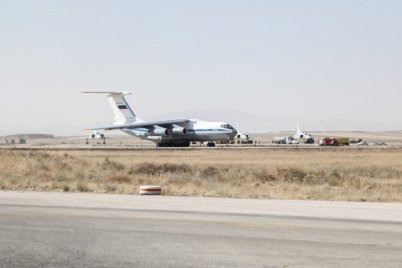
Russian giant Antonov An-124 air freighters are ready to take off Wednesday, Aug. 17, carrying an array of advanced S-400 and S-300 air defense missiles bound for the new Russian air base just completed at Noji, 50 km from the western Iranian town of Hamedan (Biblical Shushan).
This is reported exclusively by DEBKA file from its military and intelligence sources.
Moscow is getting set to explain to concerned Americans and Israelis that the sophisticated missile systems will not be put in Iranian hands but serve exclusively for defending he new Russian air base just established in Noji to house heavy bombers for air strikes against Islamist terrorists in Syria.
This is the first time since the 1979 Islamic revolution that Iran has allowed a foreign military to set up a base on its soil.
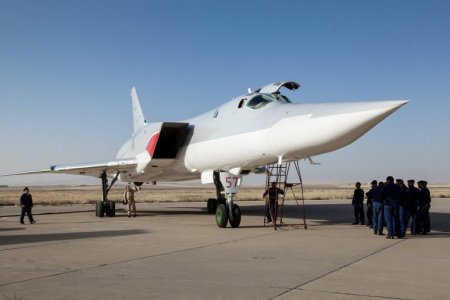
Widely reported by the Western media Tuesday were the first sorties of Russian Tu-22M3 long-range bombers and Su-34 tactical bombers from the new Iranian air base for what the Russian Defense Ministry designated “concentrated airstrikes” against Islamic State and Islamist Nusra Front ammunition depots and command-and-control centers in the provinces of Aleppo, Deir Ez-Zour and Idlib.
Less play was made by the media of the failure of Western intelligence to detect the new Russian air base that was under construction to complement their Khmeimim facility in western Syria. Our exclusive sources add that Moscow plans to fly over Spetznaz Forces to defend the new base.

Construction work on the Noji air base began in the second week of July. Joint Russian-Iranian engineering teams extended the existing landing strips to accommodate the heavy Tupolev 22M3 bombers and Sukhoi-34 escort fighters. They also set up maintenance workshops and living quarters for the Russian air and ground crews.

debkafile also reveals that the military and aviation accord reached between Moscow and Tehran covers the following clauses:

  • Free rein for Russian jets in all parts of Iranian air space
  • License for Russia to operate long-range UAV’s from Noji air base.
  • Permission to launch Russian cruise missiles through Iranian air space.

Given the tightening strategic cooperation between Russia and Tehran, one last step remains for Vladimir Putin to take as the final touch to the Russian-Turkish-Iranian alliance – and that is a visit by Turkish President Tayyip Erdogan to Tehran for concluding a military pact between Turkey and Iran.


30K Muslim Refugees Land on U.S. Soil in 2016 Alone

August 17, 2016

Source: 30K Muslim Refugees Land on U.S. Soil in 2016 Alone | LifeZette

America is setting itself up for a ‘homegrown’ terror problem to rival that of Europe

by Edmund Kozak | Updated 16 Aug 2016 at 9:55 PM

 Donald Trump’s talk of “extreme vetting” of Muslim immigrants may give comfort to those worried about the dangers of Islamic terrorism and Hillary’s Clinton promise to increase the number of these migrants brought to U.S. soil.

But the Obama administration is already presiding over a massive rush of Muslim refugees from war-torn nations into the United States, including tens of thousands of these questionably vetted migrants in 2016 alone.

The U.S. has allowed in 28,957 Muslim refugees so far this year alone, according to a Pew analysis of State Department data released Tuesday. That’s almost half of the roughly 63,000 refugees who have entered the country since the fiscal year began on Oct. 1, 2015. According to Pew, this is the highest number of Muslim refugees the U.S. has admitted since 2002.

Every recent Islamic terrorist attack on American soil was carried out by a Muslim immigrant or the child of Muslim immigrants.

Astonishingly, more than half of those Muslim refugees came from the terrorist hot spots of Syria and Somalia. The State Department also permitted the entry of more than 6,000 Iraqis and almost 2,000 Afghanis.

In May 2016, NBC news examined leaked ISIS files and “identified at least 15 American citizens” who had traveled to the Middle East to fight for the Islamic State. Of course, while the politically correct cretins at NBC insisted that these traitorous terrorists “fit no particular pattern,” 10 of the 12 whose identities NBC was able to verify were immigrants or the children of immigrants.

Rasel Raihan and his sister Zakia Nasrin emigrated to America from Bangladesh when they were five and seven respectively. Jaffrey Khan, Nasrin’s husband who joined ISIS with his wife and step-brother, was the son of Pakistani immigrants.

Talmeezur Rahman, another American ISIS fighter identified by NBC, was born in India and raised in Kuwait, as was Omar Kattan, born to Syrian parents. There was also Ridwan al-Haymar, from Morocco originally, and Erius Alliu, from Albania.

NBC also identified three Somali-Americans from Minnesota who left the country to join ISIS — Hanad Abdullahi Mohallim, Abdi Nur, and Yusuf Jama. In fact, the Somali community seems to be a particular hotbed of radicalism.

Dozens of Somali-Americans from Minnesota have joined or sought to join ISIS, according to federal authorities. Hanad Mustafe Musse, Guled Ali Omar, Abdirizak Warsame, Abdullahi Yusuf, Mohamed Farah, Hamza Ahmed, Yusra Ismail, Abdirahman Daud, and Adnan Farah are just some of them.

Unfortunately the same type of radical cancer infecting the Somali community in America has spread beyond that community — Douglas McAuthur McCain, a black American, and Troy Kastigar, of Anishinabe Native American background, were two best friends from Minnesota inspired by radical Somalis in their midst to convert to Islam and eventually join ISIS. They both died fighting in Syria.

But radical immigrants or the children of immigrants — or Americans radicalized by immigrants or the children of immigrants — leaving the country to die in Syria or Iraq is not the worst case scenario. The worst case scenario is that they don’t leave and decide to kill innocent Americans instead.

Every recent Islamic terrorist attack on American soil was carried out by a Muslim immigrant or the child of Muslim immigrants. Sayed Rizwan Farook, one of the perpetrators of the San Bernardino attack, was the son of Pakistani immigrants. His accomplice, Tashfeen Malik, was a Pakistani immigrant herself.

The perpetrator of the Chattanooga shootings, Muhammad Youssef Abdulazeez, was a Kuwaiti-born immigrant of Palestinian-Jordanian extraction. Nidal Hasan, the Fort Hood shooter, was born in Virginia to Palestinian parents. Omar Mateen, the Orlando shooter, was born to Afghan immigrant parents.

Of course, America’s problem of imported radicalism pales in comparison — for now — to the threat in Europe, which has allowed far higher numbers of migrants from radicalized regions of the Muslim world.

On Tuesday, radical British cleric Anjem Choudary, born to Pakistani immigrants in the U.K., was found guilty on terrorism charges for inviting support for ISIS in a series of lectures released on YouTube. It is estimated at least 500 British jihadis who fled the U.K. to join ISIS are linked to Choudary’s efforts.