Archive for August 9, 2016

Clinton Ignores Questions About Father of Orlando Shooter Attending Her Rally

August 9, 2016

Clinton Ignores Questions About Father of Orlando Shooter Attending Her Rally, Washington Free Beacon,, August 9, 2016

Hillary Clinton ignored questions on Tuesday about whether she knew that the father of the Orlando shooter was going to attend her rally in Kissimmee, Florida on Monday.

Reporters asked Clinton about Seddique Mateen–father of Omar Mateen, the terrorist who killed 49 people at an Orlando nightclub in June–attending her campaign event as a supporter. Clinton dodged the questions from reporters after delivering remarks about the dangers of the Zika Virus to medical staff and other health representatives at the Borinquen Medical Centers of Miami-Dade.

Mateen, a Taliban sympathizer, attended Clinton’s rally on Monday and was seated behind the Democratic nominee. He at first refused to answer questions regarding the rally, but hours later WPTV ran into him and they asked about Clinton.

“Hillary Clinton is good for United States versus Donald Trump, who has no solutions,” Mateen told WPTV.

‘Rigged?’ 5 Ways the Election Is Under Attack

August 9, 2016

‘Rigged?’ 5 Ways the Election Is Under Attack, PJ MediaJ. Christian Adams, August 7, 2016

dt2

Donald Trump gaslighted the left when he suggested the upcoming elections may be “rigged.” The usual comic trove of Democrats posing as academics, journalists, and civil rights groups pounced on Trump. It’s a revived “Southern strategy” that tars “Democrats as cheaters,” wailed Rutgers professor Lorraine Minnite.

Democrats as cheaters? You mean Democrats like Wendy Rosen, Melowese Richardson, and Lessadolla Sowers?

Whether Trump was correct or not depends on the meaning of “rigged.” If “rigged” means a group of Democrats sit in central command and control the output of voting machines from outer space, then no, the election isn’t rigged.

But what Democrats are really doing is far more dangerous, far more diffuse, and far harder to fix than a conspiracy to control voting machines.

The integrity of our elections are suffering from a coordinated, multi-million dollar attack on multiple fronts. It’s far more complicated than one centralized high-powered conspiracy to “rig” the election. A more sophisticated understanding of what is happening is essential to combat the real threat to our elections.

Here are five ways that the integrity of elections are under attack:

  1. Big money organizations fight against election integrity

Large brick-and-mortar organizations with multi-million dollar endowments are fighting to undermine the integrity of American elections. These organizations, such as Project Vote, Demos, the ACLU, Advancement Project, and the League of Women Voters have vast financial resources. They have used these resources in key states such as Ohio, Florida, Virginia, North Carolina, Wisconsin, and elsewhere to attack election integrity measures. They bring attacks against Voter ID laws, but they also bring more important efforts, such as attacks against citizenship verification.

I’d wager that more votes are cast in American elections by ineligible aliens than by those impersonating voters.

Citizenship verification is essential. Naturally, groups like the NAACP and ACLU do absolutely nothing about alien voting, except whatever they can to ensure that barriers to illegal voting are struck down in court.

I am involved in litigation across the country to help election integrity. In one lawsuit in a swing state, we discovered that non-citizens were voting illegally in Presidential elections. This is both a federal and state felony. When we asked the election supervisor for records showing referral to law enforcement officials, none existed — because no referral was ever made. Never mind that dozens and dozens of aliens were participating in the election process in just one county. Imagine how many participate statewide. Yet nothing was done to prosecute the illegal voting — so word spreads through the community that illegal voting is a hobby that goes unpunished.

Rigged?

These same big money organizations send swarms of lawyers to the smallest court hearings, so many that sometimes there isn’t enough room for them in the courtroom.

For this, the left pounced.

In a hearing before United States District Judge Richard Leon, Kansas Secretary of State Kris Kobach and I were seated at defense counsel table because we were defending the federal agency. You read that right: We had to do so because the Justice Department lawyers sharing the table with us refused to do their job and defend a federal agency. They didn’t defend the agency because they ideologically disagreed with the actions of the agency.

On the other side of the room was a circus. About sixteen lawyers had arrived for the attacking plaintiffs. Some came from New York, some came from elsewhere. They were all there to stop citizenship verification, but there weren’t enough seats. Judge Leon noticed the circus, too. As Hans von Spakovsky has written:

The courtroom was so full that Judge Leon was obviously surprised by the size of the audience when he walked into the courtroom, calling it a “traveling roadshow.” In fact, the plaintiffs showed up with over a dozen lawyers. There were so many lawyers (even though only one lawyer was there to argue for the plaintiffs) that, before the hearing started, the clerk asked them to move from the plaintiffs’ table to the gallery.

Noncitizen voting helps the left win elections. Most of the groups in this traveling roadshow are 501(c)(3) charities.

I doubt very much that Lois Lerner’s Exempt Organizations Unit at the IRS has sent them a letter asking for their social media passwords or the text of prayers recited at meetings.

LynchFraudster Melowese Richardson celebrated


  1. A focus on process brings policy results

Republicans focus on policy. Democrats focus on process. Democrats and the left know if they alter the rules, they can win the elections. Better still, if they alter the rules and brand it a civil rights matter, they disguise their partisan goals with something that sounds better.

What do I mean by process?

Years ago, we all voted on Election Day. That made it harder for the machine to motivate the unmotivated on one single day. Now? the election is spread out over weeks of early voting.

We used to register to vote in advance. Now, instant registration is another process that helps the demographic that has difficulty planning ahead. It means you can register and vote at the same time, making it harder to verify eligibility.

In Ohio, you could register to vote and vote weeks in advance at the same time. When Ohio discovered that California and New York residents such as Amy Little and Yolanda Hippensteele were registering and voting simultaneously for Obama in 2008, Ohio changed the law to eliminate this “Golden Week.”  Naturally, the Big Money Organizations (See #1, above) sued.

Bush-appointed federal judge Michael Watson ruled that such a change violates the Voting Rights Act and struck down the election integrity measure.

Out-of-precinct voting, mandatory voter registration, felon voting, dirty voter rolls, underage registration, and simple refusal to enforce election integrity laws are process priorities of the left.

You don’t need someone sitting in a smoke-filled command bunker to rig an election. There are more subtle and more effective ways to affect elections.

  1. Big Law

The well funded organizations fighting to block election integrity laws are helped by some of the nation’s largest law firms — for free!

These law firms use the inflated fees their corporate clients pay to subsidize helping left-wing groups attack election integrity laws. A glance at the pleadings in the North Carolina Voter ID lawsuit gives you a sense of the aid. The opponents of Voter ID in North Carolina enjoyed free help from ten lawyers at Kirkland and Ellis: Thomas Yannucci, Daniel T. Donovan, Susan M. Davies, K. Winn Allen, Uzoma Nkwonta, Kim Knudson, Anne Dechter, Bridget O’Connor, Jodi Wu, and Kim Rancor.

kirkland and ellisPleading from N.C. Voter ID case

The attack on Voter ID isn’t the only instance where large law firms donate their free time to leftist organizations with multi-million dollar endowments. Nearly any time there is an attack on election integrity, Big Law helps.

And don’t think that state governments have the money and expertise to defend themselves. Some states, like North Carolina and South Carolina, did excellent jobs defending their laws. But consider what one federal judge said last week when striking down Voter ID in North Dakota. He even put it in boldface in his opinion:

It is important to note that with respect to the Plaintiffs’ request for injunctive relief, none of the affidavits, declarations, survey, studies, or data submitted by the Plaintiffs in support of their motion have been challenged or refuted by the State of North Dakota. (Italics mine; Bold, judge’s)

On the next page of the opinion where the judge discusses the flimsy evidence offered by the plaintiffs in North Dakota, the judge again notes in boldface at the end of his recitation:

The Defendant neither disputes nor challenges these findings.

North Dakota Attorney General Wayne Stenehjem (R) did not give a statement regarding the ruling.

  1. Failure to maintain rolls

Millions of voter registrations are wrong or out of date. Hundreds of counties, including many in swing states, have more registrants than eligible people alive. That doesn’t mean millions of votes are being cast illegally — but corrupted rolls provide the perfect environment for election corruption. It’s what allowed Democratic Congressional nominee Wendy Rosen to vote twice for President Obama in both Maryland and Florida.

The guiltiest culprit for corrupted rolls is the Obama Justice Department. It refuses to do anything about the failure to keep rolls clean. Their failure to act is both deliberate and ideologically driven.

Anytime I give a speech on campus about this disgraceful inaction, someone brings up “prosecutorial discretion” in defense of the Obama administration. They claim that limited resources drive the decision to not enforce federal law requiring voter rolls to be clean.

That’s balderdash. The attorneys at the Public Interest Legal Foundation who are bringing litigation to enforce the law instead of the DOJ are carrying a heavier caseload than the dozens of lawyers at the DOJ Voting Section. Without active list maintenance keeping rolls clean, criminal elements can flourish. Inaction and ambivalence toward the obligation to enforce the law can affect an election just like an active attempt to rig an election can.

If Trump becomes president, sweeping away the lawlessness inside the Justice Department that turned the federal government into silent partners with election gangsters like Wendy Rosen should be a top priority.  t’s no accident that vote fraudsters across the country, including Melowese Richardson and others, get a free ride from this DOJ and never face criminal prosecution.

  1. Academics and media lying about election integrity

The final way our electoral system is endangered is through the pack of lies pushed by academics and the media. If you pay attention to legacy media, voter fraud doesn’t exist — only racists want election integrity, and Jim Crow is back.

When it comes to covering election integrity, some of the media are lazy, the rest are activists with by-lines.

Here’s some narrative they’ve invented:  Voter ID is a “solution in search of a problem”; voter fraud “isn’t widespread”; and election integrity laws “disproportionally affect communities of color.” There you have it: attack the motives of election integrity advocates and claim there’s not a problem. They never tell you what “widespread” means, so you’ll never satisfy their artificial threshold.

Partnering with activists in the media are academics. You’ve already been introduced to Lorraine Minneite in this column. From their perches at government-funded universities, they spend their time pumping out a narrative smokescreen for criminal behavior in American elections.  hey write books that are lucky to sell 2,000 copies, telling us that Jim Crow is back or that voter fraud is the stuff of unicorns and leprechauns. They probably sell far fewer units if you don’t countsales to their own students.

Are they helping criminals? Well, not directly, and of course they’d be highly offended at such a charge.  But help it does. Wendy Rosen and Melowese Richardson couldn’t do what they do best if it wasn’t for academics and the media telling us it’s no big deal.

Is the November election rigged? Certainly not in the way you might have thought it was. The election is afflicted with something far more dangerous than a single plot to flip the outcome. The affliction is diffuse, decentralized, and funded by millions of dollars.

Clock Boy’s Family Files Civil Rights Suit

August 9, 2016

Clock Boy’s Family Files Civil Rights Suit, Truth RevoltSarah Fisher, August 9, 2016

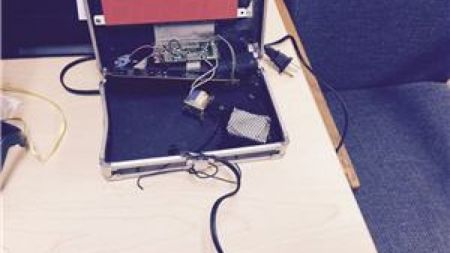
clock boy

The family of Ahmed Mohamed has filed a federal civil rights lawsuit against the Texas school administration for suspending the teenager when he brought a clock to school that looked suspiciously like a bomb. The family claims the disciplinary action violated the teen’s rights and forced them to leave the United States.

Mohamed said he wanted to show the “clock” to his English teacher.

The lawsuit names Irving Independent School District, the city of Irving and the school’s principal, and asks a jury to determine the damages. In November, the family asked the district and city to pay $15 million or else face a suit. District spokeswoman Lesley Weaver said in a statement Monday that attorneys for the district will review the suit and determine a course of action.

“Irving ISD continues to deny violating the student’s rights and will respond to claims in accordance with court rules,” she said, adding that school officials for now will have no further comment.

The family has since moved to Qatar, where Mohamed was offered a scholarship to study. He was briefly in U.S. this summer to visit family and file a lawsuit.

“For the safety of my family, I have to go back to Qatar, because right now it’s not very safe for my family or for anyone who’s a minority,” Ahmed said during a news conference.

While in Texas, Ahmed said, he has to disguise himself and wear a hoodie. “I can’t walk out of the house without being covered up because I might get shot because that happens here,” he said.

The lawsuit claims Mohamed was a victim of systemic racism by the school district and the school board.

“History tells us that when we have stood tall and proud for equality and freedom, we have grown as a nation,” the suit says. “When we have given in to fear and hate, we flounder.”

The suit adds, “In the case of Ahmed Mohamed, we have the opportunity to take a stand for equality and for justice, two things that should prevail above all else.”

UN aid worker in Gaza accused of helping Hamas

August 9, 2016

UN aid worker in Gaza accused of helping Hamas, Israel Hayom, Lilach Shoval and Daniel Siryoti, August 9, 2016

U.N. Development Program aid worker Wahid Abdullah Burash accused of using his position to help Hamas operatives hide weapons and tunnels, and preferring projects that benefit Hamas • Burash is second aid worker to be charged with assisting Hamas in span of a week.

helper

For the second time in one week, an international aid worker in the Gaza Strip has been accused of providing assistance to terrorist organization Hamas.

The Shin Bet security agency and Israel Police lifted a gag order Tuesday, revealing that a United Nations aid worker from Jabalia, 38-year-old Wahid Abdullah Burash, was arrested last month on suspicion that he was using his job at the U.N. Development Program to assist in Hamas operations. An indictment was filed against Burash at the Beersheba District Court, charging him with aiding the Gazan terrorist group.

The announcement comes less than a week after World Vision employee Mohammad Halabi was accused of funneling some $50 million in charity funds to Hamas.

The UNDP works to rehabilitate and develop infrastructure, including damaged homes, in the Gaza Strip to improve the lives of local residents. Burash has worked as an engineer at the program since 2003. As part of his work, he was responsible for demolishing homes damaged in military clashes and removing waste from the demolition sites.

The Shin Bet investigation revealed that in 2014, Burash was instructed by a senior Hamas official to carry out his work in a manner that would provide maximum benefit for Hamas. In 2015, he used UNDP resources to build a marine dock for the use of Hamas’ military wing in northern Gaza.

It was further revealed that throughout 2015, Burash, acting on Hamas orders, worked with his superiors to give preference to rehabilitation projects in areas where Hamas operatives live.

The investigation also found that Hamas deliberately exploited UNDP projects throughout 2015. Weapons and terror tunnel shafts were found in homes that had been rebuilt by the UNDP and taken over by Hamas. This violates U.N. protocol, according to which all explosives and weapons must be reported to the United Nations Mine Action Service.

Investigators learned that other Hamas operatives are embedded in a variety of humanitarian aid organizations in Gaza. Burash also revealed information about Hamas storehouses, outposts and tunnels that he had learned about in his work.

Hamas vehemently denied the charges brought against Burash. Hamas spokesman Sami Abu Zuhri said, “The accusations are baseless and false, and they are part of the Zionist occupation’s attempt to worsen the siege on Gaza by persecuting international aid organizations.”

Forced underage marriages on the rise in Switzerland

August 9, 2016

Forced underage marriages on the rise in Switzerland, Jihad Watch,  

In Switzerland, the number of forced underage marriages has jumped since 2015 to five times the number reported in the last decade. 119 cases have now been reported. That’s a little over one every three days, and nearly 22% involved girls under 16. The minimum age of marriage is 18 in Switzerland. Most of the girls involved in underage marriages are from Iraq, Syria, Eritrea, Afghanistan and Somalia.

Yet in the UK, another troubling pattern was reported last year: a rise in “Sharia marriages,” of which two-thirds were polygamous.

There are reportedly 100,000 such marriages that are unrecognized under UK laws, and the women in them have no rights. But we don’t hear leftist feminists crying foul about that; nor are human rights groups intervening to put a stop to this outrageously abusive practice.

Sharia marriages are very easy to pull off. A lawyer specializing in Sharia law noted: “people can have a secret Nikah (Islamic ‘marriage’ ceremony) and no one will know about it.”

The West continues to contend with Muslim migrant crime, as well as creeping Sharia. Just yesterday, Jihad Watch reported about the British Parliament facing an alcohol ban because of its impending move to a building that is under Sharia finance laws; a committee voted to move the Parliament there while the Palace of Westminster was being refurbished. Now Sharia marriages and forced child marriages are taking place with increasing frequency on our soil, as we continue passively to accept Sharia violations to our own constitutions and freedoms.

forced-marriage

“Forced Underage Marriages Rise in Switzerland”, Swissinfo, August 8, 2016:

Switzerland will soon have legislation specifically banning forced marriages, a social issue involving violence and isolation which raises tough questions about the integration of minorities from abroad.

Marriage “is not, has never been and cannot be a private matter”, wrote the anthropologist Claude Lévi-Strauss. For centuries, endogamy – the practice of marrying within a specific ethnic group, class or social group – was the dominant practice in almost all communities.

In Europe until a few decades ago, young people could be forced to marry for economic, cultural or political reasons. Today in Western countries, such compulsory unions are forbidden by law, but this does not mean the phenomenon has disappeared.

In 2005, the Council of Europe approved a resolution against forced marriages, and since then a number of states – Britain being the first – have adopted specific measures to combat the practice.

Under pressure from parliament and humanitarian organisations, the Swiss government published draft legislation on the issue early last year. Now being studied by the two houses of parliament, the bill would make marriages contracted under compulsion a criminal matter.

Victims would therefore no longer have to take legal action themselves and anyone responsible for such a criminal act could be imprisoned for up to five years. Forced marriages are currently lumped together with acts of coercion, which are subject to a penalty of three years.

Data lacking

No precise statistics on the phenomenon of forced marriages exist in Switzerland, and most scientific studies are at an early stage. In 2006, the “Surgir” foundation estimated that there were 17,000 cases, but the methodology used was questioned by other sources. So researchers are reluctant to name a figure.

At the zwangsheirat.ch advice centre, up to four calls come in a week about alleged cases of forced marriage, nine during the summer holidays. It can be young people of any age from 13 to 25, first- or second-generation immigrants.

But these figures are just the tip of the iceberg, according to Anu Sivaganesan, active in the organisation since 2005.

“The ones who come to us are the ones who have decided to rebel against decisions of their own families. But how many more are there in the shadows?” wonders the 24-year-old student at Zurich University’s law faculty.

For victims of forced marriage, the yearning for freedom often clashes with a sense of loyalty and family belonging, fear of physical or financial reprisals, or the real risk – for non-citizens – of being sent back to their country of origin, when their residence permit is attached to that of their spouse….

Germany’s Migrant Rape Crisis Spirals out of Control

August 9, 2016

Germany’s Migrant Rape Crisis Spirals out of Control, Gatestone InstituteSoeren Kern, August 9, 2016

♦ Germany’s migrant rape crisis has now spread to cities and towns in all 16 of Germany’s federal states. Germany now finds itself in a vicious circle: most of the perpetrators are never found, and the few who are frequently receive lenient sentences. Only one in 10 rapes in Germany is reported and just 8% of rape trials result in convictions, according to Minister of Justice Heiko Maas.

♦ Up to 90% of the sex crimes committed in Germany in 2014 do not appear in the official statistics, according to André Schulz, the head of the Association of Criminal Police.

♦ “There are strict instructions from the top not to report offenses committed by refugees. It is extraordinary that certain offenders are deliberately NOT being reported about and the information is being classified as confidential.” — High-ranking police official in Frankfurt, quoted in Bild.

Sexual violence in Germany has reached epidemic proportions since Chancellor Angela Merkel allowed into the country more than one million mostly male migrants from Africa, Asia and the Middle East.

Gatestone Institute first reported Germany’s migrant rape crisis in September 2015, when Merkel opened up the German border to tens of thousands of migrants stranded in Hungary. A follow-up report was published in March 2016, in the aftermath of mass attacks against German women by mobs of migrants in Cologne, Hamburg and other German cities.

Germany’s migrant rape crisis has now spread to cities and towns in all 16 of Germany’s federal states. Germany is effectively under siege; public spaces are becoming increasingly perilous. Police have warned about a potential breakdown of public order this summer, when young male migrants are likely to see women lightly dressed.

During the month of July 2016, hundreds of German women and children were sexually assaulted by migrants (see Appendix below). The youngest victim was nine; the oldest, 79. Attacks occurred at beaches, bike trails, cemeteries, discotheques, grocery stores, music festivals, parking garages, playgrounds, schools, shopping malls, taxis, public transportation (buses, trams, intercity express trains and subways), public parks, public squares, public swimming pools and public restrooms. Predators are lurking everywhere; safety nowhere.

Dozens of women and children have been assaulted by migrants at summer festivals and public swimming pools — staples of ordinary German life.

1470 (1)Sexual violence in Germany has reached epidemic proportions since Chancellor Angela Merkel allowed into the country more than one million mostly male migrants from Africa, Asia and the Middle East. The government has been facing a rising voter backlash to the open-door migration policy, including public protests (left). In some areas, authorities have distributed cartoon guides, to “educate” migrants that sexual assault is not acceptable (right)

In July, at least 24 women were sexually assaulted at the Breminale music festival in Bremen. Women were also assaulted at outdoor festivals in Aschheim, Balve, Gerolzhofen, Grenzach-Wyhlen Heide, Loßburg, Lütjenburg, Meschede, Poing, Reutlingen, Sinsheim, Wolfhagenand Wolfratshausen.

In July, women and children were also sexually assaulted at public swimming pools in Babenhausen, Dachau, Delbrück, Hamm, Hilchenbach, Kirchheim, Lörrach, Marklohe,Mönchengladbach, Mörfelden-Walldorf, Oberursel, Remagen, Rinteln, Schwetzingen andStuttgart-Vaihingen.

Most of the crimes were downplayed by German authorities, apparently to avoid fueling anti-immigration sentiments. Almost invariably, the crimes are said to be isolated incidents (Einzelfälle), not part of a nationwide problem. Information about sexual assaults can usually be found only in local police reports. Rapes are sometimes treated as local interest stories and covered by local or regional newspapers. Only the most spectacular incidents of rape and sexual assault make it into the national press.

Three rape cases did make it into Germany’s national media in July:

  • On July 24, a 40-year-old migrant from Eritrea raped a 79-year-old woman in a cemetery inIbbenbüren. The woman, who lives in a local nursing home, was visiting the grave of her late sister at 6AM when the attack occurred. The migrant, who has been living as a refugee in Germany since 2013, was arrested at the scene. He is unlikely to be deported, however, because Eritrea is considered a conflict zone.
  • On July 14, it emerged that one of the women raped by Muslim sex mobs in Cologne on New Year’s Eve became pregnant. She failed to report the attack to police because she felt ashamed.
  • On July 3, a 24-year-old woman raped by three migrants in Mannheim in January admitted that she lied about the identity of the rapists. Selin Gören, a Turkish-German woman, initially said that her attackers were German nationals, when in fact they were Muslim migrants.

In an interview with Der Spiegel, Gören, the spokeswoman of Germany’s left-wing youth movement, Solid, said she lied because she was afraid of fueling racism against migrants. She also posted a letter on Facebook to a fictional refugee:

“I am really sorry that your sexist and line-crossing treatment of me could help fuel aggressive racism. I am going to scream… I will not stand by and watch, and it can happen that racists and concerned citizens name you as the problem. You are not the problem. You are usually a wonderful human being who deserves as much as any other to be safe and free.”

German police and media have faithfully mirrored Gören’s efforts to protect migrant rapists. German police reports usually refer to migrant criminals with politically correct euphemisms such as “southerners” (Südländer), men with “dark skin” (dunkelhäutig, dunklere Gesichtsfarbedunklem Hauttyp) or a combination of the two: “southern skin color” (südländische Hautfarbe).

Germany now finds itself in a vicious circle: most of the perpetrators are never found, and the few who are frequently receive lenient sentences. Most will never be deported. Only one in 10 rapes in Germany is reported and just 8% of rape trials result in convictions, according to Minister of Justice Heiko Maas.

On July 7, the German parliament approved changes to the criminal code that expand the definition of rape and make it easier to deport migrants who commit sex crimes. Under the bill, also known as the “No Means No” (“Nein heißt Nein“) law, any form of non-consensual sex will now be punishable as a crime. Previously, only cases in which victims could show that they physically resisted their attackers were punishable under German law.

The reforms, which are designed to make it easier for victims of sexual assault to file criminal complaints, are unlikely to end Germany’s migrant rape epidemic. This is because Germany’s politically correct justice system is notoriously lenient when it comes to prosecuting, sentencing and deporting foreign offenders.

At the same time, reliable statistics on sex crimes committed by migrants are notoriously elusive. German authorities have repeatedly been accused of underreporting the true scale of the crime problem in the country. For example, up to 90% of the sex crimes committed in Germany in 2014 do not appear in the official statistics, according to André Schulz, the head of the Association of Criminal Police (Bund Deutscher Kriminalbeamter, BDK).

On February 25, the newspaper, Die Welt, reported that authorities in the German state of Hesse were suppressing information about migrant-related crimes, ostensibly due to a “lack of public interest.”

On January 24, Die Welt reported that the suppression of data about migrant criminality is a “Germany-wide phenomenon.” According to Rainer Wendt, the head of the German police union (Deutschen Polizeigewerkschaft, DPolG), “Every police officer knows he has to meet a particular political expectation. It is better to keep quiet [about migrant crime] because you cannot go wrong.”

On January 22, the newsmagazine, Focus, reported that the Federal Anti-Discrimination Agency (Antidiskriminierungsstelle des Bundes, ADS) put pressure on police in North Rhine-Westphalia (NRW) to remove a reference to “North African criminal groups” in a press release. According toFocus, the ADS wrote: “There is a danger that people from these countries are placed under a general suspicion. We encourage you to delete the reference to the North African origin from the press release.” NRW Police later removed the offending words because “it could not be excluded that our formulation in the press release could be misunderstood as a discriminatory statement.” The original article by Focus has since been removed from the magazine’s webpage.

On January 8, the newspaper, Bild, published an article titled, “Are the Police Being Prohibited from Telling the Truth?” The paper quoted a high-ranking police official in Frankfurt, who said:

“There are strict instructions from the top not to report offenses committed by refugees. Only direct requests from media representatives regarding specific crimes should be answered. … It is extraordinary that certain offenders are deliberately NOT being reported about and the information is being classified as confidential (nicht pressefrei).”

Meanwhile, Boris Palmer, the “progressive” mayor of Tübingen, thinks he has found a solution to the problem of migrants who are raping German women and children in public swimming pools. He wants migrants to become swimming pool superintendents. In a Facebook post, Palmer wrote: “Our municipality has embraced a great prevention and integration measure. We have a Syrian lifeguard who can make known in Arabic and with authority what behavior is allowed and what is not.”

Palmer’s first hire is a 24-year-old Syrian named Aiham Shalghin. In an interview with Schwäbisches Tagblatt, Shalghin portrayed migrants as the victims of their circumstances: “Many male refugees have never before swum with women. In Syria, most public swimming pools are separated by gender. Men do not want to see women in swimming attire.”

Appendix

Sexual Assaults and Rapes by Migrants in Germany, July 2016.

Gatestone Institute first reported Germany’s migrant rape epidemic in September 2015, and again in March 2016. The problem has now spread to cities and towns in all 16 of Germany’s federal states. Following are a few cases from July 2016:


July 1. A 25-year-old migrant from Pakistan sexually assaulted a 15-year-old girl in a public square in Perleberg. A “southern guy” (südländischer Typ) sexually assaulted a young woman in Nürnberg. A “dark-skinned” man (dunkelhäutig) groped a 15-year-old girl in Magdeburg. A 34-year-old migrant exposed himself to passersby in Oldenburg. A man speaking “broken German”sexually assaulted a 20-year-old woman in Ibbenbüren.

July 1. Police were searching for a “southern looking man” (südländisch aussehende Mann) who assaulted a 73-year-old man walking his dog in Sindelfingen. The migrant came up behind the elderly man, grabbed his crotch and demanded to have sex with him. The elderly man tried to get away by getting into his parked car, but the migrant jumped into the passenger seat and again demanded sex. The migrant ran away when a passerby walking her three dogs approached the parked car. Meanwhile, a 32-year-old migrant from Afghanistan photographed two girls, ages 12 and 14, who were swimming in the Iller River in Illertissen. As they got out of the water, the man offered to pay them for sex.

July 2. A 24-year-old migrant from Albania sexually assaulted several women on a suburban train in Hamburg. A 20-year-old “Black African” man (Mann aus Schwarzafrika) attempted to rape a 27-year-old woman in a women’s restroom in Freiburg.

July 3. A “dark-skinned” (dunkler Teint) man sexually assaulted a 44-year-old woman inKressbronn. A “southerner” (Südländer) attempted to rape a 21-year-old woman in Meppen. A man with a “southeastern European appearance” (südosteuropäischem Aussehen) sexually assaulted a 19-year-old woman in Kühlungsborn. A man with a “southeastern European appearance” exposed himself to a 40-year-old woman at a train station in Mannheim-Lindenhof.

July 4. A “southerner probably of Turkish origin” (Südländer, vermutlich türkischer Abstammungsexually assaulted a woman in Nordhorn. Police believe the perpetrator sexually assaulted another woman in the same area in late June. A 16-year-old migrant from Afghanistan exposed himself to a mother and her child in a park in Chemnitz. The man was arrested and released. A “dark-skinned” (dunklen Teint) man groped a woman in Düsseldorf. A 28-year-old Iranian sexually harassed an 18-year-old woman in Sundern.

July 5. A 27-year-old migrant from Pakistan groped a 33-year-old woman in Chemnitz. The woman, an off-duty police officer, reportedly gave the man a “painful integration course” by kicking him in the groin. After questioning by police, he was released. A “Black African” (Schwarzafrikaner) attempted to rape a 37-year-old female jogger in Dortmund.

July 6. Two migrants from Afghanistan were formally charged with sexually assaulting a 14-year-old boy at a public swimming pool in Delbrück. A 22-year-old asylum seeker from Afghanistan sexually assaulted two girls, ages 14 and 15, in Ravensburg. An “Arab-looking man” (arabisch aussehenden Mann) sexually assaulted a 20-year-old woman in Heilbronn. Two migrants attempted to rape a 25-year-old woman in downtown Mainz.

July 7. Two “dark-skinned” (dunkle Hautfarbe) men attempted to rape a woman in Friedrichshafen. A 20-year-old migrant from Pakistan was arrested for assaulting several women in Kirchheim. After questioning, he was released.

July 8. Two teenage migrants from North Africa sexually assaulted a woman at the central train station in Krefeld. They were arrested, questioned and released.

July 9. A 29-year-old migrant from Iraq raped a woman at a discotheque in Kiel. A 16-year-old migrant from Afghanistan sexually assaulted a 14-year-old girl at a music festival in Reutlingen. A 28-year-old migrant from Afghanistan sexually assaulted a woman at a festival in Lütjenburg. A migrant from Afghanistan sexually assaulted several women at a festival in Wolfratshausen. Two migrants from North Africa sexually assaulted two women at the central train station inDuisburg. A “southern looking” (südländisches Aussehen) man sexually assaulted a 14-year-old girl at the central bus station in Calw. A “dark-skinned” (dunklere Hautfarbe) man molested a 19-year-old woman at an outdoor festival in Poing. A “southern looking” (südländisches Aussehen) man exposed himself to a 16-year-old boy in Xanten. Three “dark-skinned” (dunklem Teint) menassaulted a 40-year-old woman in Böblingen.

July 10. A 19-year-old asylum seeker from Pakistan sexually assaulted a 16-year-old girl at a public swimming pool in Mörfelden-Walldorf. He was arrested and released. A 17-year-old migrant sexually assaulted an 11-year-old girl at a public swimming pool in Hamm. A “southerner” or “African” (südländisch, afrikanisch) man sexually assaulted a 24-year-old woman at a public swimming pool in Babenhausen. A 27-year-old migrant from Afghanistan sexually assaulted two 13-year-old girls at a public swimming pool in Rinteln. Two males aged 16 and 21sexually assaulted a 13-year-old girl at a public swimming pool in Stuttgart-Vaihingen. A “dark-skinned” (dunklen Teint) man sexually assaulted a 37-year-old woman at a public swimming pool in Dachau.

July 10. Two migrants from Iran sexually assaulted three women in downtown Munich. A 28-year-old Syrian asylum seeker exposed himself to a 48-year-old woman in Schweinfurt. A group of migrants from North Africa harassed several women in downtown Flensburg. When a passerby stepped in to help the women, the migrants used an electroshock weapon to incapacitate him. Two “foreigners” sexually assaulted to women in downtown Chemnitz. The attack led to a street fight between non-Germans and Germans, several of whom were injured. Police arrested a 19-year-old migrant from Libya for assaulting one of the women. After questioning, he was set free. A Turkish taxi driver attempted to rape an intoxicated 26-year-old female passenger in Heidelberg. A man “presumably of foreign origin” (vermutlich ausländischer Herkunft) groped a young girl in Hammelburg.

July 11. A “Black African” (Schwarzafrikaner) raped a 21-year-old woman who was jogging in a public park in Chemnitz. A “southern looking” (südländischen Teint) attempted to rape a woman in Falkensee. A “southern looking” (südländischen Teint) man exposed himself to a 52-year-old woman on a bike trail in Kleinmachnow. A “dark-skinned” (dunkelhäutig) man groped a 78-year-old woman in Kempten.

July 12. A 16-year-old migrant from Afghanistan sexually assaulted two women on a bicycle path in Kelheim. A “southern guy” (Südländischer Typ) exposed himself to a 56-year-old woman inStolberg. A 23-year-old migrant from Tunisia and a 30-year-old migrant from Kazakhstan assaulted several women in Olsberg. A “southern looking” (südländisches Aussehen) manattempted to rape a woman in Göttingen.

July 13. A 35-year-old man with a “southern phenotype” (südländischen Phänotyps) attempted to rape a 43-year-old woman in Mücheln. The woman escaped her attacker after she pepper-sprayed him in the face. A “southern looking” (südländisches Aussehen) man groped a 15-year-old girl in Meschede. A “dark-skinned” man exposed himself to a nine-year-old girl in Stuttgart. The girl was trying to cross the street when the man drove up in a car and asked her for directions. When she approached the car, she noticed that the man was not wearing pants and was fondling himself. A “foreigner” (Ausländer) sexually assaulted a woman at a bus stop inMarburg.

July 14. A 36-year-old migrant from Tunisia was charged with raping a 61-year-old woman inFreiberg. Police believe the man is responsible for at least three other sexual assaults in the town. A 27-year-old migrant sexually assaulted a 37-year-old woman at an outdoor festival inWolfhagen. At the same festival, a 25-year-old migrant from Algeria sexually assaulted a 34-year-old woman, and a 19-year-old migrant sexually harassed several women. A “dark-skinned” (dunkelhäutig) man assaulted two 18-year-old women in Friedrichsdorf. A 17-year-old unaccompanied minor migrant (unbegleitete minderjährige Flüchtlinge) assaulted several girls between the ages of 13 and 15 at a train station in Bensheim.

July 15. At least 24 women were sexually assaulted at a music festival in Bremen. The attacks were similar to the taharrush attacks in Cologne on New Year’s Eve. Police have found only five perpetrators, all of whom are migrants from Afghanistan. Harald Lührs, the lead investigator for sex crimes in Bremen said: “We have never experienced such massive attacks in Bremen. That groups of men surround women in order to grope them, this has never happened here in this magnitude. This is a new problem that the police have to deal with.”

July 15. A 22-year-old asylum seeker from Pakistan sexually assaulted a 19-year-old woman inMeppen. A migrant sexually harassed a 17-year-old girl on public transport in Ludwigsburg. A 36-year-old migrant from Syria groped two women at a supermarket in Rottenburg. A “dark-skinned” (dunkler Haut) man sexually assaulted a 28-year-old woman in Würzburg. A migrant sexually harassed four girls, ages 10 and 11, on a train in the Black Forest.

July 16. Five women were sexually assaulted at an outdoor festival in Sinsheim. A “Black African” raped a 21-year-old woman at a festival in Aschheim. Two North Africans attempted to rape two 18-year-old women at the central train station in Trier. A 25-year-old migrant from Afghanistan sexually assaulted a 30-year-old woman in Übersee. A 17-year-old migrant from Afghanistan sexually assaulted a 21-year-old woman in Meppen. Police say the migrant sexually assaulted four other women in Meppen in recent weeks. A “dark-skinned” (dunkle Hautfarbe) man exposed himself to a 37-year-old woman in Paderborn. A group of “foreigners” sexually assaulted a 27-year-old woman in Jena. A 36-year-old migrant from Afghanistan assaulted a young woman in Eichstätt.

July 17. Two “Arab-looking” man sexually assaulted a 20-year-old woman in front of the Basilica of Constantine in Trier. A 25-year-old migrant from Iraq repeatedly groped a 25-year-old woman at a discotheque in Landau. When a stranger intervened to protect the woman, the Iraqi went into a rage. The woman ended up with a broken nose. A “dark-skinned” (dunkle Haut) manattempted to rape a 45-year-old woman on a bicycle path in Rüsselsheim. A 38-year-old migrant exposed himself to two women in a parking lot in Würzburg. Three migrants groped a 15-year-old girl on a bus in Rostock. A 36-year-old migrant sexually assaulted a 34-year-old woman at an outdoor festival in Wolfhagen.

July 18. Three migrants sexually assaulted a 25-year-old woman as she was walking to work in downtown Saarlouis. A “dark-skinned” man (dunkelhäutigen Mann) sexually assaulted a 15-year-old girl in Grassau. Two “dark-skinned” men (dunkelhäutigen Männern) sexually assaulted two girls, ages 14 and 15, at the central train station in Gießen. A 25-year-old asylum seeker from Syria sexually assaulted a 16-year-old girl in Güsten. A 17-year-old migrant from Afghanistan sexually assaulted a 13-year-old girl at a public swimming pool in Hamm. An 18-year-old migrant from Afghanistan sexually assaulted two girls, ages 13 and 16, at a public swimming pool in Oberursel. An 18-year-old migrant from Afghanistan sexually assaulted two children, ages 10 and 12, at a public swimming pool in Remagen. A “southern guy” (südländischer Typ) attempted to rape a 16-year-old girl in Delitzsch. A “southerner” (südländisch) sexually assaulted a 48-year-old woman who was walking her dog in Darmstadt.

July 19. Five migrants from Afghanistan and Eritrea sexually assaulted two women at a festival in Gerolzhofen. Two 17-year-old asylum seekers sexually assaulted two girls, ages 11 and 13, inTriptis. A “dark-skinned” (dunkler Hauttyp) man exposed himself to a 17-year-old girl inWeinheim. Police published a composite photograph of a “person from Syria or Lebanon” who sexually assaulted a woman in downtown Dortmund. Three migrants assaulted three women in downtown Oldenburg. When one of the women demanded that the migrants leave them alone, a 23-year-old Algerian punched her in the face. The three men were arrested and then released.

July 20. A group of men with “Arab roots” (arabischstämmig) sexually assaulted five girls, aged 10 to 14, at a public swimming pool in Kirchheim. The men, all between the ages of 20 and 30, groped the girls and tore off the tops and bottoms of their swimming suits. Mayor Angelika Matt-Heidecker, who said she was “horrified” by the assaults, revealed that she had given the migrants permanent pool passes, free of charge. Local citizens are required to pay €90 ($100) for the same pass.

July 20. A “dark skinned” man (dunkelhäutigen Mann) raped a 49-year-old woman in Oldenburg. A man “presumably originating from abroad” (mutmaßlich aus dem Ausland stammende Mann) attempted to assault a 17-year-old girl on a bus in Bietigheim-Bissingen. Police say a search for the perpetrator has been “unsuccessful.” Three migrants from Afghanistan sexually assaulted at least eight women at a public swimming pool in Mönchengladbach. A 52-year-old migrant from Afghanistan sexually assaulted a 12-year-old girl at a public swimming pool in Marklohe. A group of “Black Africans” (Schwarzafrikaner) sexually assaulted several women at a public swimming pool in Lörrach.

July 20. A 31-year-old asylum seeker from Syria was arrested for sexually assaulting a 17-year-old girl in Regensburg. Four “southern looking” (südländischem Aussehen) men assaulted a woman in Varel. A “Pakistani-looking” man sexually assaulted a 23-year-old woman at a grocery store in Lüneburg. A 34-year-old migrant from Iran sexually assaulted a 20-year-old woman on the subway in Munich. A 44-year-old migrant from Sudan sexually assaulted three children between the ages of 13 and 17 at a youth center in Aurich.

July 21. An Arab migrant (arabischen Raum stammende Mann) sexually assaulted an 11-year-old girl at a public swimming pool in Hilchenbach. Two “foreigners with dark skin” (Ausländer mit dunkler Hautfarbe) assaulted a 14-year-old girl in Wolgast. A “dark-skinned” (dunkelhäutig) man exposed himself to two 18-year-old women in Kempten. A 26-year-old migrant from Iraq exposed himself to a 64-year-old woman at the central train station in Dresden. Two “southern looking” (südländischen Aussehen) men sexually assaulted an 18-year-old woman on a train in Bestwig. . When her boyfriend intervened, the migrants attacked him. The altercation turned into fisticuffs in which windows on the train were shattered. After the train stopped, the migrants fled. They remain at large.

July 22. A 52-year-old migrant from Afghanistan sexually assaulted a 12-year-old girl at a public swimming pool in Marklohe. A 40-year-old asylum seeker was arrested for sexually assaulting a girl at a public swimming pool in Grenzach-Wyhlen. A 23-year-old migrant from North Africa raped a 26-year-old woman in Mannheim. The woman was seriously injured in the attack. The man was charged with attempted murder.

July 23. An unidentified migrant raped a 15-year-old girl at the central train station in Krefeld. While on a train from Duisburg, the girl noticed that a group of six migrants were staring at her. After arriving at her stop, she entered a public restroom. Upon exiting, one of the migrants grabbed her and raped her while the others stood by and watched. A passerby intervened to rescue the girl. The perpetrators escaped.

July 23. An 18-year-old migrant from Nigeria raped a 28-year-old woman in Kassel. A man with a “dark complexion” (dunkler Teint) sexually assaulted a 19-year-old woman in Recklinghausen. A “dark-skinned man” (dunkelhäutigen Mann) sexually assaulted a woman in Braunschweig. A group of “southerners” sexually assaulted at least four women at a festival in Meschede.

July 23. A group of migrants accosted a 40-year-old woman in front of the city hall in Kerpen. As she tried to run away, the mob followed her shouting, “We will f**k you, Lady.” After the woman wrote about her experience on Facebook, someone staked out the area in front of city hall and found that many female passersby were also being accosted. As it turns out, groups of migrant youth gather in front of the city hall because of a free wireless internet signal. City officials said they would install free internet access at a nearby refugee shelter in hopes that the migrants will no longer gather in front of the city hall.

July 24. A 40-year-old migrant from Eritrea raped a 79-year-old woman in a cemetery inIbbenbüren. The woman, who lives in a local nursing home, was visiting the grave of her late sister at 6AM when the attack occurred. The migrant, who has been living as a refugee in Germany since 2013, was arrested at the scene.

July 24. A group of between five and seven migrants from Albania sexually assaulted two teenagers at a beach in Travemünde. The men encircled the girls, aged 15 and 16, in order to separate them from the rest of their friends. One of the men then dragged the 16-year-old into the water and tried to remove the bottom of her bikini. All of the men managed to evade police.

July 24. Five “Black Africans” (Schwarzafrika stammenden Männern) sexually assaulted an 18-year-old woman at a festival in Loßburg. A “Black African” (Schwarzafrikaner) assaulted a woman at the train station in Maulburg. Two “dark skinned” (dunkler Hautfarbe) sexually assaulted at least three women at a festival in Balve.

July 24. A 23-year-old migrant from Afghanistan sexually assaulted a 16-year-old girl at a public swimming pool in Schwetzingen. The man denied assaulting the girl and the police let him go. A 24-year-old migrant groped a woman at a bar in Mainz. He was arrested after he began throwing bottles at cars parked outside the premises. A “dark skinned” (dunkelhäutig) man exposed himself to a 22-year-old woman in Mönchengladbach-Wickrath. A “dark skinned man” (dunkelhäutigen Mann) exposed himself to two women on a street in downtown Erlenbach.

July 25. Police released a composite sketch of a “southerner” who attempted to rape a woman inSchwarzenbek. Five “southern-looking” (südländischem Erscheinungsbild) men exposed themselves to women and children at a lake in Potsdam.

July 26. A 13-year-old Syrian and a 15-year-old Iraqi groped a 19-year-old woman at a water park in Wismar. Two migrants from Eritrea sexually assaulted a 45-year-old woman in downtownGera.

July 27. Four boys between the ages of 11 and 13 sexually assaulted a 12-year-old girl inKönigsbach-Stein. The boys, all of whom are children of Syrian and Iraqi asylum seekers, pinned the girl against the wall of a building and forced her to perform sexual acts on them. According to police, the boys are too young to be held criminally responsible for their behavior. Therefore, social workers have been instructed to help the boys “understand the wrongfulness of their actions” by means of “intensive conversations” about “values and the local understanding of gender roles.”

July 27. A man speaking “broken German” (gebrochenes Deutsch) sexually assaulted a 36-year-old woman on an intercity express train in Karlsruhe. He repeatedly groped the woman and demanded that she perform sexual acts on him. After the train arrived in Karlsruhe, the woman called police, but the perpetrator escaped before they arrived.

July 27. A 19-year-old migrant attempted to rape a 24-year-old volunteer at a refugee shelter inRöhrmoos. A “dark-skinned” (dunklen Teint) man sexually assaulted a 24-year-old woman inErfurt. Police released a composite sketch of a “southern-looking man” (südländischen Aussehens) who exposed himself to women on public transportation in Cologne.

July 28. A group of four migrants from Morocco harassed female passersby at the central train station in Düsseldorf. Police intervened and the migrants attacked the officers. The migrants all have lengthy criminal records. One with an outstanding deportation order was detained. The three migrants demanded that the police to release their compatriot: “You come out! We will crush you! We will slash you!”

July 29. A 29-year-old migrant from North Africa was charged with attempting to rape and murder a 26-year-old woman in Mannheim. A 40-year-old migrant (ausländischer Mann) assaulted two women in Cloppenburg. A 27-year-old migrant from Iraq groped a 17-year-old girl at the Alexanderplatz in Berlin.

July 30. Six Syrian migrants spiked the drinks of two women at a music festival in Heide. The women fell ill with symptoms of dizziness and were taken to a local hospital. The migrants escaped before police arrived. An 18-year-old “asylum seeker” from Morocco sexually assaulted a 22-year-old woman in Hamburg. He was arrested and then released. Although the Moroccan’s asylum request has been denied, he has not been deported. Instead, he has become a career criminal, with a long rap sheet, including assault and robbery charges.

July 30. A 40-year-old asylum seeker sexually assaulted an 11-year-old boy at a supermarket in the village of Ering. The perpetrator was arrested at the scene of the crime and released. Three migrants from Iraq were arrested for sexually assaulting several women at a train station in Berlin-Friedrichshain.

July 31. Four asylum seekers from Pakistan raped a 17-year-old girl in Wetzlar. The men plied the girl with alcohol until she became drunk and then took turns raping her. Five North Africans assaulted a 26-year-old woman in Rheine.


Israel’s let-down: Putin-Erdogan hook-up with Iran

August 9, 2016

Israel’s let-down: Putin-Erdogan hook-up with Iran, DEBKAfile, August 9, 2016

2 (1)

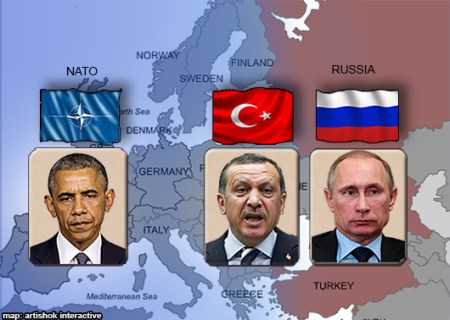
The talks between Presidents Vladimir Putin and Reccep Erdogen in St. Petersburg scheduled for Tuesday, Aug. 9, are causing trepidation among Israel’s policy-makers and military leaders. Their summit takes place on the sidelines of the G-20 summit, concluding nine months of hostility between the two capitals that was sparked by Turkish jets shooting down a Russian SU-24 warplane over the Syrian border on Nov. 24, 2015.

The feud was put to rest on July 17 – two days after Erdogan suppressed the attempted military coup against his rule. The Turkish ruler decided there and then to exploit the episode to expand his strength and use it not only for a massive settling of accounts with his critics, but also as a springboard for parlaying his reconciliation with Moscow for a strategic pact with Russia.

Israel, the worry is that while turning his back on the United States and NATO, Eerdogan will go all the way to bond with Russia to which Iran is also attached as a partner. Indeed, Erdogan has scheduled a trip to Tehran and a meeting with President Hassan Rouhani a few days after his talks with Putin.

The Turkish president’s latest moves look like spawning another new Middle East bloc that would consist of Turkey, Russia, Iran, Iraq, Syria and indirectly the Lebanese Hizballah terrorist group.

This prospect would upend Israel’s key policies for Turkey and Syria.

The Israeli détente with Ankara in recent months hinged on Turkey’s continuing to maintain its close military and intelligence ties with the United States and its integration in an anti-Iran Sunni alliance in partnership with Saudi Arabia, Egypt, the United Arab Emirates and Jordan.

But the Putin-Erdogan meeting Tuesday threatens to throw American, Israeli and moderate Arab rulers’ plans to the four winds. Turkey appears to have opted to line up with a Russian-Shiite front led by Tehran in preference to an anti-Iran Sunni alliance.

Therefore, the expanded military and intelligence cooperation which the Israeli-Turkish rapprochement was to have heralded will be low key at best for two reasons:

1. Israel will beware of sharing its military technology with Turkey lest it find its way to Iran. During the talks with Ankara for patching up their quarrel Israel was constantly on the lookout for indications that Turkey was prepared to break off its ties with Iran.

2. For the sake of keeping Iran and Hizballah away from its borders, Israel entered into arrangements with Russia, some of them never published, at the start of Moscow’s military intervention in Syria last September. Those arrangements included coordination of their air force operations over Syria.

Now, Israel finds itself suddenly up against a Russian-Turkish partnership aimed at strengthening Iranian domination of Syria – the exact reverse of the Netanyahu government’s objective in resolving its dispute with Ankara and forging deals with Moscow.

Why ISIS Fears Israel

August 9, 2016

Source: Why ISIS Fears Israel | The National Interest

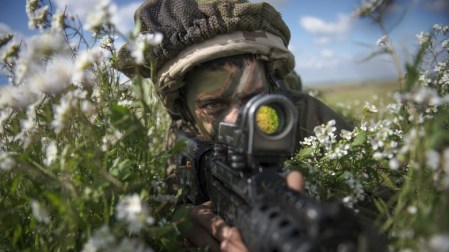
Image: “Soldiers from the Bedouins Reconnaissance Battalion trained in southern Israel.” IDF photo, CC BY-NC 2.0.

A strategy of patient, vigilant deterrence works—and America should take note.

August 8, 2016September-October 2016

IN THE wake of the Orlando and Istanbul attacks, President Obama reiterated his determination to “destroy” ISIS by executing a strategy that combines air strikes, American special-operations units and support for local ground forces. Both of the candidates campaigning to succeed him insist that the United States must do more: Donald Trump advocates that Washington “bomb the hell out of” the group, while Hillary Clinton promises to “smash the would-be caliphate.” All three, however, are in violent agreement on one point: the overriding objective must be to destroy ISIS.

The insistence on the “destruction” of ISIS has become such a reflexive linchpin of America’s counterterrorism project that few pause to consider its strategic merit. But the nation with arguably the most experience and success combatting terrorism has considered it—and found it wanting.

Israelis live much closer to ISIS than do Americans. ISIS has pledged to conquer the Jewish state and incorporate it into its core caliphate. Yet surprisingly, the Israel Defense Forces (IDF) has rejected the option of taking the fight directly to ISIS. Instead, faced with an operational threat that could mean the death of hundreds of Israelis at any moment, it has embraced a strategy that has not even been on the U.S. policy menu. Adopting a page from the playbook the United States used to defeat revolutionary Soviet-led communism in the Cold War, Israel is preventing ISIS attacks through a strategy of patient, vigilant deterrence. Obviously, the United States cannot simply adopt the Israeli approach whole cloth. It operates in a different security environment than the Jewish state, which faces a multiplicity of terrorist threats on its borders. But there are important lessons that America can learn to enhance its national security.

Israel’s approach to ISIS is straightforward. Israel seeks to persuade ISIS not to attack it by credibly threatening to retaliate. If you attack us, the thinking goes, we will respond in ways that will impose pain that exceeds any gain you can hope to achieve. As Cold War strategists learned, making this work in practice is demanding. To be effective, deterrence requires three Cs: clarity, capability and credibility. Specifically, this means clarity about the red line that cannot be crossed, communicated in language the adversary understands; capability to impose costs that greatly exceed the benefits; and credibility about the willingness to do so. Failures occur when the deterrer falls short on any one of the three Cs. So, if I draw a red line, you cross it, and I respond with words rather than the decisive punishment threatened, I fail the third C. Whatever excuse I give for not executing my threat, and however earnest my claim that next time will be different, the blunt fact is that adversaries will find my threats less credible.

If that were not enough, as the great nuclear strategist Thomas Schelling taught us, successful deterrence requires more than just a threat. The flip side of the deterrence coin is an equivalent promise: if you refrain from the prohibited action, I will withhold the threatened punishment. If, for whatever reason, I decide to administer the specified punishment even though you have complied with my demands, I spend that coin—and can no longer use that threat to deter you. As the saying goes, if you’re damned if you do and damned if you don’t—you might as well do.

The suggestion that terrorists as vicious as ISIS could be deterred is routinely dismissed by most members of the U.S. policy community as silly or dangerously naïve. Some assert that terrorists just want to kill. Others argue that they are irrational and that, when facing adversaries who are prepared to die for their cause, threatening to kill them will have no effect. American strategists have also been traumatized by Al Qaeda’s attack on the World Trade Center and Pentagon. Imagine a responsible government knew that it was facing hostile terrorists who had the capability to conduct an attack that could kill hundreds. If it chose to counter that threat by attempting to deter, rather than preemptively attack, the adversary, how would that government justify itself to its citizens in the aftermath of another Paris-scale assault?


ISRAELI STRATEGISTS ask all of these questions—and struggle with uncomfortable solutions. They have concluded that, however imperfect, deterrence is the best option. Indeed, the IDF believes that it is successfully deterring adversaries along all azimuths: states (Iran, Lebanon and Syria), substates (Hezbollah and Hamas) and even terrorist organizations (ISIS, Palestinian Islamic Jihad and Al Qaeda–linked groups). Israeli strategists reject the consensus view in Washington that ISIS is an ominous threat to “the entire civilized world.” In contrast to President Obama’s argument that ISIS should be the “top priority” for the IDF, it is just one more terrorist group—one that does not even make the top half of Israel’s threat matrix. As former chief of military intelligence Amos Yadlin provocatively put it, “At the end of the day, we are talking about several thousand unrestrained terrorists riding pickup trucks and firing with Kalashnikovs and machine guns.”

The American counterterrorism debate has largely ignored Israeli calculus. Washington is generally averse to learning from others, and Israel’s security establishment, until recently, was reticent about revealing its thinking. That changed last August when, for the first time in the IDF’s history, Chief of General Staff Lt. Gen. Gadi Eizenkot published an unclassified version of the IDF defense doctrine. But because the document appeared only in Hebrew, it has remained largely unknown in the American strategic community. To make it accessible, Harvard Kennedy School’s Belfer Center for Science and International Affairs recently posted an English translation of the document.

The “IDF Strategy” document discusses in detail how to deter terrorist groups, specifically Hezbollah and Hamas. In the U.S. policy lexicon, Hezbollah and Hamas are labeled “terrorists.” The IDF calls them “substate organizations.” Substate actors have headquarters, hold territory and govern populations. Thus they present targets of value, making them vulnerable, like states, to a combination of “general deterrence” and “specific deterrence.” General deterrence is achieved by maintaining overwhelming military superiority and earning a reputation like that of the Godfather. The Godfather “takes everything personal.” As his consigliere observed, “If a bolt of lightning hit a friend of his the old man would take it personal. . . . Accidents don’t happen to people who take accidents as a personal insult.” In Eizenkot’s words, Israel must be seen as “an unpredictable enemy that can react in a very severe way.”

Specific deterrence is tailored to each enemy and focuses on particular actions. It requires “an ongoing analysis of the enemy’s characteristics, considerations, capabilities, identity, and decision making processes.” Israel seeks to influence the “calculations” of its enemies directly by persuading them of “the futility of continuing to fight” and reminding them of the “outcome of previous confrontations.”

The IDF constantly worries about whether its deterrent is sufficiently strong. It works daily to ensure that it meets each and every condition required for success. Red lines are clearly, publicly and repeatedly announced by top Israeli officials not only in Hebrew, but also in Arabic. Israel’s capability to enforce these red lines is demonstrated by “building a force that is partially visible to the enemy.” Credibility is enhanced by taking “limited offensive actions to signal that the ‘rules of the game’ have been broken.” And it is careful to withhold punishment otherwise. (Indeed, Israeli policymakers have occasionally chosen not only to avoid punishment but to reward good behavior, for example, in supporting the reconstruction of Gaza even though Hamas uses some of the material Israel supplies to build tunnels and rockets.)

Israel sees Hezbollah as the “most severe threat.” A proxy of Iran, it has assembled an arsenal of more than one hundred thousand missiles and rockets aimed at Israel—many of them precision-guided with the ability to hit strategic targets, including the equivalent of the Pentagon in Tel Aviv. Hamas, whose charter pledges to “raise the banner of Allah over every inch of Palestine” occupied by “warmongering Jews,” stands second among substates whose attacks must be deterred. It has fought three wars against Israel in the past decade. During the Second Intifada, Hamas perfected the suicide bomb and used it to kill hundreds of Israeli civilians. Today, the group has thousands of rockets and is burrowing tunnels into Israeli territory for future attacks. (Israel has discovered a number of tunnels in recent months, each buried one hundred feet underground.)

How does the IDF meet threats posed by these groups? Not by direct attacks to degrade them; not by all-out war to destroy them. Instead, it attempts to deter them. As Yadlin explained,

“Vis-a-vis Hamas and Hezbollah, we haven’t destroyed their capabilities, but we were able to establish deterrence. And this is basically because we hit them hard, and because the terrorists became . . . half-state entities. . . . The terrorists have discovered that when they are responsible for their economy, for education, for the life of their people, suddenly they are not that daring to use terror all day.”

Of course, deterrence is not the only strand in Israel’s strategy to counter its enemies. Full-spectrum prevention of terrorist attacks includes detection (deep penetration to identify threats), defense (such as the Iron Dome missile-defense system and secure walls or fences on all borders) and decisive defeat (when, despite best efforts, attackers succeed). While many states, including the United States, invest heavily in similar efforts, Israel is unique in its placing deterrence at the core of its counterterrorism strategy.

The IDF accepts the fact that this strategy sometimes fails. When it does, Israeli citizens die. But Israel’s national-security community still considers deterrence better than any feasible alternative for meeting threats posed by its substate adversaries. And after each conflict, the IDF has redoubled efforts to establish a new level of deterrence.

Israeli security professionals readily admit that they cannot successfully deter all terrorists. In particular, lone wolves who conduct terrorist attacks with little preparation remain a persistent, unsolved problem. Only days before the Orlando attack, Israel experienced its own lone-wolf attack in which two Palestinian cousins using homemade guns killed four civilians at an upscale shopping mall in Tel Aviv. Israel’s security establishment has tried to deter future lone-wolf terrorists by demolishing the attackers’ homes and taking other punitive actions against their families and communities. Nonetheless, Eizenkot noted recently, “I have to stress the fact that there is virtually no way to stop every terrorist planning a stabbing attack.”


TO MEET the threat of ISIS today, the IDF is following essentially the same script. Officials have been reticent about discussing details of the strategy in public, but its outlines are clear in the IDF doctrine, and senior Israeli military officials confirmed this reading of the strategy in recent off-the-record meetings.

In stark contrast with the United States, Israel sees ISIS as just one more armed group fighting in Syria alongside Al Qaeda and other terrorist affiliates. For each of these adversaries, as well as for state actors including Iran and Assad, Israel has conveyed three “red lines”: no attacks on Israel; no transfer of advanced conventional weapons (namely precision-guided missiles and rockets) to terrorist groups that threaten Israel; and no transfer of chemical weapons to terrorist groups. The “dozens” of Israeli airstrikes in Syria that Prime Minister Netanyahu recently acknowledged are calculated components of a strategy that reminds all adversaries of the cost of even minor violations of its rules. It was no accident that Israel reportedly killed a prominent Iranian general last year on the Syrian Golan Heights as he surveilled the Israeli border, planning strikes on Israel. Nor was it coincidental that Israel reportedly killed Hezbollah operations officer Samir Kuntar in December—after Israel discovered him plotting attacks on Israelis.

On its immediate border, Israel faces two ISIS affiliates: Wilayat Sinai (Sinai Province) on the Egyptian peninsula, and the Yarmouk Martyrs Brigade on the Syrian side of the Golan Heights. While both are small, their proximity and firepower concern Israeli military leaders. Despite their capability to attack at a moment’s notice, both have exercised restraint. Since declaring allegiance to ISIS in November 2014, Wilayat Sinai has focused primarily on fighting the Egyptian security forces, not Israel. Its most noteworthy success was the downing of a Russian airliner in the Sinai in October 2015, which did not kill or injure any Israelis. On the Golan, the Yarmouk Brigade controls a ten-square-kilometer area where some forty thousand civilians live. Despite the fact that the group stands, as one Israeli newspaper put it, “several hundred meters away from reaching Israeli school buses,” it has not conducted a single attack against Israel.

Israeli strategists emphasize relevant similarities between ISIS, Hamas and Hezbollah: each controls territory, attempts to govern a population and, therefore, has something to lose. Even though ISIS propaganda recently declared in flawless Hebrew that “soon there will not be one Jew left in Jerusalem,” the groups have largely refrained from attacking Israel. The reason, according to Eizenkot’s predecessor, Benny Gantz, is that “they would lose,” and in doing so risk their population and assets. ISIS leaders appear to have heard this message. As a German journalist who was embedded with ISIS in 2014 explained, “The only country ISIS fears is Israel. They told me they know the Israeli army is too strong for them.”

Could the United States deter ISIS? At least one of President Obama’s speechwriters thought so. At the National Counterterrorism Center in December, the president directed his remarks to ISIS leaders: “We’re sending a message: If you target Americans, you will have no safe haven.” If I were teaching Strategy 101 next semester, this statement would lead my weekly quiz. The assignment would simply reproduce the quote and say: “Assess.” Any student unable to explain why the president’s threat fails to satisfy the elementary requirements for successful deterrence would not receive a passing grade.

Obama made this threat just days after ISIS’s attack in Paris, which killed 130 people. His objective was to dissuade ISIS leaders from ordering a similar attack on the United States. If you attack us, the president warned, America will respond by attacking you. Students of deterrence would remind Obama that he is already conducting a campaign of air strikes and special-operations raids that he says aims to kill ISIS’s leaders and destroy the organization—before they attack the homeland. Moreover, he has argued at length why, he believes, the current campaign includes everything the United States can productively do to destroy ISIS. Thus, his attempt to deter ISIS by threatening more rings hollow.

A few months from now, a newly elected president will be thinking about how he—or she—will deal with ISIS. One can be sure that the president-elect will ask her/his national-security team to conduct a fundamental reassessment of the war against ISIS, Al Qaeda and the dozen related strains of Islamic jihadi terrorism. A serious review would begin with recognition of a brute fact: a decade and a half beyond the 9/11 attacks and President Bush’s declaration of a “War on Terrorism,” the United States undoubtedly faces more terrorists determined to do harm than when this effort began.

In anticipation of that review, the analytic community should be studying Israel’s playbook now. The United States is not Israel. Deterrence is not the only strand in Israel’s defense strategy. Not every strategy that works for Israel is appropriate for America. At this point in the fight against ISIS, it is hard to imagine a path back to a posture of containment and deterrence. But as America confronts the next ISIS, or indeed, the next dozen strains or mutations of this cancer, the United States is unlikely to have the resources and will to send even American drones and special-operations forces to every ungoverned space or valley ruled by a hostile terrorist group. Standing as they do on the front line confronting deadly threats 24/7, Israel offers what Eizenkot has called a “laboratory” of security. It is not too late to begin a debate about how lessons learned by Israel’s security community can enrich America’s conceptual arsenal for countering terrorism in what promises to be a very long war.

Graham T. Allison is director of the Harvard Kennedy School’s Belfer Center for Science and International Affairs and a former assistant secretary of defense for policy and plans. He is the author of the forthcoming book, Destined for War: America, China, and Thucydides’s Trap.

Image: “Soldiers from the Bedouins Reconnaissance Battalion trained in southern Israel.” IDF photo, CC BY-NC 2.0.

Report calls Iran top Mideast threat to U.S. interests ‘by far’

August 9, 2016

Source: Report calls Iran top Mideast threat to U.S. interests ‘by far’ – World Tribune: Window on the Real World

by WorldTribune Staff, August 8, 2016

Iran “by far” poses the largest potential threat to U.S. bases, interests, and allies in the Middle East, according to the 2016 Index of U.S. Military Strength.

A Heritage Foundation report said Iran is the greatest threat to U.S. interests in the region “by virtue of its ballistic missile capabilities, nuclear ambitions, long-standing support for terrorism, and extensive support for Islamist revolutionary groups.”Iran test-fired several ballistic missiles from silos across the country on March 8, the official website of the Islamic Revolutionary Guard Corps (IRGC) said, defying U.S. sanctions on its missile program. /Reuters

Despite U.S. President Barack Obama’s many overtures and concessionss, Iran remains firmly anti-Western and “seeks to tilt the regional balance of power in its favor by driving out the Western presence, undermining and overthrowing opposing governments, and establishing its hegemony over the oil-rich Persian Gulf region,” the index said.

“It also seeks to radicalize Shi’ite communities and advance their interests against Sunni rivals. Iran has a long record of sponsoring terrorist attacks against American allies and other interests in the region. With regard to conventional threats, Iran’s ground forces dwarf the relatively small armies of the other Gulf States, and its formidable ballistic missile forces pose significant threats to its neighbors.”

The report continued: “Iran has adopted a political warfare strategy that emphasizes irregular warfare, asymmetric tactics, and the extensive use of proxy forces. The Islamic Revolutionary Guard Corps (IRGC) has trained, armed, supported, and collaborated with a wide variety of radical Shia and Sunni militant groups, as well as Arab, Palestinian, Kurdish, and Afghan groups that do not share its radical Islamist ideology. The IRGC’s elite Quds (Jerusalem) Force has cultivated, trained, armed, and supported numerous proxies, particularly the Lebanon-based Hizbullah; Iraqi Shia militant groups; Palestinian groups such as Hamas and Palestine Islamic Jihad; and groups that have fought against the governments of Afghanistan, Bahrain, Egypt, Israel, Iraq, Jordan, Kuwait, Saudi Arabia, Turkey, and Yemen.

“Iran is the world’s foremost sponsor of terrorism and has made extensive efforts to export its radical Shia brand of Islamist revolution. It has found success in establishing a network of powerful Shia revolutionary groups in Lebanon and Iraq; has cultivated links with Afghan Shia and Taliban militants; and has stirred Shia unrest in Bahrain, Iraq, Libya, Saudi Arabia, and Yemen. In 2013, Iranian arms shipments were intercepted by naval forces off the coasts of Bahrain and Yemen, and Israel intercepted a shipment of arms, including long-range rockets, bound for Palestinian militants in Gaza.”

The index also pointed to Teheran’s mounting missile threat: “Iran possesses the largest number of deployed missiles in the Middle East. The backbone of the Iranian ballistic missile force is formed by the Shahab series of road-mobile surface-to-surface missiles, which are based on Soviet-designed Scud missiles. The Shahab missiles are potentially capable of carrying nuclear, chemical, or biological warheads in addition to conventional high-explosive warheads. Their relative inaccuracy (compared to NATO ballistic missiles) limits their effectiveness unless they are employed against large and soft targets such as cities.

“Iran’s heavy investment in such weapons has fueled speculation that the Iranians intend eventually to replace the conventional warheads in their longer-range missiles with nuclear warheads. The Nuclear Threat Initiative has concluded that “[r]egardless of the veracity of these assertions, Tehran indisputably possesses a formidable weapons delivery capability, and its ongoing missile program poses serious challenges to regional stability.”

The index noted that Iran’s Shahab-3 and Ghadr-1, which is a modified version of the Shahab-3 with a smaller warhead but greater range (about 1,600 kilometers or 1,000 miles), “are considered more reliable and advanced than the North Korean No-dong missile from which they are derived.”

Iran can strike targets throughout the region and into Eastern Europe, then-Director of the Defense Intelligence Agency, Lt. Gen. Michael T. Flynn, warned in 2014.

“In addition to its growing missile and rocket inventories, Iran is seeking to enhance lethality and effectiveness of existing systems with improvements in accuracy and warhead designs. Iran is developing the Khalij Fars, an anti-ship ballistic missile which could threaten maritime activity throughout the Persian Gulf and Strait of Hormuz,” Flynn said.

The index said that Iran’s ballistic missiles “pose a major threat to U.S. bases and allies from Turkey, Israel, and Egypt in the west, to Saudi Arabia and the other Gulf States to the south, to Afghanistan and Pakistan to the east. However, it is Israel, which has fought a shadow war with Iran and its terrorist proxies, that is most at risk from an Iranian attack. The development of nuclear warheads for Iran’s ballistic missiles would seriously degrade Israel’s ability to deter attacks, an ability that the existing (but not officially acknowledged) Israeli monopoly on nuclear weapons in the Middle East currently provides.”

The index continued that, for the Teheran regime, “hostility to Israel, to which Iran sometimes refers as the ‘little Satan,’ is second only to hostility to the United States, which the leader of Iran’s 1979 revolution, Ayatollah Khomeini, dubbed the ‘great Satan.’ But Iran poses a greater immediate threat to Israel than to the United States, since Israel is a smaller country with fewer military capabilities and located much closer to Iran. It already is within range of Iran’s Shahab-3 missiles. Moreover, all of Israel can be hit with the thousands of shorter-range rockets that Iran has provided to Hezbollah in Lebanon and to Hamas and Palestine Islamic Jihad in Gaza.”

Meanwhile, Teheran has invested “tens of billions of dollars since the 1980s in a nuclear weapons program that is masked within its civilian nuclear power program,” the index noted. “It has built clandestine underground facilities to enrich uranium, which were subsequently discovered near Natanz and Fordow, and plans to build a heavy-water reactor near Arak, which essentially will be a plutonium bomb factory that will give it a second route to nuclear weapons.”

As of June 2015, “Iran had accumulated enough low-enriched uranium to build eight nuclear bombs if enriched to weapons-grade levels, and it could enrich enough uranium to arm one bomb in less than two months. Clearly, the development of an Iranian nuclear bomb would greatly amplify the threat posed by Iran. Even if Iran did not use a nuclear weapon or pass it on to one of its terrorist surrogates to use, the regime in Tehran could become emboldened to expand its support for terrorism, subversion, and intimidation, assuming that its nuclear arsenal would protect it from retaliation as has been the case with North Korea.”

On July 14, 2015, Obama announced that the United States and Iran, with China, France, Germany, Russia, the United Kingdom, and the European Union High Representative for Foreign Affairs and Security Policy, had reached a “comprehensive, long-term deal with Iran… .”

That same day, the Speaker of the U.S. House of Representatives said: “His ‘deal’ will hand Iran billions in sanctions relief while giving it time and space to reach a break-out threshold to produce a nuclear bomb – all without cheating. Instead of making the world less dangerous, this ‘deal’ will only embolden Iran – the world’s largest sponsor of terror – by helping stabilize and legitimize its regime as it spreads even more violence and instability in the region.  Instead of stopping the spread of nuclear weapons in the Middle East, this deal is likely to fuel a nuclear arms race around the world.”

On July 19, 2015, the Chairman of the National Security Council of the State of Israel briefed the Prime Minister and Cabinet on the Iran deal, noting: (1) “the preservation of Iran’s nuclear capabilities that have been made possible as a result of the agreement including the enrichment of uranium and the maintaining of underground nuclear installations such as that at Fordo,” (2) “the go-ahead that was given to Iran to continue the research and development of advanced centrifuges will significantly reduce the break-out time that Iran will need to arm itself with nuclear weapons,” (3) “if Iran honors the agreement it will have a 10-15 year break-out time for dozens of nuclear bombs, as the restrictions on its nuclear program are lifted,” (4) “were Iran to violate the agreement it would be able to break out toward individual bombs before then,” and (5) “with the hundreds of billions of dollars that will flow into its coffers Iran will step up the terrorism that it spreads in the region and around the world.”

Exclusive: Hillary Rubber-Stamped Visas for Record Number of Saudi Visitors

August 9, 2016

Exclusive: Hillary Rubber-Stamped Visas for Record Number of Saudi Visitors, Counter JihadPaul Sperry, August 8, 2016

Despite evidence Saudi Arabian terrorists exploit the U.S. visa program, former Secretary of State Hillary Clinton doubled the number of visas for Saudi visitors to the U.S., while helping cut a deal with the Kingdom to waive security procedures for Saudi nationals upon their arrival in the U.S, CounterJihad has learned.

The annual number of nonimmigrant visas issued to Saudi nationals soared 93% during Clinton’s tenure as secretary from 2009 to 2013, federal data show, hitting a record 108,578 in fiscal 2013 and reversing a post-9/11 pause in Saudi visa approvals.

Before leaving office, Clinton helped negotiate a little-noticed January 2013 administration deal with Riyadh to allow Saudi visa-holders to enter the U.S. as “trusted travelers” and bypass the normal border security process. The next year, the State Department issued an all-time-high 142,180 Saudi visas, consular data show.

All told, the Obama administration has opened the floodgates to more than 709,000 Saudi nationals, most of whom applied for student or business visas, records show. It’s as if 9/11 never happened and 15 Saudi terrorists never infiltrated the country on rubber-stamped visas. The surge represents a major shift from changes in immigration policy made in the wake of 9/11, when the number of visas issued to Saudi Arabians plummeted 69.7%. In fiscal 2002, Saudi visas slowed to a relative trickle of just 14,126.

Saudi immigration was tightened after it was revealed that the State Department’s Visa Express program benefited some of the Saudi hijackers on 9/11. Less known is that two other al-Qaida-tied Saudi nationals visiting America on student visas also took advantage of the lax policy. It turns out these other young Saudi men made a “dry run” to test airline security ahead of the 9/11 hijackings.

According to the recently declassified 29 pages of the congressional joint inquiry report on 9/11, Mohammed al-Qudhaeein and Hamdan al-Shalawi, both Saudi students living in the Phoenix area, tried several times to gain access to the cockpit of an America West flight while traveling to Washington to attend a party at the Saudi Embassy in 1999. Their airline tickets were paid for by the Saudi government, the documents reveal.

The FBI suspected al-Qudhaeein was a Saudi intelligence agent bankrolled by the Saudi Embassy, and agents subsequently received information that al-Shalawi trained in al-Qaida camps in Afghanistan and operated in the same circle with the Saudi hijacker who flew the plane into the Pentagon.

Coming into office in 2009, Clinton issued a cable warning diplomats that Saudi Arabia was still sponsoring al-Qaida terrorist operations.

“More needs to be done since Saudi Arabia remains a critical financial support base for al-Qaida,” states a Wikileaked secret December 2009 memo signed by the then-secretary of state. Her memo urged U.S. diplomats to redouble their efforts to stop Saudi money reaching terrorists in Pakistan and Afghanistan.

“Donors in Saudi Arabia constitute the most significant source of funding to Sunni terrorist groups worldwide,” Clinton said.

saudi visasNonimmigrant Visa Issuances, Saudi Arabia, FY1997-2014

In spite of her own warnings about continued Saudi-sponsored terrorism, however, she and President Obama quietly struck a deal to fast-track more Saudi students for U.S. entry during a series of high-level meetings in January 2013 with the Saudi interior minister, who had complained about delays in the security screening process and lobbied for more student visas.

Clinton, whose family foundation has received tens of millions of dollars from Saudi Arabian donors, can be seen here meeting at her State Department office with Saudi Interior Minister Prince Mohammed bin Nayef bin Abdulaziz on the same day — Jan. 16, 2013 — that Prince Mohammed signed an agreement to join America’s trusted traveler program known as Global Entry.

As a member of the trusted traveler program, the U.S. now trusts Saudi Arabians as much as it does Canadians, who as longtime program members are considered low-risk travelers and pre-approved for entry, and more so than Germans or French, who aren’t included in the program. Thanks to the Obama administration, Saudi visitors now enjoy expedited security clearance. They bypass the normal Customs screening and proceed toGlobal Entry kiosks, where they receive a transaction receipt that directs them to baggage claim and exit.

In other words, Saudi visitors now go to the front of the line and skip normal Homeland Security inspections. And federal authorities now share background checking and other pre-screening duties with the Saudis.

The trusted traveler program kicks the door open to thousands of young Saudi men who will be able to stay legally in the U.S. for five years on student and vocational visas. And they won’t be monitored while they’re here. The feds stopped tracking their stays here several years ago after the Saudi embassy, along with the terrorist front group Council on American-Islamic Relations, protested to the White House and State Department.

That means terrorists among the new Saudi entrants can enter the U.S. and continue to test flight security or plot attacks while pretending to go to college. Authorities now have no idea if a Saudi national entering on a student visa actually reported to campus.

“Why would we trust them?” 9/11 survivor Sharon Premoli demanded in an interview with the Investigative Project on Terrorism. Indeed, several Saudi visa-holders have been busted plotting terrorism or testing airline security in recent years. For example:

  • In 2013, a young Saudi immigrant living in Oregon on an expired visa was arrested for conducting a suspected dry run during a Continental Airlines flight bound for Houston. He screamed “Allah Akbar” while trying to light something in the plane’s cabin.
  • In 2011, a Saudi student was arrested on charges of plotting to bomb the Texas home of former President George W. Bush.

The Saudis can also use their vocational visas to enroll in U.S. flight schools as the hijackers did.

A recent study by the Washington-based Center for Immigration Studies found that three of the five top M-1 approved schools in the U.S. are flight schools. It also found that thousands of Saudis have arrived here on M-1 visas since Clinton loosened visa restrictions for travelers from the Kingdom.

Authorities are having a hard enough time dealing with all the homegrown terrorists cropping up. The FBI has more than 1,000 terrorism cases open on ISIS suspects in all 50 states. Agents don’t need new waves of young Muslim men from Saudi Arabia to worry about tracking, as well.

By dumping potentially thousands more Saudi extremists into the homeland security system, the administration is worsening the odds that law enforcement can catch terrorists before they strike.