Archive for March 11, 2016

New Iron Dome version can destroy tunnels

March 11, 2016

New Iron Dome version can destroy tunnels, DEBKAfile, March 11, 2016

Anti_tunnel_missile_NEWIran keeps its ballistic missiles in underground bunkers

Israel has started testing a secret new weapon for defeating the tunnel systems which the Palestinian Hamas and Hizballah are busy digging for surprise attacks against Israel. Western sources reported Friday, March 11, that the new weapon, dubbed the “Underground Iron Dome,” can detect a tunnel, then send in a moving missile to blow it up.

US intelligence sources disclosed only that new weapon is equipped with seismic sensors to detect underground vibrations and map their location before destroying them.

Western experts have been talking for years about a secret Israeli weapon capable of destroying Iran’s Fordo nuclear facility, which is buried deep inside a mountain not far from the Shiite shrine city of Qom. They suggested that this hypothetical weapon could be slipped through the Fordo facility’s vents, thread its way through the underground chambers and take down the illicit enrichment facility.

It was discussed again three years ago, when the Israeli Air Force on Aug. 23 2013 blew up the Popular Palestinian Front-General Command underground facility at Al-Naama on the South Lebanese coast, 15 km south of Beirut.

The PPF-GC leader Ahmed Jibril was then taking his orders from Iran’s Revolutionary Guards Corps.

How this operation turned out was never revealed. But Western military sources saw it as a strong Israeli message to Tehran that its underground nuclear facilities were now vulnerable to attack. The secret JIbril command center was constructed in the 1970s by East German military engineers as one of most heavily fortified military sites in the Middle East.

As for the new weapon, the Pentagon spokesman Christopher Sherwood said that the US had allocated $40 million for completing in 2016 the establishment of “anti-tunnel capabilities to detect, map and neutralize underground tunnels that threaten the US or Israel.”

According to the spokesman, the main part of the development work (on the secret weapon) would be conducted in Israel in 2016. The US would receive prototypes and access to the test sites and hold the rights to any intellectual property.

The Israeli firms working on the anti-tunnel weapon are Elbit Systems and Rafael Advanced Defense Systems, which developed the Iron Dome.

Sherwood denied claims from Israeli defense quarters that the US had earmarked $120 for developing the system, or that another $80 million would be available – half in 2017 and half in 2018.

DEBKAfile’s military sources emphasize that the timeline implicit in those estimates doesn’t necessarily represent the tempo of he Underground Iron Dome’s development.

According to past experience, unfinished Israeli weapons have more than once been rushed to the battlefield to meet an emergency war situation. The Iron Dome is one example. This has the advantage of testing innovative systems in real operational conditions, with the result that improvements and adjustments can be introduced much faster than planned.

Our sources add: Both Palestinian Hamas and the pro-Iranian Hizballah are working overtime on tunnels for sneaking terrorists and commando fighters into Israel to attack IDF posts and civilian locations. During Israel’s last counter-terror operation in the Gaza Strip, Hamas staged a deadly tunnel attack on the Israel side of the border and is planning repeats. Hizballah is training commando units for underground surprise incursions to capture parts of Galilee in northern Israel.

The Israeli government has spent more than $250 million since 2004 on efforts to thwart tunnel construction under the Gaza border.

IDF Chief of Staff Gen. Gadi Eisenkot hinted at these efforts in February. “We are doing a lot, but many of [the things we do] are hidden from the public,” he told a conference at Herzliya’s Interdisciplinary Center. “We have dozens, if not a hundred, engineering vehicles on the Gaza border.”

The Fourth Strategy

March 11, 2016

The Fourth Strategy,  Front Page Magazine, Caroline Glick, March 11, 2016
mideast-lebanon-bulga_horo

Originally published by the Jerusalem Post

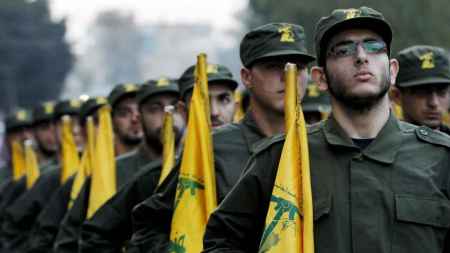
This week we learned that Lebanon is no more. It has been replaced by Hezbollah’s Iranian colony in Lebanon.

Two weeks ago, Saudi Arabia listed Hezbollah as a terrorist organization and canceled its $3 billion aid package to the Lebanese military. The Gulf Cooperation Council followed suit. Rather than support the move by his sponsors and allies, Saad Hariri, the head of the anti-Hezbollah March 14 movement, flew to Syria to meet with Hezbollah leaders.

Saudi Arabia’s decision to end its support for the Lebanese Armed Forces (LAF) doesn’t mean that Saudi Arabia is making peace with Hezbollah.

It means that the Saudis are no longer willing to maintain the fiction that with enough support, the LAF will one day challenge Hezbollah’s effective control of Lebanon.

Hezbollah and its bosses in Tehran don’t seem too upset about the Sunnis’ decision to acknowledge that Hezbollah is a terrorist group. And they are right not to care. In essence, the Saudi move is simply an admission that they have won. Lebanon is theirs.

Hezbollah’s isn’t the dominant force in Lebanon because it has better weapons than the LAF.

Unlike the LAF, Hezbollah has no air force. It has no armored divisions.

Hezbollah is able to dominate Lebanon because unlike the LAF and the March 14 movement, Hezbollah is willing to destroy Lebanon if doing so advances its strategic goals.

This has all been fairly clear for more than a decade. But it took the war in Syria to force the truth above the surface.

And now that it is clear to everyone that Lebanon has ceased to exist and that the country we once knew is now an Iranian colony, the time has come for Israel to reckon with the lessons of its own misadventures in our neighbor to the north.

Since the mid-1990s, Israel has implemented three strategies in Lebanon and in Syria. All of them originated on the Left. All of them failed.

The first strategy was appeasement.

From the mid-1990s until the Syrian war began five years ago, Israel’s strategic framework for understanding Syria was appeasement. Initially, the notion was that Syria was our enemy because we control the Golan Heights. If we surrendered the Golan to Syria, we would have peace in exchange.

In the years leading up to the Syrian war, our leaders embraced the idea that Syria was the weakest link in the Iranian axis. If we gave the Golan Heights to Syria, they said, then the Assad regime would withdraw from the Iranian axis.

As it turned out, these positions had no basis in reality. Appeasement failed.

Then there was unconditional surrender – or disengagement. Then-prime minister Ehud Barak implemented this strategy when he removed IDF units from the security zone in south Lebanon in May 2000.

From the mid-1990s on, Yossi Beilin was the chief advocate of unconditional surrender in Lebanon. The logic of surrender was similar to that of appeasement – of which he was also a principal architect and advocate.

The surrender strategy in Lebanon was based on the idea that Hezbollah fought the IDF in south Lebanon because the IDF was in south Lebanon. If the IDF were to leave south Lebanon, Hezbollah was have no reason to fight us anymore.

So if we were gone, Beilin argued, Hezbollah would stop fighting, ditch terrorism and Iran, and become a normal Lebanese political party.

The war with Hezbollah in 2006 destroyed the credibility of the surrender strategy. But the Left didn’t despair. They simply replaced surrender with the strategy of internationalization.

The internationalization strategy forms the basis of UN Security Council Resolution 1701 that set the cease-fire terms at the end of the war with Hezbollah. IDF soldiers, who left Lebanon without victory, were replaced by UN forces from UNIFIL. UNIFIL forces were supposed to block Hezbollah’s reassertion of control over south Lebanon by facilitating the LAF’s takeover of the border with Israel. While UNIFIL was protecting the LAF on the ground, the LAF itself would be empowered by a massive infusion of US and Saudi aid.

Saudi Arabia’s belated recognition that Hezbollah dominates the LAF, and controls Lebanon, makes clear that like appeasement and disengagement, internationalization is an utter failure.

To a certain degree, Israel’s serial strategic blundering did have one ameliorative effect. Through them, Hezbollah has become so powerful that it now poses a threat to the great powers. So Russia in Syria now needs to curb it. So, too, it is so powerful that Iran is loath to waste it on a war with Israel that it will lose when it is fighting to win the war in Syria.

For now then, Hezbollah is not an immediate threat. This is the case despite Hezbollah chief Hassan Nasrallah’s recent threat to bomb Haifa’s chemical depots and cause a fireball with the cataclysmic effect of a nuclear bomb.

But that doesn’t mean that the lessons of our repeated strategic mistakes in Syria and Lebanon shouldn’t be applied today. They should be applied, but toward another, more immediate foe – the Palestinians, toward whom Israel has applied the same failed policies, one after another, with similarly destructive outcomes.

After the first intifada ground to a halt in 1991, Israel adopted the Left’s first strategy. The so-called peace process with the PLO, which began in 1993, was an attempt to implement a strategy of appeasement. We would gradually give the PLO Judea, Samaria, Gaza and Jerusalem.

In return, the PLO would stop supporting terrorism and live at peace with Israel.

The failure of the appeasement strategy led to the second intifada. The second intifada caused Israel to adopt the Left’s second strategy – unconditional surrender.

Israel’s 2005 disengagement from Gaza failed just as spectacularly as its 2000 disengagement from Lebanon. Not only did it lead to the Hamas takeover of Gaza in 2007. It led to the further radicalization of the PLO and Palestinian society as a whole. The latter became convinced that terrorism worked. The former became convinced that the only way to garner public support was by being just as anti-Israel as Hamas.

Today, the center-left parties – the Zionist Union and Yesh Atid – cling to the failed strategy of disengagement. The far Left, together with the Arab political parties, have already moved on to the internationalization strategy. In the Palestinian context, the goal of the internationalization strategy is the collapse of Israeli sovereignty.

This strategy was in evidence this week with Peace Now head Yariv Oppenheimer’s outrageous claim Wednesday that in killing the terrorists who were in the midst of murdering innocents in Petah Tikva and Tel Aviv, civilians and security forces carried out summary executions.

Oppenheimer, whose group is funded by foreign governments, did not make the claim because he wished to build his support base at home. He demonized his fellow citizens to advance his paymasters’ goal of delegitimizing Israeli sovereignty by among other things, criminalizing Israel’s right to self-defense.

The goal of this delegitimization campaign is to make it impossible for Israel to function as a coherent nation-state and for it instead to become a powerless ward of Europe and the US.

In the face of both the rise in Palestinian terrorism and of efforts by Oppenheimer and his comrades to use Palestinian terrorism as a means to cause the collapse of Israeli sovereignty, the government is at a loss. Its paralysis doesn’t owe to a lack of will. Rather it is the consequence of the government’s difficulty in contending with the coalition of powerful domestic and foreign actors that together make it all but impossible for Prime Minister Binyamin Netanyahu and his ministers to abandon the Left’s failed strategies and embark on a new strategic course.

Perhaps the most poignant and infuriating expression of the government’s distress is its constant demand that PLO chief Mahmoud Abbas condemn Palestinian terrorism.

On seemingly a daily basis our leaders voice the demand that the man who heads a regime that indoctrinates its youth – including its young children – to murder Jews condemn his own actions.

Beyond being irrational, the demand is both defeatist and self-defeating. By demanding action from Abbas, we legitimize him and empower him. But so long as Israel refuses to abandon the appeasement strategy, and continues to accept that there is a peace process that can be resuscitated, the government will be unable to stop treating Abbas as legitimate and moderate.

So, too, so long as the Knesset fails to take serious, concerted action against the nonprofit groups funded by hostile foreign governments and foundations, the government will be unable to take effective action against the radical Left and its partners from the Joint (Arab) List that openly support both Palestinian terrorists and Hezbollah.

Just as Oppenheimer’s remarks weren’t directed toward the domestic audience, but to his European sponsors, so the Arab Knesset members who this week announced their opposition to Saudi Arabia’s decision to label Hezbollah a terrorist group, were directing their remarks toward their supporters – and Hezbollah’s sponsors – in Qatar.

While adopting in turn every failed strategy the Left could invent and recycle, for the past generation, Israel has avoided implementing the only strategy that has ever worked. That is the strategy of sovereignty – or, more broadly, of governing territories necessary for our defense.

From 1982 through 2000, Israel restrained Hezbollah and prevented it from taking over Lebanon by maintaining security control over the security zone in Lebanon. For 28 years, Israel prevented the Palestinians from becoming a terrorist society dedicated to the destruction of the people of Israel, by exerting security and civil authority over Judea, Samaria and Gaza through its military government and its civil administration.

And it worked. By fighting our enemies rather than empowering them, we weakened them.

The image of the first intifada that convinced us to legitimize the PLO was the teenager with a slingshot.

The image of the second intifada that convinced us to run away from Gaza was a bombedout bus.

So far, the image of the third intifada is a girl wielding scissors attempting to stab Jews. And we still haven’t figured out our response to her, although the Left would like us to run away or collapse.

It is time to let this image guide us though.

The girl with the scissors is not empowered. She is both dangerous and pathetic. She is both an enemy and a victim. You cannot destroy her. You can only punish her and then raise her up. In other words, you need to govern her.

Governing enemies is unpleasant. It brings no instant gratification. Instead it promises only thankless, Sisyphean efforts. In other words, governing your enemies is the price you pay to be free.

Libya Being Taken Over by ISIS was Everyone’s Fault Except Obama’s

March 11, 2016

Libya Being Taken Over by ISIS was Everyone’s Fault Except Obama’s, Front Page Magazine, Daniel Greenfield, March 11, 2016

crying-barry-obama

Nothing is ever Obama’s fault. Ever. Even when he did it.

Like the time he illegally invaded Libya by lying to everyone from the UN to Americans, leading to the killing of an American ambassador and Al Qaeda, the Muslim Brotherhood and ISIS taking over large parts of the country… as had been predicted. But it’s not his fault. Really.

But Obama says today of the intervention, “It didn’t work.” The U.S., he believes, planned the Libya operation carefully—and yet the country is still a disaster.

We did a good job… and yet we failed. It must be someone’s fault.

“The social order in Libya has broken down,” Obama said, explaining his thinking at the time. “You have massive protests against Qaddafi. You’ve got tribal divisions inside of Libya…. We worked with our defense teams to ensure that we could execute a strategy without putting boots on the ground and without a long-term military commitment in Libya.”

Who could have predicted that regime change in a country where the order had broken down, without putting boots on the ground, would lead to complete chaos? No one could have predicted it. No one.

“So we actually executed this plan as well as I could have expected: We got a UN mandate, we built a coalition, it cost us $1 billion—which, when it comes to military operations, is very cheap. We averted large-scale civilian casualties, we prevented what almost surely would have been a prolonged and bloody civil conflict. And despite all that, Libya is a mess.”

I poured gasoline on the haystacks. Then I started shooting off firecrackers. I tied torches to pigs and sent them running around the barn. And despite all that, the barn is on fire.

It was a great plan Obama had.

1. Lie to the UN

2. Build a coalition of countries willing to sign their names without doing anything

3. Spend $1 billion to let Islamic terrorists take over the country

4. Somehow the “prolonged and bloody civil conflict” you claimed to be trying to prevent is still going on and on…

And it’s not Obama’s fault. No way.

Mess is the president’s diplomatic term; privately, he calls Libya a “shit show,” in part because it’s subsequently become an isis haven—one that he has already targeted with air strikes. It became a shit show, Obama believes, for reasons that had less to do with American incompetence than with the passivity of America’s allies and with the obdurate power of tribalism.

“I’m not competent. All my allies suck. Also the tribal country we bombed is all tribal and stuff and who could have predicted that?”

“When I go back and I ask myself what went wrong,” Obama said, “there’s room for criticism, because I had more faith in the Europeans, given Libya’s proximity, being invested in the follow-up,” he said.

Yes, the only thing that Obama blames himself for… is passing the blame to Europe.

Ben Carson Endorses Donald Trump FULL Press Conference (3-11-16)

March 11, 2016

Ben Carson Endorses Donald Trump FULL Press Conference (3-11-16) via You Tube, March 11, 2016


CAIR: No Terror Orgs in US

March 11, 2016

CAIR: No Terror Orgs in US, Clarion ProjectRyan Mauro, March 11, 2016

islamberg-fuqra-ryan-newsmax(Screenshot from the broadcast)

The Council on American-Islamic Relations (CAIR)‘s downplaying of Islamist extremism has reached a new low. In a contentious segment on Newsmax TV with Clarion Project’s Ryan Mauro, a CAIR-FL representative made the outrageous claim that no terrorist organizations have existed in the U.S. since 2001.

The segment on DML Unfiltered (Watch the segment below), hosted by Dennis Michael Lynch, was centered on Jamaat ul-Fuqra (now known as Muslims of the Americas), an extremist group with a history of terrorism that claims to have 22 “Islamic villages.”

Mauro showed exclusively-obtained photos from a law enforcement raid on one such “village” in Colorado in 1992, where authorities discovered hidden stockpiles of arms, including in underground tunnels. The group was also in the process of building a satellite communications system. Many of the group’s other “villages” continue to operate.

Mauro then mentioned that CAIR is now intertwined with MOA/Fuqra. CAIR-FL’s Communications Director Wilfredo Ruiz responded with an outrageous claim that “there has not been a terrorist group operating in America since 2001 because of the effectiveness of our intelligence and law enforcement.”

Mauro debunked the claim by pointing out that not only have terrorist networks been exposed since 2001, but CAIR itself is part of one of them. The Justice Department says CAIR is an entity of the U.S. Muslim Brotherhood network and listed it as an unindicted co-conspirator in the trial of another Brotherhood entity for financing Hamas.

Wilfredo also misrepresented a newspaper account based on a think-tank study purporting to show

right-wing terrorism is a bigger threat than Islamist terrorism. He claimed this was the official opinion of the intelligence community (and here’s a strong rebuttal to that study).

You can read the Clarion Project’s fully-documented profile of CAIRhere. We have a separate profile specifically for CAIR’s Florida branch here that shows its history of extremism.

Before joining the Brotherhood/Hamas-linked CAIR, Ruiz was a senior official for another radical group led by a Hamas supporter. The head of the American Muslim Association of North America is Sofian Abdelaziz Zakkout.

Investigative reporter Joe Kaufman, chairman of Americans Against Hate, exposed Zakkout’s extremism several times. Zakkout promoted horrendous anti-Semitic propaganda, glorified Hamas and terrorism against Israeli civilians on social media,  justified the murder of those who leave Islam and  even wrote in Arabic, “You’re a Jew, the grandson of a monkey and pig.”


Saudi Journalist: Iran – Not Israel – Is The Gulf States’ No. 1 [Enemy]

March 11, 2016

Saudi Journalist: Iran – Not Israel – Is The Gulf States’ No. 1, MEMRI, March 11, 2016

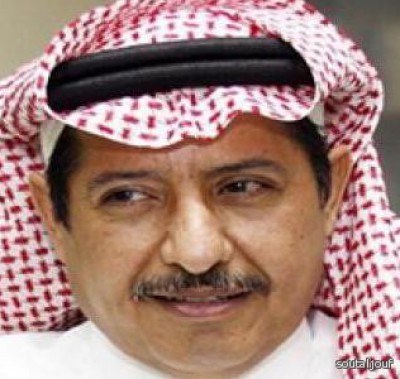
On March 8, 2016, Saudi journalist Muhammad Aal Al-Sheikh wrote in his column in the Saudi daily Al-Jazirah that today, Iran is the No. 1 enemy of Saudi Arabia and the Gulf countries, supplanting the historical enemy Israel. Any citizen of the Gulf who disagrees with this assessment, he added, is a traitor.

Arguing that Iran is exploiting the Palestinian issue as a pretext for “infiltrating deep into the Arab world, shredding its Arab fabric, and dragging Arab society into supporting its expansionary plan,” he emphasized that the Palestinians should expect no salvation from Iran. He also warned the Gulf Shi’ites that they were mere pawns for Iran, which was using them to promote Persian national aspirations.

Below are translated excerpts from Aal Al-Sheikh’s column:[1]

27120Muhammad Aal Al-Sheikh (image: Kn19.com)

“The Persian enemy is Enemy No. 1, and the Zionist enemy is [only] Enemy No. 2. We must present this truth directly, flattering no one, to all those [who try] to extort us with the tale that Israel is the Arabs’ Enemy No. 1 and that Iran supports us on the Palestinian issue. This tale could still be true vis-à-vis the Arabs to the north [of the Arabian Peninsula], and in Egypt, because Israel threatens [Egypt] and its security and stability. But as for the [Saudi] kingdom and the Gulf states, it is Iran, not Israel, that tops the list of the enemies and the dangers that lie in wait for us, face us and threaten us. Iran is exploiting the issue of the Palestinians and the liberation [of Palestine] as a pretext for infiltrating deep into the Arab [world], shredding its Arab fabric, and dragging Arab [society] into supporting its expansionary plan.

“It is true that the Palestinian issue has throughout history been the No. 1 Arab cause, and liberating Jerusalem from the yoke of the Israeli occupation has doubtless been the No. 1 issue for us, with nothing more important. However, at this time, and in light of the Persian ambition that the extremist Muslim Iranian government is backing with all its resources and for which it is mobilizing all its forces and capabilities, the Persian enemy takes priority – and must take priority – over the Israeli danger.

“For example, when [former Iraqi president] Saddam [Hussein] invaded Kuwait, occupied its territory, expropriated its sovereignty, and annexed it to Iraq, Kuwait’s Enemy No. 1, and the No. 1 enemy of the [rest of] our  Gulf countries, was not Israel but Saddam’s Iraq. Furthermore, I am not ashamed to say that anyone in the Gulf, particularly among the Kuwaitis, who prioritized liberating Palestine over liberating Kuwait from the claws of the Iraqi occupier was considered a clear traitor. The Lebanese need to realize this, as do the Egyptians and the Palestinians…

“I do not think that any reasonable Gulf resident would consider the danger [posed by] the Zionist enemy to be greater than [that posed by] the Persian enemy. The Palestinians, Lebanese, and Syrians, whose land is wholly or partially occupied by Israel, are expecting us – for whatever reasons and excuses – to be courteous towards them and to prioritize the Israeli danger over that posed by the Persian enemy. They are delusional.

“Moreover, let me say this bluntly: Any citizen of any of the five Gulf states who prioritizes the Israeli danger over that of the Persian enemy, whether from a pan-Arab or an Islamist perspective, is sacrificing his homeland, its security, its stability and perhaps its very existence for his neighbor’s cause. By any national standard, this is absolute treason.

“This issue has to do with our very existence, and there is no bargaining over it or dismissing or neglecting it. It is a matter on which the Gulf residents, whether Sunni or Shi’ite, agree equally. I know that for a minority among the ordinary Gulf Shi’ites, sectarian affiliation is the most important factor, and they place it above national affiliation. To them I say: The Persians have no interest in sect or even in religion. What really interests them is utilizing [your] sectarian [affiliation] as a lure to mobilize you against your homeland, as a fifth column. Take, for example, the Arabs of the Ahwaz [district in Iran].[2] Although they are Twelver Shi’ites, they are oppressed and excluded [in their own homeland], and the Persians are eradicating their [Arab] identity and with it their human rights. The regions [of Iran] where they live are the least developed and have the highest rates of poverty and unemployment – [even though] they are [the country’s] richest in natural resources. Were sect and faith important [to the Persians], they would not be fighting the [Ahwazi] identity and heritage and forcing [the Ahwazis] to assimilate into a Persian identity, and would not be stopping them from speaking their language [Arabic], the language of the Koran… The [Persians’] goal and purpose is to [advance] the Persian race’s control [in the region] and to establish a Persian empire with Baghdad as its capital – as a Persian religious scholar said in a documented press release…”[3]


Endnotes:

[1] Al-Jazirah (Saudi Arabia), March 8, 2016.

[2] On recent Arab efforts to promote the cession of Ahwaz from Iran, see MEMRI Inquiry & Analysis No.1233,

MPs In Gulf Countries Urge Recognition Of Ahwaz Province In Iran As Occupied Arab Country, March 9, 2016.

[3] Possibly a reference to a March 2015 statement by Ali Younesi, advisor to Iranian President Hassan Rohani, in which he said that Iran is now again an empire and its capital is Iraq. See MEMRI Special Dispatch No. 5991, Advisor To Iranian President Rohani: Iran Is An Empire, Iraq Is Our Capital; We Will Defend All The Peoples Of The Region; Iranian Islam Is Pure Islam – Devoid Of Arabism, Racism, Nationalism, March 9, 2015.

Obama sees Netanyahu as most disappointing of all Mideast leaders

March 11, 2016

Obama sees Netanyahu as most disappointing of all Mideast leaders — report

The Atlantic: Israeli PM is ‘in his own category’ when it comes to those who frustrate US president; article cites ‘condescending’ lecture by PM, asserts that Obama sees Netanyahu as ‘too fearful and politically paralyzed’ to secure two-state solution

By Times of Israel staff March 10, 2016, 4:39 pm

Source: Obama sees Netanyahu as most disappointing of all Mideast leaders — report | The Times of Israel

US President Barack Obama and Prime Minister Benjamin Netanyahu at a welcoming ceremony for the president at Ben Gurion Airport, March 20, 2013. (photo credit: Marc Israel Sellem/Pool/Flash90)

Prime Minister Benjamin Netanyahu “is in his own category” when it comes to the Middle East leaders who have most deeply disappointed President Barack Obama, according to a major overview of the Obama presidency, featuring numerous interviews with the president, published online Thursday by The Atlantic.

In the piece, headlined “The Obama Doctrine,” writer Jeffrey Goldberg goes to great lengths to trace the president’s growing disillusionment, over the course of his presidency, with the possibility of changing the region for the better. “Some of his deepest disappointments concern Middle Eastern leaders themselves,” Goldberg writes. Of these, “Benjamin Netanyahu is in his own category.”

 According to Goldberg, “Obama has long believed that Netanyahu could bring about a two-state solution that would protect Israel’s status as a Jewish-majority democracy, but is too fearful and politically paralyzed to do so.”

To illustrate Obama’s impatience with Netanyahu, one of several Middle Eastern leaders said to have questioned the president’s understanding of the region, Goldberg relates an incident during an undated Obama-Netanyahu meeting, at which the Israeli prime minister “launched into something of a lecture about the dangers of the brutal region in which he lives.”

Obama, relates Goldberg, “felt that Netanyahu was behaving in a condescending fashion, and was also avoiding the subject at hand: peace negotiations. Finally, the president interrupted the prime minister: ‘Bibi, you have to understand something,’ he said. ‘I’m the African American son of a single mother, and I live here, in this house. I live in the White House. I managed to get elected president of the United States. You think I don’t understand what you’re talking about, but I do.’”

Turkish Prime Minister Recep Tayyip Erdogan (left) with US President Barack Obama during a bilateral meeting (photo credit: AP/Pablo Martinez Monsivais)

Turkish Prime Minister Recep Tayyip Erdogan, left, with US President Barack Obama during a bilateral meeting in 2011. (photo credit: AP/Pablo Martinez Monsivais)

The piece does not single out Netanyahu as the only regional leader to “frustrate him immensely.” Obama now thinks of Turkey’s President Recep Tayyip Erdoğan, who he had hoped could bridge the East-West divide, as “a failure and an authoritarian, one who refuses to use his enormous army to bring stability to Syria,” Goldberg writes.

He also says Obama two years ago took Jordan’s King Abdullah II aside at an international summit because he was unhappy that the monarch was badmouthing him. “Obama said he had heard that Abdullah had complained to friends in the U.S. Congress about his leadership, and told the king that if he had complaints, he should raise them directly. The king denied that he had spoken ill of him.”

“In recent days,” Goldberg continues, “the president has taken to joking privately, ‘All I need in the Middle East is a few smart autocrats.’ Obama has always had a fondness for pragmatic, emotionally contained technocrats, telling aides, ‘If only everyone could be like the Scandinavians, this would all be easy.’”

US President Obama delivering his famed Cairo Speech in 2009. The president highlighted the need for social progress in his first major address to the Muslim world. (photo credit: screen capture, YouTube)

US President Barack Obama speaks in Cairo on June 4, 2009. (photo credit: screen capture, YouTube)

According to Goldberg, Obama now acknowledges that a goal of his Cairo speech in 2009, early in his presidency, in which he sought to persuade Muslims to look honestly at the sources of their unhappiness and stop blaming Israel for all their problems, has proved unsuccessful.

He quotes Obama as follows: “My argument was this: Let’s all stop pretending that the cause of the Middle East’s problems is Israel… We want to work to help achieve statehood and dignity for the Palestinians, but I was hoping that my speech could trigger a discussion, could create space for Muslims to address the real problems they are confronting — problems of governance, and the fact that some currents of Islam have not gone through a reformation that would help people adapt their religious doctrines to modernity. My thought was, I would communicate that the U.S. is not standing in the way of this progress, that we would help, in whatever way possible, to advance the goals of a practical, successful Arab agenda that provided a better life for ordinary people.”

What unfolded over the following three years, Goldberg goes on, “as the Arab Spring gave up its early promise, and brutality and dysfunction overwhelmed the Middle East,” left Obama bleak. “The unraveling of the Arab Spring darkened the president’s view of what the U.S. could achieve in the Middle East, and made him realize how much the chaos there was distracting from other priorities,” Goldberg writes.

Undated file image posted on a militant website on January 14, 2014, shows Islamic State fighters marching in Raqqa, Syria. (AP/Militant Website)

Undated file image posted on a militant website on January 14, 2014, shows Islamic State fighters marching in Raqqa, Syria. (AP/Militant Website)

More recently, says Goldberg, the rise of the Islamic State terror group has “deepened Obama’s conviction that the Middle East could not be fixed — not on his watch, and not for a generation to come.”

In the piece, Goldberg quotes Obama castigating Islamic State in the most bitter tones, as “the distillation of every worst impulse.” Says Obama: “The notion that we are a small group that defines ourselves primarily by the degree to which we can kill others who are not like us, and attempting to impose a rigid orthodoxy that produces nothing, that celebrates nothing, that really is contrary to every bit of human progress— it indicates the degree to which that kind of mentality can still take root and gain adherents in the 21st century.”

Obama is also quoted praising Israelis’ ability to withstand a relentless climate of terrorism. Writes Goldberg of the US president: “Several years ago, he expressed to me his admiration for Israelis’ ‘resilience’ in the face of constant terrorism, and it is clear that he would like to see resilience replace panic in American society.”

A worker outside the Bushehr nuclear power plant in Iran (photo credit: Vahid Salemi/AP)

A worker outside the Bushehr nuclear power plant in Iran (photo credit: AP/Vahid Salemi)

Relating to last July’s nuclear agreement with Iran, on which he and Netanyahu disagreed so profoundly and so publicly, Obama told Goldberg as recently as January that he wasn’t bluffing when he said in 2012 that he would have attacked Iran to prevent it from getting a nuclear weapon. “I actually would have,” Goldberg quotes Obama saying, in reference to a strike on the Iranian nuclear facilities, “If I saw them break out… This was in the category of an American interest.”

Where he and Netanyahu differed, Goldberg elaborates, is that “Netanyahu wanted Obama to prevent Iran from being capable of building a bomb, not merely from possessing a bomb.”

Much of the article relates to Obama’s decision not to strike at Syria after President Bashar Assad used chemical weapons against his own people in the summer of 2013 — a landmark volte face in his presidency. Goldberg reveals, however, that Secretary of State John Kerry has continued to press Obama “to violate Syria’s sovereignty” and “launch missiles at specific regime targets, under cover of night, to ‘send a message’ to the regime.” The president has insistently refused these requests, Goldberg writes, “and seems to have grown impatient” with Kerry’s lobbying. “Recently, when Kerry handed Obama a written outline of new steps to bring more pressure to bear on Assad, Obama said, ‘Oh, another proposal?’”

President Barack Obama and John Kerry (photo credit: AP/Carolyn Kaster)

US President Barack Obama and US Secretary of State John Kerry (photo credit: AP/Carolyn Kaster)

Goldberg concludes the piece by arguing that Obama “has placed some huge bets” in foreign policy — notably where the Iran deal is concerned. When Goldberg told him last May that he was “nervous” about the deal, Obama replied: “Look, 20 years from now, I’m still going to be around, God willing. If Iran has a nuclear weapon, it’s my name on this… I think it’s fair to say that in addition to our profound national-security interests, I have a personal interest in locking this down.”

For supporters of the president, Goldberg sums up, “his strategy makes eminent sense: Double down in those parts of the world where success is plausible, and limit America’s exposure to the rest. His critics believe, however, that problems like those presented by the Middle East don’t solve themselves — that, without American intervention, they metastasize.”

Will Obama Try to Blackmail Israel?

March 11, 2016

Will Obama Try to Blackmail Israel?

by Shoshana Bryen

March 11, 2016 at 5:00 am

Source: Will Obama Try to Blackmail Israel?

  • President Obama is looking at the fires he lit in the Middle East and North Africa, and desperately hoping to salvage something, anything, from the conflagration before he leaves office. Israel will be pushed to provide at least one “victory.”
  • Iran has come closer to nuclear weapons competence in the past eight years. And Obama’s abandonment of dissidents and pro-democracy advocates in Cuba, Venezuela, China, Turkey and Iran paves the way for waves of repression and bloodshed around the world.
  • It is estimated that more than 17,000 civilians were killed in Iraq in 2014, four times as many as 2012, after the U.S. withdrew its combat forces. This is a far cry from 2011, when Obama announced the U.S. was leaving a “sovereign, stable and self-reliant Iraq.”
  • He needs to find a “success.” Cue the Middle East “peace process.”

As Vice President Biden arrived in Israel this week, word leaked about yet another “peace plan” designed by the Obama administration. There isn’t much new in it. According to The Wall Street Journal, the U.S. might support a UN Security Council resolution calling on “both sides to compromise on key issues,” and it might involve the Middle East Quartet. Israel would be told to stop building in the territories and recognize East Jerusalem as the capital of a Palestinian State. The Palestinians would be told to recognize Israel as a Jewish state and give up the “right of return” for the original 1948/49 refugees and their descendants.

Just do it and voila! Problem solved.

As Vice President Biden arrived in Israel this week, word leaked about yet another “peace plan” designed by the Obama administration. (Image source: Israel Prime Minister’s Office)



Why and why now? Because President Obama is looking at the fires he lit in the Middle East and North Africa, and desperately hoping to salvage something, anything, from the conflagration before he leaves office and needs another job. Israel will be pushed to provide at least one “victory.” Consider the list of Administration failures right now and the terrible destruction they have entailed:

In his first foreign visit, President Obama opened the door in Egypt to an uprising not only of “Google people” in Tahrir Square, but also to the Muslim Brotherhood. Brotherhood representatives were front and center at the President’s speech in Cairo’s Al-Azhar University, to the dismay of longtime ally Hosni Mubarak. After Mubarak’s overthrow, the White House pressed for the inclusion of the Brotherhood in Egyptian elections despite its history of terrorism. Since then, the U.S. and Egypt have been unable to find a way to communicate constructively, despite Egypt’s increasing closeness to Israel and their joint interest in controlling the terrorist Hamas and Iranian-sponsored jihadis in Sinai.

The Muslim Brotherhood was emboldened in Syria by its successes in Egypt.

The Syrian civil war and the rise of ISIS — both in some measure precipitated by the U.S. withdrawal from Iraq – have killed upwards of 350,000 people (more than 55,000 in 2015) and displaced nearly 4 million more. Chemical weapons, starvation, beheadings and aerial bombing are weapons of choice by various sides. Russia is calling the shots (literally) in Syria, while Turkey, Qatar and Saudi Arabia continue to fund various jihadi groups, and Iran operates freely in both Iraq and Syria. Hezbollah, despite taking enormous casualties in Syria, continues to add to its missile arsenal in Lebanon.

This is a far cry from 2011, when President Obama announced the U.S. was leaving a “sovereign, stable and self-reliant Iraq.” An Iraqi non-governmental organization estimated that more than 17,000 civilians were killed there in 2014, double the number from the previous year and four times as many as 2012, after the U.S. withdrew its combat forces.

Lebanon, Jordan, and Turkey have all been destabilized by an influx of refugees from Syria and Iraq. Lebanon, a fragile country of less than 4.5 million people divided into Shiites, Sunnis, Christians and Druze, now has more than one million Syrian refugees.

Afghanistan was the “good war” in President Obama’s narrative. At West Point at the end of 2009, President Obama announced an additional deployment of 30,000 American soldiers to stabilize Afghanistan and nuclear-armed Pakistan. Six years later — 15 years after we got there — American military leaders told him the Afghan government still couldn’t survive without a continuing American military presence. Since the administration decided to leave a contingent of nearly 10,000 soldiers for an indefinite period of time, the Taliban has refused to continue peace talks with the Afghan government, and we’re looking at another bloody summer. Terrorist bombs in Pakistan are a daily occurrence.

Libya was supposed to be a test of our “responsibility to protect.” It also had, from the President’s point of view, the benefit of “leading from behind” and having “no boots on the ground.” After successfully ousting Moammar Gaddafi — who had turned his WMD program over to US and UK intelligence, kept al-Qaeda from moving from Egypt to Western North Africa, and paid reparations for terrorism — the U.S. acknowledged as many as 30,000 Libyan deaths in two months of war.

The war in Mali was a direct result of the demise of the Gaddafi government and the raiding of government weapons depots by al-Qaeda-supported Tuareg forces. Only the direct involvement of French troops saved the government there. The deaths of U.S. Ambassador Christopher Stevens, Sean Smith, Tyrone S. Woods, and Glen Doherty are attributable to the rise of al-Qaeda there as well. Today, there are as many as 1700 armed gangs across Libya and ISIS controls Sirte, a city of more than 100,000. The Pentagon is drawing up plans for U.S. military action to force ISIS out, we are again bombing Libya and there are American Special Forces on the ground.

Meanwhile, the U.S. bombed an al-Shabaab training base in Somalia this week, killing more than 150 members of the group.

Iran has come closer to nuclear weapons competence in the past eight years. And President Obama’s abandonment of dissidents and pro-democracy advocates in Cuba, Venezuela, China, Turkey and Iran paves the way for waves of repression and bloodshed around the world.

The widespread wreckage and carnage that accrues to President Obama’s policies and fantasies should disqualify him from further activity on the international stage when his term ends. But since retirement doesn’t appear in the offing, he needs to find a “success.”

Cue the Middle East “peace process.”

Shoshana Bryen is Senior Director of the Jewish Policy Center.