H/t Power Line

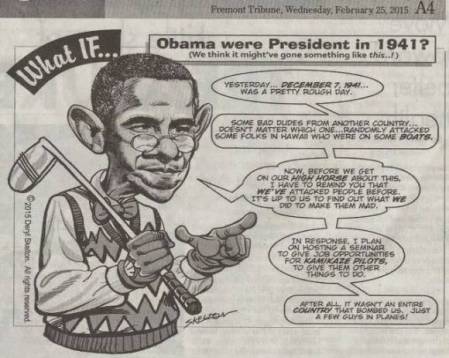

Source: Ya’alon: US is ceding leadership in Mideast to Russia, Iran | The Times of Israel
America ‘should play a more active role, DM says; IS can only be defeated by ‘boots on the ground,’ but Western troops are ‘last resort’

WASHINGTON — Israel’s Defense Minister Moshe Ya’alon called upon the US to play a more influential role in combatting the Islamic State terror group and in the Middle East in general, and warned of increased Russian and Iranian influence in the region, during a Friday evening address at the Brooking Institution’s Saban Forum.
Speaking before an audience that included former peace negotiators Martin Indyk, Dennis Ross and David Makovsky, as well as a number of members of Congress, Ya’alon described the security ties between the US and Israel as “superb,” even stressing US President Barack Obama’s efforts to speed up the renewal of a key defense agreement between Jerusalem and Washington.
Ya’alon, who has occasionally touched nerves in Washington with his strident criticism of Secretary of State John Kerry, trod relatively carefully when asked if Obama was acting correctly in response to IS and the Syrian civil war.
“This is a global challenge [and] I believe the United States should be the leader of the Western world in order to meet this challenge,” Ya’alon said.
Overall in the region at present, he stressed unhappily, “Russia is playing a more significant role than the United States.” Added Ya’alon: “We don’t like the fact that King Abdullah of Jordan is going to Moscow, the Egyptians are going to Moscow, the Saudis are going to Moscow.” He summed up: “The United States should play a more active role in our region.”
He emphasized that it was desirable “to avoid Western boots on the ground on one hand,” but noted that on the other hand “you can’t defeat Daesh [the Arabic acronym for Islamic State] without boots on the ground.”
“You need to empower local boots on the ground,” Ya’alon added, suggesting that the US should do more to support both moderate Sunni groups and Kurdish forces. “Western troops in our region should be the last resort,” he said.
Ya’alon also emphasized the danger of increased Iranian involvement in Syria, noting that “the only terror attacks in the last two years from the Syrian side in the Golan Heights were perpetrated by the IRGC” – the Iranian Revolutionary Guards Corps. The defense minister said that Syrian President Bashar Assad – who has been propped up by Iran for years – doesn’t like the IRGC operations on the Golan border, but is powerless to do or say anything about them.
In the absence of US leadership in the region, Ya’alon warned, Russia was playing a dominant role in the Syrian conflict. Furthermore, he said, Israel is “worried about” the involvement of Iran in the multi-party talks on Syria convened by Kerry in Vienna.
“The Vienna process, which I’m not sure will be successful, provides Iran the opportunity to gain power, to gain hegemony,” Ya’alon suggested.
Describing Syria as an “omelette, even shakshuka [an Israeli dish with poached eggs],” Ya’alon suggested that the “broken eggs” of Syrian society would be near impossible to put back together again. “Syria is going to suffer from chronic instability for a very long time. We can’t see the end to this tragedy.”
Although Ya’alon has quieted his rhetoric against the Iran nuclear deal since it was reached in July, he stressed that “we still consider the deal a historic mistake.”
“What we have achieved is to delay the Iranian nuclear program for 10-15 years,” he said, describing the end date for this period as “around the corner.” In the meantime, he said, it is no coincidence that Jordan and Egypt have both expressed an increased interest in acquiring civilian nuclear know-how from Russia. Another byproduct of the deal, he said, was a conventional arms race in response to increased Iranian capacity to fund militant groups in the region, now that sanctions are being lifted and foreign money once again flowing into the country.
Ya’alon argued that although the recently released International Atomic Energy Agency report demonstrated that Iran had “cheated the West again and again and again,” he now “believes that they are going to comply” with the terms of the agreement.
“Why? Because they need the money for their economy,” he concluded. “Iran is under economic pressure but is still committed to becoming a military nuclear power,” he emphasized.
Ya’alon also touched upon the recent thaw in relations between Washington and Jerusalem in the aftermath of the fight over the nuclear agreement.
“The relationship between our two defense establishments is superb, superb, not less than that,” he gushed. Obama himself, Ya’alon revealed, has directed that a new 10-year memorandum of understanding regarding defense aid be concluded in the next two months. The renewal of the memorandum is a top priority for Israel, and Ya’alon has met repeatedly with his US counterpart Ash Carter, to discuss it.
Turning to the current violence at home, the hawkish minister condemned Palestinian incitement as a root cause of the months-long uptick in violent attacks by Palestinians against Israeli targets.
“We do not want to rule over the Palestinians,” Ya’alon said, but complained that the prospects for peace were limited by poor Palestinian governance. “Since the dawn of Zionism, we have not had a Palestinian leadership that recognizes the right of Israel to exist as a Jewish state,” he said.
Ya’alon advocated a slow, gradual approach toward Palestinian statehood, emphasizing that as defense minister, he would recommend that even in a final arrangement, Israel retain control of the Palestinian state’s “external boundaries.”
“We don’t want to govern them, but we shouldn’t be in a hurry,” he said. “Let’s make progress slowly, slowly.”
Source: The ISIS Wars 2014-2047: The Persian Bomb | Joseph V. Micallef
( This, from the Huffington Post, believe it or not… – JW )
The final dismantling of the economic sanctions against Iran by the United States and the European Union would not be completed until October 2016.
By then, the consensus of intelligence agencies worldwide was that the emergence of a nuclear armed Iran was a forgone conclusion. The only questions left unanswered were: how soon would it happen, would the Tehran government attempt to secretly circumvent the terms of the Joint Comprehensive Plan of Action otherwise known as the P5+1 agreement and what, if anything, either covertly or publically, would the United States and its European allies do in the event the Iranian violations were discovered?
In secret Congressional testimony in March of 2017, Carly Fiorina, the new director of National Intelligence, confirmed that the CIA had concluded that there was a 95% chance that Iran would have useable nuclear weapons by 2025 and that there was a 75% chance they would have such weapons by 2020. Britain’s Secret Intelligence Service, commonly known as MI 6 (Military Intelligence, Section 6) was slightly more optimistic, it had predicted a 90% probability that Iran would possess useable nuclear weapons by 2025 and only a 50% chance they would have such weapons by 2020.
The events leading up to the actual disclosure of Iran’s nuclear weapons arsenal began quietly enough. On June 15, 2020 at 11:30 AM, local time, (18:30 Zulu) a threat analyst at the Joint Air Defense Command at the Cheyenne Mountain Complex, popularly known as Crystal Palace, monitoring the feed from an infrared satellite over the Eastern Mediterranean logged what appeared to be a heat plume about 350 miles southwest of the Indian port of Mumbai just on the edge of the satellite’s coverage track.
Following established protocols he logged the incident and attempted to track a trajectory. He also immediately advised a U.S. Air Force AWACS over the Persian Gulf of what appeared to be a missile launch. The AWACS radar operator confirmed the existence of a heat plume in the eastern Arabian Sea, but was out of range to determine a trajectory. The missile, which appeared to be moving on a south-southeast track, quickly passed out of the satellite’s range and the operator, with only 10 seconds worth of telemetry, was unable to determine the precise trajectory of what appeared to be a relatively slow moving missile. The incident was written up, technically it was a UFO, unidentified flying object, most likely a missile test being carried out by the Indian Navy.
The incident might have been forgotten, one of dozens of such unexplained events that are monitored each year by the Air Defense Command. Two weeks later, the Pentagon’s Office for Naval Liaison, the first contact point between the Pentagon and the foreign Naval Attaches accredited to the United States, received a meeting request from the Indian Naval Attaché. The meeting was brief. Why had the United States conducted a missile test within 500 miles of the Indian coast the Indian attaché demanded? Long standing, though unofficial, agreements between the U.S. Navy and the Indian government required the U.S. to advise India of any test missile launches in its proximity and that no launches should take place within 500 miles of its coast.
The Director of Naval Liaison, a two star admiral, replied that he was unaware of any navy tests in that area but promised to investigate. Three days later he confirmed to the Indian Naval Attaché that no U.S. government agency had conducted any missile tests in that vicinity and that analysts at the Joint Air Defense Command had assumed it was an Indian Navy test. He also asked for a copy of any telemetry that had been captured by the Indians on the missile’s trajectory.
The Indian telemetry data arrived a few days later and was passed on to the Office of Naval Intelligence and to the Director of National Intelligence. The data raised more questions than it answered. Although it clearly confirmed that a missile launch had taken place, the heat signature was too small and the speed was to slow to be an ICBM and the speed was too fast to be a cruise missile. Moreover, the lack of any adjustment in the trajectory also suggested it was not a cruise missile.
Indeed, the relatively low burn time, a little more than a minute, suggested a relatively short range, roughly 400 nautical miles, and was more reminiscent of first generation missile technology like the World War II era V-2 missiles. There are only about a half dozen countries that have mastered the technology to launch missiles from a submarine and all of them had far better missiles than the one identified in the Indian telemetry. Moreover, the missile portrayed in the data would be too inaccurate to use in naval surface warfare and was clearly inferior to the cruise missiles already possessed by the world’s major navies.
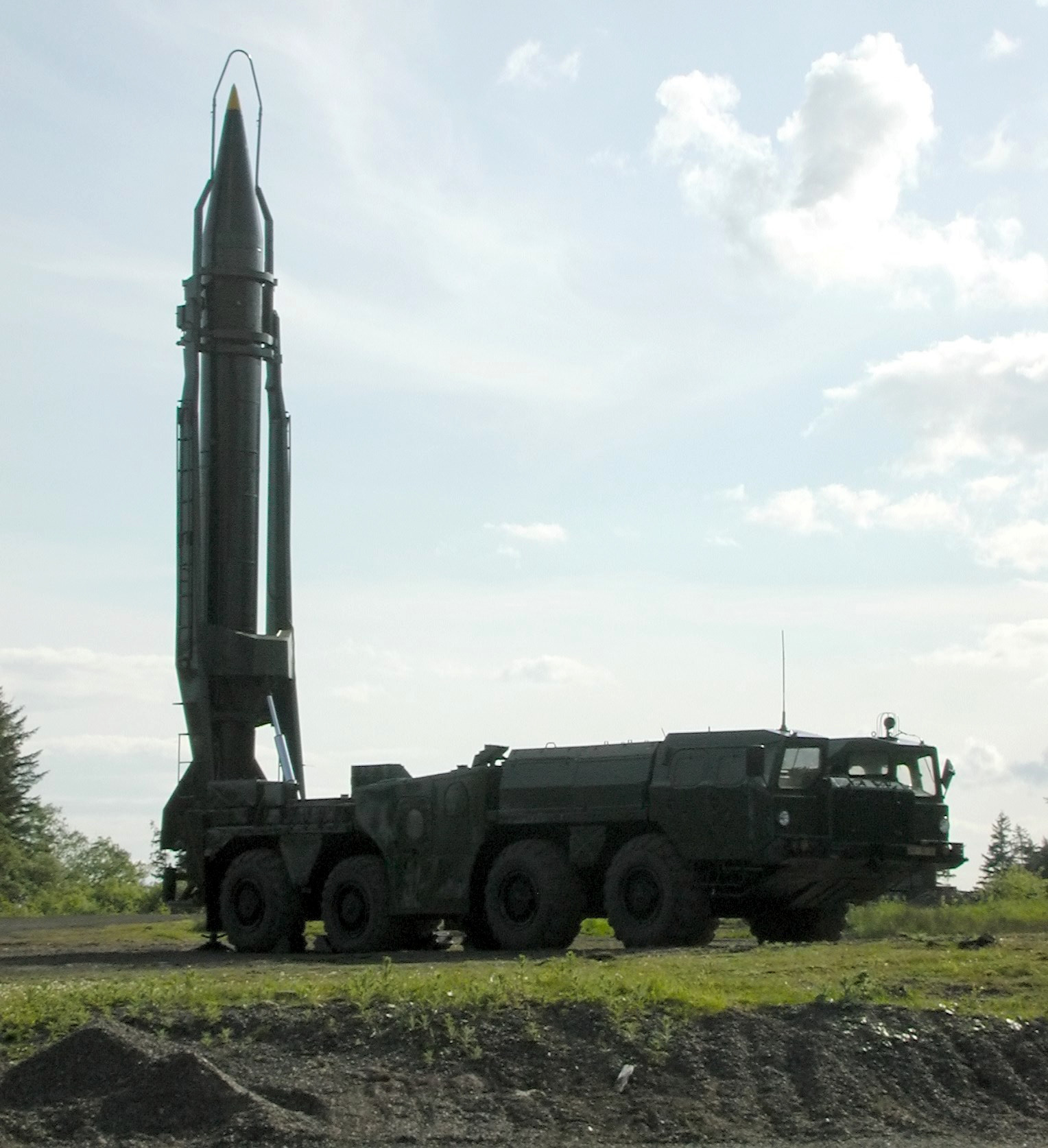
Soviet Scud B mobile missile battery
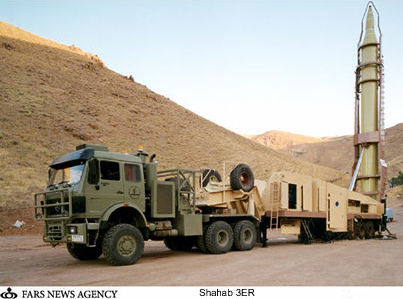
It fell to a junior analyst at the CIA, whose subject matter specialty was Iranian maritime affairs, to finally solve the puzzle. The telemetry data was roughly consistent with a Soviet era R-17 surface-to-surface missile, otherwise known as the Scud B or its longer range version the Scud C. Variants of the Scud B/C had been developed by North Korea as the Hwasong-6 and Iran as the Shahab 2 and Shahab 3. The Soviet Union had produced over 7,000 Scud B missiles and widely exported them. They were commonly available on the black market for around $100,000 each.
The CIA was adamant that there was no evidence that either Iran or North Korea had developed the technology for submarine launched ballistic missiles. Moreover, it was difficult, although not impossible, to launch a Scud B type missile from a submerged submarine. A subsequent analysis of maritime traffic data from the Advanced Identification System (AIS) ship monitoring data base confirmed that the Iranian oil tanker Darius I on a course from the Iranian oil terminal at Kharg island to Mumbai India was in the vicinity of the coordinates identified with the missile launch and had likely been the platform used to stage it.
Launching a Scud type missile from an oil tanker might seem rash, but the tankers large size and displacement afforded a more stable launch platform than that of a smaller cargo ship. The Office of National Intelligence subsequently confirmed that both North Korea and Iran had been conducting such tests since at least 2004.
On February 1, 2021, on the 42nd anniversary of the Iranian revolution, Western intelligence agencies confirmed the detonation of a nuclear warhead in Iran’s desolate Dasht-e Kavir (Great Salt Desert) missile testing range in the center of the Iranian plateau. This device had a relatively low yield, ten kilotons, roughly half of the explosive force of the atomic bomb dropped on Hiroshima in 1945. The initial intelligent assessments had concluded that the nuclear test had been a failure and that the relatively low yield meant that the detonation had been incomplete.
Low yield atomic weapons were nothing new. During the Cold War both the United States and subsequently the Soviet Union had developed so called Theater Nuclear Weapons, primarily in the form of less than 10 kiloton yield atomic artillery shells for use on the battlefield, especially against concentrations of Soviet armor in the event of a Soviet invasion of Western Europe. The technology of miniaturizing a warhead to this size, however, was among the most closely guarded secrets of nuclear weapons technology–hence the surprise among intelligence agencies when subsequent intelligence from within the Iranian government confirmed that Tehran had considered the test successful.
Suddenly alarm bells began to go off in Washington. The combination of even a relatively low yield warhead combined with a ship launched Scud B type missile represented a new and unprecedented threat to American security. Given the ubiquity of the Scud B missile and the low cost with which they or their variants could be purchased or manufactured, Iran could suddenly pose a credible nuclear threat to the continental United States using its nuclear armed, ship launched Shahab 2 missiles. The combination of a ship launched Scud B type missile with a small, low yield warhead combined with the proximity of its launch was effectively a poor man’s ICBM. Moreover, given the large number of Scud Bs in circulation, it would be possible to hide the origins of the missile although in time the isotopic signature of the nuclear explosion could be traced back to a country of origin.
Roughly 75% of the population of the United States and some 80% of the Pentagon’s military facilities are within 200 miles of the American coasts. Given the range of the Scud B and its variants, a ship could approach within 300 miles of the United States, still a comfortable 100 miles outside of U.S. territorial waters, and bring a significant percentage of the U.S.’s population and its military facilities into its strike zone. At a speed of roughly 4,000 miles an hour, the maximum flight time at the extreme end of its range would be about seven minutes.
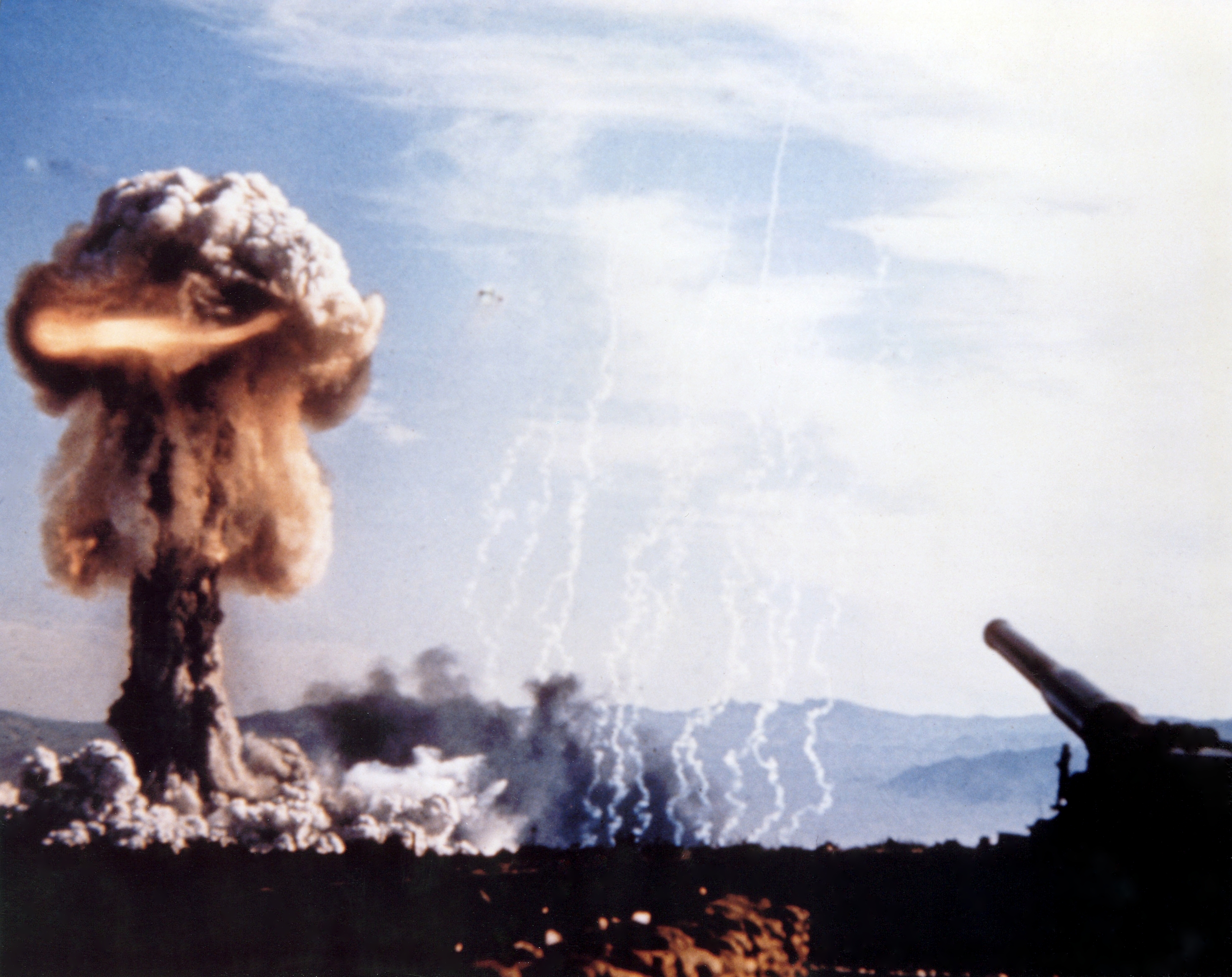
15 kiloton nuclear explosion from an 11 inch nuclear artillery shell, Upshot Knothole GRABLE Test, Nevada Testing Range, 1953
Equally dangerous, the Shahab 2 can reach an altitude of 120 miles. A series of Shahab 2s launched from both coasts armed with an electromagnetic pulse weapon could fry most of the electronic systems in the United States, leaving the country vulnerable to further attacks. Moreover, it was unclear whether existing anti-ballistic missile defenses would prove effective against the smaller Scud B type missiles, especially if they were launched in a swarm against multiple targets.
There were approximately 130,000 commercial ships of 10,000 or more deadweight tons registered with 195 different countries around the world in 2020. In a typical year, there were approximately 70,000 port calls in the United States. Even eliminating smaller vessels, U.S. registered ships and coastal trade ships, still left tens of thousands of ships that would need to be tracked. In addition, foreign ships heading for Caribbean, Mexican, and Canadian ports often sailed within 200 miles of the U.S. coast. All of those ships were potential threats even if they did not ultimately enter U.S. territorial waters. America’s European allies were even more vulnerable to an attack.
On February 7, 2021, for the first time since the end of the Cold War, a U.S. president went on national television to reaffirm that any nuclear attack on the United States or any of its allies would be met by a massive retaliatory nuclear response both against the country launching the attack and against any other country deemed to have played a major role in facilitating that attack. President Marco Rubio, flanked by his Vice President, Ben Carson, went on to add that any foreign ships approaching within 400 miles of the U.S. coast, regardless of whether they were calling on U.S. ports or not, would be subject to inspection and would not be allowed to proceed unless a U.S. Federal marshal was onboard. President Rubio went on to add, “Let me be clear, any ships that resists inspection will immediately be sunk.”
The president went on to add that not since the Cuban missile crisis in 1962 had the U.S. been so vulnerable to a nuclear attack with virtually no warning or so unprepared to stop it. The President went on to describe the catastrophic effects of a ten-kiloton nuclear exposition on a typical American city:
“From the epicenter of the blast to a distance of approximately one-third mile, every structure will be destroyed and no one would be left alive. A second circle of destruction extending three-quarters of a mile from ground zero would leave buildings irreparably damaged. A third circle reaching out one mile would be ravaged by fires and radiation.”
He added,
“depending on the city and the time of day, estimated casualties would run from between 50,000 and 300,000 people with a like amount dying subsequent to the attack from radiation sickness and injuries suffered during the attack.”
Finally the President announced that he would immediately order the construction of a comprehensive theater nuclear defense system designed to protect the borders of the United States, both maritime and terrestrial, from the danger of a short range nuclear attack and that he would ask Congress to approve the 800 billion dollar price tag. He also announced that Aegis armed U.S. Navy ships would immediately be redeployed to act as a missile defense screen until a permanent ground based system could be constructed.
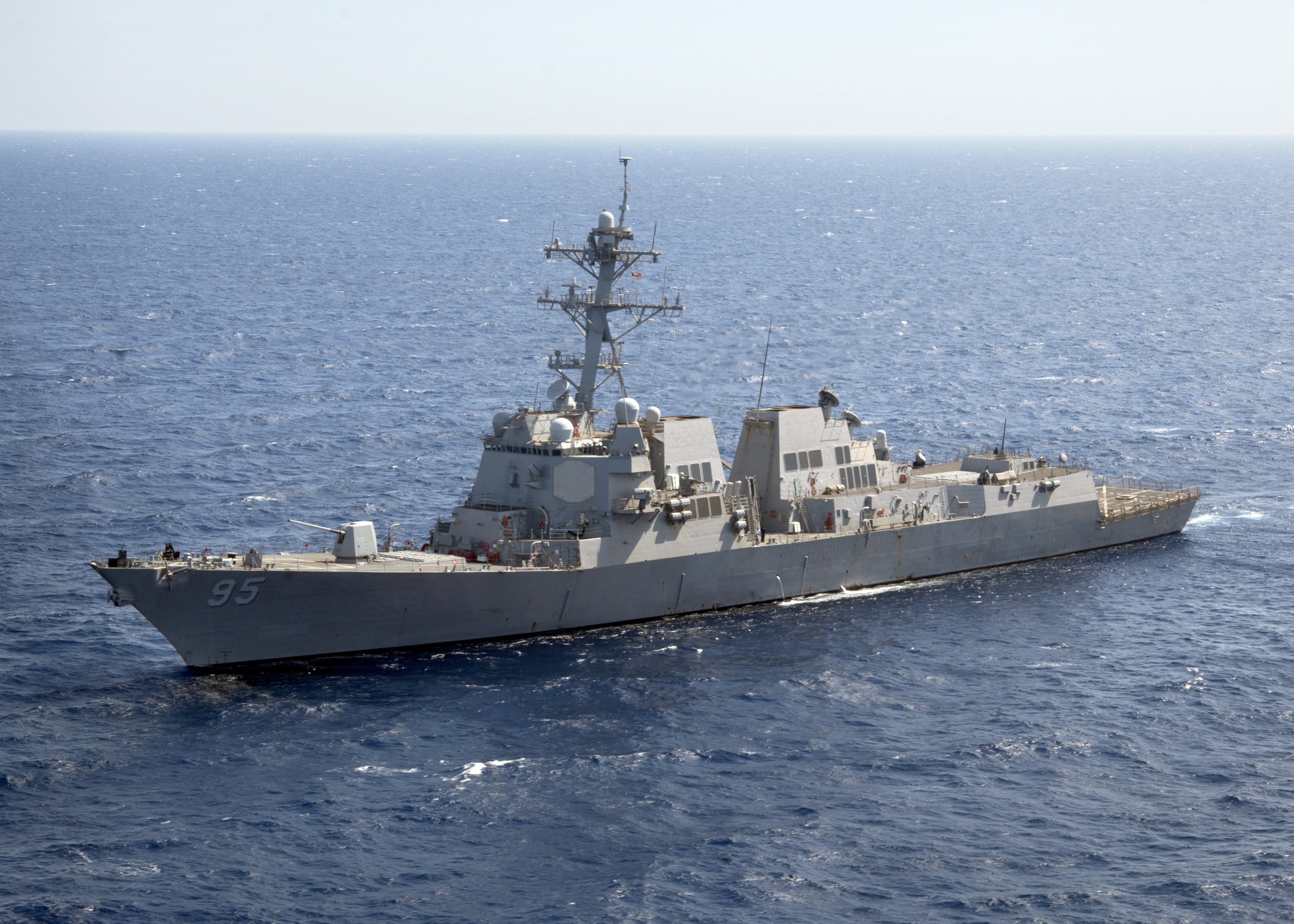
An Arleigh Burke Class, Aegis armed, destroyer
President Rubio also announced that he would ask Congress to fund the creation of a United States Maritime Marshall Service and begin the recruitment and training of up to 5,000 maritime marshals. Until the new marshal service was fully operational, estimated at 18 to 24 months, the U.S. would utilize a combination of U.S. Navy active and reserve officers as well as Coast Guard officers supported by local National Guard units.
A number of countries, most notably Iran and North Korea, immediately announced that inspection of any of their ships while they were in international waters was a violation of maritime law and would be considered an act of war by the United States. Asked to respond, the White House Press Secretary replied, “If that’s what they want, that’s what they’ll get.”
In Tehran, in the meantime, the government of Iran announced that they had already deployed more than five hundred Shahab 2 missiles, an undisclosed portion of which were nuclear armed, on a variety of vessels throughout the world’s oceans. Iranian President Solemani pledged that the deployment was for deterrence purposes only and that it would only use the weapons in the event it was attacked.
He went on to add that his government planned to produce up to 1,000 Shahab 2 nuclear armed missiles over the next ten years at a cost of approximately 20 billion dollars. “We have the money, we have the will and we have the technology” he said, emphasizing again that Iran’s nuclear program “was for defensive purposes only,” and that neither Iran’s neighbors or the world community had anything to fear from Iran’s nuclear capabilities. Tehran also demanded that as a de facto nuclear superpower it should be granted a permanent seat and veto power on the U.N. Security Council.
In Washington, in the meantime, both the Senate and House announced that their respective Committees on Homeland Security would hold emergency hearings to investigate the imminent threat to American security. Senator Rand Paul, Chairman of the Senate Committee of Homeland Security, described this development as “the biggest intelligence failure since 9/11,” “adding the potential threat and casualties were 50 to 100 times greater than the attack on 9/11.”

U.S. Patriot Missile battery
Intelligence agencies in the meantime rushed to develop new “contingency scenarios” for how Iran might use its new found nuclear capabilities. Speaking off the record because he had not been authorized to speak to the press, a senior analyst at the Defense Intelligence Agency remarked,
“we’ve believed for a long time that an Iranian nuclear weapon was inevitable, but we always assumed that it would be used to intimidate Tehran’s neighbors or against American military assets in the Gulf. We just never imagined that it would be deployed directly against the continental United States or that it could be scaled up so quickly.This is pretty cheap technology,” he added, “and to add insult to injury by lifting the sanctions and releasing over 100 billion dollars in frozen financial assets we effectively financed the biggest threat to American security since the Cuban missile crisis.” “This is a whole new ball game,” he added, “the world will never be the same.”
Fact Check
U.S. intelligence agencies has repeatedly confirmed that both Iran and North Korea have been experimenting with ship launches of the Shahab2 and Hwasong 6, their more advanced versions of the Soviet era Scud-B missile since at least 2004.
75% of the U.S. population and 80% of the Pentagon’s military facilities are actually within 200 miles of America’s coasts.
The Soviet Union did in fact produce more than 7,000 Scud B missiles and exported the missile to more than 32 countries. It has also supplied four countries, including Iran and North Korea, with the technology to build their own versions. In total, including both the quantity produced and exported by the Soviet Union and local versions, there are probably around 10,000 Scud B type missiles and subsequent variants in the world today. This is relatively simple technology to obtain and the going price for a Scud B type missile in the world’s arms market is in fact approximately $100,000. Delivery, often the trickiest part, is extra.
According to the Federation of American Scientists, as of 2006, Iran had stockpiled between 200 and 450 Shahab 2 or comparable missiles. The amount of the current stockpile is unknown, but it is believed to be significantly larger.
The technology for miniaturizing a low yield nuclear warhead so it could fit on a Scud B type missile is among the most closely guarded secrets of nuclear technology. There have been consistent, although at least publically, unconfirmed reports that North Korea has made significant progress in miniaturizing a nuclear warhead. It is also safe to conclude that any North Korean nuclear technology is available, at the right price, to Iran.
The Scud B is a notoriously unreliable missile. Its lack of a reliable guidance system makes it virtually useless as a battle field weapon. It is largely a terror weapon, as was amply demonstrated by Saddam Hussein’s use of them against Israel during the First Gulf War. Armed with even a low yield nuclear war head makes it a potent weapon of terror regardless of how unreliable its guidance system would be.
As a result of the dismantling of economic sanctions, the government of Iran will obtain access to between 100 billion dollars and 150 billion dollars in previously frozen financial assets. The Obama administration has already released approximately ten billion dollars in financial assets to Tehran despite the fact that a majority of Americans, including a majority of their elected representatives were opposed to the P5+1 agreement.
National Security Presidential Directive 23 issued by President George Bush on December 16, 2002 called for the creation of an operational ballistic missile defense system for the United States by 2004. To date, however, little progress has been made in implementing such a system. In any case, that system was designed to intercept ICBMs and even if fully implemented would not offer a credible defense to a short range nuclear missile attack like the one described above.
Faced with the threat of short range, nuclear armed missiles the United States could probably cobble together a rudimentary defense relying on a combination of land based Patriot missiles and Aegis missile armed ships to at least offer some protection for the largest coastal cities. With a U.S. Navy now reduced to 300 ships, of which only 29 carry the Aegis Ballistic Missile Defense system, the U.S. would find it impossible to provide a broader perimeter defense.
In fact, the U.S. is unprepared to defend against large numbers of short range ballistic missiles launched from a distance of only a few hundred miles from the American coasts especially if those missiles were “swarmed” and included a mix of both nuclear armed and conventional warheads. Such an attack would likely overwhelm whatever defensive system the U.S. could organize on short notice.
The U.S. response to such a threat would probably force the withdrawal of a significant portion of the U.S. Navy’s ships from their current deployments and their re-tasking to a defensive role off the coasts of the United States. Even absent an actual attack, the threat of one would significantly constrain the ability of the United States to project military power abroad.
The description of the effects of the detonation of a ten kiloton warhead are taken from the latest estimates published by the Department of Homeland Security.
The plot line is purely fictional, the technology described, its capabilities, and the consequences of its deployment are all very real.
by Burak Bekdil
December 5, 2015 at 5:00 am
Source: Russia Devouring the Eastern Mediterranean?
At this year’s G-20 summit in Antalya, Turkey, Russian President, Vladimir Putin, said that the radical jihadist Islamic State (IS) was being financed by donors from at least 40 countries, including some G-20 member states — clearly pointing his finger, without naming names, at Saudi Arabia and Turkey. A few days later, two Turkish F-16 jets shot down a Russian SU-24 warplane, and claimed that the Russian jet had violated Turkish airspace for 17 seconds on the country’s Syrian border — a violation Russia denies. This was the first time a Soviet or Russian military aircraft was shot down by a NATO air force since the end of WWII.
Turkey and Russia have long been in a proxy war in Syria: Russia, together with its quieter partner, China, supports the Shi’ite Iran-backed Syrian regime of President Bashar al-Assad; and Turkey explicitly supports Assad’s Sunni opponents [“moderate” jihadists] — apparently in the hope of building a Muslim Brotherhood/Hamas-type of regime in Damascus that would be friendly to its own Islamist government. After the downing of the Russian jet, the Turco-Russian proxy war has become less proxy.
 No more Mr. Nice Guy. No more Mr. Nice Guy.Russian President Vladimir Putin twice refused to meet with Turkish President Recep Tayyip Erdogan on the sidelines of the Paris Climate Summit this week. Pictured: President Putin with then Prime Minister Erdogan, meeting in Istanbul on December 3, 2012. (Image source:kremlin.ru) |
An angry Putin called the incident “a stab in the back.” He declined Turkish President Recep Tayyip Erdogan’s requests to discuss the issue. He twice refused to meet Erdogan on the sidelines of the Paris Climate Summit.
Russia’s foreign minister, Sergei Lavrov, quickly cancelled his official visit to Turkey — a visit that had been scheduled for the day after the downing of the Russian jet. At the outset, NATO member Turkey had taught Russia a good lesson. In reality, judging from the consequences, it all looks like a Russian gambit, with Turkey shooting itself in the foot and risking a new NATO-Russia conflict.
Russia’s ire seemingly is being expressed in economic terms:
All of that is commercially punitive. There is a more serious side of the Turco-Russian conflict that concerns NATO and western interests in the Middle East.
Russian Defense Minister Sergei Shoigu announced on Nov. 25 that Russia would deploy S-400 surface-to-air missile systems in its Hmeymim air base in Syria.
Turkey shot down a Russian jet. No gain, but plenty of damage to its economy. Russia gave up one jet and has made its military presence in Syria and the strategic eastern Mediterranean permanent. It has reinforced its bases in Syria and intends to build a new military base there. Turkey can no longer speak to Russia about the possibility of ousting Assad.
In a further move to escalate tensions, the Russian General Staff deployed one of its largest air defense ships at the edge of Turkish territorial waters in the Mediterranean. Russian military spokesman General Sergei Rudskoi said that Russian bomber aircraft would be “supported by chasers, and any kinds of threats will be responded to instantly.” Accordingly, The Moscow, one of the Russian Navy’s two largest warships and the flagship of Russia’s Black Sea Fleet, will be deployed where Turkey-Syria territorial waters connect.
In addition, Putin issued orders to deploy nearly 7,000 troops, plus anti-aircraft missiles, rocket launchers, and artillery to the Turkish border, and asked them to be in readiness for full combat.
There have been other military repercussions, too. Since the shooting down of the Russian jet, the Russian military has been regularly pounding the Syrian villages near the Turkish border that populated by the Turkmen, a Turkish ethnicity that supports jihadists in Syria — and is supported by Ankara. The Russians also have been hitting Turkish aid convoys bound for Turkmen villages. More than 500 Turks and Turkmen have been killed in Russian airstrikes. Meanwhile, the U.S.-led allied air strikes against IS have come to a halt. Neither Washington nor Ankara is keen for another conflict with Russia. So, IS and Russia keep on flourishing.
The Russian military has scrapped all contacts with the Turkish military, possibly waiting for the first Turkish military aircraft that violates foreign airspace to shoot.
Turkey has every liberty to challenge Russia and, inevitably, become the victim. But with its geostrategic, Islamist ambitions, it is exposing NATO allies to the risk of a fresh conflict with Russia — and at a time when the wounds of previous conflicts remain unhealed.
Putin has accused Turkey’s leaders of encouraging the Islamization of the Turkish society, which he said was a “problem.” He was not wrong. In fact, Islamism and neo-Ottoman ambitions are the source of Turkey’s (not-so) proxy war with Russia in the Syrian theater. Although Turkey, officially, is a NATO member and part of the allied campaign against IS, its Sunni Islamist ambitions over Syria hinder the global fight against jihadists. A Turco-Russian conflict is weakening the fight.
Putin seems to be making sure that NATO will do nothing.
Burak Bekdil, based in Ankara, is a Turkish columnist for the Hürriyet Daily and a Fellow at the Middle East Forum.
Published time: 4 Dec, 2015 20:12 Edited time: 5 Dec, 2015 02:34
Source: ‘Incursion’: Baghdad demands Turkey withdraw ‘training’ troops from northern Iraq — RT News

READ MORE: Kurds & US Special Forces should be used to seal Turkish-Syrian border – Russian FM
The Iraqi foreign ministry said in a statement early on Saturday that the Turkish troops were acting in violation of the country’s sovereignty and demanded the forces withdraw immediately. “Around one regiment armoured with tanks and artillery” has entered the northern Nineveh area, according to the statement from the Iraqi Prime Minister’s media office.
The Iraqi authorities call on Turkey to respect good neighbourly relations and to withdraw immediately from the Iraqi territory,” the statement said, stressing that the Turkish troops entered “without the request or authorization from the Iraqi federal authorities,” which is a “serious breach of Iraqi sovereignty.”
The foreign ministry called Turkey’s move “an incursion,” Reuters reported.
READ MORE: ‘Everyone knows what’s going on’: Istanbul residents on Turkey-ISIS oil trade
According to the agency’s source, the US-led anti-Islamic State coalition was aware of the Turkey’s move.
“Turkish soldiers have reached the Mosul Bashiqa region. They are there as part of routine training exercises. One battalion has crossed into the region,” the source told Reuters without revealing the exact number of troops.
He added that the Turkish forces are “training Iraqi troops.”
However, according to two US defense officials quoted by Reuters, Turkey’s deployment is not part of the efforts of the US-led coalition battling Islamic State (IS, formerly ISIS/ISIL).
On Friday, 130 Turkish soldiers equipped with heavy weapons were deployed at a military base on the outskirts of the city of Mosul, which is currently held by IS, according to the Daily Sabah newspaper.
READ MORE: Turkey skeptical about US proposal to close border ‘under ISIS control’
According to Cumhuriyet newspaper, the number of the deployed Turkish troops amounts to at least 150.
The town of Bashiqa is located about 10 kilometers northeast of Mosul.

“In the collapse of Mosul, we lost a lot of weapons,” Prime Minister Haider al-Abadi said in an interview with Iraqiya state TV in June. “We lost 2,300 Humvees in Mosul alone,” he added.
READ MORE: Mosul blame game: Iraqi ex-PM Maliki accused in fall of key city to ISIS
The Turkish intrusion into Iraq comes shortly after Ankara’s motives in the war on Islamic State have been questioned by Moscow, Tehran, as well as by Baghdad.
The Russian government has been particularly vocal in pointing the finger at the illegal oil trade between IS terrorists and the Turks. Moscow-Ankara relations deteriorated after a Turkish F-16 jet downed a Russian Su-24 bomber on the Syrian-Turkish border for an alleged airspace violation on November 24, while the Russian jet was returning from an anti-terrorist mission. In the days after, the Russian Defense Ministry presented detailed photo and video evidence showing three huge “live pipelines” made of oil trucks effortlessly crossing the Syrian border into Turkey in militant-controlled areas.
Russian President Vladimir Putin described Turkey’s move as “a stab in the back by accomplices of the terrorists,” while the Defense Ministry directly tied the illegal Syrian and Iraqi oil trade – a chief lifeline for IS terrorists – to the family of Turkish President Recep Tayyip Erdogan.
READ MORE: Russia says Turkey’s Erdogan & family involved in illegal ISIS oil trade
Erdogan has dismissed the accusations as “slander” and continued to defiantly present the downing of a non-hostile jet as a rightful move aimed at defending the Turkish border. The surviving Russian pilot has insisted the crew was in full control of the course of the flight and had never entered Turkey, while adding they had never received any visual or radio warning from the F-16. One Russian pilot, the commander of the jet, was killed by Turkmen rebel fire while parachuting from the plane, and one Russian Marine was killed during the search and recovery operation.
Meanwhile, as the US has stepped in for Turkey, supporting its refutation of Russia’s IS oil claims, other powers have come forward to back Moscow’s charges concerning Ankara’s trade with the terrorists. On Friday, Tehran said that it has collected photo and video evidence of IS oil entering Turkey by truck.
READ MORE: ‘Great partners’: Pentagon rejects Russian evidence of Turkey aiding ISIS
“If the government of Turkey is not informed of Daesh [derogatory term for IS] oil trade in the country, we are ready to put the information at its disposal,” Iran’s official Islamic Republic News Agency (IRNA) quoted Expediency Council Secretary, Mohsen Rezaie, as saying. The official added that they are also ready to present the proof to the public.
While officially Baghdad is now considering whether there is enough evidence of Turkey’s involvement in oil trade with IS to file a formal protest at the UN Security Council, an Iraqi Defense Ministry spokesman, Naseer Nuri, told Sputnik on Wednesday that “general information about the smuggling of Iraqi oil by trucks to certain countries, including Turkey” is already available to them, and “this oil is used to fund Daesh.”
Other Iraqi officials have openly accused Turkey of knowingly trading with the terrorists.
There is “no shadow of a doubt” that Ankara knows about the oil smuggling operations, Iraqi MP and former national security adviser Mowaffak al Rubaie told RT.
“The merchants, the businessmen [are buying oil] in the black market in Turkey under the noses – under the auspices if you like – of the Turkish intelligence agency and the Turkish security apparatus… There are security officers who are sympathizing with ISIS in Turkey. They are allowing them to go from Istanbul to the borders and infiltrate … Syria and Iraq,” he said.
“Money and dollars generated by selling Iraqi and Syrian oil on the Turkish black market is like the oxygen supply to ISIS and it’s operation,” Rubaie added. “Once you cut the oxygen then ISIS will suffocate.”
READ MORE: ‘Oxygen for jihadists’: ISIS-smuggled oil flows through Turkey to intl markets – Iraqi MP
US intelligence missed the first ISIS terror attack in the United States, DEBKAfile, December 4, 2015, 11:36 PM, IDT.
(For interesting speculation on what the FBI is trying to accomplish now, please see this article. — DM)

Step by step, US federal agencies are being forced to admit that Wednesday, Dec. 2, Syed Rizwan Farook and Tashfeen Malik perpetrated the first Islamic State terror attack in America. They shot 14 people dead and injured 21 at the San Bernardino social center in California, before dying themselves in a shootout with the police.
Straight after the attack, on Dec. 3, when the two shooters were still unidentified and on the run, DEBKAfile’s counterterrorism sources inferred from the comment by an anonymous federal officer that “one of the shooters is an American citizen whose identity is known” that US intelligence had been onto Farook.
Another comment made at the time – “Links to international terrorism are still on the table as the assailants could have been encouraged by a foreign terror group,” also betrayed official knowledge of the suspects’ background and motives.
However, it was only on Friday, Dec. 4, that a number of “revelations” came spilling out.
David Bowdich, Assistant Director of the FBI Los Angeles field office, confirmed for the first time that the bureau was investigating the San Bernardino attack as an “act of terrorism.”
Tashfeen Malik using an alias was also found to have pledged loyalty to ISIS leader Abu Bakr Al-Baghdadi on Facebook.
It was not disclosed how she came to be identified by the investigators.
DEBKAfile’s intelligence sources report that the use of a false name for messages on the social media may fool the regular user, but not intelligence and anti-terrorist agencies, which are able to uncover a real identity in no time.
Phone calls from a blocked number are traced with equal ease. The couple was reported to have tried to destroy the phones and hard drives of their computers, indicating they knew that they were “blown.”
The “revelation” by the FBI of Malik’s pledge to the ISIS leader by Facebook was in fact a bit of misdirection to conceal the fact that her husband and partner Farook had been on the radar of US anti-terror agencies before their murderous rampage at San Bernadino, and not just after the fact through his “soft connections.”
Another comment by an FBI official was also indicative.
He said: “investigators are exploring Farook’s communications with at least one person who was being investigated for possible terror connections… Some were by phone, some on social media.”
How and when were those communications discovered? And who is this person? The only answer given to those questions from reporters was that this individual is in America.
It stands to reason that the reference is to a secret terrorist cell operating in America whose leader was most likely Farouk’s controller. His communications would have marked him for inclusion on the list of Americans with known terrorist contacts – not just the wider circle of suspects, but the short list of activists placed under 24/7 watch as a preventive measure.
The most suggestive comment by the FBI official Friday night was this: “Farouk’s last communications with the contacts was months ago.”
This comment may be interpreted in three ways:
1. The intelligence watch over his movements was discontinued during the months that the shooter was not in communication with his “terrorist contact.”
2. Farouk and Malik used those months of freedom from surveillance to amass a war arsenal of guns, rifles, tens of thousands of rounds of ammo, at least 15 pipe bombs and materials for building additional devices including road bombs.
3. This was not discovered because it did not occur to the counter-terror agencies that Farouk and his presumed controller had decided to break of contact in the months leading up to the attack in order in to lower Farouk’s profile and catch the surveillance off guard.




 anneinpt
 artaxes
 danmillerinpanama
 davidking1530
 Peter Hofman
 Joseph Wouk
 Peter
Peter Louisiana Steve
 WarSclerotic
Recent Comments