Archive for November 19, 2015

USA Delivers 19,000 Bombs to Wahabist Saudis Supporting ISIS

November 19, 2015

USA Delivers 19,000 Bombs to Wahabist Saudis Supporting ISIS Could it be any more clear who is on the right side, and who is on the wrong side of this conflict?

(German Economic News) 1 hour ago

Source: USA Delivers 19,000 Bombs to Wahabist Saudis Supporting ISIS

Dealing death

Originally appeared at German Economic News. Translated by Susan Neumann.

The Islamist theocracy Saudi Arabia is getting heavy ammunition equaling billions of dollars from the United States. It remains to be seen whether this economic booster shot for the U.S. defense industry will lead to consequences in Syria. The Saudis are fighting covertly against the Russians.

The U.S. government has approved a multibillion dollar arms deal with Saudi Arabia. In order to strengthen its air force, the Islamist monarchy wants to purchase more than 19,000 bombs, which would total up to 1.29 billion dollars (1.19 billion euros).  This was confirmed by the State Department in Washington on Monday. Although the final word from the U.S. Congress is still pending, it’s likely that the approval will go through.

Saudi Arabia is one of the United States’ key allies in the Middle East. The agreement on Iran’s nuclear program has caused tension in the relationship. Saudi Arabia is engaged in a power struggle with Tehran for control in the Gulf. The Saudi Arabian air force is launching air attacks in Yemen, whose government is not accepted by the Saudis. These attacks are recognized by the international community as unlawful.

The Saudis play a special role in Syria. They sit at the table at the Syrian peace talks in Vienna, when in fact, it is they who support the terrorists who are in a fight against the Russians. It’s unclear whether the Saudis are acting on behalf of the Americans. In any case, it can’t be ruled out that those U.S.-provided bombs will eventually be used in Syria, too.

In Saudi Arabia, human rights apply only in the context of a religious fundamentalist theocracy. Up to this point, protests out of the EU and the U.S. have been only scarcely perceived.

The arms shipment includes some 12,000 bombs with a combat weight of 500 to 2000 pounds, 1500 bunker-busting bombs, and more than 6,000 laser-guided precision bombs. According to Washington data, bomb arsenal from the Saudi Arabian armed forces will be heavily taxed by “the high level of deployment in several anti-terrorist operations”. Saudi Arabia participates in the U.S.-led air strikes against the Islamic State jihadi militia in Syria.

Qatar and Saudi Arabia ‘have ignited time bomb by funding global spread of radical Islam

November 19, 2015

Qatar and Saudi Arabia ‘have ignited time bomb by funding global spread of radical Islam’ General Jonathan Shaw, Britain’s former Assistant Chief of the Defence Staff, says Qatar and Saudi Arabia responsible for spread of radical Islam

10:23PM BST 04 Oct 2014

Source: Qatar and Saudi Arabia ‘have ignited time bomb by funding global spread of radical Islam’ – Telegraph

Read also : Turkey’s Erdoğan urges united Muslim front against terror

https://warsclerotic.wordpress.com/2015/11/19/turkeys-erdogan-urges-united-muslim-front-against-terror/

Gen Jonathan Shaw is a former commander of British forces in Basra

General Shaw told The Telegraph that Qatar and Saudi Arabia were primarily responsible for the rise of Wahhabi Salafism, the extremist Islam that inspires Isil terrorists Photo: EPA

Qatar and Saudi Arabia have ignited a “time bomb” by funding the global spread of radical Islam, according to a former commander of British forces in Iraq.

General Jonathan Shaw, who retired as Assistant Chief of the Defence Staff in 2012, told The Telegraph that Qatar and Saudi Arabia were primarily responsible for the rise of the extremist Islam that inspires Isil terrorists.

The two Gulf states have spent billions of dollars on promoting a militant and proselytising interpretation of their faith derived from Abdul Wahhab, an eighteenth century scholar, and based on the Salaf, or the original followers of the Prophet.

But the rulers of both countries are now more threatened by their creation than Britain or America, argued Gen Shaw. The Islamic State of Iraq and the Levant (Isil) has vowed to topple the Qatari and Saudi regimes, viewing both as corrupt outposts of decadence and sin.

So Qatar and Saudi Arabia have every reason to lead an ideological struggle against Isil, said Gen Shaw. On its own, he added, the West’s military offensive against the terrorist movement was likely to prove “futile”.

“This is a time bomb that, under the guise of education, Wahhabi Salafism is igniting under the world really. And it is funded by Saudi and Qatari money and that must stop,” said Gen Shaw. “And the question then is ‘does bombing people over there really tackle that?’ I don’t think so. I’d far rather see a much stronger handle on the ideological battle rather than the physical battle.”

Gen Shaw, 57, retired from the Army after a 31-year career that saw him lead a platoon of paratroopers in the Battle of Mount Longdon, the bloodiest clash of the Falklands War, and oversee Britain’s withdrawal from Basra in southern Iraq. As Assistant Chief of the Defence Staff, he specialised in counter-terrorism and security policy.

All this has made him acutely aware of the limitations of what force can achieve. He believes that Isil can only be defeated by political and ideological means. Western air strikes in Iraq and Syria will, in his view, achieve nothing except temporary tactical success.

When it comes to waging that ideological struggle, Qatar and Saudi Arabia are pivotal. “The root problem is that those two countries are the only two countries in the world where Wahhabi Salafism is the state religion – and Isil is a violent expression of Wahabist Salafism,” said Gen Shaw.

“The primary threat of Isil is not to us in the West: it’s to Saudi Arabia and also to the other Gulf states.”

Both Qatar and Saudi Arabia are playing small parts in the air campaign against Isil, contributing two and four jet fighters respectively. But Gen Shaw said they “should be in the forefront” and, above all, leading an ideological counter-revolution against Isil.

The British and American air campaign would not “stop the support of people in Qatar and Saudi Arabia for this kind of activity,” added Gen Shaw. “It’s missing the point. It might, if it works, solve the immediate tactical problem. It’s not addressing the fundamental problem of Wahhabi Salafism as a culture and a creed, which has got out of control and is still the ideological basis of Isil – and which will continue to exist even if we stop their advance in Iraq.”

Gen Shaw said the Government’s approach towards Isil was fundamentally mistaken. “People are still treating this as a military problem, which is in my view to misconceive the problem,” he added. “My systemic worry is that we’re repeating the mistakes that we made in Afghanistan and Iraq: putting the military far too up front and centre in our response to the threat without addressing the fundamental political question and the causes. The danger is that yet again we’re taking a symptomatic treatment not a causal one.”

Gen Shaw said that Isil’s main focus was on toppling the established regimes of the Middle East, not striking Western targets. He questioned whether Isil’s murder of two British and two American hostages was sufficient justification for the campaign.

“Isil made their big incursion into Iraq in June. The West did nothing, despite thousands of people being killed,” said Gen Shaw. “What’s changed in the last month? Beheadings on TV of Westerners. And that has led us to suddenly change our policy and suddenly launch air attacks.”

He believes that Isil might have murdered the hostages in order to provoke a military response from America and Britain which could then be portrayed as a Christian assault on Islam. “What possible advantage is there to Isil of bringing us into this campaign?” asked Gen Shaw. “Answer: to unite the Muslim world against the Christian world. We played into their hands. We’ve done what they wanted us to do.”

However, Gen Shaw’s analysis is open to question. Even if they had the will, the rulers of Saudi Arabia and Qatar may be incapable of leading an ideological struggle against Isil. King Abdullah of Saudi Arabia is 91 and only sporadically active. His chosen successor, Crown Prince Salman, is 78 and already believed to be declining into senility. The kingdom’s ossified leadership is likely to be paralysed for the foreseeable future.

Meanwhile in Qatar, the new Emir, Tamim bin Hamad al-Thani, is only 34 in a region that respects age. Whether this Harrow and Sandhurst-educated ruler has the personal authority to lead an ideological counter-revolution within Islam is doubtful.

Given that Saudi Arabia and Qatar almost certainly cannot do what Gen Shaw believes to be necessary, the West may have no option except to take military action against Isil with the aim of reducing, if not eliminating, the terrorist threat.

“I just have a horrible feeling that we’re making things worse. We’re entering into this in a way we just don’t understand,” said Gen Shaw. “I’m against the principle of us attacking without a clear political plan.”

Turkey’s Erdoğan urges united Muslim front against terror

November 19, 2015

Turkey’s Erdoğan urges united Muslim front against terror

ISTANBUL – Agence France-Presse

Source: Turkey’s Erdoğan urges united Muslim front against terror – POLITICS

He still dreams of a new ottoman empire !

DHA photo

DHA photo

Turkish President Recep Tayyip Erdoğan on Nov. 19 called for a united front by Muslim leaders to fight extremism after the Paris attacks, warning that otherwise jihadists will commit further atrocities.

Erdoğan warned that “calamities will happen again” if the rise of radical Islam is not halted in Europe, after the Paris attacks on Nov. 13 claimed by the Islamic State of Iraq and the Levant (ISIL) group which killed 129 people and suicide bombings in Ankara that left 103 dead in Oct. 10.

“We are at a crossroads in the fight against terrorism after the Paris attacks,” Erdoğan told a meeting of the Atlantic Council think-tank in Istanbul.

“I strongly condemn the terrorists, who believe in the same religion as me, and I am calling on all leaders of Muslim countries to put up a united front,” he said.

“If not, those who knocked on our door in Ankara, will knock on your door elsewhere, as they did in Paris.”
Erdoğan, a pious Muslim whose Justice and Development Party (AKP) spearheaded the rise of political Islam in Turkey, has long angrily dismissed suggestions that Ankara colluded with ISIL in the Syrian civil war.

Turkey has supported rebel groups throughout the over four years of conflict in Syria in the hope they can help oust President Bashar al-Assad from power.

But Erdoğan lashed out at any notion “that all Muslims are terrorists,” saying: “Bad people can be Muslims as well as Christians and Jews.”

“Those who demonise Islam by  looking at Daesh are making a big mistake,” he said, using the Arabic acronym for ISIL.

“Daesh has nothing to do with Islam.”

With momentum building after the Paris attacks in the long-stalled bid of the world powers to find a solution for Syria, Erdoğan made clear Turkey would not budge from its insistence that Assad must leave power.

He accused Assad of supporting ISIL — which is ostensibly fighting the Damascus regime — and buying oil from the group.

“You would be blind not see it.”

“The chief reason for the humanitarian crisis and the rise of terrorism in the region today is Assad… Assad is waging state terrorism,” said Erdoğan.

International efforts to find common ground on Syria have so far been thwarted by disputes with Russia, which has long insisted the Syrian people alone should decide the fate of Assad, a Kremlin ally.

Turkey, however, has argued there can be no solution in Syria unless Assad leaves power.

November/19/2015

President Erdoğan still pursuing no-fly zone in northern Syria

November 19, 2015

President Erdoğan still pursuing no-fly zone in northern Syria

ANKARA

Source: President Erdoğan still pursuing no-fly zone in northern Syria – MIDEAST

A U.S. Air Force F-15E Strike Eagle from the 48th Fighter Wing lands at Incirlik Air Base, Turkey, November 12, 2015. REUTERS Photo

A U.S. Air Force F-15E Strike Eagle from the 48th Fighter Wing lands at Incirlik Air Base, Turkey, November 12, 2015. REUTERS Photo

President Recep Tayyip Erdoğan has again voiced his desire to create a no-fly zone and establish a train-and-equip program for Syrian rebels while floating the idea of building settlements for Syrian refugees in line with their “national architectural style.”

“A no-fly zone, terror-free zone and train-and-equip [program] – steps are needed on these issues. Now our relevant departments are carrying out work. Timing is another issue, but the process is under control. This step will be taken, some areas have especially been earmarked,” Erdoğan said in an interview aired on ATV and A Haber channels late on Nov. 18.

New housing that is in harmony with local architecture should be built in the area where Syrian refugees are located, the president said.

A no-fly zone will protect them, while Syrian opposition forces will have the power to conduct a ground operation in the prospective area, he said.

The Islamic State of Iraq and the Levant (ISIL) poses a threat to Turkey, Erdoğan also said in reply to U.S. Secretary of State John Kerry, who suggested an operation with Turkey against the jihadist group.

“We’ll take a step with coalition forces,” he said.

Turkey has long pushed for a safe zone to protect civilians from Syrian airstrikes, but the administration of U.S. President Barack Obama has repeatedly rejected the idea as too difficult to implement.

November/19/2015

Attkisson: Obama won’t read intelligence on groups he doesn’t consider terrorists

November 19, 2015

Attkisson: Obama won’t read intelligence on groups he doesn’t consider terrorists, BreitbartPam Key, November 18, 2015

Wednesday on Newsmax TV’s “The Steve Malzberg Show,” veteran journalist Sharyl Attkisson said her sources have told her that President Barack Obama does not want and will not read intelligence reports on groups “he does not consider terrorists,” despite being on a U.S. list of designated terrorists.

Attkisson said, “I have talked to people who have worked in the Obama administration who firmly believe he has made up his mind. I would say closed his mind, they say, to their intelligence that they’ve tried to bring him about various groups that he does not consider terrorists, even if they are on the U.S. list of designated terrorists. He has his own ideas, and there are those who’ve known him a long time who say this dates back to law school. He does not necessarily—you may think it’s a good trait you may think it’s a bad trait—he does not necessarily listen to the people with whom he disagrees. He seems to dig in. I would suppose because he thinks he’s right. He is facing formidable opposition on this particular point.”

Attkisson continued, “I don’t know the reason for it. I’ve only been told by those who have allegedly attempted to present him, or have been in the circle that has attempted to present him, with certain intelligence that they said he doesn’t want it. He said he doesn’t want it or he won’t read it, in some instances.”

Hollande to tell Obama Europe can’t wait for US war of attrition with ISIS to succeed

November 19, 2015

Hollande to tell Obama Europe can’t wait for US war of attrition with ISIS to succeed

report Published time: 19 Nov, 2015 10:36

Source: Hollande to tell Obama Europe can’t wait for US war of attrition with ISIS to succeed – report — RT News

French President François Hollande is to call for the US to review its strategy in fighting terrorist group Islamic State, arguing that Europe cannot wait for America’s long war of attrition with the jihadists to work, the Guardian reports.

Hollande is to meet US President Barack Obama on Tuesday next week before going to Russia for a visit. The French leader intends to make Obama aware of the extent of damage done to Europe by the developing refugee crisis and the rising threat of terrorist attacks, a European diplomat told the British newspaper.

“The message that we want to send to the Americans is simply that the crisis is destabilizing Europe,”said the diplomat, who did not wish to be named. “The problem is that the attacks in Paris and the refugee crisis show that we don’t have time. There is an emergency.”

The source said that’s the reason why the French president will visit Washington on Tuesday before flying to Moscow.

According to the diplomat, Paris’ position is that the Europeans cannot afford to wait for years for the war of attrition that the US-led coalition is waging on Islamic State (IS, formerly ISIS/ISIL) in Iraq and Syria, to take effect. There is an impression in Europe that the US doesn’t fully comprehend the urgency of the issue because it doesn’t have to take the bulk of the refugees fleeting Middle East and pouring into Europe in the biggest movement of people since World War II.

Hollande earlier called on the US and Russia, both of which lead a separate effort to eradicate IS, to join forces. Moscow said a broad coalition was needed to defeat the terrorists, but Washington said it would only agree if Russia shared its goals in Syria.

READ MORE: Russian warplanes disrupt ISIS oil sales channels; destroy 500 terrorist oil trucks in Syria

The White House insists that the Syrian conflict can only be resolved if President Bashar Assad steps down.

“Bottom line is, I do not foresee a situation in which we can end the civil war in Syria while Assad remains in power,” Barack Obama told reporters in Manila on the sidelines of the annual Asia-Pacific Economic Cooperation (APEC) summit.

The Kremlin sees the Syrian government as the most viable force in the country that can provide ground troops to battle terrorist groups. Russia says Assad’s political future should be decided by the Syrian people, but the US insists he should not be part of a political settlement.

The Pentagon on its part wants to rely on “moderate rebel forces” and Kurdish militias to attack terrorists on the ground in Syria. So far the strategy wasn’t effective. Kurds fought IS militants when they attacked Kurd-controlled territories, but are reluctant to go on offensive. The empowerment of Kurdish forces in Iraq and Syria also puts the US-led coalition at odds with NATO member Turkey, which has been fighting Kurdish insurgency for decades.

As for the program to train and arm moderate rebels, it proved to be a failure with the Pentagon reporting in September just a handful of US-prepared soldiers actually fighting IS.

IS strategy has become one of the major campaign issues for the upcoming presidential election in the US. Republican candidates like Jeb Bush and Donald Trump have been criticizing the Obama administration for being too soft on terrorists.

Voices calling for the Obama administration to reconsider its ‘Assad must go’ mantra are coming from intelligence professionals as well.

“I think it’s now crystal clear to us that our strategy, our policy vis-à-vis ISIS is not working and it’s time to look at something else,” former CIA deputy director Michael Morell told CBS. “The question of whether President Assad needs to go or whether he is part of the solution – we must look at it again. Clearly he is part of the problem but he may also be part of the solution. An agreement, where he stays for a while and the Syrian army supported by the coalition takes on ISIS may be give us the best result.”

The Indonesian Jihad on Christian Churches

November 19, 2015

The Indonesian Jihad on Christian Churches The most “moderate” Muslim country is looking more like ISIS by the day.

November 19, 2015

Raymond Ibrahim

Source: The Indonesian Jihad on Christian Churches | Frontpage Mag

Raymond Ibrahim is a Shillman Fellow at the David Horowitz Freedom Center.

Originally published by the Gatestone Institute.

In compliance with Islamic demands, Indonesian authorities in the Aceh region have started to tear down Christian churches. Their move comes after Muslim mobs rampaged and attacked churches. At least one person was killed; thousands of Christians were displaced.

On Friday, October 9, after being fired up during mosque sermons, hundreds of Muslims marched to the local authority’s office and demanded that all unregistered churches in Aceh be closed. Imams issued text messages spurring Muslims from other areas to rise up against churches and call for their demolition.

On Monday, October 12, authorities facilitated a meeting with Islamic leaders and agreed to demolish 10 unregistered churches over the course of two weeks.

Apparently this was not fast enough to meet Muslim demands for immediate action. On the following day, a mob of approximately 700 Muslims, some armed with axes and machetes, torched a local church, even though it was not on the list of churches agreed upon for demolition.

The Muslim mob then moved on to a second church, an act that led to violent clashes. One person, believed to be a Christian, died after being shot in the head. Several were injured, as Christians tried to defend their church against the armed mob.

Approximately 8,000 Christians were displaced; many fled to bordering provinces. Their fears were justified: Islamic leaders continued issuing messages and text messages saying, “We will not stop hunting Christians and burning churches. Christians are Allah’s enemies!”

Instead of punishing those who incited violence and took the law into their own hands by torching and attacking churches, local authorities demolished three churches (a Catholic mission station and two Protestant churches) on October 19. In the coming days, seven more churches are set to be demolished; in the coming months and years, dozens more.

Authorities had originally requested of church leaders to demolish their own churches. “How can we do that?” asked Paima Berutu, one of the church leaders: “It is impossible [for us to take it down] … Some of us watched [the demolition] from afar, man and women. It was painful.”

The situation in Aceh remains tense: “Every church member is guarding his own church right now,” said another pastor.

As for the displaced Christians, many remain destitute, waiting for “desperately needed clean water, food, clothes, baby food, blankets, and medicines.” As Muslim militants were reportedly guarding the border with an order to kill any Christian crossing the line, reaching the displaced Christians is difficult.

Many Muslims and some media try to justify this destruction by pointing out that the churches were in the wrong for not being registered. In reality, however, thanks to Indonesia’s 2006 Joint Decree on Houses of Worship, it is effectively impossible to obtain a church permit. The decree made it illegal for churches to acquire permits unless they can get “signatures from 60 local households of a different faith,” presumably Muslims, as well as “a written recommendation from the regency or municipal religious affairs office” — that is, from the local sheikh and council of Muslim elders, the same people most likely to incite Muslims against Christians and churches during mosque gatherings. Christian activists say there are many mosques that are unregistered and built without permits, but the authorities ignore those infractions.

Others try to justify these recent attacks on churches by pointing out that they took place in Aceh, the only region in Indonesia where Islamic law, or Sharia, is officially authorized, and where, since 2006, more than 1,000 churches have been shut.

Yet in other parts of Indonesia, where Islamic law is not enforced, even fully registered churches are under attack. These include the Philadelphia Protestant Church in Bekasi — nearly 1,500 miles south of Sharia-compliant Aceh. Even though it had the necessary paperwork, it too was illegally shut down in response to violent Muslim protests. On December 25, 2012, when the congregation assembled on empty land to celebrate Christmas, hundreds of Muslims, including women and children, continued to persecute the church-less congregation by throwing rotten eggs, rocks, and plastic bags filled with urine and feces at the Christians. Police stood by and watched.

A church spokesman stated, “We are constantly having to change our location because our existence appears to be unwanted, and we have to hide so that we are not intimidated by intolerant groups. … We had hoped for help from the police, but after many attacks on members of the congregation [including when they privately meet for worship at each other’s homes], we see that the police are also involved in this.

Bogor is another area where Islamic law is supposedly not enforced. Yet the ongoing saga of the GKI Yasmin Church there illustrates how Islamic law takes precedence over Indonesian law. In 2008, when local Muslims began complaining about the existence of the church, even though it was fully registered, the authorities obligingly closed it. In December 2010, the Indonesian Supreme Court ordered the church to be reopened, but the mayor of Bogor, refusing to comply, kept it sealed off.

Since then, the congregation has been holding Sunday services at the homes of members, and occasionally on the street, to the usual jeers and attacks by Muslim mobs. On Sunday, September 27, the church held its 100th open-air service.

The Indonesian jihad is taking place in varying degrees all throughout the East Asian nation and is not limited to Sharia-compliant zones such as Aceh. The “extremist” behavior one would expect of the Islamic State (ISIS) — hating, attacking, and demolishing churches — is apparently becoming the norm for the country once hailed as the face of “moderate Islam.”

European Jewry’s bleak future

November 19, 2015

European Jewry’s bleak future, Israel Hayom, Isi Leibler, November 19, 2015

(Please see also, Who needs facts? We have Israel as a scapegoat. — DM)

In the midst of this turbulent, massive migration and ongoing fears of new terror attacks, the future for European Jews appears bleaker than ever.

The majority of Europeans believe Israel represents a greater threat to global security than do Iran and North Korea. Most are convinced that Israelis have genocidal intentions in relation to the Arabs, make no distinction between Palestinian terrorists and Jewish victims of terrorism, and frequently condemn Israelis for defending themselves against knife-wielding religious fanatics who are convinced that they will achieve paradise if they die in the course of murdering Jews.

**********************

That a massacre of at least 129 civilians in Paris, in the heart of Europe, could be engineered by half a dozen militarily trained killers is an indicator of what we can expect in the future unless ruthless measures are taken to confront the terrorists in their home base and reverse the tide. This will require more than bombing sorties, including the deployment of ground forces that U.S. President Barack Obama still bitterly resists.

Let us not understate the challenge. We face a brutal no-holds-barred conflict of civilizations in which evil forces motivated by a death cult would take us back to the Dark Ages. The barbarians have already penetrated our gates and we have witnessed another preview of the frightening horrors that human beings have the capacity of inflicting upon themselves.

What is amazing is that, even after this last manifestation, many European leaders remain in denial and fail to recognize that we are not confronted by mindless nihilistic terrorists but by fanatically inspired Islamic extremists committed to the destruction of Western civilization and democracy. The threat emanates from the broad stream of Islamic fundamentalism and cannot be restricted to Sunnis or Shiites despite the fact that they kill one another.

The reality is that Shiites no less than Sunnis are totally opposed to democracy and freedom of expression and seek to impose Shariah law.

Whether this flows from al-Qaida, Islamic State, the Iranian regime, Hezbollah, Hamas, or even the Palestinian Authority, which condemns murders in Paris but blesses the shedding of Jewish blood, they all share an underlying hatred of Western civilization, Christianity, and Judaism.

Our first major confrontation with Islamic terrorism beyond the Middle East was the 9/11 World Trade Center atrocity. But since the targeted assassination of Osama bin Laden, there has been a determined effort to convince us that the threat of Islamic extremism has essentially been vanquished. The United States made concerted efforts to woo and at times even counterproductively groveled to appease Islamic fundamentalists such as the Muslim Brotherhood and the Iranian regime.

It was Obama who insisted on erasing any reference to “Islamic terror” or any possible nexus between fundamentalist Islam and terrorism. This, despite the fact that aside from a few individual white supremacist outbursts, every case of organized terrorism was inspired by Islamic religious frenzy. The organization currently occupying the spotlight is Islamic State, made up of Sunnis, but the Shiite Hezbollah, like the Sunni Hamas, are birds of the same feather.

Despite the murderous cries of “Allahu akbar” by the killers, the French government and the media are even now still burying their heads in the sand when it comes to identifying the enemy. The term “Islamic terrorism” has simply been deleted from the political lexicon.

Until political correctness is set aside and there is a recognition that we face a worldwide threat to our existence and quality of life emanating from organized Islamic extremists, we will not be able to rally and unite to crush these elements.

The Islamic extremists understand that with minimal effort, they can orchestrate attacks in leading Western cities at marginal cost. As was evidenced now in Paris and earlier in Mumbai, half a dozen suicidal armed fanatics planted or resident in communities are able to inflict immense damage.

The situation in Europe is catastrophic. Most countries, in particular France, now host large Muslim communities, a substantial proportion of which are radicalized, antidemocratic and sympathetic to terrorist acts. Independent opinion polls show that the law-abiding moderate Muslims are in a minority and intimidated. What is frightening is the emergence of highly educated, homegrown second-generation European-born Muslims brainwashed in their local communities into becoming fanatical Islamists. A significant number volunteered for military service in Syria and returned to their homelands committed to becoming martyrs at a later stage.

The last straw is the massive flow of “refugees” which threatens to completely change the demography of Europe. Unable to integrate its existing Muslim minorities, there is little doubt that the new flow, which inevitably includes large numbers of xenophobic antidemocratic and pathologically anti-Semitic radicals, will only strengthen the existing extremist Islamic elements. These “refugees” undoubtedly also incorporate considerable numbers of jihadists, who will act immediately or remain sleepers until such time as a new terrorist operation is initiated.

In the midst of this turbulent, massive migration and ongoing fears of new terror attacks, the future for European Jews appears bleaker than ever.

Jews in most of Europe were already considered pariahs for many years. Today, the level of anti-Israelism has reached record levels. The majority of Europeans believe Israel represents a greater threat to global security than do Iran and North Korea. Most are convinced that Israelis have genocidal intentions in relation to the Arabs, make no distinction between Palestinian terrorists and Jewish victims of terrorism, and frequently condemn Israelis for defending themselves against knife-wielding religious fanatics who are convinced that they will achieve paradise if they die in the course of murdering Jews.

While millions of Syrians have been displaced and butchered, European leaders seem more concerned about labeling products produced by Israelis over the Green Line than identifying terrorists. Ironically, the EU does not consider the “political wing” of Hezbollah to be a terrorist body. There remains a refusal to recognize that the frenzied killers of Israeli Jews and the Islamic State terrorists who murdered civilians in Paris are all components of the same global Islamic terrorist enterprise.

Despite the greater concern about Islamic terrorism in the wake of the shocking attacks in Paris, even now it is highly unlikely that the negative French attitudes toward Israel, designed to appease the Arabs, will be diminished.

Although many Western parliamentarians and heads of state pay lip service to the contrary, popular anti-Semitism appears to be washing over the continent like a tsunami, with increasing incitement and violence in most European cities.

On top of this, long-standing quiescent Muslim minorities are being radicalized by terrorists incubated in their midst. This will be intensified by support from European Muslims returning home from Syria and Iraq promoting their jihadi world outlook.

These negative trends are being dramatically reinforced by what may represent the greatest migratory movement of the century. After Islam failed for centuries to conquer Europe militarily, if the flood of “refugees” is not stemmed, it may yet triumph by demographic means.

In a democracy, politicians ultimately tend to respond to public opinion. In this climate of snowballing anti-Semitic Muslim voters, combined with increasing popular and leftist anti-Semitism, the political future for Jews is bleak.

What makes it worse is that in virtually all European countries the major beneficiaries of these upheavals will be radical right-wing political parties, some of which are still in the process of purging themselves from anti-Semitic relics of the past, while others, particularly in Greece and Hungary, are outright neo-Nazi parties.

Under these circumstances, from every conceivable vantage point, European Jews can expect more difficult times. Their pariah-like existence will sink to lower depths and their security will inevitably be further undermined.

For those who seek to maintain Jewish continuity, Europe is beginning to look like a cemetery. Jewish communities will undoubtedly linger on the continent. But what sort of life will these Jewish enclaves endure with such anti-Semitism, violence, and feral hostility to Israel? Can Jewish values and pride be instilled among young Jewish people in such a climate?

Many Jews have been contemplating leaving for many years. Events in Paris over the last year and the massive wave of Muslim migration, including jihadist and anti-Semitic elements, only reinforce these legitimate fears. Every committed Jew should now be contemplating aliyah. Those unable to uproot themselves for economic or social reasons should at least encourage their children to move to Israel.

Yes, there is terrorism in Israel. But Jews can feel infinitely safer here than in European countries. In Israel, they will unite with their kinsmen and participate in their own Jewish homeland in which their own army, rather than foreign forces, will defend them against anti-Semites and jihadists.

This is surely a final wake-up call for European Jewry to consider making aliyah and participating in this great Jewish enterprise.

Update: 2 Murdered, Multiple Wounded in Tel Aviv Synagogue Stabbing Attack [video]

November 19, 2015

Update: 2 Murdered, Multiple Wounded in Tel Aviv Synagogue Stabbing Attack

By: Jewish Press News Briefs

Published: November 19th, 2015

Source: The Jewish Press » » Update: 2 Murdered, Multiple Wounded in Tel Aviv Synagogue Stabbing Attack

Police car in Panorama Building - Nov. 19, 2015.

Police car in Panorama Building – Nov. 19, 2015.
Photo Credit: Rotter.net

Four people were stabbed in a synagogue in the Panorama Building on Ben-Zvi Boulevard in southern Tel Aviv, at 2 PM.

The attack happened during the afternoon Mincha prayers in the building.

One of the wounded is dead, he was killed immediately in the attack, a second man died at the hospital, a third is moderately wounded.

The terrorists has been captured and he is in light to moderate condition.

Police now say there was only one terrorist. Initially they suspected there was a second terrorist, and they were searching the area for him.

Workers in the building were told by police to stay in their offices during the search.

The terrorist was from the town of Dura near Hebron, and had no previous security record, accord to TPS.

Yesterday was the one year anniversary of the Har Nof Synagogue Massacre.

Satire | US Not Sure Who It’s Fighting In Middle East, Bombs Israel ‘Just To Be Sure’

November 19, 2015

US Not Sure Who It’s Fighting In Middle East, Bombs Israel ‘Just To Be Sure’ Duffel Blog, November 19, 2015

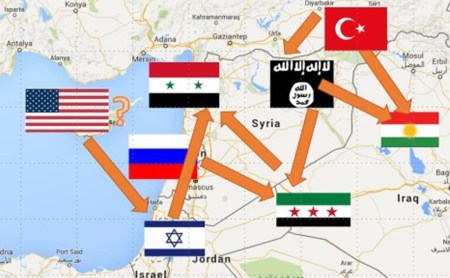
US bombs IsraelUS officials are confident they understand the situation on the ground in Syria. (Duffel Blog photo.)

WASHINGTON, D.C. — Pentagon spokesperson Col. Steve Warren announced US aircraft participating in Operation Inherent Resolve, the code name for the campaign against the Islamic State of Iraq and al-Sham (ISIS), struck targets in Tel Aviv today.

When asked why US warplanes would attack a long-standing ally, Warren explained, “Look, guys, this all makes perfect sense,” pointing to a nebulous PowerPoint slide.

“This was all supposed to be a campaign to topple Bashar al-Asad in Syria, starting with the Arab Spring in 2011. Which, in turn, allowed us to get back at Iran and Russia, both of whom support Syria,” said Warren. “So the CIA considered arming the rebels in Syria, which kind of backfired, and now we have ISIS, a group we thought we had already defeated back when they were al-Qaeda in Iraq.”

Secretary of Defense Ashton Carter further explained, “Sure, we were a little worried when ISIS started running around the Middle East, chopping everyone’s heads off. But fortunately, Iran came to our rescue. Well, in Iraq, that is. We’re still fighting Iran in Yemen.”

Chairman of the Joint Chiefs General Joe Dunford stressed the contributions of America’s coalition partners.

Dunford explained how the US tried to empower allies among the Gulf States to take on ISIS, “which in turn sort of helps us get back at Iran.”

“Unfortunately, most of those states also covertly support ISIS, even though they’re nominally our long-standing allies. Whoops,” said Dunford.

“That’s not to say we don’t have some powerful allies in the region, though,” Dunford explained. “The Kurds have proven to be our greatest allies there, and the Turks are one of our longest-standing NATO allies. Unfortunately, they spend more time fighting each other than ISIS. That old saying, ‘nothing brings people together like a common enemy’ is completely useless here.”

Dunford concluded, “So, you see, ISIS is supported by Arabs, who are opposed by Iranians, who are both opposed and allied with the US, who is sort of allied with Turkey and the Kurds, who are opposed to each other. Since the enemy of my friend is now my enemy, it made sense for the US to bomb Israel, Iran’s bitter adversary.”

Events grew even more complicated in the wake of the deadly terrorist attacks in Paris last Friday. The attacks were reportedly the work of ISIS, who also claimed credit for the bombing of a Russian airliner earlier this month.

“France and Russia have formed an alliance, though in doing so, they automatically caused Germany, Austria-Hungary, and the Ottoman Empire to declare war in return,” said Pentagon Press Secretary Peter Cook. “And, let’s face it, this whole thing really is the fault of the Ottomans when you think about it.”

The briefing then shifted to issues surrounding Afghanistan and Pakistan.

“There, the situation is much more simple,” Cook continued.  “The US is fighting the Taliban by providing billions of dollars in military aid to Pakistan, which is supporting the Taliban. Basically, it’s like that scene in The Empire Strikes Back where Luke Skywalker thinks he’s fighting Darth Vader, only to find his own face in Darth Vader’s helmet. That’s pretty much what we’ve gotten ourselves into.”