Archive for November 8, 2015

Palestinian Authority: It’s Really About Israel’s Existence, Stupid

November 8, 2015

In a blunt statement on its semi-official Internet site, the Palestinian Authority admits it really wants to push Israelis out of Israel. Completely.

By: Hana Levi Julian

Published: November 8th, 2015

Source: The Jewish Press » » Palestinian Authority: It’s Really About Israel’s Existence, Stupid

Palestinian Authority leader Mahmoud Abbas

Palestinian Authority leader Mahmoud Abbas
Photo Credit: PMW

A semi-official news outlet that carries statements for Palestinian Authority leader Mahmoud Abbas proclaimed on Sunday his oft-repeated wild incitement that Israel is out to destroy the central Al Aqsa Mosque on the Temple Mount in Jerusalem. And of far more international interest, the site added, “the current Palestinian uprising has its roots in 67 years” of Arab rage over the rebirth of the State of Israel.

The “Palestine Solidarity Network (PSN)” mouthpiece was quoted by the Palestine News Network (PNN) in the accusation against the Netanyahu administration on Sunday of ordering the destruction of the Al Aqsa Mosque on the Temple Mount.

Moreover, the PA government confirmed publicly that the issue of “new settlements” is not behind the latest round of Arab violence — nor has the issue of “settlements” been the issue igniting Arab violence over the past 20 years. It is the issue of Israel’s entire existence — as the more direct Gaza-based Hamas terrorist organization explains in its forthright founding charter, which proclaims its determination to annihilate the State of Israel at all costs — that the Palestinian Authority finds so upsetting.

“The current Palestinian uprising has its roots in 67 years of being forcibly and brutally pushed out of their lands and homes,” stated the PSN on the homepage of the PNN website.

PNN, the official Internet mouthpiece for the Palestinian Authority, posted the piece at around the same time a flight bearing Israel’s Prime Minister Benjamin Netanyahu was arriving in the United States for a meeting with President Barack Obama.

“Three months ago, Israeli illegal settlers burned down a Palestinian home in Duma (occupied West Bank), killing an infant and his parents,” the statement went on, promoting a theory that has yet to be substantiated. Jewish terrorists who in the past carried out “price tag” attacks and atrocities against Arab neighbors were caught by Israeli security personnel and jailed within days of the crime.

The Palestinian Authority instead glorifies Arab murderers, naming public squares, streets and children’s summer camp programs after terrorists who carry out attacks against Israelis and Jews. In the case of the Duma incident, it is still not clear who carried out the despicable arson murder of the two parents and baby.

“The incident was followed by an increased Israeli military and settler presence around the Al Aqsa Mosque in occupied East Jerusalem,” PSN continued, adding, “Under orders from the far-right Israeli administration, parts of the mosque were burned and destroyed. Moreover, Israeli claims of access to worshipping sites are often a first step for more colonization of land and are inevitably met by a wave of rejection and anger.

“More than 70 Palestinians have been killed in the last month by the Israeli military and armed settlers, many of them civilians who were not involved in violent attacks,” the Palestinian Authority website claimed.

Actually, since October 1, there have been dozens of Arab terrorists — many of them teenagers inspired by the endless incitement broadcast over PA government-run media and taught in PA-approved classrooms — who have carried out more than 60 stabbings, six vehicle ramming attacks and five shooting attacks against Israelis and Jews. At least 10 Israelis died and well over a hundred have been wounded. There were four such attacks within a six-hour period just prior to the posting of the PSN article, in fact.

Most of the attacks have been carried out in and around Israel’s capital city of Jerusalem, and the ancient holy city Hebron. Both cities are sacred to Jews and contain sites holy to Muslims as well.

The blood spilled in our cities is a stupid, useless tragedy for everyone. It serves no one except the evil, corrupted Arab leaders who have destroyed nearly every bit of progress their people manage to achieve, and have succeeded in brainwashing the last three of those generations. They sadly managed to produce an ample supply of young expendables who grew up inspired to give birth, raise “martyrs” and give birth again. And now they are bringing up a whole generation of those silly enough and impulsive enough to rush into death without giving thought to the value of life, the value of true honor, as opposed to the travesty of “honor” sold to them by the fakers in their TV screens.

Without learning to question their own cause, they cannot even truly endorse it. Like zombies, they can only live or die. How stupid, how wasteful, and how sad.

No good news in the Mid East for Obama or Netanyahu when they meet Monday

November 8, 2015

No good news in the Mid East for Obama or Netanyahu when they meet Monday, DEBKAfile, November 8, 2015

Obama_Bibi2480

After more than a year, Israeli Prime Minister Benyamin Netanyahu meets President Barack Obama at the White House on Monday, Nov. 9, with the deck heavily stacked against him – and not just because of the Islamic State, which is a universal bane, or Obama’s Iran policy – or even the evaporation of the peace process with the Palestinians. This time, Netanyahu is not getting a dressing-down over the disappearance of the two-state solution, because even the US president has decided to shelve it for the remainder of his presidency which ends in January 2017.

This is not because the Netanyahu government has missed any chances for talks with the Palestinians, as the Israeli opposition loudly claims, but because it is unrealistic.

Palestinian Authority Chairman Abu Mazen (Mahmud Abbas), who lost all credibility on the Palestinian street long ago, has been quietly but continuously encouraging the continuous Palestinian wave of terror by knives, guns and cars.

The Israeli prime minister had his most promising card snatched from him just ten days before he traveled to Washington. He had intended presenting the US president with the quiet alliance he had formed with key moderate Arab governments as a viable alternative for the deadlocked Palestinian peace process, with the promise of a measure of stability for its members in the turbulence around them.

However, the linchpin Egyptian President Abdel-Fatteh El-Sisi’s position was suddenly shaken up badly by the downing of the Russian passenger plane over Sinai on Oct. 31, presenting him with his most dangerous crisis since he took power in 2013.

In addition, the security situation in Syria, including along Israel’s northern border, especially the Golan, has gone from bad to worse – especially since Russia built up its military presence in Syria.

Israel has been forced to forego most of its red lines for defending its security as no longer relevant. Although no Israeli official says so openly, Israel’s military options in Syria have shrunk, and even the overflights by its air force flights for keeping threats at bay are seriously restricted..

Iran and Hizballah, under Russian air cover, have been slowly but surely making gains in their attempt to retake southern Syria from the rebels and hand it over to the army of Syrian President Assad.

Israel is still insisting that it will not allow the deployment of Iranian or Hizballah forces on the Syrian side of the Golan, but these statements are losing their impact. If the coalition of Russia, Iran, Syria and Hizballah defeats the rebels in southern Syria and moves in up to its border, Israel will find it extremely difficult to prevent this happening.

It would also mark the end of more than three years of investment and building of ties with various elements in southern Syria as part of a strategic decision to transform those groups into a buffer between Israel and Iran in the Golan area.

Netanyahu’s struggle against the nuclear deal with Iran was not just aimed at Washington’s recognition of Iran’s nuclear program, but ever more at Obama’s acknowledgement of Iran as America’s strategic partner and leading Middle East power. But in this respect, the US president is most likely chafing over the setbacks to his own cherished plan, as a result of four developments:

1. Iran has plunged more deeply than ever predicted into the Syrian conflict. For the first time since the 19th century, Iran has not only sent its military to fight beyond its borders, but it is coordinating its moves with Moscow, not Washington.

Even if Israel needed to turn to the US administration for a helping hand against Iran, it would have no address because Washington too has been displaced as a power with any say in the Syrian picture.

2. Although the alliance by Israel and moderate Arab countries was designed by Netanyahu to serve as a counterweight to the US-Iranian partnership,  that alliance too is far from united on Syria:  Egyptian President El-Sisi, for example, supports President Bashar Assad, and is in favor of keeping him in power in Damascus.

3. The Islamic State continues to go from strength to strength in Syria and the Sinai Peninsula which share borders with Israel as well as in Iraq.

4. Israel’s political, defense and intelligence elite have badly misread or missed altogether four major events in the region:

  • Assad’s persistent grip on power
  • The deep Russian and Iranian military intervention in Syria
  • The strengthening of ISIS
  • The eruption of a new, deadly Palestinian campaign of terror which strikes unexpectedly in every town, highway and street.

These errors are taking their toll on Israel’s security, wellbeing and prestige.

Even if Israeli Prime Minister Netanyahu and US President Obama, like Defense Minister Moshe Yaalon and Secretary of Defense Ashton Carter, do reach an agreement on Israel’s security needs for the coming years and US military assistance, such an agreement may not withstand the test of Middle East volatility. The rapidly changing conditions are for now all to the detriment of the US and Israel.

Turkey’s Stockholm Syndrome

November 8, 2015

Turkey’s Stockholm Syndrome, The Gatestone InstituteBurak Bekdil, November 8, 2015

(Please see also, Obama’s favorite Muslim dictatorships. — DM)

  • AKP supporters celebrated their victory on November 1 with chants of “Allahu Akbar” [“Allah is the greatest”], an Islamist slogan, indicating that for them the political race in Turkey is in fact a “religious war.”
  • The Turkish “Sultan wannabe” runs an empire of fear. The November 1 vote will only help make him even more despotic.
  • A recent study found that only a quarter of Turks were NOT afraid of Erdogan. According to the research, even some of his own supporters are afraid of him.
  • “The rapidly diminishing choice of media outlets and restrictions on freedom of expression in general impacted the process and remain serious concerns.” — Ignacio Sanchez Amor, Organization for Security and Co-operation in Europe
  • The AKP’s setback in last June’s elections was because some nationalists disapproved of the AKP’s peace process with the Kurdish minority. In July, the government scrapped the peace process and ordered the military relentlessly to bomb the strongholds of militant Kurds in northern Iraq.

Once again, after a brief pause, political Islam has won in Turkey. President Recep Tayyip Erdogan’s Islamist party, the Justice and Development Party (AKP), earned nearly one out of every two votes in the renewed parliamentary elections on November 1. The AKP won more than 4.8 million new votes since the June 7 elections, in which it had lost its parliamentary majority for the first time since it came to power in 2002. The November 1 election gave the AKP a mandate to rule until 2019; by then Turkey’s Islamists will have been in power uninterruptedly for 17 years. There are happy smiles on the faces of half the Turks.

The AKP’s unexpected landslide victory can be explained in numbers. The party won by 9 percentage points more on Nov. 1 than on June 7, just five months before. How did this happen?

  1. The nationalist party, MHP, shares more or less the same voter base with the AKP. Votes often go from one to the other. In the June election, some AKP votes shifted to the MHP, which won 16.3% of the national vote. This was because some nationalists disapproved of the AKP’s peace process with the country’s restive Kurdish minority. After a new spiral of violence started in July, the government scrapped the peace process and ordered the military relentlessly to bomb the strongholds of militant Kurds in northern Iraq. With the AKP boasting its newfound nationalist spirit, the MHP lost 4.1 percentage points on Nov. 1, all of which apparently went to the AKP.
  2. The summer-long violence between the autonomy-seeking Kurdish fighters and the Turkish military, which has killed hundreds, apparently wore down Kurds with more loyalist sentiments to Turkey, and caused a shift of votes at the magnitude of 1.4 percentage points from a pro-Kurdish party to the AKP.
  3. Two splinter Islamist and nationalist parties that won 2% of the vote on June 1 disappeared from the political scene, winning just a combined 0.5% on November 1. From them the AKP earned another 1.5 percentage points.
  4. In the face of President Recep Tayyip Erdogan’s lavish, expensive palace, new private jets, extravagant spending of public funds; his assertive intervention in party politics (he must remain non-partisan, according to the Turkish constitution), and growing allegations of corruption and nepotism, some traditionally AKP voters abstained from voting on June 7. Typically, half of those who abstained in June were AKP voters. Apparently, they returned to the ballot box in November, earning the AKP another good 2 percentage points (the turnout rate was nearly 4 percentage points higher in November than in June).

All of this makes exactly 9 percentage points: the difference between what the Islamists got in June and November. That is worrying for everyone in the civilized (and shrinking) parts of Turkey — and the world. AKP fans celebrated their victory on November 1 with chants of “Allahu Akbar” [“Allah is the greatest”], an Islamist slogan, indicating that for them the political race in Turkey is in fact a “religious war.” The only non-Turkish flags at the celebrations were the Palestinian and Ottoman. It is worrying that the party that won half of the national vote celebrates with religious slogans and Palestinian and Ottoman flags.

True, even if there is not yet credible evidence of vote-rigging, the election campaign was totally unfair to the opposition. Erdogan and the AKP massively used a powerful pro-government media machine, including the state broadcaster and a semi-official news agency.

“While Turkish citizens could choose between genuine and strong political alternatives in this highly polarized election, the rapidly diminishing choice of media outlets and restrictions on freedom of expression in general impacted the process and remain serious concerns,” said Ignacio Sanchez Amor, the special coordinator and leader of the short-term observer mission of the Organization for Security and Co-operation in Europe.

The head of the delegation from the Parliamentary Assembly of the Council of Europe, Andreas Gross, said: “Unfortunately, the campaign for these elections was characterized by unfairness and, to a serious degree, fear.”

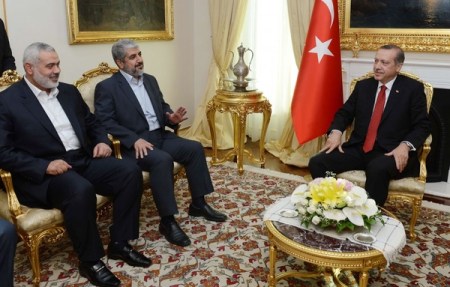
In fact, one could easily understand how democratic and fair the Turkish election campaign was from the words of Khaled Mashaal, head of Hamas’s political bureau. He called both Erdogan and his prime minister, Ahmet Davutoglu, to convey the Palestinian group’s congratulations on Turkey’s “democratic electoral environment.”

826 (1)Turkish President (then Prime Minister) Recep Tayyip Erdogan, right, meeting with Hamas leaders Khaled Mashaal (center) and Ismail Haniyeh on June 18, 2013, in Ankara, Turkey. Mashaal, last week called Erdogan to convey Hamas’s congratulations on Turkey’s “democratic electoral environment.” (Image source: Turkey Prime Minister’s Press Office)

In a way, this is Turkey’s Stockholm Syndrome. A recent study found that only a quarter of Turks were NOT afraid of President Erdogan. As many as 68.5% said they were afraid of the president. It is interesting to note that according to the findings of this research, even some of his own supporters are afraid of him: If Erdogan’s supporters make up 50% of Turkey and those who say they are afraid of him stand at 68.5%, this means a good 18.5% of his own supporters are also afraid of him.

The Turkish “Sultan wannabe” runs an empire of fear. The November 1 vote will only help make him even more despotic.

Germany: Migration Crisis Becomes Public Health Crisis

November 8, 2015

Germany: Migration Crisis Becomes Public Health Crisis, The Gatestone InstituteSoeren Kern, November 8, 2015

  • German hospitals are increasing security to protect doctors and nurses from violent attacks by migrants who are unhappy with the medical treatment they are receiving.
  • Critics are warning that German taxpayers will end up paying billions of euros to provide healthcare for a never-ending wave of asylum seekers. This is in addition to the billions of euros already being spent to provide newcomers with food, clothing and shelter.
  • In addition to the massive economic and social costs, as well as the burden of increased crime, including a rape epidemic, Germans are now facing the risk of being exposed to exotic diseases — and tuberculosis.
  • Roughly 5% of asylum seekers are carrying resistant germs. In real numbers, this works out to around 75,000 newcomers with highly infectious diseases. — Dr. Jan-Thorsten Gräsner, director of the Institute for Rescue and Emergency Medicine.
  • Twenty types of vaccines are now in short supply, and 16 others are no longer available at all. Because of production bottlenecks, some vaccines will not become available until 2017.
  • Muslim women refuse to be treated by male doctors, and many Muslim men refuse to be treated by females. — Max Kaplan, director of the Bavarian Medical Board.
  • German media outlets are downplaying the extent of the healthcare problem, apparently to avoid spreading fear or provoking anti-immigrant sentiments.

The influx of more than one million asylum seekers from Africa, Asia and the Middle East is placing unprecedented strain on Germany’s healthcare system.

Hospitals, clinics and emergency rooms across Germany are being filled to capacity with migrants suffering maladies of all kinds, and medical personnel, including thousands of volunteers, are increasingly complaining of burnout.

Diseases are also reappearing that have not been seen in Germany for years. German public health officials are now on the lookout for Crimean Congo hemorrhagic fever, diphtheria, Ebola, hepatitis, HIV/AIDS, malaria, measles, meningitis, mumps, polio, scabies, tetanus, tuberculosis, typhus and whooping cough. As refugee shelters fill to overflowing, doctors are also on high alert for mass outbreaks of influenza and Norovirus.

Compounding the challenge, tens of thousands of migrants arriving in Germany — particularly migrant children — have not been immunized, and German doctors are finding that needed vaccines are not readily available due to a lack of supply. Some German parents are panicking that there are not enough vaccines to immunize their own children.

Many migrants are also suffering from a host of traumas and mental illnesses. According to the Chamber of German Psychotherapists (Bundespsychotherapeutenkammer), at least half of all migrants arriving in Germany have psychological problems, including post-traumatic stress disorder and depression, and roughly 40% have contemplated suicide.

German hospitals are also being forced to hire a virtual army of interpreters so that doctors can communicate with asylum seekers, who speak dozens of languages, dialects and variants.

At the same time, German hospitals are increasing security to protect doctors and nurses from violent attacks by migrants who are unhappy with the medical treatment they are receiving.

Critics are warning that German taxpayers will end up paying billions of euros to provide healthcare for a never-ending wave of asylum seekers. This is in addition to the billions of euros already being spent to provide newcomers with food, clothing and shelter.

Many say the German government failed fully to consider the unforeseen consequences of opening the door to so many migrants. In addition to the massive economic and social costs, as well as the burden of increased crime, including a rape epidemic, Germans are now facing the risk of being exposed to exotic diseases.

German media outlets are downplaying the extent of the healthcare problem, apparently to avoid spreading fear or provoking anti-immigrant sentiments. But a growing number of German healthcare professionals are sounding the alarm.

In an interview with Die Welt, Dr. Michael Melter, the chief physician at the University Hospital Regensburg, said that migrants are arriving at his hospital with illnesses that are hardly ever seen in Germany anymore. “Some of the ailments I have not seen for 20 or 25 years,” he said, “and many of my younger colleagues have actually never seen them.”

Marc Schreiner, director of international relations for the German Hospital Federation (Deutschen Krankenhausgesellschaft), has echoed Melter’s concerns:

“In the clinics, it is becoming increasingly common to see patients with diseases that were considered to have been eradicated in Germany, such as scabies. These diseases must be reliably diagnosed, which is a challenge.”

Schreiner said that in cases of highly contagious diseases, including tuberculosis, patients must be quarantined, an expensive procedure, the costs of which are paid for by German taxpayers.

According to Schreiner, about 15% of the newly arriving migrants require immediate medical treatment. With 1.5 million asylum seekers expected to arrive in Germany in 2015, this means that 225,000 migrants will have an urgent need for medical attention.

Siegfried Hasenbein, director of the Bavarian Hospital Association (Bayerische Krankenhausgesellschaft), estimates that in 2015, between 25,000 and 30,000 migrants will be treated in Bavarian hospitals alone. In addition, this year between 75,000 and 90,000 migrants will receive ambulatory or outpatient care.

According to Hasenbein, these numbers appear insignificant when compared to the three million hospital visits that normally occur in Bavaria every year. The problem arises in that the migration crisis is straining the Bavarian healthcare system unevenly, with hospitals in migrant “hotspots” such as Deggendorf, Ingolstadt and Passau bearing the brunt of medical care.

Markus Beier, director of the Bavarian Association of Family Physicians (Bayerischer Hausärzteverband), says that doctors in areas with large concentrations of asylum seekers are being called upon all hours of the night and day, making it impossible for them to provide anyone with superior levels of care.

Max Kaplan, director of the Bavarian Medical Board (Bayerische Landesärztekammer), says that the challenges associated with medical treatment for migrants are exacerbated by language and cultural barriers, which are “tiresome, time consuming and sometimes impossible to overcome.” Adding insult to injury, he says, many Muslim women refuse to be treated by male doctors, and many Muslim men refuse to be treated by females.

In an effort to prevent diseases from spreading, Kaplan has called on German public health officials to order medical exams for all asylum seekers at the initial point of entry into Germany, before they are sent to different parts of the country. “This is in the best interest of the refugees, and also of the native population,” he said.

In a November 2 interview with Spiegel TV, Dr. Ralf Mütterlein, director of the Pulmonary Clinic (Klinik für Lungen- und Bronchialheilkunde) in Parsberg, estimated that between 8,000 and 10,000 asylum seekers in Germany have tuberculosis, but only a small fraction these are currently in quarantine.

Migrants who are taken to Mütterlein’s clinic are held in quarantine for up to 18 months at a time to prevent the disease from spreading to the population at large. The costs to German taxpayers are astronomical: Between 10,000 and 12,000 euros per migrant per month. Over 18 months, the total cost often exceeds 200,000 euros per migrant.
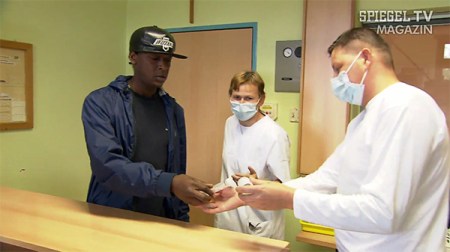
1333A migrant from Africa is shown in a Spiegel TV news segment from this month, being treated in a special unit for the involuntary quarantine of tuberculosis patients, at Parsberg District Hospital #1, in Bavaria.

Meanwhile, a report by Die Welt describes efforts by German health officials to contain the spread of so-called resistant germs:

“Physicians are currently on high alert, because with the arrival of hundreds of thousands of refugees, infectious diseases could enter the country. This is not hysteria. It is simply a challenge our healthcare system has not faced for many decades.

“There is a danger that a refugee is ‘colonized’ — as doctors call it — with dangerous germs. Every person carries bacterial germs in and on the skin. For healthy people they are harmless. They become a problem when they spread among critically ill and immunocompromised patients in a clinic.

“The problem: In the refugees’ countries of origin, resistant germs may spread more often than in Germany. So a refugee is immediately tested upon admission to a German clinic. Only when it is certain that there is no danger, it the patient moved to a shared room.”

Dr. Jan-Thorsten Gräsner, director of the Institute for Rescue and Emergency Medicine (Institut für Rettungs- und Notfallmedizin), estimates that roughly 5% of asylum seekers are carrying resistant germs. In real numbers, this works out to around 75,000 newcomers with highly infectious diseases.

The Berlin-based Robert Koch Institute, a key governmental agency for the safeguarding of public health in Germany, has advised healthcare professionals, as well as those who are working as volunteers in refugee shelters, to update their immunizations.

But the Federal Institute for Vaccines and Biomedicines (Paul-Ehrlich-Institut), an agency of the Federal Ministry of Health, has warned that 20 types of vaccines are now in short supply, and 16 others are no longer available at all. Because of production bottlenecks, some vaccines will not become available until 2017.

Stefan Derix, director of the Chamber of Pharmacists North Rhine (Apothekerkammer Nordrhein), said the shortage of vaccines is due to the massive influx of asylum seekers. He said the Ministry of Health normally orders vaccine supplies one year in advance, and that no one in the government had anticipated that Germany would be taking in so many migrants this year.

Dr. Wolfram Hartmann, president of the Cologne-based Professional Association of Pediatricians (Berufsverband der Kinder- und Jugendärzte), has warned that many of the vaccines needed to immunize both native German children and migrant children for diphtheria, polio, tetanus and whooping cough are not available, neither in Germany nor in any other European country. He also said that basic vaccines against measles, mumps, rubella and varicella are in short supply.

In a statement, Hartmann wrote:

“We cannot provide native German children and refugees alike with the basic vaccines. The vaccine shortage, which is the responsibility of the pharmaceutical companies, must urgently be made a top priority of the Health Minister! Children have a right to vaccinations, especially for chronically ill children who need timely vaccinations against flu, especially if they are housed in communal accommodations.

“The federal government must now act urgently and enforce the right of children to vaccination. The vaccine supply is just as much of a national responsibility as is the supply of physicians.”

Kordula Schulz-Asche, a politician with the Greens Party, warned against holding migrants responsible for the vaccine shortage. “The current tense vaccine situation must not be misused to stir up public opinion against refugees,” she said.

In North Rhine-Westphalia, hospitals are requiring their personnel to attend courses on how to treat patients with exotic illnesses hardly ever seen in Germany. Hospital workers in Bielefeld and Siegburg are said to be groaning under the strain of having to examine up to 80 migrants a day for tuberculosis. “The workload has increased tremendously,” a worker told Westdeutscher Rundfunk, a public broadcaster. Other hospitals in the state lack sufficient personnel and equipment, including the x-ray machines needed to examine patients with tuberculosis.

In Lower Saxony, public health officials, fearful of a mass outbreak of influenza, are struggling with the logistics of vaccinating tens of thousands of asylum seekers housed in refugee shelters across the state. With more than 1,000 new migrants arriving in Lower Saxony every day, initial medical exams of newcomers are backlogged by weeks, a period during which undetected diseases can spread.

In Berlin, police were forced to apologize for recommending that asylum seekers suffering from scabies, a highly contagious skin disease, be required to wear armbands to distinguish them from migrants who are healthy. The plan was for them to wear armbands with the capital letter ‘K’ forKrätze (German for scabies); their immediate family were to have worn armbands with the capital letter ‘A’ for Angehörigen (German for next of kin).

Meanwhile, reports of health-related scares, especially those involving tuberculosis, have become a daily occurrence in Germany.

In Krefeld, a city in North Rhine-Westphalia, a 27-year-old migrant was diagnosed withtuberculosis. He was being held in quarantine at a local pulmonary clinic. In Lünen, also in North Rhine-Westphalia, four migrants were diagnosed with tuberculosis.

In Nattheim, a town in Baden-Württemberg, asylum seekers at a refugee shelter underwent mass immunization after a child at the shelter fell ill with chickenpox. In Ellwangen, also in Baden-Württemberg, an asylum seeker diagnosed with tuberculosis escaped from a hospital. He remains at large.

In Gransee, a town in the eastern state of Brandenburg, a migrant was diagnosed with tuberculosis.

In Würzburg, more than 400 asylum seekers were mass immunized for chicken pox, diphtheria, measles, mumps, polio and tetanus. In Heidenheim, a town in Baden-Württemberg, public health officials are preparing for potential outbreaks of influenza and Norovirus at local refugee shelters this winter.

In Cologne, police cordoned off a refugee shelter housing more than 1,000 migrants in the Chorweiler district after a male refugee from Africa showed symptoms of Ebola. The man, who was coughing up blood for more than three days before anyone called a doctor, was rushed to a local hospital, where he was diagnosed with a gastrointestinal illness. Earlier, the same refugee shelter was the scene of an E. coli scare potentially affecting 800 migrants.

In Bochum, a 16-year-old migrant from Guinea showing symptoms of Ebola was placed in quarantine. In Saxony, public health officials are now testing all incoming asylum seekers forEbola.

In Düsseldorf, a 30-year-old migrant from Algeria was diagnosed with tuberculosis and was being held in quarantine at a local hospital. Municipal health officials say that in 2014, there were 50 confirmed cases of tuberculosis in the city. In 2015, that number was surpassed in August, before migrants began arriving en masse in September and October.

In Tegernsee, a town in Bavaria, a 23-year-old migrant from Eritrea who was diagnosed with tuberculosis escaped from a refugee shelter. Local officials failed to inform the public about the incident for nearly one month, until they were confronted by a local newspaper, the Münchner Merkur. Wolfgang Rzehak, a local politician with the Greens Party, justified the media blackout: “We have to find a middle road between informing the public and not becoming a panic machine.”

In Frankfurt, a 33-year-old migrant from Bulgaria who was diagnosed with tuberculosis escaped from a hospital and remains at large. Again, local officials kept quiet about the incident, until someone leaked information about it to the German newspaper, Bild.

In Berlin, a schoolteacher in the Steglitz-Zehlendorf district was diagnosed with tuberculosis; doctors say he was probably infected by one of his students. Also in Berlin, security guards at a refugee shelter in the Lichterfelde-Süd district locked nearly a dozen migrants in a bathroom after they were suspected of having tuberculosis. They were later transferred to a local hospital.

In Hamburg, public health officials quarantined a refugee shelter in the Jenfeld district after an outbreak of scabies. Also in Hamburg, a 17-year-old migrant from Sierra Leone was rushed to a local hospital and quarantined on suspicion that he had Ebola — just three days after arriving in Germany. Separately, at a refugee shelter in the Bahrenfeld district of Hamburg, firefighters wearing head-to-toe Ebola protection suits escorted migrants suspected of having Ebola to a local hospital.

In Bremen, after an asylum seeker was diagnosed with tuberculosis and doctors warned of the risk of contagion, all 200 migrants housed at refugee shelter on Steinsetzer Straße underwent chest x-rays to test for the disease.

In Munich, health officials are expecting more than 350 new cases of tuberculosis in 2015. The increase is being attributed to the large number of asylum seekers arriving in the city.

In Stuttgart, an average of 145 asylum seekers housed at the city’s convention center seek medical attention every day. Common maladies include measles, chickenpox, flu infections, dysentery and scabies caused by mites.

In Rheingau-Taunus, a district in the state of Hesse, public health officials say they need more money and medical personnel to deal with the influx of migrants at 60 local refugee shelters. The health department expects to treat more than 1,500 newcomers this year, including a large number of children who lack proper immunization. The department has reported 60 cases of scabies and tuberculosis. According to Monika Merkert, a local health inspector: “The newly arriving asylum seekers bring diseases that occur only rarely in Germany.”

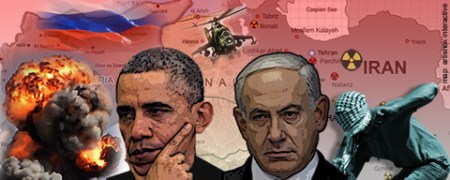
Cartoon of the day

November 8, 2015

H/t The Jewish Press

You-First

“We just have to trust what they write down”: Europe lets fake Syrian refugees self-register as “Syrians”

November 8, 2015

“We just have to trust what they write down”: Europe lets fake Syrian refugees self-register as “Syrians,” Front Page Magazine, Daniel Greenfield, November 7, 2015

This FP story gives a sense of just how dysfunctional the whole process is with huge numbers of Muslim migrants claiming to be Syrian, when they aren’t.

“Oh, you’re from Syria,” said one of the officials holding up a spiral-bound book with color pictures of 100-pound notes. “Can you point to which of these pictures is your home currency?”

One by one, the head of the vetting team led by Frontex, a European Union agency that works between member states to secure EU borders, quizzes men and families claiming to be from Syria who arrive on the Greek island of Lesbos.

“I’m a Syrian,” the man repeated to the official cautiously, his shoes and clothing still wet from the journey by sea earlier that day. “From Deir Ezzor.”

The man, who had arrived from Turkey that morning, hesitated and pointed to a yellow bill, a fake note that vaguely resembled Lebanese currency but was clearly not from Syria.

“Are you originally from Iraq, maybe?” the officer asked. After some whispered words with his wife and brother, the man explained that, yes, his family is Iraqi, but they had lived in Syria for many years.

No wonder on whether they’re tested for Iraqi currency. The whole procedure is slapdash and the fake refugees are lying, but they’re getting access to Europe.

The man who initially claimed to be from Deir Ezzor but was in fact Iraqi was just one of many who was cycled through this haphazard process. After being questioned by the Frontex official, he was waved through to other agents who helped him fill out a palm-sized slip of paper with his name, the names of his father, mother, and grandfather, and his nationality. At the next kiosk, that slip of paper became a legal document stamped and signed by a Greek civil servant. After being fingerprinted, the man was handed a single sheet of paper — a transit document — which allowed him to travel through Greece to the rest of Europe.

Isn’t that convenient. For say, ISIS. Or just your friendly neighborhood drug smuggling gangs in Syria.

In the back of the crowd, one family debated among themselves whether to try to pass for Syrian. When asked where exactly they were from in Syria, one woman paused and smiled: “From Syria, for sure.”

For sure.

At around 4 p.m., after most employees had left, a group of men arrived at the camp asking how to register; they were directed by fellow refugees and migrants to a messy pile of blank slips of paper stacked on an abandoned desk. The men, speaking Iraqi-accented Arabic and slang, said they were from the northern Syrian city of Aleppo and lacked documentation because all their belongings had been lost at sea.

The men wrote “Syria” under nationality and proceeded directly to the local police officer, where the information was notarized. Within an hour, they were fingerprinted and had received letters of transit listing them as Syrian nationals.

So we’ve got Muslim invaders self-registering and then getting letters of transit across Europe.

Along the island’s beaches, residents have collected identity documents from the rocky shores — Pakistani and Iraqi passports and Turkish national IDs, all presumably abandoned because people from these countries have slimmer chances of being granted asylum and being allowed to stay in Europe.

“We just have to trust what they write down,” said Dimitris Sarras, a civil servant and architect who now works part time at the registration center to help fill out paperwork. “There was one man from an NGO who spoke Arabic, but he left last week, so there is no way to know, really.”

Or we could just deport them all. That would work much better.