Archive for September 27, 2015

Trump: GOP rivals ‘want to start WWIII over Syria,’ should let Russia fight Islamic State

September 27, 2015

Trump: GOP rivals ‘want to start WWIII over Syria,’ should let Russia fight Islamic State

– The Washington Times – Saturday, September 26, 2015

Source: Trump: GOP rivals ‘want to start WWIII over Syria,’ should let Russia fight Islamic State – Washington Times


Republican presidential candidate, businessman Donald Trump holds a Bible as he speaks during the Iowa Faith & Freedom Coalition's annual fall dinner in Des Moines, Iowa. (AP Photo/Charlie Neibergall, File)
Republican presidential candidate, businessman Donald Trump holds a Bible as he speaks during the Iowa Faith & Freedom Coalition’s annual fall dinner in Des Moines, Iowa. (AP Photo/Charlie Neibergall, File) more >

GOP presidential front-runner Donald Trump shared more of his views on foreign policy Friday, telling an audience in Oklahoma his 2016 rivals want to “start World War III over Syria” and suggesting the U.S. let Russia take up the fight against the Islamic State in the region.

“They want to start World War III over Syria. Give me a break,” Mr. Trump said at the State Fairgrounds in Oklahoma City, The Hill reported.

“You know Russia wants to get ISIS right,” Mr. Trump said, using the acronym for the Islamic State of Iraq and Syria. “We want to get ISIS. Russia’s in Syria. Maybe we should let them do it? Let them do it. What the hell are we, crazy?”

Mr. Trump’s remarks come as Russia is increasing its military forces in Syria, a move which has alarmed U.S. military and administration officials.

The U.S. is concerned that Russia will lend its own troops to help embattled Syrian President Bashar al-Assad take on the Islamic State terrorist group. While the U.S. is also leading a coalition force against the terror group, it also opposes Mr. Assad’s regime and has urged him to step down from office.

Mr. Trump’s comments on foreign policy have been heavily scrutinized and may be a stumbling block on his road to the White House.

He was widely criticized for a radio interview with Hugh Hewiit earlier this month, in which he appeared to confuse the names of top terrorist leaders and mixed up the Kurds with the Iranian Quds force — an elite military unit under the command of the Ayatollah and linked to terrorist activities in the Middle East.

Mr. Trump, an opponent of the nuclear deal with Iran, also said Friday that the U.S. had only empowered Iran by invading Iraq.

“I said don’t go into Iraq. I’m the most militant person here, the most militaristic person you’ll ever meet. I believe in the military strongly but I didn’t want to see us invade Iraq,” he said, The Hill reported.

“We spend $2 trillion, thousands of lives, wounded warriors all over the place that I love by the way… we got nothing. We can’t even go over there.”

Mr. Trump also said Iraq and Iran were in cahoots over oil in the region.

“And right now as you are standing here, Iraq is negotiating with Iran. They’re going to merge and Iran is going to get the oil… and the one that gets the rest of it is going to be ISIS.”

Iran Bolsters Itself with UN Resolution Condemning Sanctions

September 27, 2015

Iran Bolsters Itself with UN Resolution Condemning Sanctions, Legal Insurrection, September 26, 2015

(Please see also, Iran Openly Declares That It Intends To Violate UNSCR 2231 That Endorses The JCPOA — DM)

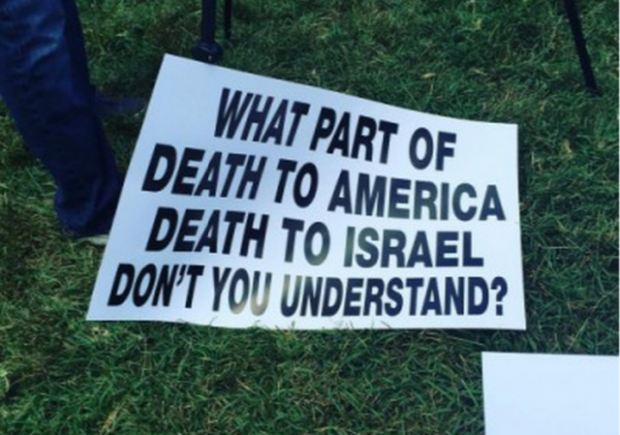
Protest-Sign-Against-Iran-Nuclear-Deal-Death-to-America-e1441978760141-620x435


I think we all know what Iran means when it speaks of political free will. In the wake of the adoption of the Iran nuclear deal, conversations about nightmare “what if” scenarios focused on America’s ability to “snap” sanctions against Iran back into place; now, Iran is trying to reframe the conversation about the use of sanctions by arguing that the use of sanctions at all will constitute a greater violation than what the sanctions are meant to punish.

***************************

This week, Iran used its considerable muscle to launch an attack on US efforts to tamper its nuclear program and otherwise belligerent conduct in the Middle East. These efforts took the form of a proposed resolution in the United Nations Human Rights Council (UNHRC) that condemns the use of sanctions against misbehaving nations as a violation of international law and fundamental human rights.

You won’t see the word “sanctions” more than three times in the resolution; instead, the drafters used the phrase “unilateral coercive measures.” From the proposed resolution:

Recognizing the universal, indivisible, interdependent and interrelated character of all human rights and, in this regard, reaffirming the right to development as a universal and inalienable right and an integral part of all human rights,

Expressing its grave concern at the negative impact of unilateral coercive measures on human rights, development, international relations, trade, investment and cooperation,

Reaffirming that no State may use or encourage the use of any type of measure, including but not limited to economic or political measures, to coerce another State in order to obtain from it the subordination of the exercise of its sovereign rights and to secure from it advantages of any kind,

Recognizing that unilateral coercive measures in the form of economic sanctions have far-reaching implications for the human rights of the general population of targeted States, disproportionately affecting the poor and the most vulnerable classes,

Recalling also article 1, paragraph 2, common to the International Covenant on Civil and Political Rights and the International Covenant on Economic, Social and Cultural Rights, which provides that, inter alia, in no case may a people be deprived of its own means of subsistence,

1. Calls upon all States to stop adopting, maintaining or implementing unilateral coercive measures not in accordance with international law, international humanitarian law, the Charter of the United Nations and the norms and principles governing peaceful relations among States, in particular those of a coercive nature with extraterritorial effects, which create obstacles to trade relations among States, thus impeding the full realization of the rights set forth in the Universal Declaration of Human Rights and other international human rights instruments, in particular the right of individuals and peoples to development;

The writing goes on to demand that member states ignore calls for sanctions, and condemns the use of such “as tools of political or economic pressure against any country, particularly against developing countries, with a view to preventing these countries from exercising their right to decide, of their own free will, their own political, economic and social systems.”

I think we all know what Iran means when it speaks of political free will. In the wake of the adoption of the Iran nuclear deal, conversations about nightmare “what if” scenarios focused on America’s ability to “snap” sanctions against Iran back into place; now, Iran is trying to reframe the conversation about the use of sanctions by arguing that the use of sanctions at all will constitute a greater violation than what the sanctions are meant to punish.

This isn’t a one-off finger-in-the-air from Iran to the US. The UNHRC is a dysfunctional land of multilingual politicking, and now the most dangerous players are using their influence with the greater UN body to bolster the worst violators at the expense of what should be common sense.

More from UN Watch [emphasis mine]:

Earlier this year, the UNHRC’s infamous Consultative Group, with Saudi Arabia’s Faisal Trad then serving merely as Vice-President, successfully picked Algerian hardliner Idriss Jazairy — famous for his efforts as a former diplomat to enact a UNHRC “code of conduct” to intimidate independent human rights experts — as the new “Special Rapporteur on the negative impact of the unilateral coercive measures.”

Jazairy has already accused the U.S. and Europe of being leading human rights violators due to their use of sanctions against countries like Iran and Zimbabwe.

Indeed, many of the resolutions adopted at each session of the UNHRC are sponsored by Cuba, Iran, Pakistan, Algeria, and other non-democracies, and are designed to demonize the West, free market economies, individual rights, or Israel, as part of a strategy to deflect attention from council members who are guilty of subjugating women, trampling religious freedom, persecuting gays, oppressing ethnic minorities and promoting relgious extremism.

This is clever, and part of a bigger strategy meant to counter American and Israeli efforts to speak out against the Iran nuclear deal. Even in the US, the media’s narrative has taken a subtle shift, away from the back and forth in Congress and toward an optic that frames the deal in terms of what it can do to encourage the advent of greater global cooperation. WaPo on Friday published an article needling the Republican Congress’ apparent rejection of “multilateralism”; meanwhile, the NYT editorial board executed a hard pivot away from the political theatre of the moment and toward What We Really Need to be Talking About© in terms of America’s participation in Gulf state politics.

The United Nations itself isn’t necessarily an important player in the American political conversation; international law is obscure, and multilateral relationships are [a] complication and confusing at best. However, if this resolution is adopted (and even if it isn’t) I can just about guarantee that the pro-Iran Deal crowd will use it as a weapon against anti-Deal candidates (primary season doesn’t go away just because we’re dealing with something happening in Geneva) currently warning their colleagues against the folly of attempting to deal with a nation that has proven itself more than adept at sidestepping the rules.

In this case, they’ve taken it upon themselves to rewrite them.

You can read the full proposed resolution here.

Israel’s biggest fears are materializing

September 27, 2015

Israel’s biggest fears are materializing, Israel Hayom, Boaz Bismuth, September 27, 2015

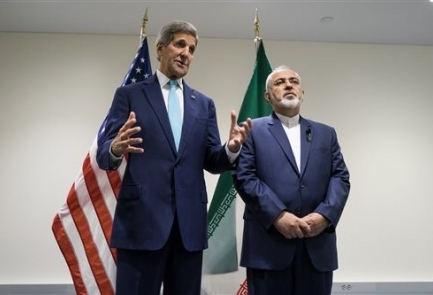
144334028328300476a_bThe Munich moment is upon us. U.S. Secretary of State John Kerry with Iranian Foreign Minister Mohammad Zarif at U.N. headquarters on Saturday | Photo credit: AP

Washington is reaching out to Russia, which is openly helping Syrian President Bashar Assad, who is working in conjunction with Iran, which in turn supports Hezbollah. Now Europe is prepared to talk to Assad, but what about us, for heaven’s sake?

Two years ago to the day, in September 2013, U.S. Secretary of State John Kerry compared Bashar Assad to Adolf Hitler, after the Syrian dictator once again used chemical weapons against his own people. “This is our Munich moment,” Kerry said at the time.

As far as the Americans were concerned, Assad had crossed a line. In those days (more like in those hours, actually), Washington briefly believed that a failure to respond to Assad’s actions would send a dangerous message to Iran regarding its nuclear ambitions.

“Will [Iran] remember that the Assad regime was stopped from those weapons’ current or future use, or will they remember that the world stood aside and created impunity?” Kerry asked at the time. History and retrospect have turned what may have been Kerry’s greatest speech into remarks entirely detached from reality.

The United States did not attack, Assad is still in power, and an ominous nuclear deal has been signed with Iran. It is no wonder that there is a new kind of atmosphere in the region, under American auspices. There are no more good guys and bad guys; everyone is a partner. And thanks to this new reality, Assad now has a renewed license to rule, after having received a license to kill.

Washington is reaching out to Russia, which is openly helping Assad in Syria, who is working in conjunction with Iran, which in turn supports Hezbollah. Europe (Angela Merkel), in the meantime, startled by its refugee crisis, is already prepared to talk with Assad; the same Assad who was compared to Hitler only two years ago. But what about us, for heaven’s sake?

Regretfully, Israel’s biggest fears are now materializing. Instead of being the architects and shaping a new reality in the Middle East, Washington is falling into line with the existing reality. Russia, Syria and Iran are enjoying the consequent vacuum. When the cat is away, the mice will play. Now, all of a sudden, even Hezbollah chief Hassan Nasrallah is letting himself go on television, beaming with joy. Aside from the 75 tanks Damascus is giving him, he now sees his two patrons (Damascus and Tehran) become partners with the West, without having to change one bit.

There is no diplomatic vacuum

The latest developments in Syria are not encouraging: Assad’s first target, with Russia’s help, is expected to be the Nusra Front rebel group, which not only threatens Assad but is also a bitter enemy of the Islamic State group. In other words, somewhat paradoxically, Islamic State could initially benefit from the Russian intervention in Syria.

And one final word about Iran’s rapprochement with the international community: We have been told repeatedly that this was only about the nuclear deal, but in reality we can see cooperation between the U.S. and Iran in Iraq and in the war against Islamic State. We can also see American-Iranian dialogue regarding Syria’s future, and on Saturday night we learned of a gigantic deal worth upwards of $21 billion between Iran and Russia. This time I am forced to agree with Secretary Kerry: This really does look like a Munich moment.

The Single State?

September 27, 2015

The Single State? The Jewish PressMichael Lumish, September 27, 2015

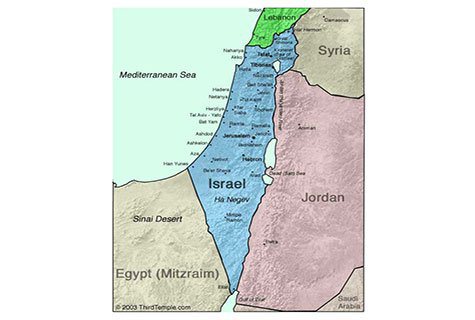
Map-of-Israel


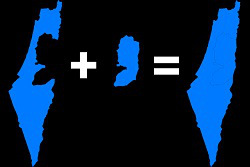
onestate

The significance of Obama’s deal with Iran from a Jewish perspective is that Obama has basically handed Zionism over to the ayatollahs.  In two years or ten years they will decide the fate of the Jewish people, simply because Barack Obama is handing them the car keys.

In the mean time, Israel should solidify its position by declaring its final borders as it plans, and perhaps implement its response to the Iran deal.

**********************
For years I thought that the only reasonable solution to the ongoing Arab war against the Jews was the two-state solution.  A single state solution, we were told, would either undermine Israel as a democratic state or it would undermine Israel as a Jewish state.  Israel could be Jewish, democratic, or with boundaries from the Jordan River to the Mediterranean Sea, but it could not be all three at once.

Those who insist upon this formulation – and I was one for years – are raising reasonable concerns, but there is one thing that proponents of the two-state solution seem never to take into account: the Arabs do not want it.  For almost one hundred years the Palestinian-Arabs have absolutely refused to share the land and tell us on a daily basis that they will never accept Jewish sovereignty on a bit of “historic Palestine.”

There must come a point when we understand that no means no.

There must come a time when we take them at their word.  This being the case, Israel must act unilaterally because there is simply no other choice.  This should not be considered a burden.  It should be considered liberating.  Most of my readers will know that Palestinian-Arab dictator Mahmoud Abbas is, yet again, threatening to quit.  Well, I hope he does quit and I sincerely hope that after he does so Israel rips up the Oslo accords and henceforth refuses to acknowledge the PA, the PLO, Fatah, and Hamas.  It is absolutely pointless in negotiating with, or cooperating with, any of these groups because they are dishonest, utterly corrupt, and filled with the spirit of malice toward the Jewish people.

The Jews in Israel should not have to live with such violent and toxic hatred in their midst, coming from the children of the people who forced into second and third-class non-citizenship for thirteen hundred years.  The Jews are no longer dhimmis in that part of the world – and are thus no longer required to ride mules, rather than horses – and the Arabs don’t like it.

Well, I say, too bad.

The Land of Israel is the land of the Jewish people and has been for almost four thousand years, and that includes today’s boundaries of Judea and Samaria.  We are willing to share, but no one is going to tell me that Judea is Arab rather than Jewish.

This being the case, I have argued in recent years that Israel should declare its final borders, remove the IDF to behind those borders, and – as we say – toss the keys over the shoulder.  I have usually been careful, however, not to advocate for the single-state solution.  I am not Israeli and believe that it should entirely be up to the Israelis to make that determination.

I still believe so.

However, I am becoming less and less convinced that a single state that includes Judea and Samaria, and the eastern section of Jerusalem, cannot be both Jewish and democratic.  What many on the hard-left would argue is that if Israel were to claim sovereignty over the ancient Jewish lands of Judea and Samaria then it is under an obligation to give the entire Arab population in those regions fulls rights to the franchise.  They believe, of course, that doing so would threaten the Jewish character of the state, which is precisely what they want to begin with.

But this is false.

What I would recommend, if Israel were to extend its authority onto the entirety of Judea and Samaria, is offering qualified local Arabs a pathway to Israeli citizenship.  Qualification would require that any particular family or individual under consideration would have no known violent history toward Jewish people and no known history of incitement of hatred toward Jews or Israel.

Those who are not qualified for citizenship, that is, individuals or families with a history of either violence or incitement to violence would be ejected from the country.  This is neither non-democratic, nor illiberal.  The Jews are among the most persecuted and oppressed people in the history of the world.  The Romans decimated our numbers two thousand years ago and the Europeans and Arabs have kept those numbers artificially low ever since.  This being the case it is only common sense, if not basic human decency, for the Jews of Israel to protect their children by removing the threats to them.

This is no more non-democratic than throwing a rapist in prison.

As for the rest of the local Arab population in the annexed Jewish regions I recommend a pathway to full citizenship.  Like pretty much everyone else in Israel they would be required, if they wish citizenship, to give two or three years of community service.  If after that period the individual has shown himself to be free of malice toward either Jews or Israel then that individual should be offered the franchise.

This broad plan – and, yes, obviously, the “devil would be in the details” – would keep Israel Jewish on traditional Jewish land while remaining a democratic country.

Democracy, it should be noted, is never a perfect system in implementation, nor is it a suicide pact.  There are always restrictions, which is why Puerto Ricans are denied the right to vote in US national elections.  They are under American sovereignty, but they do not have full rights to American citizenship, yet no one sane is claiming that the United States in a non-democratic country.

Israel is in a very tough spot, however.  It has a hostile American president who is about to turn an enemy country, Iran, into a nuclear regional power that will rearrange relationships and alliances throughout the region as the Sunni Arab states race to get their own nuclear weaponry.  Zionism is undermined because if Zionism means anything it means that no longer will non-Jews get to determine whether Jewish people live or die.

The significance of Obama’s deal with Iran from a Jewish perspective is that Obama has basically handed Zionism over to the ayatollahs.  In two years or ten years they will decide the fate of the Jewish people, simply because Barack Obama is handing them the car keys.

In the mean time, Israel should solidify its position by declaring its final borders as it plans, and perhaps implement its response to the Iran deal.

Germany: Migrants In, Germans Out – The Death of Property Rights

September 27, 2015

Germany: Migrants In, Germans Out – The Death of Property Rights, Gatestone InstituteSoeren Kern, September 27, 2015

  • Hamburg city officials say that owners of vacant real estate have refused to make their property available to the city on a voluntary basis, and thus the city should be given the right to take it by force.
  • “The proposed confiscation of private land and buildings is a massive attack on the property rights of the citizens of Hamburg. It amounts to an expropriation by the state [and a] “law of intimidation.” — André Trepoll, Christian Democratic Union.
  • “If a property is confiscated… a lawsuit to determine the legality of the confiscation can only be resolved after the fact. But the accommodation would succeed in any event.” — Tübingen Mayor Boris Palmer.
  • Officials in North Rhine-Westphalia seized a private resort in the town of Olpe to provide housing for up to 400 migrants
  • “I find it impossible to understand how the city can treat me like this. I have struggled through life with grief and sorrow and now I get an eviction notice. It is a like a kick in the stomach.” — Bettina Halbey, 51-year-old nurse, after being notified that she must vacate her apartment so that migrants can move in.
  • The landlord is being paid 552 euros ($617) for each migrant he takes in. By cramming as many migrants into his property as possible, he stands to receive payments of more than 2 million euros a year from government.
  • “Considering that migrants cannot afford to rent new properties… moves must be initiated in which higher income households purchase or build more expensive accommodations for themselves in order to free up the less expensive housing for migrants.” — The Berlin Institute for Urban Development, the Housing Industry and Loan Associations
  • “I saw an unbelievable situation: the elderly volunteer lifted the table halfway, looked at the migrant and moved his head asking the migrant to lend a hand. The migrant paused for a moment and then just walked away.” — Firsthand account, refugee shelter.

German authorities are applying heavy-handed tactics to find housing for the hundreds of thousands of migrants and refugees pouring into the country from Africa, Asia and the Middle East.

With existing shelters filled to capacity, federal, state and local authorities are now using legally and morally dubious measures — including the expropriation of private property and the eviction of German citizens from their homes — to make room for the newcomers.

German taxpayers are also being obliged to make colossal economic sacrifices to accommodate the influx of migrants, many of whom have no prospect of ever finding a job in the country. Sustaining the 800,000 migrants and refugees who are expected to arrive in Germany in 2015 will cost taxpayers at least at least 11 billion euros ($12 billion) a year for years to come.

As the migration crisis intensifies, and Germans are waking up to the sheer scale of the economic, financial and social costs they will [be] expected to bear in the years ahead, anger is brewing.

In Hamburg, the second-largest city in Germany, municipal officials on September 23 introduced an audacious bill in the local parliament (Hamburgische Bürgerschaft) that would allow the city to seize vacant commercial real estate (office buildings and land) and use it to house migrants.

City officials argue the measure is necessary because more than 400 new migrants are arriving in Hamburg each day and all the existing refugee shelters are full. They say that owners of vacant real estate have refused to make their property available to the city on a voluntary basis, and thus the city should be given the right to take it by force.

The measure, which will be voted upon in the Hamburg parliament within the next two weeks, is being applauded by those on the left of the political spectrum. “We are doing everything we can to ensure that the refugees are not homeless during the coming winter,” Senator Till Steffen of the Green Party said. “For this reason, we need to use vacant commercial properties.”

Others argue that efforts by the state to seize private property is autocratic and reeks of Communism. “The proposed confiscation of private land and buildings is a massive attack on the property rights of the citizens of Hamburg,” said André Trepoll of the center-right Christian Democratic Union (CDU). “It amounts to an expropriation by the state.” He said the proposed measure is a “law of intimidation” that amounts to a “political dam break with far-reaching implications.” He added: “The ends do not justify any and all means.”

The leader of the Free Democrats (FDP) in Hamburg, Katja Suding, said that the proposed law is an “unacceptable crossing of red lines… Such coercive measures will only fuel resentment against refugees.”

In Tübingen, a town in Baden-Württemberg, Mayor Boris Palmer (also of the Green Party), is making offers to rent or buy vacant properties to house migrants. But he is also threatening to confiscate the property of landlords who dare to reject his offer. In an interview with the newspaper Die Welt, Palmer said:

“In the written offers, I advise that the Police Law (Polizeigesetz) gives us the possibility, in cases of emergency, to confiscate homes for several months. The law provides for seizure in emergencies. I want to avoid this, but if there is no other way, I will make use of this law.”

When asked if he was afraid of lawsuits, Palmer said:

“No. The Police Law has clear rules. When the town is threatened with homelessness, empty homes may be confiscated. This emergency can happen when accommodations are overcrowded and we continue to receive 50 new migrants in Tübingen. If a property is confiscated, we would order immediate enforcement. That is to say, a lawsuit to determine the legality of the confiscation can only be resolved after the fact. But the accommodation would succeed in any event.”

In February 2015, officials in North Rhine-Westphalia (NRW) seized a private resort in the town of Olpe to provide housing for up to 400 migrants. The initial plan was for the town to purchase the resort from its Bavarian owners and rent it to NRW, but NRW officials decided to confiscate the property instead. According to NRW Interior Minister Ralf Jäger, properties may be seized whenever there is a “threat to public order and safety,” and the threat of mass homelessness among migrants fits the bill.

In Nieheim, another town in NRW, Mayor Rainer Vidal is using a legal maneuver called “right of repossession” (Eigenbedarf) to terminate the leases of German citizens living in state-owned apartment buildings so that migrants can move in.

On September 1, 51-year-old Bettina Halbey, who has been living in her apartment for more than 16 years, received a letter notifying her that she must vacate her apartment by May 2016 so that migrants can move in. Halbey was shell-shocked:

“I’m completely taken by surprise. I find it impossible to understand how the city can treat me like this. I cannot come to grips with this situation. I have struggled through life with grief and sorrow and now I get an eviction notice. It is a like a kick in the stomach.”

Halbey, a nurse, says that it will be difficult for her to find another place to live: “I have a dog and a cat. Many landlords will not even consider renting to me.”

1263Out with the old, in with the new… German authorities are using legally and morally dubious measures — including the eviction of German citizens from their homes — in an attempt to find housing for hundreds of thousands of migrants arriving this year.

In the same building, a single mother with two children has been given until August 2016 to move out of her apartment, also to make room for migrants. Initially, she had been ordered to vacate the property by November 2015, but her eviction was delayed to allow her daughter to finish the school year without interruption.

In an interview with the newspaper Westfalen-Blatt, Vidal, an independent who does not belong to any political party, said: “I know this is an unconventional measure. But as a community, we have an obligation to provide housing for migrants.” He said he wanted to turn the entire apartment building into housing for migrants. Vidal said it would not be financially viable to house them anywhere else.

In some cases, landlords are evicting long-time residents because the government is offering them more money to house migrants than they are receiving in rent from existing tenants.

In Braunsbedra, a small town in the state of Saxony-Anhalt, a landlord evicted dozens of residents from an apartment building to make way for migrants. According to local media, the landlord, Marcus Skowronek, is being paid 552 euros ($617) for each migrant he takes in. By cramming as many migrants into his property as possible, he stands to receive payments of more than 2 million euros a year from local and regional governments.

When reporters from public broadcaster Mitteldeutscher Rundfunk visited the property to interview Skowronek, he said:

“I am asking you to leave the premises. You are banned (Hausverbot) from entering the building. Please leave the property. I am sorry. Otherwise I will have to call the police. Please go.”

In Berlin, the Institute for Urban Development, the Housing Industry and Loan Associations (Berliner Institut für Städtebau, Wohnungswirtschaft und Bausparwesen, IFS) has warned that, given the influx of so many migrants, the demand for housing will outstrip supply for many years to come. Of the 285,000 building permits approved in 2014, only 56,000 were apartments in multi-unit buildings of the kind that are suitable for migrants.

The IFS is now calling for the initiation of a process in which Germans who are currently living in inexpensive housing, but who can afford more expensive accommodations, move out of their existing homes to make way for migrants. According to the IFS:

“Considering that migrants cannot afford to rent new properties, the vast majority can only afford cheaper housing, a chain reaction of moves (Umzugsketten) must be initiated in which higher income households purchase or build more expensive accommodations for themselves in order to free up the less expensive housing for migrants.”

The IFS does not explain why Germans who are living within their means should suddenly be expected to take on debt to purchase a more expensive home.

Germans are not only being evicted from their homes to make way for migrants, they are also being removed from their schools.

In Lübbecke, another town in NRW, teachers and students were given less than 24 hours to vacate the Jahn-Realschule, a secondary school for 150 students, so that the building can be used to house 300 migrants.

The school principal, Marion Bienen, said that municipal authorities notified her at 5:30 pm on Tuesday, September 15, that last day of classes at the school would be Wednesday, September 16. Students were ordered immediately to remove all of their belongings from the premises and to take a week off until alternative classrooms could be found. Bienen said:

“My students are also human beings. You cannot treat them this way. They were given 15 minutes to remove their belongings from the classroom. Then they had to get out. The evacuation was as during wartime…. There were no discussions. No one forewarned us.”

The Center for Economic Studies, a think tank based in Munich, has published a report warning that most of the migrants arriving in Germany lack the most basic qualifications to find work in the country. This implies that they will become long-term wards of the state and thus a drag on the German economy. The report advises lowering the minimum wage as a way to prevent a surge in the unemployment rate:

“To ensure that the refugee crisis does not lead to an ongoing financial overload for the German taxpayer, refugees must find paid employment as soon as possible, so that they can contribute to their own livelihoods. It is feared that many of them will not be able to find employment at the minimum wage of 8.50 euros because their productivity simply is too low. Therefore, the minimum wage should be lowered, so that the unemployment rate does not go up.”

Meanwhile, politicians are demanding that German citizens do more to ensure that the migrants feel at home. But a first-hand account of the goings-on in a refugee shelter articulates the frustration felt by many Germans that this is a one-way street:

“For about a week now, 500 migrants and refugees are being housed in the gym in our neighborhood. So I went over there because I wanted to see the conditions there with my own eyes. There were about ten vehicles belonging to the Red Cross and volunteers.

“Older men over 60 were unloading tables and benches from the trucks, cleaning them with a bucket of water and cloth, and then carrying them into the hall….

“What made me really angry was to see the incredible lethargy of the young men. All of them in their 20s and 30s, all sitting there, smoking and looking at their cell phones, while the 60-year-old volunteers where laboring away….

“While I was watching how the Red Cross volunteers were working and no one was helping them, I saw an unbelievable situation: an elderly gentleman was trying to carry a table into the hall when a refugee returned from the city center with a shopping bag. The elderly volunteer lifted the table halfway, looked at the migrant and moved his head asking the migrant to lend a hand. The migrant paused for a moment and then just walked away. I could hardly believe what I saw.”