Archive for September 1, 2015

Palestinians: Turning Refugee Camps into Weapons Warehouses

September 1, 2015

Palestinians: Turning Refugee Camps into Weapons Warehouses, The Gatestone InstituteKhaled Abu Toameh, September 1, 2015

  • Most of the Palestinian camps in Lebanon and Syria have long served as large weapons warehouses controlled by various militias belonging to different groups. This has been happening while the United Nations Relief and Works Agency for Palestine Refugees in the Near East (UNRWA), which is formally in charge of the refugee camps, continues to look the other way.
  • The 120,000 Palestinians living in Ain al-Hilweh are “unfortunate” because they are not being targeted by Israel. Otherwise, there would have been an international outcry and the UN Security Council would have held an emergency session to condemn Israel and call for an immediate cessation of hostilities. Instead, Ain al-Hilweh may soon fall into the hands of Al-Qaeda and Islamic State terrorists.
  • The Syrian Army has also been dropping barrel bombs on the camp almost on a weekly basis. But because Israel cannot be blamed, Palestinians killing Palestinians is not something that the international media and community are interested in.
  • Instead of admitting their responsibility for turning the camps into military bases, Palestinian leaders often prefer to blame others, preferably Israel, for the plight of their people.

Palestinians are once again paying a heavy price for allowing terror groups and armed gangs to operate freely inside their communities. But this is not happening in a refugee camp in the West Bank or the Gaza Strip. Rather, it is taking place in Lebanon, one of three Arab countries that host hundreds of thousands of Palestinians.

This explains why the international media and human rights organizations have shown little interest in what is happening inside the largest Palestinian refugee camp in Lebanon, Ain al-Hilweh.

For the past two weeks, dozens of Palestinian families from Ain al-Hilweh have fled their homes after fierce clashes that erupted between Fatah militiamen and terrorists belonging to a radical Islamist gang affiliated with Al-Qaeda and Islamic State.

The UN Security Council has clearly not heard of the fighting in Ain al-Hilweh. That is why it has not even issued a statement expressing “concern” over the plight of the Palestinians in the camp.

The international media, for its part, has thus far shown little interest in the story. Why? The answer, as usual, is simple: No Israeli involvement.

The 120,000 Palestinians living in n Ain al-Hilweh are “unfortunate” because they are not being targeted by Israel. Otherwise, there would have been an international outcry and the UN Security Council would have held an emergency session to condemn Israel and call for an immediate cessation of hostilities.

But, because Israel cannot be blamed, Palestinians killing Palestinians is not something that the international media and community are interested in.

The clashes in Ain al-Hilweh have so far resulted in the killing of four Fatah militiamen. At least 35 people were wounded in the fighting, which has been described as the worst in years. According to eyewitnesses, the rival parties have used various types of weapons to attack each other, including rocket-propelled grenades.

The four dead men have been identified as Fadi Khdeir, Ala Othman, Rabi Mashour and Hussein al-Saleh.

1233Smoke from explosions rises from Ain al-Hilweh refugee camp in Lebanon, Aug. 25, 2015. (Image source: Arab Tomorrow video screenshot)

The latest round of fighting in Ain al-Hilweh began after Islamist terrorists tried unsuccessfully to assassinate Abu Ashraf al-Armoushi, a senior Fatah security commander. Earlier, the terrorists managed to kill another top Fatah official, Talal al-Urduni.

Palestinian refugee camps in Lebanon have always been considered “extraterritorial” zones, managed exclusively by various armed groups. The Lebanese police and army have no role in maintaining law and order inside the camps. As in most similar situations, where armed clashes have erupted inside refugee camps, all that is left for the Lebanese Army to do is monitor the situation from a distance.

In 2007, however, the Lebanese Army was forced to intervene to stop armed clashes at another refugee camp, Nahr al-Bared. Dozens of people, many of them soldiers, were killed in the fighting, which also resulted in the near destruction of the camp. Nearly 30,000 Palestinians were displaced, and Nahr al-Bared remains a closed military zone.

Residents of Ain al-Hilweh are worried that they will meet the same fate as Yarmouk refugee camp in Syria. Yarmouk was once home to some 200,000 Palestinians. Today, the number of the residents has dropped to 12,000. Hundreds of Yarmouk residents have been killed and injured in fierce fighting between rival militias during the past four years. The Syrian Army has also been dropping barrel bombs on the camp almost on a weekly basis.

Yarmouk, Nahr al-Bared and Ain al-Hilweh continue to pay an extremely heavy price for agreeing to turn their camps into military bases. Most of the Palestinian camps in Lebanon and Syria have long served as large weapons warehouses controlled by various militias belonging to different groups. This has been happening while the United Nations Relief and Works Agency for Palestine Refugees in the Near East (UNRWA), which is formally in charge of the refugee camps, continues to look the other way.

As the fighting in Ain al-Hilweh shows, the Palestinians have once again fallen victim to what many of them describe as the “chaos of weapons.” It is this type of anarchy that allowed Hamas to expel the Palestinian Authority from the Gaza Strip in 2007. Refugee camps in the West Bank and Gaza Strip are also full of weapons and gunmen belonging to various groups, including Fatah and Hamas.

Maher al-Shawish, a Palestinian writer and political analyst from Lebanon, says that Ain al-Hilweh is now facing a serious humanitarian crisis due to the ongoing fighting. “If you see the destruction inside the camp, you will realize that it is facing a real catastrophe that needs to be stopped immediately,” al-Shawish said. “The clashes are disgraceful for the Palestinian cause.”

But instead of admitting their responsibility for turning the camps into military bases, Palestinian leaders often prefer to blame others, preferably Israel, for the plight of their people.

Ain al-Hilweh may soon fall into the hands of Al-Qaeda and Islamic State terrorists. Yet instead of facing this threat and calling on the international community to assist in foiling the terrorists’ plan, Gen. Subhi Abu Arab, a top Fatah security commander in Lebanon, chose to hold Israel responsible. Needless to say, Israel has nothing to do with the latest round of fighting in Ain al-Hilweh or the “chaos of weapons” inside Palestinian refugee camps.

Still, Palestinian officials such as Gen. Abu Arab never miss an opportunity to lay the blame at Israel’s door. They also continue to lie to their people by claiming that Israel is behind Islamic State. Referring to the clashes in Ain al-Hilweh, Gen. Abu Arab had no problem explaining that, “This is a Zionist scheme to eliminate the right of return, displace the Palestinians and stir trouble inside the camp by using a fifth column.”

As long as Palestinian and Arab leaders continue to believe conspiracy theories and refuse to wake up to the reality of the dangerous situation inside the refugee camps, the Palestinians of Ain al-Hilweh, like those of Yarmouk, sadly will face a bleak future.

Russia gearing up to be first world power to insert ground forces into Syria

September 1, 2015

Russia gearing up to be first world power to insert ground forces into Syria, DEBKAfile, September 1, 2015

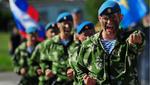
Russian_airborn_troops_syria_1.9.15Russian airborne troops for Syria

Despite strong denials from Moscow, Russian airborne troops are preparing to land in Syria to fight Islamic State forces. The surprise attack on Monday, Aug. 31, by ISIS forces on the Qadam district of southern Damascus, in which they took over parts of the district – and brought ISIS forces the closest that any Syrian anti-Assad group has ever been to the center of the Syrian capital – is expected to accelerate the Russian military intervention.

Moscow is certainly not ready to endanger the position of President Bashar Assad or his rule in Damascus, and views it as a red line that cannot be crossed. If Russia intervenes militarily in this way, Russia will be the first country from outside the Middle East to send ground forces into the Syrian civil war.

DEBKAfile’s military sources report that discussions by the Russo-Syrian Military Commission, which was established last month in Moscow to coordinate the intervention, accelerated during the last few days.

Our intelligence sources point out that the concerted activities of the commission are taking place amid the nearly complete paralysis of the US Central Command-Forward-Jordan (CCFJ), where operations against the rebels in southern Syria, including those holding positions across from Israel’s Golan, are coordinated. Officers from Jordan, Saudi Arabia, Qatar and Israel are attached to the CCFJ.

Most of the operations of the CCFJ have been halted due to a conflict that erupted between the Syrian rebels and the U.S. Central Command, CENTCOM. The US military is opposed to the rebels cooperating with Al-Qaeda-linked groups, such as the Al-Nusra front, while the rebels claim that this cannot be avoided fir they are to defeat the forces of Bashar Assad and Hizballah.

The paralysis of the CCFJ is spurring the Russians to try to show that their “central command” for Syria is operating without any difficulties.

In recent weeks, the Russians have taken four military steps related to Syria:

1. On Aug. 18, six of Russia’s advanced MIG-31 Foxhound interceptor aircraft landed at the Syrian Air Force’s Mezze Airbase, which is the military section of Damascus international airport. After the fighters landed, they were immediately followed by giant Russian Antonov AN-124 Condor cargo planes carrying 1,000 of Russia’s 9M133 Kornet anti-tank missiles.

The advanced jets are intended to serve as air support for the Russian units that arrive in Syria.

2. Before the Russian planes landed in Damascus, Moscow reached an agreement with Washington for the removal of NATO’s Patriot missile batteries from Turkey. The removal was carried out gradually during the month of August, thus preventing the possibility that NATO Patriot missiles could hit Russian fighters carrying out operations in Syrian airspace.

3. During the last week of August, a large number of Russian troops, mostly logistical teams whose job is to lay the groundwork for the arrival of the combat units, arrived in Syria. The troops were seen in Damascus and in Jablah district of Lattakia province, where the Russian forces are building a military base.

4. Our intelligence sources also report that Moscow has started to supply Damascus with satellite imagery of the ground situation on the different fronts.

DEBKAfile’s military and intelligence sources report that all of these preparatory steps by Moscow for the introduction of ground forces are being carried out in coordination with Washington and Tehran.

The more that the three capitals tighten their coordination in support of Assad, the sooner the Russian intervention is expected to take place.

Khamenei: U.S.Is The Enemy’; ‘We Must Combat The Plans Of The Arrogance With Jihad For The Sake Of Allah

September 1, 2015

Khamenei: U.S.Is The Enemy’; ‘We Must Combat The Plans Of The Arrogance With Jihad , MEMRI, September 1, 2015

(Does Iran’s Supreme Leader refer to Obama’s America or to the United States? There’s a difference. — DM)

On August 17, 2015, just over a month after the announcement of the JCPOA in Vienna, Iranian Supreme Leader Ali Khamenei said in a speech at a conference held by the Iranian Shi’ite Ahl Al-Bayt organization that the U.S. is the embodiment of the enemy of the Islamic peoples and of Iran. It must be fought with military, cultural, economic, and political jihad, he said, adding that Islamic Iran is not interested in reconciling with it. He further claimed that the U.S. is attempting to divide the Islamic world into Shi’ite and Sunni camps that will wage a religious war against each other, and in this way gain it will be able to gain control over the peoples of the region.[1]

Iran, he stressed, stands behind the resistance axis, opposes the division of Syria and Iraq, and will continue to support anyone who fights Israel.

Following are excerpts from a report on the speech that was posted on Khamenei’s website (Leader.ir):

“[Khamenei said:] ‘We must combat the plans of the arrogance [i.e. the West, led by the U.S.] with jihad for the sake of Allah.’ The Leader pointed to ‘America’s efforts to exploit the results of the nuclear talks and exert economic, political, and cultural influence in Iran’ and to the plots of the power-hungry order aimed at sowing conflict and gaining influence in the region. The Leader called for ‘adopting the correct plans in order to wisely and consistently fight this plot, in an offense against it and a defense against it.’

“[Khamenei said:] ‘Jihad for the sake of God does not only mean military conflict, but also means cultural, economic, and political struggle. The clearest essence of jihad for the sake of God today is to identify the plots of the arrogance in the Islamic region, especially the sensitive and strategic West Asian region. The planning for the struggle against them should include both defense and offense.

“[He continued:] ‘The plots of the arrogance in the region have continued for a century, but [its] pressure and plotting increased after Iran’s Islamic Revolution [1979], in order to prevent [this Revolution] from spreading to other countries. For 35 years, the regime in Iran has been subjected to threats, sanctions, security pressure, and various political plots. The Iranian nation has grown accustomed to this pressure. After the Islamic awakening movement blossomed in recent years in North Africa [i.e. the Arab Spring], the enemy greatly stepped up its plots in the West Asian region because of its panic.

“‘The enemies thought that they could suppress the Islamic awakening movement, but it cannot be suppressed. It continues, and sooner or later it will prove itself as reality.

“‘The power-hungry order led by the United States of America is the perfectly clear embodiment of “the concept of the enemy.” America has no human morality. It carries out evil crimes under the guise of flowery statements and smiles. The enemy’s plot is two pronged: creating conflict and [exerting] influence. [The enemy sows conflict] among governments, and, worse, among the nations. At this stage, they are using the Shi’a and the Sunna to create conflict among the nations. Britain is an expert in sowing conflict; the Americans are its apprentices.

“‘Establishing violent despicable criminal takfiri circles, which the Americans have acknowledged establishing, is the main means of sowing conflict, ostensibly religious conflict, among [the Muslim] nations. Sadly, some innocent and ignorant Muslims have been fooled by this plot, and have been tricked by the enemy and fallen into its trap. Syria is an obvious example of this. When Tunisia and Egypt, with Islamic slogans, ousted their infidel governments, the Americans and Zionists decided to use this formula to eliminate the countries of the resistance, turning their attention to Syria. After the events in Syria began, some ignorant Muslims were tricked by the enemy and dragged Syria to its current situation. What is happening today in Iraq, Syria, Yemen, and other countries, which some people insist on calling “a religious war,” is in no way a war of religion [i.e. Sunni vs. Shi’ite], but a political war. The most important duty today is to remove these conflicts.

“‘I have explicitly stated that Iran reaches out in friendship to all the Islamic governments in the region, and that we have no problem with Muslim governments. Iran has friendly relations with most of its neighbors. Some still have conflicts with us; they are stubborn, and carry out nefarious acts, but Iran aspires to good relations with its neighbors and with the Islamic governments, especially with the governments in the region. The basis for Iran’s conduct comprises the principles laid out by Imam Khomeini, which he used to bring about victory for the Islamic Revolution, and he led it to a phase of stability.

“‘One of the principles of the [Islamic] regime [in Iran] is to be “forceful against the disbelievers, merciful amongst themselves [Koran 48:29].” On the basis of Imam Khomeini’s lesson, we do not wish to reconcile with the arrogance, but we aspire to friendship with our Muslim brothers. When we support [any of] the oppressed, we ignore the religious element; we provide the same aid to our Shi’ite brothers in Lebanon and to our Sunni brothers in Gaza. We see the Palestinian issue as the chief issue of the Islamic world.

“‘There must be no exacerbation of the conflict in the Islamic world. I oppose any conduct, even by Shi’ite circles, that creates conflict. I condemn the insults against the sanctities of the Sunna.

“‘The U.S. has aspired for decades to infiltrate the region and regain its lost reputation. The Americans wish to infiltrate Iran with the [JCPOA] agreement, whose fate in Iran and in the U.S. is still unknown. But we have decisively blocked this path, and we will do anything to keep them from infiltrating Iran economically, politically, and culturally.

“‘Iran’s regional policy is the opposite of America’s. While [America] seeks to divide the countries of the region and to create statelets that obey it, this will not happen. Some were amazed by statements I made in the past about America’s attempt to divide Iraq, but today the Americans themselves honestly acknowledge this. The Americans’ clear goal is to divide Iraq, and, if they can, Syria as well. But the territorial integrity of the countries of the region – Iraq and Syria – is very important to Iran.

“‘Iran supports the resistance in the region, including the Palestinian resistance, and we will support anyone who struggles against Israel and strikes at the Zionist regime. Iran’s chief policy is a struggle against America’s policy of division and its sowing of conflict. We do not recognize the Shi’a that is based in London and works in the service of the arrogance.

“‘In contrast to unfounded claims, Iran is not interfering in Bahrain and Yemen, but will continue to support the oppressed. The massacre of oppressed Yemenis and the destruction of that country must be strictly condemned. Promoting some [Saudi] political goals via foolish methods results in ongoing crimes against the Yemeni people.

“‘There are also painful events in Pakistan and Afghanistan. Muslims must be wise and vigilant, and thus they will solve these problems.

“‘The Islamic Radio and Television Union [organization in Iran] is an important center in the struggle against the dangerous empire of the sophisticated American-Zionist media mafia. We must strengthen and grow this movement…

“‘The future of the region belongs to the Muslim nations. Islam’s might is clear and will be maintained because of the presence of the fighting men and women.'”[2]

_________________

Endnotes:

[1] It should be noted that in the main Friday sermon in Tehran on August 28, 2015, prayer leader Ayatollah Kazem Seddiqi advised the officials in the government of Iranian President Hassan Rohani not to be misled by the West and the U.S. following the JCPOA, because they are “cannibals, liver-eaters, and anti-religion.” Fars, Iran, August 29, 2015.

[2] Leader.ir, August 18, 2015.

Meet the Iran Lobby

September 1, 2015

Meet the Iran Lobby, Tablet MagazineLee Smith, September 1, 2015

In part, Parsi and NIAC’s relative anonymity is the work of a White House that would rather pretend that there is no Iran Lobby, in accordance with the standard Beltway wisdom that a “lobby” is any group of people who advocate things that you are opposed to (lobbies that advocate things you are for are known as “supporters”). But the White House surely knows better, in part because so many friends and graduates of the Iran Lobby now staff key Iran-related government posts. The White House’s Iran desk officer, Sahar Nowrouzzadeh, for example, is a former NIAC employee. NIAC’s advisory board includes two former U.S. diplomats, Thomas Pickering, a former ambassador to Israel, and John Limbert, who was held hostage by the revolutionary regime in 1979. 

Most important, of course, Parsi found common cause with a White House that believed the same things he did: The United States and Iran should be closer, and all that was preventing rapprochement was Israel and AIPAC. “NIAC didn’t really need to write their talking points anymore,” said Dai. “Because they were coming from the White House.

***********************

Trita Parsi, the Iranian-born émigré who moved to the United States in 2001 from Sweden, where his parents found refuge before the Islamic Revolution, should be the toast of Washington these days. As I argued in Tablet magazine several years ago, Parsi is an immigrant who in classic American fashion wanted to capitalize on the opportunity to reconcile his new home and his birthplace. And now he’s done it: The founder and president of the National Iranian American Council (NIAC), the tip of the spear of the Iran Lobby, has won a defining battle over the direction of American foreign policy. The Joint Comprehensive Plan of Action not only lifts sanctions on Iran, a goal Parsi has fought for since 1997, but also paves the way for a broader reconciliation between Washington and Tehran across the Middle East.

In Washington, to have the policies you advocate implemented with the full backing of the president counts as a huge victory. Winning big like this means power as well as access to more money, which flows naturally to power and augments it—enhancing reputations and offering the ability to reward friends and punish enemies. And yet, Parsi (who declined comment for this story) has got to be frustrated that very few in the halls of American power—either in government or in the media—are celebrating the Iran lobby for its big win. It seems the only thing people can talk about is the big loser in this fight over Middle East policy—the pro-Israel lobby, led by AIPAC. It’s as if Parsi and NIAC had nothing to do with the Obama Administration’s decision to move closer to Iran while further distancing itself from Israel.

“It’s a huge win for NIAC,” said one Iranian-American analyst who requested anonymity. “Every other part of Iranian-American advocacy—from the Mujahedin-e Khalq, to the washed-up old monarchists—is useless, and then in comes Trita and he’s slick, presentable, and knows how to build an impressive network.” So, why is the rise of the Iran Lobby both Washington’s biggest and also its least-heralded success story of the past six years?

In part, Parsi and NIAC’s relative anonymity is the work of a White House that would rather pretend that there is no Iran Lobby, in accordance with the standard Beltway wisdom that a “lobby” is any group of people who advocate things that you are opposed to (lobbies that advocate things you are for are known as “supporters”). But the White House surely knows better, in part because so many friends and graduates of the Iran Lobby now staff key Iran-related government posts. The White House’s Iran desk officer, Sahar Nowrouzzadeh, for example, is a former NIAC employee. NIAC’s advisory board includes two former U.S. diplomats, Thomas Pickering, a former ambassador to Israel, and John Limbert, who was held hostage by the revolutionary regime in 1979. Past speakers at NIAC leadership conferences include Joe Biden’s National Security Adviser Colin Kahl, and the White House’s Middle East Director Rob Malley. Other past speakers from the political realm include: Robert Hunter, former U.S. ambassador to NATO; PJ Crowley, State Deptartment spokesperson under Hillary Clinton; Hans Blix, former director general of the IAEA. Other reputable names include figures like Aaron David Miller from the Wilson Center, Robert Pape from the University of Chicago, and Suzanne Maloney from the Brookings Institution.

Indeed, the impressive roster of speakers at NIAC events is evidence of Parsi’s assiduous cultivation of friendly contacts, both here and in Iran. The biggest NIAC booster in academia is the author of The Israel Lobby himself, Harvard University’s Steven Walt. The in-house portion of Parsi’s network also includes public intellectuals, like Iranian-American authors Hooman Majd and Reza Aslan, as well as figures from Iranian business concerns, like Atieh Bahar, who are reportedly close to the Iranian regime, especially former President Akbar Hashemi Rafsanjani.

According to a deeply informed video series posted earlier this month by Iranian-American activist Hassan Dai, Parsi has partnered with Atieh Bahar since the very beginning of his career as an Iran lobbyist in order to promote a pro-trade agenda, which of course will inevitably help the regime. (In 2008, Parsi sued Dai, claiming he had “defamed them in a series of articles and blog posts claiming that they had secretly lobbied on behalf of the Iranian regime in the United States.” The U.S. District Court for the District of Columbia found in 2012 the work of NIAC, which wasn’t registered under the Foreign Agents Registration Act, “not inconsistent with the idea that he was first and foremost an advocate for the regime.”) “Parsi believed that what stood between U.S.-Iran trade and dialogue,” said Dai, “was AIPAC.”

NIAC not only modeled itself after AIPAC, Dai said, it waged a crusade against it. “Back in 2004 Parsi gave a talk to European ambassadors saying that Israel and AIPAC stood between better relations between the United States and Iran. That turned into his dissertation at Johns Hopkins and later his [2007] bookTreacherous Alliance: The Secret Dealings of Israel, Iran, and the US.”

As it happens, Parsi was able to tap into a pool of support for his ideas. According to NIAC’s financial statement, the majority of the organization’s money comes from community support, while a portion comes from foundations, like the Ploughshares Fund, which has spent lots of money to influence U.S. policy toward Iran—“millions of dollars,” according to Michael Rubin writing for Commentary, “to pro-administration groups to support whatever Iran deal came out of Vienna.”

Most important, of course, Parsi found common cause with a White House that believed the same things he did: The United States and Iran should be closer, and all that was preventing rapprochement was Israel and AIPAC. “NIAC didn’t really need to write their talking points anymore,” said Dai. “Because they were coming from the White House.”

To push through the Iran deal, the White House, including the president himself, waged a brutal campaign against the prime minister of Israel and the pro-Israel community, even, some have argued, accusing JCPOA opponent Sen. Chuck Schumer of dual loyalty. Parsi, some of whose anti-Israel sentiments have previously been documented, followed suit. Most recently, he suggested that the Associated Press had printed an Israeli forgery of an IAEA agreement with Iran that allowed the Islamic Republic to self-inspect its Parchin military base. When AP reporters and others on Twitter challenged Parsi’s absurd allegation slandering a trusted Western news source, the Iran lobby chief backed down—but not before he’d put his obsession with Israel and Jewish power on full display.

NIAC, whose direct expenditure of a little over a million dollars is a tiny fraction of AIPAC’s Iran deal campaign budget, won because it was aligned with the White House. And instead of boasting and posturing about his power and top-level access, as AIPAC is wont to do, Parsi understood his role. Like J Street, NIAC was cast to play second banana to the President’s star turn and stay close to the White House and make the case to journalists and other intellectuals who weren’t already sold on the idea of rapprochement with Iran—and on the idea that Israel is a big problem for the United States.

The paradox is that Parsi deserves lots of credit for his victory, but he can’t cash his checks too publicly—because the American public doesn’t like Iran. Which in turn points up a major difference between the pro-Israel lobby and the pro-Iran lobby—both of which, I want to add, contrary to critics on both the left and the right, make entirely legitimate use of the American democratic system to advocate for their respective points of view.

Where NIAC differs from AIPAC is in its relation to American public opinion. AIPAC has never been about selling access to the Israeli economy: In fact, AIPAC piggy-backed on the huge well-spring of affection that the American public has for Israel in order to establish itself as a power in Washington. If Americans want to invest in an IT firm in Herzliya, or a gift shop in Tzfat, donating money to AIPAC is unlikely to be of much help: They’re free to take their chances and fight through the red tape. Nor is it clear that pursuing exciting economic opportunities in Israel has ever been a particular motivating force for pro-Israel activism. The pro-Israel lobby never sold anything except the opportunity for Americans—Jews, evangelical Christians, and mainstream Democrats and Republicans alike—to feel even better about supporting something they already felt good about, for personal, ethnic, ideological, religious, sentimental, and other such reasons.

The pro-Iran lobby on the other hand has no real base of popular support in America: Many Iranians in America are in fact deeply opposed to the regime in Tehran, and see NIAC as a regime tool. What NIAC has to offer instead, like the Saudi lobby before it, is access, which is a big reason why Parsi has been fighting sanctions for nearly two decades. For an Iran Lobby to have any heft, it needs to be able to deliver the goods to its supporters. With sanctions, the Iran Lobby has been largely crippled, because it has very little to offer: It was able to accumulate the power it has now only because the Administration clearly signaled its desire to do business with Iran, thereby offering NIAC supporters at least some mathematical expectation of a future payout. Now, if the JCPOA gets through Congress, that payout is likely to be tremendous, as the Iran Lobby will be able to help broker access to anything and everything in Iran—from industry, to schools, to opportunities for journalists and academics, etc.—which will in turn make NIAC and the Iran Lobby that much more powerful.

One of the chief ironies of the ongoing debate over the Iran deal is that both defenders and detractors of a supposedly all-powerful “Israel Lobby” have been wasting their breath over an entity that has notably failed to affect U.S. policy on a single issue of major concern over the entire course of Obama’s 6-year Presidency—a record of unmitigated failure that would clearly condemn it to the black hole of Beltway irrelevance if not for the bizarre imaginative hold, and political utility, of the myth of a powerful conspiracy of Jews who secretly rule the planet. Or perhaps it’s not an irony at all. Some of the loudest detractors of the “Israel Lobby” are in fact paid staffers and partisans of the Iran Lobby—an entity that, unlike the Israel Lobby, has succeeded in radically altering U.S. foreign policy, with the help of the President and his advisors. Seen from a certain angle, the Iran Lobby has pulled off the neat trick of using the specter of the Israel Lobby to shift U.S. policy away from Israel and toward Iran—while actually succeeding at the same dark arts that it blames the Jews for employing. The Iran lobby used a combination of lobbying, donations, propaganda, and back-door personal connections to top policy-makers to radically alter American foreign policy, and align the United States with an oppressive authoritarian regime that is destabilizing the Middle East.

Senate Dems plot filibuster to dodge Iran nuclear deal vote

September 1, 2015

Senate Dems plot filibuster to dodge Iran nuclear deal vote, Front Page MagazineJoseph Klein, September 1, 2015

(Please see also, Use Our Senatorial Nuclear Option to Stop Iran’s Radioactive Nuclear Option. — DM)

Democratic senators supporting President Obama’s disastrous nuclear deal with Iran are cowards. They know that a majority of Americans oppose the deal. Thus, they are running for cover to avoid going on the record and voting against a resolution disapproving the deal. A filibuster to block a vote on the merits altogether is the Democratic Senate caucus’s preferred way out.

The White House is reportedly pushing the filibuster strategy even though Obama is virtually certain to have enough votes to sustain a veto of a resolution of disapproval passed by both houses of Congress. Two-thirds votes are required in both the House of Representatives and the Senate to override an Obama veto. But if Obama can get out of using his veto pen and expending political capital to sustain it, he is all too happy to hide behind the filibuster fig leaf.

So far only two Democratic senators have declared their opposition to the deal – New York’s senior senator, Chuck Schumer, and New Jersey’s senior senator, Robert Menendez. Assuming they both would vote with the Republican majority to end a filibuster, four additional votes would be needed to reach the magic closure number of 60 and allow the resolution to proceed to a floor vote. Democratic Senate Minority Leader Harry Reid is doing what he can to corral enough support among his fellow Democrats to prevent the closure number from being reached.

Republican Senator Bob Corker of Tennessee, the chairman of the Senate Foreign Relations Committee, told the Associated Press he found it “stunning” that Reid is proposing to block a vote on a resolution of disapproval.  “All but one senator voted in favor of having the right to vote on the final deal, so then to turn right around and filibuster it to me is very inconsistent and I think would be confusing to the people they represent,” Senator Corker said.

Sen. Tom Cotton (R-Ark.) was even more direct, declaring that Reid “wants to deny the American people a voice entirely by blocking an up-or-down vote on this terrible deal.”

A majority of Americans oppose the nuclear deal. Democrats could face a political price if they do not even allow a vote that reflects the majority sentiment. But blind partisan loyalty to Obama trumps their responsibility to the American people. Their excuse, as explained by Sen. Chris Murphy (D-Conn.), is an insult to American national sovereignty:

“There’s a cost to the international credibility of the country and this president if a motion of disapproval passes the House and the Senate. There is some harm to the country’s standing if we have to go through the charade of the veto.”

The “charade” in play here occurred when the Senate forfeited its constitutional prerogative in the first place to “advise and consent” to treaties by a two-thirds vote of senators present. The Joint Comprehensive Plan of Action (“JCPA”), the formal name of the nuclear deal with Iran, deserved to be handled as a treaty that affirmatively requires Senate approval. Instead, in the face of the Obama administration’s threat to treat the JCPA solely as an executive agreement and exclude Congress altogether from playing any role in reviewing the JCPA before it went into effect, the leaders in both houses buckled under. They ended up taking whatever scraps of participation in the process that the Obama administration was willing to offer them.

The Republican majority thereby set a terrible precedent when it agreed to an upside-down procedure under which President Obama will get his way unless both houses of Congress override his veto of a disapproval resolution by a two-thirds vote. Now they are playing defense against the stratagems of Democratic Minority Leader Reid, who plans to take no prisoners. Iran’s Deputy Foreign Minister Hamid Baidi-nejad, presumably speaking for his government, is rooting for Reid to succeed with his filibuster ploy, according to a report last weekend in the Tehran Times.

The response of the Republican Senate majority to the filibuster threat is muddled. When asked whether the majority could beat back a filibuster maneuver, Senator Corker lamented, “I don’t know, I don’t know.”

There is a defeatist attitude emerging amongst opponents of the deal, although some Republicans are looking to the next election to exact a political price from those Democratic senators running in 2016 who side with Reid and Obama. In particular, Senator Michael Bennet (D-Colo.), still reportedly undecided, may be in the crosshairs as a vulnerable incumbent if he ends up supporting Reid and Obama. “If Sen. Michael Bennet filibusters or votes for the Iran deal we will make sure voters know he supported a nuclear deal that threatens our national security,” Andrea Bozek, a spokeswoman for the National Republican Senatorial Committee, said in a statement.

Waiting until the 2016 elections, however, is too little, too late, at least as far as the filibuster threat is concerned. Republican Senate Majority Leader Mitch McConnell must not only denounce the filibuster ploy, but push through a change in Senate rules to prohibit a filibuster that would prevent an up-or-down vote on something as momentous to national security as the nuclear deal with Iran.

McConnell would not have to look very far for a precedent. Harry Reid provided it back in 2013 when he maneuvered a party line vote to ban the use of filibusters to block votes on presidential nominations.

“A simple majority vote no longer seems to be sufficient for anything, even routine business, in what is supposed to be the world’s foremost deliberative body,” Obama said at the time in supporting Reid’s tactic. “Today’s pattern of obstruction, it just isn’t’ normal, it’s not what our founders envisioned.”

In truth, our founders did not envision a situation in which a minority of senators can prevent the Senate from even exercising the crumb left on the table after the majority ceded away the Senate’s constitutional treaty “advice and consent” powers.

Senator McConnell responded to Reid’s initiative against the use of filibusters in connection with nominations this way: “Some of us have been here long enough to know the shoe is sometimes on the other foot. You’ll regret this, and you may regret it a lot sooner than you think.”

The shoe now is on the other foot. The time has come for Senator McConnell and the Senate Republican majority to put their collective foot down and force the Democrats to vote up or down on the resolution to disapprove Obama’s nuclear deal with Iran. They must act immediately to take away the Democrats’ filibuster fig leaf. Each of those Obama loyalists who support the deal should be required to go on the record and be accountable to their constituents for their decision. Even if not playing the full advice and consent role that the founding fathers contemplated with regards to treaties, the Senate will at least have had its say. And the next president can act accordingly to void the deal and punish Iran, including (unlike Obama) supporting congressional initiatives for even harsher sanctions and possible military action, if Iran is found to have violated a single commitment. The large majority of Americans who oppose Obama’s deal deserve nothing less.

Rocket from Gaza follows IDF-Palestinian clash in West Bank town of Jenin

September 1, 2015

Rocket from Gaza follows IDF-Palestinian clash in West Bank town of Jenin, DEBKAfile, September 1, 2015

Palestinian rocket fire from the Gaza Strip put southern Israel on red alert before dawn Tuesday. Sept 1 in the wake of a major clash that erupted in the West Bank refugee camp of Jenin Sunday night. The circumstances of that episode are not entirely clear. Israel playing the Jenin encounter down, whereas the Palestinians are presenting it as “the biggest battle of the third initifada.” An Israeli soldier and five Palestinians were injured.

It began, DEBKAfile’s military sources report, when a large combined force of the IDF, Shin Bet and Police Special Operations, riding in dozens of vehicles, entered the Jenin camp Monday night to round up Islamic Jihad and Hamas terrorist suspects. In the Al-Hadaf district, they surrounded the homes of Bassam Al-Saeedi, reputed Jihad chief on the West Bank, and Majdi Abu al-Hejja, a local Hamas military arm operative.

At some point, Israeli rocket fire badly damaged Al-Saeedi’s house.

The IDF sources say it was a single small rocket, without explaining why it was fired. The IDF spokesman first reported “a heavy exchange of fire” around the building. Early Monday, the word “heavy” was dropped from the briefing to reporters and finally, there was no reference to any exchange of fire at all.

The Palestinians claim that the Jihad leader was not at home at the time of the raid and so escaped his pursuers.  But there is no word on either side about the fate of any occupants of building and whether any were killed.

Did the IDF decide to knock the building down in response to gunfire coming out of it? Or was it a warning to the Islamic Jihad and other Palestinian terrorist groups to halt their latest spate of violence or lose their homes?

Another mystery is how Bassam Al-Saeedi came to be away from home, confounding the information reaching the Shin Bet? Did he get a tip-off of the impending Israeli raid for his arrest?

If armed Palestinian groups on the West Bank have taken to posting spotters outside their areas to forewarn them of approaching Israeli forces, this would ratchet up their operational tactics to the military level observed by fellow Hamas and the Islamic Jihad groups in the Gaza Strip.

While Bassam Al-Saheedi escaped arrest, the Hamas operative Majdi Abu al-Hejja and his brother were captured and taken away for interrogation.

In weighing in heavily for a preventive detention operation against suspected terrorist leaders Sunday night, Israeli security chiefs were almost certainly acting on a decision to avert any possible terrorist action for  disrupting the opening of the school year Monday, Sept. 1. The level of Palestinian violence on and from the West Bank and Jerusalem has risen sharply in recent weeks.

Thirteen years ago, at the peak of the Palestinians’ Second intifada, Israel launched a major assault on the Jenin refugee camp. Thirteen Israeli soldiers were lost in this major battle on April 5, 2002. Since then, the refugee camp has claimed to hold the flag of armed Palestinian resistance to Israel and its army. Security forces arriving there to detain suspects routinely come under a hail of rocks and firebombs. However, the current clash of arms represented a sharp escalation in the Israeli-Palestinian confrontation on the West Bank.

Nuclear Fiascoes: From Diplomatic Failure With North Korea To Debacle With Iran

September 1, 2015

Nuclear Fiascoes: From Diplomatic Failure With North Korea To Debacle With Iran, Forbes, Claudia Rosett, August 31, 2015

(An excellent comparison of the machinations that led to the nuke “deal” with North Korea and those now leading to the “deal” with the Islamic Republic of Iran. — DM)

[B]oth Clinton and Bush purchased the transient gains of North Korean nuclear deals at the cost of bolstering a North Korean regime that has become vastly more dangerous. . . . Kim Jong Un bestrides a growing arsenal of weapons of mass murder, including chemical and biological, as well as nuclear, plus a growing cyber warfare capability. This is the legacy not least of North Korea’s skill at exploiting the feckless nuclear deals offered by U.S. presidents whose real achievements on this front were to hand off a monstrous and rising threat to the next administration.

Now comes the Iran nuclear deal, which President Obama has described as a perhaps once-in-a-lifetime “historic chance to pursue a safer and more secure world.” And from Israel’s Prime Minister Netanyahu, leader of America’s closest ally and Iran’s prime target in the Middle East, comes the warning that this deal is a “stunning historic mistake,” configured not to block Iran’s path to the bomb, but to pave the way.

Like the North Korea Agreed Framework, the Iran nuclear deal pivots narrowly on nuclear issues, as if ballistic missiles, terrorism, arms smuggling, gross violations of human rights, blatant declarations of destructive intent and the malign character of the regime itself were irrelevant to the promised “exclusively peaceful” nuclear program.

[I]f this Iran deal goes through, is that we are about to see the mistakes made with North Korea amplified on a scale that augurs not security in the 21st century, but a soaring risk of nuclear war.

************************

With Congress due to vote by Sept. 17 on the Iran nuclear deal, there’s a warning worth revisiting. It goes like this: The president is pushing a historic nuclear agreement, saying it will stop a terror-sponsoring tyranny from getting nuclear weapons. And up pipes the democratically elected leader of one of America’s closest allies, to say this nuclear deal is mortal folly. He warns that it is filled with concessions more likely to sustain and embolden the nuclear-weapons-seeking despotism than to disarm it.

This critic has more incentive than most to weigh the full implications of the deal, because his country is most immediately in harm’s way — though it has not been included in the nuclear talks. He notes that the nuclear negotiators have sidelined such glaring issues as human rights, and warns that Washington is naive, and the U.S. is allowing itself to be manipulated by a ruthless dictatorship.

No, the critic I’m referring to is not Israel’s Prime Minister Benjamin Netanyahu, though he has warned of precisely such dangers in the Iran nuclear deal. I am citing the warnings voiced 21 years ago by the then-President of South Korea, Kim Young Sam, as the Clinton administration bargained its way toward the 1994 nuclear deal with North Korea known as the Agreed Framework.

As it turned out, Kim Young Sam’s misgivings were right on target. The 1994 Agreed Framework did not stop North Korea’s pursuit of the bomb. Instead, it became a pit stop on North Korea’s road to the nuclear arsenal it is amassing today.

For all the differences between North Korea and Iran, there are parallels enough to suggest that the failed 1994 nuclear bargain with North Korea is an excellent guide to the future trajectory with Iran, if the U.S. goes ahead with the nuclear deal — the Joint Comprehensive Plan of Action — announced by the U.S., France, Britain, Germany, Russia, China and Iran on July 14 in Vienna.

Recall that in 1994, faced with the threat of North Korea producing plutonium for nuclear weapons, the U.S. sought a diplomatic solution. Taking a cue from an exploratory trip to Pyongyang by former President Jimmy Carter, the Clinton administration wooed North Korea with an offer of lightwater nuclear reactors to be used exclusively for the peaceful production of electricity. All Pyongyang had to do was give up its nuclear bomb program.

As this agreement was taking shape, South Korea’s Kim Young Sam laid out his concerns in an hourlong interview with the New York Times. In the resulting article, dated Oct. 8, 1994, the Times reported: “After weeks of watching in silent frustration as the United States tries to negotiate a halt to North Korea’s nuclear program, President Kim Young Sam of South Korea lashed out at the Clinton administration today in an interview for what he characterized as a lack of knowledge and an overeagerness to compromise.”

The Times article described Kim’s concerns that “compromises might prolong the life of the North Korean government and would send the wrong signal to its leaders.” Kim was quoted as denouncing the deal then in the making as a “half-baked compromise” which would lead to “more danger and peril.”

President Clinton rolled right past that warning. On Oct. 21, 1994, less than two weeks after Kim’s concerns hit the headlines, the U.S. signed the Agreed Framework with North Korea. Clinton praised the deal as “good for the United States, good for our allies, and good for the safety of the entire world.” Promising that the Agreed Framework would reduce the threat of nuclear proliferation, Clinton further lauded the deal as “a crucial step for drawing North Korea into the global community.”

South Koreans and their leaders, in the main, disagreed. But with South Korea dependent on the U.S. superpower for defense against North Korea, Kim Young Sam had little choice but to follow Clinton’s lead. Seoul damned the deal with faint praise. The Associated Press reported: “South Korean Foreign Minister Han Sung-joo said that even though the deal fell short of expectations, it met South Korea’s minimum policy goals.”

History now shows that the chief policy goals served by the Agreed Framework were those of Pyongyang, which racked up a highly successful exercise in nuclear extortion, and carried on, first secretly, then overtly, with its nuclear weapons program. As South Korea’s president had predicted, the Agreed Framework helped fortify Pyongyang’s totalitarian regime, rather than transforming it.

Some of the negotiators involved in that 1994 deal have since argued that while the North Korean agreement eventually collapsed, it did at least delay Pyongyang’s progress toward nuclear weapons. What they tend to omit from that select slice of history is that the Agreed Framework helped rescue a North Korean regime which in 1994 was on the ropes. Just three years earlier, North Korea’s chief patron of decades past, the Soviet Union, had collapsed. The longtime Soviet subsidies to Pyongyang had vanished. China did not yet have the wealth to easily step in. And just three months before the nuclear deal was struck, North Korea’s founding tyrant, Kim Il Sung, died. His son and heir, Kim Jong Il, faced the challenge of consolidating power during a period of famine at home and American superpower ascendancy abroad.

But in the game of nuclear chicken, it was America that blinked. In exchange for North Korea’s promise to freeze and eventually dismantle its nuclear weapons program, the U.S. agreed to lead a $4.6 billion consortium to build two lightwater reactors for North Korea, and provide shipments of free heavy fuel oil for heating and electricity production while the new reactors were being built. This was augmented by U.S. security guarantees, easing of sanctions and promises to move toward normalizing diplomatic relations, with generous food aid thrown in.

By the late 1990s, just a few years into the deal, North Korea had become the largest recipient of U.S. aid in East Asia. That did not curb Kim Jong Il’s hostile ways. The Pyongyang regime put the interests of its military and its weapons programs before the needs of its starving population. In 1998, North Korea launched a long-range missile over Japan, a test for which it was hard to discern any purpose other than developing a vehicle to carry nuclear weapons. By that time, as a number of former Clinton administration officials have since confirmed, the U.S. was seeing signs that North Korea was cheating on the nuclear deal by pursuing a secret program for uranium enrichment.

Instead of confronting North Korea, Clinton during his last two years in office tried to double down on his crumbling nuclear deal by pursuing a missile deal with Pyongyang. In 2000, that led to an exchange of high-ranking officials, in which the Clinton administration dignified North Korea with the unprecedented move of welcoming one of its top-ranking military officials, Vice Marshal Jo Myong Rok, to a 45-minute sitdown with Clinton at the White House. Clinton then dispatched Secretary of State Madeleine Albright, together with the administration’s special advisor for North Korea policy, Wendy Sherman, to Pyongyang (yes, the same Wendy Sherman recently employed by Obama as chief negotiator of the Iran nuclear deal). Sherman and Albright brought North Korea’s Kim Jong Il a basketball signed by star player Michael Jordan; Kim entertained them with a stadium flip-card depiction of a long-range missile launch. There was no missile deal.

North Korea continued raking in U.S. largesse until late 2002, when the Bush administration finally confronted Pyongyang over its nuclear cheating. North Korea then walked away from the 1994 deal (on which it had by then been cheating for years), withdrew from the Non-Proliferation Treaty (on which it had also been cheating) and began reprocessing plutonium from the spent fuel rods which despite the 1994 deal had never been removed from its Yongbyon nuclear complex. President Bush then made his own stab at nuclear diplomacy, via the Six-Party Talks. North Korea punctuated that process in Oct. 2006 with its first nuclear test. In 2007, the Bush administration led the way to a Six-Party denuclearization deal with North Korea, bull-dozing ahead even after it became clear that North Korea had been helping Syria build a secret copy of North Korea’s plutonium-producing Yongbyon reactor (destroyed in Sept. 2007 by an Israeli air strike). Once again, North Korea took the concessions, cheated on the deal and in late 2008 walked away.

Since Obama took office, North Korea has carried out its second and third nuclear tests, in 2009 and 2013; restarted its plutonium-producing reactor at Yongbyon; and in 2010 unveiled a uranium enrichment plant, which appears to have since at least doubled in size. Having equipped itself with both uranium and plutonium pathways to the bomb, North Korea is now making nuclear weapons, and developing increasingly sophisticated missiles — including long-range — to deliver them.

In sum, both Clinton and Bush purchased the transient gains of North Korean nuclear deals at the cost of bolstering a North Korean regime that has become vastly more dangerous. When Kim Jong Il died in late 2011, North Korea’s regime managed a second transition of power, to third-generation Kim family tyrant Kim Jong Un — who was described last year by the commander of U.S. Forces in Korea, General Curtis Scaparrotti, as “overconfident and unpredictable.” Kim Jong Un bestrides a growing arsenal of weapons of mass murder, including chemical and biological, as well as nuclear, plus a growing cyber warfare capability. This is the legacy not least of North Korea’s skill at exploiting the feckless nuclear deals offered by U.S. presidents whose real achievements on this front were to hand off a monstrous and rising threat to the next administration.

Now comes the Iran nuclear deal, which President Obama has described as a perhaps once-in-a-lifetime “historic chance to pursue a safer and more secure world.” And from Israel’s Prime Minister Netanyahu, leader of America’s closest ally and Iran’s prime target in the Middle East, comes the warning that this deal is a “stunning historic mistake,” configured not to block Iran’s path to the bomb, but to pave the way.

There are surely dissertations to be written on the intricate differences between the North Korea Agreed Framework and the Iran nuclear deal now before Congress. But important and alarming similarities abound.

Like the North Korea deal, the Iran deal dignifies a despotic, murderous regime, and provides its worst elements with relief from economic distress, via a flood of rejuvenating resources. In North Korea’s case, the main help arrived in the form of aid. In oil-rich Iran’s case, it comes in the far more lucrative form of sanctions relief, including access to an estimated $55 billion or more (by some estimates, two or three times that amount) in currently frozen funds held abroad.

Like the North Korea Agreed Framework, the Iran nuclear deal pivots narrowly on nuclear issues, as if ballistic missiles, terrorism, arms smuggling, gross violations of human rights, blatant declarations of destructive intent and the malign character of the regime itself were irrelevant to the promised “exclusively peaceful” nuclear program.

Like the North Korea deal, the Iran deal comes loaded with incentives for the U.S. administration to protect its own diplomatic claims of success by ignoring signs of cheating. Monitoring of nuclear facilities is shunted to the secretive International Atomic Energy Agency, which has no power of enforcement, and will have to haggle with Iran for access to suspect sites.

Like Clinton with North Korea, Obama chose to frame the Iran deal not as a treaty, but as an executive agreement, performing an end-run around vigorous dissent within Congress by submitting the deal pronto for approval by the United Nations Security Council. In the North Korean case, the Security Council gave its unanimous blessing in the form of a presidential statement. In the Iran case, the Obama administration drafted a resolution which the Security Council unanimously approved. Having hustled the deal directly to the U.N., despite legislation meant to ensure Congress a voice, Obama administration officials are now pressuring Congress to defer to the U.N.

To be sure, there are two highly significant differences between the 1994 North Korea deal and the 2015 Iran deal. Iran, with its oil wealth, location in the heart of the Middle East, messianic Islamic theocracy and global terror networks, is even more dangerous to the world than North Korea. And, bad as the North Korea deal was, the Iran deal is much worse. Along with its secret side agreements and its promises to lift the arms embargo on Iran in five years and the missile embargo in eight, this deal lets Iran preserve its large illicitly built nuclear infrastructure and carry on enriching uranium, subject to constraints that will be problematic to enforce, and are themselves limited by sunset clauses that even North Korea never managed to obtain at the bargaining table.

When Israel’s Netanyahu spoke this past March to a joint meeting of Congress, warning that the Iran nuclear deal would lead to “a much more dangerous Iran, a Middle East littered with nuclear bombs and a countdown to a potential nuclear nightmare,” Obama dismissed that speech as “nothing new.” That’s true, in the sense that we have heard similar warnings before. What’s new, if this Iran deal goes through, is that we are about to see the mistakes made with North Korea amplified on a scale that augurs not security in the 21st century, but a soaring risk of nuclear war.