Archive for July 22, 2015

Springtime for America’s Enemies

July 22, 2015

Springtime for America’s Enemies, The Daily BeastGarry Kasparov, July 22, 2015

(This is from The Daily Pest Beast. — DM)

Dangerous and short-sighted U.S. diplomacy has empowered no one except state sponsors of terrorism and fascistic regimes.

There has never been a better time in history to be an enemy of the United States of America. While America’s traditional allies in Europe and the Middle East express confusion and frustration, Obama’s White House delivers compliments and concessions to some of the most brutal dictatorships in the world. In the span of a single week, the U.S. has restored diplomatic relations with Cuba, pressured Ukraine to accept Vladimir Putin’s butchering of its eastern region, and brokered a deal to liberate Iran from sanctions.

These actions would represent a tremendous series of diplomatic triumphs if they improved human rights in these repressed nations, saved lives in conflict regions, or improved global security. That is, in fact, what the White House says these deals will do, despite copious evidence to the contrary. These negotiations represent willful ignorance of the fundamental nature of the regimes in question, especially those of Iran and Russia. Cuba is a political hotspot in the U.S. and remains a potent symbol of totalitarianism, but despite its regional meddling, especially in Venezuela, it isn’t on the scale of the global threats represented by Iran’s terrorism and nuclear ambitions and Putin’s nuclear-backed expansionism. Regardless of the wishes of the Iranian and Russian people, their leaders have no interest in peace, although they are very interested in never-ending peace negotiations that provide them with cover as they continue to spread violence and hatred.

The vocabulary of negotiation is a pleasant and comforting one, especially to a war-weary America. It’s difficult to argue against civilized concepts like diplomacy and engagement, and the Obama administration and the pundits who support it have made good use of this rhetorical advantage. In contrast, deterrence and isolation are harsh, negative themes that evoke the dark time of the Cold War and its constant shadow of nuclear confrontation. No one would like less a return to those days than me or anyone else born and raised behind the Iron Curtain. The question is how best to avoid such a return.

The favorite straw man of the “peacemongers” is that the only alternative to appeasement is war, which makes no sense when there is already an escalating war in progress. The alternative to diplomacy isn’t war when it prolongs or worsens existing conflicts and gives the real warmongers a free hand. Deterrence is the alternative to appeasement. Isolation is the alternative to years of engagement that has only fueled more aggression.

Perhaps it’s because I grew up in a Communist country that I cannot so casually ignore the suffering of the people being left behind as these treaties are signed. Ronald Reagan was called a warmonger by the same crowd that is praising Obama to the skies today and yet Reagan is the one who freed hundreds of millions of people from the Communist yoke, not the “peacemakers” Richard Nixon and Jimmy Carter.

Diplomacy takes two while capitulation is unilateral. Diplomacy can fail and there is real damage, and real casualties, when it does. Putin’s dictatorship was immeasurably strengthened by the catastrophe known as “the reset,” an Obama/Hillary Clinton policy that gave Putin a fresh start as an equal on the world stage just months after he invaded Georgia. Years that could have been spent deterring Putin’s crackdowns and centralization of power while he still needed foreign engagement were instead spent cultivating a partnership that never really existed. Time that could have been used to establish alternate sources of gas and oil were squandered, leaving Europe vulnerable to energy blackmail.

By 2014, Putin had consolidated power at home completely and, with no significant domestic enemies left and sure he would face little international opposition, he was confident enough to invade Ukraine and annex Crimea. The thousands of dead and hundreds of thousands of displaced people in Ukraine are Putin’s victims, of course, but they must also weigh on the conscience of the bureaucrats, diplomats, and leaders whose cowardice—well-intentioned or not—emboldened Putin to that point.

As recent days and past decades past have shown us, it is easy to paint the critics of nearly any diplomatic process as warmongers. Again, the language of peace and diplomacy is soothing and positive. If we just talk a little longer, if we just delay a little more, if we just concede a little more… To make the peacemonger position even more unassailable, every outbreak of violence large or small can be blamed on the failure of the diplomats to talk, delay, and concede more. And sometimes, to be fair, acceptable compromises are reached and, if not win-win, mutually satisfactory lose-lose agreements can defuse conflicts and avoid bloodshed. Diplomacy is supposed to be the modern way, the civilized way, and it should always be considered first—and second.

But diplomacy also requires a measure of good faith by all parties. It assumes that one side (or both) isn’t lying and cheating. It assumes that there is sufficient coercion and/or self-interest for the deal to hold. A peace treaty assumes that both sides actually want peace; a ceasefire assumes that both sides will cease firing. When these things cannot be assumed, any deal is a likely to be a bad deal. At best it will be meaningless and the regimes operating in bad faith will be quick to exploit the delays and concessions. By signing agreements with regimes that have proven time and again that they cannot be trusted and have no interest in peace or ceasefires, the Obama administration has turned the great game of diplomacy into Russian roulette.

Keeping a firm grip on power is the only thing that matters in a dictatorship. The consequences of losing power in an authoritarian regime rarely involve peaceful retirement and a long life. (Gorbachev is a notable exception, mostly due to his cleverly taking credit for the Soviet collapse he fought so hard to avoid, as well as to the shameful lack of appetite in Russia and the international community for holding Communist leaders accountable.) Both Khamenei and Putin have brutally cracked down on their own people to remove any challenges to their authority. Both rely on vicious propaganda to drum up nationalism and hatred for foreign enemies and “traitors” at home, i.e. anyone who opposes or criticizes the regime. Both wage war and terror on their borders and beyond. Both hold sham elections to provide a distraction for their citizens and fodder for the global press to blather on about the potential for liberalization. And this week, both Putin and Khamenei have been rewarded by President Obama with negotiations that will aid them in causing further suffering to their people and in making the world far less safe. Obama gets his “peace for our time” fanfare and the dictatorships continue with business as usual.

A remark made by Israeli Minister of Foreign Affairs Moshe Dayan is much repeated by the peacemongers in times like these. In a 1977 interview the renowned military man said that “if you want to make peace, you don’t talk to your friends.” This is both clever and true, but what has been forgotten is that Dayan continued, “But the question is whom do we want to make peace with—not just who are our enemies.” It’s delusional to think you can make peace with an unrepentant state sponsor of terror like Iran or a Russian regime that is sending tanks across a European border and adopting fascist propaganda.

It is clear that the Obama administration thinks it should and can make peace with anyone, whether they like it or not, and whether or not they actually change their odious behavior. These terrible deals with Cuba, Russia, and Iran—it’s like the old joke about the businessman who sells each unit at a loss but says he’ll make it up in volume. Cuba continues to jail journalists and dissidents. Putin’s forces are still illegally occupying Crimea and waging war in Eastern Ukraine while Assistant Secretary of State Victoria Nuland bullies the Ukrainian government into the concessions that Putin demanded in the latest Minsk ceasefire accord (which his troops ignore, of course).

Iran will dramatically upgrade its ability to support the military wings of Hezbollah, Hamas, and the Houthis in Yemen it has been supplying with weapons for years. There is little doubt Iran will also continue its attempts to develop a nuclear weapon, and even if it fails it is sure to spark a nuclear arms race in the region. Iran’s hardliners have been cemented in power by escaping sanctions while giving up nothing. Calling all of this a triumph for diplomacy is perverse. By the time Obama is polishing his Nobel Peace Prize in his presidential library, the next president will be left facing two aggressive despotic regimes that are stronger and more confident of their invincibility than ever.

Expansionist dictatorships never transform quietly. They most often end in collapse or violent revolution. Comparisons of the Iran agreement to the opening of China in the 1970s are absurd. China would have starved had they not abandoned Mao’s catastrophic plans and built an export economy, something that required formal relations with the free world. In contrast, petro-dictatorships like Iran don’t need their people or to be on good terms with the West—especially not now that the economic sanctions will be lifted.

The casualties that have resulted from weakness masked as diplomacy far outnumber those stemming from being too hasty to confront and deter aggression. The peacemongers should keep that in mind as Iran uses some of its $100 billion in newly unfrozen assets to arm its terror proxies. Before applauding the next ceasefire in Ukraine as progress they should recall what Putin did during the last two. More than anything, before Obama again praises the tyrannical leaders of Cuba, Iran, and Russia for their cooperation, he should remember that some enemies are worth having.
The emperor is stark naked

July 22, 2015

The emperor is stark naked, Israel Hayom, Judith Bergman, July 22, 2015

It did not take the Europeans long to approve the Iran nuclear deal. On Monday, less than a week ‎after the deal was finalized, the European Union had already given its blessing. Given the fact that the EU is a massive body consisting of 28 countries that rarely agree on any foreign policy ‎issues, certainly not those of such a magnitude, it is rather noteworthy that they could find such sweet ‎unison over the most infamous political deal since Chamberlain’s deal with Hitler.

‎”It is a balanced deal that means Iran won’t get an atomic bomb,” French Foreign Minister Laurent Fabius ‎said, “It is a major political deal.”

Sure it is.

Especially for the likes of France and Germany, which can barely contain themselves at the ‎prospect of doing business with the Iranian regime. It has been 12 years since the Europeans could legally ‎engage in trade with the genocidal, misogynistic, homophobic and generally murderous regime of the ‎mullahs and they are not wasting any time, now that the opportunity has resurfaced.

In fact, the ink was barely dry on the nuclear deal when German Vice Chancellor Sigmar Gabriel — who ‎also happens to be economy and energy minister and is therefore as senior a German official as Germany could get without ‎actually sending Angela Merkel herself — rushed himself and a group of representatives from German ‎companies and industry groups onto a plane for a three-day visit to Iran. ‎

Trying, yet utterly failing, to make the trip appear a little more dignified than the simple naked greed that ‎it represents, the vice chancellor “urged Iran at the start of [the] three-day visit to improve its relationship ‎with Israel if it wanted to establish closer economic ties with Germany and other Western powers,” ‎according to Reuters.

If Germany wanted Iran to take that poor show of accommodating Israeli concerns seriously, it might ‎have tried to contain itself just a little longer to at least see whether the U.S. Congress approves the ‎deal. However, as we all know, time is money and the Germans are well known for being efficient.

Yet, the Germans are far from the only ones lining up for immediate business with the Iranians. Fabius is due to visit Iran next week. “I find it completely normal that ‎after this historic deal was signed, France and Iran should restart normal relations,” Fabius said. Before ‎the sanctions took effect, French companies Peugeot and Renault were making billions of euros from ‎their involvement with the Iranian auto industry. Similarly, French company Total was heavily involved in ‎the oil sector. France is not missing a beat in bringing this lucrative trade back into la République.

The French employers’ federation, MEDEF, is due to visit Iran in September. So is Austria. The EU, which is ‎eager to find alternative suppliers of energy at a time when relations with Russia are rather tense, may ‎reopen an EU delegation in Tehran.

Notice how the European political elites consider it, in the French foreign minister’s words, “completely ‎normal” to do business with a heinous regime like Iran, which breaks every single rule in the book of human rights, the bible from which the Europeans pedantically lecture Israel ‎on every possible occasion. It is ostensibly in the name of those very same human rights that the EU wants to boycott Israeli products in order to avoid choking on an Israeli orange from beyond the ‎Green Line.‎

Yet these days the streets of Europe are eerily quiet and completely devoid of protests, as the citizens of ‎Europe demonstrably could not care less about the fact that their countries will now once again be trading ‎in a major way with the Iranian regime.

Where is the outrage, as it becomes increasingly clear that the EU, out of commercial ‎considerations for the lucrative trade and oil flowing from such a deal, has supported the agreement with ‎Iran? Where are the boycotts, divestment and sanctions? Where are the flotillas?

What European lawmaker, bureaucrat or ordinary citizen cares at all that women and children, political ‎prisoners and homosexuals are tortured and summarily executed in Iran, when Iranian oil and money will ‎now flow freely into the EU? ‎Is it of any concern to any of the European that Iran is a regime with genocidal intentions toward Israel and cares for ‎nothing but its own survival?‎

The hypocrisy and the double standards have become so thick and obvious that Hans Christian Andersen’s proverbial emperor is walking stark naked through the streets of Europe. However, should a ‎child appear to point out that the emperor is not wearing any clothes, no one would care to listen.

Atomic Energy Organization Of Iran Chief Ali Akbar Salehi: We Have Reached An Understanding With The IAEA On The PMD, Now Political Backing Exists And The Results Will Be Very Positive

July 22, 2015

Atomic Energy Organization Of Iran Chief Ali Akbar Salehi: We Have Reached An Understanding With The IAEA On The PMD, Now Political Backing Exists And The Results Will Be Very Positive. MEMRI, July 22, 2015

(Please see also House Republican: Obama Administration Won’t Release Full Iran Deal to Congress and State Spokesman Repeatedly Refuses to Answer Whether There Are ‘Side Deals’ Between Iran and Nuclear Watchdog. The questions now appear to have been answered.– DM)

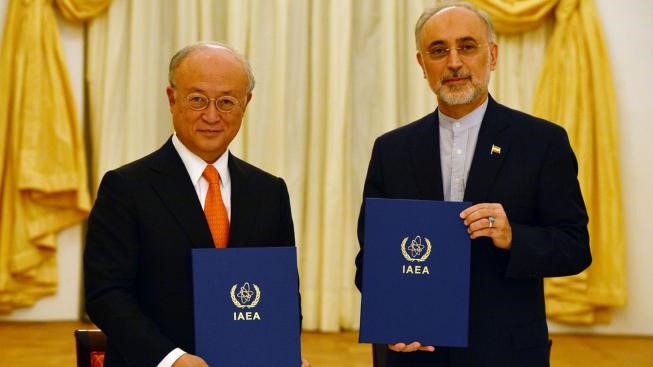
24178Secretary-general Amano (left) with AEOI’s Salehi (Image: IAEA)

The technical issues are now being resolved in a political framework. They have set a time frame and, God willing, the issue must be resolved by December 15.”

********************

The PMD (Possible Military Dimensions) issue that includes an investigation of suspicions that Iran previously conducted a military nuclear program, was one of the main stumbling blocks between Iran and the P5+1 group and primarily between Iran and the United States and the EU3. These suspicions are based inter alia on a November 2011 International Atomic Energy Agency (IAEA) report that the agency had information on Iran’s performance of activities related to nuclear weapons development until 2003 and that some of these activities were possibly continuing.[1] Iran persistently refused to respond to all the IAEA’s questions and due to its refusal to cooperate fully with the IAEA the UN Security Council passed six anti-Iran resolutions demanding that Iran cooperate immediately with the IAEA on this topic in order to disclose the truth.

On July 14, 2015, the day the Comprehensive Joint Plan of Action agreement between Iran and the P5+1 was declared, IAEA Secretary-General Yukio Amano and the Atomic Energy Organization of Iran chief Ali Akbar Salehi, one of the lead Iranian negotiator, signed a “roadmap agreement” in which Iran committed to provide the IAEA with clarifications and explanations on the PMD. Amano announced that if Iran would cooperate fully with the IAEA (as opposed to its conduct up to now) he could submit his conclusions by December 15, 2015. Under the agreement the lifting of sanctions enters into effect only following the IAEA report’s submission.

In an interview to the Iranian channel IRIB on July 21, 2015, Salehi disclosed that Iran has reached an understanding with the IAEA regarding the PMD; that now problems are solved on the political level and since political backing exists, the IAEA cannot do whatever it wants as it did in the past when such political backing did not exist. Therefore, the IAEA’s PMD investigation would be most positive for Iran. Salehi explained that the IAEA had to act reasonably otherwise it would be the loser.

Below is the transcript of Salehi’s IRIB interview:

Salehi: “By December 15, at the end of the year, the issue (of the PMD) should be determined. The IAEA will submit its report to the board of governors. It will only submit it. The Joint Comprehensive Plan of Action will continue independently of the results of this report. We have reached understandings with the IAEA. God willing, there will be very positive results. We do not accept the PMD issue, the (suspicions against) Iran’s past (military nuclear) activity. We are resolving this in a political-technical framework, in order to deny them any pretext. Look, if it was decided that the (IAEA) will not be convinced no matter what… As the saying goes: If someone pretends to be asleep, you cannot wake him up. If someone does not want to be convinced, it does not matter how hard you try. You tell him that it is daytime, and he tells you that it’s night. If the IAEA was not meant to be convinced in the regular track, it would never be convinced, regardless of what we did. They presented 18 questions, we answered them (but couldn’t convince them), and there is nothing more that could be done. Now that the technical issues are being resolved on the political level, the pace has picked up. The technical issues are now being resolved in a political framework. They have set a time frame and, God willing, the issue must be resolved by December 15.”

Interviewer: “But considering the IAEA’s bad record regarding…”

Salehi: “In short, they will be the losers. As I have said, the issue has received political backing. The work of (the IAEA) must be reasonable. They cannot do anything unreasonable. When there is no political backing, they do whatever they want, but now there is political backing, and the issue should be resolved, and God willing, it will be.”

Endnote:

[1] Iaea.org, July 14, 2015.

Italy’s PM: Boycotts Against Israel Are ‘Stupid and Futile’

July 22, 2015

As the EU considers a new boycott of Israel, Italy’s leader calls the move “stupid and futile.”

By: Hana Levi Julian

Published: July 22nd, 2015

via The Jewish Press » » Italy’s PM: Boycotts Against Israel Are ‘Stupid and Futile’.

Italian Prime Minister Matteo Renzi speaks at the Knesset plenary in a special session scheduled to honor his visit to Jerusalem.
Photo Credit: Hadas Parush / Flash 90

The European Union has moved ahead to officially boycott Israelis and Israeli institutions located in Judea, Samaria and post-1967 areas. But Italy’s prime minister, at least, has firmly slammed the idea of such a boycott has “stupid and futile.”

The move comes with the release of a report by the European Council on Foreign Relations (ECFR) which says the EU is legally in contradiction of its own laws. The report claims the EU must “firmly” distinguish in its dealings between pre-1967 Israel and any area restored to the country in the 1967 Six Day War. Proposals made by the ECFR frequently inform policies formulated by the European Union.

“Do day-to-day dealings between European and Israeli banks comply with the EU requirement not to provide material support to the occupation?” asks the report, entitled ‘EU Differentiation and Israeli Settlements.’

“Under its own regulations and principles, Europe cannot legally escape from its duty to differentiate between Israel and its activities in the Palestinian territories,” it says.

Up to this point, the boycott enacted against Israel by Europe had been limited to labeling against manufactured items produced by firms based in Judea, Samaria and post-1967 neighborhoods of Jerusalem.

But the proposals now under discussion reach much farther – into boycotts against banks, loans and mortgages, tax-exempt statuses of European charities dealing with the relevant Israeli communities and negating the qualifications earned at institutions located in those areas as well.

Israel’s government has called the labeling steps “discriminatory” and likens the campaign to that of the Boycott, Divestment and Sanctions (BDS) movement – another form of anti-Semitism.

Italian Prime Minister Matteo Renzi slammed the EU decision.

In a speech to the Knesset on Wednesday, Renzi called for a two-state solution with security for both sides – but said the PA must recognize the right of the Jewish People to a state in their own homeland.

“That right does not exist because of the world’s generosity after the Holocaust,” Renzi said. “Israel existed hundreds of years before.

“It exists despite the Holocaust and it will continue to exist with the support of its friends in Europe and the world.

“You do not only have the right to exist, you must exist and live for the future of your children and mine,” he went on. “You are a fulcrum of the world and we will stand with you.”

As for the European Union boycott against Israel – and any other boycott, for that matter – Renzi said: “Whoever thinks to boycott Israel does not understand that he is harming himself and betraying his future.

“Italy will always stand for cooperation and never for boycotts, which are stupid and futile.

“Peace for Jerusalem is peace for the whole world. Our fate is your fate. Together we will build a more just world.”

State Spokesman Repeatedly Refuses to Answer Whether There Are ‘Side Deals’ Between Iran and Nuclear Watchdog

July 22, 2015

State Spokesman Repeatedly Refuses to Answer Whether There Are ‘Side Deals’ Between Iran and Nuclear Watchdog, Washington Free Beacon, , July 22, 2015

(Please see also, House Republican: Obama Administration Won’t Release Full Iran Deal to Congress. — DM)

State Department spokesman John Kirby repeatedly refused to answer direct questions from MSNBC’s Joe Scarborough Wednesday over whether he knew about reported “side deals” between Iran and the nuclear watchdog International Atomic Energy Agency (IAEA) that would not be subject to scrutiny by Congress or the American public.

“I won’t speak for the IAEA,” Kirby said. “What I can tell you is that all relevant documents to this deal, certainly all those in our possession, have been delivered to Congress. They were delivered over the weekend, and they’ll have access to everything that we have access to.”

The U.N. nuclear watchdog plays the critical role of verification in the agreement by seeking to ensure Iran is not violating it with illicit nuclear activity.

National Review reported on two Republicans issuing a press release that they’d discovered these deals while meeting with IAEA officials in Vienna

Senator Tom Cotton (R., Ark.) and Congressmen Mike Pompeo (R., Kan.) issued a press release today on a startling discovery they made during a July 17 meeting with International Atomic Energy Agency officials in Vienna: There are two secret side deals to the nuclear agreement with Iran that will not be shared with other nations, with Congress, or with the U.S. public.

One of these side deals concerns inspection of the Parchin military base, where Iran reportedly has conducted explosive testing related to nuclear-warhead development. The Iranian government has refused to allow the IAEA to visit this site. Over the last several years, Iran has taken steps to clean up evidence of weapons-related activity at Parchin.

The other secret side deal concerns how the IAEA and Iran will resolve outstanding issues on possible military dimensions (PMDs) of Iran’s nuclear program. In late 2013, Iran agreed to resolve IAEA questions about nuclear weapons-related work in twelve areas. Iran only answered questions in one of these areas and rejected the rest as based on forgeries and fabrications.

Scarborough was unsatisfied with Kirby’s answer and pressed him repeatedly to give a definitive answer to whether the U.S. had knowledge of these details or whether such “side deals” existed at all. The exchange went on:

SCARBOROUGH: But Admiral, does the State Department know of secret side deals between Iran and the IAEA? Do you know of secret side deals between Iran and the IAEA? Does Secretary Kerry know of secret side deals between Iran and the IAEA?

KIRBY: What we know is that the IAEA will be working with Iran to make sure that they have the information and access that they need to be able to verify Iran’s commitments to this deal.

SCARBOROUGH: But that’s not the question I asked. That’s not the question I asked, Admiral. Are you all familiar with side deals between the IAEA as it pertains to Iran’s nuclear program that we don’t know about?

KIRBY: This isn’t about side deals, Joe. This is about making sure the IAEA gets the access they need to verify Iran’s commitments, and they’re going to do that. I can’t speak for the IAEA. What I can do is speak for the State Department, and I can say definitely that every relevant document –

SCARBOROUGH: But you certainly can speak to your knowledge and Secretary Kerry’s knowledge and the State Department’s knowledge and the White House’s knowledge. Do you all have knowledge of these side deals?

KIRBY: We know that the IAEA is going to work with Iran to make sure they get the access they need. How they do that and what manner they do that, I’m going to let them speak to that.

Co-host Mika Brzezinski cut in.

“It sounds like there’s side deals,” she said.

“I’m just trying to get a yes or a no,” Scarborough said.

Kirby looked perturbed at this point.

“I can’t really answer it any better than I did,” he said. “I mean, the IAEA needs to get the access to verify Iran’s compliance and they’ll do that. How they work with Iran on that is really for them to speak to. What I can you tell you though is every relevant document in this deal, and there’s a lot of them, everything has been delivered to Congress, and they’re going to get ample time to speak to Secretary Kerr and Secretary Moniz to answer all their questions.”

Scarborough concluded the exchange by saying Kirby actually could have answered better with a simple yes or no, but he moved on.

Op-Ed: Obama’s Deception Set Off a New Era

July 22, 2015

Op-Ed: Obama’s Deception Set Off a New Era, Israel National News, Dr. Joe Tuzara, July 22, 2015

Not surprising, the Obama administration considers both the US and Israel to be key threats to peace in the world.

**********************

President Barack Obama’s strange self-delusion for Iran to become a more “formidable regional power” has already triggered an undeclared new era for nuclear proliferation in the Middle East.

Despite this established ignominy of an emboldened Iran strengthened by Obama’s naive policies at the expense of Israel and Sunni Arab allies, the White House suggestion that they “sought to pursue diplomacy to prevent Iran from obtaining a nuclear weapon that could set off a nuclear arms race” is based on fantasy.

Whichever way they try to spin it, Obama’s rhetoric that the deal “cut off every pathway to nuclear weapons, prevented a nuclear arms race in the Middle East” doesn’t match reality.

The deal explicitly acknowledges that Iran is gaining benefits no other state would gain under the Non-Proliferation Treaty (NPT). In terms of its nuclear development, instead of dismantling Iran’s nuclear program, that program is now protected.

Such a deal, one that allows a leading state sponsor of terror to retain the ability to develop nuclear weapons, threaten Israel, continue their hegemonic ambitions and support for terrorism is a historic nadir of the Obama presidency.

As Obama’s secret letter to Ayatollah Khamenei makes clear, securing the deal simply legitimizes Tehran, a de facto regional US ally standing on the threshold of a nuclear weapon.

It is a shame that the Obama administration’s total capitulations were made in areas that were supposed to prevent Iran from acquiring nuclear weapons. The fake Iran deal does confirm Israeli and Sunni Arab Muslims fears that they can no longer depend on the Obama administration to protect their vital national security interests.

Even worse, Obama had given up on its stated goals of preventing Iran from obtaining a nuclear weapon and his dumb promise to fight a bad deal while underwriting the expansion of Iranian hegemony unquestionably was not just only reckless but cynical.

As it turned out, “détente” with Iran is the main goal of the Obama’s pretend diplomacy. In essence, Obama’s “appeasement” is not diplomacy and his secret back-channel negotiations with the fanatical, corrupt and Machiavellian terrorist regime is treason.

The moment Obama become an advocate for the “Islamic State of Iran” that enjoys the benefits of no real verification regime and no real consequences for serial violations of UN nuclear weapons resolutions, he has lost all credibility to govern our great nation. Similarly, when Obama negotiated away Israel’s existence, he became the real enemy of Israel.

Not surprising, the Obama administration considers both the US and Israel to be key threats to peace in the world. Given that Obama has done all it can to [prevent an Israeli preemptive strike, from leaking Israeli attack scenarios to denying Israel air space over Iraq, the fact that he] coordinated with the Iranian regime –and attempted to cut off weapons shipments to Israel in the midst of its war with Iranian proxy terror group Hamas, his statements about the strength of this deal carry no weight at all.

On the other hand, Obama’s flawed perspective and deception on a grand scale significantly risks the collapse of 50 year US alliance structure in the Middle East, contravenes 70 years of US nonproliferation policy and endangers 45 years of a landmark international treaty (NPT) whose objective is to prevent the spread of nuclear weapons and weapons technology.

Quite unfortunately, the Iran deal set a dangerous precedent that allows rogue states and radical fundamentalist elements in particularly issuing veiled threats to quickly go nuclear. With Iran getting active on the borders of Egypt and Saudi Arabia, those regimes would be foolhardy not to attempt to develop a nuclear capacity –especially given that Obama has shown there are no detriments to doing so.

Equally disturbing, Obama has given all the Sunni Arab Gulf countries the pathways to build civilian nuclear energy programs with possible military dimensions.

Ironically, Obama has created a major void allowing an opening for many potential benefits, that it holds for Russia. In the last six months, Russia has struck three significant nuclear deals with long-time US Middle East allies: Egypt, Jordan and Saudi Arabia.

An unnamed sources told the Al Arabiya TV network that Saudi Arabia and Russia agreed to build 16 nuclear reactors that Russia would play a significant role in operating. France became the first country to sign feasibility studies to build two nuclear reactors in Saudi Arabia potentially worth more than $10 billion.

Now we all know that Sunni Arabs will not sit idly as the world’s largest state-sponsor of terror becomes a nuclear-threshold state. The regional powers know this. Saudi Arabia has already said it will “match the nuclear capabilities Iran is allowed to maintain,” and it is an open secret that the Saudis have a nuke on the shelf in Pakistan.

The Center for Strategic and International Studies (CSIS) also noted that “the Arab Gulf states have acquired and are acquiring some of the most advanced and effective weapons in the world.”

One of many unintended outcomes of the nuclear talks is the emergence of covert Saudi and Gulf State alliance with their former archenemy, Israel. The Saudis and the Israelis have had five “secret” meetings to discuss common defense and intelligence issues related to Obama’s policy of strengthening Iran economically while permitting the terror state to become a potential nuclear power with a breakout capacity that is unknowable.

Tehran’s shocking nuclear bravado aside, the Middle East is going to experience another historic moment with the visit of Saudi Prince Talal bin Waleed  to Israel in what could be the most significant move toward peace between the Arabs and Israelis since Egypt’s Anwar Sadat’s iconic trip to Israel.

Saudi Prince Talal denounced the growing waves of anti-Semitism in the region and praised Israel as the region’s sole democratic entity. Calling for Muslims in the Middle East “to desist from their absurd hostility toward the Jewish people,” the prince went on to announce that Saudi King Salman bin Abdulaziz Al Saud has instructed him to open a direct dialogue with Israel’s intellectuals in pursuit of amicable ties with all of Israel’s Arab neighbors.

Amid the despair in the region generated by Obama’s Iran policy, this could be the most promising breakthrough  toward peace between Arabs and Israelis.

In arrogantly thinking he alone could decide the future of the Middle East, Obama has unleashed the unintended consequences that frequently shape great events: in this instance for the betterment of all the peoples of the Middle East but ultimately to the detriment of America’s interests.

Now, the moment of decision had finally come, Israelis must accept the risks and unintended consequences of preventive war rather than wait until Iran’s nuclear bombs are built.

Either way, for as long as the highly imperfect Iranian accords have not been ratified or rejected by Congress, a preemptive strike of Iran’s nuclear facilities is not an option.

Unless, Iran’s magical collaboration with the Obama administration ends up restocking its Iranian proxies with sophisticated radars and weapons from Russia, China and the United States, or facing the imminent threat of a nuclear attack- Israel will not hesitate  to deploy the “Samson option”.

And as long as the imminent proxy wars in the Golan Heights, Sinai Peninsula, Gaza or Lebanon remain conventional, Israel’s response would remain reciprocally non-nuclear.


House Republican: Obama Administration Won’t Release Full Iran Deal to Congress

July 22, 2015

House Republican: Obama Administration Won’t Release Full Iran Deal to Congress, National Review, Joel Gehrke, July 21, 2015

President Obama won’t allow Congress to review two key aspects of the Iranian Nuclear deal, Republican lawmakers learned from international partners last week. Under the terms of the Joint Comprehensive Plan of Action (JCPOA), the International Atomic Energy Agency would negotiate separately with Iran about the inspection of a facility long-suspected of being used to research long-range ballistic missiles and nuclear weapons.

“The Obama administration has failed to make public separate side deals that have been struck for the ‘inspection’ of one of the most important nuclear sites—the Parchin military complex,” said Representative Mike Pompeo (R., Kan.) in a statement Tuesday. “Not only does this violate the Iran Nuclear Agreement Review Act, it is asking Congress to agree to a deal that it cannot review.” The IAEA has been trying to gain access to the Parchin site since 2005, but Iran has refused, even as it apparently demolished various parts of the complex. “The hardliners do not want to grant any concessions unless Iran is suitably rewarded,” International Institute for Strategic Studies director Mark Fitzpatrick told the BBC in 2014, after reports emerged of explosions at the base.

The terms of the current agreement wouldn’t allow Congress to review any concessions the IAEA makes to get into the site. “Even members of Congress who are sympathetic to this deal cannot and must not accept a deal we aren’t even aware of,” said Pompeo. The IAEA will also separately negotiate “how the IAEA and Iran will resolve outstanding issues on possible military dimensions of Iran’s nuclear program,” according to a release from Pompeo’s office. Senator Tom Cotton (R., Ark.) and Pompeo, who serves on the House Intelligence Committee, learned of the arrangement while meeting with the IAEA in Vienna, Austria last week. “That we are only now discovering that parts of this dangerous agreement are being kept secret begs the question of what other elements may also be secret and entirely free from public scrutiny,” Cotton said in a statement to the press.

Iran becomes more aggressive after Obama’s ‘historic’ nuclear deal

July 22, 2015

Iran becomes more aggressive after Obama’s ‘historic’ nuclear deal, American ThinkerAmir Basiri, July 22, 2015

The lack of interest of the U.S. and the UN in addressing this issue sends a bad signal to Tehran, one that implies the international community has let its guard down and Iran is free to increase its transgression at its leisure.  In particular, the U.S. government is both morally and legally responsible to take action in this regard and prevent another disaster from coming to pass.  But on the broader scale, the idleness of the Obama can have dire implications on its own efforts to rein in Iran’s nuclear and terrorist venturing.

**********************

The massive giveaways to Iran in the nuclear deal it struck with the P5+1 on July 14 were premised on the false assumption that concessions would render Tehran more docile.  U.S. President Barack Obama has spoken on several accounts on how economic regrowth would convince the Iranian regime to shift away from its nuclear and regional ambition and to become a more constructive actor in the region and across the globe.  But there are already indications that the mullahs ruling Iran are becoming bolder in their regional venturing and meddling in neighboring countries, with the first signs appearing in Iraq.

According to the National Council of Resistance of Iran, simultaneous with the declaration of the Joint Comprehensive Plan of Action (JCPoA) in Vienna, elements of the Iranian regime in the Iraqi government ratcheted up repressive measures against Camp Liberty, an obsolete U.S. military compound in the adjacency of the Baghdad International Airport which houses thousands of Iranian refugees.

The residents of the camp, members of the Iranian opposition group People’s Mojahedin Organization of Iran (PMOI/MeK), have been living under harsh, prison-like conditions by the orders of Faleh al-Fayyadh, National Security Advisor to the Iraqi Prime Minister, a holdover from the cabinet of former Prime Minister Nouri al-Maliki, a staunch ally of the Iranian regime.

While temperatures in Iraq are soaring at around 50 degrees Celsius (122 deg. Fahrenheit), Iraqi security forces are preventing the entrance of vital necessities into the camp, including food, fuel, medical, and logistical supplies.  Given the camp’s worn infrastructure and lack of facilities for storage, the blockade is threatening to trigger a humanitarian crisis in the camp as life in the camp will soon come to a halt.  It is noteworthy that the forces ostensibly in charge of the camp’s protection are deeply affiliated with the Iranian regime and are responsible for a number of attacks and massacres against the residents.

In 2013, similar measures undertaken by Iraqi forces eventually culminated into the mass-slaughter of 52 of the camp’s residents, an operation carried out by special forces under the strict orders and control of the Iraqi Prime Ministry Office and in coordination with the Iranian embassy in Baghdad.  There is grave concern that a similar atrocity will occur if quick action is not taken to prevent further violation of the rights of the residents.

The residents of Camp Liberty have been recognized as “persons of concern” by the UNHCR, the UN refugee agency, and designated as “protected persons” under the Fourth Geneva Convention by U.S. forces after the 2003 invasion of Iraq.  Yet the U.S. embassy in Baghdad and the UN (which happen to be the only bodies that have direct access to the camp aside from the Iraqi government) are effectively sitting out the disaster while it develops and while Iran-backed forces tighten the noose around the camp.

The intensification of persecution of Camp Liberty takes place in the backdrop of increased Iranian influence in Iraq as Tehran moves to strengthen its proxy militia units and expand its influence over Iraqi soil and politics, an endeavor that has driven a wedge through the sectarian divide plaguing the country and has effectively deadlocked the U.S.-led effort to roll back the advances of the Islamic State, an extremist group that has rampaged through Iraq and Syria in the past year.  Regrettably, the Obama administration is taking the issue lightly and is giving tacit approval to Iranian meddling in Iraq.

The MeK was the first party to sound the alarm on Iran’s covert nuclear program in 2002 — the focus of a standoff between Tehran and the international community which has lasted to this day — and has since been the source pertinent information regarding secret aspects of Iran’s nuclear and regional ambitions.  The plots being carried out against the group are a worrying sign of Tehran might be trying to neutralize the opposition in order to pave its way for cheating on the nuclear accord without fear of being exposed.

The lack of interest of the U.S. and the UN in addressing this issue sends a bad signal to Tehran, one that implies the international community has let its guard down and Iran is free to increase its transgression at its leisure.  In particular, the U.S. government is both morally and legally responsible to take action in this regard and prevent another disaster from coming to pass.  But on the broader scale, the idleness of the Obama can have dire implications on its own efforts to rein in Iran’s nuclear and terrorist venturing.


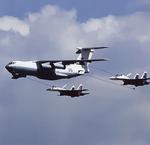
Iran buys 100 Russian refueling aircraft for its air force to reach any point in the Mid East

July 22, 2015

Iran buys 100 Russian refueling aircraft for its air force to reach any point in the Mid East, DEBKAfile, July 22, 2015

IL78_MKI-IRAN_B_7.2015Russian IL78 MKI tanker aircraft sold to Iran

The Secretary of State can expect some really hard questions during his trip on exactly how the Vienna accord makes the region safer, when Iran’s first act after signing is to arm itself with a fleet of Russian in-flight fuel tankers to expand and strengthen its range and power for aerial aggression.

*********************

In defiance of the international arms embargo, Iran last week placed an order with Moscow for a huge fleet of 100 Russian IL78 MKI tanker aircraft (NATO: Midas) for refueling its air force in mid-flight, thereby extending its range to 7,300 km. This is reported exclusively by DEBKAfile from its military and intelligence sources. The transaction runs contrary to the terms of the nuclear accord the six world powers and Iran signed in Vienna earlier this month.

These tanker planes can simultaneously refuel six to eight warplanes. Their acquisition brings Israel, 1.200km away – as well the rest of the Middle East – within easy range of Iranian aerial bombardment. It also puts Iran’s air force ahead of Israel’s in terms of the quantity and range of its refueling capacity.

Whereas opponents of the Vienna deal have warned that Tehran will spend the billions of dollars released by sanctions relief as a bonanza for fueling its campaigns of terror in the region, it turns out that Iran’s first post-accord purchase is a heavy investment in the rearmament and upgrade of its armed forces’ aggressive capabilities.

The Israeli air force is familiar with the Russian airborne tanker from its use by the Indian air force with which Israel has close ties of cooperation. Its military engineers have also upgraded the Russian fuel tankers in service with the Uzbekistan air force.

Tuesday, July 21, DEBKAfile uncovered some of the tactics and escape clauses Iran has had built into its nuclear accord with the world powers for circumventing its provisions and commitments. The purchase of Russian refueling craft is a concrete example of this kind of evasion. Because the accord confirms the arms embargo in force until 2020, both Moscow and Tehran can maintain that the Russian aircraft industry will not be able to produce 100 new planes before the five years are up, and so the transaction is not a violation.

The huge Iranian-Russian military transaction therefore stands as the first palpable test of the Vienna accord, depending on whether US President Barack Obama or his Secretary of State John Kerry decides to make an issue of it. If they just let it go, it will set a precedent for the arms embargo clause of the nuclear accord to start unraveling.

Also Tuesday, Kerry gave an interview to the Al Arabia TV to prepare the way for his mission to the Gulf region on Aug. 3, which is to ease its rulers’ extreme unease over the ramifications of the nuclear accord. He asserted strongly to the interviewer: “I am not going to go through in great detail all the ways in which this agreement, in fact, makes the Gulf States and the region safer.”

The Secretary of State can expect some really hard questions during his trip on exactly how the Vienna accord makes the region safer, when Iran’s first act after signing is to arm itself with a fleet of Russian in-flight fuel tankers to expand and strengthen its range and power for aerial aggression.

After EU labeling of West Bank goods, paper proposes banking steps on Israel

July 22, 2015

After EU labeling of West Bank goods, paper proposes banking steps on Israel

via After EU labeling of West Bank goods, paper proposes banking steps on Israel – Arab-Israeli Conflict – Jerusalem Post.


The European Union agreed this week to push ahead with labeling Israeli goods made in settlements in the  West Bank, a move that has alarmed the Israeli government; but now there are proposals to go much further, including targeting Israeli banks.

In a paper to be published on Wednesday, the European Council on Foreign Relations, whose proposals frequently inform EU policy-making, argues that the EU is in breach of its own laws and must move much more firmly to distinguish its dealings with Israel from Israel’s activities in the West Bank and east Jerusalem.

European diplomats have long said that labeling is only the first in a series of steps the EU could take against Israel over its settlements policy, one that in financial terms is expected to have a relatively minor impact on the Israeli economy.

But the new proposals would go much deeper and further, reaching into banking, loans and mortgages, qualifications earned in settlement institutions and the tax-exempt status of European charities that deal with Israeli settlements.

“Under its own regulations and principles, Europe cannot legally escape from its duty to differentiate between Israel and its activities in the… Palestinian territories,” says the report, titled ‘EU Differentiation and Israeli Settlements’.

The authors argue that by pushing much further to separate the EU’s dealings with Israel from the settlements, it will force Israel to decide what sort of relationship it wants with Europe and in turn encourage it to return to talks with the Palestinians on a two-state solution to the conflict.

FINANCIAL SQUEEZE

The most significant proposal is on banking, where large Israeli institutions have daily dealings with major European banks, while also providing loans and financing to Israeli businesses and individuals based in the settlements.

Under European Commission guidelines from 2013, EU- and member-state-funded lending cannot be provided to Israeli entities operating in the West Bank.

With the British government holding a controlling stake in some banks following the financial crisis, that would in theory prevent those banks providing financing to Israeli counterparts that have dealings in the settlements.

“Do day-to-day dealings between European and Israeli banks comply with the EU requirement not to provide material support to the occupation?” the report asks, saying it is an issue that EU member states have yet to resolve.

The issue extends into loans and mortgages. An Israeli with dual European citizenship should, in theory, not be able to use a settlement property as collateral for a European loan since Israeli-issued property deeds are not recognized.

Another area in which the EU may be in violation of its own rules relates to European charities that are tax-exempt while using funds to support activities in the settlements, which the EU regards as illegal under international law.

And the report questions whether Europe should accept qualifications from academic, medical and other Israeli institutions based in the West Bank given that it does not recognize Israel’s sovereignty over the territory.

Likewise, there is a question mark over whether the EU should be dealing with Israeli institutions – such as the Ministry of Justice and the national police headquarters – which are based in east Jerusalem.

The Israeli government has described Europe’s steps on labeling as discriminatory and wrong-headed, suggesting they are akin to the Boycott, Divestment and Sanctions (BDS) movement, which Israel regards as anti-Semitic.

Prime Minister Benjamin Netanyahu raised his concerns about labeling in a meeting with the EU’s foreign policy chief, Federica Mogherini in May. Mogherini raised the issue of the EU further differentiating its dealing with Israel.

Mattia Toaldo, one of the authors of the ECFR paper, said the EU needed to explain more clearly the legal obligation the EU faces when it comes to differentiation, making a sharp distinction with the BDS campaign. And the ultimate aim, he said, should be to urge Israel towards a two-state solution.

“Differentiation is a legal prerequisite for the EU in order to avoid violating its own laws,” he said. “You have to do it legally and by the book, but it is also beneficial to the peace process because it changes the calculations by the Israelis.”