Archive for June 2015

Israel Approves Security Fence on Jordan Border

June 29, 2015

Israel Approves Security Fence on Jordan Border

Security Cabinet backs Netanyahu’s proposal to build 30 km barrier from Eilat to planned Timna airport, as Jordan ties continue to flag.

By Arutz Sheva Staff

First Publish: 6/29/2015, 2:47 PM

via Israel Approves Security Fence on Jordan Border – Defense/Security – News – Arutz Sheva.

Jordanian border (file)

Jordanian border (file) Mendy Hechtman/Flash 90


The Security Cabinet on Sunday adopted Prime Minister Binyamin Netanyahu’s proposal to build a 30-kilometer (over 18-mile) long security barrier on the eastern border with Jordan in the very south of Israel.

The fence, which is to stretch from the southern port city of Eilat to the site designated for the Timna airport, comes after Israel completed work on the border fence with Sinai and improved the security barrier with Syria on the Golan Heights.

In addition the Security Cabinet approved the allocation of resources for building the fence.

Tensions have been high between Israel and Jordan, after the latter has threatened to revoke the 1994 peace treaty on several occasions recently to pressure Israel to allow the Jordanian Waqf to continue denying Jews their rights to pray at the Temple Mount.

Perhaps responding to those tensions, the Israeli government clarified in a statement that it has been in contact with the Jordanian government about the security fence, noting it won’t infringe on Jordan’s national interests.

At the start of a meeting of the Knesset Foreign Affairs and Defense Committee on Monday, Netanyahu referred to the Cabinet decision.

“Yesterday in the Security Cabinet, we made a very important decision to continue a section of fence along our southern border, this time from Eilat, 30 kilometers north to past the Timna airport that is under construction,” explained the prime minister. “This is important. It is part of our national security.”

“It joins the fence that we built along the length of our border with Sinai, which blocked the entry of illegal migrants into Israel and – of course – the various terrorist movements. This step also joins the fence that we built on our border on the Golan Heights.”

Speaking about possible complications with Jordan, Netanyahu said, “I would like to make it clear that this fence will be entirely within the territory of the State of Israel. It will not, in any way, infringe on the sovereignty of the Hashemite Kingdom of Jordan and its national interests.”

Peaceful neighbors?

Tensions have been openly sour between Israel and Jordan of late; Jordanian Ambassador to Israel Walid Obeidat was recalled to Jordan last November until February in an act of protest over talk in Israel of allowing Jews to pray on the Mount, which is the holiest site in Judaism but remains under the discriminatory de facto control of the Waqf.

Last November the Jordanian parliament held a special prayer session for the two Arab terrorists who committed a brutal attack on a Jerusalem synagogue, murdering four Jews at prayer and beheading two of them, as well as murdering a police officer.

Jordan’s Prime Minister Abdullah Nsur also sent a letter of condolence to the families of the two murderous terrorists. Aside from its threats regarding the Temple Mount, Jordan also has been leading the Palestinian Authority’s (PA) “diplomatic war” against Israel at the UN.

Jordan itself is made up of a majority of Palestinian Arabs, and nearly all Arab residents of Judea and Samaria hold Jordanian citizenship, leading many to suggest creating a “Palestine” in Jordan.

That suggestion has been given further backing by none other than PA Chairman Mahmoud Abbas, who said earlier this month that Jordanian and Palestinian Arabs are “one people living in two states.”

Syria, Hizballah torpedo understanding between Druze and Syrian rebel Nusra Front near Israeli border

June 28, 2015

Syria, Hizballah torpedo understanding between Druze and Syrian rebel Nusra Front near Israeli border, DEBKAfile, June 28, 2015

Druze_village_of_Hadar_16.6.15The Druze village of Khader – another flashpoint

Already it looks as though Assad and Nasrallah have succeeded in sabotaging the hard-won armistice deal that the US, Jordan and Israel brokered between the Druze and Nusra Front, by forcing the half million Druze of Syria to choose sides between the belligerents. Whichever it is, they will be clobbered.

********************

Syrian ruler Bashar Assad and Hizballah leader Hassan Nasrallah have gone all out to stir up adversity between the Druze communitys of the Golan and Israel, and the Syrian rebel Al Qaeda-linked Nusra Front.

To torpedo the armistice deal brokered between them earlier this month by the US, Jordan and Israel, 200 Syrian and Hizballah troops were pumped into the Druze village of Khader on the Syrian Golan, 3 km from the Israeli border. Since Friday, June 26, these troops have been attacking Nusra and the other Syrian rebel groups fighting to capture the Golan town of Quneitra. This has stalled the rebel operation for taking control of the highway to Damascus. Rockets from this battle strayed over to the Israeli side of Golan Sunday.

DEBKAfile’s military sources reveal that Nusra hit back over the weekend. They warned Druze leaders that if they don’t stop cooperating with Assad and Nasrallah, “their blood will be on their heads.” Fighters of this Islamist group then surrounded another, smaller Druze village, Skaska, on the western slopes of Jabal Druze and threatened to go in and massacre its inhabitants.

The Nusra ultimatum, posted Saturday, June 28, made it clear that since Syrian and Hizballah are firing against them from a Druze village, the Druze are held responsible for getting it stopped. Otherwise, they will be deemed collaborators of the Assad regime and in violation of the non-belligerence deal struck between them earlier this month.

Our sources add that Syria and Hizballah accompanied the 200-man force which infiltrated Khader, with Iranian and Syrian television crews and a group of Lebanese Druze members. The footage they showed was intended to demonstrate to the world that Lebanese Druze strongly challenged the Syrian rebel takeover of southern Syria including the Golan, and sided with Bashar Assad.

The fighting is so far low key between the Syrian and Hizballah troops ocupying the Druze village of Khadar and the Nusra Front fighters. But it is estimated by Israeli watchers that an escalation is not far off and, when it happens, the rebel Islamic group will make good on its threat of retribution against the Druze villagers of Skaska.

And then, yet another sensitive corner of the Syrian conflict may go up in flames, possibly putting Israel on the spot again.

Already it looks as though Assad and Nasrallah have succeeded in sabotaging the hard-won armistice deal that the US, Jordan and Israel brokered between the Druze and Nusra Front, by forcing the half million Druze of Syria to choose sides between the belligerents. Whichever it is, they will be clobbered.

Iran Foreign MInister Walks Out of Nuclear Talks, Deadline Pushed Back Again

June 28, 2015

Iran Foreign MInister Walks Out of Nuclear Talks, Deadline Pushed Back Again

via Iran Foreign MInister Walks Out of Nuclear Talks, Deadline Pushed Back Again – Breitbart.

VIENNA (AP) — A senior U.S. official acknowledged Sunday that Iran nuclear talks will go past their June 30 target date, as Iran’s foreign minister prepared to head home Sunday for consultations before returning to push for a breakthrough.

Iranian media said Mohammed Javad Zarif’s trip was planned in advance. Still, the fact that he was leaving the talks so close to the Tuesday deadline reflected his need to get instructions on how to proceed on issues where the sides remain apart – among them how much access Tehran should give to U.N. experts monitoring his country’s compliance to any deal.

The United States insists on more intrusive access than Iran is ready to give. With these and other disputes still unresolved the likelihood that the Tuesday target deadline for an Iran nuclear deal could slip was increasingly growing even before the U.S. confirmation.

U.S. Secretary of State John Kerry met in Vienna for their third encounter since Saturday. German Foreign Minister Frank-Walter Steinmeier and French Foreign Minister Laurent Fabius are also in Vienna, and their Russian and British counterparts were to join later. China was sending a deputy foreign minister in a building diplomatic effort to wrap up the negotiations.

For weeks, all seven nations at the negotiating table insisted that Tuesday remains the formal deadline for a deal. But with time running out, a senior U.S. official acknowledged that was unrealistic.

“Given the dates, and that we have some work to do … the parties are planning to remain in Vienna beyond June 30 to continue working,” said the official, who demanded anonymity in line with State Department practice.

Asked about the chances for a deal, Federica Mogherini, the European Union’s top diplomat, told reporters: “It’s going to be tough … but not impossible.”

Steinmeier avoided reporters but told German media earlier: “I am convinced that if there is no agreement, everyone loses.”

“Iran would remain isolated. A new arms race in a region that is already riven by conflict could be the dramatic consequence.”

Both sides recognize that there is leeway to extend to July 9. As part of an agreement with the U.S. Congress, lawmakers then have 30 days to review the deal before suspending congressional sanctions.

But postponement beyond that would double the congressional review period to 60 days, giving both Iranian and U.S. critics more time to work on undermining an agreement.

Arguing for more time to allow the U.S. to drive a harder bargain, Israeli Prime Minister Benjamin Netanyahu – a fierce opponent of the talks – weighed in on Sunday against “this bad agreement, which is becoming worse by the day.”

“It is still not too late to go back and insist on demands that will genuinely deny Iran the ability to arm itself with nuclear weapons,” he said.

The goal of the talks involving Iran and the U.S., Britain, China, France, Germany and Russia is a deal that would crimp Tehran’s capacity to make nuclear weapons in exchange for sanctions relief. Iran insists it does not want such arms but is bargaining in exchange for sanctions relief

On Saturday, diplomats told The Associated Press that Iran was considering a U.S.-backed plan for it to send enriched uranium to another country for sale as reactor fuel, a step that would resolve one of several outstanding issues.

Iran’s Nuclear Weapons Program and the Failure of Obama’s “Hope and Change Foreign Policy”

June 28, 2015

Iran’s Nuclear Weapons Program and the Failure of Obama’s “Hope and Change Foreign Policy,” ISIS Study Group, June 27, 2015

US Secretary of State John Kerry will be spending this weekend in Vienna in an attempt to salvage the deal the Obama administration is trying to land with the Iranian regime. The reason for his sense of urgency is that Ayatollah Khameini publicly rejected the deal and came out with some new terms just before the 30 JUN deadline. The Obama administration and the US mainstream media are trying to spin this as if the “reformers” are somehow being derailed. That would be true if there were any actual reformers in the Iranian regime. The truth is that this is all by design and that so-called “reformers” like President Rouhani are in on the joke – and the US is the punchline.

John Kerry mounts last push for Iran nuclear agreement
http://www.telegraph.co.uk/news/worldnews/middleeast/iran/11701690/John-Kerry-mounts-last-push-for-Iran-nuclear-agreement.html

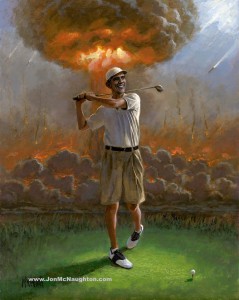
golf-obama-239x300

Source: Jon McNaughton

So what did Khameini say? He demanded the following:

1. Iran would only dismantle their program if sanctions were lifted first. In other words, we’d simply have to take them at their word.

2. Inspections and placing a freeze on research and development for 10 yrs is thrown out of the deal.

Huh. So if the key things agreed to back in APR 15 are now “null and void” (which were pretty weak to begin with), then what’s left of this deal? Absolutely nothing. And like we said earlier, this is all by design. The Iranian negotiation team is fully on the same page as Khameini – otherwise they wouldn’t be allowed to be on the team to negotiate with the US State Department (DoS).

Iran nuclear talks: Khamenei rejects key US demands
http://www.bbc.com/news/world-middle-east-33253488

Our loyal readers are fully aware of the Iranian regime’s designs for these negotiations and the Middle East in general. If you’re new to our site, then you will want to check out the following articles:

Today’s Middle East: The Burning Fuse of the 21st Century’s “Great Game”
http://isisstudygroup.com/?p=6193&

The Persian Hustle: Iran Dupes Clueless US State Dept in Nuke Talks and Moves to Dominate the Middle East
http://isisstudygroup.com/?p=5978

Mr. Netanyahu Goes to Washington
http://isisstudygroup.com/?p=5316

Inside Iran’s Middle East: The Nuclear Weapons Program
http://isisstudygroup.com/?p=2640

Inside Iran’s Middle East: The Charm Offensive
http://isisstudygroup.com/?p=2676

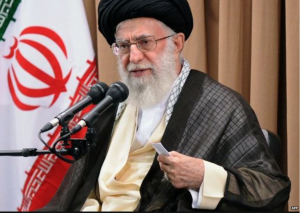
Screen-Shot-2015-06-27-at-1.15.37-PM-300x213

Khameini is large and in-charge despite his failing health – don’t ever forget that
Source: Associated Free Press

The original deal both sides agreed to back in APR didn’t allow for inspectors to have full access to key installations nor would we have had any visibility on projects that can improve Iran’s ability to produce a testable nuke. It also wouldn’t keep Iran from converting uranium hexafluoride (UF6) to metal or conducting work that enhances their metallurgy skills. As we previously stated in “Today’s Middle East: The Burning Fuse of the 21st Century’s Great Game,” if asked about it, the regime would simply say that it was for “radiation shielding” or conventional depleted uranium munitions. In fact the Obama administration doesn’t seem to be inclined to do anything about these indicators of increased proliferation. For instance, the regime’s Atomic Energy Organization of Iran (AEOI) has been in the business of supplying Iranian medical research organizations for several years now. In fact, our sources connected to the opposition have informed us that AEOI personnel known to be involved with uranium enrichment manufacturing have set up an entity called the “Persian Health Equipment and Development Company” or “PHEDCO” back in FEB 15. Apparently the company was set up to produce medical-use centrifuges. We assess that the company isn’t capable of enriching uranium itself, but we do think that it can be used to acquire certain components of nuclear suppliers group-controlled aluminum 7075 and quite possibly carbon-fiber.

Atomic Energy Organization of Iran (AEOI)
http://www.iranwatch.org/iranian-entities/atomic-energy-organization-iran-aeoi

We’re also very much aware that the regime is interested in developing uranium metal-based reactor fuels that would improve their ability to produce uranian-based nuclear weapons. These fuels are currently being used in “civilian research reactors.” So what is it, exactly? In a nuclear reactor, the uranium fuel is assembled to where a controlled fission chain reaction can be achieved. The heat created by splitting the U-235 atoms is then used to make steam, which in turn spins a turbine to drive a generator that produces electricity. The chain reaction that take place in the core of a nuclear reactor is controlled by rods which absorb neutrons, enabling the chain reaction to continue. Water, graphite and heavy water are used as moderators in different types of reactors. Due to the kind of fuel being used, if there’s a major malfunction in a reactor, the fuel may overheat and melt – but won’t explode like a bomb. The type of uranium used for bombs is different from what you’d find in a regular nuclear power plant. Military-grade uranium is highly enriched (>90% U-235, instead of up to 5%). Since the 1990s, a lot of otherwise military-grade uranium has become available for producing electricity as the result of the global disarmament effort.

What is Uranium? How Does it Work?
http://www.world-nuclear.org/info/Nuclear-Fuel-Cycle/Introduction/What-is-Uranium–How-Does-it-Work-/

We assess that the regime’s efforts will enable their nuclear technicians to gain enough experience with uranium metal production processes that could shorten the weaponization timeline. That said, we see the timeline accordingly:

1. They may master uranium metal production within the next 6 months.

2. Another 2-3 months will be needed to learn how to fabricate uranium metal components for a weapon.

3. 4-5 months will likely be required to test components and assemble a nuclear device.

This timeline has probably already been shortened due to the collaborative work taking place between Iran and the DPRK (North Korea) that the Obama administration has also failed to address during these negotiations. The two rogue nations have been engaged in a series of joint-projects in both the nuclear weapon and ballistic missile fields. Perhaps the most important part of stopping the development of an Iranian nuclear weapon is to deal with their intercontinental ballistic missile program, since that’s where the delivery system of said weapon will come from. Unfortunately, the Obama administration doesn’t seem to think that’s important. Perhaps one of the American media outlets should pose the question in the next press conference with the President or DoS? We won’t hold our breath.

How the North Korean Regime Affects the Middle East
http://isisstudygroup.com/?p=3038

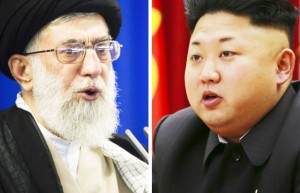
kim_iran-300x193

The two rogue nations have been able to circumvent sanctions at every turn thanks to their collaborative efforts and impotence that’s endemic throughout the UN and US government in particular
Source: The Business Insider

This brings us to another problem: The Obama administration’s failure at the issue surrounding our European allies’ refusal to actually enforce the UN sanctions already on the books. As you would guess, the regime has been in the market for procuring military-grade blast valves. What the UN, US government and several other allied nations are aware of (and hoping that the public remain ignorant to) is that one of the top sellers of those valves to the Iranians is Finnish company Temet Oy. This company is a global leader in blast protection and special ventilation technology applied in protective constructions such as civilian shelters and hardened military facilities. In addition to the nuclear and defense industries, Temet is also involved in the energy sector – which is the reason why they’re so keen to help the Iranian regime with its “peaceful” nuclear program. If you don’t believe us see for yourself:

About Temet
http://www.temetprotection.com.ar/about_temet.html

Temet Blast Valves
http://www.temetprotection.com.ar/blast_valves.html

FYI, Temet’s blast valves are specifically designed to protect facilities from munitions strikes – such as a potential Israeli Air Force Operation, for instance. The civil-grade blast valves that they’re publicly selling to the regime for its oil and gas sectors are designed to mitigate the effects of smaller explosions at industrial facilities. Despite Finland’s strong track record in the counter-proliferation arena, they’re likely fully aware of what this company has been up to for some time. If they’re not, then the government should fire all of their most senior intel officials because they’re clearly incompetent. They should be aware and continue tracking Temet’s activities after the 2012 attempt by the company to circumvent EU sanctions by shipping products to Iran and receiving payment via third parties. The problem is Temet is just one of several European companies that have been cashing in big on the poorly-enforced sanctions. Finland isn’t the only government guilty of trading in their morals to make a quick buck – the Germans are just as guilty. Here’s some other incidents over the years that put some cold water on any hopes that even sanctions can be enforced:

German firms sold sensitive equipment to Iran even during sanctions regime
http://www.haaretz.com/news/middle-east/.premium-1.562287

German firms still ship dual-use goods to Iran
http://www.jpost.com/Iranian-Threat/News/German-firms-still-ship-dual-use-goods-to-Iran

A mysterious Iranian-run factory in Germany
http://www.washingtonpost.com/world/europe/a-mysterious-iranian-run-factory-in-germany/2013/04/15/92259d7a-a29f-11e2-82bc-511538ae90a4_story.html

Germans Say 6 Companies Sold Nuclear Parts to Iran Network
http://www.nytimes.com/2006/03/29/international/europe/29germany.html?_r=0

Special Report: How foreign firms tried to sell spy gear to Iran
http://www.reuters.com/article/2012/12/05/us-huawei-iran-idUSBRE8B409820121205

As you can see, the Obama administration’s much-hyped nuclear “deal” with the Iranian regime was a failure from the get-go. Ayatollah Khameini knows the US government is weak because they’ve already caved into earlier demands – so why not raise the stakes and milk an already flaccid Obama administration for even more concessions? Iran’s true intentions for its program isn’t in doubt – its primary function is to produce a nuclear weapon. The Obama administration and the EU are fully aware of this as well – but they still won’t do anything about it. Europe lacks any real convictions and are now a shriveled corpse of what they used to be. People talk about the US in the same breath as “blood money” for oil, but the truth is the European nations are directly responsible along with China and Russia for propping up an increasingly belligerent Iranian regime who interprets “peace” as all opposing voices being silenced – by force. Their refusal to actually enforce sanctions and then turn around and circumvent them – sometimes openly – has led us to where we are. So President Obama isn’t the only one who will have a tarnished legacy.

Regarding our illustrious President, his “Hope and Change Foreign Policy” has been such a miserable failure that he’s now desperate for anything that he can claim as a “victory.” He certainly isn’t going to get that “victory” from his nonexistent strategy to combat the Islamic State (IS), so he’s forced to get a deal – any deal – signed with the Iranians, regardless of how bad it is for America and our allies in the Middle East. The saddest thing about all this is that the deal will empower the regime even more. When that happens – and it will – the biggest losers will be the average Iranian citizen who doesn’t share the regime’s militant ideology. How so? Once the regime is able to produce a nuclear weapon, they know the west won’t do anything to stop them. Period. When that occurs, they will be able to put the final nail in the coffin against the remaining opposition groups in the country. And so it goes…

If you want to know what this regime is all about, then check out the rest of our Inside Iran’s Middle East series:

Inside Iran’s Middle East: The Kurdish Insurgency
http://isisstudygroup.com/?p=4068

Inside Iran’s Middle East: The Southeastern Insurgency
http://isisstudygroup.com/?p=2689

Inside Iran’s Middle East: The “Reformers”
http://isisstudygroup.com/?p=2635

UK: Belfast Pastor Faces Prison for “Grossly Offending” Islam

June 28, 2015

UK: Belfast Pastor Faces Prison for “Grossly Offending” Islam, The Gatestone InstituteSoeren Kern, June 28, 2015

  • James McConnell’s prosecution is one of a growing number of examples in which British authorities — who routinely ignore incendiary speech by Muslim extremists — are using hate speech laws to silence Christians.
  • “My church funds medical care for 1,200 Muslim children in Kenya and Ethiopia. I’ve no hatred in my heart for Muslims… I believe in freedom of speech. I’m going to keep on preaching the gospel. I have nothing against Muslims, I have never hated Muslims, I have never hated anyone. But I am against what Muslims believe. They have the right to say what they believe in and I have a right to say what I believe.” — James McConnell, Pastor.
  • “Since the Islamic State took over, it [Mosul] has become the most peaceful city in the world.” — Raied Al-Wazzan, Executive Director, Belfast Islamic Center. Al-Wazzan is now trying to leverage the controversy over McConnell’s remarks to shame local politicians into providing him with free public land to build a mega-mosque.

An evangelical Christian pastor in Northern Ireland is being prosecuted for making “grossly offensive” remarks about Islam.

James McConnell, 78, is facing up to six months in prison for delivering a sermon in which he described Islam as “heathen” and “satanic.” The message was streamed live on the Internet, and a Muslim group called the police to complain.

According to Northern Ireland’s Public Prosecution Service (PPS), McConnell violated the 2003 Communications Act by “sending, or causing to be sent, by means of a public electronic communications network, a message or other matter that was grossly offensive.”

Observers say that McConnell’s prosecution is one of a growing number of examples in which British authorities — who routinely ignore incendiary speech by Muslim extremists — are using hate speech laws to silence Christians.

McConnell, who turned down an offer to avoid a trial, says the issue of Christians being singled out for persecution in Britain must be confronted, and that he intends to turn his case into a milestone trial “in defense of freedom of speech and freedom of religion.”

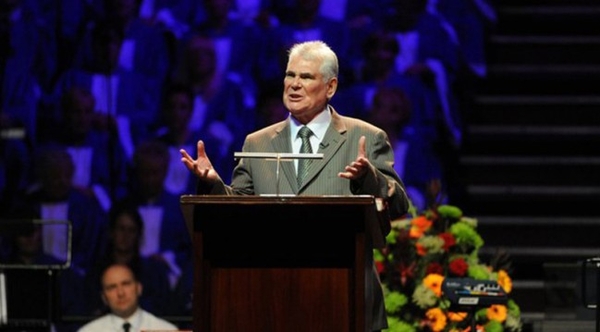
1133Pastor James McConnell of Belfast: “I have no regrets about what I said. I do not hate Muslims, but I denounce Islam as a doctrine and I make no apologies for that. I will be pleading ‘not guilty’ when I stand in the dock in August.”

The controversy began on the evening of Sunday, May 18, 2014, when McConnell, the founding pastor of the Whitewell Metropolitan Tabernacle, an evangelical mega-church in northern Belfast, preached a sermon on a foundational verse of the Christian Bible, 1 Timothy 2:5, which states: “For there is one God, and one mediator between God and men, the man Christ Jesus.”

Preaching with an oratorical flourish common to traditional Protestantism, McConnell said (sermon begins at 22m, 40s):

“For there is one God. Think about that. For there is one God. But what God is [the Apostle] Paul referring to? What God is he talking about? The God of Abraham, Isaac and Jacob. The God and Father of our Lord Jesus Christ.

“The God who we worship and serve this evening is not Allah. The Muslim God, Allah, is a heathen deity. Allah is a cruel deity. Allah is a demon deity. A deity that this foolish government of ours … pays homage to, and subscribes financial inducements to curry their favor to keep them happy….

“While in Muslim lands Christians are persecuted for their faith; their homes burned, their churches destroyed, and hundreds of them literally have given their lives for Christ in martyrdom. A lovely young [Sudanese] woman by the name of Miriam, 27 years-of-age, because she has accepted Christ as her Savior, will be flogged publicly and hanged publicly. These fanatical worshippers are worshippers of the god called Allah. Ladies and gentlemen, that is a fact and it cannot be denied and it cannot be refuted.

“I know the time will come in this land … and in this nation to say such things will be an offense to the law. It would be reckoned erroneous, unpatriotic. But I am in good company, the company of [Protestant Reformers] Luther and Knox and Calvin and Tyndale and Latimer and Cranmer and Wesley and Spurgeon and such like him.

“The Muslim religion was created many hundreds of years after Christ. Mohammed, was born in 570. But Muslims believe that Islam is the true religion, dating back to Adam, and that the biblical Patriarchs were all Muslims, including Noah and Abraham and Moses, and even our Lord Jesus Christ.

“To judge by some of what I have heard in the past few months, you would think that Islam was little more than a variation of Christianity and Judaism. Not so. Islam’s ideas about God, about humanity, about salvation are vastly different from the teachings of the Holy Scriptures. Islam is heathen. Islam is satanic. Islam is a doctrine spawned in Hell.”

McConnell’s comments about Islam comprised less than ten minutes of a 35-minute sermon that focused on Christian theology.

The blowback was as swift as it was predictable. The Belfast Islamic Center, which claims to represent all of the 4,000 Muslims thought to be living in Northern Ireland, complained to police, who dutifully launched an investigation into whether there was a “hate crime motive” behind McConnell’s remarks.

McConnell later issued a public apology, but he refused to recant. He also rejected a so-called informed warning. Such warnings are not convictions, but they are recorded on a person’s criminal record for 12 months. Anyone who refuses to accept the warning can be prosecuted, and McConnell now faces six months in prison. The first hearing of his case is set for August 6.

In an interview with the Belfast Telegraph, McConnell said he would rather go to prison than disavow his comments about Islam.

“I am 78 years of age and in ill health but jail knows no fear for me. They can lock me up with sex offenders, hoodlums and paramilitaries and I will do my time.

“I have no regrets about what I said. I do not hate Muslims, but I denounce Islam as a doctrine and I make no apologies for that. I will be pleading ‘not guilty’ when I stand in the dock in August.

McConnell said that the charges against him were symbolic of the persecution Christians are facing in Britain today:

“It is a case of back to the future. In the first century, the apostles were jailed for preaching the gospel. Early Christians were boiled in oil, burnt at the stake and devoured by wild beasts. If they faced that and kept their faith, I can easily do six months in jail.”

McConnell’s attorney, Joe Rice, vowed to fight the case “tooth and nail.” He said:

“I don’t agree with everything Pastor McConnell says but his prosecution represents a threat to freedom of speech and freedom of religion. If we’re moving into a genuinely pluralist society, these freedoms must be extended to Christians as much as they are to others.”

After public prosecutors announced that they plan to call eight witnesses in McConnell’s prosecution, Rice said:

“Rest assured we will call many, many more. This will be a landmark case with leading political, religious and academic figures giving evidence.

“The logic of the decision to prosecute Pastor McConnell means that many clerics — including Catholic priests and other evangelical pastors — could now find themselves under investigation for preaching with passion.

“My client’s remarks weren’t addressed at individual Muslims but at Islam in generic terms.”

McConnell stressed that he does not hate Muslims. “My church funds medical care for 1,200 Muslim children in Kenya and Ethiopia,” he said. “I’ve no hatred in my heart for Muslims, but I won’t be stopped from preaching against Islam.” He added:

“I apologized last year if I had unintentionally hurt anyone’s feelings. I would defend the right of any Muslim cleric to preach against me or Christianity. I most certainly don’t want any Muslim clerics prosecuted but I find it very unfair that I’m the only preacher facing prosecution.”

In an interview with the Guardian, McConnell reiterated that he is “not going to be gagged.” He said:

“The police tried to shut me up and tell me what to preach. It’s ridiculous. I believe in freedom of speech. I’m going to keep on preaching the gospel. I have nothing against Muslims, I have never hated Muslims, I have never hated anyone. But I am against what Muslims believe. They have the right to say what they believe in and I have a right to say what I believe.”

The executive director of the Belfast Islamic Center, Raied al-Wazzan, is leading the push to prosecute McConnell. “This is inflammatory language and it definitely is not acceptable,” he saidin an interview with the BBC.

Al-Wazzan is now trying to leverage the controversy over McConnell’s remarks to shame local politicians into providing him with public land, for free, to build a mega-mosque in Belfast. “We need the land from the government,” he told the BBC. “And there is a huge demand for it. The Muslim population is growing in Belfast, in Northern Ireland, but especially in south Belfast.”

In January 2015, al-Wazzan drew attention to himself when he praised the Islamic State’s rule of the northern Iraqi city of Mosul, where jihadists have decimated out the city’s 2,000-year-old, 60,000-strong Christian community. Speaking to the BBC, al-Wazzan said: “Since the Islamic State took over, it [Mosul] has become the most peaceful city in the world.”

After local politicians called for the government to cut public funding for the Belfast Islamic Center, al-Wazzan recanted. But the Belfast Islamic Center’s website continues to prominentlydisplay the writings of a Muslim extremist named Bilal Philips, who has been banned from entering the UK because of his preaching of violence against Jews, Christians and homosexuals, and his glorification of Islamic suicide bombers.

McConnell summed it up this way: “Islam is allowed to come to this country, Islam is allowed to worship in this country, Islam is allowed to preach in this country and they preach hate. And for years we are not allowed to give a tract out, we are not allowed in Islam, we are not allowed to preach the gospel. We are persecuted in Islam if we stand for Jesus Christ.”

Obama on Iran and Syria: See no evil

June 28, 2015

Obama on Iran and Syria: See no evil, Israel Hayom, Elliott Abrams, June 28, 2015

(Obama sees evil only where he wants to see it, starting with his position that Islam is the religion of peace. — DM)

See no evil — once again. Iran’s role is systematically ignored or underplayed, because (as ‎Hof puts it), “The administration has other fish to fry with Tehran.” Namely, the nuclear ‎deal.

******************

The slaughter in Syria and the awful human rights violations in Iran cannot be denied by ‎the Obama administration, but they sure can be downplayed and ignored.‎

On the Iran point, consider the release yesterday, four months late, of the State ‎Department’s annual human rights reports. The reports were presented by Secretary of ‎State John Kerry and Assistant Secretary of State for Human Rights Tom Malinowski. The Iran report is ‎tough. Here’s an excerpt:

The most significant human rights problems were severe restrictions on civil liberties, ‎including the freedoms of assembly, speech, religion, and press; limitations on the citizens’ ‎ability to change the government peacefully through free and fair elections; and disregard ‎for the physical integrity of persons, whom authorities arbitrarily and unlawfully detained, ‎tortured, or killed.‎

“Other reported human rights problems included: disappearances; cruel, inhuman, or ‎degrading treatment or punishment, including judicially sanctioned amputation and ‎flogging; politically motivated violence and repression; harsh and life-threatening ‎conditions in detention and prison facilities, with instances of deaths in custody; arbitrary ‎arrest and lengthy pretrial detention, sometimes incommunicado; continued impunity of ‎the security forces; denial of fair public trial, sometimes resulting in executions without due ‎process; the lack of an independent judiciary; political prisoners and detainees; ineffective ‎implementation of civil judicial procedures and remedies; arbitrary interference with ‎privacy, family, home, and correspondence; severe restrictions on freedoms of speech ‎‎(including via the internet) and press; harassment and arrest of journalists; censorship and ‎media content restrictions; severe restrictions on academic freedom; severe restrictions on ‎the freedoms of assembly and association; some restrictions on freedom of movement; ‎official corruption and lack of government transparency; constraints on investigations by ‎international and nongovernmental organizations (NGOs) into alleged violations of human ‎rights; legal and societal discrimination and violence against women, ethnic and religious ‎minorities, and lesbian, gay, bisexual, and transgender (LGBT) persons based on perceived ‎sexual orientation and gender identity; incitement to anti-Semitism; trafficking in persons; ‎and severe restrictions on the exercise of labor rights.‎”

Iran is of course an important country, so how much of this did Kerry and Malinowski ‎mention in their own opening remarks? Not a word. Not one. Kerry mentioned about 10 ‎countries and “the LGBTI community,” but not Iran. Malinowski mentioned about 20 ‎countries, but not Iran (until pressed by reporters). Do we think this is accidental, that ‎neither man mentioned Iran? How likely is that?‎

Yesterday also brought another superb analysis of events in Syria, and U.S. policy there, ‎from Fred Hof of the Atlantic Council — once the administration’s lead man and “special adviser” on Syria. It is titled “Syria: Civilians Pay the Price,” Hof quotes from the June ‎‎23 report of the Independent International Commission of Inquiry on the Syrian Arab ‎Republic. And here are the excerpts he quotes:

“The government continues to direct attacks towards locations where civilians are likely ‎to congregate, among them, bus stations, marketplaces, and bakeries.”‎

‎”In particular, the continuing use of barrel bombs in aerial campaigns against whole areas, ‎rather than specific targets, is in violation of international humanitarian law and, as ‎previously documented, amounts to the war crime of targeting civilians.”‎

“The larger strategy [of the regime] appears to be one of making life unbearable for civilians ‎who remain inside armed-group controlled areas.”

“The previously documented pattern of attacks indicating that government forces have ‎deliberately targeted hospitals, medical units, and ambulances remains an entrenched ‎feature of the conflict.”‎

“Government sieges are imposed in a coordinated manner. … In particular, government ‎forces have refused to allow aid deliveries of essential medicines and surgical supplies. … Government authorities act in direct breach of binding international humanitarian law ‎obligations to ensure that wounded and sick persons are collected and cared for, and to ‎ensure the rapid and unimpeded passage of humanitarian relief.”

“Everyday decisions — whether to go visit a neighbor, to send your child to school, to step out ‎to buy bread — have become, potentially, decisions about life and death. Large numbers of ‎children have been killed in bombardments of their homes, schools, and playgrounds.”‎

What’s the link to Iran? Hof explains:‎

“The administration also knows that Iran is the principal foreign facilitator of regime war ‎crimes and crimes against humanity. It is the Iranian factor that accounts, in large ‎measure, for the administration’s decision to leave Syrian civilians entirely at the mercy of ‎Tehran’s Syrian client. The administration has other fish to fry with Tehran. So Syrian ‎civilians get to pay the price.‎

“One searches White House and State Department press conferences in vain for any ‎systematic examination of this issue. Even though Russian leverage is as limited as its good ‎intentions, one wonders how prominently civilian protection is featured in Secretary of State ‎John Kerry’s periodic encounters with his Russian counterpart. Even though nuclear talks ‎are important, one wonders if Tehran’s facilitation of Assad regime criminality arises at all ‎in official U.S.-Iranian exchanges. Has there been a systematic diplomatic campaign aimed ‎at persuading Tehran and Moscow to oblige their client to respect pertinent United Nations ‎Security Council resolutions? Is Iran being asked to force its client to stop barrel bombing ‎and lift starvation sieges?‎”

See no evil — once again. Iran’s role is systematically ignored or underplayed, because (as ‎Hof puts it), “The administration has other fish to fry with Tehran.” Namely, the nuclear ‎deal.

This is disgraceful, as Hof states with restraint but with force:‎<

“The indelible stain that can mark the Obama legacy forever on this issue is nothing ‎compared to the terror and suffering that can be mitigated if the president elects to try. ‎Whether the motivation to act springs from legacy concerns, degrading and destroying ‎ISIL, or profound revulsion over what is happening to children and their parents, is ‎unimportant. The Iranians can negotiate while facilitating mass murder. No doubt, they can ‎do so if the greatest power on earth pushes back a bit. President Obama should act now to ‎protect Syrian civilians.‎”

Or as he puts it more angrily, what do those who complain about this policy want? “They ‎want … to persuade the president of the United States to give a damn about suffering, ‎terrified human beings.”

Let’s stop protecting, ignoring, and downplaying the murderous role Iran is playing in Syria ‎and the terrible human rights violations taking place in Iran itself.‎

Rocket Alert – Golan Heights

June 28, 2015

Rocket Alert – Golan Heights

By: Jewish Press News Briefs

Published: June 28th, 2015

via The Jewish Press » » Rocekt Alert – Golan Heights.

Rocket Crossing

Photo Credit: Asher Schwartz

3:08 A second rocket alert has gone off on the Golan Heights.

Again it is believed the rocket landed on the Syrian side of the Golan Heights.

2:41 PM A rocket alert just sounded on the Golan Heights.

Apparently there is fighting on the Syrian side of the Golan Heights, next to the border with Israel.

It appears that no rocket landed in Israeli territory, but something was launched close by that set off the rocket alert.

Explosions from the fighting can be heard in Majdal Shams.


http://www.jpost.com/Arab-Israeli-Conflict/Rocket-alert-sirens-sound-in-northern-Golan-Heights-407379

Golan Heights

Israeli soldiers stand near the border with Syria in the Golan Heights. (photo credit:REUTERS)

Rocket alert sirens sounded in several communities throughout the northern Golan Heights on Sunday afternoon.

It was not immediately clear if any rockets or mortar shells landed in Israeli territory.

There were no immediate reports of injuries or damage in the incident.

Earlier on Sunday, on the Gaza front, rocket alert sirens went off in communities in the Ashkelon Coast Regional Council. The IDF said no rockets fell inside Israel and was looking into what triggered the sirens.

The rocket sirens in the Golan Heights came amid heavy fighting between rebels and the Assad regime on the Syrian side of the border.

Spillover from the Syrian infighting, in the form of mortar shells landing in Israeli territory, have often set off rocket alert sirens.

Who is Responsible for the Atrocities in the Muslim World?

June 27, 2015

Who is Responsible for the Atrocities in the Muslim World? The Gatestone InstituteUzay Bulut, June 27, 2015


  • If colonialism were the main problem, Muslims, too, still are, colonizers — and not particularly “humanitarian” ones, at that.
  • Islamic jihad and Islamic violence; the sanctioning of sex slavery; dehumanization of women; hatred and persecution of non-Muslims have been commonplace in the Islamic world ever since the inception of the religion. Deny everything and blame “the infidel.”
  • But is it America that tells these men to treat their wives or sisters as less than fully human? If we want to criticize the West for what is going on in the Muslim world, we should criticize it for not doing more to stop these atrocities.
  • Trying to whitewash the damage that the Islamic ideology has done to the Muslim world, while putting the blame of Islamic atrocities on the West, will never help Muslims face their own failures and come up with progressive ways to resolve them.

Every time the ISIS, Boko Haram, Iran, or any terrorist group in the Muslim world is discussed, many people tend to hold the West responsible for the devastation and murders they commit. Nothing could be farther from the truth. Blaming the failures in the Muslim world on Western nations is simply bigotry and an attempt to shift the blame and to prevent us from understanding the real root cause of the problem.

When these Islamic terrorist groups abduct women to sell them as sex-slaves or “wives;” conduct mass crucifixions and forced conversions; behead innocent people en masse; try to extinguish religious minorities and demolish irreplaceable archeological sites, the idea that this is the fault of the West is ludicrous, offensive and wrong.

Western states, like many other states, try to protect the security of their citizens. What they essentially need, therefore, are peaceful states as partners with which they can have economic, commercial and diplomatic relations. They do not need genocidal terrorist groups that destroy life, peace and stability in huge swaths across the Muslim world.

Western states also have democratic and humanitarian values, which Islamic states do not. The religious and historical experiences of the Western world and the Islamic world are so enormously different that they ended up having completely different cultures and values.

The West, established on Jewish, Christian and secular values, has created a far more humanitarian, free and democratic culture. Sadly, much of the Muslim world, under Islamic sharia law, has created a misogynistic, violent and totalitarian culture.

This does not mean that the West has been perfect and sinless. The West still commits some appalling crimes: Europe is guilty of paving the way for the slaughter of six million Jews in the Holocaust, and for still not protecting its Jewish communities. Even today, many European states contort logic to recognize Hamas, which openly states that it aims to commit genocide against Jewish people.

The West, however, accepts responsibility for the failures in its own territories: for instance, not being able to protect European women from Muslim rapists. These men have moved to Europe to benefit from the opportunities and privileges there, but instead of showing gratitude to European people and government, they have raped the women there, and tried to impose Islamic sharia law.

If we want to criticize the West for what is going on in the Muslim world, we should criticize it for not doing more to stop these atrocities.

The West, and particularly the U.S., should use all of its power to stop them — especially the genocides committed against Jews, Christians and other non-Muslims in the Muslim world.

We should also criticize the West — and others, such as the United Nations and its distorted Gaza War report — for supporting those who proudly commit terrorist attacks against Israeli civilians, and we should criticize the West for not siding with the state of Israel in the face of genocidal Jew-hatred.

We should criticize the West for letting Islamic anti-Semitism grow in Europe, making lives unbearable for Jews day by day.

We should criticize the West for having accepted without a murmur the Turkish occupation of Northern Cyprus for more than 40 years.

We should also criticize the West for leaving the fate of Kurds, a persecuted and stateless people, to the tender mercies of Turkey, Iran, Iraq and Syria — and now the Islamic State (ISIS). On June 25, ISIS carried out yet another deadly attack, killing and wounding dozens of people in the Kurdish border town of Kobani, in Syrian Kurdistan.

And we should criticize especially the current U.S. government for not being willing to take serious action to stop ISIS, Boko Haram and other extremist Islamic groups.[1]

The list could go on and on. Moreover, it would not be realistic to claim that these groups or regimes all misunderstand the teachings of their religion in exactly the same way.

It would also not be realistic to claim that the West has created all these hundreds of Islamic terror groups across the Muslim world.

The question, then, is: Who or what does create all these terrorist groups and regimes?

In almost all parts of the Muslim world, systematic discrimination, and even murder, are rampant — especially of women and non-Muslims. Extremist Islamic organizations, however, are not the only offenders. Many Muslim civilians who have no ties with any Islamist group also commit these offenses daily. Jihad (war in the service of Islam) and the subjugation of non-Muslims are deeply rooted in the scriptures and history of Islam.

Ever since the seventh century, Muslim armies have invaded and captured Jewish, Christian, Hindu, Buddhist and Zoroastrian lands; for more than 1400 years since, they have continued their jihad, or Islamic raids, against other religions.

Many people seem to be justifiably shocked by the barbarism of ISIS, but Islamic jihad does not belong just to ISIS. Violent jihad is a centuries-long tradition of Islamic ideology. ISIS is just one jihadist army of Islam. There are many.

All of this is an Islamic issue. The free West has absolutely nothing to do with the creation and preservation of this un-free culture.

The West has, on the contrary, been the victim of Islamic military campaigns and imperialistic pursuits: Christian peoples of Europe have been exposed to Ottoman invasions and subjugation for centuries. The fall of Byzantine Empire marked the peak of Islamic Jihad in Christian lands. Many places in Europe — including Greece, Bulgaria, Albania, Bosnia, Croatia, Hungary, Serbia, and Cyprus, among others — were all invaded and occupied by the Ottoman armies. Other targets, including Venice, Austria, and Poland, had to fight fierce defensive wars to protect their territories.

The historical and current troubles in the Muslim world are not, therefore, problems “imported” from an outside source; they are internal cultural and political problems, which Muslim regimes and peoples have reproduced for centuries.

Some of the things that women in Saudi Arabia may not do were listed in The Week magazine: Saudi women are not allowed to “go anywhere without a male chaperone, open a bank account without their husband’s permission, drive a car, vote in elections, go for a swim, compete freely in sports, try on clothes when shopping, enter a cemetery, read an uncensored fashion magazine and buy a Barbie and so on.”

Of course, there is nothing specific in Islamic scriptures about cars, fashion magazines or Barbie Dolls. But there is enough there that indicates why all of these abuses, and more, are widespread across the Islamic world, and why the clerics, imams and muftis approve them.

The central issue is to see how the lines that the Islamic theology draws seed the soil in which this kind of discrimination systematically buds, why it is extolled and how it is advocated.

Saudi Arabia is not the only Muslim country where women are dehumanized. Throughout almost the almost the entire Muslim world — including Turkey, considered one of the most “liberal” Muslim countries — women are continually abused or killed by their husbands, ex-husbands, boyfriends, fathers, brothers or other males. [2]

Is it America that tells these men to treat their wives or sisters as less than fully human?

Is the West really what stops them from respecting human rights or resolving their political matters through diplomatic and peaceful ways? Are Muslims too stupid to make wise decisions, and act responsibly? Why should Americans or Europeans have evil wishes for the rest of the world?

Demonizing Western nations — even after all of their cultural, scientific and rational progress — is simply pure racism.

“The belief that the West is always guilty is among the dozen bad ideas for the 21st century,”wrote the Australian pastor, Dr. Mark Durie. “This irrational and unhelpful idea is taught in many schools today and has become embedded in the world views of many. It is essentially a silencing strategy, sabotaging critical thinking.”

Another term that prevents one from understanding the root causes of the conflicts in the Muslim world is “moral relativism” — a politically correct term that really means moral cowardice.

Defending “moral relativism” and saying that “all cultures are equal” really means saying a culture that encourages child marriages, beating women and selling girls on slave markets has a value equal to a culture that respects women and recognizes their rights, and which renounces wanton violence.

Another popular target of blame for the failures in the Muslim world is historical British colonialism.

If colonialism were the main problem, however, Muslims, too, were, and still are, colonizers — and not particularly “humanitarian” ones, at that. The Muslim colonizers do not even seem to have contributed much to the culture of the places they invaded and colonized. In fact, they have actually delayed the progress of the areas they colonized. The printing press, for instance, came to the Ottoman territories almost 200 years later than to Europe.

“Books… undermine the power of those who control oral knowledge, since they make that knowledge readily available to anyone who can master literacy,” wrote Professor Daron Acemoglu and James Robinson. This threatened to undermine the existing status quo, where knowledge was controlled by elites. The Ottoman sultans and religious establishment feared the creative destruction that would result. Their solution was to forbid printing.” [3]

“European Empires — the British, French and Italians — had a short-lived presence in North Africa and the Middle East compared with the Ottoman Empire, which ruled over that region for more than 500 years,” said the historian Niall Ferguson.

“The culture that exists in the greater Middle East and North Africa today bears very, very few resemblances to the culture that Europeans tried to implement there, beginning in the late 19th century and carrying on through to the mid-20th century.

“You can’t say it is the fault of imperialism and leave out the longest living empire in the Middle East, which was the Ottoman Empire, a Muslim Empire, which went back much farther than any of the European Empires mentioned in that piece.”

Muslim states continue to occupy and colonize various territories — including Kurdistan, Baluchistan and the northern part of Cyprus, an EU member state.

“One of the most tragic consequences of the 1974 Turkish invasion,” according to the Ministry of Foreign Affairs of the Republic of Cyprus, “and the subsequent illegal occupation of 36.2% of the territory of the Republic of Cyprus, is the violent and systematic destruction of the cultural and religious heritage in the occupied areas.

“Hundreds of historic and religious monuments in various regions of the occupied areas have been destroyed, looted and vandalized. Illegal ‘excavations’ have been carried out and cultural treasures have been stolen from museums and private collections and were sold abroad.”

Muslim groups and regimes continue to persecute indigenous peoples such as Assyrians, Chaldeans, Mandaeans, Shabaks, Copts, Yezidis, and Bedoon, among many others.

“A substantial segment of the Bedoon population lives with the constant threat of deportation hanging over it,” according to the analyst Ben Cohen. “Around 120,000 Bedoon live without nationality and with none of the rights that flow from citizenship.”

“Its members cannot obtain birth or marriage certificates, or identity cards, or driving licenses. They are banned from access to public health and education services. Their second-class status means they have no access to the law courts in order to pursue their well-documented claims of discrimination. And on those rare occasions that they summon the will to protest publicly—as they did in 2011, when demonstrators held signs bearing slogans like, ‘I Have a Dream’—the security forces respond with extraordinary brutality, using such weapons as water cannons, concussion grenades, and tear gas with reckless abandon.”

It is not the West or Israel committing these crimes against the Bedoon community; it is Kuwait, a wealthy Islamic state, which treats defenseless people as if they are slaves.

In Qatar, another wealthy Islamic state, Nepalese migrants building a football stadium, “[h]ave died at a rate of one every two days… This figure does not include the deaths of Indian, Sri Lankan and Bangladeshi workers…. The Nepalese foreign employment promotion board said that 157 of its workers in Qatar had died between January and mid-November” last year. In 2013, the figure for that period was 168.”

1131The family of a Nepalese migrant worker, who died in Qatar, prepares to bury him. Nepalese laborers in Qatar are forced to work in dangerous conditions, and die at the rate of one every two days. (Image source: Guardian video screenshot)

“In Libya, naturalisation is only open to a man if he is of Arab descent,” reported the United Nations High Commissioner for Refugees (UNHCR). “And many Akhdam in Yemen, a small ethnic minority who may be descendants of African slaves, are reportedly unable to obtain citizenship.”

Is that not apartheid?

In Kuwait, only Muslim applicants may seek naturalization, while Libya’s nationality law allows for the withdrawal of nationality on the grounds of conversion from Islam to another religion.”

Is that not apartheid? Apartheid laws seem to reign over many places in the Muslim world.

Trying to whitewash the damage the Islamic ideology has done to the Muslim world, while putting the blame of Islamic atrocities on the West, will never help Muslims face their own failures and come up with progressive ways to resolve them.

“All the world’s Muslims have fewer Nobel Prizes than Trinity College, Cambridge. They did great things in the Middle Ages, though,” wrote the evolutionary biologist Richard Dawkins on Twitter, after which other Twitter users piled on to criticize him.

It seems that having oil reserves, per capita, that dwarf anything available to Western countries does not create leading scientific nations.

What holds Muslims back when they have unmatched advantages of underground treasures? Why did the scientific revolution not happen in the Muslim world? Why has much of Islamic history been marked by aggressive jihad?

Islamic jihad and Islamic violence; the sanctioning of sex slavery; dehumanization of women; hatred and persecution of non-Muslims and homosexuals; suppression of free speech; and forced conversions have been commonplace in the Islamic world ever since the inception of the religion.

Many teachings in the Islamic scriptures, as well as the biographies of the founder of the religion, set up the parameters where these abuses not only occur but remain protected on a gigantic scale. These are the teachings that have become the culture of the Muslim world.

Sadly, most Muslims have wasted much time, energy and resources on killing and destruction, but — with the exception of some civilization’s most dazzling artistic splendors — not on scientific and cultural advancement.

Recently, Sheikh Hamad bin Jassim bin Jaber al-Thani, the former Prime Minister of Qatar, said that claims that Qatar paid bribes to win the hosting rights of the 2022 World Cup were “not fair” and stemmed from the West’s Islamophobia and racism towards Arabs.

Recent events indicate that he was, at best, “misinformed.”

Deny everything and blame “the infidel” for your shortcomings. Nothing is more important than your honor, and nothing worse than your shame.

If Muslims wish to create a brighter future, nothing is stopping us but ourselves. We should learn to analyze critically our present and our past.

Human rights activists and academics in the West are lying to Muslims about their culture, and bashing and threatening America, Europe or “Zionism” for the problems of Muslims; this can never lead to any positive developments in the Muslim world. It is the Islamic culture and religious ideology that are responsible for these problems

If there is ever going to be an enlightenment, reform or renaissance in the Muslim world, only a hard look and hard questioning can be its starting point.

_________________


[1] Also the Muslim Brotherhood, Islamic Republic of Iran, al-Qaeda, Al-Badr, al-Gama’a al-Islamiyya, Islamic Jihad, al-Nusra Front, Hizb-ut-Tahrir, Al Ghurabaa, Al-Itihaad al-Islamiya, Al-Mourabitoun, Abdullah Azzam Brigades, Jaish al-Muhajireen wal-Ansar, Jamaat Ul-Furquan, Jamaat-ul-Ahrar, Jamaat-ul-Mujahideen Bangladesh, Jamiat al-Islah al-Idzhtimai, Great Eastern Islamic Raiders’ Front, Al-Shabaab, Abu Sayyaf, Tehreek-e-Nafaz-e-Shariat-e-Mohammadi, Supreme Military Majlis ul-Shura of the United Mujahideen Forces of Caucasus, to name just a few.

[2] See: “Gender Equality Gap Greatest in Islamic Countries, Survey Shows“, by Patrick Goodenough, October 29, 2014; “The Treatment of Women In Islam,” by Rachel Molschky, October 7, 2013; “Women Suffer at the Hands of Radical Islam“, by Raymond Ibrahim, January 9, 2014; “As Muslim women suffer, feminists avert their gaze“, by Robert Fulford, National Post; Ayse Onal, a leading Turkish journalist, says in her book, Honour Killing: Stories of Men Who Killed, that in Turkey alone honour killings average about one a day — 1,806 were reported in the period between 2000 and 2005.

[3] Daron, Acemoglu & Robinson, James (2012), Why Nations Fail: The Origins of Power, Prosperity, and Poverty, Crown Publishing Group.

ISIS “lone wolf” violence on global stage baffles Western authorities fighting terror

June 27, 2015

ISIS “lone wolf” violence on global stage baffles Western authorities fighting terror, DEBKAfile, June 27, 2015

“Nothing to do with Islam.”

— DM)

Tunis-Abu_Yahya_al_Qayrawani_was_responsible_26.6.15_1The Tunisian hotel gunman Abu Yahya al Qayrawani

President Barack Obama has avoided linking terrorism with the Muslim religion. Friday, British premier David Cameron responded to the latest round of ISIS attacks with horror, but he also said, “…this terrorism is not in the name of Islam. Islam is a religion of peace.” The killers, rather, “do it in the name of a twisted, perverted ideology.”

******************

The US State Department said Friday, June 26, that there was no indication so far “on the tactical level” that “the attacks in Tunisia, Kuwait and France were coordinated.”

DEBKAfile: That conventional prototype of Islamist terrorist operations is no longer applicable. The Islamic State of Iraq and the Levant ISIS has its own methods of inflicting widespread death which are hard to detect or predict. A decree sent from the top galvanized followers worldwide into initiating lasrgely solo operations. The result was: 211 people dead on Tunisian beaches, a decapitated victim – the first in Europe – at an US-owned French factory, and 27 Shiites killed at a Kuwaiti mosque.

The three outrages were perpetrated on three continents just two hours apart.

The second Friday of the Muslim festival month of Ramadan marked the first anniversary of the founding of the Muslim caliphate in Iraq and Syria under the rule of Abu Bakr Al Baghdadi and was therefore judged a fitting date for killing infidels and Shiites.

These atrocities, along with the mass-executions of Syrian Kurds in Kobani and attacks on Saudi Shiite mosques, were also designed to further inflame sectarian hostilities between Sunnis and Shiites and remind non-Sunni minorities, including Kurds and Druze, of the cruel punishment in store for them.

The latest operational mode of terror employed by the Islamic State is a special adaptation of the “lone wolf” method – which is nothing like the lone terrorist acting on impulse, such as Israel officials depict after a Palestinian crashes a vehicle into a crowd, or stabs a passerby. It rests on meticulous forward planning, according to all the evidence.

Most of the terrorists activated by ISIS are radical Muslims living or working outside Syria or Iraq, often in western Europe and the United States, who have pledged an oath of loyalty to the Islamic State and its caliph, or else Western converts who returned home from Middle East battlefields:
These extremists set up their own operations for acting alone, or in twos or threes at most. They choose their targets according to three yardsticks:

1. The highest number of victims they can kill.

2.  The most gruesome atrocity, climaxing in beheading, for inspiring terror in a large community.

ISIS strategists have turned their backs on Osama bin Laden’s tactics. He employed 20 Saudi terrorists to hijack two commercial planes for murdering thousands of people in the horrific 9/11 attacks in New York and Washington.

Fourteen years later, ISIS uses a single terrorist who is ready to die – or two at most – to execute a massacre. It took no more than one gunman, later identified as Abu Yahya al Qayrawani, firing his Kalashnikov non-stop, to mow down 39 mostly foreign holidaymakers on the beaches of the Tunisian resort of Sousse.

Disguised as a European holidaymaker, he sauntered out to the first hotel beach, his automatic rifle hidden in a large sun shade and opened deadly fire on the unsuspecting people lying there, swimming or heading for the hotel lobby. He then raced to the next hotel beach, firing as he went and killing people as they sought cover.

He was only stopped by police gunfire. A bomb belt was found tied to his body, meaning that the shooting was just stage one of the attack. A big explosion was to have followed.

This was no ordinary “lone wolf” terrorist. It was a highly competent terror machine on two feet.

The beheading of victims is another novel Islamic States method, compared with the classical Al Qaeda of yore. Its perpetrators are usually selected from a group of Muslim extremists with a history in the movement. The more gruesome the deed, the more valiant and honored is the perpetrator.

Many of the jihadis are known to Western security and intelligence agencies. In same places, especially Britain, France and Tunisia, they may even serve local Western security agencies as informants, a role they use as cover for secretly setting up their attacks. This makes their attacks virtually unpredictable.

The unfortunate truth is that many Western counter-terror bodies have been penetrated by these extremists who pretend to cooperate in the war on terror and instead keep their handlers confused.

President Barack Obama has avoided linking terrorism with the Muslim religion. Friday, British premier David Cameron responded to the latest round of ISIS attacks with horror, but he also said, “…this terrorism is not in the name of Islam. Islam is a religion of peace.” The killers, rather, “do it in the name of a twisted, perverted ideology.”

DEBKAfile: Too many Muslims, even those who do not preach violence, don’t see it in those terms.

How IDF Intelligence failed to predict ‘Hamastan’ in Gaza following Israeli pullout

June 27, 2015

How IDF Intelligence failed to predict ‘Hamastan’ in Gaza following Israeli pullot

A year before the evacuation, the Southern Command warned of ‘Hamastan in Gaza,’ but Army Intelligence was quick to dismiss it, while the Shin Bet estimated Hamas was interested in calm; those who did try to alert of the dangers of leaving Gaza were pushed aside, while the rest toed the line.

Alex Fishman

Published: 06.27.15, 10:18 / Israel News

via How IDF Intelligence failed to predict ‘Hamastan’ in Gaza following Israeli … – Israel News, Ynetnews.


The first time the GOC Southern Command, Dan Harel, heard about the plan to evacuate Jewish settlements in the Gaza Strip was on the radio, while driving his car. This was in December 2003. He was listening to prime minister Ariel Sharon’s speech at the Herzliya Conference when he suddenly realized that a dramatic decision has been made in secret and without his knowledge, and that one of the most meaningful events the Israeli society and the IDF will ever experience was going to happen under his command.

The research division at Army Intelligence, which was supposed to provide the intelligence for the Gaza disengagement, was also unaware of what was happening in the prime minister’s close circle.

It is not unreasonable to assume that the prime minister and defense minister would be interested in hearing the opinion of Army Intelligence officials on what are the security consequences such an unprecedented move. But even the head of the research division at the time, Brig.-Gen. Yossi Kuperwasser, heard about the disengagement for the first time only when it was already a done deal.


Prime minister Sharon, center, with then defense minister Mofaz, left, and IDF chief Ya'alon, right (Photo: GPO)
Prime minister Sharon, center, with then defense minister Mofaz, left, and IDF chief Ya’alon, right (Photo: GPO)


This happened during a meeting held by the prime minister’s chief of staff, Attorney Dov Weissglass, who was Sharon’s negotiator with the Palestinians. The decision was presented in that meeting as a done deal, and none of those in attendance – senior Shin Bet and IDF officials – were asked for their opinion on the topic.

The IDF was no more than an executing contractor, according to one of the generals who participated in the discussions about the Gaza disengagement.

The top echelons of the army quickly got used to the fact their opinion did not interest anyone among the political leadership and that they hold no sway or influence on the decision.

Army Intelligence and the Operations Directorate’s analysis of what could happen on the Gaza front after the Israeli withdrawal focused mostly on the advantages of such a move. If there were any who thought otherwise in the army, they kept quiet. Especially in public.

The IDF’s chief at the time, Moshe Ya’alon, whose term was cut short three months before the disengagement from Gaza, knew a little bit more than his generals. During one of the meetings he had with Sharon, shortly before his speech at the Herzliya Conference, the prime minister presented him with an idea he heard from minister Tommy Lapid.


Sharon with housing plans for settlers to be evacuated from Gaza, July 2005 (Photo: Getty Imagebank)


In an attempt to create a diplomatic initiative and end the diplomatic freeze ahead of the implementation of the American road map for peace that was on the table at the time, Lapid proposed to evacuate three settlements in the Gaza Strip. Ya’alon could not have known that behind this “small plan” was a much bigger plan. Sharon, it seemed, just wanted to test the waters with the IDF chief. At the time, they talked about two or three Jewish settlements on the northern border of the Gaza Strip – Nisanit, Dugit and Elei Sinai.

Ya’alon rejected the idea out of hand. A withdrawal, he claimed, will encourage jihadist groups. Later, Ya’alon was quoted as saying that the disengagement from Gaza will provide a “tailwind” for terrorism, which did not make him any more popular in the Prime Minister’s Office.


Then-defense minister, Shaul Mofaz, supported the disengagement, but did not take part in the prime minister’s intimate consultations with his close allies. Several days before the Herzliya Conference, Sharon updated Mofaz in a phone call about his intention to present the disengagement initiative at the conference. Sharon was really checking whether Mofaz would remain by his side during the move.


Cold shoulder from Ya’alon

A decade later, the memory of the “executing contractors” – the IDF chief of staff, army generals, Army Intelligence officials and others – is growing dim. But one thing is clearly remembered by all: The army was not a real partner in the decision-making process. What the political leadership was interested in, and this was the army’s main role, was the physical evacuation of the settlements. The IDF was not really asked to present to the political leadership with its assessments of the expected security situation in the area as a result of the disengagement, both on the medium and long-term.


Now, these high-ranked officials maintain that Sharon did not include them in the decision-making process both because he was afraid of leaks, and because he was afraid of private and public opposition from the army, which could have sabotaged the evacuation plan.


The security cabinet itself was not a full partner in the decision-making process either. Sharon worked with several close advisors – which at the time were referred to as “The Ranch Forum” – and used to have private consultations with a very small group of people, among them some from the military. One of them was Brig.-Gen. Eival Gilady, then the head of the strategic planning division in the Planning Directorate. Weissglass also held meetings with army officials from the Planning Directorate and Army Intelligence. But near the end of 2004, chief of staff Ya’alon barred these officers from showing up to these meetings, because he considered them a manipulative political forum in which the army had no place.


Sharon with his chief of staff Dov Weissglass (Photo: Atta Awisat)


The relations between Weissglass and the chief of staff were already murky and difficult by that point. While the PMO viewed Ya’alon as a “strange bird” who could only get in the way, the chief of staff’s office suspected Weissglass was turning the prime minister against Ya’alon. Brig.-Gen. Gilady, who continued having direct communications with the prime minister, got the cold shoulder from Ya’alon.


After the Herzliya speech, in December 2003, defense minister Mofaz met with chief of staff Ya’alon on the evacuation plan. It was clear to both of them that evacuating three settlements was neither here nor there. The defense minister thought it made more sense to evacuate all of the Jewish settlements in Gaza.


Prime minister Sharon speaking at the Herzliya Conference (Photo: Michael Kremer)


At the time, the prime minister and defense minister received a “map of national security interests” prepared by the Planning Directorate during Yitzhak Rabin’s premiership. According to this document, Israel’s clear security interests were in the West Bank, and there was no room for negotiations there. In the Gaza Strip, however, the situation was reverse.


In Gaza, there was no way to improve the security situation, because the IDF was not in control of the entire Strip, and there was only one division there to protect the settlers.


The working assumption was that as soon as the Gaza Strip is evacuated, not only could the army cut the number of troops in the area by a third, but the border itself will be calmer.


Furthermore, the defense establishment asserted, an IDF pullout from the Strip will give Israel the freedom to hit Gaza harder if the Palestinian Authority fails to control the rebellious organizations in the Strip.


2004 was the first year in which the number of Israeli casualties in Gaza was higher than in the West Bank. Hundreds of Qassam rockets were fired from the Strip, half of which fell in Sderot. In addition, some 3,000 mortar shells were fired at Jewish settlements inside the Gaza Strip and communities on the border.


Izz ad-Din al-Qassam Brigade fighters (Photo: AP)


During a situation assessment, the IDF said that following the disengagement, Hamas will have an interest to maintain the calm in Gaza. Any escalation against Hamas, the IDF believed, will happen in the West Bank or inside Israel. The belief was that after the disengagement, Hamas would view the West Bank as its center of operations, and it will have no interest to drag the IDF back into the Gaza Strip. It was enough for the IDF to defend the Gaza border properly for relative calm to be maintained.


All of this, of course, depended on whether or not the evacuation would go ahead as planned. For a long time, the top echelons of the army believed nothing would come out of this plan. At first, the disengagement imitative was viewed as Sharon testing the waters. Later, the army believed the plan will not go ahead because of political reasons. Maybe that is why the IDF and Shin Bet did not feel any urgency, and did not see the need to discuss the long-term processes that would happen in Gaza after the IDF withdraws. The heads of the IDF also don’t remember ever being called to a cabinet meeting on what is expected to happen in Gaza the day after the withdrawal.


It was only in February 2005, when the Disengagement Plan Implementation Law was passed in the Knesset, that the heads of the defense establishment realized there was no way back anymore. This was also when Ya’alon’s replacement as IDF chief was announced: Dan Halutz.


Prime minister Sharon with Shimon Peres during a vote on the  Disengagement Plan Implementation Law (Photo: AP)
Prime minister Sharon with Shimon Peres during a vote on the Disengagement Plan Implementation Law (Photo: AP)


In early February 2004, Haaretz journalist Yoel Marcus wrote about a conversation he had with Sharon in which the prime minister talked about a full disengagement from the Gaza Strip. After reading this article, chief of staff Ya’alon sent a letter to the prime minister, which was followed by a tense meeting between the two. Ya’alon complained that the army was not included, that there was no administrative work done, and that all of this was unacceptable. Sharon blew him off, and promised to have a meeting on the topic as soon as possible.


It happened two months later. Prime minister Sharon, defense minister Mofaz, chief of staff Ya’alon, Shin Bet chief Avi Dichter, Planning Directorate head Yitzhak Harel, Army Intelligence chief Aharon Ze’evi-Farkash and others were all present in the meeting. This was actually the first meeting in which the disengagement plan was formally presented and that included a discussion about the repercussions of this plan. Sharon informed those present that the evacuation of the Gaza Strip will be done within a year. This was the first real fall out between Sharon and Ya’alon. The chief of staff claimed withdrawing from the Gaza Strip when Islamist groups were on the defensive internationally was a fatal error that could change this trend.


Several weeks after that discussion, the defense minister and chief of staff received a document from GOC Southern Command Dan Harel titled “Hamastan in Gaza.” The document, which analyzed the security developments that are expected in the Gaza Strip following the disengagement, raised the possibility that Hamas would take over the Strip and that the disengagement would not lead to the long sought for calm. An argument broke out in the General Staff, and the Southern Command received response documents from Army Intelligence which rejected that thesis.


Ismail Haniyeh celebrating 27 years to Hamas (Photo: AFP)


The Southern Command officers who wrote the document now admit that it did not include a clear prediction that Hamas would take over Gaza in a military campaign, and that the Strip will turn into a main center of fighting against Israel. The concept of “Hamastan” was included in the military discussion, but the document ended up becoming an episode that changed nothing. No one doubted the fact the Southern Command would execute any order it received.


During a government meeting in June 2004, the heads of Israel’s intelligence community estimated that the move would improve the security situation in the south. Army Intelligence chief Ze’evi-Farkash said at that meeting that “The disengagement will decrease terrorism and make it bearable.”


Shin Bet chief Avi Dichter predicted the unilateral move “will lead to a decrease in the number terrorist attacks and change their pattern.”


Another argument that arose later was whether to evacuate the Gaza Strip but leave IDF presence along the Philadelphi Route on the Egyptian border to strop smuggling, as well as leaving the northern border settlements Nisanit, Dugit and Elei Sinai. In both cases, it was decided to withdraw. The decision on the Philadelphi Route was made a day before the beginning of the evacuation in August 2005. Sharon was against it, but the legal advisers explained to him he could not announce a pullout from the Strip while remaining in Philadelphi.


Israel knew of at least ten tunnels on the eve of the disengagement (Photo: Reters)


Back then, even before the disengagement, Army Intelligence had information about tunnels that were being dug near IDF posts on the Gaza border. Military reporters were specifically told in briefings that this trend was growing and that there was digging in the direction of Hoover’s Axis, which surrounds the Gaza Strip. Shortly before the disengagement, Israeli officials estimated there were over ten tunnels in front of Hoover’s Axis. Less than a year after the disengagement, Gilad Shalit was kidnapped through one of these tunnels.


Work accident

The IDF completed the evacuation of the Gaza Strip on September 11, 2005. On September 23, Hamas held a “victory parade” at the Jabalia refugee camp, during which a Qassam rocket fell off a vehicle, blew up in the crowds and caused secondary explosions of ammunition and other weapons. Over 20 Palestinians were killed and dozens injured.


Even though this was a work accident, Hamas blamed Israel and vowed revenge. That very night, less than a week after the end of the disengagement, a heavy barrage of rockets was fired at Sderot and the rocket fire did not stop for two days.


Work accident: Qassam rocket fell off moving vehicle and exploded in the crowds (Photo: Reuters)


The IDF responded late, in what was code-named “Operation First Rain,” and included mostly airstrikes. The government was criticized for avoiding a significant response.


All of this did not make Israeli security officials, including the Shin Bet, change their situation assessment from the eve of the disengagement. Two months after the end of the disengagement, in November 2005, G., the head of the Shin Bet’s southern district, said in a private conversation that “so long as we encourage Abbas’ rule, we don’t perceive the smuggling of weapons into the Palestinian Authority as a threat … the control over the Philadelphi Route collapsed when Israel withdrew, now the situation is stabilizing, even though there are incidents of bribes given to both Palestinian officers and to Egypt.”

Ten years to disengagement
10 years on, Hamas uses Gush Katif as training grounds / Yossi Yehoshua
Islamist organization self-produces and tests rockets where Israeli settlements once stood; this is also where its fighters practice how to infiltrate Israel and kidnap soldiers.
Read full story


What bothered the Shin Bet at the time was terrorists leaving Gaza through the Sinai Peninsula to commit attacks in the Negev, and the concern the Palestinians move their terror activity from Gaza to the West Bank.


That month, the incoming GOC Southern Command, Yoav Galant, told military reporters: “Israel’s withdrawal from Gaza did not significantly change the balance of power inside the Gaza Strip. The withdrawal from the Philadelphi Route created a situation of a less moderate border than Israel initially estimated. Hamas took 55 percent of the votes in municipal elections in the Gaza Strip and shocked Fatah. The belief is that Hamas will be included in the political system, but that this is a self-disciplined organization and the decision to take over the Strip is not one made by Hamas’ military wing.”


'Decision to take over the Strip is not made by Hamas' military wing' (Photo: AP)
‘Decision to take over the Strip is not made by Hamas’ military wing’ (Photo: AP)


In February 2007, a year and a half after the disengagement, Shin Bet chief Yuval Diskin spoke of the passing year. He spoke about the disintegration of the Palestinian Authority, mostly in Gaza, and about Fatah’s war for survival, which he believed will motivate its people to fight.


And then he also determined: “Hamas is interested in calm. For Hamas, a government is not the main thing. Hamas is incapable of governing.”


He went on to say that “We don’t have a proper response to the steep-trajectory rocket fire from the Gaza Strip. If it continues and there is no Palestinian group to stop it, Israel will be forced to go back into the Gaza Strip. At the moment, there’s no room for Israel to intervene, as Fatah is still the dominant group against the fundamentalists and we shouldn’t get in the way.”


'Hamas is interested in calm' (Photo: EPA)
‘Hamas is interested in calm’ (Photo: EPA)


In the same briefing, the Shin Bet chief said that in 2006, Hamas smuggled 30 tons of explosives through the tunnels along the Philadelphi Route – compared to 5 tons of working explosives in 2005 and only one ton in 2004.


Less than four months after the Shin Bet’s prediction, the very same Hamas, that “doesn’t want to take power,” forcibly took over the Gaza Strip, ousted the Palestinian Authority and formed a government.


Even on the day the military coup in Gaza started – June 12, 2007 – the Shin Bet’s research division estimated this was a violent outburst caused by the tensions between Hamas and Fatah, not something that would lead to Hamas’ military wing seizing power.


Even before the disengagement, Israeli officials realized Fatah was slowly losing control while Hamas was only growing stronger in Gaza. But no on predicted Hamas’ full takeover of Gaza and the Strip becoming a central threat to Israel. Even chief of staff Ya’alon, who believed the disengagement was a mistake, estimated in 2004 that the State of Israel was facing a strategic turn in its ties with the Palestinians: Arafat was dead, a new Palestinian president who opposes terrorism was appointed, the US was facing elections and there was an Israeli plan for a disengagement – so Abbas needed to be bolstered and allowed to take over the Strip.


Fatah lost control over Gaza (Photo: Reuters)


Even Sharon thought Israel should help Abbas take over Gaza, and he even met with him. In a briefing with reporters in February 2005, Sharon said: “I am not a diplomat, I’m a farmer, and I won’t leave anything unclear. We need to help Abbas. I said I was ready to help him and I’m helping him. We helped him during Arafat’s illness and burial and during the elections.”


At the end of the day, the disengagement was a political-diplomatic move. Sharon was willing to take security risks and that is why the IDF was only included in the execution and not in the decision-making process. The top military echelons quickly toed the line and provided the political leadership with the “right” security reasoning. The authority Maj.-Gen. (res.) Sharon had in matters of security was crucial.


The inability of Israel’s security forces to correctly assess the diplomatic and military developments that would occur in the Strip after the disengagement should not surprise anyone. Army Intelligence has a built-in handicap in their ability to predict major social or diplomatic processes. Army Intelligence could never replace the cabinet, prime minister and defense minister’s experience and thinking process. On the eve of the disengagement, Army Intelligence was not required to provide – nor did it – any strategic warning on the possibility of a terror entity rising to power in Gaza.


Since the establishment of that Hamastan in Gaza, it forced a continuous unrest on Israel, international de-legitimization, enormous investment of money and resources, and, above all, four large-scale military operations. Hamas’ military capabilities can reach north of the Tel Aviv area now, and the group continues growing stronger. Gaza has turned into a real front, which will occupy large IDF forces even during confrontations on other fronts, like Lebanon.