Archive for March 2015

Yemen worshipers were cursing Jews when mosque blown up

March 24, 2015

Yemen worshipers were cursing Jews when mosque blown up | The Times of Israel.

( The irony is deafening… – JW )

March 22, 2015, 9:44 pm

People stand amid bodies covered with blankets in a mosque after a suicide attack during the noon prayer in Sana'a, Yemen, on March 20, 2015. (photo credit: AP/Hani Mohammed)

People stand amid bodies covered with blankets in a mosque after a suicide attack during the noon prayer in Sana’a, Yemen, on March 20, 2015. (photo credit: AP/Hani Mohammed)

A video recording of a deadly terrorist attack at a Shiite mosque in Yemen on Friday revealed that worshipers were chanting a slew of hateful slogans just as a suicide bomber detonated himself, killing scores of people.

The bombing, one of three committed in a pair of mosques, was carried out by the Islamic State during weekly prayers. At least 142 people were killed and 351 were wounded in the attacks, carried out in the Shiite rebel-controlled capital city of Sana’a.

The amateur video, hosted and translated by the Arabic media watchdog MEMRI, shows a preacher conducting a sermon at the Houthi al-Hashoosh Mosque, leading the crowd in an impassioned cry against Israel, the United States and Jews.

“Our belief in Allah will increase after today. We will triumph over their deceit and their arrogance. Allah is with us,” the preacher said.

“Death to America. Death to Israel. Curse upon the Jews. Victory to Islam. Allahu Akbar,” the worshipers recited en masse. Then a terrorist roaming among the mosque’s patrons detonated himself, causing a scene of mass panic.

The Shiite TV network aired footage from inside the al-Hashoosh Mosque, where screaming volunteers were using bloodied blankets to carry away victims. One of the dead was a small child. Corpses were lined up on the mosque floor and carried away in pick-up trucks.

A report on the rebel-owned al-Masirah TV said that hospitals were urging citizens to donate blood.

The Shiite rebels, known as Houthis, swept down from their northern strongholds and seized the capital last September. Allied with ousted former Yemeni president Ali Abdullah Saleh, they now control at least nine of Yemen’s 21 provinces. Earlier this year they put Abd Rabbo Mansour Hadi, the western-backed president, under house arrest. Hadi has since fled to the southern city of Aden, where he established a temporary capital and maintains he is still the legitimate president.

The Sunni Islamic State group is currently fighting against the government forces in Iraq and Syria and Shiite militia groups supporting them, committing atrocities against them and other minority groups throughout the Middle East.

In an online statement, the previously unknown Sana’a branch of the jihadist group warned that the bombings were “just the tip of the iceberg.”

AP and AFP contributed to this report.

Egypt’s Sisi again calls for ‘religious revolution’

March 24, 2015

Egypt’s Sisi again calls for ‘religious revolution’ – Middle East – Jerusalem Post.

( Yet the Obama administration is still embargoing military supplies requested by Egypt.   Israel and Egypt, America’s strongest natural allies in the Middle East are number one and two on our President’s shit list. – JW )

Sisi also called for countering “extremist” views and erroneous religious beliefs, adding that the Islamic value of tolerance must be promoted.

https://i0.wp.com/english.ahram.org.eg/Media/News/2015/1/17/2015-635571186523280368-328.jpg


Egyptian President Abdel Fattah al-Sisi again called on Sunday for a “religious revolution” against extremism within the Islamic world in an interview on a religious public radio station.

Sisi said the global Islamic community needs to rethink and revolt “for religion and not against it,” Ahram Online reported.
The Egyptian president was interviewed on the 51st anniversary of the Holy Koran radio station.
Sisi called for countering “extremist” views and erroneous religious beliefs, adding that the Islamic value of tolerance must be promoted, according to the report.
He has been leading a fight against an Islamist insurgency at home and has allied with anti-revolutionary Gulf states, which have provided needed economic aid.
In January, Sisi made a similar call for a “religious revolution,” warning, “the Islamic nation is being torn apart and destroyed” by extremism, according to excerpts published by MEMRI (the Middle East Media Research Institute).
Speaking at Al-Azhar University in Cairo, one of the world’s top centers for Sunni learning, Sisi said, “I am addressing the religious scholars and clerics. We must take a long, hard look at the current situation.”
“It is inconceivable that the ideology we sanctify should make our entire nation a source of concern, danger, killing and destruction all over the world,” he said.
“It has reached the point that [this ideology] is hostile to the entire world. Is it conceivable that 1.6 billion [Muslims] would kill the world’s population of 7 billion, so that they could live [on their own]? This is inconceivable,” said Sisi according to MEMRI.

Obama oversteps

March 23, 2015

Israel Hayom | Obama oversteps.

( Capt. Queeg is a fictitious character created by my father over 60 years ago… Unbelievable! – JW )

Richard Baehr

One analyst is now using the language of Captain Ahab and the great white whale, from Herman Melville’s 1851 novel “Moby Dick,” to describe U.S. President Barack Obama’s obsessive pursuit of a nuclear agreement with Iran.

An alternate analysis might be Obama as Captain Queeg from the movie “The Caine Mutiny,” as he is currently displaying the same kind of paranoia seen in that erratic, vengeful captain. In Obama’s case, he appears to be motivated by a need to punish anyone who might interfere with his plans for securing a nuclear deal with Iran, whatever its terms, before he leaves office. Today, the list of enemies interfering with Obama’s plans includes U.S. Republicans, Israel and its Prime Minister Benjamin Netanyahu.

This week has demonstrated that when the president becomes really upset with someone or some country, his cool facade melts away and he morphs into a very unattractive figure, one that even members of his own party in Congress may be willing to oppose on key issues, at least when it comes to the Iran deal and policy toward Israel. In this case, Obama and his team have made specific threats regarding how the administration might behave toward Israel — a policy reassessment, withholding veto support at the U.N., pushing a Palestinian state at the Security Council. Perhaps later there will also be foreign aid deductions or sanctions (hey, you have to impose the sanctions on someone after lifting them from the U.S.’s new strategic partner, Iran).

One of Obama’s most cooperative enablers, journalist Jonathan Chait, in essence acknowledged that sanctions directed at Israel might be in the picture soon. Defending Obama against accusations of “being nicer to Iran than Israel,” he pointed out that Obama has not moved for sanctions against Israel yet.

Amid reports of an enraged president in the White House after hearing news of Netanyahu’s victory in last Tuesday’s election, it did not take long for Obama, administration spokespeople and the ever-reliable Obama allies in the press to launch a full-fledged campaign against Netanyahu. They had two excuses, remarks uttered or posted by Netanyahu in final days before the election that led to accusations that he was both “suppressing” the Arab vote and giving up on the two-state solution. Incidentally, the two-state solution is currently being kept alive mainly by people who do not live in the region, know little about it, or who get paid to promote it.

The White House assumed that funding the opposition to Netanyahu, sending an experienced “get out the vote” operator to get similar results with anti-Netanyahu voters in Israel, repeatedly body-slamming Netanyahu, boycotting his speech to Congress, and threatening that relations would deteriorate should Netanyahu be re-elected, would be enough to convince Israeli voters that the safe course was to vote for the center-left parties, and have Isaac Herzog as the next prime minister. The message was that this would be the way to preserve relations with America, and — hint, hint — not get Obama any angrier at Israel.

The allegation that Netanyahu tried to suppress Arab voters was too juicy to pass up. Of course, it was a malicious lie. However artless Netanyahu’s final get-out-the-vote message to his own voters may have been, there is no evidence whatsoever that Netanyahu or anyone in his government interfered with efforts by Arabs to vote. Did Netanyahu have a right to condemn efforts by NGOs (funded by European governments, and in part by the U.S. State Department) to stir resentment toward him and encourage voter turnout among the opposition? Was it not his right to use this as a spur to get his own voters to show up?

Regarding Netanyahu’s controversial comment about the two-state solution: He specifically stated that Palestinian statehood would be impossible given the current conditions — Hamas control over Gaza and participation in a Palestinian government, the turmoil in the region, the possibility that Hamas/Hezbollah style leadership could take control in the West Bank and put all Israelis at risk from ever more lethal rocket fire.

Netanyahu tried to clarify both remarks immediately after the election in interviews he gave to any American radio or television program that would have him. Netanyahu is not a fool; he was aware that his statements, especially distorted by those unfriendly to him and his government, could create new problems for him with the Obama administration. The interviews in which Netanyahu explained his remarks were out there for the Obama administration to view before the American president completed his NCAA basketball picks for the men’s and women’s brackets and finally found time to call the prime minister to congratulate him for his election victory. After what were almost certainly lukewarm congratulations for his “plurality” victory, an official White House press release revealed that Obama tore into Netanyahu for the election day comments, letting him know the administration was going to rely on these as the real Israeli policy, nothing Netanyahu said or did before or after. And of course, there would be consequences.

White House Press Secretary Josh Earnest, unhappy that no one specifically asked him about the supposed suppression of Arab voters, opted to reiterate the White House’s discontent. Obama repeatedly made Netanyahu’s campaign the subject of his public comments over the last few days. The White House’s friends in the press (better described as units 1-8 of the Venceremos Brigade) then went predictably ballistic accusing Israel of disgracing its democratic heritage, destroying hopes for peace, alienating Americans and making Israel a partisan issue in the U.S. They argued that Israel was making it impossible for American progressives to support them, especially when there are so many more attractive options available for the Left to love — Iran, Hamas, Hezbollah, Libya, Syria, Iraq, Yemen, the Palestinian Authority (where Mahmoud Abbas is now in the 11th year of a four-year term) and anyone opposing Islamophobia.

The president may reflect the emerging views of his leftist party, but he has been busy shaping its leftward tilt. This tilt requires much less support for Israel (one country among many), and paints Israel as the perceived favorite in its conflict with the Palestinians, making it undeserving of sympathy or support from those who want nothing more than redistribution of power, wealth and influence from the strong to the weak. But Obama and the very vocal Left are not in synch with the congressional Democratic party , which is not nearly as anxious to cut ties with Israel.

There are exceptions, though. Illinois Congresswoman Jan Schakowsky, long considered one of the most strident leftists in the House of Representatives, called for “regime change” in Israel just days before the election. Schakowsky seemed unaware that regime change is used to describe a change in the form of government (e.g. military coup, revolution) not the replacement of one party with another in the same type of government system. Regime change is what might have occurred following the massive street demonstrations during the “green revolution” in 2009 in Iran after that country’s stolen election. Schakowsky and Obama were silent during that week. Of course, the president had grand plans for Iran, once the U.S. withdrew from Iraq and Afghanistan, striking a deal favorable to the mullahs on their nuclear program, and allowing, if not encouraging, Iran to become the surrogate regional power in our absence. A potential Arab Spring in Teheran would have threatened those “achievements” and policy objectives.

This weekend, over half the Democrats in the House of Representatives and virtually all the Republicans signed a letter authored by Democrat Eliot Engel and Republican Ed Royce (in total over 360 of the 435 members) demanding a congressional right to review any future Iran agreement. It appears that in the Senate, the effort to accomplish the same review may have hit the two-thirds veto override mark. We are seeing what Jennifer Rubin calls congressional backlash against the White House’s new campaign against Israel. The president is likely to face sharp resistance from both parties if he actually tries to harm Israel at the United Nations. The black caucus and Schakowsky and a few others will follow their president over a political cliff, but most Democrats are not there, and won’t be there any time soon in terms of going to political war with Israel . Republicans are moving on the issue — with Florida’s Marco Rubio, and Arkansas’ Tom Cotton, in particular, blasting Obama in speeches over the past few days, making clear that Israel is a U.S. ally and Congress will stand with Israel, even as the president runs to Tehran looking for allies.

But the fear remains that in his last 22 months in office, Obama may be perfectly willing to go to war with Congress over Israel and Iran, since they are his twin foreign policy obsessions, beyond framing radical Islam in a good light (“since it does not exist”). And part of that fear is that when it comes to Israel and to its prime minister, Obama may have his hands full like Captain Queeg.

US will not defend Israel at UN Human Rights Council

March 23, 2015

Israel Hayom | US will not defend Israel at UN Human Rights Council.

As council prepares to discuss seven resolutions against Israel, U.S. spokesman says: “U.S. delegation will not be speaking about Palestine today” • U.N. Watch: UNHRC dedicates entire day only to alleged Israeli violations, not those of any other country.

Reuters and Israel Hayom Staff
The chairwoman of the Commission of Inquiry on the 2014 Gaza Conflict, Mary McGowan Davis, leaves after her statement to the U.N. Human Rights Council in Geneva on Monday

|

Photo credit: Reuters

The United States will not take the floor at the main U.N. human rights forum on Monday during the annual debate on alleged violations committed in the Palestinian territories, a U.S. spokesman told Reuters on Monday.

The council prepared to discuss seven resolutions against Israel on Monday, according to U.N. Watch, a non-governmental organization based in Geneva that monitors United Nations activity.

The move at the 47-member state forum, where Washington unfailingly defends Israel, follows signals that the Obama administration is undertaking a “reassessment” of relations with Israel.

The last time that Washington spoke under that stand-alone agenda item was in March 2013, U.N. records show.

“The U.S. delegation will not be speaking about Palestine today,” a U.S. spokesman in Geneva told Reuters in response to a query as the debate began. He declined further comment.

Meanwhile, U.N. Watch described the UNHRC session scheduled for Monday as “Hate Israel Day,” adding that every regular session of the council features a day dedicated entirely to criticizing Israel.

“While all 193 countries of the world are addressed under Agenda Item 4 — human rights situations requiring the world’s attention — only Israel gets its own special treatment, under Agenda Item 7 — human rights situation in Palestine and other occupied Arab territories,” the group stated.

The Myth of Netanyahu’s Racism

March 23, 2015

The Myth of Netanyahu’s Racism, Front Page Magazine, Daniel Greenfield, March 23, 2015

Benjamin Netanyahu

Israel’s cultural conflict is a complex one. It doesn’t just pit Jews against Arabs or Muslims against Jews, it pits Arab Druze against European Jewish leftists and Aramean Christians against Arab Muslims. The left prefers cheap shots to actually understanding the complexities of a country that can’t be summed up with a keffiyah and a protest sign. After their election defeat, Obama and the media have decided to reduce Israel to Netanyahu and Netanyahu to the devil. It’s the easy way out, but it fails to take account of men like Ayoub Kara or Father Naddaf, of the Likud landslide in Arab-al-Naim and of Lieberman’s wins in Arab towns and villages. The Jews and Arabs are more complex than the left would like them to be.

***********************

Netanyahu’s conservative Likud Party got its best numbers not in Jerusalem, where it only won a quarter of the vote, or Sderot, the city under siege where it still got less than half, or Maaleh Adumim, a city of some 40,000 known as a “settlement” because it is located in ’67 Israel where it also took less than half.

Its best numbers appear to have come from Arab-al-Naim, a Bedouin settlement, where it scored three-quarters of the vote.

The residents were uninterested in any of the accusations of racism being aimed at Netanyahu by the media. Instead they were interested in housing. As one resident put it, “I used to sleep in a cave with my goats. Now I ask my daughter what wallpaper she wants in her room.”

Netanyahu’s election comment about Arabs being bused in to vote has been seized on as a useful excuse to explain how the media’s poll numbers that showed Netanyahu losing align with the actual results by claiming that a rash of racist Israelis rushed to vote. But that fails to explain why the exit polls were still badly wrong. A more realistic explanation is that the media’s polling was biased against Netanyahu. But it’s easier for the media to accuse Netanyahu of racism than admit to its own biases.

When Netanyahu warned about Arabs being bused in, he obviously was not talking about his own Arab voters, but the Joint Arab List whose MKs include Ahmed Tibi, who claimed that Hamas is not a terrorist organization, Tibi’s brother-in-law, Osama Sa’adi, who represented Hamas terrorists, Haneen Zoabi, who met with Hamas officials and defended the kidnapping and murder of three Israeli teens and Jamal Zahalka, who attended a Hamas rallyand claimed that Israel would be destroyed.

Also on the list is Masud Ghanim, a Muslim Brotherhood member who called for replacing Israel with an Islamic Caliphate and stated that he supports Hezbollah.

The Joint Arab List is composed of several parties. Hadash has its roots in the Israeli Communist Party. Despite the name, it rejects Israel and its only remaining Jewish MK is Boris ‘Dov’ Khenin, the son of David Khenin the party’s co-founder and General Secretary of the Communist Youth Union. Balad was founded by Azmi Bishara who fled Israel after being investigated as an enemy spy. Balad had already been suspended for calling for war against Israel. The United Arab List emerged out of the local Muslim Brotherhood franchise and is stacked with Muslim Brotherhood members.

The Muslim Brotherhood believes that the Islamic apocalypse requires exterminating the Jews.

The Joint Arab List unites Communists with Islamists into one big political terrorist organization. The reasons why Netanyahu and Israelis would be concerned about its members picking up seats are obvious. Imagine Communists sitting in the Senate during the Cold War and Al Qaeda members sitting there now. As Arab al-Naim shows, the issue was not ethnicity; it was Islamic terrorism.

The media’s cries of racism fail to explain places like Arab-al-Naim where the Arab vote helped Netanyahu. Or the Arab-Druze town of Abu Sinan where Lieberman’s Yisrael Beiteinu (Israel Our Home) party, despite its media image as right-wing, captured almost 14 percent of the vote. But then again the “xenophobic” and “racist” party has Hamad Amar, a Druze IDF veteran, in the sixth place on its list.

In Netanyahu’s Likud Party, Druze lawmaker Ayoub Kara returned to the Knesset, Israel’s parliament. If Obama thinks that Netanyahu is far right, he hasn’t met Ayoub Kara who urged protesters, “Say ‘No!’ to Barack Hussein Obama and ‘Yes!’ to the nation of Israel.”

“Everyone understands that withdrawing from land will yield us nothing but a ‘red carpet’ at the ‘peace treaty’ signing ceremony,” he said during the campaign.

Netanyahu didn’t win Kara’s village of Isifya. The center-right Kulanu party running on a program of social development and economic reform did. The Likud barely placed, but Yisrael Beiteinu scored 10 percent of the vote.

While there is an Arab bloc, the Arab vote is also a lot more complicated than it seems.

There are Arab Christians who define themselves as Aramaic rather than Arab and minority groups such as the Druze and the Bedouin who have a different relationship with Israel than the stone-throwing Keffiyah-wearer prized by European protest tourists.

From the earliest days of the reborn state, entire clans and ethnic groups aligned for or against Israel. Thus the Al-Husayini clan, which gave the world Hitler’s Mufti and Arafat, led the campaign against Israel while the Abu Ghosh family maintained friendly relations with the Jews. Druze and Bedouin serve in the Israeli army and there is a growing movement of Arab Christians who have decided to serve as well.

Netanyahu has met with Father Gabriel Naddaf who has led the movement, and Naddaf identifies as Aramaic, rather than Arab, while encouraging other Christians to reclaim an Aramaic heritage. In Jish, the Maronite Christian center of the Aramean revival, the United Arab List won decisively, but Lieberman’s Yisrael Beiteinu scored 11 percent. 5 people even cast votes for Yachad. Shas, the party of Middle Eastern Jews, came in sixth.

The media has accused Netanyahu of offering a bigoted appeal by warning about Arab voters being bused in. It doesn’t care to dwell on the subject of which group would be most moved by such an appeal. That would reveal certain inconvenient facts about the relationships of the Israeli left.

The Israeli left remains a project of European Ashkenazi Jews. The Middle Eastern Mizrahi Jews were refugees from Muslim persecution and want a strong leadership that protects the country. The left gets a fraction of its vote from Middle Eastern Jews. Netanyahu gets half his votes from them.

The Israelis most likely to respond to anti-Muslim rhetoric are refugees from Muslim countries. The lefty activists most likely to condemn them as racist colonizers emigrated from Russia and Germany.

Meretz, Israel’s farthest left party, has an Arab MK. It has no Mizrahi MKs. Yisrael Beiteinu has a Druze and a Mizrahi MK. Israel’s right is more fundamentally diverse than its left and its stronger stand on Islamic terrorism helps it pick up support from Jewish and non-Jewish minorities.

Lieberman does better than Netanyahu among some Arab voters because he projects strength. When he talks about cutting off the heads of traitors, he’s speaking with a vocabulary that is entirely familiar in the region. Nobody in the Middle East picks the weak horse and those Arabs who support Israel prefer the bellicose Lieberman to the more moderate Netanyahu.

“Even in a hundred years’ time, the Middle East will not speak Yiddish and the answer to terror is a deterrent penalty,” Ayoub Kara said.

Those Arabs that support Israel want to see a strong country and they don’t wring their hands when conservative Israeli politicians say politically incorrect things. The Joint Arab List wants to see it gone and those who vote for them are no more likely to spare the Jewish State no matter how softly it speaks.

Israel’s cultural conflict is a complex one. It doesn’t just pit Jews against Arabs or Muslims against Jews, it pits Arab Druze against European Jewish leftists and Aramean Christians against Arab Muslims. The left prefers cheap shots to actually understanding the complexities of a country that can’t be summed up with a keffiyah and a protest sign. After their election defeat, Obama and the media have decided to reduce Israel to Netanyahu and Netanyahu to the devil. It’s the easy way out, but it fails to take account of men like Ayoub Kara or Father Naddaf, of the Likud landslide in Arab-al-Naim and of Lieberman’s wins in Arab towns and villages. The Jews and Arabs are more complex than the left would like them to be.

Cartoon of the day

March 23, 2015

Hope n’ Change, March 23, 2015

Trick or Treaty sm

Arab leaders trust Netanyahu

March 23, 2015

Netanyahu’s win is convenient for Arab leaders – Israel Opinion, Ynetnews.

Analysis: The Egyptian, Jordanian, Saudi and Gulf state rulers trust Israel’s re-elected prime minister to handle the Iranian issue, and the Americans to pressure him on the Palestinian issue.

Published: 03.23.15, 08:37 / Israel Opinion

As always, everything has to do with everything: After he finally telephoned Prime Minister Benjamin Netanyahu, US President Barack Obama sat in front of the cameras to record a special message to Iran’s ayatollahs for the Nowruz holiday.

“For decades (since 1979), our nations have been separated,” the president said from Washington. “We have an opportunity to pursue a different future between our countries” through a “reasonable deal.”

Nowruz is an excellent excuse. It marks the beginning of spring and big hopes for the Persian New Year. Masses go out to the parks, eat till they burst and take selfies. An entire generation of young people in Iran is dreaming of emerging from the isolation.

Obama, in the recorded message, also speaks about unresolved differences of opinion. But after 18 months of negotiations, it doesn’t seem like Washington or Tehran will let the agreement slip out of their hands. Too many commercial interests and leaders’ prestige are involved here and there. And also, we must admit, an unclear chance that they will succeed in sticking a finger and plugging the nuclear arms race.

The Arab world, just like officials in Jerusalem and in the IDF headquarters in Tel Aviv, is monitoring the steps of the American dance which is casting a shadow on the elections results here. One can definitely say that the roof did not collapse on the Arab leaders’ heads when Netanyahu won. The elections here appeared odd, and if there was any attention, it focused on the joint Arab list, and that attention was limited too. Israel’s Arabs are still perceived as a strange entity, sort of collaborators enjoying a democracy which was not born in their region. Despite the potential, there is no chance that they will head the bridge to peace.


Netanyahu and Abdullah. No congratulations phone call (archives)

So far, we haven’t heard that Egyptian President Abdel Fattah al-Sisi or Jordan’s King Abdullah telephoned Netanyahu to congratulate him. On the eve of the elections, al-Sisi actually told the Washington Post that he talks to Netanyahu “a lot.” Abdullah is keeping quiet. He is stressed out because of the Islamic State which is sitting on his fences and the bloody clashes in Syria which are spilling very close to the Jordanian border. In recent days, Abdullah sent his foreign minister on an abrupt visit to Tehran. The last thing he needs is that the Revolutionary Guards’ long hands in Iraq will approach the kingdom.

There is a lot of restlessness in the new king’s palace in Saudi Arabia. Try to convince the White House that there is a huge difference between the Sunni majority in the Arab world and the Shiite minority which is pressing in Lebanon, fighting for Syrian President Bashar Assad, settling in Iraq and expelling the president from the palace in Yemen. Try to remind them that Saudi Arabia, rather than Iran, holds the key to the global oil market.

Obama’s brief visit to Riyadh only raised the tensions. It was as if he came to the first wife to indicate that he has had enough of her, and he is about to take a new wife instead of her. He doesn’t mind leaving bleeding wounded on the ground and doesn’t care how much the deal will cost.

Despite the complaints in the Arab media, a Netanyahu-led right-wing government is very convenient for the Arab leaders. They trust him to do their job for them on the Iranian issue, and they trust the Americans to pressure him on the Palestinian issue.

It also guarantees that Israel will be isolated in the world. When Netanyahu promises that a Palestinian state will not be established on his watch, even if he did retract the statement in a way, they see themselves free of any open relations with us. There will be no normalization here in the near future.

Here is the insight of a veteran Arab commentator, who has been following us for decades: Netanyahu, he explains, has given the green light for Gaza’s reconstruction in order to keep the next conflict away and neutralize the Iranians’ long hands within Hamas. It’s good for Egypt, it’s excellent for Jordan and it’s convenient for Palestinian President Mahmoud Abbas. It calms down the new king in Saudi Arabia and the Gulf emirates. It also provides a time-out until the agreement with Iran.

Israeli officials in France for last-ditch bid to sway Iran talks

March 23, 2015

Israeli officials in France for last-ditch bid to sway Iran talks | The Times of Israel.

Paris has been more hawkish than US ahead of nuclear deadline, but senior French source says Israel’s stances ‘unrealistic’

March 22, 2015, 10:22 pm US Secretary of State John Kerry (L), British Foreign Secretary Philip Hammond (C) and French Foreign Minister Laurent Fabius (L) talk after Secretary Hammond made a statement about their meeting regarding recent negotiations with Iran, in London on March 21, 2015 (AFP PHOTO / POOL / BRIAN SNYDER)

US Secretary of State John Kerry (L), British Foreign Secretary Philip Hammond (C) and French Foreign Minister Laurent Fabius (L) talk after Secretary Hammond made a statement about their meeting regarding recent negotiations with Iran, in London on March 21, 2015 (AFP PHOTO / POOL / BRIAN SNYDER)

Intelligence Minister Yuval Steinitz flew to France on Sunday to try to influence the next round of talks on a deal over Iran’s nuclear program, his spokesman said.

Steinitz was “on a mission from Prime Minister [Benjamin Netanyahu] for a short visit to Europe in an attempt to influence the details of the emerging agreement on the Iran nuclear issue,” a statement from Eyal Basson said.

Steinitz traveled to the French capital with National Security Adviser Yossi Cohen for a closed-door diplomatic blitz to convince mediators to harden their positions on Iran, even at the expense of a breakdown in negotiations, Israeli media reported.

Steinitz was expected to meet French Foreign Minister Laurent Fabius and members of the French negotiating team in the Iran talks, the Haaretz daily reported.

The P5+1 group of world powers — the US, Russia, France, England, China and Germany — has been seeking a comprehensive accord with Iran that would prevent it from developing a nuclear bomb, in return for an easing of economic sanctions.

The Jewish state is not privy to all of the details of the impending deal, although Israeli officials have repeatedly warned that the Jewish state stands to lose the most in the event that Tehran acquires the bomb. An EU official said in February that Israel was no longer being fully briefed on the talks.

Ahead of a looming March 31 deadline to formulate a framework deal with Iran, a senior French diplomat said Sunday that Israel’s stance on the issue had become increasingly unworkable.

The unnamed French official criticized Israel’s position on the Iranian nuclear program as “unrealistic,” and said that Netanyahu went “too far” in a polarizing March 3 address to a joint session of the US Congress on the topic.

“Israel has marginalized itself. In November 2013, we were working with them and they played the game. They didn’t take unrealistic positions,” the diplomat told Reuters. “But here they have gone too far. We told them to play their part so they could influence a final accord, but they have taken unrealistic positions.”

Netanyahu has repeatedly stated that the Iranian nuclear program is an existential threat to Israel and that he will fight “a bad deal” that could leave the Islamic Republic with breakout capabilities to nuclear weapons.

Intelligence Minister Yuval Steinitz attends a political debate at the Hebrew University in Jerusalem, March 03, 2015 (photo by Miriam Alster/FLASH90)

To that effect, he went ahead with his contentious speech before the US Congress to discuss the deal, raising the ire of the White House, Democratic US congressmen and his political opponents in Israel.

Despite denying UN atomic inspectors unfettered access to some of its facilities, Iran insists that its program will only be used for peaceful purposes.

Steinitz, the minister who was in Paris Sunday for consultations on the talks, reiterated Israel’s belief that Tehran is bent on developing nuclear weapons to use against Israel.

“This is an effort to prevent a [nuclear] deal that is bad and full of loopholes, or at least… to succeed in closing or amending some of these loopholes,” he told Israel Radio.

According to the Reuters report, among the negotiating powers, France’s position vis-à-vis Iran’s nuclear project has been the closest to Israel’s, with Steinitz crediting French diplomats for “helping us a great deal.”

France has expressed skepticism over the speed of a potential deal in which Iran would place its nuclear program under severe restrictions in exchange for a stage-by-stage lifting of international sanctions. There have been reports of differences between the United States and France in the talks, which were set to resume on Wednesday or Thursday in Switzerland.

A draft nuclear accord being negotiated between the United States and Iran would force Iran to cut hardware it could use to make an atomic bomb by about 40 percent for at least a decade, while offering the Iranians immediate relief from sanctions that have crippled their economy, officials told The Associated Press last week.

As an added enticement, elements of a UN arms embargo against Iran could be rolled back.

The very existence of a draft in circulation provided perhaps the clearest indication the sides were nearing a written agreement as they raced to meet the March 31 deadline for a framework pact. The deadline for a full agreement is the end of June.

US Secretary of State John Kerry (L) and his Iranian counterpart, Mohammad Javad Zarif, pose before resuming talks over Iran's nuclear program in Lausanne on March 16, 2015 (photo credit: AFP/POOL/BRIAN SNYDER)

Officials said the tentative deal imposes new limits on the number of centrifuges Iran can operate to enrich uranium, a process that can lead to nuclear weapons-grade material. The sides are zeroing in on a cap of 6,000 centrifuges, officials said, down from the 6,500 they spoke of in recent weeks. Israel has insisted that Iran does not require any enrichment capacity if it is to run a civilian nuclear program.

But US officials insist the focus on centrifuge numbers alone misses the point. Combined with other restrictions on enrichment levels and the types of centrifuges Iran can use, Washington believes it can extend the time Tehran would need to produce a nuclear weapon to at least a year during the 10 years it is under the moratorium. Right now, Iran would require only two to three months to amass enough material if it covertly seeks to “break out” toward the bomb.

The one-year breakout time has become a point the Obama administration is reluctant to cross in the set of highly technical talks, and that bare minimum would be maintained for 10 years as part of the draft deal. After that, the restrictions would be slowly eased. The total length of the deal would be at least 15 years, possibly even 20.

Among US allies, France is the most adamant about stretching out the duration of the deal. A European official familiar with the French position said it wants a 25-year time-span. After the deal expires, Iran could theoretically ramp up enrichment to whatever level or volume it wants.

AFP, AP and Times of Israel staff contributed to this report.

For Obama, Bibi’s words matter while Iran’s don’t

March 22, 2015

For Obama, Bibi’s words matter while Iran’s don’t, Times of IsraelShmuley Boteach, March 22, 2015

(Please see also, Iranians Chant “Death to America” While Negotiations Continue. — DM)

President Obama says that Bibi’s words matter when it comes to a Palestinian state. “We take him at his word when he said that it wouldn’t happen during his prime ministership,” he told The Huffington Post. The President used Netanyahu’s statement as cause for a “reassessment” of American ties with Israel.

White House spokesman Josh Earnest echoed the sentiment in last Thursday’s White House briefing that the Prime Minister’s words could bring punishment. “Words matter,” he said. There could be “consequences” for Netanyahu’s statements. “Everybody who’s in a position to speak on behalf of their government understands that that’s the case, and particularly when we’re talking about a matter as serious as this one.”

So let’s get this straight. When foreign leaders speak, it matters. What they say is consequential. Bibi’s going to have to pay for his remarks.

But I have one question. Why doesn’t any of this apply to Iran? Why, on Saturday Ayatollah Ali Khameini uttered the words “Death to America” even as John Kerry was expressing optimism the very same day that the United States would come to a nuclear accord with Iran!

Suddenly, Iran’s words don’t matter?

Taking this further, the most hair-raising aspect about the growing American rapprochement with Iran is that it has all happened while Iran has continued to repeatedly threaten the annihilation of the Jewish people. Ayatollah Khameini has called Jews dogs and tweeted as recently as this past November that “there is no cure for Israel other than annihilation.”

Now, if words matter, how can the United States continue to speak to his government while they are openly threatening a second holocaust? Why did President Obama and John Kerry not establish a repudiation of these genocidal words and threats as a precondition for any talks?

The hypocrisy is startling. And it leads to a more important point.

By now it’s clear to all that President Obama positively loathes Prime Minister Netanyahu more any other world leader. His hostility to the Prime Minister has become so pronounced that the President can no longer disguise or control it.

Am I the only one that finds it just a touch unseemly for the leader of the free world to hate the leader of the only free country in the Middle East?

The President has a good relationship with Erdogan, the tyrant of Turkey, who has destroyed his nation’s democracy and allows fighters to pass through his nation to join ISIS. President Obama traveled to Saudi Arabia to pay his personal condolences upon the passing of arch-misogynist King Abdullah of Saudi Arabia, a man who wouldn’t even allow women to drive a car. And he utters not an unkind word about Ayatollah Khameini, the world’s foremost terrorist.

But he hates Netanyahu. Go figure.

For years we Americans have heard that our President is cerebral and unflappable. That he famously remains cool under the most challenging circumstances. It turns out that this is true for every world leader except one, Benjamin Netanyahu, who makes the President’s blood boil.

Don’t we deserve to know why?

If the two leaders merely had bad personal chemistry, I could understand. They’re not the best of friends. Fine. But for Obama the hatred of Netanyahu has become positively visceral, personal, and irrepressible.

My own belief is this. President Obama is desperate for some foreign policy victories. There’s a year-and-a-half left to his Presidency and the world is on fire. From Iran to Boko Haram to ISIS to Putin to Hezbollah to Al Qaida and Hamas, bad guys are running amok under this president. American Foreign policy is a shambles.

The only ally President Obama can truly expert pressure on for a deal that would give him the lasting foreign policy legacy he needs and craves is Israel. And in the past Israeli Prime Ministers have proven so utterly malleable. American Presidents have squeezed them like lemons.

But Bibi refuses to be squeezed. He won’t play ball. He won’t withdraw from Judea and Samaria and allow “Hamastan” on his eastern border the way it is in Gaza. He won’t shut up about America’s capitulation to the Iranian mullahs that would leave them with a military-grade nuclear program. He won’t go quietly into the nuclear night while America appeases one of the most violent and vile regimes on earth.

This darned Bibi guy just won’t bend.

And our President finds the intransigence so utterly frustrating.

He prayed and hoped that someone else might win the Israeli election. And some of the President’s top political operatives went and worked for Herzog. But, huff and puff as he might, the President could not blow Bibi’s house down.

So now he’s stuck with him. A stick-necked Prime Minister, getting in the way of the President’s peace deals with Iran and the Palestinians.

And with no way of getting rid of the Israeli nuisance, all the President can do is continue to give interviews that express his dislike and frustration, not realizing that we’re reaching a point where the President is beginning to look positively un-Presidential and where is enmity is becoming unbecoming.

It’s called democracy, Mr. President. Bibi won. And it’s time for the world’s foremost democracy, the United States of America, to live with it and work with the man who has the mandate of the Israeli people, just as you have the mandate of the American people.


Unstated Factor in Iran Talks: Threat of Nuclear Tampering

March 22, 2015

Unstated Factor in Iran Talks: Threat of Nuclear Tampering, New York Times, 

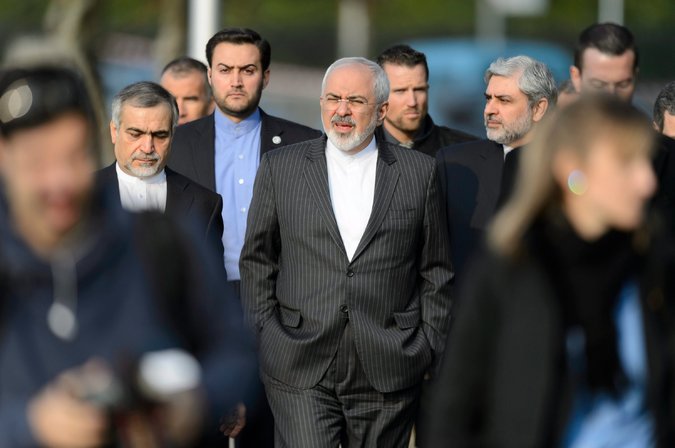
JP-SABOTAGE-master675Foreign Minister Mohammad Javad Zarif, center, said someone had tried to sabotage an Iranian reactor’s cooling system. Credit Laurent Gillieron/European Pressphoto Agency

[R]eaching an accord is quite different than reaching a state of trust. Inside Iran, there will be pressure to keep making slow progress on a nuclear program that is central to the ambitions of the Iranian Revolutionary Guard Corps and thousands of scientists who have labored for years. And in the uneasy alliance among Israel, the United States and Europe there will be continued debate about whether to supplement diplomatic pressure with covert action to keep Iran from getting to the threshold of being able to build a weapon.

*********************

WASHINGTON — In late 2012, just as President Obama and his aides began secretly sketching out a diplomatic opening to Iran, American intelligence agencies were busy with a parallel initiative: The latest spy-vs.-spy move in the decade-long effort to sabotage Tehran’s nuclear infrastructure.

Investigators uncovered an Iranian businessman’s scheme to buy specialty aluminum tubing, a type the United States bans for export to Iran because it can be used in centrifuges that enrich uranium, the exact machines at the center of negotiations entering a crucial phase in Switzerland this week.

Rather than halt the shipment, court documents reveal, American agents switched the aluminum tubes for ones of an inferior grade. If installed in Iran’s giant underground production centers, they would have shredded apart, destroying the centrifuges as they revved up to supersonic speed.