Posted tagged ‘Turkey’

Strategic Outlook for Saudi Arabia and Iran

June 20, 2016

Strategic Outlook for Saudi Arabia and Iran

by Shmuel Bar

June 20, 2016 at 4:30 am

Source: Strategic Outlook for Saudi Arabia and Iran

  • In Saudi Arabia, Mohammad bin Salman’s “Vision 2030” is totally identified with his leadership. If it succeeds, he will harvest the praise; on the other hand, many in the Saudi elite will latch on to any sign of failure of his policies in order to block his ambitions.
  • Mohammad bin Salman’s social-political agenda to broaden the power base of the regime to include the young and educated — and to a great extent relatively secular or moderate — will certainly be seen by the Wahhabi clerics and the tribal social conservatives as geared towards reducing their control over the populace and hence their weight in the elite.
  • Another serious risk is that the economic plan entails reducing the Saudi welfare state. The economic and social fallout of weaning the Saudis away from entitlements will be exploited by domestic opposition elements and by Iran.
  • In Iran, the electoral process within the Assembly showed what was not evident during the parliamentary elections held in February, namely that even a formal preeminence of moderates does not and cannot influence the decision making of the Iranian regime and that Khamenei succeeds to pull the strings despite seemingly democratic procedures.
  • After having won the chairmanship of the Assembly, Jannati delivered a speech demanding total loyalty to Khamenei, which can be considered as targeting the moderates.

Following the announcement of Saudi Arabia’s “Vision 2030” Economic Plan by Deputy Crown Prince Muhammad bin Salman on April 25, King Salman announced a reshuffling of the government. The reshuffling was clearly orchestrated by the Deputy Crown Prince and reflects his agenda. This shuffle probably is not the last word even in the near term; the changes in the government strengthen the political position of Mohammad bin Salman, because the new ministers owe him their posts, and through them he will strengthen his hold on the levers of government, especially in the economic sphere. His next step may be to move to neutralize Prince Mitab bin Abdullah, the minister in charge of the Saudi Arabian National Guard (SANG) and a close ally of Crown Prince Mohammad bin Nayef. He could do this by absorbing SANG into the Ministry of Defense.

Such a step would probably not sit well with many of the members of the royal family; however, if Mohammad bin Salman takes such a step, it will only be with the consent of his father, King Salman, and none would actively oppose him. Such a step would have significant ripple effects; international influence in Saudi Arabia has focused for decades on acquiring sectorial influence in the various centers of power of the Kingdom – the different factions of the royal family, the business sector, the army, the SANG etc. The continuing concentration of power in the hands of Mohammad bin Salman will reduce the political relevance of many of these assets of international players and they will be obliged to restructure their connections and sources of information on the politics and economic decision making of the Kingdom.

Farther down the road — in our assessment not in the short term — King Salman may appoint his son to the position of Prime Minister – a title that he presently holds himself. Such a promotion would pave the way for Mohammad bin Salman to depose the Crown Prince, Mohammad bin Nayef, to be appointed as the next Crown Prince and to succeed his father. A possibility exists — though in our assessment it is not likely in the near future — that the King will even abdicate and pass the reins of the Kingdom to his son after he has been duly appointed as Crown Prince. These scenarios will be a disappointment to policy-shapers in Washington who prefer — or at least feel more comfortable with Mohammad bin Nayef. This too will call for a significant shift in the international disposition towards the Saudi regime; development of channels of influence with Mohammad bin Salman and his confidantes, adapting to a new and unfamiliar paradigm of decision-making in the Kingdom and coping with Mohammad bin Salman’s not-typically-Saudi regional policies towards Iran and other threats.

Mohammad bin Salman’s “Vision 2030” is totally identified with his leadership. If it succeeds, he will harvest the praise; on the other hand, many in the Saudi elite will latch on to any sign of failure of his policies in order to block his ambitions. However, none of them will actively attempt to disrupt Mohammad bin Salman’s plans; such a power struggle could precipitate the end of the rule of the al-Saud family and the very existence of the Saudi state, and they are aware that either they “hang together or they hang separately”. The risks to the regime from the economic reform process, however, do not necessarily come from proactive efforts to disrupt it. Mohammad bin Salman’s social-political agenda to broaden the power base of the regime to include the young and educated — and to a great extent relatively secular or moderate — will certainly be seen by the Wahhabi clerics and the tribal social conservatives as geared towards reducing their control over the populace and hence their weight in the elite. Another serious risk is that the economic plan entails reducing the Saudi welfare state. The economic and social fallout of weaning the Saudis off entitlements will be exploited by domestic opposition elements and by Iran.

Saudi Prince Mohammed bin Salman meets with U.S. Secretary of State John Kerry in Riyadh, Saudi Arabia, on May 7, 2015. (Image source: U.S. State Department)

The changes in the Saudi Oil Ministry reflect Mohammad bin Salman’s strategic policy of using Saudi oil to minimize Iran’s economic and political profits from the lifting of sanctions, even at the expense of Saudi profit from its oil. This policy has broad support in the Saudi elite, with the possible exception of some of the government oil bureaucracy and the oil-related business community. But the latter do not have the power to derail the regime’s priorities in this regard. Therefore, we are likely to see a continuation of the Saudi policy of high production, willingness to offer attractive deals in order to undercut Iranian overtures to existing Saudi markets, and a high level of sensitivity to any threats to the oil industry. The chances of Iranian retaliation for the Saudi economic warfare are high. These could take the shape of cyber-attacks on installations inside Saudi Arabia, or terrorist attacks (including rocket attacks) against pipelines, refineries and other installations, and even attacks – without taking responsibility — on Saudi oil shipping inside the Persian Gulf or — more likely further away from the theater. Such attacks may normally be seen as providing Iran plausible deniability from the point of view of international law, but they will be attributed to Iran by the Saudi regime, that will see itself as obliged to react. Therefore, in the current state of relations between Saudi Arabia and Iran, and assuming that the chances of rapprochement are slim, the chances of actual limited military conflict between Iran and Saudi Arabia remain.

* * *

The Islamic State has come under increasing military pressure in both Iraq and Syria in recent weeks, and it is likely to lose territory. Yet this will not make Iraq more united or stable, nor will it bring the civil war in Syria any closer to an end. Iran’s influence in Iraq will grow, while the Sunnis will see the US as Iran’s enabler. The Islamic State will try to respond to its losses by launching major terror attacks in the West. The Islamic State lacks the manpower to defend all the Iraqi and Syrian territory it has occupied since 2014. Consequently, its strategy consists first and foremost of defending strategically or symbolically important assets, primarily al-Raqqah, Fallujah and Mosul, as well as key supply routes. In addition, it is compensating for its defeats by carrying out lethal terror attacks in Syria and Iraq in order to demonstrate that while these regimes can, with foreign backing, regain territory, they cannot defend their citizens.

The military successes against the Islamic State will entail a number of long-range problematic political implications: exacerbation of the Sunni-Shiite conflict in Iraq and in the region in general, strengthening Iranian influence on the back of American military power, increased animosity towards the US, and widening the gap between the Baghdad government and the Kurds. The Islamic State will eventually be pushed out of Fallujah, thanks to the American support. Once the Islamic State is pushed out of Fallujah and perhaps out of Mosul, Shiite militias will move in to exact their revenge. Fallujah will again be a fertile ground for Sunni radicalism and a new Sunni insurgency in the area is almost inevitable; the Sunni populace will probably rebel again under some successor of the Islamic State and Fallujah will have to be “liberated” again. Furthermore, the American airstrikes in support of the Shiite ground offensive will strengthen the image of the US as enabler of the Iranian takeover of Iraq and as responsible for Shiite atrocities. Atrocities committed in Fallujah by the Shiite militias under American auspices will give pause to the plans for initiating an offensive on Mosul.

The Iraqi political system which the Americans constructed is on the verge of final collapse. The stalemate over the election of a new cabinet and “popular” demonstrations staged by Muqtada al-Sadr are indicative of the inherent failure of the Iraqi political system. While al-Sadr had proven that he can paralyze the government and the Parliament, he cannot become the solution. He has helped to demolish an already dysfunctional political system, but his sources of political influence draw on the very factors that made that system dysfunctional: sectarianism, a politicized military, use of “popular” violence to challenge democratic procedures, involvement of religious authorities in the democratic process, involvement of external actors (particularly Iran) and the implicit threat of armed militias. Since the current crisis derives from the power struggle within the Shiite community, it will hinge to a great degree on Iran. It may escalate to a Shiite civil war, and such a scenario would probably draw Iran to intervene directly, or to encourage a Shiite military commander to stage a coup and establish military rule, then pledge his allegiance to Iranian Supreme Leader Khamenei. We assess that the US, under the current administration, would probably acquiesce to “Pax Iranica” in Iraq, but the more influence any settlement would accord Iran, the more it would be unacceptable to the Gulf States, and they would use their influence with the Sunnis and the Kurds to block it, inter alia, by increasing support of radical Sunni groups in the country.

The cause of Kurdish independence is gaining momentum; all the Kurdish factions seem to be dedicated to holding a referendum on Kurdish independence before the elections in the US in order to create a fait accompli for the next administration. The issue of independence, however, is linked to the demand of the new PUK-Gorran alliance for parliamentary elections and for the inclusion of mixed Arab-Kurdish areas that the Peshmerga seized from the Islamic State in those elections and in the independence referendum. (Foremost of these areas are the oil-rich area of Kirkuk, the provinces of Nineveh, Diyala, and Salah ad-Din and the regional capital of Mosul that is still in the hands of the Islamic State). If the Kurdish Region succeeds in annexing these areas, it will also signify a watershed event in the process of the breakup of Iraq.

Turkey and Iran will both oppose these plans and the current US administration will not lend its support to a move that, in essence, proves the failure of its Iraq policy and signals the breakup of Iraq. Specifically, the prize of Kirkuk for the Kurdish state would be prodigious; the Baghdad government has halted the export of oil produced by its oil company in Kirkuk to Turkey in retaliation for the KRG’s independent oil exports. If Kirkuk Province joins the Kurdish Region, the KRG would presumably be able to take control of Kirkuk’s oil and resume its export to Turkey or — if the PUK-Gorran alliance comes to power in the KRG — to opt for the Iranian offer of export through Iran to the Persian Gulf.

Turkey views the Raqqa offensive in Syria with great concern. The American connection with the Kurdish YPG, which is viewed in Ankara as an extension of the PKK, is seen as yet another indication of the US inching towards support of an independent Kurdistan — the chronic nightmare of Turkey. Furthermore, if the Islamic State is pushed out of al-Raqqa and surrounding areas by the YPG, these areas will come under the control of Syrian Kurdistan (Rojava). Even before such a scenario emerges, the Islamic State’s priority of defending its regional capital, Raqqa will probably bring it to redeploy its forces now deployed in the Jarablus-Azaz Corridor, the stretch of land along the Syrian-Turkish border which separates the eastern Kurdish territory from the western enclave around the town of Afrin, north of Aleppo. The withdrawal of Islamic State forces from this corridor would tempt the YPG to launch an offensive westward from Jarablus in order to link up with the Afrin enclave. Such a prize would be a far greater achievement for the YPG than the capture of the non-Kurdish Raqqa area, and it would probably prefer it. If the YPG indeed takes such a step, it is likely to precipitate Turkish intervention, turning Turkey — a NATO member — into an active participant in the Syrian civil war against a party that is allied with both the US and Russia.

* * *

In Iran, Despite the hopes of the moderate camp, the hardliner 90-year-old Ayatollah Ahmad Jannati was elected (May 24) as head of the Assembly of Experts, after having gained 55 of 88 votes. This nomination does not bode well for President Rouhani’s future, should he insist on implementing deeper liberalizing reforms.

More than anything else, Ayatollah Jannati’s election highlights the Supreme leader’s grip on power. Ayatollah Khamenei did his best to help Jannati’s election by delivering his directives to some members of the Assembly. The electoral process within the Assembly showed what was not evident during the parliamentary elections held in February, namely that even a formal preeminence of moderates does not and cannot influence the decision making of the Iranian regime, and that Khamenei pulls the strings despite seemingly democratic procedures. The Assembly of Experts is rather formal and ceremonial body, unlike the Majles, however its role might become crucial at some circumstances, should the Assembly be summoned to nominate the following leader in the event of Khamenei’s death.

Ahmad Jannati, is important by virtue of what he epitomizes as a symbol rather than by his current political capacity, which won’t persist long, given his age. He has been serving as secretary of the Guardian Council since 1992, and in this capacity was instrumental in consolidating Khamenei’s power and, in all elections, was responsible for weeding out “undesirable” candidates to the Majles and Assembly of Experts. After having won the chairmanship of the Assembly, Jannati delivered a speech demanding total loyalty to Khamenei, which can be considered as targeting the moderates. Jannati is not alone with this mindset: his respective first and second deputies are hardliners: Mohammad Kermani and Mahmoud Shahroudi. The latter served for many years as the head of the judiciary, is close to Khamenei and is mentioned as a potential successor to Khamenei. This casting of the Assembly of Experts highlights that Khamenei is preparing to guarantee his ideological legacy and the ideological continuity of the regime after his death.

The election of Jannati was even more conspicuous in the light of the corresponding withdrawal of the chief candidate of the moderates, who they had hoped would serve as an ally within the regime — former President Hashemi Rafsanjani. Rafsanjani decided to withdraw from the electoral competition under pressure by the hardliners, including attacks on his children, his daughter, Faezah and his son, Mehdi.

On May 28, Ali Larijani was elected as the speaker of the Majles for the third term. Larijani is considered a hardliner; for over 30 years, he has been a confidant of Supreme Leader Ali Khamenei. His brother Sadeq Larijani is chief of the judiciary, and his other brothers have played important roles in diplomacy and government affairs. A veteran of the Islamic Revolutionary Guard Corps (IRGC), Larijani is also the son of Grand Ayatollah Hashem Amoli and son-in-law to prominent Islamic ideologue Morteza Motahhari. The moderate conservative politician Ali Motahhari is his brother-in-law. Given this multifaceted background, he has been able to establish strong, longstanding ties with both the military and the clergy, and with different factions in the Majles, with the exception of former president Mahmoud Ahmadinejad, who became Larijani’s nemesis. During Ahmadinejad’s second term, Larijani openly confronted him.

By contrast, Larijani is considered close to President Hassan Rouhani. During the nuclear negotiations, Larijani contained anti-Rouhani moves in the legislature and got the Majles to ratify the agreement. However, it must be clear that he did this not because he is Rouhani’s ally, but because he was ordered to carry out this mission by the Supreme Leader. Hence, Larijani will remain supportive of Rouhani, but only on the condition that the latter complies with the wishes of the Supreme Leader. If Larijani decides to stand for office, he may leverage his position in the Majles and his status with the Supreme Leader to whittle away at Rouhani’s popularity.

In the meantime, the Majles will be more supportive of Rouhani. Out of the 80 Majles members who opposed the nuclear agreement, fewer than a dozen remain. None of them is high profile, and their low numbers prevent them from establishing a bloc of their own, as they did in the previous parliament. Instead, they will have to operate within a “Principlists” bloc that is dominated by more moderate “Principlist” figures. This means that the remaining hardliners will be less likely to stage the theatrics that were so successful in challenging the government during the last Majles, particularly through their repeated summoning of various ministers to answer questions; and the impeachment of the minister of science, technology and higher education. Their absence will lead to a calmer parliamentary environment, more focused on addressing the serious economic issues Iran faces such as unemployment, reform of the banking sector, and the steep economic slowdown. This notwithstanding, one should bear in mind that the above scenario is confined to the functioning of the Majles vis-à-vis Rouhani, whereas the real chances of success of his program depend on other foci of power.

Dr. Shmuel Bar is a senior research fellow at the Samuel Neaman Institute for National Policy Studies at the Technion in Haifa, Israel, and a veteran of Israel’s intelligence community.

Erdogan: Infidels “good for nothing. They try to destroy our Islamic values.”

June 3, 2016

Erdogan: Infidels “good for nothing. They try to destroy our Islamic values.”

ByPamela Geller on June 2, 2016

Source: Erdogan: Infidels “good for nothing. They try to destroy our Islamic values.” | Pamela Geller

It is very telling that Obama has called Turkish President Recep Tayyip Erdogan his “most trusted” and “favorite” foreign ally.

Obama has even asked Erdogan for advice on how to raise his daughters. Does he ask him for advice on how to treat infidels?


Turkey recalls Ambassador from Germany after Armenian genocide recognition

June 2, 2016

Turkey recalls Ambassador from Germany after Armenian genocide recognition The German Parliament recognized officially the Armenian massacres as genocide and this created a political tsunami. Turkey has now announced that they are recalling their ambassador from Berlin for consultations.

Jun 2, 2016, 4:09PM

Rachel Avraham

Source: Turkey recalls Ambassador from Germany after Armenian genocide recognition | JerusalemOnline

Archives Photo Credit: Reuters/Channel 2 News

Shortly after Germany decided to recognize the Armenian massacres as genocide and caused much anger in Turkey, the Turkish government instructed to recall their ambassador from Berlin in order to hold consultations.

“The one who is responsible for the decision is the racist Armenian lobby in Germany,” Turkish Prime Minister Binali Yildirim stated. The Turkish Foreign Minister also stated that the German decision is “irresponsible and baseless.”

On the other hand, German Chancellor Angela Merkel stated that relations between Germany and Turkey are strong and good, stressing that there has been no change regarding German policy towards Turkey.

Earlier today, Turkish President Recep Tayyip Erdogan warned German Chancellor Angela Merkel that the decision will have consequences, even if it is a symbolic decision. Ankara is opposed to various governments around the world classifying the Armenian massacres during World War II as genocide. A Turkish government spokesman stated that the German decision was a “historic mistake.”

Erdogan Revs Hate Between Muslims and Turkey’s Minorities

June 1, 2016

Erdogan Revs Hate Between Muslims and Turkey’s Minorities, Clarion Project, William Reed, June 1, 2016

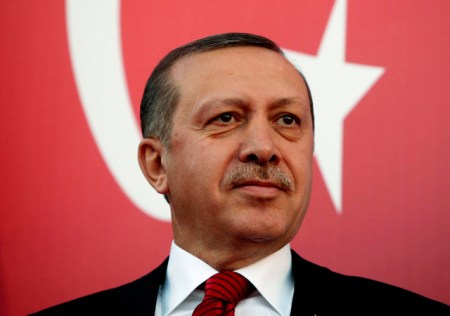
ErdoganPortrait-IP_2Turkish President Recep Tayyip Erdoğan (Photo: © Reuters)

On May 28, Turkish President Recep Tayyip Erdogan visited the predominantly Kurdish city of Diyarbakır and delivered a public speech in which he targeted Kurds requesting official recognition and the right to self-rule, calling them “atheists” and “Zoroastrians.”

In an attempt to appeal to Islamist sentiment, Erdogan claimed that Kurdish militants had burnt down schools and mosques, stating, “They are atheists, they are Zoroastrians. They are useless. They have not and are not acting with our values.”

This was not the first time Erdogan targeted non-Muslims in his public speeches.

In February, 2014, in the city of Balikesir, Erdogan, then prime minister, referred to the students of the Middle East University in Ankara, as “atheists” and “terrorists.” The students had protested the construction of the “1071 Manzikert Boulevard,” to which the police responded with gas bombs and pressurized water.

“On Monday, we opened the boulevard built by our metropolitan municipality of Ankara,” said Erdogan. “Despite whom? Despite those leftists! Despite those atheists! They are atheists! They are terrorists!”

The Battle of Manzikert was fought in 1071 in Anatolia between the Byzantine Empire and the Seljuq Turks, which marked the beginning of the Islamic invasion of Anatolia. The defeat of the Byzantine army and the capture of the Emperor Romanos IV Diogenes paved the way for the gradual Turkification and Islamization of Anatolia and Armenia.

Erdogan bashed the university students in his own unique way: “What is the name of the boulevard? Manzikert 1071. One of them was wearing Byzantine clothes. Alp Arslan [the Sultan of the Seljuq Empire] fought against Byzantium. So he [the student] put himself in the position of Byzantium. Shame on you!”

Apparently, Erdogan knows the easy and certain way of getting votes from much of Turkish public: Target any non-Muslim community – Jews, Christians, atheists, Alevis, Zoroastrians, you name it – and get the votes of millions of people, those who might not even know anything about the said religions or people but whose overall hatred for the “infidel” would be enough to make them enjoy the hate-filled slurs.

In May 2015, in the predominantly Kurdish city of Batman, Erdogan once again publicly targeted the secular, pro-Kurdish Peoples’ Democratic Party (HDP) – for “having nothing to do with Islam.”

“They say they will abolish Diyanet [Turkey’s Presidency of Religious Affairs]. They have nothing to do with religion. The Diyanet that they say they will abolish has published the Kurdish translation of the Koran.

“They [the HDP party] go to extremes by saying that Jerusalem belongs to Jews. They have nothing whatsoever with Islam. Jerusalem is the most important Kaaba [sacred site] of Muslims; it is where we found life.

“We have documents that in the mountains, they [the PKK] give education of the Zoroastrian religion.”

Despite the hateful stigma of Erdogan regarding Zoroastrianism, it is an ancient faith of peace, ethics and wisdom. Basic tenets of Zoroastrians include:

“The basic moral principles that guide the life of a Zoroastrian are three: Humata, ‘Good Thoughts’, Hukhata, ‘Good Words’, and Havarashta, ‘Good Deeds’.

“These three principles are included in many Zoroastrian prayers, and children commit themselves to abide by them at their initiation ceremony, marking their responsible entry into the faith as practicing Zoroastrians. They are the moral code by which a Zoroastrian lives.”

Sadly, this ancient, peaceful religion has become one of the greatest victims of Islamic jihad.

Before Iran (formerly called Persia) was invaded by Muslim armies in the 7th century, Zoroastrianism was the major religion there. Founded by the Prophet Zoroaster, Zoroastrianism was the state religion of several Persian empires.

Muslims should actually feel guilt and shame in the face of the enormous damage and destruction they have brought to the Zoroastrian people, but the Islamist ideology seems to erase even the most humane emotions of its followers.

Another social disease commonplace in Turkey is “atheophobia” ‎– fear or hatred of atheism or atheists.

The 2015 Freedom of Thought Report by the International Humanist and Ethical Union (IHEU) puts Turkey in the category of countries which expose their citizens who identify as atheists or non-religious to “severe discrimination.”

“Freedom of expression is theoretically protected by the current constitution, but is increasingly not respected in practice,” said the report. “Identifying [as an] ‘atheist’ prompts insults, threats, discrimination.”

In 2015, for instance, members of the Turkish Atheism Association (Ateizm Derneği), spoke up about receiving death threats and hate mail, and how “atheist”  is used as an insult or equated with “Satanism” or “terrorism.”

“The term ‘atheist’ is used as a harsh insult – one of the harshest in the country,” said Morgan Romano, vice-president of the Turkish Atheism Association, at the group’s first public conference in Germany.

“Furthermore, atheists are commonly and publicly discriminated against and are subjects of public and private hate speech in Yeni Turkiye [the New Turkey] all the time.”

In March, 2015, the Atheism Association had its website blocked in Turkey in a decision the association protested was “arbitrary.”

Given the Islamic roots of hatred for infidels, it seems that the Atheism Association is engaged in an extremely grueling business in Turkey: trying to promote understanding, tolerance and liberty in a sociologically Islamic society.

“Any person who openly disrespects the religious belief of a group is punished with imprisonment from six months to one year if such act causes potential risk for public peace,” says article 216 of the Turkish penal code.

But this “blasphemy law” seems to be in action only to punish non-Muslims or former Muslims or anyone who speaks critically about Islam. Bringing to account those who insult or even threaten non-Muslims is not very much included within the scope of this law.

The current constitution of Turkey lists secularism as one of the fundamental characteristics of the republic. The written law, which is not even put into practice effectively, is something; but promoting secularism as well as religious freedom and tolerance – through various means including public education and media – is another. And Turkey seems to fail terribly in the latter.

Can US, Turkey keep up appearances in Syria?

May 30, 2016

Can US, Turkey keep up appearances in Syria? Al-Monitor, May 29, 2016

A terrorist group linked to the Islamic State (IS) claimed responsibility for suicide bombings in Tartus and Jableh in Syria on May 23 that killed more than 150 civilians and wounded more than 200 others. Maxim Suchkov points out that the attack in Tartus occurred deep inside government-controlled territory. Russia maintains a naval base in Tartus and an air base and reconnaissance center in Khmeimim in the Latakia region. The suicide attacks, Suchkov suggests, could be a catalyst for a Russian “first strike” strategy against terrorist and aligned Salafi groups.

Moscow had already signaled the prospect of escalation against Jabhat al-Nusra and allied groups prior to the May 23 attacks. The Russian Ministry of Defense has announced a pause in its air campaign to allow armed groups allied with Jabhat-al Nusra to distance themselves from the al-Qaeda affiliate. On May 26, Jabhat al-Nusra, Ahrar al-Sham and allied groups seized the town of Dirkhabiyah near Damascus. Ahrar al-Sham has coordinated more closely with Jabhat al-Nusra in response to increased US and Russian targeting of the al-Qaeda affiliate over the past few months.

This column last week suggested that the United States take up a Russian offer to coordinate attacks on Jabhat al-Nusra, which is not a party to the cessation of hostilities. For the record, we have no tolerance or empathy for groups or individuals who stand with al-Qaeda. We hope that this is at least part of the message the United States is conveying to its regional partners who have backed these groups.

With the Geneva talks suspended for several weeks, the prospect of a Russian campaign to deliver heavy and potentially fatal blows to Jabhat al-Nusra and its allies, especially in and around Aleppo and Idlib, could signal yet another turning point in the Syria conflict.

Turkey’s failed proxy war

The United States and Turkey are struggling to keep up appearances in Syria, despite even further signs of division and discord.

Gen. Joseph Votel, US CENTCOM commander, met last week with Syrian Kurdish forces during a “secret” visit to northern Syria as part of a regional diplomatic tour that also included a stop in Ankara. Votel told Washington Post columnist David Ignatius that he is seeking to “balance” Turkey’s role as a “fabulous” partner in the battle against IS with that of the People’s Protection Units (YPG), the backbone of the Syrian Defense Forces (SDF), which is a “very good partner on the ground.”

In contrast to the YPG, Turkey’s proxy forces, including a worrying mix of Salafists who are willing to run operations with Jabhat al-Nusra, have been a flop. Last week, IS seized at least seven villages in the northern Aleppo region.

Fehim Tastekin reports that SDF-led military operations to liberate Jarablus, which is an essential gateway along with al-Rai to the outside world via Turkey, were postponed “because of Turkey’s red line against the Kurds.” The offensive against Raqqa has also been slowed, writes Tastekin, because “the SDF’s operational capacity still leaves much to be desired. It is not an option for the Kurdish YPG-YPJ to control Raqqa, because they will encounter local resistance. They also worry that scattering their forces in Arab regions could weaken the defensive lines of Rojava (Syrian Kurdistan). Therefore, Arab forces would have to get in shape to control the situation in the post-IS period.” Laura Rozen reports from Washington that the United States is seeking to boost the numbers of Arab Sunni forces among the SDF in anticipation of an advance on Raqqa.

Meanwhile, the Pentagon found itself in a public relations fiasco after Turkey complained that US special forces in Syria were wearing badges with the logo of the YPG, which Turkey considers the Syrian partner of the Kurdistan Workers Party (PKK) and therefore also a terrorist organization. This might be compared with what in the sports world is known as an unforced error, and made Votel’s already daunting diplomacy that much more complicated.

Air Force Col. Sean McCarthy also told Ignatius that US air operations against IS out of Incirlik Air Base were mostly “autonomous” of Turkish missions, saying that “we don’t discuss with them where we’re going.”

Adding it all up, the US-Turkish “partnership” against IS may be more fable than fabulous. The open secret is that Turkey is preoccupied first with thwarting advances by Syria’s Kurds, and second with shutting down the remaining lifelines for IS in northern Syria. These priorities are of a piece. No doubt Turkey is taking up the fight against IS, but first things first. Tastekin, who previously broke the back story on Turkey’s disastrous proxy efforts to retake al-Rai from IS in April, now concludes that “there is no room for optimism that Ankara will erase its red lines vis-a-vis the Kurds. Instead, Turkey is now trying to put together an even more formidable force with Jabhat al-Nusra, which it is trying to steer away from al-Qaeda.”

The catch might just be that many of the Syrian armed groups backed by Washington’s regional partners are proxies for a sectarian agenda that is mostly about toppling Syrian President Bashar al-Assad, however unlikely that now appears, and, by extension, keeping the heat on Iran. The when and where of taking the fight to IS or Jabhat al-Nusra is more or less negotiable, depending on trade-offs and pressure. We do not feel we are out on a limb in suggesting that efforts by Ankara or others to wean Jabhat al-Nusra from al-Qaeda will come to no good. This column has repeatedly documented the fluidity of foreign-backed Salafi groups such as Ahrar al-Sham and Jaish al-Islam shifting in and out of tactical alliances with Jabhat al-Nusra, all the while preaching an ideology almost indistinguishable from al-Qaeda and IS.

The losers, of course, are the people of Syria, including those who suffer under IS’ tyranny that much longer because of Turkey’s concerns about the Kurds, and as Washington’s policymakers and pundits begin another maddening deep dive into how to rejigger ethnic and sectarian fault lines. Syrians fleeing IS terror in Aleppo, meanwhile, told Mohammed al-Khatieb that living under IS is “like hell … unbearable.” While we acknowledge the complexities and challenges of the raw ethnic and sectarian politics of Syria, as well as the potential for vendettas and mass killings, there is, in our score, an urgency and priority to focus on the destruction of IS and al-Qaeda above all else.

Sur’s aftermath

Diyarbakir’s historic district of Sur has witnessed some of the most brutal fighting between Turkish military and PKK forces over the past year. Mahmut Bozarslan reports from Diyarbakir that “historical landmarks in Sur, which was last year added to UNESCO’s World Heritage List, also suffered their share of destruction. The walls of the Armenian Catholic church are partially destroyed, while the nearby Haci Hamit Mosque is missing its minaret, with a dome riddled with bullets. Another Armenian church, Surp Giragos, had its windows shattered and interior damaged.”

“Still, those ancient monuments were lucky compared with more ordinary structures in the area,” writes Bozarslan. “A building with an intact door was almost impossible to find. The warring parties had used some buildings as fighting bases, others as places to rest. Stairways were littered with empty tins; one was also stained with blood. At the bloodied spot, a piece of paper reading “body #1” was left behind, suggesting that the security forces had been there for a crime scene report. A couple seemed relieved that they had escaped with relatively little damage, but grumbled that their apartment had been broken into, with the bedroom and closets rummaged. They claimed it was the security forces who had entered, while their neighbor showed Al-Monitor binoculars that had been left behind.”

Russian UN envoy Churkin names Turkish companies helping ISIS make bombs

May 26, 2016

Russian UN envoy Churkin names Turkish companies helping ISIS make bombs

Published time: 26 May, 2016 06:31

Source: Russian UN envoy Churkin names Turkish companies helping ISIS make bombs — RT News

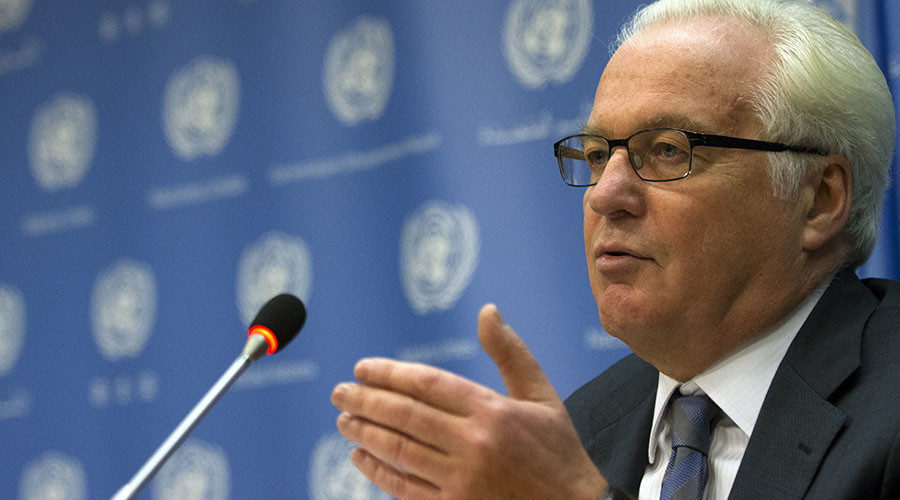
Russian ambassador to the United Nations Vitaly Churkin. © Brendan McDermid / Reuters

Russia has presented a list of Turkish companies to the UN that Moscow believes are providing Islamic State with the components needed to make homemade explosive devices.

In UN Ambassador Vitaly Churkin’s letter to UN Secretary General Ban Ki Moon, the envoy says analysis of chemical components of explosives recovered in Islamic State (IS, formerly ISIS/ISIL) liberated areas of Iraq’s Tikrit and the Syrian city of Kobani, implicate Turkish companies.

Read more

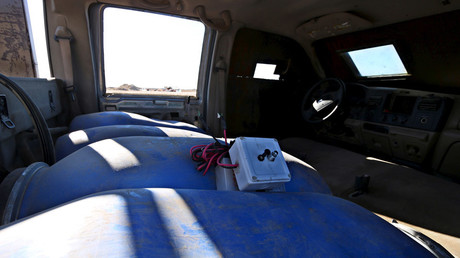
Containers filled with explosive materials, thought to have belonged to Islamic State militants. © Rodi Said

Components found in the explosives, Churkin wrote, “indicate that they were either manufactured in Turkey or delivered to that country without the right of re-export.”

The composition of the improvised explosive devices (IEDs) included the use of aluminum powder, ammonium nitrate, granulated carbamide and hydrogen peroxide that were produced by Turkish firms “Gultas Kimya” , “Marikem Kimyevi Ve Endüstriyel Ürünler”, “Diversey Kimya”, “Metkim”, and “EKM Gubre”.

Churkin specifically noted a sevenfold export increase from Turkey to Syria of ammonium nitrate used by terrorists as a component for the manufacture of improvised explosive devices.

He also noted that the “detonation cords manufactured in third countries have been illegally resold through Turkey to ISIL fighters,” as bombs used by Islamists also contained American made microcontrollers produced by Microchip Technology, Swiss-made transistors made by ST Microelectronics and Finish Nokia phones model 105 RM-908.

“These facts demonstrate that the Turkish authorities are deliberately involved in Daesh activity, as they are providing access to components for improvised explosive devices that are being widely used to commit terrorist acts,” the Russian envoy said.

Read more

© RT

The Turkish Foreign Ministry was quick to reject Russia’s claims calling the letter “the most recent example of Russia’s propaganda campaign against Turkey.”

Russia has repeatedly accused and presented evidence of Turkish involvement in running IS operations in Syria and Iraq. Churkin’s letter comes following an earlier 20-month long study published by Conflict Armament Research (CAR), which concluded that over 50 companies from 20 countries, sold or received hundreds of components used by Islamic State terrorists to build explosive devices. A total of 13 Turkish firms were found to be involved in the supply chain.

The 107-page report concluded homemade explosives can easily be assembled using everyday products that are actually not subject to transfer controls such as export licensing. As a result, their supply within the region is basically unregulated and weakly monitored. Other key components, such as detonators and detonating cords, are subject to export licensing, but are also commonly used in commercial activities, such as mining and industry.

Turkey’s female journalists now risk parental rights for critical reporting

May 24, 2016

Turkey’s female journalists now risk parental rights for critical reporting, Al Monitor

arzuThe Turkish court has sentenced journalist Arzu Yildiz to prison and denied her “parental rights” over a story on MIT trucks and arms transfers to Syria, May 18, 2016. (photo by FACEBOOK/Save Kobane)

Turkish female journalist Arzu Yildiz was this week sentenced to 20 months in prison for her reporting on alleged Turkish arms shipments to Syria, a highly controversial issue that has riled Ankara and landed both journalists and judicial officials in jail. The court, however, did not stop there, and stripped Yildiz also of her parental rights. While the imprisonment of journalists may have become commonplace in Turkey, now ranking 151st on the World Press Freedom Index, the restriction of Yildiz’s parental rights marks a new milestone in the extent the pressure on journalists has reached, affecting even their familial ties and social standing.

Yildiz is an experienced journalist who, after working for various media outlets, was left jobless a couple of years ago. Together with other jobless colleagues, she co-founded the nonprofit Grihat news site, where her reporting on the trucks controversy led to her conviction.

The story in question was related to the interception of Syria-bound trucks in the southern provinces of Hatay and Adana in January 2014. Acting on tip-offs, prosecutors had issued search warrants for the trucks. But when stopped by police and gendarmerie officers, the men in the vehicles identified themselves as members of the National Intelligence Organization (MIT) and resisted the searches. President Recep Tayyip Erdogan claimed at the time the trucks carried humanitarian supplies, but few were convinced. All judicial officials and security forces involved in the attempted search are behind bars today. The Cumhuriyet daily’s Editor-in-Chief Can Dundar and Ankara representative Erdem Gul also found themselves behind bars for their reports on the story. Though they were released three months later, they received jail terms for revealing state secrets earlier this month. Another journalist who covered the issue, Fatih Yagmur, remains on trial.

Yildiz, for her part, faced several investigations for her coverage of the incident and ensuing developments. The report that earned her the 20-month sentence pertained to the testimonies of the prosecutors who were arrested for attempting the search. On top of the prison term, the court in the southern city of Tarsus banned Yildiz from using “certain rights.”

In an interview with Al-Monitor, her lawyer, Alp Deger Tanriverdi, explained what the ruling means. “Let me tell you the most significant part: The ruling strips Arzu Yildiz of her motherhood rights,” he said. “She can no longer register her kids to school, open bank accounts for them or do other similar things on their behalf. She can’t even go abroad with them.”

Asked about the grounds on which the court made the decision, the lawyer said, “The court was [actually] supposed to suspend the sentence because Yildiz had no other conviction before. That was her legal right. Yet the court arbitrarily went ahead on grounds she committed the crime willfully, which automatically brought the decision to strip her from her rights. The court could have withheld this decision as well. Such restrictions are based on the following logic: ‘You’ve committed a crime willfully, so you are guilty before society as well. Thus, you must not be allowed to have a [bad] influence on your children.’ Such is the intention of the clause, yet the court applied it to Yildiz — to humiliate her.”

In remarks to Al-Monitor, Yildiz also lamented the court had acted arbitrarily. “I have two kids — one 6½ years old, the other only four months. I think the court made this decision deliberately, knowing that I’m a mother of two — simply to hurt me more,” she said. “My kids are my whole world. What else do I have? The court now says I can’t claim any right on them, can’t register them to school and can’t travel abroad with them. What hurts even more is that a ban that the courts withhold [even] from child molesters and rapists is being imposed on a journalist.”

Yildiz believes the ruling essentially aims to denigrate and humiliate journalists before the public. Yet, she remains adamant on soldiering on. “I covered the MIT trucks investigation from beginning to end. In the meantime, I gave birth [to my second child] and left my baby home when she was only 20 days old to go watch the hearings in this case,” she said. “I did this without having any financial support. The story in question was published on Grihat, which we had launched without any financial considerations. With this ruling, the court is trying to prevent me from doing journalism but it won’t succeed.”

The restriction on Yildiz’s parental rights sparked indignation from civic society groups and social media users. The issue became a trending topic on Twitter, generating about 50,000 tweets. “Some court rulings are destroying the society’s trust in the judiciary,” the Turkish Journalists’ Trade Union (TGS) said, while Yildiz’s colleagues circulated pictures of her four-month-old daughter with the slogan “Baby Zehra is not alone.”

The onslaught on critical media in Turkey has proceeded through wide-ranging means, including dismissal, judicial probes and imprisonment. According to a recent report by Press for Freedom, an advocacy project carried out by the Ankara-based Journalists Association, 894 journalists lost their jobs in Turkey in the first four months of the year and 74 journalists faced some kind of judicial action. Thirty-six journalists remain behind bars, according to the TGS.

With the Yildiz case, the boundary of intimidation has moved even further, threatening the parental rights of journalists and undermining their standing in society and vis-a-vis the state.


 Turkey’s President Erdogan ‘Waiting for Israel’ to Respond on Gaza

May 21, 2016

Pres. Erdogan says Turkey will mend ties with Israel if Jerusalem agrees to allow Ankara to repair water, energy and infrastructure in Gaza.

By: Hana Levi Julian Published: May 21st, 2016

Source: The Jewish Press » » Turkey’s President Erdogan ‘Waiting for Israel’ to Respond on Gaza

Turkey’s President Recep Tayyip Erdogan.
Photo Credit: Social media

President Recep Tayyip Erdogan says he is waiting for Israel to grant permission for Turkey to construct energy and water transfer infrastructure in Gaza, according to a report published Saturday (May 21) in the Hurriyet Daily News, quoting an earlier broadcast.

“I expect that something will happen this month. It’s my wish that we’ll reach a conclusion in a short time,” Erdogan told a news broadcast by A Haber on May 19.

“In regards to [lifting] the embargo, they say, ‘We are open to allowing goods into Gaza through Turkey, but we are not open to those coming from places other than Turkey.’ But the problem is not only this. We have some other demands,” Erdogan said.

The Turkish leader said Ankara has demanded that Israel allow provision of continuous energy to Gaza, “as the enclave has only three to four hours of electricity per day,” Erdogan said.

He added that Turkey’s proposal to provide electricity to Gaza through a naval vessel was rejected by Israel.

“But they proposed something else: We told them that we are ready to construct all the infrastructure [of energy]. They viewed the proposal positively,” Erdogan said.

The second demand, he said, was that Turkey be allowed to provide water to Gaza either by desalinating the sea water or by drilling wells. “There are positive developments with regard to this issue as well,” he said.

Turkey’s third demand from Israel, said Erdogan, was regarding construction projects in Gaza.

“Our third offer is about building schools and hospitals. The construction of a hospital has been completed and necessary equipment is being provided. ‘These must be done,’ we told them. ‘If these would be done, then we’ll immediately appoint ambassadors and improve our relations in the right direction.’”

According to the report, Israeli and Turkish diplomats are expected to meet in the near future to finalize an agreement between the two countries.

But it’s impossible to know what the final outcome will be: Erdogan’s ruling Justice and Development (AK) Party is set to meet at a nationwide Congress on May 22 to choose a new prime minister.

Incumbent Prime Minister Ahmet Davutoglu, hand-picked by Erdogan, resigned his position earlier this month.

‘Coup against parliament:’ Politicians and analysts slam lifting of Turkish MPs’ immunity

May 21, 2016

‘Coup against parliament:’ Politicians and analysts slam lifting of Turkish MPs’ immunity

Published time: 20 May, 2016 21:53

Source: ‘Coup against parliament:’ Politicians and analysts slam lifting of Turkish MPs’ immunity — RT News

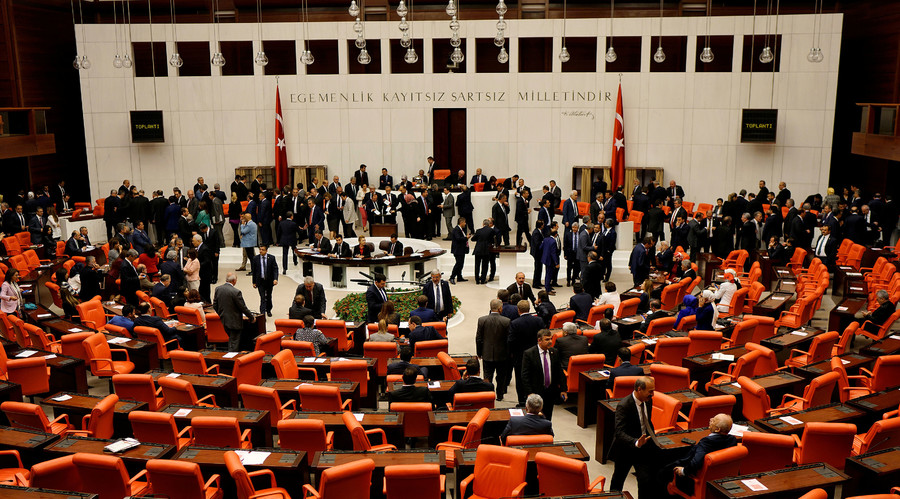
Turkish lawmakers attend a debate at the Turkish parliament in Ankara, Turkey, May 20, 2016. © Umit Bektas / Reuters

Stripping MPs of legal immunity was a power grab by the Erdogan-controlled parliament, RT was told by Turkish politicians and analysts, many of whom believe the move is aimed at stifling the opposition, especially the pro-Kurdish HDP party.

The Turkish parliament’s decision to take away lawmakers’ immunity from prosecution “is a coup staged against the parliament itself,” Alp Altınors, deputy chairman of the opposition pro-Kurdish Peoples’ Democratic Party (HDP), told RT, adding that the move violates democratic norms.

“This is a planned expulsion of HDP from the parliament, because HDP is the most active opposition group in the parliament,” he said, accusing Turkish President Recep Tayyip Erdogan of “planning and organizing” the move in order to transform the parliament into a “tool of the [government].”

Read more

Chairs belonging to MPs of Turkey's main opposition Republican People's Party (CHP) are seen empty after the parliamentarians left a debate to protest against the Parliament Speaker Ismail Kahraman, at the Turkish parliament in Ankara, Turkey, May 20, 2016. © Umit Bektas

This initiative was directed against the opposition, Gunes Engin, an advisor to HDP lawmaker Filiz Kerestecioglu, told RT in an interview, stressing that “a total number of 138 deputies” representing different opposition parties were stripped of their immunity, most of whom are from the HDP.

“It is very sad news for Turkish democracy because what they want now is to push all the MPs from [Turkish] Kurdistan and other opposition MPs, [who] come together for the need of democracy, out of the parliament,” she said in the interview.

She also said the vote gave Erdogan “a victory by [parliamentarians’] own hands,” adding that “the current situation in Turkey… would be a big fail for all the democratic forces.”

In the meantime, Shwan Zulal, a business consultant and political analyst, told RT that this amendment will be used by the government to crack down on the opposition and “arrest or put away any MP.”

“This is a targeted approach [used] by President Erdogan [aimed at] making sure that Kurdish MPs within parliament will be put away on very flimsy charges [like] terrorism or… showing support for the [outlawed Kurdistan Workers Party] PKK,” he said.

He also stressed that Erdogan “wants to have absolute power in Turkey” and needs to be able to push his legislation through the parliament in order to achieve that goal. He does not have it yet, however, as his party does not have the necessary majority, Zulal added, implying that Erdogan is seeking a way to shift the balance of power in the legislature.

Read more

Turkish President Tayyip Erdogan. © Umit Bektas

Zulal’s ideas were partly echoed by human rights activist Professor Murat Somer from the Koc University in Istanbul, who said in an interview with RT that stripping lawmakers of their immunity would seriously diminish the role of the parliament, as it would drastically limit the ability of legislators to act freely.

“They [lawmakers] will be less able to do politics because they may, in fact, be prosecuted. And they may be tried, … punished, and get sentenced at the end, [so] they will not be able to function as they do so far,” Somer said.

He added that this move “will create a large series of legal questions and complexities” that could eventually “destabilize” or even “paralyze” the parliament, leading to a situation that “will strengthen the government and may lead to the outcome, [in which] the government will make more and more decisions without parliamentary oversight.”

Selahattin Demirtas, leader of the opposition Peoples’ Democratic Party (HDP), had already denounced the move as a blow against the people’s will, vowing to challenge it in the Constitutional Court.

At the same time, President Erdogan hailed approval of the bill as “historic” for the country.

Earlier on Friday, the Turkish parliament passed a bill that would amend the constitution to allow MP’s to be stripped of their legal immunity from prosecution. In the third and final vote, 376 out of 550 legislators voted in favor of the bill. The measure paves the way for many opposition, and particularly pro-Kurdish, legislators to be charged for “support of terrorism” due to their views on Turkey’s Kurdish issue.

The development comes while the Turkish military is in the midst of an operation against Kurds fighting for greater autonomy in the country’s southeast. Ankara’s new campaign ended a two-year ceasefire between the ethnic group and the government that had lasted since 1984. The military crackdown, which has been underway since July of 2015, has already claimed the lives of hundreds of Turkish soldiers and police officers, as well as thousands of Kurdish militants and between 500 and 1,000 civilians, according to different estimates provided by opposition parties and NGOs.

EU-Turkey Migrant Deal Unravels

May 18, 2016

EU-Turkey Migrant Deal Unravels, Gatestone InstituteSoeren Kern, May 18, 2016

♦ “It can be expected that, as soon as Turkish citizens will obtain visa-free entry to the EU, foreign nationals will start trying to obtain Turkish passports … or use the identities of Turkish citizens, or to obtain by fraud the Turkish citizenship. This possibility may attract not only irregular migrants, but also criminals or terrorists.” — Leaked European Commission report, quoted in theTelegraph, May 17, 2016.

♦ According to the Telegraph, the EU report adds that as a result of the deal, the Turkish mafia, which traffics vast volumes of drugs, sex slaves, illegal firearms and refugees into Europe, may undergo “direct territorial expansion towards the EU.”

♦ “If they make the wrong decision, we will send the refugees.” — Burhan Kuzu, senior adviser to Turkish President Recep Tayyip Erdogan.

♦ Erdogan is now demanding that the EU immediately hand over three billion euros ($3.4 billion) so that Turkish authorities can spend it as they see fit. The EU insists that the funds be transferred through international aid agencies in accordance with strict rules on how the aid can be spent. This prompted Erdogan to accuse the EU of “mocking the dignity” of the Turkish nation.

The EU-Turkey migrant deal, designed to halt the flow of migrants from Turkey to Greece, is falling apart just two months after it was reached. European officials are now looking for a back-up plan.

The March 18 deal was negotiated in great haste by European leaders desperate to gain control over a migration crisis in which more than one million migrants from Africa, Asia and the Middle East poured into Europe in 2015.

European officials, who appear to have promised Turkey more than they can deliver, are increasingly divided over a crucial part of their end of the bargain: granting visa-free travel to Europe for Turkey’s 78 million citizens by the end of June.

At the same time, Turkey is digging in its heels, refusing to implement a key part of its end of the deal: bringing its anti-terrorism laws into line with EU standards so that they cannot be used to detain journalists and academics critical of the government.

A central turning point in the EU-Turkey deal was the May 5 resignation of Turkish Prime Minister Ahmet Davutoglu, who lost a long-running power struggle with Turkish President Recep Tayyip Erdogan. Davutoglu was a key architect of the EU-Turkey deal and was also considered its guarantor.

On May 6, just one day after Davutoglu’s resignation, Erdogan warned European leaders that Turkey would not be narrowing its definition of terrorism: “When Turkey is under attack from terrorist organizations and the powers that support them directly, or indirectly, the EU is telling us to change the law on terrorism,” Erdogan said in Istanbul. “They say ‘I am going to abolish visas and this is the condition.’ I am sorry, we are going our way and you go yours.”

Erdogan insists that Turkey’s anti-terrorism laws are needed to fight Kurdish militants at home and Islamic State jihadists in neighboring Syria and Iraq. Human rights groups counter that Erdogan is becoming increasingly authoritarian and is using the legislation indiscriminately to silence dissent of him and his government.

European officials say that, according to the original deal, visa liberalization for Turkish citizens is conditioned on Turkey amending its anti-terror laws. Erdogan warns that if there is no visa-free travel by the end of June, he will reopen the migration floodgates on July 1. Such a move would allow potentially millions more migrants to pour into Greece.

European officials are now discussing a Plan B. On May 8, the German newspaper Bild reported on a confidential plan to house all migrants arriving from Turkey on Greek islands in the Aegean Sea. Public transportation to and from those islands to the Greek mainland would be cut off in order to prevent migrants from moving into other parts of the European Union.

Migrants would remain on the islands permanently while their asylum applications are being processed. Those whose asylum requests are denied would be deported back to their countries of origin or third countries deemed as “safe.”

The plan, which Bild reports is being discussed at the highest echelons of European power, would effectively turn parts of Greece into massive refugee camps for many years to come. It remains unclear whether Greek leaders will have any say in the matter. It is also unclear how Plan B would reduce the number of migrants flowing into Europe.

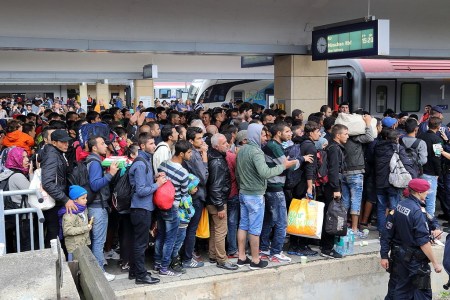
1607Thousands of newly arrived migrants, the vast majority of whom are men, crowd the platforms at Vienna West Railway Station on August 15, 2015 — a common scene in the summer and fall of 2015. (Image source: Bwag/Wikimedia Commons)

Speaking to the BBC News program, “World on the Move,” on May 16, Sir Richard Dearlove, the former head of the British intelligence service MI6, warned that the number of migrants coming to Europe during the next five years could run into millions. This, he said, would reshape the continent’s geopolitical landscape: “If Europe cannot act together to persuade a significant majority of its citizens that it can gain control of its migratory crisis then the EU will find itself at the mercy of a populist uprising, which is already stirring.”

Dearlove also warned against allowing millions of Turks visa-free access to the EU, describing the EU plan as “perverse, like storing gasoline next to the fire we’re trying to extinguish.”

On May 17, the Telegraph published the details of a leaked report from the European Commission, the powerful administrative arm of the European Union. The report warns that opening Europe’s borders to 78 million Turks would increase the risk of terrorist attacks in the European Union. The report states:

“It can be expected that, as soon as Turkish citizens will obtain visa-free entry to the EU, foreign nationals will start trying to obtain Turkish passports in order to pretend to be Turkish citizens and enter the EU visa free, or use the identities of Turkish citizens, or to obtain by fraud the Turkish citizenship. This possibility may attract not only irregular migrants, but also criminals or terrorists.”

According to the Telegraph, the report adds that as a result of the deal, the Turkish mafia, which traffics vast volumes of drugs, sex slaves, illegal firearms and refugees into Europe, may undergo “direct territorial expansion towards the EU.” The report warns: “Suspect individuals being allowed to travel to the Schengen territory without the need to go through a visa request procedure would have a greater ability to enter the EU without being noticed.”

While the EU privately admits that the visa waiver would increase the risk to European security, in public the EU has recommended that the deal be approved.

On May 4, the European Commission announced that Turkey has met most of the 72 “benchmarks of the roadmap” needed to qualify for the visa waiver. The remaining five conditions concern the fight against corruption, judicial cooperation with EU member states, deeper ties with the European law-enforcement agency Europol, data protection and anti-terrorism legislation.

European Commission Vice President Frans Timmermans said:

“Turkey has made impressive progress, particularly in recent weeks, on meeting the benchmarks of its visa liberalization roadmap…. This is why we are putting a proposal on the table which opens the way for the European Parliament and the Member States to decide to lift visa requirements, once the benchmarks have been met.”

In order for the visa waiver to take effect, it must be approved by the national parliaments of the EU member states, as well as the European Parliament.

Ahead of a May 18 debate at the European Parliament in Strasbourg over Turkey’s progress in fulfilling requirements for visa liberalization, Burhan Kuzu, a senior adviser to Erdogan, warned the European Parliament that it had an “important choice” to make.

In a Twitter message, Kuzu wrote: “If they make the wrong decision, we will send the refugees.” In a subsequent telephone interview with Bloomberg, he added: “If Turkey’s doors are opened, Europe would be miserable.”

Meanwhile, Erdogan has placed yet another obstacle in the way of EU-Turkey deal. He is now demanding that the EU immediately hand over three billion euros ($3.4 billion) promised under the deal so that Turkish authorities can spend it as they see fit.

The EU insists that the funds be transferred through the United Nations and other international aid agencies in accordance with strict rules on how the aid can be spent. That stance has prompted Erdogan to accuse the EU of “mocking the dignity” of the Turkish nation.

On May 10, Erdogan expressed anger at the glacial pace of the EU bureaucracy:

“This country [Turkey] is looking after three million refugees. What did they [the EU] say? We’ll give you €3 billion. Well, have they given us any of that money until now? No. They’re still stroking the ball around midfield. If you’re going to give it, just give it.

“These [EU] administrators come here, tour our [refugee] camps, then ask at the same time for more projects. Are you kidding us? What projects? We have 25 camps running. You’ve seen them. There is no such thing as a project. We’ve implemented them.”

In an interview with the Financial Times, Fuat Oktay, head of Turkey’s Disaster and Emergency Management Authority (AFAD), the agency responsible for coordinating the country’s refugee response, accused European officials of being fixated on “bureaucracies, rules and procedures” and urged the European Commission to find a way around them.

The European Commission insists that it was made clear from the outset that most of the money must go to aid organizations: “Funding under the Facility for Refugees in Turkey supports refugees in the country. It is funding for refugees and not funding for Turkey.”

The migration crisis appears to be having political repercussions for German Chancellor Angela Merkel, a leading proponent of the EU-Turkey deal. According to a new poll published by the German newsmagazine Cicero on May 10, two-thirds (64%) of Germans oppose a fourth term for Merkel, whose term ends in the fall of 2017.

In an interview with Welt am Sonntag, Horst Seehofer, the leader of the Christian Social Union (CSU), the Bavarian sister-party to Merkel’s Christian Democrats (CDU), blamed Merkel for enabling Erdogan’s blackmail: “I am not against talks with Turkey. But I think it is dangerous to be dependent upon Ankara.”

Sahra Wagenknecht of the Left Party accused Merkel of negotiating the EU-Turkey deal without involving her European partners: “The chancellor is responsible for Europe having become vulnerable to blackmail by the authoritarian Turkish regime.”

Cem Özdemir, leader of the Greens Party and the son of Turkish immigrants said: “The EU-Turkey deal has made Europe subject to Turkish blackmail. The chancellor bears significant responsibility for this state of affairs.”