Posted tagged ‘Trump and Islamic terrorism’

Trump’s ‘Islam Speech’ Invited The Muslim World To A Renaissance

May 24, 2017

Trump’s ‘Islam Speech’ Invited The Muslim World To A Renaissance, The Federalist, May 24, 2017

Trump’s Riyadh Summit speech builds on common themes in Abrahamic faiths to advocate for human potential. One of those themes is the archaic but powerful idea of “good versus evil,” as we heard with the repeat phrase “drive them out” as you would drive out the devil that possess the hearts and minds of people, causing mischief in the land. It’s a language not only understood by people in that room, but also by the world watching. Speaking in simple binaries that break down the world into good and evil, President Trump created an opportunity that doesn’t shame Muslims plagued by terrorism. Instead it gives them something greater still to be a part of. That something is humanity.

The alternative is grim. The detriment and the high cost of doing nothing, as Trump points out, is not only the death of life under religious extremism, but also the death of dreams. Let’s give people something to work together for, whether those people are heads of states or those crushed under the weight of war. The speech also powerfully reframed refugees not as destitute victims, but as integral to building stable societies that give them not only autonomy but also dignity.

However flawed they still are, if Muslim nations are willing to come together in partnership with the United States for a common goal, then let’s work with them to secure all our interests

************************

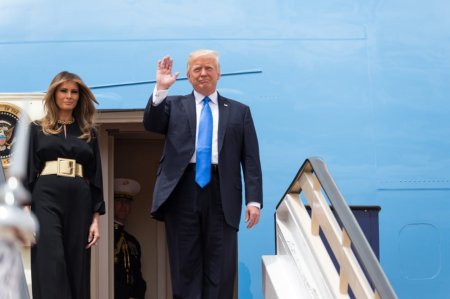
President Trump embarked on an iconic first foreign tour this weekend to the Middle East that started with a stop in Saudi Arabia to deliver a much-anticipated speech on Islam. Americans sat at the edge of their seats in anticipation of what we all sensed was a defining moment in history.

The tour is described as resetting Middle East foreign policy, with President Trump as the first sitting president to embrace complex themes of faith tightly knotted in a rich and often violent regional history. Effectively, he’s channeled the most powerful seat in the world as a vehicle for the most burgeoning diplomatic struggle of the last century.

Yet what makes President Trump’s speech on Islam so iconic is that it wasn’t about Islam. It was about human potential. Presented at the Riyadh Summit, the speech paints a picture of the world that can still be created if nations unite in a common interest of security and advancement through mutual gain. That he spoke at the birthplace of Islam is symbolic because it points at the root of the problem: violent extremism linked to the most fundamentalist interpretations of Islam.

We Have a Common Threat Despite Internal Differences

As hinted in his speech, the last monotheistic faith is still awaiting its renaissance. While there are other issues including non-violent Islamic extremism (Islamism), government corruption, theocracies, autocracies, dictatorships, human rights violations, and failed women’s rights, and on and on, the greatest shadow darkening the future for a world of people is violent jihad that seeks to destroy all standing civilizations equally, including Islamic nation-states it sees as not being Islamic enough.

Back at home, Americans have questioned the authenticity of Muslim nations participating at the summit. American Muslims see the Saudi Arabia as hypocritical in its fight against extremism. Saudis are rightly accused of being both arsonists and firefighters in the fight against extremism.

What also rings true is the strong sense of survival and self-interest fueling the global coalition. Nations should be allies in a common fight, with the understanding that we will not agree on every front or tangential issue. We do not need to all agree; we just need to be aligned on the single greatest threat and work from there. That is how we move forward. Internally, each nation faces its own complications.

A common American reaction was petulant expectation that President Trump “tackle Saudi Arabia” short of going to war with the kingdom. Yet the man is not even allowed to effectively tackle homegrown Islamists in the United States without overwhelming opposition by media and interest groups using propaganda and disinformation.

Meanwhile, Saudi Arabia is dealing with a house divided between Saudis who want progress and those reluctant to move into the twenty-first century, although both sides agree there is an existential threat coming from outside forces even more fundamentalist than they. They can also agree that it is in their collective interest to ally with the United States, something on which all representatives at the Riyadh Summit concur. President Trump understands the most direct path to effecting change is to work in people’s self-interest, to cater to advancement through mutual gain — a strategy that also won him the election.

Let’s Get Beyond Survival

At this exact moment in history, this is about survival. But it is also about what comes after survival. What does the next phase of human evolution look like, and how do we rally the world of people around it?

Trump’s Riyadh Summit speech builds on common themes in Abrahamic faiths to advocate for human potential. One of those themes is the archaic but powerful idea of “good versus evil,” as we heard with the repeat phrase “drive them out” as you would drive out the devil that possess the hearts and minds of people, causing mischief in the land. It’s a language not only understood by people in that room, but also by the world watching. Speaking in simple binaries that break down the world into good and evil, President Trump created an opportunity that doesn’t shame Muslims plagued by terrorism. Instead it gives them something greater still to be a part of. That something is humanity.

The alternative is grim. The detriment and the high cost of doing nothing, as Trump points out, is not only the death of life under religious extremism, but also the death of dreams. Let’s give people something to work together for, whether those people are heads of states or those crushed under the weight of war. The speech also powerfully reframed refugees not as destitute victims, but as integral to building stable societies that give them not only autonomy but also dignity.

In this way, not only was President Trump’s speech iconic, it was visionary for emphasizing humanity and what can still be achieved if we come together. As a Muslim reformer, I focus on getting us to the next phase of human evolution, something that cannot happen without uniting world powers for a common goal. It is a powerful move necessary to destroy the Goliath that’s draining our resources and diverting our attention.

That “Goliath” is the version of Islam that demands we forfeit our humanity. To defeat it, we will need everyone on board, including the people we see as enemies today. If we have to sit at a table with Saudi Arabia to do it, so be it. If Americans expect the Middle East to shed the skin of their tribal identities, then we too have to break out of the tribal mindset that only sees people and populations as one-dimensional. However flawed they still are, if Muslim nations are willing to come together in partnership with the United States for a common goal, then let’s work with them to secure all our interests.

Al Qaeda criticizes Saudi relations with West during President Trump’s visit

May 22, 2017

Al Qaeda criticizes Saudi relations with West during President Trump’s visit, Long War Journal May 22, 2017

Al Qaeda seized on President Donald J. Trump’s recent visit to Saudi Arabia to once again criticize the royal family and call for an uprising.

According to bin Laden, these early Saudi dealings with the West led to the British capture of Palestine and, later on, the establishment of the Israeli state.

Osama bin Laden liked to argue that there is a “Zionist-Crusader” conspiracy against Muslims. His son, Hamza, has continued with these themes, making it one of his central talking points and accusing the House of Saud of being part of it.

****************************

On May 20, al Qaeda’s propaganda arm, As Sahab, released an audio message from Hamza bin Laden. The junior bin Laden follows in his father’s footsteps by blasting the Saudi royal family. His speech is the second part in a series aimed at the House of Saud. Part 1, in which Hamza called for regime change, was released last August.

It’s not clear when Hamza recorded his latest anti-Saudi message. He does not mention President Trump or the American delegation. Instead, he focuses on the early decades of the Saudi dynasty, portraying it as a corrupt regime that serves the interests of the West. Still, al Qaeda undoubtedly wanted to maximize the audience for Hamza’s audio by releasing it during President Trump’s visit.

Then, on May 21, al Qaeda published the 15th issue of its Al Nafir Bulletin (seen below). The one-page newsletter is devoted to Trump’s visit. “The Al Saud rulers and all apostate rulers appear before us today in wasteful ceremonies to offer loyalty and renew their allegiance to the hateful Crusader master of the White House, Trump,” the newsletter reads.

Just hours before Al Nafir was released online, President Trump attended a ceremony with King Salman and Egyptian President Abdel Fatah al-Sissi to commemorate the opening of the Global Center for Combating Extremist Ideology in Riyadh. Unsurprisingly, Al Nafir’s editors criticize the move, arguing that the “rulers” had really committed to building “an apostate army to fight jihad and the Mujahideen in the name of fighting terror and terrorism.” The center will be used “to fight faith, purity, and commitment, under the call to fight extremism, backwardness, and intolerance,” al Qaeda contends.

In Al-Nafir, al Qaeda also argues that the Saudi government should give its money to the people instead of investing it in defense deals and other arrangements with the US. Al Qaeda uses these two issues — the Saudis’ supposed misuse of funds and the creation of the new center — to renew its call for jihad.

“So here are the Crusaders and the apostates, and they have stolen your money, fought your religion, shed your blood, and transgressed against your honor,” Al Nafir reads. “When will you return to your religion and do jihad in the cause of Allah?”

Hamza bin Laden’s critique of Ibn Saud

Al Qaeda has been raising Hamza’s media profile since the summer of 2015, when he was first introduced as a prominent jihadist figure. On May 13, just one week before Hamza’s new anti-Saudi message, As Sahab released another speech from Osama’s heir. In that talk, Hamza provided advice to “martyrdom seekers” living in the West. [See FDD’s Long War Journal report: Hamza bin Laden offers ‘advice for martyrdom seekers in the West’]

In his latest message, Hamza accuses the Saudi government of promulgating a false version of its own history, arguing that “generations have been raised” ignorant of what truly transpired during the first years of the 20th Century, when the House of Saud rose. Bin Laden is keen to undermine King Abdul Aziz bin Abdul Rahman Al Saud’s (Ibn Saud) legacy, portraying him as a witting agent of the British. Only when the proper history is told, Hamza says, will Muslims “understand the magnitude of the injustice brought upon” their country and then work to “restore” their “stolen rights.”

Bin Laden accuses Ibn Saud of working with the British from the beginning, seeking their “approval” before leaving Kuwait (where the Saud family lived) and conquering the city of Riyadh in 1902. Riyadh and large parts of the Arabian peninsula were controlled by Ibn Rashid’s men, who were allied with the Ottoman Empire at the time. Bin Laden says Ibn Saud could only expand his power at the expense of the Ottoman Empire’s allies and he sought assistance from the British to do it. This, from al Qaeda’s perspective, violates Islamic law, as Ibn Saud attacked fellow Muslims while working with the British.

According to bin Laden, the Saudi telling of Ibn Saud’s early conquests omits these “sharia violations,” including the assault on the Ottoman’s ally “to serve the English” and the “unlawful killing of Muslims.”

In the period leading up to World War I, the Ottoman government sought to reconcile the opposing forces inside the Arabian Peninsula. And so a deal was struck between the Ottomans and Ibn Saud, which granted the Saudi patriarch territorial rights in exchange for military cooperation and an agreement to prevent “foreign powers” from expanding their influence in the region. But Ibn Saud broke this agreement as well, bin Laden says, after he again sided with the British. (Ibn Saud’s territory was declared a British protectorate as part of a treaty in 1915.) Ibn Saud moved on the Turks’ main client, Ibn Rashid, despite their previous understanding. In so doing, bin Laden charges, the founder of the Saudi dynasty paved the way for “the English and their allies to occupy the homelands of the Muslims.”

Bin Laden reminds his audience that Captain William Henry Irvine Shakespear, a British emissary, served as Ibn Saud’s military adviser and had “command” of the Muslim forces while organizing “their ranks.” This was part of Britain’s broader “financial and military” support for Ibn Saud. This is all “clear evidence” of English support, bin Laden says, and led to “Crusader hegemony” over the region.

According to bin Laden, these early Saudi dealings with the West led to the British capture of Palestine and, later on, the establishment of the Israeli state.

Osama bin Laden liked to argue that there is a “Zionist-Crusader” conspiracy against Muslims. His son, Hamza, has continued with these theme, making it one of his central talking points and accusing the House of Saud of being part of it.

We want peace, not a peace ‘process’

May 22, 2017

We want peace, not a peace ‘process’, Israel Hayom, Boaz Bismuth, May 22, 2017

After 100 years of conflict, this is what we’ve learned: There is no chance to advance toward peace as long as there is no Arab-Palestinian recognition of Israel as the Jewish state. Sadly, the war against us will continue no matter how much we withdraw. This land was never a separate, sovereign entity for any nation other than the Jewish people. Even Jerusalem only became important religiously and historically thanks to the Jews. These are the fundamental conditions for fruitful negotiations. For once, we would also like to hear the Palestinians declare out loud what they would accept as a final offer, one that would end the conflict and after which they would make no more demands.

********************

“I love the people of Israel,” you told me in the Oval Office. Seeing as this wasn’t our first interview — I had already gotten to know you rather well during the campaign — I know you were speaking from the heart, rather than trying to curry favor with me.

I know you are sincere when you say you are committed to the security and future of Israel. You believe the United States and Israel are allies that share common values, and that America must not forsake old friends. Your powerful bond with Israel and the Jewish people was not imposed on you by your position. There are even those who say that your affection for Israel is a family affair.

The commitment and affection between Americans and Israelis is mutual. There is a great deal of love in Israel for the U.S. and its people. Throughout your campaign, Mr. President, you had many supporters here in Israel. Less in the media and more on the street — see? I told you the U.S. and Israel have a lot in common.

Here in Israel, no one burns American flags. Not now and not ever. The American flag is almost as popular here as the Israeli flag. For us, both flags symbolize liberty and hope.

Mr. President, you arrive here from Saudi Arabia with a passion to see Israel and its neighbors make peace. We thank you for this genuine desire and wish you, and us, success in this endeavor. But you must know that the last thing we need is another failed peace process. We are tired of futile diplomacy that only leads to more bloodshed, prompting us to adopt a more sober view regarding the prospects of successful negotiations and tempering our faith in peace. We want peace, not a peace process.

The country of the Jewish people

After 100 years of conflict, this is what we’ve learned: There is no chance to advance toward peace as long as there is no Arab-Palestinian recognition of Israel as the Jewish state. Sadly, the war against us will continue no matter how much we withdraw. This land was never a separate, sovereign entity for any nation other than the Jewish people. Even Jerusalem only became important religiously and historically thanks to the Jews. These are the fundamental conditions for fruitful negotiations. For once, we would also like to hear the Palestinians declare out loud what they would accept as a final offer, one that would end the conflict and after which they would make no more demands.

In Riyadh on Sunday, we heard King Salman talk about the need to combat terrorism and warning of the Iranian threat that is jeopardizing the prospects of regional peace. Israel has been saying this for years. In your speech, you, too, sought to distinguish between good and evil. We need this distinction, after years of politically correct ambiguity.

You noted in your speech the need to combat the extremists; you mentioned Iran, al-Qaida, Hezbollah and Hamas. But this axis of evil claims the opposite: that Israel and the U.S. are responsible for terrorism around the world. College campuses across the U.S. are disgracefully portraying Israel as being responsible for terrorism.

But the sad truth is quite the opposite: For over 100 years, we have been subjected to murderous terrorism in various forms, long before the so-called “occupation.” Terrorism in Israel needs to be treated the same as terrorism anywhere else in the world. All terrorism draws on the same source.

There is no Zionism without Zion

Mr. President, you chose to visit during a festive week. Fifty years ago, Israeli soldiers liberated Jerusalem from foreign rule. It has been 1,835 years since Bar-Kokhba’s fighters entered the destroyed city in 132 C.E. They engraved coins with the words “To the freedom of Jerusalem” and commemorated King David, who made it the eternal city. Jerusalem is Zion. There is no Zionism without Zion. This is the place we yearned to return to for 2,000 years. Now that we have returned, nothing can ever cut out the heart of the Jewish people.

Israel welcomes you with blessings, Mr. President. We wish you a successful visit. We bless your arrival with these words: The Lord gives strength to His people; the Lord blesses His people with peace (Psalms 29:11).

Reflections on Trump’s First State Visit to the Middle East

May 19, 2017

Reflections on Trump’s First State Visit to the Middle East, The National InterestAhmed Charai, May 19, 2017

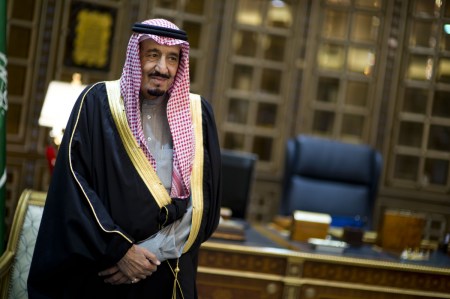
King Salman of Saudi Arabia in 2013. Flickr/Secretary of Defense

The Trump administration, working alongside its Arab allies, should promote moderate or quietist forms of Islam, and not remain neutral on religious matters. This means working with Islamic leaders, many of whom are state-funded imams, to challenge jihad on a religious basis and offer a form of faith shorn of violence.

These strategic insights come together in Morocco, where King Mohammed VI has used his religious role as commander of the faithful to inspire religious leaders to combat jihadism and urge tolerance and peace.

******************************

President Trump is visiting the Middle East. He will travel to Saudi Arabia and Israel, then visit the Vatican. Given the sequence of the first two, some observers speculated that he will attempt to revive the Israeli-Palestinian peace process, perhaps within a broader, regional framework. But different potential outcomes for Arab-Israeli relations, short of a peace settlement, may also be in the offing.

Both Saudi Arabia and Israel have proven themselves to be invaluable partners to the United States in the struggle against ISIS. An American-brokered framework whereby direct cooperation between the two is formalized—rather than a reliance on the United States as an intermediary—may create a framework to broaden the cooperation. Heightened partnership to counter the shared threat of Iran would be an obvious next step. The Trump administration’s new strategy is the creation of a regional alliance, focused on the Gulf countries but also including countries such as Egypt, Jordan and Morocco. A multilateral approach in which Israel plays a more direct and visible role in the coalition would signify a breakthrough. It would bolster confidence among Arab publics that broader cooperation and conflict resolution are warranted.

Donald Trump made the eradication of the Islamic State a priority during his campaign. He has been criticized for his more muscular strategy, as well as the desire to augment intelligence, economic and communications measures to put the screw to the organization.

It seems possible that the president is making a clean break with the Obama administration’s policy of disengagement from the Middle East. For Trump, the rubric of a “war on terrorism” seems to be appealing. Arabs appreciate the fact that, unlikely his predecessor, Trump appears to be recognizing the Shia extremist terror threat as represented by Iran and its proxy militias alongside the widely recognized Sunni jihadist threat.

In the view of this administration, this alliance should function like NATO, as an alliance (perhaps supported by the West) with multiple objectives. The eradication of Islamic State is the main objective, but the containment of Iranian influence in the region is also on the menu.

The use of a massively powerful bomb against the Islamic State in Afghanistan provided a mighty demonstration of strength, but may also have been intended to send a message about the president’s commitment to confront his adversaries with some of the most powerful tools in his arsenal.

But of course, matters are not so simple.

At the geostrategic level, Russia and the pro-Iranian Shia arc cannot be ignored politically. The alliance between the two poses layers of complexity, whereby American and Russian accounts in the Baltic states and vis à vis NATO may be dragged into the diplomatic mix. Moscow cannot be excluded from the equation in any prospective political resolution in Syria. As for Iran, Russia wields heavy influence on its government and its security sector. Trump faces a Twister-like game of challenges in navigating the array of alliances, rivalries and hostilities among the players. Yet his aspiration to eradicate the Islamic State and block Iranian expansion in the region depends on his effective management of these quandaries.

Nor do Trump’s aspirations allow for neglect of the broader counterterrorism challenge beyond military action, intelligence work and even diplomacy. He must wage an ideological war, and challenge extremist strands within Arab and Islamic societies that guarantee the perpetuation of conflict—whatever the outcomes on the battlefield—unless they are addressed.

The Trump administration, working alongside its Arab allies, should promote moderate or quietist forms of Islam, and not remain neutral on religious matters. This means working with Islamic leaders, many of whom are state-funded imams, to challenge jihad on a religious basis and offer a form of faith shorn of violence.

These strategic insights come together in Morocco, where King Mohammed VI has used his religious role as commander of the faithful to inspire religious leaders to combat jihadism and urge tolerance and peace.

King Mohammed VI has demonstrated his commitment to deeper cooperation with neighboring countries by embarking on several state visits and signing an unprecedented number of economic-partnership conventions. He has also expressed support for joint efforts to combat radicalization, and officials from Cote d’Ivoire, Niger, Tunisia, and Guinea have indicated a willingness to train their imams in Morocco.

If Trump is looking for a healthy example of Muslim leaders bringing peace through Islam, Morocco is a good place to start.

Sebastian Gorka Speech at the Republican National Lawyers Association

May 6, 2017

Sebastian Gorka Speech at the Republican National Lawyers Association, C-SPAN via YouTube, May 5, 2017

(Dr. Gorka addresses the Islamic Caliphate, aka the Islamic State, its history and how to defeat it and its affiliates. Please see also, President Trump slams the book down on calumny campaign against Dr. Gorka. — DM)

https://www.youtube.com/watch?v=EAlYXPTwMCg


Trump Takes on Terrorism in His First Hundred Days

April 24, 2017

Trump Takes on Terrorism in His First Hundred Days, BreitbartKristina Wong, April 24, 2017

President Trump made defeating radical Islamic terrorists a key part of his presidential campaign. So far in his first 100 days, experts say he is making good on that promise.

“Right now, I give him an A honestly,” Retired Army Lt. Gen. Thomas Spoehr, director of the Center for National Defense at the Heritage Foundation, told Breitbart News.

 Underscoring that progress was the U.S. military’s announcement Friday that it had killed a close associate of Islamic State in Iraq and Syria (ISIS) founder Abu Bakr al-Baghdadi in a ground raid in Syria.

The associate, Abdurakhmon Uzbeki, had planned the deadly New Year’s Eve attack at a nightclub in Istanbul, which killed 39 civilians.

In Trump’s first three months in office, there’s been a significant uptick in the number of airstrikes targeting terrorists in the Middle East, North Africa, and Afghanistan.

U.S. military officials say Trump has not given the military any “new” authorities – in terms of long-standing rules and standards governing the use of force.

But what Trump has done is expand commanders’ targeting authorities in some locations, roll back restrictions put into place by the Obama administration, and encourage military commanders to exercise the authority they already have.

“We’re actually using the authorities that weren’t used before for political reasons,” a senior White House official told Breitbart News. “Theater commanders have been unshackled. Everyone’s been unshackled to do their job.”

Specifically, Trump has rolled back in some areas a 2013 requirement put into place by former President Obama requiring all counterterrorism airstrikes outside of a conventional war zone like Afghanistan be vetted by the White House and other agencies.

Under Obama, such counterterrorism strikes would undergo “high-level, interagency vetting” to ensure that the targets posed a threat to Americans, and that there was a “near-certainty” that no civilians would be killed, according to the New York Times.

About a week after his inauguration, Trump approved a Pentagon proposal to roll back those requirements in Yemen, to allow the military to step up the counterterrorism fight in Yemen against Al-Qaeda in the Arabian Peninsula (AQAP) — considered the most dangerous al-Qaeda affiliate for its repeated attempts to attack the U.S. homeland.

The plan included the designation of three provinces in Yemen as “areas of active hostilities,” which allows commanders to strike when there is a “reasonable certainty” that no civilians will be killed, versus a “near certainty,” as reported by ABC News.

As a result, the number of strikes against AQAP has almost doubled under Trump, from 40 confirmed strikes in 2016, to at least 76 so far.

Similarly, President Trump in March designated parts of Somalia as areas of active hostilities, which granted U.S. Africom Commander Marine Gen. Thomas Waldhauser the authority to conduct offensive counterterrorism strikes and raids, versus striking only when Americans were under threat, and when there’s a “near-certainty” no civilians will be killed.

There have been no confirmed U.S. airstrikes in Somalia yet since the designation, but Africom is stepping up their advising mission. The command confirmed last Monday it were sending a “few dozen” U.S. soldiers from the 101st Airborne Division to Somalia to train Somali National Army and African Union peacekeepers – a doubling of American special operations forces there, according to CNN. Officials said the deployment was planned before Trump took office.

In the fight against ISIS, Trump during his first week on the job ordered Defense Secretary Jim Mattis to come up with a plan within 30 days on how to defeat the terrorist group.

Mattis submitted a plan, to be then fleshed out by the Central Command commander. The plan is in its final stages of planning, the senior White House official said.

In the meantime, the number of strikes in Iraq and Syria reached a record high in March since the U.S.-led air war began in 2014 — 3,878, according to statistics released periodically by U.S. Central Command.

Officials say the increase in airstrikes against ISIS has to do with the current phase of the campaign — simultaneous offensives in Mosul, Iraq and Raqqa, Syria — rather than any changes under Trump. They also say Centcom commander Army Gen. Joe Votel in December allowed for the delegating of strike authority from a three-star general to a one-star general to speed up the approval process for airstrikes.

But U.S. strikes against al-Qaeda in Syria — which is separate from the ISIS fight — have also seen a “relative increase” since Trump took office, a defense official said.

The U.S. military in late February also killed al-Qaeda’s second in command in Syria, and in March conducted a strike against al Qaeda in Jinah, which U.S. officials said killed a “few dozen” militants.

And more is expected to come in the ISIS fight, as the administration finalizes its new plan. A U.S. military official recently told Breitbart News that the strategy of U.S. troops supporting local forces on the ground – versus taking a direct combat role – will be “enduring.”

More U.S. forces are expected to deploy to Syria, however, where they would likely support local forces in what is expected to be a hard fight for ISIS’s de facto capital.

The Trump administration is also reviewing whether to get rid of limits set by the Obama administration on the numbers of U.S. troops who are authorized to deploy to Iraq and Syria.

The Obama administration had placed strict caps on the number of U.S. troops serving in Iraq and Syria, in an effort to keep troop numbers as low as possible. Currently, 5,262 are authorized for Iraq, and 503 troops for Syria. But in reality, there were hundreds more deployed on a “temporary” basis that weren’t counted, making those numbers misleading.

“In the previous administration, the secretary had to check very often with the White House, and the president, to deploy forces, especially if they were bumping up the cap,” Spoehr said.

Commanders also complained that the troop caps led to the deployment of only parts of a unit, forcing them to rely on contractors abroad for logistical support and waste taxpayer dollars.

In Afghanistan, there has been a 270-percent increase in airstrikes under Trump – from 54 in January to 200 in February – the largest increase in at least six years.

Recently, Army Gen. John “Mick” Nicholson, U.S. commander of U.S. and NATO forces in Afghanistan, ordered the dropping of the largest non-nuclear bomb in the U.S.’s arsenal – nicknamed the “Mother of All Bombs,” or MOAB – to root out a complex of tunnels and caves in Afghanistan used by the ISIS’s affiliate in Afghanistan, ISIS-Khorasan.

U.S. military officials said no new authorities were granted for the bombing, which fell within Nicholson’s existing authorities to order strikes against ISIS since January 2016. Current and former defense officials recently told The New York Times that he would probably have checked with his superiors under Obama.

The senior White House official gone are the days of the last administration when tactical decisions — from positioning ships to whether an A-10 attack fighter jet could strike or not — were being made by National Security Council staffers.

Former Secretaries of Defense Leon Panetta and Robert Gates both lambasted the micromanagement military commanders faced from the NSC under Obama. In his memoir Duty, Gates famously wrote about discovering a direct phone line from a White House staffer to a special operations command center in Afghanistan, and immediately ordering it to be ripped out.

“It’s the micromanagement that disappeared… the informal political things that were laid on top,” the senior White House official said.

Jonathan Schanzer, vice president of Foundation for Defense of Democracies, praised the new approach.

“I think we long-expected this president to be a delegator, that essentially being a businessman, his approach was that he was going to find excellent people, and give them their portfolios, especially given that the president himself didn’t have vast knowledge in the area of defense and foreign policy,” he said.

“That was never, I think, his forte, so the idea that he would delegate to experts seems to be a very wise decision.”

He also praised Nicholson’s decision to drop the MOAB on ISIS, which he said sent a message to all of the U.S.’s other adversaries.

“I think it’s important that [Trump] trusts them in their ability to deliver these sorts of strategic messages,” he said.

And Spoehr, who served as deputy commanding general of U.S. forces in Iraq in 2011, said allowing commanders to do their jobs has been a huge morale boost for the military.

“I think, in nearly every dimension, you can see a noticeable difference, that things have ratcheted-up… a little bit more spring in people’s step, little bit of a fire in people’s eyes,” he said.

The senior White House official agreed: “Morale is so much higher.”

Full Measure: Sunday, March 5, 2017: War on ISIS

March 6, 2017

Full Measure: Sunday, March 5, 2017: War on ISIS via YouTube, March 6, 2017


Kudos to Trump for Ignoring McMaster’s Advice Against Using Term ‘Radical Islamic Terrorism’

March 4, 2017

Kudos to Trump for Ignoring McMaster’s Advice Against Using Term ‘Radical Islamic Terrorism’, AlgemeinerRuthie Blum, March 3, 2017

(One of the good things about being the President is that you don’t have to follow the advice of your subordinates. — DM)

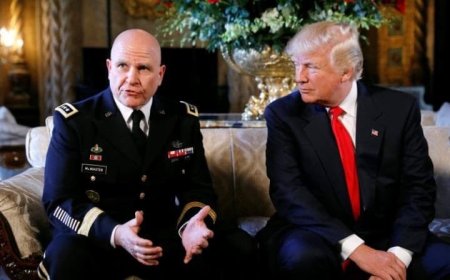
mcmasterH.R. McMaster with President Donald Trump. Photo: Twitter.

Kudos to Trump for doing it anyway and reassuring us that he has no intention of emulating Obama.

******************************

Despite his impeccable military and other credentials, US President Donald Trump’s national security adviser, Lt. Gen. H.R. McMaster, began his job — the one he got as a result of the resignation of Gen. Michael Flynn — with a whimper. If reports are correct, McMaster told Trump last week that he should cease using the term “radical Islamic terrorism,” so as not to alienate Muslim-majority countries allied with the United States.

There were those of us who had argued, prior to Trump’s inauguration, that the only thing Americans and Israelis had to fear about the sui generis leader, if anything, was that he would end up more like his predecessor, Barack Obama, than the “alt-right” fanatic they were making him out to be.

“He’s not a fascist, a racist or an antisemite,” I would say confidently. “But he was, up until recently, a member of the Democratic Party.”

Once Trump started announcing his picks for cabinet and other positions, however, even the die-hard Republicans who initially froze over the fact of his leapfrogging over them to head their party thawed. Not only had the real estate magnate who talks from the cuff and shoots from the hip led them to sweeping victories in the House of Representatives and the Senate, but he began appointing real conservatives to top posts, including the Supreme Court seat vacated by the death of Justice Antonin Scalia.

Flynn, with his staunch stance against Islamists in general and Iran in particular, was among this group. But since he left almost as soon as he assumed his job, someone had to be found to replace him. That person was McMaster, and he also seemed to fit the bill perfectly.

In his 1997 book Dereliction of Duty: Johnson, McNamara, the Joint Chiefs of Staff, and the Lies That Led to Vietnam — written as a doctoral thesis — McMaster examined the failure of the White House and Joint Chiefs of Staff to provide a successful plan to defeat the North Vietnamese Army.

“The war in Vietnam was not lost in the field, nor was it lost on the front pages of The New York Times, or on the college campuses. It was lost in Washington, DC, even before Americans assumed sole responsibility for the fighting in 1965 and before they realized the country was at war,” McMaster wrote.

It is thus odd that his first piece of advice to Trump was to suggest he tone down his rhetoric against the West’s sworn enemies, rather than coach him on how to put it into action.

So much has changed since the Vietnam debacle, both politically and militarily, but one thing remains the same: Democracies are always at a disadvantage when fighting rogue groups and states with no morals or rules of engagement.

Even Israel, whose government and military have had no choice but to confront the often impossible task of killing terrorists without resorting to their methods, is often at a loss when it comes to asymmetric warfare. But it does not hesitate to identify and call its enemies by name.

When Obama took office in January 2009, two days after the end of Israel’s Operation Cast Lead against Hamas in Gaza, he made it his business to reach out to radical Islamists, rather than defeat them. This move was born out of a dim view of American power and the accompanying belief that the US was hated by the mullah-led regime in Tehran and terrorist organizations like the Muslim Brotherhood with good reason.

In keeping with this policy, Obama eliminated terms such as “radical Islam” and “terrorism” from his administration’s lexicon. Indeed, the self-described “leader from behind” of the free world tried to alter reality with a pencil eraser — all the while working furiously toward inking a nuclear deal with Iran.

The electoral ouster of the Democrats was due in large measure to the above. Why, then, would Trump’s national security adviser tell him not to mention it in his address to the joint session of Congress on Tuesday evening?

Kudos to Trump for doing it anyway and reassuring us that he has no intention of emulating Obama.

What to Remember in Fighting Radical Islam

February 28, 2017

What to Remember in Fighting Radical Islam, Gatestone InstituteSaied Shoaaib, February 28, 2017

Religious reform in Islam did not find support, as it did in the West. What does Trump need to do? There needs to be a stop to any form of cooperation with the varieties of political Islam and certainly the terrorist organizations.

Add to that: Dismantle the ideology that produces Islamic terrorism by supporting the disintegration of the ideology of terrorism through Islamic jurisprudence, Islamic schools, mosques, books, radio stations and television stations. Dry up the external financing and private Saudi and Gulf Islamic institutions in the West. And thus give to the Muslims what is normal in the West. We need to promote other Islamic religious choices, completely out of the ideology of the Islamic terrorist prison, and to encourage being part of the building and development of human civilization rather than the cause of its destruction.

***********************

In every Muslim-majority country, especially in the Middle East, the Islamic terrorist genie came out from under the ashes, built the Islamic state and threatened the West — both with terrorist operations and from inside, in a more surreptitious, seemingly peaceful manner, as the Muslim Brotherhood does.

It is important to understand that Islam is a religion that includes, in its structure, political power that governs and controls and spreads the force of arms.

US President Donald J. Trump has succeeded in naming a jihadi problem, political Islam, but it is hard to single out defective products from the factory without closing the factory — if one does not want them to appear again.

This does not mean that what Trump intends to do is not important; on the contrary, we need him after most Western politicians faced Islamic terrorism awkwardly, if they faced it at all. Sometimes they even cooperated with these terrorist organizations, invited their members to the White House; to Iftar dinners during Ramadan, and hugging what they falsely call “moderate Islam” — especially the Muslim Brotherhood, the incubator that most terrorist organizations come out of — instead of the true “moderate Muslims” who have been struggling to be heard above the crush of “influence,” infiltration and petro-dollars.

We can say that so far “Trumps’s recipe” for facing radical Islam had been tried before and failed. Dictatorships and military regimes in the Middle East, such as the presidents of Egypt Nasser, Sadat and Mubarak, and now el-Sisi, faced political and radical Islam. Russia did, and Saddam did in Iraq, Gaddafi in Libya, Bourguiba in Tunisia and others.

Perhaps the saddest failure is the Turkish model. Mustafa Kemal Atatürk built a dictatorship-state on the ruins of the Ottoman Empire. He decisively confronted all forms of political Islam, and destroyed the military wing of the army that dreamed of restoring that Empire. Atatürk founded a dictatorship guarded by the army’s broad powers, but within a constitutional and legal framework, to deter Islamists who might want to change his modernist structure. It was also meant to stop any move to Islamic rule that might want to change the relatively open and pro-Western ideas of the Kemalist Republic.

Atatürk dominated the religious institutions, and made them work for him; they gave him a legitimate Islamic platform. He wanted Islamic culture to prevail, but under his control.

Unfortunately, this model also failed. Turkey’s current president, Recep Tayyip Erdogan, prosecuted the leaders of the army with trumped-up testimony; lowered the retirement age of the judiciary to force them out; fired educators, jailed journalists is building his Islamic state step by step.

1920-1Many Western politicians have cooperated with Islamists and Islamist organizations. (Image source: RT video screenshot)

In every Muslim-majority country, especially in the Middle East, the Islamic terrorist genie came out from under the ashes, built an Islamic state and threatened the West — both with terrorist operations and from inside, in a more surreptitious, seemingly peaceful manner, as the Muslim Brotherhood does.

Most of those who fought Islamic terrorism focused their efforts on the hunt for dangerous products from the factory of Islamic ideology, such as Anwar al-Awlaki or Osama bin Laden. This is important, but no one tried to shut down and destroy the factory itself.

Perhaps we remember that the West, in the fight against the ideology of communism, used weapons only rarely. The major part of the fight was against the ideology itself: encouraging and supporting its opponents, and disseminating ideas to counter those the Communists were exporting. There was a focus on the disadvantages of Communist ideology, such as oppression, tyranny and human rights violations. And suddenly the world woke up one day to find the Soviet Empire collapsed from inside.

We need from the West a positive energy to rebuild the civilization after the destructive energy that hollowed it out. And we need to dismantle the prevailing Islamic ideology that produces terrorism.

It is important to understand that Islam is a religion that includes, in its structure, political power that governs and controls and spreads the force of arms. First the Islamic prophet Muhammad published his call peacefully for nearly 13 years in Mecca, when the Quran verses called for tolerance, freedom of belief and other human values. But then Muhammad and some of his companions moved to the city of al-Madina and turned religion into a political authority aiming to expand and defend itself. It entered into a political and military struggle against its opponents within al-Madina and outside, especially with his tribe of Quraish.

At that time, Muhammad established what we might call political Islam. It was based on a new call: that Islam was no longer interested in the relationship between the individual and his God, as well as a good relationship with those around him, whether they agreed with his religious faith or not.

He turned the religion into a ruling political organization, undertaking to control — religiously, politically, socially and economically — Muslims and others. It builds on the culture of the tribe, spreads the force of arms and increases its numbers and the territories governed by them.

It became the religion of loyalty — meaning loyalty to the governor and vice-versa.

This structure continued after the death of Muhammad. Many ruled out of Quraish, the most prominent Turks, Al-Othmanin and the Ottoman Empire that expanded through force of arms to Persia; swept away the Christian Byzantine Empire; conquered by force North Africa, the Middle East, Greece, Spain and Eastern Europe

During this long history was established the Islamic culture that now prevails among the millions of Muslims in all corners of the world. It was founded on the sacred religious texts: the verses of the Quran and hadiths (the Prophet’s biography). Add to this a religious jurisprudence established during this imperial tide that swept the world. All of this, ordinary Muslims imprison inside them, unhappy. Some of them become potential soldiers for terrorist organizations and all varieties of political Islam.

This culture, prevalent in the West, is backed by money from Saudi Arabia and the Gulf States, especially Qatar, and often backed by money from the West itself — along with many politicians, often opportunistic.

What is the solution? From within. Islamic political power controls the Islamic world, whether military or in an everyday dictatorial form.

Religious reform in Islam did not find support, as it did in the West. What does Trump need to do? There needs to be a stop to any form of cooperation with the varieties of political Islam and certainly the terrorist organizations.

Add to that: Dismantle the ideology that produces Islamic terrorism by supporting the disintegration of the ideology of terrorism through Islamic jurisprudence, Islamic schools, mosques, books, radio stations and television stations. Dry up the external financing and private Saudi and Gulf Islamic institutions in the West. And thus give to the Muslims what is normal in the West. We need to promote other Islamic religious choices, completely out of the ideology of the Islamic terrorist prison, and to encourage being part of the building and development of human civilization rather than the cause of its destruction.

An Émigré Explains Why The U.S. Should Want Russia As An Ally

February 22, 2017

An Émigré Explains Why The U.S. Should Want Russia As An Ally, TheFederalist, February 22, 2017

(Please see also, Is a Trump-Putin Detente Dead? — DM

I am a Russian-born U.S. citizen. Since my old country is all in the news now, unsurprisingly, several people have asked me about the latest spat between the two countries. I have rounded up a few frequently asked questions (FAQ) in no particular order, and here they are.

Question: Is Russia our foe or ally?

Answer: Neither. Lord Palmerston famously quipped, “Great Britain has no friends, only interests,” and the same applies to other countries. The United States and the Union of Soviet Socialist Republics (USSR) were geopolitical adversaries during the Cold War. Prior to that, they were allies in World War II when both faced an existential threat from Nazi Germany and Japan. Now both Russia and the United States are facing a threat of radical Islam, which may bring the two countries together again.

Q: But can we cooperate with the Russians after they captured large chunks of Ukraine and Georgia?

A: Well, the Soviet Union captured Lithuania, Latvia, and Estonia in 1939, yet Franklin Delano Roosevelt and Winston Churchill cooperated with Joseph Stalin and actively supported his war efforts. The West never recognized the annexation of the Baltic republics; it just put that matter on the back burner for the sake of a more urgent goal. Henry Kissinger calls this realpolitik.

Q: Donald Trump has picked Rex Tillerson, the former CEO of Exxon Mobile, as his secretary of State. Tillerson has warm relations with Russian President Vladimir Putin. How do we know which side Tillerson is on?

A: Let me cite a historical precedent. Another famous American oil executive was friendly with Soviet leaders. His name was Armand Hammer. He had numerous personal and business ties with the USSR, starting in the 1920s. In 1957, Hammer became president and CEO of Occidental Petroleum. He used his connections to end the Cold War between the two countries. According to his biographer, Hammer was “a go-between for five Soviet General Secretaries and seven U.S. Presidents.” Paradoxically, Hammer’s efforts on behalf of the USSR made him a darling of the American Left, even though he supported the Republican Party.

Q: Has Putin ordered the murder of Russian journalists and other political opponents?

A: That has not been proven conclusively, but is plausible. Regardless of whether that is the case, it should not determine American foreign policy. That was clear to FDR and Churchill, who were well aware of Stalin’s atrocities.

Q: Did Russia side with Trump in the 2016 U.S. presidential race?

A: Of course, it did. Nations do take sides and interfere in other nations’ internal affairs all the time. For example, the United States actively encouraged the Arab Spring in several countries and even supported Syrian and Libyan “moderate” rebels. It was the job of the sitting U.S. president to prevent any Russian interference in U.S. elections.

Q: Is Russian spying on U.S. institutions a new phenomenon?

A: Absolutely not! However, things change. Between the 1940s and the 1960s, it was the conservative Right that was alarmed by Russian spying and Communist infiltration of the federal government. The Left dismissed that concern, mocking it as looking for “reds under the beds.” Julius and Ethel Rosenberg, who were convicted of spying for Russia and executed, became martyrs of the Left. Even in the 1970s when I arrived in the United States, the Left’s favorite motto was “it’s better be red than dead.” Things really changed in the 1980s.

Q: What happened in the 1980s?

A: When Ronald Reagan became president, he faced fierce opposition from the Left. The media elite ridiculed him as an unsophisticated cowboy and right-wing warmonger for calling the USSR an evil empire. The opposition became violent when Reagan proposed an anti-missile defense system, which the media dismissed as a “star wars” program. However, when an opportunity came up, Reagan held productive summits with former Russian President Mikhail Gorbachev. These summits eventually led to the end of the Cold War.

Q: Is Putin a reincarnation of Stalin?

A: The two leaders represent two different generations separated by a period of 70 years. During those 70 years, the world has changed, and so has Russia. Stalin ruled Russia with an iron fist, while today’s Russians enjoy a degree of freedom. Putin is more pragmatic than Stalin. Yet contemporary Russian society is still quite different from its Western European counterparts, which is perhaps just fine, given that the latter are in a deep crisis now.

Q: Can the United States rely on Russia in the war on radical Islamic terrorism?

A: If it were a matter of life or death, I would always choose to have Russia on my side, rather than a Western ally, such as France. When Russians wage a war, they do it to win, not to satisfy lawyers by following every rule specifying acceptable ways of killing the enemy.

Here is an example. Somalian pirates threatened international shipping in the Indian Ocean between 2005 and 2013 by taking hostages. The American, French, Italian, and other navies rescued many hostages, caught pirates, and sent them to their countries. The arrests, trials, appeals, and imprisonment cost hundreds of millions of dollars. According to a Guardian report, there was a fear that “trials in European courts would encourage, rather than deter, pirates from committing crimes of piracy.”

In contrast, when a Russian destroyer rescued a Russian tanker with its crew from pirates in 2010, they did not arrest the pirates. They disarmed the pirates and set them adrift in an inflatable boat. The released pirates did not reach the coast. Rumor has it that the rescuers made a hole in the boat before releasing it.