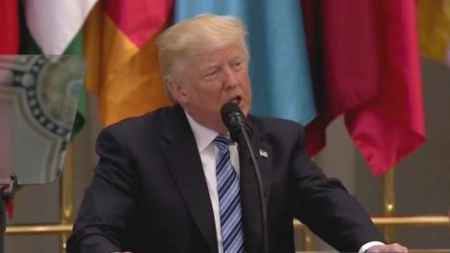
Posted tagged ‘Trump and Iran’

A new head appointed to CIA’s Iran Operations

June 2, 2017

A new head appointed to CIA’s Iran Operations, DEBKAfile, June 2, 2017

New CIA Chief Mike Pompeo has named Michael D’Andrea head of the Iran Operations as part of the overhaul President Trump has ordered of the agency’s espionage, counterintelligence and covert operations departments. This is reported by intelligence sources in Washington. D’Andrea, nicknamed “Dark Prince” or “Ayatollah Mike,” commanded the operation against Osama bin Laden and has orchestrated numerous drone attacks on terrorist targets across the Middle East. According to those sources, his appointment attests to the president’s determination to put more muscle behind operations against Iran. DEBKAfile adds: Some of the senior CIA agents dismissed from their jobs as a result of the overhaul are feeding the campaign of disparagement against the president.

Lapid’s cynical Saudi blunder

May 30, 2017

Lapid’s cynical Saudi blunder, Israel Hayom, Jonathan S. Tobin, May 30, 2017

The point of the transaction is an attempt to preserve the Saudi monarchy from falling victim to radical foes. More importantly, it’s intended to bolster Riyadh against the main threat to both Sunni Arab regimes and Israel: Iran.

That the man who is seen as a serious candidate for prime minister is oblivious to the imperative for Israel to make common cause with the Saudis against an Iranian foe committed to the destruction of both countries is a shocking indictment of Lapid’s strategic vision. Lapid is trying to divide Israel and the United States at a time when former President Barack Obama’s efforts to increase the “daylight” between the countries is being reversed.

The last thing Israel needs right now is to push away Sunni Arabs who have finally realized that the Jewish state is an asset to the region rather than a threat or to pick a fight with Trump.

********************

It’s hard to beat a man by agreeing with him. That’s why Prime Minister Benjamin Netanyahu’s most credible foe is struggling to find a way to distinguish his own views from those of the man he wishes to replace. Polls show that Yesh Atid Chairman Yair Lapid is the man Netanyahu needs to watch out for in the next election. But after proclaiming earlier this year that a two-state solution must wait another 20 years for the Palestinians to show that they want peace, it’s hard to see how Lapid can possibly gain an edge over the prime minister on the most important issue facing the Jewish state.

That’s why Lapid is attempting to make an issue of Netanyahu’s apparent acceptance of a massive $110 billion arms deal concluded between Saudi Arabia and the Trump administration, without so much as a whisper of protest. In a recent interview, Lapid noted that the entire Israeli security establishment was deeply concerned about the transaction, which will place a wide array of sophisticated weaponry in Saudi hands. In doing so, Lapid is not just trying to goad Netanyahu into a suicidal spat with Trump but also demonstrating how ignorant he is of American Jewish history.

Lapid’s broadside aims to imply that the prime minister is so afraid of U.S. President Donald Trump and so dependent on his good will that he won’t speak up for Israel’s interests. But his main point of concern is that giving such weapon systems to Saudis means they are “one inch away” from falling in the hands of Sunni terrorists.

Perhaps Lapid will get some traction with the charge but for anyone who’s been following the news in the region in recent years, it’s fairly obvious that he’s woefully behind the times. The point of the transaction is an attempt to preserve the Saudi monarchy from falling victim to radical foes. More importantly, it’s intended to bolster Riyadh against the main threat to both Sunni Arab regimes and Israel: Iran.

That the man who is seen as a serious candidate for prime minister is oblivious to the imperative for Israel to make common cause with the Saudis against an Iranian foe committed to the destruction of both countries is a shocking indictment of Lapid’s strategic vision. Lapid is trying to divide Israel and the United States at a time when former President Barack Obama’s efforts to increase the “daylight” between the countries is being reversed.

Lapid is also forgetting an important precedent: In 1981, the Reagan administration wanted to sell five sophisticated AWACS (Airborne Warning and Control System) airplanes to the Saudis. Like the far larger sale just concluded, the AWACS deal was an effort to shore up the Saudi regime against an Islamist regime in Iran. But since the Saudis were then a key player in the effort to isolate and demonize Israel as well as part of a potential eastern front against it, friends of the Jewish state, led by the American Israel Public Affairs Committee, denounced the transaction as a blow to Israel’s military qualitative edge. Unfortunately, it was a bitter fight and one the pro-Israel lobby lost ignominiously.

That defeat led AIPAC to reassess its former emphasis on the executive branch and replace it with one that sought to ensure congressional support for Israel regardless of who was in the White House. But while AIPAC licked its wounds and began preparing to win future fights, friends of Israel generally forgot about what happened to the planes they had warned would be so dangerous to place in the hands of the Saudi state.

But, contrary to the predictions of those who worried that the AWACS planes would coordinate attacks on Israel rather than defending Riyadh against Iran or the Soviets, nothing of the kind every happened. The AWACS planes did nothing to harm Israel. Saudi Arabia may be the source of an ocean of anti-Western and anti-Israel propaganda but its leaders were never interested in fighting Israel. Moreover, three decades later, what was once covert security coordination between the Saudis and Israel is now an open secret and the basis upon which Trump’s hopes of an “outside-in” strategy for peace rests.

The Saudis are allies of convenience rather than conviction. It is wise to be skeptical about whether their goodwill extends beyond mutual antipathy for Iran. But the moral of the story is that nations have permanent interests not permanent allies or enemies. The last thing Israel needs right now is to push away Sunni Arabs who have finally realized that the Jewish state is an asset to the region rather than a threat or to pick a fight with Trump. Talking about the Saudis in this manner may have given Lapid a momentary edge but urging a repeat of AIPAC’s historic blunder is no way for him to prove his security chops. On the contrary, it seems to suggest that he is still not ready for power.

Jonathan S. Tobin is the opinion editor of JNS.org and a contributing writer to National Review. Twitter @jonathans_tobin.

The onus is on us

May 25, 2017

The onus is on us, Israel Hayom, Isi Leibler, May 25, 2017

(Iran is the greatest threat to Israel; it has or will have nukes and the means of delivering them to obliterate the “little Satan.” The Palestinians don’t and, at least in the foreseeable future, are unlikely to. By working with the Saudis, et al, to defang Iran, President Trump rejected Obama’s policy of yielding to Iran and thereby benefitted both the Saudis, et al, and Israel. — DM)

Trump did not try to force unreasonable concessions. A Palestinian state is not ‎even on the horizon. Neither is there any indication of a return to former President Barack ‎Obama’s policy of freezing all settlement construction.‎

In King Salman’s ‎statement outlining the Saudi position, rather than condemning Israel, he merely expressed the ‎hope that peace will be achieved. This was a clear message, as was the fact that Trump flew to ‎Israel on the first openly direct flight from Riyadh to Tel Aviv.‎

According to The Wall Street Journal, the Saudis no longer demand a complete ‎settlement freeze. Instead, they propose that Israel restrict construction outside the ‎settlement blocs and provide additional humanitarian aid in Gaza. ‎

In return, the Saudis would inch toward normalization by allowing ‎Israeli aircraft to fly over their territory, set up direct telephone connection and even provide ‎tourist visas for Israelis. While this was not officially confirmed, there were no denials, which ‎tends to confirm the veracity of the report. ‎

************************

U.S. President Donald Trump has delivered. He will not have satisfied the delusional ‎aspirations of Israel’s radical right but, despite some missteps before he arrived, the Trump visit was favorable for Israel and outlined ‎parameters of what can be achieved with the Palestinians.‎

It was disappointing that he postponed transferring the U.S. Embassy to Jerusalem, but we appreciate that he is the first sitting ‎American president to visit the Western Wall. ‎

He should have been more explicit about the extent of terrorism in Israel in his ‎address to the Muslim world. But he more than compensated in his extraordinarily warm ‎address at the Israel Museum.‎

There is also some concern that the substantial commercial and defense relationship with the ‎Saudis ($380 billion in deals, including $110 billion in arms purchases) might impact Israel and ‎will require steps to ensure that we maintain our qualitative military edge.‎

Trump did not try to force unreasonable concessions. A Palestinian state is not ‎even on the horizon. Neither is there any indication of a return to former President Barack ‎Obama’s policy of freezing all settlement construction.‎

Indeed, the president expressed support for Israel in a far more open and ‎positive manner than his predecessors. In his address to the leaders of 55 Muslim-‎majority countries, he reversed Obama’s moral equivalence approach and described the ‎conflict as being between the forces of decency on the one hand, and an evil death cult on the ‎other. He urged the Arab and Muslim states to actively eradicate terrorism and extremism ‎from within their ranks. He specifically condemned Hamas and ‎Hezbollah together with ISIS and al-Qaida. And he explicitly called on Arab and Muslim ‎leaders to combat anti-Semitism. ‎

For the first time, the Saudis, backed by the Egyptians and Gulf states, appear to be promoting ‎peace or at least easing the tension between the Palestinians and the Israelis. In King Salman’s ‎statement outlining the Saudi position, rather than condemning Israel, he merely expressed the ‎hope that peace will be achieved. This was a clear message, as was the fact that Trump flew to ‎Israel on the first openly direct flight from Riyadh to Tel Aviv.‎

According to The Wall Street Journal, the Saudis no longer demand a complete ‎settlement freeze. Instead, they propose that Israel restrict construction outside the ‎settlement blocs and provide additional humanitarian aid in Gaza. ‎

In return, the Saudis would inch toward normalization by allowing ‎Israeli aircraft to fly over their territory, set up direct telephone connection and even provide ‎tourist visas for Israelis. While this was not officially confirmed, there were no denials, which ‎tends to confirm the veracity of the report. ‎

Whether this was the outcome of discussions with Trump’s representatives, or ‎because the Saudis recognize the value of Israel’s support against Iran’s efforts to achieve ‎regional hegemony, is irrelevant. There have already been widespread rumors attesting to ‎covert Saudi cooperation with Israel against Iran and similarly with Egypt against ISIS.‎

Trump demanded that the Palestinians cease incitement and stop ‎rewarding terrorists murderers and their families, and avoided suggesting that Israel cease settlement activity. But he undoubtedly pressed Prime ‎Minister Benjamin Netanyahu for confidence-building measures such as ‎improving Palestinian economic conditions.‎

At this potentially historic turning point, Netanyahu must stand firm against the radicals in his ‎coalition and impose a limited freeze beyond the settlement blocs. Most Israelis ‎would endorse this, and if it brings down the government, and forces elections, the ‎nation will support Netanyahu.‎

At this crucial time, decision-making must reflect ‎the views of the centrist majority. No minority groups should ‎be able to veto our national interest.‎

Yesh Atid and elements in Labor embrace this centrist view, and should either join the ‎government or support it on this issue. ‎

Of course, this is only the beginning. Before we engage in negotiating details, ‎Palestinian Authority President Mahmoud Abbas must make some concessions. Let him recognize ‎Israel as a Jewish state and abrogate the Palestinian right of return. Then we can ‎discuss borders and a demilitarized state. For now, we must demonstrate to the ‎world and to Trump that we are reasonable and respond positively to genuine Arab ‎gestures.‎

Despite these efforts, Abbas is probably unwilling or unable to ‎change. He is unlikely to make genuine efforts to stem incitement ‎or cease awarding lavish pensions to murderers and their families. Should that be the case, ‎most of the world, especially the Europeans, will still automatically blame Israel for failure to ‎advance the peace negotiations.‎

Trump’s determination will then be put to test. If, to appease the Saudis, he was to continue to ‎make believe that Abbas is a moderate peace partner and extend the fake “peace process ‎negotiations” we have endured under Obama, we would justly feel betrayed. ‎

However, if the Trump administration performs as an honest broker and recognizes Israel’s ‎efforts and genuine desire for peace, it will conclude that in the absence of a Palestinian ‎negotiating partner, all we can achieve is an improvement in Palestinian quality of life under ‎their own autonomy while we maintain our security. At the same time, as has been hinted by ‎Trump, he may then look more seriously at alternative solutions in cooperation with Egypt and ‎Jordan and backed by the moderate Arab States, which do not involve a two state solution. It ‎is no coincidence that Trump failed to explicitly refer to a Palestinian State while visiting the ‎region. It is this veiled threat that Trump is hoping will entice the Palestinian leadership to ‎conduct bona fide negotiations for the first time.‎

We are today in an exceedingly strong position. Israel has never been so powerful militarily, ‎economically and socially.‎

Israel has never had such widespread international recognition. Whether you adore or loathe ‎Netanyahu, nobody can deny that he has been an outstanding statesman in the international ‎arena. He has a unique relationship with the Americans and with Russian President Vladimir ‎Putin, and has built up relations with India, China, Japan, Southeast Asia, Australia, Eastern ‎Europe and now Africa. ‎

The extraordinary opportunities of today may never be replicated. We must demonstrate ‎restraint and ensure that our elected representatives neither undermine us nor project the ‎image of extremists by engaging in foolish or intemperate outbursts primarily designed for ‎personal political promotion. ‎

Today, we have in our grasp this remarkable opportunity to genuinely move toward ‎improving and stabilizing our relationship with our Arab neighbors. ‎

Trump’s Middle East Trip Was a Big, Surprising Success—and the Iranian Regime is Nervous

May 24, 2017

Trump’s Middle East Trip Was a Big, Surprising Success—and the Iranian Regime is Nervous, Tablet MagazineLee Smith, May 23, 2017

The Obama administration moved quietly behind the scenes to reorient American policy toward Iran, while it pulled the rug out from under traditional American allies. Among other things, the Obama White House leaked Israeli strikes against Hezbollah convoys, it coordinated operations with Iranian-backed militias in Iraq, and it stood aside as Bashar al-Assad waged a genocidal campaign in Syria so as not to affect the prospects of the nuclear deal with Iran.

The Iranians know how much they owe the Obama administration—whether it was air support for Qassem Soleimani in Tikrit, legitimization of Iranian interests in Yemen, deterring Israel from striking their nuclear facilities, turning a blind eye as they built a highway from Tehran to Baghdad to Damascus to Beirut.

Now the Americans are dancing with the Arabs and praying with the Jews, and Iran is on its own again.

***************************

“I want to tell you,” Israeli Prime Minister Benjamin Netanyahu said to President Donald Trump during a joint press conference Monday, “how much we appreciate the reassertion of American leadership in the Middle East.”

So how is Trump’s first foreign trip as president playing out? Suddenly, the scandal-mired President seems like a plausible world leader. He is certainly a more welcome guest in the capitols of America’s traditional allies than his predecessor, President Barack Obama. In addition to enjoying the show, viewers at home—the ones who voted for Trump last fall—likely appreciate the $110 billion arms deal Trump struck with Saudi Arabia. With another $350 billion to come over the next decade, those contracts will certainly help put assembly-line Americans back to work.

Trump’s speech before a worldwide audience about terrorism and Islam was a useful initiative that will also put some of the dozens of Muslim leaders who attended the speech on notice. Acknowledging that Jerusalem is in Israel is a break with strict Obama policy. Trump became the first sitting U.S. president to visit the Western Wall.

But having spent nearly a decade living in Cairo and Beirut, and traveling throughout the Middle East, I can easily imagine the spin that the region’s intellectuals are putting on the trip as they sit in their coffee houses and smoke Gitanes:

Habibi, the Saudis just paid the Americans nearly half a trillion dollars to keep them safe from Iran, right? But Iran was nothing before Obama built them up with $150 billion. It’s only because Obama kept paying Iran—first to stay in negotiations over the nuclear program and then as a reward for signing the deal—that Iran was empowered. Obama and his pallets of cash helped Iran extend its reach from the Persian Gulf to the eastern Mediterranean.

Iran thought that it got the better of the Americans, but the Americans played them for suckers! The CIA had something up their sleeves the whole time! They just wanted the Arabs to pay even more to defend them from Iran. So the Americans created this Iranian bogeyman and then they sent the Arabs a bill to make the Iran problem go away. They drove up the price!

It’s a protection racket, don’t you see? And the Americans cleared nearly $300 billion. Oh man, you can be sure Trump and Netanyahu are laughing it up in Jerusalem. Very clever, those Americans!

No, of course it wasn’t really a CIA shakedown orchestrated over two presidencies. And yet Trump’s maiden foreign presidential venture, or at least the first two stops, is indeed all about the new Administration’s determined recalibration of American Middle East policy after eight years of Obama’s adventurism—especially regarding Iran.

Trump made his intentions toward Iran pretty clear in his Riyadh speech. “For decades, Iran has fueled the fires of sectarian conflict and terror,” said Trump. “It is a government that speaks openly of mass murder, vowing the destruction of Israel, death to America, and ruin for many leaders and nations in this room.”

The visuals from Riyadh and Jerusalem were even more important than the speeches. After all, you can reassure your allies on the phone—to scare your shared adversaries, you create a photo album and broadcast it on Facebook and Twitter.

Here’s the president of the United States being celebrated in Saudi Arabia with a sword dance. And clearly, this is not the secretary of state’s first ardha. As a famous oil man who is always welcome to visit the global swing producer of oil, Rex Tillerson knows all the steps already. See him dancing with Wilbur Ross? The Americans and Saudis are like family.

And look—the president of the United States actually has Jews in his family. Here is a picture of his daughter praying at the Western Wall. Here is a picture of the president also at the Western wall wearing a kippah. And oh, look—Trump has made it his status picture on Twitter.

The Iranian regime isn’t very happy. Trump’s photo ops stole the entire foreign policy news cycle from an Iranian regime that wanted a few days of good press after its rigged presidential elections last Friday. The message that Tehran received from the presidential pomp and circumstance in Riyadh is that things are different now.

The Obama administration moved quietly behind the scenes to reorient American policy toward Iran, while it pulled the rug out from under traditional American allies. Among other things, the Obama White House leaked Israeli strikes against Hezbollah convoys, it coordinated operations with Iranian-backed militias in Iraq, and it stood aside as Bashar al-Assad waged a genocidal campaign in Syria so as not to affect the prospects of the nuclear deal with Iran.

The Iranians know how much they owe the Obama administration—whether it was air support for Qassem Soleimani in Tikrit, legitimization of Iranian interests in Yemen, deterring Israel from striking their nuclear facilities, turning a blind eye as they built a highway from Tehran to Baghdad to Damascus to Beirut.

Now the Americans are dancing with the Arabs and praying with the Jews, and Iran is on its own again.


Trump: Iran must disarm militias, never gain nuke

May 22, 2017

Trump: Iran must disarm militias, never gain nuke, DEBKAfile, May 22, 2017

Our military sources add: The issue of the pro-Iranian militias ties in directly with the battlefield confrontation building up in the past fortnight along Syria’s borders with Jordan and Iraq. DEBKAfile reports have disclosed the arrival of American and other Western special operations forces at a key crossing. They were followed this week by Russian elite contingents, who arrived nearby to support a Syrian-Iranian-Hizballah scheme to grab this vitally important border. The Americans are positioned there to prevent Iran from forging a land bridge from Tehran to Syria through Iraq by seizing control of this strategic border.

*********************

“We can declare with one voice that Iran must not be allowed to possess a nuclear weapon ever, ever and must cease training terrorists and militias immediately!’ said US President Donald Trump in a statement he issued at the Israeli president’s residence in Jerusalem on Monday on May 22, shortly after arriving in Israel.

“I come her to affirm that we are not only friends, but allies and will stand together always,” he went on to say and urged: “We must strengthen our cooperation, as we both face common threats from ISIS and other terrorists who foment terrible violence all over the world. Together we can end scores of years of violence,” he said.  Trump, who flew to Israel directly from Riyadh, reported on the strong consensus he found in the Muslim world on the need to stand up together against Iran.

He cited Saudi King Salman in this consensus, adding that the monarch and other Arab rulers feel strongly about the need for peace between Israel and the Palestinians. Many of them, he said, expressed the will to end extremism, after hearing his speech. He also found a growing realization among the Arab and Muslim leaders he met in Riyadh Sunday of “their common cause with Israel under threat from Iran” and a willingness to help in the peace effort.

Trump said he was honored to be in the homeland of the Jewish people. He commended Israel’s commitment to peace and said he looked forward to discussing the process with the Palestinian leader Mahmoud Abbas in Bethlehem Tuesday.

In a throwaway remark to reporters on arrival at the president’s residence, the US president said he had two first-rate envoys working on promoting a peace treaty, and named his special Middle East envoy Jason Greenblatt and the new US Ambassador to Israel, David Friedman. He joked: “If there is no peace, I’ll know whom to blame.”
President Reuven Rivlin said: We can’t wake up with Iran and Hizballah on our border. We want Iran out of Syria, out of Lebanon and away from our borders, and we must move forward to this goal together with America.”

DEBKAfile:  Donald Trump once again rebutted media evaluations of his trip to Israel as a demonstration of friendship without real content. Very shortly after his arrival, he stood up at the president’sl residence in Jerusalem and delivered a string of important policy statements and new revelations:

1. Iran would not be permitted to possess a nuclear weapon.

2, Iran must dismantle the Shiite terrorists and militias.

3. Iran must remove all those same foreign militias from Syria.

4. Iran must evacuate Hizballah forces from Syria and disarm this Lebanese Shiite organization.

5.  The Saudi King Salman had told him first hand of his fervent wish for an Israeli-Palestinian peace. Trump heard the same sentiment from other Arab and Muslim rulers.

Our military sources add: The issue of the pro-Iranian militias ties in directly with the battlefield confrontation building up in the past fortnight along Syria’s borders with Jordan and Iraq. DEBKAfile reports have disclosed the arrival of American and other Western special operations forces at a key crossing. They were followed this week by Russian elite contingents, who arrived nearby to support a Syrian-Iranian-Hizballah scheme to grab this vitally important border. The Americans are positioned there to prevent Iran from forging a land bridge from Tehran to Syria through Iraq by seizing control of this strategic border.

Trump: Israel is the homeland of the Jewish people

May 22, 2017

Trump: Israel is the homeland of the Jewish people, The Jewish Press, Gary Willig, May 22, 2017

Rivlin and Trump Reuters

Rivlin congratulated Trump on his arrival in Israel and said, “We are happy to see that America is back in the area. America is back again … Israel appreciates America’s leadership and your administration in the action you took in Syria.”

Trump congratulated Rivlin and thanked him for his warm hospitality. “I am honored to be in the great State of Israel, the homeland of the Jewish people. I am awed by the beauty and majesty of this sacred and very holy land.”

“This is an amazing country. What you have done, perhaps, has virtually never been done before. I come to this ancient land to reaffirm the enduring friendship between the United States and the State of Israel, and it will always be enduring,” Trump added.

*****************************

US President Donald Trump arrived Monday afternoon at the President’s Residence in Jerusalem and signed the guest book before beginning his working meeting with President Reuven Rivlin.

Rivlin congratulated Trump on his arrival in Israel and said, “We are happy to see that America is back in the area. America is back again … Israel appreciates America’s leadership and your administration in the action you took in Syria.”

“Even during our most difficult times, we have not given up on our dream of living here in peace with our neighbors,” Rivlin added, “Our destiny, Palestinians and Jews, is to live together in this land.”

Trump congratulated Rivlin and thanked him for his warm hospitality. “I am honored to be in the great State of Israel, the homeland of the Jewish people. I am awed by the beauty and majesty of this sacred and very holy land.”

“This is an amazing country. What you have done, perhaps, has virtually never been done before. I come to this ancient land to reaffirm the enduring friendship between the United States and the State of Israel, and it will always be enduring,” Trump added.

Trump addressed threats in the region. “Israel and America face common threats from ISIS and other terrorist groups to countries like Iran, that sponsor terrorism and foment terrible violence.”

He said that Israel and the US would speak with one voice to prevent Iran from obtaining nuclear weapons.

“Most importantly the United States and Israel can declare with one voice that Iran must never be allowed to possess a nuclear weapon — never ever — and must cease its deadly funding, training and equipping of terrorists and militias.”

A Dose of Reality in Riyadh

May 22, 2017

A Dose of Reality in Riyadh, Front Page MagazineBruce Bawer, May 22, 2017

Early on in his speech, Trump addressed his audience as friends and partners; within a few minutes, without pointing a finger, and without abandoning the collegial tone or the complimentary language, made it clear he was lecturing them. He was the boss, the capo di tutti capi, and he was laying down terms. This wasn’t Obama, who naively thought he could change the world with groveling apologies for the West, praise for Islam built on sheer fantasy, and yet another retelling of his own supposedly inspiring personal story – all the while oozing beta-male deference and docility. No; this was a man of power who – never once talking about himself – made expert use of that power, wielding an iron fist in a velvet glove. His message was unmistakable: either set aside this stupid religion (or at least rein it in, and now), join the modern world, and set your people free to dream, hope, create, grow, and prosper. Or else face the consequences. When, at the end, he summed up the assets of the Islamic world, he didn’t even mention Islam: he cited, among other things, its “spirit of enterprise” and ambitious young people. Where Obama had falsely attributed all kinds of past wonders to Islam, Trump imagined an implicitly Islam-free future in which the region could finally enjoy “glorious wonders of science, art, medicine, and commerce to inspire mankind.” 

*****************

On June 4, 2009, Barack Obama went to Cairo and delivered a speech, addressed to the Muslim world, that was full of praise for Islam and apologies on behalf of the West. In the address, entitled “A New Beginning” (“I’ve come here to Cairo,” he explained, “to seek a new beginning between the United States and Muslims around the world”), he called the university at which he was speaking (which, if it were anywhere in the West, would probably not be able to gain accreditation) “a beacon of Islamic learning”; he blamed tensions between the West and Islam largely on Western “colonialism”; he said “Salaam aleikum” and kept referring to “the Holy Koran”; he asserted, in a ridiculous example of hyperbole, that “Islam has always been part of America’s story”; he served up a big wallop of revised history, giving Islam unmerited praise for centuries-old accomplishments in science, architecture, music, art, and medicine and even holding it up as “a model of tolerance and equality” (at one point, he seemed to imply that in some ways women’s rights are more advanced in the Muslim world than in the U.S.); and, with utter predictability, he quoted the the “Holy Koran” out of context, plucking out that favorite verse of all Western apologists that supposedly teaches “that if one kills an innocent, it is as if it he has killed all of mankind.”

And of course, as always, he talked about himself: a descendant of “generations of Muslims” in Kenya; a man who, in his Indonesian boyhood, daily heard the beautiful Islamic call to prayer; a president who had “known Islam on three continents before coming to the region where it was first revealed.” As someone with such intimate ties to the Religion of Peace, asserted Obama, he saw it as part of his job to “fight against negative stereotypes of Islam.” Yes, he spoke about the need to fight terror, but he was quick to maintain that “Islam is not part of the problem” but rather “an important part of promoting peace.” He defended U.S. ties to Israel and recognized the “reality of the Holocaust,” but quickly pivoted to the “suffering” of Palestinians, the “pain of dislocation” they experienced, and the “daily humiliations” of the “occupation” – preaching, in short, to Israel from a Cairo pulpit. He quoted from the Talmud, but was careful not to call it holy. He implied that the histories of the Jews and Palestinians were equally tragic. And he preached to America too, suggesting that when Americans criticize the “choice” of women – and girls (!) – to wear hijab they were disguising their “hostility” to Islam “behind the pretense of liberalism.” Similarly, instead of thundering against the evil of 9/11, Obama apologized for the supposed excesses of some Americans’ responses to that atrocity, saying with nauseating chagrin that “in some cases it led us to acts contrary to our principles and our ideals.” Oh, and he vowed to close Guantánamo “by early next year.”

This Sunday, almost exactly as far into his presidency as Obama was when he gave his Cairo speech, Donald Trump spoke in Riyadh. For some of us, the very prospect of this appearance had been, to put it mildly, dismaying. Trump won the election, after all, largely because of his tough and bracingly realistic talk about Islam. Now, on his first trip abroad as president, he was going to Saudi Arabia. It was bad enough that this was a trip to a Muslim country. But Saudi Arabia isn’t just any Muslim country. It’s the mother of all Muslim countries. It’s the single most backward of them all. It’s a state sponsor of terrorism. It, and members of its royal family, have bankrolled mosques and madrassas and university departments of Middle Eastern Studies throughout the Western world – places that are nothing more than centers of Islamic propaganda. Most of the 9/11 hijackers, as the whole world knows, were Saudis. And the whole point of Trump’s visit to Riyadh was to celebrate a gigantic sale of U.S. arms to the Saudis on the premise that they represent a major bulwark against an even more dire threat, namely Iran. Nor was Trump just addressing the Saudis: also in attendance were the leaders of most of the other Muslim countries on the planet – in other words, a whole boatload of really nasty customers. It was hard not to conclude that Trump, like Obama, was going to try to brown-nose his way into a “new beginning between the United States and Muslims.”

The opening minutes of Trump’s speech certainly did nothing to dispel this expectation. It was gag-inducing to hear him praise the “magnificent kingdom” of Saudi Arabia, “the splendor of your country,” “the grandeur of this remarkable place,” and so on. It was absurd to hear him talk about working together with the ultra-extremist Saudis to eliminate “extremism.”

But then something happened. Even as he continued to serve up the usual glowing rhetoric about Islam being “one of the world’s great faiths,” and to refer to this and that as being “holy,” he made a couple of exceedingly elegant transitions. First, he began mixing the ethereal praise with realistic businessman-type talk about the value of international partnership. “We are not here to lecture, to tell other people how to live, what to do, who to be, or how to worship,” he said. “Instead, we are here to offer partnership” between the West and the Muslim world – a partnership that would bring prosperity to future Muslim generations. But he underscored the fact that in order for such a partnership to work, something would have to change. And it would have to change a lot. The Islamic world, he insisted, had to turn into a place where young Muslims could grow up “innocent of hatred.” And then he spelled out the results of that hatred, presenting first a roll call of some of the “barbaric attacks” on America – 9/11, Boston, San Bernardino, Orlando – and then a list of other places (“Europe, Africa, South America, India, Russia, China, and Australia”) where that hatred has manifested itself.

However delicately he worked his way around to it, it was nothing less than an accusation.

No, he didn’t explicitly charge Muslim leaders with funding terrorism – but he told them, in no uncertain terms, that they needed to cut off funds to terrorists. Nor did he explicitly blame Islam for terror or explicitly call it evil (as much as some of us would have loved to hear him do so) – but he came tantalizingly close to doing so, speaking bluntly about the “vile creed,” the “wicked ideology,” the “craven ideology”, that underlies terror. He did use the word “evil.” And, yes, he spoke of “Islamic” (not “Islamist” or “radical Islamic”) terror. And he made it clear he wasn’t just talking about terrorism – he was talking about Islam itself. He condemned “the oppression of women, the persecution of Jews, and the slaughter of Christians.” He warned: “barbarism will deliver you no glory. Piety to evil will bring you no dignity.”  Yes, “piety to evil.” Even as he continued to make flattering references to Islam, they felt increasingly pro forma, and it became increasingly manifest that he was identifying that religion as the root not just of terror but of all that is primitive and barbaric about that portion of the world in which it is most commonly practiced. In one remarkable passage, he listed a number of wonders of the Arab region of which his listeners should be proud. What was remarkable was that they were all wonders that dated to pre-Islamic times. In short, he was reminding these people that they had a proud history, a proud identity, that predated their prophet and that could, if they wished, help form the foundation of a new, free, forward-looking culture.

Of course, even to express such thoughts, in some Islamic countries, is considered heretical, illegal; but Trump did it in such a masterly way that you could imagine some of these Muslim big shots sitting there trying to figure out whether they should be offended or not.

In fact, it was all quite masterfully done. Early on in his speech, Trump addressed his audience as friends and partners; within a few minutes, without pointing a finger, and without abandoning the collegial tone or the complimentary language, made it clear he was lecturing them. He was the boss, the capo di tutti capi, and he was laying down terms. This wasn’t Obama, who naively thought he could change the world with groveling apologies for the West, praise for Islam built on sheer fantasy, and yet another retelling of his own supposedly inspiring personal story – all the while oozing beta-male deference and docility. No; this was a man of power who – never once talking about himself – made expert use of that power, wielding an iron fist in a velvet glove. His message was unmistakable: either set aside this stupid religion (or at least rein it in, and now), join the modern world, and set your people free to dream, hope, create, grow, and prosper. Or else face the consequences. When, at the end, he summed up the assets of the Islamic world, he didn’t even mention Islam: he cited, among other things, its “spirit of enterprise” and ambitious young people. Where Obama had falsely attributed all kinds of past wonders to Islam, Trump imagined an implicitly Islam-free future in which the region could finally enjoy “glorious wonders of science, art, medicine, and commerce to inspire mankind.”

Yes, it would have been terrific to hear an American president spell out the truth about Islam in a less nuanced, less diplomatic fashion. And it was frankly bizarre to hear Trump, in his closing moments, singling Iran out as uniquely malevolent after having heaped praise on other equally nefarious regimes whose leaders were right there in the room with him. But we critics of Islam have our jobs and Trump has his. Given the occasion and the purpose, this was, even at its worst, an immense improvement over Obama’s Cairo oration, and, at its best, a convincing assertion of authority, a strongly pitched demand for radical transformation, and a perfectly calibrated use of the carrot-and-stick approach.

No, international Islam is almost certainly beyond meaningful reform. But history has shown that it can at least be contained and controlled in ways that give citizens of Muslim-majority countries a certain degree of freedom and that keep to a minimum the scale of violence in the West originating in those countries. (The rampant Islamization of the West, and the concomitant increase in home-grown Islamic terror, are separate questions.) And no, a single speech can’t accomplish much of anything. But Trump’s tough presentation in Riyadh, if followed up by equally tough interactions with our “friends” in that audience, may well get a few things, here and there, moving in welcome directions.


Trump, Unlike Obama, Addressed ‘Islamic Terror’ Directly

May 21, 2017

Trump, Unlike Obama, Addressed ‘Islamic Terror’ Directly, BreitbartJoel B. Pollak, May 21, 2017

President Donald Trump and President Barack Obama delivered addresses to the Muslim world at roughly the same point in their respective presidencies.

But unlike Obama, who attempted to appease Islamic resentment of the West by admitting America’s faults, Trump’s speech in Riyadh, Saudi Arabia on Sunday emphasized terrorism and challenged the Arab and Muslim world to foster peace by “honestly confronting the problem of Islamic extremism, and the Islamists, and Islamic terror of all kinds.”

The first difference between the two speeches was the setting. Trump addressed a summit of Arab and Muslim leaders at a conference to deal with terrorism. Obama, by contrast, invited members of the Muslim Brotherhood to his address at Al-Azhar University in Cairo.

Trump rallied the nations of the region to deal with a problem in their midst; Obama gave legitimacy to a banned group associated with terror and extremist ideology.

Obama began his address by focusing on western guilt:

More recently, tension has been fed by colonialism that denied rights and opportunities to many Muslims, and a Cold War in which Muslim-majority countries were too often treated as proxies without regard to their own aspirations. Moreover, the sweeping change brought by modernity and globalization led many Muslims to view the West as hostile to the traditions of Islam.

In contrast, Trump began by declaring that “Muslim countries must take the lead in combating radicalization. He said that he was not there to lecture to others about how to worship, but to call for unity “in pursuing the one goal: … to conquer extremism and vanquish the forces that terrorism brings with it every single time,” singling out “young Muslim men and women.”

Trump went further, taking on “terrorism and the ideology that drives it.” He listed recent terror attacks in the U.S. and around the world, and noted that “the deadliest toll has been extracted from the innocent people of Arab and Muslim nations.” The optimism of the region, he said, was “held at bay by bloodshed and terror.” And he added: “There can be no co-existence with this violence.”

Obama, too, had emphasized that many of the victims of groups like Al Qaeda were Muslim. Like Obama, Trump distanced terror from faith, suggesting terrorists falsely used the name of God, and implying that the problem was not limited to Islam, But Trump did not shy away from the link to Islam, whereas Obama sought to absolve Islam itself of any link with terrorism.

Obama said: “Islam is not part of the problem in combating violent extremism – it is an important part of promoting peace.” Obama never even used the word “terror.” He simply referred to “violence against civilians” by “extremists,” whom he never connected directly to Islam.

In contrast, Trump told the gathering in Saudi Arabia to “[d]rive them [terrorists] out from your places of worship,” and exhorted the nations present to make sure “terrorists find no sanctuary on their soil.”

Obama defended America to the Muslim world by emphasizing America’s connection to Islam — almost describing the U.S. as a Muslim nation itself. “[L]et there be no doubt: Islam is a part of America,” Obama declared. He cited exaggerated population figures for Muslims in the U.S.: “nearly seven million American Muslims in our country today,” he claimed.

Trump, in contrast, praised the achievements of the Arab and Muslim world in the region itself, but did not try to remake America in Islam’s image. Trump also spoke in a forthright manner about the persecution of Jews, whereas Obama irritated Israelis by claiming Israel was created because of the Holocaust.

Both presidents were gracious to their audience. Both downplayed the idea of interfering in the affairs of the Muslim world, unlike earlier administrations. Trump offered the Saudis the “friendship, and hope, and love” of the American people, and praised his hosts as the guardians of “the two holiest sites in the Islamic faith.” Trump also praised the arms deal he had reached with Saudi Arabia the day before, which he said would help both sides.

Obama was somewhat less focused on Egypt itself, but was effusive in his praise of Islam in general, crediting it — with some exaggeration — with making the European enlightenment possible, and with fostering religious tolerance.

Yet Trump was clear about the need to confront Iran as a common challenge to peace in the entire region. He even implied that regime change was an ultimate goal of U.S. policy toward Iran. Obama, in contrast, appeased Iran and accepted blame, publicly, for a “role in the overthrow of a democratically-elected Iranian government” in the 1950s.

Early media reports suggest that Trump’s speech is being described as “moderate,” because he did not use the signature phrase “radical Islamic terror.” That is not accurate: the principal objection to Obama’s evasion was the absence of the word “Islam,” which Trump addressed directly. But if that is indeed how the speech was received, then Trump achieved something great indeed: identifying the eradication of Islamic terror as a “moderate” value.

Tillerson and Saudi Foreign Minister hold briefing

May 20, 2017

Tillerson and Saudi Foreign Minister hold briefing, PBS via YouTube, May 20, 2017


Syria & allies push back at US-held border post

May 20, 2017

Syria & allies push back at US-held border post, DEBKAfile, May 20, 2017

The US bombardment of that force Thursday underlined for Saudi Arabia and the dozens of Arab and Muslim rulers, gathered in Riyadh to meet the US president, his administration’s determination to prevent Iran and its Lebanese surrogate, Hizballah, from gaining control of Syria. American troops were accordingly engaged proactively in securing the border crossings between Syria and Iraq.

This clash of arms is likely to expand into an outright US showdown with the US and Syria, Iran and Hizballah in the next 24-48 hours ahead of President Trump’s visit to Israel, the second stop of his four-national trip.

*********************

The Syrian-pro-Iranian-Hizballah force in southern Syria renewed its advance on the Iraqi border on Saturday, May 20, two days after sustaining heavy casualties from a US air strike on its convoys and in spite of US Defense Secretary James’ Mattis warning, “We will defend our troops.”

Syrian military sources reported the capture Saturday of the Suweida region and another 60 square kilometers. This offensive brought the Syrian army and its allies closer to the strategic Al-Tanf crossing at the Syrian border intersection with Iraq and Jordan, which is held by US and other special operations units.

The US-led coalition force is also made up of elite units from Britain, Holland, Germany and the Czech Republic, as well as Jordan and a large contingent of the rebel Free Syria Army trained and armed by American instructors in Jordan.

The latest arrival to boost this force, DEBKAfile’s military sources report, was a unit of Norwegian special forces, which entered Syria from Iraq through the Al-Waleed border crossing in western Anbar. They arrived along with American reinforcements and linked up with the US and British forces deployed at Al Tanf.

However, the Syrian force and its allies to the US air strike moved fast enough Saturday to threaten the FSA troops fighting there with being trapped by a siege. They have pushed their offensive forward against the US-led force, despite their losses from an American air raid, as a show of defiance that was timed for President Donald Trump’s arrival in Saudi Arabia.

Another US air strike appears to be unavoidable for pushing them back. The danger is also rising of a major clash on the ground between US-led coalition special forces troops and the combined Syrian-Iranian-Hizballah force.

The US bombardment of that force Thursday underlined for Saudi Arabia and the dozens of Arab and Muslim rulers, gathered in Riyadh to meet the US president, his administration’s determination to prevent Iran and its Lebanese surrogate, Hizballah, from gaining control of Syria. American troops were accordingly engaged proactively in securing the border crossings between Syria and Iraq.

However, Tehran, Damascus and Hizballah are evidently not about to shirk a direct confrontation with Washington and the Trump administration, apparently with the support of Moscow.

This clash of arms is likely to expand into an outright US showdown with the US and Syria, Iran and Hizballah in the next 24-48 hours ahead of President Trump’s visit to Israel, the second stop of his four-national trip