(There may be concern that Gorka carries a contagious disease, MAGA. However, the White House staff has been immunized.– DM)
Former presidential deputy assistant Sebastian Gorka is no longer welcome at the White House, according to internal Secret Service emails obtained by MSNBC.
Mr. Gorka officially parted ways Friday with the Trump administration on Friday, The Federalist first reported, but both sides offered conflicting accounts over the weekend as to whether he resigned or was fired. As questions linger surrounding the circumstances of his departure, however, internal Secret Service emails suggest Mr. Gorka has been deemed persona non grata at 1600 Pennsylvania Avenue.
“Over an hour before The Federalist broke the news reporting Gorka resigned, there was already an order from the White House security system not to let Gorka into the building,” MSNBC host Chris Hayes reported Monday evening.
The order appeared in an email sent at 6:45 p.m. Friday to the Secret Service Joint Operation Center and again in a separate notice 30 minutes later both obtained by MSNBC regarding Mr. Gorka’s White House status.
The initial email said that Mr. Gorka had been added to the White House visitor system’s “do not admit” list, and the second message said that Mr. Gorka likely still held a physical entry pass, as his status was revoked while he off the premises, Mr. Hayes reported.
“We spoke with two former White House staff members who said an email like this is not remotely normal, saying they had never seen a directive like this for an employee who was voluntarily departing,” Mr. Hayes said.
“So this does not prove that Gorka was fired — but he’s definitely not allowed back,” Mr. Hayes added.
The Secret Service referred to the White House when reached for comment Tuesday, and the White House did not immediately return an email seeking information on the emails cited by Mr. Hayes.
The Federalist first reported Friday that Mr. Gorka had resigned as President Trump’s deputy assistant, but the White House disputed his claim shortly afterwards in a statement attributed to an anonymous administration official.
“Sebastian Gorka did not resign, but I can confirm he is no longer with the White House,” the official said.
Mr. Gorka pushed back against the White House’s claim Monday and insisted during an interview with Fox News that he decided to leave the administration following Mr. Trump’s recent remarks about the U.S. military’s ongoing activities in Afghanistan.
“The fact is I knew after the Afghan speech that the anti-MAGA [Make America Great Again] forces were in ascendance,” Mr. Gorka said.
(I seem to recall that we elected Donald Trump to be our president, not McMaster, Kelly, Tillerson et al. I hope President Trump remembers. — DM)
Gorka said he has not yet returned to work as an editor at Breitbart.com, where he contributed articles and served as an editor between 2014 and 2016. With Bannon having returned to his prior role there as executive chairman, it is assumed that Gorka will follow him. Gorka said he is still negotiating that. He noted he is involved with working on “several initiatives” – “new organizations” that will be formed to help advance Trump’s original MAGA agenda from the outside.
Donald Trump, Gorka said, is an “insurgent.” His inauguration on January 20, 2017 represented a “hostile takeover” – he probably should have said attempted takeover – of the Deep State government. At this point, Gorka said, “only four real believers” (in Trump’s MAGA agenda) remain in senior levels at the White House. He did not name them. Meanwhile, “we have lots of people in the White House who would have been comfortable working with Hillary Clinton.”
************************************
Recently departed deputy assistant to President Trump Dr. Sebastian Gorka appeared on Brian Kilmeade’s Fox News Radio program on Monday morning, August 28. Free to speak his mind now, he had a lot to say about his seven-month tenure working on foreign policy at the White House, what’s going on there now, and his plans for the future.
After former White House chief strategist Steven K. Bannon left his job on August 18, it was just a matter of time before Gorka, who reported to Bannon, followed suit. As a Trump campaign foreign policy adviser and prominent surrogate during the 2016 race, and during his tenure at the White House, Gorka stood out as a fierce and articulate defender of Donald J. Trump, regularly appearing on TV and challenging hostile hosts at CNN and MSNBC.
Gorka was born in London in 1970 to Hungarian parents and began his career as a foreign policy and anti-terrorism analyst in Hungary from 1992-2008. He has been an adviser on foreign policy, terrorism, and Islam to various U.S. academic and defense institutions, and he became a naturalized U.S. citizen in 2012. He is the author of Defeating Jihad: The Winnable War (2016). His archived website from 2016 is here.
Gorka has been targeted by the Deep State media for his strong views that run counter to the Obama administration’s, and he has been labeled as a far-right ideologue and even a Nazi sympathizer. However, as the left’s slings and arrows continued even after he left the White House, a detailed defense of Gorka, “The political lynching of Sebastian Gorka,” written by Michael Rubin, a self-admitted “NeverTrump,” was published on August 27 in the Washington Examiner and is recommended reading.
On Monday afternoon (August 28), Fox News emailed a news release with some of Gorka’s quotes from the interview that morning with Kilmeade. Commenting on his resignation (others insist he was fired), Gorka said:
The fact is I knew after the Afghan speech [by President Trump on August 21] that the anti-MAGA (Make America Great Again) forces were in ascendance. Not one mention of radical Islam in that speech that was written from the president. So last week I emailed General Kelly [White House Chief of Staff], I said I wanted to meet with him today on Monday because I will be resigning effective Friday, last Friday. I spoke to him on the telephone on Friday and said that I am resigning today and I reinforced that with an email. That’s how it happened because I realized I work for Steve Bannon, he’s gone and the wrong people are at the helm of policy issues. We will right that ship from the outside but for the time being the best I can do is to be effective as a private citizen.
Kilmeade asked Gorka what he thought of Secretary of State Rex Tillerson’s comments on Sunday that were interpreted as critical of or distancing himself from President Trump:
I’m a bit puzzled. I don’t expect counter terrorism expertise from a former oil industry mogul, but to say that the President speech on Afghanistan shouldn’t be about radical Islamic terrorism, it should be about all forms of terrorism. Brian, I would like to hear the Secretary tell me about all the animal rights terrorists or the White Supremacists terrorists that are coming out of the Hindu Kush or Tora Bora. I’m a little bit confused by what he said because it doesn’t make any sense.
As the Fox release put it, Gorka also commented “on reports of insubordination within the White House”:
There is a broader issue here a really serious one. The GOP thinks they won the election on November 8th and they are very, very mistaken in that. Donald Trump may have been the formal Republican candidate but he wasn’t the establishment’s candidate. He wiped the floor with all the establishment candidates who never took him seriously. You know who won the election, a real-estate mogul from New York called Donald J Trump. If the GOP thinks they won the election they will be sorely disappointed and they will pay the price come the next election. So, they need to wake up and smell the coffee grinds. It’s the anti-establishment movement the people in America including the “Blue Collar” Democrats who said enough is enough; left and right have not served us well for at least 16 years. We are going to shake this town up and that is what the President is, he’s a fabulous disruptor and God bless him but the GOP needs to wake up to what happened in America on November 8th because it’s not going to change, it’s going to get stronger.
That was it for the quotes provided by Fox News. When I listened to the 16-minute-long recording of the interview, which is available here for streaming or downloading as an mp3 audio file, I noted some additional comments of interest.
Gorka said he has not yet returned to work as an editor at Breitbart.com, where he contributed articles and served as an editor between 2014 and 2016. With Bannon having returned to his prior role there as executive chairman, it is assumed that Gorka will follow him. Gorka said he is still negotiating that. He noted he is involved with working on “several initiatives” – “new organizations” that will be formed to help advance Trump’s original MAGA agenda from the outside.
Donald Trump, Gorka said, is an “insurgent.” His inauguration on January 20, 2017 represented a “hostile takeover” – he probably should have said attempted takeover – of the Deep State government. At this point, Gorka said, “only four real believers” (in Trump’s MAGA agenda) remain in senior levels at the White House. He did not name them. Meanwhile, “we have lots of people in the White House who would have been comfortable working with Hillary Clinton.”
This comment deserves further exploration: “The Obama administration played dirty and tried to sabotage” the incoming administration. Dr. Gorka’s final comment: “The ‘Fake News Industrial Complex’ is out of control.”
On Saturday, August 26, Gorka gave a 17-minute interview to Breitbart News Saturday on SiriusXM Patriot Channel 125. The interview can be streamed from this URL. Part of Gorka’s conversation with Breitbart Washington editor Matt Boyle was marred by a poor cell phone connection. Dr. Gorka managed to say, “We are winning and we will continue to do so. With Steve [Bannon] back at the helm [of Breitbart News], it’s like the last scene from Star Wars. Do you remember what Obi-Wan Kenobi said to Darth [Vader]? ‘If you strike me down, I will be more powerful than you can ever imagine.’ The left thinks they’re winning. They have no idea what’s coming around the corner, and it’s going to be fun.”
(A very dispiriting article appeared at MEMRI today. It notes that
Within three months, the U.S.’s position in the Middle East has changed from one of might and deterrence against Iranto one of weakness, retreat, and being deterred by Iran. This situation, of course, in no way reflects the real balance of power between the U.S. and Iran, neither generally nor regionally. It is an image created jointly by President Trump’s policies and Iran’s offensive approach.
. . . .
It is the approach of the Trump administration – which has agreed to Iran’s regional expansion, under the cover of the war on ISIS – that has prompted this huge shift in the attitude of Iran, which also is relying on Russian backing.
It appears that some in the National Security Council and elsewhere in the Trump administration have intentionally deprived President Trump of information he needs in order to deal resolutely with Iran and Iran scam. –DM)
Although candidate Donald Trump repeatedly criticized Barack Obama’s Iran nuclear agreement, his administration has twice decided to remain in the deal. It so certified to Congress, most recently in July, as required by law. Before the second certification, Trump asked repeatedly for alternatives to acquiescing yet again in a policy he clearly abhorred. But no such options were forthcoming, despite “a sharp series of exchanges” between the president and his advisers, as the New York Times and similar press reports characterized it.
Many outside the administration wondered how this was possible: Was Trump in control, or were his advisers? Defining a compelling rationale to exit Obama’s failed nuclear deal and elaborating a game plan to do so are quite easy. In fact, Steve Bannon asked me in late July to draw up just such a game plan for the president — the option he didn’t have — which I did.
Here it is. It is only five pages long, but like instant coffee, it can be readily expanded to a comprehensive, hundred-page playbook if the administration were to decide to leave the Iran agreement. There is no need to wait for the next certification deadline in October. Trump can and should free America from this execrable deal at the earliest opportunity.
I offer the Iran nonpaper now as a public service, since staff changes at the White House have made presenting it to President Trump impossible. Although he was once kind enough to tell me “come in and see me any time,” those days are now over.
If the president is never to see this option, so be it. But let it never be said that the option didn’t exist.
I. Background:
The Trump Administration is required to certify to Congress every 90 days that Iran is complying with the July 2015 nuclear deal (the Joint Comprehensive Plan of Action — JCPOA), and that this agreement is in the national-security interest of the United States.1 While a comprehensive Iranian policy review is currently underway, America’s Iran policy should not be frozen. The JCPOA is a threat to U.S. national-security interests, growing more serious by the day. If the President decides to abrogate the JCPOA, a comprehensive plan must be developed and executed to build domestic and international support for the new policy. Under the Iran Nuclear Agreement Review Act of 2015, the President must certify every 90 days that:
(i) Iran is transparently, verifiably, and fully implementing the agreement, including all related technical or additional agreements;
(ii) Iran has not committed a material breach with respect to the agreement or, if Iran has committed a material breach, Iran has cured the material breach;
(iii) Iran has not taken any action, including covert activities, that could significantly advance its nuclear weapons program; and
(iv) Suspension of sanctions related to Iran pursuant to the agreement is – (I) appropriate and proportionate to the specific and verifiable measures taken by Iran with respect to terminating its illicit nuclear program; and (II) vital to the national-security interests of the United States.
(I) appropriate and proportionate to the specific and verifiable measures taken by Iran with respect to terminating its illicit nuclear program; and
(II) vital to the national-security interests of the United States.
U.S. leadership here is critical, especially through a diplomatic and public education effort to explain a decision not to certify and to abrogate the JCPOA. Like any global campaign, it must be persuasive, thorough, and accurate. Opponents, particularly those who participated in drafting and implementing the JCPOA, will argue strongly against such a decision, contending that it is reckless, ill-advised, and will have negative economic and security consequences.
Accordingly, we must explain the grave threat to the U.S. and our allies, particularly Israel. The JCPOA’s vague and ambiguous wording; its manifest imbalance in Iran’s direction; Iran’s significant violations; and its continued, indeed, increasingly, unacceptable conduct at the strategic level internationally demonstrate convincingly that the JCPOA is not in the national-security interests of the United States. We can bolster the case for abrogation by providing new, declassified information on Iran’s unacceptable behavior around the world.
But as with prior Presidential decisions, such as withdrawing from the 1972 ABM Treaty, a new “reality” will be created. We will need to assure the international community that the U.S. decision will in fact enhance international peace and security, unlike the JCPOA, the provisions of which shield Iran’s ongoing efforts to develop deliverable nuclear weapons. The Administration should announce that it is abrogating the JCPOA due to significant Iranian violations, Iran’s unacceptable international conduct more broadly, and because the JCPOA threatens American national-security interests.
The Administration’s explanation in a “white paper” should stress the many dangerous concessions made to reach this deal, such as allowing Iran to continue to enrich uranium; allowing Iran to operate a heavy-water reactor; and allowing Iran to operate and develop advanced centrifuges while the JCPOA is in effect. Utterly inadequate verification and enforcement mechanisms and Iran’s refusal to allow inspections of military sites also provide important reasons for the Administration’s decision.
Even the previous Administration knew the JCPOA was so disadvantageous to the United States that it feared to submit the agreement for Senate ratification. Moreover, key American allies in the Middle East directly affected by this agreement, especially Israel and the Gulf states, did not have their legitimate interests adequately taken into account. The explanation must also demonstrate the linkage between Iran and North Korea. We must also highlight Iran’s unacceptable behavior, such as its role as the world’s central banker for international terrorism, including its directions and control over Hezbollah and its actions in Iraq, Syria, and Lebanon. The reasons Ronald Reagan named Iran as a state sponsor of terrorism in 1984 remain fully applicable today.
We must also highlight Iran’s unacceptable behavior, such as its role as the world’s central banker for international terrorism, including its directions and control over Hezbollah and its actions in Iraq, Syria, and Lebanon. The reasons Ronald Reagan named Iran as a state sponsor of terrorism in 1984 remain fully applicable today.
II. Campaign Plan Components
There are four basic elements to the development and implementation of the campaign plan to decertify and abrogate the Iran nuclear deal: 1. Early, quiet consultations with key players such as the U.K., France, Germany, Israel, and Saudi Arabia, to tell them we are going to abrogate the deal based on outright violations and other unacceptable Iranian
1. Early, quiet consultations with key players such as the U.K., France, Germany, Israel, and Saudi Arabia, to tell them we are going to abrogate the deal based on outright violations and other unacceptable Iranian behavior, and seek their input. 2. Prepare the documented strategic case for withdrawal through a detailed white paper (including declassified intelligence as appropriate) explaining why the deal is harmful to U.S. national interests, how Iran has violated it, and why Iran’s behavior more broadly has only worsened since the deal was agreed. 3. A greatly expanded diplomatic campaign should immediately follow the announcement, especially in Europe and the Middle East, and we should ensure
2. Prepare the documented strategic case for withdrawal through a detailed white paper (including declassified intelligence as appropriate) explaining why the deal is harmful to U.S. national interests, how Iran has violated it, and why Iran’s behavior more broadly has only worsened since the deal was agreed. 3. A greatly expanded diplomatic campaign should immediately follow the announcement, especially in Europe and the Middle East, and we should ensure
3. A greatly expanded diplomatic campaign should immediately follow the announcement, especially in Europe and the Middle East, and we should ensure continued emphasis on the Iran threat as a top diplomatic and strategic priority.
4. Develop and execute Congressional and public diplomacy efforts to build domestic and foreign support.
III. Execution Concepts and Tactics
1. Early, quiet consultations with key players It is critical that a worldwide effort be initiated to inform our allies, partners, and others about Iran’s unacceptable behavior. While this effort could well leak to the press, it is nonetheless critical that we inform and consult with our allies and partners at the earliest possible moment, and, where appropriate, build into our effort their concerns and suggestions. This quiet effort will articulate the nature and details of the violations and the type of relationship the U.S. foresees in the future, thereby laying the foundation for imposing new sanctions barring the transfer of nuclear and missile technology or dual use technology to Iran. With Israel and selected others, we will discuss military options. With others in the Gulf region, we can also discuss means to address their concerns from Iran’s menacing behavior. The advance consultations could begin with private calls by the President, followed by more extensive discussions in capitals by senior Administration envoys. Promptly elaborating a comprehensive tactical diplomatic plan should be a high priority.
2. Prepare the documented strategic case The White House, coordinating all other relevant Federal agencies, must forcefully articulate the strong case regarding U.S. national-security interests. The effort should produce a “white paper” that will be the starting point for the diplomatic and domestic discussion of the Administration decision to abrogate the JCPOA, and why Iran must be denied access to nuclear technology indefinitely. The white paper should be an unclassified, written statement of the Administration’s case, prepared faultlessly, with scrupulous attention to accuracy and candor. It should not be limited to the inadequacies of the JCPOA as written, or Iran’s violations, but cover the entire range of Iran’s continuing unacceptable international behavior.
Although the white paper will not be issued until the announcement of the decision to abrogate the JCPOA, initiating work on drafting the document is the highest priority, and its completion will dictate the timing of the abrogation announcement.
A thorough review and declassification strategy, including both U.S. and foreign intelligence in our possession should be initiated to ensure that the public has as much information as possible about Iranian behavior that is currently classified, consistent with protecting intelligence sources and methods. We should be prepared to “name names” and expose the underbelly of the Iranian Revolutionary Guard business activities and how they are central to the efforts that undermine American and allied national interests. In particular, we should consider declassifying information related to activities such as the Iran-North Korea partnership, and how they undermine fundamental interests of our allies and partners.
The Administration, through the NSC process, should develop a tactical plan that uses all available diplomatic tools to build support for our decision, including what actions we recommend other countries to take. But America must provide the leadership. It will take substantial time and effort and will require a “full court press” by U.S. embassies worldwide and officials in Washington to drive the process forward. We should ensure that U.S. officials fully understand the decision, and its finality, to help ensure the most positive impact with their interlocutors.
Our embassies worldwide should demarche their host governments with talking points (tailored as may be necessary) and data to explain and justify abrogating JCPOA. We will need parallel efforts at the United Nations and other appropriate multilateral organizations. Our embassies should not limit themselves to delivering the demarche, however, but should undertake extensive public diplomacy as well.
After explaining and justifying the decision to abrogate the deal, the next objective should be to recreate a new counter-proliferation coalition to replace the one squandered by the previous Administration, including our European allies, Israel, and the Gulf states. In that regard, we should solicit suggestions for imposing new sanctions on Iran and other measures in response to its nuclear and ballistic-missile programs, sponsorship of terrorism, and generally belligerent behavior, including its meddling in Iraq and Syria.
Russia and China obviously warrant careful attention in the post-announcement campaign. They could be informed just prior to the public announcement as a courtesy, but should not be part of the pre-announcement diplomatic effort described above. We should welcome their full engagement to eliminate these threats, but we will move ahead with or without them.
Iran is not likely to seek further negotiations once the JCPOA is abrogated, but the Administration may wish to consider rhetorically leaving that possibility open in order to demonstrate Iran’s actual underlying intention to develop deliverable nuclear weapons, an intention that has never flagged.
In preparation for the diplomatic campaign, the NSC interagency process should review U.S. foreign-assistance programs as they might assist our efforts. The DNI should prepare a comprehensive, worldwide list of companies and activities that aid Iran’s terrorist activities.
4. Develop and execute Congressional and public diplomacy efforts
The Administration should have a Capitol Hill plan to inform members of Congress already concerned about Iran, and develop momentum for imposing broad sanctions against Iran, far more comprehensive than the pinprick sanctions favored under prior Administrations. Strong congressional support will be critical. We should be prepared to link Iranian behavior around the world, including its relationship with North Korea, and its terrorist activities. And we should demonstrate the linkage between Iranian behavior and missile proliferation as part of the overall effort that justifies a national-security determination that U.S. interests would not be furthered with the JCPOA.
Unilateral U.S. sanctions should be imposed outside the framework of Security Council Resolution 2231 so that Iran’s defenders cannot water them down; multilateral sanctions from others who support us can follow quickly.
The Administration should also encourage discussions in Congress and in public debate for further steps that might be taken to go beyond the abrogation decision. These further steps, advanced for discussion purposes and to stimulate debate, should collectively demonstrate our resolve to limit Iran’s malicious activities and global adventurism. Some would relate directly to Iran; others would protect our allies and partners more broadly from the nuclear proliferation and terrorist threats, such as providing F-35s to Israel or THAAD resources to Japan. Other actions could include:
End all landing and docking rights for all Iranian aircraft and ships at key allied ports;
End all visas for Iranians, including so called “scholarly,” student, sports, or other exchanges;
Demand payment with a set deadline on outstanding U.S. federal-court judgments against Iran for terrorism, including 9/11;
Announce U.S. support for the democratic Iranian opposition;
Expedite delivery of bunker-buster bombs;
Announce U.S. support for Kurdish national aspirations, including Kurds in Iran, Iraq, and Syria;
Provide assistance to Balochis, Khuzestan Arabs, Kurds, and others — also to internal resistance among labor unions, students, and women’s groups; Actively organize opposition to Iranian political objectives in the U.N.
IV. Conclusion
This effort should be the Administration’s highest diplomatic priority, commanding all necessary time, attention, and resources. We can no longer wait to eliminate the threat posed by Iran. The Administration’s justification of its decision will demonstrate to the world that we understand the threat to our civilization; we must act and encourage others to meet their responsibilities as well.
___________________________
1 Although this paper will refer to “the JCPOA,” the abrogation decision should also encompass the July 14, 2015, statement by the Security Council’s five permanent members and Germany, attached as Annex B to Security Council Resolution 2231. The JCPOA is attached as Annex A to Resolution 2231.
(Bannon and Gorka are gone because they agree with President Trump. McMaster and Tillerson, who don’t, remain. Why? — DM)
Tillerson serves in high office at the pleasure of the president, fourth in line to the presidency. There are many things Tillerson could have truthfully said to support the president or at least not to undermine him, particularly in response to a UN committee statement. I’m pretty sure that John Bolton or Nikki Haley would have said them. Tillerson apparently didn’t think he could honorably do so.
If not, it’s time for him to go. I take it that he wants to go. He should get his wish sooner rather than later.
*****************************
Secretary of State Rex Tillerson appeared on Fox News Sunday with Chris Wallace yesterday. Video of the entire 13-minute interview is embedded below. Tillerson made news in one respect that belies his standing in the Trump administration.
Asked about President Trump’s response to the “racial protests in Charlottesville” (at 11:25) and a UN committee statement condemning the response, Tillerson responded in part: “I don’t believe anyone doubts the American people’s values or the commitment of the American government, or the government’s agencies to advancing those values and defending those values.”
Asked the obvious follow-up question regarding Trump himself, Tillerson responded: “The president speaks for himself, Chris.”
Tillerson serves in high office at the pleasure of the president, fourth in line to the presidency. There are many things Tillerson could have truthfully said to support the president or at least not to undermine him, particularly in response to a UN committee statement. I’m pretty sure that John Bolton or Nikki Haley would have said them. Tillerson apparently didn’t think he could honorably do so.
If not, it’s time for him to go. I take it that he wants to go. He should get his wish sooner rather than later.
Antifa violence broke out once again in Berkeley, California, this weekend.
On Sunday, a small number of supporters of President Trump decided to gather in the left-wing college town following the cancellation of two similar demonstrations in the area the day before. The reason for the cancellations was due to the large number of violent threats the pro-Trump organizers received.
The day Trump supporters actually showed up in the Bay Area gave leftists the chance to make good on their threats.
The scenes on the ground in Berkeley showed black-masked, red flag-waving thugs taking over the city and assaulting anyone they deemed to be a Nazi. It was a stark contrast to the heroic image Antifa has earned from journalists and politicians in the weeks since the violence in Charlottesville.
There were no clear Nazis in Berkeley, just your average Trump supporters. Yet that didn’t save them from a beating at the hands of Antifa.
Strangely enough, Antifa had drawn praise from the most unlikely of sources within the Trump administration just a few days before they rioted against free assembly in Berkeley.
In a interview with the Financial Times, Gary Cohn, a former Goldman Sachs executive and current White House economic adviser, publicly rebuked his boss Donald Trump’s response to the Charlottesville violence that both sides were at fault. He also praised Antifa as a force for good.
“Citizens standing up for equality and freedom can never be equated with white supremacists, neo-Nazis, and the KKK,” the top Trump adviser asserted.
There are many odd things about a Trump-aligned Goldman Sachs figurehead praising anti-capitalist rioters. It’s pretty strange to praise leftists who dedicate their lives to suppressing free speech and free assembly as standing up for freedom.
Antifa are pretty open about not liking these freedoms, as evidenced by their actions in Berkeley. So it’s hard to say they’re fighting for liberty — especially when they continually attack average Americans who support the president you work for.
What’s even more bizarre is for a Wall Street power player to stand with guys who fantasize about murdering bankers. Cohn is effectively defending people who see him as an evil monster who deserves violence as much as Nazis do.
The leftsts wish to tear down the whole financial system that Cohn has worked his whole life upholding, so why is he praising them?
The answer is that he doesn’t see Antifa as a threat at all. Wall Street folks don’t have to worry about the black-masked bloc assaulting them or burning down their offices. If they did, the federal government would ruthlessly pursue them as domestic terrorists.
But Cohn only sees them as attacking and harming marginal groups that have hardly any cultural capital. It doesn’t matter if those folks get hurt just expressing their constitutional rights, especially if those attacked might disrupt business.
Besides, how can you be a member of polite society and think even detestable Nazis deserve protection from violence?
But Antifa doesn’t just attack right-wing extremists. They also go after your average Trump supporters and conservatives.
However, that still might not be a problem for Cohn and other elites.
The White House economic adviser has drawn a lot of heat during his time in the administration for representing the opposite of Trumpism. Cohn likes unrestricted free trade. He supports globalism. He’s a fan of mass immigration. He has no time for culture war.
And, as seen by his position leading Goldman Sachs, he’s obviously very pro-elite. Cohn’s influence is often seen by Trump’s supporters on the Right as a major hindrance to the agenda they supported in the campaign.
Which brings us back to Antifa. For an anti-establishment group, they rarely, if ever, go after the establishment. Instead, they consign themselves to attacking random Trump supporters and white nationalists — hardly people close to the halls of power.
If these anti-capitalist leftists just focus on people who are opponents of policies Cohn supports, then why should he have a problem with them?
The chattering class has designated the alt-right, Breitbart, Trump voters, ICE and talk radio as far greater threats to American society than violent left-wingers. Cohn, in all likelihood, agrees with this sentiment.
The only threat that he may disagree with is that of President Trump, who is seen as the biggest threat to our country by America’s elites. Since Antifa also stands against Trump, it makes the group a natural ally to the establishment, in spite of their violence and anti-capitalist rhetoric.
Those qualms can be ignored if the anarchists’ energy is directed solely at enemies they share with the elites.
The violence in Berkeley is unlikely to convince Antifa’s supporters in media and politics to rethink their praise. As long as they don’t disrupt any Democratic Party events or Goldman Sachs meetings, they’ll still be heroes fighting for equality and freedom in the eyes of the elite.
This enabling will lead to more violence and embolden the black-clad thugs to continue their crusade against anyone they deem a Nazi. It’s doubtful that they will rethink their actions in light of receiving praise from Wall Street giants and Mitt Romney.
They just want to role play the Spanish Civil War, not attack the actual establishment.
Legend has Vladimir Lenin stating, “We will hang the capitalists with the rope that they sell us.”
Today’s Bolshevik wannabes likely see their new, powerful allies in the same light.
The capitalists of our age certainly don’t think they are a threat to the establishment, but that might change if the leftists are further emboldened.
When given the blank check to attack all Nazis, things might dramatically change when banks are singled out as havens of fascism.
The foreign policy deck has been cleared of Islam realists. And it shows.
Secretary of State Rex Tillerson said Sunday that Sebastian Gorka was “completely wrong” in his resignation letter’s assessment of the battle over Trump administration policy.
“Fox News Sunday” host Chris Wallace asked Tillerson about Gorka’s accusations, especially regarding the president’s recent speech on Afghanistan.
“Sebastian Gorka in his resignation letter wrote this about the Afghanistan speech: ‘the fact that those who drafted and approved the speech remove any mention of radical Islam or radical Islamic terrorism proves that a crucial element of the presidential campaign has been lost.’ Is he right?” Wallace asked.
“I think he’s completely wrong, Chris,” Tillerson said. “And I think it shows a lack of understanding of the president’s broader policy when it comes to protecting Americans at home and abroad from all acts of terrorism. The president has charged us to develop policies and tactics, both diplomatically and militarily, to attack terrorism in as many forms wherever it exists in the world and wherever it might present a threat to the homeland or to Americans anywhere.”
“This means that we have to develop techniques that are global in nature. All we want is to ensure that terrorists do not have the capability to organize and carry out attacks,” he added.
Are there any non-Islamic global terrorist threats? What are we fighting in Afghanistan except Islamic terrorism?
Are we at war with Mormons or the Amish in Afghanistan? Who are the Taliban again? Or the Haqqani Network? Or the Islamic State?
Best not to ask. See nothing. Hear nothing. Say nothing. It’s worked brilliantly since 9/11. I can imagine how different things might have been under Secretary of State Bolton. But as Whittier said, “For all sad words of tongue and pen, The saddest are these, ‘It might have been’.”
Or as Obama put it, “The future must not belong to those who slander the prophet of Islam”.
Meanwhile it’s interesting how selective Tillerson is when claiming to speak for Trump.
National Security Council head McMasters (R) with U.S. President Trump (NICHOLAS KAMM/AFP/Getty Images)
National Security Adviser General H.R. McMaster is moving aggressively—and successfully—to maximize his power in the Trump Administration. President Trump is standing by his side as anti-Islamist writers and think-tanks like the Center for Security Policy call for his termination or reassignment.
McMaster’s ascent is a sudden change in the balance of power in the White House. President Trump was widely reported to be so disappointed with McMaster that Trump met with former U.N. ambassador John Bolton to discuss replacing him. Trump and Bolton concluded it was not the right move.
Then, Secretary of Homeland Security General John Kelly became the new chief of staff. He told McMaster that he wanted him to stay. McMaster’s chief rivals, Chief Strategist Steve Bannon and Deputy Assistant Dr. Sebastian Gorka, were then pressured into resigning.
The criticisms of McMaster are well-warranted and are not the fruits of overactive imaginations among bigoted “alt-right” smear-merchants, like Senator McCain characterizes them.
Here are 25 reasons that President Trump should fire National Security Adviser McMaster or, if he’s willing to, reassign him to a military position where he can excel on the battlefield as he did before.
1.He is not on board with Trump’s vision of waging an ideological war against radical Islam (or whatever terminology you prefer).
You simply cannot have a national security adviser who is at odds with the fundamental pillar of your national security strategy.
In that speech, he rejected the notion that jihadists are motivated by a religion-based ideology. Instead, he claimed they are motivated by “fear,” a “sense of honor” and their “interests,” which he described as the roots of human conflict for thousands of years. He recommended that the U.S. must begin “understanding those human dimensions.”
In May, McMaster stated in an interview that the jihadists “are not religious people.”
A source close to National Security Council (NSC) personnel revealed that McMaster opposed President Trump’s summit in Riyadh, one of the high points of his presidency thus far. McMaster felt it was “too ambitious.”
In Trump’s speech announcing his strategy for Afghanistan, words like “radical Islamic terrorism” were missing. This is clearly the influence of McMaster. In his resignation letter to Trump, Dr. Gorka referencedthese omissions and said it “proves that a crucial element of your presidential campaign has been lost.”
Here’s the Clarion take:
2.Endorsed a book favorable towards “non-militant” Islamists
In 2010, McMaster endorsed a book that states, as one of its central arguments, “It is the Militant Islamists who are our adversary…They must not be confused with Islamists.”
The book contends that our policy should not be aimed at Islamism overall but only Islamist terrorist groups. That is the mindset of those who advocate working with the “moderate” Muslim Brotherhood and the “moderate” Taliban.
McMaster describes the book as “excellent” and “deserv[ing] a wide readership.” Raymond Ibrahim reviewed the book and found serious errors, ones that now have dangerous consequences with McMaster as national security adviser.
3.Opposes designating the Muslim Brotherhood as a Foreign Terrorist Organization
Based on the above two issues, it should be no surprise that McMaster reportedly opposes designating the Muslim Brotherhood as a Foreign Terrorist Organization.
4.Opposes a tough stance on Qatar’s support of terrorism and extremism
McMaster opposed President Trump’s tough stance on Qatar when our Arab allies confronted the tiny country, despite the sea of proof that our so-called “ally” is a major sponsor of Islamist terrorism and extremism, including the Muslim Brotherhood, Hamas and Al-Qaeda.
McMaster, like Secretary of Defense Mattis, was concerned about the U.S. base in Qatar.
This means that McMaster essentially supports allowing the Qatari government to use our own base—which protects them—to decide U.S.policies.
The UAE has recommended that we move the base. There are no indications that McMaster is advocating that we do that so we can exert more pressure Qatar in the future.
5.The book endorsed by McMaster legitimizes Hamas
Aaron Klein, a senior Middle East reporter, read the book that McMaster endorsed as “excellent” and, shockingly, found that the author never characterizes Hamas as a terrorist group. Instead, the author refers to Hamas as an “Islamist political group” that is among Islamists “who do not fit into a neat category.”
“The question for Americans is whether Hamas is an Islamist or Militant Islamist group,” the author, Youssef H. Aboul-Enein, writes.
He’s as wrong as someone can possibly be wrong. Beside the fact that Hamas has been designated by the U.S. as a Foreign Terrorist Organization for 10 years, there is no question that Hamas is a terrorist group. In fact, there isn’t much of a substantive difference between Hamas and ISIS.
Aboul-Enein’s argument is that the U.S. should only target “Militant Islamists” and not more generic Islamists. By questioning whether Hamas qualifies as Militant Islamist, Aboul-Enein is questioning whether the U.S. should target Hamas.
The book also moves the reader away from understanding that Islamists’ preaching of armed jihad rests upon a strong theological foundation. Based on Klein’s description, the author makes it sound as if Islamists are motivated by reasonable grievances against policies and then sit down and conjure up a convoluted way to describe their violent response as “jihad.”
If we don’t acknowledge the deep theological basis of the Islamists’ worldview, we will not be able to effectively respond to the ideology and its related narratives.
There is an important side note as well: Klein points out that the author of the book is the chair of Islamic Studies at National Defense University (which is funded by the Department of Defense) and a senior adviser and analyst at the Defense Intelligence Agency’s Joint Intelligence Task Force for Combating Terrorism. This means that these views are being taught to very important students.
6.McMaster believes terrorism is caused by disenfranchisement and lack of education
In his endorsement of the book, McMaster said, “Terrorist organizations use a narrow and irreligious ideology to recruit undereducated and disenfranchised people to their cause.”
Remember when the Obama Administration’s State Department spokeswoman was mocked by the left and the right for suggesting that ISIS needs to be countered by reducing unemployment and poverty?
That same view is held by our current national security adviser.
7.Preserving the Iran deal
McMaster is in favor of keeping the nuclear deal with Iran. His position resulted in the U.S. certifying that Iran is in compliance with the terms of the agreement. By claiming that Iran has been obedient, it bolsters the regime’s credibility and makes America look worse if we leave the deal later.
Former CIA analyst Fred Fleitz was on a conference call with McMaster before it was certified and explained to McMaster how Iran is violating the deal. When Fleitz asked why the administration would certify Iranian compliance despite evidence of non-compliance, McMaster failed to give a direct answer.
8.Failure to understand the Israeli-Palestinian theater of the war with Islamism
The ideological war against Islamism requires us to debunk Islamist propaganda against our allies.
It is now known that McMaster declined to defend our best ally in the Middle East when questioned about Israel’s conduct in its 2014 war with Hamas.
Israel’s extraordinary efforts to limit civilian casualties in the war have been well-documented. When McMaster was asked whether he would agree that the Israeli military fought ethically, he gave an incoherent answer and then admitted, “that’s kind of a non-answer, sorry, to your first question.”
McMaster tried to stop Trump from visiting the Western Wall in Jerusalem and, when he realized he couldn’t win that argument, pressured Trump not to go with any Israeli official. McMaster twice refused to answer whether the Western Wall is part of Israel, saying, “That’s a policy decision.”
The Conservative Reviewreported that McMaster refers to Israel as an “illegitimate,” “occupying power,” according to three current and former officials from Trump’s inner circle.
Senior Middle East Annalyst Caroline Glick substantiates the accounts with her own sources who describe McMaster as “deeply hostile” to Israel.
According to these reports, McMaster has characterized Israeli security measures as “excuses” to oppress Palestinians and Israeli-Arabs. These sources also claim that he is not supportive of U.S. support for Israeli counter-terrorism efforts and shut down a joint initiative aimed at Hezbollah.
The initiative was led by Derek Harvey, who McMaster fired (more on that later).
McMaster is a big reason why there are increasing danger signs for Israel from parts of the Trump Administration. This has been recognized by the Zionist Organization of America, which is asking for McMaster’s reassignment.
9.Appointing Kris Bauman as top National Security Council adviser on Israel.
Kris Bauman was chosen in May as the top adviser on Israel for the National Security Council. Journalist Daniel Greenfield reviewed Bauman’s 2009 dissertation and found highly disturbing content.
As Clarion reported earlier this month, Bauman blamed Israel and the West for failing to see “Hamas’s signals of willingness to moderate” and turning Gaza “into an open-air prison.” He advocated a policy that includes “Hamas in a solution,” dismissing Hamas’ oft-stated pledge to destroy Israel and kill Jews until the end of time.
In his dissertation, Bauman cites The Israel Lobby, a book that purports to disclose how Israel secretly manipulates the U.S. institutions of power from behind-the-scenes. He says the “Israel Lobby” “is a force that must be reckoned with, but it is a force that can be reckoned with.”
Bauman clearly depicts Israel as the aggressor in the Israel-Palestinian conflict, and, as Greenfield points out, equates Jewish settlers in the West Bank with Palestinian terrorists.
“It is true that one could make an analogous argument regarding Palestinian terrorism, but there is one major difference between the two. Israeli government control over settlement expansion is far greater than Palestinian Authority control over terrorism,” Bauman writes.
As to the failure of the “peace process,” he blames Israel as well as the West for its “overwhelmingly favored Israeli interests.” Prime Minister Netanyahu is blamed for “inciting Palestinian violence” and deliberately undermining the prospects for peace.
A consistent theme appears in Bauman’s thesis: Israel is the instigator of terrorism. To defeat terrorism, stop Israel. And now he is in a strong position in the National Security Council to try to make that happen.
10.Insubordination and constant drama
McMaster goes beyond honestly expressing himself to the president and crosses into insubordination, undermining the president’s agenda and contributing to dysfunction.
A strong example of McMaster’s well-known temper and ego was published in May by a prominent author who recalled how McMaster “went a bit batshit” because of an article he wrote where 95% of the content celebrated McMaster’s remarkable success in Iraq.
The other five percent focused on his forces’ initial mistakes and “mediocre” performance before adapting to the situation. And that set McMaster off. The author even quoted an expert who said McMaster’s success would become a “case study in classic counterinsurgency, the way it is supposed to be done.”
Even major supporters of McMaster who know him personally admit “he can be very intense.” The left-leaning Politico, which is more inclined to favor McMaster than his rivals, reports that his “temper is legendary” and he “frequently blows his top in high-level meetings.”
Politico described McMaster as an “increasingly volatile presence in the West Wing.” Three administration officials told the Daily Caller the same thing, with one describing the National Security Council as having a “poisonous environment.”
In addition to targeting Bannon and Gorka and anyone he sees as being in their camp, McMaster reportedly couldn’t even get along with Trump’s senior adviser and son-in-law, Jared Kushner, who should be on his team. (The relationship is said to have improved, though.)
He also clashes with Secretary of Defense Mattis over military matters and Afghanistan. Mattis gave a dismissive response to these charges, however.
At his very first National Security Council meeting, McMaster immediately told those under him that President Trump is wrong to use the term “radical Islam” because the terrorists are “un-Islamic.”
Right away, he got to work building a coalition to wage internal battles.
When it came time for Trump’s Joint Address to Congress, McMaster fought tooth and nail to stop him from using the “radical Islam” terminology. He wrote and widely distributed throughout the government a memo criticizing the president.
Trump was very open that this would be his view. If McMaster couldn’t stand it, then he shouldn’t have accepted the appointment.
When President Trump and Chief Strategist Bannon asked McMaster for a list of holdovers from the Obama Administration that may be leaking inappropriate information to the press, he refused to cooperate and to fire them. He said hiring and firing was his prerogative and that most would be leaving anyway.
When President Trump said South Korea would have to help cover the cost of a missile defense system to defend them from North Korea, McMaster immediately told the South Koreans that Trump’s words weren’t actual policy. Trump was furious and screamed at him on the phone.
Trump is said to have confronted McMaster about the “general undermining of my policy.”
McMaster has worked hard to expand his fan club in the Trump Administration at the expense of those he disagrees with, particularly those closest to the president’s views.
The Washington Free Beaconreported earlier this month, “A White House official said McMaster appears to be trying to clear out anyone from the NSC staff who is outspokenly pro-Trump and has been slow-rolling the president’s directives that he disagrees with.”
In his resignation letter, Dr. Gorka wrote to Trump, “Regrettably, outside of yourself, the individuals who most embodied and represented the policies that will ‘Make America Great Again,’ have been internally countered, systematically removed, or undermined in recent months.”
As these internal battles have been waged, a steady stream of derogatory leaks have appeared in the media. Bannon has been blamed for anti-McMaster coverage at Breitbart, but McMaster somehow isn’t blamed for the leaks favorable to his side that appeared in the mainstream media. The pro-McMaster leaks substantiate why top generals saw him as a “publicity hound” in the military who advanced because of his closeness to General Petraeus.
11.Pushing out Chief Strategist Steve Bannon
On issues related to Islamism, Bannon was an important voice to have in the White House. He was a main proponent of designating the Muslim Brotherhood as a Foreign Terrorist Organization and of waging an ideological war on Islamism.
Bannon understood the need to promote Muslim reform versus McMaster’s promotion of “non-Militant” Islamists. Shortly before his resignation on August 18, Bannon met with Dr. Daniel Pipes and Gregg Roman of the Middle East Forum, one of the most effective anti-Islamist organizations and promoters of Muslim modernist reformers.
Bannon was McMaster’s top target. McMaster had forced out many officials that he felt were too close to Bannon, personally and politically, apparently attempting to monopolize power as much as possible. After resigning, Bannon said, “No administration in history has been so divided.”
Bannon disagreed with McMaster on the April 6 airstrike on a Syrian airbase and the new strategy for Afghanistan. Although there are serious merits to the airstrikes and the new strategy for Afghanistan, it is absolutely essential to have the views Bannon represents be a part of the decision-making process. A good teammate can disagree with a decision but still improve the option that is ultimately chosen.
12.Pressuring Dr. Sebastian Gorka to resign
Dr. Sebastian Gorka, the deputy assistant to the president and author of Defeating Jihad, resignedreportedly due to pressure from McMaster and Chief of Staff Kelly.
Gorka and Bannon were the main proponents of designating the Muslim Brotherhood as a Foreign Terrorist Organization.
Gorka is best known as the man who flattens the media like a human bulldozer. These viral TV segments earned the adoration of President Trump, who personally intervened to stop plans by his senior adviser and son-in-law, Jared Kushner, to move Gorka out of the White House and to a federal agency.
Trump’s satisfaction with Gorka and his success in handling the media should be considered important assets for an administration that struggles with messaging and perception. His book shows he is focused on a long-term plan for victory over Islamism.
Unfortunately for him, Chief of Staff Kelly disagreed with Trump and was reportedly “displeased” with Gorka’s popular television segments and McMaster saw him as part of the Team Bannon that he sought to conquer.
Gorka was also probably seen as too much of a political liability, as he had become the victim of one of the most vicious and meritless smear campaigns in recent memory.
However, Gorka’s media appearances, input and the ridiculousness of his enemies made him a political asset.
13.Sidelining K.T. McFarland
Shortly after McMaster took his post, Deputy National Security Adviser K.T. McFarland was transferred out. McMaster had the leading role in making it happen.
She became the ambassador to Singapore; not exactly a position where her national security experience is being used to its full potential. Among her viewpoints is supporting designating the Muslim Brotherhood as a Foreign Terrorist Organization.
14.Firing Ezra Cohen-Watnick
McMaster wanted to fire Ezra Cohen-Watnick, the senior director for intelligence programs at the National Security Council, right from the start. Watnick was initially saved by Bannon and Kushner.
Before joining the government, Cohen-Watnick organized an “Islamo-Fascism Awareness” event on his campus. He understands the issue of Islamist extremism and is passionate about it.
Watnick joined the Defense Intelligence Agency in 2010, became an intelligence officer and left in January 2017 for his senior National Security Council spot. He is believed to have entered the Defense Clandestine Service in 2012 and went to the CIA’s training facility known as “The Farm” in Virginia. He obviously had a strong background.
He was brought into the NSC by former National Security Adviser Mike Flynn and, therefore, was seen as an ally of the Bannon-Gorka team inside the administration.
We don’t know much about what Watnick advocated while in the National Security Council aside from expanding U.S. operations against Iranian-backed militias in Syria.
Watnick was accused of improperly sharing intelligence with Rep. Devin Nunes, but there is disagreementover whether he did anything wrong. However, we know McMaster wanted to get rid of him right from the beginning, so this was probably just a good opportunity for a power play.
15.Trying to Hire Linda Weissgold
McMaster had already begun interviewing CIA official Linda Weissgold as Watnick’s replacement before Bannon and Kushner initially stopped him.
Under the Obama Administration, Weissgold was the director of the CIA’s Office of Terrorism Analysis. That means she was responsible for the false talking points about the terrorist attack in Benghazi in September 2012.
16.Firing Retired Col. Derek Harvey
Last month, McMaster fired President Trump’s top Middle East adviser from the National Security Council. The reason, as explained by one senior White House official, is that McMaster “wants his own guy.”
Harvey had an exemplary record and was thought to have a good relationship with McMaster, going back to when they served together under General Petraeus. He was described as one of Petraeus’ “most trusted intelligence advisors in Iraq” during the remarkably successful surge that turned the situation around.
Harvey was fired because of policy differences and McMaster’s desire to win the internal power struggle and cement his group over the National Security Council. McMaster and Harvey disagreed on “nearly every” area, particularly when it came to radical Islam and Iran. Harvey advocated working more closely with Israel, Egyptian President Sisi and Saudi Arabia.
Harvey had also put together a proposal for how the Trump Administration could scrap the nuclear deal with Iran. McMaster “blasted” his performance on Iran policy but according to a senior official who spoke to the left-wing Daily Beast, Harvey “was stuck in a Catch-22 situation” because lower-level staff dragged their feet in helping him.
According to the Weekly Standard—a publication that is certainly not in the Bannon/Trump camp—McMaster fired him because he didn’t like how close Harvey was to Bannon. Another detailed account said McMaster was also irked by his closeness to Kushner.
The most complete story says that McMaster directly told Harvey not to get too close to Bannon and Kushner. Shortly before he was fired, McMaster saw him leaving Bannon’s office. The sources say Harvey actually didn’t talk to Bannon too much, but McMaster had asked for information about Trump’s foreign policy priorities and that necessitated a meeting with Bannon.
McMaster saw Harvey at Bannon’s office on a Friday. When Monday came around, McMaster’s executive officer, Ylli Bajraktari (a Pentagon official from the Obama Administration) reminded Harvey it is not a “good idea” to talk to Bannon. He was fired four days later.
One other report states that Defense Secretary Mattis complained to McMaster about Harvey. The more exhaustive account based on sources close to Harvey dispute elements of that account.
17.Replacing Harvey with Michael Bell
McMaster replaced Harvey with Michael Bell, who was the National Security Council’s director for Persian Gulf affairs.
Not surprisingly, Bell is on record for harshly criticizing then-Deputy Assistant Dr. Sebastian Gorka to the Washington Post. Bell claimed that Gorka was too biased on Islam-related issues, stopping just a few steps shy of hitting him with the “Islamophobe” label.
Clearly, McMaster was picking a team to go to war with the White House. There’s no other way to interpret this decision.
18.Ousting Adam Lovinger and Robin Townley
In May, National Security Counil analyst Adam Lovinger had his security clearance revoked for unclear reasons that Lovinger described as “puzzling and baseless.” He was then fired.
Lovinger was at the council on loan from the Pentagon’s Office of Net Assessment, where he had served as a strategic affairs analyst for 12 years. He was a known Trump supporter and was brought into the council by Flynn. Therefore, he would have been seen by McMaster as a Bannon ally.
Caroline Glick described Lovinger as a “seasoned strategic analyst” who clashed with McMaster because he favored India over Pakistan. He also opposed the nuclear deal with Iran and supported the use of terminology like “radical Islam.”
Lovinger confirmed that his conservative views on foreign policy had irked bureaucrats, and he believes his clearance was taken away for political reasons.
The Washington Free Beaconreported on May 1 that “security clearances granting access to state secrets have become increasingly politicized in a bid by opponents to block senior advisers to President Trump.”
Another example of this happening is Robin Townley, who held a top secret clearance and was picked by former National Security Adviser Mike Flynn as the council’s senior director for Africa. The CIA declined to grant him the necessary security clearance for Sensitive Compartmented Information. A source close to Townley said it was a politically-motivated “hit job.
19.Ousting Tera Dahl
Tera Dahl, the National Security Council’s deputy chief of staff, transferred out of the council in June. She will likely be working at the U.S. Agency for International Development.
Dahl was a writer for Breitbart and therefore seen as belonging to Bannon’s camp. She also co-founded a foreign policy think tank with Katharine Gorka, wife of now-former Deputy Assistant Sebastian Gorka (Katharine Gorka is currently an official adviser to the Department of Homeland Security’s policy office.)
Dahl was especially interested in Egypt. She is supportive of Egyptian President el-Sisi, arguing that his actions are helping to transition the country towards democracy and stability. She visited Egypt and believes he is getting unfair treatment by some Western media outlets and think-tanks who want to demonize him and exonerate his Muslim Brotherhood enemies.
The left-wing Buzzfeed described the change as a result of warring factions inside the White House over foreign policy. It explained, “The move frees up National Security Adviser H.R. McMaster to install another staffer of his choosing in his drive to reshape the NSC to his liking.”
Dahl is said to have expressed interest in transferring because she was close to National Security Council Chief of Staff Keith Kellogg, whose tensions with McMaster have “created an uncomfortable working environment at the NSC.”
The council’s spokesperson Michael Anton claims “it was always her intent to move into a policy role once this task [at NSC] was completed.”
20.Firing Rich Higgins
McMaster and/or his deputy, Ricky Waddell, fired the NSC’s director of strategic planning, Rich Higgins, on July 21.
Higgins has an extensive background of national security service and has a deep understanding of the Islamist ideology, its associated doctrines and how it interacts with political movements that Islamists find common cause with.
Higgins had a deep understanding of the Muslim Brotherhood and how Islamists got political access and impacted policy under the Bush and Obama Administrations. He studied how political correctness had resulted in cleansing counter-terrorism training and national security policy documents from references to the ideological basis of the threat.
Higgins was pushing for the declassification of documents related to radical Islam and Iran and, more specifically, Presidential Study Directive 11. He had good reason to do so.
There were reports that the previous administration was not disclosing important documents, including ones from Bin Laden’s compounds that contradicted its narratives about the nature of the Al-Qaeda threat and the group’s relationship with Iran.
Presidential Study Directive 11 is reportedly an assessment of Islamist movements in 2010-2011 by the Obama Administration that resulted in a secret recommendation to align with “moderate” Islamists in handling the Arab Spring.
If this is indeed what happened, the directive’s declassification is of the utmost importance for understanding the Islamist threat, the fruits of this strategy and the dynamics of the region, not to mention historical documentation.
Alarmingly, according to a Gulf News report, the Presidential Study Directive 11 documents were obtained by the Al-Hewar Center in Washington, D.C. and show that the U.S. decided to back the “political Islamists” including the Muslim Brotherhood.
McMaster reportedly “detonated” after coming across a seven-page memo that Higgins wrote which warned about a campaign by Islamists, Marxists, “bankers,” establishment Republicans and “globalists” to destroy the Trump presidency. The memo was given to Donald Trump Jr. and the president himself, who is said to have “gushed over it.”
Such a political memo would be inappropriate for the National Security Council. Its tone gives the impression of an author who sees all opposition to the Trump Administration as part of a seditious conspiracy. Its first reference is an interview between a member of the conspiratorial John Birch Society and a Soviet defector about “Jewish Marxist ideology.”
However, the memo was not intended for the NSC. It was a personal political analysis of how parties with various interests are trying to undermine the administration’s agenda.
According to Breitbart, Higgins used his personal computer to write the memo and did not use NSC time. He didn’t even use his NSC email to send it to anyone but himself. (He sent it from his personal email to his work email to print out.)
Another comprehensive Breitbart account says Higgins was fired on July 21 with several holdovers from the Obama Administration present and a Muslim woman with a hijab who worked as an equal employment officer. McMaster’s deputy, Ricky Waddell, told him it was his last day because “we’ve lost confidence in you.”
According to this account, McMaster was not responsible for the firing and hadn’t even read the memo. It was entirely the responsibility of Waddell. After the termination, parts of the memo were leaked to media outlets that would be most hostile to Higgins.
Regardless of whether Higgins’ firing was due to McMaster or Waddell, it was still done under McMaster’s leadership and was part of a broader push against perceived competitors.
President Trump was said to be “furious” at Higgins’ firing.
21.CAIR Comes to McMaster’s Defense
The Council on American-Islamic Relations (CAIR) is a deceptive Islamist bulldog that tears into any opponent by falsely branding them as an Islamophobic bigot. The Justice Department identified the organization as a Muslim Brotherhood “entity” set up to support Hamas and designated it as an unindicted co-conspirator in a terrorism-financing trial.
CAIR slaps the “Islamophobe” label on practically everyone, obviously including almost every member of the Trump Administration. It has done so to Muslim adversaries, President Obama, Hillary Clinton, Democratic supporters of gun control measures to stop terrorists from obtaining firearms and White House Chief of Staff Kelly whose name was referenced in a letter thanking CAIR’s Florida branch.
But not McMaster.
When McMaster came under heavy criticism for his stances on Islamism-related issues, CAIR came to his defense. It branded his opponents as “Islamophobes” and “white supremacists.”
22.Reports of a possible CAIR official on his staff
Ayaan Hirsi Ali from presenting a paper on Islamist extremism to the National Security Council. There are unconfirmedreports that it was one of McMaster’s appointees who blocked Hirsi Ali. One account of the incident says she was also blocked from seeing President Trump.
Hirsi Ali is one of the most prominent women’s rights activists and anti-Islamist voices in the world. She is executive producer of the Clarion Project’s Honor Diaries documentary about the oppression of women in the Muslim world. She is a strong advocate for secular-democratic Muslim reformers.
The person who is said to have blocked her is Mustafa Javed Ali, who protested that she is an “Islamophobe.” According to one of the reports, a source said that Mustafa said “that the only way she could present the paper would be to have someone from CAIR come in to refute her work.”
Mustafa Javed Ali is reportedly a former “diversity outreach coordinator” for CAIR. However, there is no public confirmation to confirm this as his name does not appear on CAIR’s website.
23.Holdovers
An analysis by the Daily Caller found that about 40 of the 250 National Security Council officials are holdovers from the Obama Administration. Presumably, these officials would be very hostile to the Trump Administration’s agenda. They should be the first suspects in the ongoing stream of leaks from the NSC.
National security expert Jed Babbin identified four NSC officials who previously reported directly to Deputy National Security Adviser Ben Rhodes, the Obama Administration official who boasted of creating an “echo chamber” in the media to promote the nuclear deal with Iran using “compadres” in the media to influence reporters who “literally know nothing.”
In July, McMaster told NSC staffers, “There’s no such thing as a holdover.” He was professing confidence that those who worked in the Obama Administration would loyally serve President Trump. Likewise, NSC spokesperson Michael Anton defended the holdovers as “stalwarts.”
As mentioned before, when Trump and Bannon asked McMaster for a list of holdovers that may be leaking to the press, he refused to cooperate and to fire them. He said hiring and firing was his prerogative and that most would be leaving anyway.
One former NSC staffer told the Daily Caller that McMaster has “protected and coddled them.”
Iran expert and Nobel Peace Prize nominee Ken Timmerman wrote a book titled Shadow Warriors in 2007 about how the Bush Administration was undermined by opponents within the governmental bureaucracies.
Timmerman’s observation should serve as a contemporary warning:
“George W. Bush never got the first rule of Washington: People are policy. He allowed his political enemies to run roughshod over his administration through a vast underground he never dismantled and never dominated.”
24.McMaster was an 11-Year Member of the International Institute for Strategic Studies
Breitbartdiscovered that McMaster was a member of the International Institute for Strategic Studies from September 2006 until February 2017 when he became national security adviser. IISS was part of a campaign to promote the nuclear deal with Iran and gets funding from Islamist allies.
Its website shows that one of its top donors is the Open Society Foundation, formerly named the Open Society Institute, whose founder and chairman is left-wing partisan activist George Soros. The foundation donated between 100,000 and 500,000 euros (roughly $120,000-$600,000) to the IISS.
The Open Society Foundation is motivated by hyper-partisanship and works hard to defend American Islamists and slander opponents of the Muslim Brotherhood as bigots.
For example, it financed the Fear Inc. reports about the “Islamophobia Network” that is a powerful weapon in the Islamists’ and Regressive Left’s arsenal for character assassination and protecting groups like CAIR.
IISS also has Ploughshares Fund as a major donor, giving between 25,000 and 100,000 euros (about $30,000-$119,000). The Plougshares Fund is also funded by Soros and his entities like Open Society.
When Ben Rhodes boasted about orchestrating the “echo chamber” to promote the nuclear deal with Iran, he specifically mentioned Ploughshares as his example of an outside group he utilized.
The president of Ploughshares, Joseph Cirincione, is a member of the International Institute for Strategic Studies. Plougshares specifically listed IISS, the group that McMaster belonged to, as the recipient of a grant for work on Iran issues in 2016.
Soros’ Open Society Foundation/Institute donated about $70,000 overall to selling the Iran deal, but other entities funded by Soros gave more. Ploughshares donated at least $800,000.
Ploughshares also donated over $400,000 to the National Iranian American Council (NIAC), which has long been accused of being a lobby for the Iranian regime. Ploughshares also awarded $70,000 to Princeton University to sponsor the work of former Iranian regime official Seyed Hossein Mousavian. The Heritage Foundation’s James Phillips writes, “This essentially amounted to subsidizing Iran’s propaganda efforts inside the United States.”
As Breitbart’s Aaron Klein shows, IISS was a loyal contributor to the Rhodes-Plougshares “echochamber.” It supported the deal and defended Iran against accusations of violations. It cast doubt on concerns that Iran and North Korea work on WMD together. And it criticized Trump’s attitude towards Iran.
IISS also receives funding from many companies that profited from the Iran deal like ExxonMobil. Its list of donors includes many governments, both allies and adversaries of the U.S.
Governmental donors of concern include Qatar, Turkey, Saudi Arabia, Pakistan, Brunei, Kuwait, Russia and China.
25.President Trump is frequently unhappy with McMaster’s performance.
As mentioned before, President Trump has confronted McMaster about his “general undermining of my policy” and was furious at him for telling South Korea to basically ignore Trump’s words.
Trump complains that McMaster talks too much at meetings and has described him as a “pain.” There have been multiple articles indicating that Trump might be on the cusp of firing McMaster.
“I am at a pain to find an issue that H.R. actually aligns with the president, except for the desire to actually win and beat ISIS. That’s the only one,” said one administration official.
A former senior NSC official said, “I know that the president isn’t a big fan of what McMaster’s doing. I don’t understand why he’s allowing a guy who is subverting his foreign policy at every turn to remain in place.”
Trump has reportedly said in private that he regrets choosing McMaster as national security adviser and went so far as to meet with former U.N. ambassador John Bolton to float the possibility of him replacing McMaster. Bolton and Trump agreed that it was not the right move.
At the time, McMaster blasted the media for its downplaying of Iran’s role in murdering U.S. troops.
This led to many people’s (including this author’s) initial enthusiasm for him as national security adviser despite his statement in 2014 that the “Islamic State is not Islamic.”
Thinking it unfathomable that Trump would choose someone who is so fundamentally at odds with his national security vision, many chalked up the statement to a clumsy articulation of the U.S. position that ISIS shouldn’t be treated as the representative of the Muslim world.
But what was once unfathomable has become reality.
McMaster performed well as a military commander fighting an insurgency. If he is to continue serving the Trump Administration, then he should be reassigned to focus on taking his success in Iraq and repeating it in Afghanistan.
The newly appointed Middle East director at the State Department has a long record of criticizing and pressuring Israel. Isn’t anybody at the White House paying attention to who’s being hired over at Foggy Bottom?
Good question.– DM)
Secretary of State Rex Tillerson / Getty Images
The Free Beacon first reported last month that the State Department under Secretary Rex Tillerson has been in “open war” with the White House over a range of key issues, including Israel.
Multiple sources who spoke to the Free Beacon confirmed these fears, pointing to a recent State Department-authored report that blamed Israel for terror attacks and roiled congressional leaders who accused Tillerson’s State Department of promoting anti-Israel propaganda.
************************
The State Department’s recent hosting of an American Muslim organization known for its anti-Israel stance and support of boycotts of the Jewish state has sparked concern from those close to the Trump administration that these advocacy groups are seeking to drive a wedge into the United States’ relationship with Israel, which has hit speed bumps since Rex Tillerson assumed control of America’s chief diplomatic agency, according to multiple sources who spoke to the Washington Free Beacon.
The State Department hosted this month leaders from the U.S. Council of Muslim Organizations, which represents a number of organizations including American Muslims for Palestine, or AMP, an organization that promotes “extreme anti-Israel views” and “anti-Zionist” propaganda, according to the Anti-Defamation League, which tracks anti-Israel hate groups.
Representatives from the Council on American-Islamic Relations, Islamic Shura Council of Southern California, Islamic Circle of North America, and Muslim Ummah of North America also attended the meeting.
AMP, which partnered with the terror group Hamas’s main U.S. propaganda arm until it was shuttered in 2004, and the other groups met with several State Department officials to discuss the ongoing violence on Israel’s holy Temple Mount area, which has been the site of several riots and attacks on Israelis.
The groups were there to promote anti-Israel propaganda blaming Israel for the recent violence that began after Palestinian terrorists killed two Israeli security official stationed at the site, which is home to the Dome of the Rock and al-Aqsa mosques.
The meeting has prompted concern among pro-Israel leaders close to the Trump administration, who say the summit is part of larger effort by anti-Israel organizations to drive a wedge between the Trump administration and Israel at a critical juncture.
The Free Beacon first reported last month that the State Department under Secretary Rex Tillerson has been in “open war” with the White House over a range of key issues, including Israel.
Multiple sources who spoke to the Free Beacon confirmed these fears, pointing to a recent State Department-authored report that blamed Israel for terror attacks and roiled congressional leaders who accused Tillerson’s State Department of promoting anti-Israel propaganda.
The recent resignation of White House chief strategist Steve Bannon, who was viewed as one of the administration’s most pro-Israel voices, has further stoked these fears among pro-Israel leaders.
Multiple pro-Israel insiders who spoke to the Free Beacon expressed concerns about the State Department’s willingness to host an openly anti-Israel group during a time when tensions in the Middle East are running high.
Israeli officials are said to be concerned about the Trump administration’s stance on a range of issues, including its policy in Syria and other terror hotspots.
“Everyone knows this is the group funneling money from the Middle East to finance the [Boycott, Sanctions, and Divestment] movement,” said one prominent pro-Israel official who would only speak on background so as not to spark further tension with the White House. “They’re being investigated by the FBI and the state of Illinois for potential illicit financing activity. I really want to believe in Secretary Tillerson but between his reluctance to confront Iran and now this, it’s hard to justify his continuation as secretary of state.”
A State Department official confirmed the meeting took place, but would not specify who the American Muslim leaders met with and what exactly was discussed.
“The Department regularly hosts groups representing different constituencies in America to explain USG policy and hear their perspective,” the official told the Free Beacon. “The group was interested in U.S. policy on Jerusalem given events on the Temple Mount/Haram al Sharif last month, and met a cross-section of working level officials from different offices in the Department.”
Asked if administration officials were aware of the group’s anti-Israel views and ties to Hamas, the official said that State Department views Hamas as a terror organization and opposes boycotts of the Jewish state.
Noah Pollak, a political consultant who works with a range of pro-Israel organizations, criticized the State Department for hosting what he described as extremists who reject Israel’s right to exist and openly endorse terrorist groups.
“AMP is a front for jihadists, and doesn’t try very hard to hide it. Some of its founders were involved with the Holy Land Foundation, a Hamas fundraising front that was the biggest terror finance case in U.S. history,” Pollak said. “Its founder called for an ‘intifada’ here in America. Maybe next time there’s a flare-up of Palestinian violence the State Department can cut out the middle man and just meet directly with Hamas.”
Other pro-Israel insiders expressed concern over the meeting, but cautioned against putting too much stock in efforts by these Muslim American groups to drive a wedge into the U.S.-Israel relationship.
“Presidential administrations are going to meet with constituents,” said the source, a senior official at a large pro-Israel group. “That’s what they do. The question is if they believe what they hear, let alone act on it.”
“Judging by the public descriptions of the meeting, no one at the White House was buying whatever AMP was selling,” the source said. “That’s what we’d expect from the Trump administration, which has people who understand the value of the pro-Israel relationship like Victoria Coates in key positions to guide policy.”
He will now be a general to the troops on whom Trump’s future depends, and with the enormous platform that Breitbart represents – with perhaps a TV channel to amplify it – he will be in a prime position to mobilize the support that Trump needs, and to take on his enemies within the Republican camp. In short, this is the beginning of a new phase of the ongoing war to save our country. And Bannon’s role in this war will be even more important now.
***************************************
After helping to elect Donald Trump and pilot his White House through the turbulence of its first seven months, Stephen K. Bannon has left the administration and returned to Breitbart News, the conservative online news giant he captained before joining Trump a year ago.
What distinguishes Steve Bannon from other GOP operatives and conservative politicians are two things: vision and guts. The left in this country, the progressive and Democratic Party left is now organized around the anti-American creed of “identity politics.” This is the idea that “people of color” in America are oppressed by white supremacists – by people who are not “of color” and only a general purge of white racists and suppression of their free speech will rectify the injustice. This is the new racism, which serves as the principal weapon in Democrat attacks not only on the Trump White House but on all Republicans and patriots who oppose them.
“The longer they talk about identity politics, I got ’em,” Steve Bannon told the American Prospect. “I want them to talk about racism every day. If the Left is focused on race and identity, and we go with economic nationalism, we can crush the Democrats.”
You can probably count on one hand the number of Republican office-holders who think clearly and strategically like that. Or maybe one finger.
It is because Bannon understands the civil war which has now engulfed the political life of this nation that the secessionist left has focused its most vicious attacks on him, calling him a white nationalist, a white supremacist and an anti-Semite. Such attacks are transparently false, but they are in line with the left’s attacks on all their opponents as racists and fascists. These are the verbal equivalents of a nuclear option in political warfare and they reflect the existential nature of the conflict that is upon us. It is existential because the left has aimed at nothing less than the foundations of our democracy.
This was not a battle that could be fully engaged from the White House itself because so many people including the mainstream of the Republican Party are not yet awake to the nature of the conflict. They are too eager to seek approval from progressives who hate them.
Some on the right are concerned that without Bannon’s White House presence, Trump will become a prisoner of the globalist tendencies inside the administration and the appeasement instincts of the Republican in Congress. But they are wrong. Trump will still be Trump. He is not going to abandon the agendas or bury the instincts that made him endure the most hate-filled campaign in the history of American politics because he loves this country and wants to restore its greatness.
Although conservatives may thrill to the president’s frequent street fights with the Left, a president cannot be a relentless rebel. He has to put together a non-ideological majority and pick his fights shrewdly. Trump has already expressed his appreciation for the asset Bannon will be to him outside the White House. “Steve Bannon will be a tough and smart new voice at @BreitbartNews…maybe even better than ever before,” Trump tweeted Saturday. “Fake News needs the competition!” Yet, it’s more than fake news organizations that better look out when Bannon gets going.
Despite the departure of their hero, Bannon, Trump’s political base will not desert him because Bannon is gone. Trumpers appreciate the seditious nature and also the daunting magnitude of the forces ranged against his presidency. They will stick by him should he stumble or tack too precariously to the center. They are not fooled by progressive subterfuges and know where the violence and hate and lies are coming from, and the threat they are facing. Ultimately, the success of the Trump mission and the survival of his presidency will depend on this popular army he has called into being.
This is the plus side of Bannon’s departure, and his liberation from the constraints of being tied to closely to the Oval Office. He will now be a general to the troops on whom Trump’s future depends, and with the enormous platform that Breitbart represents – with perhaps a TV channel to amplify it – he will be in a prime position to mobilize the support that Trump needs, and to take on his enemies within the Republican camp. In short, this is the beginning of a new phase of the ongoing war to save our country. And Bannon’s role in this war will be even more important now.
“Now I’m free,” Bannon said after he left. “I’ve got my hands back on my weapons. Someone said, ‘it’s Bannon the Barbarian.’ I am definitely going to crush the opposition. There’s no doubt. I built an f—ing machine at Breitbart. And now I’m about to go back, knowing what I know, and we’re about to rev that machine up. And rev it up we will do.”
We at Frontpage and our friends at Breitbart have been fighting this war for twenty years and more. We were excited when Trump appeared as a champion of the cause, and even more when he recruited our friends Bannon and Steve Miller and Jeff Sessions to fight by his side. That’s why we are excited by Bannon’s return to Breitbart and look forward to joining him in the trenches of the battles to come.
“The question is will it be a better place? Let’s put it this way — Bannon was one of the relatively few senior staff in the White House who wouldn’t feel at home in a Hillary Clinton administration. Indeed, he was one of the rare Republicans there and the only, or one of the very few, populist conservatives. That’s strange since populist conservatism is the platform his boss ran on.”
*****************************
Friday on Fox News Channel’s “Tucker Carlson Tonight,” host Tucker Carlson reacted to Trump chief strategist Steve Bannon’s departure from the White House earlier in the day.
Carlson said while the West Wing may be a “more placid place” now, there were questions about the politics of those by which President Donald Trump is surrounded in Bannon’s absence.
“The White House will be a much more placid place now that he’s gone,” Carlson said. “The question is will it be a better place? Let’s put it this way — Bannon was one of the relatively few senior staff in the White House who wouldn’t feel at home in a Hillary Clinton administration. Indeed, he was one of the rare Republicans there and the only, or one of the very few, populist conservatives. That’s strange since populist conservatism is the platform his boss ran on.”
Carlson told his viewers Bannon was one of those in the Trump administration that remembered why Trump was elected last November.
“Say what you will about Steve Bannon,” he added. “And you can say a lot, but he never forgot why Trump got elected in the first place and in a democracy that is not a small thing. Bannon kept a white board in his office of campaign promises. It’s probably already been taken down by now.”

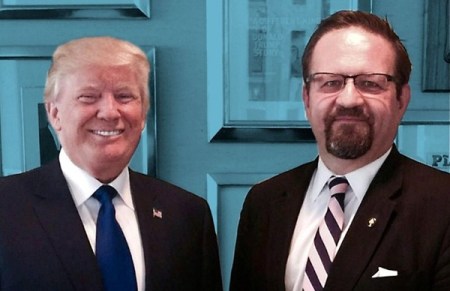

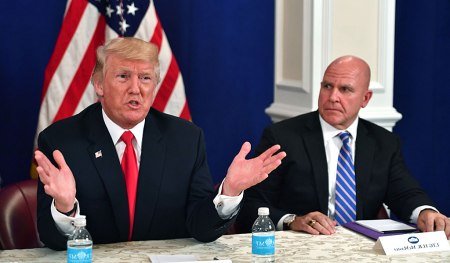
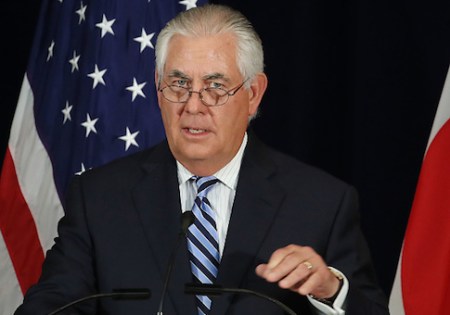




 anneinpt
 artaxes
 danmillerinpanama
 davidking1530
 Peter Hofman
 Joseph Wouk
 Peter
Peter Louisiana Steve
 WarSclerotic
Recent Comments