Posted tagged ‘Taliban’

Secret Cables Link Pakistan Intel Org to Deadly Attack on CIA

April 17, 2016

Secret Cables Link Pakistan Intel Org to Deadly Attack on CIA, Clarion Project, April 17, 2016

Jennifer-Ehle-Jennifer-Lynne-Matthew-Zero-Dark-Thirty-HPJennifer Ehle plays Jennifer Lynne Matthew in the film Zero Dark Thirty about the killing of Osama Bin Laden, head of Al Qaeda. Matthews, a mother of three was described as “one of the CIA’s top experts on al-Qaeda.” She was head of Camp Chapman and killed in the attack on the base.

Pakistan’s intelligence agency paid a Taliban-affiliated terror group in Afghanistan to perpetrate one of the deadliest attacks on the CIA in the agency’s history, according to inferences made in recently-declassified U.S. government cables and documents.

On December 30, 2009, a Jordanian suicide bomber blew himself up in Camp Chapman in Khost, Afghanistan, located near the border with Pakistan, killing seven CIA employees. The bomber, a Jordanian doctor and double agent, tricked the Americans, telling them he would lead them to Ayman al-Zawahri, now head of al-Qaeda and, at the time, second in command.

A document dated January 11, 2010 , issued less than two weeks after the bombing, reports how the head of the Haqqani network, a Taliban-allied organization designed as terrorist by the U.S., met twice with senior officials of Pakistan’s intelligence agency (the Inter-Services Intelligence or ISI) the month of the bombing.

During the first meeting, funding for “operations in Khowst [Khost] province” were discussed. “Funds were later provided to tribal elders in Khowst province for their support of the Haqqani network,” according to the cable.

At the second meeting, ISI officials gave “direction to the Haqqanis to expedite attack preparations and lethality in Afghanistan.”

Although heavily redacted, a cable issued the following month specified the head of the Haqqani network as well as another individual were given $200,000 “to enable the attack on Chapman.” The cable specifically mentions a number of individuals involved in the operation, including an Afghan border commander who was given money “to enable a suicide mission by an unnamed Jordanian national.”

The Jordanian mentioned is assumed to be the suicide bomber, Humam al-Balawi, whom the CIA had cultivated as an al-Qaeda informant. Codenamed “Wolf,” al-Balawi turned out to be a double agent, perpetrating the deadliest attack against the CIA in the 15-year history of the war in Afghanistan.

Although each document states, “This is an information report not finally evaluated intelligence,” Admiral  Mike Mullen (former chairman of the Joint Chiefs of Staff) terms the Haqqani network a “veritable arm” of Pakistan’s intelligence agency. The U.S. has long-documented the connection between the ISI and the Haqqani terrorist organization.

The documents were the first public disclosure connecting the attack on Camp Chapman to the Pakistani ISI. They were released in connection with a Freedom of Information Act request. The U.S. had previously blamed al-Qaeda for the attack.

Easter Greetings From the Taliban

March 28, 2016

Easter Greetings From the Taliban, Power LineJohn Hinderaker, March 27, 2016

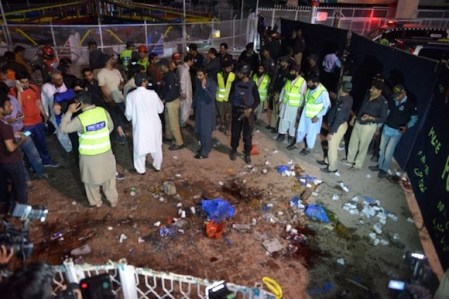
In Lahore, Pakistan, a Muslim associated with the Taliban bombed a park where Christians were celebrating Easter, murdering at least 69, mostly women and children, while injuring more than 300 more. A spokesman for the terrorist group explained, “Members of the Christian community who were celebrating Easter today were our prime target.”

Lahore83

President Obama, meanwhile, warns us against “stigmatizing” Muslims. (To be fair, his precise reference was to Muslim-Americans, although the context was the Brussels bombings.) Actually, you and I have no ability to stigmatize Muslims. The problem is that a great many Muslims are stigmatizing themselves, by committing terrorist acts, by applauding terrorist acts and supporting terrorists, and by failing to take action against terrorists and terrorist groups. President Obama demands that we maintain the absurd fiction that Islamic terrorism has nothing to do with Islam, on the theory that pretending will make it so. Unfortunately, it won’t.

Exclusive: Whistleblowers Warned Top Spy About Skewed ISIS Intel

February 17, 2016

Exclusive: Whistleblowers Warned Top Spy About Skewed ISIS Intel It wasn’t just the generals who were warned that ISIS intelligence assessments were overly rosy. The office of the director of national intelligence knew, too.

Source: Exclusive: Whistleblowers Warned Top Spy About Skewed ISIS Intel – The Daily Beast

U.S. military analysts told the nation’s top intelligence official that their reports on ISIS were skewed and manipulated by their bosses, The Daily Beast has learned. The result: an overly optimistic account of the campaign against the terror group.

The complaints, lodged by analysts at U.S. Central Command in 2015, are separate from allegations that analysts made to the Defense Department inspector general, who is now investigating “whether there was any falsification, distortion, delay, suppression, or improper modification of intelligence information” by the senior officials that run CENTCOM’s intelligence group.

This second set of accusations, which have not been previously reported, were made to the Office of the Director of National Intelligence (ODNI). They show that the officials charged with overseeing all U.S. intelligence activities were aware, through their own channels, of potential problems with the integrity of information on ISIS, some of which made its way to President Obama.

The analysts have said that they believe their reports were altered for political reasons, namely to adhere to Obama administration officials’ public statements that the U.S.-led campaign against ISIS is making progress and has put a dent in the group’s financing and operations.

Administration officials have denied that the intelligence reports came under political pressure. But Republican lawmakers and presidential candidates have questioned whether the public is being given an honest account of what effect hundreds of U.S. airstrikes have had on ISIS. The allegations of skewed intelligence have come up in several congressional hearings and figured in an early Republican presidential debate.

The analysts made their claims to the ODNI in response to written surveys that were sent out by its Analytic Integrity and Standards Group last year, as part of a “periodic assessment” to take the pulse of the intelligence community, according to U.S. officials.

Director of National Intelligence James Clapper was asked about the defense inspector general investigation in September during a congressional oversight hearing. At the time, he gave no indication that his own office was aware through its own channels of the analysts’ accusations.

“It is an almost sacred writ… in the intelligence profession never to politicize intelligence. I don’t engage in it. I never have and I don’t condone it when it’s identified,” Clapper told the Senate Armed Services Committee.

But Clapper sought to downplay what he called “media hyperbole” about the substance of the analysts’ complaints. “I think it’s best that we all await the outcome of the DOD I.G. investigation to determine whether and to what extent there was any politicization of intelligence at CENTCOM,” Clapper said.

A spokesperson for the defense inspector general declined to comment for this story.

In the survey from the ODNI, the analysts accused their superiors of editing or rejecting reports that cast doubt on whether the U.S.-led campaign against ISIS was dealing a crippling blow, and they accused senior CENTCOM intelligence officials of attempting to delete emails and other reports that provided evidence of their manipulations, according to a source familiar with the survey who spoke on condition of anonymity.

CENTCOM said no emails were deleted.

“It is important to allow the DoD IG investigation to run its course. However, I can tell you that neither Maj. Gen. Grove nor Mr Ryckman deleted any e-mails associated with the investigation. In fact, as a matter of CENTCOM policy, all senior leader e-mails are kept in storage for record keeping purposes. CENTCOM continues to cooperate fully with the DOD IG investigation,” Air Force Col. Patrick Ryder said in a statement to the Daily Beast.

It’s not clear when the survey responses were reviewed by ODNI officials, but they were included in a report that was finished by December 2015.

The ODNI chose not to investigate the claims of impropriety on its own because the Defense Department’s inspector general had already launched an investigation, sources familiar with the matter told The Daily Beast. That investigation, which hasn’t been completed, began after more than 50 CENTCOM analysts filed complaints with the Pentagon watchdog in July 2015.

U.S. Central Command, based in Tampa, Florida, is responsible for U.S. military operations across the Middle East, from Egypt to Afghanistan. There are more than 1,000 analysts assigned to assessing intelligence and other data on the security situation of the region. They include troops and civilian intelligence analysts who work for the nation’s various intelligence agencies.

The ODNI oversees all intelligence agencies, military and civilian, and is ultimately responsible for ensuring that intelligence reports are free from political influence and bias and that they’re based on sound, verifiable sources of information.

The ODNI standards group was set up by law following the botched intelligence community analysis of Iraq’s weapons of mass destruction program in 2002 (PDF), which suppressed dissenting views that doubted Saddam Hussein had a viable chemical weapons program. That report, which has been effectively disavowed, was seized upon by senior Bush administration officials to make a public case for invading the country.

The standards group “conducts regular periodic assessments of finished analytic products” and reviews them “for timeliness, objectivity and independence from political considerations, and ensures that the products are based upon all sources of available intelligence and employ the standards of proper analytic tradecraft,” Timothy Barrett, a spokesperson for the ODNI, told The Daily Beast in a written statement. “Intelligence analysis from CENTCOM was reviewed by [the group] in 2015 as a part of the periodic assessment, and the information is available to Congress and the [Defense Department inspector general],” Barrett said.

It wasn’t clear whether the congressional committees that oversee intelligence activities had seen the comments from CENTCOM analysts. According to one source familiar with the document, it has been classified at the “secret” level and cannot be widely shared with lawmakers beyond the two intelligence committees.

A task force composed of staff from three House committees—on intelligence, armed services, and appropriations—is investigating the analysts’ allegations and whether they reflect any systemic problems with intelligence analysis.

It remains unclear whether the analysts’ complaints to the ODNI led to any corrective actions or halted what they saw as an inappropriate practice of selectively altering reports. Three sources who are familiar with the defense inspector general’s investigation told The Daily Beast that the watchdog had conducted interviews with analysts at CENTCOM’s headquarters in Tampa, and had reviewed documents allegedly showing that senior officials, including Maj. Gen. Steven Grove, the command’s intelligence director, and his civilian deputy, Gregory Ryckman, had deleted emails and files from computer systems before the inspector general could examine them.

“The cancer was within the senior level of the intelligence command,” one defense official told The Daily Beast. The pushback by the analysts has been described as a “revolt.”

One person who knows the contents of the written complaint they sent to the defense inspector general said it used the word “Stalinist” to describe the tone set by officials overseeing CENTCOM’s analysis.

Two officials at CENTCOM told The Daily Beast they were not aware of the ODNI’s efforts or the survey that analysts had completed. They said the biggest changes to intelligence practices came in the days after analysts filed their complaint with the inspector general. Army Gen. Lloyd Austin, the commander of CENTCOM, urged analysts to speak up if they felt their assessments were being altered.

In the wake of the allegations of politicizing intelligence, some of the people who receive CENTCOM reports told The Daily Beast that they read them more skeptically.

But the reliability of CENTCOM’s analysis has only become more important since the accusations first emerged. In Afghanistan, the Taliban is resurgent and both ISIS and al Qaeda are trying to expand their footprint. In Iraq, U.S. and Iraqi forces pushed ISIS out of Ramadi, raising hopes that the two nations could launch a similar campaign in Iraq’s second-biggest city, Mosul, which serves as ISIS’s Iraqi capital.

In Yemen, ISIS is weaker but al Qaeda is stronger. And in Syria, Russian strikes are helping forces loyal to Syrian President Bashar al-Assad reclaim territory in the city of Aleppo. Should that city fall squarely to the regime, Syria would devolve into a war largely between the regime and ISIS, leaving the Western world with no good outcomes for the fate of that state.

Were that to happen, unvarnished analysis on ISIS and the state of the war would be more important than ever.

Top U.S. General: ‘I Do Not Have Authority’ to Offensively Attack Taliban

February 2, 2016

Top U.S. General: ‘I Do Not Have Authority’ to Offensively Attack Taliban, BreitbartEdwin Mora, February 2, 2016

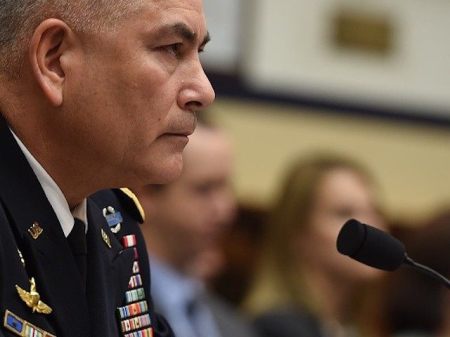
Top Gen in AfghanistanJIM WATSON/AFP/Getty Images

WASHINGTON, D.C. — The U.S. military, since President Obama declared that American troops had ceased their combat mission at the end of 2014, has only been able to attack the Taliban from a defensive position, the top commander of American and NATO forces in Afghanistan told lawmakers.

“I have the authority to protect our coalition members against any insurgency — Haqqani [Network], Taliban, al Qaeda — if they’re posing as a threat to our coalition forces,”testified the commander, Gen. John Campbell, before the House Armed Services Committee.

The general’s comments came in response to Rep. Jim Bridenstine (R-OK)asking if he had the authority to attack the Taliban, which has stepped up attacks since the end of 2014 and has been linked to the deteriorating security conditions in the Afghanistan.

“If the Taliban are attacking coalition forces, then I have everything I need to do that,” responded Gen. Campbell, who is expected to retire soon. “To attack the Taliban just because they’re Taliban, I do not have that authority.”

“It is astonishing that we have an authority to go after the Taliban and the president is preventing us from doing that,” proclaimed Bridenstine.

The Oklahoma Republican argued that the Authorization for Use of Military Force (AUMF) 2001, passed by Congress and signed into law by the U.S. president at the time, grants the top commander the authority to use the necessary force against the Taliban.

Rep. Bridenstine questioned, “Yet, the president, it seems, is saying you can’t attack the Taliban even though they were responsible for September 11?”

“What I think is we adjusted our mission in 2015,” explained Campbell. “We went away from combat operations and we worked with the Afghans to build their capabilities to go after the Taliban.”

President Obama declared an end to the U.S. combat mission in December 2014, marking the beginning of the train, assist, and advise (TAA) role for the American troops on January 1, 2015.

While testifying, Gen. Campbell noted that with only 9,800 U.S. service members in Afghanistan, carrying out the TAA mission is difficult.

“Again if the Taliban are attacking or pose a threat to coalition forces, I have everything I need to provide that force protection,” reiterated Campbell. “To go after the Taliban because they’re Taliban, I don’t do that sir.”

At least 21 American service members have been killed and another 79 wounded since President Obama adjusted the mission so that U.S. troops are unable to attack the Taliban from an offensive position. The majority of the total 2,227 American military deaths and 20,109 injuries since the war began in October 2001 have taken place under President Obama’s watch.

Rep. Bridenstine quoted the Authorization for Use of Military Force (AUMF) 2001.

“That the President is authorized to use all necessary and appropriate force against those nations, organizations, or persons he determines planned, authorized, committed, or aided the terrorist attacks that occurred on September 11, 2001, or harbored such organizations or persons, in order to prevent any future acts of international terrorism against the United States by such nations, organizations or persons,” states the AUMF.

The Taliban has been accused of providing safe haven to al Qaeda members involved in orchestrating the September 11, 2001 attacks on the U.S. homeland, including the late jihadist leader Osama bin Laden.

President Obama is currently expected to reduce the U.S. military presence in Afghanistan to 5,500 troops by the time he left office in 2017.

“We’ll have a very limited ability to do TAA with 5,500,” said Gen. Campbell, who signaled that the U.S. military will stay in Afghanistan for years beyond 2017.

Obama has nominated Army Lt. Gen. John Nicholson, Jr., to replace the outgoing commander.

President Obama has been hesitant to call the Taliban a terrorist group.

A year of Taliban gains shows that ‘we haven’t delivered,’ top Afghan official says

December 28, 2015

A year of Taliban gains shows that ‘we haven’t delivered,’ top Afghan official says, Washington PostSudarsan Raghavan, December 27, 2015

As the fighting intensifies, the stakes are growing higher for the United States in its longest war. “I will not allow Helmand to fall,” Campbell told the Afghan officials in the recent meeting with the Afghan National Security Council. “But I can’t make you fight. You’ve got to want it more than we do.”

******************************

As the Afghan convoy entered the battered village, Taliban fighters opened fire. U.S.-trained Afghan policemen poured out of their Humvees and began wildly shooting their AK-47 rifles in every direction.

“The enemy is firing one bullet, and you are responding with dozens!” their commander, Col. Khalil Jawad, screamed into his radio in frustration. “Aim, then fire!”

A minute later, the militants melted away. On this day in early December in the southern province of Helmand, they had delivered their message: The Taliban is back, its fighters showing a battle discipline and initiative far superior to the Afghan security forces trained and equipped by the United States.

In private, top Afghan and American officials have begun to voice increasingly grim assessments of the resurgent Taliban threat, most notably in a previously undisclosed transcript of a late-October meeting of the Afghan National Security Council.

“We have not met the people’s expectations. We haven’t delivered,” Abdullah Abdullah, the country’s chief executive, told the high-level gathering. “Our forces lack discipline. They lack rotation opportunities. We haven’t taken care of our own policemen and soldiers. They continue to absorb enormous casualties.”

[Please refer to map here.]

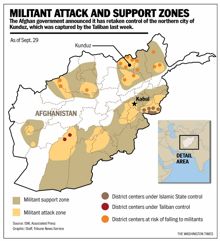
With control of — or a significant presence in — roughly 30 percent of districts across the nation, according to Western and Afghan officials, the Taliban now holds more territory than in any year since 2001, when the puritanical Islamists were ousted from power after the 9/11 attacks. For now, the top American and Afghan priority is preventing Helmand, largely secured by U.S. Marines and British forces in 2012, from again falling to the insurgency.

As of last month, about 7,000 members of the Afghan security forces had been killed this year, with 12,000 injured, a 26 percent increase over the total number of dead and wounded in all of 2014, said a Western official with access to the most recent NATO statistics. Attrition rates are soaring. Deserters and injured Afghan soldiers say they are fighting a more sophisticated and well-armed insurgency than they have seen in years.

As of last month, about 7,000 members of the Afghan security forces had been killed this year, with 12,000 injured, a 26 percent increase over the total number of dead and wounded in all of 2014, said a Western official with access to the most recent NATO statistics. Attrition rates are soaring. Deserters and injured Afghan soldiers say they are fighting a more sophisticated and well-armed insurgency than they have seen in years.

As Afghan security forces struggle, U.S. Special Operations troops are increasingly being deployed into harm’s way to assist their Afghan counterparts. Since Nov. 4, four members of the U.S.-led coalition have been wounded in Helmand, said U.S. Army Col. Michael Lawhorn, a military spokesman. Officially, U.S. military personnel have a mandate only “to train, advise and assist” Afghan forces.

In the confidential October meeting, Gen. John F. Campbell, the commander of U.S. and allied forces in Afghanistan, told his Afghan counterparts that he was as guilty as they were of “just putting our finger in the dike in Helmand.”

But he was highly critical of Afghan security officials for “not managing” their forces in a way that ensured they got enough training, and for allowing “breakdowns in discipline” in the ranks. “The Taliban are not 10 feet tall,” he said. “You have much more equipment than they do. You’re better trained. It’s all about leadership and accountability.”

Campbell vowed “to fix Helmand.”

“I will use more of my SOF and enablers to buy you more space and time,” he said, referring to Special Operations forces. A senior U.S. defense official, speaking on the condition of anonymity because of military rules, said Campbell’s comments represented “an attempt to encourage the Afghans to take action in Helmand province.”

Progress unraveling

Helmand was a key focus in a major American offensive launched in 2010, after President Obama dispatched a “surge” of 30,000 troops to Afghanistan. Marja was the first place Marines launched operations, and by the end of the surge, in late 2012, the Taliban had been subdued in much of its southern heartland.

Now, the fresh concerns over Helmand arrive at the end of a year in which the Taliban and other insurgent groups, including the Islamic State, have steadily advanced, particularly in the north. They have taken advantage of the end of the U.S. and NATO combat mission, which has left a military and political vacuum, forcing Obama to extend the U.S. role by keeping at least 5,500 U.S. troops here after he leaves office.

A Pakistani military operation has also flushed hundreds of well-trained foreign fighters into Afghanistan, bolstering the Taliban and the Islamic State.

Meanwhile, the government is grappling with its own problems. The economy is crippled; high unemployment and corruption remain entrenched, breeding public resentment. Political infighting, policy disputes and leadership woes have deepened inside the administration of President Ashraf Ghani, who shares power with Abdullah, the chief executive. The cabinet remains incomplete, with no defense minister as the security issues become more serious.

The gains by the Taliban have come amid internal divisions and a leadership crisis triggered by the surprise announcement in the summer that its leader, Mohammad Omar, had been dead for more than two years. The contest for power and territory among Taliban factions, rather than weakening the movement, has spawned more uncertainty and violence.

The group’s infighting has blocked efforts by Ghani to bring the Taliban to peace talks. The insurgents’ new leader, Akhtar Mohammad Mansour, appears determined to prove his mettle and strengthen the Taliban’s bargaining position by escalating attacks, Western diplomats and analysts said. In September, the Taliban briefly seized Kunduz, the first city to fall since the demise of its regime, prompting the U.S. military to dispatch Special Operations troops and stage airstrikes to help the Afghan security forces retake control.

Now, the insurgents are on the doorsteps of several provincial capitals, applying more pressure on urban areas than in any year of the conflict. The clashes in Helmand have reflected the Taliban strategy that led to the takeover of Kunduz — seizing surrounding districts before moving in on the provincial capital. Already, the Taliban are in the enclave of Ba­baji, within the borders of Helmand’s capital, Lashkar Gah.

Helmand, which lies along the Pakistani border, is the source of much of the country’s opium, providing lucrative funding for the insurgents, who also collect “taxes” from the marble mining business. The province is home to the Kajaki Dam, which provides electricity to Helmand and to neighboring Kandahar, the cradle of the Taliban. In some districts, electricity bills are paid to the Taliban.

In the Afghan National Security Council meeting, Rahmatullah Nabil, the nation’s intelligence chief, described the province as “the biggest recruiting tool for the Taliban” and its “primary source of revenue.” Nabil resigned Dec. 10 to protest Ghani’s peace overtures to Pakistan, which is viewed with suspicion by most Afghans for its backing of the Taliban.

Losing control of Helmand

The 21-mile-long road from Lashkar Gah to Marja is peppered with craters from bombs planted by the Taliban. Stores are shuttered; villages are silent. The residents have fled.

A mile from a civil-order police base, built by U.S. Marines for $17 million, a charred, mangled Humvee lies in the middle of the highway. A rocket-propelled grenade tore into it, and the Taliban later set it afire. On a recent day, the base was as far as anyone could go, at least by road: Less than a mile ahead, the Taliban had buried more mines.

“They have destroyed bridges. They have burned our houses,” Ghul Mawla Malang, a tribal elder who leads Marja’s Afghan Local Police (ALP), a U.S.-funded pro-government militia, told top police commanders in a meeting at the base.

A few minutes later, the Taliban fired a few rounds toward the base. The senior officials cut short their visit and left in their Humvees.

If there was one province in Afghanistan that the Taliban should have found impenetrable, it was Helmand. The Afghan army has its entire215th Corps based here, numbering more than 18,000 soldiers. There are also thousands of Afghan police officers. Yet a few hundred Taliban fighters managed to overrun parts of Marja and other districts. Soldiers and police officers fled with little resistance or surrendered to the insurgents.

In Babaji, nine police officers including Abdul Qadim Hemat were unprepared last month when the Taliban fighters attacked their outpost. They were running out of ammunition. And reinforcements they had requested never turned up. “I watched seven comrades killed in front of me,” recalled Hemat, who soon fled along with the remaining officer. Both then deserted.

“We were surrounded, but we didn’t get any help,” Hemat said. “I will not shoot one bullet for the government again.”

In parts of Marja, villagers pine for U.S. troops — and the British forces who were once based here — to return.

“When they were here, Marja was as peaceful as this city,” said Ahmed Jan, who was bringing his 13-year-old nephew to a hospital in Lashkar Gah. A bullet had struck the boy in their village during fighting. “Now, the Taliban are like the government in my village. They drive police vehicles and Humvees, and they have raised their white flag over houses.”

A well-equipped enemy

In an interview, Gen. Mohammed Moeen Faqir, the commander of the 215th Corps, said that “only half of a percent” of his force may have deserted and that new recruits were filling the void. He noted that the police and ALP forces in Helmand were also under his command and that “whenever they needed reinforcements, I sent them.”

But the confidential transcript of the minutes from the National Security Council meeting presents a grimmer picture.

The Afghan army’s chief of staff, Gen. Qadam Shah Shaheem, said that limited reinforcements and new recruits couldn’t make up for force attrition in Helmand, according to the transcript, which was provided to The Washington Post by an official concerned by the insecurity in Helmand.

Some 40 percent of Afghan army vehicles in Helmand are broken, Shaheem said. He described a leadership crisis within the security forces, where “clashing personalities exist between the security pillars,” according to the transcript.

The morale of the security forces was low, said Nabil, the intelligence chief, and some soldiers had complained that they had not been home in two years. Junior commanders, he added, were “openly defying their superiors.” Gen. Mohammad Salem Ehsas, the top ALP commander, said that troops were tired and that there was poor coordination among the various security organs.

Campbell said that only about half the troop positions in the 215th Corps were manned. Western and Afghan officials said that was largely because of desertions, high casualty rates and a lack of new recruits.

“The blame game must stop now,” Campbell said. “If I hear one more policeman complain about the army or vice versa, I will pull my advisers immediately. It’s over. You’re Afghans first. Work together.”

Soldiers and police officers on the front lines say they face an enemy that is well trained and equipped with heavy artillery and machine guns, rockets and mortars — and a seemingly endless supply of ammunition. Taliban snipers now have night-vision scopes on their rifles. And as they have overrun bases, the militants have seized an arsenal of U.S. weaponry provided to the Afghans.

Nabil said the insurgents have night-vision goggles and have captured more than 45 Humvees in Helmand. They also have Russian-made ZSU antiaircraft guns with night capability, an abundant supply of mortars and a communications network that is difficult to infiltrate.

Stakes grow higher

U.S. Special Operations troops arrived in early November at an empty school in Chanjar, a front line about 15 miles west of the provincial capital. The walls of the compound bore the impact of shells the size of baseballs. A group of soldiers and police officers was stationed there. Taliban militants were in houses less than 20 yards away.

“The Americans told us that they wanted to push the Taliban back,” recalled Sgt. Abdul Mohamad. “They were here to give coordinates for an airstrike.”

But the Taliban fired a mortar, the men said, wounding one of the Americans. The Americans quickly left the area, in Nad Ali district, with their injured comrade.

Lawhorn, the U.S. military spokesman, confirmed that a U.S. coalition member was injured in the district Nov. 4.

Brig. Gen. Wilson Shoffner, the U.S. military’s top spokesman, said in an interview that U.S. troops were adhering to their limited mandate of “train, advise and assist” and that their Afghan counterparts were taking the lead.

But Afghans, including senior military officials, no longer even pretend that they can fight the Taliban effectively on their own.

“When the foreigners were here, we had plenty of facilities and equipment,” said 1st Lt. Naseer Ahmad Sahel, 30, a civil-order police company commander who was wounded last month in a firefight in Marja. “There were 100 cameras overlooking Marja alone.”

Faqir, the commander of the 215th Corps, said, “We don’t have the air support that we should have.”

As the fighting intensifies, the stakes are growing higher for the United States in its longest war. “I will not allow Helmand to fall,” Campbell told the Afghan officials in the recent meeting with the Afghan National Security Council. “But I can’t make you fight. You’ve got to want it more than we do.”

US continues to push for negotiations with Taliban despite direct ties to al Qaeda

December 17, 2015

US continues to push for negotiations with Taliban despite direct ties to al Qaeda, Long War Journal, December 17, 2015

siraj-haqqani-wanted-poster1-e1438370266398-1024x432Images of Siraj Haqqani, one of the Taliban’s two deputy emirs, from a US government wanted poster.

The US government and military continue to seek a negotiated settlement with the Afghan Taliban despite the group’s continuing support for al Qaeda and the increased leadership role the Haqqani Network plays in the Afghan insurgency.

The Department of Defense asserts in its biannual Enhancing Security and Stability in Afghanistan report, released earlier this week, that “reconciliation and a political settlement with the Taliban” is a key part of its strategy to end the conflict in Afghanistan.

“The U.S. and Afghan governments agree that the best way to ensure lasting peace and security in Afghanistan is reconciliation and a political settlement with the Taliban,” the report says in its very first section, titled US Strategy in Afghanistan.

The report then states that to achieve a political settlement, the Taliban must take the very steps the group has refused for 15 years: denounce al Qaeda and submit to Afghanistan’s constitution.

“Success of an Afghan-led peace process will require the Taliban and other armed opposition groups to end violence, break ties with international terrorist groups, and accept Afghanistan’s constitution, including its protections for the rights of women and under-represented groups.”

The Pentagon report continues to advocate for reconciliation with the Taliban despite the fact that al Qaeda’s emir, Ayman al Zawahiri, swore and oath of allegiance to the new leader of the Taliban, Mullah Akhtar Mohammad Mansour, after he was publicly named successor to Mullah Omar over the summer. Mansour accepted Zawahiri’s oath just days after it was given.

Shockingly, the Pentagon report made no mention of Zawahiri’s oath and Mansour’s acceptance in its 90-page report. The report did note that the emir of the Islamic Movement of Uzbekistan swore allegiance to the Islamic State’s leader, Abu Bakr al Baghdadi.

The Pentagon also continues to press for negotiations despite the fact that Sirajuddin Haqqani, the operational commander of the Haqqani Network – a powerful Taliban subgroup that is closely tied to al Qaeda and backed by Pakistan’s military and intelligence establishment – was appointed as one of Mansour’s two deputies. Siraj is effectively the Taliban’s military commander. The US military does recognize that Siraj’s “elevation” in the Taliban leadership is problematic.

“The elevation of Haqqani Network leader Siraj Haqqani as Taliban leader Mullah Mansour’s deputy signals that the Haqqani Network will remain a critical and lethal component of the overall Taliban-led insurgency,” the report states.

“Of the groups involved in the Taliban-led insurgency, the Haqqani Network remains the greatest threat to U.S., coalition, and Afghan forces and continues to be the most critical enabler of al Qaeda,” the report continues. “Haqqani Network leader Siraj Haqqani’s elevation as Taliban leader Mullah Mansour’s deputy has further strengthened the Haqqani Network’s role in the Taliban-led insurgency. The Haqqani Network and affiliated groups share the goals of expelling U.S. and coalition forces, overthrowing the Afghan government, and re-establishing an Islamic Emirate of Afghanistan.”

Siraj’s tight working relationship with al Qaeda has been confirmed by multiple sources. Files recovered in Osama bin Laden’s Abbottabad compound revealed the depth of the collusion. [See LWJ report, The Taliban’s new leadership is allied with al Qaeda.]

Since accepting Zawahiri’s oath of loyalty and appointing Siraj as a top deputy, the Taliban have not backed off from either party. In early September the Taliban released a video that highlighted Siraj’s importance to the group as well as Mansour’s accepting Zawahiri’s pledge. In early September, the Taliban also devoted significant space to al Qaeda leaders and pro-al Qaeda clerics eulogizing its former emir in that month’s edition of Al Sumud, the group’s official magazine.

Satire | US Not Sure Who It’s Fighting In Middle East, Bombs Israel ‘Just To Be Sure’

November 19, 2015

US Not Sure Who It’s Fighting In Middle East, Bombs Israel ‘Just To Be Sure’ Duffel Blog, November 19, 2015

US bombs IsraelUS officials are confident they understand the situation on the ground in Syria. (Duffel Blog photo.)

WASHINGTON, D.C. — Pentagon spokesperson Col. Steve Warren announced US aircraft participating in Operation Inherent Resolve, the code name for the campaign against the Islamic State of Iraq and al-Sham (ISIS), struck targets in Tel Aviv today.

When asked why US warplanes would attack a long-standing ally, Warren explained, “Look, guys, this all makes perfect sense,” pointing to a nebulous PowerPoint slide.

“This was all supposed to be a campaign to topple Bashar al-Asad in Syria, starting with the Arab Spring in 2011. Which, in turn, allowed us to get back at Iran and Russia, both of whom support Syria,” said Warren. “So the CIA considered arming the rebels in Syria, which kind of backfired, and now we have ISIS, a group we thought we had already defeated back when they were al-Qaeda in Iraq.”

Secretary of Defense Ashton Carter further explained, “Sure, we were a little worried when ISIS started running around the Middle East, chopping everyone’s heads off. But fortunately, Iran came to our rescue. Well, in Iraq, that is. We’re still fighting Iran in Yemen.”

Chairman of the Joint Chiefs General Joe Dunford stressed the contributions of America’s coalition partners.

Dunford explained how the US tried to empower allies among the Gulf States to take on ISIS, “which in turn sort of helps us get back at Iran.”

“Unfortunately, most of those states also covertly support ISIS, even though they’re nominally our long-standing allies. Whoops,” said Dunford.

“That’s not to say we don’t have some powerful allies in the region, though,” Dunford explained. “The Kurds have proven to be our greatest allies there, and the Turks are one of our longest-standing NATO allies. Unfortunately, they spend more time fighting each other than ISIS. That old saying, ‘nothing brings people together like a common enemy’ is completely useless here.”

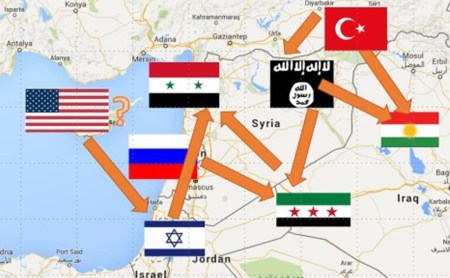
Dunford concluded, “So, you see, ISIS is supported by Arabs, who are opposed by Iranians, who are both opposed and allied with the US, who is sort of allied with Turkey and the Kurds, who are opposed to each other. Since the enemy of my friend is now my enemy, it made sense for the US to bomb Israel, Iran’s bitter adversary.”

Events grew even more complicated in the wake of the deadly terrorist attacks in Paris last Friday. The attacks were reportedly the work of ISIS, who also claimed credit for the bombing of a Russian airliner earlier this month.

“France and Russia have formed an alliance, though in doing so, they automatically caused Germany, Austria-Hungary, and the Ottoman Empire to declare war in return,” said Pentagon Press Secretary Peter Cook. “And, let’s face it, this whole thing really is the fault of the Ottomans when you think about it.”

The briefing then shifted to issues surrounding Afghanistan and Pakistan.

“There, the situation is much more simple,” Cook continued.  “The US is fighting the Taliban by providing billions of dollars in military aid to Pakistan, which is supporting the Taliban. Basically, it’s like that scene in The Empire Strikes Back where Luke Skywalker thinks he’s fighting Darth Vader, only to find his own face in Darth Vader’s helmet. That’s pretty much what we’ve gotten ourselves into.”


Embedded in Northern Afghanistan: The Resurgence of the Taliban

November 6, 2015

Embedded in Northern Afghanistan: The Resurgence of the Taliban, VICE News, November 6, 2015


According to the blurb following the video,

In late September, the Taliban launched an offensive against Kunduz, a provincial capital in northern Afghanistan, capturing key buildings and freeing hundreds of prisoners from the city’s jail.

The offensive sparked a fierce battle between the militants and government forces, supported by US airstrikes. After several days of fighting, Afghan troops recaptured the city, and took down the Taliban’s flag from the central square.

American planes targeted Taliban positions, but at the beginning of October, a hospital run by medical charity Doctors Without Borders (Médecins Sans Frontières) was hit, killing 22 hospital staff and patients, with many seriously injured. The Pentagon later admitted that the strike was a mistake.

Gaining exclusive access to the Taliban, VICE News filmmaker Nagieb Khaja spoke to fighters that briefly took control of Kunduz — the first major city to fall to the group since it was ousted from power in 2001.

Al Qaeda operates in southern Helmand province

October 24, 2015

Al Qaeda operates in southern Helmand province, Long War Journal, October 24, 2015

Foreign jihadists, including members of al Qaeda in the Indian Subcontinent (AQIS), are training at facilities in southern Helmand province in Afghanistan. The camps are used to prepare fighters to conduct attacks throughout Southeast Asia, according to reports reviewed by The Long War Journal. The discovery of the training centers in Baramcha, a town in southern Helmand province, indicates that al Qaeda and affiliated groups are training in multiple regions of Afghanistan.

Earlier this month, the US military raided two significant al Qaeda camps in the neighboring province of Kandahar. One of the facilities was approximately 30 square miles in size, according to a US military spokesman. [See LWJ report, US military strikes large al Qaeda training camps in southern Afghanistan.]

But reporting in the Indian and Pakistani press indicates that the camps in Kandahar are not the only ones where al Qaeda is training inside Afghanistan. These same reports indicate that al Qaeda-linked groups, such as the Indian Muhajideen and Laskhar-e-Jhangvi, are also training in the district of Dishu in Baramcha.

The training facilities in Baramcha are likely tied to al Qaeda’s relocation from northern Pakistan into Afghanistan.

AQIS, which was established in September 2014, is the newest regional branch of al Qaeda. It is led by Asim Umar, who was groomed by al Qaeda to assume a leadership position, and includes jihadists from several established groups in the region. The earliest plots conceived by AQIS focused on the Pakistani military and other security forces, as well as American and Indian interests.

Since the beginning of the year, Pakistani authorities have carried out multiple raids against the group. However, according to Pakistani officials, AQIS has relocated a significant portion of its operations into Helmand. The move by AQIS was made in anticipation of the Pakistani military’s Operation Zarb-e-Azb, an offensive that began in June 2014. The offensive has targeted al Qaeda and affiliated jihadist groups, including several from Central Asia. Some of these same organizations have helped fuel the Taliban’s advances in Afghanistan this year.

In April, Pakistani officials announced that they had broken up an AQIS cell in Karachi. However, a senior Pakistani counterterrorism official, Mohammed Arif Hanif, said that the jihadist group was using Helmand as a hub for its operations. “AQIS terrorists are provided assistance in Helmand from where they travel to Chaman, Quetta, Shikarpur and Karachi,” Hanif said, according to Dawn. A young Bengali suicide bomber who had targeted Pakistani Rangers had been traced back to Helmand, according to Pakistani officials. They added that AQIS had “relocated from Waziristan to Helmand province.”

In August, Dawn again reported that the Taliban was “sheltering” al Qaeda in Helmand. “The bond between us and our Taliban brothers is a solid ideological bond. They opted to lose their government and family members just to protect us,” Qari Abu Bakr, who works for As Sahab, al Qaeda’s propaganda arm, was quoted as saying. “There is no question of us moving apart now after going through this war together. Our common enemy does not know what is coming its way,” he added.

Al Qaeda has announced its relocation out of northern Pakistan. Earlier this month, an audio message featuring Hossam Abdul Raouf, a veteran al Qaeda leader who is close to Ayman al Zawahiri, was released online. Al Qaeda has “almost completely vacated Waziristan and Pakistan,” Raouf said in the recording. He explained that the “weight” of al Qaeda has been shifted to Syria and Yemen, because that is where al Qaeda’s efforts are most needed. But it is clear that al Qaeda has relocated senior leaders, including perhaps Raouf himself, to Afghanistan as well.

In July, the US killed Abu Khalil al Sudani, one of Osama bin Laden’s and Ayman al Zawahiri’s closest compatriots, in an airstrike in Paktika province. In October 2014, another veteran al Qaeda commander, Abu Bara al Kuwaiti, perished in a US airstrike in Nangarhar province.

The training facilities in Baramcha are, therefore, almost certainly part of al Qaeda’s broader effort over the past few years to entrench its operations inside Afghanistan once again.

Taliban control Dishu, training camps established

The conditions are ripe for al Qaeda and affiliated groups to train at camps in Baramcha. The Afghan government admitted that the wider Dishu district is under the control of the Taliban, The New York Times reported in June.

In 2014, Pajhwok Afghan News reported, citing Afghan police officials, that Taliban “training camps and hideouts of drug smugglers were operational in [the] Dishu and Khanishin districts” in Helmand.

“[T]he rebels had established training centers in the Baramcha area of Dishu district,” the Afghan news agency said in February of that year.

The Taliban and al Qaeda have used Baramcha to host training facilities because the town is located in the remote southern district and borders Pakistan’s Baluchistan province. The Afghan military and police find it difficult to project power in the area, and jihadists can quickly cross the border into Pakistan if threatened. The town is across the border from the Gerdi Jangal refugee camp, where one of the Taliban’s four regional military shuras is based.

The US military noted in October 2010 that Baramcha was a key node for the Taliban and “foreign fighters,” a term the US military often uses to mean al Qaeda.

“The area is a Taliban command and control area that consists of narcotics trafficking, weapons and ammunition storage, improvised explosive device factories, and foreign fighter training areas,” the now-defunct International Security Assistance Force noted in a press release announcing an operation to clear the Taliban and allied jihadists from the town.

US Marines and Afghan troops ultimately cleared Baramcha, but after US forces withdrew from the area in 2012, it quickly slipped back under the Taliban’s control, and the jihadists’ camps were back in operation.

Jihadists train in Baramcha

The Pakistani and Indian press have identified several jihadists who have passed through Baramcha for training over the past several years.

On Oct. 7, the Islamabad-based Daily Express reported that police captured Saeedullah, “an important member of Al Qaeda in the Indian Subcontinent.” According to police, Saeedullah (AKA Rizwan Mullah, Choti Dunya), who was arrested in Karachi, “confessed that he had received training from Amir Jawad in Baramcha city of Afghanistan.”

In April 2014, The Indian Express reported that two Pakistanis from Karachi, Abdul Waleed Rind and Fahim, were recruited by Riyaz Bhatkal, who was identified as the founder of the Indian Muhajideen. The two Pakistani jihadists, who were captured inside India in March 2014 before they could attack Indian soldiers, attended separate training camps in Baramcha.

“The training routine for Fahim and Waleed, even though they went separately to different camps, was quite similar – a 15-21 day capsule with three days dedicated to assembling and disassembling the AK-47, three days to do the same with 9 mm pistols, two days on grenades and ways to throw them,” The Indian Express reported. “The remaining days were used for physical training and endurance.”

And in August 2015, The Friday Times, a Lahore-based publication, reported that Abdul Kabeer Shakir, a leader in Ahle Sunnat Wal Jamaat (ASWJ), is “providing financial and other assistance” to “assassins” that are targeting Pakistani Shiites. ASWJ is the new name for the radical anti-Shiite Sipah-e-Sahaba Pakistan (SSP), which is closely allied with Lashkar-e-Jhangvi and other Pakistani terrorist groups.

“A source in law enforcement said the people involved in sectarian killings usually received training at a bordering village named Baramcha,” The Friday Times reported.

Islamic State grows in Afghanistan, encroaches on Kabul as U.S. remains ‘passive observer’

October 12, 2015

Islamic State grows in Afghanistan, encroaches on Kabul as U.S. remains ‘passive observer’ Washington TimesRowan Scarborough, October 11, 2015

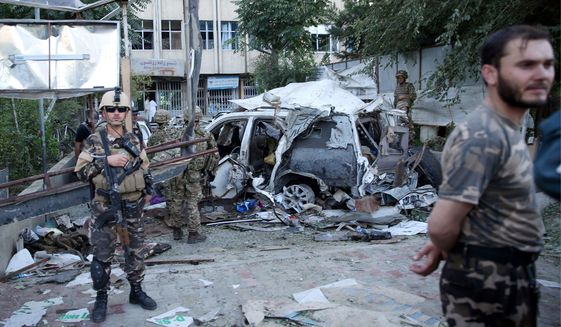
10112015_afghan8201_c0-275-5060-3224_s561x327Photo by: Massoud Hossaini  Afghan security forces and British soldiers inspect the site of a suicide attack in the heart of Kabul, Afghanistan. Loyalists of the Islamic State group are making inroads into Afghanistan, with homegrown militants claiming allegiance to the Islamic State as it controls territory in some parts of the country. (Associated Press)

Afghanistan’s 3,000-member ISIL army is about one-tenth the size of the Afghan Taliban’s forces. But NATO says the Islamic State has reached the next stage of being an emerging threat. If its growth in other regions, such as North Africa, is a gauge, its Afghan component will only expand further as young Muslims are drawn by social media to its ultraviolent ways and Sunni orthodoxy.

************************

The Islamic State is growing at an alarming rate in Afghanistan, within striking distance of the capital, and there does not seem to be a concerted U.S. effort to strike the terrorist army as there is in the Syria-Iraq war theater.

An independent think tank has concluded that the allies are “reacting disjointedly and ineffectively” to the group in Afghanistan and other places outside those two countries.

The Islamic State’s numbers now may reach as high as 3,000 in Afghanistan, mostly in Nangarhar province, less than 50 miles east of Kabul. The emergence presents the NATO-backed elected government there with a fifth deadly enemy in addition to the Taliban, al Qaeda, the Haqqani network and elements of the Pakistani intelligence service.

Globally, the Islamic State, also called ISIL and ISIS, has affiliates in nearly 20 countries.

“It’s like a metastasizing cancer spreading throughout certain parts of the Islamic world,” said James Russell, a former Pentagon official and an instructor at the Naval Postgraduate School in Monterey, California. “We have to hope that the antibodies in these societies can ward off the death, misery and destruction that will come raining down upon them if ISIS takes hold in their communities.”

ISIS_s220x241

Afghanistan’s 3,000-member ISIL army is about one-tenth the size of the Afghan Taliban’s forces. But NATO says the Islamic State has reached the next stage of being an emerging threat. If its growth in other regions, such as North Africa, is a gauge, its Afghan component will only expand further as young Muslims are drawn by social media to its ultraviolent ways and Sunni orthodoxy.

Yet unlike in Syria and Iraq, where a U.S.-led coalition conducts a series of daily airstrikes against the Islamic State, there appears to be no such strategy in Afghanistan, where Afghan government forces now have the lead in all combat operations and request NATO air power on an ad hoc basis.

“What concerns me most is the fact that the United States has become a passive observer rather than the driver of the policy,” said Larry Johnson, a former counterterrorism official at the State Department, commenting on the overall U.S. effort against the Islamic State.

U.S. military spokesmen had no immediate comment on the question of American policy toward the Afghan Islamic State. Army Gen. John Campbell, the allied commander in-country, was asked at congressional hearings last week what triggers action against Islamic State. He answered that the criterion is “force protection.”

After the Syria-Iraq war theater, Islamic State’s emergence near Kabul could be the most troublesome for the U.S., whose troop levels have dropped to less than 10,000, and only a small portion of those forces are dedicated to assist in counterterrorism. The Islamic State has shown it can execute brutal attacks and deploy vehicle bombs to take territory and hold it.

Gen. Campbell said Afghanistan’s security forces lack the leadership and troop numbers to respond to every trouble spot.

Meanwhile, the Islamic State is beginning to flex its terrorism muscle in Afghanistan.

Islamic militant competition

The Institute for the Study of War (ISW) in Washington is tracking the Islamic State’s violent ways in Afghanistan and other countries. It said the Islamic State launched attacks in mid-September against a UNICEF convoy, Afghan government forces, the Afghan Taliban and Shiite civilians. In late September the Islamic State “launched coordinated attacks on multiple Afghan security positions” in Nangarhar, the think tank said.

“The group reportedly also shut down several schools in eastern Afghanistan amid other efforts to assert social control,” the institute said. “ISIS has established robust ground campaigns in Libya, Egypt and Afghanistan.”

The ISW said in the special report “ISIS Global Strategy: A Wargame,” written by counterterrorism analyst Harleen Gambhir, that the Islamic State’s expansion stems from its ability to attract local jihadis.

“The coalition is focused on Iraq and Syria, and it is reacting disjointedly and ineffectively to ISIS’s activities in Libya, Egypt, Afghanistan, and other places,” Ms. Gambhir writes. “ISW’s war game demonstrated how this failure enables ISIS to strategically outpace the U.S. and its allies.”

U.S. intelligence agencies are still trying to digest the meaning of Islamic State setting up shop in South Asia.

Nicholas Rasmussen, director of the National Counterterrorism Center, speaks of an “increasing competition between extremist actors” in the Afghanistan-Pakistan region involving al Qaeda, the Taliban and the Islamic State.

“So that’s an additional factor that we’re still trying to understand,” Mr. Rasmussen told the Combating Terrorism Center at West Point in remarks published last month. He characterized the burgeoning competition as an “interesting feature of the South Asia landscape.”

Gen. Campbell, the U.S. commander closest to Islamic State terrorism in Afghanistan, said foreign fighters are arriving to join the Islamic State as they “try to bring in some sort of funding stream to build a place in Nangarhar.”

He said the emergence of Islamic State “has further complicated the theater landscape and potentially expanded the conflict.”

Mr. Johnson, the former counterterrorism official, said the leaders of Middle East and South Asia countries “concede that the U.S. has no appetite for being engaged, especially militarily in the region.”

The struggle between two radical Sunni groups, the Taliban and the Islamic State, may be sparked in part by the Taliban’s willingness to do business with Iran, a Shiite Islamic country.

“The Taliban have always been far more pragmatic in dealing with Iran, and the religious difference is not a critical factor,” Mr. Johnson said. “Not so with the ISIS crowd. For them, theology takes precedence, and Iran is an apostate state that must be destroyed.”