Posted tagged ‘Syria’

French special forces on ground in Syria

June 9, 2016

French special forces on ground in Syria – Defense Ministry

official Published time: 9 Jun, 2016 05:21 Edited time: 9 Jun, 2016 10:19

Source: French special forces on ground in Syria – Defense Ministry official — RT News

France has deployed its special forces on the ground in northern Syria to advise rebels and help them fight Islamic State, a French Defense Ministry official has revealed to AFP.

The offensive at Manbij is clearly being backed by a certain number of states including France. It’s the usual support – it’s advisory,” the official told the agency.

Until now, France admitted the presence of some 150 special forces in the region, all of them in Iraqi Kurdistan.

Manbij is a key strategic town under Islamic State (IS, formerly ISIS/ISIL) control in northern Syria. It’s a waypoint between the Turkish border and the IS-held Raqqa.

READ MORE: British Brimstone missiles in Syria are yet to kill any terrorists, MoD reveals

The latest comment isn’t the first hint at France’s presence in Syria: last Friday, Defense Minister Jean-Yves Le Drian told the Public Senat TV channel that Paris was “providing support through weapons supplies, air presence and advice.”

France isn’t the only Western country in Syria: about two weeks ago, footage emerged of US special forces fighting alongside Kurdish militia near the city of Raqqa, a month after Obama said some 250 troops would be deployed in the region.

https://youtu.be/uBET-CJsdMM

Russia wrapped up its mission in Syria in mid-March, when it withdrew the “main part” of its troops from the country. However, it continues to help Syrian government forces in their fight against IS and maintains a reconciliation center at the Khmeimim airbase.

Netanyahu: ‘No Syrian launchpad against Israel’

June 8, 2016

Netanyahu vows: ‘Syria won’t be a launchpad against Israel’ Talking to Moscow’s Jewish leaders, PM admits Israeli activity in Syria, says he talked with Putin about new regional ‘arrangement.’

By Nitsan Keidar

First Publish: 6/8/2016, 2:57 PM

Source: Netanyahu: ‘No Syrian launchpad against Israel’ – Defense/Security – News – Arutz Sheva

After meeting with Russian President Vladimir Putin on Tuesday, Prime Minister Binyamin Netanyahu on Wednesday held a conference with the leaders of Moscow’s Jewish community where he spoke about Israeli activity in Syria.


The event, which was held during Netanyahu’s official visit to Russia, was attended by around 100 community leaders and businessmen including Russian Chief Rabbi Berel Lazar, Moscow Chief Rabbi Pinchas Goldschmidt and Russian Jewish Federation chief Yuri Kanner.

During the meeting, Netanyahu was asked about Syria and the future of relations with Syrian President Bashar al-Assad, whose regime is being propped up primarily by Russian and Iran.

“You ask about the future of (Israel’s) relations with President Assad? I would ask what is the future of President Assad in general?,” replied Netanyahu, noting on the internecine civil war that has raged since 2011.

“We do not interfere in this issue. We’re making sure that Syria won’t become a launchpad for attacks against Israel.”

He clarified that Israel is ensuring it will not be attacked from Syria by taking occasional action, and said the IDF will strike Syrian and Iranian troops or Hezbollah terrorists and members of other Islamist groups in the region if they pose a threat to the Jewish state.

“There are enough enemies. My policy is to take all necessary steps to prevent attacks, and we act from time to time when the need arises,” he acknowledged.

The statement is one of the few times Netanyahu has admitted Israeli activity over the border.

While Arab reports had long alleged that Israeli jets conducted airstrikes on arms transfers for Iran’s Lebanese terror proxy Hezbollah, Israel has remained tight-lipped on the subject. However, last December Netanyahu acknowledged that Israel is active in Syria.

In his remarks on Wednesday regarding Syria, Netanyahu added that, “I also ordered to build a field hospital that helped thousands of Syrians, babies, children, women, and men, with awful wounds. We are treating them there and at our hospitals. Humanitarian aid and a firm stand on our lines for the security of Israel.”

Noting on the fractured nature of Syria, he said, “I don’t know if it is possible to turn the Syrian omelette back into an egg.”

“The countries around us, Syria among them, some of them have already split apart, and therefore a different arrangement is needed. I spoke with President Putin about this at length, and the important thing is that what replaces them (the countries) doesn’t bring more tragedies and does not endanger our countries.”

While Netanyahu did not elaborate what the “different arrangement” in the Middle East that he spoke with Putin about would consist of, he recently has expressed willingness to hold negotiations with the Palestinian Authority (PA) as well as states such as Egypt in working on a regional peace deal. Details of what such a deal might entail remain unclear.

Netanyahu also noted on the growing ties between Israel and Russia during the meeting, and thanked the Jewish leaders for being instrumental in making that happen.

The UNO, the EU and Daesh schizophrenia

June 7, 2016

The UNO, the EU and Daesh schizophrenia by Thierry Meyssan Intergovernmental organisations are supposed to unite the efforts of member-states in order to achieve results that they could not manage alone. We might therefore conclude that the UNO and the EU are coordinating the fight against Daesh. Instead of which, these two organisations are hindering the forces on the ground and masking state support for international terrorism.

Voltaire Network | Damascus (Syria) | 6 June 2016

Source: The UNO, the EU and Daesh schizophrenia, by Thierry Meyssan

Jeffrey Feltman, the Director of Political Affairs for the UNO, and Federica Mogherini, the High Representative of the EU for Foreign Affairs and Security Policy. Are these senior civil servants working for peace or are they lying for the cause of US imperialism?

If, during the Cold War, research credits for social and political studies were oriented towards the study of «totalitarism» – in other words, the assimilation of Nazism and Stalinism – they were reoriented towards «terrorism» just after the attacks of the 11 September 2001. Suddenly, thousands of experts appeared, all financed in order to justify, a posteriori, the official version of the attacks, the wars in Afghanistan and Iraq, and the proclamation of the Patriot Act.

Thirteen years later, the phenomen repeated itself on the occasion of the proclamation of the Caliphate by Daesh. It was now less a question of fighting a vague terrorist threat than engaging in a war against a genuine though unrecognised state, and anticipating the transfer of arms, money and combatants that it generates.

Two intergovernmental organisations, the UNO and the European Union, have accomplished a colossal job of work defining a strategy for the «prevention of violent extremism» and the fight against Daesh. The General Assembly of the United Nations will examine this work on the 30 June and the 1 July. Obviously, one may fear that the «prevention of violent extremism» may be no more than a justification for the repression of any form of opposition.

When we read the available documents — those (1) of the Secretary General of the UNO [1], (2) the UN Counter-Terrorism Committee (Resolution 1373), (3) the Analytical Support and Sanctions Monitoring Team [2], and (4) the European Union External Action Service [3] — we are overcome with vertigo at what looks less like a battle plan than an elaboration of politically correct rhetoric.

The UNO and the EU base their work exclusively on Western sources which are far removed from the terrain – not only do they never make a single mention of the information transmitted by Iraq, Syria and Russia, but seem to ignore the very existence of such information. And yet it was handed to the Security Council by ambassadors Mohamed Ali Alhakim, Bachar Ja’afari and Vitali Tchourkine. The documents are freely available.

Syria, and to a far lesser degree, Iraq, furnished information concerning the transfer of money, arms and jihadists on a day-to-day basis, while Russia distributed five thematic reports concerning
- 1. the illegal commerce of hydrocarbons [4];
- 2. the recruiting of foreign terrorist combatants [5];
- 3. the trafficking of antiques [6];
- 4. the deliveries of arms and ammunition [7];
- 5. the components intended for the fabrication of improvised explosive devices [8].

All these documents directly implicate Saudi Arabia, Qatar and Turkey. These three states – allies of Washington – have all responded with generalised denials without ever discussing the slightest element of the charges.

Daesh is functional on the four strategic objectives of the United States, namely the fomenting of a civil war between the Sunnis and the Shia in Iraq, the project for the partition of Iraq into three federalised parts, the project for cutting the road linking Iran and Lebanon, and the project for the overthrow of the Syrian Arab Republic. To the point where we might ask ourselves – if Daesh didn’t exist, would Washington have had to invent it?

It would be a mistake to believe that the occulting of the documents mentioned above is the result of anti-Iraqi, anti-Syrian or anti-Russian prejudice. Indeed, the Western sources, both public and private, which support their evidence are also ignored. For example, declassified documents from the U.S. Defense Intelligence Agency [9], or the articles in Jane’s, the favourite magazine of NATO officers [10]. No, the UNO and the EU approach the question of Daesh with one clear and simple a priori – this state popped up quite spontaneously, without any help whatsoever.

The UNO’s blindness is such that its Secretary General, Ban Ki-moon, attributes to the International Coalition led by Washington the victories obtained through the sacrifices made by the Iraqi and Syrian Arab armies, the Lebanese Resistance, as well as the massive engagement of the Russian army.

The «result» of fifteen years of the «war against terror», we are assured, is to have killed more than a million and a half civilians in order to eliminate 65,000 to 90,000 presumed terrorists, and to have moved from an obscure terrorist threat (Al-Qaïda) directly to a terrorist state (Daesh)! After having explained that fifteen member-states of the UNO have «failed» (Failed States) despite years of international aid, we are supposed to believe that within a few months a group of illiterate conscripts has managed, on its own, to create a state and threaten world peace.

Al-Qaïda has moved quietly from the status of «threat» to that of «ally», depending on the situation. It was able to finance the AKP in Turkey [11], help NATO overthrow Mouamar el-Kadhafi in Libya and do a «good job» in Syria, while still being listed by the UNO as a terrorist organisation. No-one has judged it constructive to explain this evolution and this contradiction. In any case, it doesn’t matter any more, since the status of «enemy» is now occupied by Daesh.

Over the last fifteen years, we have watched the Western camp develop its theory about 9/11 and the threat of Al-Qaïda. After the publication of my critisism of this cock and bull fable [12], and despite the fact that terrorist attacks have multiplied, we have seen public opinion begin to doubt the sincerity of their governments, then move gradually away from their official declarations to the point of not believing them at all any more. All this while certain heads of state – in Cuba, Iran [13], and Venezuela – have publicly declared that they are not falling for it.

Given that this time, the opposition point of view is defended from the beginning by numerous states, including two permanent members of the Security Council – Russia and China – are we going to spend the next fifteen years becoming schizophrenic about the «danger of Daesh»?

Translation
Pete Kimberley

[1] “First UN report on ISIL”, “Second UN report on ISIL”, Voltaire Network, 9 February and 31 May 2016.

[2] “Report of the Analytical Support and Sanctions Monitoring Team pursuant to Security Council resolutions 1526 (2004) and 2253 (2015) concerning Islamic State in Iraq and the Levant (ISIL) (Da’esh), Al-Qaida and the Taliban and associated individuals and entities”, March 4th, 2016.

[3] “Towards a comprehensive EU approach to the Syrian crisis”, Voltaire Network, 24 June 2013. “Elements for an EU regional strategy for Syria and Iraq as well as the Da’esh threat” (Confidential leaked document), Voltaire Network, 6 February 2015. “Council conclusions on the EU Regional Strategy for Syria and Iraq as well as the ISIL/Da’esh threat”, Voltaire Network, 16 March 2015. “One year after: the impact of the EU Regional Strategy for Syria, Iraq and against Da’esh” (European External Action Service. Mena Directorate. Working document), Voltaire Network, 10 May 2016. “EU Council conclusions on the EU Regional Strategy for Syria and Iraq as well as the Da’esh threat”, Voltaire Network, 23 May 2016.

[4] “Illegal trading in hydrocarbons by ISIL”, Voltaire Network, 29 January 2016.

[5] “Russian intelligence report on Turkey’s current assistance to Daesh”, Voltaire Network, 18 February 2016.

[6] “Russian Intelligence report on Daesh’s smuggling of antiquities”, Voltaire Network, 8 March 2016.

[7] “Second Russian intelligence report on Turkey’s current assistance to Daesh”, Voltaire Network, 18 March 2016.

[8] “Russian intelligence report on Turkey’s current assistance to Daesh”, Voltaire Network, 17 May 2016.

[9] “The DIA report on jihadists in the Levant” (FOIA document), August 12th, 2012. Download.

[10] « Les États-Unis violent le cessez-le-feu en Syrie et arment Al-Qaïda », Réseau Voltaire, 25 avril 2016. « Qui arme les jihadistes durant le cessez-le-feu ? » (vidéo), par Thierry Meyssan, Télévision nationale syrienne , Réseau Voltaire, 30 avril 2016.

[11] “Erdoğan received Al-Qaeda’s banker in secret”, Translation Alizée Ville; “Al-Qaeda, NATO’s Timeless Tool”, by Thierry Meyssan, Translation Roger Lagassé, Al-Watan (Syria) , Voltaire Network, 6 January 2014.

[12] 9/11, The big lie, Thierry Meyssan, Carnot Publishing, March 2002.

[13] “Statement by Mahmoud Ahmadinejad at 67th UN General Assembly”; “Al-Qaeda blasts Ahmadinejad for his stance on 9/11”, Voltaire Network, 26 September and 2 October 2011.

Russia to give strongest air support to Syrian army in Aleppo area

June 6, 2016

Russia to give strongest air support to Syrian army in Aleppo area – Lavrov

Published time: 6 Jun, 2016 12:32 Edited time: 6 Jun, 2016 12:59

Source: Russia to give strongest air support to Syrian army in Aleppo area – Lavrov — RT News

Igor Kovalenko / Sputnik

“We will decide on how our air forces should act, depending on the situation,” Lavrov said in a media conference following talks with his Finnish counterpart. “This will not be a surprise for the Americans.”

Al-Nusra Front, an al Qaeda offshoot in Syria, went on an offensive in Aleppo last week. The Russian military blamed the US for stalling Russian airstrikes against the terrorist group’s forces in the region. The US said moderate rebel groups mingled with the terrorists in some areas and that Russia should use caution and not strike those groups by mistake.

“We believe there was plenty of time for the ‘normal’ opposition to leave Nusra Front territories since February. Those who didn’t part ways with the terrorists have only themselves to blame,” Lavrov added.

Moscow hopes that the US is not trying to do anything behind Russia’s back, Lavrov said.

“We expect our partners to cooperate with us honestly and not try to use our regular contacts to secretly go with a Plan B, C or D behind our back.”

Russia and the US jointly support a peace process in Syria that aims to produce a transition government approved by both the so-called “moderate rebel” groups and the government of Syria. A truce between all sides who claim to share this goal was established in February, reducing the violence in the war-torn country.

READ MORE: 270 civilians killed in terrorist shelling in Syria as Al-Nusra regroups – Russian MoD

Terrorist groups Al Nusra Front and Islamic State are not part of the process and do not uphold the ceasefire. Russia accuses certain other Islamist militant groups operating in Syria of not being honest and siding with the terrorists, but the US opposes designating those groups as legitimate targets for military attacks, arguing that they have the backing of Saudi Arabia and a place at the negotiating table in Geneva.

The situation is further complicated by the sheer number of armed groups in Syria and the complexity of their allegiances and rivalries, which makes distinguishing terrorists and “moderate rebels” often problematic.

US asks Russia not to target Al-Qaeda branch in Syria

June 4, 2016

US asks Russia not to target Al-Qaeda branch in Syria – Russian FM Lavrov

Published time: 4 Jun, 2016 01:04 Edited time: 4 Jun, 2016 02:48

Source: US asks Russia not to target Al-Qaeda branch in Syria – Russian FM Lavrov — RT News

Washington has asked Moscow not to conduct airstrikes against al-Nusra Front, which is Al-Qaeda’s branch in Syria, for fear that members of the “moderate opposition” could also be hit, Russian Foreign Minister Sergey Lavrov has reported.

“They [the US] are telling us not to hit it [al-Nusra Front], because there are also ‘normal’ opposition groups [on those territories],” Lavrov said in an interview with local Russian media that was published on the Russian Foreign Ministry’s website.

The minister also stressed that “such opposition groups should leave terrorist positions,” adding that “we have long agreed on that.” Russia first set a deadline for the “moderate” opposition to leave territories occupied by al-Nusra Front extremists, but then agreed to give them more time to withdraw.

Read more

© Reuters

In the interview, Lavrov said that Russia believes that taking specific and more effective measures to fight the Islamic State (IS, former ISIS/ISIL) and al-Nusra Front terrorist groups should be the top priority for Russia and the US if the Syrian crisis is to be resolved.

READ MORE: Russian fighter jets destroy ISIS oil facilities close to Turkish border (VIDEO)

“It is important to provide humanitarian access to the settlements blocked by one side or another, to secure the ceasefire and to prevent its violation, as well as to launch the political process… but, as important as these goals are, terrorism is our common threat, and there should be no doubt about that,” he said, adding that, in the meantime, al-Nusra Front has been attempting to merge with other armed opposition groups.

Lavrov also said that the political process in Syria is being held back by radical opposition groups that refuse to come to the negotiating table and set preconditions for peace talks. He added that it is important to set aside these demands and focus on the fight against terrorism.

The minister also emphasized that Russia and the US are involved in a close and intensive dialog on Syria that includes regular telephone calls between Lavrov and his US counterpart, John Kerry, and a video-conference channel set up between the Russian Center for Reconciliation in Syria located at the Khmeimim airbase in Latakia and the US base in the Jordanian capital of Amman, as well as a joint US-Russian center in Geneva.

Lavrov had held a telephone conversation with US Secretary of State John Kerry at the initiative of the US side earlier the same day, the Russian Foreign Ministry said in a statement.

The two ministers discussed “the fight against ISIS and the need to urgently distance the moderate opposition from the Jabhat al-Nusra group, as well as efforts to cut off the flow of weapons and militants coming from abroad to beef up terrorist organizations,” the statement said.

In the meantime, Kerry, who is in Paris, told journalists that he had discussed the upsurge in violence in Syria during the phone call with Lavrov, explaining that the two had worked specifically on “ways to try to strengthen the enforcement and accountability for this cessation,” AP reported.

In the meantime, the US State Department said that Washington has asked Russia to be “more careful” in targeting its airstrikes against al-Nusra Front, as hitting civilians or opposition groups while attacking the jihadists could eventually give more support to the terrorist groups.

“[The US State] Secretary conveyed to Russia and the Assad regime that they need to carefully distinguish between these terrorist groups operating on the ground and those parties to the cessation of hostilities,” US State Department Deputy Spokesman Mark Toner said during a briefing on Friday, adding that the US agrees that IS and al-Nusra Front “pose a real threat to the security on the ground in Syria.”

‘US trying to play both sides to continue Syrian conflict’

Geopolitical analyst Patrick Henningsen told RT he believes Washington is not doing enough to convince so-called “moderate” rebel groups to part ways with terrorists.

By designating militants who share the same areas and positions with terrorists as “moderate opposition,” the US is actually providing the terrorists with a safe haven, Henningsen reasoned. The terrorist groups are profiting from such neighborly relations the same way they make use of civilians.

“The classification of moderate rebels is a type of the human shield,” he said.

Hennigsen claims that the lack of a clear signal to the rebel groups coming from Washington is the result of a deliberate strategic choice made by the US government, which wants the military conflict to drag on.

“All this talk of co-mingling, this is all double-speak,” he noted, adding that Washington is “trying to play both sides this to continue this conflict” and has no intention of actually resolving the issue.

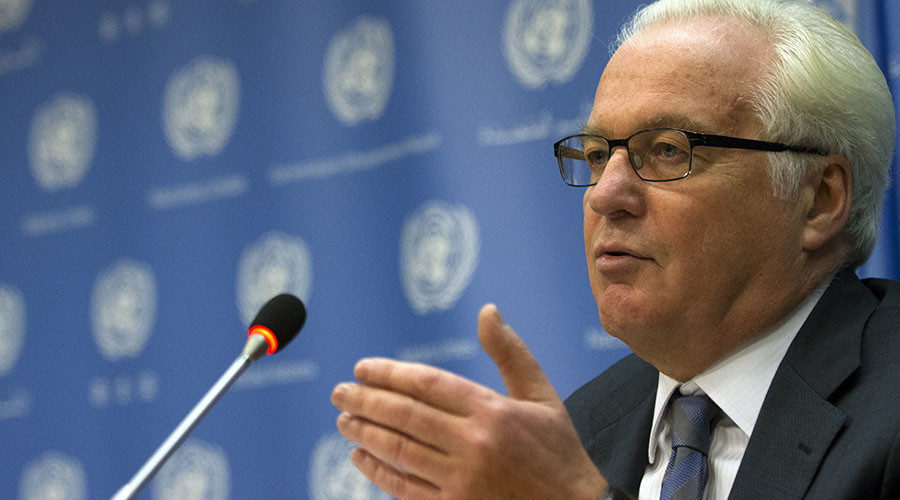
Russian UN envoy Churkin names Turkish companies helping ISIS make bombs

May 26, 2016

Russian UN envoy Churkin names Turkish companies helping ISIS make bombs

Published time: 26 May, 2016 06:31

Source: Russian UN envoy Churkin names Turkish companies helping ISIS make bombs — RT News

Russian ambassador to the United Nations Vitaly Churkin. © Brendan McDermid / Reuters

Russia has presented a list of Turkish companies to the UN that Moscow believes are providing Islamic State with the components needed to make homemade explosive devices.

In UN Ambassador Vitaly Churkin’s letter to UN Secretary General Ban Ki Moon, the envoy says analysis of chemical components of explosives recovered in Islamic State (IS, formerly ISIS/ISIL) liberated areas of Iraq’s Tikrit and the Syrian city of Kobani, implicate Turkish companies.

Read more

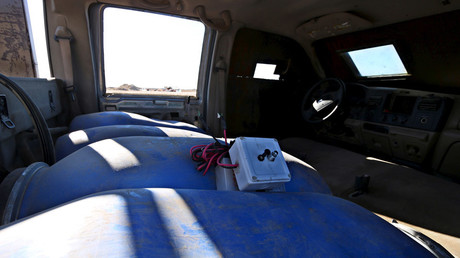
Containers filled with explosive materials, thought to have belonged to Islamic State militants. © Rodi Said

Components found in the explosives, Churkin wrote, “indicate that they were either manufactured in Turkey or delivered to that country without the right of re-export.”

The composition of the improvised explosive devices (IEDs) included the use of aluminum powder, ammonium nitrate, granulated carbamide and hydrogen peroxide that were produced by Turkish firms “Gultas Kimya” , “Marikem Kimyevi Ve Endüstriyel Ürünler”, “Diversey Kimya”, “Metkim”, and “EKM Gubre”.

Churkin specifically noted a sevenfold export increase from Turkey to Syria of ammonium nitrate used by terrorists as a component for the manufacture of improvised explosive devices.

He also noted that the “detonation cords manufactured in third countries have been illegally resold through Turkey to ISIL fighters,” as bombs used by Islamists also contained American made microcontrollers produced by Microchip Technology, Swiss-made transistors made by ST Microelectronics and Finish Nokia phones model 105 RM-908.

“These facts demonstrate that the Turkish authorities are deliberately involved in Daesh activity, as they are providing access to components for improvised explosive devices that are being widely used to commit terrorist acts,” the Russian envoy said.

Read more

© RT

The Turkish Foreign Ministry was quick to reject Russia’s claims calling the letter “the most recent example of Russia’s propaganda campaign against Turkey.”

Russia has repeatedly accused and presented evidence of Turkish involvement in running IS operations in Syria and Iraq. Churkin’s letter comes following an earlier 20-month long study published by Conflict Armament Research (CAR), which concluded that over 50 companies from 20 countries, sold or received hundreds of components used by Islamic State terrorists to build explosive devices. A total of 13 Turkish firms were found to be involved in the supply chain.

The 107-page report concluded homemade explosives can easily be assembled using everyday products that are actually not subject to transfer controls such as export licensing. As a result, their supply within the region is basically unregulated and weakly monitored. Other key components, such as detonators and detonating cords, are subject to export licensing, but are also commonly used in commercial activities, such as mining and industry.

Dems Seek Quicker Admission of Syrian Refugees Despite Terrorism Concerns

May 18, 2016

Dems Seek Quicker Admission of Syrian Refugees Despite Terrorism Concerns, Washington Free Beacon, May 18, 2016

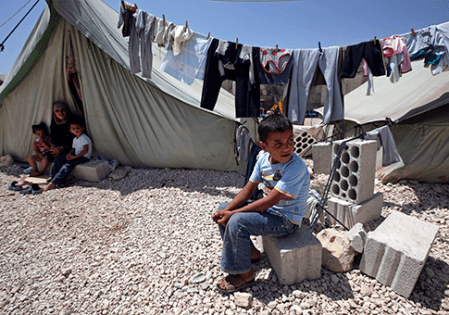
Syrian-refugee-family-in-eastern-Lebanese-town-APSyrian refugee family in eastern Lebanese town / AP

Senate Democrats sent a letter to President Obama Wednesday pressing the administration to accelerate the admission process for Syrian refugees to settle in the United States.

Obama vowed last year that the U.S. would resettle up to 10,000 individuals seeking haven from the Syrian civil before September, but according to Reuters only 1,736 refugees have been admitted.

27 senators, including the No. 2 Democrat Sen. Dick Durbin of Illinois and Sen. Bernie Sanders (I, Vt.), signed the letter urging the Obama administration to “devote the necessary resources to expeditiously and safely resettle Refugees from Syria.”

“We are deeply concerned about the slow pace of admissions for Syrian refugees in the first seven months of the fiscal year,” the senators wrote in the letter obtained by Reuters.

The letter arrived three weeks after Director of National Intelligence James Clapper said that the Islamic State terrorist group has “taken advantage” of the migrant crisis in Europe, advising E.U. nations to maintain awareness.

One of the suicide bombers who conspired in the November Paris attacks that killed 130 people entered Greece using a fake Syrian passport posing as a refugee. He then traveled the same route fleeing migrants use to make his way into Western Europe.

The revelations have ignited criticism from Republicans who contend that the president’s plan would lead to similar attacks in the U.S. without a stringent vetting process in place.

More than 30 governors have called on the U.S. to halt the refugee resettlement program and have tried implementing restrictions to prevent them from entering their states. Only one of those states was home to a Democratic governor.

The Democratic signatories demanded in their letter that the administration provide specific details as to how the nation would carry through on its vow to resettle the remaining 8,264 Syrians during the next five months.

“Other nations, including ours, can and should do much more,” the senators wrote.

The U.S. has so far resettled more than 6,000 refugees from Myanmar and more than 5,000 from Iraq.

“Russia Did More ‘Good’ In 30 Days Than The US Did In A Year”

May 17, 2016

“Russia Did More ‘Good’ In 30 Days Than The US Did In A Year” – The Only Accredited Western Journalist In Damascus Speaks Up

by Tyler Durden on 05/16/2016 22:40 -0400

Source: “Russia Did More ‘Good’ In 30 Days Than The US Did In A Year” – The Only Accredited Western Journalist In Damascus Speaks Up | Zero Hedge

On behalf of Prensa Latina news agency, Miguel Fernandez was the only journalist from the Western world accredited to work in the Syrian capital of Damascus for nearly a year. After returning home to Havana, Fernandez gave Sputnik News an exclusive interview in which he reflects back on what he experienced in the war torn country.

Fernandez first gets into the single biggest lesson he learned, which is that the people of Syria don’t give in, they don’t stop pursuing the dream of having a prosperous country.

“Seeing how these people don’t give in, that they dream about a prosperous country, is the biggest lesson that Syria gave me”

Miguel then reflects back on when a colleague of his first arrived in the city, and as the journalist took him around the city, everything was seemingly so normal that his friend asked “where is the war?”

“Fear is the first thing that war creates, that fear which forces people to be on guard. However, Damascus broke that pattern. When my colleague arrived I took him around the city and he noticed that buses and taxis are traveling around, people are sitting in cafes and going shopping, children are going to school. He asked me, ‘where is the war?'”

“I said, I will show you before we leave for Cuba. And after less than a day, when we were traveling in a taxi, a mortar shell fell in front of us, onto a group of people, some of whom died, and there was chaos all around.”

“I looked at that and I said – that is war. That resistance of the Syrian people, the unwillingness to accept the hardships of war, has inspired me.”

The most harrowing moment for Fernandez was during the fall of Palmyra to the terrorists in May 2011 [later to be taken back from ISIS, and even recently held a concert that was put on by Russia’s famous Mariinsky Theatre Orchestra]. Fernandez reflected on a time in which monuments were destroyed, and children under Daesh leadership were made to kill captured Syrian soldiers.

 “Palmyra is one of ten UNESCO World Heritage sites in Syria, an oasis in the desert, full of mystical stories. Seeing how the Arch of Triumph and other monuments were destroyed. A terrible scene that I will never forget, was when children under the leadership of Daesh killed 50 captured Syrian soldiers who were on their knees.

“For me, that was the saddest moment, because I felt that the war was not only against Syria, but against the world, our culture, our values, our heritage. When I say ours, I mean civilization. These elements (Daesh) are savages. They can destroy a monument in the same way that they cut a child’s head off.”

Fernandez also recalled how differently the Syrian people view Russia and the United States, and that the Russian participation did not feel like an intervention at all. Importantly, Miguel discusses the stark differences between the precision and effectiveness of the US vs Russian air strikes as well. Notably that US airstrikes were not coordinated and often hit Syrian infrastructure, as opposed to Russia’s strikes, which destroyed more Daesh infrastructure in 30 days than the US had been able to accomplish in a year’s time.

“I am fair with blue eyes, so they often confused me with Russians and affectionately greeted me. Syrians believe in Russia because for a long time they were in conflict with the US and some European powers and Russia was the only friendly power.

“I was there when Russia entered the war in September 2015 and Syrians did not perceive it as an intervention, but as support and a sign of solidarity,” Fernandez explained.

“For over a year before that the US had led an international coalition that didn’t show any results. The Americans carried out bombings but Daesh spread even further, and seized new positions.

Those airstrikes were not coordinated and often hit Syrian infrastructure, hospitals and schools. The Russian airstrikes didn’t, because they entered the war at the request of Damascus and their activities were coordinated in order to be effective and not bring harm to civilians.

“During the first 30 days of bombing the Russians were able to destroy 40 percent of Daesh’s infrastructure, which the US and its allies hadn’t been able to do for a year.”

Fernandez ended the interview with a story of a Syrian soldier who complimented him by breaking bread and sharing it with the journalist, as a tribute to what the soldier said was Cuban bravery.

 “One of the soldiers, he was over 50, bearded, dirty, covered in powder and slush, he came to me, broke his bread in two and offered me half.”

“I refused, because I had already had breakfast at home and had no idea how many hours he had gone without eating. But my translator told me to take the bread, explaining that he wanted to share the bread with me because I am Cuban and he had always been told that Cuban soldiers are very brave and that if he shares the bread with me, it will bring him luck in the next battle.”

“I shed a few tears, because I am not a warrior, and I was very touched that he had such an impression about my nation,”


* * *

With all of the speculation and observations from the pundits on television, who have never stepped foot inside the war torn country of Syria, it is helpful to get a first hand account of what’s taking place on the ground. What one may find, is that those that sit around and parrot the “Russia Bad/US Good” narrative all day may not be exactly providing the complete picture.

ISIS, Syrian Conflict ‘Not Containable’ in Middle East

May 17, 2016

ISIS, Syrian Conflict ‘Not Containable’ in Middle East Bipartisan report calls for greater American involvement abroad

BY:
May 17, 2016 5:00 am

Source: ISIS, Syrian Conflict ‘Not Containable’ in Middle East

Threats emanating from the Middle East, including those caused by ISIS and the Syrian civil war, cannot be contained and therefore require the United States to significantly ramp up its military commitments in the region, according to a new report.

A group of scholars, strategists, and former government officials from Republican and Democratic administrations convened to develop the study, which was released by the Center for a New American Security on Monday.

The report, which has been endorsed by a number of ex-Democratic officials including a former Clinton administration aide, implies that the Obama administration’s policies toward Syria and the Middle East in general have been weak.

“Despite recent American misjudgments and failures in the Middle East, for which all recent administrations, including the present one, bear some responsibility, and despite the apparent intractability of many of the problems in the region, the United States has no choice but to engage itself fully in a determined, multi-year effort to find an acceptable resolution to the many crises tearing the region apart,” the report states.

“The key point is that the dangers emanating from the Middle East, including both terrorism and the massive flow of refugees, are not containable. They must be addressed at the source, over many years, using a combination of local actors and American power and influence.”

The report calls for the international effort against ISIS to be “scaled up substantially,” a move that would include sending more U.S. special operations forces to help root out the terror group from Iraq, Syria, and newly-established footholds in countries like Libya.

“The United States should show a new resolve by increasing significantly its military contribution across the board, including providing more unique air assets, additional intelligence assets, and a larger contingent of special operation forces capable of identifying and destroying high value and other critical ISIS targets,” the report states.

President Obama’s efforts against ISIS, which he once compared to a “JV team,” have long been criticized. Just one day before the group launched deadly coordinated terror attacks in Paris last November, the president declared during a nationally televised interview that the terror group had been “contained.”

The Obama administration, which began air strikes against ISIS in 2014, has sent modest contingents of special operations forces to Syria and Iraq in order to provide “advise and assist” support for Syrian Arab, Kurdish, and Iraqi troops fighting the terror group in the region. It has also green-lit limited operations directly targeting leaders of the terrorist group.

The administration has insisted that American troops are not in combat operations against ISIS, even though three American service members have died at the group’s hands in Iraq.

The report released Monday indicates that the administration has not done enough to thwart a terrorist group that could pose a greater threat to American and Western security than al Qaeda.

“The terrorist assault on Paris this past November and on Brussels in March were stark and painful reminders of the many ways instability in the Greater Middle East can come home to countries in Europe. The mass shooting in California in early December 2015 also demonstrates why ISIS potentially poses a greater threat to the United States and its allies and partners than al Qaeda,” the report states, citing the terrorist attack on a San Bernardino, Calif., holiday party carried out by a radicalized couple.

“With so many ISIS-inspired terrorists holding Western passports, counterterrorism has become significantly more difficult. Nor can one discount the possibility that just as ISIS has emerged to compete with al Qaeda for leadership of the jihadi forces, there will be other groups seeking to take the mantle.”

The CNAS project is co-chaired by James Rubin, a former State Department official during the Clinton administration, and is endorsed by CNAS co-founder Michèle Flournoy, who served as undersecretary of defense in the Obama administration. The project was established to develop a bipartisan consensus about the role America should play in the world, and the report was deliberately rolled out ahead of the 2016 election to shape the national conversation.

While the experts do not go out of their way to criticize the current administration’s foreign policy agenda, the report offers implicit rebukes of the administration’s efforts abroad, particularly in the Middle East. It calls for making a political solution to the five-year Syrian civil war dependent on the departure of Syrian leader Bashar al Assad—a point the Obama administration has appeared willing to concede in recent months.

The report also calls for an overhaul of the Pentagon’s “inadequate” program to arm and train the Syrian opposition forces, who have faced brutal resistance from Syrian government troops emboldened by Russian and Iranian intervention in the conflict. The Defense Department was forced to shutter its failed program to train and equip moderate Syrian rebels, which cost American taxpayers $500 million, in favor of a less ambitious initiative last October.

“Syrian government forces have regained considerable territory and momentum especially in and around Aleppo, primarily as a result of coordinated Russian-Syrian-Iranian operations backed by heavy and often indiscriminate Russian bombardment from the air,” the report states.

“At a minimum, the inadequate efforts hitherto to arm, train, and protect a substantial Syrian opposition force must be completely overhauled and made a much higher priority.”

The report also proposes the establishment of a no-fly zone in Syria where displaced Syrians can relocate out of harm’s way and where opposition forces can arm, train, and organize.

More generally, the experts make the case for boosting American engagement in the face of Chinese economic growth and military buildup, Russian aggression, and continued destabilization in the Middle East. The maintenance of post-World War II international order, the report explains, is dependent on strengthening U.S. diplomatic, economic, and military power and boosting spending on defense and national security.

“The greatest challenge to the preservation of this order today may be here in the United States. The bipartisan consensus that has long supported America’s engagement with the world is under attack by detractors in both parties,” the report states.

“Responsible political leaders need to explain to a new generation of Americans how important this world order is to their well-being and how vital America’s role is in sustaining it.”

Leaked wiretaps of ISIS agents show Ankara routinely ignores terrorist cross-border activity

May 14, 2016

Leaked wiretaps of ISIS agents show Ankara routinely ignores terrorist cross-border activity

Published time: 14 May, 2016 06:19 Edited time: 14 May, 2016 08:07

Source: Leaked wiretaps of ISIS agents show Ankara routinely ignores terrorist cross-border activity — RT News

Thousands of ISIS associates have been routinely crossing into Syria aided by contacts in Turkey, phone calls tapped by Ankara security forces and handed to the media by opposition MP Erem Erdem reveal. He accuses the government of a massive cover-up.

Transcribed phone recordings belonging to Ilhami Bali, well known in Islamic State (IS, formerly ISIS/ISIL) ranks and suspected of staging high-profile bomb attacks in Ankara and the mainly-Kurdish border city of Suruc, detail the lack of control along the Syrian Turkish border. The 98-kilometer (61-mile) stretch of border has only two crossings, the Jarablus and Al Rai entry points across from Turkey’s Gaziantep and Kilis.

Pressured by the international community to impose stricter border controls to stem the flood of militants into Syria, Ankara has been erecting walls at key crossing points, but to no avail as surveillance data from the Municipality of Ankara Provincial Security Department revealed.

Read more

File photo: A bomb-disposal expert walks near victims' bodies covered with banners and flags, at the site of twin explosions near the main train station in Turkey's capital Ankara, on October 10, 2015. © Adem Altan

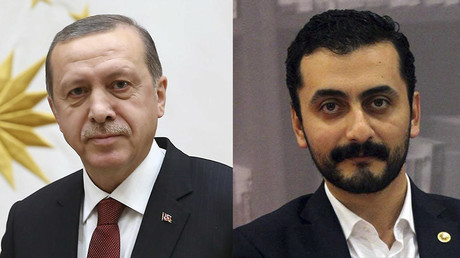
The transcripts of the recordings have been passed on to the media by Turkish opposition politician, Eren Erdem of the Republican People’s Party (CHP), who is facing a witch-hunt from President Recep Tayyip Erdogan’s government over his repeated allegations of massive cover-up of IS activity on Turkish soil.

While daily logs by the Turkish Armed Forces reveal that Turkish security forces apprehended 961 IS members from 57 countries in 2015, the alleged reality exposed by the Erdem leak, shows that thousands of IS fighters and their family members cross the Turkish border from Syria on a daily basis. But even those who get arrested on the Turkish side are often released at the crossing points.

For instance several documents suggest that IS coordinators helped some 1,400 people cross the Turkish border from September 22 – October 17. In one of the phone conversations, Ilhami Bali asked his interlocutor named Erkek, who according to the conversations helps smuggle people, the exact number of persons he has helped cross the border.

Read more

© Kayhan Ozer / Reuters; Eren Erdem / Facebook

As the men argue about the actual number of all those who entered and left Turkey, the conversation reveals that the actual count of people passing through to the Turkish side is actually more than IS coordinators have presumed.

Another conversations between the two subjects revealed Bali was extremely dissatisfied with Erkek’s performance as he failed to help IS operatives cross the border.

“Did you get our people through?” Bali asked Erkek, who replied that he was not the one guiding the group in question.

“What? Are you the one who is responsible that they got arrested? Don’t lie to me! Don’t lie to me. Eighteen people crossed the border last night. Fifteen of them got arrested when you tried to help them,” Bali said.

“Listen to me, I have warned you,” added Bali, losing his temper. “If I ever hear that you try to pass our guys through, I will come in your house and shoot you to your head. I will shoot your head while you’re in bed.”

READ MORE: RT documentary exposes dirty oil secrets, ISIS ties with Turkey

However, as other conversations have shown, IS operatives and contacts on the Turkish side of the border help those IS affiliates detained by Turkish security forces to evade justice.

“One brother, two sisters and one child were arrested while they tried to cross [at Kilis]. How could this happen? I do not understand,” wondered Erkek in another phone call.

“We have called and gave them the information,” Bali replied. “We talked to the brother who will look after the people who were arrested. Inshallah will look after them.”

More conversations between the two subjects further confirm that those who get arrested are later released through IS connections at police stations.

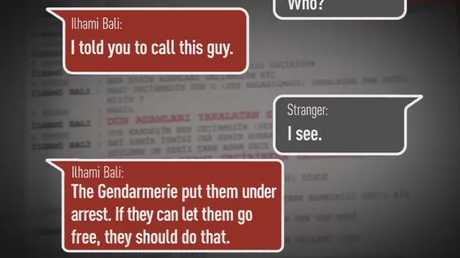
“The guy from the Gendarmerie called me and said that they were in the smuggler car,” Bali told Erkek in a conversations about another group detained at the border. “Call this guy. The people who got arrested today are at the Gandermarie station. Maybe he can do something… Gendarmerie took them under arrest. If they can let them free they should do that.”

Bali’s conversation with another IS operative, Mustafa Demir, offers apparent proof that the IS terror group is smuggling its fighters into Turkey for medical treatment.

“You know this Abu Abdella Garip who gets out the wounded people? Now Ali Mantara will come. He will bring a brother. He will call you when he arrives… Take the numbers and send them to the administration [of the crossing]. So the administration will look after them,” Mustafa Demir tells Bali.

“Where should I bring Abdullah Garip who helps cross the wounded ones? Should I take him to madrasa?” Bali asked.

“Send them to madrasa and call Ebu Abdallah and tell him that five persons are with Garip Geli… tell him that he should write down their names… So we can control how many left from here,” Demir replies.

In another conversation Erkek asks Bali what should “one wounded person” do when he comes to Turkey.

“I don’t really know. It has nothing to do with us,” Bali replied. “Tell them they should go to the border to the administration there.”