Posted tagged ‘Shiite’

Iranian Regime Gives Green Light to Qods Force, Proxies to Initiate Plans Against US and its Allies

June 1, 2015

Iranian Regime Gives Green Light to Qods Force, Proxies to Initiate Plans Against US and its Allies, ISIS Study Group, June 1, 2015

In Yesterday’s article titled “Arabian Pensinsula Violence Escalates After Second IS Bombing in Saudi Arabia,” we stated that our sources in the region have been reporting back that movement appears to be underway towards targeting westerners – mainly Americans. Specifically, we’ve been informed that the Qods Force may have directed Hezbollah, Kitaib Hezbollah (KH) and the Houthis to begin making plans for conducting William Buckley-style abductions Americans in Iraq, Saudi Arabia and Yemen. Furthermore, reporting from various media outlets have already begun covering the Americans taken hostage by the Houthis and a Hezbollah plot disrupted in Cyprus. None of these are a “coincidence.” Its all by design and timed with the nuclear weapons negotiations. Why do this if the Obama administration is prepared to give them everything without having to sacrifice anything on their end? It all comes down to the fact that the Iranian regime views the US government is weak – and they will be able to be much more “assertive” by escalating their belligerence. Thus far the Obama administration has done nothing to prove otherwise.

Arabian Pensinsula Violence Escalates After Second IS Bombing in Saudi Arabia
http://isisstudygroup.com/?p=6853
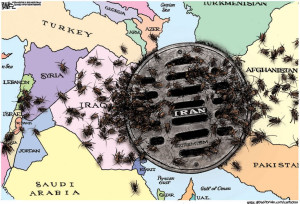
iran_roaches-300x204

The Middle East roach infestation has originated from Iran – so who will turn on the light to make them scatter?
Source: http://www.ibdeditorials.com/cartoons

We’ve been warning about the Qods Force working to expand their influence in Yemen and model the Houthis after Lebanese Hezbollah. In “Iranian Regime Consolidates Yemeni Gains, Begins Work on Forming Houthi Intel Proxy” we laid out how such work has already been underway. Furthermore, a consistent theme we’ve been touching on in our Arabian Peninsula reporting has been how intelligence collection against US State Department (DoS) personnel and American citizens in the country had dramatically increased with the influx of Hezbollah and Iranian military personnel into the country – so none of this is “new,” although the Obama administration would like to make you think it is, and that the Qods Force doesn’t exercise any control over the Houthis. The inconvenient truth is that they do, and the man calling the shots in the country is Qods Force External Operations Division (Department 400) BG Aboldreza Shahlai.

Iranian Regime Consolidates Yemeni Gains, Begins Work on Forming Houthi Intel Proxy
http://isisstudygroup.com/?p=5580

Check out the following links for additional info on the Qods Force/Houthi/Hezbollah targeting of Americans in Yemen and the greater Arabian Peninsula:

GCC SOF Teams Alerted For Deployment, AQAP Gains Strength and Iran Preps For Attacks Against Saudi Arabia
http://isisstudygroup.com/?p=6056

Saudis Begin Yemen Military OPs as the IRGC-Qods Force Prepares For Round 2
http://isisstudygroup.com/?p=5845

Poised to Fill Yemen’s Power Vacuum – Iran Tightens Grip on the Peninsula
http://isisstudygroup.com/?p=4517

IRGC-Qods Force: The Arabian Peninsula Campaign and President Obama’s Failed Foreign Policy
http://isisstudygroup.com/?p=4478

Yemen’s Houthi Rebels: The Hand of Iran?
http://isisstudygroup.com/?p=1992

AQAP vs. Shia Proxy Fighting Intensifies in Yemen
http://isisstudygroup.com/?p=2972

Shia Proxy Threat to US ISIS Strategy in Saudi Arabia
http://isisstudygroup.com/?p=1837

Regarding BG Aboldreza Shahlai, we first introduced him to our readers in our 04 APR 15 article titled, “AQAP and Qods Force Make Their Moves in Yemen as Saudis Struggle to Maintain Coalition.” At the time our sources inside the country had came across information on the presence of a senior Qods Force External Operations Division official had set up shop in the Sadah-area and tasked with overseeing overall operations in the country. We followed this up with an article a month later (“Failed State: Saudi Coaltion Increases Ground Presence as Iran Begins Targeting the Kingdom, US”) revealing his identity. Most westerners have never heard of the guy, but Iranian expats opposed to the regime know all about him. Shahlai was the architect of the Qods Force’s lethal aid program to Shia proxy forces in Iraq during OIF and was also one of the primary planners for the 2007 attack on the Karbala Provincial Joint Coordination Center (PJCC) that killed five US Servicemen. Known as “Suleimani’s Fist,” he holds considerable influence in the Qods Force commander’s inner-circle for advocating “outside the box” solutions to problems – most of which call for directly targeting America and Israel abroad. He was also the mastermind of the plot to assassinate the Saudi Ambassador to the US in New York City that involved his contacts within the Mexican drug cartel known as Los Zetas. His family member Mansur Arbabsiar was the lead-facilitator for the operation. Perhaps more important is Shahlai’s close ties to Abdul Malik al-Houthi and establishment of alternate weapons smuggling routes coming from Africa.

Failed State: Saudi Coaltion Increases Ground Presence as Iran Begins Targeting the Kingdom, US
http://isisstudygroup.com/?p=6410

AQAP and Qods Force Make Their Moves in Yemen as Saudis Struggle to Maintain Coalition
http://isisstudygroup.com/?p=6078

African Nations to Send 7,500 to Combat Boko Haram – Why is Iran so Interested?
http://isisstudygroup.com/?p=4530
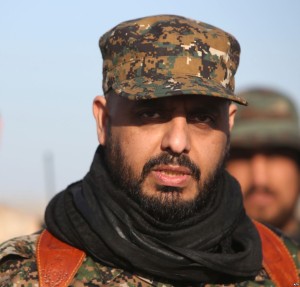
qais-300x287

Asaib al-Haq leader Qais al-Khazali worked closely with BG Shahlai during OIF and was a participant in the 2007 attack on the PJCC – he’s now on the front-lines fighting the Islamic State (IS) in Northern Iraq
Source: voanews.com

BG Shahlai’s Yemen assignment is a good indicator that the Iranian regime intends to carry out a campaign targeting American, Israeli and to lesser extent Saudi nationals. With this and Shahlai’s relationship with the Houthis in mind, nobody should be in the least bit surprised that four of our fellow Americans are being held hostage in Yemen. The Houthis have already proven to be very efficient proxies for the Iranians inside Yemen. That said, we will likely see them conducting more operations increasing in complexity and scale within the next 6-9 months across the border into Saudi Arabia itself. They’re already conducting rocket attacks against Saudi border towns and outposts.

Houthi rebels in Yemen are holding multiple Americans prisoner
http://www.washingtonpost.com/world/national-security/houthi-rebels-in-yemen-are-holding-multiple-americans-prisoner/2015/05/29/ac349cc8-0618-11e5-8bda-c7b4e9a8f7ac_story.html

‘Several’ Americans held in Yemen: State Dept
http://news.yahoo.com/several-americans-held-yemen-state-dept-150827072.html
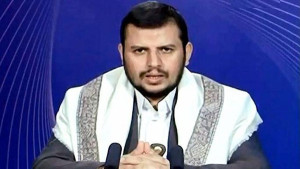
abdul-malik-al-houthi_3-300x169

Abdul Malik al-Houthi: Close personal friend to BG Shahlai
Source: al-Arabiya

Its the same situation in Iraq, where we’ve heard from our Baghdad-based contacts reports of an attack being planned by Kataib Hezbollah (KH) targeting the US Embassy. Again, this should surprise no one with the high concentration of Qods Force personnel and proxy forces present inside the country and the capital in particular. We’ve also heard that KH has sympathizers within the Iraqi Security Force (ISF) ranks who are being tapped to assist in the attack. There’s also a considerable anti-air threat in and around BIAP these days coming from both IS and KH fighters. Fortunately, the American forces on the ground are already well aware of this – whether DoS or the Obama administration actually takes the threat serious is another matter entirely.

ISOF Commandos’ Admiration of Their IRGC-Qods Force Embeds
http://isisstudygroup.com/?p=122

The IRGC-Qods Force
http://isisstudygroup.com/?p=101
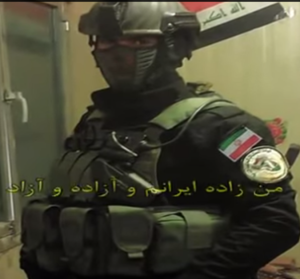
ISOF-and-ramazan-300x279

ISOF troopers don’t even try to hide their support of the IRGC-Qods Force Ramazan Corps anymore – a huge red flag for any US military personnel being deployed to Iraq these days
Source: The ISIS Study Group
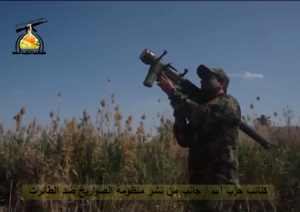
KH_manpads-300x212

Now why would KH need MANPADs since IS has no Air Force? Perhaps the Qods Force supplied them to KH in order to target someone else?
Source: The ISIS Study Group

Unfortunately these operations aren’t limited to just the Middle East. Security forces in Cyprus recently arrested a man reportedly involved in a line of Hezbollah operations targeting Israeli interests in Europe. When the Cypriot police arrested him, they also confiscated close to two tons of “suspicious materials” in his basement. Although no additional details on the materials has been made public as of this writing, our source informed us that the materials are for producing explosives (ammonium nitrate was the he saw mentioned). The guy they detained was born in Lebanon but had a Canadian passport, which tends to fit the profile of the kind of personnel Hezbollah’s special operations wing and the Qods Force prefers to recruit into their ranks.

Cyprus police foil planned Hezbollah attacks against Israeli targets in Europe
http://www.haaretz.com/news/diplomacy-defense/1.658716?utm_source=dlvr.it&utm_medium=twitter

Cyprus arrest of Hezbollah man ‘uncovered large-scale Iranian terror plot across Europe’
http://www.jpost.com/Arab-Israeli-Conflict/Cyprus-arrest-of-Hezbollah-man-uncovered-large-scale-Iranian-terror-plot-across-Europe-404531
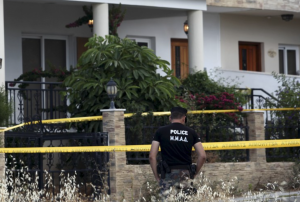
Crime scene

Scene of the crime
Source: Reuters

Qods Force and Hezbollah operations have spiked considerably since 2009 with attacks being executed in places like Bulgaria, India and Thailand along with the disrupted plot that was planned for New York City mentioned earlier. Of these, the NYC and Burgas, Bulgaria plots had the direct involvement of BG Shahlai. The telltale signs are how both plots called for using some of his preferred methods of using third parties to do the dirty work and targeting westerners in areas not known for Iranian activity. In fact, the attack in Burgas also involved a Lebanese Arab in possession of Canadian travel documents. The bombings in New Delhi and Bangkok utilized personnel from the IRGC-Qods Force Department 5000 – which is the equivalent to the US Army’s 1st Special Forces Group in that both units are geographically aligned to the Asia/Pacific region.

Bulgaria Has New Evidence on Hezbollah – Report
http://www.novinite.com/view_news.php?id=151420

Bulgaria names Hezbollah suspects behind bombing of Israeli bus in Burgas
http://www.jpost.com/International/Bulgaria-names-2-suspects-in-Burgas-bus-bombing-321017

Bulgaria says clear signs Hezbollah behind Burgas bombing
http://www.reuters.com/article/2013/07/18/us-bulgaria-hezbollah-idUSBRE96H0XI20130718

Hezbollah Is Blamed for Attack on Israeli Tourists in Bulgaria

Thai Police Widen Search for Iranians
http://www.wsj.com/articles/SB10001424052970204059804577227012899036768

Israel’s Iran warning as police hunt fourth Bangkok bomber with help from prostitute
http://www.telegraph.co.uk/news/worldnews/asia/thailand/9088238/Israels-Iran-warning-as-police-hunt-fourth-Bangkok-bomber-with-help-from-prostitute.html

India names Iranian suspects in Israeli car bombing
http://www.cnn.com/2012/03/15/world/meast/india-iran-israeli-car-bombing/index.html
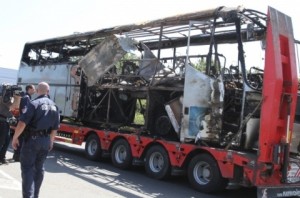
burgas-bombing-300x198

The 2012 Bombing in Burgas, Bulgaria
Source: Reuters

Bibi Netanyahu was absolutely right to visit America and appear before Congress to air his concerns about the Iranian threat. The events that have occurred over the last few months have added strength to his concerns. Unfortunately, the Obama administration has been downplaying the Iranian threat and the American mainstream media let them get away with it by not holding their feet to the same fire that they did to the Bush administration. Sure, a few American media outlets have finally begun asking some national security questions of substance, but far too many seem to be concerned with covering Bruce Jenner’s hormone therapy and President Obama’s March Madness brackets than they are about things that will have a profound impact on our way of life a lot sooner than people think.

The American media needs to start asking the Obama administration, “why are we seeing such a surge in external operations by the IRGC-Qods Force and their proxies if the current engagement strategy with the Iranian regime is “working,” as they claim?” Indeed members of our staff have worked the Iranian problem-set for some time, but it doesn’t require a whole lot in the way of burning calories to connect the dots between this surge in external operations and the ongoing negotiations over Iran’s nuclear weapons program. Had the media truly cared to search for the truth instead of protect an administration they’ve compromised their journalistic integrity for, they would’ve already put out several articles and investigative specials on the subject. If they want to save face and salvage what’s left of their credibility, then we recommend they do some digging on the current threat to the US Embassy in Baghdad coming from KH and their ISF supporters based in the Green Zone. We can assure you that DoS is fully aware of the threat coming from Shia militias that are now being painted to the American people as “the good guys.”

They should also start peppering John Kirby and Marie Harf about the recent counter-terror raid in Cyprus and hammer them about whether the administration ever thought about demanding that the Iranian regime release our citizens in Yemen and US Marine veteran Amir Hekmati during these nuclear weapon talks. We assess that the Qods Force and their proxies are going to continue escalating their actions against our people and our allies for as long as they think they can get away with it. Don’t buy into the Administration’s talk that the regime can’t “control” the Qods Force, because if they say that they’re either lying, extremely ignorant or both. How so? The IRGC as a whole is made up only the most loyal followers of Ayatollah Khameini’s militant ideology. The IRGC-Qods Force are the “most loyal” of those serving in the IRGC – with GEN Suleimani answering only to Khameini. More importantly, the Shia proxy forces won’t take action against the US and its allies unless given authorization to do so by their Qods Force handlers. Make no mistake, this is only the beginning. There will be more attacks coming down the pipe from these guys. Our current national security strategy and foreign policy has set our country on a collision course – is anybody truly paying attention? More importantly, is this administration willing to sacrifice American lives for the appearance of obtaining “peace” with an Iranian regime that has no interest in pursuing normal relations? Something to think about.
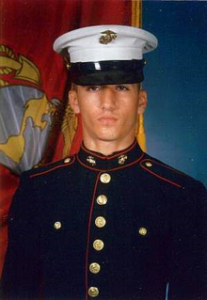
hekmati-207x300

Amir Hekmati: Prisoner of Iran
Source: The ISIS Study Group

If you want to know what the Iranian regime is all about, then check out our Inside Iran’s Middle East series:

Inside Iran’s Middle East: the Kurdish Insurgency
http://isisstudygroup.com/?p=4068

Inside Iran’s Middle East: the Southeast Insurgency
http://isisstudygroup.com/?p=2689

Inside Iran’s Middle East: the Charm Offensive
http://isisstudygroup.com/?p=2676

Inside Iran’s Middle East: the “Reformers”
http://isisstudygroup.com/?p=2635

Inside Iran’s Middle East: the Nuclear Weapons Program
http://isisstudygroup.com/?p=2640

Other Related Articles:

Mr. Netanyahu Goes to Washington
http://isisstudygroup.com/?p=5316

Today’s Middle East: The Burning Fuse of the 21st Century’s “Great Game”
http://isisstudygroup.com/?p=6193

The Persian Hustle: How Iran Dupes Clueless US State Dept in Nuke Talks and Moves to Dominate the Middle East
http://isisstudygroup.com/?p=5978

How the North Korean Regime Affects the Middle East
http://isisstudygroup.com/?p=3038

Yemen isn’t on Verge of Civil War, It Already is – And Saudi Arabia Will Get Involved
http://isisstudygroup.com/?p=5810

What Yemen’s Coming Apart at the Seams Means to Arabian Peninsula
http://isisstudygroup.com/?p=5737

The Hezbollah Presence In Iraq
http://isisstudygroup.com/?p=358
On achievements and ideas

May 29, 2015

On achievements and ideas, Israel Hayom, Maj. Gen. (ret.) Yaakov Amidror, May 29, 2015

Lately it looks as though the Islamic State group has managed to rack up highly significant geographic achievements. These coups will lead to the group controlling the enormous expanse of territory west of Baghdad to the Syrian border beyond Palmyra by establishing rule in the north and east of the crumbling Syrian state.

The occupation of Ramadi, one end of an arch that bridges between the Iraqi capital and Palmyra in the heart of northern Syria, serves as a base for future gambits of even greater importance. We shouldn’t wonder if the group needs a little time to “digest” the new areas it has conquered, to take care of any local population that might resist, if any such remains, and to settle its rule on the rest of the residents and prepare for retaliatory attacks by the Syrian and Iraqi armies and their auxiliary militia forces.

It appears that in Iraq and Syria — but more importantly, in the U.S. — it is understood that the counterattack stage could turn out to be critical. If the group overcomes these strikes, it is hard to imagine what might stop it in the future, barring full-scale involvement by the U.S. military that would include heavy ground forces.

After the counter-strikes, the moment the organization feels secure in its new area, and we cannot know how long that will take, it will face the standard dilemma presented by such situations: What next? By nature, a group like this cannot refrain from action for long. It needs constant movement; it is thirsty for new gains and fears the “stagnation” that could affect it after a period of calm. The group is still in its dynamic stage, continuing to rise. It has four options for action, and no one knows which one its leaders will choose. It is possible that they themselves have not made up their minds and are still not ready to decide, at least until the results of any possible counterattack become clear.

Islamic State’s next “natural” effort could be toward Baghdad, to strengthen its rule of everything west of the Iraqi capital. The goal would be to strike a fatal blow to the Shiite government’s operational ability in the Sunni regions the group has taken thus far, and maybe even to bring down the present Iraqi regime.

Such a move would doubtless put pressure on the ruling Shiites and their Iranian allies, because when an organization like this approaches areas with a dense Shiite population, as well as the cities most holy to Shiites, the latter envision a mass slaughter. So there is no question that a move like that, if successful, would force the Iranians to make some tough decisions, mainly about whether to opt for direct military intervention.

The group has another option in Iraq: to the north, beyond Kurdistan. If it managed to take control of the areas where the Kurds are currently extracting oil, it would enjoy maximal success, running nearly an entire country and putting heavy pressure on Turkey. That looks tempting, because the West hasn’t taken care to adequately arm the Kurds, the only ones so far who have fought the group successfully.

It is also possible that after its great success in Iraq, the group will prefer to entrench its rule over northern Syria — in other words, seize control of Aleppo and Homs. That would be an ambitious plan given the size of the geographic area, but it appears any resistance there would be weaker than it would be in a metropolis like Baghdad or from the fierce Kurds. If Islamic State took Aleppo and Homs, it would improve its chances of eventually taking action against the Kurds, particularly their Syrian wing.

In Syria, the main ones opposing the group would be President Bashar Assad’s exhausted army. In that area, other Sunni groups from what is known as the army of insurgents might join Islamic State, granting it legitimacy in the eyes of the locals. A move like that could lead to a dramatic change in Assad’s position and force Hezbollah to spread its forces even thinner. A loss of Hezbollah’s strategic homefront and the presence of its Sunni haters breathing down the neck of the Alawite minority, on the coast of Latakia, means a threat to a region that is vital to Hezbollah and to the Iranians’ position in Syria, and eventually in Lebanon. The Iranians and Hezbollah would do almost anything to protect these, because any threat to them is an existential one. If the Islamic State group acquires control of Alawite or Shiite areas, it will exterminate everyone there. This is a life or death struggle. That’s clear to everyone.

The ambitious option

And there is a fourth option, which for now seems less appealing and therefore less likely, although not impossible. It’s possible that to avoid clashing with Shiite strength around Baghdad or with Alawite and Hezbollah desperation en route to Damascus, the group will turn its attention to Amman.

All the residents of Jordan are Sunni, and some of them could begin to identify with a serious, successful Sunni group that purports to act on behalf of Sunnis, who are in distress because of the Shiite dynamic in the Middle East. The group could asses that it would be easier for it to operate against Jordan, and if it does so successfully it would have more convenient access to Saudi Arabia — the crown jewel of the Muslim world.

Saudi Arabia is the target that anyone who talks about an “Islamic caliphate” dreams of, because it is home to Mecca and Medina, the two holiest cities for any Muslim. In acting against Jordan, the group could combine a military maneuver with an attempt to influence the kingdom from inside by exploiting the social and economic problems in Jordan that have worsened because of the mass influx of refugees from Syria.

Today, the chances of the organization succeeding in Jordan appear very slim. The Jordanian army, unlike the armies of Iraq and Syria, is both serious and professional and among many Jordanians, the king is popular as well as legitimate. Jordan is no easy prey, and it would certainly have the help of everyone for whom the kingdom’s stability is important.

In any case, it is obvious that the American intervention thus far has not brought the U.S. any closer to the goal defined by President Barack Obama of “destroying the organization.” The opposite — it has grown stronger and expanded its area of control since the U.S. declared war on it. The last chance the U.S. has to continue its current policy, avoiding the deployment of massive American ground forces, is conditional upon its ability to give the Iraqi army the assistance it needs in the attack it is promising to execute, and possibly on helping the Syrian army indirectly.

The Americans will take a look at themselves after these battles, when it becomes clearer whether the group’s recent successes are the regular ups and downs seen in conflicts like these, or whether they have altered its standing, and Islamic State will now take advantage of the momentum to move on more ambitious targets.

ISIS Wins No Matter What Happens Next

May 28, 2015

ISIS Wins No Matter What Happens Next, The Daily BeastMichael Weiss, May 28, 2015

1432804506635.cachedAhmad Al-Rubaye/AFP/Getty

Usama al-Nujaifi, one of Iraq’s vice presidents and the former parliamentary speaker, pointed out that recent missteps by the militias has squandered incipient good will for Sunni reconciliation. Yesterday, during a parliamentary session, the Sunni governor of Diyala province was fired—and replaced with a Shia. “This is a real threat and a very negative message to Iraqis. This is considered a break to the rules and it contradicts what has been agreed,” Nujaifi said. “The majority in Diyala are Sunnis.”

**********************

The latest planned attack on the terror army could be playing right into their hands.

The Obama administration is being slammed from all sides for its failing strategy against ISIS—and rightly so. But amid all the scorn, one question has yet to be asked about the resiliency of the terror army, which, actually goes to the heart of its decade-old war doctrine. Namely: does ISIS actually win even when it loses?

This isn’t an academic issue. America’s allies in the ISIS war are gearing up for a major counteroffensive against the extremist group. That assault that could very well play right into ISIS’ hands.

Having superimposed its self-styled “caliphate” over a good third of Iraq’s territory, in control of two provincial capitals, ISIS is today in strongest position it has ever been for fomenting the kind of sectarian conflagration its founding father, Abu Musab al-Zarqawi, envisioned as far back as 2004.

Zarqawi’s end-game was simple: by waging merciless atrocities against Iraq’s Shia majority population (and any Sunnis seen to be conspiring with it), Zarqawi’s jihadists would have only to stand back and watch as radicalized Shia militias, many of whose members also served in various Iraqi government and security roles, conducted their own retaliatory campaigns against the country’s Sunni minority. Internecine conflict would have the knock-on effect of driving Sunnis desperately into the jihadist fold, whether or not they sympathized with the ideology of al-Qaeda in Iraq, Zarqawi’s franchise and the earliest incarnation of what we now call the Islamic State.

Indeed, in the mid-2000s, the Jordanian jihadist nearly got what he wished for by waging spectacular terror attacks against Shia civilians and holy sites, such as the Golden Mosque in Samarra, a strategy which quickened devolved Iraq’s violence from a primarily anti-American insurgency into all-out civil war. The only stopgap for a truly apocalyptic or nation-destroying result was the presence of nearly 200,000 U.S. and coalition troops. Today, however, absent such a foreign and independent military presence, the main actors left in Iraq are the same extremists —Shia militias and ISIS.

This fact was only driven home last week after thousands of U.S.-trained Iraqi Security Force personnel, including the elite counterterrorist Golden Division, fled from Ramadi, allowing the city fall to a numerically modest contingent of ISIS jihadists. Having been initially instructed by Iraq’s Prime Minister Haider al-Abadi to refrain from defending the city (no doubt at the prompting of Washington) the Hashd al-Shaabi, the umbrella organization for these Shia militias, now say they are prepping a massive counteroffensive to retake Ramadi. It promises to be a drawn-out and highly fraught counteroffensive, pitting paramilitaries—which have been accused of war crimes and atrocities by Human Rights Watch, Amnesty International and United Nations Human Rights Commission—against genocidal ISIS militants.

Many Iraqis fear, with good reason, that this counteroffensive will also extend to Sunni civilians who will now be branded “collaborators” of ISIS, as they have in previous Hashd-led operations. The result: torture, extrajudicial killing, and ethnic cleansing. Nothing would better serve the ISIS narrative or legitimate its claim to be the last custodian and safeguard of Sunni Muslims in the Middle East. Such an outcome might even precede the eventual disintegration of the modern state of Iraq into warring ethno-religious enclaves. That this was ISIS’s plan all along adds yet another grim paragraph to the obituary of American-hatched adventurism in the Middle East.

True, Hashd al-Shaabi has routed ISIS elsewhere before, namely in Amerli and Jurf al-Sakhar and Tikrit. In the aftermath, the militia was accused of committing human rights abuses, but those accusations didn’t tear the country apart.

The difference with Ramadi, however, is one of both scale and symbolism. This city of close to 200,000 is dead center in the Sunni heartland of Iraq, where ISIS has the home advantage. Ramadi was also, not coincidentally, the cynosure of the so-called “Anbar Awakening,” which saw hundreds of thousands of Sunni tribesmen rise up against ISIS’s predecessor, al-Qaeda in Iraq, in a cautious but fruitful partnership with American soldiers in the mid-2000s, a grassroots counterinsurgency whose gains were then solidified by the “surge” orchestrated by U.S. commander General David Petraeus. This time, absent any American combat forces, there are Shia Islamists who have never before tread into Ramadi. Many Iraqis dread the consequences.

“Iraq is not unified,” Iraq’s former Deputy Prime Minister Rafe Essawi, a senior Sunni political leader originally from Anbar, told The Daily Beast. “50 percent of the country belongs either to Kurds or ISIS, and 50 percent belongs to the Shia militias backed by Iran. We said too many times to our friends the Americans that we do not need to see the militias in Ramadi because this will lead to sectarian conflict.”

Yet the Americans have little on offer by way of an alternative. U.S. training efforts are still months off from fielding military units able to join the fight. With Iraq’s future resting on them, Hashd is seen as the only ready bulwark against further ISIS encroachments, though its conduct in Anbar may paradoxically purge the province of ISIS’s hard power while underwriting its soft version.

The Ramadi offensive hardly got off to a promising start. On Tuesday, Hashd spokesmen announced that the name for their Anbar offensive was, “Labeyk Ya Hussein,” a slogan roughly translated as “At your service, Hussein,” in tribute to a venerated Shia religious figure. The connotations were therefore of holy war — not exactly the multi-sectarian, pan-Iraqi message Baghdad has preferred to telegraph to international audiences.

On Wednesday, in response to criticism from U.S. officials and some Iraqi leaders—including demagogic Shiite cleric Muqtada al-Sadr (who has fallen out with Iran and has since platformed himself as a nationalist politician)—the operation’s name was changed to to more universal: “Labeyk Ya Iraq.” But the public relations rethink has not addressed underling concerns about the Hashd’s intentions, nor allayed Sunni anxieties.

“I think the careful examiner of the facts on the ground will see de facto borders are being drawn whether by design or by circumstance,” said one former Iraqi official who spoke to The Daily Beast on the condition of anonymity. “The militias have effectively cleared the Baghdad belts to the south of Sunnis, and with the Ramadi operation I expect the same will happen westward but it will entail a lot more fighting and possibly much more instability.”

This is because the war for the future Iraq isn’t being waged first and foremost by Iraqis but by their self-interested next-door neighbor, Iran, led by its elite Revolutionary Guards Corps-Quds Force, a U.S.-designated terrorist entity in its own right.

Iraq’s sectarian division, whereby Sunnis have been forced out of Shia-controlled areas under the auspices of fighting ISIS, reflects the fact that the Hashd operates more according to Tehran’s geo-strategic and ideological interests, the former official said. “I feel that Iran and some of its erstwhile allies have reached a realization that they have lost a significant ally in Syria and therefore need to buffer the ‘Shia’ zones in Iraq to protect them while paying lip service to the notion of a unified state.”

It certainly does not help matters that America’s unacknowledged ally in the anti-ISIS coalition is the IRGC-QF, whose commander, Major General Qassem Suleimani, not only blamed U.S. incompetence for the fall of Ramadi this week but labeled the United States an “accomplice” of the jihadists—a conspiratorial view of ISIS’s secret patronage widely shared amongst the Hashd rank-and-file.

The scenario described by Essawi and the ex-official is more common among the Sunni political class that either Washington or Baghdad care to acknowledge. Whether it is credible will depend on how the Hashd conducts itself on hostile terrain and whether it can break with precedence of collective punishment. If the militias act as a nationalist reserve army, under the command and control of Haider al-Abadi—something the White House has insisted as a precondition of U.S. air support—then they may be able to recruit Sunnis to their efforts, or at least earn their respect and admiration.

Essawi argues that Hashd has so far relied on coercion rather than a savvy hearts-and-minds approach for winning over Sunnis. “The Sunni tribes used to be against ISIS after [their] crimes,” he said. “Definitely there are some local supporters of ISIS, but the tribes generally speaking —almost all of them — are committed to fight. It is the government that refuses to strengthen them. So some very weak tribes have been coerced into accepting this bad choice: it’s either Hashd al-Shaabi or ISIS.”

Saleh al-Mutlaq, a Sunni deputy prime minister under Abadi, disagreed.

He emphasized that the Hashd should henceforth operate under the Iraqi flag rather than the host of competing standards their constituent militias currently brandish (including those bearing the images of Iranian ayatollahs Khomeini and Khamenei). But Mutlaq is hopeful of greater Sunni support for the Hashd. He pointed out that there are currently volunteer camps established near Ramadi to incorporate Sunnis volunteers and Iraqi policemen who fled the city into the broader counteroffensive.

“The government will give them training and weapons,” a statement issued by Mutlaq’s office read, without offering specifics. As for Shia sloganeering deemed alienating the Anbari support base, he doesn’t think this has had too dire an impact. “The Sunnis were conflicted about the intervention from the Hashd al-Shaabi because they were worried about reprisal attacks. But the Hashd is less harmful than ISIS. At least, these people are Iraqis and we can deal with them later on, but we can’t with ISIS.”

Nevertheless, Mutlaq wonders just what form a pro-government success may take and what happens the day after ISIS is routed from Ramadi. “His concern is whether Ramadi will undergo demographic changes,” his office said. “Will Sunnis be forced to relocate to others areas and will there will be any revenge attacks and conflicts between the Hashd and the tribes?”

Usama al-Nujaifi, one of Iraq’s vice presidents and the former parliamentary speaker, pointed out that recent missteps by the militias has squandered incipient good will for Sunni reconciliation. Yesterday, during a parliamentary session, the Sunni governor of Diyala province was fired—and replaced with a Shia. “This is a real threat and a very negative message to Iraqis. This is considered a break to the rules and it contradicts what has been agreed,” Nujaifi said. “The majority in Diyala are Sunnis.”

ISIS is counting on such political heavy-handedness to indemnify its own savagery. “It is that enemy, composed of Shiites joined by Sunni agents, who are the real danger with which we are confronted, for it is our fellow citizens, who know us better than anyone,” Zarqawi wrote in a 2004 letter, correctly foreseeing that the U.S. military occupation would be fleeting and incidental to the future of Iraq.

In other words, he wanted the Shia militias, principally the Badr Corps — now first among equals in the Hashd— to commit anti-Sunni atrocities as payback for Zarqawi’s own scorched-earth war against the Shia. “If we manage to draw them onto the terrain of partisan war, it will be possible to tear the Sunnis away from their heedlessness, for they will feel the weight of the imminence of danger and the devastating threat of death wielded by these Sabeans.”

If Iraq does fall apart, it will have been because Zarqawi’s apocalyptic plan got realized a decade after his death.

Filling the Vacuum in Syria

May 28, 2015

Filling the Vacuum in Syria, The Gatestone InstituteYaakov Lappin, May 28,2015

  • The idea that, because Sunni and Shi’ite elements are locked in battle with one another today, they will not pose a threat to international security tomorrow, is little more than wishful thinking.
  • The increased Iranian-Hezbollah presence needs to be closely watched.
  • A policy of turning a blind eye to the Iran-led axis, including Syria’s Assad regime, appears to be doing more harm than good.

As the regime of Bashar Assad continues steadily to lose ground in Syria; and as Assad’s allies, Iran and Hezbollah, deploy in growing numbers to Syrian battlegrounds to try to stop the Assad regime’s collapse, the future of this war-torn, chaotic land looks set to be dominated by radical Sunni and Shi’ite forces.

The presence of fundamentalist Shi’ite and Sunni forces fighting a sectarian-religious war to the death is a sign of things to come for the region: when states break down, militant entities enter to seize control. The idea that, because Sunni and Shi’ite elements are locked in battle with one another today, they will not pose a threat to international security tomorrow, is little more than wishful thinking.

The increased presence of the radicals in Syria will have a direct impact on international security, even though the West seems more fixated on looking only at threats posed by the Islamic State (ISIS), and disregards the possibly greater threat posed by the Iranian-led axis. It is Iran that is at the center of the same axis, so prominent in entangling Syria.

The threat from ISIS in Syria and Iraq to the West is obvious: Its successful campaigns and expanding transnational territory is set to become an enormous base of jihadist international terrorist activity, a launching pad for overseas attacks, and the basis for a propaganda recruitment campaign.

It has already become a magnet for European Muslim volunteers. Their return to their homes as battle-hardened jihadists poses a clear danger to those states’ national security.

Yet the threat from the Iranian-led axis, highly active in Syria, is more severe. With Iran, a threshold nuclear regional power, as its sponsor, this axis plans to subvert and topple stable Sunni governments in the Middle East and attack Israel. Iran’s axis also has its sights set on eventually sabotaging the international order, to promote Iran’s “Islamic revolution.”

This is the axis upon which the Assad regime has become utterly dependent for its continued survival.

Today, the radical, caliphate-seeking Sunni organization, ISIS, controls half of Syria, while hardline Lebanese Shi’ite Hezbollah units can be found everywhere in Syria, together with their sponsors, Iran’s Islamic Revolutionary Guards Corps (IRGC) personnel, fighting together with the Assad regime’s beleaguered and worn-out military forces.

The increased Iranian-Hezbollah presence needs to be closely watched. According to international media reports, an IRGC-Hezbollah convoy in southern Syria, made up of senior operatives involved in the setting up of a base designed to launch attacks on the Golan Heights, was struck and destroyed by Israel earlier this year. The Hashemite Kingdom of Jordan too hasreason to be concerned.

1088Lebanese Shi’ite Hezbollah fighters are deeply involved in Syria’s civil war. (Image source: Hezbollah propaganda video)

Syria has become a region into which weapons, some highly advanced, flow in ever greater numbers, allowing Hezbollah to acquire guided missiles, and allowing ISIS and the Al-Nusra Front to add to their growing stockpile of weaponry.

Other rebel organizations, some sponsored by Saudi Arabia, Turkey, and Qatar, are also wielding influence in Syria. These groups represent an effort by Sunni states to exert their own influence there.

Despite all the efforts to support it, the Assad regime suffered another recent setback when ISIS seized the ancient city Palmyra in recent days, making an ISIS advance on Damascus more feasible. To the west, near the Lebanese border, Al-Qaeda’s branch in Syria, the Al-Nursa Front, also made gains. It threatened to enter Lebanon, prompting Hezbollah to launch a counter-offensive to take back those areas.

These developments provide a blueprint for the future of Syria: A permanently divided territory, where conquests and counter-offensives continue to rage, and the scene of an ongoing humanitarian catastrophe, producing waves of millions of refugees that could destabilize Syria’s neighbors. Syria is set to remain a land controlled by warring sectarian factions, some of whom plan to spread their destructive influence far beyond Syria.

Events in Syria have shown that the notion that air power can somehow stop ISIS’s advance is a fantasy. More importantly, they have also illustrated that Washington’s policy of cooperation with Iran in a possible “grand bargain” to stabilize the region, while failing to take a firmer stance against the civilian-slaughtering Assad regime, is equally fruitless.

A policy of turning a blind eye to the Iran-led axis, including Syria’s Assad regime, appears to be doing more harm than good.

Obama’s Islamic State strategy sparks doubt, resentment among Pentagon officials

May 27, 2015

Obama’s Islamic State strategy sparks doubt, resentment among Pentagon officials, Washington TimesRowan Scarborough, May 26, 2015

Beneath the glowing battle reports about Iraq from U.S. military spokesmen in recent months, there remains a strong undercurrent of dissatisfaction among the Pentagon rank and file with the Obama administration’s Islamic State strategy.

“What strategy?” asked a Pentagon official involved in counterterrorism analysis. “We are now floating along, reacting to ISIS,” using a common acronym for the Islamic State.

This source said the military has a plan for introducing ground troops and defeating the Islamist group, but the belief is that President Obama will never activate it.

Whether this unhappiness has reached the inner sanctum of the Joint Chiefs of Staff is unclear. In public, the military leadership says it is squarely behind the strategy of limited U.S.-led airstrikes coinciding with the rebuilding of the Iraq army for all the ground fighting.

But a Washington Times spot check of department officials and people who interact with the Pentagon reveals deep-seated doubts.

5_262015_iraq8201_s220x143Photo by: © STRINGER Iraq / Reuters  Iraq’s Shiite paramilitaries claimed to have taken charge of driving the Islamic State out from the western province of Anbar. However, Pentagon officials decry what they see as an unfocused White House plan to rout the terror group. (Reuters)

The Islamic State’s rout of Ramadi on May 18 exposed more than the Iraqi army’s lack of will to fight, as Defense Secretary Ashton Carter bluntly put it over the weekend.

After months of U.S. and coalition airstrikes on hundreds of Islamic State targets, after U.S. surveillance and intelligence collection, and with senior American officers advising Iraqis at a joint command center, the battlefield outcome still was no better than the rout of Mosul 11 months ago.

A former official who is frequently in the Pentagon said, “The building is very guarded about what they say, but clearly the White House is running the campaign, which has them furious.”

This source said combat pilots can loiter over a target for hours before approval comes to strike it. Sometimes approval never comes.

“The targeting requires immaculate rules of engagement, which means they cannot drop if there is a possibility of collateral damage [civilian deaths],” the former official said.

U.S. Central Command’s list of airstrikes around Ramadi showed a smattering of tactical strikes, not concentrated air power.

On May 18, the day Ramadi fell, Central Command listed three targets as being struck around Ramadi — two tactical units and an Islamic State staging area. Destroyed there were an armored vehicle, an excavator and a resupply vehicle.

On the previous day, as Islamic State fighters were taking control of Ramadi, eight airstrikes hit targets near the city. They were three tactical units, eight buildings, two armored vehicles, two mortars, an ammunition storage area and a command center.

“This is worse than pathetic,” the former official said.

Another annoying development, the source said, is the lack of American arms making their way from the Shiite-led national government in Baghdad to Iraqi Kurdish forces in the north. They have proven to be one of the few Iraqi units willing to take on the Islamic State.

The former official said a commitment of U.S. special operations forces and some infantry “could defeat the Islamic State in weeks.”

“But then what?” the source asked, noting that the Shiite-dominated government has badly mismanaged the post-U.S. environment.

“I have never seen such disgruntlement before,” the source said of the mood in the Pentagon.

Another official said a constant theme inside the Pentagon is that the White House does not seem committed to winning. The frequent public relations spin is that this will be a long process to take down the Islamic State when, in fact, officers say, it does not have to be.

“They question whether the U.S. has any interests at stake in Iraq,” this official said. “If we do, they expect Obama to make the case.”

The Iraqi government announced Monday that it has launched a new counteroffensive aimed at retaking Ramadi, the capital of the Sunni-dominated Anbar province. U.S. Marines in the mid-2000s, in an alliance with Sunni tribal leaders, fought a protracted counterinsurgency to rid the western region of al Qaeda terrorists.

So far, the Sunni role in trying to expel the Islamic State, a Sunni extremist army, does not seem as robust. That is why Prime Minister Haider al-Abadi is now relying on Iran-directed Shiite militias to fight in Anbar, as he did in the assault on the Sunni-majority city of Tikrit.

The former defense official said that if one wants to get a sense of the unhappiness inside the Pentagon, they should listen to the few retired senior generals who are speaking out.

One is retired Army Lt. Gen. Michael T. Flynn, the former director of the Defense Intelligence Agency under Mr. Obama. Mr. Flynn is urging a much more aggressive approach to the Islamic State and jihadis worldwide.

“Unless the United States takes dramatically more action than we have done so far in Iraq, the fractious, largely Shiite-composed units that make up the Iraqi army are not likely to be able, by themselves, to overwhelm a Sunni stronghold like Mosul, even though they outnumber the enemy by ten to one,” he wrote in Politico. “The United States must be prepared to provide far more combat capabilities and enablers such as command and control, intelligence, logistics and fire support, to name just a few things.”

Globally, he said, “We must engage the violent Islamists wherever they are, drive them from their safe havens and kill them. There can be no quarter and no accommodation.”

Another is retired Marine Corps Gen. James Mattis, who was Mr. Obama’s Central Command chief until May 2013, a time when the Islamic State had not yet established itself in Iraqi territory.

“The bottom line is we do not have a global strategy,” Mr. Mattis said May 13 at the Heritage Foundation. “Right now we have an America that is starting to reduce its role in the world. That’s not good.”

He noted that Mr. Obama last August said “we don’t have a strategy yet” for defeating the Islamic State. Mr. Mattis said that statement still holds true today. “We don’t really have a good strategy right now,” he said.

He added, “This is what would be called a poor grade at the National War College, to say the least. They would have flunked you.”

Robert Gates, Mr. Obama’s first defense secretary, told MSNBC, referring to the U.S. in Middle East, “We’re basically sort of playing this day to day.”

Mr. Carter took a big step over the weekend in beginning to bluntly blame the Iraqis for failing to hold Ramadi.

“What apparently happened was that the Iraqi forces just showed no will to fight,” the defense secretary told CNN. “They were not outnumbered. In fact, they vastly outnumbered the opposing force, and yet they failed to fight.”

The White House immediately launched damage control so as not to offend Mr. Abadi’s government.

“The recent universal statement by the [secretary of defense] that the Iraqis don’t have the will to fight is unhelpful,” said retired Army Lt. Gen. James Dubik, who led the training of Iraqi troops during the war. “‘Will to fight’ is a complex phenomenon. Why do they fight like hell in some circumstances and not others? That is the real issue.”

Mr. Dubik has been playing close attention to starts and stops of the campaign against the Islamic State as an analyst at the Institute for the Study of War in Washington.

“The fall of Ramadi is a blow to the Iraqi counteroffensive, and it complicates resupply and reinforcements to Al Asad [air base],” he said. “It shows how resilient ISIS is, and how difficult the counteroffensive to re-establish the Iraq-Syria border and re-establish Iraq’s political sovereignty will be. There is no guarantee that Iraq will be successful. And if they’re not, U.S. security interests in the region, and beyond, will suffer.”

U.S. Central Command remains upbeat. On Tuesday, Marine Brig. Gen. Thomas Weidley, the war command’s chief of staff, issued a statement referring to recent setbacks as temporary.

“Positive steps and effects are occurring throughout the battle space, which, in combination, are encouraging signs of the operational-level progress to date within the campaign,” he said.


Seeking to Spark Sectarian War, ISIS Bombs Saudi Arabia

May 26, 2015

Seeking to Spark Sectarian War, ISIS Bombs Saudi Arabia, The Clarion Project, Ryan Mauro, May 25, 2015

Saudi-Arabia-ISIS-Mosque-Bombing-IPA family member of a slain victim mourns after arriving at the shiite Imam Ali mosque, the site of a suicide bomb attack, in the village of al-Qadeeh in the eastern province of Gatif, Saudi Arabia where an ISIS suicide bomber blew himself during Friday prayers. Twenty people were killed and more than 50 were wounded.

The Islamic State (ISIS) suicide bombing in Saudi Arabia on May 23 is significant in that it’s the group’s first claimed suicide bombing in the country, but it’s also a strategic move to spark sectarian upheaval in the Shiite-majority province that holds 90% of royal family’s oil reserves.

The Islamic State is trying to spark a cycle of sectarian violence that will destabilize Saudi Arabia and heighten the Royal Family’s tension with Iran. The terror group thrives in environments where Shiitesfeel they need Iranian protection and where Sunnis feel threatened by real or imagined Iranian influence. The Saudi Eastern Province has the added benefit of endangering the Royal Family’s most critical resource.

The bombing’s objective is to spur Islamic State supporters in Saudi Arabia into action against the Shiites and the royal family. AnOctober 2014 poll found that 5% of the Saudi population of 29 million has a positive opinion of the Islamic State (2% very positive and 3% somewhat positive).

The Saudi population includes about 8.5 million foreign residents, and it is unclear if they are included in the poll. This means that the Islamic State has a pool of somewhere between 1 million and 1.45 million supporters in Saudi Arabia that could be inspired to act.

The prospects for the Islamic State are much brighter if an atmosphere of sectarian warfare is instigated; a scenario that can be easily envisioned.

The sensitivity of the Saudi royal family to the bombing’s impact on sectarianism was evident in the immediate booking of the grand mufti on state television to condemn the attack on “sons of the homeland.” The language was deliberately chosen to assure the Shiite minority that the Saudi government cares about their well-being and to distance itself from any Salafists who may cheer the bombing.

The New York Times reported on how Saudis were declining to donate blood in the wake of the Islamic State bombing, deriding them as infidels and one saying that a Shiite “does not deserve even my spit.” Although there are Saudi Sunnis who stand up for Shiites —like one prominent human rights activist who is a leader in the Shammar tribe — their rarity is apparent in the very fact that their activism makes news headlines.

The Saudi government may deploy Salafist-dominated security forces to the Eastern Province to prevent attacks and to stop the Shiites from holding large demonstrations of grief that could easily turn political and demand better treatment.

The Eastern Province is known for its protests against the Saudi government and subsequent arrests of activists and clerics demanding an end to discrimination and democratic reform. The leader of the Municipal Council in Qatif, where the bombing took place, has already blamed the Saudi government for promoting anti-Shiite sentiment.

Through the bombing, the Islamic State has created a catch-22: Any move by the Saudi government to enhance security in the province risks inflaming the passions of the Shiites, resulting in clashes and oppression that further the cycle.

The popularity of Sunni terrorist groups known for oppressing Shiites is a strong indication of how quickly sectarian fervor could sweep across Saudi Arabia, particularly if there are mass Shiite protests and Iran rallies to their side.

The aforementioned poll found that 52% of Saudis support Hamas and 33% support the Muslim Brotherhood. A November 2014 poll by Zogby showed that Saudi Arabia is the only Middle Eastern besides Turkey where a majority (53%) feel that the Muslim Brotherhood played a positive role in Egypt and Tunisia.

A frightening 15% of Saudis most favor Al-Qaeda’s branch in Syria, Jabhat al-Nusra, among all the forces fighting the Syrian regime. About 9% support the Islamic Front, a Saudi-backed Salafist group and 3% preferred the Islamic State.

The Iranian regime and its radical Shiite proxies like Hezbollah and the Houthis are looking for an opportunity to strike back at the Saudis for their military intervention in Yemen and ongoing support for Syrian rebels. There is no better opportunity than upheaval in the Eastern Province, especially at this time when Iran’s economy is suffering from low oil prices.

The objective of the bombing in Qatif is to make Saudi Arabia an extension of the Shiite-Sunni battlefield seen in Iraq, Syria and Yemen. And the Islamic State isn’t crazy for thinking it could happen.

Why Obama has come to regret underestimating the Islamic State

May 24, 2015

Why Obama has come to regret underestimating the Islamic State, The Telegraph, May 23, 2015


Displaced Sunni people, who fled the violence in the city of Ramadi, arrive at the outskirts of Baghdad Photo: STRINGER/IRAQ

Its strategy is essentially Maoist – the comparison has not been enough made, but now that Isil has declared itself an agent of Cultural Revolution, with its destruction of history, perhaps it will be more. Like Mao’s revolutionaries, it conquers the countryside before storming the towns.

Even now, the fact that much of its territory is rural or even desert is seen as a weakness. But it is beginning to “pick off” major towns and cities with impunity. In fact, where society is fractured, like Syria and Iraq, the “sea of revolution” panics the citizenry, making it feel “surrounded” by unseen and incomprehensible agents of doom.

********************

Have any words come back to haunt President Obama so much as his description of Islamic State of Iraq and the Levant last team as a “JV” – junior varsity – team of terrorists?

This wasn’t al-Qaeda in its 9/11 pomp, he said; just because a university second team wore Manchester United jerseys didn’t make them David Beckham.

How times change. As of this weekend, the JV team is doing a lot better than Manchester United. With its capture of Palmyra, it controls half of Syria.

Its defeat in Kobane – a town of which few non-Kurds had heard – was cheered by the world; its victory in Ramadi last Sunday gives it control of virtually all of Iraq’s largest province, one which reaches to the edge of Baghdad.

Calling itself a state, one analyst wrote, no longer looks like an exaggeration.

Senior US officials seem to agree. “Isil as an organization is better in every respect than its predecessor of Al-Qaeda in Iraq. It’s better manned, it’s better resourced, they have better fighters, they’re more experienced,” one said at a briefing to explain the loss of Ramadi. “We’ve never seen something like this.”

How did Isil manage to inflict such a humiliation on the world’s most powerful country? As with many great shock-and-awe military advances over the years, it is easier to explain in hindsight than it apparently was to prevent.

Ever since Isil emerged in its current form in 2013, military and and political analysts have been saying that its success is due to its grasp of both tactics and strategy.

Its strategy is essentially Maoist – the comparison has not been enough made, but now that Isil has declared itself an agent of Cultural Revolution, with its destruction of history, perhaps it will be more. Like Mao’s revolutionaries, it conquers the countryside before storming the towns.

Even now, the fact that much of its territory is rural or even desert is seen as a weakness. But it is beginning to “pick off” major towns and cities with impunity. In fact, where society is fractured, like Syria and Iraq, the “sea of revolution” panics the citizenry, making it feel “surrounded” by unseen and incomprehensible agents of doom.

Like Mao, Isil uses propaganda – its famed dominance of social media – to terrorise its targets mentally. Senior Iraqi policemen have recounted being sent images via their mobile phones of their decapitated fellow officers. This has a chastening effect on the fight-or-flight reflex.

It then uses actual terror to further instil chaos. Isil’s main targets have been ground down by years of car bombs and “random” attacks. It seems extraordinary, but one of the reasons given by Mosul residents for preferring Isil rule is that there are no longer so many terrorist attacks: not surprising, since the “terrorists” are in control.

Only once your enemy is weak, divided, and demoralised, do you strike.

You then do so with an awesome show of force – one which can mislead as to the actual numbers involved.

The final assault on central Ramadi, which had been fought over for almost 18 months, began with an estimated 30 car bombs. Ten were said to be individually of an equivalent size to the 1995 Oklahoma bombing, which killed 168 people.

There is nothing new in saying that both Syrian and Iraqi governments have contributed greatly to the rise of Isil by failing to offer the Sunni populations of their countries a reason to support them.

Some say that focusing on the failings and injustices of these regimes ignores the fact that militant Islamism, like Maoism, is a superficially attractive, even romantic idea to many, whether oppressed or not, and that its notions must be fought and defeated intellectually and emotionally.

That is true. But relying on Islamic extremism to burn itself out, or for its followers to be eventually persuaded of the errors of their ways, is no answer. Like financial markets, the world can stay irrational for longer than the rest of us can stay politically and militarily solvent.

Rather, the West and those it supports have to show they can exert force against force, and then create a better world, one which all Iraqis and Syrians, especially Sunnis, are prepared to fight for.

In March, an uneasy coalition of Shia militias, Iraqi soldiers, and US jets took back the town of Tikrit from Isil. It remains a wasteland, whose inhabitants have yet to return, ruled over by gunmen rather than by the rule of law.

That is not an attractive symbol, for Iraqi Sunnis, of what victory against Isil looks like. If the war against Isil is to be won, the first step is to make clear to Iraqis and Syrians alike what victory looks like, and why it will be better for them.

Strategic Failures, the US and the Fall of Ramadi

May 21, 2015

Strategic Failures, the US and the Fall of Ramadi, Clarion ProjectRyan Mauro, May 21, 2015

Islamic-State-Victory-Parade-HPIslamic State fighters celebrate their take over of Ramadi with a victory ‘parade.’ (Photo: Islamic State social media)

The U.S. must correct its strategy by sidelining Iranian-backed militias and terrorists, leveraging influence with the Iraqi government and significantly increasing assistance to the Anbar tribes, Kurds, Iraqi government and to the persecuted Christian minority that is forming its own self-defense force.

Recent history has shown that the Iraqi government will choose the U.S. over Iran if compelled.

********************

The Islamic State (ISIS) has captured Ramadi, the capital of Iraq’s Anbar Province, reportedly “terrifying” Iraqi officials who now foresee a “tsunami of international terror.” It is an important achievement for the terrorist group aimed at pre-empting a potential Sunni tribal uprising.

The Sunni tribes in Anbar Province were critical to the success of the 2007 “surge” that ousted the Islamic State’s predecessor, Al-Qaeda in Iraq. The deterioration in the relationship between these tribes and the central Iraqi government was likewise critical to the terrorists’ comeback in Iraq.

The Islamic State remembered these lessons and acted quickly as the Iraqi government began training tribal fighters and the U.S. defense budget allotted $179 million to Kurdish and Sunni tribal forces. The U.S. forgot these lessons and has long rejected Sunni and Kurdish pleas for direct aid to fight the Islamic State.

The Obama Administration is now planning to change course and directly arm and train the Iraqi Sunni tribes after the fall of Ramadi. The White House previously chose to work only through the central Iraqi government that has given the Kurds and Sunnis inadequate support.

A delegation of 11 Sunni tribal leaders, including Sheikh Ahmed Abu Risha, the President of the Anbar Awakening Council, flew to the U.S. on January 18 to plead for direct assistance. Former President George W. Bush called Abu Risha and listened to his complaints for 20 minutes and offered to help. Administration officials were less willing. One tribal official said, “I wouldn’t call it the ‘cold shoulder,’ but it certainly was a cool one.”

The Obama Administration told them that it would only work through the elected central government. Its viewpoint was that working with forces outside the government’s authority undermines the Iraqi leadership and threatens the country’s unity.

That standpoint ignores what was learned after the fall of Saddam Hussein. Nothing threatens Iraq’s unity and the government’s authority more than instability. Direct U.S. aid to the Sunni tribes helped save Iraq from disintegration into sectarian enclaves ruled by terrorists and militias.

The Islamic State struck Ramadi during a sandstorm that delayed American air support. Former U.S. Central Command advisor Ali Khedery says that a Kurdish member of parliament informed him that 6,000 Iraqi Security Forces fled when faced with a mere 150 Islamic State fighters. About 500 Iraqi security personnel and civilians died in two days. The Iraqi officials spoke straight forwardly and  admitted that the current strategy is failing.

The Pentagon says it has finished training about 7,000 Iraqi Security Forces and another 3-4,000 are in the process of training, but training won’t solve the problem of collapsing Iraqi forces. The U.S. trained the Iraqis from 2003 until the withdrawal in 2011. The strategy of waiting for the Iraqi security forces to become strong enough to stabilize the country is the same strategy that failed before the surge.

Iraqi personnel flee because they don’t want to die for a lost cause or to fight for a replacement worse than the Islamic State.

The Iraqi Security Forces face a fundamental disadvantage when battling the Islamic State: They want to live and their enemies want to die. This disadvantage is further compounded by a lack of confidence. If given the choice to die fighting in a losing battle or to flee and perhaps regroup later with better chances of victory, they will choose the latter.

An Anbar official placed the blame on the Iraqi government, telling CNN, “If 10% of the government’s promises had been implemented, Ramadi would still in our hands and the Islamic State wouldn’t dare to be anywhere near the city.”

Iraqi Sunnis are faced with a terrible choice. The Iranian-backed Shiite militias are often nicknamed “Shiite ISIS” because their crimes are comparable to ISIS but are less known by the West because they aren’t broadcasted. However, the Anbar Provincial Council is officially welcoming them now out of desperation and perhaps an awareness that their opposition will be ignored anyway.

The Shiite militias should be expected to mistreat the local Sunnis the second after the Islamic State is expelled or even during the fighting. Tribal support is far from unanimous. The son of the largest tribe’s leader is in the U.S. asking for support right now and bluntly warned that sending the Shiite militias into Anbar Province “will cause a civil war.”

The New York Times has noticed the change in American attitude towards the Shiite militias. Pentagon spokesperson Col. Steve Warren said, “As long as they’re controlled by the central Iraqi government, there’s a place for them.” Yet, only two months ago, Central Command Commander General Austin said, “I will not—and I hope we will never—coordinate or cooperate with Shiite militias.”

The U.S. must correct its strategy by sidelining Iranian-backed militias and terrorists, leveraging influence with the Iraqi government and significantly increasing assistance to the Anbar tribes, Kurds, Iraqi government and to the persecuted Christian minority that is forming its own self-defense force.

Recent history has shown that the Iraqi government will choose the U.S. over Iran if compelled.

In March, the U.S. withheld support to Iraqi forces fighting the Islamic State in Tikrit because of the involvement of Iranian-backed militias and the Revolutionary Guards Corps. The Iranian proxies stalled and could move no further, displaying the value of U.S. air support. The Iraqis chose America and the Iranians were removed from the battle. U.S. aid delivered the victory that the Iranians could not.

The Iraqis had been asking for U.S. for more help including possibly advisors on the ground since October 2013. By March 2014, the Iraqis were asking for airstrikes on the Islamic State. The Islamic State blitz into Iraq began in June.

The Iraqi ambassador complained that the U.S. had denied requests for help including Apache helicopter sales, thereby putting Iraq “in an uncomfortable position in seeking support from whoever is available on the ground.” He emphasized that the “U.S. is our strategic partner of choice.”

Iran opposed the return of U.S. soldiers on the ground in Iraq as advisors. The Iranian-backed cleric Moqtada al-Sadr threatened to attack the advisors and two other Iranian-backed militias alsoforcefully opposed U.S. involvement. The Iraqi government went ahead anyway.

Even now, Iraqi Prime Minister Haider al-Abadi is in Russia and talking to China and Iran about delivering arms that the U.S. refuses to provide.

The U.S. needs to give the Iraqi government a clear choice: Iran or us.

The Iraqi government should be put on notice. If it is willing to restrain the Shiite militias and work with us to disband them, then we will provide all necessary aid. We will help negotiate with the Sunni tribes so their local forces operate within a national framework.

If the Iraqi government chooses Iran, then we will cut our aid and redirect it towards our Sunni, Kurdish and Christian partners while maintaining contact with friendly Shiites. We will not act as the air force for Iranian proxies. If necessary, we will talk about a role for the forthcoming Arab force led by Egypt to replace yours.

It is positive news that the Obama Administration is reversing its stance and will directly help the Sunni tribes, but the anti- Islamic State strategy requires an anti-Iran strategy.

President Strangelove or, how I learned to stop worrying and love the bomb

May 14, 2015

President Strangelove or, how I learned to stop worrying and love the bomb, Jerusalem Post, David Turner, May 14,2015

Concerned about Soviet intentions in the region the Truman administration entered into the U. S.-Saudi Mutual Defense Assistance Agreement (MDA) in 1951. The Agreement provided the foundation for what would emerge as an American commitment to provide a defense umbrella for the region to protect American interests in the Middle East. American assurances to states in the region seemed intact until the GW Bush Administration invasion of Iraq. Trapped in a war it completely misjudged and soon realized it could not win the administration sought an accommodation with Iran to control Shi’ite militias battling the Americans.

The Bush policy of “accommodation” with Iran became the Obama policy of “appeasement” towards the Islamic Republic. Thus began a six-year-long quest to intended to encourage that country’s recalcitrant and hegemony ambitious leaders to abandon its nuclear weapons program. With the imminent 30 June deadline for signing an Agreement quickly approaching the president invited the Gulf Cooperation Council (GCC) states headed by Saudi Arabia to Camp David promising a mutual defense agreement assuring the Arab states of American protection in the event Iran proved a threat to the region. In addition to “assurances, the Saudis insisted on a signed and “formal alliance structure with the United States guaranteeingU.S. support against potential Iranian aggression.”

In advance of the conference the White House announced that President Obama would meet with the Saudi king the day beforeCamp David. But at the last minute, [d]ispleased with Washington’s dealings with Iran, with an emerging deal over its nuclear program and with US security proposals to Gulf Arab nations,” King Salman announced he would not meet with President Obama and would not attend the Camp Davidconference. In the end only two of six Gulf nations decided to attend with heads of state.

The king’s last-minute cancellation, his turn-down of a meeting with the leader of the Free World was described as “a calculated snub for the president’s policies on Iran and the Middle East.” It was revealed that Kerry, in his meeting with the Saudis the week earlier, told the king that Obama was not prepared to finalize according to the king’s timetable any agreement that might result at Camp David.

And then there was the fact that a mutual defense agreement with the Saudis, the 1951 MDA, already existed already assuring the Saudis protection under America’s nuclear umbrella. Mistrust of American intentions and assurances by America’s “allies” built up over the previous twelve years was palpable.

Bush and the Region

“Even before the inauguration [and, of course, the pretext of 9/11], Cheney asked outgoing Secretary of Defense William Cohen to provide Bush with a briefing focused on Iraq… [Bush appointee] Defense Secretary Rumsfeld saw, “September 11, 2001, as a potential “opportunity.””

Symptomatic of hubris resulting from power minus coherent policy President Bush ignored both Arab and Israeli warnings of Foreseen Consequences certain to follow should the administration follow through with its threat to invade Iraq.

“With his latest remarks, [Saudi, later king] Prince Abdullah joined the chorus of Arab complaints about the Bush administration’s talk of taking military action to oust Saddam Hussein and put an end to his programs to develop weapons of mass destruction. At virtually every stop in the Arab world, Mr. Cheney has been told that an American military strike would destabilize the region.”

And, according to Lawrence Wilkerson, a member of the State Department’s Policy Planning Staff, “[t]he Israelis were telling usIraq is not the enemy – Iran is the enemy.” Wilkerson said that the Israeli reaction to invading Iraq in early 2002 was, “If you are going to destabilize the balance of power, do it against the main enemy.”

Bush and the Bomb

Cut off the head of the snake,” the Saudi ambassador toWashington, Adel al-Jubeir, quotes the king as saying during a meeting with General David Petraeus in April 2008.

In a speech to the Knesset in 2008 to observe Israel’s 60thanniversary Bush told the Knesset, “America stands with you in firmly opposing Iran’s nuclear weapons ambitions. Permitting the world’s leading sponsor of terror to possess the world’s deadliest weapon would be an unforgivable betrayal of future generations.” Nowhere in his speech did Bush hint at his long held view that America was not prepared to enter another Middle East war, that there never was a military option with which to threaten Iran’s nuclear weapons program. No accident then that Bush chose war-averse Robert Gates as his defense secretary; and that Gates in turn chose war-averse Admiral “Mike” Mullen as head the Joint Chiefs of Staff. The dovish defense pair would for years be the president’s PR mouthpiece warning against even the threat of force to halt Iran’s nuclear program. The Gates/Mullen oft-repeated warning of “unforeseen consequences” became, over the years a common, almost mantra-like warning against any action against Iran.

No surprise then that the openly dovish, newly-elected President Obama invited Gates to remain on as his defense department head, “a show of bipartisan continuity in a time of war that will be the first time a Pentagon chief has been carried over from a president of a different party.”

Obama and the Region

By way of destabilizing the region Obama has not yet equaled the fallout of Bush’s invasion of Iraq. If Bush gifted Iraq to Iran, set the stage for the “Arab Spring,” Obama did not come in second for lack of trying. The new president followed Bush by targeting his own tyrant, Muamar Qadafi and transformingLibya, as did Bush in Iraq, a political wreck bordering on a failed state.  Libya today is ruled al-Queda, Islamic State and other terror organizations with two governments powerless to assert control. Bordering Egypt Libya today supplies both the Sinai Salafist insurgency and the terror enclave of Gaza with weapons. And as Bush ignored Israeli and Arab warnings regarding the impact of invading Iraq, Obama chose to those same Arab-Israeli warnings regarding his intention to depose America’s principal Arab ally, Hosni Mubarak of Egypt. In a single mindless move the U.S. followed up its Iraq disaster with Egypt. And followed the collapse of Egypt’s secular regime, insult to injury Obama endorsed as “democratic government” the same Muslim Brotherhood with a decades-long terror campaign against the government; the group behind the assassination of Anwar Sadat for having sought peace with Israel: the Muslim Brotherhood whose child, al-Quaeda, had flown airliners into New York’s World Trade Center! The list of Bush and Obama Administration policy failures seems to know no limits: Iraq redo, Bahrain,Yemen and the bloodbath of Syria. Lacking capacity to learn from ideology-based failures, it continually repeats its “unintended consequences.”

Obama and the Bomb

If Bush set the pattern for accommodation then the tactic at least had some “justification” as Iran’s IRGC was funding, arming and even leading the Shi’ite insurgency against Iraq’s American invaders. Not provoking Iran might have the result of limiting American casualties. But for Obama, recipient in advance of the Nobel Peace Prize for promising regarding “world peace”; for Obama to provide Iran, a state sponsor of Islamist terrorism a world forum to show up American weakness and enhance Iranian prestige; for Obama whose commitment on entering office was to promote nuclear non-proliferation: for Obama to provide Iran all the time necessary to achieve threshold nuclear armament status and, failing to contain Iran the consequence would be a nuclear arms race in the lands of the Arab Spring… Saudi Arabia,Turkey and Egypt are already moving to parity with Iran whileJordan and several Gulf states are at varying stages of planning.   

Obama, who promised nuclear non-proliferation, has turned out to be godfather to a nuclear arms race in the least stable, most militant region of the world!

Schrödinger’s Jihad

May 14, 2015

Schrödinger’s Jihad, Sultan Knish Blog, Daniel Greenfield, May 13, 2015

( A MUST read…  Thank you, Dan. –  JW )

xin_232090611100060958585

Obama insists that talking about Islamic terrorism ‘summons’ them into being. By admitting the existence of Islamic terrorists, we ‘radicalize’ Muslims. Even the words ‘Islamic terrorism’ creates Islamic terrorists who otherwise wouldn’t exist.

The real threat is not from the terrorists, it’s from the truth.

********************

The great paradox of the War on Terror is that we are fighting an enemy that doesn’t exist. We are told incessantly that there is no such thing as a Muslim terrorist.

There may be a tiny minority of violent extremists, but they are only a tiny minority of no importance whatsoever. And yet we’ve been at war with this same infinitesimally tiny minority for decades.

This tiny minority has killed thousands of Americans. It has the support of entire governments in tiny countries like Pakistan (182 million), Iran (77 million) and Syria (22 million). We are told that this tiny minority is no way representative of the world’s billion Muslims, and yet it’s hard to find a Muslim country that doesn’t support or harbor a terrorist group.

We were told that the problems was their governments, but the Arab Spring showed us that democratic elections lead to governments that are even more supportive of tiny minority of extremists who are somehow taking over entire countries.

Everything we’ve been told is obviously a lie. And the best evidence comes from the liars themselves.

The media is howling that a bunch of cartoonists in Texas were irresponsible for sketching Islam’s dead warlord because they should have known that Muslim terrorists would come to kill them for it. But if the media is right and Islam is a religion of peace, then why should they have anticipated a terrorist attack?

And if Islam isn’t a religion of peace, then the media has been irresponsibly lying to us and the cartoonists have been risking their lives to warn us of that lie.

The talking heads on the television insist that the cartoon contest was irresponsible because there were bound to be “some crazies” who would “take the bait”. But if Islam is no more violent than any other religion, shouldn’t it be just as statistically likely that some Christian or Jewish crazies would attack one of the art exhibits, plays or musicals ridiculing and blaspheming against their religions?

Weren’t museums and galleries exhibiting “works of art” like Piss Christ or Shekhina provoking and baiting those Jewish and Christian crazies? And since there are more Christians than Muslims in America, isn’t it statistically far more likely that there should have been far more Christian terror attacks targeting blasphemous exhibits?

We can only conclude that there is a much higher proportion of “crazies” among Muslims than among Christians. How much higher? 78 percent of Americans identify as Christians. 0.6 percent claim to be Muslims. Only 0.3 percent appear to be Sunnis, who are responsible for ISIS and Al Qaeda attacks.

There is indeed a tiny minority of extremists in America. It’s known as Islam.

What keeps the lie alive is another paradox. Call it Schrödinger’s Jihad. The more famous Schrödinger’s Cat is a paradox in which a cat in a sealed box with poison that has a 50 percent chance of being released is in an indeterminate state. It is neither dead nor alive until someone opens the box.

In Schrödinger’s Jihad, the Muslim terrorist is in an indeterminate state until some Western observer opens the box, collapses his wave function and radicalizes him. The two Muslim Jihadists were in an indeterminate state until Pamela Geller and Bosch Fawstin and the other “provocateurs” suddenly turned them into terrorists in a matter of days or weeks. It didn’t matter that Elton Simpson, one of the Garland terrorists, had already been dragged into court for trying to link up with Jihadists in Africa.

Every Muslim is and isn’t a terrorist. He is both a peaceful spiritual person who is eager to embrace our way of life and a violent killer who can be set off by the slightest offense. Like the cat in the box that is neither dead nor alive, he is both violent and peaceful, moderate and extremist, a solid citizen and a terrorist. He does not choose which of these to be or to become; we decide what he will be.

The Jihadist paradox is that the Muslim terrorist is always defined by what we do, not by what he does.

magnumphotographers5

Islamic terrorism does not exist independently of the Western observer. It is not a Jihad with deep historical and theological roots within Islam, but a reaction to our interactions with Muslims.

Obama insists that talking about Islamic terrorism ‘summons’ them into being. By admitting the existence of Islamic terrorists, we ‘radicalize’ Muslims. Even the words ‘Islamic terrorism’ creates Islamic terrorists who otherwise wouldn’t exist.

The real threat is not from the terrorists, it’s from the truth.

When we tell the truth, people die. The truth turns Muslims into terrorists while the lies soothe them back into non-existence. Underneath all the academic terminology is the dream logic of wishful thinking. If we believe that Islam is a religion of peace, it will be a peaceful religion, and if we accept the reality that it’s violent, then it will become violent. Islam does not define itself. We define it however we want. Our entire counterterrorism policy is based around the perverse ostrich belief that Islamic terrorism is a problem that we create by recognizing its existence. If we ignore it, it will go away.

The lies about Islam are sustained by a deep conviction among liberals that the “Other” minorities are not real people with real beliefs and cultures, but victims in a game of power played out in the West. Islamic terrorism, like gay marriage or Global Warming, is just another step in the progressive pilgrim’s progress. It’s a problem that we caused and need to atone for in our cosmic karmic journey.

Westerners are privileged observers who have power while those minorities they observe do not. The duel between the Western left and right is taking place outside the box to determine what will be in the box once it’s forced open, while the oppressed minorities are in a state of indeterminacy in the box.

The Schrödinger’s Jihad paradox has many other adjoining boxes. Some are filled with dictators and criminals. If the progressive observer can open the box and find the root cause, out comes a good person; if the right opens the box, then out will march the terrorists, drug dealers and warlords.

The other side of the rhetoric about oppression and colonization, of punching up and punching down is the conviction that those at the bottom do not have free will or agency. If the mugger chooses to mug, rather than being driven to it by poverty, if Nazi Germany and the Soviet Union gleefully chose conquest instead of being forced to it by Western imperialism, and if the Muslim terrorist is not a helpless victim, but an abuser, then the moral imperative of the left’s worldview collapses in a heap.

If Muslims are real people who are at least as capable of imperialism, racism, slavery and destroying the planet as any Westerner, and who have been doing all of these things a lot longer, then leftists would have to accept that they are tearing down the most progressive civilization on the planet on behalf of ridiculously reactionary civilizations. Not only would they no longer be the privileged observers in control of the future, but they would have to see themselves as destroyers of what is left of the future.

The left refuses to blame Islam or Muslims because that would mean admitting that they are people.

Schrödinger’s Jihad is a child’s toy box for overgrown children who view Muslims as social justice dolls and terrorist action figures instead of people as flawed and complicated as they are. The left refuses to take Islamic theology seriously because it is incapable of understanding different points of view.

It approaches Islam as a race, rather than a religion, because it refuses to delve into what its beliefs are. Instead it chooses to see Muslims as blank slates to be filled with its ideology, as indeterminate patterns that can be reshaped into whatever they want them to be. It does not want to know what it says in the Koran, because that ruins its wonderful fantasy of Muslims as an oppressed race, rather than a creed.

dest18

Lies that are based on what we want to be true are the hardest to disprove. A lie that is tied into identity cannot be touched without destroying the entire identity of an individual or a movement.

The lies about Islam run into the heart of what the left is. To the left, everything is indeterminate and everything can be reshaped. Existence flows from power and power is pitted against progress. By destroying that which exists, they can bring their dreams to life. The dream is stronger than reality.

The left doesn’t really believe that Muslim terrorists exist except when we bring them to life. The real animating force behind Al Qaeda was George W. Bush or Dick Cheney. The true power behind ISIS is Pamela Geller or the Pentagon. The Westerner opens the box and the Muslim terrorist comes out. When Western civilization as we know it is destroyed, then the left believes Muslim terrorism will end. Kill the observer and the cat never existed. Destroy the dreamer and the nightmare dies with him.

The truth is more dangerous than the terrorists. Terrorists can kill the body, but truth can kill the dream.