Posted tagged ‘Sanctions’

Obama on Iran and Syria: See no evil

June 28, 2015

Obama on Iran and Syria: See no evil, Israel Hayom, Elliott Abrams, June 28, 2015

(Obama sees evil only where he wants to see it, starting with his position that Islam is the religion of peace. — DM)

See no evil — once again. Iran’s role is systematically ignored or underplayed, because (as ‎Hof puts it), “The administration has other fish to fry with Tehran.” Namely, the nuclear ‎deal.

******************

The slaughter in Syria and the awful human rights violations in Iran cannot be denied by ‎the Obama administration, but they sure can be downplayed and ignored.‎

On the Iran point, consider the release yesterday, four months late, of the State ‎Department’s annual human rights reports. The reports were presented by Secretary of ‎State John Kerry and Assistant Secretary of State for Human Rights Tom Malinowski. The Iran report is ‎tough. Here’s an excerpt:

The most significant human rights problems were severe restrictions on civil liberties, ‎including the freedoms of assembly, speech, religion, and press; limitations on the citizens’ ‎ability to change the government peacefully through free and fair elections; and disregard ‎for the physical integrity of persons, whom authorities arbitrarily and unlawfully detained, ‎tortured, or killed.‎

“Other reported human rights problems included: disappearances; cruel, inhuman, or ‎degrading treatment or punishment, including judicially sanctioned amputation and ‎flogging; politically motivated violence and repression; harsh and life-threatening ‎conditions in detention and prison facilities, with instances of deaths in custody; arbitrary ‎arrest and lengthy pretrial detention, sometimes incommunicado; continued impunity of ‎the security forces; denial of fair public trial, sometimes resulting in executions without due ‎process; the lack of an independent judiciary; political prisoners and detainees; ineffective ‎implementation of civil judicial procedures and remedies; arbitrary interference with ‎privacy, family, home, and correspondence; severe restrictions on freedoms of speech ‎‎(including via the internet) and press; harassment and arrest of journalists; censorship and ‎media content restrictions; severe restrictions on academic freedom; severe restrictions on ‎the freedoms of assembly and association; some restrictions on freedom of movement; ‎official corruption and lack of government transparency; constraints on investigations by ‎international and nongovernmental organizations (NGOs) into alleged violations of human ‎rights; legal and societal discrimination and violence against women, ethnic and religious ‎minorities, and lesbian, gay, bisexual, and transgender (LGBT) persons based on perceived ‎sexual orientation and gender identity; incitement to anti-Semitism; trafficking in persons; ‎and severe restrictions on the exercise of labor rights.‎”

Iran is of course an important country, so how much of this did Kerry and Malinowski ‎mention in their own opening remarks? Not a word. Not one. Kerry mentioned about 10 ‎countries and “the LGBTI community,” but not Iran. Malinowski mentioned about 20 ‎countries, but not Iran (until pressed by reporters). Do we think this is accidental, that ‎neither man mentioned Iran? How likely is that?‎

Yesterday also brought another superb analysis of events in Syria, and U.S. policy there, ‎from Fred Hof of the Atlantic Council — once the administration’s lead man and “special adviser” on Syria. It is titled “Syria: Civilians Pay the Price,” Hof quotes from the June ‎‎23 report of the Independent International Commission of Inquiry on the Syrian Arab ‎Republic. And here are the excerpts he quotes:

“The government continues to direct attacks towards locations where civilians are likely ‎to congregate, among them, bus stations, marketplaces, and bakeries.”‎

‎”In particular, the continuing use of barrel bombs in aerial campaigns against whole areas, ‎rather than specific targets, is in violation of international humanitarian law and, as ‎previously documented, amounts to the war crime of targeting civilians.”‎

“The larger strategy [of the regime] appears to be one of making life unbearable for civilians ‎who remain inside armed-group controlled areas.”

“The previously documented pattern of attacks indicating that government forces have ‎deliberately targeted hospitals, medical units, and ambulances remains an entrenched ‎feature of the conflict.”‎

“Government sieges are imposed in a coordinated manner. … In particular, government ‎forces have refused to allow aid deliveries of essential medicines and surgical supplies. … Government authorities act in direct breach of binding international humanitarian law ‎obligations to ensure that wounded and sick persons are collected and cared for, and to ‎ensure the rapid and unimpeded passage of humanitarian relief.”

“Everyday decisions — whether to go visit a neighbor, to send your child to school, to step out ‎to buy bread — have become, potentially, decisions about life and death. Large numbers of ‎children have been killed in bombardments of their homes, schools, and playgrounds.”‎

What’s the link to Iran? Hof explains:‎

“The administration also knows that Iran is the principal foreign facilitator of regime war ‎crimes and crimes against humanity. It is the Iranian factor that accounts, in large ‎measure, for the administration’s decision to leave Syrian civilians entirely at the mercy of ‎Tehran’s Syrian client. The administration has other fish to fry with Tehran. So Syrian ‎civilians get to pay the price.‎

“One searches White House and State Department press conferences in vain for any ‎systematic examination of this issue. Even though Russian leverage is as limited as its good ‎intentions, one wonders how prominently civilian protection is featured in Secretary of State ‎John Kerry’s periodic encounters with his Russian counterpart. Even though nuclear talks ‎are important, one wonders if Tehran’s facilitation of Assad regime criminality arises at all ‎in official U.S.-Iranian exchanges. Has there been a systematic diplomatic campaign aimed ‎at persuading Tehran and Moscow to oblige their client to respect pertinent United Nations ‎Security Council resolutions? Is Iran being asked to force its client to stop barrel bombing ‎and lift starvation sieges?‎”

See no evil — once again. Iran’s role is systematically ignored or underplayed, because (as ‎Hof puts it), “The administration has other fish to fry with Tehran.” Namely, the nuclear ‎deal.

This is disgraceful, as Hof states with restraint but with force:‎<

“The indelible stain that can mark the Obama legacy forever on this issue is nothing ‎compared to the terror and suffering that can be mitigated if the president elects to try. ‎Whether the motivation to act springs from legacy concerns, degrading and destroying ‎ISIL, or profound revulsion over what is happening to children and their parents, is ‎unimportant. The Iranians can negotiate while facilitating mass murder. No doubt, they can ‎do so if the greatest power on earth pushes back a bit. President Obama should act now to ‎protect Syrian civilians.‎”

Or as he puts it more angrily, what do those who complain about this policy want? “They ‎want … to persuade the president of the United States to give a damn about suffering, ‎terrified human beings.”

Let’s stop protecting, ignoring, and downplaying the murderous role Iran is playing in Syria ‎and the terrible human rights violations taking place in Iran itself.‎

Iran’s supreme leader is laughing, for good reason

June 25, 2015

Iran’s supreme leader is laughing, for good reason, Israel Hayom, Boaz Bismuth, June 25, 2015

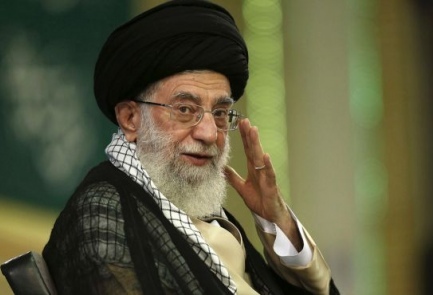
143522169662385559a_bIranian Ayatollah Ali Khamenei | Photo credit: AP

In Tehran on Tuesday, Khamenei spoke about his country’s “red lines.” Red lines? Can someone maybe explain what those are to the Obama administration?

********************

Iranian Ayatollah Ali Khamenei feels confident enough, only a few days before June 30 (the deadline for a final-status nuclear deal with world powers), to thumb his nose at the international community, including the American government, and declare Iran’s three noes: no to freezing its nuclear program, no to international oversight at its nuclear facilities, no to a phased lifting of sanctions (as proposed by the French). In other words, Khamenei is telling the world: Dear superpowers — bite me.

Meanwhile, almost simultaneously, we have received an Associated Press report from Vienna that the U.S. and its partners conducting the negotiations with Iran are prepared — for the sake of reaching a deal — to even provide the Iranians with advanced nuclear reactors and equipment. This isn’t a joke.

It’s possible, perhaps, to imagine Khamenei rejecting this generous offer outright because the Americans aren’t also including ballistic missiles in the package. If you’re going to be generous, then you might as well go all the way.

Truth be told, this entire business to this point seems quite like a joke. The problem is that it’s coming at our expense. And it’s also not that funny.

French Foreign Minister Laurent Fabius met on Wednesday with his Saudi counterpart and promised him a “tough deal.” The Saudis are no less worried than we are about a bad deal. But who is promising us a “tough deal?” The French, who ultimately always fall in line with the Americans, whose help they need for more burning issues closer to home (Ukraine)? Who? The Russians? The Chinese? The Americans? The Germans? The British? The truth is, it would be best to trust the Iranians to torpedo the deal on their own, but Khamenei’s and even Iranian President Hassan Rouhani’s promulgations from two weeks ago aren’t enough to scare anyone off.

In November 2013, as a reminder, we were just several days before the interim agreement. I remember how the Iranian and Western delegations leaked information about the many difficulties in the negotiations, but that in the end, in the middle of the night, the deal was born (how shocking). Eventually, we saw virtually the same scenario unfold in Lausanne this past March — the numerous problems were made public, the deadline was extended by a few days, and finally on April 2 we received the framework deal.

We can assume that in the coming days we will get to see “the best show in town,” at the end of which, in contrast to the previous rounds, we can expect a final status deal with an Iran that is not only slated to become a nuclear power but a stabilizing force in our crumbling Middle East.

In Tehran on Tuesday, Khamenei spoke about his country’s “red lines.” Red lines? Can someone maybe explain what those are to the Obama administration?

Can these forces stop a rotten Iran deal?

June 25, 2015

Can these forces stop a rotten Iran deal? The Washington Post, Jennifer Rubin, June 25, 2015

(Ms. Rubin is one of the Washington Post’s token conservatives, and anything she says is routinely disparaged by many WaPo readers. Others? Not so much. — DM)

Between the press leaks revealing serial concessions, the public incoherence of Secretary of State John Kerry and Ayatollah Ali Khamenei’s public declarations, the forces opposing an imminent Iran deal have plenty of material to work with. And if there is any doubt as to Israel’s position, opposition leader Isaac Herzog — whom President Obama dearly hoped would replace Prime Minister Benjamin Netanyahu, made clear what Israel-watchers already knew:

“There is no difference between me and [Prime Minister Benjamin] Netanyahu in reading the threat of Iran,” Herzog said in an interview with The Telegraph. “There is no daylight between us on this issue at all. I do not oppose the diplomatic process.

However, the proof of the pudding is in the eating.

We want to know ‘what is the deal?’ What’s the best deal possible that can be reached and would it change the region in a better direction? And here we are worried.”

In the article, Telegraph chief foreign correspondent David Blair appeared to express frustration that Herzog did not come across as opposing Netanyahu on Iran.

“If the US administration hoped that Mr. Herzog might dilute Israel’s visceral suspicion of an imminent nuclear deal with Iran, however, then he seems likely to disappoint,” Blair wrote.

There is no divide in the country at large, with 80 percent of Israelis declaring they have no confidence in President Obama’s handling of Iran.

Most GOP presidential hopefuls have decried the president’s giveaways. On Wednesday, former Texas governor Rick Perry, for example, put out a statement, which read in part: “In reckless pursuit of any agreement, President Obama has conceded point after point after point. Iran has used deadlines and extensions as a tactic for eliciting still more concessions from the U.S. We are well past the time where further concessions are tolerable if we still intend to prevent Iran from getting a nuclear weapons capability rather than manage its breakout time. This agreement is shaping up to spark a nuclear arms race in the Middle East and increase the odds of a devastating and catastrophic military conflict in the future. President Obama should abandon these dangerous negotiations and resume international sanctions until Iran understands and accepts that they cannot have a nuclear weapon.”

Meanwhile, the most influential Democrat on Iran, Sen. Robert Menendez (N.J.), has been taking to the Senate floor on a regular basis to denounce the reported concessions. On Wednesday, former Bill Clinton secretary of defense William Cohen denounced the deal as likely to start a nuclear arms race: “Once you say they are allowed to enrich, the game is pretty much up in terms of how do you sustain an inspection regime in a country that has carried on secret programs for 17 years and is still determined to maintain as much of that secrecy as possible.” He echoed multiple critics who saw it was all downhill once Obama did an about-face on the Syrian red line: “It was mishandled and everybody in the region saw how it was handled. And I think it shook their confidence in the administration. … The Saudis, the UAE and the Israelis were all concerned about that. They are looking at what we say, what we do, and what we fail to do, and they make their judgments. In the Middle East now, they are making different calculations.” (While Sen. Lindsey Graham strongly supported military action, none of the other three senators running for president did.)

More bipartisan opposition comes from ex-lawmakers. The American Security Initiative, headed by former senators Joe Lieberman (I-Conn.), Evan Bayh (D-Ind.), Norm Coleman (R-Minn.) and Saxby Chambliss (R-Ga.), announced a $1.4 million ad buy to inform the public about the contents of the imminent deal. Its targets include Democratic Sens. Richard Blumenthal of Connecticut, Michael Bennet of Colorado and Chuck Schumer of New York and independent Angus King of Maine. While Schumer likes to fancy himself as a great friend of Israel, when the chips are down, he has often given the administration cover, as he did in supporting the nomination of former senator Chuck Hagel (R-Neb.) for defense secretary.

In addition, an all-star group of Iran and military experts including former Obama advisers Dennis Ross, Robert Einhorn and Gary Samore warn against a deal that does not include anytime/anywhere inspections, revelation of possible military dimensions of Iran’s program before sanctions relief begins, “strict limits on advanced centrifuge R&D, testing, and deployment in the first ten years, and [measures to] preclude the rapid technical upgrade and expansion of Iran’s enrichment capacity after the initial ten-year period,” gradual lifting of sanctions and no relief from non-nuclear sanctions and a timely mechanism to reimpose sanctions if Iran cheats. In other words, they’ll support a deal utterly unlike the one we are likely to get.

Other voices now are speaking out on the administration’s willingness to lift sanctions while Iran continues its support for terrorism. Manhattan’s long-time Democratic district attorney Robert Morgenthau  (who tracked Iranian finances and relations with dictators in our hemisphere) writes that “the fundamental question to be asked is whether the deal the U.S. is negotiating with Iran will curtail its role as a state sponsor of terrorism. The answer appears to be a resounding no. . . . These sanctions, particularly over the past decade, have given the U.S. powerful leverage. It appears that this leverage is being frittered away as U.S. negotiators bend over backward to strike a deal. But meaningful deals are negotiated from strength; not from desperation. Any deal that fails to address or curtail Iran’s role as a state sponsor of terrorism—and that actually undercuts our ability to confront that threat—is a deal that we must not make.”

There is little doubt that the most prominent pro-Israel organization, the American Israel Public Affairs Committee (AIPAC) will go all-out to defeat the deal if it contains the sorts of concessions reported in the media. As we have noted, it already has begun warning lawmakers and the public of the dangers in a deal that does not stop Iran from getting nuclear weapons.

The White House, aided by every left-wing group it can round up (including persistent Israel antagonist J Street) will try to make this a choice between war and its crummy deal. It will strong-arm every Democrat who will listen. It will gloss over concessions, trying to pass off critics as unfamiliar with the fine print of the deal. Working against the president, however — in addition to the ludicrous concessions — are two factors. He, according to every recent public poll out there, is distrusted on foreign policy. And he is increasingly ineffective in bullying his own party, as we saw on the Corker-Menendez bill giving Congress an up-or-down vote. (If not for GOP leadership in both houses, he’d never have gotten trade-promotion authority.) Still, opponents of the deal do not underestimate the task of getting enough votes in the Congress to override the president’s veto of a resolution of disapproval.

The most interesting figure in all this may be Hillary Clinton. Unlike trade authority, it is inconceivable that she could refuse to take a clear position on an Iran nuclear deal. If she breaks with the president (highly unlikely), the left will attack her mercilessly. If she stands by him she risks — as he does — a bipartisan repudiation and an irate electorate. It is fitting that the biggest loser in this may be Clinton, who initiated engagement with Iran and continually opposed congressional efforts to tighten sanctions. Obama’s name may be on the deal, as the president said, but if there is a deal, it will be a direct result of four years of her Iran policy that set the pattern for her successor.

The Iran scam worsens — Part III, Human rights and support for terrorism

June 22, 2015

The Iran scam worsens — Part  III, Human rights and support for terrorism, Dan Miller’s Blog, June 22, 2015

(The views expressed in this post are mine and do not necessarily reflect those of Warsclerotic or its other editors. — DM)

It is likely that the P5+1 nuke “deal” with Iran will be approved soon. Military and other nuke sites which Iran has not “disclosed” will not be inspected. Nor will Iran’s nuke ties with North Korea — which P5+1 member China seems to be helping, Iran’s massive support for terrorism and abysmal human rights record be considered because they are also deemed unnecessary for “deal” approval. Sanctions against Iran are moribund and will not be revived regardless of whether there is a “deal.” However, a bronze bust of Obama may soon be displayed prominently in Supreme Leader Khamenei’s office and one of Khamenei may soon be displayed proudly in Dear Leader Obama’s office.

Iran fenced in

Iranian support for terrorism

According to the U.S. State Department, The Islamic Republic of Iran continued its sponsorship of terrorism during 2014. The linked article observes,

Iran has increased its efforts to finance and carry out terrorist activities across the world and remains a top nuclear proliferation threat, according to a new State Department assessment. [Emphasis added.]

Iran is funding and arming leading terrorist groups in the Middle East and elsewhere, according to the State Department’s 2014 Country Reports on Terrorism, which thoroughly documents how Tehran continues to act as a leading sponsor terror groups that pose a direct threat to the United States.

The report comes as Western powers work to finalize a nuclear deal with Iran ahead of a self-imposed June 30 deadline, though it is unclear whether the new findings will come up in negotiations.

It seems clear that the new findings will not be considered.

Among many other terrorist organizations, Iran supports the Taliban.

Afghan and Western officials say Tehran has quietly increased its supply of weapons, ammunition and funding to the Taliban, and is now recruiting and training their fighters, posing a new threat to Afghanistan’s fragile security.

Iran’s strategy in backing the Taliban is twofold, these officials say: countering U.S. influence in the region and providing a counterweight to Islamic State’s move into the Taliban’s territory in Afghanistan. [Emphasis added.]

According to James Clapper, the U.S. Director of National Intelligence, the intelligence community considers Iran to be the “foremost state sponsor of terrorism.”

The assessment came after criticism from the Senate that the information was omitted in a global threat assessment submitted to Congress [in February of this year.] Initially, Iran and Hezbollah were not included as terror threats in the intelligence community’s report to the Senate in February. [Emphasis added.]

Might the Obama administration have been trying to ignore Iran’s continuing support for terrorist activities because of its fixation on getting a “deal” with Iran in the ongoing P5+1 “negotiations?” Probably, but that was then. Now, it is apparently not a problem to report on Iran’s terrorist activities because they are deemed unworthy of consideration by the P5+1 negotiators. It’s terrible, but so what?

Iran is the world’s biggest sponsor of terrorism. Its tentacles have a hold on Syria, Lebanon, Iraq, Afghanistan, Yemen and the Gaza Strip. Its terrorist operations know no border and its proxies partake in mass killings and war crimes. But as it has been demonstrated time and time again, the West appears unperturbed by all that. It views Iran as a potentially constructive state actor, which, as long as it gets its way, could serve to stabilize the region. [Emphasis added.]

Iran could, of course, “stabilize” the region with its own military and its terror proxies in much the same way that Hitler tried to “stabilize” Europe — by gaining military control and forcing his ideology on subjugated residents. At first, there was some resistance but that was shown to be useless as Britain under Chamberlain gave Hitler Czechoslovakia. Eventually, Britain and later her ally, the United States, became sufficiently upset to intervene militarily.

As noted in an article at Asia Times on Line, the “free world” is unwilling to confront Iranian hegemony:

For differing reasons, the powers of the world have elected to legitimize Iran’s dominant position, hoping to delay but not deter its eventual acquisition of nuclear weapons. Except for Israel and the Sunni Arab states, the world has no desire to confront Iran. Short of an American military strike, which is unthinkable for this administration, there may be little that Washington can do to influence the course of events. Its influence has fallen catastrophically in consequence of a chain of policy.

. . . .

President Obama is not British prime minister Neville Chamberlain selling out to Hitler at Munich in 1938: rather, he is Lord Halifax, that is, Halifax if he had been prime minister in 1938. Unlike the unfortunate Chamberlain, who hoped to buy time for Britain to build warplanes, Halifax liked Hitler, as Obama and his camarilla admire Iran. [Emphasis added.]

The bountiful windfall soon to be given to Iran if the P5+1 “deal” is approved, via a “signing bonus” and other Sanctions relief, will help Iran’s terror sponsorship.

[S]hould the “treaty” with Iran be consummated, this sponsor of global terrorism will receive at least $100 billion in sanctions relief. Not only will this money be used for Assad, but it will bankroll Hezbollah and Hamas with a new generation of rockets and weapons.

For Tehran, money buys weapons, and weapons buy power and influence. President Obama is counting on an accommodative Iran that receives foreign assistance. But is there any reason to embrace this hypothesis? And even if someone does, at what point can the International Atomic Energy Agency (IAEA), or any other relevant body, determine the turnabout in Iran’s nuclear program? How do we know when a genuine peace has arrived? [Emphasis added.]

Iranian leaders have made it clear that dreams of a Persian kingdom dance like sugar plums in their imagination. For that to happen, the money pump cannot run dry. There is a need to support their Houthi surrogates in Yemen; resupply Hamas rockets that were destroyed in the last war with Israel; continue to add to the Hezbollah war machine that is poised to attack Israel; and keep Assad afloat, the mechanism by which control of Lebanon is retained. [Emphasis added.]

Iran’s abysmal human rights record is getting worse

Executions in Iran

According to Iranian Human Rights,

[T]he Iranian regime has executed a prisoner every two hours this month.

“So far in 2015, more than 560 have been executed, and we are just in the first half of the year… What we are witnessing today is not so much different from what ISIS is doing. The difference is that the Iranian authorities do it in a more controlled manner, and represent a country which is a full member of the international community with good diplomatic relations with the West.” — Mahmood Amiry-Moghaddam, spokesman for Iran Human Rights. [Emphasis added.]

Now the West, with the possibility of a nuclear deal, stands to increase Iran’s diplomatic standing.

According to officials of the Islamic Republic of Iran,

Iran has “the best human rights record” in the Muslim world;[11] that it is not obliged to follow “the West’s interpretation” of human rights;[12] and that the Islamic Republic is a victim of “biased propaganda of enemies” which is “part of a greater plan against the world of Islam“.[13] According to Iranian officials, those who human rights activists say are peaceful political activists being denied due process rights are actually guilty of offenses against the national security of the country,[14] and those protesters claiming Ahmadinejad stole the 2009 election are actually part of a foreign-backed plot to topple Iran’s leaders.[15] [Emphasis added.]

Conclusions

Iran’s abysmal and already worsening records of human rights violations and support for terrorism will likely get even worse as it gets (or gets to keep) the bomb, along with a reward of massive further sanctions relief. None of that is deemed worthy of consideration by the P5+1 “negotiators,” lest Iran decline to sign a deal or lest its feelings be hurt — as they would be were IAEA inspections of “undisclosed” sites be demanded or if any Iranian demands were not met.

Iran and North Korea share not only nuclear weaponization technology; they also share a common contempt for human rights. Yet the North Korea – Iran nuclear nexus (denied by Iran) appears to be of no concern to the P5+1 “negotiators.”

Obama long ago “opened his heart” to the Muslim world.

“To the Muslim world, we seek a new way forward based on mutual interest and mutual respect,” Obama declared in his first inaugural address. The underlying assumption was that America’s previous relations with Muslims were characterized by dissention and contempt. More significant, though, was the president’s use of the term “Muslim world,” a rough translation of the Arabic ummah. A concept developed by classical Islam, ummah refers to a community of believers that transcends borders, cultures, and nationalities. Obama not only believed that such a community existed but that he could address and accommodate it.

The novelty of this approach was surpassed only by Obama’s claim that he, personally, represented the bridge between this Muslim world and the West.

ALL of My policies are the best ever

ALL of My policies are the best ever

Obama does deserve some credit: His foreign policies are the most foreign in U.S. history to the security of the United States and of what’s left of the free world. Much the same is true of His domestic policies.

Islamic Hate for the Christian Cross

June 22, 2015

Islamic Hate for the Christian Cross, Front Page Magazine, June 22, 2015 (Originally published by PJ Media.)

(Apparently Obama, who appears to favor Islam over all other religions, hopes that when The Islamic Republic of Iran gets or gets to keep the bomb and enjoys lots of sanctions relief its behavior toward non-Muslims will improve. — DM

pc

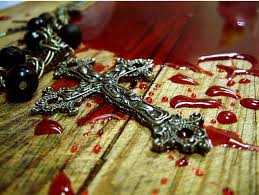
Islamic hostility to the cross is an unwavering fact of life—one that crosses continents and centuries; one that is very much indicative of Islam’s innate hostility to Christianity.

********************

Last May in Italy, a Muslim boy of African origin beat a 12-year-old girl during school because she was wearing a crucifix around her neck. The African schoolboy, who had only started to attend the school approximately three weeks earlier, began to bully the Christian girl—“insulting her and picking on her in other ways all because she was wearing the crucifix”—before he finally “punched the girl violently in the back.”

What is it about the Christian cross that makes some Muslims react this way?

The fact is, Islamic hostility to the cross is an unwavering fact of life—one that crosses continents and centuries; one that is very much indicative of Islam’s innate hostility to Christianity.

Doctrine and History

Because the Christian cross is the quintessential symbol of Christianity—for all denominations, including most forms of otherwise iconoclastic Protestantism—it has been a despised symbol in Islam.

According to the Conditions of Omar—a Medieval text which lays out the many humiliating stipulations conquered Christians must embrace to preserve their lives and which Islamic history attributes to the second “righteous caliph,” Omar al-Khattab—Christians are “Not to display a cross [on churches]… and “Not to produce a cross or [Christian] book in the markets of the Muslims.”

The reason for this animosity is that the cross symbolizes the fundamental disagreement between Christians and Muslims. According to Dr. Sidney Griffith, author of The Church in the Shadow of the Mosque, “The cross and the icons publicly declared those very points of Christian faith which the Koran, in the Muslim view, explicitly denied: that Christ was the Son of God and that he died on the cross.” Thus “the Christian practice of venerating the cross and the icons of Christ and the saints often aroused the disdain of Muslims,” so that there was an ongoing “campaign to erase the public symbols of Christianity, especially the previously ubiquitous sign of the cross.”

Islam’s hostility to the cross, like all of Islam’s hostilities, begins with the Muslim prophet Muhammad. He reportedly “had such a repugnance to the form of the cross that he broke everything brought into his house with its figure upon it.” He once ordered someone wearing a cross to “take off that piece of idolatry” and claimed that at the end times Jesus himself would make it a point to “break the cross”—an assertion the Islamic State regularly makes.

Islamic history following Muhammad is riddled with anecdotes of Muslims cursing and breaking crosses. Prior to the Battle of Yarmuk in 636, which pitted the earliest invading Muslim armies against the Byzantine Empire, Khalid bin al-Walid, the savage “Sword of Allah,” told the Christians that if they wanted peace they must “break the cross” and embrace Islam, or pay jizya and live in subjugation—just as his Islamic State successors are doing today in direct emulation. The Byzantines opted for war.

In Egypt, Saladin (d. 1193)—regularly touted in the West for his “magnanimity”—ordered “the removal of every cross from atop the dome of every church in the provinces of Egypt,” in the words of The History of the Patriarchate of the Egyptian Church.

Europe: Growing Violence against the Cross

Centuries later, not much has changed concerning Islam’s position towards the cross, though much has changed in Western perceptions. In other words, an African boy punching a Christian girl in Italy for her crucifix is part of a long continuum of Islamic hostility for the cross. Perhaps he learned this hatred in mosque—the same European mosques where Islamic State representatives call Muslims to jihad?

After all, earlier this year in Italy, another crucifix was destroyed in close proximity to a populated mosque.  The municipality’s Councilor, Giuseppe Berlin, did not mince words concerning the identity of the culprit(s):

Before we put a show of unity with Muslims, let’s have them begin by respecting our civilization and our culture. We shouldn’t minimize the importance of certain signals; we must wake up now or our children will suffer the consequences of this dangerous and uncontrolled Islamic invasion.

Nor is Italy the only European nation experiencing this phenomenon. In neighboring France, a “young Muslim” committed major acts of vandalism at two churches.  Along with twisting a massive bronze cross, he overturned and broke two altars, the candelabras and lecterns, destroyed statues, tore down a tabernacle, smashed in a sacristy door and even broke some stained-glass windows.  (Click for images.)

And in Germany, a Turkish man who checked himself into a hospital for treatment went into a sudden frenzy because there were “too many crosses on the wall.”  He called the nurse a “bitch” and “fascist” and became physically aggressive.

Of course, other times Europeans willingly capitulate to Islamic hostility for the cross. Real Madrid, a professional football (soccer) team in Spain reportedly stripped the traditional Christian cross from its club crest as part of a deal with the National Bank of Abu Dhabi—“so as not to offend Muslim sensibilities in the United Arab Emirates.” And in the United Kingdom, offensive crucifixes are being removed from prisons in order not to offend Muslim inmates (who are further provided with food baths for Islamic rituals).

Muslim World: Christians Killed for the Cross

If this is how some Muslims react to the Christian cross in Europe—where Muslims are aware of their outnumbered, minority status—how do other Muslims react to the cross in the Islamic world, where vastly outnumbered and ostracized Christian “infidels” are easy prey?

The answer is murderous—literally, Christians are being murdered by Muslims provoked at the sight of the cross:

Last year in Egypt, a young Coptic Christian woman named Mary was mauled to death—simply because her cross identified her as a Christian to Muslim Brotherhood rioters.   According to an eyewitness who discussed the episode, Mary Sameh George was parking her car by the church to deliver medicine to an elderly woman:

Once they [Brotherhood rioters] saw that she was a Christian [because of the cross hanging on her rearview mirror], they jumped on top of the car, to the point that the vehicle was no longer visible. The roof of the car collapsed in.  When they realized that she was starting to die, they pulled her out of the car and started pounding on her and pulling her hair—to the point that portions of her hair and scalp came off.  They kept beating her, kicking her, stabbing her with any object or weapon they could find….  Throughout [her ordeal] she tried to protect her face, giving her back to the attackers, till one of them came and stabbed her right in the back, near the heart, finishing her off.  Then another came and grabbed her by the hair, shaking her head, and with the other hand slit her throat.  Another pulled her pants off, to the point that she was totally naked.

In response, the Coptic Christian Church issued the following statement: “Oh how lucky you are, Mary, you who are beloved of Christ.  They tore your body because of the Cross.  Yet they offered you the greatest service and gave you a name of honor as one who attained the crown of martyrdom.” The statement also quoted Christ’s warning to believers: “Yes, the time is coming that whoever kills you will think that he offers God service” (John 16:2).

In October 2011, seventeen-year-old Ayman Nabil Labib, a Coptic student, was strangled and beaten to death by his Muslim teacher and some fellow students—simply for refusing to obey the teacher’s orders to remove his cross. Student eyewitnesses present during the assault said that while Ayman was in the classroom he was told to cover up his tattooed wrist cross, which many Copts wear. Not only did he refuse, but he defiantly produced the pectoral cross he wore under his shirt, which prompted the enraged Muslim teacher and students to beat the Christian youth to death.

Before that, an off-duty Muslim police officer on a train from Asyut to Cairo shouted “Allahu Akbar!” and opened fire on six Christians, killing a seventy-one-year-old man and critically wounding the rest. Before opening fire he had checked for passengers with the traditional Coptic cross tattooed on their wrists. (Days ago, another Coptic woman was “shot dead by an Egyptian police officer. Although officially an “accident,” the Muslim officer is notorious for hating Christians.)

In Pakistan, when a Muslim man saw Julie Aftab, a Christian woman, wearing a cross around her neck,

The man became abusive, shouting at her that she was living in the gutter and would go to hell for shunning Islam. He left and returned half an hour later, clutching a bottle of battery acid which he savagely chucked over her head. As she ran screaming for the door a second man grabbed her by the hair and forced more of the liquid down her throat, searing her esophagus. Teeth fell from her mouth as she desperately called for help, stumbling down the street. A woman heard her cries and took her to her home, pouring water over her head and taking her to hospital. At first the doctors refused to treat her, because she was a Christian. ‘They all turned against me . . . even the people who took me to the hospital. They told the doctor they were going to set the hospital on fire if they treated me’. . . . 67 percent of her esophagus was burned and she was missing an eye and both eyelids. What remained of her teeth could be seen through a gaping hole where her cheek had been. The doctors predicted she would die any day. Despite the odds she pulled through.

All this because she was wearing a cross.

Even in Muslim nations deemed “moderate,” violence provoked by the cross is not uncommon. In 2012, a 12-year-old boy in Turkey who converted to Christianity and decided to profess his new faith by wearing a silver cross necklace in class was spit on and beat regularly by Muslim classmates and teachers.

In the Maldives, October 2010, authorities had to rescue Geethamma George, a Christian teacher from India, after Muslim “parents threatened to tie and drag her off of the island” for “preaching Christianity.” Her crime was simply to draw a compass in class as part of a geography lesson. The compass was mistaken for the Christian cross.

Christians ‘Killed’ Again for the Cross

If some Muslims kill the wearers of the cross, so do they disturb the slumber of those already dead for having the cross on their tombstones. A few of the many examples follow:

  • Libya, March 2012: A video of a Muslim mob attacking a commonwealth cemetery near Benghazi appeared on the internet. As the Muslims kicked down and destroyed headstones with crosses on them, the man videotaping them urged them to “Break the cross of the dogs!” while he and others cried “Allahu Akbar!” Towards the end of the video, the mob congregated around the huge Cross of Sacrifice, the cemetery’s cenotaph monument, and started to hammer at it, to more cries of “Allahu Akbar.”Other Christian cemeteries in post-“Arab Spring” Libya have suffered similarly.
  • France, April 2015: Christian crosses and gravestones in a cemetery weredamaged and desecrated by a Muslim. After being apprehended, he was described as follows: “The man repeats Muslim prayers over and over, he drools and cannot be communicated with: his condition has been declared incompatible with preliminary detention.” He was hospitalized as “mentally unbalanced.” (See his handiwork.)
  • Malaysia, February 2014: AChristian cemetery was attacked and desecrated in the middle of the night by unknown persons in the Muslim majority nation.  Several crosses were destroyed, including by the use of “a heavy tool to do the damage.”
  • Germany, June 2014: After Muslims were granted their own section at a cemetery in Seligenstadt, and after being allowed to conduct distinctly Islamic ceremonies, these same Muslims begandemanding that Christian symbols and crosses in the cemetery be removed or covered up during Islamic funerals.

—–

One can go on and on with more recent examples of Islam’s hostility to the cross. Last April in “moderate” Malaysia, a Muslim mob rioted against a small Protestant church due to the visible cross atop the building of worship. It was quickly removed.

And in Pakistan, a nation where the mere accusation of offending Islam get Christians burned alive—a Muslim shopkeeper is allowed to sell shoes which depict the Christian cross on their sole: “In Pakistani culture, showing the sole of one’s shoe or foot is offensive because placing anything on the ground is considered to be an insult to the object. Therefore, something on the sole of a shoe is going to be constantly insulted as the person walks.”

From an African School Boy in Italy to ‘ISIS’

In light of the above, it should come as no surprise that the Islamic State—“ISIS”—also exhibits violence to the Christian cross.   In its communiques to the West, hostile reference to the cross is often made: “We will conquer your Rome, break your crosses, and enslave your women, by the permission of Allah…. [We will cast] fear into the hearts of the cross worshippers….”

After carving the heads of Coptic Christians off in Libya, the lead executioner waved his dagger at the camera and said, “Oh people, recently you have seen us on the hills of as-Sham and Dabiq’s plain [Syrian regions], chopping off the heads that have been carrying the cross for a long time.  And today, we are on the south of Rome, on the land of Islam, Libya, sending another message.”  He concluded by declaring: “We will fight you [Christians/Westerners] until Christ descends, breaks the cross and kills the pig” (all eschatological actions ascribed to the Muslim “Christ,” Isa).

Moreover, the Islamic State has committed countless atrocities against and because of the cross: it made and disseminated a video showing its members smashing crosses in and atop churches in territories under its sway; it beheaded and stabbed a man with his own crucifix after it exposed him as a Christian; and it published pictures of its members destroying Christian crosses and tombstones in cemeteries under its jurisdiction — and quoted Islamic scriptures justifying its actions.

Careful readers will note the similar parallels here: destroying crosses in churches and cemeteries and even killing Christian “infidels” for wearing them, as documented above, is not limited to “ISIS” but is happening all around the Muslim world, and even in Europe.

In short, Islam’s age-old hatred for the Christian cross—and what it represents—is not a product of the Islamic State, but of Islam.
Obama offers further concessions to keep Iran nuclear deal alive

June 17, 2015

Obama offers further concessions to keep Iran nuclear deal alive, Breitbart, John Hayward, June 17, 2015

ap_barack-obama_ap-photo9-640x493

Why is current intransigence — the refusal to engage in honest disclosure about past activities — not taken as a very major clue about Iran’s likelihood to make good on assurances about the future? This is like waving aside the arrest record of an infamous thief to hire him as a bank security guard, insisting that what he writes on his employment application today matters far more than whatever the cops were so upset about a few years ago.

*****************

As if the Iran nuclear deal farce were not ridiculous enough already, President Obama is ready to reward Tehran for its intransigence once again.

Until now, a sticking point in the deal was Iran’s refusal to come clean about its history of nuclear cheating, to establish an honest baseline from which future compliance can be measured. Secretary of State John Kerry just signaled the Administration is willing to unstick this point and give Iran what it wants, immediate sanctions relief, without resolving those issues.

“In his first State Department news conference since breaking his leg last month in a bicycling accident, Mr. Kerry suggested major sanctions might be lifted long before international inspectors get definitive answers to their longstanding questions about Iranian experiments and nuclear design work that appeared aimed at developing a bomb. The sanctions block oil sales and financial transfers,” the New York Times reports.

In a video conference from Boston, Kerry said, “We’re not fixated on Iran specifically accounting for what they did at one point in time or another. It’s critical to us to know that going forward, those activities have been stopped, and that we can account for that in a legitimate way. That clearly is one of the requirements in our judgment for what has to be achieved in order to have a legitimate agreement.”

The move reveals this “nuclear deal” as a bit of badly-staged theater in which Obama pretends to be securing Peace In Our Time by working out a tough deal, when in reality Iran is completely driving this process, extracting one concession after another from Obama because they know he cannot afford to walk away from the table. Obama’s concern about his reputation and political legacy, and the damage to his party that would result in the 2016 election cycle if his much-ballyhooed deal falls apart, trump any and all concerns he has about exactly when Iran gets the bomb.

Without knowing what Iran has been up to in the past, it is impossible to accurately judge whether they are complying with whatever sketchy agreement they sign now. The New York Times does a good job of explaining this, and warning that capitulation to Iran will set a dangerous example to other aspiring rogue nuclear states:

Those favoring full disclosure of what diplomats have delicately called the “possible military dimensions” of Iranian nuclear research say that the West will never know exactly how long it would take Iran to manufacture a weapon — if it ever developed or obtained bomb-grade uranium or plutonium — unless there is a full picture of its success in suspected experiments to design the detonation systems for a weapon and learn how to shrink it to fit atop a missile.

For a decade, since obtaining data from an Iranian scientist on a laptop that was spirited out of the country, the C.I.A. and Israel have devoted enormous energy to understanding the scope and success of the program.

Failing to require disclosure, they argue, would also undercut the atomic agency — a quiet signal to other countries that they, too, could be given a pass.

Support for the concessions Kerry teases is based on the idea that Iran will never allow its national pride to be injured by divulging the details of its past mischief. When only one side in a negotiation is permitted to introduce its pride as leverage, that is the winning side. The people trading away vital security considerations to curry favor with the prideful party are the losers.

The Times finds Kerry suggesting “assurances about the future were more important than excavating the past.” What good are those assurances when there is no evidence on where the Iranian program stands on the day a new deal is signed?

Why is current intransigence — the refusal to engage in honest disclosure about past activities — not taken as a very major clue about Iran’s likelihood to make good on assurances about the future? This is like waving aside the arrest record of an infamous thief to hire him as a bank security guard, insisting that what he writes on his employment application today matters far more than whatever the cops were so upset about a few years ago.

No one on Earth, outside the Obama White House and its friends in U.S. media, will interpret capitulation on this issue as anything less than a major victory for Iran. As Lawrence J. Haas notes at U.S. News and World Reportthe White House was loudly insisting it would never make this concession, just a few months ago. “They have to do it. It will be done. If there’s going to be a deal, it will be done,” Haas recalls Kerry saying in a PBS interview in April. But suddenly they don’t have to do it, and it won’t be done.

Another discarded scrap of Obama rhetoric will be the President’s repeated assurances that Iran is X number of years away from having a nuclear weapon. Without the historical evidence Iran refuses to provide, there is really no way to be sure how far Iran is from a deliverable weapon. Once again, it seems as if Obama’s major concern is making sure it happens after he collects a round of applause for striking a “historic” deal, enters a comfortable retirement, and watches the whole mess become someone else’s problem.

State Dept Struggles to Explain Massive Nuke Concessions To Iran

June 13, 2015

State Dept Struggles to Explain Massive Nuke Concessions To Iran, Washington Free Beacon via You Tube, June 12, 2015


Iran Backs Taliban With Cash and Arms

June 12, 2015

Iran Backs Taliban With Cash and Arms, Wall Street Journal, Margherita Stancati, June 11, 2015

The White House-supported international nuclear talks with Iran that are scheduled to finish this month face world-wide criticism for potentially setting up a new regional dynamic in which Tehran, unfettered by punitive economic sanctions and flush with new resources, would be able to pursue an activist agenda through its proxies in and around the Middle East. Tehran’s growing ties to the Taliban is another sign of that, these critics say.

U.S. officials declined to comment specifically about closer Iran-Taliban ties, but have said that its diplomacy with Iran doesn’t alter its concerns about Iran’s destabilizing influence in the region. Director of National Intelligence James Clapper said in a recent letter to lawmakers that Iran was the “foremost state sponsor of terrorism.”

**************************

“Iran supplies us with whatever we need,” he said.

Afghan and Western officials say Tehran has quietly increased its supply of weapons, ammunition and funding to the Taliban, and is now recruiting and training their fighters, posing a new threat to Afghanistan’s fragile security.

Iran’s strategy in backing the Taliban is twofold, these officials say: countering U.S. influence in the region and providing a counterweight to Islamic State’s move into the Taliban’s territory in Afghanistan.

The Taliban’s aggressive military push and the new momentum toward peace negotiations between them and Kabul also raises the possibility that some of their members could eventually return to power.

“Iran is betting on the re-emergence of the Taliban,” said a Western diplomat. “They are uncertain about where Afghanistan is heading right now, so they are hedging their bets.”

Iranian officials didn’t respond to requests for comment, but Tehran has repeatedly denied providing financial or military aid to the Taliban in conversations with Afghan and Western officials. “Whenever we discussed it, they would deny it,” a former senior Afghan official said.

The developing Iran-Taliban alliance represents a new complication in Mr. Obama’s plans for both the Middle East and the future of Afghanistan, where the U.S. has been working to curb the Taliban’s role ahead of a planned withdrawal of all but 1,000 U.S. troops at the end of his presidency in 2016. At its peak in 2011 there were 100,000 U.S. troops.

The White House-supported international nuclear talks with Iran that are scheduled to finish this month face world-wide criticism for potentially setting up a new regional dynamic in which Tehran, unfettered by punitive economic sanctions and flush with new resources, would be able to pursue an activist agenda through its proxies in and around the Middle East. Tehran’s growing ties to the Taliban is another sign of that, these critics say.

Rep. Ed Royce (R., Calif.), chairman of the House Foreign Affairs Committee, said Iran’s support to the Taliban could increase if a nuclear deal is signed and Iran wins sanction relief.

“Across the region, Iran is stepping up its support for militants and rebel groups,” Mr. Royce said. “With billions in sanctions relief coming, that support goes into overdrive.”

Sen. John McCain (R., Ariz), chairman of the Armed Services Committee, said Iran’s increased support to the Taliban is a continuation of its aggressive behavior in Yemen, Syria, Iraq and Lebanon. “This is further evidence of the administration’s continued willful disregard for the facts on the ground in light of Iranian aggression in the region,” he said.

U.S. officials declined to comment specifically about closer Iran-Taliban ties, but have said that its diplomacy with Iran doesn’t alter its concerns about Iran’s destabilizing influence in the region. Director of National Intelligence James Clapper said in a recent letter to lawmakers that Iran was the “foremost state sponsor of terrorism.”

The Taliban have long used Pakistani territory as their main recruiting base and headquarters. But Afghan and Western officials say Iran, through its elite Revolutionary Guard Corps, has emerged as an important ally for the Taliban.

What’s more, they say, Tehran is turning to Afghan immigrants within its borders—a tactic it has also used to find new recruits to fight in support of President Bashar al-Assad’s regime in Syria.

Mr. Abdullah is one of those Iranian-backed Taliban fighters. After being detained for working as an illegal laborer in the Iranian port city of Bandar Abbas, Mr. Abdullah said he was approached by an Iranian intelligence officer.

“He asked me how much money I made, and that he would double my salary if I went to work for them in Afghanistan,” he said.

Mr. Abdullah said smugglers hired by Iran ferry supplies across the lawless borderlands where Iran, Afghanistan and Pakistan meet and deliver them to Taliban units in Afghan territory. He said his fighters receive weapons that include 82mm mortars, light machine guns, AK-47 rifles, rocket-propelled grenades and materials for making roadside bombs.

Military and intelligence officials see Iran’s support to the Taliban as an alliance of convenience. Historically, relations between Iran, a Shiite theocracy, and the hard-line Sunni Taliban have been fraught. Iran nearly went to war against the Taliban regime in 1998 after 10 of its diplomats were killed when their consulate in the northern Afghan city of Mazar-e Sharif was overrun.

Iran didn’t oppose the overthrow of the Taliban in 2001, and it has since maintained friendly relations with the Western-backed government in Kabul.

But Iran has long been uneasy with the U.S. military presence on its doorstep, and the Revolutionary Guard Corps have been delivering weapons to the Taliban since at least 2007, according to an October 2014 report by the U.S. Department of Defense.

Iran’s alliance with the Taliban took a new turn in June 2013 when Tehran formally invited a Taliban delegation to participate in a conference on Islam and to meet senior Iranian officials.

By the fall of that year, Afghan security officials said they had clear evidence that Iran was training Taliban fighters within its borders. Tehran now operates at least four Taliban training camps, according to Afghan officials and Mr. Abdullah, the Taliban commander. They are in the Iranian cities of Tehran, Mashhad and Zahedan and in the province of Kerman.

“At the beginning Iran was supporting Taliban financially,” said a senior Afghan official. “But now they are training and equipping them, too.”

The drawdown of U.S. and allied troops has made it easier for Taliban fighters and smugglers to cross the porous border undetected. “In the past, the U.S. had significant surveillance capabilities,” said Sayed Wahid Qattali, an influential politician from the western city Herat, where Iran has long had influence. “But now that the Americans have left, Iran is a lot freer.”

Iran formalized its alliance with the Taliban by allowing the group to open an office in Mashhad, maintaining a presence there since at least the beginning of 2014, a foreign official said. The office has gained so much clout that some foreign officials are now referring to it as the “Mashhad Shura,” a term used to describe the Taliban’s leadership councils.

One of the main points of contact between Tehran and the insurgency is head of the Taliban’s Qatar-based political office, Tayeb Agha, Afghan and foreign officials said. His most recent trip to Iran was in mid-May, the insurgent group said. The Taliban deny they receive support from Iran or any other foreign country, but say they want good relations with Afghanistan’s neighbors.

Iran’s backing of the Taliban has a strategic rationale. Tehran is already battling Islamic State, also known as Daesh, in Syria and Iraq, and it is wary of a new front line emerging close to its eastern border, Afghan officials say.

“Iran seeks to counter Daesh with the Taliban,” said an Afghan security official.

For the Taliban, Islamic State militants represent a threat of a different kind: they are competitors. Since an offshoot of Islamic State announced plans to expand in Afghanistan and Pakistan earlier this year, the new group has been actively recruiting fighters, many of whom are disaffected Taliban, say residents and Afghan officials.

This has pitted the two rival jihadist groups against each other, with clashes erupting between them in provinces including Helmand in the south, Nangarhar in the east and specifically involving Iran-backed Taliban in Farah, near Iran’s border, Afghan officials say.

Iranian funding gives more options to the militant group, support that is beginning to have an impact on the battlefield.

“If it wasn’t for Iran, I don’t think they would’ve been able to push an offensive like they are doing now,” said Antonio Giustozzi, a Taliban expert who has tracked Iran’s involvement in Afghanistan.

In recent months, security in Afghanistan’s west and north deteriorated sharply compared to last year, as Taliban fighters amassed in large numbers, testing the ability of Afghan troops to hold their ground.

It’s unclear, however, how far Iran will go to promote the Taliban.

“They wouldn’t want the Taliban to become too strong,” said a second foreign official. “They just want to make sure that they have some levers in their hands, because if the Taliban would win, God forbid, then they would lose all their leverage.”

Islamic State at Israel’s Gate

June 12, 2015

Islamic State at Israel’s Gate, Front Page Magazine, June 12, 2015

(According to Israel National News

Late on Thursday night “color red” rocket sirens were sounded in the southern coastal city of Ashkelon, as well as throughout the Ashkelon Coast regional council.

At least one rocket was identified as having been fired from Gaza, but IDF officials said it is believed the rocket exploded inside Gaza. No rockets were found in Israeli territory.

— DM)

ISIS-in-Gaza-404x350

All this is happening while the Obama administration, by the president’s own admission, has no clear strategy to defeat ISIS. At the same time, President Obama’s “strategy” to deal with Iran is to make concession after concession in order to secure any nuclear deal he can, including the possibility of providing Iran with relief from sanctions that were imposed for non-nuclear related reasons such as Iran’s support for terrorist activities

In short, Israel is facing Iran-backed Hamas from the south, Iran-backed Hezbollah from the north, and an expanding Islamic State presence north and south of Israel and within Israel itself. And that is before Iran gets its hands on a nuclear bomb and the Islamic State has enough radioactive material to build its own weapons of mass destruction.

*****************

Jihadists affiliated with the Islamic State (also known as ISIS or ISIL) are carrying on the rocket war against Israeli civilians from where Hamas left off. Following several rocket attacks in the last several weeks for which the Islamic State has taken credit, rockets launched from Gaza Thursday night exploded in the Ashkelon area.

Israel is still holding Hamas responsible for the attacks as the governing authority in Gaza.

“The IDF understands that Hamas wants quiet and is making an effort to prevent the shooting, but the State of Israel still sees Hamas as responsible for what happens in Gaza,” said Sami Turgeman, head of IDF’s Southern Command.

The Israeli military responded with measured attacks on Hamas facilities, while at the same time trying to avoid setting off a wider war at this time.  But Israel’s hand is being forced by the Islamic State, which is evidently working assiduously to supplant Hamas as the authoritative Islamic power in Gaza. The Gaza branch calls itself the Sheikh Omar Hadid Brigade. It is cooperating with another ISIS-affiliated group operating in the Sinai Peninsula, which calls itself Ansar Bayt al-Maqdis.

According to a June 8th report by Debkafile, “Islamic State operatives in the Gaza Strip have been helping themselves to Hamas rockets in recent weeks after furtively penetrating the factory teams operating the group’s production and assembly lines… The jihadis then secretly passed the stolen rockets to their squads for launching against Israel.”

On June 7th Debkafile noted in more general terms Hamas’s loss of control in Gaza in the face of Islamic State infiltration: “The terror infrastructure Hamas built over many years in Sinai has been taken over by ISIS, and its control of the Gaza Strip is slipping, as yet more radical and violent organizations eat away at its authority and seize control of the rocket offensive against Israel.”

Thus, even as Hamas remains committed to the destruction of Israel and is trying to re-build its arms stockpiles with Iran’s help, it is engaged simultaneously in its own battles with the Islamic State. Hamas has arrested some ISIS supporters and bulldozed a Sunni mosque believed to have been used by ISIS affiliated jihadists, while Hamas’s own facilities have come under attack by ISIS affiliated jihadists. Hamas also claimed in a message to Israeli authorities, routed through an Egyptian intermediary, that jihadists affiliated with the Islamic State were deliberately trying to spark a renewed war between Israel and Hamas.

The Islamic State is also trying to position itself to challenge Israel from the north. Israeli TV Channel 2 reported last week that the Islamic State is moving forces in the direction of the Golan Heights and the Israeli border.

Moreover, ISIS is developing an increasing presence within Israel itself. Recruits, influenced by ISIS’s slick social media promotions, are attracted to ISIS’s self-declared purer Islamic ideology. Hamas is apparently too “moderate” for these jihadists’ tastes.

“Dozens of Israeli Arabs and Palestinians have travelled to Syria and Iraq to join insurgent groups.” Israel’s Shin Bet domestic intelligence agency said in a statement released last January 4th. Israel had announced that it managed to crack one Islamic State cell on its soil and arrested its alleged members. An Israeli security official described the cell as “just the tip of the iceberg.”

Last July, the Islamic State previewed its intentions in a statement that it issued regarding jihad against Israel:

As for the massacres taking place in Gaza against the Muslim men, women and children, then the Islamic State will do everything within its means to continue striking down every apostate who stands as an obstacle on its paths towards Palestine. It is only [a] matter of time and patience before it (Islamic State) reaches Palestine to fight the barbaric Jews and kill those of them hiding behind the gharqad trees – the trees of the Jews.

Arutz Sheva reported that a spokesperson for the Islamic State, Nidal Nuseiri, urged patience as the Islamic State wanted first to consolidate its control over Arab Muslim lands, but “reaffirmed that conquering ‘Bayt el-Maqdis’ (Jerusalem) and destroying the State of Israel is central to the group’s jihad.” Thanks to President Obama’s dithering, the Islamic State is well on its way to achieving such consolidation in Iraq and Syria, while spreading to Libya.

At least three questions arise from the emergence of ISIS as a direct threat to Israel. Will Israeli military and security forces, either on their own or in concert with Jordan and Egypt, take on ISIS directly, including going after ISIS’s command and control centers with far more firepower than the Obama administration has used thus far?

To what extent will Israel be willing to outsource military operations against ISIS affiliates in Gaza to Hamas, much as it has outsourced some security operations to the Palestinian Authority in the West Bank? Major-General Turgeman tried to cast Hamas as the lesser of two evils, since, he claimed, “Israel and Hamas have shared interests, including in the current situation, which is quiet and calm and growth and prosperity.” Hamas “does not want global jihad,” he added. This is a truly incredible assertion coming from an Israeli military leader about a group willing to put its own citizens and their homes in harm’s way in order to launch their own thousands of rockets against Israel. What happened to Israeli Prime Minister Benjamin Netanyahu’s concise description of Hamas and the Islamic State as “branches of the same poisonous tree?” This just further demonstrates how completely insane the Middle East has become.

Finally, how successful will Iran be in exploiting the chaotic situation in Gaza, positioning itself as it has in Iraq as an enemy of ISIS, while further bolstering Hamas to Israel’s detriment?

All this is happening while the Obama administration, by the president’s own admission, has no clear strategy to defeat ISIS. At the same time, President Obama’s “strategy” to deal with Iran is to make concession after concession in order to secure any nuclear deal he can, including the possibility of providing Iran with relief from sanctions that were imposed for non-nuclear related reasons such as Iran’s support for terrorist activities.

In short, Israel is facing Iran-backed Hamas from the south, Iran-backed Hezbollah from the north, and an expanding Islamic State presence north and south of Israel and within Israel itself. And that is before Iran gets its hands on a nuclear bomb and the Islamic State has enough radioactive material to build its own weapons of mass destruction.

Undoing Sanctions

June 11, 2015

Undoing sanctions, Power LineScott Johnson, June 10, 2015

(Please see also, US finds peeling back the Iran sanctions onion no easy task, here. — DM)

The AP has just broken the story by Bradley Klapper and Matt Lee regarding the prospective unraveling of the sanctions regime in its entirety. Their story is “US finds peeling back the Iran sanctions onion no easy task.” It’s an important story and Omri Ceren has written to comment on it as follows:

There’s a lot going on in this piece, it’s 1,100 words, and it gets highly technical very early. But it’s also functionally an exposé of how the Obama administration is going to shred the entire sanctions regime despite having promised lawmakers the exact opposite, and so the story will rightly be driving the discussion for the next couple of days at least.

Background — Throughout the P5+1 negotiations, but especially since Lausanne, the Obama administration has declared to lawmakers and reporters that the final deal will only lift nuclear-related sanctions on Iran. The talking point was a huge part of their immediate post-Lausanne media strategy. The April 2 factsheet they circulated stated “U.S. sanctions on Iran for terrorism, human rights abuses, and ballistic missiles will remain in place under the deal.” Since then the assurance has become even more central to their media strategy. It’s the overarching argument they use to respond to Congressional and Arab worries that the nuclear deal will empower Iran to become a regional hegemon capable of threatening American national interests and global security. The precise wording differs from presser to presser and interview to interview, but it’s usually something like ‘our problems with Iran go way beyond the nuclear issue, and in the aftermath of a deal we will continue to pressure them on human rights, terrorism, their conventional military activities, and so on.’

AP scoop #1 – admin is going to roll back non-nuclear sanctions — The lede is blunt: “the Obama administration may have to backtrack on its promise that it will suspend only nuclear-related economic sanctions.” The story reveals that sanctions that were imposed on Iran to block illicit finance and ballistic missile development will also be rolled back. 23 out of 24 currently sanctioned Iranian banks will be delisted, including the staggeringly crucial Central Bank of Iran. There’s no way to credibly spin delisting the CBI as nuclear-related relief. The CBI is government owned and – as the AP article notes – was designated as a primary money laundering concern because the Iranians use it for financing terrorism, ballistic missile research, and campaigns aimed at bolstering the Assad regime in Syria. Secondary sanctions that prevent other countries from flooding Iran with cash will also be removed.

The result, per the article, will make “it easier for Iran’s Revolutionary Guard Corps and its police, intelligence services and paramilitary groups to do business.” It’s a 180 degree reversal of years of administration assurances that the Iranians would only get nuclear-related relief, and that sanctions relating to Iran’s non-nuclear military and terror-related activities would remain. In a broader context, it means the final deal will give Iran hundreds of billions of dollars to do what they want, while dropping restrictions might have prevented them from using the money to fund their ballistic missile program, global terror activities, or regional proxy wars.

AP scoop #2 — the administration pushback — Here’s where things get very strange very quickly. Everybody agrees the administration committed to rolling back only nuclear-related sanctions. Everybody now agrees the administration will also be lifting sanctions on things like ballistic missile development. But Obama officials told the AP that they’re not backtracking because… if you think about it, almost all sanctions are sort of nuclear related in a way. The key graf from the AP story reads: “Officials say the administration can meet its obligations because of how it interprets nuclear sanctions. For example, they say measures designed to stop Iran from acquiring ballistic missiles are nuclear-related because they were imposed to push Iran into the negotiations. Also, they say sanctions that may appear non-nuclear are often undergirded by previous actions conceived as efforts to stop Iran’s nuclear program.”

This is gaslighting. It’s just not true. It’s just not how things happened. Of course Congress has imposed sanctions on Iran over its nuclear work, but lawmakers also imposed sanctions over the funding of conventional IRGC activities, human rights abuses, global terrorism, ballistic missile development, and a range of other activities. The Comprehensive Iran Sanctions, Accountability, and Divestment Act of 2010 was about nuclear issues, but also separately about terrorism, ballistic missile development, and non-nuclear WMDs (the very first provision is the sunset provision and involves Presidential certification; the first requirement has zero to do with nuclear work and is entirely about international terrorism; the second requirement separates out nuclear, biological, and chemical weapons from ballistic missile technology and requires certification on all of them). In 2011 Treasury identified the entire country of Iran as a jurisdiction of primary money laundering concern, which is an illicit finance issue. That finding was then cited at the top of the 2011 Kirk-Menendez amendment to the 2012 defense authorization bill, which was about terrorism….

To believe that ballistic missile sanctions are nuclear sanctions you’d have to believe that Congress never tried to impose sanctions because of all of the other things that Iran can put on top of their ballistic missiles. That’s just not how the laws read. The claim isn’t even defensible in the context of the current round of Iran negotiations. If anything it’s less defensible. The interim JPOA and the final JCPOA have never treated ballistic missiles as a nuclear issue and they’ve always distinguished between ballistic missile sanctions and nuclear-related sanctions. There’s no debate about this:

– The JPOA by design froze all Iranian nuclear-related activity, but there were zero restrictions on ballistic missiles.
– The JPOA prohibited the United States from imposing new nuclear-related sanctions, but in April 2014 the Treasury Department issued new designations related to Iranian ballistic missile procurement activities.
– Again, the April 2 Lausanne factsheet describing the JCPOA stated flat out “U.S. sanctions on Iran for terrorism, human rights abuses, and ballistic missiles will remain in place under the deal.”