Posted tagged ‘Russia’

Direct aggression by US against Damascus to cause ‘tectonic shift’ in Middle East

October 2, 2016

Direct aggression by US against Damascus to cause ‘tectonic shift’ in Middle East – Moscow

Published time: 1 Oct, 2016 10:22 Edited time: 1 Oct, 2016 18:19

Source: Direct aggression by US against Damascus to cause ‘tectonic shift’ in Middle East – Moscow — RT News


FILE PHOTO Residents in Midan, a Christian district of Aleppo, hit by mortar shelling. © Mikhail Alayeddin
If the US launches a military campaign to oust the Syrian government, it would further fracture the country and have tremendous negative long-term consequence for the entire region, Russian Foreign Ministry spokesperson Maria Zakharova warned.
Read more

Russian Foreign Minister Sergei Lavrov © Mikhail Voskresenskiy

If the US launches a direct aggression against Damascus and the Syrian Army, it would cause a terrible, tectonic shift not only in the country, but in the entire region,” Maria Zakharova said during a talk show, which is to be aired fully later on Saturday and has been cited by RIA.

With no government in Damascus, there will be a power vacuum in Syria, which “so-called moderates, who are, in reality, not moderate at all but just terrorists of all flavors, would fill; and there will be no dealing with them,” the diplomat predicted.

And later it would be aggravated the way it happened in Iraq. We know that [Saddam Hussein’s] Iraqi Army became the basis of the Islamic State. Everything that both the [US-led] coalition and Russia are fighting now stems from it,” Zakharova said.

Russia and the US are accusing each other over the collapse of the ceasefire which was signed last month, but has failed. The US says Moscow did not do enough to win the trust of rebel forces and to prevent the government of Syrian President Bashar Assad from attacking his opponents. Russia says Washington was incapable of separating ‘moderate rebels’ from terrorist groups and keeping them in check for the truce to take hold.

READ MORE: US had never had ‘Plan A’ for Syria, West a root cause of crisis – Syrian UN envoy to RT

With the collapse of the deal, the Syrian government launched an offensive on rebel-held areas of Aleppo, a city divided between the Syrian Army and dozens of armed groups, including Al Qaeda off-shoot Al-Nusra Front.

The US acknowledged that it had not been going after Al-Nusra Front for months because the terrorists intermingled with ‘moderates’ and the civilian population. At the same time, it accused Moscow and Damascus of war crimes, citing civilian deaths caused by the renewed hostilities in Aleppo.

Russia has voiced concern that the US was deliberately shielding Al-Nusra Front from military action by Russia and Syria, hoping that the terrorist group would help oust the Syrian government.

Meet the New Authoritarian Masters of the Internet

September 29, 2016

Meet the New Authoritarian Masters of the Internet

by John Hayward

29 Sep 2016

Source: Meet the New Authoritarian Masters of the Internet – Breitbart

Getty Images

President Barack Obama’s drive to hand off control of Internet domains to a foreign multi-national operation will give some very unpleasant regimes equal say over the future of online speech and commerce.

In fact, they are likely to have much more influence than America, because they will collectively push hard for a more tightly controlled Internet, and they are known for aggressively using political and economic pressure to get what they want.

Here’s a look at some of the regimes that will begin shaping the future of the Internet in just a few days, if President Obama gets his way.

China

China wrote the book on authoritarian control of online speech. The legendary “Great Firewall of China” prevents citizens of the communist state from accessing global content the Politburo disapproves of. Chinese technology companies are required by law to provide the regime with backdoor access to just about everything.

The Chinese government outright banned online news reporting in July, granting the government even tighter control over the spread of information. Websites are only permitted to post news from official government sources. Chinese online news wasn’t exactly a bastion of freedom before that, of course, but at least the government censors had to track down news stories they disliked and demand the site administrators take them down.

Unsurprisingly, the Chinese Communists aren’t big fans of independent news analysis or blogging, either. Bloggers who criticize the government are liable to be charged with “inciting subversion,” even when the writer in question is a Nobel Peace Prize winner.

Chinese citizens know better than to get cheeky on social media accounts, as well. Before online news websites were totally banned, they were forbidden from reporting news gathered from social media, without government approval. Spreading anything the government decides is “fake news” is a crime.

In a report labeling China one of the worst countries for Internet freedom in the world, Freedom House noted they’ve already been playing games with Internet registration and security verification:

The China Internet Network Information Center was found to be issuing false digital security certificates for a number of websites, including Google, exposing the sites’ users to “man in the middle” attacks.

The government strengthened its real-name registration laws for blogs, instant-messaging services, discussion forums, and comment sections of websites.

A key feature of China’s online censorship is that frightened citizens are not entirely certain what the rules are. Huge ministries work tirelessly to pump out content regulations and punish infractions. Not all of the rules are actually written down. As Foreign Policy explained:

Before posting, a Chinese web user is likely to consider basic questions about how likely a post is to travel, whether it runs counter to government priorities, and whether it calls for action or is likely to engender it. Those answers help determine whether a post can be published without incident — as it is somewhere around 84 percent or 87 percent of the time — or is instead likely to lead to a spectrum of negative consequences varying from censorship, to the deletion of a user’s account, to his or her detention, even arrest and conviction.

This was accompanied by a flowchart demonstrating “what gets you censored on the Chinese Internet.” It is not a simple flowchart.

Beijing is not even slightly self-conscious about its authoritarian control of the Internet. On the contrary, their censorship policies are trumpeted as “Internet sovereignty,” and they aggressively believe the entire world should follow their model, as the Washington Post reported in a May 2016 article entitled “China’s Scary Lesson to the World: Censoring the Internet Works.”

China already has a quarter of the planet’s Internet users locked up behind the Great Firewall. How can anyone doubt they won’t use the opportunity Obama is giving them, to pursue their openly stated desire to lock down the rest of the world?

Russia

Russia and China are already working together for a more heavily-censored Internet. Foreign Policy reported one of Russia’s main goals at an April forum was to “harness Chinese expertise in Internet management to gain further control over Russia’s internet, including foreign sites accessible there.”

Russia’s “top cop,” Alexander Bastrykin, explicitly stated Russia needs to stop “playing false democracy” and abandon “pseudo-liberal values” by following China’s lead on Internet censorship, instead of emulating the U.S. example. Like China’s censors, Russian authoritarians think “Internet freedom” is just coded language for the West imposing “cultural hegemony” on the rest of the world.

Just think what Russia and China will be able to do about troublesome foreign websites, once Obama surrenders American control of Internet domains!

Russian President Vladimir Putin has “chipped away at Internet freedom in Russia since he returned to the Kremlin in 2012,” as International Business Times put it in a 2014 article.

One of Putin’s new laws requires bloggers with over 3,000 readers to register with the government, providing their names and home addresses. As with China, Russia punishes online writers for “spreading false information,” and once the charge is leveled, it’s basically guilty-until-proven-innocent. For example, one of the “crimes” that can get a blogger prosecuted in Russia is alleging the corruption of a public official, without ironclad proof.

Human-rights group Agora estimates that Russian Internet censorship grew by 900% in 2015 alone, including both court orders and edicts from government agencies that don’t require court approval. Censorship was expected to intensify even further throughout 2016. Penalties include prison time, even for the crime of liking or sharing banned content on social media.

Putin, incidentally, has described the entire Internet as a CIA plot designed to subvert regimes like his. There will be quite a few people involved in the new multi-national Internet control agency who think purging the Web of American influence is a top priority.

The Russian government has prevailed upon Internet Service Providers to block opposition websites during times of political unrest, in addition to thousands of bans ostensibly issued for security, crime-fighting, and anti-pornography purposes.

Many governments follow the lead of Russia and China in asserting the right to shut down “extremist” or “subversive” websites. In the United States, we worry about law enforcement abusing its authority while battling outright terrorism online, arguing that privacy and freedom of speech must always be measured against security, no matter how dire the threat. In Russia, a rough majority of the population has no problem with the notion of censoring the Internet in the name of political stability, and will countenance absolutely draconian controls against perceived national security threats. This is a distressingly common view in other nations as well: stability justifies censorship and monitoring, not just physical security.

Turkey

Turkey’s crackdown on the Internet was alarming even before the aborted July coup attempt against authoritarian President Recep Tayyip Erdogan.

Turkey has banned social media sites, including temporary bans against even giants like Facebook and YouTube, for political reasons. Turkish dissidents are accustomed to such bans coming down on the eve of elections. The Turkish telecom authority can impose such bans without a court order, or a warning to offending websites.

Turkey is often seen as the world leader in blocking Twitter accounts, in addition to occasionally shutting the social media service down completely, and has over a 100,000 websites blacklisted. Criticizing the government online can result in anything from lost employment to criminal charges. And if you think social-media harassment from loyal supporters of the government in power can get pretty bad in the U.S., Turks sometimes discover that hassles from pro-regime trolls online are followed by visits from the police.

Turkish law infamously makes it a crime to insult the president, a law Erdogan has already attempted to impose beyond Turkey’s borders. One offender found himself hauled into court for creating a viral meme – the sort of thing manufactured by the thousands every hour in America – that noted Erdogan bore a certain resemblance to Gollum from Lord of the Rings. The judge in his case ordered expert testimony on whether Gollum was evil to conclusively determine whether the meme was an illegal insult to the president.

The Turkish example introduces another idea common to far too many of the countries Obama wants to give equal say over the future of the Internet: intimidation is a valid purpose for law enforcement. Many of Turkey’s censorship laws are understood to be mechanisms for intimidating dissidents, raising the cost of free speech enough to make people watch their words very carefully. “Think twice before you Tweet” might be good advice for some users, but regimes like Erdogan’s seek to impose that philosophy on everyone. This runs strongly contrary to the American understanding of the Internet as a powerful instrument that lowers the cost of speech to near-zero, the biggest quantum leap for free expression in human history. Zero-cost speech is seen as a big problem by many of the governments that will now place strong hands upon the global Internet rudder.

Turkey is very worried about “back doors” that allow citizens to circumvent official censorship, a concern they will likely bring to Internet control, along with like-minded authoritarian regimes. These governments will make the case that a free and open Internet is a direct threat to their “sovereign right” to control what their citizens read. As long as any part of the Internet remains completely free, no sector can be completely controlled.

Saudi Arabia

The Saudis aren’t too far behind China in the Internet rankings by Freedom House. Dissident online activity can bring jail sentences, plus the occasional public flogging.

This is particularly lamentable because Saudi Arabia is keenly interested in modernization, and sees the Internet as a valuable economic resource, along with a thriving social media presence. Freedom House notes the Internet “remains the least repressive space for expression in the country,” but “it is by no means free.”

“While the state focuses on combatting violent extremism and disrupting terrorist networks, it has clamped down on nonviolent liberal activists and human rights defenders with the same zeal, branding them a threat to the national order and prosecuting them in special terrorism tribunals,” Freedom House notes.

USA Today noted that as of 2014, Saudi Arabia had about 400,000 websites blocked, “including any that discuss political, social or religious topics incompatible with the Islamic beliefs of the monarchy.”

At one point the blacklist included the Huffington Post, which was banned for having the temerity to run an article suggesting the Saudi system might “implode” because of oil dependency and political repression. The best response to criticism that your government is too repressive is a blacklist!

The Saudis have a penchant for blocking messaging apps and voice-over-IP services, like Skype and Facetime. App blocking got so bad that Saudi users have been known to ask, “What’s the point of having the Internet?”

While some Saudis grumble about censorship, many others are active, enthusiastic participants in enforcement, filing hundreds of requests each day to have websites blocked. Religious figures supply many of these requests, and the government defends much of its censorship as the defense of Islamic values.

As with other censorious regimes, the Saudi monarchy worries about citizens using web services beyond its control to evade censorship, a concern that will surely be expressed loudly once America surrenders its command of Internet domains.

For the record, the Saudis’ rivals in Iran are heavy Internet censors too, with Stratfor listing them as one of the countries seeking Chinese assistance for “solutions on how best to monitor the Iranian population.”

North Korea

You can’t make a list of authoritarian nightmares without including the psychotic regime in Pyongyang, the most secretive government in the world.

North Korea is so repressive the BBC justly puts the word “Internet” in scare quotes, to describe the online environment. It doesn’t really interconnect with anything, except government propaganda and surveillance. Computers in the lone Internet cafe in Pyongyang actually boot up to a customized Linux operating system called “Red Star,” instead of Windows or Mac OS. The calendar software in Red Star measures the date from the birth of Communist founder Kim Il-sung, rather than the birth of Christ.

The “Internet” itself is a closed system called Kwangmyong, and citizens can only access it through a single state-run provider, with the exception of a few dozen privileged families that can punch into the real Internet.

Kwangmyong is often compared to the closed “intranet” system in a corporate office, with perhaps 5,000 websites available at most. Unsurprisingly, the content is mostly State-monitored messaging and State-supplied media. Contributors to these online services have reportedly been sent to re-education camps for typos. The North Koreans are so worried about outside contamination of their closed network that they banned wi-fi hotspots at foreign embassies, having noticed information-starved North Korean citizens clustering within range of those beautiful, uncensored wireless networks.

This doesn’t stop South Koreans from attempting cultural penetration of their squalid neighbor’s dismal little online network. Lately they’ve been doing it by loading banned information onto cheap memory sticks, tying them to balloons, and floating them across the border.

Sure, North Korea is the ultimate totalitarian nightmare, and since they have less than two thousand IP addresses registered in the entire country, the outlaw regime won’t be a big influence on Obama’s multi-national Internet authority, right?

Not so fast. As North Korea expert Scott Thomas Bruce told the BBC, authoritarian governments who are “looking at what is happening in the Middle East” see North Korea as a model to be emulated.

“They’re saying rather than let in Facebook, and rather than let in Twitter, what if the government created a Facebook that we could monitor and control?” Bruce explained.

Also, North Korea has expressed some interest in using the Internet as a tool for economic development, which means there would be more penetration of the actual global network into their society. They’ll be very interested in censoring and controlling that access, and they’ll need a lot more registered domains and IP addresses… the very resource Obama wants America to surrender control over.

Bottom line: contrary to left-wing cant, there is such a thing as American exceptionalism – areas in which the United States is demonstrably superior to every other nation, a leader to which the entire world should look for examples. Sadly, our society is losing its fervor for free expression, and growing more comfortable with suppressing “unacceptable” speech, but we’re still far better than anyone else in this regard.

The rest of the world, taken in total, is very interested in suppressing various forms of expression, for reasons ranging from security to political stability and religion. Those governments will never be comfortable, so long as parts of the Internet remain outside of their control. They have censorship demands they consider very reasonable, and absolutely vital. The website you are reading right now violates every single one of them, on a regular basis.

There may come a day we can safely remand control of Internet domains to an international body, but that day is most certainly not October 1, 2016.

Dangerous Weakness in Iraq and Syria

September 23, 2016

Dangerous Weakness in Iraq and Syria, Counter Jihad, September 22, 2016

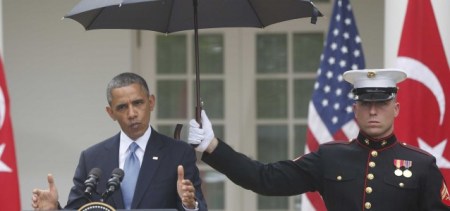
umbrellaman

US Secretary of State John F. Kerry “urges” Russia and Syria to ground their military aircraft after the destruction of a humanitarian aid convoy. Meanwhile, in the eastern part of that same theater, American and Iraq forces came under a sulfur mustard (commonly known as “mustard gas”) attack from the Islamic State (ISIS).

This is not the first use of sulfur mustard by ISIS and their predecessors.  They used them in IEDs against American forces during the Iraq War, and against Kurdish forces as late as last year.  Nevertheless, they clearly do not fear to use them against Americans at this time.  Whatever message we are conveying to ISIS, it does not include a proper respect for violating the laws of war when dealing with our soldiers.

Likewise, the Russians are not going to ground their aircraft just because we ask them to do.  In fact, the Russians are sending their only active aircraft carrier to join the war in Syria.  Defying an empty “urging” by our Secretary of State is just another way for Russia to show that they, and not we, are in control of the conflict.

Syrian jets, meanwhile, came close to bringing American forces under aerial attack for the first time since World War II.  Only good fortune kept American soldiers from being killed by Syrian bombs.  Fighters had to be scrambled to prevent additional sorties by the Syrian bombers.

In addition to Russia, Syria, and ISIS, Iran’s challenges against US Navy forces are up 50% from last year.  The Iranians are violating international law on a regular and consistent basis in challenging American fleet ships over access to international waters.

According to U.S. officials, the incidents all involved the IRGC, which operates a navy in parallel to Iran’s regular naval force, and whose leaders answer directly to Iranian Supreme Leader Ayatollah Ali Khamenei, Defense News reported.

Ten American sailors and their two boats were seized by IRGC naval forces in January of this year in violation of international law.

Subsequent to the sailors’ release, Iran portrayed their capture as a victory against the U.S., releasing the sailors after claiming that Washington apologized for the incident. Khamenei proclaimed that the naval forces who captured the sailors did “God’s deed” and issued medals to the commanders involved, while the IRGC announced plans to build a statue to commemorate the seizure.

In May, the deputy commander of the IRGC threatened to close the strategic Straits of Hormuz to the U.S. and its allies if they “threaten us,” adding: “Americans cannot make safe any part of the world.”

The U.S. Navy reported last month that in 2015, there were close to 300 encounters or “interactions” between American and Iranian naval vessels in the Persian Gulf. While most of the encounters were not considered to be harassment, the behavior of the Iranian navy was found to be less disciplined than that of other navies.

Weakness is provocative in a military conflict.  Refusing to embrace strong measures that would control these aggressive moves is exactly how American servicemen get killed.  Across the Middle East, our President’s predilection for weakness is putting American lives in grave [danger.]

‘Position of strength’: NATO to deploy 4,000-strong ‘deterrent’ near Russia’s borders by May

September 19, 2016

‘Position of strength’: NATO to deploy 4,000-strong ‘deterrent’ near Russia’s borders by May

Published time: 18 Sep, 2016 23:35

Source: ‘Position of strength’: NATO to deploy 4,000-strong ‘deterrent’ near Russia’s borders by May — RT News


NATO is set to deploy a “deterrent” and possible “fighting” force of some 4,000 troops to the Baltic region by next May. The chief of the European Command has called on the alliance to approach Russia from a “position of strength.”

The announcement of the 4,000-strong contingent took place as military leaders from the military bloc gathered in Split, Croatia over the weekend. At the summit, Czech Army Gen. Petr Pavel said four battle groups will be sent to the region at different times in the first half of 2017.

Read more

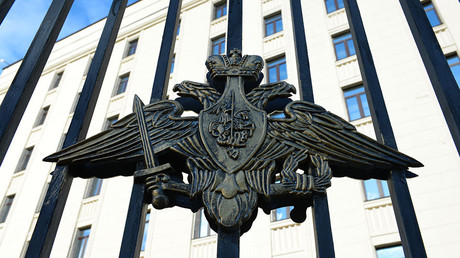
Emblem on the fence of the building of the Russian Defense Ministry on Frunzenskaya Embankment in Moscow. © Natalia Seliverstova

“With these four battle groups, we are not talking about exclusively about a training presence,” he said, according to Wall Street Journal.

“This force is to serve as a deterrent and if necessary as a fighting force. The rules will be different,” Pavel added.

The Croatian General pointed out that the new NATO force in the Baltic is planned to be commanded from the Polish division headquarters with US Army Gen. Curtis Scaparrotti overseeing any deployment of the new NATO force.

US officials told the publication that about 1,000 soldiers, will come from the 2nd Cavalry Regiment based in Vilseck, Germany, and are due to arrive in Poland by April. In addition to US contingent that will be sent to Poland, Germany will send forces to Lithuania. Canada is expected to offer troops to Latvia and the UK will deploy a battle group in Estonia. Norway, Denmark and France as well as other NATO states will be supplementing those forces.

“There are many strands of work,” Gen. Pavel said. “We are trying to come up with the big picture so we are assured the measures we are taking are well-coordinated, mutually supportive and we are not working in different directions.”

The military personnel will be deployed in close proximity to Russia’s northwestern borders in line with the newly-approved multinational task force that was agreed at the NATO summit in Poland in July.

Read more

© Evgeny Biyatov

At the summit in Croatia, the head of NATO operations in Europe tried to unite the alliance’s members to approach Russia from a “position of strength.”

While stressing that opportunities to collaborate with Russia do exist, Scaparrotti noted that “In the view of the allies, I can tell you from this conference that they recognize Russia’s a challenge in many areas.”

Pavel, meanwhile, called for a “pragmatic” but “firm” approach to Russia.

READ MORE: Russia forms brand-new task force to counter NATO buildup in Eastern Europe

Following the Warsaw summit, Russia has proposed that NATO follows a “positive program” for developing relations, aimed at decreasing tensions between Moscow and the US-led military bloc. Relations between Moscow and NATO soured sharply after Russia’s reunion with Crimea and the eruption of the military conflict in Ukraine in 2014.

Moscow considers NATO’s new troop deployment, as well as the increased number of military drills near Russian territory, the creation of anti-ballistic missile sites in Europe and other moves, a threat to Russia’s national security.

Russia Accuses US Of Defending ISIS, After Pentagon Admits Coalition Jets Killed 62 Syrian Soldiers

September 18, 2016

Russia Accuses US Of Defending ISIS, After Pentagon Admits Coalition Jets Killed 62 Syrian Soldiers

Source: Russia Accuses US Of Defending ISIS, After Pentagon Admits Coalition Jets Killed 62 Syrian Soldiers | Zero Hedge

Update 4:  The Obama administration officially expressed it’s “regret” for an airstrike that killed Syrian forces with a senior White House official saying “The United States has relayed our regret through the Russian Federation for the unintentional loss of life of Syrian forces.”

Meanwhile, the U.S. UN envoy called Russia’s request for an emergency Security Council meeting a “stunt.”


Russia’s U.N. Ambassador Vitaly Churkin responded by saying that the U.S. airstrike that struck Syrian government troops has put “a very big question mark” over the future of the U.S. and Russian-brokered cease-fire agreement in Syria adding that in his decades as a diplomat he had “never seen such an extraordinary display of American heavy-handedness as we are witnessing today.”

* * *

Update 3: Russia’s foreign ministry says it has “reached the terrifying conclusion” that the US is conniving with the Islamic State. As ABC reports, Russia has called for an emergency session of the United Nations Security Council over a U.S. air raid that it says struck Syrian troops battling the Islamic State group. Spokeswoman Maria Zakharova says Moscow is demanding “full and detailed explanations about whether this was deliberate support of the Islamic State or another mistake.”

Zakharova was quoted by the state news agency Tass as saying that “after today’s attack on the Syrian army, we come to the terrible conclusion that the White House is defending the Islamic State.”

The U.S. military says it halted an air raid against IS in eastern Syria after it was informed by Russia that it might have struck Syrian troops. If confirmed, it would be the first American strike on President Bashar Assad’s forces in the five-year-old conflict. The allegations come as Moscow and Washington are already at loggerheads over a five-day-old Syrian cease-fire, with each accusing the other of failing to fully implement it.

It appears this major diplomatic scandal is only starting to play out.

* * *

Update 2: it appears that Russia is angry, and has called a UN Security Council session, while reporting that Washington never announced any plans to conduct raids in the region in question:

Update: Centcom has issued a statement admitting the killing of over 60 Syrian troops was a mistake.


Earlier:

If the latest news out of Syria are confirmed, one can not only kiss last weekend’s so-called “ceasefire” goodbye, but a full blown war may be about to erupt. The reason: moments ago the Syrian Army General Command reported, and shortly thereafter the Russian military confirmed, that US-coalition forces struck the Syrian airbase at Deir el-Zour, killing at least 62 Syrian army troops, “paving the way” for ISIS militants to advance in the fiercely contested area..

According to Syria’s official SANA news agency, the bombing took place on al-Tharda Mountain in the region of Deir ez-Zor and caused casualties and destruction on the ground.

Sixty-two Syrian soldiers were killed and over 100 injured in the airstrike by the US-led coalition, Russia’s Defense Ministry spokesman, Major-General Igor Konashenkov, confirmed citing information received from the Syrian General Command.

There was no immediate comment from Washington. If confirmed, the attack could be tantamount to an act of war as it would be the first time the coalition has targeted Syrian government forces.  Subsequently, the Pentagon told RT that it is “aware of the reports and checking with Centcom and CJTF (Combined Joint Task Force).”


U.S. Secretary of State John Kerry (R) and Russian Foreign Minister

 Sergei Lavrov walk into their meeting room in Geneva, Switzerland

In a statement Saturday, the Syrian military says the airstrikes caused casualties and damage to equipment, and enabled an IS advance on the hill overlooking the air base. The statement calls it a “serious and blatant attack on Syria and its military” and “firm proof of the U.S. support of Daesh and other terrorist groups.” Daesh is an Arabic acronym for IS.

The Russian Defense Ministry said on Saturday that the aircraft which carried out the bombings had entered Syrian airspace from the territory of Iraq.  Four strikes against Syrian positions was performed by two F-16 jet fighters and two A-10 support aircraft, it added.

“Immediately after the airstrike by coalition planes, Islamic State militants launched their offensive. Fierce fighting with the terrorists is currently underway in the area of the airport where for a long a time humanitarian aid for civilians was parachuted,” Konashenkov said.

“If the airstrike was caused by the wrong coordinates of targets than it’s a direct consequence of the stubborn unwillingness of the American side to coordinate with Russia in its actions against terrorist groups in Syria,” Konashenkov stressed. Alternatively, the Syrians – and Russians – may claim that the US coalition attack meant to cripple Syrian army forces, taking the lethal conflict to an entirely new level, one where Syria and Russia are effectively at war with the US coalition.

Meanwhile, it appears that the Assad regime, which recently also garnered the support of Chinese military forces, is preparing for a full-blown escalation: the Syrian General Command has called the bombing a “serious and blatant aggression” against Syrian forces, and said it was “conclusive evidence” that the US and its allies support IS militants.

* * *

Earlier on Saturday, Russia accused the US of being reluctant to take measures to force rebels under its control to fall in line with the terms of the Syrian ceasefire. As RT reported, numerous Russian appeals to the American side remain unanswered, which “raises doubts over the US’s ability to influence opposition groups under their control and their willingness to further ensure the implementation of the Geneva agreements,” senior Russian General Staff official, Viktor Poznikhir, said. Poznikhir also said that the truce is being used by the militants to regroup, resupply and prepare an offensive against government troops.

Last week, Moscow and Washington agreed to influence the Syrian government and the so-called moderate rebel forces respectively in order to establish a ceasefire in the country “over pizza and vodka.”  We were skeptical, and for good reason: one week later it appears that not only is the ceasefire over but a whole new phase in the war may have broken out.

Russia has repeatedly alleged that the US is failing to keep its part of the bargain. The US, on its part, has blamed Russia for not pressuring Damascus enough to facilitate humanitarian access to Syria.

Both allegations may now be moot if Russia decides to retaliate against members of the US-led coalition, or directly against US forces.


U.S. Military: We Meant to Attack Islamic State, Not Syrian Army

September 18, 2016

U.S. Military: We Meant to Attack Islamic State, Not Syrian Army

by Breitbart Jerusalem

17 Sep 2016

Source: U.S. Military: We Meant to Attack Islamic State, Not Syrian Army – Breitbart

Putin has to keep his cool til 20 January 2017 when trump is sworn in as president of the USA

AFP

The BBC reports: The US-led coalition has admitted its planes carried out an attack in eastern Syria that the Russian army says killed at least 62 Syrian troops fighting IS.

The US said its planes halted the attack in Deir al-Zour when informed of the Syrian presence and would not knowingly strike them.

The strikes allowed IS jihadists to advance, the Russians said.

…The US Central Command statement said the coalition believed it was attacking positions of so-called Islamic State and the raids were “halted immediately when coalition officials were informed by Russian officials that it was possible the personnel and vehicles targeted were part of the Syrian military”.

Read the full story here.

Canny Trump already negotiating with Russia

September 9, 2016

Canny Trump already negotiating with Russia, Washington Times

As a former military officer, I learned decades ago that when taking command of new unit, an officer has to be a strict disciplinarian. Rules have to be enforced and your subordinates need to respect and understand you are a determined person who takes your oath of office seriously. In reality, these first few months are a negotiation with your troops. First impressions count, they set the stage for your entire command.

Anyone who has followed this 2016 election cycle should know that Donald Trump is always negotiating. When the GOP nominee was talking about preventing Muslims from coming into the country “until we can figure out what is going on,” he was laying out a hard-line negotiating position that could be softened down the road if need be.

When he talks of deporting 12 million illegal immigrants, he is doing the same thing. Now amid hints of possibly softening that stand, he is seen as moderating and appeals to a larger swath of the electorate. I believe Mr. Trump will do the right thing for America when it comes to immigration, but the point is a negotiator starts negotiating long before the media spotlight highlights the actual bargaining begins.

I think Mr. Trump is doing the same thing with Russian President Vladimir Putin. He is laying the groundwork for what he believes will be future success dealing with Moscow. Mr. Trump has spent time in Russia. He has done business with Russians. He understands how they think. He understands they respect strength, not weakness. He understands they also want to be respected. Mr. Trump’s comments complimenting Mr. Putin as a strong leader “in a different system” are stroking the Russian president’s ego at a time when it will do the most good. The liberal media have freaked out because Mr. Trump refuses to follow the Obama administration line on Russia, but all he is doing is speaking nicely while carrying a big stick.

Mr. Putin has spent a lot of energy recasting the United States as Russia’s No. 1 enemy. Think about it — now that Mr. Trump is very popular among the Russian population, which for the most part yearns for peace just as Americans do, it will be more difficult for the Kremlin to cast America as an existential threat to the Motherland when Mr. Trump is in the White House.

Russians have a 1,000-year-old paranoia regarding the West. They have a deep need to be respected and a desire for prestige. Mr. Trump is playing to those psychological needs. He’s not being naively gushing like George W. Bush, or incompetently appeasing the Russians as Hillary Clinton and President Obama have repeatedly done. He is not narcissistically demeaning Russia is a third-rate power that doesn’t make anything, as our president has insinuated. He’s not making fun of Mr. Putin’s slouch. He is treating the Russian president as a leader worthy of respect, while at the same time looking out for the best interests of the United States.

Mr. Trump has not said he will surrender Western principles or values in the face of future Russian aggression. On the contrary, he wants to rebuild the U.S. military “so that no one will dare mess with us.” That has to give the Kremlin and the oligarchs pause. In the long run, rebuilding our hard and soft power at home will do more to enhance our national security than making promises we can’t or won’t keep. Our government owes $20 trillion, for heaven’s sake.

Mr. Trump’s comments on NATO members paying their fair share for defense are also spot on. The truth is that we do not have an alliance if all the other countries rely on the American nuclear umbrella while attacking our companies for monopolistic practices and tax violations in their own courts. Oh, the hypocrisy!

Russia belongs at the geopolitical table as a great power. Its history demands that. Mr. Trump is certainly aware of this and, by publicly acknowledging the fact, has cleverly already put down the opening marker in his negotiations with Mr. Putin. Mr. Trump’s not being what Lenin once called a “useful idiot” for Russia. He’s simply working the art of the deal.

Netanyahu and Abbas agree ‘in principle’ to meet, Russia says

September 8, 2016

Netanyahu and Abbas agree ‘in principle’ to meet, Russia says No confirmation from Jerusalem or Ramallah after latest report of possible face-to-face summit between leaders in Moscow

By Times of Israel staff and AP

September 8, 2016, 1:48 pm

Source: Netanyahu and Abbas agree ‘in principle’ to meet, Russia says | The Times of Israel

Polish President Andrzej Duda (C-R) and Palestinian Authority President Mahmoud Abbas (C-L) inspect an honour guard during an official welcoming ceremony in the courtyard of the presidential palace in Warsaw on September 6, 2016. (AFP PHOTO/JANEK SKARZYNSKI)

The Russian foreign ministry on Thursday said Prime Minister Benjamin Netanyahu and PA President Mahmoud Abbas had agreed “in principle” to meet in Moscow.

According to Russian media reports, the two leaders were willing to sit down for a face-to-face meeting in a bid to revive peace talks.

“Russian foreign ministry confirms willingness to host Netanyahu-Abbas meeting in Moscow, preparations continue,” the Interfax news agency reported. “Israeli, Palestinian leaders agree in principle to meet in Moscow.”

According to ministry spokeswoman Maria Zakharova, Moscow has heard from the offices of Abbas and Netanyahu that the two agreed to meet in the Russian capital, though it’s not clear when that will happen.

“The most important thing is to pick the right timing,” Zakharova told reporters. “Intensive contacts on this are ongoing.”

“We are convinced that there is a need to resume the negotiations, which would be a factor serving the interests in normalizing the situation,” she added, according to the TASS news agency.

There was no immediate response from the Prime Minister’s Office in Israel or officials in the PA. But a source close to the prime minister told the Walla news website that Netanyahu was willing to meet Abbas “anytime, anywhere, on the condition that there are no preconditions.”

The report came days after efforts to broker a meeting between the two became bogged down in mutual accusations that the other side was unwilling to sit down in Moscow.

The two leaders have not met in person since 2010, and peace efforts have continued to falter. Abbas has demanded Israel release Palestinians prisoners and freeze settlement building before meeting, while Netanyahu has said he is willing to meet without preconditions.

The efforts became further complicated Wednesday following an Israeli report on Soviet documents suggesting Abbas was a KGB spy in Damascus in the 1980s, during the time that Mikhail Bogdanov, today Vladimir Putin’s envoy to the Middle East, was stationed there.

The PA leader’s top political adviser said Wednesday Abbas had forgone his long-held preconditions and was planning in earnest to meet Netanyahu in Moscow this Friday, but the summit was spiked by Israel.

“There were no preconditions. That was very clear. When President [Vladimir] Putin invited the two sides, he said, ‘No preconditions.’ President Abbas approved that, and he said so very clearly yesterday when he was in Warsaw,” Majdi al-Khalidi told The Times of Israel in a phone interview.

Prime Minister Benjamin Netanyahu shakes hands with Palestinian Authority President Mahmoud Abbas in Jerusalem, September 15, 2010. (Kobi Gideon/Flash90)

Prime Minister Benjamin Netanyahu shakes hands with Palestinian Authority President Mahmoud Abbas in Jerusalem, September 15, 2010. (Kobi Gideon/Flash90)

While in Poland on Tuesday, Abbas declared he was willing to meet Netanyahu in Moscow, though he did not explicitly mention the preconditions in his statement.

However, the Palestinian leader added, Netanyahu’s representative sought to delay the Moscow meeting, which would have taken place September 9, to a later date.

An Interfax report Monday claiming the two had agreed to meet was initially denied by Palestinian officials, who indicated the preconditions were still in place.

On Tuesday, Netanyahu referred to confusion over the Palestinian stance during a press conference alongside Dutch Prime Minister Mark Rutte in The Hague.

Prime Minister Benjamin Netanyahu, left, and Dutch Prime Minister Mark Rutte give a press conference in The Hague, September 6, 2016. (AFP/ANP)

Prime Minister Benjamin Netanyahu, left, and Dutch Prime Minister Mark Rutte give a press conference in The Hague, September 6, 2016. (AFP/ANP)

Ifthe Palestinians had forgone their preconditions to the Moscow meeting, the Israeli prime minister seemed unaware.

“Is Abbas prepared to meet without preconditions? We hear contradictory versions on that,” said Netanyahu.

“Just yesterday Palestinian spokespeople clarified that they are prepared to meet but that they have conditions — the release of prisoners and they also want to know beforehand what will be the end result of the talks, and such like,” Netanyahu said.

Khalidi, Abbas’s adviser, said he didn’t know why the Israeli prime minister believed there were preconditions to the Moscow meeting.

“No one said there were preconditions. Many people in Israel and Palestine speak in general. But after what the president said, why do we have to listen to people from this side or that side. We have only one agency that is official, Wafa. We have one official spokesperson, Nabil Abu Rudeineh,” Khalidi said.

Nabil Abu Rudeineh (L), spokesman of Palestinian Authority president Mahmoud Abbas, welcomes Israeli opposition head Isaac Herzog (C) at the Palestinian Authority headquarters in the West Bank city of Ramallah, August 18, 2015. (AFP Photo/Abbas Momani)

Nabil Abu Rudeineh (L), spokesman of Palestinian Authority president Mahmoud Abbas, welcomes Israeli opposition head Isaac Herzog (C) at the Palestinian Authority headquarters in the West Bank city of Ramallah, August 18, 2015. (AFP Photo/Abbas Momani)

The Prime Minister’s Office voiced skepticism of the statements.

“If the Palestinian leadership can say with one voice that they are willing to meet without preconditions, then Prime Minister Netanyahu will meet President Abbas,” Netanyahu’s spokesperson David Keyes told The Times of Israel Wednesday.

On Tuesday night, Abu Rudeineh, the official Abbas spokesperson, said Netanyahu “had once again shown a lack of seriousness in searching for a just peace based on the two-state solution.”

The idea of direct talks in Moscow was first floated by Egyptian President Abdel-Fattah el-Sissi in August, when he said that Russian President Vladimir Putin was willing to play host.

Peace efforts have been at a standstill since a US-led initiative collapsed in April 2014.

The last substantial public meeting between Abbas and Netanyahu is thought to have been held in 2010, at the tail end of a 10-month settlement building moratorium, though there have been unconfirmed reports of secret meetings since then.

Raphael Ahren and Dov Lieber contributed to this report.

Syrian Kurds clash with Turkish forces

August 26, 2016

Syrian Kurds clash with Turkish forces, DEBKAfile, August 26, 2016

(Please see also, Biden Gushes to Erdoğan That American People ‘Stand in Awe’ of Turkish ‘Courage’ — DM)

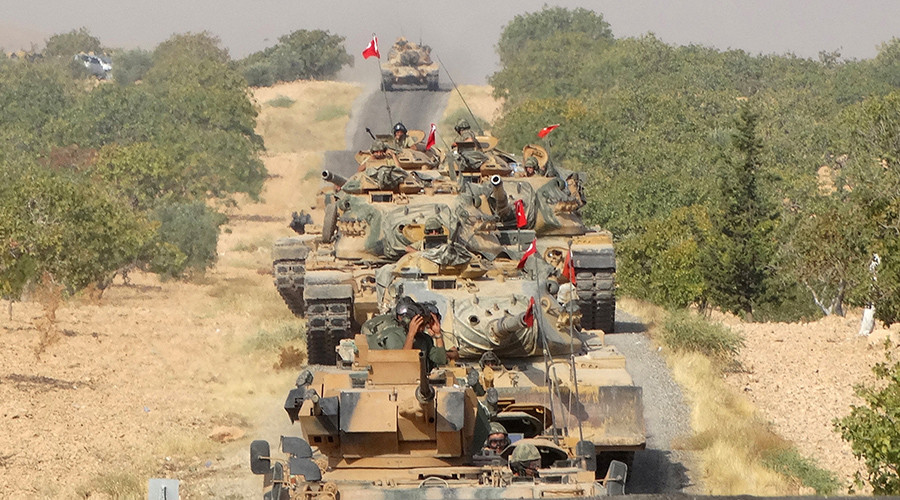
Tanks_invading_Syria_B_24.8.16

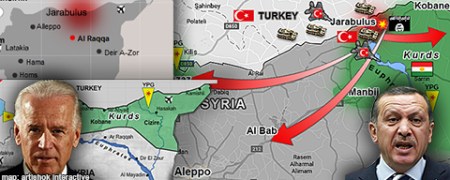
Just a few days ago, the Americans were speaking highly of Kurds as the sharpest sword in the coalition’s arsenal for vanquishing the jihadists. Since Biden’s deal with Erdogan on Wednesday, Washington can forget about the Syrian Kurdish PYG or the Iraqi Kurdish Pershmerga as spearheads of the campaigns to liberate Raqqa in Syria and Mosul in Iraq for ISIS.

*****************************

Syrian Kurdish militia commanders are flouting the ultimatum US Vice President Joe Biden handed them Wednesday, Aug. 24 to retreat to east of the Euphrates or else forfeit US support.  Instead, DEBKAfile’s military sources report, they decided to stand their ground and fight it out with the Turkish army.

The first clash occurred Thursday overnight, when Kurdish forces from Manbij attacked the positions taken by Turkish tanks in Jarablus, hours after Islamic State forces were put to flight from this border town.

The battles continued into Friday morning, Aug. 26.

The US ultimatum to the Kurds was the outcome of understandings US Vice President Joe Biden reached with Turkey’s President Tayyip Erdogan in Ankara on Wednesday, hours after the Turkish army crossed into northern Syria.

“Syrian Kurdish forces will lose US support if they don’t retreat to east bank of Euphrates,” the US vice president stated at a news conference.

Yet Thursday night, Turkish officials made an effort to counteract the impression that their military intervention in Syria was coordinated with the United States. They announce that Russian chief of staff Gen. Valery Gerasimov would be arriving in Ankara Friday for talks with his Turkish counterpart, Gen. Hulusi Akar.

The US commander of American troops in Iraq and Syria, Lt. Gen. Stephen Townsend, had meanwhile instructed all US Special Operations personnel to withdraw from Syrian-Kurdish YPG militia units, and return to the N. Syrian Rmeilan airfield near Hassaka. This is reported from DEBKAfile military and intelligence sources.

The US general also stopped artillery ammo supplies to the Kurdish militia and the transfer of field intelligence from the fighting in areas newly occupied by the Turkish army.

These measures were temporary, the US officers informed Salih Muslim, Syrian Kurdish Democratic Union Party (PYD) leader, and would be lifted after his YPG militia was instructed to pull back from northern Syria and head east of the Euphrates.

Only last week, the Syrian Kurdish militia was riding high, covered in praise for its feat in capturing Manbij with the assistance of US Special Forces.

Their comedown after the US decided to jump aboard the Turkish invasion would be complete, if they complied with the Biden ultimatum. They would forfeit all their hard-won gains from years of combat against the Islamic State, and have to forget their dream of a Kurdish state linking their enclaves along the 900km Syrian-Turkish border.

A stream of information and misinformation is meanwhile muddying the waters as the Kurds in Syria and Iraq absorb the shock of the American turn against them.

The Ministry of Foreign Affairs in Ankara said Thursday that US Secretary of State John Kerry had informed the Turkish Foreign Minister Mevlut Cavusoglu that the US-backed Syrian Kurdish militias had begun their retreat to the eastern bank of the Euphrates River.


ManbijKoteret480

US sources qualified this claim, confirming only that a ‘main element’ of the Kurds has retreated, but not the entire force. The Kurds were evidently in no hurry to take any marching orders either from Turkey or the United States.

A short Kurdish statement claimed that their forces had indeed withdrawn to the eastern bank of the Euphrates River, but DEBKAfile’s military sources military sources say that a large body of Kurdish fighters is still in place west of the river. Indeed our sources found Kurdish PYG officers adamant in their determination to stay put and take on the Turkish army.

After the Turkish invasion Wednesday, Kurdish leader Salih Muslim declared, “Turkey will be defeated in Syria along with the Islamic State.”

Kurdish units also took up positions on the roads leading to the US base at Rmeilan, ready enforce a blockade. A Kurdish food convoy due at the base Thursday did not arrive.

In Iraq, there is word of a Kurdish Peshmerga mutiny against US instructors at the bases where they are training for the offensive to recapture Mosul from the ISIS.

However, the events of this week around northern Syria have dealt a major setback to the US-led war on ISIS.

Just a few days ago, the Americans were speaking highly of Kurds as the sharpest sword in the coalition’s arsenal for vanquishing the jihadists. Since Biden’s deal with Erdogan on Wednesday, Washington can forget about the Syrian Kurdish PYG or the Iraqi Kurdish Pershmerga as spearheads of the campaigns to liberate Raqqa in Syria and Mosul in Iraq for ISIS.

Turkish army shells Kurds ‘refusing to retreat’ near Jarablus

August 26, 2016

Turkish army shells Kurds ‘refusing to retreat’ near Jarablus – state media Published time: 26 Aug, 2016 01:57

Source: Turkish army shells Kurds ‘refusing to retreat’ near Jarablus – state media — RT News

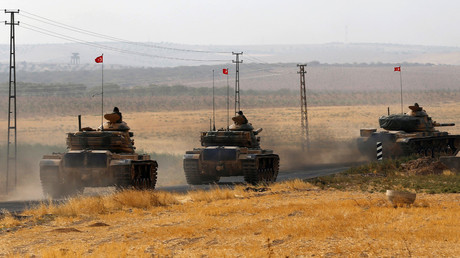
Turkish army tanks make their way towards the Syrian border town of Jarablus, Syria August 24, 2016. © Revolutionary Forces of Syria Media Office / Reuters

Turkish military have targeted US-backed Kurdish YPG militia with artillery fire south of the Syrian border town of Jarablus on Thursday, Anadolu state agency reported, citing a security source. The units allegedly refused to withdraw from the area despite warnings.

The group of YPG fighters were attacked with howitzers at about 6pm local time after they were spotted by Turkish intelligence advancing to Jarablus from the north of Manbij, the report said. Earlier, Washington assured Ankara that the US-backed Kurdish formations have been pulling out forces from the area to the east of the Euphrates River as demanded by Turkey.

READ MORE:Women burn burqas, men cut beards: Manbij celebrates liberation from ISIS (VIDEO, PHOTOS) 

“Kerry [US State Secretary John Kerry] emphasized that the PYD/YPG forces have been withdrawing to the east of the Euphrates,” a Turkish security source was quoted by Hürriyet Daily News as saying following a telephone conversation between the US top diplomat and Turkey’s foreign minister Mevlut Cavusoglu on Thursday morning.

While on a visit to Ankara on August 24, US Vice President Joe Biden pledged to withdraw the support of American forces to Kurdish fighters battling terrorists in Syria if they did not comply with Turkey’s request to remain east of the river.

READ MORE:Turkey shells ISIS & Kurdish positions in Syria

“They cannot, will not and under no circumstances get American support if they do not keep that commitment. Period,” Biden said at a joint news conference with Turkish PM Binali Yildirim.

Read more

Turkish army tanks drive towards to the border in Karkamis on the Turkish-Syrian border in the southeastern Gaziantep province, Turkey, August 25, 2016. © Umit Bektas

Turkey has been conducting Operation Euphrates Shield since Wednesday after its troops entered the borderline territory in the north of Syria with the focus on retaking Jarablus from the Islamic State (IS, ISIS/ISIL) terrorists, which has been occupying it since July 2013. Justifying the incursion, which had not been authorized by the Syrian government, Turkey’s President Recep Tayyip Erdogan said it is aimed at stopping frequent cross-border attacks and repelling “terror groups which constantly threaten our country like Daesh [Arabic derogatory name for IS] and the PYD [the Democratic Union Party of Syria]”.

READ MORE:‘Blatant violation of sovereignty’: Damascus condemns Turkish operation in Jarablus

Meanwhile, Damascus slammed the offensive as “a blatant violation of sovereignty.”

The shelling follows a statement by YPG command saying that Kurdish militia under its control had left Manbij and returned to its bases, turning over the control over the city to the Manbij Military Council, according to Al-Masdar News.

On Wednesday, the YPG denounced the Turkish military offensive in Syria as “a hostile intervention,” refusing to cave in to pressure coming from Turkey.

“We won’t listen to the demands of Turkey or powers outside of Turkey. Turkey cannot impose its own agenda, its own interests on us. Our forces are there. We will not withdraw from west of the Euphrates,” YPG spokesman Redur Xelil said, as cited by Rudaw.

“Its main goal, more than ISIS, is the Kurds,” he pointed out.

Read more

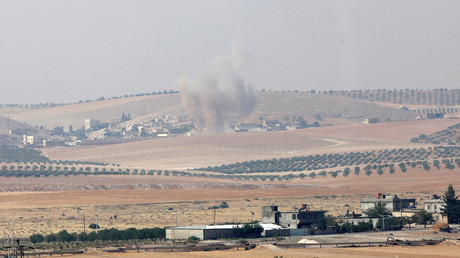
Smoke rises from the Syrian border town of Jarablus as it is pictured from the Turkish town of Karkamis, in the southeastern Gaziantep province, Turkey, August 24, 2016. © Stringer

At the moment, at least 20 Turkish tanks are taking part in operation inside Syria with more armored vehicles are expected to join the effort in the coming days as the Syrian rebels supported by Turkish forces are “cleansing” the city from jihadists.

The former IS stronghold of Manbij was freed by Kurdish-led SDF from jihadists just two weeks ago after months of intense fighting.

The Kurdish People’s Protection Units (YPG) are the armed wing of the Kurdish Democratic Union Party (PYD), close to the Kurdistan Workers’ Party, which Ankara considers a terrorist organization. Turkey has been leading a military campaign against PKK insurgency in the country’s south-eastern Kurdish-populated regions, which has been criticized by rights groups for its brutality. Numerous reports have also suggested that Ankara bombed Kurdish targets inside Syria while allegedly sparing Islamist militants that the YPG have been in bitter battle with.