Posted tagged ‘Palestinians’

ISIS cell in Jerusalem?

October 2, 2016

ISIS cell in Jerusalem? Six Jerusalem Arabs arrested for allegedly working to establish ISIS foothold in Israel.

Uzi Baruch, 02/10/16 11:12

Source: ISIS cell in Jerusalem? – Defense/Security – News –


Six Jerusalem Arabs have been indicted for allegedly working to establish a cell of the ISIS terror organization inside Israel.

The six were charged in a Jerusalem court of security offenses, assisting an enemy in war-time, and association with a terror group.

The suspects are residents of the Shuafat and Anata neighborhoods.

According to the indictment, from 2015 until August 2016, the suspects made efforts to enlist in ISIS and establish an ISIS cell inside Israel. Among other activities, the six organized study sessions to spread the terror group’s radical ideology.

The indictment also revealed that some of the suspects attempted to travel to Syria to join the jihadist organization’s fight against the Assad regime.

The suspects also reportedly planned terror attacks against Jews in Jerusalem and Tel Aviv.

Abbas to Arab Leaders: Go to Hell!

September 27, 2016

Abbas to Arab Leaders: Go to Hell!

by Khaled Abu Toameh

September 26, 2016 at 5:00 am

Source: Abbas to Arab Leaders: Go to Hell!


  • Abbas and Fatah leaders in Ramallah claim that Egypt, Saudi Arabia, Jordan and the United Arab Emirates (the “Arab Quartet”) are using and promoting Abbas’s rival, Mohamed Dahlan, in order to facilitate their mission of rapprochement with Israel.
  • Many Palestinians were surprised to see veteran Palestinian official Ahmed Qurei, a former Palestinian Authority (PA) prime minister and one of the architects of the Oslo Accord, come out in favor of the Arab plan, which basically envisions ousting Abbas from power.
  • This, and not Israeli policy, is Abbas’s true nightmare. After all, he knows that without Israel’s presence in the West Bank, his regime would have long fallen into the hands of Hamas or even his political rivals in Fatah.
  • The “Arab Quartet” plan shows that some Arab countries are indeed fed up with Abbas’s failure to lead his people towards a better life. These states, which have long been politically and financially supportive of the Palestinians, have had enough of Abbas’s efforts to secure unending power — at the direct cost of the well-being of his people.

In his speech last week before the United Nations General Assembly in New York, Palestinian Authority (PA) President Mahmoud Abbas trotted out his usual charges against Israel, citing “collective punishment,” “house demolitions,” “extrajudicial executions” and “ethnic cleansing.” However, Abbas’s thoughts seem to be elsewhere these days. He is facing a new challenge from unexpected parties, namely several Arab countries that have come together to demand that he reform his ruling Fatah faction and pave the way for the emergence of a new Palestinian leadership.

Yet this was not included in the UN speech. Indeed, why would Abbas share with world leaders that his Arab brothers are pressuring him to introduce major reforms in Fatah and end a decade-long power struggle with Hamas that has resulted in the creation of two separate Palestinian entities in the West Bank and Gaza Strip.

Abbas, his aides admit, is today more worried about the “Arab meddling” in the internal affairs of the Palestinians than he is about “collective punishment” or “settlement activities.” In fact, he is so worried that he recently lashed out at those Arab countries that have launched an initiative to “re-arrange the Palestinian home from within” and bring about changes in the Palestinian political scene.

The Arab countries behind the initiative — Egypt, Saudi Arabia, Jordan and the United Arab Emirates — are being referred to by many Palestinians as the “Arab Quartet.”

In an unprecedented critique of these countries, Abbas recently declared:

“The decision is ours and we are the only ones who make decisions. No one has authority over us. No one can dictate to us what to do. I don’t care about the discomfort of Washington or Moscow or other capitals. I don’t want to hear about these capitals. I don’t want the money of these capitals. Let’s free ourselves from the ‘influence’ of these capitals.”

Although he did not mention the four Arab countries by name, it was clear that Abbas was referring to the “Arab Quartet” when he was talking about “capitals” and their influence and money. Abbas’s message: “How dare any Arab country tell me what to do, no matter how wealthy and influential it may be.” Abbas sees the demand by these Arab countries for new Palestinian leadership, unity and reforms in Fatah as “unacceptable meddling in the internal affairs of the Palestinians.”

So what exactly is it in the new Arab initiative that has so enraged Abbas, to the point that he is prepared to place at risk his relations with four of the Arab world’s preeminent states?

According to reports in Arab media outlets, the “Arab Quartet” has drafted a plan to “activate the Palestinian portfolio” by ending the dispute between Abbas’s Fatah and Hamas. The plan also calls for ending the schism within Fatah by allowing some of its expelled leaders, including Mohamed Dahlan, to return to the faction. The overall aim of the plan is to unite the West Bank and Gaza Strip under one authority and end the state of political anarchy in the territories controlled by the Palestinian Authority and Hamas. The “Arab Quartet” has even formed a committee to oversee the implementation of any “reconciliation” agreements reached between Fatah and Hamas and Abbas and his adversaries in Fatah. According to the plan, if such an agreement is not reached, the Arab League will intervene to “enforce reconciliation” between the rival Palestinian parties.

When Palestinian Authority President Mahmoud Abbas addressed the UN General Assembly on Sept. 22, 2016, he did not share with world leaders that his Arab brothers are pressuring him to introduce major reforms in his Fatah faction, and allow some of its expelled leaders, including Abbas’s rival Mohamed Dahlan (inset), to return.

Abbas’s main concern is not a “reconciliation” with Hamas. In fact, he has repeatedly expressed his readiness to form a unity government with Hamas and end the dispute with the Islamist movement. In recent weeks, there has even been renewed talk of Fatah-Hamas talks in Qatar to achieve “unity” and “reconciliation” between the two rival parties. Rather, it is the attempt to coerce Abbas into reconciling with Dahlan that is really getting to the PA president. In the view of a source close to Abbas, he (Abbas) would rather make peace with Hamas than “swallow the cup of poison” of patching things up with Dahlan.

Abbas harbors a very particular dislike for Dahlan. Until five years ago, Dahlan was a senior Fatah official who had long been closely associated with Abbas. Once, Abbas and Dahlan, a former security commander in the Gaza Strip, formed an alliance against Yasser Arafat, the former president of the PA. But the honeymoon between Abbas and Dahlan came to an end a few tears ago after the Abbas and his lieutenants in Ramallah began suspecting that Dahlan has ambitions to replace or succeed Abbas. At the request of Abbas, Dahlan was expelled from Fatah and accused of murder, financial corruption and conspiring to overthrow Abbas’s regime. From his exile in the United Arab Emirates, Dahlan has since been waging a campaign against the 81-year-old Abbas, accusing him and his two wealthy sons of running the PA as if it were their private fiefdom.

Such is Abbas’s contempt for Dahlan that last week he reportedly instructed the PA authorities to ban Dahlan’s wife, Jalilah, from entering the Gaza Strip. Jalilah runs and funds a number of charities in the Hamas-controlled Gaza Strip. Her activities are seen by Abbas as an attempt to build power bases for her husband and pave the way for his return to the political scene. Abbas’s decision to ban her from entering the Gaza Strip came following reports that she and her husband were planning to organize and fund a collective wedding for dozens of impoverished Palestinian couples. The funding, of course, comes from the United Arab Emirates, whose rulers have been providing the Dahlan couple with shelter and money for several years.

When Abbas says that he “does not want the money” of certain Arab capitals, then, he is referring to the United Arab Emirates and Saudi Arabia. He strongly suspects that these two wealthy countries are investing funds in Dahlan as part of a scheme to replace him and pave the way for the emergence of a new Palestinian leadership. For Abbas, who has refused to name a deputy or promote a potential successor, this is a very serious threat to his autocratic rule and a “conspiracy” by outside parties against him and his Palestinian Authority leadership.

Abbas and Fatah leaders in Ramallah are convinced that the “Arab Quartet” members are actually planning to pave the way for promoting “normalization” between the Arab world and Israel — all at the expense of the Palestinians. They claim that the four Arab countries are using and promoting Dahlan in order to facilitate their mission of rapprochement with Israel. These countries have reached the conclusion that as long as Abbas and the current PA leadership are around, it would be very difficult to initiate any form of “normalization” or peace treaties between Arab countries and Israel. The PA leadership’s position has always been that peace between the Arab countries and Israel should come only after, and not before, the Israeli-Palestinian conflict is resolved.

According to Palestinian political analyst Mustafa Ibrahim:

“The plan of the Arab Quartet prepares for the transitional post-Abbas era and negotiations for peace between Arab countries and Israel. The plan is designed to serve the interests of Arab regimes more than ending divisions among the Palestinians. The goal is to eliminate the Palestinian cause and find an alternative to President Abbas.”

This analysis reflects the views of Abbas and his veteran Palestinian Authority leaders in Ramallah, who continue to be extremely wary of any talk about succession in the PA leadership.

Interestingly, the “Arab Quartet” initiative for now seems to have divided Palestinian officials, with some welcoming it, and others rejecting it.

Criticizing Abbas and the Fatah leadership for coming out against the plan, Hassan Asfour, a senior Fatah official and former PA minister of state, urged Abbas to reconsider his “impractical, irrational and hasty” decision to dismiss the initiative of the four Arab countries. Asfour pointed out that Abbas’s recent criticism of these countries was “harmful” and “unjustified.” Abbas’s close aides have retorted by claiming that Asfour was a political ally of Dahlan and therefore has a clear agenda.

Many Palestinians were surprised to see veteran Palestinian official Ahmed Qurei, a former PA prime minister and one of the architects of the Oslo Accord, come out in favor of the “Arab Quartet” plan, which basically envisions ousting Abbas from power. Abbas’s close advisors claim that Qurei has joined Dahlan in his effort to bring about regime change in Ramallah.

Dahlan, for his part, has launched his own initiative by calling for an “expanded” gathering of Palestinian factions in Cairo, to discuss ways of bringing about real change in the Palestinian political arena. Thus, Dahlan has moved from behind-the-scenes activities to topple Abbas to public moves. And in this he enjoys the political and financial backing of at least four important Arab countries that would also like to see an end to the Abbas era. This is the first time that a senior Palestinian official has openly challenged the PA leadership with the support of Arab countries. It is predicted that at least 600 people will attend the Dahlan-sponsored conference in the Egyptian capital. The PA leadership is now threatening to retaliate against anyone who attends the conference by cutting off their salaries. This will only deepen the crisis in Abbas’s Fatah and yield yet more infighting.

Abbas undoubtedly had these thoughts in mind when he addressed the UN General Assembly — the new Arab “conspiracy” to replace him with Dahlan, or someone else. This, and not Israeli policy, is Abbas’s true nightmare. After all, he knows that without Israel’s presence in the West Bank, his regime would have long fallen into the hands of Hamas or even his political rivals in Fatah.

The “Arab Quartet” plan shows that some Arab countries are indeed fed up with Abbas’s failure to lead his people towards a better life. These states, which have long been politically and financially supportive of the Palestinians, have had enough of Abbas’s efforts to secure unending power — at the direct cost of the well-being of his people. It will not take long before we see whether these Arab countries, now mocked by Abbas, will succeed in ridding the Palestinians of leaders who lead them toward nothing but ruin.

Arab MK Hanin Zoabi describes how she wants to destroy Israel

September 27, 2016
Published on Sep 11, 2016

One, state, two state – it doesn’t matter as long as there is no Jewish or Zionist state.

Palestinian Author: We Can Sacrifice 1-2 Million Arabs a Year to Liberate Palestine

September 22, 2016

Published on Sep 20, 2016

Palestinian Author Yousef Jad Al-Haq

Palestinian researcher and author Yousef Jad Al-Haq recently rejected the two-state solution and called to conduct organized resistance in order to liberate Palestine “from the [Jordan] River to the [Mediterranean] Sea.” Extrapolating the percentages from the birthrate of the Arab nation, he said: “If a million of us die, but we get to liberate Palestine… Well, that’s fine by me.” Al-Haq was speaking on Syria News TV on August 16.

Added by J.K

Jerusalem Online did not approved my comment existing out of this video !

Palestinians: “The Mafia of Destruction”

September 21, 2016

Palestinians: “The Mafia of Destruction”

by Khaled Abu Toameh

September 21, 2016 at 5:00 am

Source: Palestinians: “The Mafia of Destruction”


  • Hamas and Palestinian Authority (PA) officials have turned medical care into a business that earns them hundreds of thousands of dollars per year. This corruption has enabled top officials in the West Bank and Gaza Strip to embezzle millions of shekels from the PA budget.
  • In 2013, the PA spent more than half a billion shekels covering medical bills of Palestinians who were referred to hospitals outside the Palestinian territories. However, no one seems to know exactly how the money was spent and whether all those who received the referrals were indeed in need of medical treatment. In one case, it appeared that 113 Palestinian patients had been admitted to Israeli hospitals at the cost of 3 million shekels, while there is no documentation of any of these cases. Even the identities of the patients remain unknown.
  • Hajer Harb, a courageous Palestinian journalist from the Gaza Strip, says she is now facing charges of “slander” for exposing the corruption. She has been repeatedly interrogated by Hamas. The PA regime, for its part, is not too happy with exposure about the scandal.
  • Gaza’s hospitals would be rather better equipped if Hamas used its money to build medical centers instead of tunnels for smuggling weapons from Egypt to attack Israel.

Question: How do Palestinian patients obtain permits to receive medical treatment in Israeli and other hospitals around the world? Answer: By paying bribes to senior Palestinian officials in the West Bank and Gaza Strip. Those who cannot afford to pay the bribes are left to die in under-equipped and understaffed hospitals, especially in the Gaza Strip.

Yet, apparently some Palestinians are more equal than others: Palestinians whose lives are not in danger, but who pretend that they are. These include businessmen, merchants, university students and relatives of senior Palestinian Authority (PA) and Hamas officials, who receive permits to travel to Israel and other countries under the pretext of medical emergency.

Many Palestinians point a finger at the PA’s Ministry of Health in the West Bank. They argue that senior ministry officials have been abusing their powers, in order to collect bribes both from genuine patients and from other Palestinians who only want medical permits in order to leave the Gaza Strip or the West Bank. Thanks to the corruption, many real patients have been denied the opportunity to receive proper medical care in Israel and other countries.

A Palestinian man is transferred to an Israeli ambulance at the Erez crossing between the Gaza Strip and Israel, on his way to an Israeli hospital, July 29, 2014. (Image source: Israeli Foreign Ministry)

This, of course, does not apply to senior Palestinian officials and their family members, who continue to make ample use of Israeli hospitals and other medical centers in Jordan, Egypt, the Gulf and Europe.

Even top Hamas officials enjoy access to Israeli hospitals. In 2013, Amal Haniyeh, the granddaughter of Hamas leader Ismail Haniyeh, was transferred to an Israeli hospital for urgent medical treatment. A year earlier, Haniyeh’s sister, Suheilah, was also brought to an Israeli hospital for urgent heart surgery.

Haniyeh, however, did not need to offer cash to get his daughter and sister medical treatment in Israel. Indeed, some Palestinians are evidently very much more equal than others.

The corruption in the Palestinian health system, both in the West Bank and Gaza Strip, has long been a well-known secret. Palestinians without the right connections and without money to hand over to a senior official or physician are fully aware that they would never be allowed to receive what is called “medical referrals abroad.” The signature of a physician or a senior health official is the most precious merchandise in the West Bank and Gaza Strip. This signature allows patients to receive free medical treatment in Israel and various countries.

The absence of clear regulations to define who is entitled to this privilege have facilitated widespread corruption in the Palestinian health system. Nepotism plays a major role in this form of corruption. The relative of a senior Palestinian official can easily be transferred for treatment in an Israeli, Jordanian or Egyptian hospital, while poor patients from the Gaza Strip can wait months and years before obtaining such permits.

Hamas and PA officials are trading with the lives of Palestinian patients. They have turned medical care into a business that earns them hundreds of thousands of dollars per year. This corruption, in the absence of transparency and accountability, has also enabled top officials in the West Bank and Gaza Strip to embezzle millions of shekels from the PA budget.

Although both the Palestinian Authority and Hamas have vowed to combat this exploitation of Palestinian patients, the Palestinians themselves report no improvement. They say that more than 70% of the cases of medical referrals to Israeli hospitals and abroad have never been documented, and it remains unclear how and where the money was spent.

In 2013, for instance, the PA spent more than half a billion shekels covering medical bills of Palestinians who were referred to hospitals outside the Palestinian territories. However, no one seems to know exactly how the money was spent and whether all those who received the referrals were indeed in need of medical treatment.

The PA maintains that in 2014, more than 54,000 Palestinians from Gaza received medical referrals for treatment outside the Strip. Health officials in the Gaza Strip, however, say they are aware of only 16,382 documented cases of real patients who received such permits.

Between 1994 and 2013, the Palestinian Authority did not ask Israeli hospitals for detailed bills of the medical treatment provided to Palestinian patients. The money is deducted on a monthly basis from tax revenues collected by Israel and later paid to the PA.

The Coalition for Accountability and Integrity (AMAN), a Palestinian group working in the fields of democracy, human rights and good government, to combat corruption and enhance integrity, principles of transparency and systems of accountability in Palestinian society, is one of the few bodies sounding an alarm bell about this abuse.

Last year, AMAN released a report in which it warned against corruption in the Department of Medical Referrals Abroad, which belongs to the PA Ministry of Health. The report pointed out discrepancies in the costs of medical treatment in Israeli and other hospitals, and the actual bills. For example, in one case it appeared that 113 Palestinian patients had been admitted to Israeli hospitals at the cost of 3 million shekels, while there is no documentation of any of these cases. Even the identities of the patients remain unknown.

The AMAN report stated that measures taken by Palestinian health officials to limit nepotism and bribes, and prevent the squandering of public funds, have been insufficient. Physicians, it said, faced pressure from Palestinian Authority officials to issue medical referrals to Israeli hospitals and other hospitals around the world, even to those not in need of them. Some of the cases, the report notes, could have been treated in Palestinian hospitals, and there was no need to transfer them to other hospitals at very high costs.

The PA says that it has asked its Anti-Corruption Commission to investigate the scandal. To date, it remains unclear whether substantive measures have been taken against those responsible for the corruption.

Hamas, for its part, continues to hold the PA responsible for the misery of patients in the Gaza Strip. The Islamist movement claims that the PA government is withholding the issuance of medical permits as a means to punish Palestinians for their support of Hamas.

The truth, however, is somewhat different: health officials in the Gaza Strip who are linked to Hamas have also been exploiting the plight of patients. Hamas is uninterested in this coming to light.

Hajer Harb, a courageous Palestinian journalist from the Gaza Strip, recently prepared an investigative report about the corruption of health officials in the West Bank and Gaza Strip. She has been repeatedly interrogated by Hamas.

Harb says she is now facing charges of “slander” for exposing the corruption. She was told by her interrogators that the decision to summon her for investigation came after a physician in the Gaza Strip filed a complaint against her for “defamation.”

Hamas interrogators demanded that Harb reveal her sources and the identity of those involved in the corruption scandal. “I told them that I am a journalist and I cannot provide them with the identities of my sources without a court order,” she said.

“The prosecution told me that I was facing the following charges: impersonation of another person (they claim I did not reveal my real identity during the investigative report); slandering the Ministry of Health, publishing inaccurate and incorrect information and working with ‘foreign parties’ (by preparing a report for a London-based television station under the pretext that the media organization is not registered with the Press Office in the Gaza Strip).”

In her report, Harb wrote about the middlemen who obtain medical referrals to Israeli and foreign hospitals in return for bribes. She approached one of the middlemen and claimed she wanted to travel from the Gaza Strip to the West Bank to marry a man living there. She wrote that she received a permit to leave the Gaza Strip and receive medical treatment in East Jerusalem’s Al-Makassed Hospital after she paid a bribe to a local physician. She also found several forged medical referrals in the name of the son of a senior Palestinian official in the Gaza Strip, who obtained them in order to complete his studies in the West Bank. Harb further located a man who claimed that he works for the PA’s Preventative Security Service and who boasted that he could get a permit for medical treatment outside the Gaza Strip in return for $200. Another Palestinian bought a medical permit to leave the Gaza Strip and work in a restaurant in Ramallah.

Hamas claims to be combating the corruption of officials who are tampering with the lives of Palestinian patients. In reality, it is busy harassing journalists who speak the truth. The Palestinian Authority regime, for its part, is not too happy with exposure about the scandal.

The Palestinian Journalists Syndicate (PJS), based in the West Bank, condemned Hamas for harassing Harb. But this critique should be seen more in the context of the power struggle between the PA and Hamas, rather than as stemming from a concern for public freedoms.

In a statement, the PJS criticized Hamas for interrogating Harb as a “grave breach of media work and freedom of expression” in the Palestinian territories. The syndicate emphasized the right of journalists not to reveal the identity of their sources, adding that Harb had abided by all moral, legal and professional standards.

Najat Abu Baker, a member of the Palestinian Legislative Council who belongs to PA President Mahmoud Abbas’s Fatah faction, was one of the few politicians in the West Bank who dared to come out against the corruption scandal.

In her words, the corruption in the PA’s Department of Medical Referrals has transformed it into a “real mafia headed by influential figures.” Abu Baker accused the ministry of exploiting the impoverished residents of the Gaza Strip and wasting public funds:

“The issue of medical permits has become a business and the only ones who are paying the price are the patients from the Gaza Strip. Hundreds of these patients who have died are the victims of the ministry’s measures.”

She called for a commission of inquiry into the corruption scandal. She noted that many patients from the Gaza Strip have died while waiting for medical referrals while others, who were not ill, were given the permits thanks to nepotism and bribery.

“The merchants of death are tampering with the fate of our patients. It is time to tell the truth so that we can get rid of the mafia of destruction and end their trade in the lives of our patients.”

The medical permit scandal is yet further proof that Hamas and the Palestinian Authority shamelessly exploit their people for political and financial purposes. The PA leverages its power to issue medical permits in order to pressure Palestinians in the Gaza Strip to turn against Hamas. Its officials sell the permits for cold hard cash. Hamas, which continues to hold the entire Gaza Strip hostage, has its own ideas about how money is well spent. Gaza’s hospitals would be rather better equipped if Hamas used the money it has to build medical centers instead of tunnels for smuggling weapons from Egypt to attack Israel. While medical permits are sold to the highest Palestinian bidder, we ask: What is the going rate for a permit for clarity concerning the behavior of Palestinian leaders?

Khaled Abu Toameh, an award-winning journalist, is based in Jerusalem.
Southern Command: Hamas is ready for the next war

September 21, 2016

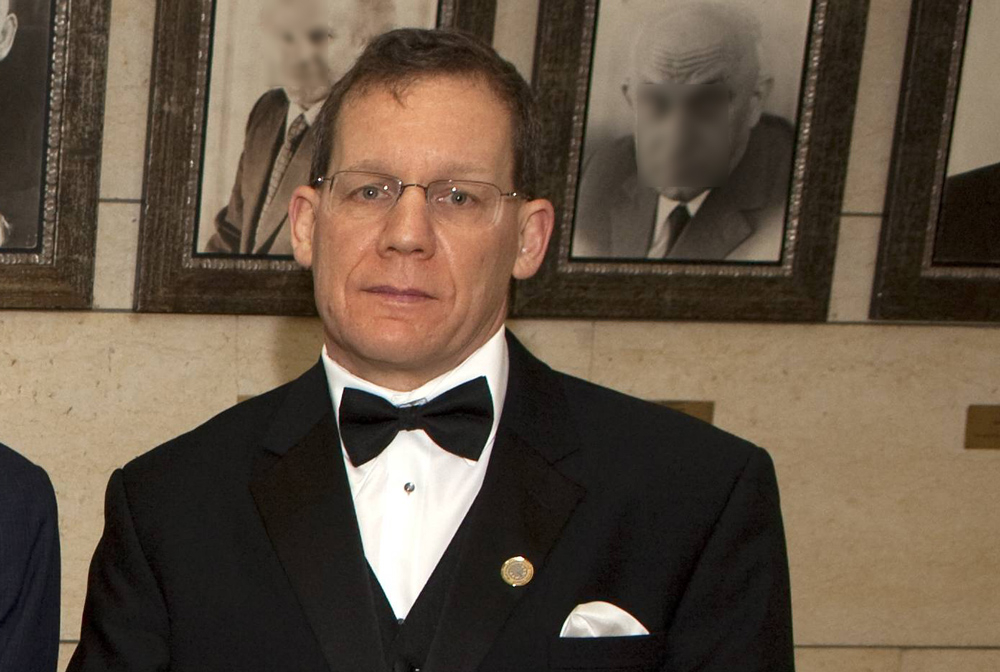
Southern Command: Hamas is ready for the next war Southern Command chief, Eyal Zamir, at a conference for southern residents explained that Hamas is preparing for the next round of fighting.

Arutz Sheva Staff,
21/09/16 13:13

Source: Southern Command: Hamas is ready for the next war – Defense/Security – News –

Zamir and Eizenkot on the border

Gefen Reznik

General of the Southern Command, Eyal Zamir, at a conference for southern residents explained that Hamas is preparing for the next round of fighting.

Zamir emphasized that, “we have no intentions to make the situation worse but we will react to any shot fired with the appropriate level of force.”

Regarding Hamas he said, “unfortunately they are utilizing this quiet period to prepare for the next battle.”

In the conference, the Major-General said, “in the last decade, and since the withdrawal from Gush Katif and the IDF’s exit from the Gaza Strip, we have had three military operations.” He explained that the past two years have been the quietest, relatively, in the past decade, and they are being used to expand settlements around Gaza.

Zamir clarified that the “IDF won’t let terrorist organizations, led by Hamas, harm Israeli citizens. We have no intentions of escalating the situation, but we will react to every hit with the appropriate amount of force.”

“On the idea of trying to lengthen the period of quiet, we are continuing to address the threats below and above ground in order to protect Israel’s citizens and destroy the threats.”

Yesterday an Israeli Air Force fighter jet shot down an unmanned aircraft from the Gaza Strip an army spokesman said.

The unmanned craft, believed to be controlled by Hamas, was detected flying along the Gaza coastline.

The only ethnic cleansing that the world accepts is that of the Jews

September 12, 2016

The only ethnic cleansing that the world accepts is that of the Jews | Anne’s Opinions, 12th September 2016

Binyamin Netanyahu brought down the opprobrium of the world onto his head on Friday when he stated two categorical truths: the first: the Palestinians want to ethnically cleanse Jews off their land. The second: that it is absurd that such ethnic cleansing is a pre-condition to “peace”.

Here is Bibi’s statement:

The United with Israel article reports on the video which has gone viral:

Israel’s prime minister rejected international criticism of Israeli construction in Judea and Samaria on Friday, equating it to “ethnic cleansing” of Jews and insisting the Israeli communities in Judea and Samaria are not an obstacle to peace, in a video that drew a rare rebuke from the United States.

Benjamin Netanyahu said in a video posted online that he has “always been perplexed” by claims that Israeli building in Judea and Samaria is “an obstacle to peace.”

He pointed to Israel’s Arab minority, which enjoys citizenship and voting rights.

“No one would seriously claim that the nearly 2 million Arabs living inside Israel, that they’re an obstacle to peace,” Netanyahu said. “Yet the Palestinian leadership actually demands a Palestinian state with one precondition: No Jews. There’s a phrase for that: It’s called ethnic cleansing.”

“It’s even more outrageous that the world doesn’t find this outrageous,” he added. “Since when is bigotry a foundation for peace?”

Of course such simple, clear truths are unacceptable to the liberal, progressive, enlightened, oh-so-politically correct State Department which never met a terrorist it couldn’t love. They condemned Netanyahu’s video as “inappropriate”:

Washington on Friday fumed at comments made by Prime Minister Benjamin Netanyahu in a video released online in which he accused the Palestinians of advocating ethnic cleansing of the Jewish population in the West Bank.

US State Department spokeswoman Elizabeth Trudeau told reporters the administration is “engaging in direct conversations with the Israeli government” about the video.

“We obviously strongly disagree with the characterization that those who oppose settlement activity or view it as an obstacle to peace are somehow calling for ethnic cleansing of Jews from the West Bank. We believe that using that type of terminology is inappropriate and unhelpful,” Trudeau said.

She said Israel expansion of settlements raises “real questions about Israel’s long-term intentions in the West Bank.”

I would like to throw the State Departments words back in their face and ask them why the Palestinians’ demands for ethnic cleansing of Jews from Judea and Samaria do not raise real questions about the Palestinian Authority’s long-term intentions in the West Bank”.

As expected, beyond Washington’s seething, Netanyahu’s words also aroused condemnation from the usual suspects, as the JPost reports:

The Zionist Union’s Tzipi Livni responded to the video, saying that the US is now saying that all the settlements are obstacles to peace, including those inside the large settlement blocs, while in the past Israel received recognition for those blocs.

“I worked to get diplomatic benefit while paying a political price, while Netanyahu is trying to get political benefit while paying a diplomatic price,” she said.

Tzipi Livni might wave her diplomatic credentials around, but the truth is that she achieved nothing during her vaunted peace-processing career. The highlight of her career was the lopsided UN Resolution 1701 after the Second Lebanon War which handed a political victory to Hezbollah.

Ayman Odeh, head of the Joint List, slammed Netanyahu for comparing Israeli Arabs to “settlers.”

Netanyahu, he said, “is comparing a minority born here, who has lived in the place for generations, which Israel came and foisted itself upon, to settlers that were transferred against international law to occupied territory, all the while trampling the human rights of the residents of the West Bank and Gaza.”

But reality, he said, “never bothered Netanyahu.”

I don’t expect anything different from Odeh, but he really must be called out for the bunch of lies that he spouts. Calling the Palestinians “a minority born here who has lived in the place for generations” is a verifiable untruth. The land was empty and desolate, and the Arabs were uninterested in it until the Jews returned to their homeland and made it flourish. It is the Jews who are indigenous to Israel – which includes our Biblical and historical heartland, Judea and Samaria – not the Arabs, and the only time the land was Judenfrei was for a mere 19 years, a blink in the eye of history, from 1948-1967.

With every other nation, the world applauds as indigenous peoples return to their homelands. But as always, when it comes to the Jews, when they are ethnically cleansed, they’d better stay ethnically cleansed! The hypocrisy and absurdity, as Netanyahu points out, are breathtaking.

As for the video itself, people are scratching their heads wondering what prompted Netanyahu to publish this provocative statement davka now. The JPost gives a bit of background:

The brief video is the eighth that Netanyahu has made since David Keyes took over from Mark Regev as Netanyahu’s English spokesman in March. The Prime Minister’s Office views these videos as a very effective way to get the premier’s unfiltered message out to millions of people. Some 750,000 people have seen this video since it was uploaded Friday, and the number of those who have seen the others – which have dealt with issues varying from Israeli Arabs to gay rights – have been seen by tens of millions of people.

Raphael Ahren in the ToI further explains Netanyahu’s intentions. He notes that this is not the first time Netanyahu has made decried Palestinian ethnic-cleansing of the Jews in videos, speeches and interviews:

“Ethnic cleansing for peace is absurd. It’s about time somebody said it. I just did,” Netanyahu said at the end of the two-minute clip. But Netanyahu did not invent this controversial comparison on Friday afternoon, when the clip appeared on his social media accounts. He has made the argument, in various mutations, throughout his political career. In the 2000 edition of his book “A Durable Peace,” written before his watershed Bar-Ilan speech conditionally accepting the two-state solution, he flatly rejected the notion of a “hostile, Judenrein Palestinian state.” Even if the entire world supports it, the campaign for a West Bank free of Jews is based “not on justice but on injustice,” he argued at the time.

Amid the widespread criticism Netanyahu’s latest video elicited, many are wondering about his motives. Ethnic cleansing is widely considered a crime against humanity; the clip can thus be seen as a premeditated slap in the face of the Americans and indeed the entire international community for demanding that Israel agree to such a practice, some pundits said.

Others blamed the polls. Over the weekend, a second survey within a week showed Netanyahu’s Likud trailing the centrist Yesh Atid, indicating that for the first time since 2012, Likud would no longer be the country’s biggest party if elections were held today. Several analysts argued that Netanyahu provoked the ethnic cleansing drama to deflect criticism over his handling of last week’s train crisis and galvanize his right-wing supporters, relations with the US and the rest of the world be damned.

But the fact that Netanyahu and his aides have made the “ethnic cleansing” talking point before appears to discredit this theory. It is more likely that Netanyahu and Keyes — who, before he entered the Prime Minister’s Office, was known for his unorthodox style of political activism — released the clip as just one more of their ongoing series of hasbara (pro-Israel advocacy) videos, not expecting it would lead to such outrage.

The point of these videos, … is to make Israel’s case directly to the masses via social media, thus circumventing the ostensibly biased mainstream media.

Ahren then embarks on a Talmudic pilpul dissection of what constitutes “ethnic cleansing” – as if Bibi’s words are devoid of anything but political showboating:

Notwithstanding the emotions Netanyahu’s use of the term “ethnic cleansing” evoked this weekend, and the fact that Palestinian activists often use it to describe Israel’s actions in 1948, is the description factually sound?

Golden Oldie from 1994: Ethnic cleansing of the Jews

Golden Oldie from 1994: Ethnic cleansing of the Jews

There is no clear legal definition of “ethnic cleansing.” The Cambridge Dictionary describes it as “the organized, often violent attempt by a particular cultural or racial group to completely remove from a country or area all members of a different group.”

A commission of experts examining the war in Yugoslavia in the 1990s — when the term was invented — established ethnic cleansing as a “purposeful policy designed by one ethnic or religious group to remove by violent and terror-inspiring means the civilian population of another ethnic or religious group from certain geographic areas.”

On the face of it, the forced evacuation of Jewish settlers from the West Bank for the benefit of Palestinian Arabs appears to fit the bill. Palestinian leaders have been adamant that “not a single Israeli” will be accepted in their future state.

On the other hand, proponents of an Israeli withdrawal are not calling for the violent removal of settlers by Palestinians, but rather for a coordinated evacuation of settlements in the framework of a peace agreement.

As previous Israeli withdrawals from Sinai and Gaza have shown, a proportion of ideologically and religiously motivated activists would likely have to be evacuated by force — though hardly by “terror-inspiring means.”

That is absolutely not the point. See the Dry Bones cartoon from above, still accurate after over 20 years. The point remains that the Palestinians refuse to have one single Israeli in their midst, as Palestinian “President-for-Life” Mahmoud Abbas himself declared. Keeping a territory “pure” for one ethnicity only, and demanding the expulsion of other nationalities, in however peaceful a manner, remains ethnic cleansing. This “word-washing” of the Palestinians’ rejectionism has to stop if we are ever to arrive at any kind of non-violent accommodation with each other.

As an aside, Abbas even rejects Syrian Palestinians, fleeing for their lives from the civil war, heartlessly telling them to “go to Israel or die in Syria”. So much for brotherly love.

Dennis Ross

Former US Mideast envoy Dennis Ross

In a further reminder, if any were necessary, of the dangers of the US Adminsitration’s exacerbating the problems in the conflict, here comes Dennis Ross asserting that if Hilary Clinton is elected she should seek more Israeli concessions.

If Hillary Clinton is elected US president, she should launch a behind the scenes initiative to bring about changes in Israel’s policies, according to former Clinton adviser and US Mideast envoy Dennis Ross.

Ross’s remarks came during a panel discussion at Georgetown University’s School of Foreign Service on Thursday.

Ross said that “even though negotiations with the Palestinian Authority won’t work now,” Israeli Prime Minister Benjamin Netanyahu should take steps of his own. “He should, at a minimum, announce an official policy that there will be no further Israeli construction east of the security barrier,” Ross said.

Numerous Israeli settlements would be affected by such a policy, including the communities in the Jordan Valley. Ross said such unilateral concessions would be consistent with “the traditional Zionist way of shaping your own destiny.”

No Mr. Ross! That is NOT the Zionist way. The Zionist way is to take our own destiny in our own hands, to settle our own land any way we wish, and not to kow-tow to foreign meddlers who most definitely do not have our own interests at heart.

The Zionist way is to reject the Exile, to reject the ghetto way of living where we had to be afraid of the powers that be. The Zionist way is to reclaim our own narrative, our own history, our own land and our own destiny.

Netanyahu and Abbas agree ‘in principle’ to meet, Russia says

September 8, 2016

Netanyahu and Abbas agree ‘in principle’ to meet, Russia says No confirmation from Jerusalem or Ramallah after latest report of possible face-to-face summit between leaders in Moscow

By Times of Israel staff and AP

September 8, 2016, 1:48 pm

Source: Netanyahu and Abbas agree ‘in principle’ to meet, Russia says | The Times of Israel

Polish President Andrzej Duda (C-R) and Palestinian Authority President Mahmoud Abbas (C-L) inspect an honour guard during an official welcoming ceremony in the courtyard of the presidential palace in Warsaw on September 6, 2016. (AFP PHOTO/JANEK SKARZYNSKI)

The Russian foreign ministry on Thursday said Prime Minister Benjamin Netanyahu and PA President Mahmoud Abbas had agreed “in principle” to meet in Moscow.

According to Russian media reports, the two leaders were willing to sit down for a face-to-face meeting in a bid to revive peace talks.

“Russian foreign ministry confirms willingness to host Netanyahu-Abbas meeting in Moscow, preparations continue,” the Interfax news agency reported. “Israeli, Palestinian leaders agree in principle to meet in Moscow.”

According to ministry spokeswoman Maria Zakharova, Moscow has heard from the offices of Abbas and Netanyahu that the two agreed to meet in the Russian capital, though it’s not clear when that will happen.

“The most important thing is to pick the right timing,” Zakharova told reporters. “Intensive contacts on this are ongoing.”

“We are convinced that there is a need to resume the negotiations, which would be a factor serving the interests in normalizing the situation,” she added, according to the TASS news agency.

There was no immediate response from the Prime Minister’s Office in Israel or officials in the PA. But a source close to the prime minister told the Walla news website that Netanyahu was willing to meet Abbas “anytime, anywhere, on the condition that there are no preconditions.”

The report came days after efforts to broker a meeting between the two became bogged down in mutual accusations that the other side was unwilling to sit down in Moscow.

The two leaders have not met in person since 2010, and peace efforts have continued to falter. Abbas has demanded Israel release Palestinians prisoners and freeze settlement building before meeting, while Netanyahu has said he is willing to meet without preconditions.

The efforts became further complicated Wednesday following an Israeli report on Soviet documents suggesting Abbas was a KGB spy in Damascus in the 1980s, during the time that Mikhail Bogdanov, today Vladimir Putin’s envoy to the Middle East, was stationed there.

The PA leader’s top political adviser said Wednesday Abbas had forgone his long-held preconditions and was planning in earnest to meet Netanyahu in Moscow this Friday, but the summit was spiked by Israel.

“There were no preconditions. That was very clear. When President [Vladimir] Putin invited the two sides, he said, ‘No preconditions.’ President Abbas approved that, and he said so very clearly yesterday when he was in Warsaw,” Majdi al-Khalidi told The Times of Israel in a phone interview.

Prime Minister Benjamin Netanyahu shakes hands with Palestinian Authority President Mahmoud Abbas in Jerusalem, September 15, 2010. (Kobi Gideon/Flash90)

Prime Minister Benjamin Netanyahu shakes hands with Palestinian Authority President Mahmoud Abbas in Jerusalem, September 15, 2010. (Kobi Gideon/Flash90)

While in Poland on Tuesday, Abbas declared he was willing to meet Netanyahu in Moscow, though he did not explicitly mention the preconditions in his statement.

However, the Palestinian leader added, Netanyahu’s representative sought to delay the Moscow meeting, which would have taken place September 9, to a later date.

An Interfax report Monday claiming the two had agreed to meet was initially denied by Palestinian officials, who indicated the preconditions were still in place.

On Tuesday, Netanyahu referred to confusion over the Palestinian stance during a press conference alongside Dutch Prime Minister Mark Rutte in The Hague.

Prime Minister Benjamin Netanyahu, left, and Dutch Prime Minister Mark Rutte give a press conference in The Hague, September 6, 2016. (AFP/ANP)

Prime Minister Benjamin Netanyahu, left, and Dutch Prime Minister Mark Rutte give a press conference in The Hague, September 6, 2016. (AFP/ANP)

Ifthe Palestinians had forgone their preconditions to the Moscow meeting, the Israeli prime minister seemed unaware.

“Is Abbas prepared to meet without preconditions? We hear contradictory versions on that,” said Netanyahu.

“Just yesterday Palestinian spokespeople clarified that they are prepared to meet but that they have conditions — the release of prisoners and they also want to know beforehand what will be the end result of the talks, and such like,” Netanyahu said.

Khalidi, Abbas’s adviser, said he didn’t know why the Israeli prime minister believed there were preconditions to the Moscow meeting.

“No one said there were preconditions. Many people in Israel and Palestine speak in general. But after what the president said, why do we have to listen to people from this side or that side. We have only one agency that is official, Wafa. We have one official spokesperson, Nabil Abu Rudeineh,” Khalidi said.

Nabil Abu Rudeineh (L), spokesman of Palestinian Authority president Mahmoud Abbas, welcomes Israeli opposition head Isaac Herzog (C) at the Palestinian Authority headquarters in the West Bank city of Ramallah, August 18, 2015. (AFP Photo/Abbas Momani)

Nabil Abu Rudeineh (L), spokesman of Palestinian Authority president Mahmoud Abbas, welcomes Israeli opposition head Isaac Herzog (C) at the Palestinian Authority headquarters in the West Bank city of Ramallah, August 18, 2015. (AFP Photo/Abbas Momani)

The Prime Minister’s Office voiced skepticism of the statements.

“If the Palestinian leadership can say with one voice that they are willing to meet without preconditions, then Prime Minister Netanyahu will meet President Abbas,” Netanyahu’s spokesperson David Keyes told The Times of Israel Wednesday.

On Tuesday night, Abu Rudeineh, the official Abbas spokesperson, said Netanyahu “had once again shown a lack of seriousness in searching for a just peace based on the two-state solution.”

The idea of direct talks in Moscow was first floated by Egyptian President Abdel-Fattah el-Sissi in August, when he said that Russian President Vladimir Putin was willing to play host.

Peace efforts have been at a standstill since a US-led initiative collapsed in April 2014.

The last substantial public meeting between Abbas and Netanyahu is thought to have been held in 2010, at the tail end of a 10-month settlement building moratorium, though there have been unconfirmed reports of secret meetings since then.

Raphael Ahren and Dov Lieber contributed to this report.

Palestinians: The “Mountain of Fire” Erupts Against Abbas

August 25, 2016

Palestinians: The “Mountain of Fire” Erupts Against Abbas, Gatestone InstituteKhaled Abu Toameh, August 25, 2016

♦ The Palestinian Authority is now paying the price for harboring, funding and inciting gang members and militiamen who until recently were hailed by many Palestinians as “heroes” and “resistance fighters.”

♦ Hamas’s dream of extending its control to the West Bank now seems more realistic than ever — unless Mahmoud Abbas wakes up and realizes that he made a big mistake by authorizing local and municipal elections.

♦ The blood pouring out in Nablus and other Palestinian towns is proof that Abbas is on his way to losing control over the West Bank, just as he lost Gaza to Hamas in 2007. In an emergency meeting held on August 25 in Nablus, several Palestinian factions and figures reached agreement that it would be impossible to hold the vote under the current circumstances.

Hours after his security officers lynched a detainee, Palestinian Authority President Mahmoud Abbas urged Palestinian businessmen living abroad to support the Palestinian economy by investing in the Palestinian territories. The Palestinian Authority (PA), he asserted, was “working to provide security and safety to encourage investment.”

According to Abbas, “The Palestinian territories are living in a state of security stability, which we are working to provide for residents and investors alike by enforcing the rule of law and enhancing transparency and accountability.”

It must be nice to create your own reality, especially if your true reality is that of the 81-year-old Abbas.

In his speech before the businessmen, Abbas neglected any reference to the latest wave of “security chaos” in PA-controlled areas in the West Bank, specifically Nablus, the largest Palestinian city.

Five Palestinians, including two PA police officers, were killed in the worst scenes of internecine violence to hit the West Bank in recent years. Abbas was either playing the businessmen for fools or hoping that they share his deaf and blind state.

The violence in Nablus did not come as a surprise to those who have been monitoring the situation in the West Bank in recent months.

In fact, scenes of lawlessness and “security chaos” have become part of the norm in many Palestinian cities, villages and refugee camps — a sign that the PA may be losing control to armed gangs and militias. Palestinians refer to the situation as falatan amni, or “security chaos.” An article published in Gatestone in June referred to the growing instances of anarchy and lawlessness in PA-controlled areas in the West Bank, first and foremost Nablus.

Palestinians refer to Nablus as the “Mountain of Fire” — a reference to the countless armed attacks carried out against Israelis by residents of the city since 1967. Current events in Nablus, however, have shown how easily fire burns the arsonist. The Palestinian Authority is now paying the price for harboring, funding and inciting gang members and militiamen who until recently were hailed by many Palestinians as “heroes” and “resistance fighters.” Unsurprisingly, most of these “outlaws” and “criminals” (as the PA describes them) are affiliated in one way or another with Mahmoud Abbas’s Fatah faction.

Nablus, the so-called Mountain of Fire, is now threatening to turn into a volcano that is set to erupt in the face of Abbas and his PA government.

The situation in Nablus the past few days raises serious questions about the ability of the PA to perform basic security measures and rein in armed gangs and militiamen. Moreover, the unprecedented violence has further shattered Palestinian confidence in the PA and its leaders ahead of the local and municipal elections, scheduled to take place on October 8.

Hamas’s dream of extending its control to the West Bank now seems more realistic than ever. Under the current circumstances, Abbas would be offering the West Bank to Hamas on a silver platter — unless he wakes up and realizes that he made a big mistake by authorizing the local and municipal elections.

And the businessmen who met with Abbas? One might guess that they are sophisticated enough to avoid a doomed investment. Nablus will no doubt do the trick: they are likely to go running from the mayhem of the PA-controlled territories.

Things lately began to unravel when on August 18, in the Old City of Nablus, two Palestinian Authority security officers, Shibli bani Shamsiyeh and Mahmoud Taraira, were killed in an armed clash with gunmen.

Hours later, PA policemen shot dead two Palestinian gunmen who were allegedly involved in the killing of the officers. The two were identified as Khaled Al-Aghbar and Ali Halawah. The families of the two men accused the PA of carrying out an “extrajudicial” killing, and claimed their sons were captured alive and only afterwards shot dead. The families called for an independent commission of inquiry into the circumstances surrounding the killing of their sons. Palestinian human rights organizations have also joined the call for an inquiry into the killings.

1809On August 18, two Palestinian Authority policemen were killed in an armed clash with gunmen in Nablus (left). In April of this year, a fierce gun battle erupted between Palestinian Authority policemen and members of the Jaradat clan in the refugee camp of Jenin (right). The clash started during an attempt to arrest a clan member.

In June, two other PA security officers, Anan Al-Tabouk and Uday Al-Saifi, were also killed in a shootout with gunmen in Nablus. The PA claimed that “outlaws” were behind the killings and vowed to punish the culprits.

Tensions in Nablus reached their peak on August 23, when scores of PA policemen lynched Ahmed Halawah, a former policeman suspected of leading a notorious gang belonging to Abbas’s Fatah faction. Halawah was beaten to death by PA policemen shortly after he was arrested and taken to the PA-run Jneid Prison in Nablus.

The PA leadership, which has since admitted that Halawah was lynched by its policemen, says it has ordered an inquiry into the case. Its leaders have described the lynching as an “unacceptable mistake.”

The lynching of the detainee sparked widespread protests throughout the West Bank, with many Palestinians calling for an immediate inquiry into the circumstances surrounding the case and demanding that those responsible be brought to trial.

The Palestinian Bar Association issued a statement strongly condemning the lynching of Halawah as a “crime and a human rights violation.” The Association called for holding those responsible, adding, “The regrettable and painful events, including the crime of killing Ahmed Halawah, do not serve the interest of the citizen or homeland and deepens divisions in our society.” It also called on the PA and its security forces to abide by the law and honor the human rights of the Palestinians and their public freedoms.

Alarmed by the widespread condemnations of the lynching of Halawah, some Palestinian Authority officials began issuing direct and veiled threats against Palestinian critics.

Palestinian lawyer Wael Al-Hazam, who called on Abbas to “withdraw” his security forces from Nablus, was visited by unidentified gunmen who sprayed his house with 14 bullets. The attorney and his family members were not hurt in the shooting attack, which was clearly designed to send a warning message to anyone who dared to raise his or her voice against human rights abuses by the PA security forces. And in this instance, the message arrived.

Shortly after the attack on his house, the lawyer issued a statement in which he said, “14 bullets are enough to silence me. I’m a man of the law and I cannot face bullets. My pen and voice are the only weapon I have. I do not possess armed militias to defend myself.” The attack on his house came shortly after PA security officers threatened the lawyer, warning him against appearing on a TV show to discuss the latest wave of violence in his city.

The turmoil in Nablus has prompted many Palestinians to call on Abbas to make a decision to postpone the upcoming municipal election in their city. In an emergency meeting held on August 25 in Nablus, several Palestinian factions and figures reached agreement that it would be impossible to hold the vote under the current circumstances.

Sarhan Dweikat, a senior member of Abbas’s Fatah, said that an election delay was needed, to

“protect the social fabric and preserve our national project, which is facing an existential threat in light of the security chaos and anarchy in Nablus. … Conditions in Nablus do not provide a positive climate for holding elections.”

It is hard to see how Abbas, delusional as he appears to be, would heed the calls to postpone the local and municipal elections. His pathetic attempt to persuade Palestinian businessmen to invest their money in PA-controlled areas at a time when the flames are engulfing his backyard is yet another sign of the man’s refusal — or inability — to see the reality on the ground.

This is the same president who claims that he is seeking to lead his people toward statehood and a better future. Incredibly, Abbas can probably continue to fool world leaders into believing that he and the Palestinian Authority are prepared for statehood. Yet the blood pouring out in Nablus and other Palestinian cities and villages is proof positive that Abbas is on his way to losing control over the West Bank, just as he lost the Gaza Strip to Hamas in 2007. If until now it seemed that Hamas posed the biggest threat to Abbas’s rule over the West Bank, it is now obvious that that is not so. The real threat, as brought home in blood in the West Bank, is coming from Abbas’s homegrown loyalists-turned-rebels.

U.S. Urges Americans: Leave Gaza ‘As Soon As Possible’

August 24, 2016

U.S. Urges Americans: Leave Hamas-Controlled Gaza ‘As Soon As Possible’

by Breitbart Jerusalem

24 Aug 2016

Source: U.S. Urges Americans: Leave Gaza ‘As Soon As Possible’

David Silverman/Getty

WASHINGTON (AFP) – The United States reiterated its recommendation that Americans in Gaza leave the territory controlled by Hamas, which Washington calls a terrorist group, “as soon as possible.”

The warning came after the Israeli army said it bombed dozens of targets in Gaza from Sunday to Monday, in response to rocket fire from the strip. Palestinian medical officials said four people were wounded.

Washington regularly updates warning notices to Americans traveling to and living in countries around the world.

In the case of Gaza, the State Department warned against “all travel” to the territory and “urges those present to depart as soon as possible when border crossings are open.”

It had issued a similar warning in December 2015.

Since January, 14 rockets fired from Gaza have hit Israeli territory, the military said.

The border area has remained tense since the July-August 2014 war between Israel and Gaza militants that killed more than 2,200 Palestinians and 73 people on the Israeli side.

“Gaza is under the control of Hamas, a foreign terrorist organization. The security environment within Gaza and on its borders is dangerous and volatile,” the State Department said in its warning Tuesday.

As for Israel and the West Bank, a wave of violence there since October 2015 has left Americans dead and wounded, the department said.

However, “there is no indication that US citizens were specifically targeted based on nationality.”

The violence has eased in recent weeks, but an AFP count shows 220 Palestinians and 34 Israelis killed since October 1, 2015 in the Palestinian territories, Jerusalem and Israel.

Most of the Palestinians killed were attackers or suspected attackers. A number were killed in clashes with the Israeli army.