Terrorist Nation, Truth Revolt via You Tube, Bill Whittle, January 9, 2014
(A brief history of “Palestine” and its friends.– DM)
A Sad State of Affairs: The Kerry Record, World Affairs Journal, Joshua Muravchik, November/December, 2014
(Kerry likely agrees with Obama as to his quite foreign foreign policies and, equally likely, we are stuck with both at least until Obama leaves the White House.

The most bothersome current aspects of Obama-Kerry foreign policies are the extent to which they trust Iran and how they deal with it and the P5+1 negotiating group. — DM)

Although Kerry’s anti-American ideology has moderated to some degree from his fiery days as an antiwar leader, he has misrepresented but never repudiated his past. Especially consistent has been his inclination to see the best in America’s enemies, from Madame Binh to Comandante Ortega to Bashar Assad. Israelis were shocked this summer that Kerry came up with a plan molded by Turkey and Qatar to fit the interests of Hamas at their own expense. Had they known him and his record better, they might not have been.
***************
The Gaza war of July and August 2014 occasioned the sharpest frictions in memory between the United States and Israel, highlighted by a cease-fire proposal offered by Secretary of State John Kerry that Israel’s security cabinet rejected unanimously. Kerry’s plan envisioned a seven-day cease-fire, during which the parties would negotiate “arrangements” to meet each of Hamas’s demands about the free flow of people and goods into Gaza and the payment of salaries of Hamas’s tens of thousands of employees. As for Israel’s demands about destruction of tunnels and rockets and the demilitarization of Gaza, these were not mentioned at all, except in the add-on phrase that the talks would also “address all security issues.”
The document cited the important role to be played by “the United Nations, the Arab League, the European Union, the United States, Turkey, [and] Qatar.” Conspicuous by their absence from this list were Israel, Egypt, and the Palestinian Authority. These three had also not been invited to the Paris meetings where Kerry worked on his ideas with leaders of the countries and bodies mentioned.
Barak Ravid, diplomatic correspondent for the liberal Israeli newspaper Haaretz, wrote that the proposal “might as well have been penned by Khaled Meshal [head of Hamas]. It was everything Hamas could have hoped for.” The centrist Times of Israel’s characteristically circumspect editor, David Horovitz, branded Kerry’s initiative “a betrayal.” And left-leaning author Ari Shavit commented that “Kerry ruined everything. [He] put wind in the sails of Hamas’ political leader Khaled Meshal, allowed the Hamas extremists to overcome the Hamas moderates, and gave renewed life to the weakened regional alliance of the Muslim Brotherhood.”
Turkey and Qatar are the mainstays of that alliance and were chosen by Kerry as his principal interlocutors because they are Hamas’s main backers. This brought protests from the Palestinian Authority, led by President Mahmoud Abbas’s movement, Fatah, the secularist rival to Hamas. That group declared that “whoever wants Qatar and Turkey to represent them can emigrate and go live there. Our only legitimate representative is the PLO.”
The shock of Palestinian and Israeli leaders would have been less, however, if they had been more familiar with the record of John Kerry. Spurning America’s friends in pursuit of deals with their nemeses was perfectly in character for the secretary of state. The hallmark of his career has been to denigrate America itself, while supporting the claims of its enemies.
That career began in 1969, when, months after returning from a tour of duty in Vietnam, Kerry sought and received a military discharge so that he might run for Congress. His campaign as a peace candidate sputtered, but his authenticity as a Vietnam vet established him as a presence in the burgeoning antiwar movement. In May 1970, he traveled to Paris for an unpublicized meeting with Viet Cong representatives, and, perhaps at their suggestion, he joined up upon his return with Vietnam Veterans Against the War. VVAW was headed by Al Hubbard, a former Black Panther. Kerry was instantly given a top role, twinning with Hubbard as the public face of the organization.
At a VVAW protest in Washington, DC, in April 1971, Kerry joined other veterans in throwing away their military medals in front of news cameras. The entire demonstration was punctuated by Kerry’s appearance before the Senate Foreign Relations Committee, where he offered dramatic testimony about American atrocities in Vietnam based on accounts heard at a VVAW inquest a few months earlier. He spoke of veterans who said:
They had personally raped, cut off ears, cut off heads, taped wires from portable telephones to human genitals and turned up the power, cut off limbs, blown up bodies, randomly shot at civilians, razed villages . . . poisoned food stocks, and generally ravaged the countryside.
These acts, Kerry emphasized, “were not isolated incidents but crimes committed on a day-to-day basis with the full awareness of officers at all levels of command.”
When, at the behest of aghast senators, the Naval Criminal Investigative Service conducted a formal inquiry into the stories presented at the VVAW inquest, it reported that many of the VVAW witnesses cited by Kerry refused to cooperate, although promised immunity. Others were clearly crackpots, and several swore, and provided witness corroboration, that they had not participated at the inquest at all and had no idea who had appeared in their names. The entire exercise had been inspired and largely engineered by Mark Lane, whose book on the same subject earlier that year had been panned by New York Times columnist James Reston Jr. as “a hodgepodge of hearsay,” while that paper’s book reviewer, Neil Sheehan, who had reported from Vietnam and would soon break the Pentagon Papers, revealed that some of Lane’s “witnesses” had not served in Vietnam. (The political scientist Guenter Lewy documents these events in his 1978 book America in Vietnam.)
In August 1971, four months after his Senate appearance, Kerry made another trip to Paris, to meet with Madame Nguyen Thi Binh, foreign minister of the Viet Cong, this time in full view, for his first exercise in international diplomacy. He returned touting the “peace plan” of the Viet Cong, explaining: “If the United States were to set a date for withdrawal, the prisoners of war would be returned.” Although he frequently accused American leaders of lying, he took the Communist leaders’ statements at face value, asserting that their peace plan “negates very clearly the argument of the president [Nixon] that we have to maintain a presence in Vietnam to use as a negotiating [chip] for the return of those prisoners.”
Kerry’s dismissal of the statements of US leaders as lies and his credulity toward those of the Vietnamese Communists reflected a broader difference in attitude toward the two sides to the conflict. Ho Chi Minh, who had spent long years as a henchman of Stalin’s, serving the Comintern in several countries, was in Kerry’s admiring eyes “the George Washington of Vietnam” who aimed only “to install the same provisions into the government of Vietnam” that appeared in the American Constitution. America, in contrast, had itself strayed so far from those principles that it needed a “revolution” to restore them.
Kerry’s colleagues in VVAW undoubtedly shared this sentiment, and in November 1971, at a conference of its leadership in Kansas, the group considered just how far down the path of revolution it was willing to go. It debated, although ultimately rejected, a proposal to commence a campaign of terrorist violence and assassination of pro-war US senators. When he ran for president in 2004, Kerry denied he had been present at this conclave, but when FBI files secured by the Los Angeles Times under the Freedom of Information Act placed him there, he retracted that denial in favor of the statement that he had “no personal recollection” of it.
Is this plausible? Gerald Nicosia, author of a highly sympathetic history of the antiwar movement, reported, in May 2004, that “several people at the Kansas City meeting recently said to me or to mutual friends that they had been told by the Kerry campaign not to speak about those events without permission.” Why the urgency to cover up? And how would the campaign know who was there, that is, whose silence to seek, if Kerry had no recollection of the meeting? One of Nicosia’s interviewees, John Musgrave, said “he was asked by Kerry’s veterans coordinator to ‘refresh his memory’ after he told the press Kerry was in Kansas City. Not only is Musgrave outraged that ‘they were trying to make me look like a liar,’ but he also says ‘there’s no way Kerry could have forgotten that meeting—there was too much going on.’”
This puts it mildly: the event was memorably raucous, with debates over the proposals for violence and for napalming the national Christmas tree, furious factional fighting, the discovery of eavesdropping bugs in the building leading to a quick move to another location, and above all an angry showdown between Kerry and Hubbard over revelations that the latter had never been in Vietnam. This particular contretemps was punctuated by Hubbard’s dramatically pulling down his pants to show scars he claimed he sustained in Vietnam. The mayhem culminated in Kerry’s announcing his resignation from the group’s executive. And Kerry had “no personal recollection” of being there?
Although Kerry appeared as a speaker for VVAW for about a year following this resignation, he then faded from national view for a decade, climbing the ladder of local and state politics in Massachusetts before winning election to the US Senate in 1984. The Senate, he later said, “was the right place for me in terms of . . . my passions. The issue of war and peace was on the table again.” What put it on the table were the anti-communist policies of President Ronald Reagan, which Kerry deeply opposed. A year earlier, Reagan had ordered the invasion of Grenada, which Kerry scorned as “a bully’s show of force [that] only served to heighten world tensions and further strain brittle US-Soviet and North-South relations.”
In contrast, Kerry ran on a platform of the Nuclear Freeze, a popular movement opposing US plans to counterbalance a large Soviet nuclear buildup over the previous decade. Kerry made sure to score one hundred percent on a test of candidates’ positions presented by a group called Freeze Voter ’84, and he proposed to cut the defense budget by nearly twenty percent, including “cancellation of twenty-seven weapons systems” and “reductions in eighteen other[s],” according to the Boston Globe. He cited his own work with VVAW as a counterpoint: “We were criticized when we stood up on Vietnam. . . . But we’ve been borne out. We were correct. Sometimes you just have to stand and hold your ground.”
In the Senate, he secured a coveted seat on the Foreign Affairs Committee and turned his attention to the fraught issue of policy toward Central America, a small region that had assumed inordinate geopolitical importance by becoming one of the front lines in the Cold War. A Marxist-Leninist party, the Sandinista National Liberation Front, had seized power in Nicaragua and was aiding likeminded movements in El Salvador and other nearby states while the Reagan administration supported anti-Communist guerrillas inside Nicaragua, the so-called “Contras.”
Kerry lent his name to Medical Aid for El Salvador, which gave non-lethal aid to the Communist side in that civil war. On February 16, 1982, an Associated Press story quoted actor Ed Asner, leader of a Hollywood group that raised much of the funding for this project, as explaining that “medical supplies are to be purchased in Mexico and shipped clandestinely to the Democratic Revolutionary Front in El Salvador.” However, the issue of US aid to El Salvador’s anti-Communist government became overshadowed by debate about aid to the Nicaraguan “Contras.”
As the Senate neared a decisive vote, Kerry and Senator Tom Harkin undertook a dramatic maneuver to try to head off approval of the Reagan administration’s request for Contra funding. They flew to Managua, the Nicaraguan capital, for their own summit meeting with the country’s strongman, “Comandante” Daniel Ortega. The results resembled those of his 1971 meeting with Madame Binh. Ortega handed Kerry a “peace plan” according to which the US would first end all aid to the Contras, and the Sandinistas would then initiate a cease-fire and restore civil liberties. Kerry justified undercutting the US government in this way by faulting Reagan’s failure “to create a climate of trust” with the Sandinistas. He, in contrast, offered them trust in abundance, calling Ortega’s plan “a wonderful opening.” He took to the Senate floor to say, “Here, in writing, is a guarantee of the security interest of the United States.”
A year later, in 1986, in another Senate debate on Contra aid, Kerry voiced one of the odder claims about his Vietnam experience. Warning against the slippery slope of military involvement and against the duplicity of our own government, Kerry delivered a floor speech containing this assertion:
I remember Christmas of 1968, sitting on a gunboat in Cambodia. I remember what it was like to be shot at by Vietnamese and Khmer Rouge and Cambodians, and have the president of the United States telling the American people that I was not there; the troops were not in Cambodia. I have that memory which is seared—seared—in me.
The “seared” part was a nice touch, especially in view of the fact that the whole thing had not happened (although Kerry had been repeating the story since as early as 1979). In the course of Kerry’s 2004 presidential campaign, the Swift Boat Veterans for Truth, former crewmen on the type of vessel on which Kerry served who were angered by his antiwar activities, attacked this claim among other aspects of Kerry’s military history. In this case, however, unlike in response to some points raised by Kerry’s detractors, no shipmate of Kerry’s could be found to corroborate his version. Soon, his spokesmen began to hedge. One aide explained that Kerry’s boat had been “between” Vietnam and Cambodia. But the two countries are contiguous: there is no “between,” so another spokesman backed down further, explaining that Kerry had merely been “near” Cambodia.
Then, Douglas Brinkley, who authored a laudatory history of Kerry’s military service, issued another explanation, apparently at the behest of the campaign. On Christmas 1968, the moment of Kerry’s “seared” memory, he was fifty miles from Cambodia, said Brinkley, but his boat “went into Cambodia waters three or four times in January and February 1969.” Oddly, however, Brinkley’s book, which covered those two months in painstaking detail at a length of nearly one hundred pages, even to the extent of locating the sites of battles, made no mention of Kerry’s having crossed into Cambodia. And the campaign soon pulled the rug from under Brinkley by issuing a new claim, namely, that Kerry’s boat had “on one occasion crossed into Cambodia.” Three of Kerry’s shipmates, two of whom were supporting his campaign, categorically denied even this minimized claim.
In that, they are supported by no less a source than Kerry himself, in the form of a journal he kept while on duty. Substantial passages of it are reproduced in Brinkley’s book, and one of them reads:
The banks of the [Rach Giang Thanh River] whistled by as we churned out mile after mile at full speed. On my left were occasional open fields that allowed us a clear view into Cambodia. At some points, the border was only fifty yards away and it then would meander out to several hundred or even as much as a thousand yards away, always making one wonder what lay on the other side.
He was never to learn the answer because this diary entry was from his final mission.
Kerry was of course right to link Central America to Southeast Asia. They were both nodes in the Cold War, the epic struggle that defined international politics for forty years, including the first two decades of Kerry’s political engagement, from the time he returned from Vietnam in 1969 until the Berlin Wall came down in 1989. Whatever the rights and wrongs of America’s entry into Vietnam, or its actions in Central America or elsewhere, Kerry perverted the basic issue of the Cold War, always viewing America’s actions as bellicose and malign, while casting those of the Communists, like “George Washington” Ho Chi Minh, in the most favorable light.
To many, the Cold War’s benign denouement—the fall of the Wall and the USSR’s disappearance into the ash bin of history—vindicated Reagan’s approach, but Kerry appears to have entertained no second thoughts despite these outcomes. When it came to addressing post–Cold War issues, he remained reflexively averse to the exercise of American power. Kerry had lamented as “not proportional” Reagan’s 1986 bombing of Libyan dictator Muammar el-Qaddafi’s residence in response to a Libyan terror attack on US servicemen in Germany. The Middle East was also the scene of the first military showdown after the Cold War, when Saddam Hussein’s Iraq swallowed whole the neighboring state of Kuwait, in 1990. At the time, Kerry opposed the Bush administration’s request for authorization of military action, saying that those “of the Vietnam generation . . . come to this debate with a measure of distrust [and] a resolve . . . not [to be] misled again.” He concluded his Senate speech by reading a passage from an antiwar novel by the American Communist Dalton Trumbo.
With the Cold War’s end, and America’s demonstration of will and strength in driving Hussein’s forces from Kuwait, the defining issue of the 1990s became the wars of Yugoslavia’s dissolution. Here, the prime issue was whether or not to lift an international arms embargo that rendered Bosnia’s Muslims naked before their predators, the well-armed Serbs. As public opinion reacted to news accounts of the grisly results of this imbalance, the Senate voted to lift the embargo, over the objections of Kerry, who helped to lead the opposition.
With the terrorist attacks of September 11, 2001, the American public was awakened from its post–Cold War indifference toward foreign affairs. A fierce patriotism burst forth, and with it a determination to take down those who had attacked us. Thus, preparing for a 2004 presidential bid, Kerry moved to reconfigure his image. The antiwar veteran was suddenly replaced by the military hero, and the Democratic nominating convention was replete with uniforms and military gestures, highlighted by Kerry’s sharp salute to the assemblage while uttering the words, “reporting for duty.” Already, his rejected service medals had miraculously reappeared mounted and framed on his Senate office wall. Asked how that was possible, as he had been photographed throwing them away, Kerry explained that the medals he tossed were not his own but actually belonged to another veteran.
The dramatic reincarnation did not quite come off, as Kerry was dogged by Vietnam veterans, led by fellow Swift Boat crewmen, still furious at how he had blackened their names. And the awkwardness of his transformation was symbolized by his much-ridiculed explanation of his stance on funding the 2003 US invasion of Iraq: “I actually did vote for the $87 billion before I voted against it.”
In his later years in the Senate, Kerry made the issue of Syria his own. He took several trips to Damascus where, according to a June 2011 account in the Wall Street Journal, he “established something approaching a friendship with [Syrian dictator Bashar] Assad.” When Barack Obama came to office, he made Kerry his point man in efforts to improve US-Syrian relations. Kerry put his endorsement on diplomatic proposals he received in Damascus, including an offer by Assad to engineer a Palestinian unity government embracing Fatah and Hamas. The benefits to the US, not to mention Israel, of such unity were not self-evident, but in any event, talks between the two Palestinian factions were already under way, mediated by Egypt, which was closer to Fatah. Why it would be advantageous to switch the sponsorship to Syria, the ally of Hamas, was hard to grasp. Nonetheless, Kerry saw in Assad’s proposal the prospect of “a major step forward in terms of how you reignite discussions for the two-state solution . . . . Syria indicated to me a willingness to be helpful in that respect.” In all, as the Journal put it, “Kerry . . . became . . . Assad’s champion in the US, urging lawmakers and policymakers to embrace the Syrian leader as a partner in stabilizing the Mideast.”
In sum, although Kerry’s anti-American ideology has moderated to some degree from his fiery days as an antiwar leader, he has misrepresented but never repudiated his past. Especially consistent has been his inclination to see the best in America’s enemies, from Madame Binh to Comandante Ortega to Bashar Assad. Israelis were shocked this summer that Kerry came up with a plan molded by Turkey and Qatar to fit the interests of Hamas at their own expense. Had they known him and his record better, they might not have been.
Senator Graham threatens to defund UN over Palestine bid
Netanyahu tells visiting Republican lawmaker that Israel will stand firm against effort to impose statehood terms
By Times of Israel staff and AFP December 27, 2014, 10:08 pm
via Senator Graham threatens to defund UN over Palestine bid | The Times of Israel.

isiting US Senator Lindsey Graham threatened Saturday to withhold US funding from the UN, and Prime Minister Benjamin Netanyahu lashed out at the Palestinian Authority, a day after a senior Palestinian official said the PA will push for a UN vote on the Palestinian statehood bid by Monday.
“This is the same PA that joins hands with Hamas, incites constantly against Israel, the same PA is going to try to bring to the UN Security Council a resolution that seeks to impose on us conditions that will undermine our security,” the prime minister charged on Saturday at a press conference in Jerusalem with the Republican senator from South Carolina.
“We will stand firmly and reject such a diktat,” Netanyahu said.
Graham, a staunch pro-Israel senator, expressed support for the PM’s position, declaring that Congress would not “sit back and allow the United Nations to take over the peace process.”
Graham went so far as to say that “any effort by the French, the Jordanians or anyone to avoid direct negotiations between the Israelis and the Palestinians over the peace process, anyone who tries to take this to the UN Security Council” will be met with “a violent backlash by the Congress that could include suspending funding to the United Nations. We will not sit back and allow the United Nations to take over the peace process.”
He also said the US Congress “has your back, in a very bipartisan way. The Republican Party now runs the House and the Senate, and things will be a bit different. But one thing will be constant: There will be bipartisan support” for Israel.
Netanyahu also spoke about Iran and tied reports that the Islamic republic developed a new type of drone to the threat of their nuclear program: “Iran today conducted an exercise with a suicide drone. I don’t have to convince you, Senator, that the most important task before us is to prevent this dangerous regime from having nuclear weapons. And I believe that what is required are more sanctions, and stronger sanctions.”
Graham responded that the US Congress would follow Netanyahu’s lead with regard to the ongoing negotiations between the P5+1 and Tehran on reining in Iran’s nuclear program.
“If Iran walks away from the table, sanctions will be re-imposed,” said Graham. “If Iran cheats regarding any deal that we enter to the Iranians, sanctions will be re-imposed. It is important to let the Iranians know that from an American point of view, sanctions are alive and well. So we will be following your counsel and advice,” he told Netanyahu.
“You will see a very vigorous Congress, when it comes to Iran,” Graham went on. “You will see a Congress making sure sanctions are real and will be re-imposed at the drop of a hat. You will see Congress wanting to have a say about any final deal.”
Graham, as chairman of the foreign operations subcommittee of the incoming Senate’s Appropriations Committee, will wield considerable power in foreign policy.
Last month, he told an audience at the inaugural conference of the Israeli American Council. that Republican majority in the Senate will advance a bill that would subject any Iran nuclear deal to congressional review.
Senior Palestinian official Saeb Erekat said Friday that the Palestinian Authority will ask the United Nations Security Council to vote on a statehood bid by Monday at the latest.
The bid calls for the recognition of a Palestinian state and an Israeli withdrawal to the pre-1967 lines by 2017. The draft resolution sets a 12-month deadline for wrapping up negotiations on a final settlement. A final peace deal would pave the way to the creation of a Palestinian state with Jerusalem as a shared capital, according to the text.
Erekat indicated that some revisions were made to the Jordanian-drafted text but it is not yet clear what items appeared on the finalized version, Israel Radio reported. The document has not been made public yet.

Saeb Erekat, chief Palestinian negotiator (photo credit: Issam Rimawi/Flash90/File)
As of last week, France, working with Britain and Germany, was pressing on with a separate text on reviving the peace process, but it was unclear when that effort would yield results or if the Jordanian bid incorporated elements from the trio’s draft.
The Palestinian Authority has refused to postpone the vote until after Israel’s March 17 elections, despite international pressure. Recent reports indicated that Kerry had been pushing for the Palestinians to delay the vote, worrying that it could strengthen the Israeli right wing ahead of election day.
Earlier this week, Palestinian Authority President Mahmoud Abbas warned that his administration would “no longer deal” with Israel if the United Nations Security Council resolution calling for a final peace deal fails.
JTA contributed to this report.
‘How to Stab a Jew’ Going Viral on Palestinian Authority Social Media, The Jewish Press, Tzvi Ben-Gedalyahu, December 27, 2014
 A clip from”How to Stab a Jew,” the latest hit on Arab social media. Photo Credit: Screenshot
All of Israel is paying a heavy price, the price of life, by a decade of conducting “negotiations” with the Palestinian Authority while it has incited an entire generation to hate Jews and the murder them.
****************
The “resisters of occupation in the occupied West Bank and Jerusalem” are spreading on Arab social media a frightening video demonstrating tactics on how to stab a Jew to death quickly and efficiently.
The 1 minute and 13 second-video, as seen below, shows the “teacher” calmly walking up to a “victim,” stabbing him, and walking away.
One of the tactics appears to imitate the Islamic State method of beheading.
The guide to killing Jews teaches that after stabbing the victim, the knife should be twisted to maximize wounds and cause death.
The Palestinian Authority and anti-Israel Arabs in Jerusalem do not need terrorist cells when “resisters” use social media to reach hundreds of thousands of Arabs in Jerusalem as well as in Judea, Gaza and Samaria, with a simple post on social media.
Israel needs to find the source of whoever posted this video and arrest him or them.
All of Israel is paying a heavy price, the price of life, by a decade of conducting “negotiations” with the Palestinian Authority while it has incited an entire generation to hate Jews and the murder them.
Until the Palestinian Authority halts all incitement, and until Mahmoud Abbas starts condemning terrorists in Arabic as well as in English, and until the Obama administration understands that Israel means what it says, the government needs to stop all contact with Ramallah.
Arab stabbing attacks on Jews have increased significantly this year, and every Israeli is a potential victim when “resisters” educate every Arab to be a murderer.
EU Backs Palestinian Dictatorship, Gatestone Institute, Khaled Abu Toameh, December 18, 2014
These European parliaments are also turning a blind eye to the fact that, under the Palestinian Authority in the West Bank and Hamas in the Gaza Strip, there is no respect for the rule of law, free speech, transparency or accountability.
These Western parliamentarians are in fact acting against the interests of the Palestinians, who are clearly not hoping for another corrupt dictatorship in the Arab world.
“The situation in Palestine does not conform at all with democracy or the rule of law… Wake up and see the loss of rights, law and security.” — Freih Abu Medein, former Palestinian Authority Justice Minister.
“Abu Mazen [Mahmoud Abbas] wants to concentrate all authorities in his hands and the hand of his loyalists. He’s acting in a dictatorial way and wants to be in control of everything, especially the finances.” — Yasser Abed Rabbo, Secretary General of the PLO.
By turning a blind eye to human rights violations, as well as assaults on freedom of expression, the judiciary and the parliamentary system in the Palestinian territories, Western parliaments are paving the way for a creation of a rogue state called Palestine.
European parliaments that are rushing to recognize a Palestinian state are ignoring the fact that the Palestinians have been without a functioning parliament for the past seven years.
The Palestinian parliament, known as the Palestinian Legislative Council [PLC], has been paralyzed since 2007, when Hamas violently seized control over the Gaza Strip and expelled the Palestinian Authority [PA].
These European parliaments are also turning a blind eye to the fact that, under the PA in the West Bank and Hamas in the Gaza Strip, there is no respect for the rule of law, free speech, transparency or accountability.
This week, the European Parliament also adopted a resolution recognizing Palestinian statehood in principle. A total of 489 MEP’s voted in favor, while 88 were against.
Ironically, the EU Parliament vote coincided with an unprecedented crackdown by the Palestinian Authority leadership on the Palestinian Legislative Council and its secretary-general, Ibrahim Khraisheh, in Ramallah.
PA President Mahmoud Abbas ordered the arrest of Khraisheh for allegedly criticizing PA Prime Minister Rami Hamdallah. Following strong protests by leaders of various Palestinian factions, who described the decision as a flagrant breach of freedom of expression, Abbas was forced to backtrack.
But for Abbas, this was not the end of the story. After canceling the arrest order against Khraisheh, Abbas dispatched policemen to the parliament building in Ramallah to prevent the top official from entering the compound. The presence of the policemen at the main entrance to the parliament building drew sharp denunciations from many Palestinians.
 The Palestinian Legislative Council building in Ramallah. (Image source: Alarab
Khraisheh was removed from his job because he dared to criticize the Palestinian government for arresting Bassam Zakarneh, head of the public employees’ union in the West Bank. Many Palestinians have also denounced the arrest of Zakarneh as an assault on workers’ rights and an attempt to intimidate them.
But the EU Parliament and other parliaments that voted in favor of recognizing Palestinian statehood did not see a need to comment on Abbas’s measures against the PLC and one of its senior officials.
EU parliamentarians who voted in favor of Palestinian statehood are most likely unaware of what the former PA Justice Minister, Freih Abu Medein, had to say about the rule of law and order in the Palestinian Authority.
Abu Medein drew a bleak picture of what the future Palestinian state would look like. In a damning article he published last week, Abu Medein wrote: “The situation in Palestine does not conform at all with democracy or the rule of law, because the Palestinian mentality is too coarse to cope with transparency of the law and its regulators and provisions.”
Abu Medein’s scathing attack, which is directed first and foremost against Abbas, ended with an appeal to Palestinians to “wake up and see the loss of law, rights and security” in the areas controlled by the PA and Hamas.
The former Palestinian Authority justice minister is not the only prominent Palestinian who seems to understand that a Palestinian state under the current circumstances would be anything but democratic.
Yasser Abed Rabbo, the secretary-general of the PLO who until recently was considered one of Abbas’s top confidants, was quoted last week as strongly condemning the Palestinian Authority president’s “dictatorial” rule.
Referring to Abbas by his nom de guerre, Abed Rabbo said: “Abu Mazen wants to concentrate all authorities in his hands and the hands of his loyalists. He’s acting in a dictatorial way and wants to be in control of everything, especially the finances. I don’t know what this man wants and why he’s behaving in this way. What will happen after Abu Mazen’s departure?”
The parliament members of Sweden, Britain, France and Portugal who voted in favor of recognizing Palestinian statehood do not seem to care about their Palestinian colleagues, who have been deprived of carrying out their parliamentary obligations as a result of the power struggle between Hamas and Abbas’s Fatah faction.
Nor do they seem to care if the Palestinian state would be another corrupt dictatorship where there is no room for the rule of law, transparency or freedom of speech.
Obviously, Western parliamentarians see no wrongdoing or evil in the actions of the Palestinian leadership and Hamas. They are prepared to vote in favor of a Palestinian state even if it does not appear to be headed toward democracy and transparency.
These Western parliamentarians are in fact acting against the interests of the Palestinians, who are clearly not hoping for another corrupt dictatorship in the Arab world. By turning a blind eye to human rights violations, as well as assaults on freedom of expression, the judiciary and the parliamentary system in the Palestinian territories, Western parliaments are paving the way for the creation of a rogue state called Palestine.
Palestinian UN bid is an ‘act of war,’ minister charges
Yuval Steinitz says Israel may have to mull dismantling PA after draft statehood resolution submitted to Security Council
By Times of Israel staff December 18, 2014, 8:46 am
via Palestinian UN bid is an ‘act of war,’ minister charges | The Times of Israel.

he submission overnight Wednesday of a Palestinian-sponsored UN draft resolution calling for a peace deal within a year, and demanding an Israeli withdrawal to the pre-1967 lines by the end of 2017, drew a spate of condemnations by Israeli ministers.
Yuval Steinitz, the Israeli minister of intelligence, international relations and strategic affairs, said Thursday morning that the Palestinian draft resolution was an “act of war.”
“The Palestinians made sure to remove any mention of Israel’s status as a Jewish state from the draft, which means this is not an act of peace, it’s an act of war,” he told Israel Radio.
Steinitz called for Israel to weigh a harsh response, including cutting off ties with the Palestinian Authority and even dismantling it.
“We need to consider every move including cutting off economic ties with the PA and stopping the transfer of taxes collected on its behalf,” he said.
“If the PA continues to incite against us, against our existence, against the Jewish nation, if it [continues to] take unilateral action, we need to respond not just in the international sphere but also in the Palestinian sphere and to consider, if there is no other choice, dismantling the [Palestinian] Authority,” he added.
Steinitz said that if the terms of the Palestinian bid are adopted by the international community, it will precipitate a Hamas and Islamic State takeover of the West Bank.
Foreign Minister Avigdor Liberman (Yisrael Beytenu) said the PA’s UN bid served no real purpose, and urged the Security Council to address more pressing matters rather than be taken up with “Palestinian gimmicks.”
“[Palestinian Authority President Mahmoud] Abbas is undertaking actions with the sole purpose of taunting Israel. They serve no real purpose for the Palestinian people. On the contrary, these actions will only worsen the conflict and will not advance a peace deal because without Israel’s agreement, nothing will change [on the ground],” he said in a statement.
“The Security Council is better served dealing with issues of true importance in the world, like how to handle the deadly terror we saw this week in Australia and Pakistan. Or the Syrian civil war, or Libya, and not waste its time on Palestinian gimmicks,” he added.
Housing Minister Uri Ariel (Jewish Home) said Israel should respond with a construction boom in Jerusalem and the West Bank.
In a Facebook post, Ariel urged Prime Minister Benjamin Netanyahu to stop the “silent construction freeze” and strengthen Israeli sovereignty in the capital and in the West Bank. “Judea and Samaria are part of Israel and as legitimate as Tel Aviv and Haifa and instead of apologizing, we should state that clearly,” he wrote.
Overnight Wednesday, the Palestinians submitted a UN draft resolution setting a 12-month deadline to reach a final peace deal with Israel and the end of 2017 as the date for completing an Israeli withdrawal to the pre-1967 lines.
The text obtained by AFP said a “just, lasting and comprehensive peace solution that brings an end to the Israeli occupation” and “fulfills the vision” of a Palestinian state should be reached no later than 12 months after the adoption of the resolution.
It also defined a series of parameters for the negotiated solution including a phased Israeli withdrawal from Palestinian territories according to a timeframe “not to exceed the end of 2017.”
The Palestinian representative to the UN said there could still be negotiations on the text.
The draft was presented to the UN Security Council by fellow Arab member Jordan, envoy Riyad Mansour told reporters, thanking Arab and European nations for their help and indicating he would not press for a quick vote on the text, to allow for more discussion.
The Palestinians had earlier said they wanted a quick vote on the draft resolution but they backed down, apparently under pressure from fellow Arab states including Jordan, which is still seeking a draft that will be acceptable to the United States.
US Secretary of State John Kerry said earlier that Washington had “no problem” with Palestinians moving to boost their hopes for statehood, providing it doesn’t heighten tensions.
The US diplomat insisted “we haven’t seen the language yet, we don’t know precisely what was filed,” adding that Washington had been “troubled by some of the language that had been out there at different points of time.”
Kerry only returned Wednesday from a whirlwind three-day trip to Europe, where he sought to head off a showdown at the United Nations.
State Department spokeswoman Jen Psaki refused to respond to Palestinian claims that Kerry had told Palestinian negotiator Saeb Erekat that Washington would veto a resolution, which the Palestinians said they had asked Jordan to submit on their behalf.
Israel fiercely opposes any suggestion that the Security Council impose terms for a Palestinian state, insisting on bilateral negotiations. Talks initiated by Kerry last year broke down in the spring after the two sides couldn’t agree on the ground rules.
The Palestinian push at the Security Council is largely symbolic, but comes amid growing international pressure for Palestinian statehood which has seen a series of European parliaments vote to ask their governments to recognize a Palestinian state.
Palestinian Authority President Mahmoud Abbas is under domestic pressure to take steps toward statehood after US-led negotiations with Israel hit a dead end. Israel has refused to resume talks with Abbas so long as he is partnered with Hamas, the Islamist terror group that rules Gaza, in a so-called Palestinian unity government. Hamas calls for the destruction of Israel.
Western Indifference to the Palestinian Culture of Hate, Front Page Magazine,
(Here is the video of the Islamic preacher.
The New York Times is by no means alone in making the “news” fit its ideological narrative. For an excellent analysis of how and why it happens, please read Sharyl Attkisson’s recent book Stonewalled.– DM)
The practice of ignoring such malevolence partly stems from the fact that the New York Times wishes to present a certain narrative at the expense of the facts and partly stems from a systematic inability of some Western media outlets to hold Arabs to a Western standard of decency and morality. Thus, Arab anti-Semitism, the same kind of anti-Semitism practiced in Europe some 75 years ago, is either ignored or attributed to mere cultural differences.
Rarely is the sort of vitriol witnessed in the videos expressed in English to Western audiences. Only the crassest among them publicly share their feelings about Jews, and the West for that matter. But behind closed doors it’s an entirely different story. Groups like MEMRI, CAMERA, Palestinian Media Watch (PMW) and many others do an excellent job in exposing the malevolence hiding just beneath the surface. The problem is no one seems to care. No one cared 75 years ago either.
*****************

A shockingly, disturbing video has recently surfaced exposing the true and pernicious face of Palestinian extremism and xenophobia. The video, made available by Middle East Media Research Institute (MEMRI) shows a bearded sheikh giving what appears to be an impromptu sermon on the Jews. (After all, what else is there to talk about?) The venue is the Al-Aqsa Mosque, considered by those who practice the “religion of peace” to be their third holiest site after Mecca and Medina.
The speech itself is filled with gut-wrenching anti-Semitism, the kind that would even make the editors of the New York Times blush. The sheikh describes how the Jews possess the vilest of traits, how they were responsible for killing the “prophets,” how they attempted to assassinate Muhammad, how their time for “slaughter is near,” how they will be slaughtered “without mercy,” and of course there’s the perfunctory, “Jews are apes and pigs” thing.
Interestingly, the speaker doesn’t mention the longing for Palestinian statehood or independence. Instead, he talks of the establishment of the “Islamic Caliphate.” “Oh Allah’” he states, “Hasten the establishment of the State of the Islamic Caliphate,” and further rants, “Oh Allah hasten the pledge of allegiance to the Muslim Caliph.” He spews forth the latter statement three times to chants of “Amen!” from the large, approving crowd congregating around him.
These comments, which would register horror and revulsion in the West (at least in some quarters) are almost banal among Palestinians. In fact, a similar video featuring a different speaker some days earlier at the same venue, conveyed identical sentiment, expressing admiration for the Islamic State and calling for murder of Jews and annihilation of America.
Guttural anti-Semitism is ingrained and interwoven in the fabric of Palestinian society. Despite their minuscule numbers, 78% of Palestinians believe that Jews are responsible for most of the world’s wars while a whopping 88% believe that Jews control the global media and still more believe that Jews wield too much power in the business world.
Much of the blame for this can be placed squarely on the doorstep of Mahmoud Abbas’s Palestinian Authority, which subjects the Palestinian population to a steady diet of hate-filled, Judeophobic rhetoric through state-controlled media and educational institutions. It is so well entrenched that the process of deprogramming, if it were ever attempted, would take generations to reverse.
Some of the blame however, rests with the Obama administration and the European Union, which continues to fund the Palestinian Authority with an endless supply of taxpayer money without demanding any form of accountability. Western money is openly used to fund the Palestinian Authority’s hate apparatus with money flowing into institutions that propagate anti-Semitism and encourage terrorism.
Some Western media outlets are also culpable in perpetuating the Palestinian culture of hate. The New York Times for example has frequently and diligently covered so-called “price tag” vandalism attacks; a practice universally condemned by nearly all Israelis and vigorously prosecuted by Israeli authorities but rarely, if ever, covers the type of venomous hate speech witnessed in the above-noted videos.
Hate crimes inspired by this type of pernicious speech are also routinely ignored. Highlighting this point is the disturbing case of Asher Palmer, an American citizen who, along with his infant son was murdered when a rock thrown by a Palestinian crashed through the windshield of the car he was driving, hitting him flush in the face. The New York Times ignored the gruesome murders and only mentioned the incident in passing a few days later in the context of a reprisal “price tag” attack against a mosque. Under the unbelievably skewed editorial policies of the New York Times, it took an act of vandalism, ostensibly committed by Jews, to highlight the horrific murder of Asher Palmer and his infant son at the hands of Arabs.
The practice of ignoring such malevolence partly stems from the fact that the New York Times wishes to present a certain narrative at the expense of the facts and partly stems from a systematic inability of some Western media outlets to hold Arabs to a Western standard of decency and morality. Thus, Arab anti-Semitism, the same kind of anti-Semitism practiced in Europe some 75 years ago, is either ignored or attributed to mere cultural differences.
Indeed, the New York Times no longer even bothers to hide the fact that it engages in duplicitous double standards when it comes to reporting Palestinian-Arab racism and hate speech as evidenced from a telling exchange between New York Times’ opinion page staff editor, Matt Seaton and Tamar Sternthal, a director at the Committee for Accuracy in Middle East Reporting in America (CAMERA).
Rarely is the sort of vitriol witnessed in the videos expressed in English to Western audiences. Only the crassest among them publicly share their feelings about Jews, and the West for that matter. But behind closed doors it’s an entirely different story. Groups like MEMRI, CAMERA, Palestinian Media Watch (PMW) and many others do an excellent job in exposing the malevolence hiding just beneath the surface. The problem is no one seems to care. No one cared 75 years ago either.
Abbas Shuts the Door to Negotiations with Israel
Lt. Col. (ret.) Jonathan D. Halevi,
December 4, 2014
via Abbas Shuts the Door to Negotiations with Israel.
Institute for Contemporary Affairs
Founded jointly with the Wechsler Family Foundation
Vol. 14, No. 39 December 4, 2014
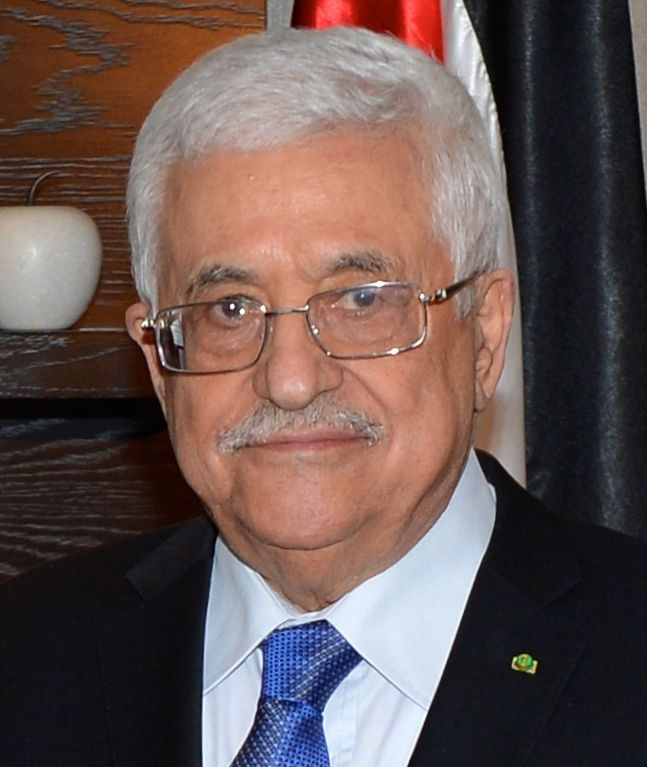
On November 29, 2014, the Arab Peace Initiative Committee of the Arab League Council approved a political-action plan submitted by Mahmoud Abbas (Abu Mazen), “president of the state of Palestine,” which aims to “bring an end to the Israeli occupation of lands of the state of Palestine.”1 An announcement published at the end of the meeting held in Cairo said the issue had been transferred to the Arab League Council appropriate action.2 A diplomatic official told the Al Arabiya network that Jordan, currently the only Arab member of the UN Security Council, will submit in the coming days a proposal for a resolution along the lines of Abbas’ plan.3
The political plan Abbas presented was detailed in a speech he gave to the Arab League Council.4 The plan involves internationalizing the Israeli-Palestinian conflict by submitting a proposal for a resolution to the Security Council, whereby the Security Council would fix a date for the establishment of a Palestinian state based on the 1967 lines with east Jerusalem as its capital.
In his speech Abbas, who claimed there was no longer an Israeli partner for a political settlement, set forth the other components of his plan. They include: the “state of Palestine” joining international conventions and organizations, particularly the International Criminal Court in The Hague and a conference of states parties to the Geneva conventions, where one of the resolutions would be to declare the conventions applicable to the state of Palestine;” requesting the United Nations to provide protection to the Palestinian people; and a diplomatic effort to convince additional states to recognize the “state of Palestine.”
Abbas’ political plan shuts the door to any possibility of reaching a political settlement through negotiations with Israel. Whereas Abbas conveys to the world at large that he remains committed to the path of negotiations, the conditions he has presented for resuming them entail imposing terms on Israel with no reciprocity from the Palestinians in the context of a political compromise.
Abbas says Palestinian conditions for renewing the talks include: ending construction in the settlements, freeing the fourth group of Palestinian prisoners (terrorists who are Israeli citizens and are serving prison sentences), withdrawing IDF forces from parts of Area A in the West Bank that are supposed to be under the Palestinian Authority’s full security control, and Israeli agreement to negotiate with the Palestinians on making the 1967 lines the border between the state of Israel and the state of Palestine.
Abbas is trying to exert pressure on the United States, the international community, and Israel simultaneously. He told the Arab League Council that he sees no need to wait for the results of U.S. Secretary of State John Kerry’s attempt to bridge the Israeli and Palestinian positions, and that, if the United States vetoes the resolution in the Security Council, he would then reassess relations with Israel, end security cooperation with it (which is aimed at preventing terror), and transfer control of the “state of Palestine” to Israel, which he called “the occupying state.” By means of that scenario – which could foster political and security chaos leading to an Israeli-Palestinian confrontation (a third intifada) that would have a regional and international impact – Abbas hopes to goad the international community into forcing Israel to fulfill the Palestinian condition of recognizing a sovereign Palestinian state based on the 1967 lines, without a peace agreement being signed.
Thus the Palestinian Authority is determined, even at the price of a run-in with the United States and Israel, to advance a unilateral political process that is aimed against Israel and has the full support of the Arab League. The rioting and terror in Jerusalem and the West Bank, which are being encouraged by the Palestinian Authority, serve this political process as a form of pressure on Israel and also are aimed at spurring the international community’s intervention. Abbas not only has not condemned the wave of Palestinian anti-Israeli terror but, in traditional fashion, his speeches have reiterated the formula of “praise to the pure martyrs, freedom to the heroic prisoners, and rapid recovery to the heroic wounded.” What this adds up to is backing for every Palestinian who takes part in the struggle against Israel, including terrorist murderers.
The unilateral Palestinian political process marks the launching of an all-out political campaign against Israel accompanied by terror that could develop into an armed intifada. In relation to the international community Abbas has a supreme interest in maintaining the tenuous unity agreement with Hamas, since it indicates that the Palestinian Authority exercises rule (actually only apparent) over Gaza as well. Hamas, the real and unquestioned ruler of Gaza, is extending a rope to Abbas because it sees him as a means, in the international sphere, of attaining the “liberation” of the West Bank, which Hamas wants to take over in a similar way that it drove Fatah from Gaza in the summer of 2007. Hence, for the time being, Hamas is not likely to initiate hostilities with Israel from Gaza, and most of the terror effort will be directed at the West Bank and, from it, at Israel, while continuing to rehabilitate and build up terror infrastructures and military capabilities in Gaza.




 anneinpt
 artaxes
 danmillerinpanama
 davidking1530
 Peter Hofman
 Joseph Wouk
 Peter
Peter Louisiana Steve
 WarSclerotic
Recent Comments