Posted tagged ‘P5+1’

The nuclear chess game begins: Iran plays for sanctions relief before compliance with deal

September 4, 2015

The nuclear chess game begins: Iran plays for sanctions relief before compliance with deal, DEBKAfile, September 4, 2015

Leadership_9.15A long way to go for Iranian approval of nuclear accord

The crowing this week over Barack Obama’s success in gaining congressional support for his Iranian nuclear deal against Binyamin Netanyahu’s defeat was premature. The July 14 Vienna deal between Iran and six world powers was just the first round of the game. Decisive rounds are still to come, before either of the two can be said to have won or lost.

The biggest outstanding hurdle in the path of the accord is Iran’s supreme leader Ayatollah Ali Khamenei and his silence on where he stands on the deal whether by a yea or a nay.

Without his nod, nothing goes forward in the revolutionary republic. So the nuclear accord is not yet home and dry either in Tehran or even in Washington.

While Obama gathered congressional support in Washington for the accord to pass, Khamenei made three quiet yet deadly remarks:

1. “Sanctions against Tehran must be lifted completely rather than suspended. If the framework of sanctions is to be maintained, then why did we negotiate?”

White House spokesman Josh Earnest answered him: “Iran will only see sanctions relief if it complies with the nuclear deal.”

There lies the rub. For the Obama administration, it is clear that Iran must first comply with the accord before sanctions are eased, whereas Tehran deems the accord moot until sanctions are lifted – regardless of its approval by the US Congress.

Here is the first stalemate, and not the last. DEBKAfile’s Iranian sources foresee long, exhausting rounds ahead that could drag on longer even than the protracted negotiations, which Secretary of State John Kerry and Foreign Minister Mohammed Javad Zarif brought to a close in Vienna.

2. Khamenei next took the step of referring the accord to the Majlis (parliament) for approval, pretending that to be legally in force, the accord requires a majority vote by the parliament in Tehran. He put it this way, “I believe… that it is not in the interest of the majlis to be sidelined.”

This step was in fact designed to sideline President Hassan Rouhani, on whom Obama and Kerry counted to get the nuclear deal through, and snatch from him the authority for signing it – or even determining which body had this competence.

It had been the intention of Rouhani and Zarif to put the accord before the 12-member Council of Guardians for their formal endorsement. But Khamenei pulled this rug out from under their feet and kept the decision out of the hands of the accord’s proponents.

3. His next step was to declare with a straight face: “I have no recommendation for the majlis on how to examine it. It is up to the representatives of the nation to decide whether to reject or ratify it.”

This step in the nuclear chess game was meant to show American democracy up in a poor light compared to that of the Revolutionary Republic (sic). While Obama worked hard to bring his influence to bear on Congress he, Khamenei, refrained from leaning on the lawmakers, who were freed to vote fair and square on the deal’s merits.

This of course is a charade. Our Iranian sources point out that the ayatollah exercises dictatorial control over the majlis through his minion, Speaker Ali Larijani. He has absolute trust in the lawmakers never reaching any decision on the nuclear deal, or anything else, without his say-so.

Congressional approval in Washington of the nuclear accord may give President Obama a fine boost but will be an empty gesture for winning endorsement in Tehran. It might even be counter-productive if American lawmakers carry out their intention of hedging the nuclear deal round with stipulations binding Iran to full compliance with the commitments it undertook in Vienna, or also continue to live with existing sanctions or even face new ones.

Netanyahu and the Israeli lobby AIPAC, far from experiencing defeat in their campaign to prevent a nuclear-armed Iran, are well fired up for the next round: the fight for sanctions.

Iranian Regime Celebrates Its Victory In The Nuclear Agreement

September 4, 2015

Iranian Regime Celebrates Its Victory In The Nuclear Agreement, MEMRI, September 4, 2015

After Iran and the P5+1 announced the JCPOA on July 14, 2015, top Iranian officials, headed by Supreme Leader Ali Khamenei, said that the country was a superpower with standing equal to that of the U.S., and that this status would become even stronger because of the agreement. They boasted of Iran’s might and said that it had forced the superpowers to surrender to it and its demands.

Following are highlights from these statements:

Iranian Defense Minister: The Superpowers Surrendered To Iran And “Obeyed The Iranian Rights”

At an armed forces general command ceremony on August 30, 2015, Iranian Defense Minister Hossein Dehghan said: “Today, Iran has attained such status that the superpowers have surrendered to it, because of its majesty, its steadfastness, its resistance, and its unity. Despite their great pride, the regime of the arrogance [the West, led by the U.S.] sat humbly behind the negotiating table and obeyed the rights of the Iranian nation.”[1]

Leader Khamenei: “Those Who Levelled Sanctions Against Us Yesterday Are Dying Today – Because Iran Has Become The Region’s Foremost Military Power”

On August 24, 2015, the website of Iranian Supreme Leader Ali Khamenei published a poster titled “The Iron Fist,” symbolizing Iran’s might following the agreement. The text on the poster states: “Those who levelled sanctions against us yesterday are dying today, because Iran has become the region’s foremost military power. The Islamic Republic of Iran has proven that it works diligently to defend itself. The entire nation unites as a solid fist, standing fast against the aggressors who lack all reason.” The poster features a fist adorned with Iranian flags breaking through clouds; the fist is made up of military equipment, including missiles, jets, ships, tanks, and so on.[2]

24758

IRGC Website Javan: “Iran Is Becoming A Power… Equal To America In The World”

On July 15, 2015 the Javan website, which is affiliated with Iran’s Islamic Revolutionary Guard Corps (IRGC), claimed that Iran has become a superpower with standing equal to that of the U.S., and that this is why the U.S. agreed to conduct a dialogue with Iran in nuclear talks: “In his speech following the agreement between Iran and the P5+1, Obama stated: ‘This deal is also in line with a tradition of American leadership. It’s now more than 50 years since President Kennedy stood before the American people and said, “Let us never negotiate out of fear, but let us never fear to negotiate.” He was speaking then about the need for discussions between the United States and the Soviet Union.’[3]

“This speech clearly shows the sunset of American power and that [the U.S.] has been downgraded from a superpower to an ordinary power. First, Obama considers diplomacy and negotiations to be America’s leadership tradition, while its record indicates that since it emerged in the international arena during World War I, it has chosen no path but military force. The wars in Korea, Vietnam, Iraq, and Afghanistan, the bombing of Hiroshima and Nagasaki, and the dozens of other crimes in Latin America show that America’s leadership tradition has never been diplomacy. Superpowers see themselves as too big to waste their time in negotiations and diplomacy with third-world or smaller countries. They are used to determining how others should behave by waving their finger, and fulfilling their interests by way of military assault. America’s diplomatic record includes several rounds of talks with the former Soviet Union. Therefore, we can say that from World War II to 1990, America’s leadership tradition championed diplomacy or negotiations only vis-à-vis powers of equal standing…

“Obama’s statements defending negotiating with Iran can lead to one of two conclusions: Either America views Iran and its deterrence as equal to those of the former Soviet Union… or America does not have the status it once did…

“What has happened now is that the U.S. Secretary of State [John Kerry] has abandoned all his duties and his life to negotiate with Iran – to haggle, to capitulate, to call on the Europeans to help in the talks, and he does not consider Iran to be like Vietnam, Korea, Afghanistan, and Iraq. So what really happened here?

“In his televised speech on April 5, 2015, following the Lausanne agreement, Obama said that of the three options – attack, sanctions, and negotiations – he saw no other option but negotiations, and even before that he said, ‘If I could have, I would have dismantled Iran’s entire nuclear [project].’ The other side of the ‘if I could have’ coin is ‘I can’t.’ How can we understand this ‘I can’t?’ After all, America has a military presence in 50 places around the globe, including in the Persian Gulf…

“America’s conduct in the absence of the Soviet Union shows that Iran is becoming a power that is second to, or even equal to America in the world. [Therefore,] America does not have the courage to attack it militarily or even to conduct bilateral talks [with it], so it is being helped by three European countries [France, Britain, and Germany].

“It is not unreasonable that America believes that our military capabilities do not surpass its own, but it fears [Iran’s] soft power, which is stronger than military bombardment… This soft power has two main avenues: an covenant between the nation and the Imam [Ayatollah Ruhollah Khomeini]… and an alliance with the countries of the region [that is based on] emotion and faith. The Iraqi nation is an example of this alliance; there, America sacrificed 4,400 troops and ousted Saddam [Hussein], but the friends of the Islamic Revolution [of Iran] sat on Saddam’s throne and did not in any way allow [the Americans] to seize power there. This soft power cannot carry out a military assault, which is why the Islamic Revolution’s increasing might has caused America to transform itself, due to fear, from a stupid enemy into a relatively clever one.”[4]

Senior Khamenei Advisor In IRGC: Nuclear Agreement Will Improve Iran’s Status And Might

Yadollah Javani, senior advisor to Khamenei in the IRGC, wrote in the July 27, 2015 editorial of the IRGC weeklySobh-e Sadeq: “Will war break out between Iran and America? This cannot be decisively answered with a yes or no. But we can prove that in past years, the U.S. was incapable of carrying out, and could not work up the courage to carry out, a military assault on Iran. In the past decade, the Americans and Zionists have repeatedly threatened to attack Iran, but due to their deep concerns regarding the implications of a possible war against [Iran], they have not followed through with their threats… Therefore, American officials announced that Iran’s nuclear dossier would only be resolved by diplomatic means.

“After the [April 2, 2015] Lausanne statement, U.S. President Obama announced that war or increased sanctions would not subdue Iran or destroy its nuclear industry. Throughout all these years the Americans threatened to attack Iran militarily, but both they and others, including the Iranian nation, knew full well that this threat was mainly psychological warfare, and that America could not start another war in West Asia.

“With its record of empty military threats, the Americans once again began to boast about the issue of a military assault on Iran, after the conclusion of the Vienna talks and the signs of an emerging nuclear agreement between Iran and the P5+1. The military threat has come from Obama, U.S. Secretary of State John Kerry, Defense Secretary Ashton Carter, and other American officials in recent days; they have all stressed the option of military force against Iran in the future…

“So far the Americans have not attacked, because of Iran’s deterrence, which is steadily increasing. A decade ago, the Americans were stronger than they are today, and the Islamic Republic of Iran was weaker. In the past decade, the power of America and its allies in the region has eroded, while the power of the Islamic Republic and its allies has only increased. Therefore, the regional upheavals during the past decade have worked in Iran’s favor, and to the detriment of the U.S.. Thanks to the nuclear agreement, this process will not take a turn for the worse for Iran, but could only add special might to it.

“This is precisely the cause of the concern regarding the nuclear agreement that has been expressed by officials of the Zionist regime and of America’s other allies in the region, such as the Al-Saud regime. Therefore, the boasting by America, following the acknowledgement of a nuclear Iran by the agreement between Iran and the P5+1, comes from necessity, and reflects America’s attempt to maintain the façade of its status as a world superpower.

“However, the truth is that the time of this superpower has passed, and America must accept the facts of the new world. The world’s balance of power is shifting, and a new international political order is being shaped. [This new world order] includes the acknowledgement of a nuclear-fuel-cycle-Iran with decisive deterrent capabilities in the region by the world’s six main powers…”[5]

__________________

Endnotes:

[1] Tasnimnews.com (Iran), August 30, 2015.

[2] Farsi.khamenei.ir, August 24, 2015.

[3] Whitehouse.gov, July 14, 2015.

[4] Javan (Iran), July 15, 2015.

[5] Sobh-e Sadeq (Iran), July 27, 2015.

What the axis of evil owes Obama

September 4, 2015

What the axis of evil owes Obama, Israel Hayom, Ruthie Blum, September 4, 2015

His presidency has been paved not with failures, but with a string of the most successfully orchestrated disasters in history. For this, the “axis of evil” Obama so stringently denies owes him a great debt of gratitude.

********************

On Wednesday, U.S. President Barack Obama fulfilled a lifelong dream he has spent nearly seven years in office trying to realize.

It is a very different dream from that of Martin Luther King Jr., whom Obama invokes whenever it feeds his own visions of a particular form of grandeur.

This is not to say that rising from modest means to becoming the head of the United States and, by extension, the leader of the free world, is not already about as grand as one can get. But it is America’s greatness — not Obama’s — that enabled him to make it to the White House in the first place.

His ability to pull it off a second time, in spite of a bad economy and the sweeping radicalization of the Middle East, is a measure of how well he had already implemented the methods of his mentor, “Rules for Radicals” author Saul Alinsky, of infiltrating the country’s institutions and destroying them from within.

Indeed, the previously imperfect, but still functional, systems he tackled to chip away at the fabric of society were health, education, welfare and, of course, the family unit. He even set back the very societal strides that allowed for the election of a black president, creating an environment in which race relations took a sharp turn for the worse.

All of this made America ripe for the picking of its enemies.

This is where Obama’s foreign policy comes into play. Like the chisel he took to domestic affairs, Obama strived to strip the United States of its global superpower status. The crowning moment of this endeavor took place in July in Vienna, when the tireless efforts of the U.S.-led P5+1 to persuade the Islamic Republic of Iran to sign an agreement Obama desperately wanted finally paid off.

According to the agreement, Iran will be able to continue to develop and hone its nuclear weapons program, unfettered by the financial constraints of economic sanctions, and increase the flow of funds to its strategically placed terrorist proxies the world over. In exchange, Russia and China, two laughable members of the P5+1, get to do dubious deals with the mullahs in Tehran; Europe, inundated with refugees from Muslim countries, gets phony guarantees about its short-term safety; and Obama gets to tell himself he has finally earned the Nobel Peace Prize he was awarded about five minutes into his presidency.

This week, he scored his ultimate coup — over Congress. Faced with a majority of the House and Senate opposing the deal, Obama announced that if it did not pass when put to a vote in September, he would exercise his presidential veto power and force it down the throats of the American people.

The only thing that could have prevented this from happening was a veto-override majority. Alas, one was not to be had. By Wednesday, the fate of the deal was sealed by the Obama camp.

Obama deserves full credit for this and the other disasters he has wreaked.<

Where Iran is concerned, one need only look back in time to the early months of Obama’s first term to grasp what he was up to then, and how it led to where we are today.

On June 12, 2009, a rigged election in Iran reinstated then-President Mahmoud Ahmadinejad. Though opposition candidate Mir-Hossein Mousavi clearly had come out ahead of the incumbent, the latter declared victory and hailed his reign as the “will of the people.”

Millions of Iranians took to the streets to protest the false claims on the part of the regime they had intended to replace with what they believed would be a more democratic one.

During these demonstrations, in the course of which Iranians begged the U.S. to help them, a young woman named Neda was gunned down, and the photo of her bullet-ridden body and haunted eyes became the key symbol of the Iranian people’s wish to be free of the repression the Islamic Revolution of 1979 had imposed on them.

Viewing these events from behind his desk in the Oval Office, Obama was “impartial.” He had entered the White House only five months earlier, pledging to overturn his predecessor’s policies. Among these was George W. Bush’s position on radical Muslim regimes and groups in general, and on Iran specifically.

Claiming that the only way to rid Iran of its nuclear and hegemonic ambitions would be by extending goodwill gestures to its leaders, Obama abandoned the term “axis of evil,” which Bush had coined to define state sponsors of terrorism, Iran being a prime example.

Convinced, as well, that the U.S. had become a pariah among nations for being a capitalist, imperialist bully, Obama set about to show the world that America was in no way superior to other countries and cultures.

His wife, Michelle, shared this dim view of her country. Her response to her husband’s electoral victories in a series of Democratic primaries was to say it was the first time in her adult life that she was proud to be an American.

It was neither ignorance nor oversight, then, which caused Obama to abandon the genuine freedom-seekers in Iran, and try to engage the vicious ayatollahs. It was part of his plan, born of a twisted ideology that America was to blame for the hatred it inspired among despots — so ridiculous a notion that it allows for ignoring the plight of truly terrorized populations, prey to the tyrannical oppression of their leaders.

It is also at the core of his appalling attitude towards Israel. As a traditional ally of the U.S., with shared values, it, too — in Obama’s eyes — is to blame for the enmity it arouses.

It is impossible to get into Obama’s head to determine whether he actually believes the nuclear pact he is signing with the devil is the lesser of all evils.

One thing is clear, however: His presidency has been paved not with failures, but with a string of the most successfully orchestrated disasters in history. For this, the “axis of evil” Obama so stringently denies owes him a great debt of gratitude.

Iran’s supreme leader: No nuclear deal unless sanctions fully lifted

September 4, 2015

Iran’s supreme leader: No nuclear deal unless sanctions fully lifted, Israel Hayom, Erez Linn, Shlomo Cesana, Yoni Hersch, Associated Press and Israel Hayom Staff, September 4, 2015

144135927674638061a_bSupreme Leader Ayatollah Ali Khamenei speaks in a meeting with members of Iran’s Experts Assembly in Tehran | Photo credit: AP

If Khamenei decides to make good on his word and demand the lifting of sanctions entirely, it will not be possible to implement the snapback mechanism and reimpose sanctions should Iran violate its obligations under the deal.

******************

Iran’s supreme leader said Thursday that “there will be no deal” if world powers insist on suspending rather than lifting sanctions as part of a landmark nuclear agreement and said it is up to Iran’s parliament, and not him, to approve or reject it.

His remarks, read aloud by a state TV anchorman, mark the first official comment on the deal since U.S. President Barack Obama secured enough support to prevent the Republican-led Congress from blocking it.

Ayatollah Ali Khamenei has yet to express a clear opinion on the deal, clinched in July, which would curb Iran’s nuclear activities in exchange for relief from crippling sanctions.

Khamenei said some U.S. officials have spoken of the “suspension” of sanctions, which he said was unacceptable. “If the sanctions are going to be suspended, then we will also fulfil our obligations on the ground at the level of suspension and not in a fundamental way,” he said.

In response, White House press secretary Josh Earnest reiterated the Obama administration’s stance that it would focus on Tehran’s actions and not its words.

Washington has been “crystal clear about the fact that Iran will have to take a variety of serious steps to significantly roll back their nuclear program before any sanction relief is offered,” he said.

However, the snapback plan (reimposing economic sanctions on Iran if it violates the deal), which Iran agreed to as part of the deal, could lose its validation as it is based on the suspension of the sanctions rather than a full removal.

If Khamenei decides to make good on his word and demand the lifting of sanctions entirely, it will not be possible to implement the snapback mechanism and reimpose sanctions should Iran violate its obligations under the deal.

Iran’s supreme leader has traditionally had the final say on all important matters in the country, but on Thursday Khamenei said that Iran’s parliament, the Majlis, known to oppose the agreement, should decide on the deal.

“It is the representatives of the people who should decide. I have no advice regarding the method of review, approval or rejection,” he said.

Either way, according to a Revolutionary Guard senior official, the deal does not detract one bit from the Iranian regime’s rancor toward Israel. “The Islamic revolution will continue to enhance its abilities until it will destroy Israel and liberate Palestine,” he said.

Meanwhile on Thursday, Prime Minister Benjamin Netanyahu told Foreign Ministry officials that most Americans agreed with Israel over dangers posed by Iran. In remarks at a Rosh Hashanah reception at the Foreign Ministry, Netanyahu made no direct mention of President Barack Obama’s victory on Wednesday in securing enough Senate votes to protect the agreement in Congress.

Speaking of a need to preserve Israel’s traditionally close ties with Washington despite what he called “differences of opinion,” Netanyahu told diplomatic staffers: “I must say, however, that the overwhelming majority of the American public sees eye to eye with us on the danger emanating from Iran.”

Israel’s message to ordinary Americans, Netanyahu said, would continue to be that “Iran is the enemy of the United States — it declares that openly — and Israel is a U.S. ally.”

Netanyahu explained that the “ratio of people who oppose the deal to people who support the deal in the U.S. is two to one.”

Ensuring the U.S. public understands that point will have “important ramifications for our security down the line,” Netanyahu said, according to an official statement.

Foreign Ministry Director General Dore Gold, meanwhile, revealed that Iran was transferring advanced weapons from arms depots in Syria to Hezbollah.

Speaking to Israel Hayom, Gold explained that the Iranians want to provide the Shiite terrorist organization with cruise missiles, Yakhont missiles and S2 land-based strategic missile.

Hezbollah’s activity, backed by Iran, has reached Kuwait and is evident in the Golan Heights, as seen in their attempts to launch another battle front with Israel.”

Gold also touched on Iran’s Parchin nuclear facility, saying that the Iranians had paved the floor of the facility with asphalt. He explained that the purpose of the move was to prevent International Atomic Energy Agency inspectors from testing the soil for dangerous substances.

Meanwhile, tensions are running high surrounding the approaching vote in the U.S. Congress. The Wall Street Journal published on Thursday a caustic article, warning the Democratic Party that if the nuclear deal fails, it will be their fault. “Politically, Obama’s victory in Congress makes Democrats hostage to Iran’s behavior. This means that if a nuclear arms race breaks out in the Middle East, democrats are accountable,” the article said.

Iran Promises to ‘Set Fire’ to U.S. Interests

September 3, 2015

Iran Promises to ‘Set Fire’ to U.S. Interests, Washington Free Beacon, September 3, 2015

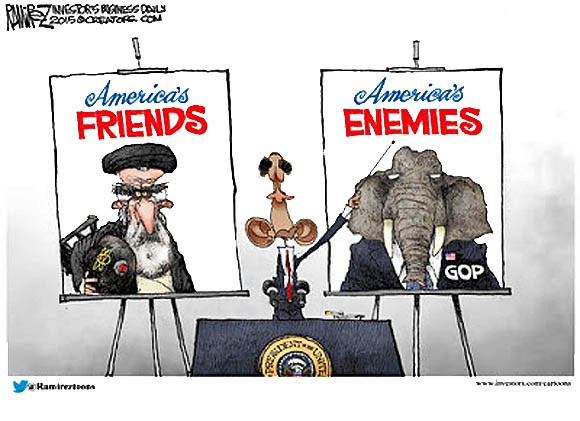
(Despite a the “deal” that favors Iran on every point, Obama’s Iranian friends keep saying “death to America.” He does not seem to mind. Who are his real friends and enemies?

Obama's enemies

— DM)

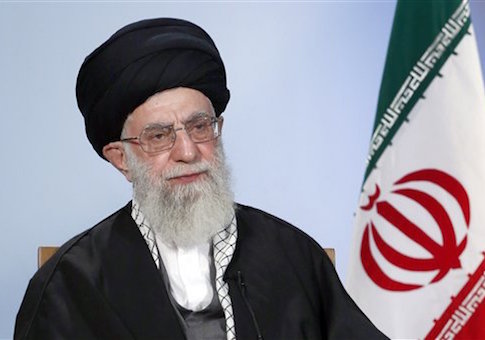
(AP Photo/Office of the Supreme Leader)

A senior Iranian military official has vowed to “set fire” to all U.S. interests in the region and maintained that the Islamic Republic welcomes war with America, according to regional reports demonstrating that Tehran is still committed to fighting the United States in the wake of a recently inked nuclear accord.

“In threatening remarks,” a top Iranian commander of the Revolutionary Guard Corps (IRGC) stated that Iran is prepared to “annihilate” U.S. and Israeli war forces should they “take the slightest military move against Iran,” according to Iran’s state-controlled Fars News Agency.

“We monitor their acts day and night and will take every opportunity to set fire to all their economic and political interests if they do a wrong deed,” Brigadier General Hossein Salami, the IRGC’s lieutenant commander, was quoted as saying in Tehran on Thursday.

In a direct threat to both the United States and Israel, Salami promised to “cut off enemies’ hands and fingers will then send its dust to the air,” according to the report.

These Iranian military officials were responding to multiple claims by U.S. officials that a military option against Tehran still remains on the table, despite the recently inked accord, which aims to constrain the Islamic Republic’s contested nuclear program.

In May, Salami said that Iran desires a war with the United States.

“We have prepared ourselves for the most dangerous scenarios and this is no big deal and is simple to digest for U.S.; we welcome war with the U.S. as we do believe that it will be the scene for our success to display the real potentials of our power,” he said at the time.

The comments came on the say day that the Iranian military unveiled a new missile defense system to track enemy threats.

“The system can detect and trace targets, take decisions for the operation of the missile systems, decide about the type of weapon systems needed, assess and foresee hostile targets, and field commanders can easily take a final decision with the data provided by the command and control system,” according to Fars.

Meanwhile, Iranian Supreme Leader Ali Khamenei on Thursday said that Iran is not open to negotiate with the United States on any other issue outside of the nuclear portfolio.

Khamenei “reiterated the complete ban on any negotiation between the Iranian officials and the Americans on other issues, and said there won’t be any other talks with the White House, except for the nuclear issue,” according to Fars.

“The U.S. positions are fully against the stances of the Islamic Republic,” Khamenei was quoted as saying in a wide-ranging speech.

Khamenei also called on the country’s leaders to attack U.S. critics of the deal.

“In the nuclear talks with are negotiating with the 5+1, but the U.S. administration is, in fact, the main party; but the U.S. officials speak very badly and a decision needs to be taken about the manner they speak,” Khamenei told the country’s powerful Assembly of Experts.

“Don’t say that the Americans are uttering these words to convince their internal rivals; of course, I believe that the internal disputes in the U.S. are real and they have differences and the reason for such a difference is clear to us, but what is officially said needs a response and if no response is given to them, the other side’s remarks will be entrenched,” Khamenei said.

Should Israel and its Arab neighbors form an alliance against Iran?

September 3, 2015

Should Israel and its Arab neighbors form an alliance against Iran? The Hill, Eli Verschleiser, September 3, 2015

Could a nuclear deal with Iran accomplish more than decades of diplomacy in the Middle East and, rather ironically, create new alliances between Israel and Arab neighbors?

That’s a key question as we gear up for the battle on Capitol Hill over President Barack Obama’s controversial pact with Tehran to limit uranium enrichment in return for lifting of sanctions. Critics say the agreement paves the way for a double reward of Tehran— a huge influx of cash and an eventual, unfettered path toward nuclear arms.

Neither the Saudis, the Kuwaitis, nor the United Arab Emirates or for that matter any of the other Persian Gulf states are too excited about the prospect of a nuclear-armed Iran. The role of Iran in the conflicts in Iraq and Syria, and the rise of Islamic State terror and the Muslim Brotherhood, have become a much bigger problem for Arab leaders than the tired conflict with Israel. Those countries have a Sunni majority, while Persian Iran is led by rival Shia Muslims.

Iran, of course, is also a major oil rival for the Gulf States and became more powerful following the fall of Saddam Hussein’s Iraq.

The Saudis have been publicly moderate on the deal but said to be privately angry over it. Epitomizing the old Middle East adage that the enemy of my enemy is my friend, the Saudis were reported to have offered Israel the ability to use their airspace to strike at Iran. This is a crucial step in keeping a military option on the table as it would save time and fuel if such a strike were necessary. “The Saudi authorities are completely coordinated with Israel on all matters related to Iran,” a European official was quoted as saying in an Israeli TV report.

Clearly momentum for alignment with Israel in some form is building.

“To all those who think the Persian state, and the regime of the Rule of the Imprudent… the dictatorial fascist Persian regime which controls it, is a friendly country, whereas Israel is an enemy country, I say that a prudent enemy is better than an imprudent one.”

Those words were written by Abdallah Al-Hadlaq in the official newspaper of Kuwait, Al-Watan.

It is not the first time the author has expressed support for ties with Israel. As far back as 2009 he called on his government and other Gulf states to put aside their differences with Jerusalem and forge an alliance against Iran.

But the fact that his column was published in a government daily in a country without full press freedom speaks volumes.

“The state of Israel and its various governments have waged more than five wars with the Arabs, yet never in the course of these wars did Israel think to use its nuclear weapons against its Arab enemies,” Al-Hadlaq wrote. “Conversely, if the Persian state, with its stupid, rash and fascist regime that hides behind a religious guise, ever develops nuclear weapons, it will not hesitate to use nuclear bombs against the Arab Gulf states in the first conflict that arises.”

Were the Saudis to show leadership in rallying other Sunni-led states against Iran it could have a significant impact on a new order in the Middle East.

Furthermore the new coalition could collectively work wonders to get rid of ISIS, as Jordan’s King Abdullah recently declared in a CNN interview that the war against ISIS ‘is our war’. The Iranian nuclear threat and the ISIS threat can top the agenda in this new coalition.

“Iran does have enough politico-military and economic potential to counter-balance Saudi led “Sunni” states in the Middle East and beyond,” wrote Salman Rafi Sheikh in an essay for the magazine Eastern Outlook last March. “It is precisely for this very reason that Saudi Arabia’s anxiety about an agreement has fueled a flurry of intense diplomacy in recent days to bolster unity among “Sunni” states in the Middle East in the face of “shared threats”, especially those emanating from Iran.”

Rafi Sheikh, a research-analyst of International Relations and Pakistan’s foreign and domestic affairs, noted that “this deal is most likely to send political jolts across the entire Middle Eastern political landscape, with Saudi Arabia and Israel standing as the most sensitive areas to bear its shocks; and as such, are most likely to clutch their hands into an alliance against Iran, and by default, against the US ambitions as well.”

There is great potential for Saudi Arabia’s King Salman to rally Gulf states as well as Turkey, Egypt and Jordan to stand up to an Iran that will only become more emboldened with the huge influx of post-sanctions billions and new political bona fides that will make Tehran bolder.

Increased security cooperation as Iran bides its time for an eventual bomb –after the agreement period, or in the worst-case scenario, in violation of the agreement — may eventually lead to more nuclear proliferation in the region.

Will that mean a nuclear pact between Israel and its former enemies? That will be a fascinating development that could never have been imagined even a decade ago.

And it will truly be a sad irony if, after nearly 70 years of a solid relationship between the United States and Israel, the Jewish state had to turn to despotic regimes with little or no human rights to solidify its security position, feeling far less than confident that Washington has its back than it has in the past.

However this may simply be the beginning of an Arabic Israeli accord where both groups can begin to understand and accept each other.

NATO Allies Making It Easier for Iran to Attack Israel?

September 3, 2015

NATO Allies Making It Easier for Iran to Attack Israel? The Gatestone InstituteBurak Bekdil, September 3, 2015

  • Iran did not go mad and threaten to hit all NATO installations in Turkey because it wanted 3.5 million Turkish citizens to die from the chemical warhead of a Syrian missile. It went mad and threatened because it viewed the defensive NATO assets in Turkey as a threat to its offensive missile capabilities.
  • Iran’s reaction to the NATO assets in Turkey revealed its intentions to attack. It could be a coincidence that the U.S. and Germany (most likely to be followed by Spain) have decided to withdraw their Patriot missile batteries and troops from Turkey shortly after agreeing to a nuclear deal with Iran. But if it is a coincidence, it is a very suspicious one. Why were Assad’s missiles a threat to Turkey two and a half years ago, but are not today?
  • Apparently, NATO allies believe, although the idea defies logic, that the nuclear deal with Iran will discourage the mullahs in Tehran from attacking Israel.

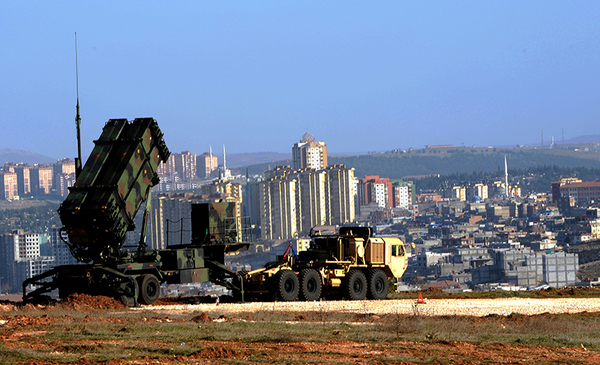
In early 2013, NATO supposedly came to its ally’s help: As Turkey was under threat from Syrian missiles — potentially with biological/chemical warheads — the alliance would build a mini anti-missile defense architecture on Turkish soil. Six U.S.-made Patriot missile batteries would be deployed in three Turkish cities and protect a vast area where about 3.5 million Turks lived.

The Patriot batteries that would protect Turkey from Syrian missiles belonged to the United States, Germany and the Netherlands. In early 2015, the Dutch mission ended and was replaced by Spanish Patriots. Recently, the German government said that it would withdraw its Patriot batteries and 250 troops at the beginning of 2016. Almost simultaneously, the U.S. government informed Turkey that its Patriot mission, expiring in October, would not be renewed. Washington cited “critical modernization upgrades” for the withdrawal.

Since the air defense system was stationed on Turkish soil, it unnerved Iran more than it did Syria. There is a story behind this. First, Patriot missiles cannot protect large swaths of land, but only designated friendly sites or installations in their vicinity. That the six batteries would protect Turkey’s entire south and 3.5 million people living there was a tall tale. They would instead protect a U.S.-owned, NATO-assigned radar deployed earlier in Kurecik, a Turkish town; and they would protect it not from Syrian missiles with chemical warheads, but from Iranian ballistic missiles.

1234 (1)U.S. Patriot missiles, deployed outside Gaziantep, Turkey in 2013. (Image source: U.S. Army Europe/Daniel Phelps)

Kurecik seemed to matter a lot to Iran. In November 2011, Iran threatened that it would target NATO’s missile defense shield in Turkey (“and then hit the next targets,” read Israel) if it were threatened. Shortly before the arrival of Patriots in Turkey, Iran’s army chief of staff warned NATO that stationing Patriot anti-missile batteries in Turkey was “setting the stage for world war.”

What was stationed in Kurecik was an early-warning missile detection and tracking radar system. Its mission is to provide U.S. naval assets in the Mediterranean with early warning and tracking information in case of an Iranian missile launch that might target an ally or a friendly country, including Israel. So, a six-battery Patriot shield to protect the NATO radar in Kurecik against possible Iranian aggression was necessary. And that explains why the Iranians went mad about Kurecik and openly threatened to hit it.

NATO and Turkish officials have always denied any link between the Patriot missiles and the NATO radar in Turkey. They have often pointed out that the Patriot batteries were stationed in the provinces of Adana, Kahramanmaras and Gaziantep, while Kurecik was in nearby Malatya province. But the Patriot is a road-mobile system: It can be dismantled easily and re-deployed in another area in a matter of hours (the road distance between Kurecik and Kahramanmaras is a mere 200 kilometers, or 124 miles).

Clearly, Iran did not go mad and threaten to hit all NATO installations in Turkey because it wanted 3.5 million Turkish citizens to die from the chemical warhead of a Syrian missile. It went mad and threatened because it viewed the defensive NATO assets in Turkey as a threat to its offensive missile capabilities, which the Patriots could potentially neutralize.

Why, otherwise, would a country feel “threatened” and threaten others with starting a “world war” just because a bunch of defensive systems are deployed in a neighboring country? Iran did so because it views the NATO radar in Turkey as an asset that could counter any missile attack on Israel; and the Patriots as hostile elements because they would protect that radar. In a way, Iran’s reaction to the NATO assets in Turkey revealed its intentions to attack.

It could be a total coincidence that the U.S. and Germany (most likely to be followed by Spain) have decided to pull their Patriot batteries and troops from Turkey shortly after agreeing to a nuclear deal with Iran. But if it is a coincidence, it is a very suspicious one. In theory, the Patriot systems were deployed in Turkey in order to protect the NATO ally from missile threats from Syrian President Bashar al-Assad’s regime. Right? Right.

Assad’s regime is still alive in Damascus and it has the same missile arsenal it had in 2013. Moreover, Turkey’s cold war with Assad’s Syria is worse than it was in 2013, with Ankara systematically supporting every opposition group and openly declaring that it is pushing for Assad’s downfall. Why were Assad’s missiles a threat to Turkey two and a half years ago, but are not today?

The Patriot missiles are leaving Turkey. They no longer will “protect Turkish soil.”

Apparently, NATO allies believe, although the idea defies logic, that the nuclear deal with Iran will discourage the mullahs in Tehran from attacking Israel.

It looks as if the potential target of NATO heavyweights’ decision is more a gesture to Iran than to Turkey.

Obama secures rubber stamp for Iran deal catastrophe

September 3, 2015

Obama secures rubber stamp for Iran deal catastrophe, Front Page MagazineJoseph Klein, September 3, 2015

(Please see also, Use Our Senatorial Nuclear Option to Stop Iran’s Radioactive Nuclear Option. Make Senators vote yes or no on the “deal.”— DM)

obama-wc2

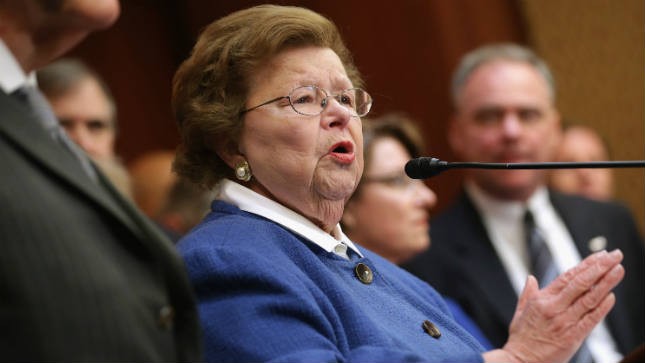
Democratic Senator Barbara Mikulski of Maryland has pushed President Obama’s nuclear appeasement deal with Iran over the top. With her decision to vote in favor of the deal, Obama now has the support of the 34 senators he needs to uphold his expected veto of a congressional resolution of disapproval. If enough craven Democrats back a planned filibuster to prevent a vote on the floor of the Senate, Obama will not even have to use his veto pen.

The nightmare of a financially secure nuclear armed Iran, legitimized by the Obama administration and its international partners, is about to envelop us.

Ironically, Obama warned in a speech he delivered on September 1st in Alaska that a potentially bleak future could lie ahead, in which “there’s not going to be a nation on this Earth that’s not impacted negatively.”

“People will suffer,” Obama said. “Economies will suffer. Entire nations will find themselves under severe, severe problems…more conflict.”

President Obama is right to be concerned about the future, but his stated reason for his concern is entirely misplaced. Obama was talking about climate change, which he considers to be a man-made disaster. In truth, Obama himself has created a far more imminent disaster with his nuclear deal.

In his climate change speech, Obama spoke about our “grandkids” who “deserve to live lives free from fear, and want, and peril.” He added that we need to prove “we care about them and their long-term futures, not just short-term political expediency.”

Obama, and the partisan loyalists who support him no matter what, are the ones letting down our grandkids. They are the ones who have sacrificed our grandkids’ long-term futures at the altar of short-term political expediency. The only long-term future that Obama is interested in is his own legacy.

By President Obama’s own admission, no later than 15 years from now – when my granddaughter will be just 18 years old – Iran will be in a position to develop enough enriched materials to produce nuclear bombs with virtually no “break-out” time. The deal’s major nuclear restrictions, such as they are, will have gone away, even assuming that Iran had not cheated in the meantime.

The deal’s inspection mechanism is a farce, including most notably, Iran’s self-inspection of its military site where it is suspected that nuclear weaponization research and development work was carried out. The military facility at Parchin is off-limits to onsite inspection by the International Atomic Energy Agency (IAEA). Yet the Obama administration continues to lie to the American people about how comprehensive the IAEA inspections will be. Secretary of State John Kerry tweeted this falsehood on September 2nd:  “With this #IranDeal, the IAEA can go wherever the evidence leads. No facility…will be off limits.”

The Iranian leaders also will get their hands soon on hundreds of billions of dollars. No doubt they will use some of their treasure trove from sanctions relief to fund their terrorist proxies all over the world. Obama admitted in his speech defending his deal last month at American University that monies from sanctions relief “will flow to activities we object to.” He acknowledged that “Iran supports terrorist organizations like Hezbollah. It supports proxy groups that threaten our interests and the interests of our allies – including proxy groups who killed our troops in Iraq. They try to destabilize our Gulf partners.”

Yet Obama tells the American people not to worry about such real-life risks. Instead, he diverts attention to his Chicken Little climate change hype that the sky will fall if we do not take urgent action now.

Much of the rest of the Iranians’ windfall from sanctions relief will go towards developing and acquiring, from North Korea, Russia and other sources, advanced military technology and long-range missiles.

Iran’s leaders have made it abundantly clear that they do not consider themselves bound by either the 5-year UN Security Council arms embargo or the 8-year missile embargo.  For example, Iran’s President Hassan Rouhani declared: “We will buy, sell and develop any weapons we need and we will not ask for permission or abide by any [U.N.] resolution for that.”

Iranian Defense Minister Hossein Dehghan said last month that “We are considering the design, research, and production of [missiles] that are highly destructive, highly accurate, radar evasive, and tactical.”

Brigadier General Amirali Hajizadeh, commander of the aerospace division of the Islamic Revolutionary Guard Corps (IRGC), said: “Some wrongly think Iran has suspended its ballistic missile programs in the last two years and has made a deal on its missile program.” To emphasize his point, the commander announced that Iran “will have a new ballistic missile test in the near future that will be a thorn in the eyes of our enemies.”

The head of Iran’s Islamic Revolutionary Guard Corps, Maj. Gen. Mohammad Ali Jafari, announced plans to expand the reach of Iran’s missiles.

The Iranian thugs are not limiting themselves to purely defensive weapons. “They (the US and the Zionists) should know that the Islamic Revolution will continue enhancing its preparedness until it overthrows Israel and liberates Palestine,” said Brigadier General Mohsen Kazzemeini, the IRGC’s top commander in the Tehran Province (as quoted by Iran’s Fars News Agency). “We will continue defending not just our own country, but also all the oppressed people of the world, especially those countries that are standing on the forefront of confrontation with the Zionists,” he added.

The Obama administration, which conceded as part of the nuclear deal to agree to unconditional term limits on the arms and missile embargoes, barely raised an eyebrow at Iran’s refusal to be bound by even these limited embargoes. In fact, Kerry went so far as to say that “they are not in material breach of the nuclear agreement for violating the arms piece of it.”

A sobering report was just released by the Iran Strategy Council, led by retired generals Chuck Wald (Commandant of Marine Corps) and James Conway (Deputy Commander of European Command). It warns of the deal’s likely dangers to America’s own national security and of the “cascading instability” it will produce in the Middle East region and beyond:

“The final agreement on Iran’s nuclear program, the Joint Comprehensive Plan of Action (JCPOA), has potentially grave strategic implications that directly threaten to undermine the national security of the United States and our closest regional allies. By allowing Iran to become a nuclear threshold state and enabling it to become more powerful and expand its influence and destabilizing activities – across the Middle East and possibly directly threatening the U.S. homeland – the JCPOA will place the United States in far worse position to prevent a nuclear Iran.”

The report’s authors predict that the “nightmare scenarios of WMD and terrorism on the soil of the United States and its allies will become more probable.”

Nevertheless, the Obama administration is spiking the ball, exulting over its evident victory in keeping enough Democratic senators on board to protect Obama’s deal.

The White House tweeted: “If your house is on fire, would you refuse to put it out because there could be another fire in 15 years?”

The question should be: “If your house is flammable, would you hand your enemy a match?”

Kerry, who turned on his own fellow soldiers during the Vietnam War, tweeted: “I have had the privilege of serving our country in times of peace and in times of war—and peace is better.”

When Neville Chamberlain returned from Germany with his infamous Munich Pact in hand, he declared: “I believe it is peace for our time…Go home and get a nice quiet sleep.”

The long nightmare of World War II ensued shortly thereafter. Thanks to Barack Obama and John Kerry, we are entering the nightmare leading inevitably to an emboldened, well-funded Iran equipped with nuclear arms and the missiles to deliver them.

Kerry Promises Israel, Saudis Money In Wake of Iran Nuclear Deal

September 2, 2015

Kerry Promises Israel, Saudis Money In Wake of Iran Nuclear Deal, Washington Free Beacon, , September 2, 2015

U.S. Secretary of State John Kerry takes a drink during a news conference after the closed-door nuclear talks with Iran, in Vienna, Austria, Monday, Nov. 24, 2014. Facing still significant differences between the U.S. and Iran, negotiators gave up on last-minute efforts to get a nuclear deal by the Monday deadline and extended their talks for another seven months. The move gives both sides breathing space to work out an agreement but may be badly received by domestic sceptics, since it extends more than a decade of diplomatic efforts to curb Iran's nuclear prowess. (AP Photo/Ronald Zak)  (AP Photo/Ronald Zak)

“No amount of conventional weapons can neutralize the threat posed by the mullahs acquiring nuclear weapons,” the [congressional] source said. “This type of appeasement is a slap in the face to our closets allies and a wink-wink to the dictators in Tehran.”

****************

Secretary of State John Kerry on Wednesday moved to reassure Congress that Israel and America’s Gulf State allies would be fully taken care of in the wake of the Iran nuclear deal, which Kerry acknowledged would not stop Iran’s support for terrorism, according to a letter sent by the secretary of state to lawmakers.

Just moments after the White House secured enough votes to override a congressional veto of the Iran deal, a letter from Kerry appeared in the inboxes of congressional offices across Capitol Hill.

Kerry admits that, despite the deal, Iran will continue to back terrorist groups across the globe and promises to boost military support and funding to Israel and Gulf states such as Saudi Arabia, according to a copy of the letter obtained by the Washington Free Beacon.

The letter comes in response to concerns among lawmakers, Israel, and other Gulf region allies that the nuclear accord will boost the Islamic Republic’s support for terrorism, while leaving traditional U.S. allies on the defense.

“Important questions have been raised concerning the need to increase security assistance to our allies and partners in the region and to enhance our efforts to counter Iran’s destabilizing activities in the region,” Kerry writes. “We share the concern expressed by many in Congress regarding Iran’s continued support for terrorist and proxy groups throughout the region, its propping up of the Assad regime in Syria, its efforts to undermine the stability of its regional neighbors, and the threat it poses to Israel.”

The Obama administration, Kerry claims, is under “no illusion that this behavior will change following implementation of the JCPOA,” or Joint Comprehensive Plan of Action.

“The president has made clear that he views Israel’s security as sacrosanct, and he has ensured that the United States has backed up this message with concrete actions that have increased US military, intelligence, and security cooperation with Israel to their highest levels ever,” the letter states.

Kerry then goes on to outline the ways in which the Obama administration will enhance security cooperation with Israel and Gulf State allies.

Israel, for instance, will be the first country in the region to get a U.S.-made next-generation F-35 fighter aircraft in 2016.

An additional $3 billion in U.S. aid also will go to secure Israel’s missile defense programs, such as the Iron Dome system. The administration also stands ready “to enhance” funding to next-generation missile defense systems, such as Arrow-3 and David’s Sling.

The administration, Kerry writes, recently “offered Israel a $1.89 billion munitions resupply package that will replenish Israel’s inventories and will ensure its long-term continued access to sophisticated, state of the art precision guided munitions.”

The administration will additionally work to secure a new 10-year “Memorandum of Understanding” with the Jewish state that “would cement for the next decade our unprecedented levels of military assistance,” Kerry writes.

Kerry also proposes to collaborate with Israel on “tunnel detection and mapping technologies to provide Israel new capabilities to detect and destroy [terrorist] tunnels before the could be used to threaten Israeli civilians.”

President Barack Obama has further proposed to Prime Minister Benjamin Netanyahu that the two governments “begin the process aimed a further strengthening our efforts to confront conventional and asymmetric threats.”

Gulf States, such as Saudi Arabia and the United Arab Emirates (UAE), also will benefit from increased arms shipments and new security deals, according to Kerry.

The administration is “working to expedite the delivery of capabilities needed to deter and combat regional threats, including terrorism and Iran’s destabilizing activities in the region,” Kerry writes.

In July, for example, the administration notified Congress of new arms sales to Saudi Arabia and the UAE “that will provide long-term strategic defense capabilities and support for their ongoing operations,” the letter states.

Another goal is to strengthen ballistic missile defense capabilities in the region. This goal, Kerry says, “is a strategic imperative and an essential component to deterring Iranian aggression against any GCC member state.”

One senior Congressional aide who received the letter said that it is a clear attempt by the administration to placate regional fears about the deal.

“Let’s not be fooled about what the letter represents. This desperate move to placate Israel and our Gulf partners is a tacit acknowledgment that Iran will expand its international terror regime thanks to the nuclear agreement,” the source said. “If this is such a good deal, why does the administration feel compelled to immediately offer arms packages as compensation to our regional allies?”

“No amount of conventional weapons can neutralize the threat posed by the mullahs acquiring nuclear weapons,” the source said. “This type of appeasement is a slap in the face to our closets allies and a wink-wink to the dictators in Tehran.”

Mikulski pushes Obama’s Iran nuke deal over the top in Senate

September 2, 2015

Mikulski pushes Obama’s Iran nuke deal over the top in Senate, The Hill, Jordain Carney, September 2, 2015

(“Mikulski added that in the wake of the Iran deal, the United States must ‘reaffirm our commitment to the safety and security of Israel.'”  Commitments from Obama are, at best, ephemeral.  Israel can rely only in herself. — DM)

mikulskibarbara03022015getty_1

Mikulski was one of 11 remaining undecided Democrats. Opponents needed all 11 to buck Obama and vote against the deal if they were going to be able to block it in the Senate.

*********************

Sen. Barbara Mikulski said on Wednesday that she will support President Obama’s nuclear deal with Iran, all but ensuring the agreement will survive an attack in the Senate.

“No deal is perfect, especially one negotiated with the Iranian regime,” the Maryland Democrat, who is retiring after her current term, said in a statement. “I have concluded that this Joint Comprehensive Plan of Action is the best option available to block Iran from having a nuclear bomb. For these reasons, I will vote in favor of this deal.”

Mikulski’s decision hands President Obama a needed foreign policy win after a months-long lobbying effort by administration officials to shore up support for the agreement.

Democrats have rallied around the deal since leaving town in August, giving Obama the 34 senators he needs to back the agreement and uphold a veto of a potential resolution of disapproval.

Mikulski was one of 11 remaining undecided Democrats. Opponents needed all 11 to buck Obama and vote against the deal if they were going to be able to block it in the Senate.

She said that while reviewing the deal she focused on a handful of questions, including whether it blocks Iran from getting a nuclear bomb, what sanctions would be lifted and if a better alternative could be reached if Congress rejects the deal.

Republicans have argued that the Obama administration could force Iran back to the negotiating table, but Mikulski said on Wednesday that the two alternatives to the deal were either more sanctions against Iran or military action.

“Maintaining or stepping up sanctions will only work if the sanction coalition holds together. It’s unclear if the European Union, Russia, China, India and others would continue sanctions if Congress rejects this deal. At best, sanctions would be porous, or limited to unilateral sanctions by the U.S.,” she said, adding that the “military option is always on the table for the United States.”

Mikulski, as well as undecided Sen. Ben Cardin (D-Md.), have been under intense pressure from opponents of the deal and pro-Israel advocates to reject the Iran nuclear agreement.

She tried to preempt some of their criticism on Wednesday, touting her support for Israel and noting that she considered how the deal would affect the country.

“I have been an unabashed and unwavering supporter of Israel. I have persistently supported the sanctions that brought Iran to the table,” she said. “With the horrors of the Holocaust in mind, I have been deeply committed to the need for a Jewish homeland, the State of Israel, and its inherent ability to defend itself.”

Mikulski added that in the wake of the Iran deal, the United States must “reaffirm our commitment to the safety and security of Israel.”