Posted tagged ‘Obama’

Putin Ally Warns Americans To Vote For Trump Or Face Nuclear War

October 13, 2016

Putin Ally Warns Americans To Vote For Trump Or Face Nuclear War

by Tyler Durden

Oct 13, 2016 2:53 AM

Source: Putin Ally Warns Americans To Vote For Trump Or Face Nuclear War | Zero Hedge


The name of what is arguably Russia’s most flamboyant, ultra-nationalist politician, and according to some the local incarnation of Donald Trump,  Vladimir Zhirinovsky, a deputy in the state Duma and leader of the nationalist LDPR party, is familiar to frequent readers: he most recently made an appearance on these pages two months ago, when he warned Germany that it risks utter destruction if it continued on its present track of operating Bundeswehr forces in the Baltics. Zhirinovsky also shares another feature with Donald Trump: both are outspoken to a fault. Which is why we were not surprised to read that as Reuters reported earlier, Zhirinovsky urged Americans to vote for Donald Trump as president or “risk being dragged into a nuclear war.”

In an interview with Reuters, Vladimir Zhirinovsky, known in Russia and Europe for his fiery rhetoric, said that Trump was the only person able to de-escalate dangerous tensions between Moscow and Washington.

On the other hand, Hillary Clinton could spark World War Three, said the Russian who received a top state award from Putin after his pro-Kremlin Liberal Democratic Party of Russia (LDPR) came third in Russia’s parliamentary election last month.

“Relations between Russia and the United States can’t get any worse. The only way they can get worse is if a war starts,” said Zhirinovsky, speaking in his huge office on the 10th floor of Russia’s State Duma, or lower house of parliament. “Americans voting for a president on Nov. 8 must realize that they are voting for peace on Planet Earth if they vote for Trump. But if they vote for Hillary it’s war. It will be a short movie. There will be Hiroshimas and Nagasakis everywhere.”

Well, we said he was outspoken. And, Just like Trump, Zhirinovsky tends to polarize his fellow countrymen. According to Reuters while “many Russians regard the politician as a clownish figure who makes outspoken statements to grab attention” he is also “widely viewed as a faithful servant of Kremlin policy, sometimes used to float radical opinions to test public reaction.”

Zhirinovsky’s comments come at a time when relations between Russia and the US are at generational lows, as a result not only of the conflicts raging over Syria and Ukraine but also the recent White House accusation that Russia was responsible for cyber attacks against Democratic Party organizations. In turn, an amused Putin replied his country was not involved in an effort to influence the U.S. presidential election. Instead Putin accused the US of “starting this hysteria, saying that this (hacking) is in Russia’s interests. But this has nothing to do with Russia’s interests,” in a speech during a business forum in Moscow. He added that the accusations were a ploy to divert U.S. voters’ attention at a time when public opinion was being manipulated. “Everyone is talking about ‘who did it’ (the hacking),” said Putin. “But is it that important? The most important thing is what is inside this information.”

* * *

But back to “Russia’s Trump”: according to Reutersi, “Zhirinovsky likes to shock liberal public opinion and he has frequently heaped scorn on the West, which he and other Russian nationalists regard as decadent, hypocritical and corrupted by political correctness.

His combative style, reminiscent of Trump’s, ensures him plenty of television air time and millions of votes in Russian elections, often from the kind of blue-collar workers who are the bedrock of the U.S. Republican candidate’s support.


Zhirinovsky once proposed blocking off mostly Muslim southern Russia with a barbed wire fence, echoing Trump’s call for a wall along the U.S. border with Mexico.


Zhirinovsky, who said he met Trump in New York in 2002, revels in his similarities with the American businessman – they are the same age, favor coarse, sometimes misogynistic language and boast about putting their own country first. Zhirinovsky has even said he wants a DNA test to see if he is related to Trump.

Where the two differ, is that unlike Trump, an “anti-establishment candidate in the U.S. presidential race with no past political experience”, Zhirinovsky is a consummate political insider who has sat in the Duma for more than two decades; he is also more diplomatic when he needs to be, such as in this interview in which he continued to praise Trump: “(Trump) won’t care about Syria, Libya and Iraq and why an earth should America interfere in these countries? And Ukraine. Who needs Ukraine?,” said Zhirinovsky, who once counted himself a friend of Iraq’s Saddam Hussein and Libyan dictator Muammar Gaddafi and whose deaths he still laments.

“Trump will have a brilliant chance to make relations more peaceful … He’s the only one who can do this,” he said, adding that Trump could even win a Nobel peace prize.

And if he likes Trump, he must dislike Hillary. Sure enough Zhirinovsky described Clinton as “an evil mother-in law” and said her record as secretary of state under Obama in 2009-2013 showed she was unfit to lead her country.

“She craves power. Her view is that Hillary is the most important person on the planet, that America is an exceptional country, as Barack Obama said,” said Zhirinovsky. “That’s dangerous. She could start a nuclear war.”

 He did not stop here: “Most Americans should choose Trump because men have been leading for millions of year. You can’t take the risk of having one of the richest, most powerful countries led by a woman president,” he said.

Asked about lewd comments Trump made about women in 2005 that have harmed his campaign, Zhirinovsky defended the Republican: “Men all round the world sometimes say such things that are just for their comrades. We must only consider his business (and political) qualities.”

Zhirinovsky, who believes that although Putin and Trump have never met they could establish a close working relationship, had a very binary conclusion: “victory for Trump would be a gift to humanity. But if Hillary Clinton wins it will be the last U.S. president ever.”

Only time will tell if he is right.

Peters: ‘Obama Doesn’t Have Guts’ for Confrontation With Russia

October 12, 2016

Peters: ‘Obama Doesn’t Have the Guts’ for Confrontation With Russia

BY:
October 11, 2016 3:58 pm

Source: Peters: ‘Obama Doesn’t Have Guts’ for Confrontation With Russia

Retired Lt. Col. Ralph Peters told Fox Business Network’s Trish Regan on Tuesday that President Obama “doesn’t have the guts” to enter into a military confrontation with Russia.

While describing the flaws in both of the presidential candidate’s proposed Syria policies, Peters slammed Obama for his inaction in the Syrian civil war during his presidency.

“President Obama has let this go on so long. He’s been so apathetic, so lethargic that it’s gotten to the point where Russia dominates the skies, and [Vladimir] Putin has warned us explicitly that any attempt on our part to ground, to militarily ground Syria’s air force will lead to a military confrontation with Russia,” he said. “And you know President Obama doesn’t have the guts for that.”

This did not stop Peters from laying into Donald Trump as well.

“Mr. Trump is utterly wrong that [Bashar al] Assad and ISIS and–rather, that Assad and Putin are fighting ISIS,” he said. “They’re fighting the moderate rebels that we equipped and letting us pay the bill to fight ISIS.”

Peters said that Clinton’s no-fly zone proposal could have been effective years ago.

While elaborating on Clinton’s policy proposal, Peters ripped into Obama again.

“Now, Hillary Clinton talks about a no-fly zone, and it’d be great if we could do it at no cost, but are we really going to confront Russia militarily in the skies?” Peters asked. “Are our aircraft going to be dogfighting Russia? I’m not saying we shouldn’t or we should, I’m trying to lay out the problems here because Obama has let it go on so very, very wrong.”

He took a final hit at Trump and Clinton after laying into Obama.

“So, Trump is wrong utterly about the situation,” he concluded. “I think Hillary Clinton is four years too late in the solution.”

Obama Admin Hiding Docs Signed With Iranian Intel Officials

October 6, 2016

Obama Admin Hiding Secret Hostage Docs Signed With Iranian Intel Officials Obama admin sequesters key docs relating to secret deals.

BY:
October 5, 2016 4:10 pm

Source: Obama Admin Hiding Docs Signed With Iranian Intel Officials

Key documents relating to the Obama administration’s secret negotiations with Iran, including a $1.7 billion cash payment, are being stored at a highly secure site on Capitol Hill, preventing the public and many in Congress from accessing them, according to multiple sources who described the situation to the Washington Free Beacon.

The documents are not technically classified but are being kept in a “secure reading space” where the majority of congressional officials cannot access them. Those cleared are forced to relinquish their cellular devices and are barred from taking notes, undermining the ability of staffers to brief their lawmakers on the contents, according to the sources.

Sources further disclosed that joint U.S.-Iranian signatures across the three documents add up to a package deal between Washington and Iran’s Intelligence Ministry, the country’s internal spy agency. Sources familiar with a closed-door January briefing by senior Obama administration officials told the Free Beacon they were informed the United States negotiated with “the Iranian intelligence apparatus.”

The terms of the arrangement—which was signed by Special Presidential Envoy Brett McGurk—had Iran releasing several U.S. hostages and obligated Washington to pay Tehran $1.7 billion in cash, removed international sanctions on a key financial node of Iran’s ballistic missile program, and dropped charges against 21 Iranian operatives linked to terrorism.

“There are three of them [agreements], and one specifically relates to the $1.7 billion [payment] and is a commitment of the U.S. to make arrangements to transfer the money,” said one congressional official familiar with the agreements.

A second document “lays out the commitments regarding Iranians that the U.S. was going to pardon, as well as the release of [imprisoned] Americans,” the source explained.

A third document “relates to assurances” the United States would allow international sanctions to be dropped on Iran’s Bank Sepah, a bank the Treasury Department described in 2007 as the “linchpin of Iran’s missile procurement.”

Multiple sources told the Free Beacon all three documents are part of one package deal. Each document was initially dated Jan. 16, but that was subsequently “crossed out and the 17th was scribbled in,” according one congressional source who spoke to the Free Beacon.

“They were all signed at the same time and ties it to the hostage release,” the source said. It further debunks claims made for months by the Obama administration that the negotiations over each concession were kept separate.

A second senior congressional source familiar with the contents of these secret documents told the Free Beacon that they provide proof that each of these three concessions to Iran was bound up in the hostage release.

“If it looks like ransom and sounds like ransom, it’s probably ransom,” the source said. “Why else would Brett McGurk deal with his Iranian counterparts and sign agreements on all these seemingly unrelated issues on the same day and in the same place if they weren’t connected?”

A third senior congressional official told the Free Beacon that officials were never notified by the Obama administration that these documents were partially being made available. The source speculated the administration did this to avoid rigorous oversight of its diplomacy with Iran.

“The State Department knows that its Iran policy is embarrassing and often semi-illegal, so it hides documents related to Iran,” the official said. “State delays publication, refuses to answer questions, and puts extra restrictions preventing the Hill from even accessing the materials.”

The handling of these documents is similar to the Iran deal itself, which the Free Beacon first disclosed could only be viewed by congressional officials in a highly classified manner.

The Free Beacon disclosed on Tuesday that the administration misled journalists and lawmakers for more than nine months about a secret agreement lifting international sanctions on Bank Sepah.

A State Department official declined to provide the Free Beacon with the name and affiliation of the Iranian official or officials who took part in negotiations with McGurk. The State Department also would not provide information about the process by which Congress can view these documents.

“As part of the JCPOA [Joint Comprehensive Plan of Action] negotiations, the United States made the determination that it would remove Bank Sepah from our Specially Designated Nationals and Blocked Persons List (SDN List) on Implementation Day,” the State Department official told the Free Beacon.

“In general, we are committed to ensuring that Congress has documents and information it may need to conduct effective oversight, and have transmitted these in a fashion that both protects sensitive information while giving all Members the ability to review them,” the official said.

Obama Warned To Defuse Tensions With Russia, “Unintended Consequences Likely To Be Catastrophic”

October 5, 2016

Obama Warned To Defuse Tensions With Russia, “Unintended Consequences Likely To Be Catastrophic”

Source: Obama Warned To Defuse Tensions With Russia, “Unintended Consequences Likely To Be Catastrophic” | Zero Hedge

A group of ex-U.S. intelligence officials is warning President Obama to defuse growing tensions with Russia over Syria by reining in the demonization of President Putin and asserting White House civilian control over the Pentagon.

ALERT MEMORANDUM FOR: The President


FROM: Veteran Intelligence Professionals for Sanity


SUBJECT: PREVENTING STILL WORSE IN SYRIA


We write to alert you, as we did President George W. Bush, six weeks before the attack on Iraq, that the consequences of limiting your circle of advisers to a small, relatively inexperienced coterie with a dubious record for wisdom can prove disastrous.* Our concern this time regards Syria.


We are hoping that your President’s Daily Brief tomorrow will give appropriate attention to Saturday’s warning by Russia’s Foreign Ministry spokesperson Maria Zakharova: “If the US launches a direct aggression against Damascus and the Syrian Army, it would cause a terrible, tectonic shift not only in the country, but in the entire region.”


Speaking on Russian TV, she warned of those whose “logic is ‘why do we need diplomacy’ … when there is power … and methods of resolving a problem by power. We already know this logic; there is nothing new about it. It usually ends with one thing – full-scale war.”


We are also hoping that this is not the first you have heard of this – no doubt officially approved – statement. If on Sundays you rely on the “mainstream” press, you may well have missed it. In the Washington Post, an abridged report of Zakharova’s remarks (nothing about “full-scale war”) was buried in the last paragraph of an 11-paragraph article titled “Hospital in Aleppo is hit again by bombs.” Sunday’s New York Times totally ignored the Foreign Ministry spokesperson’s statements.


In our view, it would be a huge mistake to allow your national security advisers to follow the example of the Post and Times in minimizing the importance of Zakharova’s remarks.


Events over the past several weeks have led Russian officials to distrust Secretary of State John Kerry. Indeed, Foreign Minister Sergey Lavrov, who parses his words carefully, has publicly expressed that distrust. Some Russian officials suspect that Kerry has been playing a double game; others believe that, however much he may strive for progress through diplomacy, he cannot deliver on his commitments because the Pentagon undercuts him every time. We believe that this lack of trust is a challenge that must be overcome and that, at this point, only you can accomplish this.


It should not be attributed to paranoia on the Russians’ part that they suspect the Sept. 17 U.S. and Australian air attacks on Syrian army troops that killed 62 and wounded 100 was no “mistake,” but rather a deliberate attempt to scuttle the partial cease-fire Kerry and Lavrov had agreed on – with your approval and that of President Putin – that took effect just five days earlier.


In public remarks bordering on the insubordinate, senior Pentagon officials showed unusually open skepticism regarding key aspects of the Kerry-Lavrov deal. We can assume that what Lavrov has told his boss in private is close to his uncharacteristically blunt words on Russian NTV on Sept. 26:


“My good friend John Kerry … is under fierce criticism from the US military machine. Despite the fact that, as always, [they] made assurances that the US Commander in Chief, President Barack Obama, supported him in his contacts with Russia (he confirmed that during his meeting with President Vladimir Putin), apparently the military does not really listen to the Commander in Chief.”


Lavrov’s words are not mere rhetoric. He also criticized JCS Chairman Joseph Dunford for telling Congress that he opposed sharing intelligence with Russia, “after the agreements concluded on direct orders of Russian President Vladimir Putin and US President Barack Obama stipulated that they would share intelligence. … It is difficult to work with such partners. …”


Policy differences between the White House and the Pentagon are rarely as openly expressed as they are now over policy on Syria. We suggest you get hold of a new book to be released this week titled The General vs. the President: MacArthur and Truman at the Brink of Nuclear War by master historian H. W. Brands. It includes testimony, earlier redacted, that sheds light on why President Truman dismissed WWII hero Gen. Douglas MacArthur from command of U.N. forces in Korea in April 1951. One early reviewer notes that “Brands’s narrative makes us wonder about challenges of military versus civilian leadership we still face today.” You may find this new book more relevant at this point in time than the Team of Rivals.


The door to further negotiations remains ajar. In recent days, officials of the Russian foreign and defense ministries, as well as President Putin’s spokesman, have carefully avoided shutting that door, and we find it a good sign that Secretary Kerry has been on the phone with Foreign Minister Lavrov. And the Russians have also emphasized Moscow’s continued willingness to honor previous agreements on Syria.


In the Kremlin’s view, Russia has far more skin in the game than the U.S. does. Thousands of Russian dissident terrorists have found their way to Syria, where they obtain weapons, funding, and practical experience in waging violent insurgency. There is understandable worry on Moscow’s part over the threat they will pose when they come back home. In addition, President Putin can be assumed to be under the same kind of pressure you face from the military to order it to try to clean out the mess in Syria “once and for all,” regardless how dim the prospects for a military solution are for either side in Syria.


We are aware that many in Congress and the “mainstream” media are now calling on you to up the ante and respond – overtly or covertly or both – with more violence in Syria. Shades of the “Washington Playbook,” about which you spoke derisively in interviews with the Atlantic’s Jeffrey Goldberg earlier this year. We take some encouragement in your acknowledgment to Goldberg that the “playbook” can be “a trap that can lead to bad decisions” – not to mention doing “stupid stuff.”


Goldberg wrote that you felt the Pentagon had “jammed” you on the troop surge for Afghanistan seven years ago and that the same thing almost happened three years ago on Syria, before President Putin persuaded Syria to surrender its chemical weapons for destruction. It seems that the kind of approach that worked then should be tried now, as well – particularly if you are starting to feel jammed once again.


Incidentally, it would be helpful toward that end if you had one of your staffers tell the “mainstream” media to tone down it puerile, nasty – and for the most part unjustified and certainly unhelpful – personal vilification of President Putin.


Renewing direct dialogue with President Putin might well offer the best chance to ensure an end, finally, to unwanted “jamming.” We believe John Kerry is correct in emphasizing how frightfully complicated the disarray in Syria is amid the various vying interests and factions. At the same time, he has already done much of the necessary spadework and has found Lavrov for the most part, a helpful partner.


Still, in view of lingering Russian – and not only Russian – skepticism regarding the strength of your support for your secretary of state, we believe that discussions at the highest level would be the best way to prevent hotheads on either side from risking the kind of armed confrontation that nobody should want.


Therefore, we strongly recommend that you invite President Putin to meet with you in a mutually convenient place, in order to try to sort things out and prevent still worse for the people of Syria.


In the wake of the carnage of World War II, Winston Churchill made an observation that is equally applicable to our 21st Century: “To jaw, jaw, jaw, is better than to war, war, war.”

For the Steering Group, Veteran Intelligence Professionals for Sanity

William Binney, former Technical Director, World Geopolitical & Military Analysis, NSA; co-founder, SIGINT Automation Research Center (ret.)

Fred Costello, Former Russian Linguist, USAF

Mike Gravel, former Adjutant, top secret control officer, Communications Intelligence Service; special agent of the Counter Intelligence Corps and former United States Senator

Matthew Hoh, former Capt., USMC, Iraq & Foreign Service Officer, Afghanistan (associate VIPS)

Larry C. Johnson, CIA & State Department (ret.)

John Kiriakou, former CIA counterterrorism officer and former senior investigator, Senate Foreign Relations Committee

Linda Lewis, WMD preparedness policy analyst, USDA (ret.) (associate VIPS)

Edward Loomis, NSA, Cryptologic Computer Scientist (ret.)

Ray McGovern, former US Army infantry/intelligence officer & CIA analyst (ret.)

Elizabeth Murray, Deputy National Intelligence Officer for Middle East, CIA (ret.)

Todd Pierce, MAJ, US Army Judge Advocate (ret.)

Coleen Rowley, Division Counsel & Special Agent, FBI (ret.)

Kirk Wiebe, former Senior Analyst, SIGINT Automation Research Center, NSA, (ret.)

Robert Wing, former Foreign Service Officer

Ann Wright, U.S. Army Reserve Colonel (ret) and former U.S. Diplomat

* In a Memorandum to President Bush criticizing Colin Powell’s address to the UN earlier on February 5, 2003, VIPS ended with these words: “After watching Secretary Powell today, we are convinced that you would be well served if you widened the discussion … beyond the circle of those advisers clearly bent on a war for which we see no compelling reason and from which we believe the unintended consequences are likely to be catastrophic.”


Obama Administration Again Deliberates Air Strikes on Assad

October 5, 2016

Obama Administration Again Deliberates Air Strikes on Assad Regime President unlikely to accept military action in Syria

BY:
October 4, 2016 4:46 pm

Source: Obama Administration Again Deliberates Air Strikes on Assad

The Obama administration is again considering air strikes against the regime of Syrian President Bashar al Assad following the failure of a ceasefire deal brokered by the U.S. and Russia.

Top national security officials are meeting with senior administration officials Wednesday to address the ongoing crisis in the rebel-held city of Aleppo. President Obama is expected to reject proposed airstrikes, according to the Washington Post.

Officials from the State Department, CIA, and Joint Chiefs of Staff met last week at the White House to discuss limited military strikes in Syria against the regime to punish Assad for violating the latest ceasefire and continuing to commit war crimes against his people.

Administration officials also hope to pressure Assad into diplomatic talks aimed at ending the country’s civil war, now in its sixth year.

The administration is considering a number of options that include bombing Syrian air force runways, an official participating in the discussions told the Post. The official said the White House would work around its long-standing refusal to strike the Assad regime without a U.N. Security Council resolution by covertly conducting the strikes.

“There’s an increased mood in support of kinetic actions against the regime,” one senior administration official told the Post.

Still, Obama remains unlikely to approve military action against the regime.

The U.S. on Monday suspended bilateral engagement with Russia on negotiating a diplomatic resolution in Syria. Secretary of State John Kerry had worked to restore a week-long ceasefire with Moscow, but talks ultimately fell through given Russia’s continued assault on Aleppo along with Syrian forces.

Germany tells Iran it will push US to ‘dismantle sanctions’

October 4, 2016

Germany tells Iran it will push US to ‘dismantle sanctions’

Published time: 3 Oct, 2016 21:10

Source: Germany tells Iran it will push US to ‘dismantle sanctions’ — RT News

© Raheb Homavandi / Reuters

German Economy Minister Sigmar Gabriel has promised to press Washington loosen its economic restrictions on Iran, as it promised to do as part of last year’s nuclear deal.

During a public speech during a landmark two-day economic cooperation visit to Tehran, Gabriel said Germany intends to “remind the United States of the commitment to get to an effective dismantling of sanctions.”

The SPD politician, who also serves as Germany’s Vice Chancellor, said that Washington “should act on its responsibilities concerning Iran so the outcome of the nuclear deal becomes visible in Iran.”

For its part, Germany said it planned to sign 10 key deals, and boost economic turnover with Iran by €2.5 billion, as a result of the visit, during which 120 senior business leaders joined Gabriel.

Iran's Economy Minister Ali Tayebnia (L) and German vice chancellor, Economy and Energy Minister Sigmar Gabriel pose for a picture after signing agreements during a German-Iranian Joint Economic Commission (GWK) meeting in Tehran on October 3, 2016 © Atta Kenare

Iran’s banks, oil producers and government had been under severe economic restrictions from the US following the Islamic Revolution, which had been subsequently tightened several times, as a reaction to the country’s nuclear program, and ostensible support for organizations Washington classifies as terrorists, such as Hamas and Hezbollah.

Read more

© Stephen Hird

Many of those, and others imposed by the EU and the UN, were officially lifted in January this year, after Iran was adjudged to have been following the terms of the Joint Comprehensive Plan of Action (JPA) – an agreement between Iran and China, France, Russia, United Kingdom, United States, Germany and the EU – that promised more favorable economic conditions in exchange for greater restrictions and tighter supervision of the country’s nuclear program.

But according to Iranian President Hassan Rouhani, the implementation of the sanctions reprieve has been “flawed.” Most problematically, many European banks are still reluctant to do business inside Iran, as they fear this may endanger their dealings with US financial institutions that are still banned from having dealings with the Islamic Republic.

But the US said that it is fulfilling its state obligations, and it is now down to individual companies if they want to invest in Iran. Last week, US Energy Secretary Ernest Moniz said that Iran’s oil exports were “essentially back to pre-sanctions levels” – Washington and Brussels imposed an embargo on Iranian petrochemicals in 2012 – and said that the Islamic Republic was now the beneficiary of “a considerable additional cash flow.”

Putin signs decree suspending Russia-US deal on plutonium disposal over hostile US actions

October 3, 2016

Putin signs decree suspending Russia-US deal on plutonium disposal over hostile US actions

Published time: 3 Oct, 2016 08:23 Edited time: 3 Oct, 2016 16:48

Source: Putin signs decree suspending Russia-US deal on plutonium disposal over hostile US actions — RT News

And so it goes, lets trow in another Nobel peace price, priceless !

20/30 years negotiating trough the drain, and having fun already ?


Russia has suspended a post-Cold War deal with the US on disposal of plutonium from decommissioned nuclear warheads. The decision was explained by “the hostile actions of the US” against Russia and may be reversed, if such actions are stopped.

A decree signed by Russian President Vladimir Putin cites “the radical change in the environment, a threat to strategic stability posed by the hostile actions of the US against Russia, and the inability of the US to deliver on the obligation to dispose of excessive weapons plutonium under international treaties, as well as the need to take swift action to defend Russian security” as justification for suspending the deal.

While Russia suspended the plutonium reprocessing deal, it stressed that the Russian fissile material, which was subject to it, would not be used for any military purpose, be it production of new weapons or research.

The suspension decree has come into force, but it needs to be approved by the Russian parliament, which may overrule the president’s decision. Leonid Slutsky, who’s slated to be appointed head of the Foreign Relations Committee in the newly-elected parliament, said it would be given a priority.

“It’s a very important issue. It’s about taking swift action to protect Russian national security. We will deal with it as soon as the bill is submitted,” he told TASS.

A bill submitted by the president’s office to the parliament on Monday states that the uranium agreement may be resumed, provided the US takes steps to eliminate the causes of the suspension. In particular, Moscow wants Washington to curb its military presence on the territories of NATO members which have joined the alliance after September 1, 2000, to the number at which they were at the moment of signing the agreement, Russian media report.

The draft bill also mentions repeal of the so-called Magnitsky law and of sanctions against Russian regions, persons and companies introduced by the US over Ukrainian crisis, while also paying compensation for damages caused by them, including the damages caused by the counter-sanctions that Russia was forced to impose.

The Magnitsky Act is a 2012 US law intended to punish a number of Russian citizens believed to be linked to the death in custody of Russian lawyer Sergey Magnitsky.

Moscow also wants Washington to provide a clear plan how it is going to irreversibly reprocess plutonium under the agreement’s conditions.

Russian Foreign Minister Sergey Lavrov later said in a statement that Russia’s suspension of the agreement is “a forced measure.” According to the minister, Moscow has always viewed the Russia-US deal on plutonium disposal as an important step to nuclear disarmament.

“Unfortunately, in recent years the US has made a number of unfriendly steps towards Russia. In particular, under false pretexts, Washington introduced large-scale economic and other sanctions against Russia,” he said. “The US has started the build-up of its military forces and NATO infrastructure close to Russia’s borders. Washington and its allies openly talk about ‘restraining’ Russia.”

Lavrov added that Russia’s move “is a signal to Washington”:

“Trying to talk with Russia using strength, the language of sanctions and ultimatums, and still maintain selective cooperation with our country only in those areas where it is beneficial for the US, won’t work,” he added.

The development was not entirely surprising, since Russia earlier expressed its dissatisfaction with how the US wants to handle plutonium reprocessing.

Washington decided it would be cheaper to mix nuclear materials with special diluents. Russia insisted that the US was violating the terms of the deal, which required it to use a nuclear reactor to transmute plutonium. Unlike the mixing technology, the latter method makes the process irreversible.

The treaty between the US and Russia, which regulates how the two countries are to dispose of plutonium from nuclear warheads decommissioned as part of the parallel reduction of the two countries’ Cold War arsenals, was signed in 2000. Each country was required to dispose of over 34 tons of fissile material by turning it into so-called MOX fuel and burning it in nuclear reactors.

READ MORE: Why Russia can’t rely on US as partner against terrorism in Syria (OP-ED)

However, costs for building a facility at the Savannah River Site in South Carolina, where the US was supposed to fabricate MOX fuel from its plutonium, spiraled out of control. Under the Obama administration, the US decided that it would instead use the cheaper reversible process, arguing that it was in line with the spirit of the deal with Russia.

Russia expressed its concerns over the unilateral move in April, shortly after a nuclear security summit held in the US.

“We signed an agreement that the plutonium will be processed in a certain way, for which facilities would be purpose-built,” Putin said at the time. “We have met our commitments, and constructed the necessary facilities. The US has not.”

The US rejected the criticism from Russia. The “new US method would not require renegotiation of the agreement,” US State Department spokesperson Jennifer Bavisotto said.

Ten Places the Obama Administration Says Are Not In Israel

October 3, 2016

Ten Places the Obama Administration Says Are Not In Israel Most ‘pro-Israel’ administration ever

BY:
October 3, 2016 5:00 am

Source: Ten Places the Obama Administration Says Are Not In Israel

picture added by JK

( No words needed ! )

The Obama administration ignited a firestorm over the weekend when it stripped the city of Jerusalem as being located in Israel in an official communication sent following a memorial service for recently deceased former Israeli President Shimon Peres.

The White House originally sent out a press release attributing Obama’s remarks at the memorial service as taking place in “Jerusalem, Israel.” However, shortly after that statement was sent, the White House reissued the statement with “Israel” crossed out as the location.

The White House’s move prompted criticism in Israel and throughout the pro-Israel community, including on Capitol Hill.

The Washington Free Beacon has assembled a list of ten other places that the White House does not believe are located in the state of Israel.

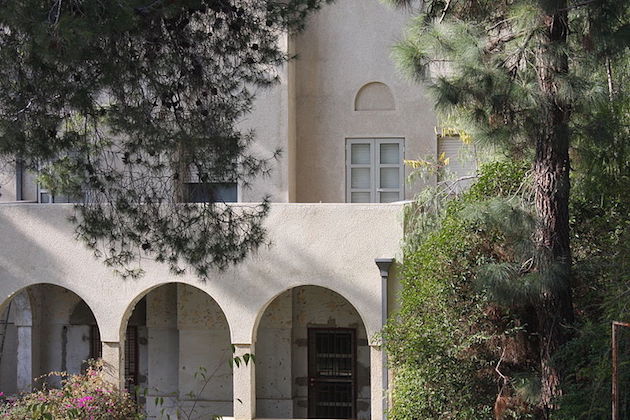
1. The Prime Minister of Israel’s Residence

Beit Aghion

Beit Aghion / Wikimedia Commons

Known as Beit Aghion in Hebrew, the prime minister’s official residence is located in the heart of Jerusalem and has served as the living space for senior Israeli officials since 1952, 14 years after construction was completed. Beit Aghion became the prime minister’s official residence in 1974.

2. The Prime Minister of Israel’s Office

Also located in central Jerusalem, the prime minister’s office coordinates a large number of governmental affairs and works to implement laws passed by the country’s parliament.

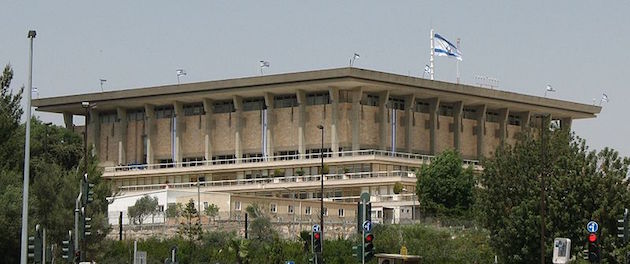
3. Israel’s Parliament, The Knesset

Knesset

Knesset / Wikimedia Commons

Hebrew for “the gathering,” the Knesset is home to Israel’s 120-member legislature. It is located in the Givat Ram neighborhood in Central Jerusalem, which plays home to many of Israel’s key government bodies.

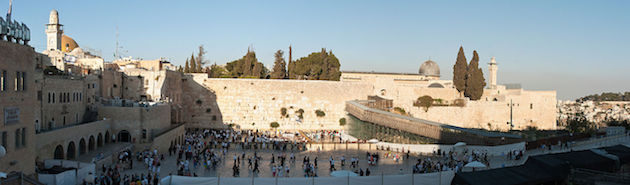
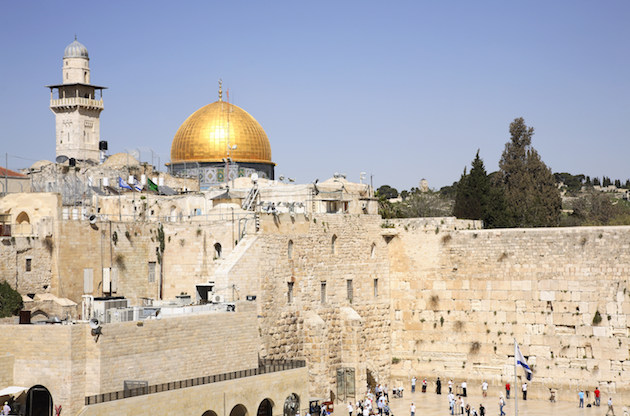
4. Judaism’s Holiest Sites, the Western Wall and the Temple Mount

The Western Wall

The Western Wall / Wikimedia Commons

The Western Wall, or Kotel in Hebrew, is considered Judaism’s holiest site. Located behind the walls of Jerusalem’s ancient Old City, the Obama administration has long refused to acknowledge this location as Israel’s property.

5. Israel’s Holocaust Memorial Museum, Yad Vashem

Israel’s Holocaust memorial museum, located in the heart of Jerusalem, is widely viewed as one of the city’s most important modern sites. After completing the museum’s central exhibits, visitors are treated to sprawling views of Jerusalem, a reminder of how far the Jewish people have come since the Holocaust.

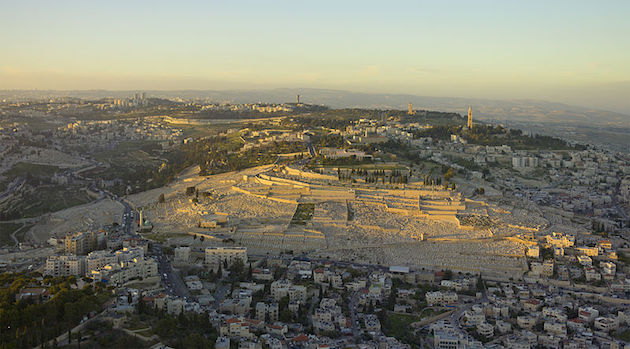
6. Judaism’s Ancient Cemetery, The Mount of Olives

Aerial view of the Mount of Olives

Aerial view of the Mount of Olives / Wikimedia Commons

A 3,000-year-old Jewish burial site, the Mount of Olives is located nearby Jerusalem’s Old City. Many of Judaism’s central figures are noted in the Bible as having ascended the mountain. In modern days, the cemetery has been a victim of vandalism by Arabs, and stands as another key site the Obama administration views as not part of Israel.

7. The Israel Museum

Due to its location in central Jerusalem, the Israel Museum—the country’s national museum—is not recognized as part of Israel by the Obama administration. The museum is home to some of Israel’s most important cultural artifacts.

8. Israel’s Supreme Court

Also located in the central Jerusalem neighborhood of Givat Ram, Israel’s supreme court has played a central role in Israeli democracy and the promotion of human rights in the Jewish state, but is not viewed as part of Israeli territory by the Obama administration.

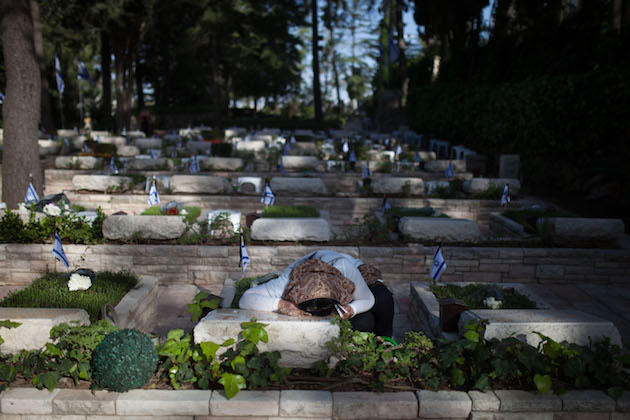
9. Israel’s National Cemetery, Mount Herzl

Mount Herzl

Mount Herzl military cemetery / AP

The site of Israel’s national cemetery, Mount Herzl is the final resting place of Israel’s founding fathers and national leaders, including former President Shimon Peres. The site is named after Theodor Herzl, the founder of Zionism. The Obama administration made clear last week that it does not view the cemetery as part of Israel.

10. Israel’s Capital City

Jerusalem

Jerusalem / AP

Since the days of the bible, Jerusalem has served as the central home of the Jewish people. Since the state of Israel was reestablished in 1948, it has served as the cultural and political center of the Jewish people. The Obama administration has been adamant since the start of its term in 2008 that it does not believe the city belongs to the Jewish state.

Control of Internet passes from U.S. to “global Internet community”

October 3, 2016

Control of Internet passes from U.S. to “global Internet community”

By Pamela Geller on October 2, 2016

Source: Control of Internet passes from U.S. to “global Internet community” | The Geller Report

Now it is done. Obama has done it. As John Bolton explains here, this could be the end of free speech on the Internet, as Islamic states move in to enforce sharia blasphemy laws. It won’t happen right away. But there is nothing preventing it from happening.

More of the poison fruit of Obama’s traitorous presidency.


“Stewardship of IANA Functions Transitions to Global Internet Community as Contract with U.S. Government Ends,” ICANN, October 1, 2016 (thanks to Christian):

Today, 1 October 2016, the contract between the Internet Corporation for Assigned Names and Numbers (ICANN) and the United States Department of Commerce National Telecommunications and Information Administration (NTIA), to perform the Internet Assigned Numbers Authority (IANA) functions, has officially expired. This historic moment marks the transition of the coordination and management of the Internet’s unique identifiers to the private-sector, a process that has been committed to and underway since 1998.

“This transition was envisioned 18 years ago, yet it was the tireless work of the global Internet community, which drafted the final proposal, that made this a reality,” said ICANN Board Chair Stephen D. Crocker. “This community validated the multistakeholder model of Internet governance. It has shown that a governance model defined by the inclusion of all voices, including business, academics, technical experts, civil society, governments and many others is the best way to assure that the Internet of tomorrow remains as free, open and accessible as the Internet of today.”

Internet users will see no change or difference in their experience online as a result of the stewardship transition.

In managing the coordination of the Internet’s unique identifiers, ICANN plays a small but significant role in the Internet’s ecosystem. For more than 15 years, ICANN has worked in concert with other technical bodies such as the Internet Engineering Task Force, the Regional Internet Registries, top-level domain registries and registrars, and many others.

The final chapter of the privatization process began in 2014, when NTIA asked ICANN to convene the global multistakeholder community, which is made up of private-sector representatives, technical experts, academics, civil society, governments and individual Internet end users, to come together and formulate proposals to both replace NTIA’s historic stewardship role and enhance ICANN’s accountability mechanisms.

The package of proposals developed by the global community met the strict criteria established by NTIA in its March 2014 announcement. Since their submission to NTIA, ICANN and its various stakeholder groups have worked tirelessly to ensure that all the necessary implementation tasks have been completed, so the IANA functions contract could expire on 30 September 2016.

The proposals reinforce ICANN’s existing multistakeholder model and are also aimed at enhancing ICANN’s accountability. The improvements include empowering the global Internet community to have direct recourse if they disagree with decisions made by ICANN the organization or the Board.

The IANA stewardship transition is a testament to the tireless work of the global community, and a validation of the multistakeholder model that frames that community.

To learn more about the IANA Stewardship Transition, go here: https://www.icann.org/stewardship-accountability

Akram Atallah’s blog: “Final Implementation Update

Stephen D. Crocker’s blog: “Cheers to the Multistakeholder Community

Cartoons of the Day

October 2, 2016

H/t Vermont Loon Watch

obamalegacy


H/t Vermont Loon Watch

moving-vote


a-chat


H/t Vermont Loon Watch

lynch-1


jarts


liars1