Iran Mocks Capture Of U.S. Sailors In Tehran Revolution Day Parade – Outnumbered, Fox News via You Tube, February 11, 2016
Obama’s Fake Syrian Peace Talks Falling Apart, Front Page Magazine, Daniel Greenfield, January 29, 2016
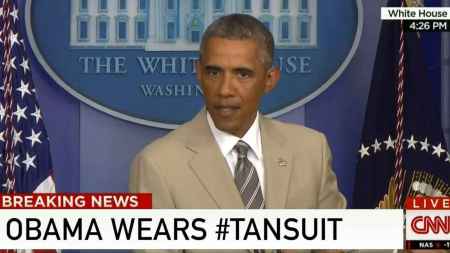
The peace talks strategy for Syria comes out of Iran and Russia, two countries determined to keep Assad in power. Obama wanted the peace talks in order to rig a fake settlement that would come apart once he was out of office. But the only people fooled by this were stupid enough to get their news from CNN and their talking points from Think Progress. The Sunni side only participated to the extent that they could wreck the talks and extract some demands. They have no intention in signing on to Assad staying in power or to letting Obama get away with a fake solution that does just that.
And, oh yes, no one actually thinks Obama has any credibility.
As the Obama administration pushes for peace in Syria, its credibility is crumbling among Syrian opposition leaders, many of whom increasingly doubt the U.S. is serious about ending the rule of dictator Bashar Assad.
Because he isn’t.
If the talks peter out or collapse, that will further undermine President Barack Obama’s foreign policy legacy, which already has been tarnished by the endless bloodshed in Syria
It’s okay. Obama will blame Tom Cotton or Bush or Israel. Or someone. And the media will go along with it.
“A number of the opposition has expressed the feeling that the U.S. is not acting as an honest broker and that they’ve lost both trust and faith in the ability of the United States to deliver on a political settlement in Syria,” said Andrew Bowen, a senior fellow at the Center for the National Interest who has contacts among Syrian opposition groups.
Obama signed on with Iran. So he’s about as much of an honest broker as any other foreign agent.
“Kerry did not make any promises, nor did he put forward any initiatives,” said Khaled Khoja, president of the opposition Syrian National Coalition, in onestatement questioning U.S. intentions. “He has long been delivering messages similar to those drafted by Iran and Russia, which call for the establishment of a ‘national government’ and allowing Bashar al-Assad to stay in power and stand for re-election.”
Well yes. What else do you expect Kerry to do? This is the only thing he’s been doing since he got to the Senate and even beforehand with the Viet Cong. Traitors gotta traitor.
Among the numerous reports floating around — some of them highly speculative — are those that allege Kerry warned opposition leaders they could lose international support if they didn’t attend Friday’s talks. The reports come as the U.S. has appeared to be backing away from its demand that Assad must leave office by signaling its support for the notion of a transitional period.
And that period will come to an end once Obama is out of office.
But all this is theater anyway as the groups with the most fighters on the ground, including Al Qaeda and ISIS, are not represented. Most of the Islamists aren’t either. So this is just the Muslim Brotherhood, whose actual strength is weak, throwing a tantrum. Even if the Sunni groups signed some sort of deal it would be as worthless as the fake elections Hillary still talks up in Libya
A new US-Russian-Turkish military buildup over Syria: In unison or at odds? DEBKAfile, January 25, 2016

The US and Russia are in the process of a military buildup in the Kurdish areas of northern Syria. It is ranged along a narrow strip of land 85 km long, stretching from Hassakeh in the east up to the Kurdish town of Qamishli on the Syrian-Turkish border. Facing them from across that border is a parallel buildup of Turkish strength. This highly-charged convergence of three foreign armies athwart a tense borderland is reported here by DEBKAfile’s military sources. It is too soon to determine whether the three armies are operating in sync or at odds, especially in view of the bitter relations between Moscow and Ankara.
US Forces
American Special Operations troops and Air Force attack helicopters landed first at Remelan airport. They are the first US troops to operate from a ground base in Syria, accommodated in living quarters built for them in advance by a US engineering corps unit. The airport runway has been widened for US warplanes.
American Special Operations troops and Air Force attack helicopters landed first at Remelan airport. They are the first US troops to operate from a ground base in Syria, accommodated in living quarters built for them in advance by a US engineering corps unit. The airport runway has been widened for US warplanes.
Russian Forces
Next came two Russian military missions on Jan. 16. One group, led by a general and consisting of air force and Special Operations officers, is preparing to take over a small abandoned base in Syrian army-controlled territory just 80 km from the new US facility at Remelan, and adapt it for Russian use.
The other group, which consists of intelligence officers – some from Russia’s FSB federal security service, the FSB – indicates that Moscow has decided it is high time for professionals to protect the classified information moving around the Russian Task Force in Syria and safeguard it from reaching the wrong hands. .
The abandoned base is less than 3.5 km from the Turkish border, and would act as a Russian barrier between US forces in northern Syria and the Turkish border contingents.
Turkish Forces
This Russian deployment set off alarm bells in Ankara, and so the Turkish army responded with the third troop buildup, arraying tanks and mobile artillery on the border across from Qamishli.
Over the weekend, Turkish President Tayyip Erdogan stated, “We have said this from the beginning: we won’t tolerate such formations (in northern Syria) along the area stretching from the Iraqi border up to the Mediterranean.”
At the same time, US Vice President Joe Biden said Saturday, Jan. 23, that the U.S. and Turkey are prepared for a military solution against ISIS in Syria should the Syrian government and rebel-opposition forces fail to reach a peace agreement during its upcoming meeting in Geneva.
However, Ankara views its war on terror as focused on both Kurdish separatists and ISIS, which is subjecting Turkey to multi-casualty attacks.
DEBKAfile’s military and intelligence sources note that Turkey’s military options are very limited. Its leaders know they dare not put a foot wrong because the Russian force in Syria is just waiting for an opportunity to avenge the downing of a Russian Su-24 warplane by the Turkish air force on November 24.
Another group of actors stirring the pot in northern Syria is the Kurds, particularly the YPG militia, the only fighting force in Syria capable of defeating ISIS, which has been reinforced by the Iraqi autonomous Kurdish region’s Peshmerga, as well as the outlawed Turkish PKK Kurdish organization.
At this stage, it is impossible to determine how this triple buildup will play out tomorrow – how far the US and Russia are in concert, at what point they may decide to vie for footholds in the Kurdish region of northern Syria and how far the Turks are clued into the joint US-Russian strategy for bludgeoning ISIS.
Rouhani: Nuclear Deal ‘One of Iran’s Greatest Successes’ Against the West, Algemeiner, David Daoud, January 22, 2016
(The next time Obama touts the nuke “deal” as one of his greatest achievements, will he agree with Rouhani?– DM)
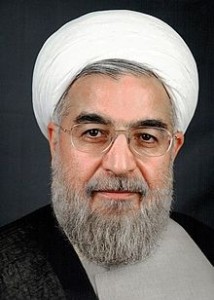 Iranian President Hassan Rouhani. Photo: Wikipedia.
Iran’s president has expressed his complete satisfaction with the outcome of the nuclear deal reached between the Islamic Republic and world powers in July, regime-aligned Tasnim News Agency reported on Thursday.
Hassan Rouhani hailed the Joint Comprehensive Plan of Action (JCPOA) – which went into effect on Sunday – as “one of Iran’s greatest successes” against the West. He stressed that Iran had only agreed to the final version of the deal after “30 months of tough talks,” and that Tehran’s negotiators almost walked away three times.
Rouhani said that Iran had made sure the JCPOA would lead to the termination of the United Nations’ nuclear-related sanctions against Tehran, accomplishing the country’s long-term goals and objectives “without exception.”
Obama EASES Rules On Visas From Terror Hotspots Despite San Bernardino Attacks, Truth Revolt, Caleb Howe, January 21, 2016
(Please see also, Iranians granted leniency as DHS ends visa waivers for terrorism countries. — DM)

Among the many way one can get a waiver is an exception for individuals who traveled to Iran “for legitimate business-related purposes” after the nuclear deal was signed.
So the new restrictions made Kerry’s new best pals in Iran angry, and they strong-armed us, and the administration gave them what they wanted. Great.
************************
Less than two months after the terror attacks in San Bernardino, which involved one terrorist who was here on a visa waiver, President Obama has made it easier to travel to the United States from terror hotspots around the globe.
Fox News has the story:
The revised requirements announced Thursday pertain to changes passed by Congress in the Visa Waiver Program.
Lawmakers had sought new restrictions to tighten up the program – which allows visa-free travel for residents of eligible countries — in order to prevent Europeans who have joined ISIS from entering the United States. Under the newly passed Visa Waiver Improvement and Terrorist Travel Prevention Act of 2015, nationals of Iraq, Iran, Syria and Sudan as well as other travelers who have visited those countries since Mar. 1, 2011 now must apply for a visa in order to travel to the U.S.
The administration implemented those changes Thursday — but with some changes of its own.
The changes are that they are making it easier to get waivers. Waiver meaning you won’t need a new visa to enter this country, even if you came by way of ISIS zones, as long as you meet certain criteria.
Among the many way one can get a waiver is an exception for individuals who traveled to Iran “for legitimate business-related purposes” after the nuclear deal was signed.
House Judiciary Committee Chair Bob Goodlatte decried the move, saying “The Obama Administration is essentially rewriting the law by blowing wide open a small window of discretion that Congress gave it for law enforcement and national security reasons,” according to Fox News.
ISIS and other terror groups rely heavily on their unconventional and diffuse pool of resources and recruits. This is why the “lone wolf” definition of terror is sorely in need of update. That they will take advantage of this easing of the rules is hardly speculative. Nor would it be difficult. It’s another example of the Obama administration playing politics with American security.
Which politics?
The new restrictions had previously been criticized by the Iranian government which suggested the U.S. might be violating the nuclear deal by penalizing legitimate business travel to the country.
So the new restrictions made Kerry’s new best pals in Iran angry, and they strong-armed us, and the administration gave them what they wanted. Great.
Iran is Training Obama Like a Dog, Front Page Magazine, Daniel Greenfield, January 17, 2016
Obama and his team are celebrating as if they were FBI agents who successfully conducted a cash for hostages exchange while the criminals went free.
The “diplomacy” that they’re celebrating is one in which Iran gets what it wants and occasionally frees hostages. But since Iran can take more hostages at any time, and since it now has more motivation than ever to do so, there’s nothing to celebrate.
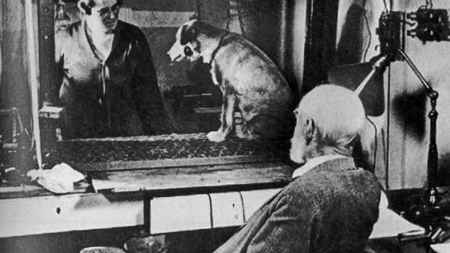
With animals, there’s sometimes a question of who is training whom. Is the owner training the dog to do tricks in exchange for treats. Or is the dog training the owner to give treats in exchange for not making a mess on the floor.
This is the essential question in power relationships.
What Obama has going on with Iran isn’t mutual. It’s a relationship in which Iran’s “moderates” show that Western governments can be trained to give them what they want or they’ll make a mess on the floor by taking hostages or blatantly violating nuclear protocols.
Part of this training program involves deliberate messes so that the number of treats and the owner’s anxiety is redoubled.
Iran creates a crisis. Obama rushes treats and then claims it’s a diplomatic success.
Kerry and co. claim that Iran is being trained to negotiate problems diplomatically. But Iran knows how to do that already. As the nuke negotiations showed, it’s much better at it than Obama and Kerry are. Iran knows how to use diplomacy, but its intentions are not diplomatic. So instead it’s using diplomacy to train Obama and his European allies to dispense more treats even as it continues to pursue a nuclear weapons program.
And the most pathetic part of this is that Obama and the Europeans have been trained to treat every payout like a victory.
Iran: Attack on US Boats is Warning to Congress on Sanctions, Front Page Magazine, Daniel Greenfield, January 13, 2016
(Here’s an analysis of the Iranian actions:
— Oh well. — DM)

The official media narrative is that Obama’s great relationship with Iran enabled the release of the American sailors captured at gunpoint by Iran’s terrorist IRGC. The media is full of praise for Obama for letting ten American sailors be taken hostage… and then released.
That’s how low the bar is set.
Meanwhile Iran is making it clear that it’s sending a very different kind of message.
Iran’s army chief said on Wednesday the seizure of two US navy boats and their 10 sailors should be a lesson to members the US Congress trying to impose new sanctions on Tehran.
“This incident in the Persian Gulf, which probably will not be the American forces’ last mistake in the region, should be a lesson to troublemakers in the US Congress,” Major General Hassan Firouzabadi, head of Iran’s armed forces, was quoted as saying by Tasnim news agency.
Iran isn’t even bothering to threaten Obama. It just slaps him around. Instead it uses his weakness to threaten Congress which it now considers stronger than Obama.
Our World: In Pakistan, they trust, Jerusalem Post, Caroline Glick, January 11, 2016
 A general view of houses from a hilltop in Abbottabad, Pakistan. (photo credit:REUTERS)
It is a testament to the precarious state of the world today that in a week that saw North Korea carry out a possible test of a hydrogen bomb, the most frightening statement uttered did not come from Pyongyang.
It came from Pakistan.
Speaking in the military garrison town of Rawalpindi, Pakistani Army chief Gen. Raheel Sharif said that any Iranian threat to Saudi Arabia’s territorial integrity will “wipe Iran off the map.”
Sharif made the statement following his meeting with Saudi Arabia’s defense minister and Deputy Crown Prince Mohammed bin Salman. According to media reports, Salman was the second senior Saudi official to visit Pakistan in the past week amid growing tensions between Iran and the kingdom.
Salman’s trip and Sharif’s nuclear threat make clear that following the US’s all-but-official abandonment of its role as protector of the world’s largest oil producer, the Saudis have cast their lots with nuclear-armed Pakistan.
When last October, the USS Harry Truman exited the Persian Gulf, the move marked the first time since 2007 that the US lacked an aircraft carrier in the region. Nine years ago, the US naval move was not viewed as a major statement of strategic withdrawal, given that back then the US had some one hundred thousand troops in Iraq.
While the USS Truman returned to the Gulf late last month, its return gave little solace to America’s frightened and spurned Arab allies. The Obama administration’s weak-kneed response to Iran’s live-fire exercises on December 26, during which an Iranian Revolutionary Guards vessel fired rockets a mere 1,370 meters from the aircraft carrier as it transited the Straits of Hormuz, signaled that the US is not even willing to make a show of force to deter Iranian aggression.
And so the Saudis have turned to Pakistan.
It would be foolish to view Sharif’s nuclear threat as mere bluster.
By every meaningful measure, Pakistan is little more than a failed state with nuclear weapons. Pakistan appears in every global index of failed or failing states.
To take just a few leading indicators, as spelled out by Basit Mahmood in a report last summer for The Political Domain, barely 1% of Pakistanis pay taxes of any kind. More than half the population lives in abject poverty. The government has no control over most Pakistani territory.
Between 2003 and 2015, more than 58,000 people were killed by terrorism countrywide.
Public health is a disaster. Polio, eradicated throughout much of the world, is now galloping through the country.
Last summer more than 1,300 people died in a heat wave in the supposedly advanced city of Karachi.
These data do not take into account the wholesale slaughter and persecution of minority groups – first and foremost Christians – and the systematic denial of basic human rights and widespread, violent persecution of women and girls.
As for its nuclear arsenal, a 2010 report by the Bulletin of Atomic Scientists estimated that Pakistan possesses between 70 and 90 nuclear warheads. Other credible reports estimate the size of the arsenal at 120.
Pakistan refuses to adopt a no-firststrike policy. In the US and worldwide, it is considered to be the greatest threat to global nuclear security.
Following a Pakistani jihadist assault on the Indian parliament in late 2001, India and Pakistan both deployed forces along their contested border. In the months that followed, due to Pakistani nuclear threats, the prospect of nuclear war was higher than it had ever been.
Cold War nuclear brinksmanship – which reached its high point during the 1962 Cuban missile crisis – paled in comparison.
In 2008, following the Pakistani jihadist assault on Mumbai, India threatened to retaliate against Pakistan.
India’s threats rose as evidence mounted that, as was the case in 2001, the jihadists were tied to Pakistan’s ISI spy service. Once again, rather than clean its own house, Pakistan responded by threatening to launch a nuclear attack against India.
And now, following the unraveling of US-strategic credibility, Pakistan’s aggressive nuclear umbrella is officially coming to the Persian Gulf.
Saudi Arabia’s decision to turn to Pakistan for protection indicates that the second wave of the destruction of the Arab state model is upon us. The notion of Arab states was invented nearly 100 years ago by the British and French at the tail end of World War I. The Sykes-Picot agreement, which partitioned the Arab world into states, rewarded national dominion to the most powerful tribal actors in the various land masses that became the states of the Arab world.
With the possible exception of Egypt, which predated Sykes-Picot, the Arab states formed at the end of World War I were not nation states. Their populations didn’t view themselves as distinct nations. Rather the populations of the Arab states were little more than a hodgepodge of tribes, clans and sectarian and ethnic groupings. In each case, the British and French made their determinations of leadership based on the relative power of the various groups. Those chosen to control these new states were viewed either as the strongest factions within the new borders or as the most loyal allies to the European powers.
The first wave of Arab state collapse began six years ago. It submerged the non-royal regimes, which fell one after the other, like houses of cards.
Syria, Libya, Iraq and Yemen ceased to exist.
Egypt, which in the space of two years experienced both an Islamist revolution and a military counter-revolution, still teeters on the brink of collapse.
Lebanon will likely break apart at the slightest provocation.
Today we are seeing the opening stages of the collapse of the Arab monarchies, and most importantly, of Saudi Arabia.
Most of the international attention to Saudi Arabia’s current threat environment has focused on Iran. The Iranian threat to the Saudis has grown in direct proportion to the Obama administration’s determination to realign the US away from its traditional Sunni allies and towards Iran. The conclusion of the US-led nuclear pact with Tehran has exacerbated Iran’s regional aggression as it no longer fears US retaliation for its threats to the Sunni monarchies.
But Iran is just the most visible of three existential threats now besetting the House of Saud.
The most profound threat to the world’s largest oil power is economic.
The drop in world oil prices has endangered the kingdom.
As David Goldman reported last week in the Asia Times, according to an International Monetary Fund analysis, the collapse in Saudi oil revenues “threatens to exhaust the kingdom’s $700 billion in financial reserves within five years.”
The house of Saud’s hold on power owes to its oil-subsidized economy. As Goldman noted, last month dwindling revenues forced the Saudis to cut subsidies for water, electricity and gasoline.
According to Goldman, Riyadh’s mass execution of 43 long-jailed prisoners at the start of the month was an attempt by the aging royal house to demonstrate its firm control of events. But the very fact the Saudi regime believed it was necessary to stage such a demonstration shows that it is in distress.
The third existential threat the regime now faces is Islamic State. Since 1979, the Saudis have sought to deflect domestic opposition by promoting Wahabist Islam at home and Wahabist jihad beyond its borders.
Now, with Islamic State in control over large swathes of neighboring Iraq, as well as Syria and Libya and threatening the Saudi-supported Sisi regime in Egypt, the Saudi royal family faces the rising threat of blowback. Some analysts argue that given the popular support for jihad in Saudi Arabia, were Islamic State to cross the Saudi border, its forces would be greeted with flowers, not bullets.
If the House of Saud falls, then the Gulf emirates will also be imperiled.
The Egyptian regime, which is bankrolled by the Saudis and its Gulf allies will also be endangered. The Hashemite monarchy in Jordan, which is protected by the US and by Israel, will face unprecedented threats.
The implications of expanding chaos – or worse – in Arabia are not limited to the Middle East. The global economy as well as the security of Europe and the US will be imperiled.
Obviously, the order of the day is for the US security guarantee to Saudi Arabia to be reinforced, mainly through straightforward US action against Iranian naval aggression and ballistic missile development.
Unfortunately, the Obama administration can be depended on to take just the opposite approach. And as a consequence, at least for the next year, the main thing propping up the Gulf monarchies, and with them, the global economy and what passes for global security, is a failed state with an itchy finger on the nuclear trigger.




 anneinpt
 artaxes
 danmillerinpanama
 davidking1530
 Peter Hofman
 Joseph Wouk
 Peter
Peter Louisiana Steve

 WarSclerotic
Recent Comments