Posted tagged ‘Obama Administration’

Podesta Group Admits Undisclosed Foreign Government Advocacy

November 28, 2016

Podesta Group Admits Undisclosed Foreign Government Advocacy, Washington Free Beacon, November 28, 2016

podesta-1Podesta Group founder Tony Podesta / AP

A high-powered Democratic lobbying firm has admitted to the Department of Justice that it failed to file legally required disclosures of White House advocacy on behalf of a foreign government, new federal filings show.

The Podesta Group this month amended two biannual lobbying disclosure forms from 2014 and 2015 to note meetings and email communications between Tony Podesta, the firm’s principal, and John Podesta, Tony’s brother and a former Obama White House official who chaired Hillary Clinton’s presidential campaign.

The amended disclosures came after the Washington Free Beacon reported on the Podesta Group’s apparent violations of the Foreign Agents Registration Act, which requires foreign government lobbyists to disclose contacts they made with government officials and news media on behalf of their clients.

The foreign government advocacy in question was undertaken on behalf of the government of India, a Podesta Group client since 2010.

On August 4, 2014, the Podesta brothers met with the Indian ambassador to the United States in the White House, visitor logs show. At the time, John was a senior counselor to the president. His “portfolio” of work there included issues pertaining to India.

A few months later, on Jan. 1, 2015, Tony emailed John inviting him to an event featuring the Indian ambassador, according to emails posted by WikiLeaks after hackers believed to be acting on behalf of the Russian government breached John’s account.

The meeting and the emails should have been disclosed in the Podesta Group’s original “supplemental” disclosure statements, Craig Engle, a partner at the Washington, D.C.-based law firm Arent Fox, told the Free Beacon at the time. But the firm’s supplemental statements did not mention either.

In its amended disclosure statements, the Podesta Group noted the August meeting and the January email. It also disclosed three other emails from Tony to John regarding the White House’s work on India. All of them were sent after John left the White House.

One of the emails simply sought a phone conversation. “Can you call me when u get a minute,” Tony wrote. “Couple of India questions.”

In the other two emails, Tony solicited John’s input on whom he should contact at the White House to press the Indian government’s interests after John’s departure in early 2015.

Additional emails show that Tony Podesta served as an intermediary between his brother and Subrahmanyam Jaishankar, the Indian ambassador who joined them at the April 2014 White House meeting.

“Tony, Believe John tried to call just now. Was with my doctor and couldn’t take it. Could you please ask him to do so again,” Jaishankar wrote in a January 2015 email, while John Podesta was still serving in the White House.

Later that month, Jaishankar was appointed foreign secretary of India. In that capacity, additional emails show, he helped John Podesta resolve a dispute between the Indian government and the Ford Foundation, a high-dollar donor to the Center for American Progress, which John Podesta founded in 2003.

The Clinton E-mails Are Critical to the Clinton Foundation Investigation

November 2, 2016

The Clinton E-mails Are Critical to the Clinton Foundation Investigation, National Review, Andres C. McCarthy, November 1, 2016

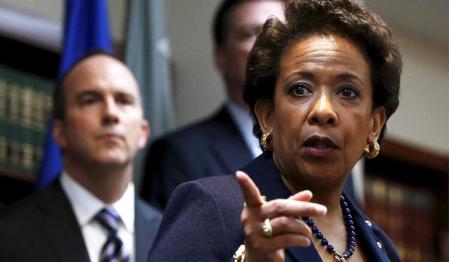
lynchagAttorney General Loretta Lynch (Reuters photo: Shannon Stapleton)
 

(Please see also, Am I back in Argentina? — DM)

The Wall Street Journal’s report that, for over a year, the FBI has been investigating the Clinton Foundation for potential financial crimes and influence peddling is, as Rich Lowry said Monday, a blockbuster. As I argued over the weekend, the manner in which the State Department was put in the service of the Foundation during Hillary Clinton’s tenure as secretary is shocking. It is suggestive of a pattern of pay-to-play bribery, the monetizing of political influence, fraud, and obstruction of justice that the Justice Department should be investigating as a possible RICO conspiracy under the federal anti-racketeering laws.

The Journal’s Devlin Barrett buries the Clinton Foundation lede in the 14th paragraph of his report. Even more astonishing are his final three paragraphs:

In September, agents on the foundation case asked to see the emails contained on nongovernment laptops that had been searched as part of the Clinton email case, but that request was rejected by prosecutors at the Eastern District of New York, in Brooklyn. Those emails were given to the FBI based on grants of partial immunity and limited-use agreements, meaning agents could only use them for the purpose of investigating possible mishandling of classified information.

Some FBI agents were dissatisfied with that answer, and asked for permission to make a similar request to federal prosecutors in Manhattan, according to people familiar with the matter. [FBI Deputy Director Andrew] McCabe, these people said, told them no and added that they couldn’t “go prosecutor-shopping.”

Not long after that discussion, FBI agents informed the bureau’s leaders about the Weiner laptop, prompting Mr. Comey’s disclosure to Congress and setting off the furor that promises to consume the final days of a tumultuous campaign.

Let me unpack this.

Readers are unlikely to know that the Eastern District of New York in Brooklyn is not just any United States attorney’s office. It is the office that was headed by Attorney General Loretta Lynch until President Obama elevated her to attorney general less than two years ago.

It was in the EDNY that Ms. Lynch first came to national prominence in 1999, when she was appointed U.S. attorney by President Bill Clinton — the husband of the main subject of the FBI’s investigations with whom Lynch furtively met in the back of a plane parked on an Arizona tarmac days before the announcement that Mrs. Clinton would not be indicted. Obama reappointed Lynch as the EDNY’s U.S. attorney in 2010. She was thus in charge of staffing that office for nearly six years before coming to Main Justice in Washington. That means the EDNY is full of attorneys Lynch hired and supervised.

When we learn that Clinton Foundation investigators are being denied access to patently relevant evidence by federal prosecutors in Brooklyn, those are the prosecutors — Loretta Lynch’s prosecutors — we are talking about.

Recall, moreover, that it was Lynch’s Justice Department that:

refused to authorize use of the grand jury to further the Clinton e-mails investigation, thus depriving the FBI of the power to compel testimony and the production of evidence by subpoena;

consulted closely with defense attorneys representing subjects of the investigation;

permitted Cheryl Mills and Heather Samuelson — the subordinates deputized by Mrs. Clinton to sort through her e-mails and destroy thousands of them — to represent Clinton as attorneys, despite the fact that they were subjects of the same investigation and had been granted immunity from prosecution (to say nothing of the ethical and legal prohibitions against such an arrangement);

drastically restricted the FBI’s questioning of Mills and other subjects of the investigation; and

struck the outrageous deals that gave Mills and Samuelson immunity from prosecution in exchange for providing the FBI with the laptops on which they reviewed Clinton’s four years of e-mails. That arrangement was outrageous for three reasons: 1) Mills and Samuelson should have been compelled to produce the computers by grand-jury subpoena with no immunity agreement; 2) Lynch’s Justice Department drastically restricted the FBI’s authority to examine the computers; and 3) Lynch’s Justice Department agreed that the FBI would destroy the computers following its very limited examination.

As I have detailed, it was already clear that Lynch’s Justice Department was stunningly derelict in hamstringing the bureau’s e-mails investigation. But now that we know the FBI wassimultaneously investigating the Clinton Foundation yet being denied access to the Clinton e-mails, the dereliction appears unconscionable.

It had to be screamingly obvious that the Clinton State Department e-mails, run through a server that also supported Clinton Foundation activities, would be critically important to any probe of the Foundation. Consider, for example, the issue of criminal intent, over which much has been made since Director Comey stressed the purported lack of intent proof in recommending against an indictment of Mrs. Clinton for mishandling classified information.

I believe, to the contrary, that there is abundant intent evidence. The law presumes that people intend the natural, foreseeable consequences of their actions: When you’re the secretary of state, and you systematically conduct your government business on private, non-secure e-mail rather than the government’s secure servers, you must know it is inevitable that classified information will be transmitted through and stored on the private server. Still, even though Clinton’s misconduct was thus willful and grossly negligent, no sensible person believes she was trying to harm the United States; the damage she did to national security was an easily foreseeable consequence of her scheme, but that damage was not what motivated her actions.

In such circumstances, it is a common tactic of defense lawyers to confound motive and criminal intent. Every criminal statute has an intent element (i.e., a requirement to prove that conduct was knowing, willful, intentional, or grossly negligent). Prosecutors, however, are virtually never required to prove motive. To be sure, they usually do introduce evidence of motive, because establishing a motive often helps to prove intent. But motive can sometimes confuse matters, so proving it is not mandatory.

A common, concrete example is helpful here: the guy who robs a bank because he is strapped for cash and his mom needs an operation. Although it was not the robber’s purpose to petrify the bank teller, proving that he had a desperate need for money helps demonstrate that his theft of money was quite intentional — not an accident or mistake. So even though we can all agree that our bank robber did not have a motive to do harm, his benign motive does not absolve him of guilt for the bank robbery he fully intended to commit.

Yet, such absolution is exactly what Comey offered in claiming there was insufficient proof of criminal intent to charge Clinton with mishandling classified information.  It was a rationale that echoed public comments by President Obama and Lynch’s Justice Department. They would have you believe that because Clinton was not motivated by a desire to harm national security she cannot have intended to violate the classified-information laws. It is sleight-of-hand, but it was good enough for Democrats and the media to pronounce Clinton “exonerated.”

Now, however, let’s consider the Clinton Foundation. While Clinton may not have been motivated to harm our national security, she was precisely motivated to conceal the corrupt interplay of the State Department and the Clinton Foundation. That was the real objective of the home-brew server system: Mrs. Clinton wanted to shield from Congress, the courts, and the public the degree to which she, Bill, and their confederates were cashing in on her awesome political influence as secretary of state. That is exactly why she did business outside the government system that captures all official e-mails; and, critically, it perfectly explains why she deleted and attempted to destroy 33,000 e-mails — risibly claiming they involved yoga routines, Chelsea’s wedding, and the like.

While knowing the purpose of the private server system may not advance our understanding of the classified-information offenses, it greatly advances our understanding of the scheme to make the Clinton Foundation a State Department pay-to-play vehicle. Consequently, the Clinton e-mails generated in the course of this scheme are apt to be highly probative of  public-corruption offenses.

With that in mind, let’s go back to the Journal’s account of why Loretta Lynch’s EDNY prosecutors have blocked the FBI’s Clinton Foundation investigators from examining the Clinton e-mails found on the laptop computers of Cheryl Mills and Heather Samuelson:

Those emails were given to the FBI based on grants of partial immunity and limited-use agreements, meaning agents could only use them for the purpose of investigating possible mishandling of classified information.

The Journal’s report says the FBI’s Clinton Foundation team was “dissatisfied” with this explanation — as well they should have been. The grants of immunity and limited-use agreements were disgraceful for the reasons outlined above. Significantly, however, the limitations imposed on the classified-information investigation should not, in the main, be binding on the Clinton Foundation investigation. Of course, the immunity grants to Mills and Samuelson must be honored even though they should never have been given in the first place. But those agreements only protect Mills and Samuelson. They would not prevent evidence found on the computers and retained by the FBI from being used against Hillary Clinton or any other possible conspirator.

Clearly, that is why agents on the FBI’s Clinton Foundation team wanted to get their investigation out of the EDNY’s clutches and move it to the U.S. attorney’s office in the Southern District of New York (my office for many years, as well as Jim Comey’s). The SDNY has a tradition of relative independence from the Justice Department and a well-earned reputation for pursuing political-corruption cases aggressively — a reputation burnished by U.S. attorney Preet Bharara’s prosecutions of prominent politicians from both parties. Alas, the Clinton Foundation agents were said to be barred from “prosecutor shopping” by FBI Deputy Director Andrew McCabe — the official whose wife’s Virginia state senate campaign was infused with $675,000 in cash and in-kind contributions by political committees controlled by Governor Terry McAuliffe, a notorious Clinton fixer and former Clinton Foundation board member.

Because of Democratic and media furor over Director Comey’s reopening of the Clinton e-mails investigation last week, the FBI is now under enormous pressure to review tens of thousands of e-mails stored on the laptop shared by Huma Abedin and Anthony Weiner. The point is to hound the bureau into announcing before Election Day (seven days from now) whether any new classified e-mails have been found. If none are found, this outcome will be spun as yet another “exoneration” of Hillary Clinton.

Here, however, is the real outrage: Beneath all this noise, Loretta Lynch’s Justice Department is blocking the FBI from examining Clinton e-mails in connection with its investigation of the Clinton Foundation — an investigation that is every bit as serious.

Were it not for the Clinton Foundation, there probably would not be a Clinton e-mail scandal. Mrs. Clinton’s home-brew communications system was designed to conceal the degree to which the State Department was put in the service of Foundation donors who transformed the “dead broke” Clintons into hundred-millionaires.

At this point, the reopened classified-information investigation is a distraction: Under the Comey/DOJ “insufficient intent evidence” rationale, there would be no charges even if previously undiscovered classified e-mails were found on the Abedin/Weiner computer. Instead, what is actually essential is that the FBI’s Clinton Foundation investigators get access to all the thousands of Clinton e-mails, including those recovered from the Mills and Samuelson laptops. The agents must also have the time they need to piece together all the Clinton e-mails (from whatever source), follow up leads, and make their case.

No one seems to notice that they are being thwarted. Hillary hasn’t even been elected, but already we are benumbed by Clinton Scandal Exhaustion Syndrome.

US Ambassador to India Richard Verma denounces “unacceptable rhetoric” against Muslims

November 2, 2016

US Ambassador to India Richard Verma denounces “unacceptable rhetoric” against Muslims, Jihad Watch

“We see this in many parts of the world, with growing pockets of intolerance and anti-immigrant sentiment. This has included instances of unacceptable rhetoric against Muslims, including in the United States, and particularly during this Presidential campaign season.”

Verma here echoes the common Leftist/mainstream media conflation of concern about jihad terrorists coming into the country with “anti-immigration sentiment” and “unacceptable rhetoric against Muslims.” No advocate of the massive migrant influx has ever addressed the problem that Trump (who is clearly Verma’s target) is trying to address: how to keep jihad terrorists from entering the country from among peaceful refugees. They just say they will “vet” the migrants, when that vetting has been shown to be deeply flawed and ineffective. To call the concern over jihadis entering the country “anti-immigrant sentiment” is patently dishonest: no one — no one — is concerned about Hindu or Buddhist or atheist or any other kind of migrants. There is only concern over one group, and it isn’t because they’re “brown,” it’s because many of them are lethal.

Verma also conflates this concern over jihadis with “unacceptable rhetoric against Muslims.” Once again, this is unfair and untrue. Neither Trump nor anyone else of substance has engaged in any rhetoric denigrating Muslims as a whole. The concern is about jihad terrorism. If the Muslim community would actually work against jihad terrorism in an honest, transparent manner, there would be no problem. Instead, the Hamas-linked Council on American-Islamic Relations (CAIR) has more than once advised Muslims not to cooperate with law enforcement. In January 2011, its San Francisco chapter featured on its website a poster that read, “Build A Wall of Resistance / Don’t Talk to the FBI.” In November 2014, CAIR-Florida’s “14th Annual Banquet Rooted in Faith” in Tampa distributed pamphlets entitled “What to do if the FBI comes for you” and featuring a graphic of a person holding a finger to his lips in the “shhh” signal.

Another CAIR pamphlet, entitled “Know Your Rights: Defending Rights, Defeating Intolerance” featured a graphic of the Statue of Liberty likewise making the “shhh” symbol. Cyrus McGoldrick, a former official of Hamas-linked CAIR’s New York chapter, even threatened informants, tweetingwith brutal succinctness: “Snitches get stitches.” Zahra Billoo of CAIR-San Francisco regularly tweets that Muslims have no obligation to talk to the FBI, and should contact Hamas-linked CAIR if the FBI asks to talk to them.

Is that “unacceptable rhetoric,” or can such rhetoric only be uttered by foes of jihad terror? Hamas-linked CAIR and its allies routinely tar any discussion of how jihadists use the texts and teachings of Islam to justify violence and make recruits among peaceful Muslims as “hate speech” against Muslims as a whole. Verma is just repeating their talking points, heedless of the fact that his rhetoric is directed toward silencing all opposition to jihad terror, as all such opposition has been characterized as “hateful” by these Islamic supremacist groups.

No U.S. official, moreover, should ever denounce “unacceptable rhetoric.” The message of the First Amendment is that any rhetoric that isn’t advocating violence or criminal activity is acceptable. But this administration is, of course, on record against the First Amendment in numerous ways.

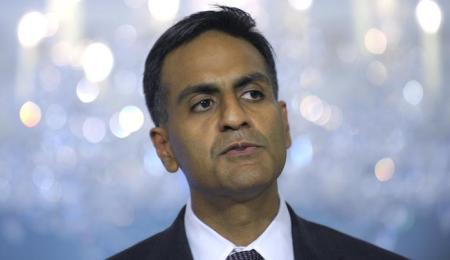
richard-verma

“US Ambassador to India Richard Verma denounces ‘unacceptable rhetoric’ against Muslims,” PTI, November 1, 2016:

NEW DELHI: US Ambassador to India Richard Verma today reached out to Muslims here, denouncing “unacceptable rhetoric” against the community, particularly during the ongoing Presidential campaign in US, and in pockets of “intolerance”.

Verma said that any form of discrimination was “unjustifiable” and stressed on the need to embrace diversity, which he said was the real promise in the shared values of India and the United States.

Delivering a lecture at the Jamia Millia Islamia University, Verma said Indo-US relation was at the central level, crediting the leaderships at New Delhi and Washington for the upswing in ties, which he said will continue “well into the future”.

“Strains to the international order, compounded by globalization and economic inequality, are also bringing to the fore voices who seek to exploit our fears and build barriers to cooperation.

“We see this in many parts of the world, with growing pockets of intolerance and anti-immigrant sentiment. This has included instances of unacceptable rhetoric against Muslims, including in the United States, and particularly during this Presidential campaign season,” Verma said.

Responding to a question on the anti-Islam sentiments in US, Verma said no explanation can justify discrimination against any individual, while underlining that a broad swathe of the population was not discriminatory.

He called for the coming together of “like-minded partners” to overcome challenges like terrorism and asymmetrical warfare, cyber threats, environmental degradation and climate change in the 21st century.

Describing India and US as “melting pots” that celebrate diversity, respect minority rights, freedom of religion, protect free speech, the Indian-origin diplomat said Maulana Azad’s message of diversity and knowledge holds more importance than ever….

Bernard-Henri Lévy: With the Peshmerga, on the Front Line in the Battle for Mosul

October 30, 2016

Bernard-Henri Lévy: With the Peshmerga, on the Front Line in the Battle for Mosul, Algemeiner, Bernard-Henri Lévy,October 30,2016

Editor’s note: Bernard-Henri Lévy’s documentary, “Peshmerga,” was an Official Selection at the 2016 Cannes Film Festival. He and his team are back in Iraqi Kurdistan, embedded with the Peshmerga, filming a follow-up. The following is his report.

Return to Kurdistan. My first move is to go into the hills around Mount Zartak to gather my thoughts in the spot where Maghdid Harki, the young, white-haired general who was one of the heroes of Peshmerga, spent his last moments. Nothing has changed. Not the sandbags that were too flimsy to protect him. Not his bunker which, as he liked to say, was no better fortified than those of his men. Those men have kept his water bottle hanging in its place on the wall near the door, still containing the last gulp of water that he had been about to drink. The only difference is that American special forces are now using the bunker.

Through binoculars, a US soldier scans the valley in which the human bombs of ISIS may appear at any moment. Another stands behind a telescope trained 20 kilometers farther away on the outskirts of Mosul. A third, with long, blond hair and an Errol Flynn mustache, recovers a drone that has just landed at our feet in a cloud of dust. A fourth who looks like an intellectual (reminding me of Norman Mailer’s cartographer from the 112th cavalry of San Antonio) sits under a canopy deciphering the data coming in on his PC. And a fifth, the highest in rank, from Tennessee, passes on the intelligence. Who are these young Americans, oppressed by the heat and squinting at the light like blind men blinking at the dark? With Mosul a stone’s throw away, they are the leading edge of the coalition that has finally decided, in support of the Kurdish Peshmerga and the Iraqi army, to take the capital of the Islamic State.

I am in Sheikh Amir in the al-Khazir zone. Sheikh Amir is the last liberated village before the beleaguered Christian city of Qaraqosh. Three brand new Toyotas come to a screeching halt, disgorging a squad of men in mismatched black uniforms — definitely not the Peshmerga.

“What are you doing here?” demands General Hajar, with whom I’ve traveled from Erbil. “You shouldn’t be here!”

“This is our land!” answers an ill-shaven man with a nasty, menacing look who seems to be the leader of the group.

“No,” says Hajar, gesturing toward a distant stand of prefabricated shelters that, from the road, we had taken for a refugee camp. “That’s where you should be. The accords are clear: You’re not supposed to leave your camp unless you’re attacking.”

“To hell with you!” chimes in another of the men in black. “We’re home wherever we are.”

As Hajar ups the ante and the confrontation threatens to turn ugly, the leader mumbles a half-hearted apology and, after ordering his bunch back into their pickups, heads off in the direction of the camp, where we can make out three helicopters landing. It all took place very quickly. But the men in black, we now know, were among the thousands of Shi’ite militiamen that Baghdad has hastily incorporated into the Iraqi regular army. And the incident, however minor, speaks long about the tensions among the participants (the Peshmerga on the one hand; Baghdad’s majority Shi’ite army on the other) called upon to liberate the Islamic State’s Berlin.

Another sign. A few kilometers farther on, we are in the Christian village of Manguba. Here, ISIS put up little resistance. But, in retreat, it left behind explosives hidden in soda bottles, fuel cans and sometimes even Korans. And Anwar, a Christian officer in the Peshmerga, is one of very few who take the risk of going out to see what remains of his house. He arranges to rejoin us at a nearby spot, the highest in the village, which, to judge from the punctured soccer ball and the marbles mingled with spent cartridges, must have been a playground before becoming, today, the unit’s lookout post.

“It’s terrible,” he tells us on his return. “There’s nothing left of my house, and they torched the church.” Then, choking back a sob: “But there’s another problem, Mr. Lévy. These bastards have left and, God willing, they won’t come back. But then what? Who will be responsible for protecting our community? We have a Christian brigade training with the Peshmerga, but what will become of it after the victory? Under whose command will it be then?”

Egged on by questions from my friend, Gilles Hertzog, Anwar speaks his mind plainly. Neither he nor any of the Christians in the Qaraqosh region has any confidence in Iraq. He won’t bring his wife and children back, he says, unless the Kurds, and the Kurds alone, are protecting the Plain of Nineveh. In what form, we ask? As a province? An autonomous zone under Kurdish mandate? And does he think that the Iraqis or the Americans on Mount Zartak will agree to such a thing? He shrugs. For soldiers of God, life and salvation are non-negotiable.

Hassan al-Sham. Near the Christian town of Bartallah. The same landscape of charred earth, wreckage of suicide trucks, and lingering fires from torched fuel depots. And suddenly, right in front of me, a big hole. A well, I think at first. Wrong. There is a ladder in the hole, which my cameraman and I climb down behind a member of the bomb squad. Three meters down, I discover a tunnel a meter wide with an arched ceiling and cement walls interspersed with crude masonry in which a man my height can stand upright.

After walking tentatively for 100 meters by the light of the bomb technician’s flashlight, we come upon a passage perpendicular to the one we are in and similarly walled but that we do not enter because we can make out bundles of plastic explosive and contact wires. Then, on each side of the tunnel, rooms filled with a jumble of dirty mattresses. Then, again symmetrically arranged, a twin command center in which someone has left behind a pile of newspapers in Arabic. It’s a black-and-white publication of eight pages, a sort of bulletin for ISIS fighters, entitled “The News.” On the front page, under a photo of a man being beheaded, the headline: “How we identify traitors.” Inside, an article on a terrorist operation in the Sinai; an “analysis” of the “unlimited rights” of a shahid (martyr) who has rid the world of a kafir (heretic); and a report on the presence of sleeper cells in Kirkuk. On page 2, a strange roundup of the past year: “1,031 news reports, 110 infographics, 50 maps, and 112 executions of traitors.” If the enemy took the trouble to dig this tunnel in a forlorn village, what are we likely to find in Mosul? What lacework of traps and pitfalls? What secret, subterranean city for what sort of dirty war?

We are on the road again heading due north to the outskirts of Dohuk, 13 kilometers from the Mosul dam. The man whom we have come to see is Rawan Barzani, the younger brother of the prime minister of Iraqi Kurdistan and the commander of the first battalion of the Kurdish special forces. The base where he receives us is no more than 300 meters from the front line. In his bunker, furnished with a simple table and spartan bed, I observe this amazing officer who is the age of Napoleon’s generals. I listen to him explain, in perfect English and against a background of arriving and departing mortar shells, his theory of an enemy made up of (1) “loonies” (the drivers of suicide trucks); (2) “rats” (the denizens of the tunnels); and (3) “attack dogs” (whom he believes will offer fierce resistance).

How is it possible that a soldier of his rank should be so exposed, so close to the combat zone that he can grant me only a few seconds for a photo outside in the open? There is the legendary courage of the Kurdish commanders who place themselves not behind but in front of their men … There is his name, which could expose him to suspicions of nepotism if he didn’t force himself to be all the braver … But, above all, there is the following. Here, ISIS holds one of its most strategic positions. We are only a few kilometers from an immense dam that, if sabotaged, would flood the entire region extending to Mosul and on to Baghdad. Therefore, the coalition has no choice. It has no use for men in black or Sunni tribesmen hastily recruited for walk-on parts. It needs serious, solid soldiers. It needs seasoned commandos to pass behind enemy lines and carry out the boldest attacks. And, at their head, it needs a grandson of the founder of the Kurdish nation, the father of the Peshmerga, Mustafa Barzani…

An envoy from the general staff comes looking for us during the night. We are to head east toward Nawaran, where the taking of Bashiqa, the last linchpin before Mosul, is to start. The usual crush of tanks, armored vehicles, and Toyotas. Then, at the first glimmers of dawn, two drones, similar to the one that dropped a bomb two weeks ago on the French camp in Erbil: but this time the Peshmerga, in a hail of fire from Kalashnikovs and 12.7 mm caliber machine guns, destroy them before they can touch down. We slip into the last of the five armored personnel carriers that are headed for the front. We leave behind us the mounds of excavated earth where the rest of the troops will await the order to advance. We wend through a landscape of hamlets, warehouses, and ghostly houses from which we expect at any moment to see a suicide bomber emerge. A sniper! Our gunner at his turret takes him out. And another, whose shot grazes our lead cameraman who is filming from the turret next to the gunner. This one escapes, disappearing into the gloom. A spasm of anxiety at the sound of something striking our vehicle’s armor. Another when we learn through walkie-talkie exchanges with the excavators ahead of us that the road is mined and we will have to find a new route across the empty terrain to our left. We spend two hours driving nearly blind, with no other guidance but that of the local villager riding on the lead bulldozer, two hours of jolts and swerves in the dust, of bogging down, all to travel the eight kilometers that separate us from the fringes of the village of Fazlia, which the column has been ordered to retake.

Of the sequence that follows, I have the images recorded by our second cameraman, Ala Tayyeb, after operational command orders the vehicle I’m in to turn back. The personnel carriers and T55 tanks encircle the village. The men get out, are joined by an elite Zeravani unit, and advance in the open. Suddenly, shots burst forth from houses and from an olive grove that had seemed abandoned. Over his walkie-talkie, the colonel in command requests air support. The voice at the other end of the line promises it within minutes, as is the norm. But the shooting becomes more intense. The jihadists surge out of the olive grove and surround the Peshmerga on three sides. Seven Kurdish soldiers are hit. Those that their comrades haul behind the armored carriers are targeted by snipers. When two of the assailants raise a white flag and Ardalan Khasrawi, who also appeared in Peshmerga, approaches to accept their surrender, he finds another trap. The two men open fire and seriously wound Khasrawi. Orders and counterorders. Total confusion. Should the vehicles form a circle? Should they spread out? And the fact is that for the two and a half hours the ambush lasts, for the interminable minutes of hell on earth during which the Kurdish commander never stops pleading for air support and never stops hearing that it is coming, nothing comes. The unit is left to fend for itself, abandoned by the gods and by its allies. Only by their own valiance do the Kurds overcome the jihadists and liberate the village — but at what a price!

Two hours later, we are with President Barzani at his camp of Mount Zartak, which lies at the end of a winding road protected by US special forces. I had asked to see him. And, it soon becomes clear, he has messages to pass on. Yes, in the Arab villages that it is taking, his army is conducting itself in an exemplary manner. No, that army does not intend, at least for the time being, to enter Mosul proper, a job that the allied accords have reserved for the Iraqi army. Yes, again, he had a plan for the “day after,” and he deplores the fact that his partners, in their haste to be done with this before the US election, did not heed him more closely. But his face betrays nothing. The same dark eyes but devoid of their usual mischief. The commanders and dignitaries seated around the makeshift shed that serves as his HQ do not look any more overjoyed than he. He says hardly a thing when I praise the courage of his soldiers. He ducks when I ask him if he believes that the prospect that seemed to haunt him when we last talked in September, the specter of a Shi’ite corridor running through Mosul from Baghdad to Syria, has been dispelled. And, when Gilles Hertzog tells him the story of the Christians who have confidence only in the KRG, he is terse: “It will be up to them to decide and up to the international community to assume its responsibilities — or not.” The truth, which I learned a few hours later from his chief adviser, is that the president spent the hours of the battle for Fazlia in communication with the American ambassador in Iraq, demanding air support for his troops. And the reason for his mood during our interview, not to say his wrath, is that he felt abandoned by his allies — and not far from believing that he has fulfilled his part of the bargain and that, for him, the war is over.

Because why didn’t the promised air support arrive? Why, in defiance of the rules of engagement, did no aircraft take off from the bases in Erbil or Qayyarah? Why, when an Apache helicopter had, at that same moment and not far away, come to the rescue of a mortally wounded American soldier, was another not found to come to the assistance of the trapped Peshmerga fighters? Some in Washington, London and Paris will pin the tragic failure on the chain of command. Others will point to the change in itinerary, when the column realized that the road was mined and had to find another route. But here in Erbil the most widely accepted explanation is less forgiving. We are the best, the Kurds say. We were flying from one victory to another while the Iraqi regulars were managing to lose again two of the villages they had just taken. But our western allies were listening selectively. They wanted success to be equally apportioned among all parties: Kurds, the majority Shi’ite Iraqi army, and the Sunni militiamen designed to reassure the Arabs of Mosul. And, in this studied balance that they sought; in the distribution of roles testily negotiated with, in particular, Baghdad and its Iranian backers; within the framework, then, of the commitment the Americans made not to let the Peshmerga move too fast and gain an advantage that would cost too much later on — the price being the independence of Kurdistan and the supposed “destabilization” of Iraq and the region — it was not necessarily a bad thing to see our column rubbed out in Fazliya.

authorThe author with Peshmerga fighters.

That explanation is probably too simple. But I do remember one of Barack Obama’s predecessors sending the late Richard Holbrooke to warn President Izetbegovic of Bosnia that he would cease to benefit from American air cover if he persisted in his intemperate goal of entering Banja Luka. And we all remember the trouble that a certain General de Gaulle had in obtaining from another American president the right to have a Free French division enter insurgent Paris. And thus that explanation may not be too absurd to ascribe to allied capitals locked into their old sovereign schemes and ready to do nearly anything to try to please one newly rehabilitated power (Iran) or to preserve another pseudo-nation (Iraq) while not becoming overly indebted to a people who would certainly not shrink, when the time came to settle up, from claiming their fair share of the fruits of victory (the Kurdish people, who for a century have played the fall guy in our schemes). If that were the case, if that were the nature of the powers’ great game here, if one persisted in asking the Peshmerga to open the doors to Mosul but not to enter it, and if the return of the Christians to the Plain of Nineveh were to hang on such a cynical accommodation, then the battle would have gotten off to a very bad start and the moral defeat of ISIS would be much less certain than it appears.
Obama DOJ drops charges against alleged provider of Libyan weapons

October 5, 2016

Obama DOJ drops charges against alleged provider of Libyan weapons, Politico and , October 4, 2016

A Turi associate asserted that the government dropped the case because the proceedings could have embarrassed Clinton and President Barack Obama by calling attention to the reported role of their administration in supplying weapons that fell into the hands of Islamic extremist militants.

***************************

The Obama administration is moving to dismiss charges against an arms dealer it had accused of selling weapons that were destined for Libyan rebels.

Lawyers for the Justice Department on Monday filed a motion in federal court in Phoenix to drop the case against the arms dealer, an American named Marc Turi, whose lawyers also signed the motion.

The deal averts a trial that threatened to cast additional scrutiny on Hillary Clinton’s private emails as Secretary of State, and to expose reported Central Intelligence Agency attempts to arm rebels fighting Libyan leader Moammar Qadhafi.

Government lawyers were facing a Wednesday deadline to produce documents to Turi’s legal team, and the trial was officially set to begin on Election Day, although it likely would have been delayed by protracted disputes about classified information in the case.

A Turi associate asserted that the government dropped the case because the proceedings could have embarrassed Clinton and President Barack Obama by calling attention to the reported role of their administration in supplying weapons that fell into the hands of Islamic extremist militants.

“They don’t want this stuff to come out because it will look really bad for Obama and Clinton just before the election,” said the associate.

In the dismissal motion, prosecutors say “discovery rulings” from U.S. District Court Judge David Campbell contributed to the decision to drop the case. The joint motion asks the judge to accept a confidential agreement to resolve the case through a civil settlement between the State Department and the arms broker.

“Our position from the outset has been that this case never should have been brought and we’re glad it’s over,” said Jean-Jacques Cabou, a Perkins Coie partner serving as court-appointed defense counsel in the case. “Mr Turi didn’t break the law….We’re very glad the charges are being dismissed.”

Under the deal, Turi admits no guilt in the transactions he participated in, but he agreed to refrain from U.S.-regulated arms dealing for four years. A $200,000 civil penalty will be waived if Turi abides by the agreement.

A State Department official confirmed the outlines of the agreement.

“Mr. Turi cooperated with the Department’s Directorate of Defense Trade Controls in its review and proposed administrative settlement of the alleged violations,” said the official, who asked not be named. “Based on a compliance review, DDTC alleged that Mr. Turi…engaged in brokering activities for the proposed transfer of defense articles to Libya, a proscribed destination under [arms trade regulations,] despite the Department’s denial of…requests for the required prior approval of such activities.”

Turi adviser Robert Stryk of the government relations and consulting firm SPG accused the government of trying to scapegoat Turi to cover up Clinton’s mishandling of Libya.

“The U.S. government spent millions of dollars, went all over the world to bankrupt him, and destroyed his life — all to protect Hillary Clinton’s crimes,” he said, alluding to the deadly Sept. 11, 2012 terrorist attack on the U.S. Consulate in Benghazi, Libya.

Republicans hold Clinton responsible for mishandling the circumstances around that attack. And Stryk said that Turi was now weighing book and movie deals to tell his story, and to weigh in on the Benghazi attack.

Representatives of the Justice Department, the White House and Clinton’s presidential campaign either declined to comment or did not respond to requests for comment on the case or the settlement.

Turi was indicted in 2014 on four felony counts: two of arms dealing in violation of the Arms Export Control Act and two of lying to the State Department in official applications. The charges accused Turi of claiming that the weapons involved were destined for Qatar and the United Arab Emirates, when the arms were actually intended to reach Libya.

Turi’s lawyers argued that the shipments were part of a U.S. government-authorized effort to arm Libyan rebels.

It’s unclear if any of the weapons made it to Libya, and there’s no evidence linking weapons provided by the U.S. government to the Benghazi attacks.

“The proposal did not result in an actual transfer of defense articles to Libya,” the State Department official told POLITICO on Tuesday.

But questions about U.S. efforts to arm Libyan rebels have been mounting, since weapons have reportedly made their way from Libya to Syria, where a civil war is raging between the Syrian Government and ISIL-aligned fighters.

During 2013 Senate hearings on the 2012 Benghazi attack, Clinton, under questioning from Sen. Rand Paul (R-Kentucky), said she had no knowledge of weapons moving from Libya into Turkey.

Wikileaks head Julian Assange in July suggested that he had emails proving that Clinton “pushed” the “flows” of weapons “going over to Syria.”

Additionally, Turi’s case had delved into emails sent to and from the controversial private account that Clinton used as Secretary of State, which the defense planned to harness at any trial.

At a court hearing in 2015, Cabou said emails between Clinton and her top aides indicated that efforts to arm the rebels were — at a minimum — under discussion at the highest levels of the government.

“We’re entitled to tell the jury, ladies and gentlemen of the jury, the Secretary of State and her highest staff members were actively contemplating providing exactly the type of military assistance that Mr. Turi is here to answer for,” the defense attorney said, according to a transcript.

Turi’s defense was pressing for more documents about the alleged rebel-arming effort and for testimony from officials who worked on the issue the State Department and the CIA. The defense said it planned to argue that Turi believed he had official permission to work on arms transfers to Libya

“If we armed the rebels, as publicly reported in many, many sources and as we strongly believe happened and as we believe at least one witness told the grand jury, then documents about that process relate to that effort,” Cabou told Campbell at the same hearing last year.


FULL EVENT: Donald Trump Speaks at Retired American Warriors PAC Event 10/3/16

October 4, 2016

FULL EVENT: Donald Trump Speaks at Retired American Warriors PAC Event 10/3/16 via YouTube

(Trump focuses on cyber security. The text of his remarks is available here. — DM)

https://www.youtube.com/watch?v=Z_5kh-z4IXA

Ten Places the Obama Administration Says Are Not In Israel

October 3, 2016

Ten Places the Obama Administration Says Are Not In Israel Most ‘pro-Israel’ administration ever

BY:
October 3, 2016 5:00 am

Source: Ten Places the Obama Administration Says Are Not In Israel

picture added by JK

( No words needed ! )

The Obama administration ignited a firestorm over the weekend when it stripped the city of Jerusalem as being located in Israel in an official communication sent following a memorial service for recently deceased former Israeli President Shimon Peres.

The White House originally sent out a press release attributing Obama’s remarks at the memorial service as taking place in “Jerusalem, Israel.” However, shortly after that statement was sent, the White House reissued the statement with “Israel” crossed out as the location.

The White House’s move prompted criticism in Israel and throughout the pro-Israel community, including on Capitol Hill.

The Washington Free Beacon has assembled a list of ten other places that the White House does not believe are located in the state of Israel.

1. The Prime Minister of Israel’s Residence

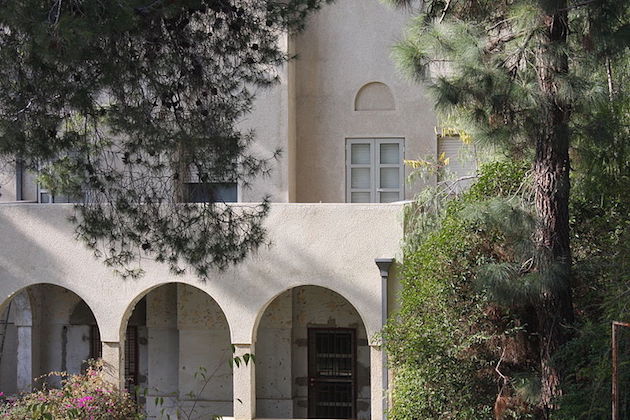
Beit Aghion

Beit Aghion / Wikimedia Commons

Known as Beit Aghion in Hebrew, the prime minister’s official residence is located in the heart of Jerusalem and has served as the living space for senior Israeli officials since 1952, 14 years after construction was completed. Beit Aghion became the prime minister’s official residence in 1974.

2. The Prime Minister of Israel’s Office

Also located in central Jerusalem, the prime minister’s office coordinates a large number of governmental affairs and works to implement laws passed by the country’s parliament.

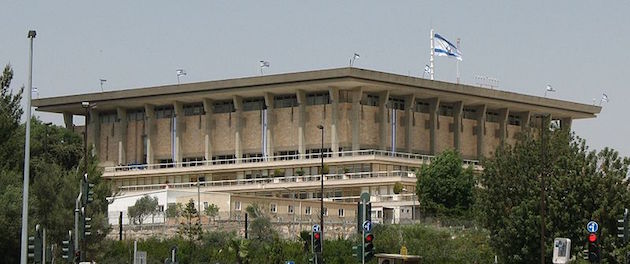
3. Israel’s Parliament, The Knesset

Knesset

Knesset / Wikimedia Commons

Hebrew for “the gathering,” the Knesset is home to Israel’s 120-member legislature. It is located in the Givat Ram neighborhood in Central Jerusalem, which plays home to many of Israel’s key government bodies.

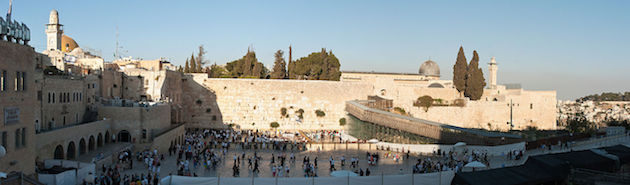
4. Judaism’s Holiest Sites, the Western Wall and the Temple Mount

The Western Wall

The Western Wall / Wikimedia Commons

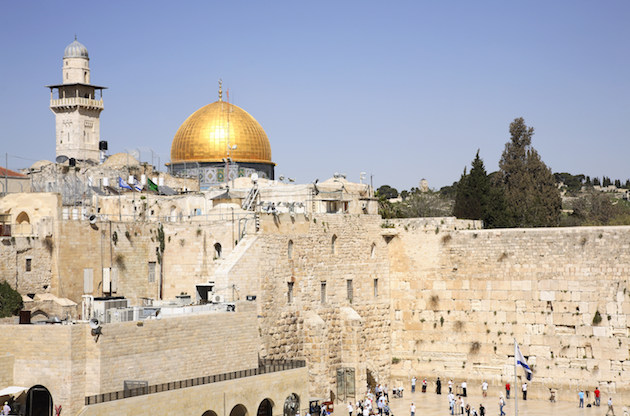
The Western Wall, or Kotel in Hebrew, is considered Judaism’s holiest site. Located behind the walls of Jerusalem’s ancient Old City, the Obama administration has long refused to acknowledge this location as Israel’s property.

5. Israel’s Holocaust Memorial Museum, Yad Vashem

Israel’s Holocaust memorial museum, located in the heart of Jerusalem, is widely viewed as one of the city’s most important modern sites. After completing the museum’s central exhibits, visitors are treated to sprawling views of Jerusalem, a reminder of how far the Jewish people have come since the Holocaust.

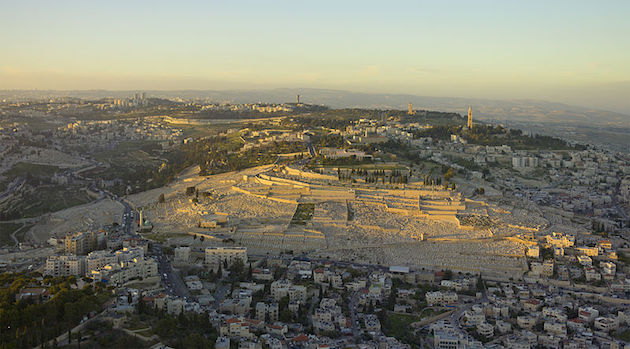
6. Judaism’s Ancient Cemetery, The Mount of Olives

Aerial view of the Mount of Olives

Aerial view of the Mount of Olives / Wikimedia Commons

A 3,000-year-old Jewish burial site, the Mount of Olives is located nearby Jerusalem’s Old City. Many of Judaism’s central figures are noted in the Bible as having ascended the mountain. In modern days, the cemetery has been a victim of vandalism by Arabs, and stands as another key site the Obama administration views as not part of Israel.

7. The Israel Museum

Due to its location in central Jerusalem, the Israel Museum—the country’s national museum—is not recognized as part of Israel by the Obama administration. The museum is home to some of Israel’s most important cultural artifacts.

8. Israel’s Supreme Court

Also located in the central Jerusalem neighborhood of Givat Ram, Israel’s supreme court has played a central role in Israeli democracy and the promotion of human rights in the Jewish state, but is not viewed as part of Israeli territory by the Obama administration.

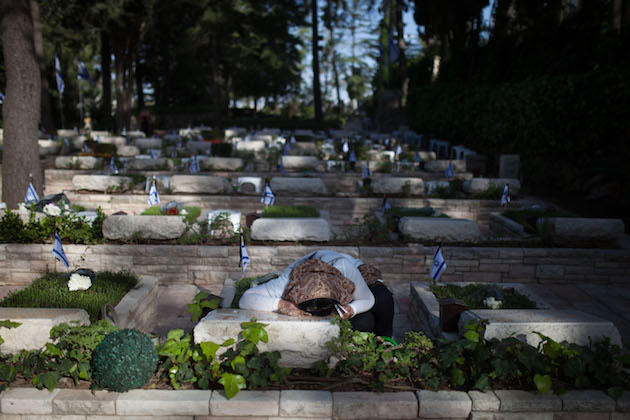
9. Israel’s National Cemetery, Mount Herzl

Mount Herzl

Mount Herzl military cemetery / AP

The site of Israel’s national cemetery, Mount Herzl is the final resting place of Israel’s founding fathers and national leaders, including former President Shimon Peres. The site is named after Theodor Herzl, the founder of Zionism. The Obama administration made clear last week that it does not view the cemetery as part of Israel.

10. Israel’s Capital City

Jerusalem

Jerusalem / AP

Since the days of the bible, Jerusalem has served as the central home of the Jewish people. Since the state of Israel was reestablished in 1948, it has served as the cultural and political center of the Jewish people. The Obama administration has been adamant since the start of its term in 2008 that it does not believe the city belongs to the Jewish state.

Email shows federal immigration bosses in OT push to swear in new citizens ‘due to election’

September 22, 2016

Email shows federal immigration bosses in OT push to swear in new citizens ‘due to election’, Fox News, , September 22, 2016

694940094001_5137149761001_hundreds-of-immigrants-mistakenly-granted-citizenshipHundreds of immigrants mistakenly granted citizenship

The all-out push shows the Obama administration is using levers to help Clinton win, said Dan Stein, president of Federation for American Immigration Reform.

“In the pursuit of a partisan advantage, one party has decided integrity in the system is irrelevant,” Stein said. “They don’t really care about checking backgrounds or verifying status and eligibility – it is more about increasing the number of eligible voters in the upcoming election.”

**********************

An internal Obama administration email shows immigration officials may be literally working overtime to swear in as many new “citizen voters” as possible before the Nov. 8 presidential election, a powerful lawmaker charged Thursday.

The email, from a U.S. Citizenship and Immigration Services field office chief and part of a chain of correspondence within the agency, urges the unnamed recipient to swear in as many citizens as possible “due to the election year.”

“The Field Office due to the election year needs to process as many of their N-400 cases as possible between now and FY 2016,” reads the email, which was disclosed to FoxNews.com by Sen. Ron Johnson, R-Wis., who chairs the Committee on Homeland Security and Governmental Affairs.

“If you have cases in this category or other pending, you are encouraged to take advantage of the OT if you can,” the email continues. “This will be an opportunity to move your pending naturalization cases. If you have not volunteered for OT, please consider and let me know if you are interested.”

Parts of the email were redacted before it was disclosed to FoxNews.com, but it was sent by the branch chief of the Houston Field Office District 17. It was not clear to whom it was addressed.

“I couldn’t have said it better!” reads the July 21 note introducing the forwarded missive. “It’s the end of the year crunch time, so let’s get crunchy! Go Team Houston! Thanks for all your hard work!”

Johnson and Sen. Charles Grassley, R-Iowa, in a Wednesday letter to Department of Homeland Security Secretary Jeh Johnson, said it appears the agency is trying to swear in new citizens as the election between Democrat nominee Hillary Clinton and GOP choice Donald Trump approaches.

“Your department seems intent on approving as many naturalization cases as quickly as possible at a time when it should instead be putting on the brakes and reviewing past adjudications,” the senator’s letter read.

Johnson referred to a report this week from the Department of Homeland Security’s Inspector General that found at least 858 people from terror hotspots and other countries of concern had been mistakenly granted citizenship despite facing orders of deportation under other identities.

“Considering that USCIS already has a troubling record of inadequate review of naturalization applications, and mistakenly giving away citizenship to terrorists, criminals and other fraudsters, it is disturbing that they are now in full and blind rubber stamp mode to crank out new citizens,” said Jessica Vaughan, director of Policy Studies for the Center for Immigration Studies.

In a USCIS planning document submitted to Congress earlier this year, USCIS reported it expected to receive 828,000 total applications this year, up from a planned 815,000 last year, an increase of 13,000, Vaughan said.

A DHS official did not immediately offer comment on the matter.

The effort is reminiscent of a similar bid to bring in new voters when Bill Clinton ran for re-election in 1996, said Claude Arnold, a retired U.S. Immigration and Customs Enforcement special agent in charge of Homeland Security Investigations.

“I am not at all surprised by this revelation,” Arnold said. “This is a repeat of the Clinton election playbook. Then it was to help re-elect Bill Clinton, this time it is to help elect Hillary Clinton.”

The all-out push shows the Obama administration is using levers to help Clinton win, said Dan Stein, president of Federation for American Immigration Reform.

“In the pursuit of a partisan advantage, one party has decided integrity in the system is irrelevant,” Stein said. “They don’t really care about checking backgrounds or verifying status and eligibility – it is more about increasing the number of eligible voters in the upcoming election.”

FULL MEASURE September 11, 2016: S2E1 (P1)

September 13, 2016

FULL MEASURE September 11, 2016: S2E1 (P1) — 9/11 and the continuing impact on America

Obama Crony: ‘Religious Liberty’ Code for Discrimination, Intolerance

September 10, 2016

Obama Crony: ‘Religious Liberty’ Code for Discrimination, Intolerance, Truth RevoltTrey Sanchez, September 9, 2016

civilwrongs

Martin R. Castro, a Chicago Democrat and Obama appointee as chairman of the U.S. Commission on Civil Rights, believes “religious freedom” and “religious liberty” are nothing more than “code words” for discrimination and intolerance.

In a 307-page report titled “Peaceful Coexistence: Reconciling Nondiscrimination Principles with Civil Liberties,” Castro writes, “The phrases ‘religious liberty’ and ‘religious freedom’ will stand for nothing except hypocrisy so long as they remain code words for discrimination, intolerance, racism, sexism, homophobia, Islamophobia, Christian supremacy or any form of intolerance.”

“Religious liberty was never intended to give one religion dominion over other religions, or a veto power over the civil rights and civil liberties of others,” Castro adds. In other words, “peaceful coexistence” is only possible when “supremacist” Christians abandon their First Amendment right to the free exercise of religion.

However, not everyone on the commission sees eye-to-eye with Castro. Some are quite concerned with the progressive mentality that anti-discrimination laws supersede constitutional rights.

Committee member and George Mason Law School Associate Dean Gail Heriot told The Washington Times, “I’m troubled by the growing attitude that somehow anti-discrimination laws trump everything. We live in a more complex world than that.”

Another, lawyer Mat Staver, criticized the report as being anti-American, saying, “This commission is not only out of touch with reality, but also out of touch with our Constitution.”

Castro’s report directly targets the federal Religious Freedom Restoration Act of 1993, and it makes clear the argument that a person’s civil rights are of “preeminent importance” above another’s religious liberty which has many lawyers scratching their heads. Some are accusing the Obama appointee of recruiting a majority of the commission to side with him in the name of identity politics rather than making compelling arguments.

The Washington Times concludes with a quote from University of Illinois law school professor Robin Fretwell Wilson, which should be taken as a warning for the future of freedom as viewed from the perspective of progressive America:

“There is no fair way to say that the concerns of the LGBT community are ‘preeminent’ over those of religious believers. Religious liberty will become code for discrimination and intolerance if opponents of nondiscrimination laws continue to claim the right, in the name of religious freedom, to block LGBT persons from enjoying protections that the rest of us take for granted. … We need thoughtful legislators to craft new thoughtful approaches to keeping the religious bakers in the business without saying gays can be turned away.”