Posted tagged ‘Obama Administration’

What Were Armed US Consulate Staff Doing near Adei Ad?

January 4, 2015

What Were Armed US Consulate Staff Doing near Adei Ad? Israel National News,  Ari Soffer, January 4, 2015

(Please see also ‘Deport US Consulate Staff Who Threatened Jews’ and related update links in my parenthetical comment there. This is a further update.– DM)
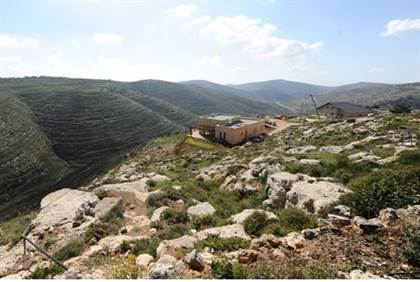
img557200Adei Ad is located in the Shiloh bloc north of JerusalemMendy Hechtman/Flash 90

Security source says ‘no question’ US Consulate staff pointed their weapons during Friday confrontation. Planned provocation or blunder?

****************

The full details of Friday’s clash between residents of the Jewish village of Adei Ad in Samaria and a delegation from the US Consulate in Jerusalem – which very nearly escalated into a fully-fledged shootout between the sides – are still emerging.

But those details which have emerged so far paint a worrying picture regarding the conduct of Consulate staff – who either willingly took part in a planned provocation, or else, in a staggering show of irresponsibility and unprofessionalism, recklessly blundered into a volatile and potentially deadly situation without the slightest idea of what they were doing.

Roughly two hours before the start of Shabbat, a group from the Consulate, escorted by armed (apparently American) guards and several residents of the Arab village of Turmus Ayya, descended en-masse and unannounced on an area within 50 meters of Adei Ad’s southwestern edge. Neither the IDF nor local residents were informed of the visit beforehand.

The Consulate delegation had apparently been “invited” by Palestinian Arabs from Turmus Ayya, many of whom hold US citizenship, ostensibly to see the site of what Arabs claim was an “attack” by Adei Ad residents on an olive orchard. That incident was originally reported Thursday night by the PA’s Bethlehem-based Maan News, which claimed that Jewish “settlers” had uprooted 5,000 olive trees – a rather incredible number to those familiar with quite what such a mammoth task would entail. Subsequent reports later revised the number down to 500, although no independent verification or evidence of the alleged damage has surfaced as yet.

Adei Ad residents, alarmed at the unannounced arrival of a large groupfrom a Palestinian village within meters of their community, rushed out to confront them. A brief verbal altercation ensued which quickly escalated, with youths from Adei Ad hurling rocks at the delegation, causing some damage to a Consulate vehicle.

At this point the accounts vary; witnesses from Adei Ad say Consulate staff drew their weapons – an M-16 and a handgun – following which residents called for backup from Adei Ad’s own security team. The Consulate, for its part, has denied any weapons were drawn at all. Either way, the American delegation beat a hasty retreat.

Notably, at no point during the confrontation was the IDF alerted by the Consulate team; only after leaving the scene did the Americans call the army, who quickly responded and launched an investigation, which is still ongoing.

img73901Damage to US Consulate vehicle Rabbis for Human Rights

Whatever the case, Jewish residents of Adei Ad and surrounding communities in the Shiloh bloc, located in the Binyamin region to the north of Jerusalem, are demanding answers. Angry residents say the incident was clearly a planned provocation, and have expressed their astonishment at the fact that an armed entourage from the US Consulate would arrive at a contested spot without coordinating their visit with the IDF in advance.

Indeed, regardless of the intent behind the visit, one Adei Ad resident pointed out that it was a clear recipe for disaster.

Apart from being the location of a protest in December 10th in which senior PA official Ziad Abu Ein died of a heart attack, the site of Friday’s confrontation is also the precise spot where a group of Palestinians attempted to infiltrate Adei Ad just two weeks ago.

“Two weeks ago at that exact place a horse was stolen,” said the resident, who asked to remain anonymous. “At 10 p.m. that same night dozens of Arabs from a nearby village came up to Adei Ad at the same spot, and residents came out to keep them away.”

Recounting Friday’s incident, he said residents had no idea Consulate staff were present at all. All they saw, he said, was “Arabs approaching, accompanied by what looked like a group of Europeans – we didn’t know who they were exactly. Often foreign anarchists join the Arabs in carrying out violence or provocation.”

Due to the tense relations between Jews and Arabs in the area, Arab farmers must contact the IDF before working land that abuts Adei Ad in order to avoid any confrontations. For their part, Adei Ad residents have long complained that they have been regularly targeted by Arab thieves and vandals.

“About two years ago a group of Arabs actually came right up to my house, right into the enter of Adei Ad, and stole a whole herd of sheep. In the past they’ve stolen horses, they stole a tractor, building equipment,” the resident recounted.

“The Arabs know that if they want to come that close to Adei Ad to do agricultural work they need to let the army know first to escort them. So any time Arabs approach without army supervision – particularly in that place where two weeks ago there was an incident – that’s a sign that they are coming to cause trouble… to attack or damage property,” he added.

He said locals had long given up on the prospect of receiving help from police, who he accused of totally avoiding their responsibilities and only agreeing to investigate Palestinian accusations against them.

“We receive no backing from the police,” he lamented. “Every time there is an incident of robbery by the Arabs the military refuses to deal with it because they don’t look at it as life-threatening; and the police… they tell us that it’s out of their jurisdiction.

“On the other hand, every time the Arabs steal something or cause trouble they then go and report us to the police – that’s how they work – so it’s always a one-sided investigation, because the police claim they have no jurisdiction over the Arab villages, only over us! No one has ever been charged, no property has ever been returned.”

He emphasized that despite the negative characterization of Adei Ad and surrounding Jewish communities in the area by some media outlets, residents are not interested in trouble and just want to get on with their daily lives in peace.

“We have much better things to do with our lives – we have our children and families, and we have jobs,” he said. “We don’t enjoy going out and having rock-throwing fights… no one seems to realize… but we feel we are under threat and that if we don’t do it the next step is a terrorist attack.”

Responding to American denials that Consulate staff pointed their guns at residents, a local security source said there was “no question” they hadindeed drawn their weapons, based on the individual testimony of numerous witnesses.

The security source, who also asked to remain anonymous, said one American “with ginger hair” was seen pointing his pistol at residents, who were unarmed, from inside of his car after rolling down the window. The other armed man then did the same with an M-16 rifle.

It was then that the situation threatened to get out of control.

“News spread that some people had approached the town with weapons, and they called for help,” prompting armed members of the local civilianfirst-response team to rush to the site, he recounted.

Luckily, “at that point it seems like the Americans thought it would be a good time to leave… and after that there was a brief confrontation between the Arabs and (Jewish) residents until the army arrived.”

He said that although an investigation was still ongoing, the conduct of the Consulate delegation was “suspicious.”

“Why didn’t they call anyone while the confrontation was going on?” he asked.

He also described the “strange” behavior of the Consulate guards when they were finally met by IDF forces and first-responders, describing them as looking sheepish and, unprompted, immediately insisting they hadn’t drawn their weapons.

Marc Prowisor, a resident of the nearby town of Shiloh, said the latest confrontation posed some “difficult questions.”

“Were members of the American Consulate knowingly taking part in a larger provocation – which is against the law?” asked Prowisor who, as Director of the One Israel Fund charity which helps secure local communities, is in regular contact with local security forces.

Analysis: Osama bin Laden’s documents pertaining to Abu Anas al Libi should be released

January 4, 2015

Analysis: Osama bin Laden’s documents pertaining to Abu Anas al Libi should be released, Long War Journal, Thomas Joscelyn, January 3, 2015

(Release of the documents should further diminish the U.S. Government’s claims that al Qaeda died with bin Laden. How about any documents in the possession of Abu Anas al Libi when he was captured in Turkey in 2013? Might they contradict governmental claims about what happened during the “unanticipated” September 11, 2012 terrorist attack on the U.S. installation in Benghazi, why it happened and the nature of the U.S response? — DM)

Anas-al-Libi

The Obama administration made a concerted push to portray Osama bin Laden as a doddering old man who was operationally irrelevant.

What we know about Abu Anas al Libi’s al Qaeda role challenges all of these assessments.

Releasing any bin Laden files further implicating al Libi in the East Africa attacks would only strengthen the US government’s case to the public.

***************

A senior al Qaeda operative known as Abu Anas al Libi has died in the US as he was awaiting trial. Al Libi was captured in Tripoli during a raid by US forces in late 2013. He had been wanted for his role in the August 1998 US Embassy bombings for more than a decade prior to his arrest.

The US government has in its possession numerous pieces of evidence concerning al Libi’s al Qaeda role, including files recovered in May 2011 from Osama bin Laden’s home in Pakistan.

The Long War Journal has consistently advocated for the release of bin Laden’s files. The Obama administration has released just 17 documents, and a handful of videos, from a total cache of more than 1 million files. Many more of these files, if not almost all of them, should be declassified and released. There are no sources or methods to protect, as everyone knows how this information was obtained. The only files that should remain classified are those that have a direct bearing on the US government’s current counterterrorism operations against al Qaeda.

Now that al Libi has passed away, the US government has another opportunity to be more transparent with respect to bin Laden’s files. After all, at least some of the documents probably would have been released to the public during al Libi’s trial.

Just weeks ago, in mid-December, Benjamin Weiser of The New York Times reported that US prosecutors were seeking to use files recovered during the raid on bin Laden’s compound in al Libi’s trial.

A close reading of the Times‘ account reveals that prosecutors intended to use at least five separate letters recovered in bin Laden’s safe house.

It does not appear that any of these letters were included in the set of 17 documents released by the Obama administration through the Combating Terrorism Center at West Point. None of Abu Anas al Libi’s letters to al Qaeda’s leaders were released.

The first letter described by the Times is from Atiyyah Abd al Rahman, a senior al Qaeda leader, to bin Laden dated June 19, 2010. Rahman explained that al Libi was one of “the last brothers” to be released from Iran. Al Libi “came only a week ago and I met him and sat with him,” Rahman wrote, according to the Times’ summary. Rahman appointed al Libi to al Qaeda’s security committee. “It is normal for any person after a long absence, especially in jail, that he needs some time to figure out how things work,” Rahman noted. Rahman recommended that bin Laden send al Libi a letter, because al Libi was seeking “reassurance.”

A second letter, dated Oct. 13, 2010, is a five-page missive from al Libi to Osama bin Laden. “Your forever lover, Your brother,” al Libi signs the letter. Al Libi explains, according to the Times, that the al Qaeda “brothers,” including bin Laden’s sons and other al Qaeda operatives, fled to Iran under orders from Taliban leader Mullah Omar.

A third letter from Rahman to bin Laden was written “[a]bout a month later,” according to the Times, meaning it was penned sometime in November 2010. Rahman recommended that al Libi be accepted back into al Qaeda’s leadership ranks. Rahman described al Libi as “determined,” “visionary,” and “difficult somewhat,” but also noted that bin Laden knew him. Interestingly, Rahman complained that al Libi had violated al Qaeda’s operational security regulations by “contacting his family in Libya, despite knowing that we don’t allow any communications.”

Al Libi “knows that he was wanted by the Americans,” Rahman wrote to bin Laden, according to the Times’ summary. “He contacted them via phone repeatedly!”

In a fourth letter, written in March 2011, al Libi requested permission to join some other operatives who were returning to Libya to fight against Muammar al Qaddafi’s regime. It is better to “move out sooner rather than later” al Libi wrote.

Rahman forwarded al Libi’s letter to bin Laden, the Times reported, and Rahman explained to bin Laden that he approved al Libi’s request. This is the fifth letter prosecutors sought to introduce. Rahman noted that al Libi was “a little upset with me for the delay in getting back to him.”

A “builder of al Qaeda’s network in Libya”

Al Libi did in fact return to his native Libya. As a member of al Qaeda’s security committee who returned to North Africa only after receiving permission from his superiors in al Qaeda (Rahman), it is safe to assume that he was doing the terrorist organization’s bidding when he set up shop in his homeland.

Indeed, as The Long War Journal previously reported, an unclassified report published in August 2012 highlighted al Qaeda’s strategy for building a fully operational network in Libya. The report (“Al Qaeda in Libya: A Profile”) was prepared by the federal research division of the Library of Congress (LOC) under an agreement with the Defense Department’s Combating Terrorism Technical Support Office (CTTSO).

Abu Anas al Libi played a key role in al Qaeda’s plan for the country, according to the report’s authors. He was described as the “builder of al Qaeda’s network in Libya.”

Al Qaeda’s senior leadership (AQSL) has “issued strategic guidance to followers in Libya and elsewhere to take advantage of the Libyan rebellion,” the report reads. AQSL ordered its followers to “gather weapons,” “establish training camps,” “build a network in secret,” “establish an Islamic state,” and “institute sharia” law in Libya.

Abu Anas al Libi was identified as the key liaison between AQSL and others inside the country who were working for al Qaeda. “Reporting indicates that intense communications from AQSL are conducted through Abu Anas al Libi, who is believed to be an intermediary between [Ayman al] Zawahiri and jihadists in Libya,” the report notes.

Al Libi is “most likely involved in al Qaeda strategic planning and coordination between AQSL and Libyan Islamist militias who adhere to al Qaeda’s ideology,” the report continues.

Al Libi and his fellow al Qaeda operatives “have been conducting consultations with AQSL in Afghanistan and Pakistan about announcing the presence of a branch of the organization that will be led by returnees from Iraq, Yemen, and Afghanistan, and by leading figures from the former LIFG.” The term “LIFG” refers to the Libyan Islamic Fighting Group, an al Qaeda-linked jihadist group formed in Libya in the 1990s.

One of al Libi’s key allies inside Libya was another senior al Qaeda operative, Abd al Baset Azzouz, who has been close to al Qaeda’s senior leaders for decades.

Azzouz was sent to Libya by Zawahiri and “has been operating at least one training center.” Azzouz “sent some of his estimated 300 men…to make contact with other militant Islamist groups farther west.”

Azzouz was reportedly captured in Turkey last month. [See LWJ report, Representative of Ayman al Zawahiri reportedly captured in Turkey.]

Release bin Laden’s files

The Obama administration made a concerted push to portray Osama bin Laden as a doddering old man who was operationally irrelevant. Citing bin Laden documents shown to him by the White House, the Washington Post’s David Ignatius described the jihadist leader as a “lion in winter.” CNN‘s Peter Bergen similarly reported that bin Laden was in retirement at the time of his death. The Combating Terrorism Center at West Point, working off of only those documents provided by the Obama administration, portrayed bin Laden as being sidelined.

What we know about Abu Anas al Libi’s al Qaeda role challenges all of these assessments. He was reintegrated into al Qaeda’s chain of command after his release from Iranian custody. His role was approved by Rahman, who served as one of bin Laden’s top subordinates before being killed in a US drone strike. Rahman made sure that al Libi joined al Qaeda’s security committee — an internal body that is not factored into any public assessments of al Qaeda’s structure or hierarchy. And al Qaeda approved al Libi’s return to Libya. Other evidence subsequently unearthed by the US government shows that al Libi was acting as one of al Qaeda’s top operatives in North Africa at the time of his capture.

This evidence should be released to the public, so we can judge for ourselves how al Qaeda operates.

In addition, any documents or files recovered from bin Laden’s compound that deal with the August 1998 US Embassy bombings should be released as well. After al Libi was captured in Libya, his family claimed he had played no role in the twin attacks, which were al Qaeda’s most successful operation prior to Sept. 11, 2001. However, there is abundant evidence, including testimony given before a US district court, indicating that al Libi was a key player in the bombings. Releasing any bin Laden files further implicating al Libi in the East Africa attacks would only strengthen the US government’s case to the public.

‘Deport US Consulate Staff Who Threatened Jews’

January 3, 2015

‘Deport US Consulate Staff Who Threatened Jews’ Israel National News, Uzi Baruch and Tova Dvorin, January 3, 2014

(Huh? If the report is accurate, the U.S. consular officials went way too far. Cf this 2008 video:

Please see also American Security Guards Clash with Jews in Binyamin. Please see also this article, apparently (but not clearly) about what happened later when the consular officials got to the olive trees. — DM)

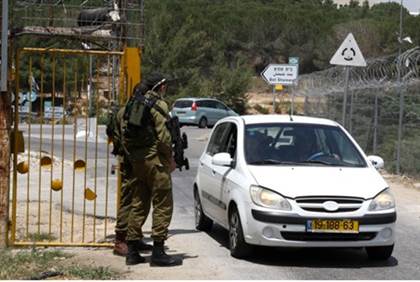
img510743Soldiers guard Samaria community (illustration) Flash 90

An argument erupted between the convoy and the community’s security guards, as all official visits to Jewish communities in Judea-Samaria must be coordinated with the IDF and police – a protocol the consulate allegedly ignored. At least one of the American guards allegedly pulled out his handgun and M-16 during the course of the argument.

*****************

Acting Head of the Samaria Regional Council, Yossi Dagan, has filed a request to the Minister of the Interior Gilad Erdan demanding he immediately expel the American Consulate staff members who entered the Samaria village of Adei Ad Friday and threatened Israeli Jews with an M-16. 

“As revealed through Wikileaks few years ago, these supposed ‘officials’ are intelligence agents and spies in every respect,” said Dagan, adding “this time, they went too far and participated in a provocative tour with the Palestinians in the southern Samaria and north Binyamin, without any coordination as required with the IDF and police, and pulled out a firearm and threatened Israeli civilians.”

“This is a crossing of all red lines,” he continued. “This event could have descended easily into bloodshed and only as a result of the settlers’ responsible behavior was [a scenario like that] prevented.”

“I request that in view of the serious and criminal conduct, that these [US] security guards and officials be deported,” he added.

“If Israeli intelligence officials and armed Israeli security guards stationed in one of the Israeli consulates in the United States had participated in a political provocation without any coordination with the police and threatened American citizens with weapons, at best, they would bearrested and deported, and the more likely case would be them spending several years in federal prison.”

It is unclear exactly what prompted the incident at Adei Ad Friday, but reports say that several consulate officials arrived with armed guards at the community to investigate Palestinian Arabs’ claims of vandalism of a nearby olive orchard.

An argument erupted between the convoy and the community’s security guards, as all official visits to Jewish communities in Judea-Samaria must be coordinated with the IDF and police – a protocol the consulate allegedly ignored. At least one of the American guards allegedly pulled out his handgun and M-16 during the course of the argument.

Turkey: America’s unacknowledged problem

December 31, 2014

Turkey: America’s unacknowledged problem, Israel Hayom, Prof. Efraim Inbar, December 31, 2014

(The foreign policy of the Obama administration is difficult to understand. What might be the reasoning behind its apparently continuing support for Islamic Turkey, a bitter foe of Israel? What are the administration’s interests in the Middle East?– DM)

It is not clear why Washington puts up with such Turkish behavior. The Obama ‎administration seems to be unable to call a spade a spade. It refuses to acknowledge ‎that Turkey is a Trojan horse in NATO, and that Ankara undermines American interests ‎in the Middle East and elsewhere.‎

***************

Turkey is a NATO ally, and U.S. President Barack Obama has called Turkish President Recep Tayyip Erdogan his best friend. But Erdogan-led Turkey does not ‎behave as an ally or a friend of the U.S. This is not a new development.‎

Erdogan and his Islamist party, the Justice and Development Party (AKP), have ruled Turkey since 2002. Erdogan’s ‎Turkey has gradually distanced itself from the West, adopting domestic and foreign ‎policies fueled by Ottoman and Islamist impulses. ‎

Turkey has been on the road to an authoritarian regime for several years. Infringements ‎on human rights have gradually increased. In truth, Turkey has never had a political ‎system with checks and balances able to constrain attempts to consolidate power ‎around one politician. In recent years, Erdogan has weakened further the few ‎constitutional constraints against “Putinization” of the Turkish political system. ‎

The longer Erdogan rules, the more power-hungry he seems. His authoritarian ‎personality becomes clearer every day. The press is hardly free. Erdogan arrests even ‎Islamist journalists who are critical of his policies. His party has infiltrated the judicial ‎system and the police. Foci of power, such as the bureaucracy, the banking system, ‎industrial associations and trade unions, have been mostly co-opted by the AKP. ‎Opposition political parties are largely discredited. The military, once active in politics ‎as the defender of the Kemalist secular tradition, has been successfully sidelined. ‎

From a realpolitik perspective, the domestic political developments, deplorable as they ‎may be in Turkey, could be ignored by the democratic West as long as Ankara ‎continues to be a useful ally. Unfortunately, Turkey no longer qualifies as a trusted ‎ally. ‎

The most recent examples of nefarious Turkish behavior are its support of Islamic State and ‎Hamas. Turkey is playing a double game on the issue of Islamic State. It pretends to ‎cooperate with the U.S. policy in the attempt to contain radical Islam, but actually ‎Turkey supports the radical group. It allows passage of volunteers through Turkish territory to join ‎Islamic State in Iraq. The group gets logistical support via Turkey, and sends its wounded militants for ‎treatment in Turkey. Turkish military forces stood idly by the besieged city of Kobani, ‎just across the Turkish border, while the Islamists killed Kurdish fighters. Finally, ‎Turkey denies the American air force access to Turkish bases, forcing the U.S. to use far‎away bases when attacking Islamic State targets. ‎

Turkey is also openly supporting another radical Islamist organization, Hamas. ‎Despite the fact that the West regards Hamas a terrorist organization, Ankara regularly ‎hosts Hamas representatives to meet the highest Turkish dignitaries. Hamas, an ‎offshoot of the Muslim Brotherhood, has a rabid anti-American position. Moreover, ‎Salah al-Aruri, a senior Hamas operative, operates out of Istanbul. Recently, the ‎Turkish branch of Hamas was involved in a series of attempts to carry out terrorist ‎attacks against Israel, and in orchestrating a coup against the current leadership of the ‎Palestinian Authority.‎

Such behavior should not surprise policy makers in Washington. In 2003, Ankara ‎denied the request from Washington to open its territory so that the U.S. military could ‎attack Saddam Hussein’s forces from two separate fronts.‎

AKP-ruled Ankara also defied American preferences on Syria, a country allied with ‎radical Iran and on the American list of states supporting terrorism. In January 2004, ‎Bashar Assad became the first Syrian president ever to visit Turkey. In April 2009, the ‎two states conducted their first ever joint military exercise. No other NATO member ‎had such close relations with the authoritarian regime in Damascus, which has been ‎closely allied with Iran for several decades.‎

Turkey further deviated from the Western consensus in 2008 by hosting Sudanese ‎President Omar Hassan al-Bashir twice. Bashir, who was charged with war crimes and ‎genocide in Darfur, presided over an Islamist regime. ‎

Turkey even welcomed the president of the Islamic Republic of Iran, Mahmoud ‎Ahmadinejad, for a visit in August 2008. No Western country has issued such an ‎invitation to the Iranian leader. Additionally, Erdogan congratulated Ahmadinejad ‎immediately after his re-election in June 2009. When it comes to Iran’s nuclear threat, ‎Ankara, unlike its NATO allies, has refused to adopt the U.S. stance on harsher ‎sanctions, fearing in part the economic consequences of such steps. In June 2010, ‎Turkey voted at the U.N. Security Council against a U.S.-sponsored resolution meant to ‎impose a new round of sanctions on Iran.‎

Turkey also has consistently defied advice from Washington to tone down its anti-‎Israel statements and mend relations with an important American ally. All American ‎efforts in this direction have failed.‎

There is also a clear divergence between the U.S. and Turkey on important global issues ‎such as Russia and China. For example, U.S. wanted to send ships into the Black Sea via ‎the Bosporus Strait during the Georgia war in August 2008. Turkey flatly denied ‎several such requests on the pretext that the military vessels were too large. Moreover, ‎Turkey proposed the creation of a regional security framework involving Turkey, ‎Russia, Georgia, Armenia and Azerbaijan that left out a NATO role. More blatantly, ‎Turkey has failed to participate in the Western economic sanctions imposed on Russia ‎during the recent Ukraine crisis.‎

Dissonance exists also with regards to China. While the U.S. fears the rise of China, ‎Turkey sees this country as a potential economic partner and not a problem. It held ‎military exercises with China. Ankara even considered purchasing anti-aircraft systems ‎from Beijing, an incredibly brazen position for a NATO member.

It is not clear why Washington puts up with such Turkish behavior. The Obama ‎administration seems to be unable to call a spade a spade. It refuses to acknowledge ‎that Turkey is a Trojan horse in NATO, and that Ankara undermines American interests ‎in the Middle East and elsewhere.‎

Beating Bibi: Obama’s Last Campaign

December 24, 2014

Beating Bibi: Obama’s Last CampaignThe real goal of the Obama administration is to bring Netanyahu down.

by Rich Baehr

December 23, 2014 – 10:47 pm

via Beating Bibi: Obama’s Last Campaign | PJ Media.


Barack Obama has proven to be a determined man when it comes to achieving goals he really cares about. He may not get everything he wants when he wants it, but he has shown that there is often more than one way to advance his agenda, and he can be patient when the political environment is unfavorable. This has been true on both the domestic front and in foreign policy.

Obama has used federal agencies such as the EPA and NLRB to move aggressively to favor Obama interests (bashing coal producers, making it easier for workers to organize into unions) when Congress did not adopt climate change legislation or “card check” legislation. The Department of Health and Human Services has regularly changed the rules of Obamacare, seemingly making the rules up as they go along when it became clear that certain provisions were either very badly conceived or politically unpalatable to important Obama interest groups.

There has also been subterfuge to make it seem that the abuse of the separation of powers and routine bypassing of Congress has not really occurred. The president says he has issued far fewer executive orders than prior presidents, when in fact he has issued far more when you include his memoranda – which serve the same purpose.

In foreign policy, the administration has pursued several policies with the same doggedness. One of these has been to damage the historically close ties between Israel and the United States. The alternative way to say this is that so long as Israel elects leaders who do not see things the way the administration does, it will be very much out of favor with the White House.

Over the first six years of the Obama administration, there is little that Israel under the leadership of Prime Minister Bibi Netanyahu has ever done right according to the White House or the State Department. Conversely, almost nothing the Palestinians have done has been called out for similar criticism. Meanwhile, the administration has pursued a new relationship with Iran (much as it has with Cuba), signaling that traditional alliances and enmities were out the window with this administration. The obsession of Secretary of State Kerry with pushing the Israeli-Palestinian peace negotiations and the Iranian nuclear negotiations seems to be a mix of legacy-building for both Kerry and Obama, but also part of the shift away from the traditional alliance with Israel.

A goal of the White House seems to have been to break the bipartisan support for a strong U.S-Israel relationship in Congress by making it far easier for Democrats to go their own way. In essence, the White House has facilitated a transition within the party to better reflect the views of the Democratic Party’s base, now heavily made up of younger voters and minorities, among whom there is not nearly as much support for Israel as in the past. The Obama administration has set in place a longer-term process to separate Democrats in Congress from their historic role as strong supporters of Israel.

Whether Obama is following his base on this issue or leading it is a different question. As the single most visible political figure in government, when a president is viewed as being engaged in a bitter feud with a foreign leader, as the press has dutifully reported is the case between Netanyahu and Obama, a strong message has been delivered. This message particularly gets to those who support the president in general, and on pretty much all specific issues. The president has also blessed and opened the White House’s door to J Street, an organization allegedly committed to both Israel and peace. In reality, the group is a “blocking back for the White House,” as its own leaders have admitted, for the regular Israel-bashing and pressure campaign that has been underway since both Obama and Netanyahu took office in 2009. If one looks for instances of J Street uttering a kind word about Netanyahu, you will find even fewer than those from the president himself.

Prime Minister Netanyahu’s government has collapsed following the firing of two ministers from parties in his coalition that had broken with his government. New elections have been called for March 17. The Israeli election system is a parliamentary one, although one without legislative districts. Parties nominate slates and determine the order of their candidates. If a party wins 20 of 120 seats in the Knesset, based on their share of the overall vote among the parties who register at least 3.5% of the total vote, then the first 20 names on that party’s list will become Knesset members.

Thirteen parties hold seats in the current Knesset (the hurdle until this current election  had been only 2% of the total vote for representation for a party), an indication of the fragmentation of the current system. After the Knesset elections are held, since no single party ever wins a majority on its own or even comes close, the country’s president picks the leader of a party that he thinks has the best chance of putting together a coalition of parties to get to at least 61 seats, a Knesset majority. That has been Netanyahu for two consecutive elections, though a third victory is not assured.

A recent poll shows right-wing parties winning 40 seats, left-wing and Arab parties winning 40 seats, and 40 seats up for “sale” (or persuasion), though many of these would be with religious parties generally more comfortable as part of a right-wing government.

One of the issues Bibi has to deal with is that many Israeli voters are concerned about deteriorating U.S.-Israei relations. Israel has few allies beyond America, Canada under Stephen Harper, and Australia most of the time. Among these three, of course American support has always mattered most, given the history of foreign aid, weapons supply, and the Americans’ Security Council veto. European behavior, on the other hand, has become  more viper-like every week. Most Israelis are smart enough to understand that whatever Netanyahu’s faults, the problems in the relationship the last few years have been largely created by the Obama administration. Though there are some who are right-of-center on security issues who might think that someone other than Bibi might be better able to shepherd the country through the rocky last two years of the Obama administration, since any new president after Obama is unlikely to be so hostile.

When Bill Clinton was president, he allowed his campaign team, including pollster Stanley Greenberg, Bob Shrum, current J Street operative Jim Gerstein, and Jim Carville, to assist Labor party leader Ehud Barak and to help bring down Netanyahu’s government  in 1999. Greenberg is going back to Israel to help the Labor Party again. Surely, this has the Obama seal of approval.

The Obama team may have overplayed its hand when it allowed a rumor to get out that sanctions against Israel over its settlement building had been discussed at the White House. Congressional Democrats pushed back hard against the idea, and the administration denied it had ever come up. A few weeks back, a reporter close to the White House had repeated various obscenities which top administration figures had used to describe Netanyahu, including “chickens**t.”

This week, Secretary of State Kerry seems to be trying a different approach, by reassuring Israel that the U.S. will use its veto in the Security Council (if it has to, assuming the Palestinians collect nine votes) to prevent the Palestinian Authority from getting its resolution passed on a two-year deadline for statehood within the 1967 borders. Of course, Kerry has generally been milder in his public criticisms of Israel than the off-the-record amateurs at the White House. At the same time, Kerry has let slip that Israeli leaders from the left believe a debate and vote on a PA resolution at the UN now will only solidify support for Netanyahu and right-wing parties, so he is loathe to give Bibi an assist.

In any case, the administration seems to be trying to deliver two messages: things could get far worse for Israel in the next two years (we won’t use our veto at the UN next time), or there could be more support if Israel is more forthcoming and accepts the American approach (offering concessions to the Palestinians and not opposing a U.S.-Iran nuclear deal). Of course, since Bibi Netanyahu is unlikely to become a J Street prime minister, the real goal of the administration, as was the case in the Clinton administration, is to bring him down.

Chutzpah redefined

December 18, 2014

Chutzpah redefined, Israel Hayom, Sarah N. Stern, December 18, 2014

(When reality is unpleasant, as it often is, those not personally experiencing reality make decisions based on pleasant fantasies. — DM)

[T]his is supposed to be a “peace process.” The operative word here is “peace.” How dare we dictate anything to the Israelis, who are forced to live with the deadly consequences of this obviously flawed foreign policy paradigm? How can we presume to know better than they what it is that the Israelis can actually live with?

**************

In September 1993, when Yasser Arafat was recast from the role of “granddaddy of terrorism” to that of “peacemaker,” the Oslo Accords were marketed to the Israeli public and to world Jewry wrapped in the package of “reversibility.” I remember clearly when a friend of mine, a leftist television personality, assured me: “Don’t worry, Sarah. We will be watching Arafat very closely. It all depends on his compliance with our strict guidelines. He has to stop all the incitement and all the terror. It’s only Gaza and Jericho first. If it doesn’t work, we can always go back and retrieve it.”

That was 21 years ago. Since then, not a day goes by without another fiery Palestinian Authority incident of incitement (painstakingly documented and broadcast to the world by the good work of Palestinian Media Watch). This hatred has metastasized like a cancer and an entire generation has grown up steeped in it. The horrific result is the vast number of Israelis murdered at the hands of Palestinian terrorists.

This past week Khalil Shikaki from the Palestinian Center for Policy and Survey Research conducted a poll which indicated that a full 80 percent of Palestinians support stepping up violent attacks against Israelis, including random stabbings and traffic attacks. Over 86 percent believe that Haram al-Sharif (or the Temple Mount, where Al-Aqsa mosque is located) is in danger.

That comes as no surprise because 93 percent of Palestinians consider themselves to be religious Muslims, and the leadership of the Palestinian Authority has been constantly stirring up hysteria that “the Jews are desecrating Haram al-Sharif.”

Although the Oslo Accords were presented as conditional, successive Israeli governments have upheld them, despite the steady stream of constant, daily incitement and increasing number of what the Left used to euphemistically call “korbanot shel shalom” (“victims of peace”).

We Jews seem to have gotten ourselves deeper and deeper into a hole. And many of our leaders do not seem to understand the basic philosophy that “when you are in a hole, you should stop digging.”

American presidents, politicians and diplomats have consistently argued that “Israeli-Palestinian negotiations should be left up to parties themselves.”

Which brings us to Habayit Hayehudi Chairman Naftali Bennett’s spirited debate with Martin Indyk at the Brookings Institute’s Saban Forum last week. Bennett courageously uttered the words: “We’re stuck in the conventional directions that we’ve been working on over the past three decades. There’s only one game [foreign policy paradigm] in town and that is a Palestinian state in the heart of Israel. Now, regardless of whether you support it or not, the reality is, it’s not working. It’s not working.”

The outcry from American journalists and officials, who have based their careers on the success of the peace process and the two-state paradigm, was so intense one would have thought Bennett had said something highly irresponsible, such as that Arabs are the descendants of apes and pigs (a remark that official Palestinian Authority media frequently uses to describe Jews).

After all, this is supposed to be a “peace process.” The operative word here is “peace.” How dare we dictate anything to the Israelis, who are forced to live with the deadly consequences of this obviously flawed foreign policy paradigm? How can we presume to know better than they what it is that the Israelis can actually live with?

The premise of “land for peace,” which has dominated American foreign policy and the its attitude toward Israel over the last two decades, might well work in the West when dealing with a land dispute between the United States and Mexicans or Canadians. But it is patently obvious, when listening to the inflammatory rhetoric that comes directly out of the mouths of Palestinian Authority officials, that they have never laid down the societal groundwork for peace, but rather for its very opposite.

This has been going on for over a generation. Words and ideas matter. These hateful words have seeped deep into the consciousness of an entire generation of Palestinians. They lead to tragedies like the recent attack at the Har Nof synagogue in which four Israelis were killed while reciting morning prayers (and a Druze policeman was killed coming to their aid); or earlier this week, when an Israeli family of five stopped to pick up a hitchhiker in Judea and Samaria and was subjected to an acid attack; or in October when a three-month-old, the first child for a couple who had endured years of infertility, was murdered when a Palestinian terrorist rammed his car into a group of Israelis waiting at a light rail station in Jerusalem.

For some, in America, this is merely a statistic. But for Israelis and Jews, this was somebody’s father, somebody’s mother, somebody’s brother, sister or child. Israel is a tiny country. By now there is hardly anyone in the country who does not personally know someone wounded or murdered at the hands of Palestinian terrorists.

If this were a scientific experiment, we would have reached the null hypothesis a long time ago, and realized it was time to go back to the drawing board.

Whether or not one agrees with Bennett, it is impossible not to admire his moral courage and intellectual honesty for publicly declaring something every Israeli and every Palestinian already knows. He is like the little boy in the story who, in front of everyone, points to the naked monarch and declares: The emperor wears no clothes!

As Bennett said, “Let’s stop looking at perfection, the ideal dream of two states living side by side in peace and democracy. Let’s stop talking perfection that has led us to disaster.”

Yet Indyk, who has made a career out of the peace process industry, had the audacity to tell him, “You are talking pure mythology. … You live in another reality. … You live in what Steve Jobs called ‘a distorted reality.'”

Bennett responded with, “This is quite a sentence. I have been through the First Intifada, the Second Intifada. You attend conferences. I have been on the ground there. How many missiles have to fall on Ashkelon until you wake up? How many people need to die before you wake up from this illusion? When will you say you were wrong?”

Bennett deserves high praise for injecting a bit of reality into the fantasy world that exists inside the beltway, where everyone continues to cling to the illusions of 1993. So many of our think tanks, diplomats and scholars look at the Taliban attack in a school in Pakistan or the hostage crisis in a cafe in Australia as a deplorable acts of terrorism, but when it comes to Palestinian terrorists taking the lives of Israeli citizens, our State Department officials say, “Both sides have to try harder,” as Secretary of State John Kerry said at a press conference in London this week.

This is a hypocritical double standard that no one but Israel would be expected to endure. When people impose a standard on Israel, the Jewish state, that they would never impose on themselves, we have one word for it and that word is anti-Semitism.

Sometimes this anti-Semitism comes directly out of the mouths of Jews. Two thousand years of living in the Diaspora has had an indelible effect on our collective psyche. Many Jews are self-conscious of their Judaism, and want the love of the world so desperately that they have to prove to the world how liberal and broad minded they are … at the expense of their own Israeli brothers and sisters.

I could never understand how anyone sitting in a comfortable living room on this side of the Atlantic, never knowing what it is like to constantly fear for their lives and never worrying about having 60 seconds or less to gather the entire family and hide from incoming missiles, can claim to know better than the Israelis about what is good for them.

This gives new meaning to the definition of the term “chutzpah.”

Apologies Empowering Our Enemies

December 16, 2014

Apologies Empowering Our Enemies, You Tube, December 16, 2014

Iran: White House Lying About Iran’s Concessions in Nuke Talks

December 9, 2014

Iran: White House Lying About Iran’s Concessions in Nuke Talks, Washington Free Beacon, December 9, 2014

(Is either the Obama Administration or Iran to be believed? Or are both just continuing to “Gruberize” their “stupid” audiences?– DM)

Iran NuclearIran’s heavy water nuclear facility is backdropped by mountains near the central city of Arak, Iran / AP

The Obama administration is misleading lawmakers and the public about purported concessions made by Iran in the latest round of nuclear talks, top Iranian officials insisted over the weekend, renewing a year-old debate about the administration’s transparency regarding the fragile negotiations.

Iran over the weekend pushed back against key claims made by the administration to lawmakers and the press about further concessions agreed to by Iran following the last round of talk in Vienna regarding the country’s contested nuclear program.

In talking points disseminated to congressional offices since the extension in talks was announced, the administration has claimed that the terms of the agreement—which will prolong talks through July 2015—included “significant concessions” by Tehran, according to the Associated Press.

However, Iran says that this is a lie and that no new concessions have been agreed upon.

The confusion over what was exactly agreed upon between the sides is likely to impact an ongoing political dispute between Congress and the White House over whether continued diplomacy is enabling the Islamic Republic to advance its nuclear program.

The conflict also harkens back to similar disagreements regarding the November 2013 interim nuclear agreement struck in Geneva.

Iran, at that time, also accused the White House of lying about the deal after several statements by the administration were later rebuffed by Iran’s negotiating team. The administration was ultimately forced to walk back these statements.

In the latest round of talks, Iran is said to have promised to permit surprise inspections of its nuclear sites and to eradicate portions of its uranium stockpiles, according to terms of the deal being presented by the White House to lawmakers.

The State Department claimed to the Washington Free Beacon that “additional steps” had been agreed upon in the talks.

“There are additional steps Iran has agreed to take in order to provide further proof of the peaceful nature of its nuclear program,” a State Department official told the Free Beacon when asked about the terms of the extension. “These include increased access on centrifuge production, more conversion of oxide into fuel, curbs on work on certain enrichment technologies, and curbs on certain forms of [research and development].”

However, Iranian officials maintain that none of this is true.

The conflicting accounts raise new questions about what exactly was agreed upon under the extension, the details of which are being closely guarded by the White House and are only accessible to those with classified security clearance.

In response to the AP’s initial report about the White House’s claims, a top Iranian official said that no further concessions have been agreed to by Iran.

“The conditions for extending the nuclear negotiations to July 1, 2015, were like the conditions reining the extension of the previous deadlines and no new undertaking has been added to it,” Behrouz Kamalvandi, the spokesman for Iran’s Atomic Energy Organization (AEOI,), told the country’s state-run media over the weekend.

Other Iranian officials also rejected the terms of the deal as presented to Congress by the White House.

“A source close to the Tehran-powers negotiations said that ‘this is not true at all and the trend of R&D on enrichment is moving along its natural track at the AEOI,’” Iran’s Fars News Agency reported.

Sen. Mark Kirk (R., Ill.), a leading advocate of imposing greater sanctions on Tehran, called the conflicting statements from the United States and Iran “deeply troubling.”

“It’s deeply troubling that the United States and Iran cannot even publicly agree on what it is that they privately agreed to in the November 24th extension of the nuclear talks,” Kirk told the Free Beacon.

“None of this bodes well for the administration’s chances of getting a good Iran deal that can survive in the 114th Congress, let alone after Obama’s term ends,” Kirk said.

Sources working closely on the Iran issue speculated that the administration might be exaggerating the terms in order to appease hawkish members of Congress who are seeking to impose greater sanctions on Tehran, a policy the White House objects to.

“The administration desperately needs to convince Congress that Iran’s uranium and plutonium programs are actually frozen, which isn’t true, and so they could very well be lying about these new concessions,” said a foreign policy analyst involved in the public debate over the extension.

“The problem is that there’s no way to tell. White House officials have no credibility left, because they’ve been caught outright lying to lawmakers and journalists about imaginary Iranian concessions before,” the source said. “No one would be surprised if they did it again.”

A State Department official did not respond to further questions about Iran’s most recent claims that the administration is misleading lawmakers about the extension.

A similar fight between Iran and the White House erupted in 2013, when Tehran accused the White House of lying about the terms of the deal as presented to reporters in a fact sheet.

The White House originally announced that Iran “has committed to no further advances of its activities” on the Arak heavy water reactor, which potentially provides Iran with a plutonium path to the bomb.

That claim was walked back just days later by the State Department after a top Iranian official declared that Iran would continue bolstering its plutonium producing facility at Arak.

In addition to discrepancies over Iran’s work at Arak, the administration also was forced at the time to admit that the nuclear deal did not put an end to Iran’s controversial ballistic missiles program.

Iranian officials were quick to publicly lash out at the White House for lying about the interim deal, which is still in effect as talks continue through next year.

“What has been released by the website of the White House as a fact sheet is a one-sided interpretation of the agreed text in Geneva and some of the explanations and words in the sheet contradict the text of the Joint Plan of Action, and this fact sheet has unfortunately been translated and released in the name of the Geneva agreement by certain media, which is not true,” the Iranian Foreign Ministry said in the days following the 2013 interim agreement.

Obama Admin Wants Hamas Ally Qatar to Remain Chief Broker in Peace Process

December 2, 2014

Obama Admin Wants Hamas Ally Qatar to Remain Chief Broker in Peace Process, Washington Free Beacon, December 1, 2014

(Please see also Hamas Declares Palestinian Unity Government Dead. According to the article republished below, “The State Department maintains that Qatar shares President Obama’s views about the Middle East peace process.” Their views have long been anti-Israel, pro-Islam. But what difference does it make nowThe “peace process” is already moribund and Qatar will administer the last rites.  — DM)

Khaled MashaalHamas chief Khaled Mashaal and Hamas Prime Minister Ismail Haniyeh / AP

Qatar promised the State Department it would not give more money to Hamas.

The State Department maintains that Qatar shares President Obama’s views about the Middle East peace process.

***********

The Obama administration is pressing for the Qatari government to remain a chief broker in the Israeli-Palestinian peace process despite the country’s longstanding financial support for the terror group Hamas, according to recent correspondence from the State Department to lawmakers on Capitol Hill.

Qatar—which has come under harsh criticism by lawmakers in recent months due to its longtime financial support for Hamas—has promised the Obama administration that it will not allow the terror group to benefit from a new $150 million cash infusion that is meant to go toward reconstruction efforts in the Gaza Strip, according to the letter.

The Obama administration will maintain its close ties with Qatar and push for it to have a key role in the tenuous peace process, despite protestations from lawmakers on Capitol Hill who say that the country cannot be trusted due to its close ties to Hamas, according to the letter sent by State Department officials late last month to Rep. Peter Roskam (R., Ill.).

Although Qatar has pledged in past years to give Hamas at least $400 million in aid, it has assured the United States that the next $150 million sent to the Palestinians will not make its way to the terror group.

“Qatar has pledged financial support that would be directed to the Palestinian people in Gaza,” Julia Frifield, an assistant secretary for legislative affairs at the State Department, informed Roskam in a Nov. 21 letter. “Qatar assured us that its assistance would not go to Hamas. We continue to interact closely with the government of Qatar and will reinforce that such assistance should not go to Hamas.”

The Obama administration in turn will continue to rely on Qatar to serve a role in the peace process and to engage with Hamas, according to the letter.

“Qatar has said it wants to help bring about a cease fire to the ongoing hostilities in Israel and Gaza,” the letter states. “The Qatari government has engaged with Hamas to this end.”

While the United States still regards Hamas as a terrorist organization, “We need countries that have leverage over the leaders of Hamas to help put a ceasefire in place,” Frifield wrote. “Qatar may be able to play that role as it has done in the past.”

Lawmakers and experts remain dubious that Qatar can be taken at its word given its robust support for Hamas in the past.

“It’s an indisputable fact that Qatar has become the chief sponsor of Hamas—an internationally recognized terrorist organization committed to the destruction of Israel,” Roskam said earlier this year after he petitioned the administration to reassess its close ties to Qatar.

“With Qatar’s financial backing, Hamas continues to indiscriminately launch thousands of rockets at our ally Israel,” Roskam said. “The Obama administration must explain its working partnership with a country that so brazenly funds terrorism right before our eyes, even going so far as turning to Qatar to help broker a ceasefire between Hamas and Israel.”

The administration cannot blindly trust Qatar to cut its close ties with Hamas, said one senior congressional aide who works on the issue.

“It appears the administration is willing to take Qatar for its word on funding some of the world’s most dangerous terrorist organizations, and the notion that Qatar can simultaneously fund Hamas and help broker and Israeli-Palestinian peace treaty is laughable,” the source said. “Congress is intent on holding the Qataris responsible for their illegal behavior and send a message that under no circumstances should the United States tolerate such brazen support for terrorism.”

The State Department maintains that Qatar shares President Obama’s views about the Middle East peace process.

“Qatar has welcomed President Obama’s commitment to a solution to the Israeli-Palestinian conflict and shares the view that such a solution would advance security, prosperity, and stability in the Middle East,” the letter states.

In addition to its role in the peace process, the administration believes that Qatar can help in the international fight against terrorism and groups such as the Islamic State (IS).

“We remain strongly committed to working with Qatar to confront ongoing terrorist financing and advance our shared regional goals,” the State Department told Roskam, noting that more than 8,500 U.S. troops are housed at the country’s Al Udeid Air Base.

“We also have a productive relationship with Qatar on key regional issues ranging from Syria to Iran,” the State Department wrote.

Erdogan slams US on Syria again, days after Biden visit

December 1, 2014

Erdogan slams US on Syria again, days after Biden visit, Al-Monitor, Week in Review, November 30, 2014

U.S. VP Biden meets with Turkey's President Erdogan in IstanbulUS Vice President Joe Biden (L) meets with Turkey’s President Recep Tayyip Erdogan at Beylerbeyi Palace in Istanbul, Nov. 22, 2014. (photo by REUTERS/Murad Sezer)

Turkish President Recep Tayyip Erdogan calls US “impertinent” on Syria, says West likes seeing Muslim children die; Israel considers extension of Iran nuclear talks as better than a bad deal.

*********************

Turkish President Recep Tayyip Erdogan said on Nov. 26 that he is “against impertinence, recklessness and endless demands” coming from “12,000 kilometers away” (7,456 miles), his latest not-so-veiled rebuke of US policy toward Syria.

Erdogan’s outburst came four days after US Vice President Joe Biden departed Turkey. Biden, the latest in a seemingly endless stream of senior US official visitors to Ankara, spoke of the “depth” of the US-Turkish relationship and how the United States “needs” Turkey. The US vice president praised Turkey’s turnaround, for now, in its ties with Iraq, as reported this week by Semih Idiz, and Turkey’s handling of close to 1.6 million Syrian refugees (the UN High Commissioner for Refugees puts the number at approximately 1.1 million).

Despite the predictable deadening public platitudes, Biden’s visit, like those of other senior US officials, was a flop for the anti-Islamic State (IS) coalition. Erdogan prefers to hold his support against IS as ransom for a US-backed buffer or no-fly zone inside Syria. Not that the Turkish president, or others hawking such a plan, present any “day after” strategies for Syria; explain how a buffer zone or “doubling down” on the Syrian opposition would do anything more than prolong the war and wreck what remains of the Syrian state; lay out how the United States can avoid another Libya or another Iraq (that is, a failed state or a prolonged occupation) if it pursues regime change in Syria; identify where a post-transition stabilization force may come from given the limitations of Syrian rebel forces; or explain why the jihadists would not gain the upper hand in a divided post-Assad Syria with such a weak and fragmented opposition.

Turkey’s unwillingness to combat IS and other terrorist groups stands in contrast with US allies Saudi Arabia, United Arab Emirates, Jordan and Bahrain, as well as Iran, all of whom have concerns about US policy but are nonetheless engaged in combat operations against terrorists in Syria and Iraq.

Bruce Riedel explains how Saudi Arabia, which uncovered an IS-linked cell operating in the kingdom this week, is struggling with managing the threat from IS and its regional rivalry with Iran, but is nonetheless playing a leading role in the anti-IS coalition. Hossein Mousavian points out that among the “ground forces” combating IS, besides US-supported Syrian rebel forces, are the Iraqi and Syrian armies and Hezbollah, which are all backed by Iran. According to Mousavian, Tehran could be ready to do more if a nuclear deal is reached. Ali Hashem reports this week on Hezbollah’s role in Iraq, and Ali Mamouri chronicles the higher profile role that Iran Quds Force leader Qasem Soleimani is playing with Iraqi forces battling IS. Iraqi Kurdistan Region President Massoud Barzani, whose forces are also on the frontlines of the battle against IS, praised Iran’s role, saying in August that “Iran was the first country to provide us with weapons and ammunition” to confront the IS advance toward Erbil. Syrian government warplanes bombed Raqqa, an IS stronghold, on Nov. 25, although the United States accused Syria of killing many civilians in the process. US-led coalition forces also conducted airstrikes against IS forces in Raqqa this week.

Erdogan appears to be the odd man out in the coalition, compared with the actions of the other regional powers, and his policies and statements should raise broader questions about the direction of Turkish foreign policy, including what it means for Turkey’s membership bid in the EU and its role in NATO. Idiz writes that Erdogan appears to be turning his back on Turkey’s EU membership bid. On Nov. 28, the eve of Pope Francis’ visit to Turkey, Erdogan offered the following about Western countries: “Believe me, they don’t like us,” AFP reported him as saying. “They look like friends, but they want us dead — they like seeing our children die. How long will we stand that fact?”

The United States might soon tire of the all-pain, no-gain appeals to Turkey and simply ask Erdogan to pick a side in the US war against terrorists, making clear, as US President Barack Obama recently said, that the United States is not planning to remove Syrian President Bashar al-Assad at this time. Turkey is a critical US ally that must play a constructive role in Syria and the region, but the trends are becoming alarming. The United States, for its part, does not “need” Turkish bases to train anti-IS or anti-Assad rebels, does not “need” Turkish troops in Syria, and certainly does not “need” a buffer or no-fly zone, unless Washington is longing for a quagmire. What the coalition “needs” is for Turkey to crack down, hard, on the terrorist transit, trade and financial networks operating through Turkey into Syria, which have contributed to the rise of these groups over the past three years. Turkey’s intensified efforts at border security and counterterrorism cooperation would be a major contribution to the coalition. It does not seem to be an unreasonable ask, even if Ankara disagrees with the US approach to Assad.

As this column wrote on Nov. 16, it is the prospect of a nuclear deal with Iran, and the potential for regional cooperation with Iran, that is the key to a settlement of many of the region’s problems, including a political settlement in Syria and whether Assad stays or goes: “US interests in both defeating IS and securing a political settlement to end the Syria war depend on Iran’s good offices in Damascus. The United States cannot deal with Assad, but Iran can. Iran, like Washington’s regional allies, has a high tolerance for the spilling of Syrian blood. If the United States wants to deal Iran out in Syria, especially in the context of a bid to oust Assad, then Iran’s card will be to make the awful situation in Syria go from bad to worse. Iran is not necessarily immovable on Assad’s survival. Iran’s four-point plan for Syria includes a decentralization of power away from the Syrian presidency. Iranian officials privately signal that Assad may not be untouchable, under the right conditions, but such conversations — if they are to bear fruit — can only occur with Iran in a spirit of collaboration, not confrontation. Otherwise, Iran will simply hunker down, and the war will go on.”

Israel OK with extension of Iran nuclear talks

The seven-month extension of the P5+1 nuclear talks with Iran has sparked reactions across the region. Laura Rozen reports from Vienna that progress was made as the Nov. 24 deadline approached but observers are still divided on whether this can be turned into a finished deal in the upcoming months.

Ben Caspit writes of the furious diplomatic effort by Israel to fend off what it would consider a bad deal: “Israel has invested enormous amounts of energy in this. Over the past few months, and especially in the last few weeks, Minister of Intelligence Yuval Steinitz, who has coordinated these efforts, has become a ‘frequent flyer,’ plowing through the relevant capitals right and left. And Steinitz wasn’t alone in this. Senior Israeli intelligence officials also made frequent trips abroad to present their colleagues in different relevant capitals with intelligence documents, intelligence per se, and plenty of new information obtained by the Mossad and other Israeli intelligence agencies about the dangers inherent in that ‘bad agreement.’

“As the deadline approached this week, Steinitz intensified his activities, making two more quick visits, to London and to Paris, and meeting with German Foreign Minister Frank-Walter Steinmeier. Steinitz’s message, backed as always with intelligence reports, expert assessments and various analyses: ‘The agreement under discussion is a terrible agreement. It leaves room for huge potential breaches, which means that it is propped up on weak foundations. If those gaps are not sealed, it would be preferable to avoid reaching any agreement whatsoever than to sign the current one.’”

Retired Israel Defense Forces Gen. Michael Herzog writes that Israel views the extension of the talks as the least of all possible evils, “The truth is that Israel’s ability to influence the relationship between Iran and the West has reduced considerably. The credibility of its military option (which still exists) has decreased in the eyes of the United States and Iran, and its tense relationship with US President Barack Obama’s administration makes it difficult to engage in open dialogue between the two country’s top leaders. At this stage, as long as Iran is not hurtling toward the critical nuclear threshold, all that is left for Israel to do is to maintain the hope that Iran will continue to be intransigent, and that the US Congress will continue to play tough.”


