Posted tagged ‘Netanyahu’

Benjamin Netanyahu • United Nations Address • 10/1/15

October 1, 2015

Benjamin Netanyahu • United Nations Address • 10/1/15 via You Tube, October 1, 2015


According to the blurb at You Tube,

October 1st, 2015 • Israeli Prime Minister Benjamin Netanyahu renewed his warning that the Iranian nuclear deal threatens to destabilize the Middle East and will make a war more likely. He cautioned that already Iran is ramping up efforts to fund terror cells worldwide, while also arming Islamists in Syria, Yemen, Lebanon, and the Palestinian territories.

Netanyahu told that Iran was already building up its own armament stockpiles and that billions of dollars in sanctions relief would only fuel the effort. He reminded the nations of the world that Iran already has the capability to target Israel with ballistic weapons and that it’s current ballistic efforts can only be meant to threaten Europe and the United States.

The Prime Minister chastised the member states of the U.N. for their failure to speak out against Iranian threats to destroy Israel, and that the silence was deafening. Netanyahu emphasized the point by staring at the delegates in silence for 45 seconds.

Netanyahu responded to Palestinian Authority President Mahmoud Abbas’s declaration the previous day that it would no longer honor the Oslo Peace Accords by offering to reopen peace talks with the PA without any conditions. He also rejected the assertion by Abbas that Israel intended to change the status of the al-Asqa Mosque on the Temple Mount in Jerusalem, a Palestinian allegation that has recently fomented violent incidents.

Prime Minister Netanyahu pleaded with U.N. member states to cease decades of anti Israeli rhetoric, and to undertake an honest effort to work toward an Israeli – Palestinian peace agreement.

He also urged the United Nations to advance peace in the Middle East after decades of the UN working against Israeli interests.

Israel’s biggest fears are materializing

September 27, 2015

Israel’s biggest fears are materializing, Israel Hayom, Boaz Bismuth, September 27, 2015

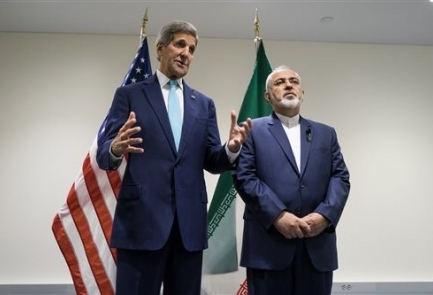
144334028328300476a_bThe Munich moment is upon us. U.S. Secretary of State John Kerry with Iranian Foreign Minister Mohammad Zarif at U.N. headquarters on Saturday | Photo credit: AP

Washington is reaching out to Russia, which is openly helping Syrian President Bashar Assad, who is working in conjunction with Iran, which in turn supports Hezbollah. Now Europe is prepared to talk to Assad, but what about us, for heaven’s sake?

Two years ago to the day, in September 2013, U.S. Secretary of State John Kerry compared Bashar Assad to Adolf Hitler, after the Syrian dictator once again used chemical weapons against his own people. “This is our Munich moment,” Kerry said at the time.

As far as the Americans were concerned, Assad had crossed a line. In those days (more like in those hours, actually), Washington briefly believed that a failure to respond to Assad’s actions would send a dangerous message to Iran regarding its nuclear ambitions.

“Will [Iran] remember that the Assad regime was stopped from those weapons’ current or future use, or will they remember that the world stood aside and created impunity?” Kerry asked at the time. History and retrospect have turned what may have been Kerry’s greatest speech into remarks entirely detached from reality.

The United States did not attack, Assad is still in power, and an ominous nuclear deal has been signed with Iran. It is no wonder that there is a new kind of atmosphere in the region, under American auspices. There are no more good guys and bad guys; everyone is a partner. And thanks to this new reality, Assad now has a renewed license to rule, after having received a license to kill.

Washington is reaching out to Russia, which is openly helping Assad in Syria, who is working in conjunction with Iran, which in turn supports Hezbollah. Europe (Angela Merkel), in the meantime, startled by its refugee crisis, is already prepared to talk with Assad; the same Assad who was compared to Hitler only two years ago. But what about us, for heaven’s sake?

Regretfully, Israel’s biggest fears are now materializing. Instead of being the architects and shaping a new reality in the Middle East, Washington is falling into line with the existing reality. Russia, Syria and Iran are enjoying the consequent vacuum. When the cat is away, the mice will play. Now, all of a sudden, even Hezbollah chief Hassan Nasrallah is letting himself go on television, beaming with joy. Aside from the 75 tanks Damascus is giving him, he now sees his two patrons (Damascus and Tehran) become partners with the West, without having to change one bit.

There is no diplomatic vacuum

The latest developments in Syria are not encouraging: Assad’s first target, with Russia’s help, is expected to be the Nusra Front rebel group, which not only threatens Assad but is also a bitter enemy of the Islamic State group. In other words, somewhat paradoxically, Islamic State could initially benefit from the Russian intervention in Syria.

And one final word about Iran’s rapprochement with the international community: We have been told repeatedly that this was only about the nuclear deal, but in reality we can see cooperation between the U.S. and Iran in Iraq and in the war against Islamic State. We can also see American-Iranian dialogue regarding Syria’s future, and on Saturday night we learned of a gigantic deal worth upwards of $21 billion between Iran and Russia. This time I am forced to agree with Secretary Kerry: This really does look like a Munich moment.

Like it or not, Putin’s is the ‘only game in town’

September 26, 2015

Like it or not, Putin’s is the ‘only game in town’ Gulf News, Mustapha Karkouti, September 26, 2015

(Nature abhors a vacuum and Obama created one in the Middle East. Please see also, A Chinese aircraft carrier docks at Tartus to support Russian-Iranian military buildup. — DM)

With a nearly total absence of any significant US-led coalition presence in Syria, apart from slow-effective air strikes, Moscow seems to be the only dominant player in that region. As the Kremlin clearly stated, Putin’s intention is to prevent a repetition of Libya’s 2011 scenario and avoid the total collapse of Bashar Al Assad’s authority, similar to what happened following Muammar Gaddafi’s overthrow after the badly-planned intervention by Nato. Putin is simply, but clearly, saying to the West: Where you failed in Libya, I’ll do better in Syria.

[W]hatever Putin’s plans are in the long run, his mission in the country is largely seen by the majority of Syrians as a sinister effort to save Al Assad and help him consolidate his authority in Syria.

**********************

It is very rare that a Russian head of state holds top strategic talks with an Israeli prime minister in the Russian capital. This happened just recently when Vladimir Putin met Benjamin Netanyahu to discuss Syria’s latest developments. The two chiefs are not known to have had close and friendly personal relations, but they displayed those sitting side by side in the Kremlin last week. The arrival in Moscow last Monday of Netanyahu accompanied by his chief of staff and head of military intelligence, is by all means unprecedented.

The visit is significant as it is a part of tripartite diplomatic activities that involve discussions with the US as well. The American Defence Secretary Ashton Carter has recently had a long and “useful” discussion with his Russian counterpart over Syria. With the current congestion of military activities in the sky above the region by the Israelis and Americans and the rapidly increasing presence of Russian forces and hardware, there is obviously a need to liaise to avoid any unpredicted conflict, i.e. shooting down one another’s planes by mistake. But both the US and Israel’s main concern goes far beyond the technicalities. They aim mostly at finding out what exactly the Kremlin’s long term purpose in Syria is and how far Moscow is capable of effectively controlling the direction of the tragic game currently being played in this sad country.

Sitting next to Netanyahu, Putin reassuringly explained what he was trying to achieve by stating that Moscow’s main goal was “to protect the Syrian state”, or more accurately, what’s left of it. The Russian president seemed fully aware of Netanyahu’s main concern of the Iran-supported potential attacks by Hezbollah and the Syrian army across the occupied Golan Heights, when he told his visitor that neither Damascus nor the Iranian-financed Lebanese militia was “in any state to open a second front”. In others words, Putin reassured Netanyahu that Moscow was fully engaged with Tehran and Damascus on that front.

Saving Al Assad

With a nearly total absence of any significant US-led coalition presence in Syria, apart from slow-effective air strikes, Moscow seems to be the only dominant player in that region. As the Kremlin clearly stated, Putin’s intention is to prevent a repetition of Libya’s 2011 scenario and avoid the total collapse of Bashar Al Assad’s authority, similar to what happened following Muammar Gaddafi’s overthrow after the badly-planned intervention by Nato. Putin is simply, but clearly, saying to the West: Where you failed in Libya, I’ll do better in Syria.

The timing of Moscow’s build-up along the Syrian coastal area couldn’t be more perfect, particularly with western policy on the country in a state of limbo. Surely, moving dozens of combat aircraft and hundreds of troops to the aid of the encircled Syrian president must have been given the green light a while ago. This is precisely how Putin sees the situation. Under the nose of the Americans and the world community, Russian personnel and Special Forces have re-emerged in large numbers at an old air base of theirs near Al Assad’s stronghold of Latakia. Russia has always had, through the former Soviet Union, significant military presence in Syria during the long years of the Cold War and beyond.

However, whatever Putin’s plans are in the long run, his mission in the country is largely seen by the majority of Syrians as a sinister effort to save Al Assad and help him consolidate his authority in Syria.

After all, Al Assad is the man largely accused of killing thousands of Syrians during the almost five-year war in the country. It has become absolutely clear that all players in the region, including US, Israel, Turkey and Iran are adjusting to the new reality as a result of the speed and scale of Russian’s deployment. It is commonly known now that Israel was made aware of Moscow’s deployment before it began, while Iran had been informed of the move as early as the first week of August. In fact, shipments from Black Sea ports to the Syrian port of Tartous began to pass through the Bosphorus as from August 20.

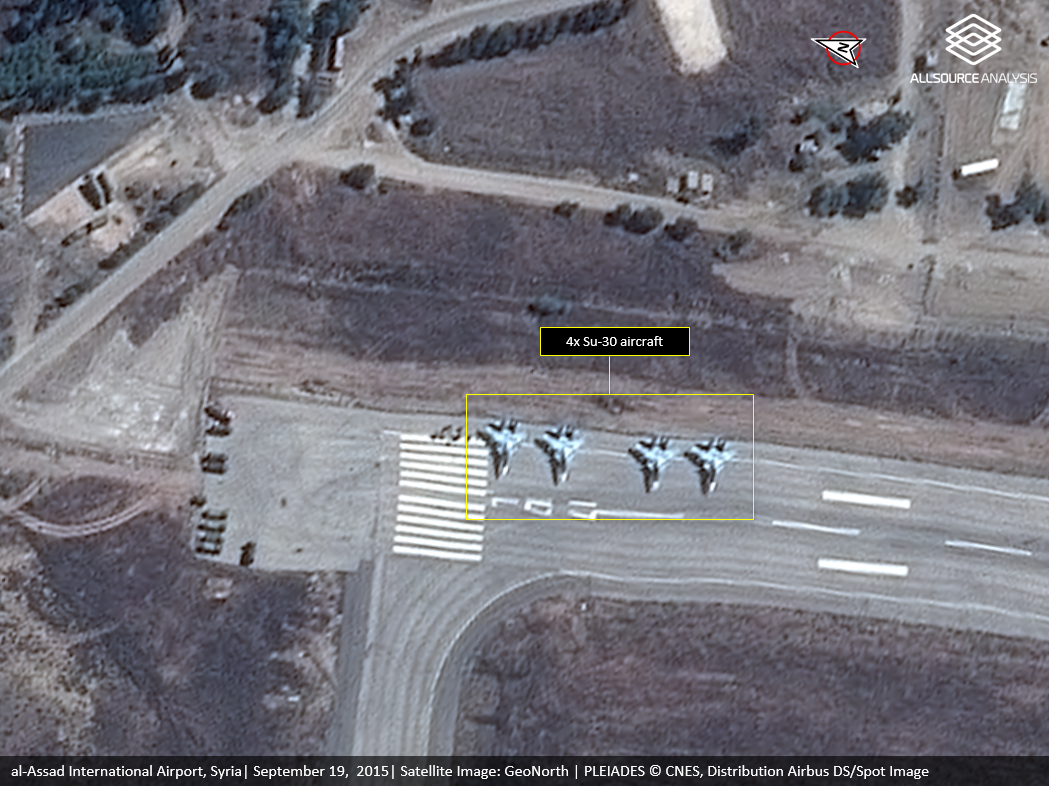
The Russians had moved by last Tuesday into the coastal stretch between Latakia and Tartous 28 combat jets (12 Su24 bombers, 12 Su25 ground attack aircraft and 4 Su-30 multi-role fighters), two types of drones and 20 multi-purpose helicopters. Almost the equivalent of Al Assad’s entire air power. Pentagon officials have confirmed these deployments and said Russian drones are now fully operating where offensive air attacks could be expected very soon.

Turkey on its part, is willing to dip its hands in ‘Syria’s Cake’ as a highly Turkish informed source told me few days ago, and send troops into the country, provided it gets the green light to set up its ‘no-fly zone’ along Syria’s northern borders. In fact, discussion between Ankara and several European capitals, including Berlin, over the issue has been going on for sometimes as many European leaders consider the no-fly zone option is urgently needed method to help controlling the flow of refugees into European Union countries.

However, with Iran well entrenched behind Al Assad at an annual cost of $6-$10 billion (Dh22-36.7 billion), it is also a decisive regional power of huge influence in shaping events in shrinking Syria and beyond. Additionally, there is newcomer into the killing fields of Syria as China has just officially revealed that it is sending personnel and advisers to assess the situation. And with almost total US absence in the Levant, Russia would militarily and politically remain the most significant power to shore up Al Assad’s regime as long as it is possible.


Russian marines join Hizballah in first Syrian battle – a danger signal for US, Israel

September 24, 2015

Russian marines join Hizballah in first Syrian battle – a danger signal for US, Israel, DEBKAfile, September 24, 2015

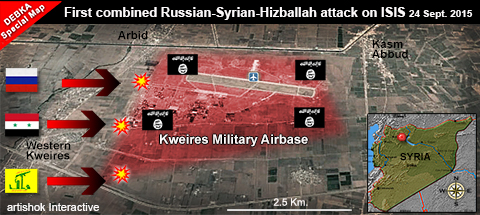
KweirisAir480

[T]he most ominous aspect for the US and Israel of the Russian attack on the Syrian airbase is that Russian marines were combined with Syrian and Hizballah special forces.

*********************

Before dawn on Thursday, Sept. 24, Russian marines went into battle for the first time since their deployment to Syria, DEBKAfile’s military and intelligence sources reveal. Russian Marine Brigade 810 fought with Syrian army and Hizballah special forces in an attack on ISIS forces at the Kweiris airbase, east of Aleppo.

This operation runs contrary to the assurances of President Vladimir Putin to Prime Minister Binyamin Netanyahu on Sept. 21 – just three days ago – that Russian forces in Syria were only there to defend Russian interests and would not engaged in combat with the Syrian army, Hizballah or Iranian troops.

The ISIS force defending the air base is dominated by Chechen fighters under the command of Abu Omar al-Shishani, who is considered one of the terrorist organization’s leading commanders in the last two years. The 27-year-old al-Shishani hails from the Chechen enclave of Pankisi in Georgia, like many others who joined ISIS from 2012.

However, targeting Chechen fighters was not the only reason for the order given by Russian command in Syria to attack the air base.  In DEBKA Weekly 678 of September 11, we predicted that the first Russian mission in Syria would be to break the Syrian rebel siege on Aleppo, Syria’s second-largest city.

As their first step, the Russians would have to prevent the cutoff of highway 5, running from Aleppo to Damascus, and keep it open for Syrian army reinforcements and military equipment to the city.

The offensive to regain Kweiris airbase that fell to ISIS in mid-June is the first step in the implementation of Russia’s operational plan for the Aleppo area.

Meanwhile, little substance was to be found in the reports appearing, mainly in the United States, suggesting that Putin, disappointed by the Obama administration’s unwillingness to send the US Air Force to collaborate with Russia in the fight against ISIS, would try to talk Obama round if and when they meet on the sidelines of the UN General Assembly on September 28.

According to DEBKAfile’s sources, these reports were spread to cover up the serious crisis in the US war against ISIS.

While Russia poured troops and advanced hardware into Syria, establishing bases and launching offensive action, the US anti-Islamic State effort suffered a heavy blow with the decision of Obama’s ISIS war czar, Gen. John Allen, to step down in early November.

Sources close to the general were quoted as referring to his frustration “with the White House micromanagement of the war and its failure to provide adequate resources.”’

The fact that the Russian forces launched their attack on ISIS shortly after the announcement of Allen’s upcoming resignation shows that Putin is not waiting for US cooperation in the war on the Islamist terrorists.    That said, DEBKAfile’s military sources point out that the most ominous aspect for the US and Israel of the Russian attack on the Syrian airbase is that Russian marines were combined with Syrian and Hizballah special forces.

For the first time in 41 years, since the 1974 war of attrition against the IDF on the Golan, Russian troops are fighting alongside Syrian forces. It is also the first time that a world power like Russia is willing to go into battle with an acknowledged terrorist group, such as Hizballah.

Our sources point out that the joint attack was completely counter to the tone and the content of the comments exchanged by Putin and Netanyahu at their summit.

A full report on Russian military activity and strategic objectives in Syria, and a rundown of the content of the Putin-Netanyahu talks in Moscow appear in the coming issue of DEBKA Weekly out Friday, September 25.

In Moscow, presence of IDF generals sends a message of military urgency

September 21, 2015

In Moscow, presence of IDF generals sends a message of military urgency In rare move, Netanyahu brings both IDF chief and intelligence head to Russia to drive home concerns on Hezbollah, Syria By Judah Ari Gross September 21, 2015, 11:54 am

Source: In Moscow, presence of IDF generals sends a message of military urgency | The Times of Israel

Prime Minister Benjamin Netanyahu sits with IDF Chief of Staff Gadi Eisenkot during a visit to the northern border of Israel on August 18, 2015. (Amos Ben Gershom/GPO)

Prime Minister Benjamin Netanyahu sits with IDF Chief of Staff Gadi Eisenkot during a visit to the northern border of Israel on August 18, 2015. (Amos Ben Gershom/GPO)

n a sign that it has not taken last week’s movement of the Russian military into Syria lightly, Israel sent not one but two members of the IDF General Staff with Prime Minister Benjamin Netanyahu to Moscow Monday, in an effort to hash out the precarious relationships between Israel, Russia, Syria and Hezbollah.

Both IDF Chief of Staff Lt. Gen. Gadi Eisenkot and Military Intelligence Head Maj. Gen. Herzl “Hertzi” Halevi are accompanying Prime Minister Benjamin Netanyahu to discuss the movement of Russian troops into Syria with Russian President Vladimir Putin and his advisers.

The presence of either one of these generals on this trip would be notable in itself. That both are traveling with Netanyahu is meant to demonstrate to both the people of Israel and the government of Russia the gravity of the situation on Israel’s northern border and the IDF’s intention to keep up airstrikes on high-priority Hezbollah targets in Syria.

Israel has admitted to targeting several Hezbollah and Syrian weapons facilities and convoys in the past several years, and it has been assumed that the Israel Air Force has carried out many more, despite officials’ refusal to claim responsibility.

Prime Minister Benjamin Netanyahu and Russian President Vladimir Putin at Netanyahu's residence in Jerusalem on June 25, 2012 (Marc Israel Sellem/POOL/Flash90)

Most such attacks have been against so-called advanced weapons systems — missiles and artillery guns, rather than rifles and grenades.

Putin, however, complicated Israel’s strategies vis-a-vis Hezbollah and Syria when he announced that the Russian military would be moving into the war-torn country, setting up in the port city of Latakia.

Satellite images already show Russian-made artillery guns and SU-30 combat planes in the northwestern Syrian city.

The presence of Russian soldiers in the country is an added obstacle for the IDF, which must now continue to prevent Israel’s enemies from obtaining dangerous weapons, without causing an international incident by killing an ally’s soldiers.

In 2013 and 2014, Israel was suspected of having carried out airstrikes on weapons sites in Latakia. With Russian military now present in the city, similar attacks may be more difficult to carry out.

An armored personnel carrier, likely a Russian made BTR-82A, firing large-caliber bullets during a battle in Latakia, Syria, is seen in a video posted online on August 23, 2015. (Screen capture YouTube)

Though the Israeli government has not released an itinerary for Monday’s trip, Eisenkot and Halevi will likely meet with their Russian army counterparts to address two related issues: preventing Hezbollah from obtaining Russian-made weaponry and Israel Air Force strikes against the advanced weapons systems already in the possession of the Iran-aligned militia.

Though some of Hezbollah’s arsenal comes from Iran, several of its deadliest weapons — the Kornet anti-tank missile, which has been deadly in combat against Israeli Merkava tanks, and the Katyusha rocket, which rained down on Israel’s northern cities during the Second Lebanon War in 2006 — come from Russia.

Though many of these weapons systems were intended for Syria, some have nevertheless ended up in the hands of Hezbollah, according to Nadav Pollak, a senior fellow at the Washington Institute for Near East Policy.

Some of the systems sold by Russia include anti-aircraft guns and surface-to-air missiles, which could be devastating to Israel’s air superiority in a future conflict with Hezbollah, Pollak said.

As head of intelligence, Halevi will likely present information to the Russian military, showing how these Russian-made weapons end up in the hands of Hezbollah, Pollak explained.

Brig. Gen. Herzi Halevi speaking Thursday. (photo credit: Mitch Ginsburg/Times of Israel)

In addition to attempting to prevent further such transfers, Netanyahu, Eisenkot and Halevi will also discuss Israel’s plans to destroy those advanced systems the terrorist organization has already acquired.

As Hezbollah has been closely aligned with Russia’s ally Assad, this may be a sticking point with Putin, though it is not one Israel is prepared to give up on, Yossi Cohen, national security adviser to the prime minister, told the Israel Hayom newspaper Monday.

Netanyahu will tell Putin that Israel won’t accept restrictions on its response capabilities in Syria, Cohen said.

As Israel’s strikes against Hezbollah have taken place on Syrian territory, which violates its sovereignty, Pollak explained, “there is a chance that Russia will express its objection to this policy.”

The United States has also voiced concerns over Putin’s role in the Syrian civil war.

“Continued military support for the regime by Russia or any other country risks the possibility of attracting more extremists and entrenching Assad, and hinders the way for resolution,” US Secretary of State John Kerry told reporters in Germany on Sunday.

Kerry has proposed military-to military talks with Russia to prevent any clashes between US and Russian forces in the region, to ensure that “there’s no potential of a mistake or of an accident of some kind that produces a greater potential of conflict.”

Israel security forces may use live fire for Palestinian rocks, firebombs, and “popular terror”

September 20, 2015

Israel security forces may use live fire for Palestinian rocks, firebombs, and “popular terror”, DEBKAfile, September 20, 2015
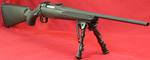
Ruger_RifleThe Ruger rifle

Prime Minister Binyamin Netanyahu has approved tougher rules of engagement for security forces grappling with the latest surge of Palestinian terror, ready for the security cabinet’s endorsement Sunday, Sept. 20.

First cleared with the State Attorney Yehuda Weinstein was the use of the Ruger rifle by Jerusalem police.

This weapon fires light 0.22 (5.59mm) bullets packed with a small amount of explosive which can cause injury within a 100m radius. It was used against Palestinian terrorists during their Second Intifada in 2000-2007.

Under the amended rules, police officers and soldiers may use the Ruger for live fire in life-threatening circumstances, such as the throwing of rocks and fire bombs which have plagued East Jerusalem in recent months.

This rule goes into force in all parts of Israel, since one of the primary inciters of the unrest on Temple Mount is the Northern Wing of the Israeli Muslim Movement, which represents Israeli Arab Muslim extremists.

A delegation of Israeli Arabs, including members of parliament, has embarked on a tour of Arab-Muslim capitals to push their claim that Israel is violating the status quo at the shrine. They plan to meet Jordan’s King Abdullah, Turkish President Reccep Tayyip Erdogan and Egyptian President Abdel-Fatteh El-Sisi.

The Netanyahu government has circulated a counter-statement to world governments demonstrating that Israel is adhering strictly to the status quo on Temple Mount, which is sacred to three world faiths, and acting only in the interests of preserving the peace against violent distrubances [sic].

The new rules of engagement distinguish between legitimate demonstrations and “popular terrorism.” The disturbances and clashes of the past week between Palestinian stone- and firebomb throwers and security forces in Jerusalem come under the heading of “popular terrorism.”

The prime minister and security chiefs have also acted to bring special operations units of the police force to Jerusalem to help quell the unrest, as well as posting a police presence for maintaining order in the Palestinian districts of the capital. The police and Shin Bet internal security service have set up a joint task force for gathering intelligence and investigations.

Attached to the new measure which goes into effect later today is a draft law permitting courts to impose fines on the parents of minors found guilty of stoning attacks, as well as higher minimum jail sentences for stone and firebomb attackers.

Saturday, Sept. 19, DEBKAfile carried this report:

Following the clashes on Friday, Sept. 18 in the Jabal Mukabar neighborhood, a question has arisen on whether the Palestinians opened fire on undercover units and Border Police forces in the area.

Such shooting by Palestinians in the capital is not new, and it occasionally happens in the northern part of the city, emanating usually from the Shoafat refugee camp and the village of Issawiya. These are isolated incidents, occasional volleys at adjacent Jewish neighborhoods, such as Pisgat Zeev.

But the situation in Jabal Mukabar was completely different, with shoot-to-kill gunfire aimed at members of the Border Police.

On that day, the news reports of the Voice of Israel radio station at 17:00 and 18:00 opened with a story that was impossible to ignore: four border policemen were wounded from gunfire on their armored vehicle in Jabal Mukabar, with one of them wounded seriously. However, the item vanished from the 19:00 broadcast, with Molotov cocktail attacks and rock-throwing incidents reported instead.

There are several conflicting points to consider regarding this matter: the armored vehicle clearly had bullet holes, but no signs of firebomb attacks. Then too press photographers on the scene reported specifically that border policemen were wounded by gunfire; residents of Jerusalem’s Meir Nakar street, next to Jabal Mukabar, said in interviews to various news organizations that there were exchanges of fire between the border police and Palestinians; and police officers said late Friday night that undercover units had arrived and opened fire in order to save themselves, and that several border policemen were injured by a Molotov cocktail.

The suggestion was that the officers had been injured by friendly fire – not Palestinian gunshots.

Several hours after the clashes at Jabal Mukabar, there was another incident south of Jerusalem in which Palestinians who threw firebombs at an IDF post near the Tomb of Rachel were shot and seriously wounded.

That was not the only attack on an IDF position in the Jerusalem area during that 24-hour period. On Thursday, Sept. 17, a Home Front Command base on the Mount of Olives was attacked with firebombs and a section caught on fire.

In addition to these incidents, on several occasions last week, Palestinians who had barricaded themselves in the Al-Aqsa mosque threw stones and stone blocks at police and shot firecrackers directly at them, which might have caused serious injury and even permanent blindness, but luckily none of the policemen were injured.

In other words, the latest developments show a surge in clashes between Palestinians and the Israeli security forces.

Jerusalem’s Mayor Nir Barkat said on Friday, following incident at Jabal Mukabar, that he welcomed the increase of offensive police’s anti-terror operations which entered the city’s flashpoint neighborhoods.

His comment aimed at raising the morale of the police forces fighting the new wave of Palestinian terror for the past two weeks.  It also drew attention to the ongoing debate within the Israeli government over the choice of next police commissioner, who is the official in charge of the country’s strategy for fighting terrorism. While this appointment hangs fire, it is not clear who is in charge of this war, in the interim, Prime Minister Binyamin Netanyahu or Public Security Minister Gilead Erdan?

Gil Hirsch, Erdan’s choice for commisioner [sic], is out of the running.  We have learned that the prime minister is opting for an army general to shed his uniform and take charge of the police – against the wishes of the Public Security Minister.

Palestinian terror tacticians are no doubt exploiting the fact that the war on terror is bouncing between them, with no sign that the violence is about to be brought under control in the immediate future.

DEBKAfile’s military sources reported on September 15 that the latest rioting is the face of the third intifada, At least for now, the unrest is not in the form of suicide attacks of the last uprising but more like “localized armed clashes.”

Our military and counter-terrorism sources point out that armed Palestinian groups, including Israeli Arabs from the extremist Islamic movement, have made an ad-hoc agreement to carry out attacks. In light of such a development, gunfire at Israeli security forces is very likely to grow.
Abbas: “Filthy” Jews’ Feet Not Allowed on Temple Mount

September 17, 2015

Abbas: “Filthy” Jews’ Feet Not Allowed on Temple Mount, Investigative Project on Terrorism, September 17, 2015

The International Union of Muslim Scholars is calling on Palestinians to “Rescue al-Aqsa” and rise up against Israel, according to several Twitter posts translated by the Investigative Project on Terrorism (IPT).

One of the tweets features a picture of Israeli police about to enter Jerusalem’s Al-Aqsa mosque. In reality, the Israeli authorities are pursuing Palestinian rioters who took refuge in the mosque and terrorists who were plotting to conduct attacks against Jewish worshippers. The picture – which is clearly intended to provoke Palestinians to continue stirring up trouble for Israeli citizens – includes the following quote:

“The International Union of Muslim Scholars requests the Ulema [Muslim community] and preachers of the Muslims to begin the campaign ‘Rescue al Aqsa’ and proclaim a state of general alarm among the sons of the Muslims in the world to defend al Aqsa mosque, and divulge the plans of the Zionists, and also to summon the Islamic Umma to hold protests, and to devote this Friday’s sermons to discuss Jerusalem, Al-Aqsa and Palestine.”

1232

The hashtag #RescueAlAqsa is also included in a subsequent tweet featuring a picture of flames engulfing the al-Aqsa with a sniper’s target fixated on the dome of the mosque.

“Al-Aqsa is burning Oh Umma of a billion and a half Muslims!!!,” reads the slogan on the provocative tweet.

Meanwhile, Palestinian Authority President Mahmoud Abbas glorified Palestinians fighting Israelis in Jerusalem and called for Palestinians to prevent Jews from entering Al-Aqsa with “everything in our power,” Palestinian Media Watch (PMW) reports.

“The Al-Aqsa [Mosque] is ours… and they have no right to defile it with their filthy feet. We will not allow them to, and we will do everything in our power to protect Jerusalem… We bless every drop of blood that has been spilled for Jerusalem, which is clean and pure blood, blood spilled for Allah, Allah willing. Every martyr (Shahid) will reach Paradise, and everyone wounded will be rewarded by Allah,” Abbas said in a speech, segments of which were aired on official PA TV and posted on his website.

“Today the world is divided between those trying to undermine religious coexistence and those trying to protect it,” Israel’s Foreign Ministry Director General Dore Gold said in a statement Thursday. “By saying that the ‘filthy feet’ of Jewish visitors to the Temple Mount desecrate it, Mahmoud Abbas has now clarified on which side he stands.”

Relative quiet returned to the Temple Mount on Wednesday, after three days of violent confrontations between Muslims and Israeli authorities during the Jewish New Year.

Acting Police Commissioner Bentzi Sau ordered hundreds of Israeli security personnel to Jerusalem to restore calm in light of “an upsurge” in attacks, such as firebombs and stone-throwing targeting Israeli police and civilians.

On Sunday, Palestinians throwing stones killed an Israeli civilian – 64-year-old Alexander Levlovitz – after he lost control of his car and crashed into a lamppost in Jerusalem’s East Talpiot neighborhood.

Russian troops already engaged in battle against ISIS around Homs

September 17, 2015

Russian troops already engaged in battle against ISIS around Homs, DEBKAfile, September 17, 21015

Russia_Putin267

Contrary to the impression conveyed by Moscow that Russian troops in Syria are not engaged in combat and that none of the sophisticated arms deliveries were destined to the Syrian army, new developments belie both these claims. 

DEBKAfile’s military and intelligence sources report that on Wednesday, September 16, Russian R-166-0.5 (ultra) high-frequency signals (HF/VHF) vehicles were spotted on Highway 4, which links Homs and Aleppo. These vehicles, called “mobile war rooms” by the IDF and Western armies, were accompanied by BTR-82 troop carriers transporting Russian marines. The R-166-0.5 enables communication with forces located on battlefields as far as 1,000 kilometers away using high frequency and ultra-high frequency signals.

The communication systems are resistant to electromagnetic jamming so Russian forces operating deep inside Syria can report to their commanders at the main Russian base in Latakia or receive orders, intelligence data and even video from drones or planes.

Another feature is a cylinder on the side of the vehicle containing a folded antenna that can be raised to a height of 15 meters.

The R-166-0.5 is an integral part of Russia’s battlefield operations, so it would not be deployed unless long-distance troop movements were underway. The appearance of those vehicles in the Syrian theater provides a clear signal of Moscow’s intentions.

Our sources point out that during the past few days, fighters from the Islamic State in Iraq and the Levant (ISIS) succeeded in cutting off part of the highway between Homs and Aleppo for several hours. It marked a very dangerous development for the Syrian army and regime, because a permanent cutoff of Highway 4 would tighten the siege on Aleppo and possibly pave the way for the conquest of the second-largest city in Syria.

The movements by the armored vehicles show that the Russian troops are preparing to head into battle in order to prevent such a scenario.

Moscow has denied supplying new, sophisticated weapons to the Syrian army. However, a Syrian military source revealed Thursday, Sept. 17, that the Syrian military has recently started using new types of air and ground weapons supplied by Russia, underlining growing Russian support to Damascus that is alarming the United States and Israel. “New weapons – and new types of weapons – are being delivered,” said the source which described them as “highly accurate and effective.”  The army had started using them in recent weeks having been trained in their use in Syria in recent months. “We can say they are all types of weapons – be it air or ground,” he said.

DEBKAfile’s military sources reveal that the Russian shipments for the Syrian army include MI-28 MIL assault helicopters (NATO-coded Havoc), an all-weather aircraft, which can also serve as an anti-tank weapon against the mostly US-made tanks fielded by ISIS and Al Qaeda’s Nusra Front Syrian arm.

Our military and intelligence sources point out that Moscow has given itself room to maneuver in terms of its declared goals, telling Washington and Jerusalem during the past few days that its troops will defend their own interests if there is a need to do so. Thus, Russia aims to use its forces in any way that it deems fit.

DEBKAfile’s sources in Washington report an ongoing debate within the Obama administration regarding whether to accept the proposal that was raised during the telephone conversations this week between Russian Foreign Minister Sergei Lavrov and US Secretary of State John Kerry.

Moscow proposed military-to-military talks on ways to prevent a confrontation between its troops in Syria and those of the US-led coalition, saying that the talks would provide a complete and clear understanding of Moscow’s intentions.

Unlike Kerry, who is in favor of taking the Russians up on their proposal, some circles in the administration feel that such talks would ultimately give Russia the green light for its military involvement and that Moscow is in the process of grabbing control of running all military operations in Syria, including those by other countries and groups.

Last week, Gen. Qassem Soleimani, commander of Iran’s al-Quds brigades, visited Moscow for the second time since April.  DEBKAfile’s sources in Moscow point out that this time, unlike his previous visit, Soleimani met with Russia’s National Security Adviser Nikolai Patrushev and a number of generals directly connected to the buildup in Syria, but not with President Vladimir Putin.

The developments in Syria will also take center stage when Israeli Prime Minister Benyamin Netanyahu meets with Putin in Moscow on September 21.

Palestinians launch new confrontation tactic of “localized” terror against Israel

September 15, 2015

Palestinians launch new confrontation tactic of “localized” terror against Israel, DEBKAfile, September 15, 2015

Pipes_explosive_Jerusalem_13.9.15Palestinian pipe bombs in Jerusalem

Three dates have emerged as the landmarks of a new outbreak of armed Palestinian violence against Israel: On Aug. 30, an army-police squad, on a routine operation for rounding up terrorist suspects, was waylaid in the Jenin refugee camp on the West Bank by fierce gangs armed with rocks, iron bars and firebombs. Then, on Sept. 13,an Israeli car was stoned in Jerusalem, killing the driver Alexander Levlovitch, 64. He was driving home on New Year’s Eve.

Palestinian rocks against Israeli cars are part of the regular landscape on roads in and outside Jerusalem, but this time it ended in murder.

The next day, the 14th, gangs of rampaging Palestinian youths fought Israeli police guards on Temple Mount for control of the Al Aqsa Mosque doors with rocks, blocks of concrete and iron bars, which had been hoarded inside the mosque.

DEBKAfile’s counterterrorism analysts diagnose these and allied events as the opening shots of a Palestinian uprising against Israel under a different guise. Security forces are beginning to talk about “armed localized terror.”

Its most prominent features are the collaboration for ad hoc operations betwen two or more Palestinian rival groups, and their localized nature. They tend to be planned in advance for a specific arnea [Sic].

The collaborators in the Jenin outbreak were Hamas and Islamic Jihad. For the New Year attacks, Fatah (whose leader is Mahmoud Abbas) and Hamas joined hands.

They shared five objectives:

1. To sabotage Jewish celebration of the New Year festival in Jerusalem.

2.  To ratchet up the level of Palestinian clashes with Israeli security forces by the use of firebombs and other explosive devices.

3.  To establish a dominant presence on Temple Mount, divided it among the various Palestinian factions.

4.  To bar Jewish access to the Temple Mount compound, revered as the site of the Jewish Temples.

5.  To protest Israel’s decision to outlaw the Muribitun and Muribitath gangs, established by radical Muslim groups to keep Jews out of the Temple Mount compound – if necessary by force.

Over the festival, two Jewish youths were chased and attacked at the site and alleys leading to it.

6.  To warn Jordan’s King Abdullah that the Palestinians are united against his claim to restore Hashemite Muslim custodianship over Temple Mount and Al Aqsa. They viewed the king’s plan to double the number of sentries posted at the site by the Muslim Waqf religious administration, which acts in Jordan’s name on Temple Mount, as part of the king’s takeover effort.

These Palestinian extremists are satisfied with having chalked up several gains from their new aggressive strategy against Israel:

a)  Fatah and Hamas worked well together in their first operation after years of fighting each other. Their collaboration defied and further undermined the waning influence of Palestinian Authority Chairman Mahmoud Abbas.

b)  One Israeli was killed.

Israel’s security services can claim a major success. A solid tip-off reaching the Shin Bet internal security service exposed the address of an apartment in the Old City of Jerusalem where pipe bombs were being assembled. A timely raid on Sept. 13, and the seizure of these improvised though deadly weapons averted a major disaster and mass casualties – possibly even at the Western Wall.

But in intelligence work, no single success can promise that every terror plot is foiled in the future too.

Israeli strategists, like their opposite numbers in Amman, are wracking their brains for effective penalties and deterrents to stem the rising spiral of Palestinian violence.

DEBKAfile’s counterterrorism sources discern in the new escalation certain characteristics common to the clashes seen in Arab countries in recent years between opposing populations and religious groups.

Therefore, the Palestinian terror in and around Jerusalem, spilling over from last weekend, is likely to spread to other parts of the country, also encompassing Judea and Samaria, or even igniting parts of the Israeli Arab communities in solidarity with their Palestinian kin. We may be on the brink of a full-blown intifada (uprising.),

Conscious of the peril, Prime Minister Binyamin Netanyahu called an emergency meeting for Tuesday night, Sept. 15, to be attended by Defense Minister Moshe Ya’alon, Public Security Minister Gilead Erdan, Justice Minister Ayelet Shaked, Transportation Minister, Israel Katz, the Attorney General and security services chiefs.

Our sources are skeptical about this meeting producing measures for stemming the rising tide of Palestinian terror. Netanyahu’s plan to apply conventional law and order measures, such new legislation for raising the minimal jail sentence for stone-throwers, comes too late. The stone-throwers have already turned to bombs.

Long jail sentences were taken out of the government’s hands as an effective deterrent for terror when, on June 29, a Palestinian suspect won his release from administrative detention by staging a long hunger strike. The Israeli government folded under the pressure, exposing the weakness of its legal and judicial systems as tools against terrorism.

Then, on Aug. 11, Netanyahu and Ya’alon told Israeli soldiers facing Palestinian aggression that henceforth they were only allowed to fire in the air, unless they faced imminent threat to their lives.

This order was issued to cut down on the number of dead terrorists and the negative statistics in world media. But in the arenas of confrontation, the Palestinians, no longer afraid of death or injury, were encouraged to escalate their assaults and reach the current new threshold of confrontation.

PM Netanyahu’s Greetings for Rosh Hashana

September 13, 2015

PM Netanyahu’s Greetings for Rosh Hashana, via You Tube, September 13, 2015