Posted tagged ‘Middle East’

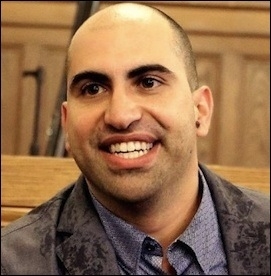
Steven Salaita Heads to Beirut, While Malcolm Kerr Spins in His Grave

July 8, 2015

Steven Salaita Heads to Beirut, While Malcolm Kerr Spins in His Grave, Middle East Forum, Winfield Myers, July 6, 2015

1132Former Virginia Tech professor Steven Salaita maintains that Israel’s alleged excesses have transformed anti-Semitism “into something honorable.”

In 1980 Malcolm Kerr, the distinguished Middle East studies scholar who served as AUB president, wrote a gentlemanly but devastating critique of Orientalism in which he mentions almost forty excellent scholars whose work Said ignored because noting their contributions would undermine his thesis that Western scholarship on the Middle East was uniformly reductionist and racist. Four years after writing his review, Kerr was assassinated near his AUB office by members of Islamic Jihad.

********************

How utterly appropriate: Steven Salaita will be the Edward W. Said Chair of American Studies at the American University of Beirut (AUB) for the 2015/16 academic year. A supposed expert on Native Americans whose anti-Semitic attacks on Israel cost him a job at the University of Illinois at Urbana-Champagne, Salaita will assume a chair named for the late Columbia University English professor whose 1978 book Orientalism contributed more than any other work to the systemic intellectual decadence that still characterizes Middle East studies.

Salaita is Said’s equal when it comes to producing polemical revisionist history that relies more upon postcolonial victimization studies than upon rigorous research. Although Illinois expected him to teach American Indian studies and he’ll teach American studies at AUB, all six of his books deal with modern Arab studies, Arab Americans, or Israel.

In the through-the-looking-glass historiography of Salaita and his academic allies, these disparate fields are connected by a typology of the victim that is easily transferred from antiquity to the present, so that Canaanites are Native Americans and ancient Hebrews are modern Zionists. It’s a handy way of attacking the entire history of a people or civilization without having to bother with facts, research, doubt, unanswerable questions, or the human agent at the heart of all genuine historical research.

In 1980 Malcolm Kerr, the distinguished Middle East studies scholar who served as AUB president, wrote a gentlemanly but devastating critique of Orientalism in which he mentions almost forty excellent scholars whose work Said ignored because noting their contributions would undermine his thesis that Western scholarship on the Middle East was uniformly reductionist and racist. Four years after writing his review, Kerr was assassinated near his AUB office by members of Islamic Jihad. If he could know that a chair named for Said now exists at AUB—and that next occupant will be a man as dedicated to politicized, vindictive scholarship as its namesake—he would be spinning in his grave.

Here’s the most critical part of Iran’s nuclear program that nobody is talking about

July 7, 2015

Here’s the most critical part of Iran’s nuclear program that nobody is talking about, Business Insider, Michael Eisenstadt, The Washington Institute For Near East Policy, July 7, 2015

(Please see also, Iran’s Rafsanjani Reiterates ‘Israel Will Be Wiped Off The Map.’  — DM)

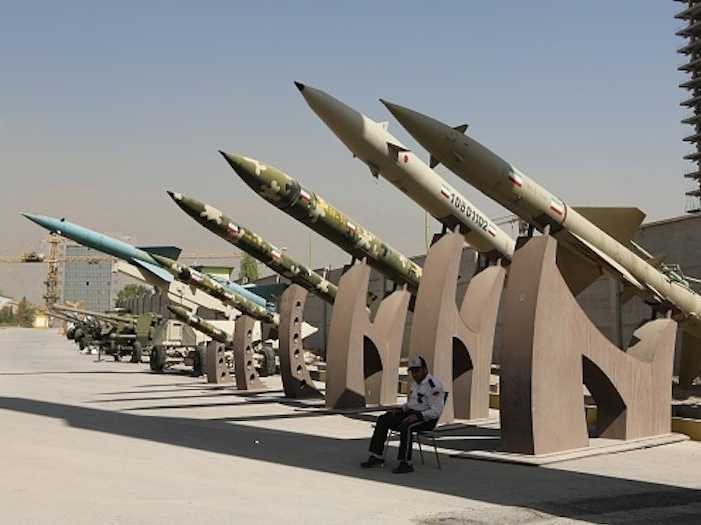
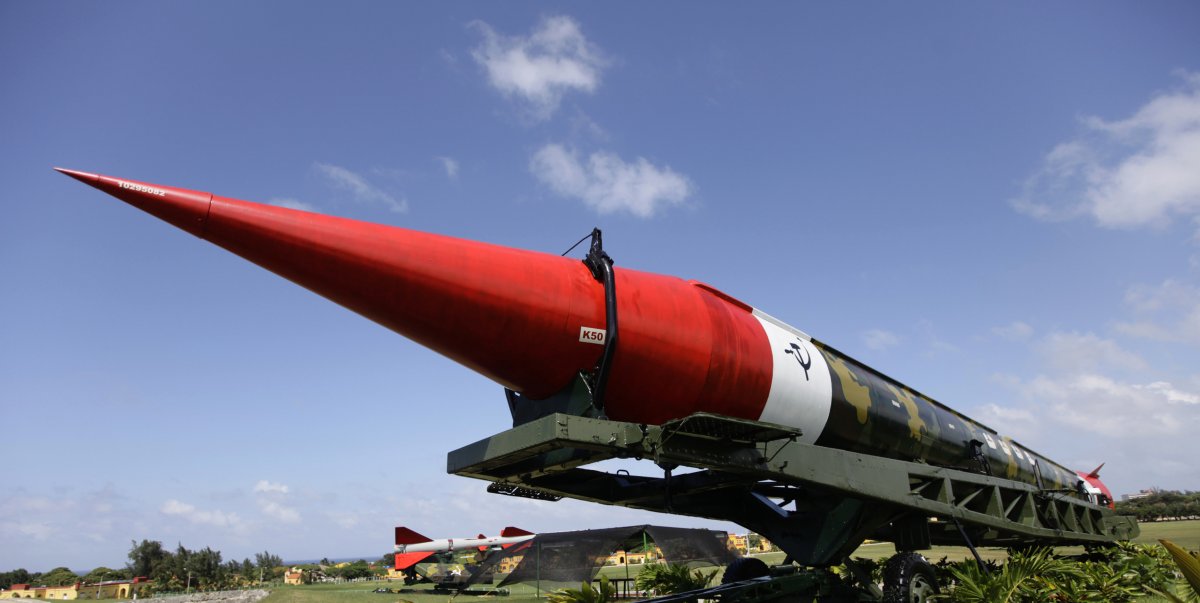
iran-missiles-exhibition-commemorationAtta Kenare/AFP/Getty Images. Missiles are displayed during ‘Sacred Defense Week,’ to commemorate the 1980-88 Iran-Iraq war. Photo taken on Sept. 28, 2014 at a park in northern Tehran.

Early in the P5+1 negotiations, US officials stated that “every issue,” including the missile program, would be on the table. In February 2014, however, Undersecretary of State for Political Affairs Wendy Sherman stated, “If we are successful in assuring ourselves and the world community that Iran cannot obtain a nuclear weapon,” then that “makes delivery systems … almost irrelevant.”

****************

According to the latest reports stemming from the P5+1 talks, Iran is now insisting that UN sanctions on its ballistic missile program be lifted as part of a long-term nuclear accord.

In addition to further complicating already fraught negotiations, this development highlights the importance Tehran attaches to its missile arsenal, as well as the need to answer unresolved questions about possible links between its missile and nuclear programs.

Iran is believed to have the largest strategic missile force in the Middle East, producing short- and medium-range ballistic missiles, a long-range cruise missile, and long-range rockets. Although all of its missiles are conventionally armed at present, its medium-range ballistic missiles could deliver a nuclear weapon if Iran were to build such a device.

Early in the P5+1 negotiations, US officials stated that “every issue,” including the missile program, would be on the table. In February 2014, however, Undersecretary of State for Political Affairs Wendy Sherman stated, “If we are successful in assuring ourselves and the world community that Iran cannot obtain a nuclear weapon,” then that “makes delivery systems … almost irrelevant.”

Yet many observers remain concerned that personnel and facilities tied to Iran’s missile program were, and may still be, engaged in work related to possible military dimensions (PMD) of the nuclear program. These concerns underscore the need to effectively address the missile issue as part of the UN Security Council resolution that will backstop the long-term nuclear accord now being negotiated, if it will not be dealt with in the accord itself.

screen shot 2015-06-11 at 8.47.42 am copyEstimated Range of Iranian Long-Range Missile Forces

Deterrence, warfighting, and propaganda

The Iran-Iraq War convinced Tehran that a strong missile force is critical to the country’s security, and it has given the highest priority to procuring and developing various types of missiles and rockets. Missiles played an important role throughout that war and a decisive role in its denouement.

During the February-April 1988 “War of the Cities,” Iraq was able to hit Tehran with extended-range missiles for the first time. Iranian morale was devastated: more than a quarter of Tehran’s population fled the city, contributing to the leadership’s decision to end the war.

Since then, missiles have been central to Iran’s “way of war,” which emphasizes the need to avoid or deter conventional conflict while advancing its anti-status quo agenda via proxy operations and propaganda activities.

Iran’s deterrence triad rests on its ability to (1) threaten navigation through the Strait of Hormuz, (2) undertake terrorist attacks on multiple continents, and (3) conduct long-range strikes, primarily by missiles (or with rockets owned by proxies such as Hezbollah).

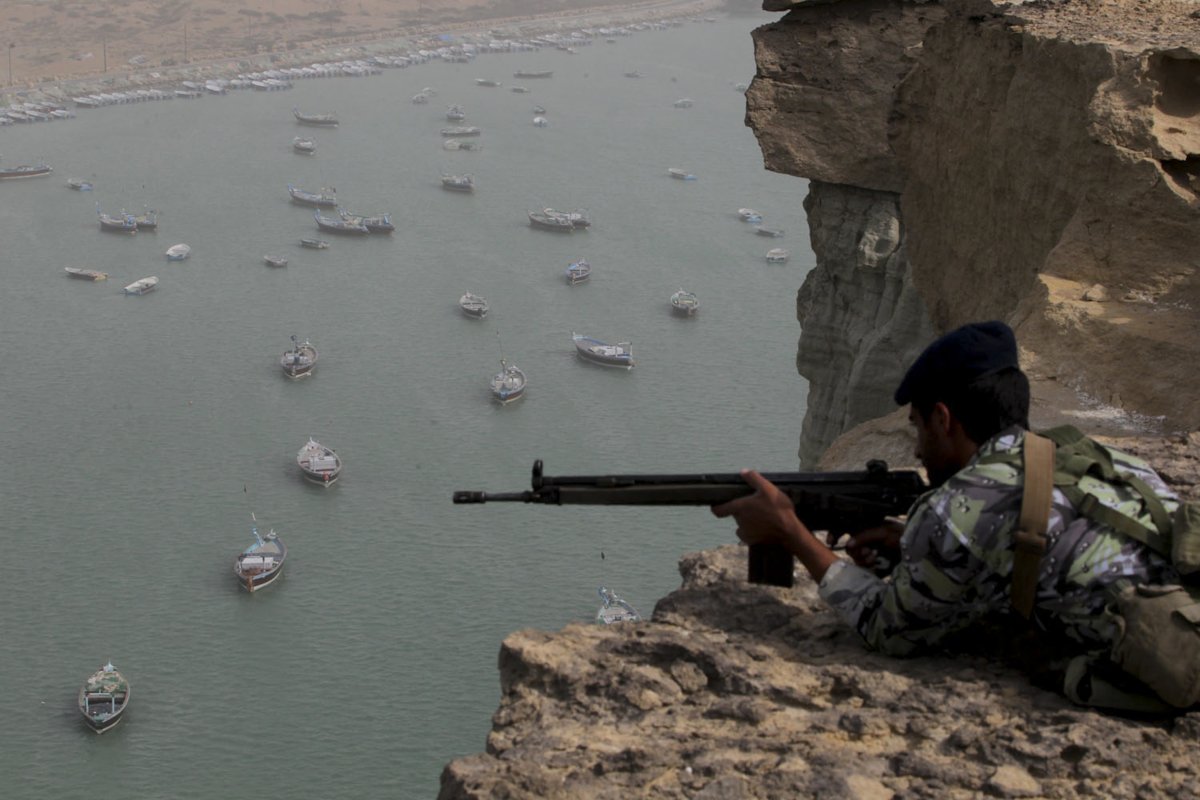
rtr2vqx9REUTERS/Fars News/Hamed Jafarnejad. Iranian military personnel participate in the Velayat-90 war game in unknown location near the Strait of Hormuz in southern Iran December 30, 2011.

Yet the first two options carry limitations.

Closing the strait would be a last resort because nearly all of Iran’s oil exports go through it and Tehran’s ability to wage terror has atrophied in recent years (as demonstrated by a series of bungled attacks on Israeli targets in February 2012). Therefore, Iran’s missile force is the backbone of its strategic deterrent.

Missiles enable Iran to mass fires against civilian population centers and undermine enemy morale. If their accuracy increases in the future, they could further stress enemy defenses (as every incoming missile would have to be intercepted) and enable Iran to target military facilities and critical infrastructure.

Although terrorist attacks afford a degree of standoff and deniability, missiles permit a quicker, more flexible response in a rapidly moving crisis — for example, after an initial series of preplanned terrorist attacks, Tehran or its proxies might need weeks to organize follow-on operations. Missile salvos can also generate greater cumulative effects in a shorter period than terrorist attacks.

Indeed, missiles are ideally suited to Iran’s “resistance doctrine,” which states that achieving victory entails demoralizing one’s enemies by bleeding their civilian population and denying them success on the battlefield. In this context, rockets are as important as missiles, since they yield the same psychological effect on the targeted population.

The manner in which Hezbollah and Hamas used rockets in their recent wars with Israel provides a useful template for understanding the role of conventionally armed missiles in Iran’s warfighting doctrine.

flickr_-_israel_defense_forces_-_damage_caused_by_rockets_fired_from_gaza_(10)Israel Defense Forces via Wikimedia Commons. An apartment building in the town of Kiryat Malachi, damaged as a result of rockets fired from Hamas.

Missiles are also Iran’s most potent psychological weapon. They are a central fixture of just about every regime military parade, frequently dressed with banners calling for “death to America” and declaring that “Israel should be wiped off the map.”

They are used as symbols of Iran’s growing military power and reach. And as the delivery system of choice for nuclear weapons states, they are a key element of Iran’s nascent doctrine of nuclear ambiguity and its attempts at “nuclear intimidation without the bomb.”

Finally, while most nuclear weapons states created their missile forces years after joining the “nuclear club” (due to the significant R&D challenges involved), Iran will already have a sophisticated missile force and infrastructure in place if or when it opts to go that route.

This ensures that a nuclear breakout would produce a dramatic and rapid transformation in Iran’s military stature and capabilities.

Iran’s missle force

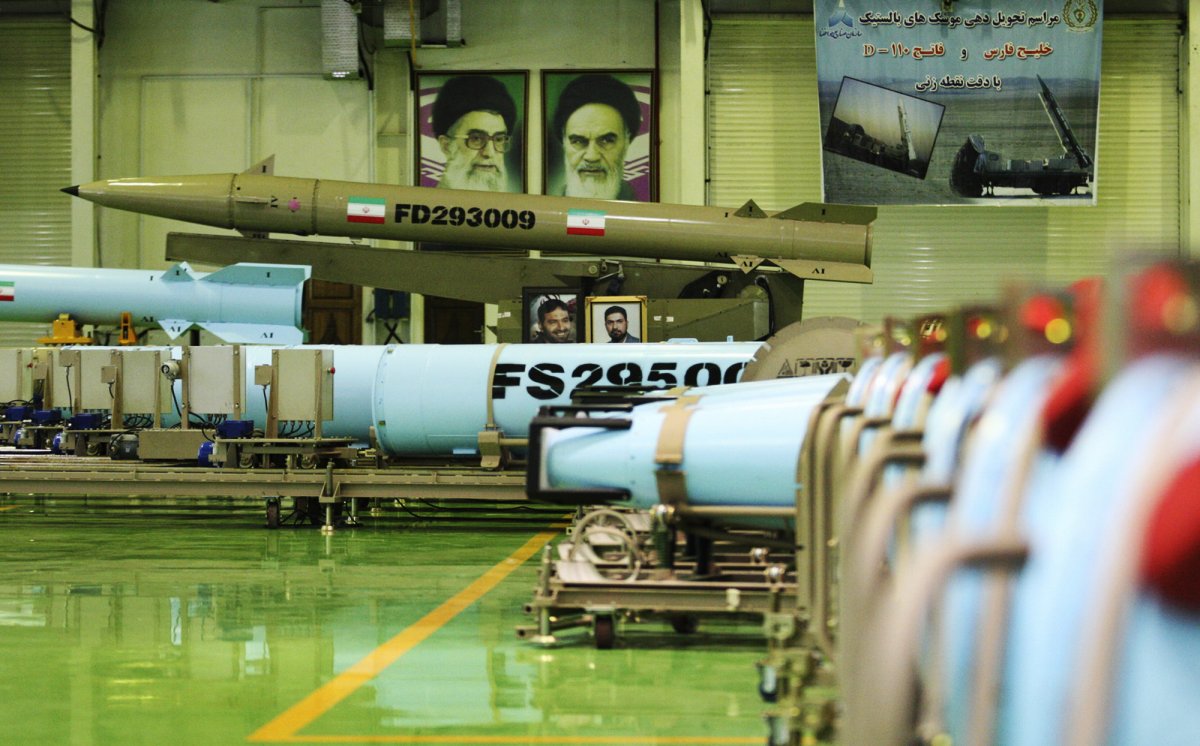
Iran has a large, capable missile force, with a likely inventory of more than 800 short- and medium-range ballistic missiles.

These include single-stage liquid-fuel missiles such as the Shahab-1 (300 km range), Shahab-2 (500 km), Qiam (500-750 km), Shahab-3 (1,000-1,300 km), and Qadr (1,500-2,000 km).

Nearly all of them can reach US military targets in the Persian Gulf, and the latter two can reach Israel. These missiles, which include several subvariants, are believed to be conventionally armed with unitary high-explosive or submunition (cluster) warheads.

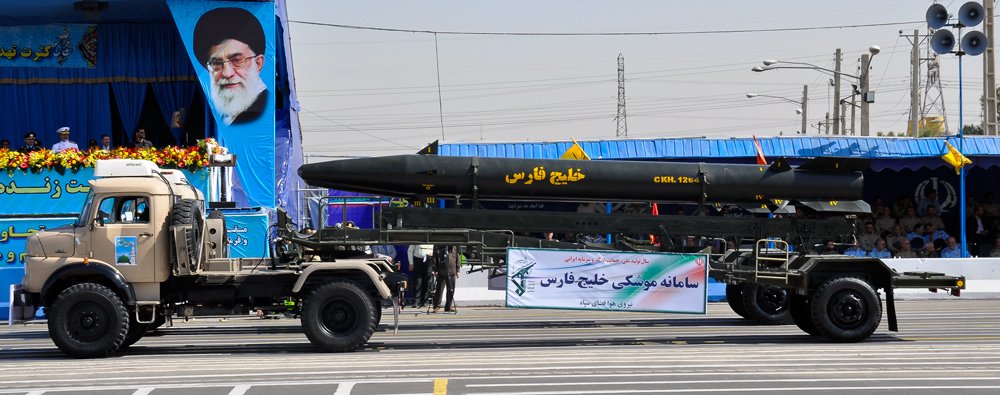
persian-gulf-missileKhalij Fars missile on a transporter.

Additionally, Iran has tested a two-stage solid-fuel missile, the Sejjil-2, whose range of over 2,000 km would allow it to target southeastern Europe — though it is apparently still not operational. In a June 28, 2011, press statement, Tehran claimed that it was capping the range of its missiles at 2,000 km (sufficient to reach Israel but not Western Europe), implicitly eschewing the development of intercontinental ballistic missiles in a presumed bid to deflect US and European concerns.

Yet its Safir launch vehicle, which has put four satellites into orbit since 2009, could provide the experience and knowhow needed to build an ICBM. (According to a May 2010 report by the International Institute for Strategic Studies, the Safir struggled to put a very small satellite into low-earth orbit and has probably reached the outer limits of its performance envelope, so it could not serve as an ICBM itself.) In 2010, Iran displayed a mockup of a larger two-stage satellite launch vehicle, the Simorgh, which it has not yet flown.

Tehran has also claimed an antiship ballistic missile capability that it probably intends for potential use against U.S. aircraft carriers: the Khalij-e Fars and its derivatives, the Hormuz-1/2, each with a claimed range of 300 km. Yet it is not clear that these systems are sufficiently accurate or effective to pose a credible threat to U.S. surface elements in the Gulf.

In addition, Iran recently unveiled the Soumar land-attack cruise missile, which is reportedly a reverse-engineered version of the Russian Raduga Kh-55. It has a claimed range of 2,500-3,000 km, though it may not be operational yet.

The Kh-55 was the Soviet air force’s primary nuclear delivery system.

Iran also fields a very large number of rockets, including the Noor 122 mm (with a range of 20 km), the Fajr-3 and -5 (45 and 75 km), and the Zelzal-1, -2, and -3 (with claimed ranges of 125 to 400 km). During the Iran-Iraq War, rockets played a major role in bombarding Iraqi cities along the border, and they are central to the “way of war” of Iranian proxies and allies such as Hezbollah and Hamas.

Tehran has built this massive inventory so that it can saturate and thereby overwhelm enemy missile defenses in any conflict. It would likely use such tactics whether its missile force remains conventional or becomes nuclear-armed, since conventional missiles could serve as decoys that enable nuclear missiles to penetrate defenses. Numbers would also enable Iran to achieve cumulative strategic effects on enemy morale and staying power by conventional means.

missilesiranAP Photo/Iranian Defense Ministry. To outwork missile defense systems, Iran would use a high volume of missiles.

Finally, many of Iran’s missiles are mounted on mobile launchers, and a growing number are based in silo fields located mainly in the northwest and toward the frontier with Iraq.

This mix of launch options is likely intended to impede preemptive enemy targeting of its missile force. The resources invested in this effort are unprecedented for a conventionally armed force, which indicates that at least some of these missiles would likely be nuclear armed if Iran eventually goes that route.

Nuclear connections

In the annex of a November 8, 2011, report regarding the nuclear program’s possible military dimensions, the International Atomic Energy Agency said it possessed credible information and documents connecting Iran’s missile and nuclear programs. These indicated that, prior to the end of 2003, Iran had:

  • conducted engineering studies on integrating a spherical payload (possibly a nuclear implosion device) into a Shahab-3 reentry vehicle (RV);
  • tested a multipoint initiation system to set off a hemisphere-shaped high-explosive charge whose dimensions were consistent with the Shahab-3’s payload chamber; and
  • worked on a prototype firing system that would enable detonation upon impact or in an airburst 600 meters above a target (a suitable height for a nuclear device).

Moreover, in 2004, Iran began deploying triconic (or “stepped”) RVs — a design almost exclusively associated with nuclear missiles — on its Shahab variants.

Some experts (including Uzi Rubin and Michael Elleman) believe that Iran may have deployed the triconic RV to enhance the stability and thus the accuracy of its conventional warheads, and perhaps to achieve higher terminal velocities that could reduce reaction time for missile defenses.

But if Iran were able to build a miniaturized nuclear device, its experience in designing, testing, and operating missiles with triconic RVs could expedite deployment of this weapon. Indeed, David Albright claimed in his 2010 book Peddling Peril that members of the A. Q. Khan nuclear smuggling network possessed plans for smaller, more advanced nuclear weapon designs that might have found their way to Iran, though most experts doubt the regime’s ability to build such a compact device at this time.

russianukeDesmond Boylan/Reuter

Could Iran have smuggled in a nuclear bomb?

These reports underscore why Washington and its partners must insist that Tehran respond to the IAEA’s questions about past engineering studies, design work, tests, and other elements of the PMD file prior to the lifting of sanctions.

They also highlight the need for a UN Security Council resolution (as called for in the Lausanne parameters) that would impose limitations on Iran’s missile R&D work and threaten real consequences for those who assist Iran’s missile program.

Failure to do so would signal tacit acceptance of activities that could enable Iran to deploy its first nuclear weapon atop a medium-range missile — an achievement that took most nuclear weapons states, including the United States and Soviet Union, about a decade to accomplish.

This development would in turn magnify the destabilizing impact of an Iranian breakout, while incentivizing other regional states to either take preventive action or move toward nuclear capabilities of their own before Iran crosses that threshold.
Obama to Pentagon: We can’t defeat ISIS w/guns

July 7, 2015

Obama to Pentagon: We can’t defeat ISIS w/guns, Front Page Magazine, Daniel Greenfield, July 6, 2015

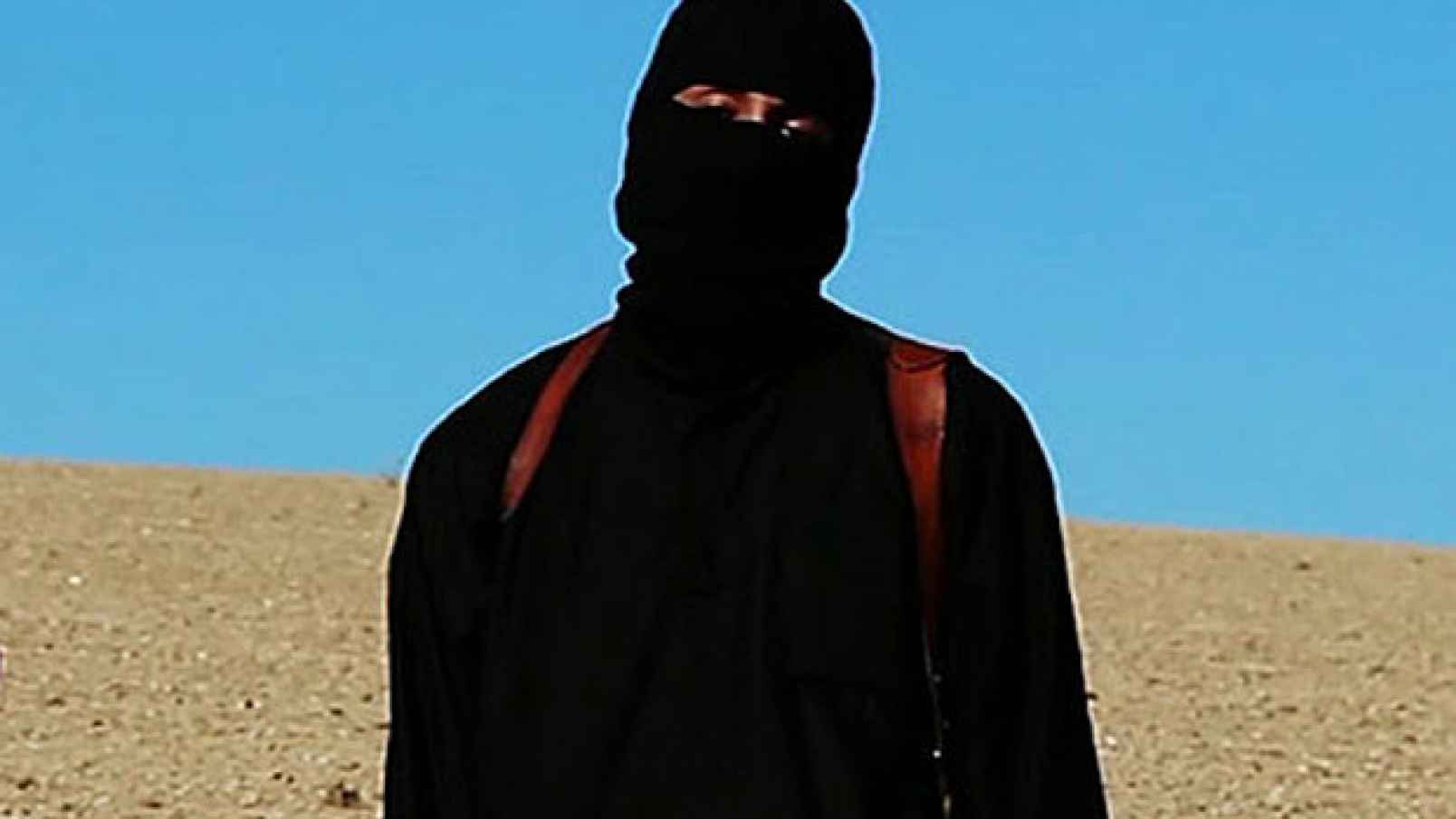
jihadi-john_3051871b

How can we possibly stop this man with a mere gun?

The Failure-in-Chief would like to remind all the people at the Pentagon that what they’re doing is hopeless because guns don’t work. Guns are bad. We all know the idea that it takes a good guy with a gun to stop a bad guy with a gun is crazy NRA propaganda.

We can’t win wars with guns either. Remember how we tried and failed to defeat the Nazis with guns, and the war didn’t stop until we appeased them? No war in history has ever been won with guns. Why should this one be any different.

On Monday afternoon, President Obama spoke at the Pentagon about the Islamic State, or ISIS, a terrorist organization in Syria and Iraq.

Obama stressed all elements of American power were going toward fighting the organization. “Altogether, ISIL has lost over a quarter of the populated areas it had seized in Iraq,” the President said, using an alternative name for the terrorist group. “ISIL’s strategic weaknesses are real.”

Obama said the terrorist organization is doing their best to recruit from “Muslim communities around the world.”

“In order for us to defeat terrorist groups like ISIL and al-Qaeda, we must discredit their ideology. This broader challenge of countering violent extremism,” Obama said. “Ideologies are not defeated with guns, they are defeated by better ideas. We will never be at war with Islam,” Obama added, stressing that ISIS distorts Islam.

To summarize, we’re defeating ISIS, it has strategic weaknesses, but we can’t possibly defeat it with icky guns. Instead we must make more hashtags. Foreign Policy really suggested that gay marriage can defeat ISIS. That’s a plan alright.

How much territory has ISIS lost due to hashtags? Not so much as an inch. ISIS is winning the war of ideas among Muslims. That doesn’t mean that it can’t be defeated militarily.

When the USSR cut a deal with Hitler, their useful idiots in America began claiming that Nazism was an “ism” and couldn’t be defeated by force. Then when their German boyfriend stabbed Uncle Joe in the back, they began shrilly demanding the use of force. And once America won the war, they spent the rest of the time claiming that Uncle Joe Stalin really won the war.

Nazism couldn’t be defeated with guns back when the Germans were massacring Jews and helping the USSR carve up its own piece of Eastern Europe. But when the Huns showed up in the homeland of Socialism, suddenly they discovered that guns worked really well on Nazis.

Somehow, I suspect that if ISIS were pounding targets that Obama really cared about and beheading people he cared about, suddenly all those bombing raids would involve actually striking ISIS no matter where they are and without worrying about the collateral damage.

All those many branches of the Federal government have their own SWAT teams because clearly liberals believe that enemies of the EPA or the FDA can be defeated with guns. They just don’t believe that ideologies like ISIS, which after all don’t really want a Caliphate, but are upset about our foreign policy, can be defeated with guns.

And that says it all.

Contentions — Cementing the Bad Deal

July 6, 2015

Contentions — Cementing the Bad Deal, Commentary Magazine, July 6, 2015

The following is a dispatch from The Israel Project’s Omri Ceren regarding the state of nuclear negotiations with Iran:

Happy Monday from Vienna. The EU’s foreign affairs chief Federica Mogherini arrived yesterday and told reporters: “As you know I have decided to reconvene the ministers. They will be arriving tonight and tomorrow. It is the third time in exactly one week. That’s the end, the last part of this long marathon.” Secretary of State John Kerry and Iranian Foreign Minister Javad Zarif already held an impromptu meeting this morning. The overarching consensus – which is almost certainly correct – is that whatever gets announced will be announced no later than tomorrow afternoon. It might very well happen tonight.

As to what that announcement might be, there are a few options. In order of increasing probability:

0% chance: Kerry might make good on the comments that he made yesterday to reporters, and walks away from a bad deal.

Very low probability: the parties might come to a full-blown agreement ready to be implemented immediately. This scenario was never likely by June 30, and became functionally impossible after Supreme Leader Ayatollah Ali Khamenei set out a range of new red lines a few weeks ago. Also, the Iranians gave a background briefing earlier today in Vienna where they provided their interpretation of an emerging final deal. Among other things they have some interesting views on what military-related restrictions will be lifted, which are in tension with how the Americans have been describing the deal. Those differences will have to be overcome, and they won’t be in the next few days.

Low-probability: the gaps might still be too significant to even colorfully announce a deal, and the parties would extend the interim agreement all the way through the summer. The option would be more attractive to the Obama administration than taking another 2 or 3 weeks. If the administration sends Congress a deal after July 9 then the Corker clock – how long a deal sits in front of Congress – goes from 30 days to 60 days. But if they get all the way through the summer, it goes back down to 30 days. The administration has obvious reasons to prefer that.

Most likely: there will be a non-agreement agreement. The parties will announce they’ve resolved all outstanding issues but they still have to fill in some details. Then the P5+1 and Iran would move in parallel to implement various commitments, and the Iranians would in particular have to work with the IAEA on its unresolved concerns regarding Iran’s weapons program (PMDs). In the winter the IAEA would provide a face-saving way for the parties to declare Iran is cooperating – IAEA head Amano said earlier this week that the agency could wrap up by the end of the year if Iran cooperates – and then a deal would officially begin. The option is attractive to the administration because it puts off granting Iran all of its anticipated sanctions relief until the IAEA makes some noises about the Iranians cooperating. The alternative would be poison on the Hill. This way the administration can tell Congress that of course PMDs will be resolved before any sanctions relief is granted; and after Congress votes, if the Iranians jam up the IAEA but demand relief anyway, lawmakers will have no leverage to stop the administration from caving.

The focus will then shift to Congress, where the debate on approving or disapproving of the deal will take place over the next month. Some of the questions will get technical and tangled – the breakout time debate is going to be mind-numbing – but lawmakers will also use a very simple metric: Is the deal the same one the President promised he’d bring home twenty months ago? Back then the administration was very clear about what constituted a good deal and emphatic that U.S. negotiators had sufficient leverage to secure those terms. The U.S. subsequently collapsed on almost all of those conditions, and lawmakers will want to know how the deal can still count as a good one.

In line with those questions, here is a roundup from the Foreign Policy Initiative on where the administration started and how dramatically it has moved backwards. From the overview of the analysis:

Over the past three years, the Obama administration has delineated the criteria that any final nuclear agreement between the P5+1 and Iran must meet. In speeches, congressional testimony, press conferences, and media interviews, administration officials have also articulated their expectations from Tehran with repeated declarations: “No deal is better than a bad deal.” This FPI Analysis… compiles many of the administration’s own statements on nuclear negotiations with Iran over the past three years, and compares them with current U.S. positions. It also examines U.S. statements on a range of other issues related to U.S. policy toward Tehran, and assesses whether subsequent events have validated them.

The web version has embedded links for each of the statements, so if you need them just click through on the url at the top. You might just want to do that anyway, because the web version is more readable.

Israel Plotting to Occupy Nile to Euphrates with Support of ISIL: Iran’s DM

July 6, 2015

Israel Plotting to Occupy Nile to Euphrates with Support of ISIL: Iran’s DM, Tasnim News Agency (Iranian), July 6, 2015

(But, he inadvertently failed to mention, “we don’t want the bomb.” — DM)

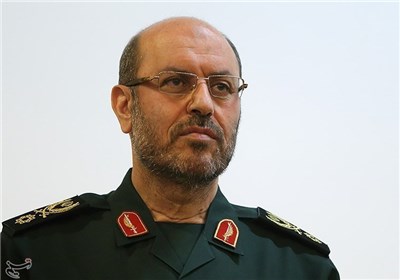
139403121032243845415453

TEHRAN (Tasnim) – Iranian Defense Minister Brigadier General Hossein Dehqan warned against Israel’s plot to expand the occupied territories from “the Nile to the Euphrates” with the support of the Islamic State in Iraq and the Levant (ISIL) terrorist group.

“This year’s rallies to mark the International Quds Day due to be held this Friday are more important than the previous years’ because the Zionist regime (of Israel) with the full support of ISIL terrorists… is seeking to realize the occupation of (areas from) the Nile to the Euphrates,” General Dehqan said in a speech on Monday.

Undoubtedly, massive participation of people in the international event can thwart “the dangerous plot”, the minister stressed.

He further emphasized that the only way to liberate the holy Quds is unity and solidarity among Muslims.

Back in January, Supreme Leader of the Islamic Revolution Ayatollah Seyed Ali Khamenei underlined Iran’s determination to continue support for the Palestinian cause.

“The Islamic Republic of Iran will remain resolved (in its support) until the day that the cause of Palestine is materialized,” Ayatollah Khamenei said in a meeting with Head of Popular Front for the Liberation of Palestine–General Command (PFLP-GC) Ahmed Jibril in Tehran.

The Leader also noted that the issue of Palestine is among the top issues of the entire Muslim world.

Each year, the International Quds Day is celebrated on the last Friday of the holy Muslim month of Ramadan.

The event’s overarching theme is support for the Palestinians and fierce denunciation of Israel.

The day is also seen as the legacy of the late founder of the Islamic Republic of Iran, Imam Khomeini, who officially declared the last Friday of Ramadan as International Quds Day back in 1979.

Egyptian army backed by Apaches kills 63 Islamists in broad area between Sheikh Zuwaid and Rafah

July 6, 2015

Egyptian army backed by Apaches kills 63 Islamists in broad area between Sheikh Zuwaid and Rafah, DEBKAfile, July 6, 2015

(Please see also, The U.S. Must Help Egyptian President Sisi. — DM)

SinaiEgyptENG

An immense stretch of Sinai desert populated by half a million people is under siege, as the Egyptian army fights off a major offensive by the Islamic State’s Egyptian affiliate, the Sinai Province, against its positions in northern Sinai. The battle, which Monday, July 6, went into its sixth day, is being fought in an area bounded by the northern town of Sheikh Zuwaid, Rafah on the Gaza border, and up to Kerem Shalom and Nitzana on the Israeli border to the south. DEBKAfile’s military sources report a news blackout on the ongoing warfare except for Egyptian army handouts.

Egyptian security sources reported Monday that the latest round of helicopter strikes and ground operations had killed 63 Islamists in villages between Sheikh Zuwaid and Rafah, where four of their hideouts had been located. Our sources add that these air strikes are directed against civilian dwellings, especially in farming districts, where ISIS fighters are suspected of hiding out. No figures have been released by Cairo on civilian or Egyptian army casualties.

DEBKAfile describes the contest as an asymmetrical one between an army that depends heavily on aerial operations and ISIS terrorists, who have resorted mainly to guerilla warfare. By night, they flit swiftly on foot between the dunes to strike Egyptian army positions. By day, their foot soldiers trap Egyptian soldiers by setting up ambushes around those positions and on the roads of Sinai to keep Egyptian troops pinned down. Terrorist operations are a constant on their agenda.

The Egyptians respond with blanket air strikes which swoop on any moving object in the embattled area – whether by car or on foot

The hide-and-seek tactics employed by ISIS are sustainable in the long term, especially when the Islamists can rely on a constant influx of reinforcements, weapons and ordnance, the sources of which DEBKAfile disclosed in an exclusive report Sunday, July 5.

The Islamic State is rushing reinforcements to Egypt from Libya and Iraq for its battle with Egyptian forces in northern Sinai, which went into its fifth day Sunday, July 5, and other offensives, DEBKAfile’s intelligence and counter-terror sources report. After sustaining hundreds of casualties, both sides claim to have won the upper hand but the tenacious struggle is not over.

An Islamist manpower pool is provided by Egyptian extremists who crossed into Libya in the past and settled in bases around Benghazi.  Last week, ISIS summoned them to take up positions in Cairo and the Suez Canal and wait for orders to go into action. They crossed back with the help of smugglers. Those rings, dominated by the Muslim Brotherhood underground, with branches controlled by Hamas and Hizballah, bring illicit weapons and ammunition supplies to Sinai from Libya via Egypt.

President Abdel Fatteh El-Sisi is therefore obliged to earmark substantial military and intelligence resources for defending the Suez Canal and Cairo – more even than the Sinai front.

The other source of jihadi reinforcements is Iraq, They use another branch of the smuggling network which carries them through southern Jordan to the Gulf of Aqaba where they are picked up by smugglers’ boats and ferried across to the eastern coast of the Sinai Peninsula.

The IDF had more than one reason for its decision last Wednesday to close to traffic Rte 12, Israel’s main southern highway, which runs parallel to the Egyptian border up to Eilat: It was a necessary precaution lest ISIS turned its terrorists and guns against Israel from next-door northern Sinai. The other reason was to deter the Islamists coming from Iraq from trying to transit Israel and reach Sinai with the help of Bedouin smugglers operating on both sides of the Israeli-Egyptian border.

Our military sources estimate that some 1,000 jihadists are directly engaged in the North Sinai battle with the Egyptian army, but add that they could quickly recruit supplementary fighting manpower from Bedouin tribes near the warfront who already play ball with the terrorists.

Egyptian tacticians have strictly limited the army action on this front to air and helicopter strikes and local ground and armored forces. They are focusing on defending three Sinai enclaves, the northern district around Sheikh Zuweid, El Arish port and Rafah, and Sharm el-Sheikh in the south, to pin ISIS forces down in those places and prevent them from fanning out into areas controlled by the big Bedouin tribes.

When President El-Sisi visited the troops in northern Sinai Saturday, July 5, he disclosed that only one percent of the Egyptian army of 300,000 men was assigned to Sinai. He indicated that his army was perfectly capable of wiping out the Sinai terrorist threat in no time if all its might were to be thrown into the fray.

This strategy leaves ISIS with free rein in central Sinai. However, El-Sisis, like his predecessor Hosni Mubarak, is not prepared to go all out against ISIS in its “dens” any time in the near future, because he needs all his military resources and assets he can muster to defend the capital Cairo and the Suez Canal.
Neither the Islamic Army nor the Muslim Brotherhood or any other radical Islamists make any secrets of their next plans. ISIS has announced that it is setting its sights on Egypt’s pyramids, the Sphinx of Giza, and the country’s unique historic monuments in general, after its savage vandalism and looting of other precious world heritage sites.

In a new message released Friday, July 3, a number of radical Islamist leaders, including the ISIS “caliph” Abu Bakr al-Baghdadi, told their followers that the destruction of Egypt’s national monuments, such as the pyramids and the sphinx, was a “religious duty” that must be carried out by those who worship Islam, as “idolatry is strictly banned in the religion.”

This message has sharply ratcheted up the jihadist element of ISIS military confrontation with Egypt to a higher, more inflammatory level.

The U.S. Must Help Egyptian President Sisi

July 6, 2015

The U.S. Must Help Egyptian President Sisi, American ThinkerMichael Curtis, July 6, 2015

(Not much chance of that. General al-Sisi supported the large masses of Egyptians who wanted then President Morsi deposed. He was later elected President of Egypt. Morsi and his Muslim Brotherhood — which uses terrorism to gain and keep power — is an Obama favorite. Besides, al-Sisi’s efforts to reform Islam run counter to Obama’s delusion that Islam, as it is and has long been, is a wonderful religion of peace. — DM)

The silence was truly deafening. Not a sound from Archbishop Desmond Tutu or Alice Walker or the eager boycotters of Israel or the United Nations Human Rights Council about the brutal massacre of more than 70, perhaps 100, Egyptian soldiers and civilians by Islamist terrorists in the northern Sinai peninsula.

Since Israel, after the 1979 Egyptian-Israeli peace treaty, withdrew all its forces and all settlements — including Yamit — by 1982, the Sinai peninsula has been plagued by terrorist attacks, especially against tourists, by kidnappings, and by violence. After the 2011 Egyptian revolution and consequent uprisings, a major terrorist group emerged and became even more belligerent after the coup that deposed President Mohammed Morsi on July 3, 2013. This was Ansar Bayt al-Maqdis (ABM) that has claimed responsibility for numerous attacks against both Israeli interests and Egyptian personnel.

These assaults included an attack in July 2012 against a Sinai pipeline, a rocket strike in August 2012 on Eilat in south Israel, suicide bombings in el Tor in southern Sinai in May 2014, downing an Egyptian military helicopter in a missile attack, car bombings and hand grenades in Cairo, assassinations and attempted assassinations of Egyptian officials, beheading of four individuals in October 2014, an attack on a security checkpoint, and the June 29, 2015 murder in Cairo of Hisham Barakat, the Egyptian Prosecutor General, who in only two years in office had detained hundreds of members of the Muslim Brotherhood. He was the most senior Egyptian government official murdered.

In November 2014, ABM declared its allegiance to the Islamic State of Iraq and Syria (IS) and accepted the new self-appointed Caliph. It appears to have several hundred trained operatives and collaborators. There are different opinions about the actions of the Sinai Bedouin population, especially that of the largest of the 10 major tribes, the Tarabin tribe in northern Sinai, a tribe that is notorious for drug dealing, weapons smuggling, and human trafficking in prostitutes and African labor workers. Tarabin is said to have called for unification of all the tribes against the terrorists, but rumors of clashes appear to be untrue, and some even allege collaboration with the terrorists. What is true is that local Bedouin tribesmen, alleging discrimination by the state against them, have launched attacks against government forces in Sinai.

Over the last two years ABM, now regarding itself as a dedicated affiliate of IS, has tried to undermine the rule of Egyptian President Abdel Fattah al-Sisi. It has attacked Egyptian army posts, and security centers, and also the UN Multilateral Force in northern Sinai, that oversees the terms of the peace treaty between Egypt and Israel, and tried as well to infiltrate Israeli territory.

There had already been terrorist attacks on October 2014 and January 2015 when more than 30 were killed on each occasion in northeast Sinai. The most dramatic deed of ABM, which now seems to have changed its name to Province of Sinai, (POS) was the series of simultaneous coordinated attacks on July 1, 2015 on fifteen army centers of security forces and checkpoints in northern Sinai. The attacks, including three suicide bombers, killed at least 70 soldiers and civilians.

Evidently POS, imitating its mentor IS that has taken and now rules cities in Iraq and Syria, wanted to take over the city of Sheikh Zuweid, close to Israel, and cut off Rafah from al-Arish.

The danger to all of the democratic countries is immediate for a number of reasons. The first is that the success of the terrorists in their daring ambushes, control of the roads, taking police officers hostage, and planting mines in the streets, indicates not only their disciplined activity but also the influence of IS operatives directly and indirectly through training. IS in Iraq and Syria has operated in just this aggressive and disciplined fashion. All authorities responsible for security in the United States should be conscious of and take account of this highly organized success and of the threat of future similar attacks in the U.S. itself.

The second reason is that Hamas in Gaza is providing support to POS with weapons and logistical support, and even with Hamas terrorists taking part in operations. These have come from Hamas commanders in the Izz ad-Din al-Qassam Brigades that have been prominent for anti-Israeli attacks, including suicide bombings against civilians inside Israel. One particular active commander is Wael Faraj, who has smuggled wounded fighters from Sinai into Gaza.

A third problem is the obvious attempt to undermine and aim at the overthrow of President Sisi, a voice of sanity in the Muslim world. He has courageously criticized the extremists of his religion. In his remarkable speech at al-Azhar University in Cairo on January 22, 2015, he said that fellow Muslims needed to change the religious discourse and remove from it things that have led to violence and extremism. The Muslim religion, he said to imams, is in need of religious reform.

Since he assumed power on June 8, 2014, Sisi has attempted to stem the tide of terrorism by reinforcing the Sinai, restricting traffic, imposing curfews in the area, and demolishing homes of suspected terrorists in Rafah. He sought to create a buffer zone along the border with Gaza, and to destroy the tunnels built by Hamas. But clearly Sisi needs help to survive. It is imperative for the U.S. together with Israel to provide that help to the overwhelmed Egyptian army and intelligence services.

Israel is acutely aware of the danger. POS captured armored vehicles on July 1, 2015 that it can now use to penetrate the border fence between Sinai and Israel. That fence is unlikely to deter a trained terrorist group that now has combat experience. Israel responded by closing roads and two border crossings as a precautionary measure. But all the democratic countries, especially the United States, and also the United Nations because of its Multilateral Force, are now aware that the Islamist terror is at their doors as well as at the outskirts of Israel, and should act accordingly.


Obama: Muslim, Napoleon Bonaparte redux or worse

July 5, 2015

Obama: Muslim, Napoleon Bonaparte redux or worse, Dan Miller’s Blog, July 5, 2015

(The views expressed in this post are mine and do not necessarily reflect those of Warsclerotic or its other editors. — DM)

Napoleon sometimes claimed to be a Muslim. Obama often claims to be a Christian. Napoleon sought, and Obama seeks, power and glory through pretense. 

Obams as Napoleon

Napoleon Bonaparte

Napoleon’s life and history are summarized at Wikipedia. He supported the French Revolution and was appointed General of the Army of Italy at the age of twenty-five. Three years later, he commanded an expedition against Egypt. This post compares his and Obama’s religious and political efforts to gain the confidence of Muslims. The lengthy quotations provided in this section of the post are from Worlds at Warthe 2,500 year struggle between East and West, 2008, by Anthony Pagden.

While en route to conquer Egypt, Napoleon had his “Orientalists” compose a  “Proclamation to the Egyptians.”

It is worth taking a closer look at this document for it summarizes not only the French hopes for the ‘Orient’, but also the ultimate failure of both sides to come to any approximate understanding of each other. It began with a familiar Muslim invocation: ‘In the name of God, the Merciful, the Compassionate. There is no God but God. He has no son nor has he any associate in His Dominion’, which was intended to indicate clearly that the French were not Christians. It then went on to assure the Egyptian people that Napoleon Bonaparte, commander of the French army, and ‘on behalf of the French Republic which is based upon the foundations of Liberty and Equality’, had not come to Egypt, as the Mamluks had put it about, ‘like the Crusaders’ in order to destroy the power of Islam. Nothing, Napoleon assured his readers, could be further from the truth. Tell the slanderers that I have not come to you except for the purpose of restoring to you your rights from the oppressors, that I, more than the Mam-luks, serve God— may He be praised and Exalted— and revere his prophet Muhammad and the glorious Qur’an … And tell them also that all people are equal in the eyes of God and that the circumstances which distinguish one from another are reason, virtue and knowledge. 578 Having thus done his best to conflate the principle of human rights— in a language in which there exists no obvious translation for the word ‘right’ 579— with what the Orientalists had persuaded him were the basic tenets of Islam, the man whom Victor Hugo would later describe as the ‘Muhammad of the West’ continued,

O ye Qadis [judges], Shaykhs and Imams; O ye Sharbajiyya [cavalry officers] and men of circumstance tell the nation that the French are also faithful Muslims and in confirmation of this they invaded Rome and destroyed there the Holy See, which was always exhorting the Christians to make war on Islam. And then they went to the island of Malta from where they expelled the knights who claimed that God the Exalted required them to fight the Muslims. 580 [Emphasis added.]

It is hard to say how much Napoleon believed in all this. One of his generals later told a friend in Toulouse that ‘we tricked the Egyptians with our feigned love of their religion, in which Bonaparte and we no more believe in than we do in that of the late pope’. 582 But Napoleon’s personal beliefs were largely beside the point. The point was policy. Napoleon had always practised religious toleration because he knew that religious faiths could make deadly enemies. Toleration, however, was one thing; credence, even respect, was another. It is indeed highly unlikely that Napoleon had read much of the Qur’an he claimed to venerate. As he told Madame de Rémusant, the only holy book which would have been of any interest to him would have been one he had written himself. [Pagden, pp 326 – 327] [Emphasis added.]

Egyptians did not appreciate Napoleon’s Proclamation.

Just as most Muslims today have failed to be persuaded that Western social values can be made compatible with the Holy Law, the Shari’a, so too were the Egyptians who confronted Napoleon. We know something of how they reacted to Napoleon’s profession of love for Islam from the account of the first seven months of the occupation written by a member of the diwan— or Imperial Council— of Cairo named Abd-al Rahman al-Jabarti. Al-Jabarti was a well-read perceptive man who was not unimpressed by French skills and technology (he was particularly taken by the wheelbarrow) and ungrudgingly admired French courage and discipline on the battlefield, which he compared, glowingly, to that of the mujahedin, the Muslim warriors of the jihad. 585 But for all that he was a firm Muslim who could conceive of no good, no truth which did not emanate from the word of God as conveyed by the Prophet. He excoriated Napoleon’s declaration for its language, for its poor style, for the grammatical errors, and the ‘incoherent words and vulgar constructions’ with which it was strewn, and which often made nonsense out of what Napoleon had intended to convey— all of which was no tribute to the skills of Venture de Paradis or those of the French Arabists in the expedition. But al-Jabarti reserved his most searing criticism for what he repeatedly describes as French hypocrisy. The opening phrase of the declaration suggested to him not, as Napoleon had meant it to, a preference on the part of a tolerant nation for Islam; but rather that the French gave equal credence to all three religions— Islam, Christianity, and Judaism— which in effect meant that they had no belief in any. Toleration for a Muslim such as al-Jabarti was as meaningless as it would have been for any sincere believer. It was merely a way of condoning error. The years when some kind of rapprochement between Judaism and its two major heresies might have been possible were long since past. There could now be only one true faith, and any number of false ones. Napoleon could not claim to ‘revere’ the Prophet without also believing in his message. The same applied to the Qur’ an. You could not merely ‘respect’ the literal word of God. You had to accept it as the only law, not one among many. ‘This is a lie,’ thundered al-Jabarti; ‘To respect the Qur’an means to glorify it, and one glorifies only by believing in what it contains.’

Napoleon was clearly a liar. Worse he was also the agent of a society which was obviously committed to the elimination, not only of Islam, but of all belief, all religion. The invocation of the ‘Republic’, al-Jabarti explained to his Muslim readers, was a reference to the godless state which the French had set up for themselves after they had betrayed and then murdered their ‘Sultan’. By killing Louis XVI, the French had turned against the man they had taken, wrongly because their understanding of God was erroneous, but sincerely nevertheless, to be God’s representative on earth. In his place they had raised an abstraction, this ‘Republic’ in whose name Napoleon, who had come not in peace as he claimed but at the head of a conquering army, now professed to speak. Since for a Muslim there could be no secular state, no law which is not also God’s law, the French insistence that it was only ‘reason, virtue and knowledge’ which separated one man from another was clearly an absurdity. For ‘God’, declared al-Jabarti, ‘has made some superior to others as is testified by the dwellers in the Heavens and on the Earth.’ There are few things a believer, especially a believer in the fundamental sacredness of a script, dislikes more than a non-believer. To al-Jabarti the French seemed to be not would-be Muslims, but atheists. [Emphasis added.] [Id. at 329].

Obama

Napoleon, in his mix of religious and political doctrine, was a power-grubbing scoundrel and liar. How about Obama?

Obama has not claimed to be a Muslim and I don’t know what He is. To claim to be a Muslim would be politically inexpedient. However, He has proclaimed His respect and even reverence for Islam and for the “Holy” Qur’an.

In Obama’s June 4, 2009 Cairo address, He stated that Islam and (His) America,

overlap, and share common principles — principles of justice and progress; tolerance and the dignity of all human beings.

Islam has a proud tradition of tolerance. . . .  People in every country should be free to choose and live their faith based upon the persuasion of the mind and the heart and the soul.  This tolerance is essential for religion to thrive, but it’s being challenged in many different ways. [Emphasis added.]

“Tolerance? Egyptian President al-Sisi is remarkable among Muslim leaders for his efforts to promote religious tolerance. Obama appears to despise him for supporting massive public protests against President Morsi and eventually becoming president. Morsi was a Muslim Brotherhood supporter and Obama appears to cherish the Muslim Brotherhood terrorist organization.

Islam is not part of the problem in combating violent extremism — it is an important part of promoting peace.

And, as Obama tells us, the Islamic State and other such groups are not Islamic.

That sort of stuff didn’t work out well for Napoleon. Are Islamists more dedicated to religious tolerance now than in the days of Napoleon? It does not seem that they are. See, e.g., Iran, Saudi Arabia, Pakistan and other Islamic nations.

Shortly after the attack on the U.S. consular annex in Benghazi, Libya — where four Americans were murdered by Islamists — Obama told the United Nations General Assembly,

The future must not belong to those who slander the prophet of Islam.  But to be credible, those who condemn that slander must also condemn the hate we see in the images of Jesus Christ that are desecrated, or churches that are destroyed, or the Holocaust that is denied.

He sought power and glory by opposing those who offend “slander” Islam, including the maker of the You Tube video on which He and others in His administration blamed “spontaneous” September 11, 2011 “demonstrations” at the U.S. Benghazi annex.

I have made it clear that the United States government had nothing to do with this video, and I believe its message must be rejected by all who respect our common humanity. It is an insult not only to Muslims, but to America as well — for as the city outside these walls makes clear, we are a country that has welcomed people of every race and every faith.  We are home to Muslims who worship across our country.  We not only respect the freedom of religion, we have laws that protect individuals from being harmed because of how they look or what they believe. We understand why people take offense to this video because millions of our citizens are among them.

I know there are some who ask why we don’t just ban such a video.  And the answer is enshrined in our laws:  Our Constitution protects the right to practice free speech.

The Obama Administration promptly had the video removed from You Tube and jailed its maker on unrelated charges (see excerpts from Daniel Greenfield’s Barack Obama’s Unholy Alliance: A Romance With Islamism below.)

Obama, who claims to want a peaceful “two state solution” for the Israelis and  Palestinians, has said little if anything about the propensity of Israel’s “peace partner,” the Palestinian Authority, to slander Israel and Judaism on a daily basis while honoring those who murder Jews.

Obama’s romance with Islam

Daniel Greenfield recently wrote a Front Page Magazine article titled Barack Obama’s Unholy Alliance: A Romance With Islamism. Please read the whole thing; it’s long but well worth the time. Mr. Greenfield notes, in connection with the Benghazi attack,

When the killing in Benghazi was done, the Jihadists left behind the slogan “Allahu Akbar” or “Allah is Greater” scrawled on the walls of the American compound.[6] These were the same words that Obama had recited “with a first-rate accent” for the New York Times’ Nicholas Kristof. Obama had called it [the Islamic call to prayer] “one of the prettiest sounds on Earth.”[7] On that too, the murderers of four Americans agreed with him.

Those who disagreed and were to be denied a future included Mark Basseley Youssef, a Coptic Christian, whose YouTube trailer for a movie critical of Islam was blamed by the administration for the attacks.

Two days after Obama’s UN speech, Youssef was arrested and held without bail. The order for his arrest came from the top. Secretary of State Hillary Clinton had told Charles Woods, the father of murdered SEAL Tyrone Woods, “We’re going to have that person arrested and prosecuted that did the video.”

The ACLU, which had developed deep Islamist connections,[9] sent a letter to Hillary Clinton thanking her for her support of freedom of speech.[10]

The Supreme Court’s “Miracle Decision”[11] had thrown out a blasphemy ban for movies, but Obama’s new unofficial blasphemy ban targeted only those movies that offended Islam. The government had joined the terrorists in seeking to deny such movies and their creators a future.

At the United Nations, Obama had compared the filmmaker to the terrorists. He had used a Gandhi quote to assert that, “Intolerance is itself a form of violence.”[12] Americans who criticized Islam’s violent tendencies could be considered as bad as Muslim terrorists and if intolerance of Islam was a form of violence, then it could be criminalized and suppressed. That became the administration’s priority.

. . . .

At the National Prayer Breakfast, Obama attacked Christianity for the Crusades in the presence of the foreign minister of Sudan, a genocidal government whose Muslim Brotherhood leader had massacred so many Christians and others that he had been indicted by the International Criminal Court for crimes against humanity.[20] [21] And he told Christians that they were obligated to condemn insults to Islam.[22]

Women’s rights? Obama supports those that don’t offend Islam. Continuing with Mr Greenfield’s linked article,

In August 2013, Al-Wafd, a paper linked to one of Egypt’s more liberal parties which supports equal rights for women and Christians, accused Obama of having close ties to the Muslim Brotherhood. [60]

A year earlier, Rose El-Youssef magazine, founded by an early Egyptian feminist, had compiled a list of six Muslim Brotherhood operatives in the administration.[61][62]

Beyond Huma Abedin, Hillary’s close confidante and aide, the list included; Arif Alikhan, Assistant Secretary of Homeland Security for Policy Development; Mohammed Elibiary, a member of the Homeland Security Advisory Council; Rashad Hussain, formerly the U.S. Special Envoy to the Organization of the Islamic Conference and currently the Coordinator for Strategic Counterterrorism Communications; Salam al-Marayati, co-founder of the Muslim Public Affairs Council (MPAC); Imam Mohamed Magid, president of the Islamic Society of North America (ISNA) and Eboo Patel, a member of President Obama’s Advisory Council on Faith-Based Neighborhood Partnerships.

These were the types of accusations that the media tended to dismissively associate with the right, but both Egyptian publications were on the other side of the spectrum.

Egyptian liberals were the ones brandishing placards of a bearded Kerry in Taliban clothes or a photoshopped Obama with a Salafist beard. The protesters Obama had supposedly sought to support by calling for Mubarak to step down were crowding the streets accusing him of backing terrorists.

What made the Egyptian liberals who had seen America as their ally in pursuing reform come to view it as an enemy? The angry Egyptian protesters were accusing Obama of supporting a dictator; the original sin of American foreign policy that his Cairo Speech and the Arab Spring had been built on rejecting.

The progressive critiques of American foreign policy insisted that we were hated for supporting dictators. Now their own man was actually hated for supporting a Muslim Brotherhood dictator.

By 2014, 85% of Egyptians disliked America. Only 10% still rated America favorably.[63] It was a shift from the heady days of the Arab Spring when America had slid into positive numbers for the first time.[64]

Obama had run for office promising to repair our image abroad. As a candidate, he had claimed that other countries believed that “America is part of what has gone wrong in our world.” And yet the true wrongness was present in that same speech when he urged, “a new dawn in the Middle East.”[65]

That dawn came with the light of burning churches at the hands of Muslim Brotherhood supporters. Under Obama, America really did become part of what had gone wrong by supporting the Muslim Brotherhood. It is a crime that Obama will not admit to and that the media will not report on.

The Muslim Brotherhood was born out of Egypt and yet Egyptian views of it are dismissed by the media. Despite the Egyptian Muslim Brotherhood’s final orgy of brutality as President Mohammed Morsi clung to power, despite the burning churches and tortured protesters, it is still described as “moderate.”

Morsi, who had called on Egyptians to nurse their children on hatred of the Jews,[66] was a moderate. Sheikh Rachid al-Ghannouchi, the leader of Ennahda, the Tunisian flavor of the Muslim Brotherhood, who had called for the extermination of the Jews “male, female and children,”[67] was also a “moderate.” Sheikh Yusuf Al-Qaradawi, the spiritual guide of the Muslim Brotherhood, went one better with a fatwa approving even the murder of unborn Jews.[68] Qaradawi was another moderate.[69] [Emphasis added.]

. . . .

Obama sits at the center of a web of intertwined progressive organizations. This web has infiltrated the government and it in turn has been infiltrated by the Muslim Brotherhood.

Consider the case of Faiz Shakir, who went from the Harvard Islamic Society where he helped fundraise for a Muslim Brotherhood front group funneling money to Hamas, the local Muslim Brotherhood franchise, to Editor-in-Chief and Vice President at the Center for American Progress, heading up the nerve center of the left’s messaging apparatus, to a Senior Adviser to House Democratic Leader Nancy Pelosi and then Senate Minority Leader Harry Reid.[73] The next step after that is the White House.

Time magazine described the Center for American Progress as Obama’s idea factory, crediting it with forming his talking points and his government.[74] In an administration powered by leftist activists, the integration between the Muslim Brotherhood and the left resulted in a pro-Brotherhood policy.

Egyptian liberals had expected that the administration’s withdrawal of support for Mubarak would benefit them, but the American left had become far closer to the Muslim Brotherhood than to them. Instead of aiding the left, it aided the Brotherhood. The Egyptian liberals were a world away while the Brotherhood’s activists sat in the left’s offices and spoke in the name of all the Muslims in America.

The [American] left had made common cause with the worst elements in the Muslim world. It formed alliances with Muslim Brotherhood groups, accepting them as the only valid representatives of Muslim communities while denouncing their critics, both Muslim and non-Muslim, as Islamophobes. [Emphasis added.]

. . . .

When Obama declared to the UN that the future must not belong to those who criticize Islam’s brutality, bigotry and abuse of women, he was also defining whom it must belong to. If the future must not belong to those who slander Mohammed, it will instead belong to his followers and those who respect his moral authority enough to view him as being above criticism in image, video or word. [Emphasis added.]

With these words, Obama betrayed America’s heritage of freedom and announced the theft of its future. The treason of his unholy alliance with Islam not only betrays the Americans of the present, but deprives their descendants of the freedom to speak, write and believe according to their conscience.

Obama has placed the full weight of the government’s resources behind Islam. He has suppressed domestic dissent against Islamists like the Muslim Brotherhood while aiding their international goals.

Is Osama Obama worse than Napoleon?

Napoleon represented a nation which, during the French Revolution, had become largely secular. Obama’s America, under His “leadership,” is becoming largely secular. Napoleon sought, and Obama seeks, each in his own way, to promote himself as deserving the approbation of Islam. Napoleon sought power and glory by lying. Obama does much the same, but He most often lies to the denizens of His America.

In the years immediately following the French Revolution, France was considered a great nation. When Obama took office, America was as well. Although some still celebrate America’s freedoms from tyranny on Independence Day, during the Reign of Obama she has become less free and large numbers of “His people” have become increasingly dependent. It’s time to put America back the way she was.

Oh well. Please see also, Pulling down the slaver flags of Islam and Africa.

Postscript: I have read of no reported Independence Day incidents of workplace violence random violence Islamic terror attacks on Obama’s America. Might it be possible that Obama has convinced the (non-Islamic) Islamic State, et al, that, so long as He remains in power, terror attacks would interfere with His plans to promote Islam and otherwise to destroy the nation.

US blocks attempts by Arab allies to fly heavy weapons directly to Kurds to fight Islamic State

July 2, 2015

US blocks attempts by Arab allies to fly heavy weapons directly to Kurds to fight Islamic State, The Telegraph (UK), Defence Editor, July 1, 2015

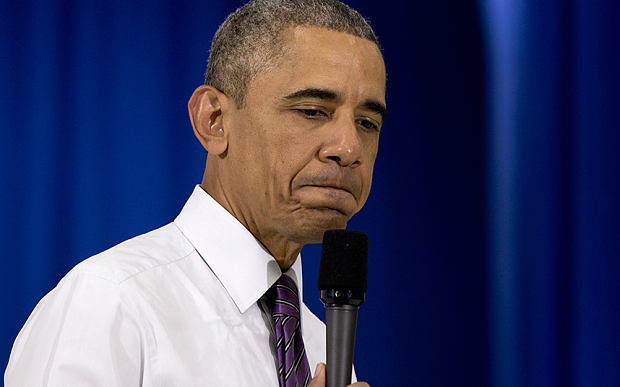
Barack-Obama-_3361379bPresident Barack Obama pauses speaks at Taylor Stratton Elementary School in Nashville Photo: AP

The United States has blocked attempts by its Middle East allies to fly heavy weapons directly to the Kurds fighting Islamic State jihadists in Iraq, The Telegraph has learnt.

Some of America’s closest allies say President Barack Obama and other Western leaders, including David Cameron, are failing to show strategic leadership over the world’s gravest security crisis for decades.

They now say they are willing to “go it alone” in supplying heavy weapons to the Kurds, even if means defying the Iraqi authorities and their American backers, who demand all weapons be channelled through Baghdad.

High level officials from Gulf and other states have told this newspaper that all attempts to persuade Mr Obama of the need to arm the Kurds directly as part of more vigorous plans to take on Islamic State of Iraq and the Levant (Isil) have failed. The Senate voted down one attempt by supporters of the Kurdish cause last month.

The officials say they are looking at new ways to take the fight to Isil without seeking US approval.

“If the Americans and the West are not prepared to do anything serious about defeating Isil, then we will have to find new ways of dealing with the threat,” said a senior Arab government official. “With Isil making ground all the time we simply cannot afford to wait for Washington to wake up to the enormity of the threat we face.”

Kurdish-weapons_3361377bKurdish Peshmerga fighters train on a weapon during a training session with British military advisers

The Peshmerga have been successfully fighting Isil, driving them back from the gates of Erbil and, with the support of Kurds from neighbouring Syria, re-establishing control over parts of Iraq’s north-west.

But they are doing so with a makeshift armoury. Millions of pounds-worth of weapons have been bought by a number of European countries to arm the Kurds, but American commanders, who are overseeing all military operations against Isil, are blocking the arms transfers.

One of the core complaints of the Kurds is that the Iraqi army has abandoned so many weapons in the face of Isil attack, the Peshmerga are fighting modern American weaponry with out-of-date Soviet equipment.

At least one Arab state is understood to be considering arming the Peshmerga directly, despite US opposition.

The US has also infuriated its allies, particularly Saudi Arabia, Jordan and the Gulf states, by what they perceive to be a lack of clear purpose and vacillation in how they conduct the bombing campaign. Other members of the coalition say they have identified clear Isil targets but then been blocked by US veto from firing at them.

“There is simply no strategic approach,” one senior Gulf official said. “There is a lack of coordination in selecting targets, and there is no overall plan for defeating Isil.”

Western leaders increasingly accept that the “war on Isil” has not gone well, from the moment last year Mr Obama called the group a “JV [junior varsity] team” of jihadists compared with al-Qaeda. At that point, Isil had seized Fallujah, which US forces took in a bloody battle in 2004. It went on to take much of western Iraq and large areas of Syria, and in May took Ramadi, the capital of Anbar province.

Britain is moving closer to expanding its role in the war. The Government on Wednesday gave its strongest indication yet that MPs will be given a new vote on whether to bomb Isil in Syria.

Michael Fallon, the Defence Secretary, said it was “illogical” that British planes were able to hit extremists in Iraq but not across the border.

Any decision to bomb in Syria would have to be approved by MPs. In 2013, the Prime Minister lost a vote for British military action in Syria. However, Mr Fallon said: “It is a new Parliament and I think new Members of Parliament will want to think very carefully about how we best deal with Isil, and the illogicality of Isil not respecting the borderlines.”

Mr Fallon suggested that a bombing campaign could be mounted in revenge for the terror attacks in Tunisia if a link could be proved between the killer and Isil in Libya. Britain would only take military action in Libya “where we think there is an imminent threat, a very direct to British lives or, for example, to British hostages”, he said.

Senior Whitehall sources did not distance themselves from Mr Fallon’s comments but insisted there was no immediate prospect of military action.

The Telegraph understands that Mr Cameron is concerned that Labour might force the Government into another defeat over Syria.

Iran Threatens to Go Nuclear If Talks Fail

July 1, 2015

Iran Threatens to Go Nuclear If Talks Fail

BY:
July 1, 2015 2:35 pm

via Iran Threatens to Go Nuclear If Talks Fail | Washington Free Beacon.

Slap around the ears obama ? , you didn’t see that coming , did you ?


VIENNA—Iranian President Hassan Rouhani hinted this week that Iran would decide to fully pursue its nuclear program in a way “harsher than what they [the United States can] imagine” if Western powers fail to uphold any nuclear agreement expected to be finalized in the coming days.

Rouhani’s comments come as negotiators in Vienna struggle to solve disagreements over a range of issues concerning the future of Tehran’s nuclear program. The ongoing disputes prevented the sides from finalizing the agreement before a self-imposed June 30 deadline.

Talks are now expected to continue through July 9.

“If they [the P5+1 negotiating countries] breach the [nuclear] agreement, we immediately go back to the old path, harsher than what they imagine,” Rouhani was quoted as saying this week in Persian language media reports that were independently translated for the Washington Free Beacon.

Some have interpreted these comments as Rouhani threatening to boost a range of nuclear efforts that Western powers suspect have been used to construct a nuclear weapon.

Iran continues to insist in the talks that it be allowed to continue enriching uranium, the key component in a nuclear weapon, and also renew efforts to research ballistic weapons, which could be used to carry a nuclear payload.

The Islamic Republic also continues to receive billions of dollars in sanctions relief, which has helped to reinvigorate the country’s economy and potentially dissuade it from inking a comprehensive deal that U.S. leaders view as helpful.

Iranian officials claimed on Wednesday that the country’s central bank had repatriated 13 tons of gold that had been frozen in South Africa.

Speaking about the extension in talks, Secretary of State John Kerry was quoted as saying, “We have our own sense of deadline.”

As of Wednesday afternoon, Kerry continued to hold one-on-one meetings with Iranian Foreign Minister Javad Zarif, according to the State Department.