Posted tagged ‘Middle East’

Op-Ed The consequences of a bad deal with Iran

July 26, 2015

Op-Ed The consequences of a bad deal with Iran, LA Times, John Bolton, July 26, 2015

American weakness has brought us to this difficult moment. While we obsessed about its economic discomfort, Iran wore its duress with pride. It was never an even match. We now have to rely on a tiny ally to do the job for us. But unless we are ready to accept a nuclear Iran (and, in relatively short order, several other nuclear Middle Eastern states), get ready. The easy ways out disappeared long ago.
***************************

President Obama has made an art form of attacking his opponents rather than substantively defending his own policies, most recently regarding the Vienna agreement on Iran’s nuclear program. Essentially, Obama argues that we must either accept his wretched deal or go to war to prevent Iran from acquiring nuclear weapons.

As is typical, Obama posits the wrong choice, apparently to distract from the unpleasant reality that the agreement won’t work. It will not prevent Iran from getting nuclear weapons. So the real choice we are faced with is dealing with the consequences of military action or the consequences of a nuclear Iran. Neither is palatable, but the latter is far worse. If the real objective is stopping Iran from getting nuclear weapons, preemptive military action is now inescapable.

This rock-and-hard-place outcome has long been foreseeable. Iran’s dogged determination to become a nuclear-weapons state was fiercer and stronger than the West’s frail response. Assuming Iran scrupulously complies with every provision agreed to in Vienna — an absurdly unlikely scenario given the ayatollahs’ objectives and history — its ambitions for nuclear weapons will simply have been delayed eight to 10 years.

In all likelihood, the ayatollahs are already at work violating the accords. After all, Iran has systematically breached its voluntarily-assumed obligations under the Nuclear Non-Proliferation Treaty for more than 30 years. Now the president’s deal will allow Iran to keep the fruits of its violations. Yes, the deal includes restrictions on uranium enrichment, but Tehran can retain its enrichment program, with guaranteed international assistance in improving it. These concessions are fatal mistakes.

Moreover, Iran’s ballistic missile efforts — its development of the means to deliver nuclear weapons all over the world — will barely be touched. Nor does the deal in any way address Iran’s clandestine weaponization efforts, which it has denied and hidden from the International Atomic Energy Agency with great skill.

Last week, the news that the administration has not even seen the texts of two agreements between the energy agency and Iran, both crucial to implementation of the Vienna accords, only raises further doubts. President Obama must provide the texts of these “side deals” to Congress before any serious consideration of the overall agreement is possible.

Some critics of Obama’s plan advocate scuttling the deal and increasing economic sanctions against Iran instead. They are dreaming. Iran and the United States’ negotiating partners have already signed the accords and are straining at their leashes to implement them. There will be no other “better deal.” Arguments about what Obama squandered or surrendered along the way are therefore fruitless. As for sanctions, they were already too weak to prevent Iran’s progress toward the bomb, and they will not be reset now. To paraphrase Bruce Springsteen, “These sanctions are going boys, and they ain’t coming back.”

Patrick Clawson, the director for research at the Washington Institute for Near East Policy, provided the most recent thumbs-down assessment of sanctions: “Iran has muddled through the shock of the sanctions imposed in 2012, and its structural [economic] problems are not particularly severe compared to those of other countries.” He estimates Iran’s nuclear and terrorism-support programs to cost only about $10 billion annually. No wonder administration officials have testified that sanctions (including those imposed piecemeal before 2012) did not slow Iran’s nuclear efforts.

Nor will the deal’s “snapback” mechanism (intended to coerce Iran back into compliance if it breaches its obligations) change that reality. Tehran’s belligerent response is expressly stated in the agreement’s text: “If sanctions are reinstated in whole or in part, Iran will treat that as grounds to cease performing its commitments … in whole or in part.” Tehran does risk losing some future economic benefits should sanctions snap back, but by then it will have already cashed in the assets the deal unfreezes and signed new lucrative trade and investment contracts.

Once those benefits begin flowing all around, the pressure on world governments will only increase to ignore Iranian violations, or to treat them as minor or inadvertent, certainly not warranting the reimposition of major sanctions. The ayatollahs have dusted off Lenin’s barb that “the capitalists will sell us the rope with which we will hang them,” and applied it to the age of nuclear proliferation.

If diplomacy and sanctions have failed to stop Iran, diplomacy alone will fail worse. Like it or not, we now face this unpleasant reality: Iran probably will violate the deal; it may not be detected doing so and if detected, it will not be deterred by “snapback” sanctions. So we return to the hard question: Are we prepared to do what will be necessary to stop Iran from getting nuclear weapons?

Obama most certainly is not, which means the spotlight today is on Israel.

If Israel strikes, there will be no general Middle East war, despite fears to the contrary. We know this because no general war broke out when Israel attacked Saddam Hussein’s Osirak reactor in 1981, or when it attacked the North Korean-built Syrian reactor in 2007. Neither Saudi Arabia nor other oil-producing monarchies wanted those regimes to have nuclear weapons, and they certainly do not want Iran to have them today.

However, Iran may well retaliate. At that point, Washington must be ready to immediately resupply Israel for losses incurred by its armed forces in the initial attack, so that Israel will still be able to effectively counter Tehran’s proxies, Hamas and Hezbollah, which will be its vehicles for retaliation. The United States must also provide muscular political support, explaining that Israel legitimately exercised its inherent right of self-defense. Whatever Obama’s view, public and congressional support for Israel will be overwhelming.

American weakness has brought us to this difficult moment. While we obsessed about its economic discomfort, Iran wore its duress with pride. It was never an even match. We now have to rely on a tiny ally to do the job for us. But unless we are ready to accept a nuclear Iran (and, in relatively short order, several other nuclear Middle Eastern states), get ready. The easy ways out disappeared long ago.

Jordan launches war on ISIS in Iraq, Turkish warplanes hit ISIS in Syria. US, Israel involved in both ops

July 24, 2015

Jordan launches war on ISIS in Iraq, Turkish warplanes hit ISIS in Syria. US, Israel involved in both ops, DEBKAfile, July 24, 2015

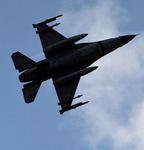
ISIS_24.7.15F-16 warplane in action against ISIS

The Middle East woke up Friday, July 24, to two new full-fledged wars launched by Jordan and Turkey for cutting down the Islamic State of Iraq and the Levant as is forces advanced on their borders. The United States and Israel are involved in both campaigns. Jordanian armored, commando and air forces are already operating deep inside Iraq, while Friday morning, Turkey conducted its first cross-border air strike against ISIS targets in Syria. Clashes between Turkish troops and Islamic fighters erupted at several points along the border. Both governments also conducted mass arrests of suspected Islamists. The Jordanian police picked up ISIS adherents, while 5,000 Turkish police detained 250 Islamist and outlawed Kurdish PKK suspects in Istanbul, Ankara, Izmir and Saniurta. Jordan Friday shut down its only border crossing with Iraq.

Earlier this week, Turkey permitted US warplanes to us the Incirlik air base in the south for bombing missions against ISIS, and Israel handed over to Jordan 16 Cobra combat helicopters and assured Jordan of air force cover for its anti-ISIS operation.

Read more about this new chapter in the war on ISIS in the DEBKAfile report of Thursday, July 23.

In the first publicized Israeli military hardware transaction with an Arab nation, Israel has handed over “around 16 Cobra” combat helicopters in support of Jordan’s war on the Islamic State. This was confirmed Thursday, July 23, by a US official close to the transfer. It was also the first time US-Jordanian-Israeli military cooperation in the struggle against ISIS was publicly disclosed.

“These choppers are for border security,” said the unnamed US official.DEBKAfile’s military and counter-terror sources disclose that the Cobras are needed for a large-scale Jordanian aerial-commando operation launched in the western Iraqi province of Anbar, which borders on the Hashemite Kingdom. This operation is designed to carve out a security belt tens of kilometers deep inside Iraq as a barrier against Islamic State’s encroachment.

Amman approached Washington for combat helicopters to back the operation and was told that the US is short of these items and would turn Israel to pitch in. The US first provided mechanical overhauls for the aircraft before they were incorporated free of charge in Jordan’s existing Cobra fleet.

The transfer was announced while US Defense Secretary Ashton Carter was touring the Middle East. He arrived in Amman Tuesday, July 21,after talks in Israel, and visited Baghdad unannounced Thursday, July 23 for an update on the war on ISIS

The mounting Islamist threat to Jordan is coming now from two directions – the Iraqi province of Anbar and  Syria. ISIS forces have grabbed positions in southern Syria near the intersection of the Jordanian, Iraqi and Syrian borders. They have also moved up to the eastern Syrian town of Abu Kamal on the Iraqi border and, since mid-May, have gradually detached small groups from the captured central Syrian town of Palmyra and quietly built up positions in the south near Jabal Druze.

This buildup has been tracked by US, Jordanian and Israeli surveillance.

The Islamist domestic threat to the Hashemite Kingdom is no less acute. Jihadist sleeper cells have been planted in Jordan ready to strike strategic targets for a reign of terror to coincide with the onset of external Islamic State attacks staged from Iraq and Syria.

Our military sources report that US-Israeli-Jordanian cooperation is channeled through the US Central Command Forward-Jordan from its headquarters north of Amman. It is staffed by US, British, Jordanian, Saudi and Israeli officers working together to defeat ISIS.

‘Side deals’ cast shadow over Congress Iran review

July 23, 2015

Side deals’ cast shadow over Congress Iran review

Lawmakers complain about secret agreements between Tehran and UN watchdog over Parchin military site and nuclear program’s ‘military dimensions’

By Rebecca Shimoni Stoil July 23, 2015, 6:20 am

via ‘Side deals’ cast shadow over Congress Iran review | The Times of Israel.


2004 satellite image of the military complex at Parchin, Iran. (AP/DigitalGlobe-Institute for Science and International Security)

2004 satellite image of the military complex at Parchin, Iran. (AP/DigitalGlobe-Institute for Science and International Security)

WASHINGTON — As top administration officials prepared for what will be their first day of unclassified testimony in Congress Thursday in support of the Iran nuclear deal, a very public row erupted Wednesday over whether the administration could — and would — disclose what some lawmakers called the “secret side deals” of the agreement.

Even as the White House deployed Secretary of State John Kerry and Energy Secretary Ernest Moniz to Capitol Hill for a series of classified briefings Wednesday meant to shore up support for the Iran deal in a dubious legislature, lawmakers demanded more details on agreements reached between the International Atomic Energy Agency (IAEA) and Iran with the consent of the P5+1 group of world powers. Those agreements were not previously revealed to Congress as part of the 60-day review process required under law.

One day after Senator Tom Cotton and Representative Mike Pompeo said that an IAEA official in Vienna had told them about the agreements with Iran, administration officials denied these constituted “secret side agreements” that were kept out of the nuclear agreement presented to Congress for review.

“There’s no side deals, there’s no secret deals, between Iran and the IAEA, that the P5+1 has not been briefed on in detail. These kinds of technical arrangements with the IAEA are a matter of standard practice, that they’re not released publicly or to other states, but our experts are familiar and comfortable with the contents, which we would be happy to discuss with Congress in a classified setting,” State Department Spokesman John Kirby said during his daily press briefing.

Tom Cotton (Courtesy United States Congress)

Tom Cotton (Courtesy United States Congress)


Kirby explained that the so-called “side deals” involved “issues between Iran and the IAEA,” referring to them as “technical agreements” and emphasizing that such agreements “are never shared outside the state in question in the IAEA.” At the same time, the US had been briefed on the agreements and administration officials were willing to discuss them with lawmakers.

US National Security Adviser Susan Rice during an interview with Charlie Rose on the Public Broadcasting Service, February 24, 2015. (screen capture/YouTube/Charlie Rose)

US National Security Adviser Susan Rice during an interview with Charlie Rose on the Public Broadcasting Service, February 24, 2015. (screen capture/YouTube/Charlie Rose)


National Security Adviser Susan Rice on Wednesday confirmed the existence of the side agreements, telling reporters that they dealt with Iran’s documentation of previous military dimensions of its nuclear program, a key aspect of intelligence about the program that enabled a better assessment of its scope and purpose.

Although Rice claimed that the arrangements between the IAEA and Iran were “no secret,” the firestorm began when Cotton and Pompeo, following a meeting in Vienna Friday with representatives of the IAEA, said officials from the watchdog group had told them the agreements would remain secret.

“The agency conveyed to the lawmakers that two side deals made between the Islamic Republic of Iran and the IAEA as part of the Joint Comprehensive Plan of Action (JCPOA) will remain secret and will not be shared with other nations, with Congress, or with the public,” the lawmakers said in a statement.

Senate Foreign Relations Committee Chairman Sen. Bob Corker (R-Tennessee), left, shakes hands with ranking member Sen. Ben Cardin (D-Maryland) during a committee markup meeting on the proposed nuclear agreement with Iran on April 14, 2015. (JTA/Win McNamee/Getty Images)

Senate Foreign Relations Committee Chairman Sen. Bob Corker (R-Tennessee), left, shakes hands with ranking member Sen. Ben Cardin (D-Maryland) during a committee markup meeting on the proposed nuclear agreement with Iran on April 14, 2015. (JTA/Win McNamee/Getty Images)


One of the agreements covers inspection of the Parchin military complex, a site that the IAEA suspects was being used for experiments related to weaponization of Iran’s nuclear technology. The second details how the IAEA and Iran will resolve outstanding issues in determining the possible military dimensions of Iran’s nuclear program, Cotton and Pompeo said.

Although Rice and Kirby claimed that US negotiators were familiar with the contents of the IAEA-Iran agreements, Cotton and Pompeo said that they were told that the agreements would not be released even to the P5+1 member states who negotiated the broader deal.

Under the terms of the Iran Nuclear Agreement Review Act passed earlier this year, the administration is required to provide Congress with all documents related to the agreement, including “annexes, appendices, codicils, side agreements, implementing materials, documents, and guidance, technical or other understandings and any related agreements, whether entered into or implemented prior to the agreement or to be entered into or implemented in the future.”

On Wednesday, the author of the law, Senator Bob Corker, a Republican, teamed up with Senator Ben Cardin, a Democrat, to write their second letter to the administration in as many weeks expressing concern over whether it had adhered to the law’s requirements.

This time, the bipartisan duo reportedly requested that Kerry provide them any available documents related to the IAEA-Iran agreements.

Cardin is one of many Democratic senators who have yet to say whether they will support or oppose the deal with Iran when it comes to key Senate and House votes on deal-killing legislation that will likely be placed before Congress within the allotted 60 days. The administration needs to win over at least 34 senators or 146 House members to ensure President Barack Obama’s veto of any such legislation cannot be overturned.

House Democratic leader Nancy Pelosi, an announced supporter of the deal, has expressed optimism that the White House can prevail, and Senator Dick Durbin, a member of the Senate Democratic leadership, declared his support for the agreement this week.

AP contributed to this report.

ISIS infiltrates Egyptian special forces, joins with Hamas to occupy N. Sinai, liquidate Sisi

July 23, 2015

ISIS infiltrates Egyptian special forces, joins with Hamas to occupy N. Sinai, liquidate Sisi, DEBKAfile, July 23, 2015

islamic-State-Corvette-AttackThe ISIS Kornet missile attack on Egyptian Navy vessel

Islamic State affiliates in Sinai and Libya have banded together with the Palestinian Hamas rulers of the Gaza Strip for the shared goals of capturing northern Sinai from the Egyptian army and staging an assassination coup against President Abdel-Fatteh El-Sisi, DEBKAfile’s exclusive military and intelligence sources report.

They are in the throes of four steps for promoting their objectives:

1.  Monday, June 29, a rogue group of Egyptian Special Forces accessed the heavily-guarded upscale Cairo district of Heliopolis to plant a bomb car, which they remotely detonated as the convoy of their target, Egypt’s general prosecutor Hisham Barakat, went by. He was killed on the spot. The assassins were members of the Egyptian elite force which had defected to the Islamic State of Iraq and the Levant.

Three weeks later, on July 16, notwithstanding reinforced security in Heliopolis, ISIS killers reached inside the neighborhood once again and planted a roadside bomb. It was detonated as an Interior Ministry special forces security patrol moved past.

Because of the tight official blackout on the event, there are no reliable accounts on casualties. The authorities in Cairo reported that one Egyptian soldier was injured, but this is no doubt only part of the picture.

The following day, July 17, a violent clash erupted In the Talibiya neighborhood of Giza near the pyramids between Egyptian Special Forces and Muslim Brotherhood’s underground cells. Five MB adherents were reported killed, but again no word on military losses.

2. On July 1, ISIS forces launched their most ambitious offensive to date against Egyptian military and police facilities in northern Sinai. Still ongoing three weeks later, the losses the Egyptian military have sustained to date are estimated at 120 dead and hundreds injured. Though fighting fiercely, Egyptian troops have not been able to repel the continuous Islamist assault or contain its advance through the northeastern section of the peninsula.

Tuesday, July 21, Hamas terrorists arrived at ISIS positions in northern Sinai for a joint assault on the base of the Multinational Observer Force at El Gorah, not far from the embattled town of Sheik Zuwaid. It was the first major attack on the US-led force that was installed in Sinai to monitor the 1979 Egyptian-Israeli peace accord – and is still going on..

Here, too, the MFO command and Cairo have combined to impose a blackout on the situation in the camp and the extent of casualties..

3. On July 17, the Islamic state of Sinai sank an Egyptian coast guard vessel with a sophisticated guided Kornet anti-tank missile. The ship was patrolling the Mediterranean shore of Rafah to prevent the smuggling of arms and fighters from Egypt proper and Libya into northern Sinai. This was a landmark incident in that it was the first time ISIS is known to have sunk an adversary’s vessel at sea.

Cairo reported at first that a fire broke out on the ship and there were no casualties.

4.  On July 22, an audio message began making the rounds in Cairo and other Egyptian cities claiming to be the voice of Hisham al-Ashmawy, an Egyptian Special Forces officer who defected to ISIS. He said the country had been “overpowered by the new pharaoh” and called on all Egyptians “to come together to confront the enemy.” The message concluded with the words: “Do not fear them, but fear Allah if you are true believers.”

Western and Middle East counter-terror experts have concluded that it was Hisham al-Ashmawy who orchestrated the assassination of the general prosecutor last month. They tag him as the leader of the group of Egyptian officers and men who defected to ISIS. Egypt’s elite military units would appear therefore to be heavily penetrated by the Islamic State.

For Egyptian rulers this is a recurring menace. Thirty-years ago in October 1981, President Anwar Sadat was assassinated by a senior Egyptian intelligence officer who had secretly joined the radical Egyptian Islamic Jihad, one of Al Qaeda’s two parent groups, and went AWOL a short time earlier.

Live Blog: Over 10,000 at #StopIranRally in Times Square

July 23, 2015

Live Blog: Over 10,000 at #StopIranRally in Times Square

by Breitbart News 22 Jul 2015

via Live Blog: Over 10,000 at #StopIranRally in Times Square – Breitbart.

Best speech of the night: Judging by how widely it is being shared on Facebook, this was the winner, from former U.S. Rep. Allen West.

Quote:

I want President Barack Obama to know one thing: You may say that you have done something that no one else has ever done. You know why no one else has ever done it? ‘Cause it’s a damn stupid thing that you just did.

A close second–Caroline Glick’s speech, which brought tears to more than a few eyes:

8:30 p.m. EDT: The rally finally ends. As the speakers continued, a full hour past the scheduled end of the rally, so did the enthusiasm and intensity.

Juan Hinojosa traveled from Brooklyn to participate in the rally. He said, “As an American I am disgusted with President Obama, the Democratic Party and the weak GOP in Congress. They are a disgrace to this nation and I cannot wait until 2016 when Obama’s gone.”

Stop Iran Rally (Breitbart News)

Stop Iran Rally (Breitbart News)

7:30 p.m.EDT: The rally, stretching six blocks long and over 10,000 strong, was due to end at 7:30, but continues with a roster of speakers, including Steven Emerson of the Investigative Project on Terrorism, Former Rep. Pete Hoekstra (R-MI), and many others.

7:25 p.m. EDT: A family protests.

7:10 p.m. EDT: Conservative Jerusalem Post columnist (and occasional Breitbart News contributor) Caroline Glick gives a fiery speech attacking the Iran deal: “This deal gives the mullahs $150 billion as a signing bonus…that’s real money that you’re putting the hands of murderers!”

She warns that even if Iran abides by the agreement, “in ten years’ time it can build nuclear weapons at will.” She calls on Sen. Schumer and several of New York’s Democratic U.S. Representatives.

“You know what to do, unless you have no honor and no shame….You will not only vote against this deal, you will talk to all of your friends in the Democratic Party…you will tell them you can claim to care about the security of the United States of America and support this deal.”

She concludes: “Tell your lawmakers. Tell your friends. Tell the President of the United States to kill this deal. To preserve life, to preserve liberty, to preserve freedom, this deal must be killed.

“Thank you, God bless America, Am Israel Chai.

Caroline Glick at Stop Iran Rally (Screenshot)

6:55 p.m. EDT: Advocates for the American captives, and for victims of Iranian-backed terror, take the stage. The anger against Obama is severe: “You couldn’t even pronounce their names properly….You, Mr. President, have become our national nightmare.”

The organizer takes the stage as well to lead chants: “Where is Chuck? Kill this deal! Where is Chuck? Kill this deal!”

6:45 p.m. EDT: Former CIA director James Woolsey, another Democrat, criticizes the Obama administration for ignoring the pro-democracy protests in 2009, and focuses his remarks on the totalitarian nature of the Iranian regime.

6:35 p.m. EDT: Alan Dershowitz, noted Democrat and Hillary Clinton supporter, comes to the stage. He says that it is important that opposition to the Iran deal remain bipartisan: “It is a bad deal for Demcorats. It is a bad deal for liberals. I am here opposing this deal as a liberal Democrat.”

Dershowitz attacks the way in which the deal is being handled, with democracy being “ignored” as the Obama administration circumventing Congress. “That is not the way democracy should operate. This deal is essentially a treaty. It binds the United States in a multi-national way. This treaty should be submitted to the Senate for two-thirds approval. But the president won’t do that.”

Dershowitz criticizes Obama for taking the military option “off the table,” which allowed Iran “to negotiate with us as equals,” which is how the deal that resulted was so good for Iran and so bad for everyone else.

He warns that Benjamin Netanyahu will take “whatever actions” he has to take to stop Iran. The crowd cheers.

6:20 p.m. EDT: Organizers estimate attendance at the Stop Iran Rally at over 10,000 in Times Square.

The rally hears from presidential candidate and former New York governor George Pataki, who led the state during 9/11.

He takes a dig at Hillary Clinton: “She has embraced this agreement…Hillary, let me tell you one thing: America does not need as our next president another appeaser-in-chief.”

6:10 p.m. EDT: Organizer Jeffrey Wiesenfeld continues the focus on Sen. Chuck Schumer (D-NY), “Where are you, Chuck?” He tells the crowd about White House efforts to twist the arms of wavering Democrats, warning that the Obama administration will give a green light to “pro-Israel” Democrats to vote against the bill once they have enough votes in hand to pass it.

“This is our civil rights! Our right to live! It will not be enough if those Congress members say they are opposing the bill
because they got permission from Valerie Jarrett.”

He warns Schumer to round up votes against the bill, or “we will throw you the hell out.” The crowd roars. He offers Schumer “a chance for redemption” if he stands up to Obama and rallies opposition to the deal. “Chuck, this is your moment! This is your time to make the decision.”

(“Shomer” means “guardian” in Hebrew.)

5:50 p.m. EDT: Fox News contributor Monica Crowley offers the most powerful speech of the rally so far: “Everybody who’s here tonight in Times Square wants to save Western Civilization before it’s too late,” she says. “Never again! Seventy years after the Holocaust, have we forgotten already?”

She adds: “Of the countless destructive things President Obama has done, this deal is the most dangerous of all….President Obama says that he can basically do what he wants because ‘he’s got a pen and a phone.’ Well, guess what, Mr. President? We’ve got pens and phones, too.”

Crowley singles out

Sen. Charles Schumer (D-NY)

2%

, daring him to lead. She said that Schumer would not be able to get away with voting against the deal once enough votes were secured for its passage.

Finally, Crowley attacks Hillary Clinton, who received a round of boos from the crowd, taking her to task for supporting the Iranian regime while toppling the Egyptian regime of Hosni Mubarak. At a black-tie dinner in Bahrain, Crowley says, “She [Clinton] literally chased the Iranian foreign minister around the room, and got blown off by the Iranian foreign minister, not once, but twice.”

5:40 p.m. EDT: The rally is well under way, kicking off with a speech by prominent publisher and editor Mort Zuckerman. His address is heavy on detail, but mentions of the Iranian regime and Secretary of State John Kerry draw loud boos from the crowd, now apparently several thousand strong.

5:00 p.m. EDT: One very important theme at the rally, as Jacob Kornbluh points out in the tweet below, is the central role that New York’s own Sen. Chuck Schumer (D) will play. The self-described “guardian of Israel” has declined to oppose the Obama administration in recent battles, but is said to be carefully weighing his response to the Iran deal. The entire rally could be described as a giant message to Schumer, because if he opposes the deal, other Democrats will follow (and vice versa).

4:50 p.m. EDT: The rally features photographs of the four American captives in Iran: Saeed Abedini, Amir Hekmati, Robert Levinson and Jason Rezaian.

Crowd are gathering with signs–some handed out, some clearly home-made.

4:45 p.m. EDT: Demonstrators are arriving in significant numbers, along with national media. Fox News devoted a segment to the rally, and their cameras are there to record the action.

One of the main organizations behind the protest, StandWithUs, has tweeted a list of 19 key U.S. Senators, all Democrats, that it is asking the public to contact.

If just 13 Democrats join Republicans in opposing the deal, they will override a presidential veto and the deal will fail (assuming a similar two-thirds majority can be assembled in the House).

***

The event was coordinated by the Jewish Rapid Response Coalition, a grassroots organization concerned with the potential for a nuclear-armed Iranian regime.Over 100 partners are sponsoring the rally.

Other rallies are scheduled this week and next nationwide. A partial list is here.

The idea for the Stop Iran Rally came to fruition following the nuclear accord agreed to by the P5+1 world powers (US, UK, Germany, France, China, Russia) and the Iranian regime. Organizers expect that thousands of concerned Americans will be at the Times Square rally.

Featured speakers will include:

Caroline Glick (Jerusalem Post Columnist)

Alan Dershowitz (Harvard Law Professor)

George Pataki (Fmr. Gov. of New York and Current Republican Candidate For President)

Monica Crowley (Political Commentator)

James Woolsey (Fmr. Director of the Central Intelligence Agency)

Rep. Trent Franks (R-AZ)

88%

Former Congressman Allen West (R-FL)

Richard Kemp (Fmr. Commander of British Forces in Afghanistan)

Breitbart News will be there with timely interviews from the major players at the event.

Op-Ed: Obama’s Deception Set Off a New Era

July 22, 2015

Op-Ed: Obama’s Deception Set Off a New Era, Israel National News, Dr. Joe Tuzara, July 22, 2015

Not surprising, the Obama administration considers both the US and Israel to be key threats to peace in the world.

**********************

President Barack Obama’s strange self-delusion for Iran to become a more “formidable regional power” has already triggered an undeclared new era for nuclear proliferation in the Middle East.

Despite this established ignominy of an emboldened Iran strengthened by Obama’s naive policies at the expense of Israel and Sunni Arab allies, the White House suggestion that they “sought to pursue diplomacy to prevent Iran from obtaining a nuclear weapon that could set off a nuclear arms race” is based on fantasy.

Whichever way they try to spin it, Obama’s rhetoric that the deal “cut off every pathway to nuclear weapons, prevented a nuclear arms race in the Middle East” doesn’t match reality.

The deal explicitly acknowledges that Iran is gaining benefits no other state would gain under the Non-Proliferation Treaty (NPT). In terms of its nuclear development, instead of dismantling Iran’s nuclear program, that program is now protected.

Such a deal, one that allows a leading state sponsor of terror to retain the ability to develop nuclear weapons, threaten Israel, continue their hegemonic ambitions and support for terrorism is a historic nadir of the Obama presidency.

As Obama’s secret letter to Ayatollah Khamenei makes clear, securing the deal simply legitimizes Tehran, a de facto regional US ally standing on the threshold of a nuclear weapon.

It is a shame that the Obama administration’s total capitulations were made in areas that were supposed to prevent Iran from acquiring nuclear weapons. The fake Iran deal does confirm Israeli and Sunni Arab Muslims fears that they can no longer depend on the Obama administration to protect their vital national security interests.

Even worse, Obama had given up on its stated goals of preventing Iran from obtaining a nuclear weapon and his dumb promise to fight a bad deal while underwriting the expansion of Iranian hegemony unquestionably was not just only reckless but cynical.

As it turned out, “détente” with Iran is the main goal of the Obama’s pretend diplomacy. In essence, Obama’s “appeasement” is not diplomacy and his secret back-channel negotiations with the fanatical, corrupt and Machiavellian terrorist regime is treason.

The moment Obama become an advocate for the “Islamic State of Iran” that enjoys the benefits of no real verification regime and no real consequences for serial violations of UN nuclear weapons resolutions, he has lost all credibility to govern our great nation. Similarly, when Obama negotiated away Israel’s existence, he became the real enemy of Israel.

Not surprising, the Obama administration considers both the US and Israel to be key threats to peace in the world. Given that Obama has done all it can to [prevent an Israeli preemptive strike, from leaking Israeli attack scenarios to denying Israel air space over Iraq, the fact that he] coordinated with the Iranian regime –and attempted to cut off weapons shipments to Israel in the midst of its war with Iranian proxy terror group Hamas, his statements about the strength of this deal carry no weight at all.

On the other hand, Obama’s flawed perspective and deception on a grand scale significantly risks the collapse of 50 year US alliance structure in the Middle East, contravenes 70 years of US nonproliferation policy and endangers 45 years of a landmark international treaty (NPT) whose objective is to prevent the spread of nuclear weapons and weapons technology.

Quite unfortunately, the Iran deal set a dangerous precedent that allows rogue states and radical fundamentalist elements in particularly issuing veiled threats to quickly go nuclear. With Iran getting active on the borders of Egypt and Saudi Arabia, those regimes would be foolhardy not to attempt to develop a nuclear capacity –especially given that Obama has shown there are no detriments to doing so.

Equally disturbing, Obama has given all the Sunni Arab Gulf countries the pathways to build civilian nuclear energy programs with possible military dimensions.

Ironically, Obama has created a major void allowing an opening for many potential benefits, that it holds for Russia. In the last six months, Russia has struck three significant nuclear deals with long-time US Middle East allies: Egypt, Jordan and Saudi Arabia.

An unnamed sources told the Al Arabiya TV network that Saudi Arabia and Russia agreed to build 16 nuclear reactors that Russia would play a significant role in operating. France became the first country to sign feasibility studies to build two nuclear reactors in Saudi Arabia potentially worth more than $10 billion.

Now we all know that Sunni Arabs will not sit idly as the world’s largest state-sponsor of terror becomes a nuclear-threshold state. The regional powers know this. Saudi Arabia has already said it will “match the nuclear capabilities Iran is allowed to maintain,” and it is an open secret that the Saudis have a nuke on the shelf in Pakistan.

The Center for Strategic and International Studies (CSIS) also noted that “the Arab Gulf states have acquired and are acquiring some of the most advanced and effective weapons in the world.”

One of many unintended outcomes of the nuclear talks is the emergence of covert Saudi and Gulf State alliance with their former archenemy, Israel. The Saudis and the Israelis have had five “secret” meetings to discuss common defense and intelligence issues related to Obama’s policy of strengthening Iran economically while permitting the terror state to become a potential nuclear power with a breakout capacity that is unknowable.

Tehran’s shocking nuclear bravado aside, the Middle East is going to experience another historic moment with the visit of Saudi Prince Talal bin Waleed  to Israel in what could be the most significant move toward peace between the Arabs and Israelis since Egypt’s Anwar Sadat’s iconic trip to Israel.

Saudi Prince Talal denounced the growing waves of anti-Semitism in the region and praised Israel as the region’s sole democratic entity. Calling for Muslims in the Middle East “to desist from their absurd hostility toward the Jewish people,” the prince went on to announce that Saudi King Salman bin Abdulaziz Al Saud has instructed him to open a direct dialogue with Israel’s intellectuals in pursuit of amicable ties with all of Israel’s Arab neighbors.

Amid the despair in the region generated by Obama’s Iran policy, this could be the most promising breakthrough  toward peace between Arabs and Israelis.

In arrogantly thinking he alone could decide the future of the Middle East, Obama has unleashed the unintended consequences that frequently shape great events: in this instance for the betterment of all the peoples of the Middle East but ultimately to the detriment of America’s interests.

Now, the moment of decision had finally come, Israelis must accept the risks and unintended consequences of preventive war rather than wait until Iran’s nuclear bombs are built.

Either way, for as long as the highly imperfect Iranian accords have not been ratified or rejected by Congress, a preemptive strike of Iran’s nuclear facilities is not an option.

Unless, Iran’s magical collaboration with the Obama administration ends up restocking its Iranian proxies with sophisticated radars and weapons from Russia, China and the United States, or facing the imminent threat of a nuclear attack- Israel will not hesitate  to deploy the “Samson option”.

And as long as the imminent proxy wars in the Golan Heights, Sinai Peninsula, Gaza or Lebanon remain conventional, Israel’s response would remain reciprocally non-nuclear.


Iran buys 100 Russian refueling aircraft for its air force to reach any point in the Mid East

July 22, 2015

Iran buys 100 Russian refueling aircraft for its air force to reach any point in the Mid East, DEBKAfile, July 22, 2015

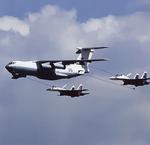
IL78_MKI-IRAN_B_7.2015Russian IL78 MKI tanker aircraft sold to Iran

The Secretary of State can expect some really hard questions during his trip on exactly how the Vienna accord makes the region safer, when Iran’s first act after signing is to arm itself with a fleet of Russian in-flight fuel tankers to expand and strengthen its range and power for aerial aggression.

*********************

In defiance of the international arms embargo, Iran last week placed an order with Moscow for a huge fleet of 100 Russian IL78 MKI tanker aircraft (NATO: Midas) for refueling its air force in mid-flight, thereby extending its range to 7,300 km. This is reported exclusively by DEBKAfile from its military and intelligence sources. The transaction runs contrary to the terms of the nuclear accord the six world powers and Iran signed in Vienna earlier this month.

These tanker planes can simultaneously refuel six to eight warplanes. Their acquisition brings Israel, 1.200km away – as well the rest of the Middle East – within easy range of Iranian aerial bombardment. It also puts Iran’s air force ahead of Israel’s in terms of the quantity and range of its refueling capacity.

Whereas opponents of the Vienna deal have warned that Tehran will spend the billions of dollars released by sanctions relief as a bonanza for fueling its campaigns of terror in the region, it turns out that Iran’s first post-accord purchase is a heavy investment in the rearmament and upgrade of its armed forces’ aggressive capabilities.

The Israeli air force is familiar with the Russian airborne tanker from its use by the Indian air force with which Israel has close ties of cooperation. Its military engineers have also upgraded the Russian fuel tankers in service with the Uzbekistan air force.

Tuesday, July 21, DEBKAfile uncovered some of the tactics and escape clauses Iran has had built into its nuclear accord with the world powers for circumventing its provisions and commitments. The purchase of Russian refueling craft is a concrete example of this kind of evasion. Because the accord confirms the arms embargo in force until 2020, both Moscow and Tehran can maintain that the Russian aircraft industry will not be able to produce 100 new planes before the five years are up, and so the transaction is not a violation.

The huge Iranian-Russian military transaction therefore stands as the first palpable test of the Vienna accord, depending on whether US President Barack Obama or his Secretary of State John Kerry decides to make an issue of it. If they just let it go, it will set a precedent for the arms embargo clause of the nuclear accord to start unraveling.

Also Tuesday, Kerry gave an interview to the Al Arabia TV to prepare the way for his mission to the Gulf region on Aug. 3, which is to ease its rulers’ extreme unease over the ramifications of the nuclear accord. He asserted strongly to the interviewer: “I am not going to go through in great detail all the ways in which this agreement, in fact, makes the Gulf States and the region safer.”

The Secretary of State can expect some really hard questions during his trip on exactly how the Vienna accord makes the region safer, when Iran’s first act after signing is to arm itself with a fleet of Russian in-flight fuel tankers to expand and strengthen its range and power for aerial aggression.

State Department Tries to Depict Lifting Arms Embargo On Iran as a ‘Win’ For U.S. in Nuclear Deal

July 22, 2015

State Department Tries to Depict Lifting Arms Embargo On Iran as a ‘Win’ For U.S. in Nuclear Deal

BY:
July 21, 2015 3:39 pm

via State Department Tries to Depict Lifting Arms Embargo On Iran as a ‘Win’ For U.S. in Nuclear Deal | Washington Free Beacon.

State Department spokesman John Kirby depicted the arms embargo lift on Iran in the nuclear deal as a victory for the United States Tuesday.

Last week, President Obama announced that a nuclear agreement had been reached with Iran.

As written in the agreement, Iran is allowed to continue uranium enrichment and maintain 6,000 centrifuges. In exchange, the U.S. and the U.N. will lift economic sanctions over time, remove a conventional weapons embargo after five years, and remove a ban on the research and development of ballistic missile technology after eight years.

The agreement said other restrictions on Iran’s nuclear program would last ten years. After ten years, Iran would be free to develop nuclear weapons.

Associated Press reporter Matt Lee asked Kirby, “Can you think of one instance in which what you ended up with was better than what you were seeking?”

“Well I think remember the–on the arms embargo and the–and the missile program sanctions, under the U.N. Security Council resolutions which put those sanctions in place and drove Iran to the negotiating table, it was always understood that all of those sanctions would be lifted at once when Iran complied with their requirements under Lausanne,” Kirby said.

Kirby also said the arms embargo and the ban on ballistic missile technology would have been lifted immediately if it were not for the United States, which held out for a five-year ban and an eight-year ban.

A 2010 U.N. Security Council resolution put a ban for member countries to sell conventional arms such as tanks, missile launchers, and fighter jets. Kirby continued to defend these victories by saying they were only enacted to get Iran to negotiations.

“But the U.N. Security Council resolutions, which put those sanctions on did so with the intent of driving Iran to the negotiating table, specifically over their nuclear program,” Kirby said. “So it was always understood by all the members of the P5- plus-1 members, that as a part of–to have a deal, without the sanctions relief, all of them, there would be no deal.”

Lee said that previous U.N. Security Council resolutions called for stricter restrictions on Iran’s nuclear program.

“But the problem that exists there is that those U.N. Security Council resolutions to which you refer, which have now been superseded by yesterday’s resolution, are stronger,” Lee said. “They call for Iran to suspend or halt enrichment altogether. So, when you say that well, Russia and China wanted the arms embargo and ballistic missile stuff to go immediately, they wouldn’t have gone immediately, because Iran wasn’t in compliance with the terms of the previous resolutions.”

Some Congressional Democrats do not share the Obama administration’s view that the embargo on arms is lifted as a victory.

“But you’d say that those are two things that you exceeded your expectations?” Lee asked.

“Yes, that’s one example, and if you need more, I’m happy to provide that for you,” Kirby said.

The Obama administration will not be able to claim these numerous issues as “victories.”

McFarland on Kerry’s Iran Inspections Claim: ‘It’s A Lie’

July 20, 2015

McFarland on Kerry’s Iran Inspections Claim: ‘It’s A Lie’

BY:
July 20, 2015 10:20 am

via McFarland on Kerry’s Iran Inspections Claim: ‘It’s A Lie’ | Washington Free Beacon.

KT McFarland offered a blunt appraisal Monday of Secretary of State John Kerry’s claim that the U.S. had never sought “anytime, anywhere” inspections of Iran’s suspected nuclear sites.

“It’s a lie,” McFarland, a former State Department official for Ronald Reagan, said. “The reason anytime, anyplace inspections are crucial is because Iran in the past has cheated, so you really need ironclad inspections.”

“You think he was lying?” Fox News host Bill Hemmer asked.

“I think he wants this deal so badly he’s willing to stretch the truth around this,” McFarland responded.

Several of Kerry’s close confidants during the Iran negotiations, including Secretary of Energy Ernest Moniz and Deputy National Security Adviser Ben Rhodes, are on record earlier in the year assuring reporters that the U.S. would insist on “anytime, anywhere” inspections as part of any deal.

McFarland said the inspections process that the U.S. ultimately agreed to gives Iran the ability to stall inspectors for almost a month before they can visit a suspicious site.

“When the president said that we have 24-hour access to key nuclear installations, no you don’t—you have a 24-day period to request to look inside, and Iran has 24 days to say yes you can or no you can’t,” McFarland said.

Observers have expressed grave concern about the complicated bureaucratic mechanism that the U.S. will have to fight through at the U.N. to gain approval for an IAEA inspection.

By the time inspectors reach a suspected site, they may find only “elaborate cleanup efforts” like those that have been found at Iran’s Parchin military complex during past inspections.


Will Anyone Help the Kurds?

July 19, 2015

Will Anyone Help the Kurds?, Gatestone InstituteUzay Bulut, July 19, 2015

  • What does the Turkish army — this flamboyant member of the NATO — want from the small Kurdish village of Roboski?
  • The West should apply pressure on Turkey to act humanely, morally and responsibly towards Kurds and other minorities. We all know that the Obama administration will never do that. But there are thousands of activists, academics, and universities who just turn a blind to the plight of Kurds as if their maltreatment is perfectly normal.
  • There are many “activists” like that. Their universities are filled with events bashing Israel. But if you ask them, they do not even know what is done to Kurds by their Turkish rulers. These activists are either ignorant or hypocritical. Their activism has nothing to do with caring about human beings; it is just about hating the Jews. When Turkey condemns Israel for “committing massacres,” Israelis should start lecturing Turkey about tens of thousands of dead Kurds and about how Turkey still treats them.

During Turkey’s elections on June 7, the pro-Kurdish Peoples’ Democratic Party (HDP) won a great victory by securing 13% of the vote, which allowed its candidates to occupy 80 seats in the 550-seat parliament of Turkey — not all of them are Kurdish, some are Turkish or of other ethnic groups. In any normal country, this would be welcomed by state authorities as a potential way to resolve a huge national issue in a non-violent manner for the benefit of both peoples, Kurds and Turks.

Sadly, Turkey does not seem to be about to do so. The recent incidents in which Ferhat Encu, a Kurdish deputy from the HDP, was threatened, insulted and beaten by Turkish soldiers in the Kurdish village of Roboski (Uludere) in the Kurdish-majority province of Sirnak are another manifestation of that. (Video of the incident: here and here, and here.)

For four months, the Turkish army has blockaded the plateaus in Roboski and banned the villagers from going to those places, Ferhat Encu told Gatestone Institute.

Heavy military reinforcements have also been sent to the village, which borders Iraq’s Kurdistan Regional Government, and this has created tension in the village, said Encu.

In 2011, Turkey’s air force killed 34 innocent civilians, including 17 children, in an airstrike on Roboski. Ferhat Encu lost 11 relatives in the massacre, including his brother Serhat Encu.

Between the 2011 massacre and his election to parliament in June 2015, Ferhat Encu had been detained by the police six times under to various pretexts, and then released.

On June 7, Encu travelled to Roboski, his hometown, to observe what was going on and try to ease tensions.

“Roboski is like an open prison,” he said later. “On 6 July, local people started a 2-day protest to end the ban on travel to the plateaus and stop the military reinforcements to the region. But soldiers shot their long barreled weapons [rifles] at the villagers.

“On July 7, about 20 soldiers intercepted us and threw [tear] gas bombs at our car. Then, a reporter from the newspaper Cumhuriyet, Mahmut Oral, got out of his car, introduced himself and asked them not to throw gas bombs, but they threatened him.

“Then, I got out of the car and I told them I am a [parliamentary] deputy. There were about 5 meters between the soldiers and me. At that moment, a few soldiers started shooting their guns randomly.”

Perhaps, they fired their guns up in the air. They may have done this just to scare him and the journalists, not to kill them. Even if they had killed them, they would have never been held accountable for that. There are lots of gunshots in the video.

Encu said that he told the soldiers they were not being resisted, and asked them to stop shooting.

“But they responded: ‘You are not our deputy. You are the deputy of terrorists, traitors, and marauders. And we represent the honor of the state.’

“Then the commander told me to buzz off and walked up to me — I tried to stop him from hitting me. Then soldiers started shooting their guns again while others battered me.”

Mahmut Oral, a reporter from the newspaper Cumhuriyet, who was present during the confrontation, wrote:

“When we got out of the car, saying that we are journalists, we were manhandled by soldiers and threatened with guns. When the situation got more serious, Encu got out the car but soldiers seized him by the collar and surrounded him. The soldiers told Encu that ‘we are the state here. What deputy? You are a terrorist and marauder.’… They kept insulting the journalists who tried to intervene between Encu and the soldiers… They threatened us with breaking our cameras and shooting us if we do not get back on the car.”

The 2011 Roboski Massacre

On December 28, 2011, Turkish F-16 fighter-bombers launched a five-hour long airstrike on Roboski, killing 34 civilians, including 17 children, some of whom were as young as 12.

The victims had been transporting cheap cigarettes, diesel oil and the similar items into Turkey when the bombing started. The bodies of some of the victims were burned beyond recognition or dismembered.

The AKP government has not provided any written or verbal apology for the massacre. Instead, on December 30, 2011, Erdogan, then prime minister, thanked the Turkish general staff for “their sensitivity towards the issue despite the media.”

Some of the victims froze to death, according to a report by human rights activists, doctors and lawyers; after the massacre, aid was not provided for hours and even ambulances were not allowed to enter the area.

878The funeral procession for the victims of the 2011 Roboski massacre in Turkey.

In May 2012, Prime Minister Erdogan said that whoever was trying to keep the Roboski massacre on the agenda was “the terrorist organization and its extensions.”

In June 2012, when families of the victims and representatives of NGOs came out to commemorate the dead, the police turned water cannons on them.

At first, public prosecutors from Diyarbakir were responsible for the investigation on the Roboski killings. But then, in June 2013, they announced that they were not going to deal with the case due to “lack of jurisdiction,” and forwarded the file to military prosecutors.

In January 2014, the Turkish military prosecutor’s office dismissed the investigation into the Roboski airstrike. The 16-page ruling said that “the staff of the Turkish armed forces acted in accordance with the decisions of the Turkish parliament and council of ministers and with the approval of the general staff.” The ruling also stated that Necdet Ozel, chief of the Turkish military’s general staff, gave the order for the airstrike from his home.

Veli Encu, Ferhat Encu’s brother, said that receiving the ruling by the military prosecutors was like having the 34 victims killed all over again:

“We struggled for two years to bring the perpetrators of the massacre to court, but the state officials did not even send the ruling to our lawyers. We learnt it from TV,” he said. “None of those responsible for the massacre have been removed from their posts. The perpetrators of the massacre are rewarded instead of being punished.”

He added that the government is trying to ban villagers from entering the location of the massacre.

“I and my four friends took a writer to the border as she was going to write a book on the massacre. On our way back, the military officers stopped us. They had about 30 dogs with them. They detained us even though we had not crossed the border. And they gave us a fine of 2,000 Turkish liras for border violation.”

Relatives, including children aged 12 and 13, who tried to go to the site to lay flowers to mark 500 days after the attack, were stopped, given fines or asked to report to the police station for “violating the passport law”.

Zeki Tosun, who lost his son in the massacre, said, “We went there to lay 34 cloves. But they gave us a fine of 3000 Turkish liras for each clove. … Here is like a cage. Every step we take is followed [by the Turkish army]. We are already in custody.”

The victims’ relatives were then brought to trial in court, but acquitted in August 2014.

Meanwhile, no perpetrator of the killings has yet been brought to trial, even as a criminal investigation was carried out against the survivors of the massacre, Davut Encu, Servet Encu and Haci Encu. They were interrogated in January 2012.

* * *

Attacks against this small village continue.

In June 2015, Ferhat Encu told the Bianet News Agency that soldiers had attacked people in Roboski for two days and that people were afraid to go outside.

“Soldiers broke into houses and battered women, detained four people and insulted people. A citizen was injured and the vehicle carrying him had an accident. When soldiers departed, everything calmed down.

“In this morning at 5 o’clock, without a warning, soldiers opened fire and killed villagers’ five mules. If people had been outside at that moment, they would have been killed.”

“I cannot comprehend this savageness. What do they want from Roboski?”

That is the question: What does the Turkish army — this flamboyant NATO member — want from this small Kurdish village?

The answer is that the dehumanization of Kurds in Turkey is so intense and widespread that state authorities cannot stand anything related to the Kurdish existence. Not only a Kurdish election victory — even if this election was for the parliament of Turkey, not of Kurdistan — but also Kurds’ demanding punishment for the perpetrators of a massacre is intolerable to them.

Kurds are not to be members of parliament, not to mention patriotic MPs that struggle for national rights. They are to be assimilated into “Turkishness” or be invisible, and if possible, dead. As the infamous saying of Turkish racists goes, “The best Kurd is a dead Kurd.”

Experience has taught us that in the 21st century, there are two ways of dealing with a national problem.

First, there is the right way — the moral, civilized and democratic way — in which you treat peoples under your rule with respect. When an indigenous people say that they are suffering or that they have complaints about or demands from you, you listen to them, try to understand and come terms with them because you regard them as your equals and you know that this indigenous people have been living in their ancient lands for centuries. Actually, you do not treat them as if they are less than fully human in the first place. And you do not put them through huge grievances.

But even then, a disagreement might emerge. On such on occasion, you also clarify your expectations and want that group to recognize your right to life and liberty, as well. And as civilized parties, you might decide to go separate ways and become good neighbors. But if you want to keep that people inside your borders, you at least recognize the national existence of that people. Whatever political and cultural rights you have, you grant those things to them. This is how political leaders with moral considerations would behave.

But then, there is the traditional Turkish-Islamic or Middle Eastern way: In such a political culture, when indigenous peoples or minority groups have complaints or demands, you instantly crush them with your army. You murder them en masse, deny their existence, torture them as you wish, insult them daily and then call them “terrorists”, “traitors” and “marauders”. And you commit all those atrocities based on one thing: your military power. For that is the only “value” you have.

Kurds entering the Turkish parliament by getting so many votes was a huge victory, and should be cherished as an opportunity for achieving democratic peace in the region.

And Kurds have made it clear many times that they wish to live in peace. Before the elections, Selahattin Demirtas, the co-president of the pro-Kurdish Peoples’ Democratic Party (HDP), said that “whether the HDP enters the parliament or not, we will defend peace.”

But if even becoming MPs and demanding a legal way to resolve the Kurdish issue through dialogue and negotiations cannot provide Kurds with political recognition and national rights, what else are they supposed to do?

Is it not high time that the international community heard of the plight of Kurds and supported them? The US helped to liberate Kosovo. The West should now apply pressure on Turkey to act humanely, morally and responsibly towards Kurds and other minorities.

We all know that the Obama administration would never do that. But there are individuals and organizations outside of Turkey. There are thousands of activists, academics, universities who just turn a blind to the plight of Kurds as if their maltreatment is perfectly normal.

If they are ignorant and unaware of the Kurds and other minorities in the region, we need to educate them, and hope that after they learn the truth, they will “act.” If they still do not care, then they are hypocrites. There are many “activists” like that. Their universities are filled with events bashing Israel. But if you ask them, they do not even know what is going on in Kurdistan and what is done to Kurds by their Turkish rulers. These activists are either ignorant or hypocritical. Their activism has nothing to do with caring about human beings; it is just about hating the Jews. When Turkey condemns Israel for “committing massacres,” Israelis should start lecturing Turkey about tens of thousands of dead Kurds and about how Turkey still treats them.