Posted tagged ‘Middle East’

Lieberman: If Syria targets our aircraft again, we’ll destroy its air defens…

March 19, 2017

Defense minister warns Assad regime after it unsuccessfully tried to shoot down IAF fighter jets on Friday night by firing an S-200 missile at it; ‘We have no interest in interfering in the Syrian civil war or clashing with the Russians, but we won’t hesitate to defend Israel’s security,’ Lieberman says.

Yoav Zitun|Published:  19.03.17 , 11:44

Source: Ynetnews News – Lieberman: If Syria targets our aircraft again, we’ll destroy its air defens…


Defense Minister Avigdor Lieberman threatened Sunday to destroy Syria’s air defense apparatus if it targets Israeli fighter jets again after the Assad regime tried to shoot down Israeli Air Force (IAF) planes over the weekend.

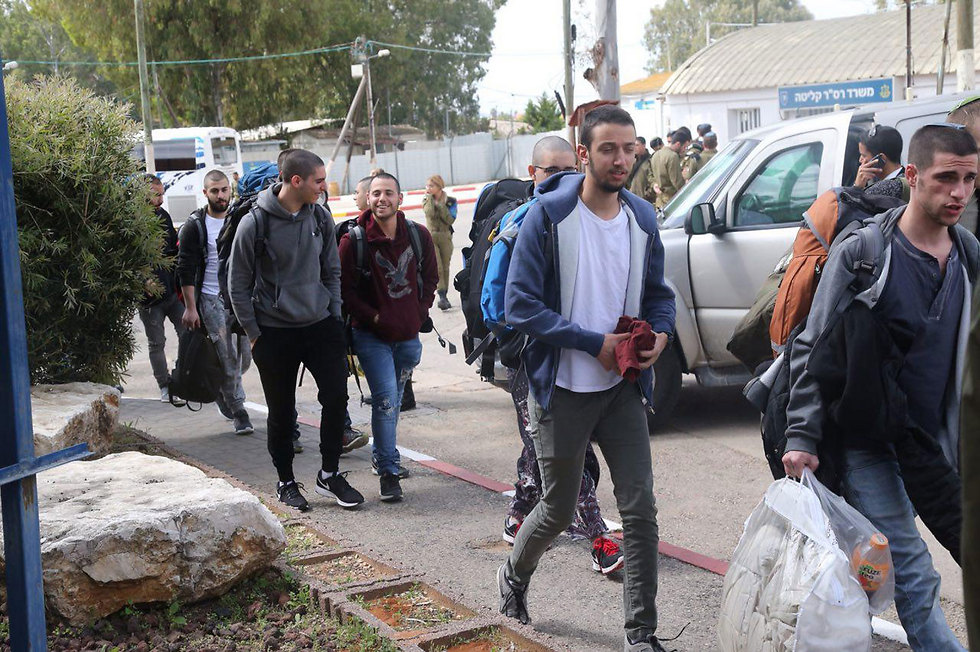
“We have no interest in interfering in the Syrian civil war, not for nor against (President Bashar) Assad, and we have no interest in clashing with the Russians,” Lieberman clarified during a visit to the IDF induction center.

“Our main problem is with the transfer of advanced weapons from Syria to Lebanon. That is why every time we identify an attempt to smuggle game-changing weapons, we will act to thwart it. There will be no compromise on this issue,” the defense minister stressed.

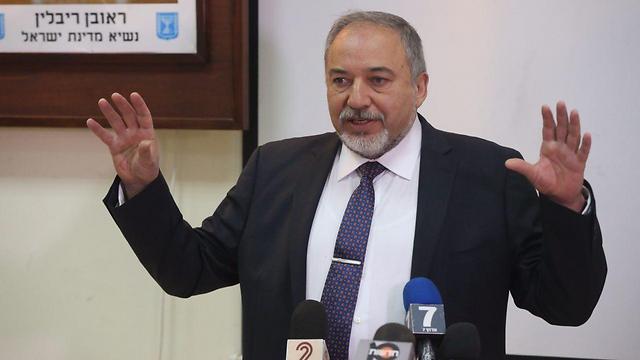
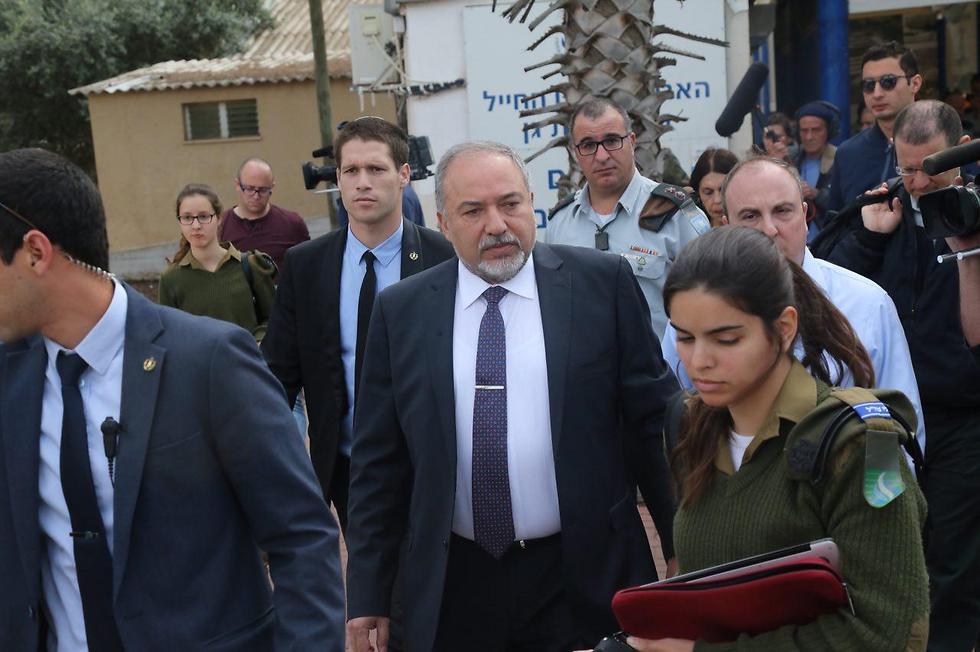
Lieberman at the IDF induction center (Photo: Motti Kimchi)

Lieberman at the IDF induction center (Photo: Motti Kimchi)

He added that “if the IDF does choose to act, there is a real reason for it.”

Israeli Arrow anti-aircraft missiles were used to intercept a Syrian S-200 missile fired at IAF jets that returned to Israeli territory after attacking targets in Syria on Friday night.

“Next time, if the Syrian aerial defense apparatus acts against our planes, we will destroy it,” Lieberman said. “We won’t hesitate. Israel’s security is above everything else; there will be no compromise.”

Lieberman at the IDF induction center (Photo: Motti Kimchi)

Lieberman at the IDF induction center (Photo: Motti Kimchi)

Similarly, he said, the IDF will respond to any rocket fire coming from the Gaza Strip “with force.”

“We’ll cut down Hamas’s capabilities, we’re not willing to tolerate any provocation,” Lieberman said. “We won’t take money from the Israeli taxpayer to invest in electricity and water for the strip, while they are investing their money in tunnels.”

New recruits at the IDF induction center (Photo: Motti Kimchi)

New recruits at the IDF induction center (Photo: Motti Kimchi)

The defense minister also addressed his ongoing feud with Education Minister Naftali Bennett over disparaging remarks made by Rabbi Yigal Levinstein about women in the IDF. Lieberman called on the rabbi to resign and threatened to halt Defense Ministry recognition of the rabbi’s pre-army preparatory yeshiva, which angered Bennett.

“The IDF presents a variety of options—from Caracal (a co-ed battalion) to the Haredi Nahal (for ultra-Orthodox soldiers). Everyone has a place,” Lieberman determined. “This sweeping attack against women is unreasonable. We’ve tried to avoid friction with Levinstein. We’ve forgiven him twice before (for similar comments) and dragged our feet on this. A third time is too much.”

Lieberman added that Rabbi Levinstein will face a disciplinary hearing, in accordance with a legal opinion in the Defense Ministry.

(Translated and edited by Yaara Shalom)

Leon Panetta enters the ‘No Spin Zone’

March 17, 2017

Leon Panetta enters the ‘No Spin Zone’, Fox News via YouTube, March 16, 2017

As the blurb beneath the video states,

Former CIA Director discusses U.S. troops in combat and American surveillance controversies on ‘The O’Reilly Factor’

Before Arrival of Trump Envoy, PA Glorified Terrorist Who Murdered 38 Israelis 

March 17, 2017

When Jason Greenblatt, the Trump administration’s Special Representative for International Negotiati

BY:
March 16, 2017 2:49 pm

Source: Before Arrival of Trump Envoy, PA Glorified Terrorist Who Murdered 38 Israelis 

Mahmoud Abbas / Getty Images

When Jason Greenblatt, the Trump administration’s Special Representative for International Negotiations, met with Palestinian Authority President Mahmoud Abbas on Tuesday, Abbas “assured Mr. Greenblatt that he is fully committed to creating an atmosphere that is conducive to making peace.”

Just days earlier, Abbas, his Fatah Party, and the Palestinian Authority were celebrating a notorious terrorist on the anniversary of her attack in which 38 Israeli civilians, including 13 children, were shot and burned to death in a bus hijacking.

The Palestinian Authority’s annual celebration of the 1978 Coastal Road Massacre, the deadliest Palestinian terror attack in history, fell on March 11 and 12. Greenblatt arrived on March 13.

According to a report by the Middle East Media Research Institute, both Abbas’s Fatah Party and the Palestinian Authority glorified the terror attack in official media and in government celebrations.

On March 12, the Palestinian Authority opened a “youth training camp” named after the terrorist who carried out the attack, Dalal Mughrabi. The ceremony was attended by top Fatah Party officials.

The Palestinian Authority National Security Forces posted a picture of Mughrabi to Facebook with the caption, “The martyr Dalal Al-Mughrabi, the bride of Jaffa, on the 39th anniversary of her martyr’s death.”

Additionally, the governor of Ramallah and the Fatah Party in Bethlehem hosted ceremonies honoring Mughrabi and the attack, hailing her as a role model for Palestinians.

In a statement after his meeting with Greenblatt, the Palestinian Authority said “President Abbas committed to preventing inflammatory rhetoric and incitement.”

The Real Hamas: Sorry, Folks!

March 16, 2017

What Hamas says, day and night, in Arabic, tells the real story. In fact, Hamas officials are very clear and straightforward when they address their people in Arabic. Yet some Western and Israeli analysts do not want to be bothered by the facts. Some

by Bassam Tawil

March 15, 2017 at 5:00 am

Source: The Real Hamas: Sorry, Folks!

  • What Hamas says, day and night, in Arabic, tells the real story. In fact, Hamas officials are very clear and straightforward when they address their people in Arabic. Yet some Western and Israeli analysts do not want to be bothered by the facts.
  • Some reports have suggested that Hamas leaders Khaled Mashaal and Ismail Haniyeh are the ones pushing for the changes in the movement’s charter. However, even if Mashaal and Haniyeh succeed in their mission, there is no guarantee that Hamas’s military wing would comply.
  • Hamas has also denied its intention to cut off its ties with the Muslim Brotherhood. “The reports are aimed at tarnishing the image of Hamas in the eyes of the world,” explained a top Hamas official. He also denied that Hamas was planning to abandon the armed struggle against Israel in favor of a peaceful popular “resistance.”

What does Hamas mean when it says that it “accepts” an independent Palestinian state in the West Bank, Gaza Strip and East Jerusalem without recognizing Israel’s right to exist?

Is this a sign of moderation and pragmatism on the part of the extremist Islamic terror movement? Or is it just another ploy intended to deceive everyone, especially gullible Westerners, into believing that Hamas has abandoned its strategy of destroying Israel in favor of a two-state solution?

Recent reports have suggested that Hamas is moving towards “declaring a Palestinian state over the 1967 borders.”

According to the reports, Hamas is also contemplating changing its charter so that it would no longer include anti-Semitic references. The charter, which was drafted in August 1988, contains anti-Semitic passages and characterizations of Israeli society as Nazi-like in its cruelty. The same reports also claimed that Hamas’s revised charter will also state that the terror movement is not part of the Muslim Brotherhood.

Some analysts in Israel and the West have interpreted these reports as a sign that Hamas is finally endorsing a policy of pragmatism toward Israel and Jews. They are particularly excited about Hamas’s purported intention to declare (in its revised charter) that its conflict is “only with Zionism and the occupation, and not with Jews around the world.”

Judging from the analyses published by some commentators and Palestinian affairs “experts” in the past few days, one might conclude that Hamas is on its way to making a dramatic change in its vicious ideology. Unfortunately, however, the facts suggest otherwise.

Changes or no changes, the movement has no intention whatsoever of abandoning its jihad to destroy Israel and kill Jews.

The purported shift in Hamas’s policy is illusory. What Hamas says, day and night, in Arabic, tells the real story. In fact, Hamas officials are very clear and straightforward when they address their people in Arabic. Yet some Western and Israeli analysts do not want to be bothered by the facts.

When Hamas talks about “accepting” a Palestinian state in the pre-1967 lines without recognizing Israel’s right to exist, it is actually saying, “Give us a state so that we can use it as a launching pad to destroy Israel.”

Indeed, senior Hamas official Ismail Radwan leaves no room for ambiguity when he explains this point. Hamas, he says, does not oppose the establishment of a Palestinian state on the 1967 “borders,” but this does not mean that “we will recognize the Zionist occupation and that the entire Palestinian land belongs to Palestinian and Islamic generations.” He also repeated Hamas’s opposition to any form of negotiations with Israel.

Hamas leader Mahmoud Zahar was also quick to refute claims that his movement was headed toward accepting the two-state solution. Calling for stepping up the “intifada” against Israel, Zahar said that Hamas’s goal was to “liberate all of Palestine.”

Hamas has also denied its intention to cut off its ties with the Muslim Brotherhood. “The reports are aimed at tarnishing the image of Hamas in the eyes of the world,” explained a top Hamas official. He also denied that Hamas was planning to abandon the armed struggle against Israel in favor of a peaceful popular “resistance.”

Some reports have suggested that Hamas leaders Khaled Mashaal and Ismail Haniyeh are the ones pushing for the changes in the movement’s charter. However, even if Mashaal and Haniyeh succeed in their mission, there is no guarantee that Hamas’s military wing would comply.

Hamas’s recent internal and secret election saw the rise of Yahya Sinwar as the top leader of the movement in the Gaza Strip. His election is seen as an indication of the growing influence of Hamas’s military wing. Sinwar, a convicted murderer, was released from Israeli prison a few years ago. The rise of Sinwar to power is also a sign that Hamas is headed toward more extremism and terrorism and preparing for the next war with Israel.

The Hamas military wing has a rather spotty history of following the directives of the movement’s political leaders. For example, recurring attempts by Mashaal and Haniyeh to end the dispute with Mahmoud Abbas’s Palestinian Authority (PA) have been repeatedly thwarted by the Hamas military wing and other leaders of the movement, first and foremost Zahar.

Let’s remember, for a moment, the annual rallies held by Hamas’s military wing in the Gaza Strip. At these rallies, masked Hamas terrorists remind the world that their true goal is to “liberate all of Palestine.”

Armed Hamas militiamen on parade with a vehicle-mounted rocket launcher in Gaza, in August 2016. (Image source: PressTV video screenshot)

At one such rally, Zahar announced that Hamas already has an army whose mission is to “liberate all of Palestine.” He continued: “By God’s will, this army will reach Jerusalem.”

Hamas continues to remain committed to all forms of terrorism against Israelis. There are no signs whatsoever that the movement is on its way to endorsing a peaceful and popular resistance against Israel. Quite the opposite is true: Hamas never misses an opportunity to clarify that it continues to encourage terrorism against Israel. The latest assertion from Hamas came this week when one of its spokesmen, Abdel Latif Al-Kanou, issued a statement praising a stabbing attack against two Israeli policemen in Jerusalem. Hailing the attack as a “heroic operation,” the spokesman stressed that the “intifada” against Israel would continue.

This is not the first time that Hamas has talked about “accepting” a Palestinian state on the pre-1967 lines.

In the past, some Hamas officials were quoted as saying that they do not rule out the possibility that their movement would one day accept such an idea. But these statements always came in the context of Hamas’s effort to rid itself of its growing isolation in the Gaza Strip.

The latest reports concerning floated changes in Hamas’s charter, too, ought to be seen in the context of the movement’s ongoing effort to end its isolation. But it is nothing but a smokescreen to mislead the international community into believing that it is on its way to toning down its murderous intentions.

So, what is prompting this disingenuous “change of heart”?

Reports that the Trump Administration is considering the possibility of designating the Muslim Brotherhood as a terrorist group. In all likelihood, Hamas is simply seeking to appear as if it is moving toward moderation. In other words, Hamas is prepared to lie — at least in English — about its independence from the Muslim Brotherhood.

Disturbingly, some Westerners are already marketing Hamas’s deception tactics as a “major shift” in the movement’s ideology and plans. Facts, however, are that Hamas remains a terrorist organization that has not and will not abandon its plans to eliminate Israel and kill as many Jews as possible. Here is a dose of deadly reality: Hamas seeks to extend its control to the West Bank as part of its plan to destroy Israel. It wants Israel to give the Palestinians more land so that it would be used as a launching pad to drive the Jews into the sea. This is Hamas, like it or not.

Bassam Tawil is a scholar based in the Middle East.

Report: Iran Pushing Deal With Assad Regime To Build Naval Base In Syria

March 12, 2017

Report: Iran Pushing For Deal With Assad Regime To Build Naval Base In Syria

by Deborah Danan

12 Mar 2017

Source: Report: Iran Pushing Deal With Assad Regime To Build Naval Base In Syria

LOUAI BESHARA/AFP/Getty Images

TEL AVIV – Iran is closing a deal with Syrian President Bashar Assad to build a military base at the port of Latakia in Syria, an Israeli diplomatic official told the Hebrew news site Walla on Friday.

The naval base would act as payment for Iran’s support of Assad over the past six years of civil war, the unnamed official said.

According to the report, establishing an Iranian military presence on the Mediterranean Sea would be viewed by Israel as a “radical step” that would “heighten the instability in the region and advance terror” against the Jewish state. Such a measure would also increase the threat to the Israeli home front since it would strengthen the Iran-backed terror group Hezbollah, which is currently fighting in Syria.

On Thursday, Prime Minister Benjamin Netanyahu relayed his concerns about Iran’s intentions to build a naval base in his meeting with Russian President Vladimir Putin in Moscow.

“I spoke with President Putin at length about the strategic significance of Iran’s creating a permanent presence in Syria, or its attempt to do so,” he said in a press briefing following their meeting, adding that an Iranian presence in Syria would be against the “long-term interests of everyone except the Iranians.”

“I said that it would undermine the stability, and actually hurt the possibility of a diplomatic arrangement [for Syria]. I made it clear that it is something that will be unacceptable to the State of Israel.”

Netanyahu said he believed Putin was receptive to his concerns.

“I made it clear to President Putin our resolute opposition to the consolidation of Iran and its proxies in Syria,” the prime minister said. “We see Iran trying to build a military force, military infrastructure, with the intention to be based in Syria, including the attempt by Iran to build a seaport. All this has serious implications in terms of Israel’s security.”

The future of counterterrorism: Addressing the evolving threat to domestic security

March 1, 2017

The future of counterterrorism: Addressing the evolving threat to domestic security, Long War Journal, February 28, 2017

Below is Thomas Joscelyn’s testimony to the House Committee on Homeland Security, Subcommittee Counterterrorism and Intelligence, on the future of counterterrorism and addressing the evolving threat to domestic security.

Chairman King, Ranking Member Rice, and other members of the committee, thank you for inviting me to testify today. The terrorist threat has evolved greatly since the September 11, 2001 hijackings. The U.S. arguably faces a more diverse set of threats today than ever. In my written and oral testimony, I intend to highlight both the scope of these threats, as well as some of what I think are the underappreciated risks.

My key points are as follows:

– The U.S. military and intelligence services have waged a prolific counterterrorism campaign to suppress threats to America. It is often argued that because no large-scale plot has been successful in the U.S. since 9/11 that the risk of such an attack is overblown. This argument ignores the fact that numerous plots, in various stages of development, have been thwarted since 2001. Meanwhile, Europe has been hit with larger-scale operations. In addition, the U.S. and its allies frequently target jihadists who are suspected of plotting against the West. America’s counterterrorism strategy is mainly intended to disrupt potentially significant operations that are in the pipeline.

-Over the past several years, the U.S. military and intelligence agencies claim to have struck numerous Islamic State (or ISIS) and al Qaeda “external operatives” in countries such as Afghanistan, Iraq, Libya, Pakistan, Syria, Yemen, and elsewhere. These so-called “external operatives” are involved in anti-Western plotting. Had they not been targeted, it is likely that at least some of their plans would have come to fruition. Importantly, it is likely that many “external operatives” remain in the game, and are still laying the groundwork for attacks in the U.S. and the West.

-In addition, the Islamic State and al Qaeda continue to adapt new messages in an attempt to inspire attacks abroad. U.S. law enforcement has been forced to spend significant resources to stop “inspired” plots. As we all know, some of them have not been thwarted. The Islamic State’s caliphate declaration in 2014 heightened the threat of inspired attacks, as would-be jihadists were lured to the false promises of Abu Bakr al Baghdadi’s cause.

-The Islamic State also developed a system for “remote-controlling” attacks in the West and elsewhere. This system relies on digital operatives who connect with aspiring jihadis via social media applications. The Islamic State has had more success with these types of small-scale operations in Europe. But as I explain in my written testimony, the FBI has uncovered a string of plots inside the U.S. involving these same virtual planners.

-The refugee crisis is predominately a humanitarian concern. The Islamic State has used migrant and refugee flows to infiltrate terrorists into Europe. Both the Islamic State and al Qaeda could seek to do the same with respect to the U.S., however, they have other means for sneaking jihadists into the country as well. While some terrorists have slipped into the West alongside refugees, the U.S. should remain focused on identifying specific threats.

-More than 15 years after 9/11, al Qaeda remains poorly understood. Most of al Qaeda’s resources are devoted to waging insurgencies in several countries. But as al Qaeda’s insurgency footprint has spread, so has the organization’s capacity for plotting against the West. On 9/11, al Qaeda’s anti-Western plotting was primarily confined to Afghanistan, with logistical support networks in Pakistan, Iran, and other countries. Testifying before the Senate in February 2016, Director of National Intelligence (DNI) James Clapper warned that the al Qaeda threat to the West now emanates from multiple countries. Clapper testified that al Qaeda “nodes in Syria, Pakistan, Afghanistan, and Turkey” are “dedicating resources to planning attacks.” To this list we can add Yemen. And jihadists from Africa have been involved in anti-Western plotting as well. Incredibly, al Qaeda is still plotting against the U.S. from Afghanistan.

Both the Islamic State and al Qaeda continue to seek ways to inspire terrorism inside the U.S. and they are using both new and old messages in pursuit of this goal.

The jihadists have long sought to inspire individuals or small groups of people to commit acts of terrorism for their cause. Individual terrorists are often described as “lone wolves,” but that term is misleading. If a person is acting in the name of a global, ideological cause, then he or she cannot be considered a “lone wolf,” even if the individual in question has zero contact with others. In fact, single attackers often express their support for the jihadists’ cause in ways that show the clear influence of propaganda.

Indeed, al Qaeda and al Qaeda in the Arabian Peninsula (AQAP) first began to aggressively market the idea of “individual” or “lone” operations years ago. AQAP’s Inspire magazine is intended to provide would-be jihadists with everything they could need to commit an attack without professional training or contact. Anwar al Awlaki, an AQAP ideologue who was fluent in English, was an especially effective advocate for these types of plots. Despite the fact that Awlaki was killed in a U.S. airstrike in September 2011, his teachings remain widely available on the internet.

The Islamic State capitalized on the groundwork laid by Awlaki and AQAP. In fact, Abu Bakr al Baghdadi’s operation took these ideas and aggressively marketed them with an added incentive. Al Qaeda has told its followers that it wants to eventually resurrect an Islamic caliphate. Beginning in mid-2014, the Islamic State began to tell its followers that it had already done so in Iraq, Syria, and elsewhere. Baghdadi’s so-called caliphate has also instructed followers that it would be better for them to strike inside their home countries in the West, rather than migrate abroad for jihad. The Islamic State has consistently marketed this message.

In May 2016, for instance, Islamic State spokesman Abu Muhammad al Adnani told followers that if foreign governments “have shut the door of hijrah [migration] in your faces,” then they should “open the door of jihad in theirs,” meaning in the West. “Make your deed a source of their regret,” Adnani continued. “Truly, the smallest act you do in their lands is more beloved to us than the biggest act done here; it is more effective for us and more harmful to them.”

“If one of you wishes and strives to reach the lands of the Islamic State,” Adnani told his audience, “then each of us wishes to be in your place to make examples of the crusaders, day and night, scaring them and terrorizing them, until every neighbor fears his neighbor.” Adnani told jihadists that they should “not make light of throwing a stone at a crusader in his land,” nor should they “underestimate any deed, as its consequences are great for the mujahidin and its effect is noxious to the disbelievers.”

The Islamic State continued to push this message after Adnani’s death in August 2016.

In at least several cases, we have seen individual jihadists who were first influenced by Awlaki and AQAP gravitate to the Islamic State’s cause. Syed Rizwan Farook and his wife were responsible for the December 2, 2015 San Bernardino massacre. They pledged allegiance to Baghdadi on social media, but Farook had drawn inspiration from Awlaki and AQAP’s Inspire years earlier.

Omar Mateen swore allegiance to Baghdadi repeatedly on the night of his assault on a LGBT nightclub in Orlando, Florida. However, a Muslim who knew Mateen previously reported to the FBI that Mateen was going down the extremist path. He told the FBI in 2014 that Mateen was watching Awlaki’s videos. It was not until approximately two years later, in early June 2016, that Mateen killed 49 people and wounded dozens more in the name of the supposed caliphate.

Ahmad Khan Rahami, the man who allegedly planted bombs throughout New York and New Jersey in September 2016, left behind a notebook. In it, Rahami mentioned Osama bin Laden, “guidance” from Awlaki, an also referenced Islamic State spokesman Adnani. Federal prosecutors wrote in the complaint that Rahami specifically wrote about “the instructions of terrorist leaders that, if travel is infeasible, to attack nonbelievers where they live.” This was Adnani’s key message, and remains a theme in Islamic State propaganda.

The Department of Justice (DOJ) has alleged that other individuals who sought to support the Islamic State were first exposed to Awlaki’s teachings as well.

These cases demonstrate that the jihadis have developed a well of ideas from which individual adherents can draw, but it may take years for them to act on these beliefs, if they ever act on them at all. There is no question that the Islamic State has had greater success of late in influencing people to act in its name. But al Qaeda continues to produce recruiting materials and to experiment with new concepts for individual attacks as well.

Al Qaeda and its branches have recently called for revenge for Sheikh Omar Abdel Rahman, who died in a U.S. prison earlier this month. Rahman was convicted by a U.S. court for his involvement in plots against New York City landmarks in the mid-1990s. Since then, al Qaeda has used Rahman’s “will” to prophesize his death and to proactively blame the U.S. for it. Approximately 20 years after al Qaeda first started pushing this theme, Rahman finally died. Al Qaeda’s continued use of Rahman’s prediction, which is really just jihadist propaganda, demonstrates how these groups can use the same concepts for years, whether or not the facts are consistent with their messaging. Al Qaeda also recently published a kidnapping guide based on old lectures by Saif al Adel, a senior figure in the group. Al Adel may or may not be currently in Syria. Al Qaeda is using his lectures on kidnappings and hostage operations as a way to potentially teach others how to carry them out. The guide was published in both Arabic and English, meaning that al Qaeda seeks an audience in the West for al Adel’s designs.

Both the Islamic State and AQAP also continue to produce English-language magazines for online audiences. The 15th issue of Inspire, which was released last year, provided instructions for carrying out “professional assassinations.” AQAP has been creating lists of high-profile targets in the U.S. and elsewhere that they hope supporters will use in selecting potential victims. AQAP’s idea is to maximize the impact of “lone” attacks by focusing on wealthy businessmen or other well-known individuals. AQAP has advocated for, and praised, indiscriminate attacks as well. But the group has critiqued some attacks (such as the Orlando massacre at a LGBT nightclub) for supposedly muddying the jihadists’ message. AQAP is trying to lay the groundwork for more targeted operations. For example, the January 2015 assault on Charlie Hebdo’s offices in Paris was set in motion by al Qaeda and AQAP. Inspire even specifically identified the intended victims beforehand. Al Qaeda would like individual actors, with no foreign ties, to emulate such precise hits.

Meanwhile, the Islamic State has lowered the bar for what is considered a successful attack, pushing people to use cars, knives, or whatever weapons they can get in their hands. The Islamic State claimed that both the September 2016 mall stabbings in Minnesota and the vehicular assault at Ohio State University in November 2016 were the work of its “soldiers.” It may be the case that there were no digital ties between these attackers and the Islamic State. However, there is often more to the story of how the Islamic State guides such small-scale operations.

The Islamic State has sought to carry out attacks inside the U.S. via “remote-controlled” terrorists.

A series of attacks in Europe and elsewhere around the globe have been carried out by jihadists who were in contact, via social media applications, with Islamic State handlers in Syria and Iraq. The so-called caliphate’s members have been able to remotely guide willing recruits through small-scale plots that did not require much sophistication. These plots targeted victims in France, Germany, Russia, and other countries. In some cases, terrorists have received virtual support right up until the moment of their attack. The Islamic State has had more success orchestrating “remote-controlled” plots in Europe, but the jihadist group has also tried to carry out similar plots inside the U.S.

Since 2015, if not earlier, the U.S.-led coalition has launched airstrikes against the Islamic State operatives responsible for these operations. Jihadists such Rachid Kassim, Junaid Hussain, and Abu Issa al Amriki have all been targeted. Both Hussain and al Amriki sought to “remotely-control” attacks inside the U.S. They have reached into other countries as well. For example, British Prime Minister David Cameron connected Hussain to plots in the UK. And Hussain’s wife, Sally Jones, has also reportedly used the web to connect with female recruits.

Kassim was tracked to a location near Mosul, Iraq earlier this month. Hussain was killed in an American airstrike in Raqqa, Syria on August 24, 2015. Along with his wife, al Amriki perished in an airstrike near Al Bab, Syria on April 22, 2016. But law enforcement officials are still dealing with their legacy and it is possible that others will continue with their methods.

In this section, I will briefly outline several cases in which Hussain and al Amriki were in contact with convicted or suspected terror recruits inside the U.S. In a number of cases, the FBI has used confidential informants or other methods in sting operations to stop these recruits. It should be noted that it is not always clear how much of a threat a suspect really posed and the press has questioned the FBI’s methods in some of these cases. I have included the examples below to demonstrate how the Islamic State’s digital operatives have contacted potential jihadists across the U.S.

For example, Hussain was likely in contact with the two gunmen who opened fire at an event dedicated to drawing pictures of the Prophet Mohammed in Garland, Texas on May 3, 2015. As first reported by the SITE Intelligence Group, Hussain (tweeting under one of his aliases) quickly claimed the gunmen were acting on behalf of the caliphate. Then, in June 2015, Hussain claimed on Twitter that he had encouraged Usaamah Rahim, an Islamic State supporter, to carry a knife in case anyone attempted to arrest him. Rahim was shot and killed by police in Boston after allegedly wielding the blade. The DOJ subsequently confirmed that Rahim was “was communicating with [Islamic State] members overseas, including Junaid Hussain.”

On July 7, 2016, Munir Abdulkader, of West Chester, Ohio, pleaded guilty to various terrorism-related charges. According to the DOJ, Abdulkader communicated with Hussain, who “directed and encouraged Abdulkader to plan and execute a violent attack within the United States.” In conversations with both Hussain and a “confidential human source,” Abdulkader discussed a plot “to kill an identified military employee on account of his position with the U.S. government.” Abdulkader planned to abduct “the employee at the employee’s home” and then film this person’s execution. After murdering the military employee, Abdulkader “planned to perpetrate a violent attack on a police station in the Southern District of Ohio using firearms and Molotov cocktails.” Hussain repeatedly encouraged Islamic State followers to attack U.S. military personnel, just as Abdulkader planned.

On August 11, 2016, Emanuel Lutchman of Rochester, New York pleaded guilty to conspiring to provide material support to the Islamic State as part of a planned New Year’s Eve attack. Lutchman admittedly conspired with Abu Issa al Amriki after he “initiated online contact” with the Islamic State planner on Christmas Day 2015. “In a series of subsequent communications,” DOJ noted, al Amriki “told Lutchman to plan an attack on New Year’s Eve and kill a number of kuffar [nonbelievers].” Al Amriki wanted Lutchman “to write something before the attack and give it to” an Islamic State member, “so that after the attack the [Islamic State] member could post it online to announce Lutchman’s allegiance” to the so-called caliphate. Lutchman wanted to join the Islamic State overseas, but al Amriki encouraged him to strike inside the U.S., as it would better serve the jihadists’ cause. “New years [sic] is here soon,” al Amriki typed to Lutchman. “Do operations and kill some kuffar.” Al Amriki also promised Lutchman some assistance in traveling to Syria or Libya, if the conditions were right. Lutchman divulged his contacts with al Amriki to individuals who, “unbeknownst to Lutchman,” were “cooperating with the FBI.”

On November 7, 2016, Aaron Travis Daniels, also known as Harun Muhammad and Abu Yusef, was arrested at an airport in Columbus, Ohio. He was reportedly en route to Trinidad, but he allegedly intended to travel to Libya for jihad. According to DOJ, Daniels was in contact with Abu Issa al Amriki, who acted as a “recruiter and external attack planner.” Daniels said at one point that it was al Amriki who “suggested” he go to Libya “to support jihad” and he allegedly “wired money to an intermediary” for al Amriki. The DOJ did not allege that Daniels planned to commit an attack in Ohio or elsewhere inside the U.S. Still, the allegations are significant because Daniels was allegedly in contact with al Amriki.

On November 29, 2016, Justin Nojan Sullivan, of Morganton, North Carolina, pleaded guilty to terrorism-related charges. “Sullivan was in contact and plotted with now-deceased Syria-based terrorist Junaid Hussain to execute acts of mass violence in the United States in the name of the” Islamic State, Acting Assistant Attorney General for National Security Mary B. McCord said in a statement. Sullivan and Hussain “conspired” to “plan mass shooting attacks in North Carolina and Virginia,” with Sullivan intending “to kill hundreds of innocent people.”

On February 10, 2017, the DOJ announced that two New York City residents, Munther Omar Saleh and Fareed Mumuni, pleaded guilty to terror-related charges. “Working with [Islamic State] fighters located overseas, Saleh and Mumuni also coordinated their plot to conduct a terrorist attack in New York City,” the DOJ explained. Saleh, from Queens, sought and received instructions from an [Islamic State] attack facilitator to create a pressure-cooker bomb and discussed with the same [Islamic State] attack facilitator potential targets for a terrorist attack in New York City.” Saleh “also sought and received religious authorization from an [Islamic State] fighter permitting Mumuni to conduct a suicide ‘martyrdom’ attack by using a pressure-cooker bomb against law enforcement officers who were following the co-conspirators and thus preventing them from traveling to join” the Islamic State. Federal prosecutors revealed that the “attack facilitator” Saleh was talking to was, in fact, Junaid Hussain.

Also on February 10, 2017, Mohamed Bailor Jalloh, a Virginia man and former member of the Army National Guard, was sentenced to 11 years in prison and five years supervised release for attempting to provide material support to the Islamic State. According to the DOJ, Jalloh was in contact with Islamic State members both in person and online. He met Islamic State members in Nigeria during a “six-month trip to Africa” and also “began communicating online with” an Islamic State member located overseas during this time. The Islamic State member “brokered” Jalloh’s “introduction” to the FBI’s confidential human source. This means the U.S. government’s intelligence was so good in this case that the digital handler was actually fooled into leading Jalloh into a dead-end. Still, Jalloh considered “conducting an attack similar to the terrorist attack at Ft. Hood, Texas,” which left 13 people dead and dozens more wounded.

More than 15 years after the 9/11 hijackings, al Qaeda is still plotting against the U.S.

Al Qaeda has not been able to replicate its most devastating attack in history, the September 11, 2001 hijackings. But this does not mean the al Qaeda threat has disappeared. Instead, al Qaeda has evolved. There are multiple explanations for why the U.S. has not been struck with another 9/11-style, mass casualty operation. These reasons include: the inherent difficulty in planning large-scale attacks, America’s improved defenses, and a prolific counterterrorism campaign overseas.

In addition, contrary to a widely-held assumption in counterterrorism circles, al Qaeda has not made striking the U.S. its sole priority. In fact, al Qaeda leader Ayman al Zawahiri has even ordered his men in Syria to stand down at times, as they prioritized the war against Bashar al Assad’s regime over bombings, hijackings, or other assaults in the West. However, Zawahiri could change his calculation at any time, and it would then be up to America’s intelligence and law enforcement officials to detect and thwart specific plots launched from Syria. One additional caveat here is warranted. Despite the fact that Zawahiri has not given the final green light for an anti-Western operation launched from Syrian soil, al Qaeda has been laying the groundwork for such attacks in Syria and elsewhere. There is a risk that al Qaeda could seek to launch Mumbai-style attacks in American or European cities, bomb trains or other mass transit locations, plant sophisticated explosives on Western airliners, or dream up some other horrible attack.

In September 2014, the Obama administration announced that it launched airstrikes against al Qaeda’s so-called “Khorasan Group” in Syria. There was some confusion surrounding this group. The Khorasan Shura is an elite body within al Qaeda and part of this group is dedicated to launching “external operations,” that is, attacks in the West. Several significant leaders in the Khorasan Group were previously based in Iran, where al Qaeda maintains a core facilitation hub. In fact, at least two Khorasan figures previously headed al Qaeda’s Iran-based network, which shuttles operatives throughout the Middle East and sometimes into the West. As I have previously testified before this committee, some foiled al Qaeda plots against the West were facilitated by operatives based in Iran.

Al Qaeda began relocating senior operatives to Syria in 2011. And the U.S. has targeted known or obscure al Qaeda veterans in Syria in the years since, often citing their presumed threat to the U.S. and the West. I will not list all of these operatives here, but we regularly track the al Qaeda figures targeted in drone strikes at FDD’s Long War Journal.

During the final months of the Obama administration, American military and intelligence officials highlighted al Qaeda’s continued plotting against the U.S. on multiple occasions. And there was also a shift in America’s air campaign, from targeted strikes on individual al Qaeda operatives in Syria to bombings intended to destroy whole training camps or other facilities. In addition, the U.S. Treasury and State Departments began to designate terrorist leaders within al Qaeda’s branch in Syria who may not play any direct role in international operations. This change in tactics reflects the realization that al Qaeda has built its largest paramilitary force in history in Syria. And while only part of this force may have an eye on the West, there is often no easy way to delineate between jihadists involved in al Qaeda’s insurgency operations and those who are participating in plots against America or European nations.

In October 2016, the Defense Department announced that the U.S. had carried out “transregional” airstrikes against al Qaeda’s “external” operatives in Syria, Yemen, and Afghanistan. Al Qaeda “doesn’t recognize borders when they conspire to commit terrorist attacks against the West, and we will continue to work with our partners and allies to find and destroy their leaders, their fighters and their cells that are planning attacks externally,” Pentagon spokesman Navy Capt. Jeff Davis said shortly after the bombings. Davis added that some of al Qaeda’s “external” plotters enjoyed a “friendly, hospitable environment” within Al Nusrah Front, which was the name used by al Qaeda’s guerrilla army in Syria until mid-2016. Davis added that the jihadists targeted “are people who are from outside Syria in many cases and who are focused on external operations.”

The Pentagon provided short descriptions for each of the al Qaeda operatives targeted in October 2016. On October 17, Haydar Kirkan was killed in Idlib, Syria. He was “a long-serving and experienced facilitator and courier for al Qaeda in Syria,” who “had ties to al Qaeda senior leaders, including Osama bin Laden.” Davis added that Kirkan “was al Qaeda’s senior external terror attack planner in Syria, Turkey and Europe.” Kirkan oversaw a significant network inside Turkey. The U.S. has killed a number of individuals with backgrounds similar to Kirkan since 2014.

On October 21, an AQAP leader known as Abu Hadi al-Bayhani and four others were killed in a U.S. airstrike in Yemen’s Marib governorate. The Pentagon tied al-Bayhani to AQAP’s “external” plotting, noting that the al Qaeda arm relies on “leaders like Bayhani to build and maintain safe havens” from which it “plans external operations.”

Then, on October 23, two senior al Qaeda leaders, Farouq al-Qahtani and Bilal al-Utabi, were killed in airstrikes in Afghanistan. Qahtani was one of al Qaeda’s most prominent figures in the Afghan insurgency, as he was the group’s emir for eastern Afghanistan and coordinated operations with the Taliban. Osama bin Laden’s files indicate that Qahtani was responsible for re-establishing al Qaeda’s safe havens in Afghanistan in 2010, if not earlier. But Qahtani was also tasked with plotting attacks in the West.

General John W. Nicholson, the Commander of NATO’s Resolute Support and U.S. Forces in Afghanistan, described the threat posed by Qahtani in a recent interview with the CTC Sentinel, a publication produced by the Combating Terrorism Center at West Point. Gen. Nicholson described Qahtani as al Qaeda’s “external operations director,” saying that he was “actively involved in the last year in plotting attacks against the United States.” Nicholson added this warning: “There’s active plotting against our homeland going on in Afghanistan. If we relieve pressure on this system, then they’re going to be able to advance their work more quickly than they would otherwise.”

Kirkan, Bayhani, and Qahtani are just some of the men involved in anti-Western plotting who have been killed in recent bombings. And these targeted airstrikes are just part of the picture.

In October 2015, the U.S. and its Afghan allies destroyed what was probably the largest al Qaeda training camp in Afghanistan’s history in the Shorabak district of Kandahar. The facility was an estimated 30 square miles in size, making it bigger than any of al Qaeda’s pre-9/11 camps.

The U.S. military says that approximately 250 al Qaeda operatives were killed or captured in Afghanistan in 2016. This is far more than the U.S. government’s longstanding estimate for al Qaeda’s entire force structure in all of Afghanistan. For years, U.S. officials claimed there was just 50 to 100 al Qaeda jihadists throughout the entire country.

On January 20, the Defense Department announced that “more than 150 al Qaeda terrorists” had been killed in Syria since the beginning of 2017. In addition to individual terrorists involved in plotting against the West, the U.S. struck the Shaykh Sulayman training camp, which had been “operational since at least 2013.”

The reality is that al Qaeda now operates large training camps in more countries today than on 9/11. The next 9/11-style plotters could be in those camps, or fighting in jihadist insurgencies, right now. If so, it will be up to America’s offensive counterterrorism campaign and its defenses to stop them.

Thomas Joscelyn is a Senior Fellow at the Foundation for Defense of Democracies and the Senior Editor for FDD’s Long War Journal.
Trump Administration Intel – White Hats Confer With Reform Agents Within Political Islam…

February 14, 2017

To understand the activity within any intelligence action any observer must do two things: #1 You must stay elevated. If you try to get into the weeds you will be lost because your insight will be …

Source: Trump Administration Intel – White Hats Confer With Reform Agents Within Political Islam… | The Last Refuge


To understand the activity within any intelligence action any observer must do two things:

  • #1 You must stay elevated. If you try to get into the weeds you will be lost because your insight will be lacking specificity briefs.
  • #2 You must always reflect upon the recent historic context of the engagement you are observing. Including, most importantly, the engagements of the parties therein.

The recent example of Central Intelligence Agency (CIA) Director Mike Pompeo traveling to Saudi Arabia last weekend, at the request of President Donald Trump, to personally present Crown Prince Mohammed Bin Nayef with an award named after former CIA director George Tenet, is an example of the need for this approach.

pompeo-and-crown-prince

If you want to understand what’s going on, you must understand the recent relationship of the parties.  It begins with understanding modern political Islam.

Within “political Islam” there are various factions. However, again with the intent to remain elevated, let us just approach two larger congregations as: “Authentic supporters” and “Reform Agents”.

sisi and abdullah iitrump-el-sisi

The modern extremist elements fall under the category of “Authentic Supporters” or Salafists (politically, The Muslim Brotherhood).   The “Reform Agents” are represented by people like Egypt’s Abdel Fattah al-Sisi and Jordan’s King Abdullah III.

Within “Political Islam” these two elements (Authentic -vs- Reform) are fighting for the heart, soul, intellect and -in larger measures- the future of Islam in a modern world.

All the various Muslim factions fall along a continuum of authenticity to the principles of Islam. The more authentic the expression, the more violent and confrontational the group. The more moderate the expression, the reformers, the less violent… etc.

Over the course of the past decade each political side has surged and/or retreated during the larger struggle for the heart of those who adhere to the Muslim faith. The so-called “Arab Spring” was a surge of the Authentic group, and was empowered/emboldened by the foreign policy activity of exterior nations. In particular, the ideological sympathy of former President Barack Obama.

In the face of the growth of the various Authentic expressions, the Reform elements were in a retreating position attempting to contain the internal damage being carried out by the extremist groups. Reformers and more moderate voices were simply trying to hold on to the construct of a civil society amid the growing crisis created by emotional demands of extremists requiring adherence to Sharia, the authentic political law of Islam.

On January 19th 2015, three days before Saudi King Abdullah bin Abdulaziz died from a lung infection, Egypt’s President Fattah al-Sisi was urgently summoned to met with him.

It was only a few weeks earlier (New Years Day 2015) when al-Sisi delivered an impassioned speech to a scholarly audience in Al-Azhar University in Cairo comprised of Islam’s most important religious leaders.

As the most notable and visible reformer (<- important link) President Fattah al-Sisi made the case for “a religious revolution in Islam that would displace violent jihad from the center of Muslim discourse“:

“The corpus of texts and ideas that we have made sacred over the years, to the point that departing from them has become almost impossible, is antagonizing the entire world. You cannot feel it if you remain trapped within this mindset. You must step outside yourselves and reflect on it from a more enlightened perspective.” –LINK

el-sisi in SaudiPresident al-Sisi’s visit to Saudi Arabia to visit with King Abdullah bin Abdulaziz was a meeting specifically requested by an aging 90-year-old Saudi King to recognize Sisi for his courage and leadership.

King Abdulaziz was intent on honoring his friend.

Saudi Arabia had been coping with the same internal conflict as all other Muslim nations who were caught between the internal struggle.

President Sisi left Saudi Arabia with the full support of King Abdullah bin Abdulaziz, and upon his death a few days later the new Saudi King Salman; who  honored Sisi in a similar fashion as did his brother.

With the support of Saudi Arabia, the demands of al-Sisi to remove the extremism of the Muslim Brotherhood gained traction. The Gulf States finally, and collectively, pressured Qatar to stop aiding/financing extremism.

Under pressure Qatar conceded and expelled The Brotherhood along with the five leading voices of leadership within the Muslim Brotherhood. Recep Erdogan gave them refuge in Turkey.

This was the origin of the turning tide, when the Reform Agents began to stabilize and reassert their politics and internal domestic economies – the underlying wedge issue used by The Brotherhood to stir turmoil.

Unstable Yemen is to Saudi Arabia -> as unstable Libya is to Egypt -> as unstable Syria is to Jordan… and so it goes.

Each unstable nation being stirred by the extremist voices of various agents operating under the umbrella of the destabilizing politics expressed by The Muslim Brotherhood.

Remove the destabilizing agents and the Reformers believe they will be able to stop the extremists. This is the longer-term objective of those within the fight inside political Islam.

Now look again at the nations of Trump’s visa restrictions and you’ll note the presence of the destabilizing agents: Libya, Syria, Yemen, Iraq, Iran [and Sudan, Somalia].

This is the necessary backdrop to understand events as they unfold and relate to President Donald Trump and his own foreign policy objectives and engagements.

It is not accidental that newly appointed CIA Director Mike Pompeo traveled to meet with Saudi Arabia’s crown prince Muhammad bin Nayef, after a phone call between Saudi King Salman and President Trump took place.

trump-phone-banner

Director Pompeo’s visit was to recognize the efforts of Saudi Arabia in the larger fight against Islamic extremism/terrorism.  However, based on internal consumption, Pompeo could not be seen publicly in this regard with King Salman himself.  The visible face of Saudi Reform is the crown prince.

  • Jan 20th – President Trump takes office.
  • Jan 26th – President Trump has a phone call with King Salman
  • Jan 26th – On the same day, State Dept. Nominee Rex Tillerson visits State Dept. HQ and the media report on the resignation of many existing State Department personnel.
  • Feb 1st – Secretary Rex Tillerson is confirmed by the Senate.
  • Feb 2nd – The three Muslim Awan brothers are terminated amid accusations they accessed congressional intelligence committee computers without permission.
  • Feb 8th – FOX reports administration considering labeling The Muslim Brotherhood as an official terrorist organization.
  • Feb 11th – CIA Director Pompeo travels to Saudi Arabia to deliver thanks.

By all appearances it seems the Trump administration was given a head’s up of sorts as to specific [Muslim Brotherhood] agents within the U.S. State Department. And also with key Democrat staffers, in highly sensitive intelligence positions, amid Congress.

Additionally:

To wit, Egyptian media announce that Fattah el-Sisi will be traveling to Washington DC to meet with President Trump:

[…]  Informed sources said that the presidency is currently coordinating with the US to arrange a visit next month. The sources referred to the visit as the first official one for an Egyptian president to Washington since 2009, as the last visit since then was paid by former President Hosni Mubarak.

Meanwhile, Israeli PM Benjamin Netanyahu will leave Washington next Monday going back to Tel Aviv. Israeli TV reported on Sunday that Netanyahu is planning to form the ‘Israeli-Saudi-Egyptian’ axis.  (read more)

It is ironic, but not coincidental, that no official Egyptian delegation has visited the United States since President Obama traveled to Cairo and started “The Islamist Spring” which led to the uprising of the Muslim Brotherhood extremism in Egypt.

dawn-of-the-muslim-brotherhood

Irony, because now the Trump administration is facing the internal extremist purging of the Muslim Brotherhood embeds remaining within the U.S. government leftover from President Obama’s aftermath…. and now, President Fattah el-Sisi, the destroyer of the Muslim Brotherhood in Egypt comes to officially visit President Trump in Washington.

I hope everyone can clearly see what’s going on in the bigger picture.

After eight years of Obama’s intense political embedding of extremist sympathy in every aspect of governance, and culture – President Trump is now tasked with removing it, all of it; and finding allies amid those who have already mounted the same effort.

sisi-and-trump

It is also important to remember the political enterprise of The Muslim Brotherhood not only employs congressional staffers, but also has key connections to elected officials within both parties.   Representative Adam Kinzinger and John McCain are two of the more obvious sympathizers on the right side of the UniParty.

Again, reference the seven states of turmoil/concern and you’ll notice a pattern:

Senator John McCain and Senator John Kerry in Cairo, Egypt – 2011

John McCain and John Kerry in Cairo on Sunday - Egypt Stock Exchange

What came next?…  The installation of the Muslim Brotherhood:

Morsi Kerry

Senator John McCain and Ambassador Christopher Stephens, Benghazi Libya 2012

Western Media / Libyan Propaganda (Disturbing Video Refutes State Dept)

What came next?…. The rise of the Libyan Muslim Brotherhood

Western Media / Libyan Propaganda (Disturbing Video Refutes State Dept)

Senator John McCain travels to Syria in 2013

John McCain ISIS

What came next?  Yup, you guessed it – Muslim Brotherhood (via ISIS)

Isis soldiers in Syria

Hamas: We’ll fire on Israel, start another war

January 15, 2017

Hamas: We’ll fire on Israel, start another war Hamas official says they ‘won’t be like Assad,’ and will show Israel the full force of their military power.

Arutz Sheva Staff, 15/01/17 07:38

Source: Hamas: We’ll fire on Israel, start another war – Defense/Security – News –

Gaza terrorists fire rockets

Albert Sadikov/Flash 90

In the wake of Gaza’s electricity crisis, Gazan civilians organized demonstrations protesting against the serious lack of electricity and gas, and protesting Hamas’ rule of terror.

In response, Hamas has arrested over 280 protesters, using any means available, including live weapons. They also arrested a comedian who made a video about the electricity crisis.

At the same time, Hamas threatened to begin firing rockets against Israel, whom they blame for the crisis and their civilians’ anger.

Hamas leaders enjoy 24/7 electricity, but give Gazan civilians only three hours of electricity a day. It is worth noting Hamas gets part of their electricity from the Palestinian Authority and part from Israel. The Israeli electricity is also funneled through the PA. The Palestinian Authority has refused to pay their 153 million dollar debt, forcing Israeli citizens to foot the bill instead.

Meanwhile, Hamas leader Ismail Haniyeh announced Turkey has agreed to help Gaza by sending large amounts of electricity to Gaza.

“If we feel our leadership is being questioned, we will begin firing at Israel. We will not become like Bashar al-Assad, who threatens Israel but never follows through,” a Hamas spokesman said.

French Foreign Minister calls Trump’s Jerusalem embassy promise ‘provocation’

January 15, 2017

French Foreign Minister says there will be ‘serious consequences’ if Trump moves embassy to JerusalemFrench Foreign Minister Jean-Marc Ayrault condemned US President-elect Donald Trump’s promise to move the US embassy to Jerusalem, calling it a “provocation, which will have serious consequences.” Ayrault said that a US president needs to “create the conditions for peace.”

Jan 15, 2017, 3:10PM

Becca Noy

Source: French Foreign Minister calls Trump’s Jerusalem embassy promise ‘provocation’ | JerusalemOnline

French Preisdent François Hollande and Abbas Photo Credit: Reuters/Channel 2 News

France’s peace summit began today (Sunday) in Paris without Israeli or Palestinian representatives. The representatives who came from about 70 countries are expected to call on Israeli Prime Minister Benjamin Netanyahu and Palestinian Authority President Mahmoud Abbas to commit to a two-state solution and distance themselves from officials who reject this type of agreement.

French Foreign Minister Jean-Marc Ayrault told reporters that Donald Trump’s promise to move the US embassy to Jerusalem is a “provocation, which will have serious consequences.” Ayrault said during an interview with the France 3 television network: “Of course [it’s a provocation]. I think he wouldn’t be able to do it.” Ayrault added that “this isn’t the first time that it has been on the agenda of a U.S. president but none of them let themselves make that decision.”

“One cannot have such a clear-cut, unilateral position,” continued Ayrault. “You have to create the conditions for peace.” Earlier today, Ayrault opened the summit by commenting on the UN Security Council resolution against Israeli settlements in the West Bank: “Now is the time to advance the two-state solution. This isn’t the time to stop.”

He added that the peace summit will establish the momentum for peace. Meanwhile, the Israeli Foreign Affairs Ministry continued this morning to criticize the summit: “The participants in the Paris summit must call on the head of the Palestinian Authority to put an end to the discourse of hate and praise for terrorists and return to direct negotiations with Israel without any preconditions.”

Israel is the legal occupant of the West Bank, says the Court of Appeal of Versailles

January 13, 2017

Israel is the legal occupant of the West Bank, says the Court of Appeal of Versailles

By Pamela Geller – on January 12, 2017

Source: Israel is the legal occupant of the West Bank, says the Court of Appeal of Versailles – The Geller Report

Much thanks to Jean-Patrick for reporting on this monumental but ignored court ruling.

Also see San Remo mandate: Israel’s Magna Carta (and here).

Israel is the legal occupant of the West Bank, says the Court of Appeal of Versailles, France

Publie par Jean-Patrick Grumberg, Le 12 Janvier 2017

In a historical trial carefully « forgotten » by the media, the 3rd Chamber of the Court of Appeal of Versailles declares that Israel is the legal occupier of the West Bank*.

When I first learned that the Court of Appeal of Versailles ruled that West bank settlements and occupation of Judea Samaria by Israel is unequivocally legal under international law, in a suit brought by the Palestinian Authority against Jerusalem’s light rail built by French companies Alstom and Veolia, that received no media coverage, I decided to put to work my years of Law Studies in France, and I meticulously analyzed the Court ruling.

To my astonishment, pro-Israeli media did not cover it either. The few who mentioned the case did not have any legal background in French law to understand the mega-importance of the ruling, and, as a few lefty English speaking Israeli websites reported it, they thought that it was a decision strictly pertinent to the Jerusalem light rail. It’s not.

To make sure I did not overestimate my legal abilities and that I wasn’t over optimistic – as usual-, I submitted my analysis and the Court papers to one of the most prominent French lawyer, Gilles-William Goldnadel, President of Lawyer without borders, to receive his legal opinion. He indeed validated my finding. Then I decided to translate it to English, and it will soon be submitted to Benjamin Netanyahu thru a mutual friend.


First and foremost, the Versailles Court of Appeals had to determine the legal rights of Palestinians and Israelis in West Bank. Their conclusion: Palestinians have no right – in the international legal sense – to the region, unlike Israel, who is legitimately entitled to occupy all land pass the 67 line.

The context :

In the 90s, Israel bid for the construction of the Jerusalem light rail. The tender was won by French companies Veolia and Alstom. The light rail was completed in 2011, and it cross Jerusalem all the way to the east side and the « occupied territories » (more about this term later).

Following this, the PLO filed a complaint with the High Court (Tribunal de Grande Instance) of Versailles France, against Alstom and Veolia, because according to PLO, « the construction of the tram is illegal since the UN, the EU, many NGOs and governments consider that « Israel illegally occupy Palestinian territories ».

The quest for the International Legislation to establish the rights of each party.

In order to rule whether the light rail construction was legal or not, the court had to to seek the texts of international law, to examine international treaties, in order to establish the respective rights of the Palestinians and the Israelis.

And to my knowledge, this is the first time that a non-Israeli court has been led to rule on the status of the West Bank.

Why is this an historical ruling: it is the first international case since the declaration of the State of Israel in 1948

It is the first time since the establishment of the State of Israel in 1948 that an independent, non-Israeli court has been called upon to examine the legal status of West bank territories under international law, beyond the political claims of the parties.

Keep in mind though, that the Court’s findings have no effect in international law. What they do, and it’s of the utmost importance, they are clarify the legal reality.

The Versailles Court of Appeal conclusions are as resounding as the silence in which they were received in the media: Israel has real rights in the territories, its decision to build a light rail in the West Bank or anything else in the area is legal, and the judges have rejected all the arguments presented by the Palestinians.

The Palestinian arguments

  • The PLO denounces the deportation of the Palestinian population, and the destruction of properties in violation of international regulations. Relying on the Geneva and Hague Conventions and the UN resolutions, it considers that the State of Israel is illegally occupying Palestinian territory and is pursuing illegal Jewish colonization. Thus, construction of the light rail is itself illegal (1).
  • The PLO adds that the light rail construction has resulted in the destruction of Palestinian buildings and houses, the almost total destruction of Highway 60, which is vital for Palestinians and their goods, and has conducted many illegal dispossessions. Therefore, several clauses from the annexed Regulations to the October 18, 1907 Fourth Hague Convention were violated (2).
  • Finally, the PLO alleges that Israel violates the provisions relating to the « protection of cultural property » provided for in Article 4 of the Hague Convention of 14 May 1954, Article 27 of the Hague Regulations of 1907, Article 5 of the Hague Convention IX of 1907, and Article 53 of Additional Protocol No. 1 to the Geneva Conventions.

The Court of Appeal does not deny the occupation, but it destroys one after another all the Palestinian arguments

Referring to the texts on which the PLO claim is based, the Court of Appeal considers that Israel is entitled to ensure order and public life in the West Bank, therefore Israel has the right to build a light rail, infrastructure and dwellings.

Article 43 of the Fourth Hague Convention of 1907 stipulates that « The authority of the legitimate power having in fact passed into the hands of the occupant, the latter shall take all the measures in his power to restore, and ensure, as far as possible, public order and safety ».

Israeli occupation does not violate any international law

« The Palestinian Authority misread the documents, they do not apply to the occupation »

The Court explains that the Palestinian Authority misinterprets the texts and they do not apply to the occupation:

  • First of all, all the international instruments put forward by the PLO are acts signed between States, and the obligations or prohibitions contained therein are relevant to States. Neither the Palestinian Authority nor the PLO are States, therefore, none of these legal documents apply.
  • Secondly, said the Court, these texts are binding only on those who signed them, namely the « contracting parties ». But neither the PLO nor the Palestinian Authority have ever signed these texts.

Propaganda is not international law

The Court, quite irritated by the presented arguments, boldly asserted that the law « can not be based solely on the PLO’s assessment of a political or social situation.« 

Humanitarian law was not violated

The PLO mistakenly refers to the wrong legal document because the Hague Convention applies in case of bombing. And … « Jerusalem is not bombed. »

The PLO invokes the violation of humanitarian law contained in the Geneva and Hague Conventions.

  • But on the one hand, says the judges of the Court of Appeal, international conventions apply between States and the PLO is not a State: « the International Court of Justice has indicated that [the Conventions] only contain obligations for the States, and that individual have no rights to claim the benefit of those obligation for themselves ».
  • Then the Court says that only the contracting parties are bound by international conventions, and neither the PLO nor the Palestinian Authority have ever signed any of them.
  • The Court draw the conclusion that the PLO is mistakenly referring to the wrong legal document because the Hague Convention applies in case of bombing. And … « Jerusalem is not bombed« 

The PLO and the Palestinians were dismissed

The PLO cannot invoke any of these international conventions, said the Court.

« These international norms and treaties » does not give the « Palestinian people that the PLO says he represents, the right to invoke them before a court.« 

The Court of Appeal therefore sentenced the PLO (and Association France Palestine Solidarité AFPS who was co-defendant) to pay 30,000 euros ($32,000) to Alstom, 30,000 euros to Alstom Transport and 30,000 euros to Veolia Transport.

Neither the PLO nor the Palestinian Authority nor the AFPS appealed to the Supreme Court, therefore the judgment has become final.

This is the first time that a Court has legally destroyed all Palestinian legal claim that Israeli’s occupation is illegal.

Reprint or redistribution of this copyrighted material is permitted with the following attribution and link: © Jean-Patrick Grumberg for www.Dreuz.info

  • (1) The PLO relies on article 49 of the Fourth Geneva Convention of August 12, 1949, which states that « the occupant power may not deport or transfer part of its own civilian population in the Territory he occupies », and article 53, which states that « the occupant Power is prohibited from destroying movable or immovable properties belonging individually or collectively to private people, to the State or to public authorities or social or cooperative organizations, except in cases where such destruction is rendered absolutely necessary for military operations ».
  • (2) The PLO refers to the Fourth Geneva Convention of August 12, 1949:
    • Article 23 (g), which prohibits « the destruction or seizure of enemy properties except in cases where such destruction or seizure are imperatively ordered for the necessities of war. »
    • Article 27 according to which « in the sieges and bombardments, all necessary measures must be taken to spare as much as possible the buildings devoted to worship, the arts, sciences, charitable institutions, historical monuments, and hospitals … »
    • Article 46 which states that « private property can not be confiscated ».