Posted tagged ‘Lebanon’

Very Senior Hezbollah Terrorist Killed in Alleged Israeli Air Strike

May 13, 2016

By: Shalom Bear Published:

May 13th, 2016

Source: The Jewish Press » » Very Senior Hezbollah Terrorist Killed in Alleged Israeli Air Strike

An undated picture of Mustafa Badreddine (Mustafa Badr A-Din) released by the UN special tribunal in 2011.

Mustafa Badr A-Din (Mustafa Badreddine), age 55, a very senior military leader in the military wing of the Hezbollah terrorist organization, and possibly even the number two man under Hassan Nasrallah, was assassinated in Syria.

He had replaced his brother-in-law Imad Mughniyeh (Moughniyah) who was killed in Damascus in 2008 by a car bomb, for which the Mossad was blamed.

Badr A-Din was in charge of all Hezbollah military operations inside Syria, and before that was involved in planning attacks against Israel.

Badreddine was also blamed by the UN for the murder of Lebanon’s former prime minister Rafik al-Hariri in 2005.

One Hezbollah website and some Lebanese TV stations has blamed Israel for the death of Mustafa Badr A-Din, claiming he was assassinated in an Israeli air strike. But other Hezbollah social media sources say they are still investigating the cause of death.

He apparently killed on Tuesday, May 10th, but Hezbollah only announced it on Friday.

Mustafa Badr A-Din’s assassination is a major blow to Hezbollah.

Hezbollah is a terrorist group funded by Iran and operating in Lebanon.

They have a political stranglehold over Lebanon from which they launch attacks against Israel. They are also heavily embedded in the war in Syria, acting on behalf of their Iranian patron. They’ve lost an estimated 1400 fighters in the Syrian civil war, which may be as much as a third of their fighting force.

Hezbollah convoy hit in possible Israeli airstrike

May 10, 2016

Lebanon: Hezbollah convoy hit in apparent Israeli airstrike Unconfirmed reports say Israeli jets hit a convoy belonging to Shia terrorist group in along the Syrian-Lebanese border.

By Ari Soffer First Publish: 5/10/2016, 9:04 PM / Last Update: 5/10/2016, 9:11 PM

Source: Hezbollah convoy hit in possible Israeli airstrike – Defense/Security – News – Arutz Sheva

IAF F-16  Flash 90

A convoy of Hezbollah terrorists and weapons was hit in an apparent Israeli airstrike in Lebanon, according to Channel 2 reports.

The convoy was reportedly traveling through the village of Anjar, close to Lebanon’s border with Syria, when it was hit.

Anjar is located in the Bekaa Valley region, a Hezbollah stronghold in Lebanon.

Israeli airstrikes have targeted Hezbollah positions in Syria over the past several years, as part of efforts to avoid the Shia terrorist group obtaining advanced weaponry from Iran in exchange for its support of the Assad regime.

However Israeli strikes in Lebanon – Hezbollah’s heartland – have been far rarer over the past several years, and only in direct response to attacks by Hezbollah and other terrorist groups.

Updates to follow.

Lebanon, Christians, Under Islamist Threat

April 24, 2016

Lebanon, Christians, Under Islamist Threat, Gatestone InstituteShadi Khalloul, April 24, 2016

♦ Islamic jihadist groups are threatening Lebanese Christians and demanding that they submit to Islam. Lebanon’s Christians, descendants of Aramaic Syriacs, were the majority in the country a mere 100 years ago.

♦ aad Hariri, a Sunni Muslim politician supported by Saudi Arabia, has invited every Lebanese party to his office to sign a document confirming that Lebanon is an Arab state. This is clearly intended to turn Lebanon into yet another officially Arab Muslim state.

♦ The next step will be to ask that the constitution of Lebanon be changed so that the country be ruled by Sharia law, as with many other Arab and Islamic states, including the Palestinian Authority (PA). The PA constitution declares: “The principles of Islamic Sharia shall be the main source of legislation.”

Recent upheavals in Lebanon are making local Christians communities worry about their existence as heirs and descendants of the first Christians. Christians in the Middle East now are facing a huge genocide — similar to the Christian genocide the followed the Islamic conquest of the Middle East in the 7th century A.D.

Islamic jihadist groups are threatening Lebanese Christians and demanding that they submit to Islam. Lebanon’s Christians, descendants of Aramaic Syriacs, were the majority in the country a mere 100 years ago.

The demand for Christians to convert to Islam was one of the declarations issued by ISIS and other Islamic groups hiding in the mountainous border between Syria and Lebanon.

Saad Hariri, a Saudi-backed Sunni Muslim politician and the son of assassinated Prime Minister Rafik Hariri, recently invited every Lebanese party to his office to sign a document confirming that Lebanon is an Arab state. Arab state equals Islamic laws, as with all members of the Arab League. Why is it so important to Hariri or to the Sunni and Islamic world to include Lebanon as an Arab state and cancel its current name as a Lebanese state only?

And why do the Arab states, including the Palestinian Authority (PA), refuse to recognize Israel, with its 80% Jewish majority, as Jewish state, while at the same time trying to impose the definition of an Arab state on Lebanon, whose population is 35% non-Arab Christians?

There are approximately one million Syriac Maronites left in Lebanon, as well as another 700,000 Christians belonging to other churches. In addition, more than eight million Syriac Maronites live in the diaspora. These eight million Christians fled over the centuries because of persecution by Muslims, often conquerors of the Christian homeland. Lebanon was never a strictly Arab or Muslim. But that is the step that Saad Hariri, as a milder face of the expansionist ISIS ideology, would have us take — under the guise of a modern, moderate, Sunni secular front.

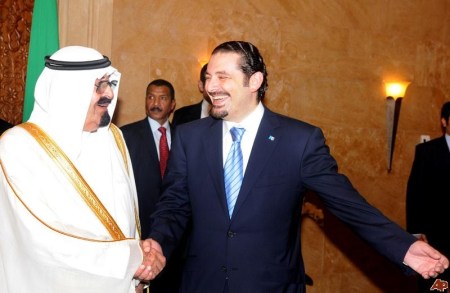
1560Saad Hariri, a Saudi-backed Sunni Muslim politician in Lebanon, recently invited every Lebanese party to his office to sign a document confirming that Lebanon is an Arab state. Pictured above: Saad Hariri (right) with the late Saudi King Abdullah (left) in 2014.

Hariri’s request reveals what the Islamic world is planning for Lebanon, Israel and eventually Europe and the United States. World powers need to protect Christian, Jewish and other minorities in Middle East. Both Lebanon and Israel must remain homelands for persecuted minorities in Middle East — a Christian homeland in Lebanon and a Jewish homeland in Israel — connected to each other geographically, assisting each other economically, and perhaps soon with a peace agreement that could form a peaceful bridge in culture and human rights between the West and the East.

Bashir Gemayel, the great Christian Maronite Lebanese leader who was assassinated after being elected president in 1982, warned the West during Lebanese Civil War that if the Islamic forces fighting against Christians win, they would continue to the Western World, as they are, in fact, doing at present.

This agreement for an Arab Lebanese state being requested by the Sunni leadership is clearly intended to turn Lebanon into yet another officially Arab Muslim state. It aims to negate the rights of the original people in the land, just as the original Christian Copts of Egypt have been overrun, and the Aramaic Syriac Christians of Iraq have been overrun. In Lebanon, the original people of the land are the Aramaic-Phoenician Christians — especially the Maronites — who still preserve Syriac (the language Jesus spoke) as their sacred language. A full 95% of Lebanese villages are still called by Syriac Aramaic names. Islam and the Arabic language came to Lebanon late from Arabian Peninsula, after the seventh century.

Hariri’s wished-for step might also be supported by the Shiite Muslim party of Hizballah: both the Sunnis and the Shiites are Islamic. The next step will be to ask that the constitution of Lebanon be changed so that the land of the cedars is ruled by Sharia law, as with many other Islamic states, including the Palestinian Authority. Article 4 in the constitution of the future Palestinian state clearly notes: “The principles of Islamic Sharia shall be the main source of legislation.”

Implementing Islamic Sharia law means having Muslim sovereignty and control over the Aramaic Christian community.

If this Islamic ideology, implemented by so many countries, is not racism, then what is racism?

Why does the free world, including the churches and secular Western leaders, keep silent and demonize only Jewish Israel for protecting itself from the same threat and ideology?

“Speak the truth and the truth will set you free.” The Christians of Lebanon and entire Middle East can save their existence only by adopting this sacred sentence.

The Fourth Strategy

March 11, 2016

The Fourth Strategy,  Front Page Magazine, Caroline Glick, March 11, 2016
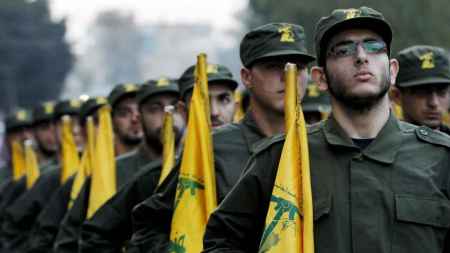
mideast-lebanon-bulga_horo

Originally published by the Jerusalem Post

This week we learned that Lebanon is no more. It has been replaced by Hezbollah’s Iranian colony in Lebanon.

Two weeks ago, Saudi Arabia listed Hezbollah as a terrorist organization and canceled its $3 billion aid package to the Lebanese military. The Gulf Cooperation Council followed suit. Rather than support the move by his sponsors and allies, Saad Hariri, the head of the anti-Hezbollah March 14 movement, flew to Syria to meet with Hezbollah leaders.

Saudi Arabia’s decision to end its support for the Lebanese Armed Forces (LAF) doesn’t mean that Saudi Arabia is making peace with Hezbollah.

It means that the Saudis are no longer willing to maintain the fiction that with enough support, the LAF will one day challenge Hezbollah’s effective control of Lebanon.

Hezbollah and its bosses in Tehran don’t seem too upset about the Sunnis’ decision to acknowledge that Hezbollah is a terrorist group. And they are right not to care. In essence, the Saudi move is simply an admission that they have won. Lebanon is theirs.

Hezbollah’s isn’t the dominant force in Lebanon because it has better weapons than the LAF.

Unlike the LAF, Hezbollah has no air force. It has no armored divisions.

Hezbollah is able to dominate Lebanon because unlike the LAF and the March 14 movement, Hezbollah is willing to destroy Lebanon if doing so advances its strategic goals.

This has all been fairly clear for more than a decade. But it took the war in Syria to force the truth above the surface.

And now that it is clear to everyone that Lebanon has ceased to exist and that the country we once knew is now an Iranian colony, the time has come for Israel to reckon with the lessons of its own misadventures in our neighbor to the north.

Since the mid-1990s, Israel has implemented three strategies in Lebanon and in Syria. All of them originated on the Left. All of them failed.

The first strategy was appeasement.

From the mid-1990s until the Syrian war began five years ago, Israel’s strategic framework for understanding Syria was appeasement. Initially, the notion was that Syria was our enemy because we control the Golan Heights. If we surrendered the Golan to Syria, we would have peace in exchange.

In the years leading up to the Syrian war, our leaders embraced the idea that Syria was the weakest link in the Iranian axis. If we gave the Golan Heights to Syria, they said, then the Assad regime would withdraw from the Iranian axis.

As it turned out, these positions had no basis in reality. Appeasement failed.

Then there was unconditional surrender – or disengagement. Then-prime minister Ehud Barak implemented this strategy when he removed IDF units from the security zone in south Lebanon in May 2000.

From the mid-1990s on, Yossi Beilin was the chief advocate of unconditional surrender in Lebanon. The logic of surrender was similar to that of appeasement – of which he was also a principal architect and advocate.

The surrender strategy in Lebanon was based on the idea that Hezbollah fought the IDF in south Lebanon because the IDF was in south Lebanon. If the IDF were to leave south Lebanon, Hezbollah was have no reason to fight us anymore.

So if we were gone, Beilin argued, Hezbollah would stop fighting, ditch terrorism and Iran, and become a normal Lebanese political party.

The war with Hezbollah in 2006 destroyed the credibility of the surrender strategy. But the Left didn’t despair. They simply replaced surrender with the strategy of internationalization.

The internationalization strategy forms the basis of UN Security Council Resolution 1701 that set the cease-fire terms at the end of the war with Hezbollah. IDF soldiers, who left Lebanon without victory, were replaced by UN forces from UNIFIL. UNIFIL forces were supposed to block Hezbollah’s reassertion of control over south Lebanon by facilitating the LAF’s takeover of the border with Israel. While UNIFIL was protecting the LAF on the ground, the LAF itself would be empowered by a massive infusion of US and Saudi aid.

Saudi Arabia’s belated recognition that Hezbollah dominates the LAF, and controls Lebanon, makes clear that like appeasement and disengagement, internationalization is an utter failure.

To a certain degree, Israel’s serial strategic blundering did have one ameliorative effect. Through them, Hezbollah has become so powerful that it now poses a threat to the great powers. So Russia in Syria now needs to curb it. So, too, it is so powerful that Iran is loath to waste it on a war with Israel that it will lose when it is fighting to win the war in Syria.

For now then, Hezbollah is not an immediate threat. This is the case despite Hezbollah chief Hassan Nasrallah’s recent threat to bomb Haifa’s chemical depots and cause a fireball with the cataclysmic effect of a nuclear bomb.

But that doesn’t mean that the lessons of our repeated strategic mistakes in Syria and Lebanon shouldn’t be applied today. They should be applied, but toward another, more immediate foe – the Palestinians, toward whom Israel has applied the same failed policies, one after another, with similarly destructive outcomes.

After the first intifada ground to a halt in 1991, Israel adopted the Left’s first strategy. The so-called peace process with the PLO, which began in 1993, was an attempt to implement a strategy of appeasement. We would gradually give the PLO Judea, Samaria, Gaza and Jerusalem.

In return, the PLO would stop supporting terrorism and live at peace with Israel.

The failure of the appeasement strategy led to the second intifada. The second intifada caused Israel to adopt the Left’s second strategy – unconditional surrender.

Israel’s 2005 disengagement from Gaza failed just as spectacularly as its 2000 disengagement from Lebanon. Not only did it lead to the Hamas takeover of Gaza in 2007. It led to the further radicalization of the PLO and Palestinian society as a whole. The latter became convinced that terrorism worked. The former became convinced that the only way to garner public support was by being just as anti-Israel as Hamas.

Today, the center-left parties – the Zionist Union and Yesh Atid – cling to the failed strategy of disengagement. The far Left, together with the Arab political parties, have already moved on to the internationalization strategy. In the Palestinian context, the goal of the internationalization strategy is the collapse of Israeli sovereignty.

This strategy was in evidence this week with Peace Now head Yariv Oppenheimer’s outrageous claim Wednesday that in killing the terrorists who were in the midst of murdering innocents in Petah Tikva and Tel Aviv, civilians and security forces carried out summary executions.

Oppenheimer, whose group is funded by foreign governments, did not make the claim because he wished to build his support base at home. He demonized his fellow citizens to advance his paymasters’ goal of delegitimizing Israeli sovereignty by among other things, criminalizing Israel’s right to self-defense.

The goal of this delegitimization campaign is to make it impossible for Israel to function as a coherent nation-state and for it instead to become a powerless ward of Europe and the US.

In the face of both the rise in Palestinian terrorism and of efforts by Oppenheimer and his comrades to use Palestinian terrorism as a means to cause the collapse of Israeli sovereignty, the government is at a loss. Its paralysis doesn’t owe to a lack of will. Rather it is the consequence of the government’s difficulty in contending with the coalition of powerful domestic and foreign actors that together make it all but impossible for Prime Minister Binyamin Netanyahu and his ministers to abandon the Left’s failed strategies and embark on a new strategic course.

Perhaps the most poignant and infuriating expression of the government’s distress is its constant demand that PLO chief Mahmoud Abbas condemn Palestinian terrorism.

On seemingly a daily basis our leaders voice the demand that the man who heads a regime that indoctrinates its youth – including its young children – to murder Jews condemn his own actions.

Beyond being irrational, the demand is both defeatist and self-defeating. By demanding action from Abbas, we legitimize him and empower him. But so long as Israel refuses to abandon the appeasement strategy, and continues to accept that there is a peace process that can be resuscitated, the government will be unable to stop treating Abbas as legitimate and moderate.

So, too, so long as the Knesset fails to take serious, concerted action against the nonprofit groups funded by hostile foreign governments and foundations, the government will be unable to take effective action against the radical Left and its partners from the Joint (Arab) List that openly support both Palestinian terrorists and Hezbollah.

Just as Oppenheimer’s remarks weren’t directed toward the domestic audience, but to his European sponsors, so the Arab Knesset members who this week announced their opposition to Saudi Arabia’s decision to label Hezbollah a terrorist group, were directing their remarks toward their supporters – and Hezbollah’s sponsors – in Qatar.

While adopting in turn every failed strategy the Left could invent and recycle, for the past generation, Israel has avoided implementing the only strategy that has ever worked. That is the strategy of sovereignty – or, more broadly, of governing territories necessary for our defense.

From 1982 through 2000, Israel restrained Hezbollah and prevented it from taking over Lebanon by maintaining security control over the security zone in Lebanon. For 28 years, Israel prevented the Palestinians from becoming a terrorist society dedicated to the destruction of the people of Israel, by exerting security and civil authority over Judea, Samaria and Gaza through its military government and its civil administration.

And it worked. By fighting our enemies rather than empowering them, we weakened them.

The image of the first intifada that convinced us to legitimize the PLO was the teenager with a slingshot.

The image of the second intifada that convinced us to run away from Gaza was a bombedout bus.

So far, the image of the third intifada is a girl wielding scissors attempting to stab Jews. And we still haven’t figured out our response to her, although the Left would like us to run away or collapse.

It is time to let this image guide us though.

The girl with the scissors is not empowered. She is both dangerous and pathetic. She is both an enemy and a victim. You cannot destroy her. You can only punish her and then raise her up. In other words, you need to govern her.

Governing enemies is unpleasant. It brings no instant gratification. Instead it promises only thankless, Sisyphean efforts. In other words, governing your enemies is the price you pay to be free.

Report: Israel’s northern border violated daily

February 28, 2016

Report: Israel’s northern border violated daily, Israel National News, David Rosenberg, February 28, 2016

Lebanon borderIDF patrol along border with Lebanon Flash 90

Israel’s border with Lebanon is violated on a daily basis, according to a new report by the Israeli Mission to the United Nations.

The report also shows the degree to which UN resolutions are ignored and even tolerated – despite the presence of United Nations observers. In 2015 alone, there were fully 2,374 documented violations of the most recent UN ruling on the Israel-Lebanon border, UN Security Council Resolution 1701.

Israel’s Ambassador to the UN, Danny Danon, conveyed the statistics to the UN Secretary General and Security Council. Danon condemned the rampant violations of the border area and the UN’s tacit acceptance of Hezbollah control.

“The government of Lebanon is not acting and armed Hezbollah operatives are roaming freely throughout the south Lebanon in violation of the UN,” Danon said. “Hezbollah has free reign in South Lebanon and instead of reacting forcefully to their violations, the UN is ignoring the problem.”

Hezbollah, which has de facto autonomy in southern Lebanon, maintains regular armed patrols along the Blue Line – the UN’s demarcation between Israel and Lebanon – well within the United Nations Interim Force in Lebanon (UNIFIL) security zone. The number of Hezbollah patrols along the border in 2015 was estimated at 653.

More disturbing, the report revealed that Israel’s northern border is violated on a daily basis. During 2015 alone, infiltrators breached the border 589 times.

Another 1,079 incidents of armed individuals – presumably Hezbollah fighters – openly operating in the UNIFIL security zone were recorded.

The report noted two Hezbollah terror attacks on Israel in 2015, and 51 violent protests targeting Israeli forces along the border.

Report: Hizballah Has Russian Technology Capable of Downing Israeli Jets

February 16, 2016

Report: Hizballah Has Russian Technology Capable of Downing Israeli Jets, Investigative Project on Terrorism, February 16, 2016

Hizballah is using advanced radar technology to “lock on” to Israeli aircraft flying reconnaissance missions over Lebanon, according to Israel’s Walla news service and reported by i24 News.

The new technology enables Hizballah to identify Israeli jets and fire missiles at them, Israeli security sources said.

“The connection between Hizballah, Russia and Syria have greatly changed the rules of the game in the region…Hizballah is indicating to Israel that it is ready for the next stage,” said an Israeli security official, quoted in Walla.

Israeli fighter jets are capable of detecting radar that threatens them, allowing pilots to alter their course. Nevertheless, the reports signal a troubling development that could hinder Israel’s freedom of movement in airspace across the northern border and its ability to effectively monitor Hizballah.

Following the 2006 war between Israel and Hizballah, the terrorist organization began acquiring sophisticated anti-aircraft systems and other advanced weapons from Syria and Iran. A recent report suggests that Hizballah is using Iranian anti-tank missiles in Syria that could be used against Israel in a future confrontation.

In light of these developments, Israel has allegedly targeted Hizballah weapons convoys on several occasions coming into Lebanon from Syria over the past few years. Nevertheless, the terrorist organization continues to build up its weapons arsenal and consolidate a base of operations on the Syrian Golan in order to attack the Jewish state.

Last month, Hizballah field commanders with operatives fighting in Syria told the Daily Beast that Russia is providing the terrorist organization with advanced weaponry amid enhanced coordination among both actors. The report outlines that Hizballah is acquiring long-range tactical missiles, anti-tank systems, and laser guided rockets from the Russians.

Iran’s long arm

January 21, 2016

Iran’s long arm, The Jerusalem Post, JPost Editorial, January 21, 2016

(Please see also, New Iranian-Backed Terror Group Makes Inroads in West Bank, Gaza. — DM)

ShowImage (20)Thousand of Basij soldiers stage mock seige of Temple Mount in Iran. (photo credit:FARS)

If anyone needed proof how the lifting of sanctions on Iran will hurt Israel’s security, this week provided two examples.

Just days after implementation of the Joint Comprehensive Plan of Action nuclear agreement, we received a reminder that Iran and its proxies remain dangerous enemies of Israel.

Five Palestinians from the Tulkarm area were arrested for planning to carry out terrorist attacks under instructions from Hezbollah, the Shin Bet (Israel Security Agency) said on Wednesday.

The head of the cell, Mahmoud Za’alul, had been recruited through social media networks. Using encrypted messages, he enlisted five more men from the Tulkarm area; they were ordered to gather intel and plan terrorist attacks, including preparing explosive vests for suicide bombings.

Hezbollah funded their operation by sending them $5,000 through money changers.

Now that the “crippling” economic sanctions on Iran have been removed, the resources at its disposal – and as an extension at Hezbollah’s – will be significantly greater.

In Lebanon, meanwhile, Hezbollah is consolidating its political power. On Monday, in a development that is nothing short of earth shattering, Samir Geagea, leader of the Christian Lebanese Forces party, publicly endorsed his rival, the formal general Michel Aoun, for president of Lebanon.

In so doing, Geagea abandoned his loyalty to Saad Hariri, head of the anti-Syrian Future (Al-Mustaqbal) Movement, for an alliance with the enemy camp headed by Hezbollah, which supports Aoun for president.

This opens the way to the appointment of a pro-Iranian president in Lebanon.

Hezbollah and Iran are undoubtedly pleased with the development. If Aoun is elected president, Hariri’s influence – and the influence of Hariri’s main patron, Saudi Arabia – will be greatly diminished.

Finally, in the Gaza Strip, Iran has over the past few months been providing funding to a new terrorist group called Al-Sabireen Movement for Supporting Palestine. Al-Sabireen, which means “the patient ones” in Arabic, was formed in the wake of a break between Tehran and the two largest terrorist organizations operating in Gaza – Hamas and Islamic Jihad.

Neither organization has acquiesced to Iran’s demand to support President Bashar Assad in Syria.

Both have incensed the Iranians by remaining silent on Saudi attacks in Yemen against the Iranian-backed Houthis. Both face their worst financial crisis in two decades after Iran’s decision to cut off support.

Al-Sabireen’s emblem – a gun sprouting from the center of its name in Arabic – is nearly identical to Hezbollah’s.

So far, the organization has about 400 followers in the Gaza Strip, each one receiving a monthly salary of $250-$300, while the senior officials get at least $700, according to The Jerusalem Post’s Palestinian Affairs correspondent Khaled Abu Toameh. Iran has been supplying Al-Sabireen with weapons used to attack Israel.

The Iranians are believed to have supplied their new terrorist group in the Gaza Strip with Grad and Fajr missiles that are capable of reaching Tel Aviv. Also, Iranian funds channeled through Al-Sabireen are said to be used to support the families of killed or arrested terrorists living on the West Bank.

The Iranian-backed organization is also wooing Fatah members. Scores of militiamen once belonging to Palestinian Authority President Mahmoud Abbas’s Fatah faction in the Gaza Strip have allied themselves with Al-Sabireen. Most were attracted by the money.

The rise of an unshackled Iran’s influence in the region is bad for Israel. But it is also bad for many of the US’s Sunni allies in the region such as Saudi Arabia and the Palestinian Authority. A shared enemy has created a shared interest – the curtailing of Iranian influence.

Implementation of the JCPOA might delay Tehran’s nuclear weapon program. The removal of sanctions, however, has set the stage for the Islamic Republic to increase its destabilizing influence. Iran and its proxies must be stopped.

Report: Hezbollah to withdraw from Syria fighting

September 24, 2015

Report: Hezbollah to withdraw from Syria fighting, Israel Hayom, Daniel Siryoti and Israel Hayom, September 24, 2015

(Please see also, Russian marines join Hizballah in first Syrian battle – a danger signal for US, Israel. — DM)

Hezbolla in BeruitHezbollah fighters march in Beirut | Photo credit: AP

Lebanese daily reports that after battle in border town of Zabadani is over, Hezbollah will focus on defensive missions and preventing spillover of fighting from Syria into Lebanon • Sources say Hezbollah wants to prepare for future conflict with Israel.

Hezbollah leaders have decided to cease military activities in Syria in the wake of criticism in Lebanon of the group’s involvement in the Syrian civil war and the high number of casualties its fighters have suffered in battles there, according to a report in Lebanon’s Daily Star newspaper.

According to the report, which was not officially confirmed by any Hezbollah officials, Hezbollah has informed Syrian President Bashar Assad that its fighters will not take further part in attacks against rebel groups and will leave Syria once the battle in the town of Zabadani, north of Damascus, has been decided.

Lebanese sources told the Daily Star that after Hezbollah secures the Lebanon-Syrian border by winning control of Zabadani, it will focus on defensive missions only and on preventing the spillover of fighting from Syria into Lebanon.

The sources also said that one of the reasons behind Hezbollah’s decision is that it has a limited number of fighting forces, and it wants to prepare for a future conflict with Israel.

Palestinians: Turning Refugee Camps into Weapons Warehouses

September 1, 2015

Palestinians: Turning Refugee Camps into Weapons Warehouses, The Gatestone InstituteKhaled Abu Toameh, September 1, 2015

  • Most of the Palestinian camps in Lebanon and Syria have long served as large weapons warehouses controlled by various militias belonging to different groups. This has been happening while the United Nations Relief and Works Agency for Palestine Refugees in the Near East (UNRWA), which is formally in charge of the refugee camps, continues to look the other way.
  • The 120,000 Palestinians living in Ain al-Hilweh are “unfortunate” because they are not being targeted by Israel. Otherwise, there would have been an international outcry and the UN Security Council would have held an emergency session to condemn Israel and call for an immediate cessation of hostilities. Instead, Ain al-Hilweh may soon fall into the hands of Al-Qaeda and Islamic State terrorists.
  • The Syrian Army has also been dropping barrel bombs on the camp almost on a weekly basis. But because Israel cannot be blamed, Palestinians killing Palestinians is not something that the international media and community are interested in.
  • Instead of admitting their responsibility for turning the camps into military bases, Palestinian leaders often prefer to blame others, preferably Israel, for the plight of their people.

Palestinians are once again paying a heavy price for allowing terror groups and armed gangs to operate freely inside their communities. But this is not happening in a refugee camp in the West Bank or the Gaza Strip. Rather, it is taking place in Lebanon, one of three Arab countries that host hundreds of thousands of Palestinians.

This explains why the international media and human rights organizations have shown little interest in what is happening inside the largest Palestinian refugee camp in Lebanon, Ain al-Hilweh.

For the past two weeks, dozens of Palestinian families from Ain al-Hilweh have fled their homes after fierce clashes that erupted between Fatah militiamen and terrorists belonging to a radical Islamist gang affiliated with Al-Qaeda and Islamic State.

The UN Security Council has clearly not heard of the fighting in Ain al-Hilweh. That is why it has not even issued a statement expressing “concern” over the plight of the Palestinians in the camp.

The international media, for its part, has thus far shown little interest in the story. Why? The answer, as usual, is simple: No Israeli involvement.

The 120,000 Palestinians living in n Ain al-Hilweh are “unfortunate” because they are not being targeted by Israel. Otherwise, there would have been an international outcry and the UN Security Council would have held an emergency session to condemn Israel and call for an immediate cessation of hostilities.

But, because Israel cannot be blamed, Palestinians killing Palestinians is not something that the international media and community are interested in.

The clashes in Ain al-Hilweh have so far resulted in the killing of four Fatah militiamen. At least 35 people were wounded in the fighting, which has been described as the worst in years. According to eyewitnesses, the rival parties have used various types of weapons to attack each other, including rocket-propelled grenades.

The four dead men have been identified as Fadi Khdeir, Ala Othman, Rabi Mashour and Hussein al-Saleh.

1233Smoke from explosions rises from Ain al-Hilweh refugee camp in Lebanon, Aug. 25, 2015. (Image source: Arab Tomorrow video screenshot)

The latest round of fighting in Ain al-Hilweh began after Islamist terrorists tried unsuccessfully to assassinate Abu Ashraf al-Armoushi, a senior Fatah security commander. Earlier, the terrorists managed to kill another top Fatah official, Talal al-Urduni.

Palestinian refugee camps in Lebanon have always been considered “extraterritorial” zones, managed exclusively by various armed groups. The Lebanese police and army have no role in maintaining law and order inside the camps. As in most similar situations, where armed clashes have erupted inside refugee camps, all that is left for the Lebanese Army to do is monitor the situation from a distance.

In 2007, however, the Lebanese Army was forced to intervene to stop armed clashes at another refugee camp, Nahr al-Bared. Dozens of people, many of them soldiers, were killed in the fighting, which also resulted in the near destruction of the camp. Nearly 30,000 Palestinians were displaced, and Nahr al-Bared remains a closed military zone.

Residents of Ain al-Hilweh are worried that they will meet the same fate as Yarmouk refugee camp in Syria. Yarmouk was once home to some 200,000 Palestinians. Today, the number of the residents has dropped to 12,000. Hundreds of Yarmouk residents have been killed and injured in fierce fighting between rival militias during the past four years. The Syrian Army has also been dropping barrel bombs on the camp almost on a weekly basis.

Yarmouk, Nahr al-Bared and Ain al-Hilweh continue to pay an extremely heavy price for agreeing to turn their camps into military bases. Most of the Palestinian camps in Lebanon and Syria have long served as large weapons warehouses controlled by various militias belonging to different groups. This has been happening while the United Nations Relief and Works Agency for Palestine Refugees in the Near East (UNRWA), which is formally in charge of the refugee camps, continues to look the other way.

As the fighting in Ain al-Hilweh shows, the Palestinians have once again fallen victim to what many of them describe as the “chaos of weapons.” It is this type of anarchy that allowed Hamas to expel the Palestinian Authority from the Gaza Strip in 2007. Refugee camps in the West Bank and Gaza Strip are also full of weapons and gunmen belonging to various groups, including Fatah and Hamas.

Maher al-Shawish, a Palestinian writer and political analyst from Lebanon, says that Ain al-Hilweh is now facing a serious humanitarian crisis due to the ongoing fighting. “If you see the destruction inside the camp, you will realize that it is facing a real catastrophe that needs to be stopped immediately,” al-Shawish said. “The clashes are disgraceful for the Palestinian cause.”

But instead of admitting their responsibility for turning the camps into military bases, Palestinian leaders often prefer to blame others, preferably Israel, for the plight of their people.

Ain al-Hilweh may soon fall into the hands of Al-Qaeda and Islamic State terrorists. Yet instead of facing this threat and calling on the international community to assist in foiling the terrorists’ plan, Gen. Subhi Abu Arab, a top Fatah security commander in Lebanon, chose to hold Israel responsible. Needless to say, Israel has nothing to do with the latest round of fighting in Ain al-Hilweh or the “chaos of weapons” inside Palestinian refugee camps.

Still, Palestinian officials such as Gen. Abu Arab never miss an opportunity to lay the blame at Israel’s door. They also continue to lie to their people by claiming that Israel is behind Islamic State. Referring to the clashes in Ain al-Hilweh, Gen. Abu Arab had no problem explaining that, “This is a Zionist scheme to eliminate the right of return, displace the Palestinians and stir trouble inside the camp by using a fifth column.”

As long as Palestinian and Arab leaders continue to believe conspiracy theories and refuse to wake up to the reality of the dangerous situation inside the refugee camps, the Palestinians of Ain al-Hilweh, like those of Yarmouk, sadly will face a bleak future.

Dispatch from Iraq: the Stealth Iranian Takeover Becomes Clear

August 1, 2015

Dispatch from Iraq: the Stealth Iranian Takeover Becomes Clear, PJ Media via Middle East Forum, Jonathan Spyer, July 31, 2015

1484A Shi’a militia billboard in Baghdad

Close observation of the militias, their activities, and their links to Tehran is invaluable in understanding what is likely to happen in the Middle East following the conclusion of the nuclear agreement between the P5 + 1 powers and Tehran.

The genius of the Iranian method is that it is not possible to locate a precise point where the Iranian influence ends and the “government” begins. Everything is entwined. This pro-Iranian military and political activity depends at ground level on the successful employment and manipulation of religious fervor. This is what makes the Hashed fighters able to stand against the rival jihadis of ISIS.

The deal itself proves that Iran can continue to push down this road while paying only a minor price, so why change? Expect further manifestations of the Tehran formula in the Middle East in the period ahead.

****************

In late June, I traveled to Iraq with the purpose of investigating the role being played by the Iranian-supported Shia militias in that country.

Close observation of the militias, their activities, and their links to Tehran is invaluable in understanding what is likely to happen in the Middle East following the conclusion of the nuclear agreement between the P5 + 1 powers and Tehran.

An Iranian stealth takeover of Iraq is currently under way. Tehran’s actions in Iraq lay bare the nature of Iranian regional strategy. They show that Iran has no peers at present in the promotion of a very 21st century way of war, which combines the recruitment and manipulation of sectarian loyalties; the establishment and patient sponsoring of political and paramilitary front groups; and the engagement of these groups in irregular and clandestine warfare, all in tune with an Iran-led agenda.

With the conclusion of the nuclear deal, and thanks to the cash about to flow into Iranian coffers, the stage is now set for an exponential increase in the scale and effect of these activities across the region.

So what is going on in Iraq, and what may be learned from it?

Power in Baghdad today is effectively held by a gathering of Shia militias known as the Hashed al-Shaabi (Popular Mobilization). This initiative brings together tens of armed groups, including some very small and newly formed ones. However, its main components ought to be familiar to Americans who remember the Iraqi Shia insurgency against the U.S. in the middle of the last decade. They are: the Badr Organization, the Asaib Ahl al-Haq, the Kataeb Hizballah, and the Sarayat al-Salam (which is the new name for the Mahdi Army of Muqtada al-Sadr).

All of these are militias of long-standing. All of them are openly pro-Iranian in nature. All of them have their own well-documented links to the Iranian government and to the Revolutionary Guards Corps.

1559Shia militiamen are becoming a fixture of daily life in the Iraqi capital.

The Hashed al-Shaabi was founded on June 15, 2014, following a fatwa by venerated Iraqi Shia cleric Ali al-Sistani a day earlier. Sistani called for a limited jihad at a time when the forces of ISIS were juggernauting toward Baghdad. The militias came together, under the auspices of Quds Force kingpin Qassem Suleimani and his Iraqi right-hand man Abu Mahdi al-Muhandis.

Because of the parlous performance of the Iraqi Army, the Shia militias have become in effect the sole force standing between ISIS and the Iraqi capital.

Therein lies the source of their strength. Political power grows, as another master strategist of irregular warfare taught, from the barrel of a gun. In the case of Iraq, no instrument exists in the hands of the elected government to oppose the will of the militias. The militias, meanwhile, in their political iteration, are also part of the government.

In the course of my visit, I travelled deep into Anbar Province with fighters of the Kataeb Hizballah, reaching just eight miles from Ramadi City. I also went to Baiji, the key front to the capital’s north, accompanying fighters from the Badr Corps.

1469Asaib Ahl al-Haq fighters operating in Baiji in June

In all areas, I observed close cooperation between the militias, the army, and the federal police. The latter are essentially under the control of the militias. Mohammed Ghabban, of Badr, is the interior minister. The Interior Ministry controls the police. Badr’s leader, Hadi al-Ameri, serves as the transport minister.

In theory, the Hashd al-Shaabi committee answers to Iraqi Prime Minister Haider al Abadi. In practice, no one views the committee as playing anything other than a liaison role. The real decision-making structure for the militias’ alliance goes through Abu Mahdi al Muhandis and Hadi al-Ameri, to Qassem Suleimani, and directly on to Supreme Leader Ali Khamenei.

No one in Iraq imagines that any of these men are taking orders from Abadi, who has no armed force of his own, whose political party (Dawa) remains dominated by former Prime Minister Nouri al-Maliki and his associates, and whose government is dependent on the military protection of the Shia militias and their political support. When I interviewed al-Muhandis in Baiji, he was quite open regarding the source of the militias’ strength: “We rely on capacity and capabilities provided by the Islamic Republic of Iran.”

1482Iraqi militia leader Abu Mahdi al-Muhandis (right) with Iranian Quds Force commander Qassem Suleimani

The genius of the Iranian method is that it is not possible to locate a precise point where the Iranian influence ends and the “government” begins. Everything is entwined. This pro-Iranian military and political activity depends at ground level on the successful employment and manipulation of religious fervor. This is what makes the Hashed fighters able to stand against the rival jihadis of ISIS. Says Major General Juma’a Enad, operational commander in Salah al-Din Province: “The Hashed strong point is the spiritual side, the jihad fatwa. Like ISIS.”

So this is Tehran’s formula. The possession of a powerful state body (the IRGC’s Quds Force) whose sole raison d’etre is the creation and sponsorship of local political-military organizations to serve the Iranian interest. The existence of a population in a given country available for indoctrination and mobilization. The creation of proxy bodies and the subsequent shepherding of them to both political and military influence, with each element complementing the other. And finally, the reaping of the benefit of all this in terms of power and influence.

This formula has at the present time brought Iran domination of Lebanon and large parts of Syria, Iraq, and Yemen. Current events in Iraq form a perfect study of the application of this method, and the results it can bring. Is Iran likely to change this winning formula as a result of the sudden provision of increased monies resulting from the nuclear deal? This is certainly the hope of the authors of the agreement. It is hard to see on what it is based.

The deal itself proves that Iran can continue to push down this road while paying only a minor price, so why change? Expect further manifestations of the Tehran formula in the Middle East in the period ahead.