Posted tagged ‘Kim Jong-un’

A crazy fat kid and his nuclear toys

April 4, 2017

A crazy fat kid and his nuclear toys, Washington TimesWesley Pruden, April 3, 2017

(Kim Chi-un, I mean Kim Jong-un, is fat and his claimed craziness lets us laugh at him; at least until he unleashes an EMP attack on America. However, he is probably saner than some members of the U.S. Congress. Inscrutable? Unpredictable? Sure. Acting crazy has worked for him and his predecessors for years; he would be “crazy” to appear to be sane. Rationality would make him predictable and unpredictability is an asset in war. — DM)

Kim Jong-un may be “a crazy fat kid” with a goofy haircut, but he is doing what his father and his grandfather never could. With nuclear weapons to play with, he frightens the West enough to make it start thinking about doing something about the most dangerous crazy fat kid on earth.

By some reliable intelligence estimates North Korea now has eight nuclear weapons, but no way to deliver them farther than the Sea of Japan, but they’re working on it. They have to get the size of the bomb down to manageable weight and girth before an intercontinental missile could reach the California coast with it.

What seemed absurd only a few years ago is thought to be soon in the crazy fat kid’s box of toys. The failure of the early missiles was easy to mock, like the purple prose of the propaganda artists in Pyongyang. But Kim and his scientists, believed to be working with the help of Iran and the nuclear-weapons program saved by Barack Obama, are moving steadily to full membership in the club of nations with “the bomb.”

Kim has the family DNA and the brutal Marxist ambitions of his father and grandfather, but little of their appreciation of the rational. A recent defector from North Korea, Thae Young Ho, the deputy North Korean ambassador to London, says “Kim Jong-un is a man who will do anything beyond the normal imagination.” He ordered an uncle and his half-brother “terminated with extreme prejudice” — as in, dead — because he reckoned them threats to his own life. He knows that when the regime goes, he goes with it. That’s the way it works in a satrap like North Korea. Terror is the constant companion to the dictator who lives by the whip and the gun.

Kim lives a life of sumptuous ease in Pyongyang, surrounded by sycophants and the pleasures of the table, adding to his girth with a rich diet of imported groceries while millions of his countrymen live close to starvation. He is particularly vain for a fat man, and Sen. John McCain’s recent description of him as “a crazy fat kid” stirred him to rage.

Mr. McCain had told an interviewer at MSNBC, the cable-TV channel, that “the crazy fat kid running North Korea is far worse than some of history’s worst dictators. He’s not rational. We’re not dealing with someone like Joseph Stalin, who had a certain rationality to his barbarity.”

The Korean Central News Agency, the mouthpiece of the Kim regime, accused Mr. McCain of “hurting the dignity of the country and the supreme leadership of the Democratic People’s Republic of Korea,” i.e., North Korea. When Sen. Ted Cruz joined other conservatives to file legislation to put North Korea on the list of state sponsors of terrorism again, he was denounced as a dignity-damager, too, and promised all manner of punishment.

The senators, said the news agency, “will have to bitterly experience the disastrous consequences to be entailed by their reckless tongue-lashing and then any regret for it will come too late. The revolutionary forces of [North Korea] with its nuclear force as its pivot will fulfill its sacred mission of devotedly defending its supreme leadership representing the destiny and life of its people by dealing with merciless sledgehammer blows at those daring to hurt the dignity of the supreme leadership.”

All that merciless work with a sledgehammer seems a little wasteful of resources to punish two mere senators, worthy as those gents may be (but the example of sledgehammer rhetoric might be instructive to the pundits in the West who have done their darnedest to take down Donald Trump and still haven’t managed to put their rhetoric in the killer shade of purple).

Nevertheless, a genuine threat lies beneath the entertaining bluster and braggadocio. Adm. Scott Swift, the commander of the U.S. Pacific Fleet, tells NBC News that American officials are particularly wary of Kim Jong-un’s latest threats to hit an American city with a nuclear bomb.

“They have the nuclear capability,” the admiral says. “They’ve demonstrated that. Where they’re going with the miniaturization of that, whether they can actually weaponize a missile, that’s what’s driving the current concern.”

President Trump told London’s Financial Times on Monday that “something has to be done about North Korea.” Secretary of Defense James Mattis, once called “Mad Dog Mattis,” says North Korea “has got to be stopped.” Secretary of State Rex Tillerson says a military response is “on the table.”

President Trump entertains Chinese President Xi Jinping this week at Mar-A-Lago, and he’ll have a lot to tell him. But if President Xi can’t make Kim behave, somebody else will have to do it, and soon. Scary to think about. It’s even scarier to think about not doing anything.

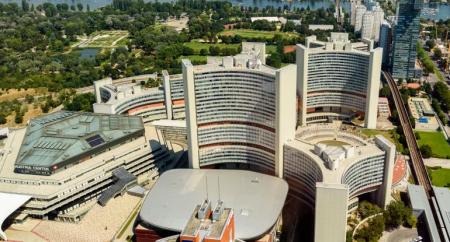
Memo to U.S. Mission in Vienna: Obama No Longer President

March 10, 2017

Memo to U.S. Mission in Vienna: Obama No Longer President, PJ MediaClaudia Rosett, March 9, 2017

(Image courtesy of Shutterstock)

Haley deserves applause for deflecting the pressures to start bargaining with Kim. Deals with North Korea do not work, and will not work while Kim remains in power. The long record of U.S. talks, deals and attempted talks with North Korea is one of humiliation and failure for the U.S., as North Korea’s dynastic Kim regime has repeatedly pocketed any gains, milked every concession, cheated on every agreement, and carried on with its atrocities and its nuclear missile projects.

Schofer’s words did not quite mesh with Haley’s polite dismissal of pressure for “talks and negotiations.” Rather, Schofer repeated what was for years the refrain of the Obama administration — and of former Secretary of State John Kerry, in particular — offering Pyongyang, under conditions North Korea had previously agreed to, and then violated, the option of returning to the bargaining table:

We have consistently communicated to Pyongyang that we remain open to meaningful negotiations based on the understandings reached by all members of the Six-Party Talks in the 2005 Joint Statement.

As the Trump administration now toils to reduce the threats and clean up the mess bequeathed by Obama’s “global approaches” — including Obama’s gross failure to block North Korea’s prolific nuclear-weapons advances of recent years — perhaps it’s not too much to ask that America’s Mission to the UN in Vienna get entirely on board with the new administration, even if that entails updating its web site to reflect in full that Trump, not Obama, is now the president.

*****************************

Quite likely you don’t spend a lot of time following the doings of Andrew J. Schofer, a career State Department officer who is currently the Charge d’Affaires at the U.S. Mission to International Organizations in Vienna (UNVIE). Nor was Schofer anywhere high on my radar until this week, when he delivered a statement on North Korea that seemed to me slightly at odds with what Ambassador Nikki Haley was saying at the United Nations in New York. Which sent me to the web site for his legation in Vienna … but before I get ahead of myself on that, here’s a bit more background.

Haley, at a UN press stakeout in New York, following a Security Council meeting this Wednesday on North Korea, said that while the U.S. reevaluates how to handle North Korea, “all options are on the table.” But Haley also went out of her way to imply that the Trump administration is far from eager to accede to pressures, such as those from China, to default to talks or deals with North Korea. Referring to North Korea’s tyrant, Kim Jong Un, Haley told reporters:

I appreciate all of my counterparts wanting to talk about talks and negotiations. We are not dealing with a rational person.

To my mind, Haley may be wrong in her assessment of Kim Jong Un as irrational. We can debate whether Kim is actually a madman incapable of rational calculation, or a wily thug, who in the interest of maintaining his hereditary totalitarian throne has been proving adept, like his forebears, at calibrating what he can get away with in the way of threats, hostage-taking, assassinations, executions, extortion rackets, and nuclear missile projects — all in the interest of consolidating his grip on power and expanding his reach.

But wherever one comes down on the crazy-Kim question, Haley deserves applause for deflecting the pressures to start bargaining with Kim. Deals with North Korea do not work, and will not work while Kim remains in power. The long record of U.S. talks, deals and attempted talks with North Korea is one of humiliation and failure for the U.S., as North Korea’s dynastic Kim regime has repeatedly pocketed any gains, milked every concession, cheated on every agreement, and carried on with its atrocities and its nuclear missile projects.

Which brings me to the statement delivered this Wednesday in Vienna by U.S. Charge D’Affaires Schofer, at a meeting of the board of governors of the International Atomic Energy Agency in Vienna. Schofer’s words did not quite mesh with Haley’s polite dismissal of pressure for “talks and negotiations.” Rather, Schofer repeated what was for years the refrain of the Obama administration — and of former Secretary of State John Kerry, in particular — offering Pyongyang, under conditions North Korea had previously agreed to, and then violated, the option of returning to the bargaining table:

We have consistently communicated to Pyongyang that we remain open to meaningful negotiations based on the understandings reached by all members of the Six-Party Talks in the 2005 Joint Statement.

Whether Schofer on matters involving North Korea is genuinely out of sync with Haley, or with the Trump administration generally, I don’t know. But I do know this: Schofer’s statement was different enough from Haley’s, and similar enough to those of the Obama administration, that after reading it I went looking for more information on the web site of the U.S. Mission currently run by Schofer in Vienna — an important legation, not least, because it represents the U.S. at the IAEA.

It is also, as it turns out, a legation that is in some respects almost two months out of date on a major change at the White House — meaning the inauguration on Jan. 20 of a new president. Perhaps someone at the State Department should remind Schofer that Obama has left office? Here’s an excerpt from the web site of the U.S. Mission in Vienna (boldface is mine):

UNVIE’s mission is to conduct effective multilateral diplomacy with International Organizations in Vienna to advance President Obama’s commitment to design and implement global approaches to reduce global threats and seize global opportunities.

Yes, this is small stuff, in its way — that seven weeks after Trump’s inauguration, the U.S. Mission to International Organizations in Vienna has not gotten around to fully updating its web site. (Surely the problem here is one of carelessness, not political bias among career foreign service officers.) But details matter, especially in the symbolically freighted realms of diplomacy.

As the Trump administration now toils to reduce the threats and clean up the mess bequeathed by Obama’s “global approaches” — including Obama’s gross failure to block North Korea’s prolific nuclear-weapons advances of recent years — perhaps it’s not to much to ask that America’s Mission to the UN in Vienna get entirely on board with the new administration, even if that entails updating its web site to reflect in full that Trump, not Obama, is now the president.

Uncertain Futures: China, Trump and the Two Koreas

February 10, 2017

Uncertain Futures: China, Trump and the Two Koreas, 38 North, February 9, 2017

(Kim Jong-un may be insane. Or, like his predecessors, he may pretend to be insane to make predictions about his behavior very difficult and often impossible. China’s leaders are not insane, they are merely devious. Dealing with them has been, and will continue to be, very difficult. — DM)

China waving flag on bad day

China waving flag on bad day

At the beginning of the Trump administration, the situation on the Korean peninsula is highly uncertain and potentially volatile. During a late January research trip to Beijing, “uncertainty” and “concerns” were the keywords that best characterized how Chinese scholars and officials are feeling about Trump and the two Koreas. During his presidential campaign, Trump suggested that he would be willing to negotiate with North Korea directly. However, that scenario has become more uncertain in recent months, especially given the hawkish instincts of President Trump and his national security team. Chinese analysts nonetheless expect the US to enlist Beijing’s support on the North Korea issue and are anxiously waiting for Washington to engage so that China can bargain for its preferred outcomes. The prolonged silence from the administration is making Beijing increasingly uncertain and uncomfortable, and complicating its plans to reduce the threat that the United States and its network of alliances in Northeast Asia poses to Chinese security and strategic influence.

Between 2013 and 2016, China tested an alternative alignment strategy on the Korean peninsula. Frustrated with North Korea’s brinkmanship continuously damaging Chinese security interests, President Xi Jinping placed his hope on South Korean President Park Geun-hye to improve China’s strategic position. At the heart of this scheme was an effort to turn South Korea into China’s “pivotal” state in Northeast Asia, thereby undermining the US alliance system in the region and diminishing its threat to China. As a result of Sino-ROK rapprochement, senior-level visits soared, bilateral economic ties strengthened and many South Koreans questioned the utility and future of the US-ROK alliance. In an ideal scenario, China’s new realignment strategy would defeat the US-orchestrated “Northeast Asia NATO” based on America’s alliances with Japan and Korea, and counter the US-Japan alliance with an alignment between China and both Koreas. From the Chinese point of view, this would not only reduce China’s vulnerability vis-à-vis the US, but also lay a firm foundation for Chinese regional predominance.

However, events after the fourth North Korean nuclear test in January 2016 entirely derailed China’s scheme. Overestimating its presumed influence over Seoul, Beijing refused to adequately address South Korea’s legitimate security concerns, which eventually led to Seoul’s decision to deploy the Terminal High Altitude Area Defense (THAAD) system. China sees the THAAD deployment as a threat to strategic stability with the United States and an obstacle to its desired regional blueprint. As such, Chinese policy toward the Korean peninsula has evolved significantly in the last year, reflecting the realization that undermining the US-ROK alliance and turning South Korea into a Chinese strategic asset were both improbable in the near future and raising the prospect that Beijing might not have a choice between the two Koreas after all.

Nonetheless, while China’s ambitious efforts to transform geopolitical alignments on the Korean peninsula did not come to fruition, it still has two other key priorities. First, Beijing has not completely given up its efforts to defeat the THAAD deployment. At a minimum, it hopes that a victory for progressive forces in the upcoming South Korean presidential election, such as the Minjoo Party, could alter Seoul’s deployment plans for the system. While acknowledging that a complete reversal of the deployment decision is unlikely, Beijing hopes that a new South Korean government might delay the initial deployment or reduce the number of deployed units. China sees the propensity of the progressives to engage North Korea, to improve relations with China and to limit the scope of the US-ROK alliance as aligned with its overall strategic agenda. Although China’s ability to sway a South Korean domestic election is limited—for example, by maintaining the implicit sanctions China has imposed on South Korean companies, products and industries for the THAAD deployment—its preference and influence are expected to have an impact.

Second, China hopes to mitigate the impact that any future North Korean intercontinental ballistic missile (ICBM) test might have on its strategic position and influence on the peninsula. The conventional wisdom is that North Korea will not want to conduct the test immediately after Trump’s inauguration, as it will almost certainly block the chance for dialogue with the new US administration and boost the popularity of the conservatives in the South Korean election. However, based on North Korea’s previous pattern of behavior, Chinese experts expect to see provocations in the coming months if Trump chooses to follow Obama’s policy of strategic patience. At the same time, Chinese analysts are inclined to downplay the significance of such an ICBM test, citing the immaturity of North Korea’s long-range missile technology and its likely failure. Still, Beijing will oppose any preemptive strike by the US on the launch site, although it does not fully believe that the US would take such a risky move and jeopardize South Korean security—a fundamental assumption embedded in China’s assessment of the prospects for conflict on the Korean peninsula.

Beijing has always insisted that North Korea’s nuclear development is motivated by Pyongyang’s vulnerability and insecurity, and argued that only the US and North Korea can resolve the stalemate through a peace negotiation. Selfless as it may sound, there is a certain level of hypocrisy in that position. As it has become clear to American officials and experts that strategic patience failed to address the North Korean nuclear threat, there have been more vocal calls to resume US-DPRK dialogue in return for a decision by Pyongyang to suspend its nuclear and missile tests. For China, the danger lies in the unpredictable consequences of such a bilateral negotiation. If the United States and North Korea decide to move ahead with a deal, the improvement of relations between them and the shifting balance of power on the Korean peninsula will diminish what China perceives as its leverage and strategic influence. Therefore, if the Trump administration unilaterally initiates bilateral talks with North Korea, it will be met with suspicion rather than enthusiasm from Beijing.

China’s potential reaction to a North Korean ICBM test all comes down to one question: What does Beijing want? One thing is clear: China wishes to see denuclearization and peace dialogues, but also wants to be an indispensable party in these dialogues to monitor and influence their direction. Beijing believes that the “dual-track” approach (parallel negotiations on denuclearization and a peace treaty) it proposed in 2016 offers the best hopes for achieving its strategic and security goals. Although the Obama administration largely rejected this approach, Beijing sees a new opportunity to try it again with the Trump administration. Trump should understand, however, that China’s position on the Korean peninsula is neither objective nor neutral and that it will view all solutions primarily through the lens of its strategic competition with the United States. As a result, it is important for all the concerned parties to have realistic expectations about a grand bargain with China over North Korea and treat it with extreme caution.

The US-China relationship under Trump is undoubtedly the largest uncertainty in China’s relations with both North and South Korea. If the Trump administration, as appears to be the case, chooses a more confrontational approach towards China, soliciting Beijing’s support and assistance in pressuring North Korea will be exceedingly difficult. A more hawkish stance from the United States will make Beijing instinctively seek more policy leverage, and provocative North Korea behavior that goes unpunished militarily by the United States offers tremendous opportunities for Beijing to be wooed by Americans to rein in Pyongyang. Past experience, including the Cheonan incident, the shelling of Yeonpyeong Island and South Korea’s THAAD deployment, have demonstrated the high level of leniency Beijing will afford Pyongyang when the United States applies greater pressure on China in response to such provocations.

The application of US secondary sanctions on China, which some American officials and experts have discussed, is likely to make China less rather than more cooperative on North Korea. It is unlikely that effective sanctions could be imposed on these entities without poisoning bilateral relations and adversely affecting China’s willingness to cooperate with the US on North Korea. China opposes unilateral sanctions as a general principle, and in particular condemns those that affect Chinese companies or interests. Beijing’s cooperation on the Iran nuclear deal was not incentivized by US sanctions on the Chinese Bank of Kunlun and Zhuhai Zhenrong, but by the opportunities offered for expanding Chinese influence in the Middle East and leveraging its cooperation in overall relations with Washington. In the Chinese view, the North Korea nuclear program, unlike the Iranian case, is much more complicated and sensitive because it directly affects China’s national security, and therefore requires more comprehensive and political solutions.

If the Trump administration’s primary goal is to confront China and thwart Beijing’s regional ambitions, the most effective policy (and the worst nightmare for China) would be a unilateral improvement of relations with North Korea. Whether that is politically possible depends on how far the administration is willing to pursue diplomacy and negotiations to defuse the North Korean threat. On the contrary, pressuring China is unlikely to make it cooperate. Beijing wants a grand bargain over the future of the Korean peninsula conducive to China’s interests. Without a proper endgame to incentivize the Chinese and a policy of dialogue that allows Beijing a key seat at the table, neither pressure nor solicitation will succeed.

North Korean Leader Kim Jong-un Dead After Apparent Suicide Attack

June 16, 2016

North Korean Leader Kim Jong-un Dead After Apparent Suicide Attack, East Asia Tribune, June 16, 2016

(I “Googled” East Asia Tribune and one of the links was to a Wikipedia page on fake (satirical) news sites. East Asia Tribune is not mentioned there. I also searched the Wikipedia page for East Asia Tribune and was advised that it does not exist. I have seen no other reports of Kim’s death.- DM)

A report filed by North Korean state media earlier today announced that Kim Jong-un, chairman of the Worker’s Party of Korea and supreme leader of the DPRK, was killed in an explosion in Pyongyang which was believed to have been carried out by a female suicide bomber. Few details have been confirmed by North Korea’s state-owned media outlets, and the lack of foreign journalists based in Pyongyang makes corroborating the story hard. However, at this point the following facts have been revealed by KCTV (조선중앙텔레비죤):

The attack on Kim Jong-un was carried out at around 14:00 local time in the Potonggang District of Pyongyang. Mr Kim was attending the commemoration of a new state built on the banks of the Potong River when a female spectator burst past security barricades and sprinted in his direction. Mr Kim’s bodyguards drew their weapons, but before they had a chance to fire upon the female, she detonated a device which is believed to be a suicide belt. The ensuing blast seriously wounded Mr Kim, and despite being rushed to a nearby hospital he was pronounced dead on arrival. State media has been completely silent on the topic of who among the DPRK’s remaining leadership may succeed Mr Kim, who held the post of supreme leader after his father, Kim Jong-il, passed away in late 2011. There exists a power vacuum among North Korea’s elite, with the younger Kim conducting a series of purges aimed at consolidating his power in recent times. Foreign media outlets have speculated that Kim’s sister, Ms Kim Yo-jung, who currently holds the position of deputy director of the Korean Worker’s Party, is a leading candidate. “Some analysts claim that during Kim Jong-Un’s lengthy absence from the public eye in 2014, that she may have been running the country.”

The identity of the female suicide bomber remains a mystery, and few details have emerged that shed any light on her identity. Witnesses to the blast were interviewed on Korean state media but were mostly too consumed by grief to share any useful information. One exception was a younger North Korean man who was interviewed, who reported that the female bomber was ‘exceptionally beautiful’. “She had half the men in the crowd watching her,” he commented, before his interview was abruptly terminated by KCTV.

Satire but not funny|Kim Jong-un has replaced John Boehner as Speaker of the House

September 11, 2015

Kim Jong-un has replaced John Boehner as Speaker of the House, Dan Miller’s Blog, September 11, 2015

(The views expressed in this article are mine and do not necessarily reflect those of Warsclerotic or its other editors. — DM)

We have met the enemy and it is us: we have become too tired to be effective and hence are becoming indifferent. The charade on Capitol Hill continues, and not only about the nuke “deal” with Iran. Will the carnival end before it’s too late, or will Obama continue to win?

The House speaker is elected by all House members, not just those of the majority party. He need not be a member of the House. Boehner having resigned because a serious medical condition often reduces him to tears, one group of Democrats nominated Debbie Wasserman-Schultz to replace him. However, due to her support for Hillary Clinton, she fell out of favor with the White House so another group of Democrats nominated Kim Jong-un at Obama’s request. To avoid the appearance of confrontation, Republicans offered no candidates. Kim won by seventeen votes, becoming the first non-US citizen to hold the office thus far this month.

tearsofboehnerDebby


Reporting for duty!

REPORTING FOR DUTY!

The current upset was precipitated by Republican members’ disagreements with Boehner and other party leaders about how best to deal with the catastrophic Iran nuke “deal” without unnecessarily offending the President. Kim Jong-un is expected to substitute his own brand of leadership for Boehner’s leadership through ambivalence.

A majority also deemed Kim the best qualified to negotiate with Dear Leader Obama on behalf of the House because, as the undisputed leader of a rogue nuclear nation himself, he should be able to pull not only Obama’s strings but also those of the Supreme Leader of the Islamic Rogue Republic of Iran.

White House Press Secretary Josh Earnest declined comment on the situation beyond refusing to comment on whether Obama met privately with Kim to congratulate him. However, Obama is generally thought to have confirmed that He fully supports Kim’s way of governing his own Democratic Peoples’ Republic and — subject to the few pesky restraints still imposed by an antiquated Constitution that He has not yet found ways to sneak around — He does His best to emulate him. In that connection, Obama asked Kim for recommendations on antiaircraft guns to deal humanely with Jews and other traitors who oppose Him (Please see also, New York Times Launches Congress ‘Jew Tracker’ – Washington Free Beacon.)

Desiring to gain Obama’s total good will, Kim promised to have derogatory cartoons of Donald Trump and Hillary Clinton painted on all future North Korean nukes and missiles just before they explode. In return, Obama promised to issue executive orders granting North Korea the permanent right to declassify any and all U.S. documents it sees fit pertaining to the security of the United States and to obtain copies, gratis, from the Government Printing Office.

House Speaker Kim Jong-un will next meet with Supreme Leader Khamenei in Tehran to make two common sense proposals, with which Khamenei is certain to agree:

First, Kim will propose that a group of highly regarded North Korean nuclear experts — under his personal guidance and supervision — conduct all nuke inspections in Iran and draw all conclusions concerning any past or present Iranian nuclear program based on them exclusively. Those conclusions will be drawn on behalf of, and in lieu of any conclusions drawn by, the International Atomic Energy Agency (IAEA). The head of the IAEA, Yukiya Amano, immediately endorsed this plan as “splendid and totally consistent with any and all IAEA – Iran “secret deals.”

Second, Kim will propose that Khamenei promise not to nuke anyone until all sanctions have been permanently eliminated, unless he really wants to.

Obama is thought to have agreed with every aspect of the Kim plan and to have directed Secretary Kerry to tell Khamenei that if he agrees all sanctions will be eliminated permanently, via executive decree, and hence even more expeditiously than previously expected. Due to a successful Senate filibuster yesterday, Obama can issue the executive decree very soon; Today — Friday, September 11th — is being considered seriously due to the obvious symbolism of the date.

H/t Freedom is just another word

arming

The inevitable success of Kim’s mission will result in a win-win situation for nearly everyone, particularly the financially strapped IAEA, and the true Peace of Obama will prevail throughout all parts of the world that He considers worth saving. Remember — it’s all for the Children!

veto (1)Mushroom cloud


Addendum

하원 의장 김정은 의 문 사랑하는 북미 친구 , 그것은 오바마 대통령 아래에서 당신의 인생 이 곧 Amerika 민주주의 인민 공화국 이 될 것입니다 무엇 에 미래의 삶을 위해 잘 준비 것을 진심으로 희망 합니다. 배리 와 나는 제출 된 것을 기쁘게 사람들을 위해 가능한 한 오랫동안 지배 구조 의 우리의 양식 에 서서히 적응 을 하기 때문에 전환이 원활 하게 하기 위해 함께 열심히하고 고통 일했다 .

Translation:

Statement of House Speaker Kim Jong-un

My dear North American friends, it is my sincere hope that your life under President Obama has prepared you well for your future life in what will soon become the Democratic People’s Republic of Amerika. Barry [a.k.a. Barack] and I have worked long and hard together to acclimate you gradually to our transformed and transformational form of governance and hence to make the transition as smooth and painless as possible for those pleased to submit. Now, we will accelerate the progress.

Conclusions

It does not have to be that way. Here, in closing, are a few words from Daniel Greenfield.

We don’t have to give in to despair. If we do, we are lost. Lost the way that the left is lost. Lost the way that the Muslim world is lost.

We are not savages and feral children. We are the inheritors of a great civilization. It is still ours to lose. It is ours to keep if we understand its truths. [Emphasis added.]

We are not alone. A sense of isolation has been imposed on us as part of a culture war. The task of reconstructing our civilization and ending that isolation begins with our communication. We are the successors of revolutions of ideas. We need to do more than keep them alive. We must refresh them and renew them. And, most importantly, we must practice them.

We are not this culture. We are not our media. We are not our politicians. We are better than that.

We must win, but we must also remember what it is we hope to win. If we forget that, we lose. If we forget that, we will embrace dead end policies that cannot restore hope or bring victory.

What we have now is not a movement because we have not defined what it is we hope to win. We have built reactive movements to stave off despair. We must do better than that. We must not settle for striving to restore some idealized lost world. Instead we must dream big. We must think of the nation we want and of the civilization we want to live in and what it will take to build it.

Our enemies have set out big goals. We must set out bigger ones. We must become more than conservatives. If we remain conservatives, then all we will have is the America we live in now. And even if our children and grandchildren become conservatives, that is the culture and nation they will fight to conserve. We must become revolutionaries.

We must think in terms of the world we want. Not the world we have lost.

This is the America we live in now. But it doesn’t have to be.

It can be up to us, not to those who hate America and all for which she once stood.


