Posted tagged ‘Israel’

Palestinians: We Want Our Own Knesset

March 1, 2016

Palestinians: We Want Our Own Knesset

by Khaled Abu Toameh March 1, 2016 at 5:00 am

Source: Palestinians: We Want Our Own Knesset


  • Apparently Najat Abu Bakr forgot that she is a member of the Palestinian parliament and not the Israeli one. She and her colleagues have no right to criticize President Abbas or any senior official in Ramallah. Such criticism is considered an “insult” to top officials and even an act of treason.
  • And so we have two legislators. One is forced to seek shelter within her own parliament for fear of being arrested by the Palestinian security forces. The other receives all the rights and privileges enjoyed by her fellow Arabs inside Israel — in spite of her immensely provocative behavior.
  • That is the difference between a law-abiding country and the Palestinian Authority, which has been functioning for many years as a mafia.
  • Najat Abu Bakr and many Palestinians dream of the day they too will have a Knesset, a true parliament, where leaders are held accountable.

What do Haneen Zoabi and Najat Abu Bakr have in common?

Both women are outspoken members of parliament — Zoabi in Israel and Abu Bakr in the Palestinian territories.

Zoabi, who hails from Nazareth, is a citizen of Israel. Abu Bakr, from the West Bank city of Nablus, is an elected member of the Palestinian Legislative Council (PLC), the parliament that has been effectively paralyzed since 2007, when Hamas expelled the Palestinian Authority (Abbas ) from the Gaza Strip.

Haneen Zoabi (left) and Najat Abu Bakr (right) are outspoken members of parliament — Zoabi in Israel and Abu Bakr in the Palestinian territories. That is pretty much where the similarities end.

But outspoken participation in parliaments is pretty much where the similarities end.

Zoabi, who resides inside Israel, lives a rather different life from her colleague, Abu Bakr, who is a Palestinian citizen.

Zoabi, the Israeli member of parliament, is a provocateur of long standing who regularly enrages the Jewish-Israeli public. She joined a flotilla “aid” convoy to the Gaza Strip — a move that left many Israelis furious.

On other occasions, her statements have also been interpreted as a show of solidarity with Israel’s enemies. More recently, she received a light sentence after signing a plea-bargain admitting she had insulted an Arab working for the Israel Police.

Zoabi was back in the headlines again last month — along with two other Arab members of Israel’s Knesset, Jamal Zahalka and Basel Ghattas — for meeting with families of Palestinians who had carried out terror attacks against Israelis.

By all accounts, for that performance she and the other two Knesset members received a mere “slap on the wrist:” they were suspended from attending parliamentary committee meetings for a few months.

Even though Zoabi’s behavior and rhetoric are thoroughly abhorrent to many Israelis, including some of Israel’s Arab citizens, Israel’s president, Reuven Rivlin, along with other Israelis, came out against expelling her and some other Joint Arab List colleagues from the Knesset.

“We cannot allow the Knesset, whose representatives are chosen by the public, to independently overturn the public’s choice,” Rivlin said, referring to proposed legislation that would allow Knesset members to vote out their colleagues who express support for terrorism.

But let us return to the question: how are Haneen Zoabi and Najat Abu Bakr, our two female parliamentarians, each doing?

While Zoabi, an Arab Muslim citizen of Israel, carries out her duties — and lives her life — freely, Abu Bakr has been forced to seek refuge within the Palestinian Legislative Council building in Ramallah.

In short, the two women are living in different worlds.

Since last week, when President Mahmoud Abbas ordered her arrest, Abu Bakr has been holed up inside the Palestinian Authority parliament building. Her crime: blowing the whistle on the financial corruption of a cabinet minister who is closely associated with President Abbas.

Her claim is that the minister has been privately selling water to Palestinians and has illegally taken more than $200,000 from the Palestinian budget.

But that is not her only alleged crime. A further one concerns her public support for a teacher’s strike in the West Bank. The strike has seriously embarrassed President Abbas and the Palestinian Authority leadership. Abbas has ordered scores of striking teachers arrested and has deployed hundreds of policemen at checkpoints to foil a protest organized by the teachers, who are demanding higher salaries and better conditions.

Apparently, Abu Bakr forgot that she is a member of the Palestinian parliament and not the Israeli one. She and her colleagues have no right to criticize President Abbas or any senior official in Ramallah. Such criticism is considered an “insult” to top officials and even an act of treason.

Members of the Palestinian Authority’s Parliament enjoy none of the rights enjoyed by Arab members of Israel’s parliament, the Knesset.

Parliamentary immunity, for instance, means that Zoabi and her colleagues cannot be detained or summoned for interrogation by the authorities.

In truth, there is no life in the Palestinian parliament. It has been paralyzed, thanks to the PA and strife with Hamas, and mostly functions as the butt of Palestinian jokes.

But the absence of an effective parliament suits President Abbas and his government just fine. No parliament means no one to hold them accountable.

Meanwhile Abu Bakr, the MP who dares to open her mouth against the president or a top-echelon Palestinian Authority official, is grabbed by the long arm of the Palestinian security forces.

Abu Bakr is now a fugitive. Monday was the sixth day she has been huddling in the parliament building. She has refused to leave the building or report for interrogation, and is demanding that Abbas cancel the arrest warrant issued against her.

Where is comrade Zoabi now? The Joint Arab List in Israel has been conspicuously silent about the harassment of their fellow member of parliament in Ramallah.

What a different picture we would have seen had Abu Bakr been delayed at an IDF checkpoint for fifteen minutes. In less time than that, Zoabi would have strung Israel up for violating the rights of a parliament member in the Palestinian territories.

And so we have two legislators. One is forced to seek shelter within her own parliament for fear of being arrested by the Palestinian security forces. The other receives all the rights and privileges enjoyed by her fellow Arabs inside Israel – in spite of her immensely provocative behavior.

That is the difference between a law-abiding country and the Palestinian Authority, which has been functioning for many years as a mafia.

Najat Abu Bakr and many Palestinians dream of the day they too will have a Knesset, a true parliament, where leaders are held accountable. For now – and for the foreseeable future – that day is just a pipedream.

Zoabi and her fellow Arab citizens of Israel will not be packing their bags and heading for Ramallah anytime soon, however. It seems that another Arab dictatorship is not their idea of prime real estate.

Khaled Abu Toameh, an award-winning journalist, is based in Jerusalem.

Cartoon of the Day

February 29, 2016

Via The Jewish Press — The Definition of Chutzpah

Murdering-Chutzpah


Snipers from Hebron arrested

February 29, 2016

2 brothers from Hebron arrested for carrying out shooting attacks It has been released that 2 Palestinian brothers were arrested during a Shin Bet, IDF and Israeli Police joint operation. They are suspected of carrying out shooting attacks against IDF soldiers and civilians in recent months.

Feb 29, 2016, 2:15PM Becca Noy

Source: Snipers from Hebron arrested | JerusalemOnline.com

image description
Photo Credit: Shin Bet/Channel 2 News

The Shin Bet, IDF and Israeli Police arrested 2 Hebron residents who carried out shooting attacks against Israelis in recent months, in which 4 Israelis were injured.

The brothers are 23-year-old Hamas activist Nazar Fisal Muhammad Bedui and 33-year-old Akram Fisal Muhammad Bedui. In the beginning of November, the 2 committed a shooting attack near the Cave of the Patriarchs, in which 2 Israelis were injured. At the end of the month, they fired at a car that was traveling to the same area. No one was harmed in this terror attack. In the beginning of January, the 2 brothers fired again near the same location. A 20-year-old woman was injured in this attack.

image description
1 of the brothers Photo Credit: Shin Bet/Channel 2 News

Nazar was brought in for questioning on January 9th and a week later, his brother carried out another terror attack, in which no one was injured. Akram admitted in his interrogation that he carried out the last attack to deflect the suspicions against his brother who was arrested.

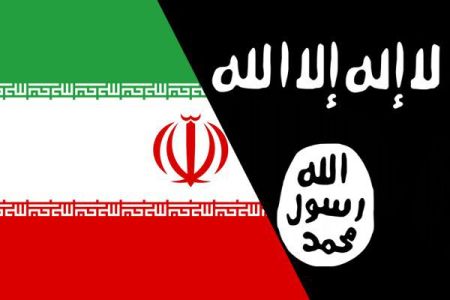
Analysis: Iran, ISIS Likely to Unite for WWIII

February 28, 2016

Analysis: Iran, ISIS Likely to Unite for WWIII, The Jewish PressHana Levi Julian, February 28, 2016

Iran-ISIS-flagPhoto Credit: JP.com graphic

Israeli military analysts are now beginning to prepare top officials, who are in turn beginning to prepare the nation, for what eventually may become the start of World War III.

Most analysts still believe the Syrian crisis is a sectarian conflict between the Sunni, Shi’a and Alawite Muslims. But that time is long gone.

A cataclysmic clash of civilizations is taking place in Syria, one that a number of nations have patiently awaited for decades.

Turkey, so deeply invested in the glorious history of its Ottoman Empire period, would find great satisfaction in stretching its influence with a modern-day “Turkish Islamic Union” that might embrace like-minded nations in the region and perhaps also beyond.

Da’esh, as it is known in the Middle East and which in English calls itself the “Islamic State” (known by others as ISIS or ISIL) is rapidly stretching its influence to build a worldwide Sunni caliphate. It began as a splinter group from the Al Qaeda terrorist organization, and then morphed into the Islamic State in Iraq and Syria (hence “ISIS”) — but at last count had successfully recruited more than 41 other regional Muslim terrorist organizations to its cause from around the world on nearly every continent.

And then there is the Islamic Republic of Iran, a Shi’ite Muslim nation, which is extending its tentacles as rapidly throughout the world as Da’esh, but far more insidiously and certainly more dangerously. If in this world one might define any nation today as Amalek, that ice-cold, black-hearted evil that first picks off the weakest of the Jewish nation, it is Iran, which has quietly extended its influence and control farther and more deeply than any other enemy Israel has ever had. Wealthy, patient, smiling and calculating, Iran acquires new allies each year, even among those Israel once counted as friends. Meanwhile, Iranian officials never forget to keep the home fires burning, to stir the pot and keep it simmering, and always to nurture the various conflicts at home in the Middle East.

This past week, Iran announced the money it donates to families of Arab “martyrs” who murder Israelis will be paid via its own special charity organization, and not through the Palestinian Authority government.

But Tehran has yet to reveal the details of exactly how it intends to pay.

Instead, a high-ranked government official simply made an announcement this weekend saying Iran did not trust the Ramallah government, driving a deeper wedge already dividing the PA’s ruling Fatah faction from Gaza’s ruling Hamas terror organization — Iran’s proxy group.

Hamas has been planting sleeper cells and budding regional headquarters, however, throughout the PA-controlled areas of Judea and Samaria, and it is clear the group’s next goal is an attempt to wrest control of those two regions from the PA, thus completing Iran’s takeover of the PLO — the PA’s umbrella organization and liaison to the United Nations.

Money is always helpful in such an enterprise, and Iran has recently enjoyed a massive infusion of cash that came courtesy of the United States and five other world powers after sanctions were lifted last month as part of last July’s nuclear deal.

Iranian Ambassador to Lebanon Mohammed Fath’ali announced last Wednesday that Iran would pay Arab families for each “martyr” who died attacking Israelis in Jerusalem and each Arab family whose home was demolished by Israel after one of its occupants murdered Israelis in a terror attack.

Iranian Parliament Speaker Ali Larijani last week underlined Tehran’s continued strong support for the wave of terror against Israel.

“The Islamic Republic supports the Palestinian Intifada and all Palestinian groups in their fight against the Zionist regime. We should turn this into the main issue in the Muslim world,” Larijani said in a meeting with a number of “resistance” groups in Tehran,FARS reported Sunday (Feb 28).

But it is clear that Iran is not content solely with a takeover of the PLO.

Tehran has its eye on a much wider goal, now more clearly than ever the resurrection of an updated Persian Empire — in modern parlance military analysts refer to it as an “Axis of Evil” — in much the same manner that Sunni Da’esh (ISIS) is single-mindedly pursuing its goal of rebuilding a worldwide caliphate.

Iranian forces via proxies have already managed to involve themselves in what once were domestic affairs in Yemen, Syria, Lebanon, Egypt, Jordan, Bahrain, Saudi Arabia, Iraq, Israel, Cuba, Mexico, the United States, Afghanistan, Venezuela, Brazil, Argentina, Qatar, Turkey and numerous other nations.

Larijani has at last proclaimed officially that Iran doesn’t differentiate between Shiites and Sunnis since they share many commonalities, adding that Tehran “has supported the Palestinian nation (although they are Sunnis) for the past 37 years.”

The remark is significant in that Iran’s Revolutionary Guard Corps and Lebanese Shi’ite Hezbollah guerrillas – another Iranian proxy – are fighting Sunni opposition forces in Syria on behalf of President Bashar al-Assad. Iranian forces are fighting the Sunni Muslim Da’esh (ISIS) terror organization that seized a significant percentage of territory in Syria.

But south of Israel, Iran’s proxy Hamas, a Sunni Muslim group, has been providing material and technical support to the same Da’esh — but its “Sinai Province” terror group in the Sinai Peninsula.

Here we finally see that Iran is willing to adapt and support terror wherever it can be found, as long as it meets two of three criteria: (1) it furthers its goal to destabilize the region, (2) in the process it works towards the annihilation of Israel, and/or (3) will contribute towards conquest and influence to reach the goal of an ultimate renewed, updated Persian Empire.

How long then until Iran connects the two dots and simply arranges a meeting between its own Supreme Leader Ayatollah Ali Khamenei and the leader of Da’esh, Abu Bakr al-Baghdadi? Hezbollah’s Hassan Nasrallah and Hamas leader Khaled Meshaal will likely be invited for dessert …

The other question is how long until someone strikes the spark that ignites the conflagration — the region is already in chaos.

Report: Israel’s northern border violated daily

February 28, 2016

Report: Israel’s northern border violated daily, Israel National News, David Rosenberg, February 28, 2016

Lebanon borderIDF patrol along border with Lebanon Flash 90

Israel’s border with Lebanon is violated on a daily basis, according to a new report by the Israeli Mission to the United Nations.

The report also shows the degree to which UN resolutions are ignored and even tolerated – despite the presence of United Nations observers. In 2015 alone, there were fully 2,374 documented violations of the most recent UN ruling on the Israel-Lebanon border, UN Security Council Resolution 1701.

Israel’s Ambassador to the UN, Danny Danon, conveyed the statistics to the UN Secretary General and Security Council. Danon condemned the rampant violations of the border area and the UN’s tacit acceptance of Hezbollah control.

“The government of Lebanon is not acting and armed Hezbollah operatives are roaming freely throughout the south Lebanon in violation of the UN,” Danon said. “Hezbollah has free reign in South Lebanon and instead of reacting forcefully to their violations, the UN is ignoring the problem.”

Hezbollah, which has de facto autonomy in southern Lebanon, maintains regular armed patrols along the Blue Line – the UN’s demarcation between Israel and Lebanon – well within the United Nations Interim Force in Lebanon (UNIFIL) security zone. The number of Hezbollah patrols along the border in 2015 was estimated at 653.

More disturbing, the report revealed that Israel’s northern border is violated on a daily basis. During 2015 alone, infiltrators breached the border 589 times.

Another 1,079 incidents of armed individuals – presumably Hezbollah fighters – openly operating in the UNIFIL security zone were recorded.

The report noted two Hezbollah terror attacks on Israel in 2015, and 51 violent protests targeting Israeli forces along the border.

Israel Transferring $128 Million to PA to Prevent Collapse

February 26, 2016

Israel Transferring $128 Million to PA to Prevent Collapse

By: David Israel Published: February 26th, 2016

Source: The Jewish Press » » Israel Transferring $128 Million to PA to Prevent Collapse

Israeli Minister of Finance Moshe Kahlon
Photo Credit: Emil Salman/POOL

Finance Minister Moshe Kahlon (Kulanu) on Thursday decided to transfer to the Palestinian Authority half a billion shekels (roughly $128 million) in tax and customs Israel has collected for the PA and delayed its transfer for a variety of reasons, including a staggering debt the PA has accumulated for utilities, which are being paid by the Israeli taxpayer. But, apparently, the situation in the PA controlled parts of Judea and Samaria has grown near-catastrophic, and Kahlon decided to apply the kind of generosity for PA Chairman Mahmoud Abbas no Israeli citizen ever receives. Israel will also reduce the commission it charges the PA for serving as its tax collector and lender.

In addition, Kahlon and Defense Minister Moshe Ya’alon have decided to issue thousands of new work permits to workers who reside in the PA. So, cover up well, Israeli civilians, the folks with the knives and scissors are coming in Sunday.

“Peace hasn’t broken out,” Finance Minister Moshe Kahlon told Yediot Aharonot Thursday night, adding, “It’s only a drop in the bucket — but it’s a crucial drop.”

Both Kahlon and Ya’alon are convinced, ostensibly based on Israeli intelligence, that the only way to calm the recent wave of terror is by improving the economic malaise over at the PA and introducing hope — supposedly because fully employed Arabs won’t go out with knives to kill Jews. The problem with this notion is that several Arab surveys have shown that the kids with the knives usually come from middle class homes, and they often leave their suicide notes on their brand new laptops and iPads.

Palestinian Finance and Planning Minister Shukri Bishara met with Kahlon a week ago Thursday and warned him that the PA is on the brink of economic collapse, with a deficit of NIS 1.5 billion ($380 million). The amount transferred by Israel should be enough to cover about a thirst of the deficit and pay teachers—who have been striking, as well as suppliers.

Apparently, Prime Minister Netanyahu does not object to the emergency aid to the PA, but has opted not to endorse it publicly, so it’s on Kahlon’s and Ya’alon’s record if it fails but Netanyahu could later claim it as his own should it succeed. For his part, Kahlon reiterated that this does not constitute a political move but merely a stopgap measure. He also emphasized that the money actually belongs to the PA, and that he expects the other side to express its gratitude by ceasing those incitement broadcasts, and that Abbas condemn the terror and “change the atmosphere.”

Good luck waiting for that one, bring a comfortable chair.

According to Yediot, there has been one change this week in the tone of the conversation between official Israel and the official PA: last Sunday Minister Bishara sent Kahlon an unusually friendly letter, especially these days, on official PA paper, saying (text translated from Hebrew), “I wish to express my deep appreciation following our meeting last Thursday. I hope that in our talks I was able to explain to you the seriousness of the financial challenges we must deal with, and as a result the need to find satisfactory solutions to the issues with which we dealt.”

Bishara continued: “I came out of our meeting with a feeling that thanks to your leadership and understanding we have reached a positive turning point and prepared the path for new beginnings in trade relations between Israel and ourselves. Even though the arrangements to which you consented are still far from what is needed for a global solution, I believe that they constitute a positive and welcome step forward.”

Bishara ended his letter with a request to pass his gratitude to Gen. Yoav (Poly) Mordechai, the Coordinator of Government Activities in the Territories (COGAT).

Obama Opposes New Pro-Israel Bill

February 25, 2016

Obama Opposes New Pro-Israel Measures, Will Not Follow Provisions to Help Jewish State White House rejects portions of new bill to help Israel

BY:
February 25, 2016 12:35 pm

Source: Obama Opposes New Pro-Israel Bill

President Barack Obama has announced in a rare statement that he will not follow newly passed measures aimed at boosting the Israeli economy and strengthening ties between the United States and the Jewish state, according to a statement issued by the president.

Obama stated that while he would sign the new trade resolution, portions of which focus on combatting economic boycotts of Israel, he would not enforce certain pro-Israel provisions that order the United States to stop partnering with countries that support the Boycott, Divestment, and Sanctions movement, or BDS, which aims to isolate Israel.

The president’s rejection of these provisions comes two weeks after the White House issued a separate statement expressing support for every provision of the trade bill except for those focusing on strengthening the U.S.-Israel relationship.

The Obama administration has repeatedly opposed efforts to fight the BDS movement over the past several months, with several senior officials expressing support for European efforts to explicitly label Jewish-made products produced in disputed areas of Israel.

Obama claimed in the statement that his administration does not back the BDS movement. However, he will not uphold parts of the new trade legislation that seek to combat the BDS-backed labeling of Jewish goods, which the Israeli government has described as anti-Semitic.

“Certain provisions of this Act, by conflating Israel and ‘Israeli-controlled territories,’ are contrary to longstanding bipartisan United States policy, including with regard to the treatment of settlements,” Obama said in the statement.

“Moreover, consistent with longstanding constitutional practice, my administration will interpret and implement the provisions in the Act … in a manner that does not interfere with my constitutional authority to conduct diplomacy,” Obama said, making clear he will not enforce any part of the law that he views as legitimizing Israeli settlements.

Rep. Peter Roskam (R., Ill.), who authored the pro-Israel language along with Rep. Juan Vargas (D., Calif.), criticized the administration for not upholding the will of Congress and the American people.

“This law—including the anti-BDS provisions I was proud to author—passed with overwhelming bipartisan support in both the House and the Senate,” Roskam said in a statement. “Incredibly, President Obama has already announced his intention to prioritize his misguided notions of legacy over the law of the land.”

“We did not provide a statutory menu from which President Obama can pick and choose provisions to enforce,” the lawmaker added. “The president has signed this bill into law—it is now his responsibility to fully and faithfully execute it in its entirety.”

Roskam expressed dismay that “fighting efforts to delegitimize Israel interferes with his diplomacy, but rest assured that I intend to use my authority as chairman of the Ways and Means Subcommittee.”

Congress has undertaken a series of efforts to boost the U.S.-Israel relationship following a contested debate over the Iran nuclear deal that strained relations between the two countries.

Senate lawmakers, led by Sen. Mark Kirk (R., Ill.), recently filed legislation that would help state and local governments divest taxpayer funds from companies that back the BDS movement.

The bill comes as more than 20 state governments pursue efforts to combat the BDS movement and divest from anyone who supports it.

Treasury Department: Islamic State Building Base In Gaza Strip

February 25, 2016

Treasury Department: Islamic State Building Base In Gaza Strip; Using Palestinian Enclave to Recruit and Deploy Fighters

by Aaron Klein and Ali Waked24 Feb 2016

Source: Treasury Department: Islamic State Building Base In Gaza Strip

TEL AVIV – With little fanfare, the Treasury Department earlier this month imposed financial sanctions on three Islamic State leaders, including a jihadist from the Gaza Strip it said was central to recruiting and deploying foreign fighters and establishing an IS base inside Gaza.

The move highlights the growing threat of the Gaza Strip serving as a central headquarters for IS.

“Treasury and our partners worldwide are aggressively targeting ISIL’s ability to earn and make use of its money, and we are making progress on many fronts,” said Adam J. Szubin, Acting Under-Secretary for Terrorism and Financial Intelligence. Szubin said the new sanctions target “key ISIL leadership figures responsible for oil and gas production, foreign terrorist fighter recruitment and facilitation, and other financial facilitation.”

One of the three newly-sanctioned IS leaders is Gaza-based Salafi jihadist Husayn Juaythini. Treasury accused Juaythini of providing support and services to IS “by facilitating communications and the movement of foreign terrorist fighters and conducting financial activities in support” of the terrorist organization.

The Treasury profile of Juaythini stated that he was “the link” between IS Leader Abu Bakr al-Baghdadi and armed groups in Gaza, and “had money that he was using to build an ISIL presence in Gaza.”

The profile continued:

Juaythini traveled to Syria in September 2014 to pledge allegiance to ISIL and was tasked to return to Gaza and establish a foothold for ISIL there. …

Juaythini not only maintains ties with ISIL, but as of mid-2014 was deputy head of the extremist group and U.S.-designated SDGT Mujahidin Shura Council (MSC). In 2013, Juaythini attempted to acquire supplies for the MSC in the environs of Jerusalem to conduct attacks against Israel and help the group overcome financial difficulties.

He also worked with a Libya-based facilitator, who served as the primary money and weapons facilitator for Juaythini’s activities in Gaza. As of January 2015, Juaythini was instrumental in fostering connections between Gaza- and Libya-based terrorists, and facilitating their travel to Syria.

The Treasury Department also sanctioned Faysal al-Zahrani, a top oil official in Syria and IS recruiter and religious adviser Turki al-Binali.

Just last week, Breitbart Jerusalem reported a Palestinian jihadi militant had been killed while fighting for IS in Libya, the organization said.

Some 100 Palestinians have reportedly fought for IS in Syria, Iraq, and Libya.

Over the last three years, some 30 Gazans have been killed while fighting for IS in Syria and Iraq, and another four in Libya, including Abu Azra.

Aaron Klein is Breitbart’s Jerusalem bureau chief and senior investigative reporter. He is a New York Times bestselling author and hosts the popular weekend talk radio program, “Aaron Klein Investigative Radio.” Follow him on Twitter @AaronKleinShow. Follow him on Facebook.

Iran: $7,000 to every terror family

February 25, 2016

Iran: $7,000 to every terror family Foreign Ministry publishes condemnation after Iran promises to pay families of Palestinian terrorists.

 By Matt Wanderman
First Publish: 2/24/2016, 8:57 PM

Source: Iran: $7,000 to every terror family – Defense/Security – News – Arutz Sheva

Members of Iran’s Basij paramilitary force march in Tehran
Reuters

The Foreign Ministry has declared that “Israel condemns the Iranian ambassador to Lebanon’s announcement that his country will financially support Palestinian terrorists and their families.”

The official statement explained, “This is additional proof of Iran’s deep involvement in supporting terror against Israel. After the agreement with the world powers, Iran is allowing itself to continue being a central player in international terror.”

The Iranian ambassador to Lebanon, Mohammad Fateh Ali, recently announced that his country would pay $7,000 to the family of any terrorist killed in the recent wave of terror, and an additional $30,000 to any family whose house was destroyed in response. Fateh Ali made his statement during a press conference in Beirut and further called on Lebanon too join the fight against Israel, promising: “the martyrs’ blood will release the entire Palestine, from the river to the sea”

Also today, Defense Minister Moshe Ya’alon (Likud) accused the Islamic Republic of embedding “sleeper cells” in the US and Europe. He warned that these cells are gathering weapons and intelligence, and recruiting new members to carry out terror attacks.

“The Iranian regime through the Iranian Revolutionary Guard corps is building a complex terror infrastructure including sleeping cells that are stockpiling arms, intelligence and operatives and are ready to act on order including in Europe and America,” Ya’alon said during an official visit to Cyprus.

Last summer a Cypriot court convicted a Lebanese-Canadian man of planning to carry out terror attacks against Israeli targets in Cyprus. The man belonged to the terror group Hebzollah, which Iran supports.

 Israeli Defense Split on Turkey’s Gaza Port Demands

February 25, 2016

Israeli Defense Split on Turkey’s Gaza Port Demands

By: JNi.Media Published:

February 24th, 2016

Source: The Jewish Press » » Israeli Defense Split on Turkey’s Gaza Port Demands

Artist’s rendering of an offshore harbor and airport for Gaza, under Israeli control
Photo Credit: Minister Israel Katz Facebook page

Israeli negotiations with Turkey on renewal of full economic and diplomatic relations hinge, not surprisingly, on an area that isn’t part of Israel or Turkey, namely the Gaza Strip. Or, more to the point, the Turks insist that Israel must allow the Gazans to build a new port, having lived since 2007 under a tight Israeli blockade. With the Hamas’ track record on abusing whatever shipments Israel does allow through the border crossings, using cement to build terror tunnels instead of rehabilitating residential buildings that collapsed during the 2014 war, it’s obvious why Israel would resist such a demand. However, it appears that at least some in the IDF echo the Turkish sentiment, arguing that something must be done to alleviate the suffering of Gaza’s civilian population, and soon.

Military Intelligence chief Major General Hertzi Halevy on Tuesday told the Knesset Foreign Affairs and Defense Committee that the deteriorating economy in Gaza is liable to cause an explosion which would be turned against Israel. MKs who participated in the closed-door meeting told Ha’aretz that Halevy believes the rehabilitation of Gaza is going too slowly, and stresses that an economic improvement would be the best restraining measure against a new war.

But others in Israel’s security apparatus insist that “Whatever enters the Gaza Strip must undergo an Israeli check. If someone is eager to transport goods by sea, they are invited to bring them through the Ashdod harbor.” Responding to news earlier this week that Israel and Turkey are on the way to some agreement on a Gaza harbor, a source in the defense ministry told Walla that “we have no intention to turn a blind eye on anything that’s going into Gaza.”

Only a month ago Israel’s media reported that Hamas has rebuilt its attack tunnels that had been destroyed by the IDF in the summer of 2014, and that, according to IDF intelligence, some of those tunnels reach well into Israeli territory. Meanwhile, reports on the deterioration of the quality of life inside the Strip suggest most Gazans receive only 3 hours of electricity a day, and the Egyptian flooding of the smuggling tunnels reaching into the northern Sinai have eroded the quality of drinking water, especially in the southern Strip. How long, ask those who support the harbor plan, before the suffering population that has nothing to lose throws itself on the border fences, provoking a ghoulish clash with the Israeli military?

There are five alternatives being discussed by the Israeli leadership, to appease to Turks while helping the Gazans without harming Israeli security. One calls for the harbor to be built in El Arish, a sleepy Egyptian town in the north-western Sinai, which is under Egyptian rule. Another is the exotic idea of building an artificial island that would face the Gaza shore, where ships would unload their goods under strict Israeli control. There’s also an idea to build a Gaza harbor in Cyprus; and, of course, there’s the more intuitive idea of building the harbor in Gaza, but wrapping its operation tightly in long-term ceasefire deals. Naturally, as soon as Hamas starts shooting rockets at Israel, Israel could wipe out their nice harbor.

Defense Minister Moshe Ya’alon and most of the military brass are not impressed by any of the above, and continue to insist on delivering the shipments to Gaza the way God intended it to be done — through Ashdod. They boost their position by regularly releasing stories about the frightening things the customs officials are discovering in those shipments — and they’re not making anything up, there’s a hangar down in Ashdod, packed with an arsenal of cleverly concealed weapons and explosives, chemicals and poisons, and, most recently, toy drones.

The Shabak is also against the harbor in Gaza, but for a different reason: they fear that a Palestinian harbor in Gaza would erode the standing of Mahmoud Abbas or his replacement, and permanently dismantle the separation between Gaza and the PA.

Unless the Turks give up on their Gaza harbor principle, this debate is not likely to just fade away. Gazans are paying for their terrible mistake of voting Hamas into power ten years ago, Hamas is there to stay — but can Israel afford to let those Gazan civilians continue to suffer? Perhaps now would be a good time to put into action one of those programs that advocate paying local Arabs to immigrate to better places. At this point it probably won’t require that much money.