Posted tagged ‘Israel’

Palestinians: Abbas “The Jew”

October 7, 2016

Palestinians: Abbas “The Jew”, Gatestone Institute, Khaled Abu Toameh, October 7, 2016

The unprecedented outcry over Abbas’s participation in the funeral of an Israeli leader is further proof of the degree to which Palestinians have been radicalized.

This is what happens when you unleash a tidal wave of hate against Israel and its leaders in the media, mosques and public rhetoric. In light of this brainwashing, how do you expect your people to respond when you, in any way, associate with an Israeli leader?
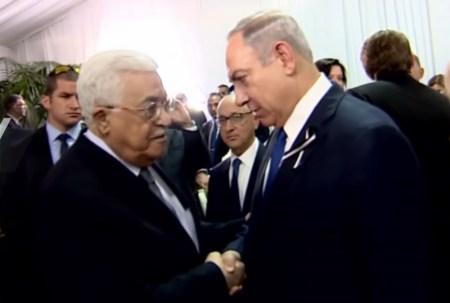
If attending the funeral of an Israeli leader, especially one who devoted the past two decades of his life to peace between Israel and the Palestinians, draws such condemnation, it is easy to imagine the result of a Palestinian leader making a peace overture to Israel.

Even if the current condemnation eventually dies down, it will have sent a message to future Palestinian leaders: “No peace with Israel, not in our time, and not in any time.”


Palestinian Authority (PA) President Mahmoud Abbas is facing a barrage of criticism for attending the funeral of former Israeli President Shimon Peres in Jerusalem. The fury directed towards Abbas comes as no surprise to those who are familiar with the unrelenting campaign of anti-Israel incitement that has been taking place for many years in Palestinian society.

If attending the funeral of an Israeli leader, especially one who devoted the past two decades of his life to peace between Israel and the Palestinians, draws such condemnation, it is easy to imagine the result of a Palestinian leader making a peace overture to Israel.

President Abbas is now receiving a dose of his own medicine. This is what happens when you unleash a tidal wave of hate against Israel and its leaders in the media, mosques and public rhetoric. This is what happens when you inform your people that Israeli leaders are “war criminals” who ought to be prosecuted before the International Criminal Court. This is what happens when you drive into your people that Jews are desecrating with their “filthy feet” Islamic holy sites in Jerusalem. This is what happens when you accuse Israel of “ethnic cleansing”, “extra-judicial executions” and “poisoning” Yasser Arafat.

In light of this brainwashing, how do you expect your people to respond when you, in any way, associate with an Israeli leader?

1928Palestinian Authority President Mahmoud Abbas shakes hands with Israeli Prime Minister Binyamin Netanyahu at the funeral of Shimon Peres, a former president of Israel, on September 30. Abbas is facing a barrage of criticism for attending the funeral, with members of his own party calling it “treason.” (Image source: Ruptly video screenshot)

It is hard to believe that Abbas and his cronies were surprised by the current wave of reprobation. But the degree of vitriol was perhaps not predicted.

Abbas is now getting it from all quarters. The denunciations are coming not only from his political foes in Hamas, Islamic Jihad and the Popular Front for the Liberation of Palestine (PFLP), but also from groups and figures belonging to his ruling Fatah faction.

Palestinians say that the 81-year-old Abbas, who is now in his 11th year of his four-year term in office, is facing his most serious challenge to leadership. And there are no signs that the recriminations are subsiding. On the contrary, each day brings with it yet another flood of reproof, prompting Palestinian Authority officials in Ramallah to issue a stiff warning to those who are exploiting the situation to “incite” against Abbas. However, the threats have failed to deter his critics from proceeding with their attacks on him and calling on him to step down.

One of those who have already paid a price for criticizing Abbas’s attendance of the Peres funeral is Lieutenant Colonel Osama Mansour, who holds a senior position in the PA’s Military Liaison Apparatus. In a post on Facebook, the PA officer strongly condemned Abbas’s move:

“If you alone decided to participate in the funeral of the killer of our sons, then you erred. And if you took the decision on the basis of what you were told by your advisors, then they have misled you.”

Hours after the post appeared on Facebook, Mansour was suspended from his job. Later, he was arrested by PA Military Intelligence Service officers who raided his house and conducted a search, during which they destroyed furniture, according to his family. A PA court has since ordered Mansour remanded into custody for fifteen days.

The suspension and subsequent arrest of the officer sparked a new wave of rage against Abbas and his security forces. Palestinians took to social media to protest the crackdown on the officer, hailing him as a hero and denouncing Abbas as a “dog” and Israeli “collaborator.” Some suggested that the officer was worthy of being appointed as a minister in the PA Cabinet for his courageous remarks.

But the move against the senior officer did not deter many Abbas loyalists from coming out against him for going to the funeral of Peres.

Fatah’s “Youth Movement,” known in Arabic as Al-Shabiba, issued a statement calling on Abbas to “apologize” to the Palestinians for committing a “grave mistake.” Abbas’s participation in the funeral was “humiliating and degrading” for the Palestinians and a form of “treason,” according to the statement. The group pointed out that Abbas’s move was in violation of Fatah’s regulations, which envisage the “full liberation of Palestine and eliminating Israeli occupation economically, politically, militarily and culturally.” Addressing Abbas, the group stated:

“Mr. President of the State of Palestine, Mahmoud Abbas. You have committed a crime against our people by equating the executioner with the victim. We will not allow treason to become a viewpoint.”

Several senior Fatah officials sought to distance themselves from Abbas’s decision to attend the funeral of Peres by claiming that they had not been consulted beforehand.

One of them, Tawfik Tirawi, who previously served as commander of the Palestinian Authority’s General Intelligence Service in the West Bank, announced that he was personally opposed to Abbas’s gesture. He clarified that Abbas did not seek the opinion of the Fatah leadership before he went to the funeral:

“Had I been personally consulted as a member of the Fatah Central Committee, I would have made it clear that I am against participation in principle, because this is a funeral of a Zionist who wallowed, from head to toe, in the blood of our people and other Arabs.”

Tirawi went on to describe Peres as the “engineer of the Israeli nuclear project which is designed to foil any plan to retrieve our land.”

The widespread protests against Abbas’s decision to participate in Peres’s funeral took a violent turn on October 3, when PA policemen used force to break up a peaceful demonstration in Ramallah. Organized by the PFLP, the protest was yet another sign of the strong sentiments many Palestinians harbor not only against Abbas, but also Israel.

Palestinian lawyer Muhanad Karajeh, who works for a Ramallah-based human rights organization, reported that he was asked by the organizers to be present in order to document the event. The lawyer stated he was severely beaten by PA security officers during the protest. “I was repeatedly beaten in the face and different parts of the body,” he recounted. “I know some of the officers personally. They tore my suit although I told them I am a lawyer. They humiliated me and cursed me and my profession.”

In a desperate act to counter the spreading protests, Abbas’s aides organized impromptu marches in support of the Palestinian Authority president. The PA leadership summons Fatah activist-thugs to take to the streets whenever it feels the heat. Carrying photos of Abbas and the yellow Fatah flags, scores of Fatah members marched in the streets of Ramallah in a show of force and as a message of warning to those who would censure Abbas. “We stand behind our historic leadership and President Abbas,” declared top Fatah activist Osama Qawassmeh. “Fatah is a red line and it is facing a conspiracy.”

On social media, the attacks on Abbas were quite ruthless. Palestinian activists circulated cartoons ridiculing Abbas. One of them depicted Abbas as a rabbi in Israeli military uniform and a Jewish skullcap weeping next to Peres’s grave. Another cartoon featured an Arab laying a wreath on a boot next to Peres’s photo.

On Twitter, activists launched hashtags called, “Offering Condolences On the Death of Peres is Treason” and “Normalization is Treason.”

Hamas was not silent about Abbas’s “treason.” Mahmoud Zahar, one of the leaders of the Islamist movement in the Gaza Strip, opined that according to Islamic teachings, Abbas qualifies as a Jew. “We hope that he will join Peres in Hell,” Zahar said. “Abbas is an Israeli product. The man who claims to represent all the Palestinian people has stood up against all Palestinians and Arabs.”

A large group of Palestinian and Arab academics, journalists and political activists signed a petition calling on Abbas to apologize for attending the Peres funeral, characterizing the move as an “historic and political mistake.” At least 150 Palestinians and Arabs signed the petition, which stressed that Abbas’s decision came as a “shock” to Palestinians.

The protests have, meanwhile, spread to Palestinian refugee camps in the West Bank, Gaza Strip and neighboring Arab countries. At the Balata refugee camp near the West Bank city of Nablus, thousands of Palestinians chanted slogans calling for the removal of Abbas from power. The protest came during a funeral of a Palestinian man who had been shot dead a week earlier by Palestinian Authority policemen.

The unprecedented outcry over Abbas’s participation in the funeral of an Israeli leader is further proof of the degree to which Palestinians have been radicalized. Frustration with Abbas and his policies is not new. More and more Palestinians have in recent years expressed rage over his “lenient” policies towards Israel. A particular bone in their throat is the continued security coordination between PA security forces and Israel. They perceive this cooperation with the Israelis as “treasonous”. Many Palestinians are also angry with Abbas for his refusal to share power and pave the way for the emergence of new leaders.

The blame for the radicalization of the Palestinian people lies squarely at the feet of Abbas and the rest of the PA. If you promote boycotts of Israel, expect to be attacked when you break that boycott by associating with any Israeli, alive or dead. Protests tend to subside, but even if the current condemnation eventually does die down, it will have sent a message to future Palestinian leaders. The message is: “No peace with Israel, not in our time, and not in any time.”

Accused Hezbollah Operative Slated to Speak In Washington, D.C.

October 7, 2016

Accused Hezbollah Operative Slated to Speak In Washington, D.C., Washington Free Beacon, , October 6, 2016

Azmi Bishara, an Israeli Arab and former lawmaker, speaks with journalists as he arrives to attend the emergency Arab leaders summit on Gaza in Doha, Qatar, Friday, Jan. 16, 2009. (AP Photo/Hassan Ammar)

Azmi Bishara, an Israeli Arab and former lawmaker, speaks with journalists as he arrives to attend the emergency Arab leaders summit on Gaza in Doha, Qatar, Friday, Jan. 16, 2009. (AP Photo/Hassan Ammar)

“The Obama administration’s tilt toward Iran is so extreme that now a visa has been given to a Hezbollah terrorist so that he can visit Washington D.C.,” the source said. “The administration’s love affair with Iran is a disgrace to our country and a danger to our security.”

********************

A former Arab member of Israel’s parliament who was forced to flee the country after he was accused of working as a top Hezbollah operative is slated to speak next week in Washington, D.C., raising questions about how he obtained permission to enter U.S. soil.

Azmi Bishara, who is accused by Israel’s Shin Bet secret service of helping Hezbollah plot terrorist operations, is confirmed to speak next week at Washington’s downtown Marriott hotel as part of a conference organized by The Arab Center of Washington, D.C.

An official from the Arab Center confirmed to the Washington Free Beacon that Bishara will be attending the event, raising questions about how an individual linked to a U.S.-designated sponsor of terror obtained permission to enter America.

Bishara was initially slated to speak alongside former U.S. Ambassador to Russia Michael McFaul, who the Free Beacon has learned cancelled his appearance. The talk was to focus on the promotion of democracy in the Arab world, according to a current conference schedule.

McFaul’s image was removed from the conference’s webpage several hours after the Free Beacon made an inquiry into the event.

Bishara remains listed as a speaker.

Bishara, who has been living in Qatar since he fled Israel in 2007, is accused by Israel of helping Hezbollah select targets during its 2006 assault on the Jewish state. Israel is still seeking to detain Bishara and charge him for these terror offenses. Israeli authorities have said they will arrest Bishara if he returns to the country, where he could face the death penalty, according to the Israeli newspaper Haaretz.

The State Department declined to tell the Free Beacon if it granted a visa to Bishara. It remains unclear how he has gotten official permission to be in the United States, as Qatar, his current place of residence, is not part of the U.S. Visa Waiver Program.

A State Department official told the Free Beacon that visas are granted on a case-by-case basis, but remain confidential.

“We are unable to provide information on individual cases because visa records are confidential under U.S. law,” an official told the Free Beacon. “Visa applications are adjudicated on a case-by-case basis in accordance with U.S. law.”

Additionally, “Section 222 (f) of the Immigration and Nationality Act (INA) prohibits us from disclosing details from individual visa cases,” the official said.

One foreign policy insider familiar with the situation questioned how Bishara obtained entry to the United States.

“The Obama administration’s tilt toward Iran is so extreme that now a visa has been given to a Hezbollah terrorist so that he can visit Washington D.C.,” the source said. “The administration’s love affair with Iran is a disgrace to our country and a danger to our security.”

Bishara, a former chairman of Israel’s Balad political party, is accused by Israel of aiding Hezbollah agents during the 2006 war.

“Bishara allegedly provided ‘information, suggestions and recommendations,’ including censored material, to his contacts in Lebanon during the war,” according to Haaretz.

He currently serves as the general director at the Arab Center for Research and Policy Studies in Qatar.

IDF hits targets in northern Gaza in response to rocket strike

October 5, 2016

IDF hits targets in northern Gaza in response to rocket strike After projectile lands on a Sderot street, Israeli tanks reportedly fire on Hamas sites in Beit Hanoun

By Judah Ari Gross October 5, 2016, 11:59 am

Source: IDF hits targets in northern Gaza in response to rocket strike | The Times of Israel

A rocket launched from the Gaza Strip strikes a road in the southern city of Sderot on October 5, 2016. (Israel Police)

Israeli tanks fired on Hamas targets in the northern Gaza Strip on Wednesday in response to a rocket that landed in southern Israel earlier in the day, the army said.

According to Palestinian reports, the IDF tanks struck sites in Beit Hanoun, on the northeastern corner of the coastal enclave. The army would not immediately confirm those reports to The Times of Israel.

There were no immediate reports of Palestinian injuries.

The rocket, which had been fired from the Gaza Strip, struck a street in the city of Sderot — a few miles from Beit Hanoun — just before 10:30 a.m. on Wednesday, police said, causing damage and sending three people to the hospital suffering from anxiety attacks.

The Islamic State-affiliated Ahfad al-Sahaba-Aknaf Bayt al-Maqdis terrorist group took responsibility for the rocket launch in statements released in both Arabic and Hebrew.

“Oh you cowardly Jews: You don’t have safety in our land. [Former defense minister Moshe] Ya’alon, the failure at giving security. [Defense Minister Avigdor] Liberman to fail will be a certainty,” the Salafist group said in its statement, in poorly translated Hebrew.

The attack against Israel was apparently a response to the Strip’s Hamas rulers arresting several members of the Salafist organization, according to the group’s statement.

Though the Salafist group took responsibility for the attack, Israel has said it holds Hamas responsible for any attacks emanating from Gaza and routinely responds to such launches with strikes inside the Palestinian territory.

“We can’t go after every little group in Gaza with a couple of dozen members that goes out one night and fires a rocket,” a senior officer in the IDF’s Southern Command told reporters last month.

Ahfad al-Sahaba-Aknaf Bayt al-Maqdis released a similar statement last month, after a failed attempt to launch a rocket at southern Israel on the first day of school. The group also claimed responsibility for a rocket attack that hit Sderot
in August, landing between two houses in the southern Israeli city.

In Wednesday morning’s rocket attack, three people in Sderot “suffered anxiety attacks” and were treated by medical teams, but no one was physically hurt by the attack, according to the Magen David Adom medical service.

The three — including a 15-year-old girl and 60-year-old man — were taken to Ashkelon’s Barzilai Medical Center for further care, MDA paramedics said.

The rocket alert siren was activated at approximately 10:20 a.m. and was heard in Sderot, Nir Am, Ivim and Gevim.

A few minutes later, Israel Police officers located the rocket in Sderot. The street where it landed was damaged in the attack, as were several nearby cars and homes.

Police sappers were called to the scene, and the area was closed off to pedestrians and traffic, police said.


Police sappers dig out piece of a rocket launched from the Gaza Strip that struck a road in the southern city of Sderot on October 5, 2016.

Last month, a mortar shell was launched from the Gaza Strip and landed in a field in southern Israel, causing neither injury nor damage, the army said. The projectile hit an empty field in the Eshkol region, next to the southern Strip, according to a statement from the Israel Defense Forces.

Ten Places the Obama Administration Says Are Not In Israel

October 3, 2016

Ten Places the Obama Administration Says Are Not In Israel Most ‘pro-Israel’ administration ever

BY:
October 3, 2016 5:00 am

Source: Ten Places the Obama Administration Says Are Not In Israel

picture added by JK

( No words needed ! )

The Obama administration ignited a firestorm over the weekend when it stripped the city of Jerusalem as being located in Israel in an official communication sent following a memorial service for recently deceased former Israeli President Shimon Peres.

The White House originally sent out a press release attributing Obama’s remarks at the memorial service as taking place in “Jerusalem, Israel.” However, shortly after that statement was sent, the White House reissued the statement with “Israel” crossed out as the location.

The White House’s move prompted criticism in Israel and throughout the pro-Israel community, including on Capitol Hill.

The Washington Free Beacon has assembled a list of ten other places that the White House does not believe are located in the state of Israel.

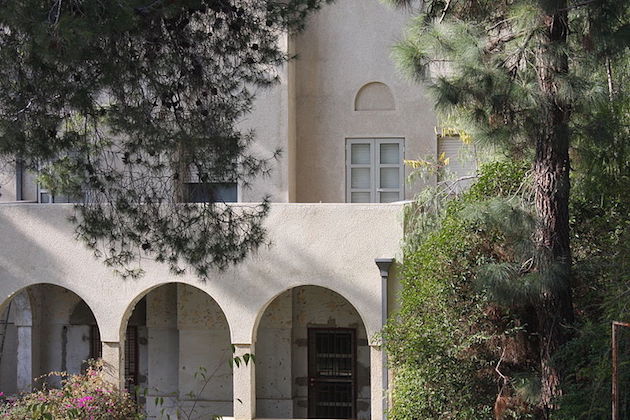
1. The Prime Minister of Israel’s Residence

Beit Aghion

Beit Aghion / Wikimedia Commons

Known as Beit Aghion in Hebrew, the prime minister’s official residence is located in the heart of Jerusalem and has served as the living space for senior Israeli officials since 1952, 14 years after construction was completed. Beit Aghion became the prime minister’s official residence in 1974.

2. The Prime Minister of Israel’s Office

Also located in central Jerusalem, the prime minister’s office coordinates a large number of governmental affairs and works to implement laws passed by the country’s parliament.

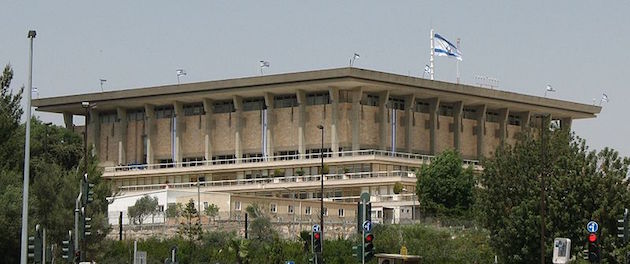
3. Israel’s Parliament, The Knesset

Knesset

Knesset / Wikimedia Commons

Hebrew for “the gathering,” the Knesset is home to Israel’s 120-member legislature. It is located in the Givat Ram neighborhood in Central Jerusalem, which plays home to many of Israel’s key government bodies.

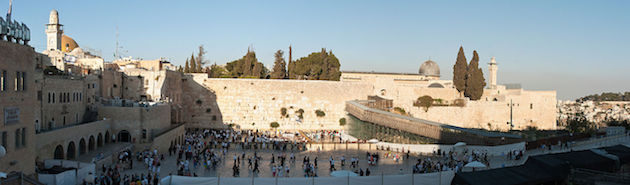
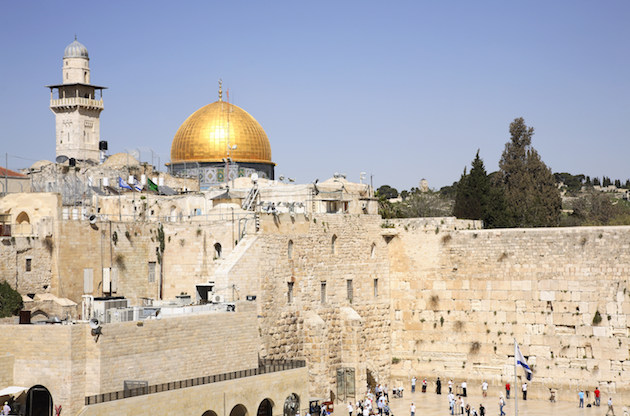
4. Judaism’s Holiest Sites, the Western Wall and the Temple Mount

The Western Wall

The Western Wall / Wikimedia Commons

The Western Wall, or Kotel in Hebrew, is considered Judaism’s holiest site. Located behind the walls of Jerusalem’s ancient Old City, the Obama administration has long refused to acknowledge this location as Israel’s property.

5. Israel’s Holocaust Memorial Museum, Yad Vashem

Israel’s Holocaust memorial museum, located in the heart of Jerusalem, is widely viewed as one of the city’s most important modern sites. After completing the museum’s central exhibits, visitors are treated to sprawling views of Jerusalem, a reminder of how far the Jewish people have come since the Holocaust.

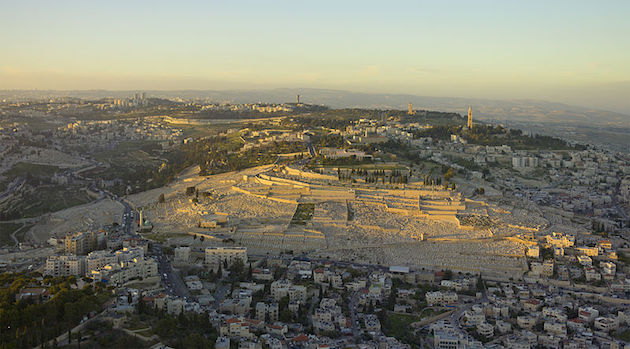
6. Judaism’s Ancient Cemetery, The Mount of Olives

Aerial view of the Mount of Olives

Aerial view of the Mount of Olives / Wikimedia Commons

A 3,000-year-old Jewish burial site, the Mount of Olives is located nearby Jerusalem’s Old City. Many of Judaism’s central figures are noted in the Bible as having ascended the mountain. In modern days, the cemetery has been a victim of vandalism by Arabs, and stands as another key site the Obama administration views as not part of Israel.

7. The Israel Museum

Due to its location in central Jerusalem, the Israel Museum—the country’s national museum—is not recognized as part of Israel by the Obama administration. The museum is home to some of Israel’s most important cultural artifacts.

8. Israel’s Supreme Court

Also located in the central Jerusalem neighborhood of Givat Ram, Israel’s supreme court has played a central role in Israeli democracy and the promotion of human rights in the Jewish state, but is not viewed as part of Israeli territory by the Obama administration.

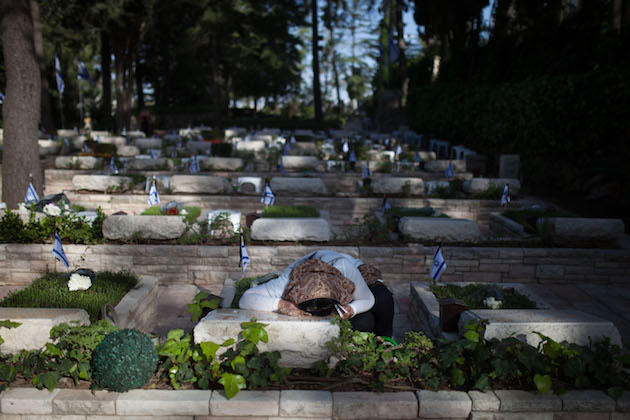
9. Israel’s National Cemetery, Mount Herzl

Mount Herzl

Mount Herzl military cemetery / AP

The site of Israel’s national cemetery, Mount Herzl is the final resting place of Israel’s founding fathers and national leaders, including former President Shimon Peres. The site is named after Theodor Herzl, the founder of Zionism. The Obama administration made clear last week that it does not view the cemetery as part of Israel.

10. Israel’s Capital City

Jerusalem

Jerusalem / AP

Since the days of the bible, Jerusalem has served as the central home of the Jewish people. Since the state of Israel was reestablished in 1948, it has served as the cultural and political center of the Jewish people. The Obama administration has been adamant since the start of its term in 2008 that it does not believe the city belongs to the Jewish state.

An Obama parting gift to Israel?‎

October 2, 2016

An Obama parting gift to Israel?‎ Israel Hayom, Richard Baehr, October 2, 2016

(Please see also, Another area where Congress must be ready to oppose the president. — DM)

U.S. President Barack Obama, former President Bill Clinton and Secretary of State John ‎Kerry all flew off to Israel and attended the funeral of Shimon Peres, the ‎last remaining ‎political figure from modern Israel’s founding generation. ‎Former Secretary ‏of State Hillary Clinton‎, ‎the current Democratic Party nominee for president‎, had at one point been listed to attend‎, ‎but did not make the trip‎.‎

The United States is fewer than six weeks away from the conclusion of what is now ‎a ‎tight presidential contest. The race conceivably could soon lean more toward ‎Clinton ‎after the widely watched first debate last Monday night (84 million viewers) ‎between Clinton ‎and Republican nominee Donald Trump, which most pundits ‎suggested she won, a ‎conclusion supported by results from the first polls released after the debate.

However, it has ‎been an unusual and surprising election contest, and there are no ‎guarantees that the ‎broader voting public saw things the same way their ‎media superiors expected it to see them. ‎

The high-level attendance at the funeral by Obama and Bill Clinton will ‎certainly be a plus for Hillary Clinton’s prospects to win a large share of ‎the Jewish vote in ‎closely contested states such as Florida and Pennsylvania. Obama ‎won ‎about seven of every 10 Jewish votes in 2012, down from about eight in 10 in 2008. ‎Bill ‎Clinton scored even higher than this in his two runs for the White House, in 1992 ‎and ‎‎1996, so Hillary Clinton can only benefit from association with presidents with far ‎more ‎popular support than she has demonstrated so far. Both Obama and Bill Clinton issued ‎statements full ‎of praise for Peres’ long career and also his commitment both to ‎keep Israel strong but ‎also to seek peace.‎

Obama’s tribute may be a harbinger of something more to come, ‎presumably in the nine ‎weeks he has left in the White House after the Nov. 8 vote has been ‎cast. ‎The president has just concluded an agreement with ‎Israel for a 10-year military aid bill. ‎The most contentious part of that agreement ‎was Israel’s acceptance that if Congress ‎votes for more assistance in the first ‎two years of the agreement than the agreed $3.8 billion ‎annual amount, it ‎would have to return the excess to the United States. There are ‎constitutional separation-of-‎powers issues that arise from the agreement, and already Trump has said ‎he does not consider himself bound by the limits, a view also ‎taken by a large ‎number of members in Congress.

In any case, with this settled, Obama ‎may feel free ‎to try his hand at some legacy-building on the Israeli-Palestinian track, an ‎area in ‎which his record of failure follows a long pattern of presidents who thought ‎they ‎had the magic elixir to achieve the two-state solution.‎

What has been rumored, with no denials offered by either the State Department or ‎the ‎White House, is that Obama may seek to obtain passage of a Security Council ‎resolution ‎in which the president offers his view on the parameters of the deal ‎between the two ‎parties who should end the conflict. As with all such two-state ‎plans, Israeli settlement ‎activity is viewed as the primary culprit in the conflict. ‎Members of the Senate, ‎anticipating some new initiative of this sort, have now sent ‎a letter to the White House, ‎signed by 88 members from both parties, requesting ‎that the president, for the duration of ‎his term, continue traditional American policy, ‎which has been to block any one-sided ‎U.N. resolutions targeting Israel.‎

‎”Even well-intentioned initiatives at the United Nations risk ‎locking the parties into ‎positions that will make it more ‎difficult to return to the negotiating table and make ‎the ‎compromises necessary for peace,” the senators wrote, ‎adding that the U.S. “must ‎continue to insist that neither we ‎nor any other outsider substitute for the parties to ‎the ‎conflict.”‎

Quoting from a 2011 address Obama gave to the U.N. General ‎Assembly in which he said that ‎‎”peace will not come ‎through statements and resolutions at the United Nations,” ‎the ‎senators reminded him that his ‎‎”administration has consistently upheld the ‎long-standing ‎U.S. policy of opposing — and if necessary vetoing — one-‎sided U.N. ‎Security Council resolutions.”‎

Longtime peace processor Dennis Ross, a likely appointee ‎to a Clinton administration if ‎she wins in November, ‎argued that the president’s willingness to try to obtain ‎a ‎resolution with a defined peace plan would be far higher if Trump wins ‎the presidential contest. Then the ‎initiative could be seen as a way to try to bind the incoming ‎president to an Obama-preferred course of action. Further ‎evidence that such a plan is in ‎the works, conceivably ‎regardless of who wins the White House, was a statement ‎by an ‎unusually angry Secretary of State John Kerry. Kerry, busy as always ‎attending to his many other ‎diplomatic failures — the never-ending Syrian carnage, ‎the ‎continued appeasement and excuse offering for the ‎behavior of the U.S.’s new Iranian ‎‎”partners,” relations with ‎Russia, seemed ready to pounce once more into the ‎Israeli-‎Palestinian diplomatic wasteland by condemning Israeli ‎settlement activity, as well ‎as offering a standard (for ‎appearance of balance) criticism of Palestinian incitement. ‎

It is hard not to see this as laying the groundwork for the ‎president cynically offering the ‎‎”Obama peace plan” as his ‎final tribute to the late Shimon Peres, who was ‎always ‎committed to the two-state solution and achieving peace. ‎The United Nations is of ‎course a vipers’ nest of Israel hatred ‎with its obsessive and uniquely hostile treatment of ‎the ‎Jewish state on any number of issues. ‎

Other than a Security Council resolution that President Jimmy ‎Carter allowed to get ‎through in 1980 by abstaining on a ‎resolution calling Israel’s unification of Jerusalem ‎illegal, ‎America’s role in Security Council ‎debates on Israel has generally been to try to water ‎down ‎condemnations of Israel. Failing that, the U.S. has ‎vetoed one-sided ‎resolutions aimed at Israel. ‎

Carter’s acquiescence in the U.N. Security Council resolution ‎cost him with Jewish voters. ‎He won only 45% of the Jewish ‎vote, to 39% for Ronald Reagan and 15% for third-‎party ‎candidate John Anderson, on his way to losing 44 states, the ‎worst defeat ever for ‎an incumbent president. No Democrat ‎since 1920 has performed worse among Jewish ‎voters. This ‎presumably is why Obama’s latest attempt to squeeze ‎Israel and Prime Minister Benjamin Netanyahu ‎will come, if it does, after the presidential election, when it can do no immediate ‎electoral ‎damage to his party or preferred candidate. ‎

In an interview with Vanity Fair, Obama made ‎clear that he plans to be an activist former president, pursuing the ‎causes he cares about. Attacking police and the ‎criminal ‎justice system for their alleged racism is a near certainty. ‎Climate change ‎seems to be a big matter for Obama, as well. ‎

But eight years of bad relations with Netanyahu did not come from nowhere. Obama is ‎one of ‎the more ideological presidents the U.S. has had (Reagan, ‎Carter, and ‎Franklin Roosevelt are others). His vision of Israeli-Palestinian ‎relations comes out ‎of his “Third World” view of ‎colonialism, and the power of the strong versus the ‎weak, ‎their victims. If he can take one more shot at what he ‎regards as balancing ‎the scales and weighing in on the side ‎of the Palestinians, he will. Those last nine ‎weeks of the Obama presidency are a red-alert warning to Israel and many ‎others.‎

ISIS cell in Jerusalem?

October 2, 2016

ISIS cell in Jerusalem? Six Jerusalem Arabs arrested for allegedly working to establish ISIS foothold in Israel.

Uzi Baruch, 02/10/16 11:12

Source: ISIS cell in Jerusalem? – Defense/Security – News –


Six Jerusalem Arabs have been indicted for allegedly working to establish a cell of the ISIS terror organization inside Israel.

The six were charged in a Jerusalem court of security offenses, assisting an enemy in war-time, and association with a terror group.

The suspects are residents of the Shuafat and Anata neighborhoods.

According to the indictment, from 2015 until August 2016, the suspects made efforts to enlist in ISIS and establish an ISIS cell inside Israel. Among other activities, the six organized study sessions to spread the terror group’s radical ideology.

The indictment also revealed that some of the suspects attempted to travel to Syria to join the jihadist organization’s fight against the Assad regime.

The suspects also reportedly planned terror attacks against Jews in Jerusalem and Tel Aviv.

Another area where Congress must be ready to oppose the president.

October 2, 2016

Another area where Congress must be ready to oppose the president, American Spectator, September 30, 2016

President Obama is rumored to be considering a major reversal of decades-long U.S. policy toward Israel by supporting a UN Security Council resolution that unilaterally recognizes a Palestinian state before a peace agreement is negotiated between Israel and the Palestinians. Congress must act to counter this bold and reckless move that endangers Israel’s security and America’s strategic interests.

There is much at stake: Israel is a free and democratic ally in a hostile region that has been repeatedly attacked by its neighbors. Before it occupied the West Bank, Gaza, and Golan Heights in 1967, these territories were used as a base of war and terrorism against the Jewish state. Offers to create a Palestinian state in Gaza and most of the West Bank that would allow for a safe and secure Israel have been repaid by intifada after intifada.

Others have argued persuasively that any Palestinian state established in the absence of a peace agreement with Israel will become a virtually ungovernable hotbed of terrorism sure to threaten not just Israel, but also the region and the world. The events in Gaza in the past decade strongly support this position. Ordinary Palestinians will also suffer, forced to endure rule by the same Islamic fanatics and brutal, corrupt autocrats who have destroyed their economy.

A White House decision to support unilateral Palestinian statehood would unquestionably be contrary to the will of Congress: 88 senators recently signed a letter opposing such an action, while 388 members of the House have signed a similar letter supporting a veto of all “one-sided” UN resolutions concerning the Israel/Palestine issue.

And these numbers understate congressional opposition: several senators refused to sign the letter because they thought it was insufficiently strong. Furthermore, a White House reversal on unilateral Palestinian statehood would also be contrary to the stated policies of both the Democratic and Republican presidential nominees.

To dissuade a determined White House from this course of action, Congress will have to do more than write letters. Here are some of the legislative options that could throw significant roadblocks in its path.

First, Congress should make clear its intention to sanction any unilaterally-declared Palestinian state and its new leaders, blocking their access to U.S. banking and markets, similar tosanctions on the Iranian regime.  Loss of access to the U.S. financial system would be extremely costly to any Palestinian regime.

Second, Congress should make clear its intention to immediately and completely cut hundreds of millions of dollars in annual U.S. direct aid to the Palestinian Authority (PA) in the event that President Mahmoud Abbas succeeds in his bid to win Palestinian statehood recognition at the UN.  Congress reduced this aid by 22 percent last year in retaliation for the PA’s continuing terrorism incitement.  It would be a significant blow to a new state to cut all such aid.

Third, Congress should mandate that any newly-created Palestinian state be designated a state sponsor of terrorism. This designation would include restrictions on U.S. foreign assistance; a ban on defense exports and sales; and various other restrictions. The Palestinian Authority (PA) currently uses a shell-game topay the families of terrorists, something Congress is currently working to stop.  Other PA ties to various terrorist activities go back decades.

Finally, Congress should review and update decades-old federal laws prohibiting U.S. funding of any UN organization that “accords the Palestine Liberation Organization the same standing as member states” to ensure that they apply and cannot be skirted if Abbas wins Security Council recognition of Palestinian statehood.

Congress should use its power boldly to exert influence over this vital issue.  Large majorities in Congress opposed the Iran nuclear deal and had both the facts and public opinion on their side. But due to the peculiarities of the law and the politics of the situation, they were outmaneuvered.  Congress should work to ensure this situation is not repeated.

Though knowledgeable and trusted congressional leaders like Senators Arthur Vandenberg and Henry “Scoop” Jackson once led coalitions in Congress that held great influence in foreign affairs, there is a bipartisan belief that Congress has shirked its duty to shape foreign policy in recent decades.  Now would be a good time to start taking it back.

Obama Administration Denies Jerusalem Is Located in Israel

October 1, 2016

Obama Administration Denies Jerusalem Is Located in Israel

by Aaron Klein

30 Sep 2016

Source: Obama Administration Denies Jerusalem Is Located in Israel – Breitbart

The White House press office on Friday struck out “Israel” as the country in which Jerusalem is located when distributing a transcript of President Obama’s remarks at the funeral of former Israeli Prime Minister Shimon Peres.

An image of the press release can be seen here:

Mcclatchyisrael

McClatchy reported:

The administration initially sent out a copy of President Barack Obama’s remarks at former Israeli Prime Minister Shimon Peres’ funeral in Jerusalem, indicating that the remarks had been given in Jerusalem, Israel. But later Friday afternoon, the press office sent out a correction to the previous email, striking out “Israel” from the header of the transcript.

Obama delivered the eulogy at Israeli national cemetery Mount Herzl.

Official U.S. policy refrains from recognizing Jerusalem as Israel’s capital until the conclusion of final-status talks aimed at creating a Palestinian state, ostensibly incorporating eastern sections of Jerusalem.  The State Department forbids Americans born in Jerusalem to list their capital as Israel, a practice reaffirmed by a 2015 Supreme Court decision.

McClatchy adds:

The U.S. embassy in Israel is in Tel Aviv, but the country maintains a consulate in Jerusalem. Congress passed a law in 1995 calling for the embassy to be moved to Jerusalem, but presidents since then have used their waiver authority to prevent the change.

Abbas to Arab Leaders: Go to Hell!

September 27, 2016

Abbas to Arab Leaders: Go to Hell!

by Khaled Abu Toameh

September 26, 2016 at 5:00 am

Source: Abbas to Arab Leaders: Go to Hell!


  • Abbas and Fatah leaders in Ramallah claim that Egypt, Saudi Arabia, Jordan and the United Arab Emirates (the “Arab Quartet”) are using and promoting Abbas’s rival, Mohamed Dahlan, in order to facilitate their mission of rapprochement with Israel.
  • Many Palestinians were surprised to see veteran Palestinian official Ahmed Qurei, a former Palestinian Authority (PA) prime minister and one of the architects of the Oslo Accord, come out in favor of the Arab plan, which basically envisions ousting Abbas from power.
  • This, and not Israeli policy, is Abbas’s true nightmare. After all, he knows that without Israel’s presence in the West Bank, his regime would have long fallen into the hands of Hamas or even his political rivals in Fatah.
  • The “Arab Quartet” plan shows that some Arab countries are indeed fed up with Abbas’s failure to lead his people towards a better life. These states, which have long been politically and financially supportive of the Palestinians, have had enough of Abbas’s efforts to secure unending power — at the direct cost of the well-being of his people.

In his speech last week before the United Nations General Assembly in New York, Palestinian Authority (PA) President Mahmoud Abbas trotted out his usual charges against Israel, citing “collective punishment,” “house demolitions,” “extrajudicial executions” and “ethnic cleansing.” However, Abbas’s thoughts seem to be elsewhere these days. He is facing a new challenge from unexpected parties, namely several Arab countries that have come together to demand that he reform his ruling Fatah faction and pave the way for the emergence of a new Palestinian leadership.

Yet this was not included in the UN speech. Indeed, why would Abbas share with world leaders that his Arab brothers are pressuring him to introduce major reforms in Fatah and end a decade-long power struggle with Hamas that has resulted in the creation of two separate Palestinian entities in the West Bank and Gaza Strip.

Abbas, his aides admit, is today more worried about the “Arab meddling” in the internal affairs of the Palestinians than he is about “collective punishment” or “settlement activities.” In fact, he is so worried that he recently lashed out at those Arab countries that have launched an initiative to “re-arrange the Palestinian home from within” and bring about changes in the Palestinian political scene.

The Arab countries behind the initiative — Egypt, Saudi Arabia, Jordan and the United Arab Emirates — are being referred to by many Palestinians as the “Arab Quartet.”

In an unprecedented critique of these countries, Abbas recently declared:

“The decision is ours and we are the only ones who make decisions. No one has authority over us. No one can dictate to us what to do. I don’t care about the discomfort of Washington or Moscow or other capitals. I don’t want to hear about these capitals. I don’t want the money of these capitals. Let’s free ourselves from the ‘influence’ of these capitals.”

Although he did not mention the four Arab countries by name, it was clear that Abbas was referring to the “Arab Quartet” when he was talking about “capitals” and their influence and money. Abbas’s message: “How dare any Arab country tell me what to do, no matter how wealthy and influential it may be.” Abbas sees the demand by these Arab countries for new Palestinian leadership, unity and reforms in Fatah as “unacceptable meddling in the internal affairs of the Palestinians.”

So what exactly is it in the new Arab initiative that has so enraged Abbas, to the point that he is prepared to place at risk his relations with four of the Arab world’s preeminent states?

According to reports in Arab media outlets, the “Arab Quartet” has drafted a plan to “activate the Palestinian portfolio” by ending the dispute between Abbas’s Fatah and Hamas. The plan also calls for ending the schism within Fatah by allowing some of its expelled leaders, including Mohamed Dahlan, to return to the faction. The overall aim of the plan is to unite the West Bank and Gaza Strip under one authority and end the state of political anarchy in the territories controlled by the Palestinian Authority and Hamas. The “Arab Quartet” has even formed a committee to oversee the implementation of any “reconciliation” agreements reached between Fatah and Hamas and Abbas and his adversaries in Fatah. According to the plan, if such an agreement is not reached, the Arab League will intervene to “enforce reconciliation” between the rival Palestinian parties.

When Palestinian Authority President Mahmoud Abbas addressed the UN General Assembly on Sept. 22, 2016, he did not share with world leaders that his Arab brothers are pressuring him to introduce major reforms in his Fatah faction, and allow some of its expelled leaders, including Abbas’s rival Mohamed Dahlan (inset), to return.



Abbas’s main concern is not a “reconciliation” with Hamas. In fact, he has repeatedly expressed his readiness to form a unity government with Hamas and end the dispute with the Islamist movement. In recent weeks, there has even been renewed talk of Fatah-Hamas talks in Qatar to achieve “unity” and “reconciliation” between the two rival parties. Rather, it is the attempt to coerce Abbas into reconciling with Dahlan that is really getting to the PA president. In the view of a source close to Abbas, he (Abbas) would rather make peace with Hamas than “swallow the cup of poison” of patching things up with Dahlan.

Abbas harbors a very particular dislike for Dahlan. Until five years ago, Dahlan was a senior Fatah official who had long been closely associated with Abbas. Once, Abbas and Dahlan, a former security commander in the Gaza Strip, formed an alliance against Yasser Arafat, the former president of the PA. But the honeymoon between Abbas and Dahlan came to an end a few tears ago after the Abbas and his lieutenants in Ramallah began suspecting that Dahlan has ambitions to replace or succeed Abbas. At the request of Abbas, Dahlan was expelled from Fatah and accused of murder, financial corruption and conspiring to overthrow Abbas’s regime. From his exile in the United Arab Emirates, Dahlan has since been waging a campaign against the 81-year-old Abbas, accusing him and his two wealthy sons of running the PA as if it were their private fiefdom.

Such is Abbas’s contempt for Dahlan that last week he reportedly instructed the PA authorities to ban Dahlan’s wife, Jalilah, from entering the Gaza Strip. Jalilah runs and funds a number of charities in the Hamas-controlled Gaza Strip. Her activities are seen by Abbas as an attempt to build power bases for her husband and pave the way for his return to the political scene. Abbas’s decision to ban her from entering the Gaza Strip came following reports that she and her husband were planning to organize and fund a collective wedding for dozens of impoverished Palestinian couples. The funding, of course, comes from the United Arab Emirates, whose rulers have been providing the Dahlan couple with shelter and money for several years.

When Abbas says that he “does not want the money” of certain Arab capitals, then, he is referring to the United Arab Emirates and Saudi Arabia. He strongly suspects that these two wealthy countries are investing funds in Dahlan as part of a scheme to replace him and pave the way for the emergence of a new Palestinian leadership. For Abbas, who has refused to name a deputy or promote a potential successor, this is a very serious threat to his autocratic rule and a “conspiracy” by outside parties against him and his Palestinian Authority leadership.

Abbas and Fatah leaders in Ramallah are convinced that the “Arab Quartet” members are actually planning to pave the way for promoting “normalization” between the Arab world and Israel — all at the expense of the Palestinians. They claim that the four Arab countries are using and promoting Dahlan in order to facilitate their mission of rapprochement with Israel. These countries have reached the conclusion that as long as Abbas and the current PA leadership are around, it would be very difficult to initiate any form of “normalization” or peace treaties between Arab countries and Israel. The PA leadership’s position has always been that peace between the Arab countries and Israel should come only after, and not before, the Israeli-Palestinian conflict is resolved.

According to Palestinian political analyst Mustafa Ibrahim:

“The plan of the Arab Quartet prepares for the transitional post-Abbas era and negotiations for peace between Arab countries and Israel. The plan is designed to serve the interests of Arab regimes more than ending divisions among the Palestinians. The goal is to eliminate the Palestinian cause and find an alternative to President Abbas.”

This analysis reflects the views of Abbas and his veteran Palestinian Authority leaders in Ramallah, who continue to be extremely wary of any talk about succession in the PA leadership.

Interestingly, the “Arab Quartet” initiative for now seems to have divided Palestinian officials, with some welcoming it, and others rejecting it.

Criticizing Abbas and the Fatah leadership for coming out against the plan, Hassan Asfour, a senior Fatah official and former PA minister of state, urged Abbas to reconsider his “impractical, irrational and hasty” decision to dismiss the initiative of the four Arab countries. Asfour pointed out that Abbas’s recent criticism of these countries was “harmful” and “unjustified.” Abbas’s close aides have retorted by claiming that Asfour was a political ally of Dahlan and therefore has a clear agenda.

Many Palestinians were surprised to see veteran Palestinian official Ahmed Qurei, a former PA prime minister and one of the architects of the Oslo Accord, come out in favor of the “Arab Quartet” plan, which basically envisions ousting Abbas from power. Abbas’s close advisors claim that Qurei has joined Dahlan in his effort to bring about regime change in Ramallah.

Dahlan, for his part, has launched his own initiative by calling for an “expanded” gathering of Palestinian factions in Cairo, to discuss ways of bringing about real change in the Palestinian political arena. Thus, Dahlan has moved from behind-the-scenes activities to topple Abbas to public moves. And in this he enjoys the political and financial backing of at least four important Arab countries that would also like to see an end to the Abbas era. This is the first time that a senior Palestinian official has openly challenged the PA leadership with the support of Arab countries. It is predicted that at least 600 people will attend the Dahlan-sponsored conference in the Egyptian capital. The PA leadership is now threatening to retaliate against anyone who attends the conference by cutting off their salaries. This will only deepen the crisis in Abbas’s Fatah and yield yet more infighting.

Abbas undoubtedly had these thoughts in mind when he addressed the UN General Assembly — the new Arab “conspiracy” to replace him with Dahlan, or someone else. This, and not Israeli policy, is Abbas’s true nightmare. After all, he knows that without Israel’s presence in the West Bank, his regime would have long fallen into the hands of Hamas or even his political rivals in Fatah.

The “Arab Quartet” plan shows that some Arab countries are indeed fed up with Abbas’s failure to lead his people towards a better life. These states, which have long been politically and financially supportive of the Palestinians, have had enough of Abbas’s efforts to secure unending power — at the direct cost of the well-being of his people. It will not take long before we see whether these Arab countries, now mocked by Abbas, will succeed in ridding the Palestinians of leaders who lead them toward nothing but ruin.

Arab MK Hanin Zoabi describes how she wants to destroy Israel

September 27, 2016
Published on Sep 11, 2016

One, state, two state – it doesn’t matter as long as there is no Jewish or Zionist state.