Posted tagged ‘Islamic supremacy’

Up to 75 Kurds said killed in Turkish bombardment in Syria

August 28, 2016

Up to 75 Kurds said killed in Turkish bombardment in Syria Scores reported injured in attacks on areas used by US-backed forces, as Ankara steps up its cross-border offensive

By Layal Abou Rahal and Stuart Williams

August 28, 2016, 11:54 am Updated: August 28, 2016, 2:55 pm

Source: Up to 75 Kurds said killed in Turkish bombardment in Syria | The Times of Israel

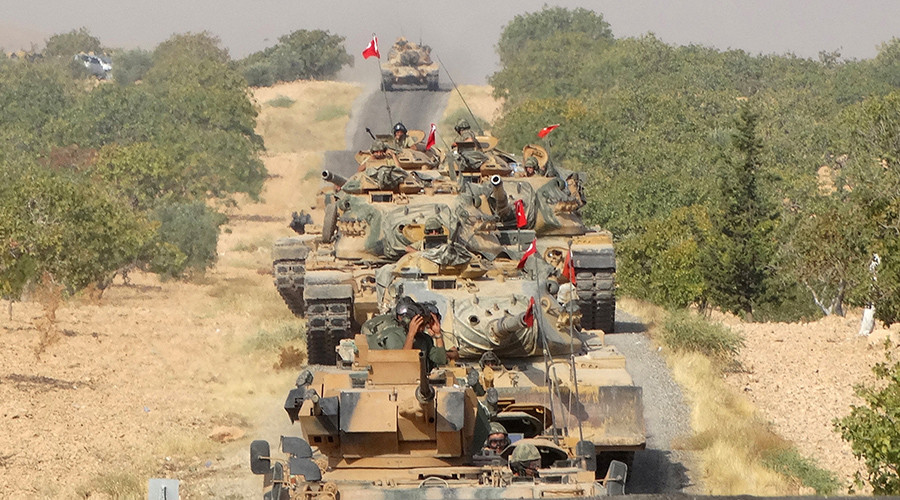
A Turkish army tank and an armored vehicle are stationed near the border with Syria, in Karkamis, Turkey, August. 23, 2016. (IHA via AP)

BEIRUT, Lebanon (AFP) — Turkish shelling and airstrikes killed at least 40 Syrians on Sunday, a monitor said, in the first significant civilian casualties in Turkey’s intensifying campaign in northern Syria.

Turkey’s state-run Anadolu news agency said the army had killed 25 Kurdish “terrorists” in airstrikes as part of its unprecedented operation inside Syria.

The bombardments came after Ankara suffered its first military fatality since it launched the two-pronged offensive against the Islamic State group and Syrian Kurdish militia inside Syria on Wednesday.

At least 20 civilians were killed and 50 wounded in Turkish artillery fire and airstrikes on the village of Jeb el-Kussa early on Sunday, the Syrian Observatory for Human Rights monitoring group said.

Another 20 were killed and 25 wounded, many seriously, in Turkish airstrikes near the town of Al-Amarneh, it said.

The monitor also said at least four Kurdish fighters had been killed and 15 injured in Turkish bombardment of the two areas.

A spokesman for the local Kurdish administration said 75 people had been killed in both villages.

The Britain-based Observatory said the bombardment targeted an area south of the former IS border stronghold of Jarabulus, which Turkish-led forces captured on the first day of the incursion.

Fighting has since intensified south of the town, where clashes erupted between Turkish troops and forces belonging to the Kurdish Democratic Union (PYD) party, which Ankara considers a terrorist group linked with Kurdish militants in Turkey.

US-backed Kurdish forces have also been fighting IS in Syria but Turkey fiercely opposes any move by Kurds to expand into territory lost by the jihadists.

Funeral for Turkish soldier

The latest fighting is likely to raise deep concerns for Turkey’s NATO ally the United States, which supports the Kurdish militia — known as the People’s Protection Units (YPG) — as an effective fighting force against IS.

The Turkish soldier was killed and three more wounded on Saturday in a rocket attack by Kurdish militia on two tanks taking part in an offensive against the pro-Kurdish forces south of Jarabulus.

Turkish media named the dead soldier as Ercan Celik, 28, and said a funeral for him would be held on Sunday in Gaziantep.

President Recep Tayyip Erdogan was due to visit the city on Sunday to express condolences for last weekend’s suicide bombing there at a Kurdish wedding that left 54 dead.

Turkey’s NTV television reported that Turkish artillery had struck YPG targets throughout the night and that Turkish warplanes had carried out new bombing sorties on Sunday morning.

Turkish forces carried out their first airstrikes on pro-Kurdish positions on Saturday as part of what Ankara is calling “Operation Euphrates Shield”.

Turkey says that the YPG — which it regards as the Syrian branch of the outlawed Kurdistan Workers’ Party (PKK) — has failed to stick to a promise to return across the Euphrates River after advancing west this month despite guarantees given by Washington.

Ankara fears the emergence of a contiguous autonomous Kurdish region in Syria would bolster the PKK rebels across the border in southeast Turkey.

Ankara’s military intervention in Syria has added another dimension to the country’s complex multi-front war, a devastating conflict that has killed more than 290,000 people and forced millions from their homes since it began in March 2011.

Much of the heaviest fighting this summer has focused on second city Aleppo, which is roughly divided between rebel forces and President Bashar Assad’s troops.

Push for 48-hour ceasefire

Global powers have been pushing for 48-hour humanitarian ceasefires in the embattled city and UN Syria envoy Staffan de Mistura has urged warring parties to announce by Sunday whether they will commit to a pause in the fighting.

The UN says it has “pre-positioned” aid to go to the city for some 80,000 people.

Russia, which backs Assad’s forces, has endorsed the proposal.

But some rebel groups have rejected the plan unless aid passes through opposition-held areas and the ceasefire applies to other areas of Syria under siege.

Opposition groups have repeatedly called for an end to regime sieges of rebel-held areas, accusing Assad’s government of using “starve or surrender” tactics.

On Saturday, the last rebel fighters were evacuated from the town of Daraya just outside Damascus, under a deal that followed a brutal four-year government siege.

Hundreds of fighters and their families were bused north into rebel-held territory in Idlib province, with other civilians transferred to government territory near Damascus for resettlement.

The Syrian army said it was in complete control of the town, from which roughly 8,000 civilians were due to be evacuated.

Netherlands FM warns Ankara against meddling in Holland’s internal affairs

August 28, 2016

Netherlands FM warns Ankara against meddling in Holland’s internal affairs

Published time: 27 Aug, 2016 17:39 Edited time: 27 Aug, 2016 20:53

Source: Netherlands FM warns Ankara against meddling in Holland’s internal affairs — RT News


Turkey should refrain from trying to interfere in the Netherland’s internal affairs, Holland’s Foreign Minister said in response to a controversial letter sent by the Turkish consul to Dutch mayors instructing them on how to control anti-Ankara sentiment.

“The Netherlands deals with Dutch society and that is nothing to do with the Turkish government,” FM Bert Koenders said, according to Dutch News.

“We understand the emotions which stem from the terrible attempted coup, but let us solve our differences here… We are free to talk about Turkey and they are free to talk about us, but ultimately, this is a question of national responsibility here in the Netherlands,” Koenders said.

The Foreign Minister is set to pay a one-day visit to Turkey next week to meet with his Turkish counterpart, according to Dutch ANP news agency.

The letter was sent by Turkish Consul General Sadin Ayyildiz to the mayors of several Dutch towns not far from Rotterdam. It contained instructions on how to curb protests organized by those opposed to the Turkish government and also called for action to be taken against the “terrorist group” led by self-exiled cleric Fethullah Gulen, who is accused by Ankara of orchestrating the thwarted coup in July, Dutch News reported.

The entire contents of the letter have not been made public, however.

Koender’s statement echoes a quite similar opinion voiced by Rotterdam Mayor Ahmed Aboutaleb, who also said that Turkey should not meddle in Dutch politics.

Read more

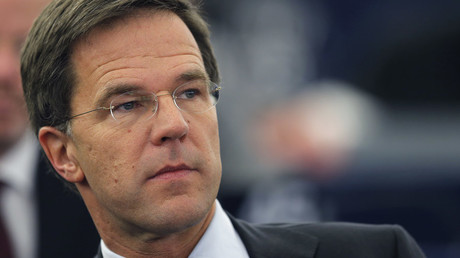
The Netherland's Prime Minister Mark Rutte © Vincent Kessler

Aboutaleb invited the Turkish consul for a discussion, which had been scheduled for Friday, but it was later cancelled without explanation, Dutch Telegraaf reported.

Threats and tensions have been running high in Holland’s Turkish community, which is mostly loyal to Ankara, according a significant number of reports appearing in local media.

“Turkey is trying to install a one-sided political regime. There may by some discussions in the Turkish-Dutch community and Turkey wants to control these discussions, wants to control the opinions,” Laszlo Maracz, an expert for the University of Amsterdam’s department of the European studies, told RT.

This is not the first time Turkey and the Netherlands have gotten into a political spat. In April, the Turkish consulate in the Netherlands allegedly called on local Turks to report on those who insult President Erdogan, sparking outrage among some Dutch lawmakers, who claimed the “long arm of Erdogan” was reaching into the Netherlands. However, the appeal to Dutch Turks was later branded as a mistake by the Ankara.

Turkish army shells Kurds ‘refusing to retreat’ near Jarablus

August 26, 2016

Turkish army shells Kurds ‘refusing to retreat’ near Jarablus – state media Published time: 26 Aug, 2016 01:57

Source: Turkish army shells Kurds ‘refusing to retreat’ near Jarablus – state media — RT News

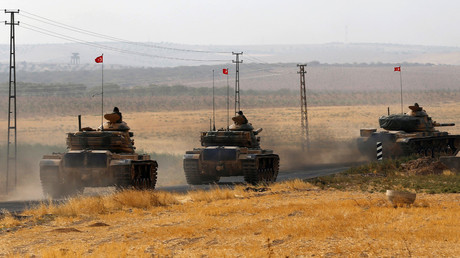
Turkish army tanks make their way towards the Syrian border town of Jarablus, Syria August 24, 2016. © Revolutionary Forces of Syria Media Office / Reuters

Turkish military have targeted US-backed Kurdish YPG militia with artillery fire south of the Syrian border town of Jarablus on Thursday, Anadolu state agency reported, citing a security source. The units allegedly refused to withdraw from the area despite warnings.

The group of YPG fighters were attacked with howitzers at about 6pm local time after they were spotted by Turkish intelligence advancing to Jarablus from the north of Manbij, the report said. Earlier, Washington assured Ankara that the US-backed Kurdish formations have been pulling out forces from the area to the east of the Euphrates River as demanded by Turkey.

READ MORE:Women burn burqas, men cut beards: Manbij celebrates liberation from ISIS (VIDEO, PHOTOS) 

“Kerry [US State Secretary John Kerry] emphasized that the PYD/YPG forces have been withdrawing to the east of the Euphrates,” a Turkish security source was quoted by Hürriyet Daily News as saying following a telephone conversation between the US top diplomat and Turkey’s foreign minister Mevlut Cavusoglu on Thursday morning.

While on a visit to Ankara on August 24, US Vice President Joe Biden pledged to withdraw the support of American forces to Kurdish fighters battling terrorists in Syria if they did not comply with Turkey’s request to remain east of the river.

READ MORE:Turkey shells ISIS & Kurdish positions in Syria

“They cannot, will not and under no circumstances get American support if they do not keep that commitment. Period,” Biden said at a joint news conference with Turkish PM Binali Yildirim.

Read more

Turkish army tanks drive towards to the border in Karkamis on the Turkish-Syrian border in the southeastern Gaziantep province, Turkey, August 25, 2016. © Umit Bektas

Turkey has been conducting Operation Euphrates Shield since Wednesday after its troops entered the borderline territory in the north of Syria with the focus on retaking Jarablus from the Islamic State (IS, ISIS/ISIL) terrorists, which has been occupying it since July 2013. Justifying the incursion, which had not been authorized by the Syrian government, Turkey’s President Recep Tayyip Erdogan said it is aimed at stopping frequent cross-border attacks and repelling “terror groups which constantly threaten our country like Daesh [Arabic derogatory name for IS] and the PYD [the Democratic Union Party of Syria]”.

READ MORE:‘Blatant violation of sovereignty’: Damascus condemns Turkish operation in Jarablus

Meanwhile, Damascus slammed the offensive as “a blatant violation of sovereignty.”

The shelling follows a statement by YPG command saying that Kurdish militia under its control had left Manbij and returned to its bases, turning over the control over the city to the Manbij Military Council, according to Al-Masdar News.

On Wednesday, the YPG denounced the Turkish military offensive in Syria as “a hostile intervention,” refusing to cave in to pressure coming from Turkey.

“We won’t listen to the demands of Turkey or powers outside of Turkey. Turkey cannot impose its own agenda, its own interests on us. Our forces are there. We will not withdraw from west of the Euphrates,” YPG spokesman Redur Xelil said, as cited by Rudaw.

“Its main goal, more than ISIS, is the Kurds,” he pointed out.

Read more

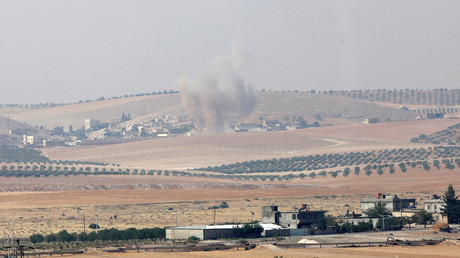
Smoke rises from the Syrian border town of Jarablus as it is pictured from the Turkish town of Karkamis, in the southeastern Gaziantep province, Turkey, August 24, 2016. © Stringer

At the moment, at least 20 Turkish tanks are taking part in operation inside Syria with more armored vehicles are expected to join the effort in the coming days as the Syrian rebels supported by Turkish forces are “cleansing” the city from jihadists.

The former IS stronghold of Manbij was freed by Kurdish-led SDF from jihadists just two weeks ago after months of intense fighting.

The Kurdish People’s Protection Units (YPG) are the armed wing of the Kurdish Democratic Union Party (PYD), close to the Kurdistan Workers’ Party, which Ankara considers a terrorist organization. Turkey has been leading a military campaign against PKK insurgency in the country’s south-eastern Kurdish-populated regions, which has been criticized by rights groups for its brutality. Numerous reports have also suggested that Ankara bombed Kurdish targets inside Syria while allegedly sparing Islamist militants that the YPG have been in bitter battle with.

Ontario Imam Tells Muslims Not to Apologize for Foiled ISIS Suicide Attack

August 24, 2016

Ontario Imam Tells Muslims Not to Apologize for Foiled ISIS Suicide Attack, Counter JihadBruce Cornibe, August 24, 2016

Islamists often blame the foreign policies of Western governments in attempt to mask the despicable acts of terrorism committed by jihadists. This type of scapegoating switches the fault from radical Islam to the West, and finds traction with Westerners that succumb to the white privilege/collective guilt mindset furthered by leftist academics.

An Ontario imam named Mazin AbdulAdhim, who is connected with the radical Hizb ut-Tahrir movement, continues to condemn the West  after the stymied terror attack by ISIS supporter Aaron Driver on August 10. Take a look at AbdulAdhim’s Facebook post, allegedly posted the day after the thwarted attack:

Aaron Driver, a Muslim convert from my city, was killed in a confrontation with the RCMP yesterday. They allege that he detonated a device inside a taxi, hurting himself and someone else, and was shot when he tried to detonate another one.

It is important to not jump to conclusions about this information until details are made clear. The media clearly has a campaign against Islam and Muslims, and so we should be careful how we respond to news like this.

Even if the information is true, we must not allow these sorts of events to cause us to be pressured to apologize for actions that we are not responsible for, nor should this cause us to become afraid of speaking the truth. The governments of the West kill and help kill dozens of innocent civilians every day, and the crimes they have committed against humanity through their foreign policies are orders of magnitude worse than anything these individuals have committed or tried to commit…

It’s funny how Islamists like AbdulAdhim say the media is out to get Muslims, when many media outlets push the contrived ‘Islamophobia’ narrative. For example, the BBC recently ran a story that implied that opposition to Sharia law is ‘Islamophobia’ – apparently interrupting an interview by stating, “There’s no Sharia law here.”

AbdulAdhim also flips morality on its head and thinks that alleged crimes resulting from the foreign policies of Western governments are a much greater evil than Islamic terrorism. This is another leftist tactic of using moral relativism to justify the most absurd of viewpoints – for example, drone strikes that seek to minimize collateral damage are apparently more evil than a suicide bomber aiming to murder innocent people. This is the reasoning behind actual terrorist groups like Hamas who blame Israel for terrorism when Israel’s military inadvertently kills or injures civilians because the leaders of Hamas purposely hide their militants in schools and hospitals to ensure collateral damage.

AbdulAdhim also provides a Facebook posting that’s indicative of how anti-Western the Sharia mindset is at its core. Purportedly posted after the Orlando massacre, the anti-democratic/anti-capitalist post states:

…It’s amazing that Muslims still have not absorbed the fact that this is not our system, these are not our laws, and these are not our governments. This system does not represent us, and it will not protect us if those behind it decide that we are no longer worth protecting.

It’s amazing that Muslims continuously ignore the fact that our Creator gave us our own system and obligated it upon us, and He will never allow us to solve these countless problems we face today until we return to His system that He ordained for us in His final message…

…We are the ones who have turned away from the systems revealed by Allah (swt), and look at this most miserable life we live, constantly apologizing, lacking in dignity, and never having proper representation of the proper implementation of Islam.

And we are the ones who have caused the spread of corruption throughout the land and the sea, since we abandoned our positions in implementing Islam on the political level, and left those positions for the worst of humanity to occupy…

Unlike the Islamists of the Hamas-affiliated Council on American-Islamic Relations (CAIR) organizations like Hizb ut-Tahrir are more forthright about their political goals and what Sharia law entails. As suggested from AbdulAdhim’s previous statement, political Islam is not compatible with democracy and a capitalist system.

We know in Sharia “that only Allah can righteously create laws that are binding on human beings[;]” therefore, laws conceived by humans are invalid. From this perspective there’s no reason to have a democracy since the laws that likely come out of the democratic process are inherently wrong, and there’s no reason to have a free-enterprise system when Allah has already stipulated what is permissible (halal) and what is forbidden (haram) – for example, usury (riba) is prohibited (Quran 2:275-280). Also, the elevation and promotion of Islam and Muslims is another key element of Sharia. How is a government governed by Sharia supposed to give equal rights to Muslims and non-Muslims (Kafirs) alike if non-Muslims are systematically discriminated against in Islamic texts that make up Sharia like the Quran (2:221)? It can’t, and AbdulAdhim knows that.

The use of violence is one of the few differences between Islamists and jihadists (even though some Islamists subscribe to violence). As we have already seen Islamists oftentimes downplay Islamic terrorism or blame it on supposed Western aggression, thus helping to advance their Sharia agenda. Furthermore, Islamists like AbdulAdhim are enemies to Western civilization and the Western countries they inhabit. Leaders like Canadian Prime Minister Justin Trudeau cannot identify the threat stemming from radical Islam because they are too steeped in political correctness. The threat of Sharia won’t go away on its own – the West must confront its enemy.

U.S. Urges Americans: Leave Gaza ‘As Soon As Possible’

August 24, 2016

U.S. Urges Americans: Leave Hamas-Controlled Gaza ‘As Soon As Possible’

by Breitbart Jerusalem

24 Aug 2016

Source: U.S. Urges Americans: Leave Gaza ‘As Soon As Possible’

David Silverman/Getty

WASHINGTON (AFP) – The United States reiterated its recommendation that Americans in Gaza leave the territory controlled by Hamas, which Washington calls a terrorist group, “as soon as possible.”

The warning came after the Israeli army said it bombed dozens of targets in Gaza from Sunday to Monday, in response to rocket fire from the strip. Palestinian medical officials said four people were wounded.

Washington regularly updates warning notices to Americans traveling to and living in countries around the world.

In the case of Gaza, the State Department warned against “all travel” to the territory and “urges those present to depart as soon as possible when border crossings are open.”

It had issued a similar warning in December 2015.

Since January, 14 rockets fired from Gaza have hit Israeli territory, the military said.

The border area has remained tense since the July-August 2014 war between Israel and Gaza militants that killed more than 2,200 Palestinians and 73 people on the Israeli side.

“Gaza is under the control of Hamas, a foreign terrorist organization. The security environment within Gaza and on its borders is dangerous and volatile,” the State Department said in its warning Tuesday.

As for Israel and the West Bank, a wave of violence there since October 2015 has left Americans dead and wounded, the department said.

However, “there is no indication that US citizens were specifically targeted based on nationality.”

The violence has eased in recent weeks, but an AFP count shows 220 Palestinians and 34 Israelis killed since October 1, 2015 in the Palestinian territories, Jerusalem and Israel.

Most of the Palestinians killed were attackers or suspected attackers. A number were killed in clashes with the Israeli army.


Turkish tanks roll into Syria to confront Islamic State

August 24, 2016

Turkish tanks roll into Syria to confront Islamic State President Erdogan says operation aims to uproot jihadist group and Syrian Kurdish rebels, ‘put an end’ to border problems

By AP and AFP August 24, 2016, 12:23 pm

Source: Turkish tanks roll into Syria to confront Islamic State | The Times of Israel

A Turkish army tank drives toward Syria in the Turkish border city of Karkamis, in the southern region of Gaziantep, August 24, 2016. (AFP/BULENT KILIC)

ANKARA, Turkey — Turkey’s military launched an operation before dawn Wednesday to clear a Syrian border town of its Islamic State militants, and the country’s state-run news agency said Turkish tanks had crossed into Syria as part of the offensive.

In its report, the Anadolu Agency, which cited unnamed military officals, did not say how many tanks entered Syria. The private NTV television said as many as 20 tanks had crossed into Syria and that clashes were taking place at the border. Earlier in the day, NTV said that a small number of Turkish special forces had crossed into Syria as part of the operation.

NTV television said it was an “intruder mission” to carry out “pinpoint operations” against IS as part of the operation to clear the town of Jarablus of the extremists.

President Recep Tayyip Erdogan said the Turkish operation inside Syrian territory was aimed not just against jihadists but also Kurdish militia and should permanently put an end to problems on the border.

“From 4:00 am (0100 GMT) our forces began an operation against the Daesh (IS) and PYD (Kurdish Democratic Union Party) terror groups,” Erdogan said in a speech in Ankara, adding the move was aimed at “putting an end” to problems on the border.

As he spoke, Turkey’s state-run Anadolu news agency reported that pro-Ankara Free Syrian Army (FSA) rebels had already penetrated three kilometers (two miles) inside Syria toward the IS-held town of Jarabulus.

The office of Turkish Prime Minister Binali Yildirim said the operation, carried out by Turkish and US-backed coalition forces, began at 4 a.m. (0100 GMT), with Turkish artillery launching intense cross-border fire on the town of Jarablus, followed by Turkish warplanes bombing IS targets in the town, Anadolu said.

Smoke billows following air strikes by a Turkish Army jet fighter on the Syrian Turkish border village of Jarabulus during fighting against Islamic S State group targets, August 24, 2016 . (AFP/BULENT KILIC)

Smoke billows following air strikes by a Turkish Army jet fighter on the Syrian Turkish border village of Jarabulus during fighting against Islamic S State group targets, August 24, 2016 . (AFP/BULENT KILIC)

Just a few hours after the operation started, Vice President Joe Biden landed in Ankara for talks that include developments in Syria.

The visit comes at a difficult time for ties between the two NATO allies. Turkey is demanding that Washington quickly extradite a US-based cleric blamed for orchestrating last month’s failed coup. The United States is asking for evidence against the cleric and asking that Turkey allow the extradition process to take its course.

In Syria, Turkey is concerned about the growing power of US-backed Syrian Kurdish forces, who it says are linked to Kurdish groups waging an insurgency in southeastern Turkey. Wednesday’s operation puts Turkey on track for a confrontation with the Kurdish fighters in Syria.

Biden is scheduled to meet with Erdogan and Prime Minister Binali Yildirim.

The operation in Jarablus is meant to safeguard Turkey’s own security, according to Turkish Interior Minister Efkan Ala, who said Ankara “cannot sit and watch.”

“It is Turkey’s legal right, it is within its authority” to take action, the minister said, adding that Wednesday’s operation aimed to support the moderate Syrian opposition and was being carried out in coordination with the US-led coalition forces.

A Turkish army tank and an armored vehicle are stationed near the border with Syria, in Karkamis, Turkey, August. 23, 2016. (IHA via AP)

A Turkish army tank and an armored vehicle are stationed near the border with Syria, in Karkamis, Turkey, August. 23, 2016. (IHA via AP)

Turkey’s Hurriyet newspaper quoted Turkish sources as saying Turkish howitzers and rocket launchers had fired 224 rounds at 63 targets within an hour and 45 minutes, and that the Turkish air raids started just after 6 a.m.

The London-based Syrian Observatory for Human Rights also said Turkish ground troops had entered Syria. The activist group, which tracks the war through a network of local residents and fighters, said Turkish tanks and anti-mine vehicles crossed into Syria and were heading to Jarablus on Wednesday morning.

The Turkish government said the border area had been declared a “special security zone,” and asked journalists not to try to access it, citing safety concerns and threats posed by IS.

The assault followed Turkish Foreign Minister Mevlet Cavusoglu’s pledge on Tuesday of “every kind” of support for operations against IS along a 100-kilometer (62-mile) stretch of Syrian frontier. He said Turkey would support twin operations stretching from the Syrian town of Afrin in the northwest, which is already controlled by Kurdish forces, to Jarablus, in the central north, which is held by the Islamic State group.

Turkish army tank driving towards Syria in the Turkish-Syrian border city of Karkamis, in the southern region of Gaziantep, August 24, 2016. (AFP/BULENT KILIC)

Turkish army tank driving towards Syria in the Turkish-Syrian border city of Karkamis, in the southern region of Gaziantep, August 24, 2016. (AFP/BULENT KILIC)

Jarablus, which lies on the western bank of the Euphrates River where it crosses from Turkey into Syria, is one of the last important IS-held towns standing between Kurdish-controlled areas in northern Syria.

Located 20 miles (33 kilometers) from the town of Manbij, which was liberated from IS by Kurdish-led forces earlier this month, taking control of Jarablus and the IS-held town of al-Bab to the south would be a significant step toward linking up border areas under Kurdish control east and west of the Euphrates River.

In recent days Turkey has increased security measures on its border with Syria, deploying tanks and armored personnel carriers. On Tuesday, residents of the Turkish town of Karkamis, across the border from Jarablus, were told to evacuate after three mortars believed to be fired by IS militants landed there, Turkey’s Dogan news agency said.

Turkey has vowed to fight IS militants at home and to “cleanse” the group from its borders after a weekend suicide bombing at a Kurdish wedding in southern Turkey killed at least 54 people, many of them children. Turkish officials have blamed IS for the attack.

Ankara is also concerned about the growing power of US-backed Syrian Kurdish forces, who it says are linked to Kurdish groups waging an insurgency in southeastern Turkey.

A Turkish army tank and an armored vehicle are stationed near the border with Syria, in Karkamis, Turkey, Tuesday, Aug. 23, 2016. (IHA via AP)

A Turkish army tank and an armored vehicle are stationed near the border with Syria, in Karkamis, Turkey, Tuesday, Aug. 23, 2016. (IHA via AP)

The Kurdish-led group known as the Syria Democratic Forces, or SDF, recaptured Manbij from IS earlier this month, triggering concerns in Ankara that Kurdish forces would seize the entire border strip with Turkey. The US says it has embedded some 300 special forces with the SDF, and British special forces have also been spotted advising the group.

The Kurds’ outsized role in the Syrian civil war is a source of concern for the Syrian government as well. Fierce clashes erupted between the two sides over control of the northeastern province of Hasakeh last week, and Syrian warplanes bombed Kurdish positions for the first time, prompting the US to scramble its jets to protect American troops in the area.

The Syrian government and the Kurds agreed on a ceasefire Tuesday, six days after the clashes erupted. The Kurdish Hawar News Agency said government forces agreed to withdraw from Hasakeh as part of the truce.

Syrian state media did not mention any withdrawal, saying only that the two sides had agreed to evacuate the wounded and exchange detainees. Government and Kurdish forces have shared control of Hasakeh since the early years of the Syrian war.

Our Catastrophic Failure of Jihad Denial

August 23, 2016

Our Catastrophic Failure of Jihad Denial, Front Page Magazine, Daniel Greenfield, August 23, 2016

cf

An outraged nation watched on September 11 as a handful of Muslim terrorists managed to kill thousands of Americans in one of the worst attacks in our history. Answers were demanded and commissions were established to investigate why we failed to prevent the attack.

Why didn’t we know that it was coming? Why didn’t we do something?

It’s still a good question as the number of attacks mount. But under Obama, we actually know less about Islamic terrorism than we used to.

While thousands of Americans died on that terrible day at the hands of Islamic terrorists, thousands of other Americans stepped forward to do their duty. Some brought sandwiches to Ground Zero. Others enlisted in the military to fight. Still others sought unique ways to use their special talents to make a contribution to combating the enemies of civilization.

Stephen Coughlin was a reserve Army officer called up to active duty. He left the private sector for the Directorate for Intelligence. For the next six years he worked in a variety of key roles to shape and orient the war and spoke about the threat of Islamic terrorism everywhere from Quantico to the Naval War College so that those on the front lines of the conflict would understand who the enemy was.

Then he was forced out because he was too good at pointing out the enemy. And the enemy had gotten inside. It would bore deeper and deeper into our national security infrastructure as the years and the wars dragged on.

But the government’s loss is our gain.

Catastrophic Failure: Blindfolding America in the Face of Jihad” is Coughlin’s vigorous blast of fresh air through the stale clichés that clutter up counterterrorism conversations. You know the ones. Offending Islam plays into the hands of the terrorists. Mentioning that Al Qaeda is Islamic plays into the hands of the terrorists. Doing anything except playing the denial game also plays into the hands of the terrorists.

“Catastrophic Failure” conveys the information that Coughlin packaged in briefings to the men and women fighting the war. It is the outcome of his work, his briefings and his research. It is why he was fired.

As one of the leading experts in what the terrorists of Islam actually think and want, Stephen Coughlin not only shatters this brass wall of dishonesty, but shows that the real threat comes from the concealment of whom the terrorists we are fighting are and what they really want.

Coughlin’s conviction in analysis took him on this Diogenesian journey for the truth. He was not the only one traveling this road, discarding the excuses and the lies, striving to see clearly what was happening and why. And yet his position so close to the heart of the great failure machine of national security gives him a unique insight into what has gone wrong and into what must be set right.

That is what “Catastrophic Failure: Blindfolding America in the Face of Jihad” is. It is an analysis of what has gone wrong. Its cover of an eagle wearing a green blindfold all too aptly captures the tragic farce of our fight against terrorism. But it is also a compelling argument about what we must do.

Instead of seeing the threats the bird of prey tasked with our national defense has been hooded in green. He sits tamely on the arm of the Muslim Brotherhood falconer. Our government has responded to Muslim terror by seeking out Muslim moderates to save us from the extremists. But the moderates are not moderate. And working so close to the machine, Coughlin saw how the need to win over moderates, to consult them and rely on them, led to the shift in power as they created the framework in which decisions were made.

Counterterrorism was increasingly being made in Saudi Arabia, Qatar and by the Muslim Brotherhood.

The great struggle of our time is to flip that framework over and restore the power of decision for this war to Americans. Coughlin is a powerful writer and thinker, and he has poured his passion into these arguments that are meant to accomplish just that. He knows Islamic thought and law, and their real life implications, but his background has also prepared him to present focused laser blasts of information to audiences. His key goal and theme has been the importance of knowing the enemy.

“Catastrophic Failure: Blindfolding America in the Face of Jihad” is a text of knowledge. It is a book about the importance of knowing the enemy so that we may know the war that we are in.

Coughlin draws us a map of the Islamic organizational war against civilization “unconstrained” by the usual preconceptions about moderates and extremists. Instead he shows us who the enemy is by showing us how they think and how they see themselves. He connects the red dots of the Islamic Movement and the road to the Caliphate which is being pursued by far more Muslim groups than just the overt butchers of ISIS whose lack of patience leads them to act before they can sustain their Jihad.

“Catastrophic Failure” is not merely a book about Islamic terrorism. It is about the core worldview of the struggle. It is about how the bombings, shootings and stabbings that we see on the evening news are rooted in an Islamic mindset that stretches from the proverbial “lone wolf” whose actions are blamed on psychiatric problems or a failure to integrate to the Organisation of Islamic Cooperation and the rest of our so-called moderate allies and partners.

It is also about how our process, our ability to analyze and produce forecasts, and then to make decisions based on them, was corrupted by Islamic influence operations. It is about how the “eagle” was seduced with fantasies of moderate Islam by the enemies of this country. And it is about what must be done to lift the eagle’s blindfold and allow him to soar overhead again.

Stephen Coughlin has seen the profound failure of our national security up close. He saw what went wrong and equally importantly, he has seen what could have been if national security were oriented around our security instead of orbiting like a satellite around our impulses toward political correctness.

“Catastrophic Failure: Blindfolding America in the Face of Jihad” is a valuable book because it reflects the invaluable experiences of its author. It is a story of three wars. The war that was. The war that is. And the war that will be. The motives and the tactics of the enemy have remained consistent in these wars. And that allows Coughlin to predict their patterns. The enemy will not suddenly turn moderate. The question that hangs over the war that will be is whether our leaders will open their eyes to the fight.

Robert Spencer on Black Lives Matter and the Leftist/Islamic Alliance

August 23, 2016

Robert Spencer on Black Lives Matter and the Leftist/Islamic Alliance, Jihad Watch via YouTube, August 23, 2016


Hamas, Palestinian Authority Target Journalists Ahead of Election

August 23, 2016

Hamas, Palestinian Authority Target Journalists Ahead of Election

by Khaled Abu Toameh

August 23, 2016 at 5:00 am

Source: Hamas, Palestinian Authority Target Journalists Ahead of Election

  • Both of the journalists who were arrested made the mistake of reporting on the suffering of Palestinians living under Hamas rule. These are not the kind of stories that Hamas wishes to see ahead of the local and municipal elections. Rather, Hamas wants to see printed lies of prosperity.
  • It is a puzzle why foreign journalists choose not to report about the campaign of intimidation facing their Palestinian colleagues.
  • One might wonder if the human rights groups neglect these abuses because of their continued obsession with destroying Israel.

Palestinian journalists are at the top of the Palestinian Authority (PA) and Hamas hit-list in the crackdown occurring alongside preparations for the Palestinian local and municipal elections, scheduled for October 8.

The crackdown is part of an ongoing campaign by the two rival parties to silence critics in the West Bank and Gaza Strip. Neither Hamas nor the PA tolerates a free and independent media — especially on the eve of a crucial election that could have far-reaching political implications in the Palestinian arena.

A Hamas victory in the upcoming elections would be catastrophic for President Mahmoud Abbas and his Palestinian Authority. Such an electoral outcome would be tantamount to a vote of no-confidence in their policies and performance.

Hamas, for its part, is investing a huge amount of resources in the election campaign, in hopes that the results would further boost its standing among Palestinians. Hamas fears that a defeat would undermine its power in the Gaza Strip and pave the way for its collapse.

As the election campaign heats up, it is clear that Hamas and the PA agree on one thing: intensifying their repressive measures against Palestinian journalists.

This media crackdown is essentially ignored by international human rights organizations. Why? One reason is that when Israel is not involved, assaults on freedom of the media and expression do not interest them.

Some Western journalists and human rights advocates also treat these cases as “internal Palestinian issues” that are of no relevance to international public opinion. A story about a Palestinian journalist who is arrested by Israel is news. A Palestinian journalist incarcerated or threatened by the Palestinian Authority or Hamas is not.

Take, for example, the case of Ahmed Said, a journalist from the Gaza Strip. Last week, he was arrested by Hamas security forces, who also confiscated his personal computer. Said has a radio show on the Sawt Al Sha’ab (Voice of the People) radio station, where Palestinians call in to voice their grievances and talk openly about the problems they are facing under Hamas rule in the Gaza Strip.

Before he was arrested, Said had phoned the spokesman of the Hamas police force, Ayman Al Batnihi, to discuss the recent rise in cases of homicide in the Gaza Strip. According to the journalist, the furious spokesman threatened him: “You are causing us a lot of problems and inciting people. I know how to deal with people. You need to be hanged.”

Said is no stranger to this sort of encounter. Last year, he was summoned for investigation for “incitement” against the Gaza City Municipality. The move came after Said used his talk show to talk about the case of street vendor Mohamed Abu Assi, who tried to commit suicide by ingesting poison after Gaza City Municipality inspectors banned him from selling corn at the beach.

Earlier, Hamas arrested another Palestinian journalist, this time for no clear reasons. Mahmoud Abu Awwad, who works for the Palestinian daily Al-Quds, was arrested from his home in the Shati refugee camp on July 25. He too had his personal computer and cellular phone seized.

Ahmed Said (left) and Mahmoud Abu Awwad (right) are two journalists living in the Gaza Strip who were recently arrested by Hamas security forces. Both journalists made the mistake of reporting on the suffering of Palestinians living under Hamas rule.


Abu Awwad’s family have since been banned from seeing him in prison. Their son, they were told by Hamas, is being held for “security reasons.” Abu Awwad, who has been working for Al-Quds for the past three years, had been reporting mostly about the hardships facing Palestinians in the Gaza Strip. In addition, he was also reporting for the Saudi London-based pan-Arab daily, Asharq Al Awsat.

“Hamas is trying to spread lies to distort the image of my son and justify his arrest,” Abu Awwad’s father told Al-Quds. “He was arrested because he was critical of the situation in the Gaza Strip and the Hamas government.”

Said and Abu Awwad have something in common. Both journalists made the mistake of reporting on the suffering of Palestinians living under Hamas rule. These are not the kind of stories that Hamas wishes to see ahead of the local and municipal elections. Rather, Hamas wants to see printed lies of prosperity.

In the context of its election campaign, Hamas has released a video featuring new houses and neighborhoods, as well as green and clean parks and smiling children. Entitled, “Thank You Hamas,” the video seeks to persuade Palestinian voters that life under Hamas is the best thing that could ever happen to them. And that is why they need to help Hamas extend its control from the Gaza Strip to the West Bank through the local and municipal elections. Journalists such as Said and Abu Awwad are spoiling the effect with their inconvenient truths.

Hamas, however, is the proverbial pot calling the kettle black. In the face of its own massive journalistic repression, Hamas dares to criticize the Palestinian Authority for taking similar measures in the West Bank.

Like Hamas, the PA leadership has always been intolerant towards Palestinian (and sometimes non-Palestinian) journalists who dare not toe the party line. Hardly a week passes without hearing about another Palestinian journalist who has been arrested or summoned for investigation by the Palestinian Authority.

In recent weeks, the crackdown on journalists in the West Bank seems to have increased in light of the upcoming elections. The PA too wants to remove from the scene any journalist who might harm its loyalists’ chances of winning the local and municipal vote. In this regard, journalists are easy prey.

One of the recent victims is Mohamed Abu Khabisah, who reports on economic issues for the Turkish news agency, Anadolu. Palestinian security officers who raided his home shortly after midnight in Al Bireh, near Ramallah, seized his personal computer and documents before taking him into custody. His wife, Hana, said she too was briefly questioned about her husband’s source of income and the nature of his work. Palestinian sources say he was apparently arrested for reporting about financial corruption in the Palestinian Authority’s official news agency, Wafa.

Abu Khabisah was the sixth journalist to be arrested by the PA since the decision to hold local and municipal elections was taken two months ago. The other four are Yehya Saleh, Raghid Tabisah Ibrahim Al Abed, Mohamed Abu Jheisheh and Ziad Abu Arrah. In another recent incident, Palestinian security officers raided the home of journalist Musab Kafisheh and seized his personal computer, but did not take him into custody.

It is anxiety that is driving Hamas and the Palestinian Authority in their crackdown on Palestinian journalists. The “security reasons” they tout as an excuse for their repression is a foil for their sense of instability: the less politically secure they feel, the more they strip Palestinian journalists of their ability to report how things really stand in the Gaza Strip and the West Bank.

So far, so good, from the point of view of Hamas and the PA. Palestinian reporters have been duly deterred. But they are far from the only ones affected.

Foreign journalists rely almost entirely on Palestinian “fixers” and producers for information about what is happening under the Palestinian Authority and Hamas. Now, local Palestinians will think ten times before they provide their foreign employers with information. Still, it is a puzzle as to why foreign journalists choose not to report about the campaign of intimidation facing their Palestinian colleagues.

One might wonder if the human rights groups neglect these abuses because of their continued obsession with destroying Israel.

Arriving at Qatar airport

August 22, 2016


This is needed on the airport in the Netherlands .

H/T   E.J. Bron

https://ejbron.wordpress.com/