Posted tagged ‘Islamic State’

Turkish soldier from the Guardians of Ataturk’s Secular Legacy was beheaded by a pro-Erdogan mob of savages in Istanbul

July 17, 2016

Turkish soldier from the Guardians of Ataturk’s Secular Legacy was beheaded by a pro-Erdogan mob of savages in Istanbul

Source: Turkish soldier from the Guardians of Ataturk’s Secular Legacy was beheaded by a pro-Erdogan mob of savages in Istanbul


This is what our leaders defending and supporting !

Video footage and images online show the soldier lying on the ground surrounded by a pool of blood after being beheaded on Istanbul’s Bosphorus Bridge by a pro-government mob.

UK Mirror  He can be seen with horrific injuries after the attack. He reportedly surrendered after last night’s failed coup attempt but was allegedly attacked by pro-government supporters.

More than 2,500 soldiers have been detained by Turkish authorities following the failed coup attempt. More than 180 people were killed with over 1,154 people injured after the Turkish military tried to take control of the country in an attempted coup.

This morning radical Islamist President Erdogan claimed he had regained control of the country.

https://twitter.com/BabakTaghvaee/status/754362015662170112?ref_src=twsrc%5Etfw

https://twitter.com/crymora/status/754279802723500032?ref_src=twsrc%5Etfw

https://twitter.com/BabakTaghvaee/status/754231300819525632?ref_src=twsrc%5Etfw

https://twitter.com/BabakTaghvaee/status/754227794498887680?ref_src=twsrc%5Etfw

https://twitter.com/BabakTaghvaee/status/754226498274365440?ref_src=twsrc%5Etfw

Nice Attack: Cut Down the Black Flag, Target Sharia

July 15, 2016

Nice Attack: Cut Down the Black Flag, Target Sharia, Counter Jihad, July 15, 2016

Former Special Forces Master Sergeant Jim Hanson, currently the Executive Vice President for the Center for Security Policy, has an answer to the problem of constant terror attacks.  First, though, he dismisses the strategy of attempting to prevent attacks by adding additional levels of security.  “Even in a police state, you couldn’t secure every gathering,” Hanson said, noting that this was just a simple delivery truck like any other.

“You have to look at the people who are conducting these terror attacks,” he told “FOX & Friends.”  A focus on methodology won’t work, as the truck attack plainly shows:  “It’s not guns, it’s not bombs, it’s not trucks,” but rather “the ideology of sharia and jihad that motivates them to kill.”

Hanson is the author of Cut Down the Black Flag:  A Strategy To Defeat the Islamic State.  Unsurprisingly, he believes that destroying the caliphate is an important part of the solution.  However, he argues that the caliphate is only a symptom — albeit a major one — of the real problem. “You start in the Islamic State.  You start with their caliphate, and you cut down their black flag there.  But… that’s not going to solve the problem, that treats a symptom.  The ideology of sharia, which calls for a holy war of jihad, is something we need to deal with.”

Citing a poll that sharia law enjoys large-scale support among Muslims worldwide, Hanson crossed into disputed territory.  CounterJihad has reported on this controversy before.

The central issue to empirical science is the ability of others repeating the experiment to replicate your findings.  If you replicate the same findings using the same methods, that’s telling.  If you replicate the same findings with both the same and different methods, that’s even more suggestive that you’re on to something.  Every poll of Muslim populations, regardless of its methodology, shows strong support for sharia.

Last summer, the Center for Security Policy commissioned a poll that found 51% support for sharia among American Muslims.  There were critics who pointed out that this poll was an online poll, and one that only surveyed those who opted in.  However, the Pew polling service found that half of American Muslims are recent immigrants, chiefly from countries in which their global survey of support for sharia tops 80%.  Three of the leading countries for Islamic immigration to the United States are Iraq, Pakistan, and Afghanistan.  The figures for those countries are 91%, 84%, and 99% respectively.

When you find the same thing no matter how you study the question, you’re probably finding something that’s really there.

Hanson’s solution of targeting sharia also enjoys strong support from the American people.  A recent poll conducted by a firm out of Atlanta found that more than seven in ten American voters think Muslim immigrants should be screened for the ideological belief in enforcing sharia law.  More than 80% of those who agreed say all immigrants ID’d as Sharia adherents should be barred from entering the United States.

The popularity of the solution does not mean that it will be enacted, at least not for the next few months.  A recent survey of US President Barack Obama’s calendar shows that he never met with former National Director of Intelligence LTG(R) Michael Flynn.  He and his administration’s top officials did meet with the Council on American-Islamic Relations (CAIR), which has been proven in Federal court to be linked to the Foreign Terrorist Organization Hamas.  In fact, CAIR has had hundreds of White House meetings.

Both of President Obama’s likely replacements have described the France attacks as acts of war, and both seem clearer-eyed than President Obama about the nature of the threat.  However, asked which one was more likely to take the threat seriously, Hanson gave the nod to Donald Trump.  Hillary Clinton would be too hamstrung by political correctness, he argued.  Only Trump was likely to move strongly against Islamic terror.

EXCLUSIVE -Top Jihadist: Our Brothers Already Prepping The Next Major Attack Against France, Infidel States

July 15, 2016

EXCLUSIVE -Top Jihadist: Our Brothers Already Prepping The Next Major Attack Against France, Infidel States

by Aaron Klein and Ali Waked

15 Jul 2016

Source: EXCLUSIVE -Top Jihadist: Our Brothers Already Prepping The Next Major Attack Against France, Infidel States

VALERY HACHE/AFP/Getty

It is yet unclear whether the “Tunisian brother” who carried out the truck-ramming massacre in Nice on Thursday was commissioned by the Islamic State (IS) leadership or acted on his own, a top Salafi jihadist leader allied with IS ideology in the Gaza Strip told Breitbart Jerusalem.

Abu Alayna Al-Ansari, an IS loyalist, said he believes the attack was a “classic lone wolf” operation, inspired by the jihadi Abu Mohammad al-Julani, the IS spokesperson, who called upon young Muslims from around the world to carry out attacks such as Thursday night’s.

Ansari is a well-known Gazan Salafist jihadist allied with Islamic State ideology.  In previous interviews, Ansari seemed to be speaking as an actual IS member, repeatedly using the pronoun “we” when referring to IS and even seemingly making declarations on behalf of IS.

IS loyalists reportedly celebrated the attack on social media. The perpetrator was identified to the news media by French police sources as 31-year-old Mohamed Lahouaiej Bouhlel, a Tunisian who last visited France two years ago.

Ansari said in his estimation IS will only claim responsibility if it actually commissioned the attack.

“We’ve seen that some weeks ago, in France, when the Mujahed, the hero Abdullah Alaroussi killed the French policeman and his lover after pledging allegiance to IS and to the Caliph Abu Bakr al Baghdadi,” he said. “And also in the case of Orlando, with the Mujahed Omar Mateen, the organization claimed responsibility only after it was clear that the perpetrator had pledged allegiance to IS and its leader.

“These are two cases that attacks were carried out by Mujahedeen with whom the organization was familiar. It did not claim responsibility for other attacks that were carried out in the West, even when it was clear that they were inspired by IS’ ideology and carried out by its sympathizers.”

“An attack against the French while they’re celebrating their national day sends an important message to the infidels, whereby they will not enjoy peace so long as their governments commit crimes against Muslims around the world,” he added.

French President Francois Hollande’s pledge to continue fighting against IS “indicates that he failed to get the message, and that it is incumbent upon our brothers to continue sending him similar messages, in their own way, until he gets it.

“Hollande, in effect, invited the Mujahedeen to carry out a similar attack to the one that rocked Paris a few months ago. He can rest assured it will happen. Our brothers are currently working on the next major attack in France and the other terrorist infidel states in the world.”

Ansari dismissed any possible link between the attacks and recent IS setbacks in Syria and Iraq.

“For the leadership of the Islamic State, control of territory is not nearly as important as continuing to develop the operational skills of our brothers in the infidel states, to carry out attacks in America which is the number one terrorist and anti-Muslim state in the world, and the other infidel states, in retaliation against the crimes they commit against Muslims,” he said.

Asked how he could justify the killing of women and children, as well as French Muslims, Ansari said: “Islam opposes the killing of women and children, but these families, by virtue of taking part in the French national celebration, express their support for their government’s policy to send thousands of troops to kill Muslims in central Africa, in Iraq, Syria and other places.

“So I don’t understand why people are taken aback when they are hit by our brothers who retaliate against their governments’ crimes. Who said that the lives of these women and children are worth more than the lives of ours? Why should they enjoy peace and security when our women and children don’t? These governments who send troops to fight against terror are the representatives of terror in the world.”

Regarding potential Muslim victims in Nice, Ansari said: “Our belief says that what Muslims felt in their hearts when they died is what counts. If they celebrated, their death was their punishment. And if they were passersby, they are martyrs. However the most important thing is that the Crusader, infidel countries know that there’s a price for the killing of Muslims by the US, France, Germany and other countries. These countries will continue to pay a price for their participation in crimes against Muslims.”

All the Horrible news, video,s and pictures from Nice

July 15, 2016

Dramatic moment ISIS fanatic was shot dead by police: French-Tunisian truck terrorist Mohamed Lahouaiej Bouhlel is gunned down after killing 84 including 10 children at Nice Bastille Day firework show

  • WARNING GRAPHIC CONTENT: Terrorist uses lorry to mow down crowds during Bastille Day celebrations in Nice
  • Local paper Nice Matin names suspect as Mohamed Lahouaiej Bouhlel, a French Tunisian man, 31, from Nice
  • Death toll currently stands at 84 and dozens more people were injured in terror attack on the French Riviera
  • At least 10 babies and children were killed, some in buggies, with least 54 children also being treated in hospital
  • Eyewitnesses said driver zig-zagged at 40mph to hit crowds of people who were sent flying or jammed under wheels
  • Terrorist then opened fire with a gun from cab of the lorry before being killed by a police marksman in shootout
  • President Francois Hollande extends state of emergency by three months and pledges to hit ISIS even harder

This is the moment the ISIS fanatic who killed 84 people including at least ten children was shot dead by police as he fired at them from the 25-tonne lorry he used as a murder weapon on his mile-long killing spree.

The killer, a 31-year-old French Tunisian named by local newspaper Nice Matin as Mohamed Lahouaiej Bouhlel, mounted pavements at high speed and ploughed through crowds celebrating Bastille Day in Nice last night.

One eyewitness filmed armed officers approaching the cab of the lorry and firing repeatedly through its windscreen and doors before it appears Bouhlet can be heard screaming after being hit by a police bullet.

The shootout came after his 30 minute rampage where he aimed at crowds watching firework and sent ‘bodies flying like bowling pins’ and left others ‘jammed’ under the lorry’s wheels at around 10.30pm local time last night.

Witness Nadar El Shafei told the BBC: ‘He died inside the vehicle – I saw his head getting out of the window I could see it clearly, they kept shooting him from all sides just to be sure. They were afraid that maybe he was not alone but he was alone, I never saw anyone beside him. They used a light to make sure no one else was inside the car then they asked us to run away in case there were others inside the car or a bomb.’

Heartbroken men and women refused to leave the bodies of their loved ones and the dead remain strewn across the famous Promenade des Anglais today.

At least ten of the victims were children, with young girls and boys lying dead covered in a blankets with their dolls and buggies still next to them. Footage taken at the time of the attack shows bodies piled up in the roads and people running from their lives as they tried to avoid the zig-zagging lorry while paramedics treated the injured and dying in the street.

The truck driver, who was known to police, was said to have shouted ‘Allahu Akbar’ – God is great in Arabic – before being killed in a clear suicide mission. Pro-ISIS groups have been celebrating the attack, orchestrated to coincide with France’s most important national holiday.

A huge cache of guns, grenades and ‘larger weapons’ and the terrorist’s identity papers were later found inside the lorry, which mounted the pavement at approximately 40mph and steered directly towards hundreds of people watching a fireworks display.

ISIS supporters have been celebrating the attack, orchestrated to coincide with France’s most important national holiday. The gunman was known to police for crimes of theft and violence, but not intelligence services, a police source said. A suspected accomplice is on the run.

France today declared three days of national mourning after the truck attack – its third major terror attack in 18 months – and President Francois Hollande said: ‘France is in tears, it is hurting but it is strong and she will be stronger – always stronger than the fanatics who wish to hurt us.’

For a lot more please follow this link.

 https://www.rt.com/news/351229-police-shoot-nice-truck/

Dozens killed as truck crashes into Bastille Day crowd in Nice, France

July 15, 2016

Dozens killed as truck crashes into Bastille Day crowd in Nice, France, Washinton TimesVictor Morton, July 14, 2016

France’s national holiday turned bloody and violent Thursday night in the southern city of Nice, as a truck crashed into a crowd of Bastille Day revelers, killing dozens of people and prompting a gunfight with police.

“Dear people of Nice, the driver of a truck appears to have caused tens of deaths. Stay for the moment in your home. More info to come,” former Nice Mayor Christian Estrosi said, according to a Washington Times translation of his tweet.

French TV stations had reported 30 days by early Friday local time.

 The chief of the province’s police force described the events as “an attack” and French TV photos showed the truck riddled with bullets.

A witness told Fox News that a gunman had fired into the crowd before police killed him.

Multiple videos posted on BreakingNews.com showed people fleeing in panic, though the crash itself wasn’t shown.

There was no immediate claim of responsibility but according to the Twitter account of the terrorism-news portal TRACTerrorism.org, Islamic State affiliated Telegram accounts were posting images from Nice.

Islamist terror groups, sometimes using native-French Muslims, have targeted France repeatedly in recent years and the use of vehicles and car bombs are among their known tactics.

A terror attack in France on July 14 would be as symbolic as one in the U.S. on July 4. Bastille Day is France’s biggest public holiday, celebrating a Parisian mob’s storming of the eponymous royal prison on that date in 1789, kicking off the French Revolution — the founding event of modern France.

Jonathan Sisler, an Ohio University student attending the parade with three friends during a European vacation, tweeted from the scene “Vehicular attack on Bastille Day crowd in #Nice, France tonight. Mere feet away. Almost trampled by the fleeing crowd. Glad to be alive.”

Russian anti-ISIS war from Syria to Caucasus

July 12, 2016

Russian anti-ISIS war from Syria to Caucasus, DEBKAfile, July 12, 2016

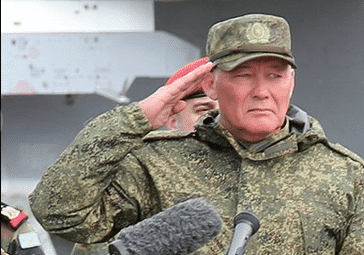
Alexander-Dvornikov-C-in-C-Russian-Syrian-Task-Force

Unimpressed by President Barack Obama’s optimistic assertions about ISIS’ loss of territory and weakening state, the Kremlin judges the counter-terror war to be just beginning. Russian intelligence has found the group to be in full fighting mode and setting up an army of suicide bombers, each team numbering some 20-15 terrorists, ready for strikes in Europe, including Russia, and the Middle East.

************************

In a supreme effort to prevent ISIS suicide units from reaching Russia from Syria, Sergei Shoigu, Russia’s
Defense Minister, has promoted the Russian commander in Syria, Colonel-General Alexander Dvornikov. to an expanded command as head of the South Russia military district. This district covers Russian forces including naval units in the Black and Caspian Seas, the Fourth Air Force Defense Army and Russian bases in Abkhazia, South Ossetia and Armenia.  Gen. Dvornikov will also command tens of ground force divisions, including paratroopers, marines and special coastal defense units.

The fact that the Russian Defense Ministry emphasizes in its announcement that “The decision about the appointment of a new commander of the Syrian operation is pending,” indicates that General Dvornikov will remain in charge of Russian forces in Syria from his new Black Sea HQ. His deputy, Gen.-Lt. Alexander Zhuravlyev, will continue to serve under him in the Syrian arena.

Moscow’s realignment of its military command is taken by DEBKAfile’s military and counter terrorism sources as a step towards becoming the first world power outside the Middle East to recognize and address the trans-frontier, global character of the Islamic peril, a lesson drawn from ISIS suicide attacks in Paris, Brussels, the US, Tunisia Egypt and Turkey

Unimpressed by President Barack Obama’s optimistic assertions about ISIS’ loss of territory and weakening state, the Kremlin judges the counter-terror war to be just beginning. Russian intelligence has found the group to be in full fighting mode and setting up an army of suicide bombers, each team numbering some 20-15 terrorists, ready for strikes in Europe, including Russia, and the Middle East.

This is borne out by the information released in Ankara by Turkish intelligence sources on July 11, showing that since the bombing in Istanbul airport, on June 28, in which 42 people were killed, ISIS has discontinued its passageway through Turkey for suicide terrorists trained in Syria to reach Europe. They are now smuggling terrorists across Azerbaijan, Georgia and Cyprus.

This Turkish announcement has serious implications:

First, that the ISIS’ use of Azerbaijan and Georgia as way stations for its suicide squads points to its presence on the Black Sea coast right up to Russia’s frontier. This region has now passed to the command of  Gen. Dvornikov..

Second, that Turkish intelligence can confirm Russian information about large squads of suicide terrorists gearing up for multiple attacks, some of which are already on-site of their targets, with back-up teams in case the first misses out.

The impending massive invasion of suicide terrorists to Europe and the Middle East was, according to DEBKAfile’s sources, an important item on the agenda of the recent meeting between Yossi Cohen, head of the Israeli Mossad, and Mikhail Yefimovich Fradkov, head of the Russian SVR, that took place on July 1, at the Russian organization’s Yasenevo HQ outside Moscow.

ISIS Comes to Gaza

July 11, 2016

ISIS Comes to Gaza

by Khaled Abu Toameh

July 11, 2016 at 5:00 am

Source: ISIS Comes to Gaza

  • Recent reports leave no doubt as to cooperation between Hamas and ISIS groups in Sinai. These reports, the Egyptians and Palestinian Authority argue, provide further evidence that the Gaza Strip remains a major base for various jihadi terror groups that pose a real threat.
  • The report said that terrorists wanted by the Egyptian authorities were admitted to the Gaza Strip hospital in return for weapons given to Hamas by the Islamic State in the Sinai.
  • Mahmoud Abbas and the leaders of the Palestinian Authority (PA) can continue to talk all they want about a Palestinian state that would be established in the West Bank, Gaza Strip and east Jerusalem. But when ISIS-inspired groups are active in Gaza and there are no signs that the Hamas regime is weakening, it is rather difficult to imagine a Palestinian state.
  • The jihadi groups clearly seek to create an Islamic emirate combining the Gaza Strip and Sinai. Abbas might thank Israel for its presence in the West Bank — a presence that allows him and his government to be something other than infidel cannon fodder for the jihadis.

Hamas denies it up and down. Nonetheless, there are growing signs that the Islamist movement, which is based in the Gaza Strip, is continuing to cooperate with other jihadi terror groups that are affiliated with Islamic State (ISIS), especially those that have been operating in the Egyptian peninsula of Sinai in recent years.

This cooperation, according to Palestinian Authority security sources, is the main reason behind the ongoing tensions between the Egyptian authorities and Hamas. These tensions have prompted the Egyptians to keep the Rafah border crossing mostly closed since 2013, trapping tens of thousands of Palestinians inside the Gaza Strip.

In 2015, the Egyptians opened the Rafah terminal for a total of twenty-one days to allow humanitarian cases and those holding foreign nationalities to leave or enter the Gaza Strip.

This year so far, Rafah has been open for a total of twenty-eight days. Sources in the Gaza Strip say there are about 30,000 humanitarian cases that need to leave immediately. They include dozens of university students who haven’t been able to go back to their universities abroad and some 4,000 patients in need of urgent medical treatment.

Surprisingly, last week the Egyptians opened the Rafah terminal for five days in a row, allowing more than 4,500 Palestinians to leave and enter the Gaza Strip. The unusual gesture came on the eve of the Muslim feast of Eid al-Fitr. However, the terminal was closed again at the beginning of the feast on July 6.

The renewed closure of the Rafah terminal coincided with reports that efforts to end the tensions between Hamas and Egypt hit a snag. According to the reports, the Egyptian authorities decided to cancel a planned visit to Cairo by senior Hamas officials. The decision to cancel the visit, the reports said, came in the wake of the dissatisfaction of the Egyptians with the way Hamas has been handling security along the border between the Gaza Strip and Egypt. The closure of the border crossing came as a blow to Hamas’s efforts to patch up its differences with Egypt and pave the way for easing severe travel restrictions imposed by Cairo on the Palestinians in the Gaza Strip.

In recent weeks, Hamas announced that it had deployed hundreds of its border guards along the shared border with Egypt in order to prevent infiltration both ways, especially of jihadi terrorists who have been targeting Egyptian security personnel and civilians in Sinai. However, the Egyptian authorities remain extremely skeptical about Hamas’s measures.

Egyptian security officials are convinced that Hamas is not serious about preventing jihadi terrorists from crossing the border in either direction. Moreover, the Egyptians suspect that Hamas maintains close relations with some of the ISIS-affiliated groups in Sinai, and is providing them with weapons and medical treatment.

Egyptian President Abdel Fattah el-Sisi has refused to conduct high-level contacts with Hamas since he came to power in 2013. His regime views Hamas as a threat to Egypt’s national security. The few meetings that did take place between the two sides were restricted to security issues; that was why Sisi entrusted his General Intelligence officials to conduct the discussions with the leaders of the Islamist movement who visited Cairo in the past months.

Apparently, the Egyptian skepticism towards Hamas is not unjustified.

In recent weeks, reports have surfaced that leave no doubt as to cooperation between Hamas and ISIS groups in Sinai. These reports, the Egyptians and Palestinian Authority argue, provide further evidence that the Gaza Strip remains a major base for various jihadi terror groups that pose a real threat not only to Egypt’s national security, but also to Israel and the Palestinian Authority in the West Bank, as well as neighboring countries such as Jordan and Lebanon.

Reports have also emerged that some of the jihadi terrorists in Sinai have been receiving medical treatment in hospitals in the Gaza Strip, with the approval of Hamas. The terrorists, who are wanted by the Egyptian authorities, are believed to have entered the Gaza Strip through smuggling tunnels along the border with Egypt.

According to one report, one of the terrorist leaders from Sinai, Abu Sweilem, was documented lying in bed at the Abu Yusef al-Najjar Hospital in the city of Rafah, in the southern Gaza Strip. The report said that Abu Sweilem was hospitalized under the heavy guard of members of Hamas’s armed wing, Ezaddin al-Qassam. It said that he, and other terrorists wanted by the Egyptian authorities, were admitted to the Gaza Strip hospital in return for weapons given to Hamas by the Islamic State in Sinai, which is known as Wilayat Sina’.

Another report by the same source claimed that Mohamed Abu Shawish, a senior member of Ezaddin al-Qassam in the Gaza Strip, has been helping train and organize the jihadi terrorists in Sinai. Hamas claimed that the man had fled the Gaza Strip to join ISIS and was wanted by its armed wing for defection. The report, however, noted that Abu Shawish was moving freely between the Gaza Strip and Sinai and was even using Hamas vehicles to commute between the two areas. It added that Abu Shawish has even set up a vast network of relations along the Palestinian side of the border with Egypt to facilitate the smuggling of weapons and terrorists in both directions.

The report goes on to reveal that the top Hamas operative is in touch with Eyad al-Khaldi, the owner of a clothing factory in the Gaza Strip, who has been supplying him with military uniforms and other equipment for the terrorists in Sinai. The report cites this as evidence of the growing activities of the Sinai-based jihadi terrorists inside the Gaza Strip, which is taking place with the blessing of top Hamas officials.

Hamas has in the past indeed cracked down on ISIS-affiliated groups and individuals in the Gaza Strip. But this happens only when they seem to pose some kind of a threat or challenge to Hamas’s rule over the Gaza Strip.

This crackdown, however, has clearly not stopped Hamas members, especially those belonging to Ezaddin al-Qassam, from collaborating with other groups that are linked to ISIS and that are engaged in terror attacks against the Egyptians in Sinai. Isolated and desperate for cash in the Gaza Strip, Hamas seems prepared to cooperate with anyone in order to retain its control and survive.

Some Palestinians in the Gaza Strip argue that the double standard Hamas employs in dealing with the jihadi terrorists is the result of a split between its political and military wing. While the top political leaders of Hamas appear to be keen to distance themselves from the jihadi terrorists, the commanders of Ezaddin al-Qassam are acting independently and working with anyone who hands them weapons.

These Palestinians also point out that an increasing number of Ezaddin al-Qassam members have in recent years fled the Gaza Strip to join ISIS in Sinai, Syria and Iraq — a development that continues to worry the political leadership of Hamas. Those who have not been able to flee the Gaza Strip are joining other jihadi groups that are operating inside the Gaza Strip.

Reports indicate that an increasing number of Hamas gunmen have in recent years fled the Gaza Strip to join ISIS in Sinai, Syria and Iraq. Pictured above: An August 2014 image of terrorists from the Islamic State in Sinai (then known as Ansar Bayt al-Maqdis), preparing to behead four Egyptians they accused of spying for Israel.

Last month, further evidence of this trend was provided by the death of Khaled al-Tarabin, a former Hamas operative killed while fighting alongside ISIS in Syria. He is the seventh Hamas-affiliated Palestinian to be killed while fighting alongside ISIS in Iraq and Syria in recent months, according to sources in the Gaza Strip.

Regardless of the level of cooperation between Hamas and jihadi terrorists in Sinai, the Palestinians living in the Gaza Strip will pay the price. Reports about this cooperation simply entrench in the minds of the Egyptians the need to close the borders, humanitarian needs be damned.

As for the Palestinian Authority, all it can do for now is watch the Gaza Strip — which it is hoping will become part of a future Palestinian state — descend into hell.

Mahmoud Abbas and the leaders of the Palestinian Authority can continue to talk all they want about a Palestinian state that would be established in the West Bank, Gaza Strip and east Jerusalem. But when ISIS-inspired groups are active in the Gaza Strip and there are no signs that the Hamas regime is weakening, it is rather difficult to imagine a Palestinian state. Abbas has not been able to set foot in the Gaza Strip since 2007. Even his private residence in Gaza City is off-limits to him. But Hamas is just the beginning of the story for Abbas. The jihadi groups clearly seek to create an Islamic emirate combining the Gaza Strip and Sinai. The Palestinian Authority president might thank Israel for its presence in the West Bank — a presence that allows him and his government to be something other than infidel cannon fodder for the jihadis.

Khaled Abu Toameh is an award-winning journalist based in Jerusalem.

The Case for Kurdish Statehood

July 11, 2016

The Case for Kurdish Statehood, Investigative Project on Terrorism, Noah Beck, July 11, 2016

1691

Why has the West been so supportive of Palestinian nationalism, yet so reluctant to support the Kurds, the largest nation in the world without a state?

The Kurds have been instrumental in fighting the Islamic State (ISIS); have generously accepted millions of refugees fleeing ISIS to the Kurdistan Regional Government (KRG); and embrace Western values such as gender equality, religious freedom, and human rights. They are also an ancient people with an ethnic and linguistic identity stretching back millennia and have faced decades of brutal oppression as a minority. Yet they cannot seem to get sufficient support from the West for their political aspirations.

The Palestinians, by contrast, claimed a distinct national identity relatively recently, are less than one-third fewer in number (in 2013, the global Palestinian population was estimated by the Palestinian Authority to reach 11.6 million), control land that is less than 1/15th the size of the KRG territory, and have not developed their civil society or economy with nearly as much success as the Kurds. Yet the United Nations, the European Union, the Arab League, and other international bodies have all but ignored Kurdish statehood dreams while regularly prioritizing Palestinian ambitions over countless other global crises.

Indeed, in 2014 the UK and Sweden joined much of the rest of the world in recognizing a Palestinian state. There has been no similar global support for a Kurdish homeland. Moreover, Kurdish statehood has been hobbled by U.S. reluctance to see the Iraqi state dismantled and by regional powers like Turkey, which worries that a Kurdish state will stir up separatist feelings among Turkish Kurds.

With an estimated worldwide population of about 35 million (including about 28 million in the KRG or adjacent areas), the Kurds are the fourth-largest ethnic group in the Middle East (after the Arabs, Persians, and Turks), and have faced decades of persecution as a minority in Turkey, Iran, and Iraq.

The 1988 “Anfal” attacks, which included the use of chemical weapons, destroyed about 2,000 villages and killed at least 50,000 Kurds, according to human rights groups (Kurds put the number at nearly 200,000). Several international bodies have recognized those atrocities as a genocide.

The Kurds in Turkey have also suffered oppression dating back to Ottoman times, when the Turkish army killed tens of thousands of Kurds in the Dersim and Zilan massacres. By the mid-1990s, more than 3,000 villages had been destroyed and 378,335 Kurdish villagers had been displaced and left homeless, according to Human Rights Watch.

The drive for Kurdish rights and separatism in Iran extends back to 1918, and – during its most violent chapter – cost the lives of over 30,000 Kurds, starting with the 1979 rebellion and the consequent KDPI insurgency.

A 2007 study notes that 300,000 Kurdish lives were lost just in the 1980s and 1990s. The same study states that 51,000 Jews and Arabs were killed in the Arab-Israeli conflict from 1950 until 2007 (and, because that total includes wars with Israel’s Arab neighbors, Palestinians are a small fraction of the Arab death toll).

Perhaps because of the Kurds’ own painful history, the KRG is exceptionally tolerant towards religious minorities and refugees. The KRG has embraced its tiny community of Jews, and in 2014, the Kurds rescued about 5,000 Yazidis trapped on Mount Sinjar after fleeing attempted genocide by ISIS. Last November, the Kurds recaptured the Sinjar area from ISIS, liberating hundreds more Yazidis from vicious oppression.

The KRG absorbed 1.8 million refugees as of December, representing a population increase of about 30 percent. The KRG reportedly needs $1.4 to 2.4 billion to stabilize the internally displaced people in its territory.

“Most of the refugees [in the KRG] are Arab Sunnis and Shia, Iranians, Christians, and others,” Nahro Zagros, Soran University vice president and adviser to the KRG’s Ministry of Higher Education, told the  IPT. “Yet there is no public backlash from the Kurds. And of course, we have been helping the Yazidi, who are fellow Kurds.”

The Kurdish commitment to gender equality is yet another reason that Kurdish statehood merits Western support. There is no gender discrimination in the Kurdish army: their women fight (and get beheaded) alongside the men. Last December, Kurdistan hosted the International Conference on Women and Human Rights.

The Kurds are also the only credible ground force fighting ISIS, as has been clear since the ISIS threat first emerged in 2014. ISIS “would have totally controlled the Baji oil field and all of Kirkuk had the [Kurdish] Peshmerga not defended it,” said Jay Garner, a retired Army three-star general and former Army assistant vice chief of staff who served during “Operation Provide Comfort” in northern Iraq. “Losing Kirkuk would have changed the entire war [against ISIS], because there are billions of dollars [per] week in oil flowing through there. The Iraqi army abandoned their equipment [while the Kurds defended Kirkuk, which has historically been theirs].”

Masrour Barzani, who heads the KRG’s intelligence services, says that Kurdish independence would empower the Kurds to purchase the type of weapons they need without the delays that currently hobble their military effort against ISIS. Under the present arrangement, Kurdish weapons procurement must go through Iraq’s Shia-led central government, which is also under heavy Iranian influence.

Besides bolstering the fight against ISIS, there are other geopolitical reasons for the West to support Kurdish statehood: promoting a stable partition of Syria, containing Iran, balancing extremist forces in the Middle East, and giving the West another reliable ally in a volatile region.

Now that Syria is no longer a viable state, it could partition into more sustainable governing blocs along traditional ethnic/sectarian lines with Sunni Arabs in the heartland, Alawites in the northwest, Druze in the south, and Kurds in the northeast. KRG leader Masrour Barzani recently argued that political divisions within Iraq have become so deep that the country must transform into “either confederation or full separation.”

Southeast Turkey and northwest Iran also have sizeable Kurdish areas that are contiguous with the KRG, but those states are far from disintegrating, and would aggressively resist any attempts to connect their Kurdish areas to the future Kurdish state. However, the Kurdish areas of former Syria should be joined to Iraqi Kurdistan as a way to strengthen the fledgling Kurdish state and thereby weaken ISIS.

In a recent article, Ernie Audino, the only U.S. Army general to have previously served a year as a combat adviser embedded inside a Kurdish Peshmerga brigade in Iraq, notes that Iran currently controls the Iraqi government and Iran-backed fighters will eventually try to control Kurdistan. He also makes the point that Western support for the Kurdish opposition groups active in Iran would force the Iranian regime to concentrate more on domestic concerns, effectively weakening Iran’s ability to pursue terrorism, expansionism, and other destabilizing activities abroad.

Because the Kurds are religiously diverse moderates who prioritize their ethno-linguistic identity over religion, a Kurdish state would help to balance out the radical Mideast forces in both the Shiite and Sunni camps. The Kurds are already very pro-American, thanks to their Western-leaning values, the U.S.-backed-no-fly zone, and the 2003 toppling of Saddam Husssein that made the KRG possible.

A Kurdish state would also have excellent relations with Israel, another moderate, non-Arab, pro-Western democracy in the region. Israeli Prime Minister Benjamin Netanyahu endorsed Kurdish independence in 2014, and Syrian Kurds – after recently declaring their autonomy – expressed an interest in developing relations with Israel.

By contrast, the Palestinian Authority slanders Israel at every opportunity: Abbas recently claimed in front of the EU parliament that Israel’s rabbis are trying to poison Palestinian drinking water. The Authority raises Palestinian children to hate and kill Jews with endless anti-Israel incitement coming from schools, media, and mosques. Palestinians have also shown little economic progress in the territories that they do control, particularly in Gaza, where Palestinians destroyed the greenhouses that donors bought for them in 2006 and instead, have focused their resources on attacking Israel with tunnels and rockets.

By almost any measure, a Kurdish state deserves far more support from the West. After absorbing millions of Syrian refugees while fighting ISIS on shrinking oil revenue, the KRG is battling a deepening financial crisis. Aggravating the situation, Iraq’s central government has refused – since April 2015 – to send the KRG its share of Iraqi oil revenue. The economic crisis has cost the KRG an estimated $10 billion since 2014.

U.S. Rep. Ed Royce, R-Calif., chairman of the House Foreign Affairs Committee, introduced House Resolution 1654 “to authorize the direct provision of defense articles, defense services, and related training to” the KRG. Fifteen months later, the bill is still stuck in Congress.

Helping the Kurds should be an even bigger priority for the European Union, which absorbs countless new refugees every day that ISIS is not defeated. If the EU were to fund the KRG’s refugee relief efforts and support their military operations against ISIS, far fewer refugees would end up on their shores.


Iranians and Walid suicide units on Golan border

July 8, 2016

Iranians & Walid suicide units on Golan border, DEBKAfile, July 8, 2016

GolanIsrael_military

A flurry of false Hizballah claims amid rising military tension this week was designed to cover up a direct Israeli hit of the Iranian Revolutionary Guards HQ in South Syria, DEBKAfile military and intelligence sources disclose.

Whereas Hizballah reported on July 5 that Israeli helicopters had attacked Syrian army positions near the Golan town of Quneitra, in fact, one of the two Israeli “Tamuz” IDF rockets fired on July 4, in response to stray cross-border Syrian army mortar shells, struck the Syrian Ministry of Finance building near Quneitra, which housed Iranian Guards and Hizballah regional headquarters. An unknown number of Iranian officers were killed as a result.

On July 6, Hizballah sources reported a high level of tension at its east Lebanese outposts in Hasbaya, al-Qarqoub and Mount Hermon, indicating possible preparations to retaliate for the Iranian casualties.

The mortar shells that occasionally stray into Israel are aimed by the Syrian forces in Quneitra at Syrian rebel engineering units, which are digging an anti-tank trench on the town’s southern edge to prevent Syrian tanks from mounting an all-out assault against them (See attached map).

These skirmishes are put in the shade by the dangerous gains by Islamist terrorists in southern Syria.

Both ISIS and al-Qaeda’s Nusra Front have overrun the entire Syrian strip bordering on Israel and Jordan – a distance of 106km from Daraa up to the Druze villages of Mount Hermon.

The Islamists have seized control of this strategic borderland by taking advantage of the fighting between Syrian army and Syrian rebel forces in southern Syria.

Israel and Jordan were also remiss. The IDF and the Jordanian Army were so busy trying to prevent the Syrian army, the Iranian Revolutionary Guards and Hizballah from encroaching on their northern defense lines in northern Jordan and the Golan that they failed to notice the Islamic terrorists creeping up on their borders.

The terrorist presence which Israel finds most alarming is that of the “Khaled Bin Al-Walid Army” – a militia linked to both ISIS and al-Qaeda, which now controls a 36km band bordering on central and southern Golan from south Quneitra to the Jordan-Israel-Syria tri-border area – opposite Hamat Gader and Shaar HaGolan (See map).

The Khaled Bin Al-Walid Army was spawned by a union between the Islamist Liwa Shouada Yarmouk and Mouthana Islamic Movement militias. Its commander is Abu Abdullah al-Madani,  a Palestinian from Damascus, who is one of al-Qaeda’s veteran fighters. Close to Osama Bin-Laden, he fought with hhimagainst the Americans when they invaded Afghanistan 15 years ago. Ten years ago, he moved to Iraq, still fighting Americans, now alongside the al-Qaeda commander Abu Musab al-Zarqawi.

When al-Qaeda was defeated in Iraq, al-Madani moved to Syria.

DEBKAfile counter terror sources report that this veteran of Islamist terrorism, who is believed to be in touch wit Bin Laden’s successor Ayman al Zawahri, is active in three areas:

1. He is purchasing and stockpiling chemical weapons – a high priced commodity frequently traded among various Syrian rebel organizations.

2. Abu Abdullah al-Madani is recruiting from his militia suicide units for which he is personally training for operations inside Israel. DEBKAfile sources say that his plan is being taken very seriously by Israel security chiefs.

3. He is maintaining operational ties with Al Nusra commanders in the border region, possibly seeking access to the Israeli border through their turf for his chemical weapons and suicide units.

Bangladesh: ISIS pays Italy back for role in Libya

July 3, 2016

Bangladesh: ISIS pays Italy back for role in Libya, DEBKAfile, July 3, 2016

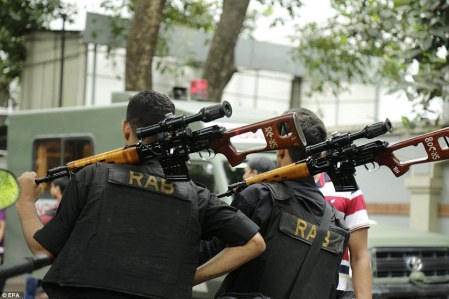
Dhaka_high_powered_Dragunov_sniper_1.7.16

The Islamic State struck the West again on June 1, when it activated a local Bangladeshi cell for a murderous, hostage-taking attack on the Artisan Bakery and O’Kitchen Restaurant, a favorite haunt of foreign visitors near the diplomatic zone of Dakha, the capital. A large contingent of Italian businessmen dining there that night was specifically targeted by ISIS in revenge for the Rome government’s military intervention in the campaign to eject the Islamists from Libya.

DEBKAfile intelligence and counter terror sources note that the long Islamist arm reached into the Indian subcontinent, 7,000km away, to settle its score with Italy, rather than sending its killers by the obvious route from the ISIS capital Sirte in Libya to Italy across 1,200km of Mediterranean Sea. This tactic saved them the risk of running the gauntlet of the Italian Navy boats which are fanned out across the Sidra Gulf to staunch the flow of migrants (an important source of income for ISIS) and intercept terrorists heading for attack in Europe.

Bangladesh is the world’s second largest manufacturing center after China for the major Western fashion houses, netting each year 26.5 Billion USD, 75 pc of its foreign currency earnings. Among the important Italian fashion houses manufacturing in Bangladesh are Prada, Milan, and Benetton.

Italian special operations contingents are the largest Western force operating on several fronts in Libya since early January. They are fighting to capture the key port town of Sirte together with British and US special forces and alongside local Libyan forces.

On April 29, DEBKAfile reported: “ISIS fighters smashed a force of Italian and British Special Ops troops on Wednesday, April 27 in the first battle of its kind in Libya. This battle will result in the delay of the planned Western invasion of Libya, as the encounter proved that European forces are not ready for this kind of guerilla warfare. The sources also said the planners of the invasion were surprised by the high combat skills of the ISIS fighters.”

The Bangladesh attack was therefore not the first contretemps suffered by Italy in its fight on Islamist terror.

Inside Libya, the fighting continues unresolved for lack of air support. The US, Italy, France and the UK cannot agree on which of them will supply air cover for the ground forces battling for Sirte and which will assume command.

In early June, overall command of the campaign was given to NATO. That decision did not break the allied impasse either, because its members remained at loggerheads over respective air force contributions, provision of the logistic intelligence required for aerial operations and, lastly, funding.

Due to insufficient air cover, western and Libyan special forces are stuck in the parts of Sirte they have captured, but cannot advance towards the city’s center or root out the ISIS fighters.

The fact that ISIS was able to operate a terror cell in far-away Bangladesh to strike a counterblow in the battle in Northern Africa, testified to the global scope of the terror organization’s command and communication reach.

Just like the November 2015 Paris attacks, the terrorists were in telephone contact with their masters in the Middle East, once in a while sending pictures of the victims they murdered inside the restaurant.

In the attack, the terrorists killed 9 Italian businessmen, 7 Japanese businessmen, one US citizen, 3 local citizens, and one Indian.

The hostages were executed by beheading with machetes.

The counter terrorism sources report that, just as in the terror attacks in Brussels, Paris and Istanbul, the attackers in Dakha were previously known to local security and intelligence agencies, at least five of the seven terrorists were known to the Bangladesh security agencies, who claimed they were unable to stop them.