Posted tagged ‘Islamic Jihad’

The hijrah into Europe

September 4, 2015

The hijrah into Europe, Front Page MagazineRobert Spencer, September 4, 2015

lampedusa_noborder_2007-2

If you don’t accept the brave new world that is sure to bring more jihad and more Sharia to Europe, you’re a Nazi and a racist.

************************

Approximately 104,460 asylum seekers arrived in Germany during the month of August, setting a new record. That makes 413,535 registered refugees and migrants coming to Germany in 2015 so far. The country expects a total of around 800,000 people to seek asylum in Germany this year. And that’s just Germany. The entire continent of Europe is being inundated with refugees at a rate unprecedented in world history. This is no longer just a “refugee crisis.” This is a hijrah.

Hijrah, or jihad by emigration, is, according to Islamic tradition, the migration or journey of Muhammad and his followers from Mecca to Yathrib, later renamed by him to Medina, in the year 622 CE. It was after the hijrah that Muhammad for the first time became not just a preacher of religious ideas, but a political and military leader. That was what occasioned his new “revelations” exhorting his followers to commit violence against unbelievers. Significantly, the Islamic calendar counts the hijrah, not Muhammad’s birth or the occasion of his first “revelation,” as the beginning of Islam, implying that Islam is not fully itself without a political and military component.

To emigrate in the cause of Allah – that is, to move to a new land in order to bring Islam there, is considered in Islam to be a highly meritorious act. “And whoever emigrates for the cause of Allah will find on the earth many locations and abundance,” says the Qur’an. “And whoever leaves his home as an emigrant to Allah and His Messenger and then death overtakes him, his reward has already become incumbent upon Allah. And Allah is ever Forgiving and Merciful.” (4:100) The exalted status of such emigrants led a British jihad group that won notoriety (and a shutdown by the government) a few years ago for celebrating 9/11 to call itself Al-Muhajiroun: The Emigrants.

And now a hijrah of a much greater magnitude is upon us. Evidence that this is a hijrah, not simply a humanitarian crisis, came last February, but was little noted at the time and almost immediately forgotten. The Islamic State published a document entitled, “Libya: The Strategic Gateway for the Islamic State.” Gateway into Europe, that is: the document exhorted Muslims to go to Libya and cross from there as refugees into Europe. This document tells would-be jihadis that weapons from Gaddafi’s arsenal are plentiful and easy to obtain in Libya – and that the country “has a long coast and looks upon the southern Crusader states, which can be reached with ease by even a rudimentary boat.”

The Islamic State did not have in mind just a few jihadis crossing from Libya: it also emerged last February that the jihadis planned to flood Europe with as many as 500,000 refugees. Now the number is shooting well beyond that in Germany alone. Of course, not all of these refugees are Islamic jihadis. Not all are even Muslims, although most are. However, no effort whatsoever is being made to determine the refugees’ adherence to Sharia and desire to bring it to their new land. Any such effort would be “Islamophobic.” Yet there are already hints that the Islamic State is putting its plan into effect: jihadis have already been found among the refugees trying to enter Europe. There will be many more such discoveries.

Eight hundred thousand Muslim refugees in one year alone. This will transform Germany, and Europe, forever, overtaxing the welfare economies of its wealthiest nations and altering the cultural landscape beyond recognition. Yet the serious public discussion that needs to be had about this crisis is shouted down by the usual nonsense: the Washington Post Wednesday published an inflammatory and irresponsible piece likening those concerned about this massive Muslim influx into Europe to 1930s Nazis ready to incinerate Jews by the millions. Hollywood star Emma Thompson accused British authorities of racism for not taking in more refugees – as if British authorities haven’t already done enough to destroy their nation.

And so it goes. If you don’t accept the brave new world that is sure to bring more jihad and more Sharia to Europe, you’re a Nazi and a racist. Meanwhile, no one is bothering even to ask, much less answer, one central question: why is it incumbent upon Europe have to absorb all these refugees? Why not Saudi Arabia or the other Muslim countries that are oil-rich and have plenty of space? The answer is unspoken because non-Muslim authorities refuse to believe it and Muslims don’t want it stated or known: these refugees have to go to Europe because this is a hijrah.

This is also Europe’s death knell.

Rocket from Gaza follows IDF-Palestinian clash in West Bank town of Jenin

September 1, 2015

Rocket from Gaza follows IDF-Palestinian clash in West Bank town of Jenin, DEBKAfile, September 1, 2015

Palestinian rocket fire from the Gaza Strip put southern Israel on red alert before dawn Tuesday. Sept 1 in the wake of a major clash that erupted in the West Bank refugee camp of Jenin Sunday night. The circumstances of that episode are not entirely clear. Israel playing the Jenin encounter down, whereas the Palestinians are presenting it as “the biggest battle of the third initifada.” An Israeli soldier and five Palestinians were injured.

It began, DEBKAfile’s military sources report, when a large combined force of the IDF, Shin Bet and Police Special Operations, riding in dozens of vehicles, entered the Jenin camp Monday night to round up Islamic Jihad and Hamas terrorist suspects. In the Al-Hadaf district, they surrounded the homes of Bassam Al-Saeedi, reputed Jihad chief on the West Bank, and Majdi Abu al-Hejja, a local Hamas military arm operative.

At some point, Israeli rocket fire badly damaged Al-Saeedi’s house.

The IDF sources say it was a single small rocket, without explaining why it was fired. The IDF spokesman first reported “a heavy exchange of fire” around the building. Early Monday, the word “heavy” was dropped from the briefing to reporters and finally, there was no reference to any exchange of fire at all.

The Palestinians claim that the Jihad leader was not at home at the time of the raid and so escaped his pursuers.  But there is no word on either side about the fate of any occupants of building and whether any were killed.

Did the IDF decide to knock the building down in response to gunfire coming out of it? Or was it a warning to the Islamic Jihad and other Palestinian terrorist groups to halt their latest spate of violence or lose their homes?

Another mystery is how Bassam Al-Saeedi came to be away from home, confounding the information reaching the Shin Bet? Did he get a tip-off of the impending Israeli raid for his arrest?

If armed Palestinian groups on the West Bank have taken to posting spotters outside their areas to forewarn them of approaching Israeli forces, this would ratchet up their operational tactics to the military level observed by fellow Hamas and the Islamic Jihad groups in the Gaza Strip.

While Bassam Al-Saheedi escaped arrest, the Hamas operative Majdi Abu al-Hejja and his brother were captured and taken away for interrogation.

In weighing in heavily for a preventive detention operation against suspected terrorist leaders Sunday night, Israeli security chiefs were almost certainly acting on a decision to avert any possible terrorist action for  disrupting the opening of the school year Monday, Sept. 1. The level of Palestinian violence on and from the West Bank and Jerusalem has risen sharply in recent weeks.

Thirteen years ago, at the peak of the Palestinians’ Second intifada, Israel launched a major assault on the Jenin refugee camp. Thirteen Israeli soldiers were lost in this major battle on April 5, 2002. Since then, the refugee camp has claimed to hold the flag of armed Palestinian resistance to Israel and its army. Security forces arriving there to detain suspects routinely come under a hail of rocks and firebombs. However, the current clash of arms represented a sharp escalation in the Israeli-Palestinian confrontation on the West Bank.

Pentagon Not Targeting Islamic State Training Camps

August 29, 2015

Pentagon Not Targeting Islamic State Training Camps No airstrikes against 60 camps producing 1,000 fighters monthly

BY:
August 28, 2015 4:40 pm

Source: Pentagon Not Targeting Islamic State Training Camps | Washington Free Beacon

The Pentagon has not conducted airstrikes against an estimated 60 Islamic State (IS) training camps that are supplying thousands of fighters each month to the terror group, according to defense and intelligence officials.

The camps are spread throughout Islamic State-controlled areas of Iraq and Syria and are off limits in the U.S.-led international bombing campaign because of concerns about collateral damage, said officials familiar with planning and execution of the yearlong bombing campaign.

Additionally, the IS (also known as ISIS or ISIL) camps have been so successful that Islamic State leaders are considering expanding the camps to Libya and Yemen. Both states have become largely ungoverned areas in recent years.

The failure to target the training camps with U.S. and allied airstrikes is raising questions among some defense and intelligence officials about the commitment of President Obama and his senior aides to the current anti-IS strategy of degrading and ultimately destroying the terror group.

“If we know the location of these camps, and the president wants to destroy ISIS, why are the camps still functioning?” one official critical of the policy asked.

The camps are regarded by U.S. intelligence analysts as a key element in the terror group’s successes in holding and taking new territory. The main benefit of the training camps is that they are providing a continuous supply of new fighters.

IS training camps

An additional worry of intelligence analysts is that some of the foreign fighters being trained in the camps will eventually return to their home countries in Europe and North America to carry out terror attacks.

A White House spokesman declined to comment on the failure to bomb the terror camps and referred questions to the Pentagon.

Pentagon spokesman Maj. Roger M. Cabiness declined to say why no training camps have been bombed. “I am not going to be able to go into detail about our targeting process,” he said.

Cabiness said the U.S.-led coalition has “hit ISIL [an alternative abbreviation for the Islamic State] with more than 6,000 airstrikes.”

“The coalition has also taken out thousands of fighting positions, tanks, vehicles, bomb factories, and training camps,” he said. “We have also stuck their leadership, including most recently on Aug. 18 when a U.S. military airstrike removed Fadhil Ahmad al-Hayali, also known as Hajji Mutazz, the second in command of the terrorist group, from the battlefield.”

Efforts also are being taken to disrupt IS finances and “make it more difficult for the group to attract new foreign fighters,” Cabiness said in an email.

A Central Command spokesman also declined to provide details of what he said were “operational engagements” against IS training camps.

“Once a target is identified as performing a hostile act, or is part of an obvious hostile force, a training camp for example, we prosecute that target in accordance with the coalition rules of engagement and the law of armed conflict,” the spokesman said.

According to the defense and intelligence officials, one reason the training camps have been off limits is that political leaders in the White House and Pentagon fear hitting them will cause collateral damage. Some of the camps are located near civilian facilities and there are concerns that casualties will inspire more jihadists to join the group.

However, military officials have argued that unless the training camps are knocked out, IS will continue to gain ground and recruit and train more fighters for its operations.

Disclosure that the IS training camps are effectively off limits to the bombing campaign comes as intelligence officials in the Defense Intelligence Agency (DIA) and U.S. Central Command, which is in charge of the conflict, have alleged that senior U.S. officials skewed intelligence reports indicating the U.S. strategy against IS is not working or has been less effective than officials have claimed in public.

The Islamic State controls large parts of Syria and Iraq and has attracted tens of thousands of jihadists in both countries and from abroad. The exact number of fighters is not known but intelligence estimates have indicated the numbers have increased over the past year.

The military campaign, known as Operation Inherent Resolve, appears to be floundering despite a yearlong campaign of airstrikes and military training programs aimed to bolstering Iraqi military forces.

A review of Central Command reports on airstrikes since last year reveals that no attacks were carried out against training camps.

Targets instead included Islamic State vehicles, buildings, tactical units, arms caches, fighting positions, snipers, excavators, mortar and machine gun positions, bunkers, and bomb factories.

The risk-averse nature of the airstrike campaign was highlighted last month by Brig. Gen. Thomas Weidley, chief of staff for what the military calls Combined Joint Task Force-Operation Inherent Resolve.

“The coalition continues to use air power responsibly,” Weidley said July 1. “Highly precise deliveries, detailed weaponeering, in-depth target development, collateral damage mitigation, and maximized effects on Daesh, are characteristics of coalition airstrike operation in Iraq and Syria.”

Daesh is another name for the Islamic State.

“The coalition targeting process minimizes collateral damage and maximizes precise effects on Daesh,” Weidley said earlier. “Air crews are making smart decisions and applying tactical patience every day.”

Other coalition spokesman have indicated that targeting has been limited to reaction strikes against operational groups of IS fighters. “When Daesh terrorists expose themselves and their equipment, we will strike them,” Col. Wayne Marotto said May 27.

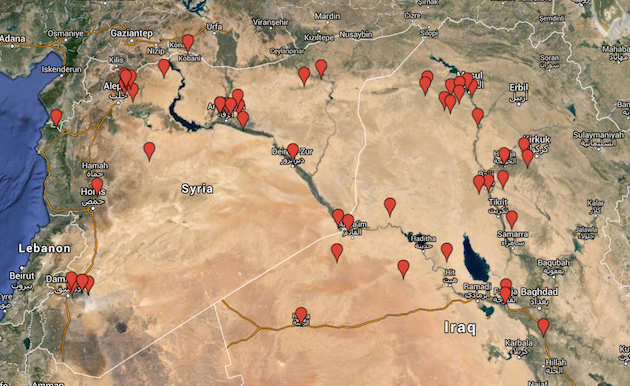
The military website Long War Journal published a map showing 52 IS training camps and noted that some may no longer be operating because of the U.S.-led bombing campaign.

According the map, among the locations in Iraq and Syria where IS is operating training camps are Mosul, Raqqah, Nenewa, Kobane, Aleppo, Fallujah, and Baiji.

The group MEMRI obtained a video of an IS training camp in Nenewa Province, Iraq, dated Oct. 1, 2014.

The video shows a desert outpost with tan tents and around 100 fighters who take part in hand-to-hand combat exercises, weapons training, and religious indoctrination.

Aymenn Jawad Al-Tamimi, an analyst with the Middle East Forum, in June translated details of IS training purportedly obtained from a manual produced by a pro-IS operative in Mosul named Omar Fawaz.

Among those involved in ideological training for IS jihadists in Iraq is Bahraini cleric Turki Binali, who wrote an unofficial biography of IS leader Abu Bakr al-Baghdadi, Al-Tamimi stated in a blog post June 24.

According to a document thought to be written by Fawaz, training differs for native Iraqis and Syrians as opposed to foreign fighters, who generally are less experienced militarily than the regional trainees.

The document also reveals IS plans to export military manpower abroad, including Libya.

“Sessions for the muhajireen [foreign fighters] brothers last 90 days or more, and at the highest level deal with organization, determination, and intelligence operation, including training on heavy weaponry in addition to comprehensive Sharia sessions and multiple tests,” according to a translation of the document. “Sessions for the Ansar from the people of Iraq and al-Sham range between 30 to 50 days.”

The process begins with an application form and questionnaire regarding education, skills, viewpoints, and whether their backgrounds can be verified.

The training then includes physical fitness, martial arts practice, weapons training, and ideological indoctrination.

After a week of training, jihadists with special abilities are selected and placed in units. The units include special forces, air defense, sniper units, a “caliphate army,” an “army of adversity,” and administrative units for those capable of using electronic devices and accounting.

“The rest are distributed in fronts and camps after the end of the military camp training according to where they are needed,” the report said, noting that all graduates are tested in Sharia at the conclusion of their training.

The New York Times reported Tuesday that the Pentagon inspector general is investigating allegations that military officials doctored intelligence reports in an attempt to present more optimistic accounts of the U.S. military’s efforts in the conflict.

The probe was triggered by a DIA analyst who stated that Central Command officials were improperly rewriting intelligence assessments prepared for policy makers, including President Obama.

The Daily Beast reported Wednesday that senior military and intelligence officials inappropriately pressured U.S. terrorism analysts to alter estimates of the strength of the Islamic State to portray the group as weaker.

Central Command, on its website, stated that in the year since the Iraq operation began on Aug. 7, 2014, a total of 6,419 air strikes were carried out.
Targets damaged or destroyed include 119 tanks, 340 Humvees, 510 staging areas, 3,262 buildings, 2,577 fighting positions, 196 oil infrastructure targets, and 3,680 “other” targets not further identified.

Iran official: We will never end fight against Israel

August 29, 2015

Iran official: We will never end fight against Israel In third successive denial of softened stance, Khamenei aide says fighting ‘illegal Zionist regime’ is ‘immutable policy’ By Times of Israel staff August 29, 2015, 2:47 pm

Source: Iran official: We will never end fight against Israel | The Times of Israel

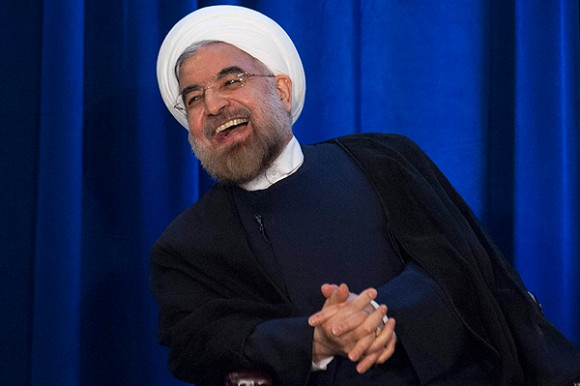
Iran's President Hassan Rouhani, right, welcomes British Foreign Secretary Philip Hammond at the start of their meeting in his office, in Tehran, Iran, Monday, Aug. 24, 2015. (AP Photo/Ebrahim Noroozi)

Iran’s President Hassan Rouhani, right, welcomes British Foreign Secretary Philip Hammond at the start of their meeting in his office, in Tehran, Iran, Monday, Aug. 24, 2015. (AP Photo/Ebrahim Noroozi)

An aide to Iranian Supreme Leader Ayatollah Ali Khamenei on Saturday dismissed remarks by British Foreign Secretary Phillip Hammond that Tehran has changed its stance on Israel, insisting that fighting the “illegal Zionist regime” is an ongoing policy of the Islamic Republic, the semi-official Fars news agency reported.

“[The] fight against the illegal Zionist regime is one of the immutable policies of Iran, which has always been maintained,” Seyed Mahmoud Nabavi said.

Hammond was in Iran on Sunday and Monday for the reopening of the British embassy in Tehran, and said that Iranian President Hassan Rouhani had indicated a “more nuanced approach” to Israel’s existence. Hammond said Khamenei’s “revolutionary sloganizing” should be distinguished from “what Iran actually does in the conduct of its foreign policy.”

Nabavi said Hammond’s comments were “incorrect since one of the driving goals of the Islamic Revolution has been campaign against the arrogant powers,” according to Fars.

“We haven’t recognized the Zionist regime since the beginning of the Islamic Revolution and such a policy will continue,” Nabavi said.

This is the third time this week that a senior Iranian official has repudiated Hammond’s claims of a shift in stance on Israel. The Iranian Foreign Ministry also dismissed the remarks, saying that Israel “had no place in diplomatic talks between Tehran and London,” Fars reported.

“We have rejected such media hype (before) and during Mr. Hammond’s trip to Iran, we just discussed potentials of bilateral relations, fighting extremism and terrorism, etc.,” Foreign Ministry spokeswoman Marziyeh Afkham told reporters in Tehran on Wednesday.

“There were no talks on the Zionist regime and the report that Iran has changed its position is denied,” she said.

On Tuesday, Hussein Sheikholeslam, a foreign affairs adviser to parliament speaker Ali Larijani, said that Israel “should be annihilated,” and that the thawing relations with the West would not translate into a shift in Tehran’s position on the Jewish state.

Sheikholeslam told Iranian media that contrary to remarks by Hammond, “Our positions against the usurper Zionist regime have not changed at all; Israel should be annihilated and this is our ultimate slogan.”

One Rocket a Month Since Hamas ‘Ceasefire’

August 28, 2015

One Rocket a Month Since Hamas ‘Ceasefire’ Figures show 12 rockets have hit Israeli sovereign territory 1 year since last summer’s ‘truce,’ many more fired but didn’t clear border. By Ari Yashar First Publish: 8/28/2015, 1:56 PM

Source: One Rocket a Month Since Hamas ‘Ceasefire’ – Defense/Security – News – Arutz Sheva

This Thursday marked a full year since a ceasefire was sealed between Israel and the Hamas terrorist organization last August 27, bringing Operation Protective Edge to a close – but the ceasefire has been anything but quiet.

Gaza terrorists marked a year since the end of Hamas’s third terror war seeking to destroy Israel by firing a rocket on Wednesday night, giving an ironic edge to the anniversary of the “ceasefire.” The IDF responded by hitting a Hamas weapons manufacturing site.

But Wednesday’s attack was far from the first Gazan breach of the ceasefire.

A review of official IDF and Israel Security Agency (ISA) figures released by Channel 2 on Friday shows that no less than 12 rockets have been fired into Israeli sovereign territory from Gaza since the truce.

That figure doesn’t include the many dozens of rockets fired at Israel that didn’t make it over the security border, falling short within Gaza. Just earlier this month alone three such rockets fell in Gaza, landing short of their mark.

Twelve rockets since the ceasefire works out to an average of one rocket a month hitting Israel since the ceasefire. No more than three months went by without a Gazan rocket striking Israeli territory; fortunately, no one was wounded in any of the ongoing rocket fire.

A breakdown of the rocket strikes by month shows that last September, just a month after the ceasefire, Gaza terrorists fired mortar rounds at Israel. The rocket fire returned in October, and after a quiet November another rocket was intercepted last December.

The first three months of 2015 were surprisingly quiet, but in April another rocket breached the ceasefire, and in May more rocket fire was recorded. Three rockets entering Israeli territory were shot down in June, and two rockets apiece fell in July and August.

Still better deterrence than the past

As noted, those figures do not include the many more rockets fired unsuccessfully at Israel which never made it over the border.

In response to the numerous breaches, the IDF struck 14 terror sites in Gaza since the end of the war in airstrikes, most of them Hamas terror facilities as the IDF holds the terror group responsible for all rocket attacks emanating from the coastal enclave that is under its de facto control.

However, a comparison to the last two Hamas terror wars against Israel shows that despite the many breaches, the IDF achieved an even greater deterrent affect that in the past with its successful campaign to crush Hamas’s rocket arsenals and its will to start another full-out war.

While 12 rockets have hit Israel since Operation Protective Edge, no less than 217 rockets hit Israel in the first year after 2008-2009 Operation Cast Lead, and a full 36 were fired after 2012 Operation Pillar of Defense.

Gadi Yarkoni, head of the Eshkol Regional Council, on Thursday responded to the rocket fire the night before and spoke about the ongoing detrimental affect the incessant rocket attacks are having on the local populace.

This cannot go on. We cannot allow this rocket fire to turn into a regular event. The Defense Minister and the Prime Minister must decide how to respond in order to prevent escalation of the situation,” said Yarkoni.

“Each time a rocket is fired it brings back bad memories. The government has to do something to prevent rocket fire, as well as put into place obstacles that will prevent Hamas from digging tunnels into Israel and attacking us from them.”

While Hamas has had its rocket arsenals buoyed up by Iranian and other foreign technology, an Israeli crackdown on smuggled weaponry and weapon materials together with an Egyptian siege on the Sinai border has led Hamas to turn increasingly to its domestic rocket production industry to create new missiles.

That domestic rocket development has seen Hamas fire many dozens of rockets into the Mediterranean Sea over the course of the last year as part of its rocket testing program.

The Iranian Nuclear Deal Viewed Through the Eyes of ISIS and Iran’s Children

August 27, 2015

The Iranian Nuclear Deal Viewed Through the Eyes of ISIS and Iran’s Children, Accuracy in Media, Lt. Colonel James G. Zumwalt, USMC (Ret.), August 27, 2015

(Assume for the sake of argument that the Islamic Republic is only half as evil as the Islamic State. That’s hardly a persuasive argument in favor of the “deal” with Iran. –DM)

timthumb (1)

As Congress votes next month on whether to support the nuclear agreement Team Obama has negotiated with Iran, two assessments are necessary.

One is content-oriented-looking to the four corners of the document to understand exactly what Iran is being allowed legally to do, as well as the impact it will have on our national security.

Fully understanding that, the other assessment is then to analyze Iranian intentions-looking outside the document to determine the likelihood of full compliance by the mullahs.

As Congress undertakes the first assessment, it seems, unfortunately, to pay less heed to the second. But, as the latter demands understanding what the mullahs’ ultimate goal is, in addition to their commitment to achieving it, it is most relevant.

Interestingly, to better understand the mullahs’ ultimate goal, we need only look to ISIS-a group in pursuit of a similar one.

Before we do so, however, consider the following hypothetical: based on what we know about the group today, would Congress even consider negotiating the same nuclear deal with ISIS that has been negotiated with Iran? We hope it would not. The very thought of any agreement paving the way for a nuclear-armed ISIS would be an interminable nightmare for the world community.

The blatant savagery of ISIS undermines its credibility as a candidate with whom to hold nuclear negotiations. A group whose sole creative contribution to society has been to develop increasingly horrific ways of executing victims (and proudly displaying them on video) does not make for a responsible nuclear negotiating partner.

We may have thought the burning alive of caged Jordanian pilot Mu’ath al-Kaseasbeh earlier this year represented the extreme of ISIS brutality. It did not.

We have seen other victims paraded out, hands tied behind their backs, forced to kneel in front of their ISIS captors who-unbeknownst to the captives had buried explosive devices where they were kneeling-move safely away before detonating them. The sight of flying body parts then met with cries of “Allahu Akbar” from among the ISIS savages.

We have seen videos of Arab Christians similarly being positioned and beheaded by ISIS captors.

We have reports of an ISIS leader who, by night, raped his 11-year-old slave girl and, by day, strapped her to the windshield of his vehicle to afford him concealment from snipers as he drives.

The savagery of ISIS knows no limits. Its soldiers, after executing a Muslim father, strapped an explosive device to the baby child he left behind, detonating it to demonstrate to trainees the weapon’s battlefield impact upon the human body.

ISIS justifies its savagery on a Quranic mandate to pursue Islam’s ultimate goal: a global Caliphate by which to rule all inhabitants under sharia-a system of laws stripping its own believers of human dignity and non-believers of their lives.

But it is interesting that the ultimate goal for Islam sought by ISIS is really no different than that sought by Iran’s mullahs.

The brutality of ISIS, the irrationality of its leadership, the darkness that strips it of any humanity, the avowed purpose of its very being-all of this is mirrored within the mindset of Iran’s mullahs. Iran’s mullahs are ISIS wolves in sheep’s clothing.

ISIS is driven by a virulent Islamic ideology, unprotected by state boundaries, seeking to impose sharia upon the world. Iran is driven by a virulent Islamic ideology, protected by state boundaries, seeking the very same global objective.

The two mindsets evolved from one Islamic tree, branching out into different sects following Muhammad’s death. While differences evolved in culture, political systems, eschatological beliefs concerning the “Twelfth” or “Hidden Imam,” the role economics plays, etc., what we should find disturbing is, regardless of which sectarian branch prevails, for us, the end result is the same. Whether a Sunni ISIS Caliphate or a Shiite Iranian one were to dominate, infidels would be forced either to convert to Islam or die-with death imposed by whatever means available.

It is the commitment to an Iranian Caliphate that should concern us more than the commitment of ISIS to one. The mullahs believe for theirs to evolve, global chaos needs to occur-with man a catalyst in triggering it. Thus, providing them with a path for a nuclear-armed Iran gives the mullahs the means to fulfill the prophecy of Islam to which they adhere.

The Western mind rationalizes Iran would never initiate a nuclear strike for fear of retaliation. But the concept of Mutual Assured Destruction (MAD) that prevented a Cold War from turning hot will have no impact upon Iran. Its mullahs see this life as but a means of ensuring their arrival in the next-a paradise of unlimited sexual desires with “recycled” virgins promised by Muhammad. Such is their reward for striving in this life to make the world an infidel-free one.

We see the evil of ISIS by the sins it commits. Why do we fail to see it in the deeds of Iran’s mullahs who mirror them? Perhaps it is because ISIS boasts about its inhumanity while the mullahs are less vocal about theirs.

To fully understand the mullahs’ commitment to their ultimate goal, we need view it through the most innocent of eyes.

The best insight into the soul of a nation’s leadership is examining how it treats its most treasured asset-its own children.

Peering into the soul of Iran’s leadership, one sees only darkness.

As Iran’s mullahs came to power in 1979, the violence against the Shah was soon redirected against their own people, claiming thousands of lives. Some were children who, lacking knowledge about sharia, were held accountable, nonetheless, for violating it and summarily executed. Sharia was to rule over all, even those of a tender age incapable of its comprehension.

For Supreme Leader Ayatollah Ruhollah Khomeini, the sacrifice of children in this life was deemed acceptable to ensure ascendancy to the next. As he proclaimed in December 1979, “Could anyone wish his child to be martyred to obtain a good house? This is not the issue. The issue is (achieving) another world”-i.e., martyrdom of a child is justified in furtherance of Islam.

The extreme to which Khomeini took this was documented during Tehran’s eight-year war with Iraq.

Seeking to reduce Iranian army losses suffered penetrating Iraqi positions heavily defended by minefields, Khomeini issued a call for children to march through these fields to clear a route of attack. Each child was presented a plastic key beforehand, which, Khomeini promised, unlocked the gates to paradise. An estimated 500,000 children were so sacrificed.

A child’s life today in Iran continues to hold little value-children are still executed for acts deemed criminal under sharia. Accordingly, Tehran fails to comply with the Convention on Rights of the Child-an international commitment it made to protect its own children.

The virulent ideology of both ISIS and Iran’s mullahs merge on the common ground they share in totally devaluing the life of a child, evidenced by their unconscionable willingness to use children as weapons of war-whether it be to clear minefields, to serve as suicide bombers, or to execute prisoners.

The mullahs’ willingness to sacrifice the lives of their children should not be lost on us. If they, in pursuit of their ultimate goal, are unwilling to honor international commitments protecting their own children, only a fool can expect them to honor the international commitments set forth in a nuclear agreement.

He, too, is a fool who accepts President Obama’s claim that the Iranian leadership’s cries of “Death to America” are simply made for domestic consumption, ignoring Iranian President Hassan Rouhani’s recent warning, “Saying death to America is easy; we need to express death with action.” If Congress approves Obama’s nuclear agreement with Iran, Rouhani’s wish to replace hopeful words for America’s death with action to achieve it will take a deadly step forward.

Next month’s vote on the Iranian nuclear deal will reveal to us just how many fools we have in Congress.

Unveiling new missile, Rouhani says Iran will obtain ‘any weapons we need’

August 22, 2015

Unveiling new missile, Rouhani says Iran will obtain ‘any weapons we need’

‘We can negotiate with other countries only when we are powerful,’ says president at ceremony displaying precision solid-fuel rocket

By Times of Israel staff August 22, 2015, 12:00 pm

via Unveiling new missile, Rouhani says Iran will obtain ‘any weapons we need’ | The Times of Israel.

In this photo released by the official website of the office of the Iranian Presidency on Saturday, Aug. 22, 2015, Iran's President Hassan Rouhani, left, briefs the media as Defense Minister Hossein Dehghan listens after unveiling the surface-to-surface Fateh-313, or Conqueror, missile in a ceremony marking Defense Industry Day, Iran. (Iranian Presidency Office via AP)

In this photo released by the official website of the office of the Iranian Presidency on Saturday, Aug. 22, 2015, Iran’s President Hassan Rouhani, left, briefs the media as Defense Minister Hossein Dehghan listens after unveiling the surface-to-surface Fateh-313, or Conqueror, missile in a ceremony marking Defense Industry Day, Iran. (Iranian Presidency Office via AP)

Iran on Saturday unveiled a new surface-to-surface ballistic missile with a 500-kilometer (310 miles) range, saying military might was a precondition for peace and effective diplomacy.

The Fateh 313 missile was unveiled during a ceremony marking the anniversary of Iran’s military industry, attended by Iranian President Hassan Rouhani.

The military industry called the solid-fuel missile one of the most exact ever manufactured, boasting that it has successfully hit multiple targets with great precision, Israel’s Walla website reported.

“We will buy, sell and develop any weapons we need and we will not ask for permission or abide by any resolution for that,” Rouhani said in a speech at the ceremony, which was broadcast live on state television, according to Reuters.

“We can negotiate with other countries only when we are powerful. If a country does not have power and independence, it cannot seek real peace,” the president said.

A senior commander in Iran’s Revolutionary Guards said Friday that the country is planning massive “ballistic missiles war games,” adding that the announcement comes after Tehran said it plans to begin phasing in a new generation of missiles.

“The IRGC Aerospace Force will hold a large-scale ballistic missiles war-games soon,” Brigadier Gen. Amirali Hajizadeh said, according to the state-run Fars news agency.

Tehran said last month that its ballistic missile program was not connected to the UN Security Council resolution endorsing the July 14 accord with world powers that limits its nuclear program.

Under the terms of the agreement, Iran is barred from developing ballistic missiles capable of carrying a nuclear warhead.

Iran says it has ballistic missiles with a range of 2,000 kilometers (1,200 miles), which are capable of striking both Israel and Saudi Arabia. But the Foreign Ministry said that the UN’s resolution endorsing the deal did not have jurisdiction over its missile development.

“Iran’s military capacities, especially ballistic missiles, are strictly defensive and, as they have not been conceived to carry nuclear weapons, they are outside the scope and competence of the Security Council resolution,” the ministry wrote in a statement.

“The Islamic Republic of Iran is committed to implementing its commitments… so long as world powers keep their side of the agreement to lift sanctions in exchange for guarantees that Tehran will not develop a nuclear program,” the statement said.

At least 5 said killed in IDF strike on Syria rocket-firing cell

August 21, 2015

At least 5 said killed in IDF strike on Syria rocket-firing cell

Military says it targeted Islamic Jihad men who fired projectiles on northern Israel Thursday; PM says Israel has no interest in escalation but maintains policy of retaliation

By Judah Ari Gross and Times of Israel staff August 21, 2015, 11:33 am

via At least 5 said killed in IDF strike on Syria rocket-firing cell | The Times of Israel.

.A large fire raging near Kfar Sold, caused by missiles fired from the Syrian side of the Israeli-Syrian border and hitting open areas in the Golan Heights in northern Israel on August 20, 2015. (Photo by Basel Awidat/Flash90)

A large fire raging near Kfar Sold, caused by missiles fired from the Syrian side of the Israeli-Syrian border and hitting open areas in the Golan Heights in northern Israel on August 20, 2015. (Photo by Basel Awidat/Flash90)

he Israeli military said it carried out a new raid Friday morning, targeting the cell that launched rockets on northern Israel from Syria on Thursday. At least five people were said to have been killed in the strike on a car some 10 kilometers from the Syrian-Israeli border, in territory held by the Syrian army.

“We targeted a vehicle this morning in which there were at least five people,” an IDF source was quoted by Israeli media as saying Friday.

“We were monitoring this cell and it was attacked some 10-15 kilometers from the border, on territory firmly in the control of the Syrian military. This is an Islamic Jihad cell directed by Iran,” added the source.

Prime Minister Benjamin Netanyahu said Friday that despite the strike, Israel had no interest in an escalation.

“We have no intention of ratcheting up this confrontation, but our policy [of retaliating for attacks against Israeli civilians] remains as it was,” he said.

Israeli Prime Minister Benjamin Netanyahu seen during his visit to the northern border of Israel on August 18, 2015. Defense Minister Yaalon is behind him. (Amos Ben Gershom/GPO)

“Those who are quick to embrace Iran [following the nuclear agreement on July 14] should know that an Iranian commander directed and backed this cell that attacked Israel,” he added, echoing comments made by senior military sources.

Defense Minister Moshe Ya’alon said the strike against the cell was proof that Israel will not tolerate efforts to harm the security of its citizens.

“We have no intention of compromising on this issue, and I suggest no one test our resolve on this matter,” he said in a brief statement after the attack.

Syrian state television said the fatalities were unarmed civilians.

Israel says that the Palestinian Islamic Jihad (PIJ), a terror group that operates mostly out of the Gaza Strip, but whose headquarters are in Damascus, carried out the Iran, with Iranian direction and Syrian complicity.

The Islamic Jihad has denied involvement but called an urgent meeting Friday after midday prayers to discuss the targeting of the cell.

Also Friday, a Syrian military source said that at least one person was killed in a series of air strikes carried out by Israel late Thursday after the rocket attacks earlier in the day.

“The enemy aircraft struck a military position in the area of Quneitra at 11:30 p.m. (20:30 GMT Thursday), martyring one and wounding eight soldiers,” said the source, quoted by the official news agency SANA.

According to Israeli media — citing the London-based Syrian Observatory for Human Rights — at least two people were killed in the strikes, possible two military officials close to Syrian President Bashar Assad. According to the report, the Israeli strikes included a raid on a target outside Damascus and one on a weapons depot belonging to the Syrian military.

The Israeli military said that it carried out strikes on 14 Syrian army positions in the Golan Heights on Thursday night.

“The Israel Defense Forces targeted 14 Syrian military posts in the Syrian Golan Heights,” the Israeli army said in a statement early Friday, without elaborating.

The strikes hit artillery batteries near Quneitra, several army outposts and communications antennae, local news sites reported.

The Israeli retaliation Thursday was its largest assault on Syrian territory in decades.

The Israeli government said it held the Syrian government responsible and indicated that Iran was directly behind the rocket fire on northern Israel Thursday afternoon.

A commander of the Iranian Revolutionary Guards orchestrated Thursday’s rocket fire from Syria, military sources said late Thursday night.

According to a senior Israeli security official, it was Saeed Izadi, the head of the Palestinian Division of the Iranian al-Quds Force, who planned the attack.

Throughout the Syrian civil war, mortar shells have occasionally strayed into Israel, but this was not the case on Thursday when four rockets struck the Upper Galilee and Golan Heights, the official said.

“We understand that this attack was clearly a deliberate one,” he said.

Ya’alon warned Thursday that the rocket fire was merely a “coming attraction” for future Iranian-funded attacks on Israel. With sanctions relief as part of the Iran nuclear deal, Tehran will increase support for its Middle East proxies, he maintained.

From right, Maj. Gen. Aviv Kochavi, Prime Minister Benjamin Netanyahu and Defense Minister Moshe Ya'alon on a tour of the northern border, August 18, 2015. (Amos Ben-Gershom/GPO)

“What we have seen tonight is just a coming attraction for a richer and more murderous Iran,” Ya’alon said in a statement Thursday.

“This is the intention of the bloody regime from Tehran, and the Western world cannot just sweep that fact under the rug,” he added.

Velayati: Iran More Powerful to Back Regional Allies after Nuclear Deal

August 15, 2015

Velayati: Iran More Powerful to Back Regional Allies after Nuclear Deal, Tasnim News Agency, August 15, 2015

(Great! More jobs for jihadists. Obama should like that. — DM)

139405101138017015791263

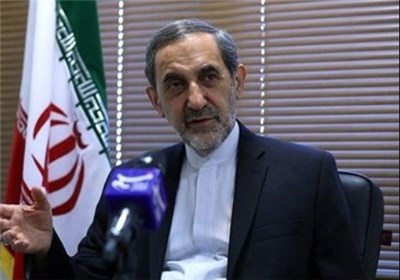
TEHRAN (Tasnim) – Secretary-General of World Assembly of Islamic Awakening Ali Akbar Velayati praised the recent conclusion of nuclear talks between Iran and six world powers, saying that with the deal, Tehran has more strength to support its friends in the Middle East region.

Speaking at the opening ceremony of the 6th gathering of General Assembly of Ahl-ul-Bayt World Assembly here in Tehran on Saturday morning, Velayati, who is also the head of the Strategic Research Center of Iran’s Expediency Council, stressed the need for the consolidation of the anti-Israeli Resistance Front in the region.

“The Islamic Republic of Iran will always support the current (Resistance Front) and of course, with the nuclear agreement, it will have more power to side with its friends in the region,” he noted.

Iran and the Group 5+1 (Russia, China, the US, Britain, France and Germany) on July 14 reached a conclusion on a lasting nuclear agreement that would terminate all sanctions imposed on Tehran over its nuclear energy program after coming into force.

The Iranian official further pointed to the most important reasons behind regional crises, saying that despite the claims made by certain countries, the crises do not have religious or sectarian nature.

Velayati added that the regional problems has its roots in the plots hatched by Islam’s enemies, who are seeking to misuse some religious differences and portray a violent image of Muslims.

The 6th General Assembly of Ahl-ul-Bayt World Assembly was inaugurated with a speech by Iranian President Hassan Rouhani.

About1.800 foreign guests from 130 countries along with senior Iranian political and cultural figures have participated in the four-day event.

Egypt’s Christians in the Shadow of the Muslim Brotherhood

August 11, 2015

Egypt’s Christians in the Shadow of the Muslim Brotherhood, Washington Free Beacon, August 11, 2015

(Please see also, WFB’s Bill Gertz discusses story on Obama support for Muslim Brotherhood on Steve Malzberg Show. — DM)

Copts view the Obama administration cynically. Egyptians now whisper that the American president who pleased Arab liberals with his speech “A New Beginning” at al-Azhar in 2009 is secretly funding the Muslim Brotherhood and purposefully neglecting the Islamic State. A group of Copts protested outside of the White House in February 2015, demanding more aggressive action against IS following the beheading of the 21 Copts.

Al-Ahram, the largest newspaper in Egypt, published reports in 2013 that the United States diplomatic mission in Egypt, led by Ambassador Anne Patterson, was discouraging Coptic Christians from participating in protests against Morsi. Even though Patterson adamantly denied the accusations, the report sowed more distrust among Copts.

Tensions between the Coptic community and the administration worsened when, in the same year, an Obama Homeland Security adviser named Mohamed Elibiary suggested Copts raising awareness of their persecution were promoting “Islamophobic” bigotry.

**************************
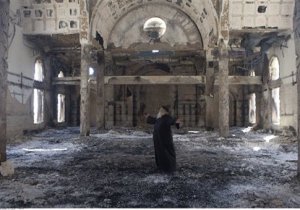
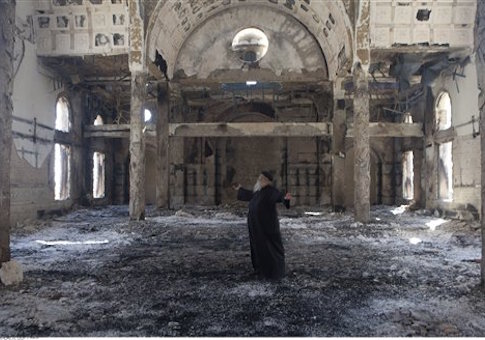
Christian Coptic Priest Father Samuel reacts as he stands inside the burned and heavily damaged St. Mousa church in Minya, Egypt / AP

In the nearly five years of turmoil that have followed the resignation of President Hosni Mubarak in 2011, no group in Egypt has suffered more than the 15 million Coptic Christians. Both a religious and ethnic minority, the Copts are descended from the native population of Egypt who lived and ruled there from the time of the pharaohs until the Roman conquest in 31 B.C. They are the largest Christian community in the Middle East today.

Copts have long been the target of discrimination and persecution in the majority-Arab nation. But this ancient people faced a terrifying new prospect in 2012: Muslim Brotherhood rule.

After Mubarak was ousted, the violence began almost immediately. Churches and schools were burned; peaceful protestors were massacred. When parliamentary elections were held nine months later, they were swept by the Muslim Brotherhood and other Islamist parties. When Mohamed Morsi won the presidential election in May 2012, the party’s victory looked complete. The same year, Morsi gave himself unlimited powers and the party drafted a new constitution inspired by Sharia law.

Morsi benefitted from the organizational advantage of the Muslim Brotherhood. Backed by imams preaching the benefits of religious rule, the previously banned political party was able to defeat the fractured coalitions of the pro-West, liberal, and secular candidates.

“They used thugs to carry out political intimidation against Christians,” a former member of Egyptian Parliament told the Washington Free Beacon. Chants celebrating the Brotherhood victory echoed through the streets of Cairo. “Morsi won! Copts out!”
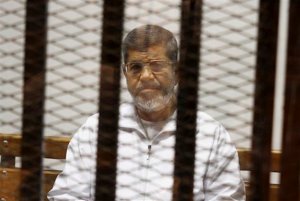
Ousted president Mohamed Morsi / AP

During Morsi’s rule, Christians were murdered and tortured by the hundreds. Attacks and abductions of Christian children spiked significantly. “Most Americans do not know how vicious and bloody the Muslim Brotherhood is,” Ahmed, a 24-year old secular Muslim, said. “They really can’t understand.”

Pope Tawadros II, Egypt’s Coptic Christian leader, criticized Morsi for negligence after six Christians were killed when police and armed civilians besieged Egypt’s largest cathedral. “We want actions, not words,” the Pope said.

Public accusations of blasphemy also became ubiquitous. A Facebook post interpreted as undermining Islam could bring a mob of fundamentalists with rocks and Molotov cocktails to the homes of Christians, surrounding them with families trapped inside. Sham trials with no legal representation would follow. Anti-Christian terrorism was not punished, but the wrong words often landed Copts in prison, forcing the church to make public apologies and families to leave their towns and villages.

Lydia, an activist who provides relief supplies to torn Christian communities in Upper Egypt, and who requested that only her first name be used to preserve her safety and that of her colleagues, witnessed the Muslim Brotherhood offer the very poorest Egyptians social services that bought their allegiance. “When you have no food or money, you will listen to anyone who gives you the resources your family desperately needs,” Lydia said. “They brainwash the illiterate with extremism so they hurt Christians.”

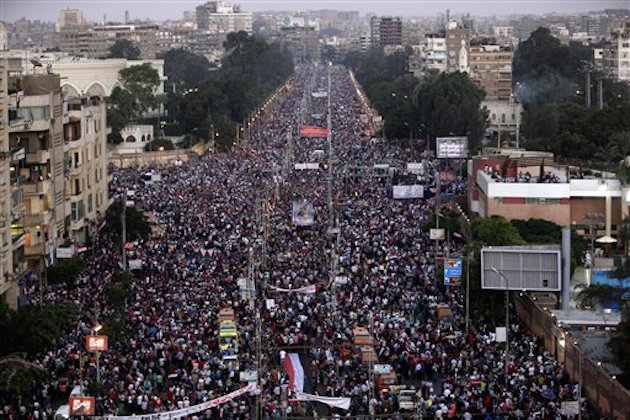
Still, Morsi’s authoritarian rule—rewriting the constitution, disbanding the Egyptian parliament, tossing potentially obstructive judges into jail—was not long lived. Barely a year after he assumed office, a reported 35 million citizens took to the streets to protest his rule, leading the Egyptian military, under Gen. Abdel Fattah al-Sisi, to remove him from power in July 2013.

Egypt’s ousted President Mohammed Morsi protest at the presidential palace in Cairo, Egypt, Friday, July 26, 2013 / AP

Sen. James Lankford (R., Okla.) told the Free Beacon that had al-Sisi not responded, the promise of Egyptian Democracy would have died. “What it seemed the Egyptian people wanted was more opportunity to be able have some sort of functioning democracy, elections, input into their own government,” Lankford said. “It was the immediate understanding as soon as the Muslim Brotherhood was elected, that was the last election Egypt would have.”

In 2014, al-Sisi was elected Egypt’s new president. He won a solid electoral victory, giving him control of the Egyptian government with the responsibilities of forming a new constitution, a new parliament, and a new judicial system. The Coptic Church fervently supported al-Sisi’s candidacy because the new president promised Copts equality in citizenship, security in their communities, and the ability to build places of worship.

The new Egyptian president challenged the leaders of the Islamic world to push a more moderate message. In December 2014, hundreds of Christian and Muslim theologians gathered at al-Azhar, Egypt’s leading mosque and religious university, participated in a conference to fight “jihad” and promote inclusion. Al-Sisi ambitiously called for a “religious revolution” in January 2015, saying that clerics bear responsibility for the growing extremism in the Middle East.

As president, al-Sisi took many symbolic steps to integrate the Coptic community with the majority Sunni population. In a surprise to most Egyptians, al-Sisi attended a mass at Saint Mark Orthodox Cathedral in Cairo on Christmas Eve, a first for any Egyptian president. Al-Sisi regularly invites Pope Tawadros II to appear beside him when he announces major policy rollouts or requests public dialogue from senior advisers.

Al-Sisi also appointed two Copts as members of his cabinet. Under the constitution, the president of Egypt has the power to select 10 members of parliament. Political observers believe he will select Copts to fill a majority of those appointed seats to offer a more representative parliament.

“Our lives haven’t changed much but one positive result of the revolution is the Egyptian people have politically woken up,” said Hala, a Mubarak-era government official who also wished to be identified by her first name only because she fears political retribution. “We no longer accept what we are told. Egyptians are at least aware of the government’s actions and they are more aware of the troubles Copts face.”

But while al-Sisi’s administration provides a welcome change of tone toward the Coptic community, the day-to-day lives of Copts remain little changed from the Mubarak days.

Coptic Solidarity is a five-year-old public charity organization and advocacy group devoted to advancing equality for Copts in Egypt. Their efforts have helped raise awareness about the persecution Christians face in the Middle East. Alex Shalaby, an Egyptian businessman currently residing in the United States and Coptic Solidarity’s new president, believes Egypt under al-Sisi has continued many of the same practices as previous presidents Sadat, Mubarak, and Morsi.

“Discrimination is rampant, especially in Upper Egypt. We still see reconciliation tactics pressuring the closing of Christian churches and there are still very few Coptic government appointees, he explained. “Coptic Solidarity monitors all developments within Egypt and we are not able to say much has been accomplished in terms of real change to improve Coptic lives in the last 12 months.”

Human rights groups have been critical of al-Sisi’s record. Amnesty International’s Hassiba Hadj Sahraoui accused the president of “employing the same methods of torture and other ill-treatment used during the darkest hours of the Mubarak era.” The Egyptian government received heavy criticism after a court sentenced hundreds of Muslim Brotherhood members to death, intensifying its crackdown on Islamists.

Despite assurances from al-Sisi, sectarian violence still regularly occurs in the rural villages of Upper Egypt where the government has less control.

In Nasreya, Islamists responded to a video of five Christian students making fun of the Islamic State terrorist groups by demanding the students be turned over to the authorities for insulting the religion of Islam. Villagers hurled rocks at Copts and vandalized their property. No arrests were reported for the attacks but the teacher and students were imprisoned for days.

On March 26, 2015, in El Galaa another horde gathered to protest the building of a new church that served 1,400 Christians, also attacking Christian homes in a similar manner. The local government forced the new church to have no outer symbol of Christianity. In Mayana and Abu Qurqas villages, police raided churches, confiscated items from the altar, and shut down reconstruction work.

Lydia, the activist based in Upper Egypt, has witnessed firsthand the damage from these attacks. “I had to console a girl, nine years old, crying because she was afraid her parents were going to be kicked out of their own home,” she said.
“They are poor, illiterate, and now their home is burned and their own community has banned them. All because they are Christians,” she continued.

“The police don’t bother to protect Christians. They do the exact opposite in Upper Egypt,” Lydia said. “The local governments have been loaded with Islamists for years.”

But violence is not exclusive to the country’s outskirts. On June 30, 2015, the two-year anniversary of the popular uprising against Morsi, Islamists detonated bombs by the homes of well-known Christians. Additionally, The Fathers Church in Alexandria was firebombed on July 22, 2015. This summer’s assassination of Egypt’s Attorney General Hesham Barakat in a car bombing, reportedly carried out by a wing of the Muslim Brotherhood, served as an ugly reminder that Egypt’s violence has not passed.

An Egyptian policeman stands guard at the site of a car bombing that killed n Egyptian policeman stands guard at the site of a car bombing that killed Hesham Barakat / AP

Despite these problems, al-Sisi still enjoys support among prominent Copts. Amir Ramzy is a prominent Coptic judge and public figure in Egypt’s legal system, and a loyal defender of al-Sisi’s administration.

“We cannot remove prejudice overnight,” Ramzy said. “We must focus on changing the attitude of the people on the ground first.”

The judge pointed to the dire state al-Sisi found the country in when he took office as reason for slow progress.

“Egypt is fighting Islamists inside and outside our borders. Egypt is fighting a horrid economy with massive unemployment. Al-Sisi is taking on large projects to change these conditions,” Ramzy said. “It is difficult to control chaos and promote social change at the same time.”

The judge referred to the decades it took the United States to implement civil rights reforms. He asked for reasonable expectations out of Egypt’s new president and insists under al-Sisi the country is heading in the right direction. “Just one year after his election, Egypt has new roads, a new canal, new investments, and a new hope for the poor.”

Despite not being content with the pace of progress, Shalaby said al-Sisi is an improvement over his predecessor. As a retired executive, he said he understood national security and economic development should be the president’s priority. “Al-Sisi must do what is best for Egypt first. What is best for Egypt is what is best for Copts. What is good for Copts is good for Egypt.”

Abdel-Fattah al-Sisi / AP

Copts view the Obama administration cynically. Egyptians now whisper that the American president who pleased Arab liberals with his speech “A New Beginning” at al-Azhar in 2009 is secretly funding the Muslim Brotherhood and purposefully neglecting the Islamic State. A group of Copts protested outside of the White House in February 2015, demanding more aggressive action against IS following the beheading of the 21 Copts.

Al-Ahram, the largest newspaper in Egypt, published reports in 2013 that the United States diplomatic mission in Egypt, led by Ambassador Anne Patterson, was discouraging Coptic Christians from participating in protests against Morsi. Even though Patterson adamantly denied the accusations, the report sowed more distrust among Copts.

Egyptians publicly celebrated when Patterson left the country.

Tensions between the Coptic community and the administration worsened when, in the same year, an Obama Homeland Security adviser named Mohamed Elibiary suggested Copts raising awareness of their persecution were promoting “Islamophobic” bigotry. Elibiary, who generated controversy due to views perceived by some to be friendly to the Muslim Brotherhood, released a series of tweets with the R4BIA salute, perceived to be a symbol of hate by many in Egypt.

Elbiary later deleted his tweets and removed the symbol. Bishop Angaelos, Pope Tawadros II’s personal representative called the incident “disturbing.” Elbiary left the Obama administration under pressure from critics in 2014.

Following the ouster of Morsi, the United States canceled weapons deliveries to Egypt and halted all military aid. As the White House took its time to build a relationship with al-Sisi, Russian President Vladimir Putin visited the country and signed a nuclear agreement.

The White House announced in the spring of 2015 that weapons deliveries to Egypt would ultimately be resumed.

Despite the uneasiness in the country, Christians believe they will one day be equal citizens in their homeland. Such progress may be slow and painful, but amidst anxiety there is hope in Egypt.

Much of this hope is derived from the perception of al-Sisi’s decent treatment of the Copts. Ramzy, the judge, told theFree Beacon, “al-Sisi may not be perfect, but he is Copts’ best chance to promote ourselves from second class citizens. He should receive America’s support.”