Posted tagged ‘Islam’

ISIS-Affiliated Group: More Rocket Attacks Coming

June 4, 2015

ISIS-Affiliated Group: More Rocket Attacks on Israel Coming

The Islamic State linked group that fired rockets at southern Israel on Wednesday says it will continue “attacking the Jews.”

By Yaakov Levi

First Publish: 6/4/2015, 9:01 AM

via ISIS-Affiliated Group: More Rocket Attacks Coming – Defense/Security – News – Arutz Sheva.

That happens if you keep playing the thit for that game.

Terrorists in Gaza
Abed Rahim Khatib/Flash 90
The Islamist group that fired rockets at southern Israel Wednesday night said Thursday that it would continue its “way of Jihad” and “attack the Jews” – whether or not Hamas approved. And the next attack, it said, would come within hours.

In a statement, the “Sheikh Amar Hadid Brigades” said that the rockets were fired in revenge for “the death of an Islamic State member in Gaza by Hamas members.”

“We have repeated that we will continue in the way of Jihad against the Jews, the enemies of Allah. No one will stop us from fulfilling our obligation and attacking the Jews.”

Several days ago, the same jihadist group took responsibility for the firing of a Grad rocket at Ashdod last week.

The group has since presented Hamas with an ultimatum demanding that it be allowed to attack Israel from Gaza and on Thursdaysaid it would conduct another attack on the Jewish state within 12 hours.

Earlier this week, a group claiming to be associated with ISIS operating in Gaza claimed it killed a top Hamas commander. According to the group, which calls itself the Army of the Islamic State, Saber Siam was killed when ISIS operatives placed a bomb on his car, blowing it up with him inside.

Siam was killed, the group said, because he was “a partner in a declared war against religion and against Muslims, working for the heretical government in Gaza.”

ISIS warned Hamas to immediately “end its war against religion in Gaza” or “face the consequences.” The group also sent out warnings on social media to Gaza residents to stay away from Hamas offices and buildings, lest they find themselves swept up in attacks against the group.

On Thursday, Defense Minister Moshe Ya’alon said that the IDF would continue attacking all terror threats against Israel, inside Gaza or out of it.

“Even if the groups that fired rockets at Israel Wednesday night were gangs of disaffected Jihadists seeking to challenge Hamas by attacking us, we see Hamas as responsible for these attacks. We will not tolerate attacks on our civilians.”


Pentagon: Iran Continuing Work on Nuclear Systems

June 4, 2015

Pentagon: Iran Continuing Work on Nuclear Systems

Covert support for terrorism ‘unabated’

BY:
June 3, 2015 5:46 pm

via Pentagon: Iran Continuing Work on Nuclear Systems | Washington Free Beacon.

Iran is continuing to develop missiles capable of delivering nuclear weapons despite an interim agreement on its nuclear programs, according to a Pentagon report.

“Although Iran has paused progress in some areas of its nuclear program and fulfilled its obligations under the Joint Plan of Action (JPOA), it continues to develop technological capabilities that also could be applicable to nuclear weapons, including ballistic missile development,” a one-page unclassified summary of the report says.

A copy of the report was obtained by the Washington Free Beacon.

The report was due to Congress in January but was not sent to the Armed Services Committee as required by law until this month. Analysts said the delay appeared designed to avoid upsetting Tehran and the nuclear talks.

Disclosure of the continuing development of nuclear delivery capabilities comes amid reports that Iran increased the amount of nuclear material that could potentially be used to build nuclear weapons despite the JPOA.

The State Department sought to challenge International Atomic Energy Agency reports on the increase in Iranian nuclear material, despite President Obama’s claim that the nuclear agreement had halted Iran’s nuclear program.

State Department spokeswoman Marie Harf said this week that the increase in nuclear production was expected and that the amount has increased and decreased.

Iran’s military also continues to threaten the strategic Strait of Hormuz, the Pentagon report said.

“Iran continues to develop its capabilities to control the Strait of Hormuz and avenues of approach in the event of a military conflict,” the report said, adding that Tehran is “quietly fielding increasingly lethal weapon systems, including more advanced naval mines, small but capable submarines, armed unmanned aerial vehicles, coastal defense cruise missile batteries, attack craft, and ant ship-capable missiles.”

U.S. officials said Iranian backing for Houthi rebels in Yemen is also aimed at gaining access to the strategic Red Sea strait called the Bab-el-Mandeb, which, like the Strait of Hormuz, could be used by Iran to disrupt oil and other shipping.

Tehran’s support for terrorism also has not stopped, according to the Pentagon.

“Iran’s covert activities appear to be continuing unabated,” the report says. “The Islamic Revolutionary Guard Corps-Qods Force (IRGC-QF) remains a key tool of lran’s foreign policy and power projection, particularly in Iraq, Syria, Lebanon, Bahrain, and Yemen.”

The IRGC Quds Force also is continuing to improve its access within foreign countries and its ability to carry terrorist attacks “to safeguard or advance Iran’s interests,” the report said.

U.S. officials disclosed to the Free Beacon last week that Iran is increasing the number of Quds Force fighters and Lebanese Hezbollah militants it is sending to Yemen, to support pro-Iran Houthi rebels there.

The report asserts that Iran’s military doctrine is “primarily defensive” and seeks to insulate Iran from more aggressive Iranian policies involving covert action and terrorism.

Iranian military forces seek to deter attacks, survive initial strikes, and retaliate against aggressors.

“The ongoing civil war in Syria and the instability in Iraq have tested, but not fundamentally altered, this posture,” the report said. “Meanwhile, over the past year, the tone of publicity surrounding major military exercises has remained tempered, a trend that began in 2013, probably in support of negotiations over Iran’s nuclear activities.”

Iranian forces have been working with Iraq’s government to battle Islamic State forces that have taken over large portions of that Middle East state. They have included IRGC fighters.

The report, dated January 2015, concludes that Iran has not substantively altered its military and security strategies in the past year.

“However, Tehran has adjusted its approach to achieve its enduring objectives, by increasing its diplomatic outreach and decreasing its bellicose rhetoric,” the report said.

President Hassan Ruohani has sought to project a global message of “moderation and pragmatism” in support of those objectives.

Also, Iran is seeking to become the dominant regional power and in pursuit of that aim has “unwaveringly sought to improve its deterrent capabilities and increase its regional influence.”

Supreme Leader Ali Khamenei, who is thought to be ill, “remains atop Iran’s power structure as both the political-spiritual guide and the commander in chief of the armed forces.”

The Senate Armed Services Committee, in its report on the fiscal 2016 defense authorization bill passed May 19, expressed concerns about the annual report on Iran’s military.

The report was due to Congress on Jan. 30 but said as of May it had not been provided.

“The committee remains concerned about the threat posed by Iran’s nuclear and ballistic missile development programs,” the report said.

Last year Director of National Intelligence James Clapper testified that Iran “would choose a ballistic missile as its preferred method of delivering nuclear weapons.” And in February, Iran launched a Safir long-range missile system.

“In 2013, the National Air and Space Intelligence Center (NASIC) made the following statement about this system: Iran could develop and test an ICBM capable of reaching the United States by 2015,” the report said.

“Since 2008, Iran has conducted multiple successful launches of the two-stage Safir space launch vehicle (SLV) and has also revealed the larger two stage Simorgh SLV, which could serve as a test bed for developing ICBM technologies.”

The committee asked the secretary of defense to provide an update on Iran’s ballistic missile programs.

As a result of the delay in the annual Iran military power report, the committee directed the Pentagon to provide a briefing on the Iranian missile threat, and to update the January report.

Ilan Berman, an Iran specialist with the American Foreign Policy Council, said the release of the report is good news but “has long been conspicuous by its absence.”

“The study is long overdue, and its delay suggests that the administration has been leery of injecting inconvenient facts into the Iran debate as it closes in on a nuclear deal with the regime in Tehran,” Berman said.

“The findings of the report confirm that Iran’s destructive regional activities have not abated over the past year,” he added.

“If anything, they have increased despite Iran’s dialogue with the West,” Berman said. “The product can be seen in the battlefield victories of Yemen’s Iran-supported Houthi rebels, of the persistence of the Assad regime in Syria, and of the growing profile and capabilities of Iraq’s Shi’a militias.”

“Iran’s activities represent a significant challenge to peace and security in the Middle East,” he said.

“The real question is what, if anything, the White House is prepared to do about it?” he said.

Mark Dubowitz, another Iran expert, said Tehran is continuing to develop long-range ballistic missiles capable of carrying nuclear warheads, in violation of U.N. Security Council limits.

“The Obama administration ceded to Iranian demands that their missile program was non-negotiable and, instead, has tried to reassure Congress that this missile threat can be mitigated by constraining Iran’s ability to develop a nuclear warhead,” said Dubowitz, executive director of the Foundation for Defense of Democracies.

“This major administration concession to Iran will greatly complicate the U.S. intelligence community’s ability to detect whether Iran has develop a nuclear warhead-carrying ICBM capable of reaching the continental United States,” he added. “By its very nature, it is much more difficult to detect and prevent warhead development, which can take place in small, covert facilities, than it is to determine the nature and extent of a hostile missile program. In yet another example of how deeply flawed the emerging Iran deal will be, Tehran will have a much easier pathway to develop systems.”


How Islam in America Became a Privileged Religion

June 3, 2015

How Islam in America Became a Privileged Religion, Front Page Magazine, Daniel Greenfield, June 3, 2015

(Much the same nonsense infects foreign policy and propels the notion that the Islamic State is not Islamic. — DM)

islam

What is Islam? The obvious dictionary definition answer is that it’s a religion, but legally speaking it actually enjoys all of the advantages of race, religion and culture with none of the disadvantages.

Islam is a religion when mandating that employers accommodate the hijab, but when it comes time to bring it into the schools, places that are legally hostile to religion, American students are taught about Islam, visit mosques and even wear burkas and recite Islamic prayers to learn about another culture. Criticism of Islam is denounced as racist even though the one thing that Islam clearly isn’t is a race.

Islamist organizations have figured out how lock in every advantage of race, religion and culture, while expeditiously shifting from one to the other to avoid any of the disadvantages.

The biggest form of Muslim privilege has been to racialize Islam. The racialization of Islam has locked in all the advantages of racial status for a group that has no common race, only a common ideology.

Islam is the only religion that cannot be criticized. No other religion has a term in wide use that treats criticism of it as bigotry. Islamophobia is a unique term because it equates dislike of a religion with racism. Its usage makes it impossible to criticize that religion without being accused of bigotry.

By equating religion with race, Islam is treated not as a particular set of beliefs expressed in behaviors both good and bad, but as an innate trait that like race cannot be criticized without attacking the existence of an entire people. The idea that Islamic violence stems from its beliefs is denounced as racist.

Muslims are treated as a racial collective rather than a group that shares a set of views about the world.

That has made it impossible for the left to deal with ex-Muslims like Ayaan Hirsi Ali or non-Muslims from Muslim families like Salman Rushdie. If Islam is more like skin color than an ideology, then ex-Muslims, like ex-Blacks, cannot and should not exist. Under such conditions, atheism is not a debate, but a hate crime. Challenging Islam does not question a creed; it attacks the existence of an entire people.

Muslim atheists, unlike all other atheists, are treated as race traitors both by Muslims and leftists. The left has accepted the Brotherhood’s premise that the only authentic Middle Easterner is a Muslim (not a Christian or a Jew) and that the only authentic Muslim is a Salafist (even if they don’t know the word).

The racialization of Islam has turned blasphemy prosecutions into an act of tolerance while making a cartoon of a religious figure racist even when it is drawn by ex-Muslims like Bosch Fawstin. The New York Times will run photos of Chris Ofili’s “The Holy Virgin Mary” covered in dung and pornography, but refuses to run Mohammed cartoons because it deems one anti-religious and the other racist.

The equating of Islam with Arabs and Pakistanis has made it nearly impossible for the media to discuss violence against Christians in those parts of the world. The racialization of Islam has made Arab Christians, like Bangladeshi atheists, a contradiction in terms. The ethnic cleansing of the Yazidi could only be covered by giving them a clearly defined separate identity. Middle Eastern Christians are increasingly moving to avoid being categorized as Arabs because it is the only way to break through this wall of ignorance.

While racialization is the biggest Muslim privilege, race provides no protection for many Islamic religious practices. Muslims then seek religious discrimination laws to protect these practices even if it’s often a matter of debate whether their lawsuits protect their religious practices or impose them on others.

Islam is a theocracy. When it leaves the territories conquered by Islam, it seeks to replicate that theocracy through violence and by adapting the legal codes of the host society to suit its purposes.

Islamic blasphemy laws are duplicated using hate crime laws. Employers are obligated to make religious concessions to Muslim employees because of laws protecting religious practices, but many of these practices, such as refusing to carry out jobs involving pork, liquor or Seeing Eye dogs, are really ways of theocratically forcing behaviors that Islam forbids out of public life much as Saudi Arabia or Iran do.

Accusations of bigotry are used to outlaw ideas that Islam finds blasphemous and religious protection laws are used to banish behaviors that it disapproves of. By switching from race to religion and back again, Islamists construct a virtual theocracy by exploiting laws designed to protect different types of groups.

Religions in America traded theocracy for religious freedom. They gave up being able to impose their practices on others in exchange for being able to freely practice their own religions. Islam rejects religious freedom. It exploits it to remove the freedom of belief and practice of others. When it cannot do so through religious protection laws, it does so through claims of bigotry.

Religions were not meant to be immunized from blasphemy because that is theocracy. Instead religions are protected from restrictions, rather than from criticism. Islam insists on being protected from both. It makes no concessions to the freedom of others while demanding maximum religious accommodation.

While race and religion are used to create negative spaces in which Islam cannot be challenged, the creed is promoted positively as a culture. Presenting Islam as a culture allows it easier entry into schools and cultural institutions. Islamic missionary activity uses the Western longing for oriental exotica that its political activists loudly decry to inject it into secular spaces that would ordinarily be hostile to organized religion.

Leftists prefer to see Islam as a culture rather than a religion. Their worldview is not open to Islam’s clumsy photocopy of the deity that they have already rejected in their own watered down versions of Christianity and Judaism. But they are constantly seeking an aimless and undefined spirituality in non-Western cultures that they imagine are free of the materialism and hypocrisy of Western culture.

Viewing Islam as a culture allows the left to project its own ideology on a blank slate. That is why liberals remain passionately convinced that Islam is a religion of social justice. Their Islam is a mirror that reflects back their own views and ideas at them. They pretend to respect Islam as a culture without bothering to do any more than learn a few words and names so that they can seem like world travelers.

By morphing into a culture, Islam sheds its content and becomes a style, a form of dress, a drape of cloth, a style of beard, a curvature of script and a whiff of spices. It avoids uncomfortable questions about what the Koran actually says and instead sells the religion as a meaningful lifestyle. This approach has always had a great deal of appeal for African-Americans who were cut off from their own heritage through Islamic slavery, but it also enjoys success with white upper class college students.

The parents of those students often learn too late that Islam is not just another interchangeable monotheistic religion, that its mosques are not places where earnest grad students lecture elderly congregants about social justice and that its laws are not reducible to the importance of being nice to others.

Like a magician using misdirection, these transformations from religion to race, from race to culture and from culture to religion, distract Americans from asking what Islam really believes. By combining race, religion and culture, it replicates the building blocks of its theocracy within our legal and social spaces.

Separately each of these has its advantages and disadvantages. By combining them, Islam gains the advantages of all three, and by moving from one to the other, it escapes all of the disadvantages. The task of its critics is to deracialize Islam, to reduce it to an ideology and to ask what it really believes.

Islam is a privileged religion. And there’s a word for that. Theocracy.

Egypt Says NY Times Promoting Muslim Brotherhood Agitprop

June 3, 2015

Egypt Says NY Times Promoting Muslim Brotherhood Agitprop, The Clarion ProjectRyan Mauro, June 3, 2015

(Obama has spread and relied upon much the same meme as the NY Times and Washington Post. — DM)

New-York-Times-Building-IP_1The New York Times building in New York City

If the New York Times values objective reporting, then it must mention the Brotherhood’s calls to violence in its coverage as well as the many other instances of violence that the group has been involved in.

*********************

The Egyptian ambassador to the U.S. has written a public letter toThe New York Times protesting “its unquestioning adoption of Moslem Brotherhood’s propaganda” and false characterization of the Islamist group as non-violent.

Ambassador Mohamed Tawfik’s letter was written around the same time that the Egyptian embassy released three videos of calls to violence made on Muslim Brotherhood television networks based in Turkey.

The networks’ coverage promoted explicit calls for killing Egyptian police officers and attacking foreign companies and embassies. A threat was also made to carry out regional attacks against the interests of countries who support the Egyptian government.

Egypt is infuriated at the Times as well as the Washington Post for repeatedly asserting that the Brotherhood is non-violent. In response to the Times suggestion that the Egyptian government’s prosecution of the Brotherhood is pushing it towards terrorism, the Egyptian ambassador writes:

This statement demonstrates, at best, a complete misunderstanding of the roots of radicalism. At worst, it amounts to a justification for violent extremism. Today, terrorists in Egypt are part of a network of extremists who are bound by a singular distorted ideology, and by a shared goal of taking our region back hundreds of years. They are inspired by the radical teachings of the former Moslem Brotherhood leader Sayyid Kutb [Qutb]. Terrorists in Egypt share the same evil goals as terrorists in Iraq, Syria and Libya.

Indeed, Ambassador Tawfik is correct that the New York Times separates Islamists from terrorists and extremists. The Times editorial condemns “relentless and sweeping crackdown on Islamists, under the baseless contention that they are inherently dangerous.”

The New York Times described sentencing to death of former President Morsi and 100 other Brotherhood members as “deplorable.” It describes the Brotherhood as having renounced violence in the 1970s.

However, Morsi and the defendants were sentenced for his involvement in prison breaks in 2011 that freed 20,000 inmates, including Morsi himself. The Egyptian government says the attacks were well-orchestrated and involved participation by the Muslim Brotherhood, Hamas and Hezbollah.

Tawfik chastises the Times for failing to mention that the prison break was a violent operation that resulted in the deaths of prison guards and inmates and freed members of Hamas and Hezbollah.

The Egyptian ambassador also excoriated the Washington Post in February for “toeing the Muslim Brotherhood line” and advised it to be more balance in order to “save whatever is left of your credibility in the Arab world.”

Egyptian President El-Sisi came into power after the popularly-supported military intervention in July 2013 overthrew the Muslim Brotherhood government. The move had the support of a broad spectrum of Egyptian society with public endorsements from secular-democratic activists, the Grand Sheikh of Al-Azhar University and the leader of the Coptic Orthodox Church.

The overthrow came after Morsi (whose election itself was marred bycharges of voter fraud) seized far-sweeping powers for himself, essentially negating any semblance of a democratic government.

El-Sisi is often characterized as an anti-democratic strongman; a depiction that his government is now challenging.

He argues that these strongman tactics are necessary because a democratic transition cannot be completed without stability, economic development and a confrontation with Islamism (also known as Political Islam). He asks the West to understand that there is a “civilizational gap between us and you” and it will take time to modernize.

A study commissioned by the Egyptian government criticized its heavy-handedness but concluded that banning Islamist parties is required for the country’s stability and democratic development. It recommended a program to separate politics and religion.

The Egyptian government sees the Islamic State (ISIS) as a natural outgrowth of the Muslim Brotherhood. Its website warns that the Muslim Brotherhood has a network of fronts in America that are disguised as civil society organizations.

El-Sisi called for a reformation in Islamic interpretation in January 2014 and made a dramatic call on the Islamic religious establishment to address problematic teachings this January that received widespread media coverage. He has explicitly said that Egypt should be “a civil state, not an Islamic one” and defined the ideology of the enemy as Political Islam in an interview on FOX News Channel.

El-Sisi is also confronting Islamist terrorism internationally, in addition to its fight against Islamic State in the Sinai Peninsula. His government is an enemy of Hamas and is as minimally anti-Israel as can be expected of an Arab leader.

Egypt has conducted airstrikes on ISIS in Libya and is materially supporting the Libyan government in its civil war against Islamist forces. Egypt and Libya are complaining about a lack of American backing. A new Egyptian-backed offensive is said to be in the works.

El-Sisi is assembling an Arab rapid-reaction force of 40-50,000 troops that can quickly be deployed to fight Islamic State and other terrorists. Egypt is also taking part in the Arab military intervention against the Iranian-backed Houthi rebels in Yemen.

El-Sisi also made a historic visit to a Coptic Christian church during mass on Christmas Eve. He challenged the Egyptian honor culture when he apologized to a woman who was raped in Tahrir Square.

Major American media outlets have fallen for the falsehood that the Muslim Brotherhood is non-violent. It is true that the Egyptian government is often criticized for its human rights record, but coverage of those accusations should not automatically exempt the Brotherhood and other Islamists from blame.

If the New York Times values objective reporting, then it must mention the Brotherhood’s calls to violence in its coverage as well as the many other instances of violence that the group has been involved in.

European Leaders Demand Regime Change in Iran

June 3, 2015

European Leaders Demand Regime Change in Iran

Call on Iran to allow international inspectors to take inventory of Iranian military sites

BY:
June 3, 2015 5:00 am

via European Leaders Demand Regime Change in Iran | Washington Free Beacon.

Some 200 European officials are calling for Iran’s hardline Islamic government to be dissolved and for the country to allow international inspectors to take inventory of all Iranian sites suspected of housing an illicit nuclear weapons program, according to a letter sent to European Union (EU) Foreign Policy Chief Federica Mogherini on Tuesday.

The delegation, comprised of 221 members of the European Parliament from 28 EU member states, slams Iran’s “destructive meddling” throughout the region and criticizes its human rights record, which is ranked among the worst in the world.

The delegation also backs regime change aimed to bring down Iranian Supreme Leader Ali Khamenei and his hardline inner circle of allies, according to the letter, which was spearheaded by Friends of a Free Iran (FoFI), a European Parliament group formed in 2003.

This regime change would include Iran becoming “a democratic pluralistic republic based on universal suffrage, freedom of expression, abolition of torture and death penalty, separation of church and state, a non-nuclear Iran, an independent judicial system, rights for minorities, peaceful coexistence in the region, gender equality and commitment to Universal Declaration of Human Rights,” the letter reads.

While the leaders did not take an explicit stance on the ongoing negotiations with Iran over its nuclear program, they demanded the country immediately allow inspectors to take inventory of its military sites.

Iranian leaders have rejected this demand multiple times in recent months.

“Iran needs to adhere to all UN Security Council resolutions with regard to its nuclear program and it should respond to all outstanding [International Atomic Energy Agency] questions while allowing intrusive inspections of all its military and non-military sites, whether declared or undeclared,” the letter states.

The European leaders also condemn Iran’s support for terrorism in the region, including in Iran, Yemen, Syria, and elsewhere.

“The destructive meddling of Iran in the region is of growing concern,” they write. “Amnesty International has disclosed many details on the war atrocities in Iraq of the Shia militias affiliated to Iran. Iran is at the heart of the crisis in this region and not part of the solution. If fundamentalism and extremism is to be uprooted in this region, Iran’s destructive influence and interference should end.”

The leaders also single out Iran Quds Force for contributing to atrocities in Syria.

“The active participation of the [Quds] Force, Hezbollah and other Iranian backed militias in the defense of [Bashar al-]Assad dictatorship has so far led to the death of 300,000,” the letter states. “Concurrently, Iran has expanded its dominion over Yemen.”

In addition to Iran’s expansion outward, it stepped up efforts within the country to silence democratic activists.

An Iranian artist, for instance, was sentenced to 12 years in prison this week for drawing cartoons lampooning members of the Iranian parliament.

It also sentenced to death a blogger accused of insulting the prophet in his writings.

Executions in Iran also have hit record levels under President Hassan Rouhani.

“The situation of human rights in Iran needs to be heeded in all relations with this country,” the European officials write. “Iran should end the executions, free political prisoners, stop the repression of women and respect the rights and freedoms of the Iranian people.”

Obama Officials Claim Iran’s Nuclear Program Frozen or Rolled Back During Negotiations

June 3, 2015

Obama Officials Claim Iran’s Nuclear Program Frozen or Rolled Back During Negotiations

BY:
June 3, 2015 5:00 am

via Obama Officials Claim Iran’s Nuclear Program Frozen or Rolled Back During Negotiations | Washington Free Beacon.

New York Times report Tuesday shows increases in Iran’s stockpile of nuclear fuel are “undercutting” the Obama administration’s claims to have “frozen” or rolled back its nuclear program during a period of negotiations.

The New York Times reported:

With only one month left before a deadline to complete a nuclear deal with Iran, international inspectors have reported that Tehran’s stockpile of nuclear fuel increased about 20 percent over the last 18 months of negotiations, partially undercutting the Obama administration’s contention that the Iranian program had been “frozen” during that period.

But Western officials and experts cannot quite figure out why. One possibility is that Iran has run into technical problems that have kept it from converting some of its enriched uranium into fuel rods for reactors, which would make the material essentially unusable for weapons. Another is that it is increasing its stockpile to give it an edge if the negotiations fail.

President Obama told CNN’s Candy Crowley Dec. 21 that “you look at an example like Iran, over the last year and a half, since we began negotiations with them, that’s probably the first year and a half in which Iran has not advanced its nuclear program in the last decade.”

“Our diplomacy is at work with respect to Iran, where, for the first time in a decade, we’ve halted the progress of its nuclear program and reduced its stockpile of nuclear material,” Obama said during his State of the Union Jan. 20.

In an interview with Vox posted in February, Obama said, “We have been able to freeze the program for the first time and, in fact, roll back some elements of its program, like its stockpiles of ultra highly enriched uranium.” During his weekly online address April 4, Obama claimed Iran “had agreed that it will not stockpile the materials it needs to build a weapon.”

Secretary of State John Kerry told This Week March 1, “The fact is, the interim agreement has been adhered to. It has been inspected. We have proven that we have slowed Iran’s–even set back–its nuclear program.”

In various press briefings, spokeswomen Marie Harf and Jen Psaki made similar assertions about the impact of the Joint Plan of Action, as has White House Press Secretary Josh Earnest.

Harf called the New York Times story “bizarre” and inaccurate Tuesday. However, analysis from the Institute for Science and International Security agreed with the article’s contention that Iran effectively had stockpiled enough low-enriched uranium that it would be nearly “impossible for them to meet those obligations in practice,” as blogger Omri Ceren put it.

Islamic State conquests in Syria nearing Israeli border

June 3, 2015

Islamic State conquests in Syria nearing Israeli border

Islamic State fighters managed to conquer two villages in southern Syria, only 60 kilometers from the border with Israel. With Assad’s forces weakening, the only force that can stop their advancement towards the Golan Heights is the Syrian Rebels.

Jun 03, 2015, 11:57AM | Tom Dolev

via Israel News – Islamic State conquests in Syria nearing Israeli border – JerusalemOnline.


Islamic State terrorists in Syria Photo Credit: Reuters / Channel 2 News

According to an announcement published by the Islamic State today (Wednesday), the terror organization’s fighters were able to conquer two villages north of the city of Daraa – meaning that the organization is nearing the border with Israel. The villages are located at the entrance to Hauran, the region closest to the Israel-Syria border.

Images from the area of the fighting show Syrian Rebels trying to fend off Islamic State fighters, who were able to reach as near as 60 kilometers from Quneitra. The Rebels on the other hand claim that they succeeded in thwarting the terror organization’s advancement.

According to reports, the Islamic State is getting closer to the border with Israel and the only force that can stop its advancement towards the Golan Heights is the Syrian Rebels, with Assad’s forces weakening. The As-Suwayda Governorate, in which a Syrian Druze population resides, is also under threat of an Islamic State takeover.
IS continues to advance in Syria

Islamic State continues to advance in Syria Photo Credit: Channel 2 News

Battles on the way to Damascus also continue, as Syrian Rebel and Islamic State forces are getting closer to defeating the Assad regime. According to reports from Syria, there is a real concern that the country could once and for all fall into the hands of the rebels, after decades under the rule of the Assad regime.

Meanwhile, US Deputy Secretary of State Antony Blinken reported a series of achievements reached by the coalition forces operating against the Islamic State. According to Blinken, the coalition forces were able to kill more than 10,000 Islamic State fighters thus far in nine months of fighting, a fact he claimed could have serious implications for the terror organization.

Exclusive: Key Rebels Ready to Quit U.S. Fight Vs. ISIS

June 1, 2015
05.31.159:30 PM ET

via Exclusive: Key Rebels Ready to Quit U.S. Fight Vs. ISIS – The Daily Beast.

They were ready to accept American guns and training. But a key rebel group can’t accept the Obama administration’s insistence that they lay off Syria’s dictator.

A centerpiece of the U.S. war plan against ISIS is in danger of collapsing. A key rebel commander and his men are ready to ready to pull out in frustration of the U.S. program to train a rebel army to beat back the terror group in Syria, The Daily Beast has learned.The news comes as ISIS is marching on the suburbs of Aleppo, Syria’s second-largest city. Rebels currently fighting the jihadists there told The Daily Beast that the U.S.-led coalition isn’t even bothering to respond to their calls for airstrikes to stop the jihadist army.

Mustapha Sejari, one of the rebels already approved for the U.S. training program, told The Daily Beast that he and his 1,000 men are on the verge of withdrawing from the program. The issue: the American government’s demand that the rebels can’t use any of their newfound battlefield prowess or U.S.-provided weaponry against the army of Bashar al-Assad or any of its manifold proxies and allies, which include Iranian-built militias such as Lebanese Hezbollah. They must only fight ISIS, Washington insists.

“We submitted the names of 1,000 fighters for the program, but then we got this request to promise not to use any of our training against Assad,” Sejari, a founding member of the Revolutionary Command Council, said. “It was a Department of Defense liaison officer who relayed this condition to us orally, saying we’d have to sign a form. He told us, ‘We got this money from Congress for a program to fight ISIS only.’ This reason was not convincing for me. So we said no.”

“[My men] don’t want to be beholden to this policy because it can be used against them in Syria—that they’ve betrayed the revolution and now they’re just mercenaries for the coalition forces.”

Sejari’s possible departure wouldn’t just mean the loss of a few fighters for the anti-ISIS army the U.S. is trying to assemble. It could mean a fracturing of the entire program—a cornerstone of the Obama administration’s plan to fight ISIS in Syria. (The Pentagon was unable to respond to requests to comment for this article.)

“The train and equip program will be structurally impaired for as long as those taking part in it are asked to target jihadists first and the regime second,” Charlie Winter, an ISIS specialist at the London-based Quilliam Foundation, told The Daily Beast. “It would be naïve to think otherwise: no opposition group will take kindly to being told that they can only be assisted if they focus their efforts on ‘terrorists’ and not the regime that got Syria to this position in the first place.”

Even worse, Sejari added, is that by openly aligning with the United States as a counterterrorism proxy, his troops will have a bullseye painted on its back for all comers, al Qaeda, the regime, Iran and Hezbollah. That force, the al-Ezz Front, broke off from Saudi-backed umbrella opposition group that was routed by Jabhat al-Nusra, the al Qaeda affiliate, in northern Syria in March.

“[My men] don’t want to be beholden to this policy because it can be used against them in Syria—that they’ve betrayed the revolution and now they’re just mercenaries for the coalition forces,” Sejari said.

Sejari has worked for years with the so-called “joint operations command” in Turkey, where the CIA and a host of Western and regional spy agencies have coordinated with vetted moderate rebels—sometimes arming them, although without the stifling proscription on whom they couldn’t fight. “In the past, we got some support through the [Western-backed] Friends of Syria group. Very small amounts. We were hoping there would be more support from the Americans,” Sefjari said.

“The American intelligence services have a fair idea who the good guys and bad guys are in Syria and they know which groups are fighting both extremism and dictatorship,” Sejari said. “If the Obama administration were sincere in putting an end to the suffering of the Syrian people, they could do that in three months.”

As approved by Congress, the Syrian train-and-equip program would be overseen not by intelligence officers but by the American military—definitely in Jordan and Turkey, and likely also in Saudi Arabia and in Qatar. But Ankara and Washington have never agreed on the remit of the mission, with Turkey insisting that these rebels be given air support given that they’ll be targets of the regime’s fighter jets and attack helicopters. Although U.S. Defense Secretary Ash Carter has floated the idea of American air support for the rebels publicly, the administration hasn’t committed to that and likely won’t. According to the Wall Street Journal, Obama worries that if any of his built-up Arab strike teams go after the regime in Syria, then Iran’s Revolutionary Guards Corps-Quds Force will instruct its Shia militias to turn their guns on U.S. personnel in Iraq.

The original goal was to graduate 5,000 battle-ready rebels per year, although the program has suffered numerous setbacks and delays since its inception. In early May, Carter told reporters at a Pentagon press conference that just 90 rebels were being put through the first round of training in Jordan. Col. Patrick Ryder, a spokesman for CENTCOM, claimed that 3,700 Syrians had volunteered in total, but of that number just 400 were approved with another 800 were being processed. This followed from an earlier announcement, in April, that Major General Michael Nagata, the man tapped by Obama spearhead train-and-equip, was stepping down for unknown reasons. It doesn’t inspire confidence, Sejari said, that he didn’t know who was in charge of the program he wants nothing to do with anymore. “We don’t know what happened to Gen. Nagata. No one tells us anything,” he added.

Sejari said that even if he were to sign up, he doesn’t think the result would greatly alter the balance of power in Syria or further stated U.S. objectives. “If anyone with any military knowledge examines this program, he will realize this program is not designed to make an impact or support the Syrian people. It will only contribute to dragging out this conflict much longer,” Sejari said. “We’ve been fighting for four years. Program, no program— we’ve been fighting for four years. If the Americans don’t change this precondition, we will carry on fighting.”

In another uninspiring development for the Levantine arm of the war, a major rebel commander has told The Daily Beast that no matter how hard he tries, he still cannot get the coalition’s attention for directing airstrikes against ISIS. And that’s allowing the jihadists to make major gains near the city of Aleppo, a stronghold of both moderate and Islamist rebels.

“We were hoping that we could work hand-in-hand with coalition forces to defeat ISIS and that the coalition would launch strikes against ISIS-held positions in northeast Aleppo. We called on them to do so,” Brig. Gen. Zaher al-Saket told The Daily Beast in a May 29 Skype interview.

Al-Saket defected from the Syrian Army in March 2013. He had been an officer in Assad’s chemical weapons division and today heads both the Aleppo Military Council and the Chemical Weapons Documentation Center, which compiles evidence of chlorine gas attacks perpetrated by his former comrades on Syrian civilians.

“For the past 24 hours, numerous towns in the northern Aleppo suburbs have been under constant bombardment by Daesh,” al-Shaket said, using the pejorative Arabic acronym for ISIS. “The jihadists captured Sarwan, a key town, and is now advancing on two others including Marea, the nerve center for the rebel groups in Aleppo. The fall of Marea would severely weaken our capacity across the province. Hundreds of shells have rained on houses in Sawran and Marea. Ninety percent of the civilians in Marea had to flee to neighboring areas because their houses were destroyed. The terrorism carried out by ISIS is not very different from the terrorism being carried out by Assad.”

And in some ways, Assad’s Syria Arab Army (SAA) and ISIS are helping one another around Aleppo, where the regime is reported bombing rebel positions. “By attacking opposition positions around northern Aleppo, ISIS has granted the Assad regime a tactical opportunity, one that it has already begun exploiting,” Winter said. “This is not the first time the SAA and ISIS have benefited each other, and it will not be the last.”

For weeks, al-Saket has made numerous media appearances in Arabic-language outlets such as Al Jazeera and Orient TV calling for close coordination between his rebels and the coalition. He said he has precise coordinates for ISIS-controlled installations and materiel in towns such as Raei, Manbej, al-Bab in the Aleppo suburbs. But so far, no one from U.S. Central Command—the arm of the American military responsible for the Middle East—has reached out to him.

ISIS launched their assault on northern Aleppo before the weekend, apparently after it caught wind of a the Syrian opposition’s plan to retake the rest of the province from the Assad regime, putting it in control of key supply corridors currently trafficked by ISIS.

The rebels’ idea is to replicate the success of Jaysh al-Fateh, a consortium of Islamist and jihadist rebel groups, largely led by al-Nusra, which has had stunning successful in driving the regime out of Idlib province over the past month. Al-Saket said that while al-Nusra is not part of forces under his command, there was no denying that the al Qaeda franchise was also at war with ISIS in the province. “If ISIS is able to capture all the northern suburbs of Aleppo, that would mean they’d control the borders with Turkey. I don’t have to tell you what this means for the rebels.”

As al-Saket spoke to The Beast, he was interrupted by a fresh intelligence report from his field commanders saying that that white cars with blue covers were currently en route from Dabiq, an ISIS-controlled town in northern Aleppo, toward Hetemlat whence they’d no doubt proceed onto Marea. The cars were outfitted with explosives and driven by ISIS suicide bombers.

“The Syrian-American community asked the Obama Administration for airstrikes on ISIS near Marea many months ago,” complained Mohammed al-Ghanem, the senior political advisor for the Syrian American Council, a Washington, D.C.-based opposition group in constant contact with the Aleppo Military Council. “We were rebuffed for the astounding reason that aiding the rebels in Aleppo would hurt Assad, which would anger the Iranians, who might then turn up the heat on U.S. troops in Iraq. The rebels are the only ones who can fight ISIS in northern Syria—Assad forces are losing ground rather quickly now—so I hope President Obama will reconsider his willingness to compromise the ISIS fight for the sake of an Iran deal.”

“ISIS is a metastasizing threat, not just for Syria but for the world,” al-Saket agreed, before hanging up to tend to the incoming car bombs.

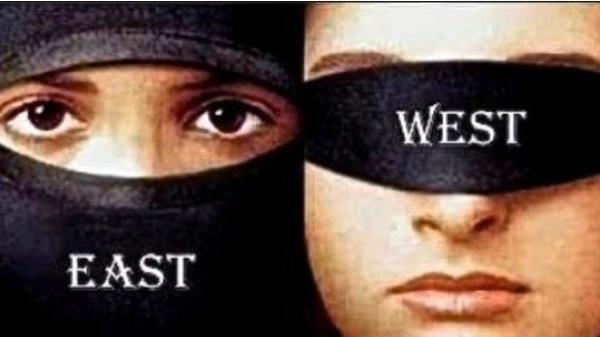
Cartoon of the day

May 30, 2015

H/t The Last Refuge

political-correctness-east-west


Turkish Prime Minister: “We will march to liberate Jerusalem”

May 28, 2015

Turkish Prime Minister: “We will march to liberate Jerusalem”

During the inauguration of the 55th airport in Hakkari Province, Turkish Prime Minister Ahmet Davutoglu and Turkish President Recep Tayyip Erdogan called for the re-establishment of the Ottoman Empire.

May 28, 2015, 04:07PM | Rachel Avraham

via Israel News – Turkish Prime Minister: “We will march to liberate Jerusalem” – JerusalemOnline.

Clear ?

Erdogan

Erdogan Photo Credit: Reuters/Channel 2


According to a report published by Palestinian dissident Walid Shoebat, Turkish President Recep Tayyip Erdogan and Turkish Prime Minister Ahmet Davutoglu spoke during the inauguration ceremony of the country’s 55th airport in Hakkari Province.  The airport is named the Selahaddin Eyyubi Airport after Saladin of the Ayyubi dynasty, the Muslim ruler of Kurdish origin that conquered Jerusalem and was a great enemy of the Christian Crusaders especially Richard the Lionheart.  During the ceremony, both Turkish leaders spoke of their desire to conquer Jerusalem and to re-establish the Ottoman Empire.

“By Allah’s will, Jerusalem belongs to the Kurds, the Turks, the Arabs, and to all Muslims,” Davutoglu declared.  “And as our forefathers fought side by side at Gallipoli and just as our forefathers went together to liberate Jerusalem with Saladin, we will march on the same path to liberate Jerusalem.  The Turkish government does not differentiate from East to West.  We intend to put together all of the regions of our nations and we will bring these regions back together.”

Erdogan’s speech was even more grandiose.   He proclaimed himself to be the reincarnation of Saladin, who will kick whom he perceives to be the modern day crusaders out of Jerusalem by uniting the Muslim world behind him by hinting at the re-establishment of the Ottoman Empire: “I am sure that the great commander Saladin is bringing together all of the peoples of the Middle East into the one army that defeated the Crusaders.  Saladin is currently witnessing what we are doing here spiritually.  I was in his spiritual presence and I am addressing him here in Hakkari with the mighty men, be it eastern, brave south-eastern, valiant Anatolian in Old Turkey.”

“Jerusalem is for the Muslims and not for Israel,” Erdogan added.  “Why should we continue to be friends with those that stomped their boots on the Temple Mount?  They insist that we have to be friends?  I say, we will not.”   Erdogan promised to follow in Saladin’s footsteps: “They all promise you O Saladin, if you united the brothers in the Middle East, so will we.  Saladin said ‘Jerusalem is not for the Crusaders.’  Saladin witnessed this.  Allah witnesses this.  One people, one flag, one nation and one state!”