Posted tagged ‘Iraq war’

Understanding the Dispute Over Peshmerga Command

August 21, 2016

Understanding the Dispute Over Peshmerga Command, Kurdistan News, Laurie Mylroie, August 20, 2016

The battle to liberate Mosul, as well as the ongoing “shaping operations,” in which Peshmerga are prominently involved, is not the responsibility of the State Department. It is the job of the Defense Department—one reason to question the authoritativeness of State Department statements on this matter.

Moreover, there is a crucial difference between how the State and Defense Departments interpret White House guidance on Iraq.

******************

A dispute has erupted between Washington and Erbil over command and control of Peshmerga forces. Most probably, the argument reflects a State Department misunderstanding.

On Wednesday, the State Department’s Deputy Spokesperson was questioned about the recent remarks of Iraqi Prime Minister Haider al-Abadi, in which he said, “The Peshmerga should stay where they are now, and they should not expand their presence even if they help the Iraqi Army.”

When asked to comment on that statement, the Spokesperson replied, “The Peshmerga and all the various fighting groups in Iraq need to be under the command and control of the Iraqi Government and the Iraqi military.”

In turn, the Ministry of Peshmerga Affairs of the Kurdistan Regional Government (KRG) responded, “The Peshmerga are not under the command or control of the Iraqi government. According to the Iraqi constitution, the Peshmerga are part of Iraq’s defense system, but the Iraqi government has not supplied the Peshmerga with weapons or military training, and they have not assumed any responsibility toward the Peshmerga.”

The battle to liberate Mosul, as well as the ongoing “shaping operations,” in which Peshmerga are prominently involved, is not the responsibility of the State Department. It is the job of the Defense Department—one reason to question the authoritativeness of State Department statements on this matter.

Moreover, there is a crucial difference between how the State and Defense Departments interpret White House guidance on Iraq.

According to that guidance, Baghdad is in the lead, and the US (and others) follow its direction. The White House believes this is the best way to ensure Baghdad’s continuing cooperation in the fight against IS.

But the interpretation of that guidance varies. The State Department tends to adhere to it strictly; the Defense Department applies it more loosely.

For example, the Defense Department decided to support the Peshmerga directly, rather than channel aid through Baghdad. In July, it signed a Memorandum of Understanding with Erbil. The Pentagon secured Baghdad’s approval by telling the Iraqis what it intended to do and then asking them if they had any objection.

The State Department, however, tends to leave such decisions to the Iraqi government, as it did regarding the anti-ISIL Coalition meetings in Washington last month. KRG representation was minimal because Iraq’s Foreign Minister decided, as he liked.

The State Department’s restrictive interpretation of this guidance led them to make a major misstatement before. That came in response to a query of mine, following the recent International Pledging Conference that raised $2.1 billion in humanitarian aid for Iraq.

What mechanisms existed to ensure that the Kurdistan Region—which hosts 2/3 of the refugees and Internally Displaced Persons in Iraq—received its fair share, given Baghdad’s notorious corruption?, I asked a State Department Spokesperson.

She did not address the issue of Baghdad’s corruption but clearly affirmed, “Funding and support will go through Baghdad.”

That statement also prompted protest from Erbil. But it turned out to be wrong. The State Department soon clarified that the international aid would go through the UN, not Baghdad.

The State Department’s answer to any question that raises criticism of the Iraqi government, as I have learned, is likely to begin with an affirmation of US backing for Baghdad, and the rest of the answer will probably not address the criticism.

When the question involves a dispute between Baghdad versus Erbil, almost certainly, the answer will favor Baghdad. So I have learned not to ask such questions, unless Baghdad’s actions are so clearly wrong that the question itself will highlight the folly of the answer—and the policy behind it.

The spokespersons are the messengers, not the decision-makers, I regularly remind myself. Their deference to Baghdad’s decision-making may prove a grave error, as it does not seem to acknowledge the sectarian nature of the Iraqi government and the influence Tehran exerts over it. But they are not responsible for that policy.

And their jobs are not easy. For an hour each day, they stand before a camera, answering questions, which can be quite hostile, about a wide range of topics. Such questions may come from ambitious journalists who seem to think that their incessant, repetitive questioning may trap the spokespersons into revealing the kernel of some big scoop. Or they may come from the representatives of hostile states, who seem to think that through their barrage of queries, they can embarrass the US.

This situation happens in real time, on an indelible record, to be posted for the whole world to view. The spokespersons bear the hour with unflagging courtesy, and sometimes even good humor, all the while aware that certain slip-ups can create an international incident.

My guess is that is what happened with the misguided statement about command and control of the Peshmerga.
 

U.S. still gets it wrong on Islamic State

July 1, 2016

U.S. still gets it wrong on Islamic State, Japan Today, Peter Van Buren, July 1, 2016

(An interesting and rather perceptive analysis, quite contrary to Kerry’s position that the suicide attack at the Turkish airport was a sign of desperation. — DM

WASHINGTON — Tuesday’s attacks at Istanbul’s main airport, which appear at this time to be the work of Islamic State, are the latest reminder that the United States should not downplay the group’s rudimentary – yet effective – tactics.

Since the wave of Islamic State suicide bombings in May – killing 522 people inside Baghdad, and 148 people inside Syria – American officials have downplayed the strategy as defensive. Brett McGurk, the Special Presidential Envoy in the fight against Islamic State, said the group “returned to suicide bombing” as the area under its control shrank. The American strategy of focusing primarily on the “big picture” recapture of territory seems to push the suicide bombings to the side. “It’s their last card,” stated an Iraqi spokesperson in response to the attacks.

The reality is just the opposite.

A day after the June 26 liberation of Fallujah, car bombs exploded in eastern and southern Baghdad. Two other suicide bombers were killed outside the city. An improvised explosive device exploded in southwest Baghdad a day earlier.

Washington should know better than to underestimate the power of small weapons to shape large events. After Secretary of Defense Donald Rumsfeld labeled Iraqi insurgents as “dead enders” in 2003, they began taking a deadly toll of American forces via suicide bombs. It was the 2006 bombing of the Shi’ite al-Askari Golden Mosque that kicked the Iraqi civil war into high gear. It was improvised explosive devices and car bombs that kept American forces on the defensive through 2011.

To believe suicide bombings represent a weakening of Islamic State is a near-total misunderstanding of the hybrid nature of the group; Islamic State melds elements of a conventional army and an insurgency. To “win,” one must defeat both versions.

Islamic State differs from a traditional insurgency in that it seeks to hold territory. This separates it from al-Qaida, and most other radical groups, and falsely leads the United States to believe that retaking strategic cities like Fallujah from Islamic State is akin to “defeating” it, as if it is World War Two again and we are watching blue arrows move across the map toward Berlin. Envoy McGurk, following Fallujah, even held a press conference announcing Islamic State has now lost 47 percent of its territory.

However, simultaneously with holding and losing territory, Islamic State uses terror and violence to achieve political ends.

Islamic State has no aircraft and no significant long-range weapons, making it a very weak conventional army when facing down the combined forces of the United States, Iran and Iraq in set piece battles. It can, however, use suicide bombs to strike into the very heart of Shiite Baghdad (and Syria, Jordan, Yemen, and Turkey – as Tuesday’s bombing reminds us), acting as a strong transnational insurgency.

Why does such strength matter in the face of large-scale losses such as Fallujah?

Violence in the heart of Iraqi Shiite neighborhoods empowers hardliners to seek revenge. Core Sunni support for Islamic State grows out of the need for protection from a Shi’ite dominated military, which seeks to marginalize if not destroy the Sunnis. Reports of Shi’ite atrocities leaking out of the ruins of Sunni Fallujah are thus significant. Fallujah was largely destroyed in order to “save” it, generating some 85,000 displaced persons, mirroring what happened in Ramadi. Those actions remind many Sunnis of why they supported Islamic State (and al-Qaida before them) in the first place.

Suicide strikes reduce the confidence of the people in their government’s ability to protect them. In Iraq, that sends Shiite militias into the streets, and raises questions about the value of civil institutions like the Iraqi National Police. Victories such as the retaking of Ramadi and Fallujah, and a promised assault on Mosul, mean little to people living at risk inside the nation’s capital.

American commanders have already had to talk the Iraqi government out of pulling troops from the field to defend Baghdad, even as roughly half of all Iraqi security forces are already deployed there. This almost guarantees more American soldiers will be needed to take up the slack.

Anything that pulls more American troops into Iraq fits well with the anti-American Islamic State narrative. Few Iraqis are left who imagine the United States can be an honest broker in their country. A State Department report found that one-third of all Iraqis believe the Americans are actually supporting Islamic State, while 40 percent are convinced that the United States is trying to destabilize Iraq for its own purposes.

In a country like Turkey, suicide bombings play out in a more complex political environment. Turkey has effectively supported Islamic State with porous borders for transit in and out of Syria, and has facilitated the flow of oil out of Syria and Iraq that ultimately benefits the group. At the same time, however, Turkey opened its territory to American aircraft conducting bombing runs against Islamic State. Attacks in Turkey may be in response to pressure on the nation to shift its strategy more in line with Western demands. Russia (no friend of Islamic State) and Turkey have also recently improved relations; the attack in Istanbul may have been a warning shot reminding Turkey not to get too close.

The suicide bombings – in Turkey and elsewhere – are not desperate or defensive moves. They are not inconsequential, even if their actual numbers decline. They are careful strategy, the well-thought out application of violence by Islamic State. The United States downplays them at great risk.

How US gave Fallujah’s Sunnis into Iranian hands

June 20, 2016

How the US gave Fallujah’s Sunnis into Iranian hands, DEBKAfile, June 20, 2016

Displaced_Sunni__Iraqis_from_Fallujah_6.16Sunni refugees

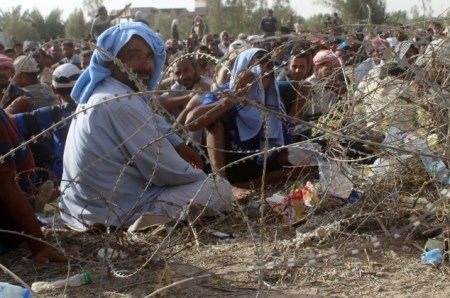
In the last few days, the Western press has been full of harrowing reports on the death and destruction wrought by the Islamic State in Fallujah, western Iraq. But no media outlet is covering the still ongoing human disaster in which tens of thousands of the city’s Sunni residents are fleeing for their lives, including many elderly people, women and children. Some are escaping the intense fighting or because their homes were destroyed. But many Sunnis are fleeing in dread of their ‘liberators,” the pro-Iranian Iraqi Shiite militias that captured the eastern and central parts of Fallujah.

These militias, the Popular Mobilization Forces and the Badar Forces, take their orders from Iranian Gen. Qassem Soleimani, commander of the Al Qods Brigades, and Brig. Gen. Mohammad Pakpour, commander of the Revolutionary Guard Corps ground forces.

There is not much difference between the barbarous acts perpetrated by ISIS and the savagery of Shiite militiamen against the Sunni dwellers of the Iraqi city. In many cases it is even worse. The pro-Iranian fighters are burning down and blowing up houses, murdering and raping women, and executing children and the elderly with bayonets or gunfire.

The Iraqi Special Republican Guard, also called the Golden Division, which participated in the capture of the city center, withdrew from the parts of Fallujah that the pro-Iranian fighters entered. They did so even though Iraqi Prime Minister Haider Al-Abadi had promised the US via Douglas Ollivant, White House aide in charge of Iraq, that the SRG would protect the city’s Sunni population from the Shiite militias. What happened in fact was that the Iraqi soldiers opened the door for the atrocities.

American sources in Washington and Baghdad reported on Monday, June 20, that President Barack Obama and his top aides are furious with Al-Abadi for not keeping his promise. But DEBKAfile’s military and intelligence sources point out that none of this would not have happened were it not for US military involvement in the war on the side of the Iranians.

The pro-Iranian militias were enabled to reach central Fallujah and overwhelm ISIS by the massive bombing raids carried out by US AV-8B Harrier II jets, which flew in from bases in the Persian Gulf, and F/A-18 Hornets from the USS Harry S. Truman aircraft carrier in the eastern Mediterranean.

Even the urgent American calls on Prime Minister Al-Abadi over the last few days to halt the murders and other outrages against the Sunnis population were pointless. Washington knows that he has no authority over the Iranian generals or commanders of the Shiite militias for halting the slaughter.

DEBKAfile’s military and counterterrorism sources point to an especially grave repercussion coming as a direct result of the war crimes allowed to occur in Fallujah. Washington will be hard put to enlist any local Sunni allies for the capture of the two main ISIS strongholds, Mosul in Iraq and Raqqa in Syria.

Some of the American field commanders may believe they can dispense with Sunni support and rely on other local forces, such as the Kurds, to step forward. But they must take into account that many young Sunnis, after witnessing pro-Iranian atrocities in Fallujah may well opt to side with ISIS as the lesser evil.

Hillary’s Libya: The Second Time as Farce

June 4, 2016

Hillary’s Libya: The Second Time as Farce, PJ MediaRoger L Simon, June 3, 2016

(Please see also, The Benghazi Cover Up. — DM)

Amidst the welter of commentary on Hillary Clinton’s June 2 foreign policy speech in which she allegedly eviscerated Donald Trump as the most unreliable leader since Caligula (projection?), I couldn’t avoid thinking of Karl Marx’s oft-quoted line from The 18th Brumaire of Louis Napoleon: “History repeats itself, first as tragedy, then as farce.”

I’m no Marxist, but there’s no question the bearded Prussian inadvertently was accurately describing not Trump’s erratic remarks but Hillary Clinton’s actual outrageous actions regarding Libya when writing, in 1852, of Louis-Napoleon’s coup of the previous year.

What Hillary instigated in that North African country, with the obvious acquiescence of Barack Obama, is the most absurd American foreign policy blunder of my lifetime from which the damaging fallout (thousands of drowning refugees in recent weeks, a possible ISIS takeover of that now essentially lawless country, replete with beheadings of Christians, etc.) is just beginning.  Only our complaisant media could conclude anything but the obvious — that the perpetrator of such a disaster should be totally disqualified as president of the United States.

But let’s go back to 2002 or so during the ramp-up to the Iraq War to see how Hillary’s Libya became the “second time as farce,” both tragedy and farce, in this case. Back then Mrs. Clinton — unlike Donald Trump, who waffled — was among the clear majority of American decision-makers of both political parties who favored the war.  Many criticize that position now, but in those days immediately post-9/11 it made considerable sense.  Something had to be done about the Middle East, which was stuck in that other middle (the Middle Ages or earlier ) when it came to social development and even a semblance of modernity. Those benighted lands were now bringing their unremitting primitivism, violently, to our shores.  (Unfortunately, they still are.)

Forget the existence or not of weapons of mass destruction, dominating most everyone’s hearts and minds at that time was the hope that we could — with minimal force if possible — overthrow the execrable Saddam, bring modern democracy to Iraq and — who knows — by example to other countries in the region.

It was a burst of idealism. Remember the slogan “Democracy! Whiskey! Sexy!”? Even the New York Times approved of it. Much as it saddens me to admit because I went eagerly along, we were all dead wrong. We hadn’t reckoned on that cocktail of tribalism and Islamic ideologies, Sunni and Shiite, that makes those cultures so intransigent and resistant to change.  And we weren’t ready to “go to the mattress,” killing hundreds of thousands as we had in Germany and Japan, to overcome that resistance. And even if we had, who knows if it would have worked with those backward lands?  It’s no easy thing.

But that didn’t stop Hillary Clinton from trying it again a few years later, in Libya, against Muammar Gaddafi, an admittedly crazy despot but one who had agreed to abjure nuclear weapons because of Iraq.  (Ironically, Gaddafi was the only serious victory from the whole thing.) Acting partly under the advice of the sniveling sycophant Sidney Blumenthal (paying attention to Blumenthal should disqualify anyone from anything), Hillary decided to push for a second go-round of a failed policy before the first failure had even come close to resolution.  Talk about the second time as farce. Result?  As Colin Powell said, you break it, you own it.

Hillary Clinton broke Libya.

So this is the person who is now telling us that Donald Trump is dangerous. Well, it makes sense, because this is the same person who told the parents of the Benghazi victims at their children’s funeral that their sons died because of the response to some amateur YouTube video nobody watched and not from an organized terror attack by an al Qaeda affiliate — in other words, an absolutely immoral liar.

Whether Trump would be a great leader on the international stage is impossible to say because it always is before that person is in that leadership position.  That’s the inconvenient truth of foreign policy, which, with notable exceptions, is more often about situational reactions than about planning in the great, ahem, laboratories of the State Department.

We do know, however, how Hillary Clinton would perform. We have already seen it.  And not just in the emails or the opera bouffe of the Russian reset or the backing of Islamists like Erdogan and Morsi or the horrifying mess of Syria or the even more horrifying, non-existent Iran deal, but, most of all, in Libya.  That was her baby.

h/t: Hugh Hewitt

Iran’s Chess Board

June 3, 2016

Iran’s Chess Board, Front Page MagazineCaroline Glick, June 3, 2016

official_photo_of_hassan_rouhani_7th_president_of_iran_august_2013

Even if Obama’s successor disavows his actions, by the time Obama leaves office, America’s options will be more limited than ever before. Without war, his successor will likely be unable to stem Iran’s rise on the ruins of the Arab state system.

********************

Reprinted from jpost.com.

Strategic thinking has always been Israel’s Achilles’ heel. As a small state bereft of regional ambitions, so long as regional realities remained more or less static, Israel had little reason to be concerned about the great game of the Middle East.

But the ground is shifting in the lands around us. The Arab state system, which ensured the strategic status quo for decades, has collapsed.

So for the first time in four generations, strategy is again the dominant force shaping events that will impact Israel for generations to come.

To understand why, consider two events of the past week.

Early this week it was reported that after a two-year hiatus, Iran is restoring its financial support for Islamic Jihad. Iran will give the group, which is largely a creation of the Iranian Revolutionary Guard Corps, $70 million.

On Wednesday Iranian media were the first to report on the arrest of a “reporter” for Iran’s Al-Alam news service. Bassam Safadi was arrested by Israel police in his home in Majdal Shams, the Druse village closest to the border with Syria on the Golan Heights. Safadi is suspected of inciting terrorism.

That is, he is suspected of being an Iranian agent.

There is nothing new about Iranian efforts to raise and run fronts against Israel within its territory and along its borders. Iran poses a strategic threat to Israel through its Hezbollah surrogate in Lebanon, which now reportedly controls the Lebanese Armed Forces.

In Gaza, Iran controls a vast assortment of terrorist groups, including Hamas.

In Judea and Samaria, seemingly on a weekly basis we hear about another Iranian cell whose members were arrested by the Shin Bet or the IDF.

But while we are well aware of the efforts Iran is making along our borders and even within them to threaten Israel, we have not connected these efforts to Iran’s actions in Iraq and Syria. Only when we connect Iran’s actions here with its actions in those theaters do we understand what is now happening, and how it will influence Israel’s long-term strategic environment.

The big question today is what will replace the Arab state system.

Syria, Iraq, Lebanon, Yemen and Libya no longer exist. On their detritus we see the fight whose results will likely determine the fates of the surviving Arab states, as well as of much of Europe and the rest of the world.

Israel’s strategic environment will be determined in great part by the results of Iran’s actions in Iraq and Syria. While Israel can do little to affect the shape of events in these areas, it must understand what they mean for us. Only by doing so, will we be able to develop the tools to secure our future in this new strategic arena.

Until 2003, Saddam Hussein was the chief obstacle to Iran’s rise as the regional hegemon.

US forces in Iraq replaced Hussein until they left the country in 2011. In the meantime, by installing a Shi’ite government in Baghdad, the US set the conditions for the rise of Islamic State in the Sunni heartland of Anbar province on the one hand, and for Iran’s control over Iraq’s Shi’ite-controlled government and armed forces on the other.

Today, ISIS is the only thing checking Iran’s westward advance. Ironically, the monstrous group also facilitates it. ISIS is so demonic that for Americans and other Westerners, empowering Iranian-controlled forces that fight ISIS seems a small price to pay to rid the world of the fanatical scourge.

As former US naval intelligence analyst J.E. Dyer explained this week in an alarming analysis of Iran’s recent moves in Iraq published on the Liberty Unyielding website, once Iranian- controlled forces defeat ISIS in Anbar province, they will be well placed to threaten Jordan and Israel from the east. This is particularly the case given that ISIS is serving inadvertently as an advance guard for Iran.

In Syria, Iran already controls wide swaths of the country directly and through its surrogates, the Syrian army, Hezbollah and Shi’ite militias it has fielded in the country.

Since the start of the war in Syria, Israel has repeatedly taken action to block those forces from gaining and holding control over the border zone on the Golan Heights.

Prime Minister Benjamin Netanyahu’s surprising recent announcement that Israel will never relinquish control over the Golan came in response to his concern that in exchange for a cease-fire in Syria, the US would place that control on the international diplomatic chopping block.

A week and a half ago, Iran began its move on Anbar province.

On May 22, Iraqi forces trained by the US military led Iraq’s offensive to wrest control over Fallujah and Mosul from ISIS, which has controlled the Sunni cities since 2014. Despite the fact that the lead forces are US-trained, the main forces involved in the offensive are trained, equipped and directed by Iran.

As Iraqi forces surrounded Fallujah in the weeks before the offensive began, Qassem Soleimani, the commander of the Revolutionary Guards’ Quds forces, paid a public visit to the troops to demonstrate Iran’s dominant role.

The battle for Fallujah is a clear indication that Iran, rather than the US, is calling the shots in Iraq. According to media reports, the Pentagon wanted and expected for the forces to be concentrated in Mosul. But at the last minute, due to Soleimani’s intervention, the Iraqi government decided to make Fallujah the offensive’s center of gravity.

The Americans had no choice but to go along with the Iranian plan because, as Dyer noted, Iran is increasingly outflanking the US in Iraq. If things follow their current course, in the near future, Iran is liable to be in a position to force the US to choose between going to war or ceasing all air operations in Iraq.

On May 7, Asharq al-Awsat reported that the Revolutionary Guards is building a missile base in Suleimaniyah province, in Iraqi Kurdistan.

A senior IRGC general has made repeated visits to the area in recent weeks, signaling that the regime views this as an important project. The report further stated that Iran is renewing tunnel networks in the region, built during the 1980-88 Iran-Iraq War.

Dyer warned that depending on the type of missiles Iran deploys – or has deployed – to the base, it may threaten all US air operations in Iraq. And the US has no easy means to block Iran’s actions.

To date, commentators have more or less agreed that US operations in Iraq and Syria make no sense. They are significant enough to endanger US forces, but they aren’t significant enough to determine the outcome of the war in either territory.

But there may be logic to this seemingly irrational deployment that is concealed from view. A close reading of David Samuels’s profile of President Barack Obama’s Deputy National Security Adviser Ben Rhodes published last month in The New York Times, points to such a conclusion.

Samuels described Rhodes as second only to Obama in his influence over US foreign and defense policy. Rhodes boasted to Samuels that Obama’s moves toward Iran were determined by a strategic course he embraced before he entered office.

A fiction writer by training, Rhodes’s first “national security” job was as the chief note taker for the Iraq Study Group.

Then-president George W. Bush appointed the group, jointly chaired by former secretary of state James Baker and former congressman Lee Hamilton, in 2006, to advise him on how to extricate the US from the war in Iraq.

In late 2006, the ISG published its recommendations.

Among other things, the ISG recommended withdrawing US forces from Iraq as quickly as possible. The retreat was to be enacted in cooperation with Iran and Syria – the principle sponsors of the insurgency.

The ISG argued that if given the proper incentives, Syria and Iran would fight al-Qaida in Iraq in place of the US. For such action, the ISG recommended that the US end its attempts to curb Iran’s nuclear program.

Responsibility for handling the threat, the ISG recommended, should be transferred to the US Security Council.

So, too, the ISG recommended that Bush pressure Israel to withdraw from the Golan Heights, Jerusalem and Judea and Samaria in the framework of a “peace process.”

Such action too would serve to convince Iran and Syria that they could trust the US and agree to serve as its heirs in Iraq.

Bush of course, rejected the ISG’s recommendations.

He decided instead to sue for victory in Iraq. Bush announced the surge in US forces shortly after the ISG published its report.

But now we see, that through Rhodes the Iraq Study Group’s recommendation became the blueprint for a new US strategy of retreat and Iranian ascendance in Iraq and throughout the Middle East.

The chief components of that strategy have already been implemented. The US withdrawal from Iraq in 2011 left Iran as the new power broker in the country. The nuclear pact with Iran facilitated Iran’s transformation into the regional hegemon.

Against this strategic shift, the US’s minimalist campaigns in Iraq and Syria against ISIS make sense.

The US forces aren’t there to defeat ISIS, but to conceal Iran’s rise.

When ISIS is defeated in Anbar and in Raqqa in Syria, its forces are liable to turn west, to Jordan.

The US is currently helping Jordan to complete a border fence along its border with Iraq. But then ISIS is already active in Jordan.

And if events in Iraq and Syria are any guide, where ISIS leads, Iran will follow.

Iran’s strategic game, as well as America’s, requires Israel to become a strategic player.

We must recognize that what is happening in Iraq is connected to what is happening here.

We need to understand the implications of the working alliance Obama has built with Iran.

Even if Obama’s successor disavows his actions, by the time Obama leaves office, America’s options will be more limited than ever before. Without war, his successor will likely be unable to stem Iran’s rise on the ruins of the Arab state system.

In this new strategic environment, Israel must stop viewing Gaza, Judea and Samaria, the Golan Heights and Lebanon as standalone battlefields. We must not be taken in by “regional peace plans” that would curtail our maneuver room. And we must bear in mind these new conditions as we negotiate a new US military assistance package.

The name of the game today is chess. The entire Middle East is one great board. When a pawn moves in Gaza, it affects the queen in Tehran.

And when a knight moves in Fallujah, it threatens the queen in Jerusalem.

Enemies, Foreign and Domestic

May 30, 2016

Enemies, Foreign and Domestic, Front Page MagazineMark Tapson, May 30, 2016

Enemies

Enemies, Foreign and Domestic: A SEAL’s Story is a new book by former Navy SEAL Carl Higbie. Higbie was on the Navy SEAL assault team that in the summer of 2007 captured the most wanted man in the Middle East (apart from Osama bin Laden) – Ahmed Hashim Abd Al-Isawi, known as the Butcher of Fallujah. But afterward, Higbie and others in his unit were charged with prisoner abuse when Al-Isawi alleged that they had bloodied his lip.

Suddenly, the “mission accomplished” became a much more challenging ordeal as Higbie et al were threatened with courts-martial over supposedly roughing up a ruthless terrorist. When he went public with his account of what happened, the Navy pushed back hard to save face and protect careers. But Higbie pushed back harder.

Higbie, also the author of Battle on the Home Front: A Navy SEAL’s Mission to Save the American Dream, became a SEAL in 2003 and deployed twice in support of Operation Iraqi Freedom. He is now a political commentator in national media including the Fox News Channel, Wall Street Journal, The Washington Post, The Daily Caller, and Breibart. He graciously agreed to answer a few questions for FrontPage Mag about his lates book, Enemies, Foreign and Domestic.

Mark Tapson:         About the mission to capture and extract this high-value target, the Butcher of Fallujah. You and your unit accomplished the mission, handed him over, and all seemed good – but then what happened afterward?

Carl Higbie: After turning over custody to the Master at Arms (MP), the MP admittedly left his post. During this time the prisoner bit his lip (as testified by an oral surgeon) and spit blood on his clothing. Out of fear for his own career, the MP concocted a story that he saw many of us abuse the prisoner. This story was fabricated, as was apparent from his numerous changes in his official statement.

MT:     The accusation should have been cleared up quickly, but instead, the Navy did its best to break you and the other suspects down and get confessions out of you. Tell us what happened.

CH:     Initially we were investigated by NCIS and their investigation made the recommendation to not charge us. It was our Commanding officer along with General Cleveland that decided to proceed despite the facts. Because of the lack of evidence, they wanted to proceed “general’s mast” where there is no need for evidence and a punishment can be issued arbitrarily. They were doing to his to save face and “make an example” out of us.

We all requested a courts-martial so we would have a fair trial and be able to present evidence in our favor. The command tried to talk us out of this because they knew they would lose. They separated us and threatened us with all kinds of punishments, but we held strong and forced the courts-martial.

MT:     Why do you think this guy made such a serious accusation about some of his fellow soldiers, and why do you think the higher-ups weren’t more supportive of the accused, especially considering that the so-called victim was a terrorist?

CH:     The higher-ups were afraid of simple allegations, how that would affect their careers. They lost sight of the mission and their duty to their men. They put politically correct public image in front of their oath. They had us pegged for guilty from day one despite ALL the evidence. So much for “innocent until proven guilty.”

MT:     What’s your opinion of the Rules of Engagement our warriors were bound by which were so strict that merely bloodying a terrorist’s nose could get you court-martialed? Do you think those ROE are proper or are they hindering our men in the field and perhaps even endangering them?

CH:     Rules of engagement are different from guidelines for treating prisoners. I think the Rules of Engagement are atrocious. You cannot have one side playing by a set of rules that does not apply to the other side. War is not a moral endeavor, it is people killing each other; therefore you must be willing to be as ruthless as your enemy.

As for prisoner handling, we should never have stood any discipline after NCIS cleared us and recommended not going forward. This is what investigations are for and they should not be overstepped by a commander who has no knowledge of the situation. Moreover, who cares if a terrorist that we had legal authority to kill had a bloody lip?

MT:     After you were eventually cleared, you wrote a book – as a private citizen, not as a SEAL – called Battle on the Homefront based on your experiences, in which you complained about various ways in which Americans are failing to live up to our country’s own exceptionalism. But the Navy brass gave your manuscript the runaround and did their best to suppress publication. Why do you believe they did that, particularly since many of them privately agreed with what you wrote?

CH:     I spent almost two years, 24 times the length of time the DOD has allowed by their own standards for the review. At every corner, they stonewalled me, refusing even to conduct a review. I had been consulting an attorney throughout the process who was dumbfounded, as we had continuously jumped through hoops to accommodate their ever-changing requirements.

The book was controversial and no one wanted to review it because they were concerned about how it would affect their careers if they were the ones with the approval stamp on it. The military spent more resources trying to bury it than it would have taken to conduct the review. After a review from NCIS on security, and under advice from my attorney, we published without command approval since they had failed to comply with their own rules.

MT:     Since leaving the Navy, you’ve pursued a path as a political commentator in the media. Is that another way you feel you can best serve your country? Do you have political ambitions in the future as well? Tell us about what you’re doing to help reinvigorate the American Dream.

CH:     I have pursued the political route because I believe that to be the root of the problem today. I am unsure whether I will run again but I am heavily involved with this presidential race and many other races as well. If we want to fix this nation we have to start at the top.

US military chiefs overrate damage to ISIS

May 28, 2016

US military chiefs overrate damage to ISIS, DEBKAfile, May 28, 2016

The US military chiefs fighting ISIS, have recently claiming that the US has re-organized its military resources and is determined to cut down the Islamic state after its lame efforts in the last two years.

These words of encouragement have come from genral Votel commander of US Middle East forces and the first US General to be assigned to Syria in its nearly six years of war, and Lt. Gen Charles Brown commanding the US Al Udied Air Base in Qatar where 750 aircraft operating in the Gulf and Middle East are based.

When US airstrikes against the Jihadist organization began the offensive in late 2014 was marred by inadequate intelligence and (specifically that of intelligence analysis), and sporadic aerial action.

DEBKAfiles repeatedly reported that American and coalition air strikes  against the Jihadists were too few, misfired and many of the bombers returned to base with much of their ordinance unused.

It appears that the Obama administration has finally decided to tackle ISIS in earnest.

Our military and anti-terror experts claim it is too soon to determine whether the US commitment is real.

It is true that there are signs of limited US military movement in Syria, Libya and Iraq indicating a possible change.

For example: Increasing the number of US special forces in these three countries, far beyond the framework that President Obama is talking about publicly, when he says ‘small forces’.

There are about 7,500 US soldiers deployed in Iraq and Syria, with an additional  2,000-3,000 fighters working for private security contractors. In Libya there are an additional 1,000 to 1,250  soldiers. American planes take off from Incirlilk base in South Turkey 350km by air from Raqqa, ISIS Syrian capital, and 700km from Mosul, ISIS Iraqi capital, and do not need to fly more than 1,450km (about 770 miles) when they approach from the Persian Gulf.

ISIS still shows no sign of cracking or dismantling its Islamic Caliphate, and its military and terrorist capabilities.

ISIS_State_of_war_25.5.16

There are several reasons for this:

ISIS is expanding fast. While the Obama administration treats Iraq and Syria as the main fronts against the jihadi organization, ISIS has opened three more fronts: in Egypt, Sinai Peninsula, and Libya. While the US had quietly added 4 to 5 detachments of US special forces, these forces are too small to be a military challenge to the terror organization, and all they can do is fight ISIS with the help of local forces, as the US are doing in Iraq and Syria.

In addition to Mosul and Raqqa, the ISIS has established capitals at the Lybian port of Sirte on the Mediterranean Sea and in Jabal Halal mountain range in central Sinai with a cluster of ISIS bases. They provide a fallback option for the terrorist organization in the still distant prospect of Raqqa and Mosul falling to US and local forces.

When General Brown reported that the US Air Force is now hitting ISIS held oil fields, funds and headquarters, and that its revenue has fallen “only” to $56 million per day, he omitted to mention the ISIS Lybian oil fields and their revenue. In fact, DEBKAfile’s military sources note that ISIS is making up for revenue shortfalls in Syria and Iraq by pumping oil in Libya and the surrounding desert.

While US military sources claim that 45 percent of the territory the Islamic State seized in Iraq in 2014, and 20 percent in Syria, has been reclaimed, ISIS still hangs on to its key strategic assets.

Furthermore ISIS this week launched an offensive in the northern and eastern Syrian regions of Aleppo, Azaz, and Deir-a-Zor`; and inflicted damaging assaults on May 14 and May 23 on Russian bases and Syrian Syrian government centers near Jableh and Tartous in Western Syria. It is obvious its external terrorist capacity has not been cut down as was expected.

US and Middle East intelligence agencies hold information showing that ISIS is going to expand its bomb attacks in major cities in Europe and the Middle East, in the coming weeks. This follows an estimate of the organization’s leaders that the attacks on the Russian and Egyptian passenger aircrafts, and the terror attacks in Paris, Brussels and Tunisia, to be very successful.

Iran’s Soleimani leads US-backed attack on Fallujah

May 24, 2016

Iran’s Soleimani leads US-backed attack on Fallujah, DEBKAfile, May 24, 2016

Qassem_Soleimani_overseeing_Fallujah_ops_1Exclusive photo of war conference.

For months, US President Barack Obama and the Pentagon opposed the participation by pro-Iranian militias in the war against ISIS in Iraq.

The main objection were to the Popular Mobilization Army commanded by Iranian Gen. Abu Mahdi al Muhandis who has been named as a “specially designated global terrorist” by Washington.

The US was also against the Badr Organization (formerly the Badr Brigade) commanded by Hadi Al-Amiri from Iran’s Al Qods Brigades. These militias slaughtered the Sunni residents of cities that they recaptured from ISIS during the last year. As a result, many Sunni Iraqis preferred to be ruled by ISIS, and did not trust the coalition of US, Baghdad and Tehran.

But on May 22, with the start of the Iraqi attack on Fallujah, the capital of Anbar province in western Iraq, it became clear that the participation of pro-Iranian forces is no longer taboo for the US.

Even though Iraqi Prime Minister Haider al-Abadi announced that 35,000 Iraqi troops launched an attack to liberate Fallujah from ISIS, DEBKAfile’s military and intelligence sources report that most of these forces are not participating in the assault.

It is spearheaded by the Popular Mobilization Army and the Badr Organization, and they are under the direct command of Iranian Gen. Qassem Soleimani, head of Iranian forces in Iraq and Syria, who is operating from a field command center.

The US air force is helping Soleimani’s attempt to capture Fallujah.

In a new exclusive photo showing the Iranian war room on the front, Soleimani is seen smoking a thick cigar with al-Muhandis on his left, leaning on a US map of the area of the battle.

Our military sources report that by assisting the offensive, which the Obama administration opposed for a long time, the Americans have actually given up on attacking Mosul, the ISIS capital in Iraq, any time soon.
Instead of liberating Mosul, Washington now prefers to place it under siege and gradually cause the collapse of ISIS rule.

The American decision to support Soleimani’s operation shows the central role played by Iran for the past few weeks in the wars carried out by the US and Russia in the Middle East.

DEBKAfile’s military sources report that the Iranian general came to Fallujah from northern Syria, near the city of Aleppo, where he commanded the Iranian, Syrian and Hizballah armies. At this stage, it can be concluded that he has failed against the Syrian rebels on the Aleppo front.

Following that failure of that campaign, which was backed by Russian air power, Soleimani has relocated to the Fallujah front where his troops are operating under the protective umbrella of the US air force.

US mull hitting ISIS for EgyptAir bombing

May 22, 2016

US mull hitting ISIS for EgyptAir bombing, DEBKAfile, May 22, 2016

Triangle480_Koteret

A special team set up by ISIS in its Syrian capital Raqqa planned the downing of EgyptAir Flight 804 from Paris to Cairo, which took the lives of 66 passengers and crew, DEBKAfile’s intelligence and counterterrorism sources say in an exclusive report.

The information that an ISIS team ploting terrorist attacks has been operating in Raqqa for several weeks was known to American intelligence and counterterrorism services even before the downing of the Egyptian airliner, and warnings containing the information were sent to several Western European capitals, including Paris.

The warnings said ISIS is prepare a series of large-scale attacks in main European cities and airports with the start of the summer travel season.

That is the main reason why both Paris and Cairo said the plane was downed by an act of terror on May 19 as soon as it became clear that the airliner had crashed into the Mediterranean 288 kilometers north of Alexandria, even before the debris was found.

Our sources report that the US has decided to maintain its original plan, prepared  before the downing of Flight 804, to impose a siege on Raqqa in an attempt to prevent terror cells from leaving the city and carrying out attacks.

On Saturday, May 21, US Army Gen. Joseph Votel, the commander of American forces in the Middle East, made a secret visit to Syria, the first of its kind by a senior US officer since the Syrian civil war began in 2011. Votel, who recently assumed command, visited Kurdish YPG militia forces and the US special forces troops at Rmelan airbase located 288 kilometers northeast of Raqqa. The American force is equipped with AH-64 Apache attack helicopters capable of attacking Raqqa within a relatively short period of time.

The purpose of Gen. Votel’s visit was to look into the viability of a US-Kurdish strike in retaliation for the downing of the Egyptian plane. It should be assumed that US President Barack Obama will need to make a decision on the operation in the coming hours.

Over the weekend, ISIS, which is aware of the American plans, enabled citizens to leave Raqqa if they wished to do so. ISIS does not want to have to worry about the civilian population if there is a US-Kurdish attack or siege.

In the meantime, Washington and Cairo are stalling for time while considering their options.

That is the reason why US and Egyptian officials, and even Egyptian President Abdel Fattah al-Sisi, continued to claim on May 22 that more time is needed to determine the cause of the crash.

It was also the reason why, soon after the air disaster, it was claimed that there was no distress call or any other message regarding a problem with the plane.

But two days after the crash, on May 21, following the recovery of debris and parts of the bodies of the passengers, there were suddenly reports that they signals from the plane of smoke in two places in the aircraft.

Investigators say it is still not clear what caused the smoke, whether a fire or fires broke out on the plane, or whether the fire eventually caused the crash, but al the signs point to an internal explosion.

DEBKAfile sources report that both Paris and Cairo believe that the crash was caused by a new type of small time bomb, or several of them, that were smuggled into the plane and planted by Charles de Gaulle airport workers loyal to ISIS.

The sources point out that ISIS explosives experts specialize in building very small devices that can be smuggled onto planes. A device within a Coca-Cola can downed a Russian Airbus A321 over the Sinai Peninsula on October 31, killing all 224 passengers and crew.

Our sources also report that investigators of the latest crash believe that just as ISIS blew up the Russian plane in retaliation for Moscow’s intervention in Syria, the downing of the Egyptian plane is linked to the entry by Egyptian special forces into Libya during the last few weeks to take action against ISIS forces.

DEBKAfile’s military sources report that an Egyptian special force is operating with a  US elite units against ISIS targets in eastern Libya near the port city of Tobruk.

Humor | The DB interview: White House Press Secretary clarifies U.S. involvement in Iraq

May 11, 2016

The DB interview: White House Press Secretary clarifies U.S. involvement in Iraq, Duffel Blog, May 11, 2016

joshua-earnest-1-1000x600

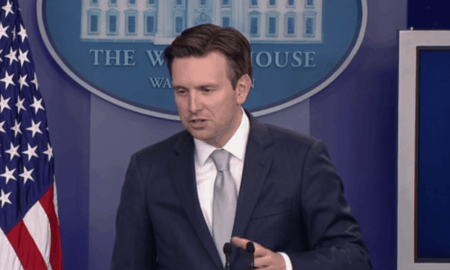
WASHINGTON — Reporter Kate C sat down for an exclusive interview with White House Press Secretary Joshua Earnest to get straight answers on U.S. involvement in Iraq.

Kate C: Thank you for sitting down with us today, Press Secretary Joshua Earnest.

Joshua Ernest: Please, call me Press Secretary Josh Earnest.

KC: Sure thing, Press Secretary Josh Earnest. Three U.S. troops have died in Iraq since 2014, the most recent being Navy SEAL Charles Keating IV in a firefight.

PSJE: Yes, terrible news for us here. Oh, and for everyone of course.

KC: But at Tuesday’s press conference you said U.S. troops “do not have a combat mission” in Iraq. Could you clarify “combat mission?”

PSJE: Excellent question. You’ll notice I use “quotation marks” a lot with my “hands” for this interview, but don’t pay too much “attention” to that.

KC: Got it. So the mission —

PSJE: You have to understand that “combat” and “mission” are just two words from a dictionary. What do they “really” mean? What are words even? Hard to say.

KC: Perhaps I should rephrase. It’s documented that our troops are coming under fire in Iraq. You said, “the relatively small number of U.S. service members that are involved in these operations are not in combat but are in a dangerous place.” What is the White House’s definition of “combat?”

PSJE: I like your use of “hand quotes” at the end there. See how it really looks like quotation “marks”?

KC: The definition of combat —

PSJE: My hands have been tied — I mean dry — lately so I use Aveeno “Active Naturals” in “Lavender.”

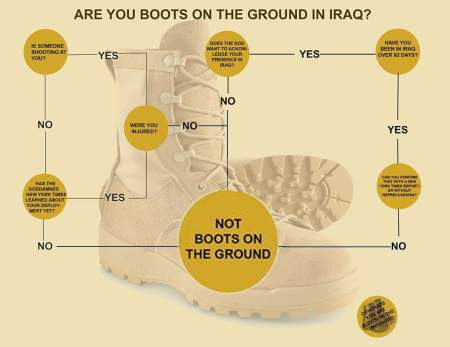
KC: Um, ok. Let’s move on to the number of “boots on the ground” in Iraq. President Obama announced a troop cap of 3,870 and this April it was raised to 4,087, but there are an estimated 5,000 there now, not including contractors.

PSJE: I’ve actually been working on a “flow chart” for this one.

boots-on-the-ground-flow-1

KC: I’m not sure you’re supposed to be showing anyone that.

PSJE: Look, it’s better to keep things murky until a major “news” paper makes a fuss about it. Discretion keeps our troops “safe” and the “enemy” on their “toes”. You want our troops “safe” don’t you?

KC: I’m not sure what’s happening right now, and I am actually more confused about U.S. involvement in Iraq than before this interview started. But thank you for your time?