Posted tagged ‘Iranian nukes’

Obama’s Ex-Secretary of Defense Doesn’t Believe He’ll Stop Iran from Getting The Bomb

May 7, 2016

Obama’s Ex-Secretary of Defense Doesn’t Believe He’ll Stop Iran from Getting The Bomb, Front Page Magazine, Daniel Greenfield, May 7, 2016

(The Bomb? What bomb?

–DM)

Panetta

Panetta isn’t Gates. He’s a career Democrat and a Clinton guy. He’s a conformist. He goes along. And yet he’s still making the admission.

As secretary of defense, he tells me, one of his most important jobs was keeping Prime Minister Benjamin Netanyahu of Israel and his defense minister, Ehud Barak, from launching a pre-emptive attack on Iran’s nuclear facilities. “They were both interested in the answer to the question, ‘Is the president serious?’ ” Panetta recalls. “And you know my view, talking with the president, was: If brought to the point where we had evidence that they’re developing an atomic weapon, I think the president is serious that he is not going to allow that to happen.”

Panetta stops.

“But would you make that same assessment now?” I ask him.

“Would I make that same assessment now?” he asks. “Probably not.”

Not news to anyone with any common sense. But probably a big admission within the echo chamber.

Rosen: Clear deception by Rhodes, Obama administration to sell Iran nuclear deal

May 7, 2016

Rosen: Clear deception by Rhodes, Obama administration to sell Iran nuclear deal, Fox News via YouTube, May 7, 2016

Iran Renews Commitment to Jihad Against Israel

May 4, 2016

Iran Renews Commitment to Jihad Against Israel

BY:
May 3, 2016 1:44 pm

Source: Iran Renews Commitment to Jihad Against Israel

Senior Iranian leaders on Tuesday renewed their commitment to violent resistance against Israel during meetings with top leaders of the Islamic Jihad terror group, according to recent remarks.

Ali Larijani, the speaker of Iran’s parliament, held a Tuesday meeting in Tehran with Ramadan Abdullah, secretary general of the Islamic Jihad group. Following the powwow, Larijani affirmed Iran’s commitment to the terrorist fight against Israel.

“Intifada is an important opportunity for Palestine and you should endeavor to keep this stream alive and God will help you on the path of Intifada until victory,” Larijani was quoted as saying in the country’s state-controlled press.

The Islamic Jihad leader reportedly thanked the Iranian official and claimed that “Intifada is the only way for Palestinians to gain freedom and get rid of their cumbersome situation,” according to the report.

Ali Shamkhani, the secretary Iran’s Supreme National Security Council, offered similar comments on Monday supporting resistance against Israel.

“All advocates of the Palestinian cause worldwide now share the view that the only way to victory and restoration of the Palestinians’ rights is to rely on people’s determination to continue Islamic resistance,” Shamkhani was quoted as saying after his own meeting with Abdullah.

Obama Admin Withholding Details of ‘Potentially Illegal’ Deal to Buy Iranian Nuke Materials

April 27, 2016

Obama Admin Withholding Details of ‘Potentially Illegal’ Deal to Buy Iranian Nuke Materials, Washington Free Beacon, April 27, 2016

"part
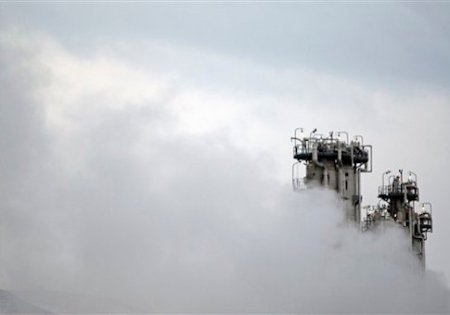
Part of Arak heavy water nuclear facilities is seen, near the central city of Arak, 150 miles southwest of the capital Tehran / AP

Officials from both the Treasury and Energy departments told the Free Beacon that details about the payment are being withheld until the purchase is complete. Iran is expected to deliver the heavy water to the United States in the “coming weeks,” officials confirmed.

**********************************

Obama administration officials are declining to provide specific details about an unprecedented upcoming purchase of Iranian nuclear materials, an $8.6 million exchange that is likely to be funded using American taxpayer dollars, according to conversations with multiple administration officials and sources in Congress.

The administration is preparing to purchase from Iran 32 tons of heavy water, a key nuclear material, in a bid to keep Iran in compliance with last summer’s comprehensive nuclear agreement.

But administration officials have declined to provide specific details to Congress and reporters about how exactly it will pay for the purchase, as well as other information, until the deal has been completed.

The effort to withhold key information about the purchase, which is likely to be paid in some form using U.S. taxpayer dollars, is causing frustration on Capitol Hill, according to multiple sources who disclosed to the Washington Free Beacon that the administration is rebuffing congressional attempts to discern further information about the deal.

Experts further disclosed to the Free Beacon that the exchange is likely to legitimize Iran’s research into plutonium, knowledge that would provide the Islamic Republic with a secondary pathway to a nuclear weapon capability.

Officials from both the Treasury and Energy departments told the Free Beacon that details about the payment are being withheld until the purchase is complete. Iran is expected to deliver the heavy water to the United States in the “coming weeks,” officials confirmed.

“We cannot discuss details of the payment until after the purchase is complete,” a Treasury Department official who was not authorized to speak on record told the Free Beacon. “The Department of Energy’s Isotope Program plans to pay Iran approximately $8.6 million dollars for 32 metric tons of heavy water.”

The administration will use an offshore third party to facilitate the transfer of cash to Iran, according to officials in both the Treasury and Energy departments.

“Regardless of whether or not this is in U.S. dollars, this licensed transaction is limited in scope. This routing through third-country financial institutions is similar to the mechanism that has been used for years to allow other authorized transactions—such as for exports of food and medicine—between the United States and Iran,” the treasury official said, referencing a loophole in U.S. sanctions that permits transactions of a humanitarian nature.

An Energy Department official confirmed that officials “cannot discuss details of the payment until after the purchase is complete.”

The exchange is being handled by the Energy Department’s Isotope Program, which routinely conducts transactions of this nature, according to the official.

“DOE’s Isotope Program produces and distributes a variety of isotopes that are in short supply for industrial and medical purposes,” an Energy Department official told the Free Beacon. “Transactions like this one are regular business for the program.”

Iran’s excess heavy water “will help to fulfill a substantial portion of U.S. domestic market demand this year,” according to the official, who said that “over the past few years, there have often been constrained supplies of heavy water.”

The administration further “expects to resell the purchased heavy water at commercially reasonable prices to domestic commercial and research buyers, including Oak Ridge National Laboratory’s Spallation Neutron Source, where it would be used to increase the efficiency of the facility,” the source said.

Congressional critics of the arrangement accuse the administration of using this sale as part of a larger plan to help Iran gain access to the American financial system and U.S. dollar.

“Subsidizing Iran’s production of heavy water is a dangerous move,” Sen. Tom Cotton (R., Ark.) told the Free Beacon. “It stimulates Iran’s nuclear industry, opens the door to the use of U.S. dollars to facilitate Iranian trade and illicit financing, and provides U.S. tax dollars to the world’s top state sponsor of terrorism.”

Energy Secretary Ernest Moniz “is aware of these dangers, which is why he stressed that this is a one-time purchase,” said Cotton, the author of a new amendment that would block the administration from engaging in similar purchases with Iran in the future. “I want to hold him and President Obama to that vow, particularly in light of the many promises broken and redlines erased by this administration in the course of negotiating the Iran deal.”

Rep. Mike Pompeo (R., Kan.), a member of the House intelligence committee, accused the administration of funding Iran’s nuclear pursuits in contradiction of last summer’s agreement aimed at winding down Tehran’s nuclear ambitions.

“The Obama administration’s deal with the Mullahs in Tehran to purchase heavy water demonstrates a disturbing, potentially illegal, willingness of the administration to subsidize Iran’s nuclear program,” Pompeo told the Free Beacon. “This purchase allows the Iranians to offload previously unsellable product and it destigmatizes the act of doing business in Iran.”

Pompeo said it is irresponsible to pursue this deal without first providing lawmakers detailed information about whether Iran will directly receive taxpayer dollars.

“This purchase is being made without explanation as to how Iran will receive these funds or what steps the administration is taking to prevent what will almost certainly be U.S. taxpayer dollars from possibly being used to support terrorist activities, Syrian dictator Bashar al-Assad, or Iran’s ballistic missile program,” Pompeo said. “Of course, the reality is that once that money is in the hands of the Ayatollah, there is no way to prevent the funds from being diverted toward any of those purposes—a fact that seems to concern no one at the White House.”

A larger debate has been taking place in Washington over Iranian and European demands that the United States grant Iran access to dollars, a move the administration has publicly opposed and promised Congress would not take place.

However, sources indicate that the heavy water exchange could be the first sign that the administration is caving on this promise.

 Mark Dubowitz, head of the Foundation for Defense of Democracy’s Center on Sanctions and Illicit Finance, told theFree Beacon that Iran is producing excess nuclear material in order to wring more cash from the nuclear deal.

“Iran has created a clever scheme—produce too much heavy water so as to break the nuclear agreement, then get the Obama administration and eventually U.S. companies to pay Tehran using the U.S. dollar to get rid of it,” Dubowitz explained. “These U.S. subsidies will help Tehran perfect its heavy water production skills so it will be fully prepared to develop its plutonium bomb-making capabilities when restrictions on the program sunset over the next 10-15 years.”

“This scheme also will open the door to further dollarized transactions as the administration green-lights the greenback for a regime with a decades-long rap sheet of financial crimes,” he added.

A senior congressional source familiar with the trade disclosed that administration officials are declining to disclose key details about the deal.

“The administration is being coy about how the financial mechanics of this deal will work,” the source told the Free Beacon. “But the bottom line is that U.S. taxpayer dollars will be used, and used for a purchase directly connected to Iran’s nuclear program. This is an attempt by the administration to slowly open a door that leads to the wide acceptance of Iran’s nuclear industry and to the use of U.S. dollars by Iran to conduct trade.”

“Many in Congress—on both the Republican and Democratic sides—won’t stand for that, and will move to shut that door tightly,” the source said.

Obama’s Double Standard Toward Netanyahu

April 26, 2016

Obama’s Double Standard Toward Netanyahu, The Gatestone InstituteAlan M. Dershowitz, April 26, 2016

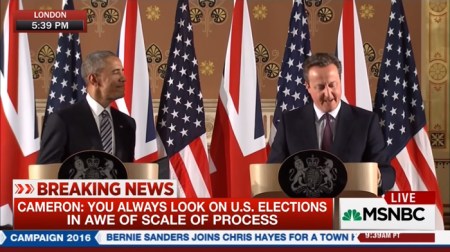
As President Obama winds up his farewell tour of Europe, it is appropriate to consider the broader implications of the brouhaha he created in Great Britain. At a joint press conference with Britain Prime Minister, David Cameron, President Obama defended his intrusion into British politics in taking sides on the controversial and divisive Brexit debate. In an op-ed, Obama came down squarely on the side of Britain remaining in the European Union — a decision I tend to agree with on its merits. But he was much criticized by the British media and British politicians for intruding into a debate about the future of Europe and Britain’s role in it.

Obama defended his actions by suggesting that in a democracy, friends should be able to speak their minds, even when they are visiting another country:

“If one of our best friends is in an organization that enhances their influence and enhances their power and enhances their economy, then I want them to stay in. Or at least I want to be able to tell them ‘I think this makes you guys bigger players.'”

Nor did he stop at merely giving the British voters unsolicited advice, he also issued a not so veiled threat. He said that “the UK is going to be in the back of the queue” on trade agreements if they exit the EU.

1562UK Prime Minister David Cameron and US President Barack Obama take a question at a press conference, on whether it is appropriate for Obama to say whether or not the UK should remain in the European Union, April 22, 2015.

President Obama must either have a short memory or must adhere to Emerson’s dictum that “foolish consistency is the hobgoblin of little minds.” Recall how outraged the same President Obama was when the Prime Minister of a friendly country, Benjamin Netanyahu, spoke his mind about the Iran Deal.

There are, of course, differences: first, Israel has a far greater stake in the Iran Deal than the United States has in whatever decision the British voters make about Brexit: and second, Benjamin Netanyahu was representing the nearly unanimous view of his countrymen, whereas there is little evidence of whether Americans favor or oppose Brexit in large numbers.

Another difference, of course, is that Obama was invited to speak by Cameron, whereas, Netanyahu was essentially disinvited by Obama. But under our tripartite system of government — which is different than Britain’s Unitary Parliamentary system — that fact is monumentally irrelevant. Netanyahu was invited by a co-equal branch of the government, namely Congress, which has equal authority over foreign policy with the president and equal authority to invite a friendly leader. Moreover, not only are the British voters divided over Brexit, but Britain’s Conservative Party itself is deeply divided. Indeed, the leading political figure in opposition to Britain remaining in the European Union is a potential successor to Cameron as leader of the Conservative Party. So these differences certainly don’t explain the inconsistency between Obama’s interference in British affairs and his criticism of Netanyahu for accepting an invitation from Congress to express his country’s views on an issue directly affecting its national security.

So which is it, Mr. President? Should friends speak their minds about controversial issues when visiting another country, or should they keep their views to themselves? Or is your answer that friends should speak their minds only when they agree with other friends, but not when they disagree? Such a view would skew the market place of ideas beyond recognition. If friends should speak about such issues, it is even more important to do so when they disagree.

A wit once observed that “hypocrisy is the homage vice pays to virtue.” It is also the currency of diplomacy and politics. That doesn’t make it right.

The President owes the American people, and Benjamin Netanyahu, an explanation for his apparent hypocrisy and inconsistency. Let there be one rule that covers all friends — not one for those with whom you agree and another for those with whom you disagree. For me the better rule is open dialogue among friends on all issues of mutual importance. Under this rule, which President Obama now seems to accept, he should have welcomed Prime Minister Netanyahu’s advocacy before Congress, instead of condemning it. He owes Prime Minister Netanyahu an apology, and so do those Democratic members of Congress who rudely stayed away from Netanyahu’s informative address to Congress.

OMRI CEREN: Analyze This,

April 22, 2016

OMRI CEREN: Analyze This, Power LineScott Johnson, April 22, 2016

Omri Ceren writes from The Israel Project with the latest development in our partnership with the Islamic Republic of Iran. Omri writes:

Heavy water is a relatively rare form of water that is used to produce weapons-grade plutonium. The nuclear deal forbids Iran
from stockpiling more than 130 tonnes of heavy water at any given time.

But the Iranians have been overproducing. In February they violated the nuclear deal by going over the 130 ton cap, and they had to ship out their excess material to get back into compliance [a][b]. Instead of halting heavy water production in the aftermath of the violation, they continued producing and now may be in danger of violating the deal again.

So – per the Wall Street Journal this morning – the Obama administration will buy the heavy water from Iran in order to “safeguard its landmark nuclear agreement.” The Iranians will be saved from their own overproduction causing them to violate the deal. Some things to look out for:

1) The purchase will almost certainly involve dollars, and therefore indirect access to the U.S. financial system. The administration is refusing to clarify that:

U.S. law still bans Iran from entering the American financial system or conducting business in dollars. The Obama administration is deliberating ways to help Iran conduct dollarized trade without allowing it to directly access the U.S. system, according to U.S. officials. U.S. officials wouldn’t specify how the Department of Energy would pay Iran for the heavy water.

2) The money will almost certainly be taxpayer money, and it may be going to fund terrorism. Congress is trying to get answers on those questions from the administration:

The chairman of the House Foreign Relations Committee, Rep. Ed Royce (R., Calif.), wrote Mr. Moniz on April 18 to seek clarity on the terms of the deal. He specifically asked how the U.S. would pay for the heavy water and what guarantees the administration had that the funds wouldn’t be used by Tehran to fund its military or terrorist groups.

3) The Obama administration will be keeping alive a part of Iran’s nuclear program that can be turned around and used for producing nuclear weapons:

Some nuclear experts said the U.S. move comes close to subsidizing Iran’s nuclear program in a bid to keep the agreement alive. They said Tehran’s production of heavy water will remain a concern, especially when the constraints on its nuclear program are lifted after 10 to 15 years as part of the agreement. “We shouldn’t be paying them for something they shouldn’t be producing in the first place,” said David Albright, head of the Institute for Science and International Security, a Washington think tank.

4) The administration’s broader goal for the sale is to mainstream Iran’s nuclear program and encourage other countries to begin relying on Iran for nuclear materials. That’s not extrapolation. It’s their actual spin, which is already appearing elsewhere this morning in sympathetic articles: that thanks to this purchase, Iran’s nuclear program will no longer be an international pariah and other countries will begin purchasing nuclear material from Iran [c]. Those countries will potentially be beyond future U.S. pressure, should a future administration want to limit Iran’s heavy water production:

The U.S. hopes its initial purchase will give other countries the confidence to purchase Iran’s heavy water in the coming years… U.S. Energy Secretary Ernest Moniz said… “That will be a statement to the world: ‘You want to buy heavy water from Iran, you can buy heavy water from Iran. It’s been done. Even the United States did it.’”

[a] https://www.iaea.org/sites/default/files/gov-2016-8-derestricted.pdf
[b] http://www.reuters.com/article/us-iran-nuclear-idUSKCN0VZ2D1
[c] http://www.sciencemag.org/news/2016/04/us-goes-shopping-iran-s-nuclear-bazaar-will-buy-heavy-water-science

Video and Cartoon of the day

April 21, 2016

(Please see also, Obama in Riyadh: Iran nuclear deal sign of ‘strength, not weakness’. — DM)


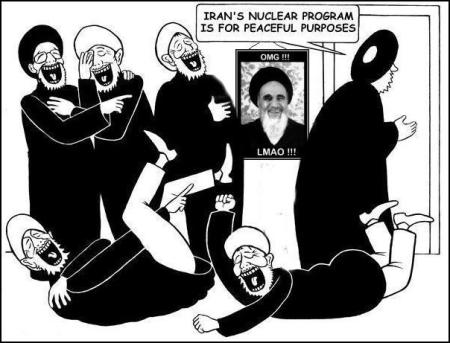
Peaceful Iran


Our World: Obama’s nuclear contrition

April 12, 2016

Our World: Obama’s nuclear contrition, Jerusalem Post, Caroline B. Glick, April 4, 2016

On Monday, State John Kerry visited Hiroshima. While there meeting with this G-7 counterparts, Kerry strongly hinted that his visit was a precursor to a visit to the site of the first nuclear bombing by President Barack Obama next month.

The irony of course is that for all his professed commitment to ridding the world of nuclear weapons, Obama is responsible for drastically increasing the chance of nuclear war. Indeed, Obama’s own actions lend easily to the conclusion that he wishes to do penance for America’s decision to attack Hiroshima and Nagasaki with nuclear bombs, (and so end World War II with far fewer dead than a land invasion of Japan would have required), by enabling America’s enemies to target the US and its allies with nuclear weapons.

Obama views his nuclear deal with Iran – the so-called Joint Comprehensive Plan of Action – as his greatest foreign policy achievement.

Unfortunately for his legacy building and for global security, for the past several weeks news stories have made clear that critics of Obama’s nuclear deal with Iran – who claimed that far from preventing Iran from acquiring nuclear weapons, the deal would enable Iran to develop them in broad daylight, and encourage Iran to step up its support for terror and regional aggression – were entirely correct.

All of the warnings sounded by Prime Minister Binyamin Netanyahu and other leaders have been borne out. All of the warnings sounded by the leaders of the Persian Gulf kingdoms were correct.

Every major commitment Obama made to Congress and to US allies in the wake of the deal have been shown in retrospect to have been false.

Obama told Congress that while the deal did require the US to drop its nuclear sanctions against Iran, the non-nuclear sanctions would remain in place. In recent weeks, media reports have made clear that the administration’s commitment to maintain non-nuclear sanctions on Iran has collapsed.

This collapse is most immediately apparent in the administration’s helpless response to Iran’s recent tests of ballistic missiles.

When Obama and his advisers sold the nuclear deal to Congress last summer, they promised that the binding UN Security Council resolution that Ambassador Samantha Power rushed to pass to anchor the nuclear deal maintained the previous UN ban on Iranian ballistic missile development.

This, it works out, was a lie. The resolution significantly waters down the language. Given the weak language, today the Russians convincingly argue that Iran’s recent tests of ballistic missiles did not violate the UN resolution.

Then and now, Obama and his advisers argued that ballistic missiles are not part of the mullahs’ nuclear project. This claim, which made little sense at the time, makes no sense whatsoever today.

Ballistic missiles of course are the Iranians’ delivery systems of choice for their nuclear warheads.

This fact was driven home last week when the Iranian media reported the opening of a high explosives factory in Tehran. Iranian Defense Minister Hossein Dehgan participated in the opening ceremony.

According to nuclear experts, HMX or octogen high explosives are suitable for building nuclear triggers. In other words, Tehran just built, in a very public manner, a new facility for its military nuclear program. As Iran’s Tasnim news service explained, HMX is a “high explosive used almost exclusively in military applications, including as a solid rocket propellant.”

Last week at his nuclear conference, Obama said that Iran has been abiding by the letter, but not the spirit of the nuclear deal. But this is another lie. Last summer Obama insisted that the deal would prevent Iran from developing and building nuclear weapons by imposing an intrusive, unlimited inspections regime on all of Iran’s nuclear sites.

But this was a lie. As Eli Lake noted in Bloomberg News last week, in contravention of Obama’s explicit commitments to Congress, Iran is refusing to permit UN nuclear inspectors access to its military nuclear sites.

Not only were UN inspectors barred last fall from visiting the Parchin nuclear military site where the Iranians are suspected of developing nuclear warheads. The UN’s International Atomic Energy Agency admitted recently that far from expanding its access to Iran’s nuclear sites, the deal severely limited it. Out of fear that Iran will walk away from the deal, the US is allowing Iran to block IAEA inspectors.

So while the US gave up its right to unlimited inspection of Iran’s nuclear installations, and consequently has little way of knowing what is happening inside them, the US stands back and allows Iran to develop the means to deliver nuclear warheads which the US cannot know whether or not Iran possesses because it cannot access Iran’s nuclear facilities.

But for Obama, none of this is a reason to stop canceling the sanctions on Iran’s nuclear program. Indeed, as Obama sees things, Iran’s non-compliance with the letter of the deal seems to be a reason to cancel the non-nuclear sanctions as well.

Take the dollarization of the Iranian economy.

Obama administration officials pledged to Congress that in the aftermath of the deal, Iran would remain barred from using US financial institutions and so barred from trading in the dollar.

Yet, in what Omri Ceren from the Israeli Project refers to as a “one-hop, two-hops” process, the administration is allowing Iran to use foreign banks to gain access to the US dollar and dollarize is transactions.

Following his visit to Hiroshima, Kerry traveled to the Persian Gulf where the US’s spurned Arab allies and commanders of the US navy’s Fifth Fleet demonstrated to him how Iran has been emboldened by the deal.

Since it was concluded, they noted, Iran has stepped up its support for terrorism and its regional aggression. The leaders of Saudi Arabia, Bahrain, the UAE and other states told Kerry that since the deal was concluded Iran’s support for terrorism and insurgencies has expanded in Yemen and Syria. Naval commanders reported on the four shipments of illicit Iranian arms the navy commandeered en route to Yemen.

Although slightly embarrassed, Kerry was unmoved. He merely maintained Obama’s line that Iran is keeping the letter of the agreement if ignoring its spirit. He insisted that there are moderates in the regime that support the deal – although they have no power.

Then, as The New York Times reported, Kerry said the US would “continue to lift the economic sanctions against Iran that it agreed to as part of the nuclear accord, even while imposing new ones to counter Tehran’s missile launches, an effort now underway at the UN Security Council.”

But again, Russia has blocked further sanctions against Iran. Moreover Russia is doubling down on its deal to sell advanced SU-30 fighters to the Iranian air force. With the S-30, Iran will be able to end Israel’s air superiority and threaten all of its neighbors in the Persian Gulf.

As to air forces, Iran’s Hezbollah proxy have inherited a US-trained one.

According to testimony Middle East expert Tony Badran gave before the House Foreign Affairs Committee last week, the Lebanese Military Forces, generously supported by the US, is now a junior partner to Hezbollah.

As Badran put it, “The partnership between the Lebanese Armed Forces (LAF) and Hezbollah has grown to such an extent that it is now meaningful to speak of the LAF as an auxiliary force in Hezbollah’s war effort.”

At Hiroshima Monday, Kerry and his fellow foreign ministers signed a declaration reaffirming their “commitment to seeking a safer world for all and to creating the conditions for a world without nuclear weapons.”

They went on to pat themselves on the back for their nuclear deal with Iran, which they insisted showed that the Nuclear Non-Proliferation Treaty – which the Iran deal effectively gutted – remains “the cornerstone of the international non-proliferation architecture.”

Several commentators have urged Obama not to visit Hiroshima. But really, what would it matter? Obama’s lies about his nuclear deal launched the world on a course where the worst regimes now know that all they need to do to get immunity for their aggression is to develop nuclear weapons while the Obama administration hectors US allies to deplete their own nuclear arsenals.

Visiting Hiroshima and symbolically apologizing for the US strikes that ended World War II would be far less devastating to the cause of international peace than the war Obama ensured by permitting the world’s most prolific sponsor of terrorism to acquire a nuclear arsenal.

Iran to Build High-Powered Explosives Used for Nuclear Arms

April 11, 2016

Iran to Build High-Powered Explosives Used for Nuclear Arms, Clarion Project, April 11, 2016

(Obama will act decisively by sending a letter to Khamenei explaining “that’s not who you are.” — DM)

Iran-Defense-Min-Gen-Hossein-Dehqan-IPIranian Defense Minister Brigadier-General Hossein Dehqan

The U.S. administration claimed the agreement would mean that Iran’s break-out timeline to build a nuclear weapon would be at least one year for the next 10 years. With a nuclear detonator in place, that timeline would become significantly shorter.

*********************

Three months after the nuclear agreement with Iran was implemented, Iran just announced that it would be producing a powerful explosive that could be used to detonate nuclear weapons.

Iranian Defense Minister Brigadier General Hossein Dehqan announced plans to build a plant which produces Octogen (also known as HMX — High-velocity military explosive) to improve the penetration and destructive power of missile payloads while increasing their precision.

“Concurrently with its efforts to increase the precision-striking power of its weapons systems, the defense ministry has also paid attention to boosting the destructive and penetration power of different weapons’ warheads and has put on its agenda the acquisition of the technical know-how to produce Octogen explosive materials and Octogen-based weapons,”  Dehqan said at the plant’s inauguration ceremony.

While Octogen can be used in non-nuclear applications, one of its main purposes is that of a detonator of atomic weapons. The production of the chemical does not violate the agreement, which failed to mention the issue of nuclear detonators, but raises a red flag concerning the timetable used to sell the agreement to Western countries.

The U.S. administration claimed the agreement would mean that Iran’s break-out timeline to build a nuclear weapon would be at least one year for the next 10 years. With a nuclear detonator in place, that timeline would become significantly shorter.

In addition, there is concern Iran will sell the explosive to any number of terrorist groups that the Islamic Republic supports. A 2004 report by The New York Times regarding the disappearance of 380 tons of HMX and RDX (rapid detonation explosive, another chemical explosive) from a Sadadam Hussein/al-Qaeda facility notes that HMX’s  “benign appearance makes it easy to disguise as harmless goods, easily slipped across borders,” and that it is “used in standard nuclear weapons design.”

The new effort by Iran is part of a strategy outlined by Iran’s Supreme Leader Ayatollah Ali Khamenei on March 20, the beginning of the Iranian new year, in which Khamenei called for a concerted effort to increase the country’s power to confront its enemies while at the same time helping its economy.

“The main issue is that the Iranian nation should be able to do something to bring its vulnerabilities to zero point, and we should have the art of using opportunities and turning threats into opportunities,” Khamenei said

Echoing that sentiment, Dehqan said at the time, “We should strengthen ourselves to the level that we can prevent failure and acquire victory over our enemies.”

Just the day before the opening of the HMX plant, Iranian Revolutionary Guards Corps (IRGC) Commander Major-General Mohammad Ali Jafari, announced, “For years, we have been building power on the presumption of a widespread war with the US and its allies, and have developed all our capacities and capabilities for decisive victories over such enemies.”

“Before political and diplomatic options, we have gotten prepared for a military option,” he continued.

Jafari also bragged that If there is a military confrontation, the U.S. will not be able “to do a damn thing” about it.

Report: US army building secret missile-proof base in Israel

April 7, 2016

Report: US army building secret missile-proof base in Israel, Israel National News, David Rosenberg, April 7, 2016

img682871US officers at missile battery near Tel Aviv Ziv Koren flash90

Iran’s recent ballistic missiles tests, which have led to concern and consternation in Israel, apparently have the United States military worried as well.

In late February the US military took part in a five day joint military exercise with Israel code named “Juniper Cobra”.

The central focus of the exercise was coordinating responses to a potential ballistic missile attack.

Since then, however, security officials have revealed that the US military has serious concerns about the possibility of missile attacks by Iran, Hezbollah, or Hamas, and is taking additional precautions to protect American assets in Israel.

Speaking to Walla News, these officials said the US is constructing a secret army base in central Israel.

The new base, which is being built in response to the Iranian missile threat, is reportedly designed to withstand ballistic missile attacks.

According to the report the base, which is already in advanced stages of construction, will be fully manned at all times and prepared for emergency situations.

The base is linked to the US army’s radar facility in Dimona.

In March Iran conducted a series of ballistic missile tests, the first since October 2015.

Iran’s ballistic missiles, which are capable of reaching Israel and can be fitting with nuclear warheads, have prompted partial American sanctions, with some American lawmakers calling for harsher measures to punish the Iranian regime.