Posted tagged ‘Iranian missiles’

Thinking About the Unthinkable: An Israel-Iran Nuclear War

August 23, 2015

Thinking About the Unthinkable: An Israel-Iran Nuclear War, Amerian Thinker, John Bosma, August 23, 2015

(We live in “interesting times.” — DM)

The signing of a Munich-class agreement with Iran that hands it more than it ever hoped to pull off represents a shocking, craven American capitulation to an apocalyptic crazy state: a North Korea with oil. Nothing in Western history remotely approaches it, not even Neville Chamberlain’s storied appeasement of another antisemitic negotiating partner.

But it also augurs the possibility of a nuclear war coming far sooner than one could have imagined under conventional wisdom worst-case scenarios. Following the US’s betrayal of Israel and its de facto detente with Iran, we cannot expect Israel to copy longstanding US doctrines of no-first-nuclear-use and preferences for conventional-weapons-only war plans. After all, both were premised (especially after the USSR’s 1991 collapse) on decades of US nuclear and conventional supremacy. If there ever were an unassailable case for a small, frighteningly vulnerable nation to pre-emptively use nuclear weapons to shock, economically paralyze, and decapitate am enemy sworn to its destruction, Israel has arrived at that circumstance.

Why? Because Israel has no choice, given the radical new alignment against it that now includes the US, given reported Obama threats in 2014 to shoot down Israeli attack planes, his disclosure of Israel’s nuclear secrets and its Central Asian strike-force recovery bases, and above all his agreement to help Iran protect its enrichment facilities from terrorists and cyberwarfare – i.e., from the very special-operations and cyber forces that Israel would use in desperate attempts to halt Iran’s bomb. Thus Israel is being forced, more rapidly and irreversibly than we appreciate, into a bet-the-nation decision where it has only one forceful, game-changing choice — early nuclear pre-emption – to wrest back control of its survival and to dictate the aftermath of such a survival strike.

Would this involve many nuclear weapons? No – probably fewer than 10-15, although their yields must be sufficiently large to maximize ground shock. Would it produce Iranian civilian casualties? Yes but not as many as one might suppose, as it would avoid cities. Most casualties would be radiological, like Chernobyl, rather than thermal and blast casualties. Would it spur a larger catalytic nuclear war? No. Would it subsequently impel Russia, China and new proliferators to normalize nuclear weapons in their own war planning? Or would the massive global panic over the first nuclear use in anger in 70 years, one that would draw saturation media coverage, panic their publics into urgent demands for ballistic missile self-defense systems? Probably the latter.

The Iranian elite’s ideology and controlling political psychology is inherently preferential towards nukes and direct population targeting as a way to implement Shi’ite messianism and end-times extremism. Iran is a newly nuclear apocalyptic Shi’ite regime that ranks as the most blatantly genocidal government since the Khmer Rouge’s Sorbonne-educated leaders took over Cambodia in April, 1975. Senior Iranian officials have periodically tied nuclear war to the return of the Twelfth Imam or Mahdi, which Iran’s previous president anticipated within several years. This reflects not just the triumphalist enthusiasm of a new arriviste nuclear power that just won more at the table than it dared to dream. It also reflects a self-amplifying, autarchic end-days theology that is immune to both reality testing and to Western liberal/progressive tenets about prim and proper nuclear behavior.

Admittedly, Iranian leaders have lately resorted to envisioning Israel’s collapse in more restrained terms through Palestinian demographic takeover of the Israeli state and asymmetric warfare. Still there remains a lurid history of Iranian officials urging the elimination of Israel and its people, of allocating their nukes to Israeli territory to maximize Jewish fatalities, of Iranian officials leading crowds in chants of “Death to Israel!” Iran’s government also released a video game allowing players to target various kinds of Iranian ballistic missiles against Israeli cities – this as part of intensive propaganda drumming up hatred of Jews. A more recent video game envisions a massive Iranian ground army marching to liberate Jerusalem. In all, Iran’s official stoking of genocidal Jew hatred is far beyond what Hitler’s government dared to advocate before the 1939 outbreak of World War 2.

The deliberate American silence over Iran’s genocidal intentionality sends an unmistakable signal to Israel that the US no longer recognizes a primordial, civilizational moral obligation to protect it from the most explicit threats imaginable. It is truly on its own, with the US in an all-but-overt alliance with its worst enemy. The shock to Israel’s leaders of this abrupt American lurch into tacitly accepting this Iranian intentionality cannot be understated. Iran is violating the core tenets of the 1949 Geneva Conventions, a US initiative after the Tokyo and Nuremberg war-crimes trials to codify genocide as a crime against humanity. Now the US is silent.

But this shift is also recent. Every US government prior to President Obama would have foresworn nuclear talks with such a psychopathic regime or would have walked out in a rage upon such utterances. Yet Iran’s genocidal threats have had no discernible effect on Obama’s canine eagerness for a deal. It’s as if 75 years ago a US president had cheerfully engaged in peace talks with Hitler and his SS entourage despite learning the details of the Nazis’ secret Wannsee Conference where Hitler signed off on the Final Solution for the Jews. But whereas Hitler had the sense in that era to keep that conclave secret, Iran’s Wannsee intentionality toward Israel and world Jewry has for years been flamboyantly rude-and-crude and in-your-face. That this Iranian advocacy of a second Holocaust drew no objection from the US negotiators of this deal should make moral pariahs out of every one of them – including our president and Secretary of State.

These two factors alone, especially the abrupt evaporation of the US’s ultimate existential bargain with Israel through Obama’s de facto alliance with the mullahs, would drive Israel to the one attack option it can unilaterally use without running short of munitions and experiencing the massive US coercion embedded in that dependence. But there are other reasons why early Israeli nuclear pre-emption is not only justified but almost mandatory.

First, it is too late to stop Iran’s bomb-making momentum with conventional weapons or sanctions. That nation’s science and technology base is robust and improving. It has learned to domestically produce high-performance gas centrifuges whose uranium gas output is such that smaller numbers of them are needed for breakout. The US spent decades and many billions at labs like Oak Ridge National Laboratory on composites, software-controlled magnetic bearings, gas flow separations, thermal controls and ultra-precision manufacturing for these thin-wall, very-high-speed devices. Yet Iran has come up the centrifuge learning curve with surprising speed. Its metallurgists are familiar with a novel aluminum forging method that may yield nanophase aluminum shells so strong that they approach the centrifugal strength usually associated with more demanding composite-shell gas centrifuges. Also, Iran’s bomb engineering and physics can tap the sophisticated bomb designs and re-entry vehicle (RV) skills of North Korea, which is reducing the weight and mass of its H-bombs to fit on ballistic missiles and whose collaboration with Iran reportedly included Iranian technicians at North Korean bomb tests.

Other technology sources in the Nuclear Bombs R Us cartel for wannabe proliferators set up by rogue nuclear scientist A.Q. Khan of Pakistan include China, Russia and Pakistan. Worst of all, under the US-Iran deal, Iran’s ballistic missiles can improve their reliability, accuracy, throw-weight and their post-boost RV-release thrusters.

Second, Iran’s underground nuclear targets are likely harder than American and Israeli hard-target munition (HTM) developers have assumed. Why? Because Iranian engineers have perfected the world’s toughest concrete, developing mixtures using geopolymers, quartz powders (called fume) and metal and ceramic fibers. The result is hardness levels reportedly up to 50,000-60,000 psi in experimental samples. This means that even shallow “cut and cover” hard targets like the Natanz centrifuge enrichment plant, an armored complex in an excavated pit that is then covered, can resist destruction by the US’s most lethal hard-target bomb: the 30,000-lb “Massive Ordnance Penetrator.” Only the B-2 and the B-52 can carry the MOP. Yet while the MOP can penetrate ~200 ft into 5000-psi targets, it only reaches 25 feet into 10,000-psi concrete – and Iranian cement for new or up-armored underground bunkers has likely progressed well beyond that.

US and Israeli HTM alternatives include staged-warhead penetrators and – high on the wish list – novel energetic chemistries with orders-of-magnitude more power than current HTMs. Tactical HTMs with up to four sequential warheads use precursor warheads to blast an initial opening for larger follow-through charges to destroy tanks, fortifications and bridge piers. But these impact at slow speeds compared to what’s needed to kill deep hard targets. The latter need superhard casings (probably single-crystal metals) and packaging to keep their sequenced charges intact during violent impacts of thousands of feet/second (fps). One benchmark is the Department of Energy’s Sandia lab’s success years ago in firing a simulated hard-target RV into rock at 4400 fps. Similarly, reactive-material (RM) munitions and next-generation HEDM (high-energy-density material) explosives and energetic chemistries with orders-of-magnitude more power look promising for the future. But these require years of iterative fly-redesign-fly testing to assure they’ll survive impact with their deep targets.

Bottom line: with even the US’s best non-nuclear HTMs marginal against Iran’s critical deep targets, Israel’s HTMs probably wouldn’t do the job either, being lower in kinetic energy on target. Alternatives like using HTMs to destroy entrances to such targets and ventilation shafts may work – but unless Iranian military power and recovery are set back months or years, this damage would be repaired or worked round. Moreover, nuclear facilities tunneled into mountains would be almost impossible to destroy with conventionals.

Still, the brains behind Iran’s nuclear bomb, missile and WMD is concentrated in soft targets like the Iranian universities run by the IRGC (Iran Revolutionary Guard Corps), custodian of the bomb program). These can be hit by conventionals under a Peenemunde targeting strategy to kill as many weapon scientists and technicians as possible. (This recalls Prime Minister Winston Churchill’s directive for British bombers to target the residential housing on the small Baltic island where Hitler had sited his V-2 rocket program.) Alternatively, conventional or nuclear EMP (electromagnetic pulse) or HPM (high-power microwave) weapons could destroy for months all the computers and communications that support university-hosted bomb work. This would keep these scientists and surrounding urban populations alive.

Third, Obama’s decision to provide Iran “training courses and workshops to strengthen Iran’s ability to prevent, protect and respond to nuclear security threats, including sabotage, to nuclear facilities and systems as well as to enable effective and sustainable nuclear security and physical protection systems” is the clearest indicator that this accord is aimed squarely at Israel. Why? It eliminates the sole option Israel has left now that it lacks the US-supplied conventional HTMs to destroy unexpectedly hard deep targets, forcing it at best into a slow-motion conventionals-only campaign. This would expose it to brutal political and military blowback by Iran and its Chinese, Russian and European suppliers – and by an enraged American president. In essence, it appears that the Obama regime has under the accord deliberately stripped Israel of every option except nuclear pre-emption – which Obama, in typically liberal-progressive fashion, assumes would never happen. Ergo, Israel would be forced to accommodate Iranian military supremacy.

Fourth, what may drive an early Israeli nuclear attack are two considerations: (a) Russian S-300 ATBM/SAMs (anti-tactical ballistic missile/surface-to-air missile) in Iranian hands; and (b) Hezb’allah’s thousands of missiles. Russia’s agreement to supply Iran four batteries of its fearsome S-300 by late August for defending priority targets would make it very difficult for Israel to mount the complex precision bombing strategies needed for tough targets. The S-300, the world’s best, can knock down high-speed aircraft from near ground level to almost 100,000 feet. It can also engage some ballistic missiles.

Meanwhile, Hezb’allah’s arsenal of more than 60,000 rockets (by some estimates) is a much greater threat to Israel, especially its air force, than is appreciated. Hezb’allah has retrofitted an unknown fraction of these missiles, whose range now covers almost all of Israel, with GPS and precision guidance, allowing them to hit critical targets. Unfortunately, Israel’s Iron Dome and David’s Sling interceptors were designed on the assumption that most incoming missiles would be inaccurate and so the interceptors could be saved only for those approaching critical targets. The result? Hezb’allah rocket campaigns targeting Israeli airbases and other military targets could quickly run Israel out of interceptors. Iran could easily order such a campaign to throw Israel off balance as it focuses on the deadly US-abetted nuclear threat from Iran.

An Israeli nuclear pre-emption is thus eminently thinkable. Every other option has been stripped away by Obama’s decision, concealed from Israel, Congress and our allies until it was too late to challenge, to let Iranian bomb-making R&D run free and to harden Iran’s bomb-making infrastructure against Israel – while imposing lethal restrictions on Israeli countermeasures and forswearing any US and allied military attacks, such as B-2’s and B-52’s dropping MOP bombs.

The die is now cast. Nuclear pre-emption becomes attractive to a nation in extremis, where Israel is now:

…Israel needs to impart a powerful, disorganizing shock to the Iranian regime that accomplishes realistic military objectives: digging out its expensive underground enrichment plants, destroying its Arak plutonium reactor and maybe Bushehr in the bargain, killing its bomb and missile professionals, scientists and technicians, IRGC bases, its oil production sites, oil export terminals and the leaders of the regime where they can be found.

…its initial strike must move very fast and be conclusive within 1-2 hours, like the Israeli air attack opening the 1967 Six-Day War. The goal is to so stun the regime that Israel controls the first and subsequent phases of the war and its ending. This means that Israel must hit enough critical targets with maximum shock – and be willing to revisit or expand its targets – so as to control blowback and retaliation from Iran’s allies. In essence, this involves a very fast-paced Israeli redesign of the Middle East in the course of a nuclear war for survival.

…what is poorly appreciated is that nuclear weapons from 10 to 300 kilotons (KT) – depending on accuracy – can destroy deep hard targets to 200+ meters depth by ground coupling if they penetrate merely 3 meters into the ground (Effects of Nuclear Earth Penetrators and Other Weapons: National Research Council / National Academy Press, 2005, pp. 30-51). Israel could lower bomb yields or achieve deeper target kills by its reported tests of two-plane nuclear attacks in which the first plane drops a conventional HTM like a GBU-28 to open up a channel; the second plane drops its tactical nuclear bomb into that ‘soft’ channel for greater depth before bursting. This unavoidably would produce fallout on cities downwind. Fortunately, the same medical countermeasures used for radiological accidents (Chernobyl accidents, etc.)  – potassium iodide pills (available domestically from www.ki4u.com) – can be airdropped for use by exposed urbanites.

…the more important objective, however, is decapitation and economic paralysis by EMP and HPM effects that destroy all electronic, electrical and electromechanical devices on Iranian territory. While a high-altitude nuclear burst would affect most of Iran’s territory, it may not be necessary if smaller, lower-altitude weapons are used.

…A small number of nuclear weapons (10-15?) may suffice: one each for known underground hard targets, with one held in reserve pending bomb-damage assessments; several low-yield bombs for above-ground bomb-related depots; and low-yield neutron weapons to hit IRGC and regime targets while avoiding blast and fallout. Reactors can be hit with conventional HPM pulse weapons to burn out electrical, electronic and electromechanical systems for later reactor destruction by Special Forces. A targeting priority (using antipersonnel conventionals) would be university-hosted bomb/missile scientists.

…Israeli F-15s and F-16s provide the most accurate delivery for the initial phase – assuming that the S-300 batteries can be decoyed, jammed or destroyed (where Israeli air force experience is unmatched). The small stock of Jericho-2 ballistic missiles probably would be held in reserve. They can’t be used against buried targets unless their re-entry vehicles (RVs) are fitted with penetrator casings and decelerators like ribbon parachutes (used to slow down US test RVs for shallow-water recovery at Pacific atolls) to avoid disintegrating on impact. (Both methods require flight-testing, which is detectable.) Israel’s Dolphin subs in the Red Sea and Indian Ocean can launch nuclear or (probably) conventional cruise missiles with cluster munitions for IRGC targets.

The final issue is how Israeli and US leaders would operate in these conditions. An Israeli decision to go nuclear would be the most tightly held decision in history, given the prospect of out-of-control blowback by our current president if that was leaked. Still, Israel sees itself being driven into a Second Holocaust corner, possibly within weeks as the S-300s begin deploying around Iran’s nuclear targets. Once it decides nukes are its only way out, it would simulate and map out all possible event chains and surprises once it launches. Unavoidably, it would also have to decide what to do if it learns the US is feeding its pre-launch mobilization information to Iran, using its electronic listening posts and missile-defense radars in the region. It may have to jam or destroy those US sites.

For the US, however, this no-warning nuclear war would land like a thunderbolt on an unprepared White House that would likely panic and lash out as Obama’s loudly touted “legacy” goes up in smoke. The characteristic signatures of nuclear bursts would be captured and geolocated by US satellite. The commander of NORAD (North American Aerospace Defense Command) under Cheyenne Mountain in Colorado Springs would call the White House on the famous red phone. (As one of the few civilians who sat through a red phone alert at NORAD in July 1982, after a Soviet missile sub launched two test missiles off the Kamchatk Peninsulaa, I can testify it is a frightening experience for which nothing prepares you.) Given the psychology of our current president and his emotional investment in his Iran deal, what might follow could challenge the military chain of command with orders that previously were unthinkable.

Now retired, John Bosma draws on a 40-year background in nuclear war-gaming and strategic arms control (SALT 1 and 2, Soviet arms-racing and SALT violations, US force upgrades) at Boeing Aerospace (1977-1980); congressional staff and White House experience (1981-1983) in organizing the “Star Wars” ballistic missile defense (BMD) program and proposing its “defense-enforced strategic reductions” arms-control model adopted by the Reagan State Department; military space journalism (1984-1987); and technology scouting in conventional strategic warfare, rapid (1-2 hours) posture change in space, novel BMD engagement geometries with miniature air-launched interceptors, counter-WMD/terrorism, naval BMD and undersea warfare. Clients included DARPA (Defense Advanced Research Projects Agency), the Missile Defense Agency, the Office of Secretary of Defense (OSD) Advanced Systems and Concepts Office, the Navy and the  He follows Israeli forces and BMD and has studied Iran’s nuclear R&D programs. All of his work is open-source
 

Iran to Stage Ballistic Missile Maneuver Soon: Commander

August 21, 2015

Iran to Stage Ballistic Missile Maneuver Soon: Commander, Tasnim News Agency, August 21, 2015

13930122190429352508783

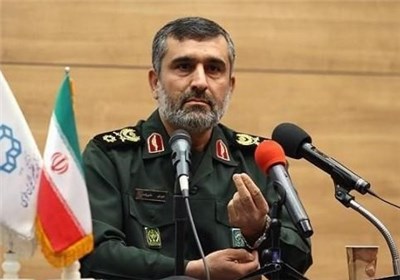
(Tasnim) – Commander of the Islamic Revolution Guards Corps (IRGC) Aerospace Force Brigadier General Amir Ali Hajizadeh announced on Friday that the country plans to hold a ballistic missile maneuver in the near future.

In a speech in the northern city of Qaem Shahr on Friday, Brigadier General Hajizadeh rejected as untrue some claims that the IRGC has halted the ballistic missile program over the past two years, saying that missile tests are on the agenda.

“Such measures (war games and ballistic missile tests) are on the agenda and huge successes have been achieved over the past two years,” the commander stressed.

He further pointed to the IRGC’s plan to stage a massive war game to test-fire ballistic missiles in the near future, adding that its details will be announced soon.

Earlier this month, Chief of Staff of the Iranian Armed Forces Major General Hassan Firouzabadi underlined that the country’s missile tests will be carried out on schedule, according to plans endorsed by Supreme Leader of the Islamic Revolution Ayatollah Seyed Ali Khamenei.

During the nuclear negotiations between Iran and the Group 5+1 (Russia, China, the US, France, Britain and Germany), the United States and its allies exerted pressure on Iran over its military capabilities.

Iran, however, said it would only discuss its nuclear program as its missiles are solely employed as a deterrent against any potential foreign aggression.

Since the successful conclusion of the nuclear negotiations in Vienna on July 14, Iranian officials have time and again stressed that the country’s military capabilities would not be affected by the finalized text of the nuclear agreement- known as the Joint Comprehensive Plan of Action (JCPOA)- or a resolution that the United Nations Security Council passed later to endorse the JCPOA.

Netanyahu: ‘You Rush to Embrace Iran, They Fire Rockets at Us’

August 21, 2015

Netanyahu: ‘You Rush to Embrace Iran, They Fire Rockets at Us’, Israel National News, August 21, 2015

The attack ordered by Iran comes after a report in April, when  Iranian officials reportedly told the Syrian regime to strike Israel and open a war front on the Golan Heights.

**************************

PM warns ‘we’ll harm those who try to harm us,’ slams world powers for nuclear deal after ‘Iranian commander ordered rocket strike.’

Prime Minister Binyamin Netanyahu released a statement on Friday, shortly after the IDF airstrike that took out the Islamic Jihad terror cell backed by Iran that launched four rockets into Israel from Syria the day before.

“I said this week that those who try to harm us – we will harm them. And that’s what we did,” said the prime minister.

“The IDF struck the cell that conducted the (rocket) fire, and the Syrian forces that enabled it. We don’t intend to escalate the incidents, but our policy remains as it was,” he said. At least 14 targets were hit by the IDF overnight, including a strike on an army post which Syria said killed one soldier.

Turning his attention to the IDF reports that Iranian military sources funded and directed the Islamic Jihad cell, Netanyahu condemned the world powers that sealed a nuclear deal with Iran just last month and are now advancing economic trade and diplomatic ties.

“The countries that rush to embrace Iran need to know that an Iranian commander is the one who gave the cover and direction to the cell that fired on Israel,” he said.

As noted by Netanyahu, the one who gave the order for the rocket strike was said to be the head of the Palestinian department in Iran’s Al-Quds force, the covert foreign operations unit of the Iranian Revolutionary Guards.

Netanyahu on Friday ordered the Foreign Ministry to send an official letter to Western governments, saying Israel has “reliable information that this attack was carried out by the Palestinian Islamic Jihad, ordered directly by the Iranian terrorist Said Izadhi of the Iranian Revolutionary Guards.”

“This is further clear indication of Iran’s increasing involvement in attacks against Israel in particular and against regional targets in general. The ink on the nuclear agreement has not yet dried, and this attack shows clearly how Iran plans to act the moment after the international sanctions are removed.”

The attack ordered by Iran comes after a report in April, when  Iranian officials reportedly told the Syrian regime to strike Israel and open a war front on the Golan Heights.

The four rockets fired on Galilee came from the new Iranian terror front on the Golan

August 20, 2015

The four rockets fired on Galilee came from the new Iranian terror front on the Golan, DEBKAfile, August 20, 2015

Netanyahu_northern_border_B_18.8.15Israel leaders at Northern Command HQ this week

According to our military sources, it is this Iranian-backed network which Thursday, Aug. 20, fired a salvo of four rockets from the Golan into upper Galilee and the Golan. The impact set off brush fires but caused no casualties. A red alert had sent most people running to shelters.

****************

Israel’s top government and military went on a high level of preparedness Tuesday, Aug. 18 in expectation of the first terrorist attack to be orchestrated by Iran from Syrian or Lebanese borders. That is what brought Prime Minister Binyamin Netanyahu, Defense Minister Moshe Ya’alon and Chief of Staff Lt. Gen. Gady Eisenkott on a tour of inspection to the Golan and Northern Command headquarters. Netanyahu said then that Israel is ready for any scenario and would “harm anyone trying to harm us.”

DEBKAfile’s military sources report that these events were sparked by the knowledge reaching Israeli intelligence that Iranian Al Qods and Hizballah officers were building a new terrorist network for mounting large-scale terrorist attacks on Israel from the Syrian border opposite the Golan.

The officers had handed out anti-tank and anti-air rockets to the terrorists, raising Israeli suspicions that one of their plans was to seize an Israeli location or part of one and try and hold out against an Israeli counter-offensive of tanks and assault helicopters.

Our counter-terrorism sources disclose that three radical terrorist movements staff the new network:

One is the hard-line rejectionist Popular Front for Liberation of Palestine – General Command (PFLP-GC).

Another is the Golan-based Syrian Druze group known as Liberators of the Golan. It is headed by the notorious Samir Kuntar, a Lebanese Druze who has set up a Golan terror ring based in the Druze village of Al-Khadar opposite the Israeli border fence.

Also harnessed to Iran’s new Golan terror organization is the Syrian Social Nationalist Party (SSNP) which is made up of radical Christian terrorists. This old timer violent group, which is run by Syrian intelligence, took part in the 1982-3 Hizballah bombing massacres at the US Embassy and Marine headquarters in Beirut.

The first SSNP activists have arrived in the Quneitra district of the Golan.

According to our military sources, it is this Iranian-backed network which Thursday, Aug. 20, fired a salvo of four rockets from the Golan into upper Galilee and the Golan. The impact set off brush fires but caused no casualties. A red alert had sent most people running to shelters.

This was an unusually long-range attack: Previous launches from within Syria, whether deliberate or stray fire from the civil war there, hit the Israeli-held Golan without reaching the Israeli interior. It is now up to Israel to decide how and when to respond to an act of war orchestrated by Tehran, after the prime minister’s warning Tuesday had no deterrent effect.

International inspections of Iran’s nuke sites are a sick joke

August 20, 2015

International inspections of Iran’s nuke sites are a sick joke, Dan Miller’s Blog, August 19, 2015

(The views expressed in this post — which for the most part consists of links to and quotations from recent articles posted at Warsclerotic — are mine and do not necessarily reflect those of Warsclerotic or its other editors. — DM)


Over the past few days, Iranian officials have confirmed that international inspections of its nuke sites will be severely limited if permitted at all. This post provides excerpts from recent articles quoting them. 

Iran’s nuke sites

The restrictions noted in this post are in addition to previously disclosed prohibitions on access by International Atomic Energy Agency (IAEA) inspectors to military sites, which Iran itself will inspect instead. Even The Daily Beast has mentioned this problem in reliance on an Associated Press article which states,

All IAEA member countries must give the agency some insight into their nuclear programs. Some are required to do no more than give a yearly accounting of the nuclear material they possess. But nations— like Iran — suspected of possible proliferation are under greater scrutiny that can include stringent inspections. [Emphasis added.]

The agreement in question diverges from normal procedures by allowing Tehran to employ its own experts and equipment in the search for evidence of activities it has consistently denied — trying to develop nuclear weapons. [Emphasis added.]

Olli Heinonen, who was in charge of the Iran probe as deputy IAEA director general from 2005 to 2010, said he could think of no similar concession with any other country.

Recent disclosures

According to an article by Adam Kredo at Washington Free BeaconNo international inspectors will be admitted to Iran unless approved by Iranian intelligence officials.

A senior Iranian official declared on Monday that international nuclear inspectors would only be permitted into the country once they receive approval from the Islamic Republic’s Intelligence Ministry, putting another roadblock between the International Atomic Energy Agency (IAEA) and Iran’s contested nuclear sites.

Sayyed Abbas Araqchi, Iran’s deputy foreign minister and one of the top negotiators in talks that led to the recently inked nuclear deal, told the country’s state-controlled press that Iran’s intelligence apparatus must approve of any inspector who is issued a visa to enter Iran. [Emphasis added.]

Acording to an article at DEBKAfileNo international inspectors will be given access to military sites unless they first submit acceptable evidence of prohibited nuke activities there.

International nuclear inspectors will only be permitted into the country after offering proofs of suspicious activity at the sites to be inspected, Iran’s Defense Minister Brig. Gen Hossein Dehqan said Tuesday. DEBKAfile: This condition is not contained either in the nuclear deal Iran signed with the six world powers last month or in its contract with the IAEA. How will the international watchdog obtain proofs if it is denied visits for inspections? [Emphasis added.]

According to another article by Adam Kredo at Washington Free Beaconthe head of the International Atomic Energy Agency (IAEA) was threatened with “harm” should he tell U.S. officials about the Iran – IAEA secret deal(s)

Iranian leaders prevented a top International Atomic Energy Agency (IAEA) official from disclosing to U.S. officials the nature of secret side deals with the Islamic Republic by threatening harm to him, according to regional reports. [Emphasis added.]

Yukiya Amano, IAEA director general, purportedly remained silent about the nature of certain side deals during briefings with top U.S. officials because he feared such disclosures would lead to retaliation by Iran, according to the spokesman for Iran’s Atomic Energy Organization (AEOI).

Amano was in Washington recently to brief members of Congress and others about the recently inked nuclear accord. However, he did not discuss the nature of side deals with Iran that the United States is not permitted to know about.

Iran apparently threatened Amano in a letter meant to ensure he did not reveal specific information about the nature of nuclear inspections going forward, according to Iranian AEOI spokesman Behrouz Kamalvandi.

“In a letter to Yukiya Amano, we underlined that if the secrets of the agreement (roadmap between Iran and the IAEA) are revealed, we will lose our trust in the Agency; and despite the US Congress’s pressures, he didn’t give any information to them,” Kamalvandi was quoted as saying Monday during a meeting with Iranian lawmakers, according to Tehran’s state-controlled Fars News Agency.

“Had he done so, he himself would have been harmed,” the official added. [Emphasis added.]

If these analyses are correct, and they appear to be, there will be no meaningful “anytime anywhere” international inspections of Iranian military sites. Although Obama has repeatedly said that the current nuke “deal” is not based on trust, that appears to its only basis, an absurd one.

Iran’s missiles

Acording to another DEBKAfile article, Iran’s missile research and development are continuing despite (or perhaps because of) the August 2015 “deal.”

Shortly before US Secretary of State John Kerry was due in Qatar Monday, Aug. 3, Iran’s highest authorities led by supreme leader Ayatollah Ali Khamenei Sunday launched a public campaign to support Tehran’s noncompliance with the Vienna nuclear accord and UN Security Council Resolution 2231 of July 20, on its ballistic missile program. The campaign was designed by a team from Khamenei’s office, high-ranking ayatollahs and the top echelons of the Revolutionary Guards, including its chief, Gen. Ali Jafari. [Emphasis added.]

. . . .

The Security Council Resolution, which unanimously endorsed the Joint Comprehensive Plan of Action (Vienna nuclear accord) signed by Iran’s Foreign Minister Mohammed Javad Zarif, called on Iran not to undertake any activity related to ballistic missiles designed to be capable of delivering nuclear weapons, including launches using such ballistic technology until the date eight years after the JCPOA Adoption Day.” [Emphasis added.]

Tehran retorted that none of its ballistic missiles were designed to deliver nuclear weapons, and so this provision was void. Shortly after its passage, the foreign ministry in Tehran issued an assurance that “…the country’s ballistic missile program and capability is untouched and unrestricted by Resolution 2231.”

On July 30, Ali Akbar Velayati, Khamenei’s senior adviser on international affairs and member of the Expediency Council, told reporters, “The recent UNSC Resolution on Iran’s defensive capabilities, specially (sic) its missiles, is unacceptable to Iran.”

According to an August 16th article at the Iranian media site Tasnim, there is no impediment to continuation of Iran’s missile program.

TEHRAN (Tasnim) – Chief of Staff of the Iranian Armed Forces Major General Hassan Firouzabadi underlined that there are not any obstacles to the country’s missile program. [Emphasis added.]

“The Islamic Republic of Iran’s missile activities, as planned inside the country, will not face any obstacles,” the senior officer stressed on Sunday.

The general also reiterated that Iran’s missile tests are going to be carried out in a timely manner according to the plans endorsed by Supreme Leader of the Islamic Revolution Ayatollah Seyed Ali Khamenei.

Iran – North Korea nuke nexis

Nuke cooperation between Iran and North Korea was not considered during the P5+1 “negotiations.” The text of the current “deal” is silent on the subject. Kerry’s State Department has limited media contact with Douglas Frantz, his Assistant Secretary in charge of the Bureau of Public Affairs, to avoid releasing information on the Iran – North Korea nuke nexus. Mr. Frantz, formerly a highly respected journalist, had written extensively on North Korea’s nuclear program.

An honest accounting would quite likely reveal something that many press reports have alleged, but U.S. administration officials have never publicly confirmed: A history of nuclear weapons collaboration between Iran and nuclear-proliferating North Korea.

. . . .

Drawing on “previously secret reports, international officials, independent experts, Iranian exiles and intelligence sources in Europe and the Middle East,” Frantz wrote that “North Korean military scientists recently were monitored entering Iranian nuclear facilities. They are assisting in the design of a nuclear warhead, according to people inside Iran and foreign intelligence officials.”

. . . .

Perhaps Frantz should recycle that article to Secretary of State John Kerry, who while testifying to a congressional panel last month was asked about its allegations by Rep. Christopher Smith, and ducked the question.

. . . .

[I]t appears that as a State Department advocate of a free and well-informed press, Frantz himself is not free to answer questions from the press about his own reporting on North Korea’s help to Iran in designing a nuclear warhead. The State Department has refused my repeated requests to interview Frantz on this subject. Last year, an official at State’s Bureau of Public Affairs responded to my request with an email saying, “Unfortunately Assistant Secretary Frantz is not available to discuss issues related to Iran’s nuclear program.” [Emphasis added.]

. . . .

Of course, the real problem for the Obama administration is that an officially confirmed story of Iran-North Korea collaboration on nuclear warheads could spell further trouble for winning congressional approval of this nuclear deal.

Conclusions

Assuming (a highly dubious assumption) that Kerry and Obama’s other P5+1 “negotiators” wanted to limit Iran’s Uranium enrichment to peaceful purposes, to terminate its nuke weaponization and to restrict its missile development and use they failed. It might have been entertaining to have watched Obama instruct Kerry on how to negotiate for magic carpets in a Persian market. The Persians saw Obama’s P5+1 “negotiators” as suckers and took all of their cash. They then took whatever honor they may once have had.

With international inspections permitted, if at all, only at Iran’s whim, and international sanctions “snap back” a fantasy, Iran has been given a bright green light to do whatever it pleases. What pleases Iran should not please even Obama, who envisions a new era of Middle East stability as a major fruit of His victory in getting the July 2015 “deal.”

Iran plans to “stabilize” Israel first. Israel is the only free and democratic nation in the Middle East; America was once her most reliable ally. No longer, but perhaps one fine day she will be again.

A conference of religious scholars features speaker after speaker calling Israel’s annihilation inevitable and promising that a “new phase” in that effort is about to begin. [Emphasis added]

While some in the United States and among its Western allies may hope that a nuclear weapons deal with Iran might steer the Islamic Republic in a new, more responsible direction, hardliners draw new lines and issue new threats.

On Monday, Iranian Supreme Leader Ali Khamenei took to social media to attack the United States and Israel. “We spare no opportunity to support anyone #FightingTheZionists,” wrote the ayatollah, whose regime supplies Hizballah and Hamas with rockets and other weapons of terror.

Here’s a recent video from Iranian television showing how Iran plans to eliminate Israel.

The July 2015 “deal” remains a mystery shrouded in secrecy and deception. Obama has tried to mislead the the American public and the Congress. He has threatened members who have voiced opposition and characterized them as disloyal. Congress should kill the “deal.” Those members whose ultimate loyalty is to America rather than to Obama will vote to do so and then to override his veto.

Obama’s shameful betrayal of America

August 18, 2015

Obama’s shameful betrayal of America, Front Page MagazineDr. Majid Rafizadeh, August 18, 2015

secretary_kerry_meets_with_iranian_foreign_minister_zarif_in_paris_to_continue_nuclear_program_negotiations_16107653417

Thanks to President Obama, radical Islam is the winner of the nuclear deal and the US emerges as the biggest loser when it comes to its national, economic, geopolitical and strategic interests. In addition, except for Israel and the United States, almost every country in the world (as well as Shiite militia groups) appear to be benefiting from the nuclear deal – economically, strategically, and geopolitically — as a result of rekindling relationships with the Islamic Republic. Not only does this deal damage the US and Israel’s national and economic interests, but it also strengthens the same forces and axis which have repeatedly sworn war and violence against Americans. 

A strong argument can be made that one of the major birthplaces of fundamentalist Islamism, which at its core aims at opposing and fighting the United States, is the Islamic Republic of Iran.

The mission of anti-Americanism and anti-Semitism began heavily when the ruling mullahs of Iran, with the leadership of Ayatollah Rooh Allah Khamenei, came to power.  This mission remains and will continue to remain the major pillar of the Islamic Republic as well as the keystone of the mullah’s political and ideological establishments.

Since then, the Islamic Republic, with IRGC and its proxies, has been attacking and slaughtering Americans. They also attempt to scuttle US foreign policy. The United States is not their sole target. They also interfere with the national and economic interest of several countries in the Middle East and beyond including Iraq, Lebanon, Syria, Yemen, etc.

Without a doubt, this is a regime that breeds anti-Americanism and hatred towards Jewish and Christian people. So, what is President Obama’s solution to offset such a threat? Surrender — while continuing to give bonuses and gifts to the Iranian regime.

After Russia and China, Switzerland was the first European country to officially lift economic and political sanctions against the Islamic Republic citing the nuclear deal which was reached between the Islamic Republic and six world powers. The sanctions included restrictions on trade in precious metals, petrochemical products, petroleum products as well as the transport of Iranian crude oil. Switzerland issued a statement pointing out that the “Federal Council (government) wishes today’s steps to be seen as a sign of its support for the implementation of the nuclear agreement and its interest in deepening bilateral relations with Iran.” It also added that it will seek to “promote a broad political and economic exchange with Iran.”

Other European countries are going to follow as well. What is going to happen next? Billions off dollars are going to flow into a government whose primary objective is to fight with the United States.

Russia, China, and other rivals will benefit economically, politically, strategically, and ideologically from the nuclear deal. It is the United States which not only is not gaining anything (economically, geopolitically, security-wise, or strategically) from this deal, but also is significantly empowering its rivals.

In the next phase, the nuclear deal will significantly tip the balance of power in favor of US rivals and the anti-American axis. China, Russia and the Iran-Assad-Hezbollah-Haman’s alliance will be considerably strengthened.

What does President Obama think that a political regime — that has been fighting the United States tooth and nail and that is responsible for the killing of many Americans in the Middle East — is going to use the billions of dollars it earns to promote? It certainly will not be pro-American or pro-Israel ideology, democratization, social justice, rule of law, human rights, or freedom of speech, press, and assembly.

Mr. Obama recently delivered a speech at American University pointing out that “just because Iranian hardliners chant ‘Death to America’ does not mean that that’s what all Iranians believe.” He added, “In fact, it’s those hardliners … chanting ‘Death to America’ who’ve been most opposed to the deal. They’re finding common cause with the Republican Caucus.”

There are several fallacies in his statements. First of all, he is implying the Republicans are similar to those Iranian politicians who are anti-American. Republicans are attempting to preserve the national and economic interest of their country when it comes to the Islamic Republic, but Iranian politicians are sworn to fight American interests and wipe out Israel.

Secondly, President Obama argues that Iranian hardliners are against the nuclear deal. This is absolutely inaccurate. It was because of the approval of  Iran’s Supreme autocrat, Ayatollah Ali Khamenei, that the deal was signed. The hardliners are the ones who will gain the most from this deal.

Third, it is true that not all Iranian people believe in “Death to America,” but Mr. Obama is dodging the major point. When it comes to international politics and the mission of fighting America, it honestly does not matter what Iranian people believe or do not believe. What matters is the political establishment of the Islamic Republic and the government which has the hard power (weapons, military, financial means, oil, etc) to fight with the US.

Finally, it is not only the hardliners that chant “Death to America,” but the entire group of ruling clerics and leaders of the Islamic Republic that believe this with a passion. We should not forget that a major slogan of President Rouhani (the so-called “moderate”) is: “Saying ‘Death to America’ is easy. We need to express ‘Death to America’ with action.” Or, as the other supposed “moderate” and “pragmatist,” Rafsanjani pointed out, “If a day comes when the world of Islam is duly equipped with the arms Israel has in possession, the strategy of colonialism would face a stalemate because application of an atomic bomb would not leave anything in Israel[.]”

United Nations and European Union sanctions on some of Iranian war criminals will also be lifted as part of the nuclear pact. One of these figures is General Qassem Suleimani, the head of Iran’s Islamic Revolutionary Guard Corps—Qods Force, who is the mastermind behind creating Shiite militia groups and terrorists across the region. He oversaw the training, financing, and arming of these militia groups. These groups are directly or indirectly fighting the United States and American soldiers as well.

As Lt. Gen. (ret.) Michael Barbero stated Sunday in The Weekly Standard, the lifting of international sanctions against Gen. Soleimani is a “shameful betrayal” of the “the American families of Suleimani’s casualties, and …those of us who lost friends and comrades.”

What if the Iranian leaders circumvent the guidelines put into place by the deal down the road? Then, too bad. If the Iranian leaders, as predicted, are caught deceiving their way towards obtaining a nuclear bomb, it will be too late to do anything. The economic and political sanctions will have been lifted, leaving the Iranian government with a surplus of funds. The US, which was in a stronger position when sanctions were imposed on the Islamic Republic, will become the weaker player. Russia and China will block any re-imposition of sanctions on the Islamic Republic. At that point, unfortunately, it will be the US in the desperate position, not the Islamic Republic. Radical Islam will exponentially spread against the US, as well as democratic and Western values around the globe.

Iran to arm West Bank Palestinians for new Eastern Front to “efface”Israel

August 18, 2015

Iran to arm West Bank Palestinians for new Eastern Front to “efface”Israel, DEBKAfile, August 17, 2015

Suleimani_Qassem_nameAl Qods chief Gen. Qassem Soleimani

Attesting to the seriousness of Iran’s intent, Jmail Majdalani, PLO executive committee member and personal representative of Mahmoud Abbas, chairman of the Palestinian Authority on the West Bank, has arrived in Tehran. He is there to arrange his boss’s first visit in many years to the Iranian capital.

*********************

Al Qods commander Gen. Qassem Soleimani, acting on the orders of Iran’s supreme leader Ayatollah Ali Khamenei, this week set up a new Iranian command to fight Israel, DEBKAfile reports exclusively from its military and intelligence sources.

It has been dubbed the Eastern Command of the Iranian Revolutionary Guards.The Al Qods Brigades, which are the external terrorist arm of the Guards, are organized according to sectors, with commands for Hizballah, the Palestinians, Syria, Iraq and the Gulf.

Their newest sector is the Eastern Command which, our sources report has been assigned as its first task to start handing out weapons, including missiles, to any Palestinian West Bank group willing to receive them. Tehran’s object is to transform the West Bank into a territory hostile to Israel on the model of southern Lebanon which is ruled by the armed Hizballah and the Gaza Strip under the Hamas and Islamic Jihad terrorists.

In the first week of August, Tehran published a book of 416 pages written by Ali Khamenei entitled “Palestine.” The cover image was labeled “The flagbearer of Jihad to liberate Jerusalem.”

 The volume was released to Western sources, who reported that the most constantly recurring phrases in the text in relation to Israel are “nabudi” – meaning annihilation; imha – meaning disappearing or fading out; and “zaval” meaning effacement.

Khamenei asserts that Israel must be destroyed because it captured Islam’s third most sacred city and is the foremost ally of “Big Satan” – America.

The Iranian leader goes into detail about exactly how Israel should be annihilated – not by “classical wars” or “massacres of the Jews” but by means of a “long period of low-intensity warfare designed to make life impossible for a majority of Israeli Jews.”

When he visited Beirut on Aug. 12, Iran’s Foreign Minister Mohammed Zavad Zarif said it was necessary after the nuclear deal, to “confront the challenges of the region, the most important of which is the Zionist and extremist regime.”

Members of the Obama administration wave away these disclosures of Iranian intent as no more than letting off steam to pacify the hard-line opponents of the nuclear deal – US Secretary of State John Kerry said on July 24: “I also told them that their chants of Death to American and so forth are neither helpful and they’re pretty stupid.”

But in Iran, the supreme leader’s words are treated as decrees demanding obedience. Indeed, at the first conference of the new Eastern Command, Gen. Soleimani read out passages from Khamenei’s book and told the officers that they were under orders to carry those decrees out to the letter.

Attesting to the seriousness of Iran’s intent, Jmail Majdalani, PLO executive committee member and personal representative of Mahmoud Abbas, chairman of the Palestinian Authority on the West Bank, has arrived in Tehran. He is there to arrange his boss’s first visit in many years to the Iranian capital.

All Nuke Inspectors Require Approval From Iran’s Intelligence Agency

August 17, 2015

All Nuke Inspectors Require Approval From Iran’s Intelligence Agency, Washington Free Beacon, , August 17, 2015

"AbbasAbbas Araqchi / AP

[W]e learned that no Americans are allowed on the inspection teams and that Iran will do its own soil sampling,” Rubin added. “Now the Iranians claim that all IAEA inspectors have to be vetted by Iranian intelligence? It really can’t get any worse than this.”

**********************

A senior Iranian official declared on Monday that international nuclear inspectors would only be permitted into the country once they receive approval from the Islamic Republic’s Intelligence Ministry, putting another roadblock between the International Atomic Energy Agency (IAEA) and Iran’s contested nuclear sites.

Sayyed Abbas Araqchi, Iran’s deputy foreign minister and one of the top negotiators in talks that led to the recently inked nuclear deal, told the country’s state-controlled press that Iran’s intelligence apparatus must approve of any inspector who is issued a visa to enter Iran.

This requirement could complicate efforts to prove to the world that Iran is being fully transparent and that nuclear inspectors inside the country are neutral.

Iran has already stated that no American inspector would be permitted into the country under the deal. The accord also grants Iran a 24-day notice period before inspectors enter any site suspected of being used for nuclear weapons work.

“Any individual, out of IAEA’s Inspection group, who is not approved by the Islamic Republic of Iran cannot enter the country as the agency’s inspector,” Araqchi was quoted as telling the Islamic Consultative Assembly News Agency (ICANA), a government news outlet, according to a translation performed by the CIA’s Open Source Center (OSC).

This type of screening is fully permitted under the nuclear accord, Araqchi said.

The deal “has been set within the framework of the additional protocol and all limitations and supervisions are within the protocol and not beyond that,” he said.

Michael Rubin, a former Pentagon adviser and expert on rogue regimes, said that Obama administration’s promise of strict inspections is a fallacy.

“Administration claims that this was the best possible agreement are pathetic. First Kerry abandoned anytime, anywhere inspections,” Rubin said. “Then Obama claimed this was the most rigorous counter-proliferation regime ever, never mind that it failed to rise to the Libya and South Africa precedents.”

“Then we learned that no Americans are allowed on the inspection teams and that Iran will do its own soil sampling,” Rubin added. “Now the Iranians claim that all IAEA inspectors have to be vetted by Iranian intelligence? It really can’t get any worse than this.”

Iranian Supreme Leader Ali Khamenei also affirmed on Monday that there is no way for the United States to “infiltrate” Iran under the deal.

The “Americans seek to make an excuse to infiltrate Iran through a [nuclear] deal whose fate and whether it will be rejected or approved is not yet certain either in Iran or the U.S.,” Khamenei was quoted as saying on Monday.

“With all our strong capabilities, we will not allow Americans’ economic, political or cultural infiltration or political presence in Iran,” he added.

While Obama administration officials have touted the agreement as a first step toward moderating Iran’s rogue behavior, Khamenei insisted that “Tehran’s policy toward the U.S. will remain unchanged regardless of the ultimate fate of the” nuclear deal, according to Iran’s Tasnim news agency.

Iran also will continue to back any country that seeks Israel’s destruction.

“Iran fully defends the [axis of anti-Israeli] resistance in the region, including the Palestinian resistance, and will support anyone who confronts Israel and hammers the Zionist regime,” the Supreme Leader said.

Meanwhile, further details of secret talks between the Obama administration and Iran in 2012 have come to light.

The White House purportedly made overtures to Iran, guaranteeing its right to enrich uranium, in 2012, while President Barack Obama was locked in an election with Republican challenger Mitt Romney, according to Iranian Vice President Akbar Salehi, who was a senior member of the negotiating team.

This message from the U.S. leadership was then brought to then-President Mahmoud Ahmadinejad, according to Salehi, whose remarks were translated by the Middle East Media Research Institute (MEMRI).

The Iranian official disclosed the U.S. Energy Secretary Ernest Moniz was appointed to the U.S. team per a request by Salahi, who knew him from his time as a doctoral student at MIT.

“Salehi added that Khamenei agreed to open a direct channel of negotiations between Iran and the U.S. on the condition that the talks would yield results from the start and would not deal with any other issue, especially not with U.S.-Iran relations,” according to MEMRI. “Following this, Salehi demanded, via the Omani mediator Sultan Qaboos, that the U.S. recognize Iran’s right to enrich uranium, and received a letter from Qaboos expressing such American recognition, which he relayed to Ahmadinejad.”

Rubin said Congress should carefully consider the new details emerging about the deal and its ability to reign in Iran’s nuclear program

“There really is only one question before Congress now: Is Obama’s legacy and Kerry’s single-minded desire for a Nobel Prize worth sacrificing U.S. security and enabling Iran to maintain an industrial-strength nuclear program?” he asked. “Because this agreement is not about stopping Iran’s nuclear program or security; it is about ego and naiveté. “

The greater security threat: ISIS or Iran?

August 17, 2015

The greater security threat: ISIS or Iran? Front Page MagazineJoseph Puder, August 17, 2015

ii

JP: Who do you perceive to be a greater security threat, ISIS or the Islamic Republic of Iran?

HL: An Iran with nuclear weapons or a pathway to obtain them is a far more dangerous threat than ISIS.

HL: Iran should not have nuclear weapons, period. Any deal that allows for Iran to enrich uranium is a violation of the NPT (Non-Proliferation Treaty). That the U.S. and global powers have agreed to an arrangement that offers Iran a bridge to nuclear weapons is wrong and dangerous. It will set a notion nuclear proliferation in the region, thereby making the Middle East a tinderbox for explosion.

JP: Should Israel consider a preemptive strike on Iran’s nuclear facilities?

HL: A preemptive strike against Iran by Israel is fraught with complications, but an Iran with nuclear weapons, a delivery capacity and a motivation to destroy Israel leaves the Israeli government with very few alternatives. The choice is indeed existential. An attack will have consequences; blow back with many lives put in jeopardy. Hoping for the best, however, is not a policy since the very survival of Israel is at stake. Hence, I believe Israeli leaders must act to defend the state and its people which means it must make the difficult decision of attack. As Norman Podhoretz so eloquently put it, “fight a conventional war now or a nuclear war later.”

******************

Of the many speakers at the “Stop Iran Rally” on July 22, 2015 in New York’s Times Square, the comments of Dr. Herbert London aroused the most enthusiastic response. His large frame encompasses a magnetic personality, and an incredible gift as a speaker.  However, on a personal encounter, he reveals his gentle demeanor.

The 6’5” London played basketball for the Columbia University team, and was drafted by the Syracuse Nationals. He recorded several pop songs, achieving a hit record in 1959 with “Sorry, We’re Not Going Steady.” Herb has been primarily an intellectual steeped in academic life. He was listed among the “outstanding intellectuals of the 21st Century.” Yet, he became a force to be reckoned with far beyond the Ivory Towers of academia.

Dr. Herbert London is currently the president of the London Center for Policy Research, and senior fellow at the Manhattan Institute. He is the former president of the Hudson Institute. Herb is also professor emeritus and the former John M. Olin Professor of Humanities at New York University. He is responsible for creating the Gallatin School of Individualized Study in 1972, and was its dean until 1992. The school promotes the study of “great books and classic texts.”

Herb London graduated from Columbia University in 1960, and received his Ph.D. from New York University in 1966. London is also chairman of the National Association of Scholars and a member of the Council on Foreign Relations.

London believes in a better world for ordinary Americans. That is why he became a nominee of the Conservative party for Mayor of New York City and Governor of New York State. He is an author of a number of books, the latest being The BDS War against Israel.

Given Herb London’s global connections, and his involvement in framing foreign policy, this reporter addressed the following questions to him.

Joseph Puder (JP): Please tell us about the mission of the London Center for Policy Research. What are its goals, and how does it operate?

Herb London (HL): The London Center was organized to promote an independent, non-partisan analysis of “hot spots” on the globe and how to think strategically about them. In the areas where possible mitigation exits, the LCPR offers a variety of recommendations. Because of contacts cultivated in Washington, DC, the LCPR has established a regular seminar series on the Hill for staffers and elected officials, all designed to influence policy and future legislation.

JP: Millions of people from the Third World (mostly Muslims) will be flooding the West, especially Europe. What impact do you think this will have on the current Western democracies?

HL: Europe does not have a tradition of assimilation like the United States. As a consequence, minorities are generally not integrated into these societies. Separate communities, with separate conditions, and even separate laws within a host society is a recipe for tension and violence. Evidence for this can be found in every European nation. Malmo in Sweden, for example, the country’s third largest city, is organized as a Middle East Muslim community with imams determining who enters. Demographically, it is obvious a European population with a replacement level, on average of 1.5 and a Muslim replacement rate of 2.7 will result in significant political and attitudinal shifts in the next two decades rendering the continent an extension of Islamic positions to be.

JP: Who do you perceive to be a greater security threat, ISIS or the Islamic Republic of Iran?

HL: An Iran with nuclear weapons or a pathway to obtain them is a far more dangerous threat than ISIS. Moreover, Iran has created an empire of sorts with capitals in Damascus, Sanna, Bagdad, and Beirut. Should Iran obtain $150 billion with the lifting of sanctions, that money could be used to bolster its interests with Hezbollah, Hamas, and the Houthis. Using surrogates, the Iranians will likely extend their interests throughout the region with the prize being Saudi oil fields in the eastern part of the country which has a regional majority of Shia residents. Should Iran control Saudi and Iraqi oil along with its own deposits, it will control two-thirds of the world’s oil supply and be in a position to dictate oil prices.

ISIS is a relatively minor threat that has morphed into a formidable threat due to inaction and a hopelessly incompetent Iraqi military force. Using barbarism as a tactic, it has carved out a swath of territory in Iraq and Syria. If the U.S. were serious about launching a genuine attack against ISIS, it could be eliminated in a relatively short period.

JP: What alternatives to the nuclear deal with Iran would you propose?

HL: Iran should not have nuclear weapons, period. Any deal that allows for Iran to enrich uranium is a violation of the NPT (Non-Proliferation Treaty). That the U.S. and global powers have agreed to an arrangement that offers Iran a bridge to nuclear weapons is wrong and dangerous. It will set a notion nuclear proliferation in the region, thereby making the Middle East a tinderbox for explosion.

JP: Should Israel consider a preemptive strike on Iran’s nuclear facilities?

HL: A preemptive strike against Iran by Israel is fraught with complications, but an Iran with nuclear weapons, a delivery capacity and a motivation to destroy Israel leaves the Israeli government with very few alternatives. The choice is indeed existential. An attack will have consequences; blow back with many lives put in jeopardy. Hoping for the best, however, is not a policy since the very survival of Israel is at stake. Hence, I believe Israeli leaders must act to defend the state and its people which means it must make the difficult decision of attack. As Norman Podhoretz so eloquently put it, “fight a conventional war now or a nuclear war later.”

JP: How do you assess the performance of the Obama administration in the realm of foreign policy?

HL:  From the outset of his presidency, Barak Obama made it clear that U.S. involvement in foreign activity leads inexorably to chaos. With that as the overarching assumption, the president engaged in a precipitous withdrawal from Iraq and a hasty departure from Afghanistan. He claims he ended both wars, but the fact is he extricated the U.S. from the wars, but the wars continue.

Since U.S. foreign policy is regarded as “undesirable,” he wants less of it. That explains his belief that American international positions should be channeled through the United Nations. It also explains why he submitted the P5+1 proposal with Iran to the Security Council before it was given to the Congress.

Although it is often foolhardy to attempt to read minds, the president has seemingly developed his own skewed version of the Iraq war and the role of President Bush and his advisers. As a consequence, all his foreign policy initiatives are based on the experience of the recent past, most specifically his understanding of it. Therefore, the military has been hollowed out and troop deployments abroad have been shrinking. Presumably, this will lead to a more peaceful world. However, empirical evidence suggests the opposite. The U.S. may not want to be the world’s policeman, but a world without a policeman is fraught with tension and potential war.

Articulate and deep thinking, Herb London is a voice worth hearing, and unlike other intellectuals who hide behind the ivory towers of academia to express nefarious ideas, Herb London never sought shelter from the real world.

No Impediment to Iran’s Missile Program: Top General

August 16, 2015

No Impediment to Iran’s Missile Program: Top General, Tasnim News Agency, August 16, 2015

Iranian general

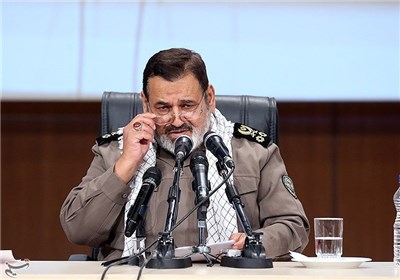
TEHRAN (Tasnim) – Chief of Staff of the Iranian Armed Forces Major General Hassan Firouzabadi underlined that there are not any obstacles to the country’s missile program.

“The Islamic Republic of Iran’s missile activities, as planned inside the country, will not face any obstacles,” the senior officer stressed on Sunday.

The general also reiterated that Iran’s missile tests are going to be carried out in a timely manner according to the plans endorsed by Supreme Leader of the Islamic Revolution Ayatollah Seyed Ali Khamenei.

For any missile test, Firouzabadi noted, a “policy making board” convenes to study the case, and the results are submitted to the Supreme Leader for the final authorization.

Back on Wednesday, the general had announced that Iran’s missile tests will be carried out on schedule.

He had made the comments in response to a statement by some Iranian lawmakers, requesting that the Armed Forces resume conducting missile tests.

In their statement, the MPs had called for the resumption of missile tests in reaction to the US officials’ brazen rhetoric of war against Iran.

While Iran and the Group 5+1 (Russia, China, the US, Britain, France and Germany) could finalize the text of a lasting deal on Tehran’s nuclear program on July 14, US officials have not stopped making provocative comments about military action against Iran.

Back in May, Ayatollah Khamenei reaffirmed that the Iranian nation will not let any possible act of aggression against the country go unanswered.

The Leader said he has already made it clear, even in the tenure of former US president, that “the era of hit and run has ended”, and that the Iranian nation will chase aggressors.