Posted tagged ‘Iran – sanctions relief’

Iran official denies report of nuclear reactor being sealed

January 12, 2016

Iran official denies report of nuclear reactor being sealed, Al Arabiya News, January 12, 2016

FILE -- In this Saturday, Jan. 15, 2011 file photo, a part of Arak heavy water nuclear facilities is seen, near the central city of Arak, 150 miles (250 kilometers) southwest of the capital Tehran, Iran. Iranian state television reported on Saturday, April, 19, 2014 that Vice President Ali Akbar Salehi has said a dispute between world powers and the country over its heavy water reactor at Arak has been “virtually resolved.” Iran and world powers are negotiating the terms of a permanent deal over its contested nuclear program. (AP Photo/Fars News Agency, Mehdi Marizad, File)

FILE — In this Saturday, Jan. 15, 2011 file photo, a part of Arak heavy water nuclear facilities is seen, near the central city of Arak, 150 miles (250 kilometers) southwest of the capital Tehran, Iran.  (AP Photo/Fars News Agency, Mehdi Marizad, File)

Iran’s deputy nuclear chief on Tuesday denied a report that the core of the country’s nearly finished heavy water reactor has been dismantled and filled it with concrete as part of Tehran’s obligations under the nuclear deal with the West.

Ali Asghar Zarean, in remarks to state TV said that Iran will first sign an agreement with China to modify the Arak reactor, a deal that is expected next week.

“Definitely, we will not apply any physical change in this field until a final agreement is finalized,” Zarean added, without specifically mentioning the Fars news agency report.

On Monday, Fars said that technicians had dismantled the core of the Arak reactor and filled it with concrete. The agency, which is close to Iranian hard-liners, cited unnamed sources for the report.

Under the landmark nuclear deal that commits Tehran to significant limits on its nuclear activities for over a decade in exchange for relief from crippling economic sanctions, Iran must redesign the Arak reactor so it can’t produce plutonium for nuclear weapons – though it will still produce small amounts of plutonium and heavy water.

Iran has insisted it needs the heavy water reactor for production of medical isotopes.

Hard-liners in Iran, who oppose Iranian President Hassan Rouhani and the nuclear deal with world powers, argue that the so-called “disabling” of Arak is a slap in the face of Iran and allegedly evidence of Rouhani having given too many concessions to the West in return to little.

It’s not clear what the modification process at Arak will involve, but officials in the past have said that some parts of the reactor need to be filled with cements because of safety concerns.

Zarean also said that once modifications are done and Arak goes online, Iran hopes to export excess heavy water produced there to the U.S. through a third country, for uses in research. He added that Savannah River National Laboratory near Jackson, South Carolina, has recently certified high purity of heavy water produced by Iran.

Iran is still expected to produce some 20 metric tons (22 tons) of heavy water at Arak a year. It has said it would domestically consume about 6 tons for medical isotopes and is looking to export the rest.

Iran’s President Promises “Year of Economic Boom”

January 11, 2016

Iran’s President Promises “Year of Economic Boom” Tasnim News Agency, January 11, 2016

Iranian president

Iranian President Hassan Rouhani on Monday vowed that the next Iranian calendar year (starts on March 21) would be a year of economic prosperity for the nation with the upcoming termination of anti-Tehran sanctions based on a nuclear deal with world powers.

Within a few days, the cruel sanctions against the Iranian nation would be lifted, Rouhani said, addressing a ceremony to inaugurate two new phases of the giant South Pars Gas Field in the southern Iranian city of Assaluyeh.

The president predicted positive economic growth for this year despite all the hardships, vowing that the next year will be a “Year of Economic Boom” given the lifting of anti-Iran sanctions.

He also referred to the inauguration of new phases of the gas field, and highlighted the fulfillment of his government’s promises in the fields of energy, oil, gas, and petrochemical industry.

In the next solar year of 1396, all phases of the South Pars Gas Field will be completed, he promised.

His remarks came one day after Iran and six world powers wrapped up expert-level talks in Geneva on Sunday after they studied the ways to put into practice the landmark deal on the country’s nuclear program.

During the two-day meeting, the two sides’ experts tried to finalize measures prior to the implementation of the deal, dubbed as the Joint Comprehensive Plan of Action (JCPOA).

“The countdown has begun for the implementation day and the removal of (anti-Iran) sanctions,” Foreign Ministry’s Director General for International and Political Affairs Hamid Baeedinejad said in a message shared on his Instagram page of the Iran nuclear deal.

Iran and the Group 5+1 (Russia, China, the US, Britain, France and Germany – also known as the P5+1 or E3+3) on July 14 reached a conclusion on a 159-page nuclear agreement that would terminate all sanctions imposed on Tehran over its nuclear energy program after coming into force.

Experts believe that Iran’s economic growth would rise remarkably after the deal takes effect.

American blackmail

January 8, 2016

American blackmail, Israel Hayom, Sarah N. Stern, January 8, 2016

Yossi Melman, noted Israeli author and security analyst, who is certainly no right-winger, wrote a piece in a recent edition of The Jerusalem Report which opens with: “The U.S administration is concerned about the possibility of a new confrontation with Prime Minister Benjamin Netanyahu following the International Atomic Energy Agency’s latest nuclear shenanigans. ‘We hope it won’t happen,’ a senior U.S. official tells The Jerusalem Report, ‘but if it does, it will be a completely different ball game. The administration will not sit idly by this time, and it will be vindictive.'”

This is akin to telling parents that a known child predator wants to abduct their children and has expressed the explicit desire to murder them, but if they notify the police, it will be a completely different ball game. The local government will not sit idly by this time, and it will be vindictive — against the parents who have the responsibility of protecting their children.

In actuality, the Obama administration’s outrage is completely legitimate, but it is directed at the wrong target: Israel. However, after seven years of the Orwellian world that we now inhabit, we have become conditioned to believe that this statement is almost normal.

Under international law, however, this is clearly upside-down and backward. It is Iran, after all, that violated U.N. Security Council Resolution 1929 (by firing missiles), the understandings reached in the July nuclear agreement and the United Nations Universal Declaration of Human Rights. Therefore, Iran should legitimately be the target of American as well as international outrage.

Iran is guilty of conspiracy to commit genocide. The IAEA is complicit in this guilt by closing the file on Iran’s nuclear program despite the fact that certain fundamental questions regarding prior military dimensions remain unanswered. The IAEA admitted as much on December 2, 2015, yet still decided to close the Iran file under what can only be explained as political pressure.

In 1948, in the immediate aftermath of the Holocaust, the U.N. passed United Nations General Assembly Resolution 260, the Convention on the Punishment and the Crime of Genocide. Article 3 of this convention lists crimes that should be punished as (a) genocide; (b) conspiracy to commit genocide; (c) direct and public incitement to commit genocide; (d) attempt to commit genocide and (e) complicity in genocide.

The Jerusalem Center for Genocide Prevention has compiled an outstanding collection of remarks made by Iranian Supreme Leader Ayatollah Ali Khamenei between 2000 and 2015. The center came up with a few significant findings, including the fact that “Iranian state incitement against Israel has been explicit in its calls for destruction of the Jewish state. Pre-war Nazi propaganda used euphemisms and never explicitly called for the destruction of the Jews.” Official Iranian threats and incitement have “lasted for more than 30 years, as compared with Nazi governmental incitement, which lasted 12 years.”

They also found that the frequency and the intensity of Iran’s incitement to commit genocide has only increased the more the international community eased sanctions.

In fact, shortly after the July 14 agreement was reached, Khamenei issued a book titled “Palestine,” outlining in painstaking detail the steps that should be taken to annihilate Israel, which he described as “a cancerous tumor” whose elimination would mean that “the threats and hegemony of the United States will be replaced by Iran.”

The book sketches out how to eliminate Israel through an eternal chain of low-intensity assaults that will eventually make life so unbearable for Israelis that they will pack their bags and leave. He also wrote that the Iranian nuclear bomb would inhibit the Israelis against any sort of retaliation.

Since the Joint Comprehensive Plan of Action was reached on July 14, both Iran and U.S. President Barack Obama have behaved in predictable ways. Iran has conducted two missile tests, one on Oct. 10 and one on Nov. 21, and on Dec. 29 fired a rocket within 1,500 yards of an American aircraft carrier, the USS Harry S. Truman in the Strait of Hormuz.

While Obama was trying to sell the JCPOA to Congress and a skeptical American public last summer, we were constantly assured of “immediate, snapback sanctions.”

According to a report in The Wall Street Journal last month, the U.S. Department of Treasury notified Congress that approximately a dozen companies or individuals in Hong Kong, the UAE and Iran were to face sanctions for working on the Iranian missile program, which not only violated the JCPOA but also U.N. Security Resolution 1929.

The Iranian government was quick to denounce the threat of new sanctions, calling them, “unilateral, arbitrary and illegal.” And just as swiftly and predictably, Obama caved under Iranian pressure and decided to delay imposing new sanctions, for an unspecified period of time. And now Iran has publicly unveiled a new underground missile site.

According to a report in The Washington Free Beacon, Democratic members of Congress who backed the deal are disappointed with the White House. Rep. Steny Hoyer of Maryland said: “We are always in a sensitive moment in our dealings with Iran, and there is never a perfect time to take such actions. … But Iran must know with certainty that violating U.N. Security Council resolutions, both inside and outside the scope of the Joint Comprehensive Plan of Action, will be met with serious consequences.”

Senator Chris Coons (D-Del.) told The Wall Street Journal: “I believe in the power of vigorous enforcement that pushes back on Iran’s bad behavior. If we don’t do that, we invite Iran to cheat.”

It appears that America’s moral backbone, the IAEA and all the Democratic members of Congress who believed Obama’s reassurances of “immediate snapback sanctions” are currently being blackmailed by Obama’s quest for a foreign policy legacy.

Yes, Obama will, indeed, have a foreign policy legacy, but it will prove to be the same as Neville Chamberlain’s.

The Mullahs Thank Mr. Obama

January 3, 2016

The Mullahs Thank Mr. Obama, Power LineScott Johnson, January 3, 2016

The American people should know that we have sustained a defeat without a war, the consequences of which will travel far with us along our road.

******************

Yesterday’s Wall Street Journal carries an incisive editorial (“The mullahs thank Mr. Obama,” accessible here via Google) on developments with the Islamic Republic of Iran. Every step along the way, Iran proves itself the mortal enemy of the United States, and yet President Obama thinks otherwise.

Iranian intentions are clear. Their actions comport with their announced view of the world. When the mullahs chant “Death to America,” we have no ground for believing they don’t mean it. No ground, that is, other than wishful thinking.

As John put it, it is difficult to reconcile Obama administration policies strengthening the Iranian regime with a good faith intention to pursue peace in the Middle East or to advance the national security interests of the United States. We can only infer that Obama’s highly ideologized view of the world is immune to experience.

The Journal’s editorial provides this handy summary of current complexities:

The U.S. and United Nations both say Iran is already violating U.N. resolutions that bar Iran from testing ballistic missiles. Iran has conducted two ballistic-missile tests since the nuclear deal was signed in July, most recently in November. The missiles seem capable of delivering nuclear weapons with relatively small design changes.

The White House initially downplayed the missile tests, but this week it did an odd flip-flop on whether to impose new sanctions in response. On Wednesday it informed Congress that it would target a handful of Iranian companies and individuals responsible for the ballistic-missile program. Then it later said it would delay announcing the sanctions, which are barely a diplomatic rebuke in any case, much less a serious response to an arms-control violation.

Under the nuclear accord, Iran will soon receive $100 billion in unfrozen assets as well as the ability to court investors who are already streaming to Tehran. Sanctioning a few names is feckless by comparison, and Iran is denouncing even this meager action as a U.S. violation of the nuclear deal. Iranian President Hassan Rouhani responded to the sanctions reports on Thursday by ordering his defense minister to accelerate Iran’s missile program. Your move, Mr. Obama.

Opponents of the nuclear accord predicted this. Mr. Obama says the deal restricts Iranian action, but it does far more to restrict the ability of the U.S. to respond to Iranian aggression. If the U.S. takes tough action in response to Iran’s missile tests or other military provocations, Iran can threaten to stop abiding by the nuclear deal. It knows the world has no appetite for restoring serious sanctions, and that Mr. Obama will never admit his deal is failing. The mullahs view the accord as a license to become more militarily aggressive.

Further proof came Wednesday when U.S. Central Command acknowledged that Iranian Revolutionary Guard vessels last week fired several rockets that landed within 1,500 yards of the aircraft carrier Harry S. Truman. A Revolutionary Guard spokesman Thursday denied the incident but a day earlier the semiofficial Tabnak news agency quoted an unnamed Iranian official as saying the rockets were launched to warn the U.S. Navy away from “a forbidden zone” in the Persian Gulf.

The Strait of Hormuz is one of the world’s most heavily trafficked waterways, and the USS Truman carrier group has every right to sail there. By any measure the rocket launch was a hostile act that could have resulted in American casualties.

This follows Iran’s arrest in October of Iranian-American businessman Siamak Namazi, who according to Iranian media reports is being held in Evin Prison though no charges have been filed. The reports suggest that Mr. Namazi is suspected of spying because he is one of the World Economic Forum’s “Young Global Leaders.” That’s the dangerous outfit that sponsors the annual gabfest in Davos.

Iran has also shown its gratitude for the nuclear deal by convicting Washington Post reporter Jason Rezaian on absurd charges of espionage. The Iranian-American has been held for more than 500 days.

The White House’s media allies are blaming all of this on Iranian “hard-liners” who are supposedly trying to undermine President Rouhani for having negotiated the nuclear deal. Memo to these amateur Tehranologists: The hard-liners run Iran.

The American people should know that we have sustained a defeat without a war, the consequences of which will travel far with us along our road.

Deputy National Security Adviser Ben Rhodes renders his deep thoughts via Twitter (below).

In the annals of inanity, this is Hall of Fame material.

The Iran deal will be implemented. The United States has an Embassy in Havana. .


Iran Executes Three Iranians Every Day; The West Rewards It.

December 30, 2015

Iran Executes Three Iranians Every Day; The West Rewards It. Gatestone InstituteJudith Bergman, December 30, 2015

♦ “Death sentences in Iran are particularly disturbing because they are invariably imposed by courts that are completely lacking in independence and impartiality. They are imposed either for vaguely worded or overly broad offences, or for acts that should not be criminalized at all, let alone attract the death penalty. Trials in Iran are deeply flawed, detainees are often denied access to lawyers in the investigative stage, and there are inadequate procedures for appeal, pardon and commutation” — From a July 2015 Amnesty International report.

♦ How ironic that Europeans have no problem stuffing themselves with syrupy Iranian dates exported by this regime, knowing full well that there are thousands of prisoners are being tortured in Iran while awaiting their executions.

♦ Amnesty International reports that in the fall of 2015, cartoonist Atena Farghadani was forced to undergo a “virginity and pregnancy test” prior to her trial. The charge? “Illegitimate sexual relations,” for having shaken hands with her lawyer.

♦ Iran nevertheless won a top seat on the U.N.’s Commission on the Status of Women in April 2014. Not a single UN member, not even the US, objected.

On the UN’s Human Rights Day, observed December 10, an Iranian woman was sentenced to death by stoning in the Islamic Republic of Iran.

Since the Islamic Revolution in 1979, Iran is believed to have imposed death by stoning on at least 150 people, according to the International Committees against Execution and Stoning.

“Stoning,” Iranian human rights activist Shabnam Assadollahi said, “is an act of torture. There are 15 countries in which stoning is either practiced and authorized by law or tolerated. One of those 15 countries is Iran. The last known execution by stoning was in 2009. In Iran under the Islamic law, stonings, hangings, and executions are legal torture.

“In Islam under Sharia law, the stoning (Rajm) is commonly used as a form of capital punishment, called Hudud,” Assadollahi explained.

“Under the Islamic Law, it is the ordained penalty in cases of adultery committed by a married man or married woman with others who are not her/his legal partner. Stoning is carried out by a crowd of Muslims who follow the Sharia law by throwing stones (small and large) at a convicted person until she or he is killed. The international community must pressure Iran, Afghanistan, Saudi Arabia, Yemen, Sudan, Somalia, Pakistan, and other countries where stoning is legally carried or tolerated. Why cannot the public loudly cry out and advocate for women oppressed by those regimes?”

Instead of cries of outrage, the West, in the wake of the nuclear “deal” Iran has not even signed, has been scrambling to ingratiate itself with the Iranian regime. Countries such as France, Germany, Austria and Switzerland have barely been able to contain themselves at the prospect of doing business with them. It has been years since the Europeans could legally engage in trade with the murderous regime of the mullahs, who still cry, “Death to Israel, Death to America” — the “Little Satan” and the “Great Satan’ — and they have not been wasting time.

In fact, the P5+1 negotiators (the five permanent members of the UN Security Council plus Germany) had just finished signing the “deal” with themselves, when Germany’s Vice Chancellor, Sigmar Gabriel, hurried himself and a group of representatives from German companies and industry groups onto a plane for a visit to Iran.

The French Foreign Minister, Laurent Fabius, who usually knows better, likewise, found it “… completely normal that after this historic deal was signed, France and Iran should restart normal relations.”

1407French Foreign Minister Laurent Fabius said that it is “completely normal that after this historic [nuclear] deal was signed, France and Iran should restart normal relations.” Left, Iranian Foreign Minister Javad Zarif hugs Fabius at the close of nuclear talks in Geneva, Nov. 23, 2014. Right: A public execution in Iran.

Before the sanctions took effect in 2011, French companies such as Renault and Peugeot were making billions of euros from their involvement with Iran’s auto industry. Similarly, the French company Total was heavily involved in the oil sector. France was evidently not going to miss a beat in bringing this lucrative trade back to la République.

How ironic that the country of “liberté, egalité and fraternité” finds it “completely normal” to have normal diplomatic and trade relations with a country that treats its own citizens, especially women, worse than the mud under the mullah’s feet; that executes whoever disagrees with the regime, and that hangs homosexuals from cranes. How ironic that Europeans have no problem stuffing themselves with syrupy Iranian dates exported by this smiling regime, knowing full well that there are thousands of Iranian prisoners being tortured in Iranian prisons while awaiting their execution day.

Iranian authorities are believed to have executed 694 people between January 1 and July 15, 2015 — an average of three executions a day. Since the election of the “moderate” President Hassan Rouhani in 2013, the number of executions has markedly gone up. According to a July 2015 Amnesty International report:

“Death sentences in Iran are particularly disturbing because they are invariably imposed by courts that are completely lacking in independence and impartiality. They are imposed either for vaguely worded or overly broad offences, or for acts that should not be criminalized at all, let alone attract the death penalty. Trials in Iran are deeply flawed, detainees are often denied access to lawyers in the investigative stage, and there are inadequate procedures for appeal, pardon and commutation.”

The report goes on to state that the majority of those put to death in 2015 were people from disadvantaged backgrounds, who were convicted on drug charges. “This is in direct breach of international law, which restricts the use of the death penalty to only the ‘most serious crimes’ – those involving intentional killing. Drug-related offences do not meet this threshold.”

Among those executed in Iran this year are members of ethnic and religious minorities convicted of “enmity against God” and “corruption on earth.” These include Kurdish political prisoners and Sunni Muslims. On August 26, 2015, Behrouz Alkhani, a 30-year-old man from Iran’s Kurdish minority, was executed despite awaiting the outcome of a Supreme Court appeal.

Iran is the second most prolific executioner in the world after China, according to Amnesty International’s latest global death penalty report.

Iran also tops the global list statistically for executioners of juvenile offenders, even though it is a state party to the Convention on the Rights of the Child and the International Covenant on Civil and Political Rights, both of which prohibit the imposition of the death penalty against persons who were below 18 years of age at the time of the crime, without exception. (Of course Iran was also a signatory to the nuclear Non-Proliferation Treaty, which it also violated repeatedly.) Iran continues to impose the death penalty against juvenile offenders, frequently deferring the execution until after they pass the age of 18. In 2015, at least four juvenile offenders are believed to have been executed: Javad Saberi, Vazir Amroddin, Samad Zahabi and Fatemeh Salbehi.

Iran is scheduled to be reviewed by the Committee on the Rights of the Child on January 11-12, 2016. The Committee has already expressed deep concerns about the use of death penalty against juvenile offenders and asked Iran to provide information on the progress and outcome of the cases of juvenile offenders undergoing re-trial.

Despite all the atrocities that Iran commits towards its citizens, women hold a special place of denigration and humiliation in Iranian society. Young women are reported brutally arrested by the thousand every week for not wearing a “proper hijab.” A woman in Iran is de facto first her father’s property, then after marriage, her husband’s property. According to the UN Secretary General’s February 2015 Report on the Situation of Human Rights in Iran, child marriage is prevalent. The legal age of marriage for girls is 13; some as young as 9 may be married by permission of the court. In 2011, about 48,580 girls between the age of 10 and 14 were married; in 2012, there were at least 1,537 girls under the age of 10 who were reportedly married. Pedophilia is thereby widespread and legal.

Married women may not work, attend sporting events or leave the country without their husband’s permission. When arrested, they suffer unspeakable torture in prison. Rape is commonly used as torture in prison against both women and men.

Forced “virginity testing” is also commonly used in prison, a serious violation of international law. It violates women’s and girls’ human rights to physical integrity, dignity, privacy and right to be free from torture and cruel and inhuman and degrading treatment. According to Amnesty International, satirical cartoonist Atena Farghadani, held in prison since January 2015, was sentenced in June 2015 to twelve years and nine months in prison for her peaceful activism, including meeting with families of political prisoners, and for drawing a satirical cartoon depicting legislators as monkeys, cows, and other animals. The cartoon was to protest a bill that sought to criminalize voluntary sterilization and restrict access to contraception and family planning services.

In December 2014, when Farghadani was out on bail, she released a video message on YouTube, detailing how female prison guards at Evin prison had beaten her, verbally abused her and forced her to strip naked for body searches. She was rearrested in January 2015, and in the fall of 2015 she was forced to undergo a “virginity and pregnancy test” prior to her trial. The charge? “Illegitimate sexual relations” for having shaken hands with her lawyer.

Iran nevertheless won a top seat on the U.N.’s Commission on the Status of Women in April 2014. Not a single UN member, not even the US, objected, to that election.

An exhaustive account of the atrocities that the Iranian regime continues to commit against its own people would require volumes. Nevertheless, the West, seems to remain unfazed in furthering its lucrative relations with the murderous regime.

Those politicians and executives scrambling to do business with the mullahs should realize that Iran’s intercontinental ballistic missiles can tomorrow be aimed at them. Those who comfort themselves with the thought that Iran only wants to annihilate Israel might do well to think again. Iran has tested a two-stage solid-fuel missile, the Sejjil-2, with a range of more than 2,000 km, allowing it to target southeastern Europe. In addition, Iran recently unveiled the Soumar cruise missile, reportedly a reverse-engineered version of the Russia’s Raduga Kh-55 — which was designed as a nuclear delivery system. It has a claimed range of 2,500-3,000 km.

Nevertheless, the International Atomic Energy Agency (IAEA) has acceded to Iran’s demands toclose its 12-year investigation into whether Iran had a secret nuclear weapons program. The IAEA produced a report earlier this month that strongly suggested Iran did have a nuclear weapons program for the years up until 2003.

The West clearly not only fails to care about the plight of the Iranians — it does not even care about its own populations being within Iranian missile range.

Iran Warns US of Decision to Seize Assets

December 25, 2015

Iran Warns US of Decision to Seize Assets, Tasnim News Agency, December 25, 2015

(Please see also, Obama’s $150 Billion ‘Signing Bonus’ To Iran Hits Legal Snag. — DM)

Iran money

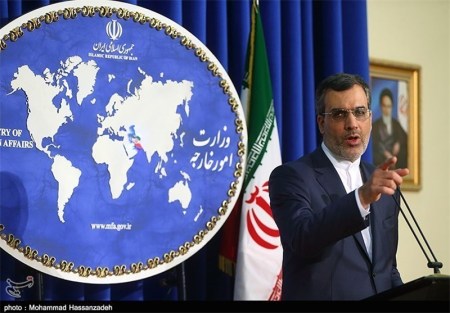
TEHRAN (Tasnim) – Iran’s Foreign Ministry spokesman warned of any move to confiscate the country’s assets in the US banks under “invalid and unlawful” court rulings, stressing that the US administration will be accountable for that possible decision and will have to pay compensation.

“If the assets belonging to the Islamic Republic of Iran, its organizations and nationals are seized, the US administration will be responsible to make up for the losses and pay compensation,” Hossein Jaberi Ansari said on Thursday.

He made the comments in reaction to reports that the US Supreme Court is considering a case to confiscate the Iranian Central Bank’s assets in the US to pay the American victims of terrorist attacks allegedly linked to the Iranian government.

The US House of Representatives is now weighing in on a pending case that accuses Iran of links with the 1983 bombing of the Marine barracks in Beirut and the 1996 bombing of the Khobar Towers in Saudi Arabia.

The US lawmakers are trying to force Iran’s Central Bank to pay damages to over 1,300 American plaintiffs. In 2008, the victims discovered that Iran’s Central Bank had almost $2 billion stored in Citibank accounts in New York. The victims sued for that money, and the litigation has now reached the Supreme Court.

Elsewhere in his comments, Jaberi Ansari said such efforts to block Iran’s assets show that the US hostility towards Iran continues to persist under pressure from the Zionist lobbies.

He also lashed out at the US judicial system for “violating the basics of the international law and resorting to bogus and baseless accusations” to deliver verdicts against Iran.

The new attempts at the US Supreme Court “contradict the inalienable international law and lack any legal validity,” the spokesman added.

Jaberi Ansari said the accusations against Iran come while those terrorist attacks have been committed by citizens of certain US allies.

“The US administration has proved that its hostile measures against Iran are in place with the influence of the Zionist lobbies and without care for the realities,” the spokesman underlined.

He further took a swipe at the US for its inaction to get advantage of the current circumstances and try to repair the Iranian nation’s deep distrust.

Earlier in November, Supreme Leader of the Islamic Revolution Ayatollah Seyed Ali Khamenei underscored that there has been no slackening off in US hostility towards Iran.

Imam Khamenei stressed that the US antagonistic attitude towards Iran has not changed a bit, but there are attempts to whitewash the issue.

Iran provokes the world as Obama does nothing

December 22, 2015

Iran provokes the world as Obama does nothing, Washington Post, The Editorial Board, December 20, 2015

(The interesting thing about this article is that it states the opinion of the Washington Post Editorial Board. — DM)

IRAN IS following through on the nuclear deal it struck with a U.S.-led coalition in an utterly predictable way: It is racing to fulfill those parts of the accord that will allow it to collect $100 billion in frozen funds and end sanctions on its oil exports and banking system, while expanding its belligerent and illegal activities in other areas — and daring the West to respond.

Unfortunately, the Obama administration’s response to these provocations has also been familiar. It is doing its best to downplay them — and thereby encouraging Tehran to press for still-greater advantage.

We’ve pointed out how the regime of Ayatollah Ali Khamenei has unjustly sentenced Post correspondent Jason Rezaian to prison and arrested two businessmen with U.S. citizenship or residence since signing the nuclear accord. There have been no penalties for those outrageous violations of human rights. Now a United Nations panel has determined that Iran test-fired a nuclear-capable missile on Oct. 10 with a range of at least 600 miles, in violation of a U.N. resolution that prohibits such launches. Moreover, it appears likely that a second missile launch occurred on Nov. 21, also in violation of Security Council Resolution 1929.

The U.S. response? “We are now actively considering the appropriate consequences to that launch in October,” State Department official Stephen Mull testified at a Senate committee hearing Thursday. In other words, there have so far been none — other than a speech by the U.S. ambassador to the United Nations blaming the Security Council for the lack of action. As for the second missile launch, the administration claims to be investigating it, though it likely has in its possession the intelligence necessary to make a judgment.

It’s not hard to guess the reasons for this fecklessness. President Obama is reluctant to do anything that might derail the nuclear deal before Iran carries out its commitments, including uninstalling thousands of centrifuges and diluting or removing tons of enriched uranium. The same logic prompted him to tolerate Iran’s malign interventions in Syria, Yemen and elsewhere, along with the arrest of Mr. Rezaian, while the pact was under negotiation.

U.S. officials argue that Iran’s nonnuclear violations make it all the more important that the nuclear deal be implemented. But that ignores the clear connections between the missile launches and Tehran’s ambitions to become a nuclear power. The only practical military purpose of the missiles the regime is testing is to carry atomic warheads. And while missile launches are not prohibited by the nuclear pact itself, the separate resolution banning them remains in effect until the deal is implemented, after which a new resolution takes effect that calls on Iran not to develop such missiles for eight years.

By flouting the U.N. resolutions, Iran is clearly testing the will of the United States and its allies to enforce the overall regime limiting its nuclear ambitions. If there is no serious response, it will press the boundaries in other areas — such as the inspection regime. It will take maximum advantage of Mr. Obama’s fear of undoing a legacy achievement, unless and until its bluff is called. That’s why the administration would be wise to take firm action now in response to the missile tests rather than trying to sweep them under the carpet.

Kerry Tells Iran Congress Visa Requirements will be Waived

December 21, 2015

Kerry Tells Iran Congress Visa Requirements will be Waived, Front Page Magazine, Daniel Greenfield, December 21, 2015

kerry (1)

The Ayatollah and his terrorists needn’t worry, John Forbes Kerry and Barack Hussein Obama have their back.

The Obama administration, pushing to support international trade with Iran, has advised the country’s rulers not to worry about new U.S. legislation that clamps visa restrictions on people who have traveled to Iran.

Iranian officials have publicly complained the new U.S. rules will unfairly target travelers who visit Iran and could dampen investment interest in their country.

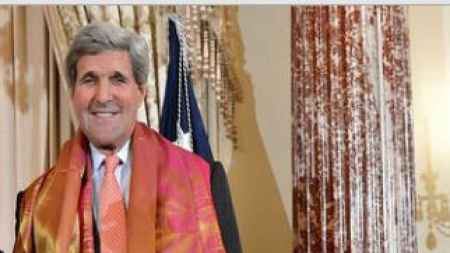
Secretary of State John Kerry wrote his Iranian counterpart on Saturday to assure him the visa changes approved by Congress last week won’t undermine business opportunities in Iran or violate the terms of the nuclear agreement between global powers and Tehran in July. Mr. Kerry said the administration was exploring ways to ensure visitors to Iran aren’t unfairly blocked from entering the U.S.

He specifically cited the State Department’s ability to expedite visa applications and to issue longer-term, multiple-entry travel documents. He also said the White House had the power to issue waivers to potentially exempt individuals from the new travel laws.

Americans can’t get waivers, but enemies of the United States can always get waivers from Obama. Despite Iran’s latest weapons tests, Kerry wrote to Iran that…

Thanks for a constructive meeting yesterday. I wanted to get back to you in response to your inquiry about amendments to our Visa Waiver Program. First, I want to confirm to you that we remain fully committed to the sanctions lifting provided for under the JCPOA. We will adhere to the full measure of our commitments, per the agreement. Our team is working hard to be prepared and as soon as we reach implementation day we will lift appropriate sanctions.

I am also confident that the recent changes in visa requirements passed in Congress, which the Administration has the authority to waive, will not in any way prevent us from meeting our JCPOA commitments, and that we will implement them so as not to interfere with legitimate business interests of Iran. To this end, we have a number of potential tools available to us, including multiple entry ten-year business visas, programs for expediting business visas, and the waiver authority provided under the new legislation.

Now let’s frantically bend over backward for the terrorists.

The Iran Deal: From Bad to Worse

December 21, 2015

The Iran Deal: From Bad to Worse, Power LineJohn Hinderaker, December 20, 2015

[I]s there a deal or not? It hasn’t been signed, and the parties have never agreed on what its terms are supposed to be. In the meantime, if a deal exists, Iran is violating it. Does anyone care? Certainly not President Obama.

*****************

The Iran nuclear deal has faded from the headlines. That must mean things are going well, right?

Just kidding. Amir Taheri brings us up to date:

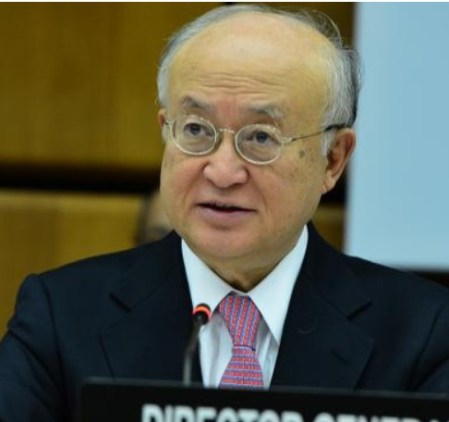
Last month the president sent his Energy Secretary Ernest Moniz to Vienna to twist the arm of International Atomic Energy Agency chief Yukiya Amano into issuing a favorable report on the state of the Iranian nuclear program.

The yes-or-no question Amano faced was simple: Has Iran closed the military aspect of its nuclear program?

Being an honorable man, Amano could not provide the straight “yes” that Muniz was asking for. “Much progress has been made, but much remains to be done,” he said. “More confidence building is needed, and verification of what Iran is doing may need many more weeks.”

Amano also hedged in his formal report to the IAEA board of governors. In paragraph 79 of the report, he states that the IAEA is in no position to categorically report that all of Iran’s nuclear program is entirely peaceful. That’s because the IAEA does not have access to all nuclear sites in the Islamic Republic.

I think it is blindingly obvious that Iran continues its progress toward becoming a nuclear power. Taheri makes a point that I also have emphasized repeatedly:

Meanwhile, Iran openly flouts the deal — and UN Security Council resolutions — by testing a new generation of medium-range ballistic missiles known as “Al-Qadr 110.”

These tests make sense only if Tehran continues to contemplate a military nuclear dimension to its program. The two new missiles are designed to carry warheads of between 75 to 100 kilograms. It makes no sense to deploy a ballistic missile over a distance of 1,800 to 2,000 kilometers — that is to say, capable of reaching all capitals in the Middle East and parts of Europe — simply to carry a payload of TNT.

One basic question is, is there a deal or not? It hasn’t been signed, and the parties have never agreed on what its terms are supposed to be. In the meantime, if a deal exists, Iran is violating it. Does anyone care? Certainly not President Obama.

It’s embarrassing enough that Obama pushed off implementation of the nuclear deal from last week until the end of January. But here’s the dirty little secret: It doesn’t matter. From Iran’s point of view, it’s getting everything it wants, deal or no deal.

The EU already has gotten rid of most sanctions against the nation, and Obama has suspended our sanctions for 90 days. Assets have been unfrozen, pumping an estimated $8 billion into Tehran. Iran is set to recover some $120 billion.

I can’t wait to see how that famous “snap back” provision will work.

All for a nuclear agreement that Iran has not signed and seemingly has no intention of following.

Remember when Obama claimed the deal would block Iran from obtaining a nuclear bomb for fifteen years? The Iranians have never agreed to any such thing:

Behruz Kamalvand, spokesman for the Iranian Atomic Energy commission, said the Obama deal “does not change our nuclear program by a single iota.”

“We continue doing exactly what we were doing before,” he says.

Nice work, Barack! Taheri itemizes some of the fallout from the administration’s craven diplomacy:

After two years of secret negotiations, Obama, far from resolving the Iranian nuclear issue, has made it even more complicated.

In the process, he has virtually killed the Nuclear Nonproliferation Treaty, discredited the IAEA, made a mockery of the UN Security Council and emboldened the most radical faction within the Khomeinist regime.

The truth is that there is no deal. It was not the mullahs who took Obama for a ride. It was Obama who hitched a ride with them.

Obama’s “the chance of a lifetime” is just that — for Iran.

The Iran deal isn’t merely sub-par diplomacy, it is a scandal. I don’t see how a president who took seriously his duty to preserve American security could have entered into it. There is another scandal, too: a journalistic one. Here, as in so many instances, reporters have covered up for the Obama administration by deliberately failing to report the facts surrounding the Iranian nuclear debacle. It would be interesting to compare the number of minutes that network news broadcasts have devoted, over the last few months, to the fulminations of Donald Trump with the minutes they have devoted to the crumbling of the Iran agreement. Likewise with column inches in our supposedly sophisticated newspapers.

When the first Iranian nuclear bomb explodes, whether in Europe, Israel or the United States, a number of people will have much to answer for, and they won’t all be officials in the Obama administration.

Will The West Ease The Sanctions Even Though Iran Is Not Meeting Its JCPOA Obligations?

December 18, 2015

Will The West Ease The Sanctions Even Though Iran Is Not Meeting Its JCPOA Obligations? MEMRI, A. Savyon and Y. Carmon* December 17, 2015

26096

According to various reports, Iran is holding contacts with the U.S. vis-à-vis implementation of the JCPOA. On November 29, 2015, Iranian Foreign Minister Javad Zarif announced that the U.S. must do its part, that is, lift the sanctions, even before Iran meets its obligations – expressly contradicting the JCPOA.

*********************

Introduction

With the International Atomic Energy Agency (IAEA) Board of Governors’ closure, on December 15, 2015, of Iran’s PMD (Possible Military Dimensions) dossier, the JCPOA is now back on track for the implementation that began on Adoption Day, October 18, 2015.

It is now Iran’s turn to meet its JCPOA obligations, which include removing nine tons of low-level enriched uranium from the country, dismantling centrifuges so that only 6,000 active ones remain, pouring concrete into the core of the nuclear reactor at Arak in a way that will prevent it from being used for producing plutonium, adopting the Additional Protocol of the Nuclear Non-Proliferation Treaty, and more.

Once the IAEA confirms that Iran has done this, Implementation Day will be declared; under it, the lifting of some of the sanctions on Iran and the suspension of others will take place, as promised by the U.S. and European countries on October 19, 2015.

However, at this point, Iran is providing only a show of making progress in its implementation of its obligations. Inactive centrifuges are being transferred from site to site, and not a single active centrifuge has yet been dismantled. Iran has reached agreements with Russia to store its enriched uranium, and documents have been signed with the superpowers for changing the designation of the Arak reactor. But so far Iran has actually met none of its obligations.[1]

Holding back Iran’s implementation is the October 21, 2015 letter from Iranian Supreme Leader Ali Khamenei to Iranian President Hassan Rohani setting nine new conditions that must be met first.

According to various reports, Iran is holding contacts with the U.S. vis-à-vis implementation of the JCPOA. On November 29, 2015, Iranian Foreign Minister Javad Zarif announced that the U.S. must do its part, that is, lift the sanctions, even before Iran meets its obligations – expressly contradicting the JCPOA.[2] Zarif also announced, upon his arrival in New York on December 17, 2015, that there is a possibility that he will meet with U.S. Secretary of State John Kerry “for discussions on the implementation of the JCPOA.”[3]

Could The U.S. And Europe Ease Or Lift Sanctions Even If Iran Does Not Meet Its JCPOA Obligations?

U.S. representatives have given no indication that the sanctions will be eased or lifted if Iran does not meet its obligations under the JCPOA. However, in his December 15, 2015 statements, when he presented his PMD report to the IAEA Board of Governors, IAEA secretary-general Yukiya Amano hinted at such a possibility. He said: “First, Iran needs to complete the necessary preparatory steps to start implementing its nuclear-related commitments under the Joint Comprehensive Plan of Action agreed with the E3/EU+3 countries. JCPOA Implementation Day will occur when the Agency has verified that Iran has implemented measures specified in that agreement. I will inform the Board promptly when the Agency has verified that the preparatory steps have been completed [emphasis MEMRI’s].”[4]

The term “preparatory steps” does not appear in the JCPOA. It is not reasonable to suppose that the West would be satisfied with mere “preparatory steps” on Iran’s part instead of full implementation of its obligations before sanctions are eased.

It should also be noted that Amano said on the same occasion: “All parties must fully implement their commitments under the JCPOA.”[5]

At this stage, it is unclear whether Amano’s use of the words “preparatory steps” instead of the words “fully implement… commitments under the JCPOA” represents intentions on the part of the U.S. administration; it could be nothing more than a general statement. This will become clear in the near future.

In the meantime, in his December 16, 2015 address to the nation, Iranian President Rohani effusively praised the JCPOA and Iran’s gains under it, and stated that in “January” the sanctions on Iran would be lifted.[6]

However, “January” is not a reasonable time frame. Iran would not succeed in completing all its tasks in such a short time, and IAEA would certainly not be able to submit a report verifying it had done so by then.


*A. Savyon is Director of the MEMRI Iran Media Project; Y. Carmon is President of MEMRI.


Endnotes:

[1] MEMRI Inquiry & Analysis No. 1209, Power Struggle Between Iranian Supreme Leader Khamenei’s Ideological Camp And Rafsanjani’s Pragmatic Camp Intensifies – Part I: Khamenei Blocks Iran’s Implementation Of The JCPOA, December 11, 2015.

[2] See Zarif’s statements in MEMRI Inquiry & Analysis No. 1209, Power Struggle Between Iranian Supreme Leader Khamenei’s Ideological Camp And Rafsanjani’s Pragmatic Camp Intensifies – Part I: Khamenei Blocks Iran’s Implementation Of The JCPOA, December 11, 2015.

[3] ISNA (Iran), December 17, 2015. It was also reported that secret talks were held in Oman in November 2014 between U.S. Energy Secretary Ernest Moniz and Atomic Energy Agency of Iran (AEAO) director Ali Akbar Salehi, on the possibility that Kazakhstan would be the country to which Iran would sent its enriched uranium, instead of Russia. The Wall Street Journal, December 8, 2015.

[4] Iaea.org/newscenter/statements/introductory-statement-board-governors-67, December 15, 2015.

[5] Iaea.org/newscenter/statements/introductory-statement-board-governors-67, December 15, 2015.

[6] President Rohani said: “I announce to the Iranian people that in January the sanctions will be lifted; thus, one of the 11th government’s election promises to the people will be kept, the sanctions will be lifted from the feet of the Iranian economy, and the way will be opened for more cooperation with the world.” President.ir (Iran), December 16, 2015.