WATCH: Devin Nunes Confirms Surevillance Of Trump Transition team – FULL PRESS CONFERENCE via YouTube, March 22, 2017
(Please see also, Will Smoking Gun Documents Vindicate Trump? –DM)
WATCH: Devin Nunes Confirms Surevillance Of Trump Transition team – FULL PRESS CONFERENCE via YouTube, March 22, 2017
(Please see also, Will Smoking Gun Documents Vindicate Trump? –DM)
Mark Levin to Congress: Investigate Obama’s ‘Silent Coup’ vs. Trump, Breitbart, Joel B. Pollak, March 3, 2017
 The Associated Press
In summary: the Obama administration sought, and eventually obtained, authorization to eavesdrop on the Trump campaign; continued monitoring the Trump team even when no evidence of wrongdoing was found; then relaxed the NSA rules to allow evidence to be shared widely within the government, virtually ensuring that the information, including the conversations of private citizens, would be leaked to the media.
**************************
Radio host Mark Levin used his Thursday evening show to outline the known steps taken by President Barack Obama’s administration in its last months to undermine Donald Trump’s presidential campaign and, later, his new administration.
Levin called Obama’s effort “police state” tactics, and suggested that Obama’s actions, rather than conspiracy theories about alleged Russian interference in the presidential election to help Trump, should be the target of congressional investigation.
Drawing on sources including the New York Times and the Washington Post, Levin described the case against Obama so far, based on what is already publicly known. The following is an expanded version of that case, including events that Levin did not mention specifically but are important to the overall timeline.
1. June 2016: FISA request. The Obama administration files a request with the Foreign Intelligence Surveillance Court (FISA) to monitor communications involving Donald Trump and several advisers. The request, uncharacteristically, is denied.
2. July: Russia joke. Wikileaks releases emails from the Democratic National Committee that show an effort to prevent Sen. Bernie Sanders (I-VT) from winning the presidential nomination. In a press conference, Donald Trump refers to Hillary Clinton’s own missing emails, joking: “Russia, if you’re listening, I hope you’re able to find the 30,000 e-mails that are missing.” That remark becomes the basis for accusations by Clinton and the media that Trump invited further hacking.
3. October: Podesta emails. In October, Wikileaks releases the emails of Clinton campaign chair John Podesta, rolling out batches every day until the election, creating new mini-scandals. The Clinton campaign blames Trump and the Russians.
4. October: FISA request. The Obama administration submits a new, narrow request to the FISA court, now focused on a computer server in Trump Tower suspected of links to Russian banks. No evidence is found — but the wiretaps continue, ostensibly for national security reasons, Andrew McCarthy at National Review later notes. The Obama administration is now monitoring an opposing presidential campaign using the high-tech surveillance powers of the federal intelligence services.
5. January 2017: Buzzfeed/CNN dossier. Buzzfeed releases, and CNN reports, a supposed intelligence “dossier” compiled by a foreign former spy. It purports to show continuous contact between Russia and the Trump campaign, and says that the Russians have compromising information about Trump. None of the allegations can be verified and some are proven false. Several media outlets claim that they had been aware of the dossier for months and that it had been circulating in Washington.6. January: Obama expands NSA sharing. As Michael Walsh later notes, and as the New York Times reports, the outgoing Obama administration “expanded the power of the National Security Agency to share globally intercepted personal communications with the government’s 16 other intelligence agencies before applying privacy protections.” The new powers, and reduced protections, could make it easier for intelligence on private citizens to be circulated improperly or leaked.
7. January: Times report. The New York Times reports, on the eve of Inauguration Day, that several agencies — the Federal Bureau of Investigation (FBI), the Central Intelligence Agency (CIA), the National Security Agency (NSA) and the Treasury Department are monitoring several associates of the Trump campaign suspected of Russian ties. Other news outlets also report the exisentence of “a multiagency working group to coordinate investigations across the government,” though it is unclear how they found out, since the investigations would have been secret and involved classified information.
8. February: Mike Flynn scandal. Reports emerge that the FBI intercepted a conversation in 2016 between future National Security Adviser Michael Flynn — then a private citizen — and Russian Ambassador Sergey Kislyak. The intercept supposedly was part of routine spying on the ambassador, not monitoring of the Trump campaign. The FBI transcripts reportedly show the two discussing Obama’s newly-imposed sanctions on Russia, though Flynn earlier denied discussing them. Sally Yates, whom Trump would later fire as acting Attorney General for insubordination, is involved in the investigation. In the end, Flynn resigns over having misled Vice President Mike Pence (perhaps inadvertently) about the content of the conversation.
9. February: Times claims extensive Russian contacts. The New York Times cites “four current and former American officials” in reporting that the Trump campaign had “repeated contacts with senior Russian intelligence officials. The Trump campaign denies the claims — and the Times admits that there is “no evidence” of coordination between the campaign and the Russians. The White House and some congressional Republicans begin to raise questions about illegal intelligence leaks.
10. March: the Washington Post targets Jeff Sessions. The Washington Postreports that Attorney General Jeff Sessions had contact twice with the Russian ambassador during the campaign — once at a Heritage Foundation event and once at a meeting in Sessions’s Senate office. The Post suggests that the two meetings contradict Sessions’s testimony at his confirmation hearings that he had no contacts with the Russians, though in context (not presented by the Post) it was clear he meant in his capacity as a campaign surrogate, and that he was responding to claims in the “dossier” of ongoing contacts. The New York Times, in covering the story, adds that the Obama White House “rushed to preserve” intelligence related to alleged Russian links with the Trump campaign. By “preserve” it really means “disseminate”: officials spread evidence throughout other government agencies “to leave a clear trail of intelligence for government investigators” and perhaps the media as well.
In summary: the Obama administration sought, and eventually obtained, authorization to eavesdrop on the Trump campaign; continued monitoring the Trump team even when no evidence of wrongdoing was found; then relaxed the NSA rules to allow evidence to be shared widely within the government, virtually ensuring that the information, including the conversations of private citizens, would be leaked to the media.
Levin called the effort a “silent coup” by the Obama administration and demanded that it be investigated.
In addition, Levin castigated Republicans in Congress for focusing their attention on Trump and Attorney General Sessions rather than Obama.
Report: Obama Intel Officials Used ‘Russia Blackmail’ Claims to Warn Israel About Trusting Trump, Breitbart, Aaron Klein, January 12, 2017
(Trust Us! Don’t trust Trump — he may be a Russian spy. — DM)
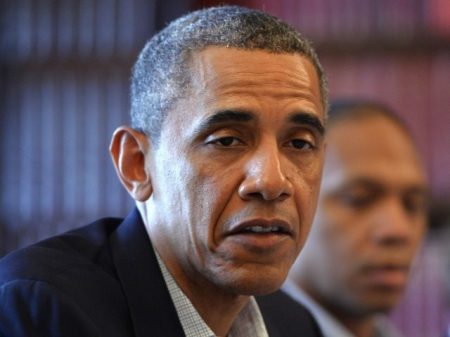 JEWEL SAMAD/AFP/Getty
TEL AVIV – U.S. intelligence officials warned their Israeli counterparts not to trust President-elect Donald Trump with intelligence secrets, citing alleged fears that Russia held blackmail information over Trump, according to a report today in Israel’s respected Yediot Ahronot daily newspaper.
The alleged blackmail information that U.S. officials reportedly warned Israel about seems to be in part referencing details contained in a debunked document of mysterious origin purporting to be an intelligence report alleging that Russia collected compromising videos and information on Trump.
In the report, investigative journalist Ronen Bergman writes of a meeting that took place “recently between Israeli and American intelligence officials (the date of the meeting is not mentioned to protect the sources of the report).”
Continued Bergman:
During the meeting, according to the Israelis who participated in it, their American colleagues voiced despair over Trump’s election, as he often lashes out at the American intelligence community. The American officials also told the Israelis that the National Security Agency (NSA) had “highly credible information” that Russia’s intelligence agencies, the FSB and GRU, were responsible for hacking the Democratic Party (DNC) servers during the elections and leaking sensitive information to WikiLeaks, which hurt Democratic presidential candidate Hillary Clinton.
The American officials further added that they believed Russian President Vladimir Putin had “leverages of pressure” over Trump – but did not elaborate. They were apparently referring to what was published Wednesday about embarrassing information collected by the Russian intelligence in a bid to blackmail the president-elect.
The Americans implied that their Israeli colleagues should “be careful” as of January 20, Trump’s inauguration date, when transferring intelligence information to the White House and to the National Security Council (NSC), which is subject to the president. According to the Israelis who were present in the meeting, the Americans recommended that until it is made clear that Trump is not inappropriately connected to Russia and is not being extorted – Israel should avoid revealing sensitive sources to administration officials for fear the information would reach the Iranians.
BuzzFeed on Tuesday published the un-redacted document claiming Russia had collected blackmail information on Trump, including videos of the president-elect in compromising positions.
“The allegations are unverified, and the report contains errors,” a BuzzFeed sub-headline cautioned.
Bergman said that after the dossier was published, he contacted his sources again and they told him that they themselves were speculating that the “leverage” claim could have in part referred to the dossier. Bergman is the author of a forthcoming book on the history of the Mossad set to be published later this year by Random House.
US intel sources warn Israel against sharing secrets with Trump #WhiteHouse staff.Fear leak to #Russia\#Iranhttp://www.ynetnews.com/articles/0,7340,L-4906642,00.html … #Mossad
BuzzFeed’s publication of the document prompted a flurry of news media reports drawing attention to the salacious and unproven details. CNN fanned the flames by reporting that “classified documents” presented to President Obama and Trump included “allegations that Russian operatives claim to have compromising personal and financial information” on Trump, the news network claimed, citing “multiple US officials with direct knowledge of the briefings.”
The Wall Street Journal on Wednesday reported the author of the dossier was Christopher Steele, who serves as a director at the London-based Orbis Business Intelligence Ltd., which has refused to comment on the reports of the document’s origin.
In October, Mother Jones reported on the contents of the dossier, writing the information was produced by a former Western intelligence officer who was assigned to the task for the purpose of an “opposition research project originally financed by a Republican client critical of the celebrity mogul.”
Director of National Intelligence James Clapper released a statement yesterday that he had called Trump that day to tell him that the intelligence community “has not made any judgment that the information in this document is reliable.”
Intelligence community publishes all classified material online to stop leakers, Duffel Blog, January 11, 2017
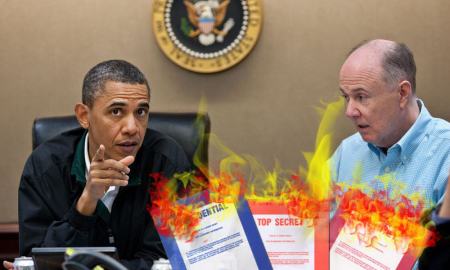
All national intelligence is now being published at nomoresnowdens.gov.
******************
WASHINGTON — In an unprecedented attempt to prevent the further unauthorized disclosure of classified information, the Director of National Intelligence has released all of the nation’s secrets onto the Internet, Duffel Blog has learned.
President Obama approved the move by signing an executive order between the ninth and tenth holes at the Congressional Country Club in Bethesda, Md.
Previously held under strict security standards established by over 200 years of experience, America’s most precious information is now available to anyone with a web browser. People around the world can view classified material ranging from the current status of North Korea’s nuclear weapons program to real-time signals intelligence collected by the National Security Agency. They can also learn than 9/11 was an inside job.
“The Intelligence Community (IC) has suffered too long from egregious cases of unauthorized disclosure,” said Aldrich Pollard, spokesman for DNI Chief James Clapper. “From Montes and Walker to Hanssen and Snowden, leaks have gravely impacted our nation’s security.”
Pollard spoke while handing reporters copies of a previously-undisclosed gun-sharing agreement between the Department of Justice and Mexico’s Sinaloa Cartel.
“These arcane security rules also did tremendous damage to the morale of our faithful ‘silent warrior’ analysts who work day and night to produce intelligence that protects the nation, right before they leak it to the nation,” Pollard added.
Before deciding to release everything, the DNI tallied metrics associated with unauthorized disclosure, the trillions spent over decades collecting information on America’s enemies, the damage done by leakers like Army Specialist Chelsea Manning, and the damage done by non-transgender leakers like Army Specialist Bradley Manning.
It concluded that releasing top secret intelligence ahead of leaks would mitigate damage by reducing the number of unauthorized disclosures to exactly zero. And zero disclosures is the ultimate metric for the nation’s senior intelligence officers, who both deeply desire to protect the country and get year-end bonuses.
While the current classification markings will remain — unclassified, confidential, secret and top secret — the DNI has directed that there will be only one administrative handling caveat from now on.
The updated guidelines with markings such as NOFORN, ORCON and CLINTON have been changed to REL//DGAF.
Intelligence analysts were generally supportive.
“I hated the classification guideline,” said one FBI intelligence specialist who asked not to be identified because, to his embarrassment, he was dumped by a Russian supermodel right after the new caveat was announced. “The guideline was complex and made me fall asleep, so I classified everything as SECRET//NOFORN even if I ripped it from InfoWars.”
All national intelligence is now being published at nomoresnowdens.gov.




 anneinpt
 artaxes
 danmillerinpanama
 davidking1530
 Peter Hofman
 Joseph Wouk
 Peter
Peter Louisiana Steve

 WarSclerotic
Recent Comments